Home Blog

NDC demands Gbajabiamila’s sack over PFIPC scandal

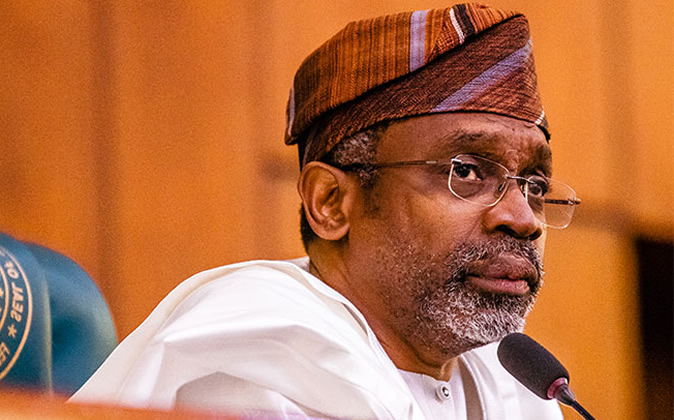
THE Nigeria Democratic Congress (NDC) has called for the immediate removal of the Chief of Staff to the President, Femi Gbajabiamila, over allegations linking him to the controversial Presidential Foreign Intervention Promotion Council (PFIPC), insisting his continued stay in office could compromise any investigation into the matter.

The opposition party made the demand in a statement dated July 3, 2026, and signed by its National Publicity Secretary, Osa Director, amid growing controversy over the purported government agency, which the Presidency insists does not exist.

“The NDC is alarmed by the damning allegations of corruption involving the Chief of Staff to President Bola Tinubu, Mr Femi Gbajabiamila, and one Prince Mathew Adeniyi Adeyemi, who claims to be the Director-General of the so-called Presidential Foreign Intervention Promotion Council (PFIPC),” the party said.

NDC’s reaction come weeks after the President’s Chief of Staff, Femi Gbajabiamila, announced on June 11 that the PFIPC was not an agency created by the Tinubu administration.

Adeyemi had rejected the Presidency’s position, maintaining that the organisation was legitimately established in 2024. He called on Tinubu to constitute an independent investigative panel to unravel the controversy.

He further alleged that the dispute began after he refused demands to surrender 48 per cent of the agency’s take-off grant, claimed that he paid N400 million to secure his appointment and still owed an outstanding balance of N200 million – allegations the Presidency has denied.

Responding to the claims on Wednesday, presidential spokesman, Bayo Onanuga, dismissed Adeyemi’s submissions, describing him as a “con artist” who had already been investigated by security agencies.

Onanuga said Adeyemi and two other defendants were arraigned before the Federal High Court on November 27, 2025, on an eight-count charge, with the matter fixed for hearing on July 27.

While reaffirming that Gbajabiamila had no involvement in the alleged scheme, the Presidency did not address Adeyemi’s bribery and other allegations against the Chief of Staff.

Speaking afterward, Adeyemi insisted the government’s response was merely a “defence mechanism” aimed at discrediting him.

He went further to claim his life was under threat, noting that he had gone into hiding. He alleged attempts to silence him.

“They are now after my life. I have gone into hiding. I’m underground. I don’t consider myself safe,” Adeyemi said.

Meanwhile the Presidency insists he is an alleged fraudster facing criminal prosecution, accused of forging government appointment letters and falsely presenting himself as the Director-General of PFIPC and the Presidential Economic Advisory Council (PEAC).

In its reaction to the scandal, the NDC alleged that the purported council was used to siphon public funds with the alleged involvement of senior government officials, describing the controversy as one that raises serious concerns about transparency, accountability and governance under Tinubu’s administration.

“The non-existent agency was allegedly used to siphon public funds, with the active collusion and facilitation by the Chief of Staff, Gbajabiamila,” adding that the development “raises fundamental questions about the level of transparency, accountability, and the integrity of the Tinubu administration.”

It questioned how a purportedly non-existent agency could have met the documentation requirements needed to open accounts at the Central Bank and called on the Presidency to explain whether government institutions processed forged documents.

“The NDC finds it deeply troubling that an agency the Presidency claims does not exist could open multiple high-level financial accounts at the apex bank. For an individual to open a domiciliary account, stringent documentation is required. How then was a fictitious agency able to open such accounts without the necessary documentation.

“Did the Office of the Accountant-General of the Federation knowingly process forged documents? The Presidency owes Nigerians an urgent clarification on this matter,” the NDC said.

The opposition party also raised concerns over claims that the Office of the Head of the Civil Service of the Federation approved 314 staff positions for the alleged agency, asking how such approvals could have been granted without the knowledge of the Presidency or the Office of the Secretary to the Government of the Federation.

It further cited Adeyemi’s allegations that Gbajabiamila demanded 48 per cent of the agency’s take-off grant, referenced Adeyemi’s claim that he paid N400 million toward securing his appointment through intermediaries and still owed an outstanding N200 million, describing the allegations as grave and a disturbing pattern of institutionalised corruption and alleged sale of public appointments.

The NDC further expressed concern over the death of Babatunde Tanimola, described as an intermediary between Adeyemi and the Chief of Staff, who reportedly died in a fire incident at a hotel in Abuja in October 2025, as well as Adeyemi’s recent claims that his life was under threat following alleged assassination attempts.

Among its demands, the party called on Tinubu to immediately remove Gbajabiamila from office to allow an independent investigation.

It also urged the President to establish an independent investigative panel to examine all claims relating to the PFIPC, including alleged budgetary allocations, bank accounts, staff recruitment approvals and financial transactions.

The NDC further called on the Economic and Financial Crimes Commission (EFCC), the Independent Corrupt Practices and Other Related Offences Commission (ICPC) and the Nigeria Police Force to investigate the allegations, while urging authorities to provide witness protection for Adeyemi.

Insecurity: the possible way out

0

By Eric Teniola

If we assume that kidnapping, insurgency and other security problems are politically motivated, then the solution is political, not military, and we must tackle these challenges through dialogue. As Sir Winston Churchill, the former British Prime Minister, once said, “to jaw-jaw is always better than to war-war”.

The phrase simply means that it is always better to negotiate and talk things out than to resort to conflict. But then the initiative must come from the government itself, especially the President. I am not referring to dialogue between the people and the kidnappers, the terrorists and the militants; I am referring to a dialogue between the government and the opposition leaders. Every effort must be made by our leaders to bring about peace in this country.

Like every other society, we need peace, and our leaders must show example that they too want peace. At present, we have three bodies that must be encouraged to bring about the desired peace. We have the Nigeria Inter-Religious Council (NIREC), the National Peace Committee (NPC) and the National Council of State (NCS). The National Council of State is an organ created by the Constitution. Its functions include advising the executive on policy making. The Council has no executive power; however, it plays an important advice and consent role in government operations. The idea of the National Council of State was first introduced by General Murtala Muhammed GCFR (8 November 1938 – 13 February 1976) on 30 July 1975 in a broadcast to the nation after deposing General Yakubu Gowon GCFR (92): “The structure of government has been re-organised. There will now be three organs of Government, at the Federal level, namely: The Supreme Military Council, The National Council of State, and the Federal Executive Council.”

The council has responsibilities in advising the President in the exercise of his/her powers with respect to the following: national population census and compilation, publication and keeping of records, prerogative of mercy, awarding of national honours, the appointment of members of the Independent National Electoral Commission, the appointment of members of the National Judicial Council (other than ex-officio members of that Council), and the appointment of members of the National Population Commission. It also advises the President whenever requested to do so on the maintenance of public order within the Federation or any part thereof and on such other matters as the President may direct.

The most recent National Council of State (NCS) meeting was held on October 9, last year, presided over by President Bola Tinubu GCFR. It was the second council meeting since he assumed office in May 2023. The members of the council at present are—President Bola Tinubu GCFR, Alhaji Kashim Shettima GCON, Chief Lateef Olasunkanmi Fagbemi (SAN), the Attorney General of the Federation, Chief Godswill Akpabio GCON, Honourable Tajudeen Abbas GCON, Chief Justice of the Federation, Honourable Justice Kudirat Motonmori Olatokunbo KEKERE-EKUN GCON, former President Goodluck Jonathan GCFR, former President Olusegun Obasanjo GCFR, former head of state, General (rtd.) Abdulsalami Abubakar GCFR, former head of state, General (rtd.) Ibrahim Badamosi Babangida GCFR and former head of state, General (rtd.) Yakubu Gowon GCFR. Other members of the Council are all former Chief Justices of the Federation and all the Governors of the 36 states of the Federation.

The National Peace Committee (NPC) is a non-governmental initiative conceptualised in 2014 in response to emerging threats occasioned by the 2015 general elections. It is an initiative made up of eminent elder statesmen who undertake efforts to support free, fair and credible elections as well as intervene in critical issues of national concern through high-level mediated and alternative dispute resolution mechanisms. At inception, the NPC had an urgent, broad-based mandate to make modest contributions towards a smooth and peaceful conduct of the 2015 elections, devoid of any breakdown of law and order before, during and after the electioneering process.

Members of the committee are Gen. Abdulsalami A. Abubakar (rtd), GCFR – Chairman, Commodore Ebitu Ukiwe(rtd.)—Vice Chairman, His Eminence, Alhaji Muhammadu Sa’ad Abubakar III – The Sultan of Sokoto, John Cardinal Onaiyekan, Alhaji Aliko Dangote, Mr Sam Amuka Pemu, Dame Priscilla Kuye, Prof. Ameze Guobadia, Prof. Ibrahim A. Gambari, Alhaji Mahmud Yayale Ahmed, Honourable Justice Roseline Ukeje (rtd.), Mr John Momoh, Dr Kabiru Adamu, Bishop Matthew Hassan Kukah – NPC Convener, Ms Idayat Hassan, Prof. Mahmood Yakubu, Gen. Martins Agwai (rtd), Fr Atta Barkindo – Head, NPC Secretariat and Mr Femi Otedola. Members of the Committee met last in Ado-Ekiti for the last gubernatorial election in Ekiti State.

The third body is the inter-religious council. The Nigeria Inter-Religious Council (NIREC) is a voluntary Association that was made up of fifty (50) Members, (25 Christians and 25 Muslims), formed by the representatives of the two principal Religions – that is, Christianity and Islam in Nigeria, on the 11th day of September, 1999. This figure was, however, reviewed in March 2019 to accommodate more women and youth. The membership now stands at thirty (30) Christians and thirty (30) Muslims, making a total number of sixty (60). The establishment of NIREC was occasioned by the incessant ethno-religious crisis which punctuated the sociopolitical landscape of Nigeria as a country. NIREC, also known as a Council, is a permanent and independent Body established to provide Religious Leaders and Traditional Rulers with a viable forum to promote greater interaction and understanding among the leadership and their followers, as well as lay foundations for sustainable peace and religious harmony in the country. The council was co-ordinated by the then Secretary to the Government of the Federation, Chief Ufott Ekaette (17 April 1939- September 25, 2019), my then boss.

Till today, the council is under the office of the SGF. I remember in August 1999, when we had a communication problem, Chief Ekaette instructed me to fly to Sokoto to meet with the late Sultan, Alhaji Muhammad Maccido Abubakar III (20 April 1928 – 29 October 2006, CFR, with a letter, on the details of the establishment of the council. The Council, from inception, was co-chaired by their Eminences, Alhaji Muhammadu Maccido, CFR, the then President General, Nigerian Supreme Council for Islamic Affairs (NSCIA) and Dr Sunday Mbang, CON, the then Primate of the Methodist Church of Nigeria/Archbishop J. Akinola, CON, who were one-time Presidents of the Christian Association of Nigeria (CAN), respectively. Supported and encouraged by President Olusegun Obasanjo GCFR, who saw the Body as a wonderful project emanating from the leadership of both major Faiths. NIREC was inaugurated on September 29, 1999, by President Olusegun Obasanjo GCFR. The foundation National Coordinator/Executive Secretary of the Council was the then Villa Chaplain, Rev. Professor Yusuf A. Obaje.

The Federal Government under the leadership of the then President, late Umaru Musa Yar’Adua GCFR, and later President Goodluck Ebele Jonathan GCFR, like their predecessor, continued with the policy of support for NIREC since 2007. Under that dispensation, NIREC was initially co-chaired by His Eminence, Alhaji Muhammadu Sa’ad Abubakar, CFR, mni, the Sultan of Sokoto and President-General, NSCIA, and His Grace, Dr John Onaiyekan, CON, Catholic Archbishop of Abuja and National President, CAN. Professor Is-haq Oloyede, the then Vice Chancellor of the University of Ilorin, became the National Coordinator/Executive Secretary. His Grace, Pastor Ayo Oritsejafor, CFR, a former CAN President, was a Co-Chair of the Council from January 2011 to 2016, while His Eminence Rev. Dr Samson Olasupo A. Ayokunle CON was President from 2016 to June 2022.

At present, His Eminence, Alhaji Muhammadu Sa’ad Abubakar, CFR, mni, the Sultan of Sokoto and President General of NSCIA and His Eminence Archbishop Daniel Okoh, National President of CAN, co-chair the meeting, while Fr. Prof Cornelius Afebu Omonokhua is the Executive Secretary. All the meetings of the Council from inception were held in Abuja. However, when the present Council was reconstituted in 2007, members resolved that the meetings of the Council should rotate in the Six Geo-Political Zones of the country on a quarterly basis to impart positively among adherence of the two Principal Religions to further promote religious tolerance, peaceful co-existence, ethical values and good governance in the country.

At such meetings, all Traditional Rulers/Religious Leaders, as well as the governors and opinion leaders in the Zone, were expected to attend the Formal Opening Ceremony and interactive session with the Council. The host governor normally sends an invitation to the above leaders as well as his colleagues, Honourable Ministers and Members of the National Assembly from the Zone. In inaugurating the council, President Obasanjo said, “It is regrettable that in spite of our religiosity, Nigerian society is highly prone to unacceptable behaviours of various shades and colouration. In other words, our religiosity is devoid of genuine spirituality. Nigeria, indeed, is a country of diversity not only of religion but also of culture and even of natural resources. However, this diversity is not and should not be a disservice but one that can be judiciously explored and exploited to promote national harmony, progress and prosperity. Our religious diversity, in particular, is not a curse; rather, it is a blessing if we are determined to make it one. Neither Christianity nor Islam preaches anything other than belief in one God and love of fellow human beings. The mutual co-existence of these two principal faiths in Nigeria is, therefore, not only a theoretical but also a practical reality. Government will be counting at all times on your wisdom and rich experience to provide positive leadership to the adherents of your respective religious faiths, a leadership which will enhance societal harmony and promote high standards of behaviour and civic responsibility among the people. Nigeria must not only be a haven of peace and progress but also a society of hardworking, honest, fair-minded and patriotic citizens. Let this country be a land of love, discipline, mutual respect, hope and fulfilment for all its citizens.”

In spite of the establishment of the three bodies, there is nothing stopping the President from calling for a meeting with all Presidential candidates and their running mates before or after the coming election. Afterwards, all of them are friends. The proposed meeting will reduce tension. No price is too high to be paid for peace in the country.

In 1979, President Usman Aliyu Shehu Usman Shagari faced a similar problem. He was elected in controversial circumstances but he wanted peace to reign supreme. He knew there was no need for an accord in a Presidential system of Government; in fact, the dispute over his election ended in the Supreme Court and the court gave a ruling in his favour just five days before his inauguration on October 1, 1979, at the Tafawa Balewa Square, Lagos.

But he reached out to all other parties to form an all-embracing government. Only the NPP answered his call. As a result, Chief Edwin Ume-Ezeoke (8 September 1935 – 1 August 2011) from Nnewi in the present Anambra State, an NPP member, was made Speaker of the House of Representatives and Mr John Wash-Pam, an NPP member, was also made deputy Senate President. After his inauguration, he issued a proclamation to the then Clerk of the National Assembly, Alhaji Gidado Idris for the first sitting of the National Assembly, which was held on October 9, 1979. It was during the sitting that Chief Ume-Ezeoke defeated Mr Hamza M. Ngadiwa of the GNPP, from Biu Local Government Area of Borno State, by 245 votes to 201 votes. As for the deputy Senate President, Mr John Wash Pam of the NPP from Plateau State defeated Alhaji Barkin Zuwo (PRP) from Kano North Central, Kano State by 51 votes to 43 votes. Senator Jaja Nwachukwu (NPP) from Aba nominated Senator John Wash-Pam while Alhaji Uba Ahmed from Bauchi East seconded the nomination. Alhaji Usman Alto Dambatta (PRP) from Kano North Central nominated Senator Barkin-Zuwo, while Senator David Oke (UPN) Ondo West seconded the nomination.

Senator John Wash Pam was born in 1940. He attended the Vom Primary School and Boys Secondary School, Gindiri, from 1956 to 1960. Later, he attended King’s College, Lagos, where he did his Higher School Certificate. He became a Clerical Officer in the Office of the late Prime Minister, Sir Abubakar Tafawa Balewa, of blessed and historic memory, from 1962-1963. He later attended Ahmadu Bello University, Zaria, from 1963-1966 where he graduated with a B.A. (Hons.) Second Class in International Relations, after which he gathered a number of experiences. He was an Administrative Officer in the Political Division, Secretary to the Military Governor’s Office, Kaduna from 1966 to 1967. Then, he joined the Foreign Service and was the Press Secretary in the Office of the High Commission of Nigeria in Freetown from 1968 to 1969. On returning home, he became an Administrative Officer in the Statutory Corporations Service Commission, Lagos. Later, he worked in the Ministry of Transport and the Ministry of Mines and Power. Again, he changed from bureaucratic services to a different line and joined the Nigeria Industrial Development Bank, Lagos, from 1972 to 1975, where he was the Personnel Manager.

In 1983, Alhaji Sabo Barkin-Zuwo was elected governor of Kano State. The following NPP Ministers were appointed by President Shehu Shagari. Mr Paul Unongo, Professor Ishaya Audu, Mr Demola Thomas, Mrs Janet Akinrinade and others. On December 27, 1979, President Shehu Shagari sent letters to political party leaders for a meeting to be held on January 8, 1980. On January 5, 1980, Chief Obafemi Awolowo GCFR said he doubted the genuineness of the motives of the motives behind President Shehu Shagari’s convening of a meeting of leaders of the five registered political parties on January 8. In a letter to the President, Chief Awolowo said as far as he was concerned, the President had destroyed the efficacy of the meeting by making the intention for the meeting public. He said he would nevertheless attend the meeting in spite of what he called “the President’s political stunts.” Chief Awolowo, the leader of the Unity Party of Nigeria (UPN) said it was clear that President Shagari or his advisers were out to score a political advantage.

Chief Awolowo said when he studied the President’s letter of invitation to the meeting, he (Chief Awolowo) read no ulterior motive of politicking into it. This, he added, was because the letter, which was marked ‘secret ’, spoke of ‘security’ checks ordered by the President and a desire to establish a forum for regular consultation at the highest political level. Besides, he said matters relating to the nation’s security and the preservation of law and order were usually discussed secretly. The UPN leader said his impression of the letter was that the President was convening an informal private meeting of political leaders to discuss matters affecting the security of the nation. The motive being to arrest immediately any deteriorating security situation which might be factually identified and verified and to establish a private and informal forum for similar action in future, he said. According to Chief Awolowo, a portion of President Shahgari’s New Year message belied his impression. He said the twice-repeated public utterances of the President on the grave issue of the preservation of law and order made it clear that the president or his advisers were out to score a political advantage. He quoted a reported speech of the President that reads: “The provision of fundamental human rights in our constitution is an act of faith and I am determined to uphold it to the letter, and described it as excellent politics. He said that the President was entitled to make such statements, but said the duty the President claimed was vested in the judiciary. Chief Awolowo noted that it was nonetheless difficult in the Nigeria context to discern where the functions of the executive ended and those of the judiciary began.

On January 6, 1980, the President, Alhaji Shehu Shagari, replied Chief Obafemi Awolowo and said he was not scoring any political point by announcing his intention to meet with party leaders.

“I hasten to acknowledge with thanks the receipt of your letter of January 5, 1980, in which you expressed some misgivings over the real motive behind the proposed meeting of political party leaders at State House, Ribadu Road, on Tuesday, January 8, 1980. “While noting with pleasure your misgivings, you have not altered your earlier position to attend, I feel obliged to disabuse your mind about the existence of any motive other than the genuine desire to find a political solution to what essentially is a political problem affecting security as well as preservation of law and order. “As stated in the letter of invitation, I feel concerned about the reports of victimisation and intimidation on political grounds reaching me from all over the country and naturally felt duty- bound to bring the serious development to the notice of all party leaders with whose co-operation and understanding the deteriorating situation can be arrested before it gets out of hand. “The fact that I issued my invitation letter under ‘secret’ mark should not of necessity suggest that every arrangement would be secretly conducted. It is, as you very well know, common practice in government to initiate action on such delicate and explosive matters under secret cover to prevent leakage, which will frustrate the efforts being made or may lead to outright failure. I felt obliged to inform interested members of the public about the meeting. I had the awaited response from the five leaders, including your good self, agreeing with my proposed course of action to tackle the worrying problem together. I might not have the public announcement about the meeting if I had received any discordant voice, and happily, members of the public received the news with acclaim. The very fact that we have agreed to meet is a credit not to me alone but to all of us, and it is important that you view the matter from this angle as well. On the question of scoring political points, I wish to reiterate my belief that the subject of discussion at the meeting transcends partisan politics and that it is the duty and, indeed, in the interest of all of us to ensure that peace and tranquillity prevail in Nigeria in the year 1980 and beyond. May I remind you that I took and subscribed to the oath of office during which I pledged that to the best of my ability, preserve, protect and defend the Constitution. In view of this, any effort to steer the path of constitutionality is not to my mind, beyond the bounds of my responsibility. I sincerely hope that I have erased any shred of doubt in your mind about my genuine desire to bring about peace and harmony in our country as being the only motive behind this all-important meeting with you and all other political party leaders who, along with the chief executives of the twenty governments in the federation, share the same aspiration to evolve a truly democratic government in Nigeria. It remains for me to say that I very much look forward to meeting you on Tuesday morning for frank and cordial discussions which will demonstrate to your conviction, my genuine intention in the matter. Be reassured that I do not seek to serve the personal interest of any particular person or community lesser than Nigeria. Once more, I like to wish you a happy and prosperous New Year.”

On January 8, the five political parties in the country met. The President informed the meeting that he had received a report from various parts of the country about political or politically-motivated acts of victimisation and injustice suffered by members of opposing parties in all the states. The meeting reviewed the report exhaustively and came to the conclusion that there was no real cause for anxiety about the security of the country. It was agreed that reports of this nature should be made available from time to time to the party leaders and the governors by the President. Earlier in his address, the President had said that he was not happy that barely three months after the inception of the Presidential System of government, there were people infringing on the rights of political opponents in all parts of the country.

Alhaji Shehu Shagari stressed that everyone must recognise that the solidity of the nation transcends political partisanship. The meeting was attended by Alhaji Waziri Ibrahim of the Great Nigeria People’s Party, GNPP; Dr Nnamdi Azikiwe of the Nigerian People’s Party, NPP; Mallam Aminu Kano of the People’s Redemption Party, PRP; and Chief Obafemi Awolowo of the Unity Party of Nigeria, UPN. Each party leader was accompanied by five advisers. All five political parties in the country agreed on the need for co-operation amongst themselves and to create a forum for the exchange of views on matters of public importance.

A communique issued at the end of the meeting between President Shehu Shagari and the leaders of the five political parties in Lagos expressed the agreement of all sides to the continuation of this dialogue. It said an all-party summit meeting comprising the President, Vice-President and leaders of the five parties will be held as and when necessary. The party delegations would also include all the state governors and one other delegate.

The communique said the meeting agreed that public attention should be drawn to the existence of the public complaint commission of all the States of the Federation, so that all aggrieved persons could make effective use of them. It emphasised that all public media should give full and fair coverage to all political parties, and the entire mass media should be temperate and exercise discretion in their comment on public issues and national institutions.

The meeting also expressed its full adherence to the Constitution of the country and noted with pleasure the determination of the President and Government to uphold the Constitution. I look forward to the time when the power to love will replace the love of power in this country. If we want peace in Nigeria, we must search for peace.

Establishing a lasting peace should be the main concern of our leaders at this hour. We must devise a system in which peace is more rewarding than war. Nigeria is a beautiful country, and all of us must play our part in bringing about the deserved peace in our fatherland. I think we need each other.



TikTok removes 12m violative videos in Sub-Saharan Africa

TIKTOK says it removed no fewer than 12 million videos in Sub-Saharan Africa during the fourth quarter of 2025 as part of efforts to enforce its Community Guidelines and keep the platform safe for users.

The company disclosed this in its Quarter four 2025 Community Guidelines Enforcement Report.

Speaking on the report, Keagile Makgoba, Communications Lead for TikTok in Sub-Saharan Africa, said the platform remained committed to transparency, safety and inclusivity.

“Each quarter, we publish a Community Guidelines Enforcement Report. The report highlights TikTok’s unwavering commitment to transparency, safety and inclusivity, reflecting its dedication to building trust and ensuring a safe platform for its global community,” she said.

According to her, TikTok removed more than 175 million videos globally during the quarter, while over 218 million comments were taken down for violating the platform’s Community Guidelines.

Makgoba said 45 per cent of all violative comments removed during the period fell under the platform’s harassment and bullying policy, which is classified under its Safety and Civility policy.

She said TikTok combined advanced technology with human expertise to detect, review and remove content or accounts that violated its Community Guidelines.

“We have advanced content moderation technology and thousands of trust and safety professionals protecting our community every day.

We have invested more than two billion dollars in trust and safety efforts from 2025,” she said.

Makgoba said TikTok currently moderates content in more than 70 languages, supported by specialised guidance and keyword systems covering many local languages, including Hausa.

She said the moderation teams worked to identify and remove content containing incitement and misinformation.

According to her, the platform proactively removes most violating content before it is reported by users.

She encouraged members of the TikTok community to help maintain a safe online environment by reporting content or accounts they believe violate the platform’s Community Guidelines.

“We encourage everyone in our community to play an active part in keeping TikTok a safe and welcoming place by reporting content they feel violates our Guidelines.

“We also encourage our community members to use the tools we provide on TikTok to report any content or account they believe violates our Community Guidelines,” she said.

Makgoba reaffirmed TikTok’s commitment to strengthening its content moderation systems while fostering a safe and inclusive digital community.(NAN)

Court orders police to pay N200m for killing Abuja cleric

THE Federal High Court, Abuja, has awarded N200 million against the Nigeria Police Force over the unlawful killing of  Kabiru Babai, a cleric.

The suit was filed by Okpi Adaafu on behalf of the Muslim Community of Gwarimpa Estate, Abuja.

Delivering judgment on Thursday, the judge, Peter Lifu, held that the applicant proved her case on the preponderance of affidavit evidence.

“The fundamental right to life of the applicant’s husband was unlawfully violated by the conduct of the 4th respondent,” the judge held.

Lifu said the declaratory reliefs were founded on the constitutional violation and succeeded.

He added that the applicant was entitled to compensatory damages for the unlawful deprivation of her husband’s life.

“The gravity of the violation and its devastating consequences on the widow and children must be taken into account,” he said.

However, the court refused the relief seeking to compel the attorney-general to institute criminal proceedings against the accused.

The court subsequently declared the killing unlawful and an infringement on Babai’s constitutional right to life.

It also ordered the 1st, 2nd and 3rd respondents to commence prosecution of of the accused.

The court awarded N200 million against the 2nd, 3rd and 4th respondents as compensation and exemplary damages.

“The judgment is so entered,”  Lifu ruled.

The News Agency of Nigeria, (NAN) reports that Babai was allegedly killed on Dec. 3, 2021, by Moses Samuel, a sergeant, serving with the Osun State Police Command.

The deceased was a truck driver, Imam, and family breadwinner before his death.

According to court documents, Babai and others were travelling when their truck developed a mechanical fault at Ota-Efun, Osogbo in Osun State.

While Babai was under the truck fixing it, police officers reportedly arrived in a minibus and engaged the driver in an argument.

During the incident, one officer allegedly shot the co-driver, Harisu Musa, in the hand.

Babai reportedly came out from under the truck and questioned why the driver was shot.

Court records showed that an officer hit Babai with a shovel and kicked him repeatedly.

It added that Samuel struck Babai with the butt of his gun and shot him in the chest.

“The bullet penetrated his heart and he died on the spot.”

The officers reportedly fled, but bystanders apprehended one of them and took him, alongside Babai’s body, to the police command.

Babai’s remains were later moved from the Osun Police Command to the morgue at UNIOSUN Teaching Hospital, Osogbo and was later taken to Bauchi State for burial.

Although police indicted Samuel for murder, he was not prosecuted and no support was offered to Babai’s family.

Adaafu filed suit No. FHC/ABJ/CS/1292/2022 on Aug. 3, 2022, in the name of Babai’s widow, Balkisu Kabiru- Babai.

The respondents were the Police Service Commission, Inspector-General of Police, Commissioner of Police, Osun State, Samuel, and the Attorney-General of the Federation.

The applicant sought declarations that the killing was unlawful and violated Babai’s fundamental right to life.

She also sought an order compelling the prosecution of Samuel and N2 billion as compensation and exemplary damages.

The Attorney-General filed a preliminary objection, challenging the court’s jurisdiction and his inclusion as a party.

He argued that the Federal High Court, Abuja, was not the proper place for the case.

The attorney-general also maintained that the police remained the appropriate authority to prosecute Samuel.

Adaafu opposed the objection, urging the court to dismiss it and argued that the AGF relied on the Federal High Court Rules instead of the Fundamental Rights Enforcement Procedure Rules.

She also cited Section 174 of the 1999 Constitution, which empowered the AGF to institute and undertake criminal proceedings.

The Inspector-General of Police and the Commissioner of Police, Osun Command, also filed a counter affidavit.

They argued that they could not be held liable for acts allegedly committed outside the scope of Samuel’s duty.

Adaafu disagreed, insisting that Samuel acted while on official duty with other officers.(NAN)

Nigerian-born engineer faces 20-year sentence in US after admitting to $1.64m contract fraud

A NIGERIAN-BORN engineer and former building inspector with the City of St. Louis, Banjo Popoola, has pleaded guilty in the United States to orchestrating a multimillion-dollar fraud scheme that diverted public funds meant to rehabilitate dilapidated homes into financing a lavish lifestyle, including his Hawaii wedding, luxury vehicles and casino gambling.

Popoola, 57, admitted before a US District Court in St. Louis on Tuesday that he fraudulently steered contracts worth millions of dollars to companies secretly controlled by his sister and his second wife, siphoning at least $1.64 million intended for housing rehabilitation programmes.

According to the US Department of Justice (DoJ), the stolen funds were spent on residential mortgage payments, multiple vehicle purchases and repairs, travel, his September 2023 wedding in Hawaii, casino gambling, dining and other personal expenses.

The guilty plea marks a dramatic turn in a case that exposed how a public official entrusted with overseeing construction projects exploited his position for personal gain while concealing his financial interests from city authorities.

Prosecutors said Popoola deliberately hid his links to the companies by falsely declaring on City Employee Secondary Employment Questionnaires in 2022 and 2023 that he had no personal or indirect interest in businesses contracting with the City of St. Louis.

Investigators said his sister, who lives in Texas and had never visited St. Louis, incorporated Farst Construction LLC in Missouri in October 2022. His future wife established Premier Finish Contractors LLC in February 2021.

Between June 2023 and November 2024, Popoola caused Farst Construction to receive approximately $1.4 million in contracts under the city’s Stable Communities STL programme. He also directed $339,500 in contracts from the Prop NS programme to the same company.

In addition, prosecutors said that between October 2023 and May 2024, Popoola channelled about $1.3 million in Stable Communities STL contracts and another $853,100 in Prop NS contracts to Premier Finish Contractors.

Federal authorities alleged that the companies existed primarily as vehicles through which Popoola diverted public funds while maintaining control behind the scenes.

The DoJ said the accused would be sentenced on October 6. His conviction for wire fraud carries a maximum penalty of 20 years’ imprisonment, a fine of up to $250,000, or both. He will also be required to repay the stolen funds.

The guilty plea follows a federal grand jury indictment unsealed in March, which accused Popoola of manipulating the city’s contracting process by awarding lucrative construction projects to businesses linked to his family members in exchange for kickbacks that financed his extravagant lifestyle.

The ICIR reported in May that a US court sentenced a Nigerian professor, Nkechy Ezeh, to nearly six years in prison for masterminding a massive fraud scheme that diverted more than $1.4 million intended to help low-income preschool children in West Michigan.

Chief US District Judge Hala Jarbou delivered the ruling and condemned the 61-year-old Founder of Early Learning Neighborhood Collaborative, calling her a fraud and a thief.

The court ordered Ezeh to repay $1.4 million to fraud victims, an additional $390,174 to the Internal Revenue Service and to be taken into custody immediately to begin serving her prison sentence.

Court upholds David Mark-led ADC leadership, dismisses Abejide’s suit

A FEDERAL High Court in Abuja has affirmed the leadership of the African Democratic Congress (ADC) under former Senate President David Mark, dismissing a suit filed by House of Representatives member Leke Abejide challenging the party’s current leadership.

Delivering judgment on Thursday, July 2, one of the court’s judges, Musa Liman, held that Abejide’s suit lacked merit. He upheld the preliminary objections raised by the ADC, its former National Chairman Ralph Nwosu, David Mark and the party’s National Secretary, Rauf Aregbesola.

The judge ruled that the dispute bordered on the internal affairs of a political party, making it non-justiciable and outside the court’s jurisdiction.

Liman further held that Abejide failed to establish that his legal rights had been violated by the emergence of the Mark-led leadership, adding that the lawmaker did not exhaust the party’s internal dispute resolution mechanisms before approaching the court.

The court also resolved all three substantive issues in the suit in favour of the defendants.

On the legality of the emergence of Mark and Aregbesola as the party’s national chairman and national secretary respectively, the judge held that their appointment complied with the ADC constitution and relevant electoral laws.

Liman ruled that the July 2, 2025, meeting, during which former National Chairman Ralph Nwosu handed over the party’s leadership to Mark, was a stakeholders’ meeting that preceded the National Executive Committee (NEC) meeting held on July 29, 2025.

According to the court, the NEC meeting, monitored by the Independent National Electoral Commission (INEC), validly produced Mark and Aregbesola as the party’s leaders.

The judge consequently declared that their emergence complied with the party’s constitution, the Electoral Act 2026 and other applicable laws.

As part of the judgment, the court ordered Abejide to pay N2 million in costs to each of the defendants. Liman also awarded N10 million in costs against Abejide’s counsel in line with the provisions of the Electoral Act 2026.

Abejide had filed the suit seeking to invalidate the transfer of the party’s leadership from Nwosu to Mark and Aregbesola.

In the suit marked FHC/ABJ/CS/1637/2025, the lawmaker asked the court to declare the July 2, 2025, handover at the Shehu Musa Yar’Adua Centre in Abuja illegal, null and void.

He also sought orders restraining Mark and Aregbesola from presenting themselves as the party’s leaders and preventing INEC from recognising them, arguing that their emergence did not comply with the requirements of the Electoral Act.

Background

Although the case is different from the suit filed by the former Deputy National Chairman of the ADC, Nafiu Gombe, Thursday’s judgment marks a new development in the party’s prolonged leadership crisis ahead of the 2027 general elections.

The crisis began after the party’s former National Chairman, Nwosu, handed over the leadership of the ADC to Mark and Aregbesola during a stakeholders’ meeting held on July 2, 2025, at the Shehu Musa Yar’Adua Centre in Abuja.

The stakeholders’ meeting was later followed by the party’s NEC meeting on July 29, 2025, where Mark and Aregbesola formally emerged as the party’s national chairman and national secretary in a process the party said was monitored by INEC.

The transition, however, sparked opposition from another faction within the party, leading to multiple lawsuits over who should legitimately control the ADC ahead of the 2027 general elections.

In April, the Supreme Court set aside an earlier Court of Appeal order directing parties to maintain the status quo ante bellum and returned the substantive leadership dispute to the Federal High Court for hearing.

The apex court described the Appeal Court’s order as “unnecessary, improper and unwarranted” and held that the matter should proceed before the trial court for determination.

Before the Supreme Court’s intervention, INEC had removed Mark and Aregbesola’s names from its official portal after relying on the Appeal Court’s directive, effectively leaving the party without a recognised national leadership at a critical period ahead of preparations for the 2027 elections.

The decision sparked protests by members of the Mark-led faction, who accused INEC of interfering in the party’s internal affairs. The faction also proceeded with its planned congresses and national convention despite the commission’s refusal to recognise its leadership.

Following the Supreme Court’s judgment on April 30, INEC reinstated Mark as the ADC National Chairman and Aregbesola as National Secretary on its website, restoring the leadership pending the outcome of the substantive suit at the Federal High Court.

Troops foil second attack on NIPSS within 2 weeks, recover stolen rifle

TROOPS of Sector VI Joint Task Force Operation “ENDURING PEACE” have foiled an attack by suspected armed assailants on the National Institute for Policy and Strategic Studies (NIPSS), Kuru, in Plateau State.

The Nigerian Army disclosed this in a statement on its verified Facebook and “X” Handle on Thursday.

The army said the attack occurred at about 12:10 a.m. on Thursday, July 2, when the assailants attempted to breach the institute’s perimeter under the cover of darkness.

It said vigilant troops swiftly engaged the attackers in a gun battle, neutralising one suspect, while others escaped with gunshot wounds towards the surrounding high ground.

The army said no casualty was recorded during the encounter, except for one of the assailants who died.

It added that troops recovered an AK-pattern rifle bearing registration number CO-3175 loaded with 16 rounds of 7.62mm special ammunition from the neutralised suspect.

According to the army, preliminary investigations confirmed the weapon belonged to a Nigerian Army soldier killed in action during an earlier encounter with unidentified militia elements at the Federal College of Land Resources Technology, Vom, on April 11.

It noted that the recovered rifle had been taken into military custody, while the remains of the neutralised suspect were evacuated to a mortuary through the appropriate authorities.

The army said troops had intensified area domination patrols, clearance operations and pursuit of the fleeing suspects around NIPSS Kuru and adjoining communities.

It said the measures were aimed at denying criminal elements freedom of action and ensuring the safety of residents, institute staff and other critical national assets.

The service reaffirmed its commitment to protecting lives, securing strategic institutions and restoring lasting peace in Plateau, urging residents to report suspicious movements to security agencies.

The latest attempted attack comes barely three weeks after gunmen stormed the staff quarters of the NIPSS, killing two soldiers and a police officer assigned to protect the facility.

Following the June 16 attack, NIPSS confirmed the deaths of the security personnel but assured that the situation had been brought under control through the swift intervention of security agencies, adding that participants, staff and facilities of the institute were safe.

Reports at the time indicated that the attackers appeared to have targeted the residences of the institute’s Acting Director of Studies, Nima Salman-Mann, and another senior official, Haruna Dabin, with both officials earlier receiving handwritten threat notes pasted on their doors demanding $100,000 and N15 million, respectively, days before the attack.

Police confirm 15 burnt to death, 3 others shot in Niger land dispute

THE Police Command in Niger has confirmed the killing of 18 people following a land dispute in Angwan-Baago community, Katako District, Rafi Local Government Area of the state.

The Police Public Relations Officer, Wasiu Abiodun, a superintendent of police, disclosed this in a statement made available to newsmen on Thursday, July 2.

He said the crisis, which began on Monday, escalated on Wednesday, leading to the burning of 15 persons, and shooting of three others.

According to him, suspected armed men, on Monday, shot dead a 25-year-old man, Ibrahim Musa, in Godoro village.

He said some local vigilantes, popularly known as Yansakai, in a suspected reprisal attack, blocked the road and killed a 28-year-old man, Bashir Mazi.

Abiodun explained that the initial attack, linked to a lingering land dispute between two tribes in the area, escalated into further violence, resulting in the deaths of 16 additional people and bringing the total death toll to 18.

“On 30/6/2026 at about 2 p.m., a report was received from the Katako District area of Rafi LGA indicating that on 29/6/2026 at about 11:30 p.m. at Godoro village, suspected armed men fired gunshots at one Ibrahim Musa, 25, who died on the spot.

“As a result, a group of Yansakai blocked the road and killed one Bashir Mazi, 28. This attack was allegedly linked to a lingering land crisis between two tribes in the area,” the police spokesperson said.

He added: “Furthermore, on 1/7/2026 at about 10 p.m., a report was received indicating that 15 persons were burnt to death in a two-bedroom flat at Angwan-Baago via Godoro village, while one other person was also killed at another location, bringing the death toll to 18.”

Abiodun said a reconciliation committee led by officials of the local government council was working with security agencies to address the crisis.

He added that joint security operatives comprising the Police and the military had been deployed to the area to restore peace. (NAN)

Three-year-old rescued alive six days after Venezuela earthquakes

EMERGENCY workers have pulled a three-year-old child alive from beneath collapsed rubble in La Guaira six days after two powerful earthquakes struck Venezuela.

The toddler’s rescue comes as Venezuela battles the aftermath of twin earthquakes measuring 7.2 and 7.5 magnitude, which struck less than a minute apart on June 24, triggering one of the country’s deadliest natural disasters in more than a century.

According to authorities, La Guaira is one of the hardest-hit regions, where search-and-rescue teams have continued combing through destroyed buildings despite fading hopes of finding more survivors, as they confirmed nearly 2,000 deaths.

More than 6,400 people have been rescued since the catastrophe unfolded, as thousands of families remain homeless, sleeping outdoors amid fears of fresh aftershocks.

The United Nations (UN) said that humanitarian needs were escalating rapidly, as the UN Refugee Agency (UNHCR) highlighted the growing demand for emergency shelter, healthcare, clean water and protection services.

Meanwhile, specialists from the UN Disaster Assessment and Coordination (UNDAC) team are assessing the extent of destruction to help humanitarian agencies determine where aid is needed most.

The earthquakes have left widespread devastation across six affected states which has left approximately 1,000 buildings, including hospitals, damaged or destroyed and more than 400 schools have also been affected, alongside critical water infrastructure.

In response, the UN Children’s Fund (UNICEF) 47-tonne shipment of emergency supplies arrived in the country this week, complementing an earlier consignment transported from Panama, with enough relief materials to support more than 100,000 children and families over the next three months.

The emergency supplies include medical kits, safe childbirth equipment, newborn care materials, medicines, water purification systems, storage containers, tents for child-friendly spaces, wheelchairs and educational materials designed to help children regain a sense of normalcy.

UNICEF Regional Director for Latin America and the Caribbean, Roberto Benes, warned that many survivors remained without access to safe drinking water or healthcare.

According to UNICEF, around 680,000 children require humanitarian assistance across the six earthquake-affected states.

The crisis has been compounded by more than 600 aftershocks, keeping communities on edge and complicating rescue and relief efforts.

UNICEF estimates it requires $52 million to respond to the earthquake emergency, part of its broader 2026 Humanitarian Action for Children appeal for Venezuela, which seeks $137.6 million.

While the rescue of the three-year-old has inspired hope amid overwhelming tragedy, humanitarian agencies warn that Venezuela faces a long road to recovery as thousands of survivors continue to await shelter, clean water, medical care and protection.


PFIPC puzzle: Budget allocation, public activities contradict Presidency’s denial

THE Presidency has defended the Chief of Staff to the President, Femi Gbajabiamila, against allegations linking him to the controversial Presidential Foreign Intervention Promotion Council (PFIPC), insisting that no such council ever existed under President Bola Tinubu’s administration.

However, the Presidency’s defence, contained in a statement issued on Wednesday, July 1, did not explain why the council appears in the 2026 Appropriation Act with a budgetary allocation of more than ₦1.3 billion.

The development comes days after Adeniyi Adeyemi Matthew, who had identified himself as Director-General of the PFIPC, accused Gbajabiamila of demanding part of the council’s alleged take-off grant and challenged the Presidency’s claim that the agency did not exist.

Adeyemi had questioned how Gbajabiamila could describe him as an impostor while he was demanding 58 per cent of the agency’s alleged N27.4 billion take-off grant. 

He further alleged that the Chief of Staff received N400 million through proxies to facilitate his appointment as director-general of the council, with an outstanding balance of N200 million yet to be paid.

Responding to the allegations and outrage, the Special Adviser to the President on Information and Strategy, Bayo Onanuga, described Adeyemi as an impostor who had created a fictitious government agency and used forged documents to deceive government institutions, foreign missions and the public.

According to Onanuga, the Office of the Chief of Staff first became aware of the alleged activities of the council in October 2025 after officials of the Nigerian Investment Promotion Commission (NIPC) raised concerns that another agency appeared to be carrying out similar responsibilities.

He said Gbajabiamila subsequently petitioned the Department of State Services (DSS) and the Nigeria Police Force on October 17, 2025, requesting an investigation into individuals allegedly forging appointment letters purportedly issued from his office.

According to the statement, the petition was accompanied by copies of the alleged forged appointment letter, a request seeking a note verbale from the Ministry of Foreign Affairs to facilitate visa applications for members of the council, and photographs of engagements obtained from the organisation’s website.

The Presidency said the Ministry of Foreign Affairs had also become concerned about the council’s activities after Adeyemi reportedly convened a meeting with ambassadors at the Wells Carlton Hotel in Abuja on October 10, 2025, without involving the ministry.

It said the ministry wrote to both the Office of the National Security Adviser (ONSA) and the Office of the Chief of Staff on October 15, seeking clarification on the status of the organisation.

According to the Presidency, the Office of the National Security Adviser subsequently referred the matter to the Office of the Secretary to the Government of the Federation (OSGF), which also sought clarification from the Chief of Staff after receiving enquiries from government and non-governmental organisations about the council.

The Presidency said Gbajabiamila responded that he neither appointed Adeyemi nor recognised the council, adding that appointments into such offices fell within the responsibility of the Office of the Secretary to the Government of the Federation.

It added that police investigations established that the council was fictitious and that Adeyemi allegedly forged appointment letters and other government documents, falsely represented himself as a presidential appointee and used the documents to solicit official recognition.

The statement further said police investigations found that Adeyemi operated 34 bank accounts, including nine allegedly opened in the names of fictitious organisations such as the FCT Investment Promotion Agency and Public Private Partnership (FIPA-APP).

The Presidency also stated that Adeyemi allegedly used forged documents to open a Central Bank of Nigeria (CBN) account through the Office of the Accountant-General of the Federation but maintained that no public funds were transferred into the account.

According to the statement, Adeyemi and two other persons were arraigned before the Federal High Court on November 27, 2025, on an eight-count charge bordering on forgery, impersonation and obtaining by false pretence. The matter is scheduled to come up in court later this month.

No explanation on budget allocation

However, the Presidency in its statement did not address the inclusion of the council in the 2026 Appropriation Act.

A review of the Appropriation Act had shown that the Presidential Economic Advisory Council/Presidential Foreign Intervention Promotion Council is listed under the Presidency with a total allocation of N1,302,978,784.

The allocation consists of N802,978,783 for personnel costs, N200,000,001 for overhead expenditure and N300 million for capital expenditure.

The inclusion of the council in the budget has drawn attention because the federal appropriation process requires spending proposals from ministries, departments and agencies to pass through multiple stages before becoming law.

Budget proposals are first prepared by the relevant institutions before being reviewed by the Budget Office of the Federation. They are subsequently considered by the Federal Executive Council (FEC), transmitted to the National Assembly for legislative approval and later signed into law by the President. 

The Presidency’s statement did not indicate how the council came to be listed in the budget or whether its inclusion is being reviewed.

It is also surprising that details of the accused’s trial were not made public. The alleged impostor has continued to move freely across the country, including addressing press briefings and attending other public events, despite facing such serious allegations. This stands in contrast to the treatment of suspects accused of less serious offences, some of which are non-bailable under Nigerian law.

Conflicting claims

The controversy first gained public attention after Gbajabiamila, on June 11, publicly disowned Adeyemi’s claim that he had been appointed director-general of the Presidential Foreign Intervention Promotion Council.

The Chief of Staff stated that no such office existed under President Bola Tinubu’s administration and urged foreign missions, development partners, financial institutions and the public to disregard any claims made by Adeyemi on behalf of the Presidency.

“It has come to the notice of the Federal Government of Nigeria and specifically the Office of the Chief of Staff to His Excellency, President Bola Ahmed Tinubu, GCFR that a certain Prince Adeniyi Adeyemi, under the auspices of an alleged organisation styled as the “Presidential Foreign Intervention Promotion Council” is portraying himself to the general public, as having been appointed by my office,” the statement reads. 

But Adeyemi reportedly rejected the disclaimer, insisting the council had offices at the Federal Secretariat, operated accounts with the Central Bank of Nigeria and received approval for more than 300 staff members from the Office of the Head of the Civil Service of the Federation.

Speaking at a press conference in Abuja on Thursday, June 25, he argued that if the council did not exist, it would have been impossible for it to appear in the 2026 Appropriation Act.

“If Honourable Femi Gbajabiamila, who is supposed to be the Chief of Staff to the President and also the administrative gateway to the Presidency can make such an administrative error, by allowing the president to sign a document with a fake agency in it, he should possibly resign his appointment now,” he said.

He challenged the President to establish an independent investigative panel to review official records relating to the council and determine how it appeared across multiple government documents.

He also claimed that the council maintained both Treasury Single Account and domiciliary accounts with the Central Bank of Nigeria, and obtained approval for more than 300 personnel through the Office of the Head of the Civil Service of the Federation.

He questioned at what stage references to a supposedly non-existent agency entered official government records.

“The national budget does not emerge in isolation. It passes through multiple layers of technical drafting, executive coordination, ministerial inputs, budget office review, and finally legislative scrutiny by both chambers of the National Assembly, where COS has meritoriously served for good 20 years and rose from Minority to Majority leaders and Speaker for four years.

“So, the question becomes unavoidable: at what point in this process did references to a non-existent agency allegedly enter the official record? And if they are indeed present in official documentation, what does that imply about the integrity of the process that produced and approved those documents?”

Official engagements

Although The ICIR could not yet find any official statement announcing his appointment like many other Tinubu’s appointments, the council has engaged with public institutions and officials in the previous year. 

Publicly available information shows that Adeyemi, while acting as Director-General of the council, held meetings with officials of the Economic and Financial Crimes Commission (EFCC), the Nigerian Electricity Regulatory Commission (NERC), the Raw Materials Research and Development Council (RMRDC) and representatives of the China Investment Business Development Commission (CIBDC).

In September 2025, the EFCC said its Chairman, Ola Olukoyede, received Adeyemi and members of his delegation during discussions on promoting foreign direct investment.

On September 9, 2025, the Nigeria Electricity Regulatory Commission (NERC) also announced engagements with the said council over preparations for the proposed World Investment Summit.

He also met with Chinese investment officials on plans to establish a Nigeria-China Investment Group.

The Presidency’s statement did not comment on those engagements.

Questions trail presidency’s defence

Meanwhile, many Nigerians on social media, particularly on X, have called for further explanations from relevant government institutions.

The Executive Director of the Centre for Journalism Innovation and Development (CJID), Akintunde Babatunde, in his reaction on X, questioned why government institutions continued exchanging official correspondence over the status of the council after Adeyemi had reportedly been arrested in October 2025.

He also asked how the alleged agency operated from an office within the Federal Secretariat, held meetings with foreign diplomats and reportedly opened a CBN account if it was fictitious.

According to him, while the Presidency’s statement addressed allegations against Adeyemi, it did not explain whether there were lapses in institutional verification processes within agencies including the Ministry of Foreign Affairs, the Nigerian Investment Promotion Commission, the Office of the National Security Adviser, the Office of the Secretary to the Government of the Federation, and the Central Bank of Nigeria.

Also, a social media user, Oluomo of Derby, questioned how the alleged fictitious agency was able to operate within government premises and appear in the federal budget.

“Are we seriously expected to believe that fake documents were used to open an account with the CBN without any internal checks?” he further asked.

Another X user, Nimsy, questioned how the disputed council remained in the 2026 Appropriation Act if, as the Presidency stated, investigations into the alleged fraud had commenced months earlier.

“If he was caught as a scam in 2025, how did the 2026 Budget (signed months after his arrest) still allocate N1.3 billion to this exact same setup?” the user wrote.

Similarly, another commentator, Abdulherphyz, questioned the budget allocation in light of the Presidency’s position that the council never existed.