
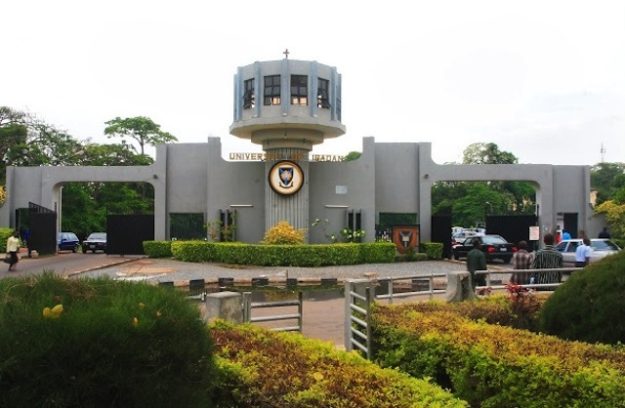
THE Corporate Accountability and Public Participation Africa (CAPPA) has hailed the Federal High Court ruling ordering the reinstatement of three University of Ibadan (UI) students.
The organisation in a statement by its Media and Communications Officer, Robert Egbe, described the judgment as a landmark victory for students’ rights and civic freedom in Nigeria.
The organisation expressed satisfaction with its role in supporting the affected students—Aduwo Ayodele, Mide Gbadegesin, and Nice Linus, throughout their legal battle.
“We are proud, not only of Ayodele, Gbadegesin and Linus, but also of our role in helping them assert and defend their rights. We are proud to have stood by them since their ordeal began, amplifying their voices through our advocacy and media networks, and facilitating legal services for them.” CAPPA said.
Backstory
The ICIR reports that the court ruling, delivered by the presiding judge Nkeonye Maha, in Ibadan on Wednesday, April 15, ordered the immediate reinstatement of the students, who were suspended by the university on July 14, 2025, for protesting a hike in tuition fees.
The protest was triggered by a circular issued by the university’s governing council announcing an increase in fees for both new and returning undergraduate students for the 2023/2024 academic session.
The demonstration followed mounting frustration among students over the rising cost of education.
Dissatisfied with their suspension, the students approached the court, arguing that the disciplinary process violated their fundamental rights, particularly their right to fair hearing.
They told the court that they were denied the opportunity to call witnesses or present video evidence during proceedings before the university’s disciplinary committees.
“AN ORDER OF THE HONOURABLE COURT forthwith reinstating the Applicants’ full studentship rights and privileges within the 1st Respondent with immediate effect to wit, attend lectures, write examinations and participate in student union activities for the advancement of their lawful interest.” the applicants sought.
It also sought “the sum of N20 million damages jointly and severally against the Respondents for the infringement of the Applicants’ constitutionally guaranteed rights to dignity of their human person, personal liberty, fair hearing, freedom of thought, freedom of expression, peaceful assembly and association, freedom of movement, and freedom from discrimination guaranteed under the 1999 Constitution of the Federal Republic of Nigeria as amended.”
In her ruling, Maha held that the university’s actions breached the students’ right to fair hearing, setting aside the disciplinary committee’s decision and ordering their full reinstatement with all rights and privileges restored.
The judgment also reinforced constitutional protections for freedom of expression, peaceful assembly, and association.
CAPPA reacts
CAPPA said the ruling sent a strong warning to universities across the country against suppressing dissent.
CAPPA’s Assistant Executive Director, Zikora Ibeh, described the students’ ordeal as part of a broader pattern of shrinking civic space within Nigerian tertiary institutions.
“When students are punished for peaceful protest, the message is that lawful dissent will not be tolerated. What kind of society punishes its young people for caring enough to speak?” she added.
The organisation criticised what it termed the growing use of intimidation, suspensions, and rustications by university authorities to silence opposing voices.
“Universities should be spaces where ideas are contested, where authority is questioned, and where future leaders are trained not just to comply, but to think critically and act courageously. When administrations resort to suspensions, rustications, and intimidation, they turn campuses into zones of fear rather than forums of debate. This is dangerous and unacceptable,” CAPPA stated.
It demanded that policies such as fee hikes be subjected to transparent and participatory processes that reflect the socio-economic realities of students and their families.
CAPPA further linked the recurring protests in Nigerian universities to chronic underfunding of the education sector, warning that the burden of financing education is increasingly being shifted to students.
“Access to education is gradually being determined by wealth rather than merit. Until this structural issue is resolved, protests will persist, and rightly so,” the organisation added.
Reaffirming its commitment, CAPPA said it would continue to support students nationwide in defending their constitutional rights against what it described as institutional overreach.

Mustapha Usman is an investigative journalist with the International Centre for Investigative Reporting. You can easily reach him via: musman@icirnigeria.com. He tweets @UsmanMustapha_M