
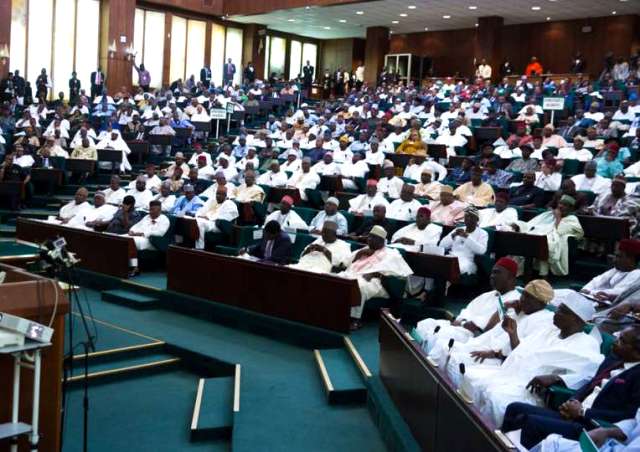

The federal high court in Abuja has ruled that the National Assembly cannot override the Independent National Electoral Commission (INEC) with regards to the scheduling of elections.
President Muhammadu Buhari had declined to sign the amended electoral act into law on the basis that some sections violate the independence of INEC as guaranteed by the 1999 constitution.
The federal government subsequently took the case to court to determine whether the lawmakers have powers to change the 2019 election sequence already released by INEC.
In his ruling on Wednesday, Justice Ahmed Mohammed nullified clause 25, section 15 of the electoral amendment bill which reordered the already announced election sequence.
READ ALSO:
- ‘Akindele lied that I failed so he could sleep with me’ ― OAU sex-for-mark victim tells committee
- Killing of priests in Benue vile, evil, satanic, says Buhari
- SERAP sues Saraki, 108 senators over illegal N13.5 running cost allowance
- Nigeria protests killing of Nigerian in South Africa
- “I could have become Nigeria’s president in 2003,”Atiku says not desperate to be president
- Facebook: Report fake accounts to us, we can’t monitor active 24m users
- Attempted Bama suicide bomb attack foiled by police
- Chimamanda will lead women to ‘hell’
- Buhari and the ‘lazy youths’
- UPDATED: Dino Melaye arrested at Abuja Airport, released
He held that the 1999 constitution empowers INEC to organize and supervise elections including fixing dates and sequences, therefore, the National Assembly does not have the powers to override INEC’s actions.
Following Buhari’s refusal to sign the electoral amendment act into law, the lawmakers kick-started another process to review the sections cited by the President as his reasons for withholding assent, with a view to removing them and re-passing the bill into law.
The process is currently ongoing.