
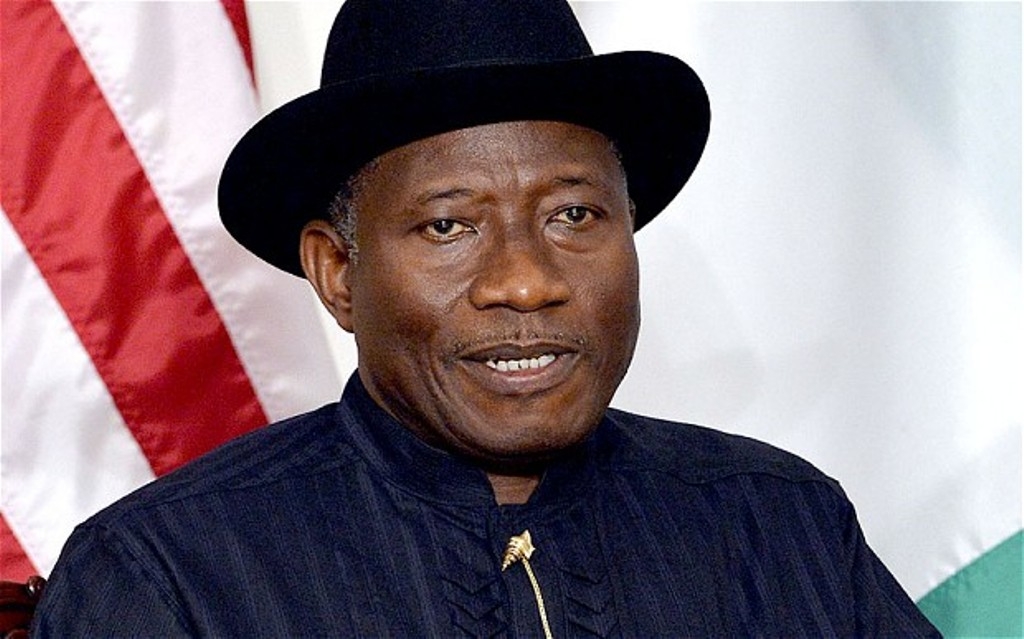
FORMER President Goodluck Jonathan has dismissed claims suggesting he accused the late President Muhammadu Buhari of having ties to Boko Haram.
The clarification followed his earlier claims that Boko Haram once chose the late Buhari to represent the group in negotiations, during the book launch of former Chief of Defence Staff, Lucky Irabor, on Friday, October 3.
A statement signed by his spokesman, Ikechukwu Eze, on Saturday, October 4, noted that Jonathan’s remarks were taken out of context.
The ICIR reported that Jonathan, at the public presentation of Scars, had said that his administration set up several committees to explore dialogue with the sect, and in one such attempt, the insurgents nominated Buhari as their preferred negotiator.
“One of the committees we set up then, the Boko Haram nominated Buhari to lead their team to negotiate with the government,” Jonathan said. “So I was feeling that, oh, if they nominated Buhari to represent them and have a discussion with the government committee, then when Buhari took over, it could have been an easy way to negotiate with them and they would have handed over their guns. But it was still there till today.”
His comments, however, generated mixed reactions, including backlashes from Buhari’s loyalists.
While reacting to this, Jonathan, in a statement by his spokesperson, Ikechukwu Eze, clarified that he was not accusing Buhari of complicity with the insurgents, adding that his reference was to the confusing internal rifts within Boko Haram in 2012.
“We wish to make it abundantly clear that the former President’s comments were grossly misrepresented. At no time did Dr Jonathan suggest, imply, or insinuate that President Buhari had any connection with Boko Haram or that he supported the group in any form.”
The statement added that “Jonathan’s remarks, made in the course of a broader discussion on Nigeria’s security challenges, were meant to illustrate the deviousness and manipulative strategies employed by Boko Haram in their early years.”
The statement further said his reference was to a documented episode in the early days of the insurgency when factions claiming to represent Boko Haram falsely listed prominent Nigerians, including Buhari, as possible mediators, often without their knowledge or consent.
“The point Dr Jonathan sought to make was that Boko Haram, in its characteristic deceit, often invoked the names of respected public figures to sow confusion, exploit political divisions, and undermine public confidence in government,” the statement continued.
He further argued that if Buhari had indeed been a preferred negotiator for the group, the insurgency should have ended when he became president in 2015.
Jonathan stressed that both he and Buhari were committed to fighting terrorism during their tenures and that the former president himself was also a target of Boko Haram attacks.
“The point Dr Jonathan sought to make was that Boko Haram, in its characteristic deceit, often invoked the names of respected public figures to sow confusion, exploit political divisions, and undermine public confidence in government. His comments were therefore an illustration of the group’s duplicity, not an accusation against the late former president or any individual for that matter.”
Recall that Garba Shehu, former presidential spokesperson under Buhari, had earlier dismissed Jonathan’s remarks as false and politically motivated.
Shehu argued that Jonathan was reviving a discredited claim to deflect attention, adding that Buhari himself was a target of Boko Haram attacks, including a bomb attempt on his convoy in Kaduna in 2014.

Mustapha Usman is an investigative journalist with the International Centre for Investigative Reporting. You can easily reach him via: musman@icirnigeria.com. He tweets @UsmanMustapha_M