
Read Also:
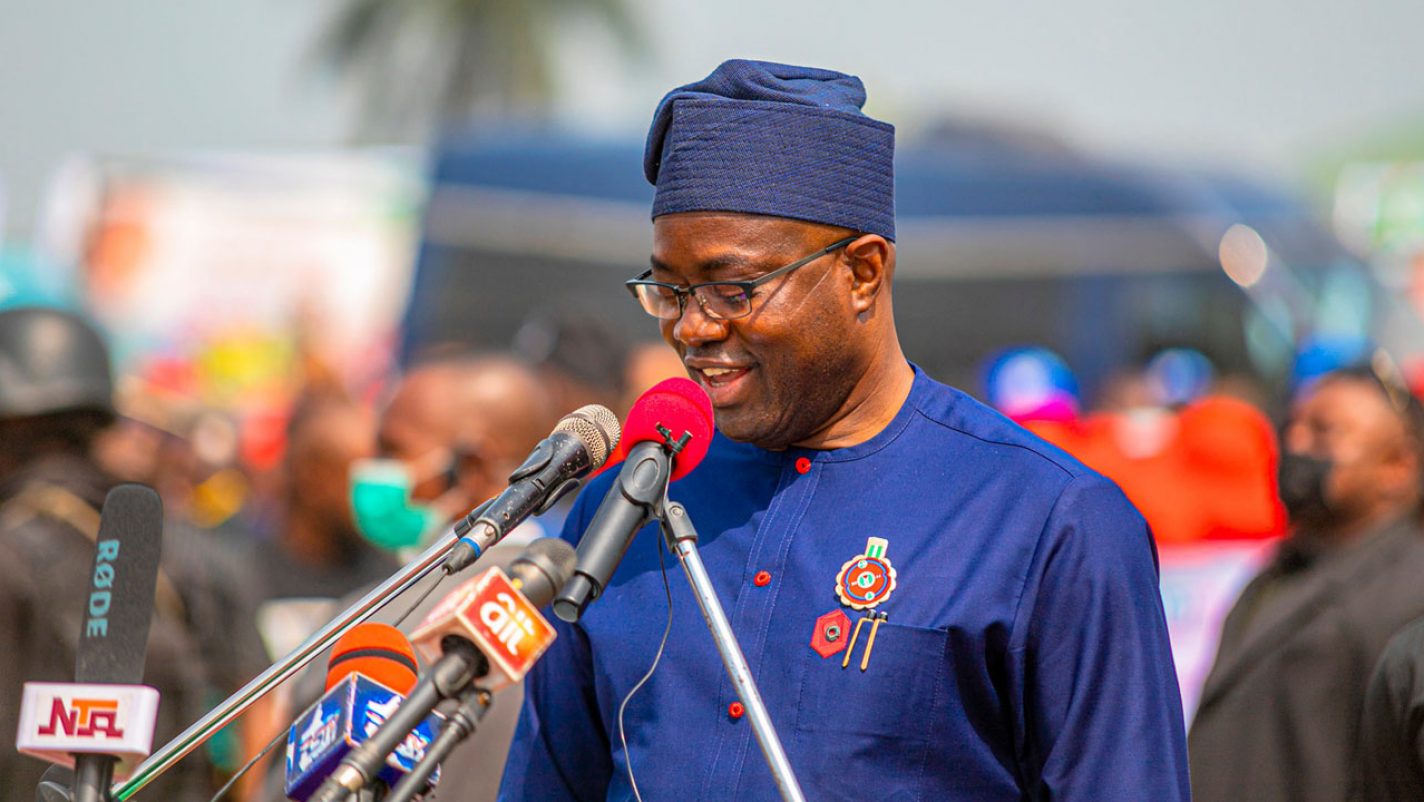
OYO State Governor, Seyi Makinde, has declared his intention to contest the 2027 presidential election under the platform of the Allied Peoples Movement amid growing coalition talks among opposition parties.
Makinde made the declaration on Thursday, May 14, during a rally at Mapo Hall in Ibadan, where leaders of a faction of the Peoples Democratic Party and the APM formalised a political alliance ahead of the 2027 general elections.
Addressing supporters at the event, the governor formally unveiled his bid for Nigeria’s top office.
“I, Oluseyi Abiodun Makinde, Excellency, announce my candidacy for the position of the President of the Federal Republic of Nigeria,” the governor said at the event.
The announcement followed the signing of a Memorandum of Understanding between the APM and the Kabiru Turaki-led faction of the PDP.
The agreement was signed in Ibadan by representatives of both parties, including Seyi Bamidele for the PDP faction and Oladele Oyadeji for the APM. Makinde and APM National Chairman, Yusuf Dantalle, also signed the pact on behalf of their respective political camps.
Speaking earlier on the alliance, the spokesperson for the Turaki-led PDP faction, Ini Ememobong, reportedly said the partnership emerged from opposition meetings held during the All Opposition Political Party Leaders summit in Ibadan in April.
The ICIR reported that on Saturday, April 25, leaders of major opposition political parties in Nigeria resolved to work towards presenting a single presidential candidate for the 2027 general election as part of efforts to challenge the ruling All Progressives Congress (APC).
The resolution was announced at the end of the National Summit of Opposition Political Party Leaders held in Ibadan, Oyo State, where key opposition figures gathered to discuss coalition-building and preparations ahead of the next general election.
Among those present were former Vice President Atiku Abubakar, former governors Peter Obi, Rotimi Amaechi, Rabiu Kwankwaso, and Rauf Aregbesola, among others.
Speaking at the summit, Makinde warned against one-party dominance, invoking the memory of the violent political crisis known as “Operation Wetie,” which rocked the old Western Region in the 1960s.
Since then, the African Democratic Congress (ADC) has conducted its primary elections, while some political actors, including Peter Obi and Rabiu Kwankwaso, have moved to the Nigeria Democratic Congress (NDC) to pursue their presidential ambitions.
The ICIR reports that the latest development came against the backdrop of a prolonged leadership crisis within the PDP, which has deepened since the fallout from the party’s 2023 presidential primary.
The internal dispute began after former Vice President Atiku Abubakar emerged as the PDP presidential candidate ahead of the 2023 election, defeating former Rivers State governor, Nyesom Wike, and other aspirants. The outcome triggered divisions within the party over zoning arrangements and leadership control.
The disagreement later evolved into a wider power struggle between camps loyal to Wike and those aligned with governors including Makinde and Bauchi State Governor Bala Mohammed.
By late 2025, the crisis worsened after rival conventions and parallel National Executive Committee meetings produced opposing leadership structures within the party. A faction backed by Wike installed a caretaker committee led by Abdulrahman Mohammed and recognised Samuel Anyanwu as its national secretary, while another bloc elected Kabiru Turaki as national chairman during a separate convention in Ibadan.
The conflict subsequently led to suspensions, expulsions and court battles between both camps.
Recently the Supreme Court nullified the Ibadan convention organised by Makinde-backed faction of the PDP in November 2025. The court had lampooned the faction for disobeying subsisting court orders.
The convention produced a National Working Committee led by Turaki. The court also struck out the majority judgment of the Court of Appeal, which in December had upheld the removal of Anyanwu as the PDP’s national secretary.
Following the judgment, both Makinde and Wike-aligned blocs have continued to assert control over the PDP, with each side interpreting the ruling in its favour.
While the Makinde faction has insisted on restructuring the party through its organs, the camp loyal to the minister maintained that the Supreme Court decision validated its control and structures.

Mustapha Usman is an investigative journalist with the International Centre for Investigative Reporting. You can easily reach him via: musman@icirnigeria.com. He tweets @UsmanMustapha_M