back to top
Home Blog Page 133

Christian genocide:Miyetti Allah hits back at US Congress over proposed sanctions

0

THE Miyetti Allah Cattle Breeders Association of Nigeria (MACBAN) has criticised the newly proposed United States (U.S) House Resolution 860, accusing American lawmakers of misrepresenting pastoralists and ignoring their long history of suffering.

MACBAN President, Baba Ngelzarma, at a press briefing held on Sunday, 16 November, called on the U.S. government to amend the resolution, which proposes sanctions, including visa restrictions and asset freezes against individuals and groups allegedly involved in religious persecution.

The association argued that the measure fails to recognise that pastoralists are among the groups most affected by violent conflicts in Nigeria’s rural areas.

MACBAN’s statement was in response to the filing of H.Res. 860 in the 119th U.S. Congress by Representative Christopher Smith, with Bill Huizenga as co-sponsor.

The resolution proposes sanctions such as visa restrictions and asset freezes targeted at MACBAN and other Fulani-led groups, as stated on the US Congress website.

It also advises that Fulani-Ethnic Militias operating in states like Benue and Plateau be added to the Entities of Particular Concern list under the International Religious Freedom Act.

MACBAN, however, rejected any association with terrorist groups and reiterated its condemnation of all forms of terrorism in Nigeria.

“MACBAN respectfully calls for revising H.R. 860 to remove all mention of MACBAN. We wish to state clearly and without ambiguity: MACBAN does not support, condone, harbour, finance, or protect any form of criminality, extremism, or violence.

MACBAN is not and has never been an armed group or violent organisation. We condemn in the strongest possible terms banditry, cattle rustling, kidnapping, terrorism, or any crime whatsoever,” MACBAN president said.

Ngelzarma maintained that rural insecurity in Nigeria had also taken a heavy toll on pastoralists, saying thousands were killed between 2015 and 2025 by cattle rustlers, bandits, armed vigilantes, militias and extremist groups.

He cited verified figures showing that more than 18,640 pastoralists were killed within the period, about 1,298,802 displaced, 87,543 houses destroyed, and over 1,114,519 cattle rustled or slaughtered, with an additional 656,555 small ruminants lost across 17 states.

MACBAN  described these figures as both a profound human tragedy and a significant setback for Nigeria’s livestock sector and food systems. The association urged the U.S and other international actors to take these “human and economic losses” into account when evaluating the pastoralist community.

The group also drew attention to what it called targeted assassinations, noting that several of its officials who assisted security agencies in uncovering criminal networks had been killed, including its state chairmen in Nasarawa, Katsina, Kogi and Plateau, while others had been threatened for refusing to protect offenders.

While calling for caution on profiling the group, Ngelzema added that the National Vice President (I), Munnir Atiku Lamid, has been missing since June 2023 after disappearing while travelling from Katsina to Kaduna.

He stressed that portraying the entire pastoralist population as criminals reflects a misunderstanding that risks deepening their stigmatisation.

MACBAN appealed to the U.S. Congress to consult credible local actors, including pastoralists, farmers, civil society groups, and security agencies, when carrying out assessments.

The group also called for evidence-driven evaluations that factor in the humanitarian impact on pastoralists and advocated sustained investment in pastoralist infrastructure such as grazing reserves, veterinary care, water supply, healthcare, and education.

“We do not seek protection because we are violent; we ask for support because we are under threat,” MACBAN said.

The group further reiterated its dedication to peace-building and unity, and urged that the pastoral majority should not be profiled because of the actions of a few criminals.
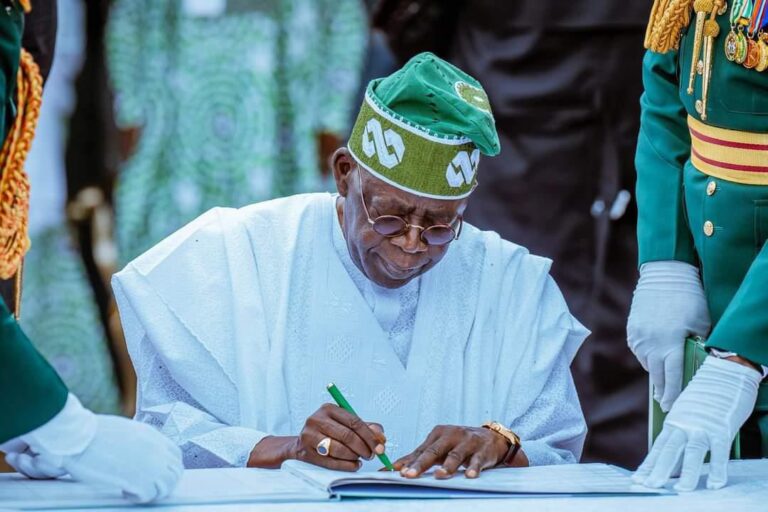
Christian genocide: Tinubu dispatches peace envoy to Plateau

0

IN renewed efforts to resolve lingering communal tensions in Plateau State, the Federal Government has expanded its grassroots peace consultations with a visit to prominent Christian cleric, Ezekiel Dachomo, a Reverend and the Chairman of the Regional Church Council (RCC) in Barkin Ladi.

This was made known in a statement by the state house on Sunday, November 16, 2025, signed by a senior media aide, Bayo Onanuga.

The delegation was led by a Senior Special Assistant to President Bola Tinubu on Community Engagement (North Central), Abiodun Essiet, on Thursday, November 13, as part of a two-day mission to reinforce intercommunal dialogue and rebuild trust among conflict-affected communities.

The visit comes days after Folusho Oyinlola, a Major General and General Officer Commanding 3 Division of the Nigerian Army and Commander of Operation Enduring Peace (OPEP), assured Dachomo of maximum protection following the cleric’s reports of receiving death threats over his comments on alleged attacks on Christians in Plateau State.

Dachomo had earlier stated in several Facebook videos that he has been threatened through calls, text messages, and social media because of his advocacy. He also claimed attempts were previously made on his life during mass burials, referencing the killing of Senator Gyang Dantong in a similar circumstance.

During the visit,  Essiet addressed widows and community members alongside Rev. Dachomo, emphasising the president’s commitment to healing divides and strengthening coexistence among the Plateau’s diverse groups.

Essiet, a senior special assistant on community engagement in the North Central Zone, spent two days in the state. She met Christian clerics and Fulani Miyetti Allah community leaders.

The ICIR reports that the efforts culminated in a town hall meeting in Jos.

Also, delegates from various local government areas, traditional rulers, women, and youth leaders gathered to discuss ways to strengthen community-based peace structures and promote coexistence among diverse communities.

Essiet visited  Dachomo in Barkin Ladi, where discussions centred on faith-based leadership and its role in promoting peace, unity, and social development.

Along with Dachomo, she addressed some widows and conveyed President Tinubu’s message of fostering ethnic reconciliation in the state.

Recall, Dachomo has been the loudest voice of Christian communities in the state, which has drawn both local and international attention to the ethno-religious crisis in the region.

The statement highlighted that, as part of early wins from the engagements, a long-running dispute in Jos South between Agha Farm owner, David Toma, and herders over the seizure of two cows was resolved.

The Chairman of Miyetti Allah Cattle Breeders Association of Nigeria (MACBAN) in Bassa local government area,  Isah Yau, paid N500,000 compensation to Toma, who released the livestock, with all parties signing an undertaking to maintain peace.

Essiet reaffirmed that President Tinubu remains committed to stabilising Plateau State through inclusive governance and locally driven conflict-resolution mechanisms, describing the Community-Based Peace Structure as a cornerstone of long-term stability in the North Central region.

Forty-Five Days that Changed Elections in Africa?

0

Chidi Anselm Odinkalu

An unlikely coincidence of ballots in a forty-five day period from the middle of September to the end of October 2025 has cast a new light on the state of democratic governance in Africa. And this now threatens to unscramble the ritual hollowness that has become the fate of elections on the continent under the indifferent watch of the African Union and other regional institutions in Africa. How the continent’s leaders and institutions handle the aftermath could have serious implications for the stability of the continent.

On 16 September, Malawi went to the polls to elect their president. The last time the country did that in 2019, it produced results that were so transparently rigged that five judges of the Constitutional Court of Malawi, wearing bullet-proof vests, were needed to set aside the result declared by the electoral commission. That was only the second time in Africa’s history that a court would nullify the declared outcome in a presidential election.

The annulled result had favoured then incumbent and fifth president of the republic, Peter Mutharika (a long-serving Law Professor and brother of Malawi’s third president, Bingu wa Mutharika), in a contest against Lazarus Chakwera, a theologian and pastor with the Assemblies of God Church in Malawi. In the re-run that followed the judicial nullification in 2020, Chakwera prevailed and the people ousted Peter Mutharika from the presidency.

The contest in September 2025 pitted 85 year-old Peter Mutharika against his nemesis, Lazarus Chakwera. In the preceding five years, President Chakwera had managed to squander the considerable civic goodwill that powered him into office. Despite being 15 years younger than Mutharika, President Chakwera lost resoundingly to his older opponent who secured 56.8% of the vote.

Malawi may have vindicated the trust of both the voters and of the candidates in a test of the will of the people, but it is an outlier in a continent that has grown used to seeing elections as charades. This reluctance for credible ballots was evident when the Central African country of Cameroon went to the polls nearly one month later on 12 October 2025, to elect their president. The incumbent, Paul Biya, was a 92 year-old, whose sojourn in Cameroon’s government dates back to his appointment as Chief of Staff in the cabinet of the Minister of Education in 1964. In 1975, President Ahmadou Ahidjo made him Prime Minister. On 6 November 1982, two days after the resignation of President Ahidjo on grounds of ill-health, Biya ascended to the presidency and has ruled the country for 43 years since.

At 92, Paul Biya is the oldest serving president in the world, only outlasted in office by Teodoro Obiang, president of the neighbouring Equatorial Guinea, who has been in office since he toppled his uncle, Macias Nguema, in August 1979 before executing him. In the election this year, his main opponent was Issa Tchiroma, a 35-year veteran in the cabinet of President Biya, who stepped down from the ruling Cameroon Peoples’ Democratic Movement (CPDM) and from the cabinet in order to run against his former boss.

It took the Constitutional Council 15 days to tabulate the figures in an election which had 8.1 million registered voters with an average turnout of about 68.5%. When it eventually declared that outcome on 27 October, the Constitutional Council announced Biya as winner with 53.66% of the votes in disputed results. That in an election in which he was unable to campaign because of infirmity. Independent analysts who have examined the official numbers insist he “couldn’t have won.”

With the result, Biya – who was born one month after Adolf Hitler assumed office as German Chancellor and in the month preceding the inauguration of Franklin Delano Roosevelt as the president of the United States of America – entered upon his seventh presidential term in a country in which the median age belongs to children who were born in 2006. By the time of the next election, he will be nearly one century old. In the wake of the announcement, United Nations Secretary-General, António Guterres, pointedly declined to extend congratulations to President Biya. Instead, he focused his attention on the need for a “thorough and impartial investigation” of the “post-electoral violence and…. reports of excessive use of force.”

Paul Biya can at least claim that he had a genuine contest against a genuine opponent. In Côte d’Ivoire, West Africa, the contest two weeks later, on 25 October 2025, pitted incumbent President Alassane Ouattara – whose ambitions drove the country to the brink of fragmentation at the beginning of the millennium – against no one.

When the result was announced, President Ouattara, a child of the Second World War, having been born on New Year’s Day in 1942, contrived at 83 years to award himself nearly 90% of the vote and a fourth term in office in an election from which he barred every credible competition. That was indeed a generous four percentage points lower than the 94% of the votes that he awarded himself in 2020. In power since 2010, Ouattara was supposed to be term-limited after two terms of ten years in office. At 83, he expects to rule until at least he is 88, which would still be five years younger than President Biya’s current age.

The election in Tanzania four days after Côte d’Ivoire’s took place in a graveyard. The incumbent and candidate of the ruling Chama Cha Mapinduzi (Party of the Revolution) was Samia Suluhu Hassan, who inherited the office when her principal, John Pombe Magufuli, died in March 2021.

Ahead of the contest, however, it became evident that Samia would not tolerate a fair contest. Under her leadership, the government unleashed what Amnesty International described as a “wave of terror” designed to make her candidacy unopposed and the ruling party unchecked in its march to a pre-determined seventh decade in power. On the day of the contest on 29 October, protests unexpectedly erupted in key cities, such as Dar-Es-Salaam, Arusha, Mbeya, and Mwanza. Under cover of a media blackout complemented by an internet shutdown imposed on the day of the ballot, Samia’s government orchestrated a campaign of targeted mass murder in population centres suspected to be opposition strongholds.

President Samia’s electoral commission declared her winner with 87% voter turnout and nearly 98% of the vote. As Tanzanians in different parts of the country woke up to find bodies on their courtyards with fatal injuries from unknown persons and morgues overflowing with fresh cadavers reportedly being disappeared under instructions of the government, President Samia turned up at a military base in new capital city, Dodoma, where on the fourth night following the vote, she was stealthily inaugurated for a new term.

Initial estimates putting the casualty count in the hundreds were quickly eclipsed by more updated tallies of over 3,000 killed in under 72 hours. Fresh reporting by the New Humanitarian put the number over 5,000 and suggests that the casualty count may indeed be over 10,000. Around the country, initial trepidation gave way to alarm at the scale of the massacre. That alarm has now been ousted by outrage.

Meanwhile, for the first time in their histories, official election observer missions deployed by the African Union (AU) and the Southern African Development Community (SADC) both concluded separately that the election in Tanzania “did not comply with AU principles.” This caught many people unprepared. Now both institutions are scrambling to figure out what to do. There is an emerging consensus that President Samia is illegitimate. The leaders of both institutions must articulate consequences and citizens have a right to expect them to do so clearly.

Consensus is also growing around the urgent need for an independent, international investigation and accountability. Meanwhile, Tanzania’s young people prepare for nation-wide protests on 9 December 2025. The symbolism is significant: it is World Anti-Corruption Day; it is the anniversary of the adoption of the Genocide Convention; and it is Tanzania’s Independence Day.

A lawyer and a teacher, Odinkalu can be reached at chidi.odinkalu@tufts.edu


Worldcup Playoff: Super Eagles optimistic of victory against Leopards, says Ekong

0

SUPER Eagles’ captain, William Troost-Ekong, has acknowledged that facing the Democratic Republic of Congo in today’s final of the FIFA World Cup Africa Playoff Tournament will be a tough challenge.

However, he expressed confidence that the Super Eagles have what it takes to triumph at the Complexe Sportif Prince Moulay El Hassan.

The ICIR reports that both nations, with five African titles between them, will battle in a decisive encounter that will determine Africa’s representative at the Intercontinental Playoffs, where two additional spots for the 2026 FIFA World Cup in Mexico are up for grabs.

“There is no doubt that the Congolese will be a big challenge. They got here because they are tough and ambitious, and also want to go to the World Cup,” Ekong said.

“However, we have a large group of players here, 24 of them, out of which only about four of us have been to the World Cup (in 2018). There is that adrenaline flowing in their system to go to the World Cup, and I see it as a big motivation for us to conquer,” he added.

The national team advanced to the final playoff round to face the winner of the Cameroon–Democratic Republic of Congo clash after defeating Gabon 4-1 on Thursday, November 12.

Only four members of Nigeria’s current squad, William Troost-Ekong, Alex Iwobi, Wilfred Ndidi, and Chidozie Awaziem, were part of the team that competed at the 2018 World Cup.

Coach Éric Chelle’s side, however, boasts several outstanding players, including Spain-based Cédric Bakambu, France-based Nathaniel Mbuku, former Russia U21 star Theo Bongonda, and Egypt’s Pyramid-based Fiston Mayele. Midfield responsibilities are expected to be handled by English Premier League’s Noah Sadiki and Spain-based Charles Pickel. At the same time, attack-minded Aaron Wan-Bissaka leads a tight defensive line anchored by captain Chancel Mbemba, who is set to earn his 101st cap.

Chelle has all 24 players available for selection, including Iwobi, who will secure his 91st cap, and Moses Simon, on course for his 87th. Ekong confirmed that the squad is fully focused on securing victory on Sunday evening.

“We would have preferred to have taken the automatic ticket, but it didn’t work out. Now, we are here and we have a second chance and we do not intend to bungle it.” Ekong stated.

PDP chairmanship: Turaki promises fresh start, end to impunity

0

THE newly elected Chairman of the Peoples Democratic Party (PDP), Kabiru Turaki, has pledged that his administration will introduce reforms to restore internal democracy and curb impunity within the party.

Delivering his acceptance speech on Saturday, November 15, 2025, in Ibadan, the Oyo State capital, Turaki acknowledged the magnitude of the task ahead but expressed confidence in the party’s leadership and its ability to drive meaningful change.

“The cross you have given us means that you watch us also take it to the Nigerian people, and that we shall do. We are not under any illusion that the task placed on us is a simple one. Our party is at a crossroads now, but we are up to the task; we are up to the challenge,” he said.

The former Minister of Special Duties and Intergovernmental Affairs stated that the new executive team will soon release its operational blueprint to steer its leadership direction.

“Very soon, we shall be rolling out what our guiding principles will be and the modus operandi for achieving them. When we do that, we shall be hitting the ground running from day one,” he added.

Turaki also pledged not to take the mandate given to him for granted, emphasising that the PDP remains grounded in the will of the people. He said the party had retained its name over the years because it truly belongs to Nigerians and assured members that the party would be returned to them, adding that impunity would no longer be tolerated.

The ICIR reports that Turaki clinched victory at the party’s national convention, where delegates from 17 states convened to elect new national officers following the expulsion of former National Secretary Sam Anyanwu, FCT Minister Nyesom Wike, and other top members.

This came after the Peoples Democratic Party (PDP) expelled several prominent figures, including former Rivers State Governor Nyesom Wike, former Ekiti State Governor Ayo Fayose, and former National Secretary Senator Samuel Anyanwu, among others, over alleged gross anti-party activities, The ICIR reports.

At the convention held at the Lekan Salami Stadium, Turaki secured 1,516 votes.

The election, supervised by former Anambra Central Senator Ben Obi, saw Senator Yakubu Danmarke finish second with 275 votes.

He also announced that former Oyo State Deputy Governor, Taofeek Arapaja, emerged as the party’s new National Secretary.

Turaki is a seasoned legal practitioner with expertise spanning constitutional law, election petition matters, commercial arbitration, cross-border and international criminal law, intellectual property, oil and gas, as well as corporate mergers and acquisitions. He is also a certified Notary Public.

His professional background is reinforced by multiple fellowships and recognitions, including Fellow of the Chartered Institute of Arbitrators (FCIArb) and Fellow of the Institute of Corporate Administration, underscoring his depth of knowledge and prominence within the legal field.

In public service, Turaki has occupied notable positions such as Minister of Special Duties and Intergovernmental Affairs and  Supervising Minister of Labour and Productivity.

Within the PDP, he serves as the Chair of the PDP Former Ministers’ Forum, a position that strengthens his network and influence within the party.

Turaki has also previously sought elective office, having contested for the governorship of Kebbi State and vied for the PDP’s presidential ticket, reflecting his long-standing involvement in national politics.

PDP expels Wike, Anyawu, others

0

THE Peoples Democratic Party (PDP) has expelled several prominent figures over allegations of gross anti-party activities at the ongoing 2025 National Convention.

Those affected include former Rivers State governor Nyesom Wike, former Ekiti governor Ayo Fayose, former PDP National Secretary Senator Samuel Anyanwu, senior lawyer Adeyemi Ajibade (SAN), Austin Nwachukwu, and others listed in the motion adopted by delegates.

The expulsions were approved after the reading of a motion citing multiple breaches of the PDP Constitution, including alleged support for opposition candidates during the last election cycle.

Delegates voted overwhelmingly in favour of the disciplinary action, marking one of the party’s boldest internal decisions in recent years.

The motion, moved during the convention’s plenary, noted that the affected members were found to have engaged in conduct capable of undermining party unity, violating provisions of Articles 10, 58, and 59 of the PDP Constitution (2017 as amended).

Party leaders say the decision reflects a renewed push to reposition the PDP ahead of the 2027 general elections, with an emphasis on discipline, loyalty, and internal cohesion.

The crisis that culminated in the expulsion of several high-ranking PDP members has been years in the making.

Internal disagreements sharpened after the 2023 general elections, when key figures within the party openly disagreed over power-sharing arrangements, candidate selection, and campaign direction.

The fallout led to fractured loyalties, parallel structures in some states, and accusations of sabotage during the presidential and governorship elections.

Benin lawmakers extend presidential term to seven years

0

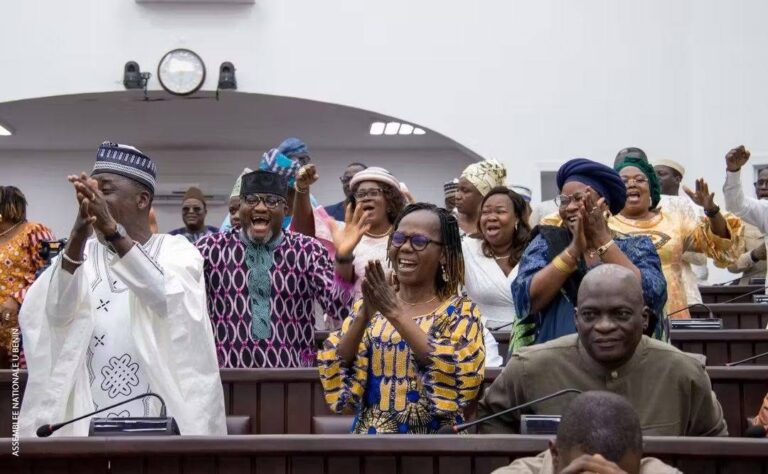
BENIN’S National Assembly has extended the presidential tenure from five to seven years and established a bicameral parliament.

The development was announced on Saturday, November 15, in a statement posted on the official Facebook page of the Assemblée Nationale du Bénin.

Lawmakers passed the bill during a plenary session held on Friday at the Palace of the Governors in Porto-Novo.

According to the statement posted in French, translated using Google Translate, 90 deputies voted in favour of the amendment while 19 opposed it, effectively altering the country’s 1990 Constitution, last revised in 2019.

“The Deputies of the 9th Legislature… adopted by 90 votes for and 19 against, the law modifying the Constitution of the Republic of Bénin,” the Assembly said.

The chamber explained that, in compliance with Article 154, the proposal first required a three-quarters majority in a preliminary vote. Legislators met this threshold with 87 votes for and 22 against before proceeding to the final secret ballot.

Fifteen new articles were introduced and 18 amended. One of the most consequential changes appears in the revised Article 42, which now provides: “The President of the Republic is elected by direct universal suffrage for a term of seven years, renewable only once. No one may, in his or her lifetime, serve more than two terms as President of the Republic.”

Another major reform is the creation of a bicameral parliament. Under the updated Article 79, legislative authority and oversight of the executive will now be exercised by two chambers — the National Assembly and a newly created Senate.

The amendment also sets a seven-year renewable term for deputies under Article 80. It further introduces an anti-defection clause mandating that any lawmaker who resigns from the party that sponsored their election automatically forfeits their seat.

Accordingly, Article 113.1 defines the Senate as an institution charged with regulating political life and safeguarding national unity, development, territorial defence, public security, democracy, and peace.

The law also extends the tenure of mayors and municipal councillors to seven years, renewable.

ASUU threatens fresh strike over unresolved issues

0

THE Academic Staff Union of Universities (ASUU), Bauchi Zone, comprising six universities, has announced its readiness to embark on a fresh strike, citing the Federal Government’s failure to address unresolved demands.

The zone includes the Federal University, Kashere (Gombe State); Abubakar Tafawa Balewa University, Bauchi; University of Jos, Plateau State; Bauchi State University; Plateau State University, Bokkos; and Gombe State University.

According to Punch, the Zonal Coordinator, Timothy Namo, while addressing reporters in Jos on Saturday, November 15, expressed disappointment that, despite previous warnings and a two-week strike notice, the government had made no substantial progress.

“The paltry increase proposed by the government is a drop in the ocean and far below expectations,” Namo said, noting that the union had rejected the offer.

He accused some government officials of undermining the renegotiation process and misrepresenting the proposals made.

The union leader questioned the government’s commitment to education, pointing to a significant rise in federal and state revenue allocations in recent years, yet education continues to suffer. “There is no sufficient evidence from the Government’s response so far to suggest that education is a priority in Nigeria and that the Government truly desires to avert crises in the universities,” he said.

Namo urged traditional rulers, students, civil society groups, and the National Assembly to pressure the government to meet ASUU’s demands, warning that failing to act could trigger a full-scale strike.

He also highlighted statistics showing that allocations to states rose from 3.92 trillion naira in 2022 to 5.81 trillion naira in 2024, while federal allocations increased from 3.42 trillion naira to 4.65 trillion naira over the same period. “This confirms that it is not lack of funds but lack of political will and misplaced priorities that make education suffer in Nigeria,” Namo said.

The national branch of the union abruptly ended its two-week warning strike, which commenced on Monday, October 13, after “useful engagements” with the Nigerian government.

ASUU’s long-standing demands include the release of revitalisation funds, payment of earned academic allowances and withheld salaries, settlement of promotion arrears, and payment of outstanding third-party deductions such as check-off dues and cooperative contributions.

The union has also criticised the unchecked establishment of new universities and alleged government interference in university autonomy.

The comedy economy: Nigeria’s online video skits are making millions

0

By Nnamdi O. Madichie, Nnamdi Azikiwe University

SHORT comedy videos circulating on social media have created a booming industry in Nigeria in the past few years. The country’s comedy creators put their skits out on platforms like YouTube, TikTok and Instagram to reach a massive audience.

As these online comedians gain followers they make their money from advertising, by endorsing brands as influencers, and through collaborations. In Nigeria the industry is popularly called the skit economy.

This phenomenon represents more than a major new entertainment trend. It highlights the ingenuity of young Nigerians in using technology to create livelihoods and influence culture. In the process, they contribute to national economic growth.

The skit industry has joined the likes of Nollywood film, Afrobeats music and local fashion to put the country on the entertainment map globally.

The rise of the industry is chronicled in the 2024 book Skit Economy: How Nigeria’s Comedy Skit-Makers Are Redefining Africa’s Digital Content Landscape, by entrepreneurship scholar and polling guru Bell Ihua. His work is supported by findings from the Africa Polling Institute.

As he explains:

“The Nigerian entertainment industry is undoubtedly creating job opportunities and contributing to the country’s diversification from oil … The industry is rated as the second most significant employer of youths in Nigeria after agriculture, employing over one million people.”

According to his book, skit-making is estimated to be Nigeria’s third largest entertainment industry sector, with a net worth of over US$31 million.

As a marketing scholar focusing on the cultural and creative industries and digital entrepreneurship who has had the privilege of interviewing Ihua, I’d like to share my thoughts about his book.

What becomes clear as you read it is that social media platforms have not only amplified the reach and impact of skits. Online platforms have allowed creators to reach global audiences while preserving the culture, language and stories unique to their communities. Skit creators prove the potential of comedy as a medium for both entertainment and cultural diplomacy.

However, as the industry grows, argues Ihua, the skit economy must navigate new challenges related to representation and ethics.

What’s in the book

The book’s eight chapters cover Africa’s digital content landscape, taking into account the continent’s youth bulge and the evolution of social media and content creation.

Ihua then explores Nigeria’s booming cultural and creative industries before homing in on comedy skit-making in chapter 4. It attempts to classify various types of digital content creation in Nigeria and outline the trends in online videos before embarking on an in-depth national study on comedy skit-making in chapter 7. He then considers implications for public policy and future research in the field.

What makes the book so compelling is that it recognises skit-making as an ecosystem on its own terms. It then defines what that ecosystem looks like in Nigeria. In the process Ihua makes it clear why books like this matter.

They are a call for taking entertainment seriously and investing future research in it. Social media and digital technology have reconfigured an unsung economic sector that’s capable of including the bulging youth population in the national conversation. This is despite limited institutional support.

What’s driving the boom

Ihua traces its boom to COVID-19 lockdowns that began in Nigeria in 2020:

“They provided a source of laughter and relief to many Nigerians, as most people found it safer to stay at home and get entertained with skits.”

Today, writes Ihua, two-thirds of Nigerians watch comedy skits frequently. According to his study they serve as stress relief and social commentary.

With 63 per cent of Nigerians under 25 and high social media uptake, skit-making taps into abundant creative energy and mobile-first audiences.

Value

The Skit-Economy highlights how skit comedians create direct and indirect jobs (editors, social media managers, brand consultants). They generate income through endorsements, platform monetisation (the revenue they get from advertising on a space like YouTube), and various partnerships and collaborations.

Their cultural value is not just measured in their global influence. Skits reflect everyday Nigerian realities with humour and satire, influencing local public opinion and reinforcing national identity.

As prominent Nigerian entrepreneur and cultural worker Obi Asika notes in the book’s foreword:

“Their success … stems from a combination of talent, creativity, innovation, an entrepreneurial spirit, and a deep understanding of their audience’s preferences and cultural nuances.”

Challenges

However, Ihua identifies a number of challenges facing the industry.

Financial rewards are unequal. Only top creators earn sustainably. For many skit-makers revenue is unstable.

Working from Nigeria means dealing with infrastructure deficits. Electricity supply is unreliable, the internet is expensive and there is limited access to digital production tools.

Nigerian skit-makers also operate in a climate where there are weak intellectual property protections. Piracy and unauthorised reuse undermine earnings.

The job can be an ethical minefield. Pranks can be harmful. They can perpetuate stereotypes and be insensitive to minorities.

These challenges are enhanced by a policy vacuum. There is little government recognition or support for digital creatives in Nigeria.

An African future?

For Ihua, skit-making is a good example of how new digital industries can aid in absorbing Africa’s growing youth workforce. With adequate support, skit-making can help provide dignified livelihoods.

So, for Ihua these creators are not merely entertainers. They’re also job creators, cultural ambassadors, and catalysts of digital transformation.

For Africa broadly, the rise of skit-making underscores the continent’s potential to innovate in ways that are uniquely aligned with its youthful demographics and digital future.

Nigeria’s skit economy offers a blueprint for the continent. Already, skit-making is spreading to other countries, like Ghana, Kenya and South Africa. The lines are blurring between stand-up or TV comedians and skit makers.

If nurtured with the right infrastructure, policy, and industry support, the skit economy could evolve from an informal hustle into a structured pillar of Africa’s creative economy. This could further solidify the continent’s role in the global cultural imagination.The Conversation

Nnamdi O. Madichie, Professor of Marketing & Entrepreneurship, Unizik Business School, Nnamdi Azikiwe University

This article is republished from The Conversation under a Creative Commons license. Read the original article.

Fire guts 2 factories in Kwara

0

TWO separate fire outbreaks have razed production facilities in Ilorin, Kwara State, destroying goods and equipment worth millions of naira within seven hours.

The first incident occurred late Friday at Kunzol Multi-Sector Nigeria Limited, a yam flour and crunchy garri processing factory in the Kilanko–Agbonka area of Ilorin South Local Government.

It was gathered that the fire started around 10:10 pm after heat remnants from a furnace used during production ignited combustible materials in the facility.

Confirming the incident in a statement on Saturday, November 15, the Head of Media and Publicity of the Kwara State Fire Service, Hassan Hakeem Adekunle, said firefighters arrived to find the factory’s entire production section already engulfed in flames.

“Preliminary investigation revealed that the fire was triggered by remnants of unquenched fire, which ignited combustible materials in proximity, leading to rapid escalation,” the statement quoted him as saying.

Adekunle added that operatives were able to stop the blaze from spreading to nearby buildings, preventing a wider industrial disaster.

The Director of the Fire Service, Prince Falade John, warned factory owners against improper shutdown of heat sources at the close of work, calling negligence with fire remnants a major cause of avoidable industrial incidents.

A second fire occurred in the early hours of Saturday, November 15, at Unik AJ Prints, a printing shop located along Opomalu Road in Ilorin East Local Government.

The fire, which eyewitnesses said began around 3:15 am, gutted a storey building housing printing machines, inverter units and other production materials.

Adekunle said firefighters responded swiftly despite the difficult hour and were able to stop the flames from spreading to other buildings in the congested area.

Preliminary reports indicated that a spark from the facility’s inverter system ignited nearby flammable materials.

Commenting on the incident, Prince Falade advised businesses using solar and inverter systems to install them in isolated, fire-protected spaces.

He urged residents and business owners to adopt fire-retardant materials and ensure proper installation of alternative power systems.

The Kwara State Fire Service reaffirmed its commitment to public safety and prompt emergency response across the state.