Home Blog Page 134

Troops nab terrorists’ drug supplier in Adamawa

0

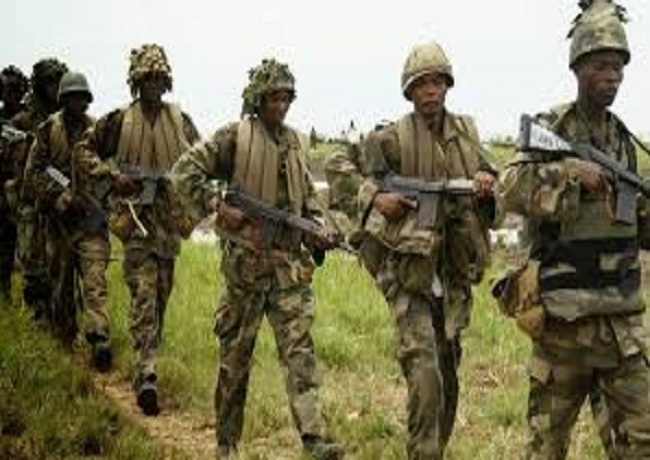
THE headquarters of the Joint Task Force Operation Hadin Kai in the Northeast says troops of the 232 Battalion (Tactical), under Sector 4 of the theatre, have recorded a breakthrough with the arrest of a key drug supplier to Boko Haram in Adamawa State.

The suspect, 45-year-old Zubairu Muhammed, was apprehended in the early hours of Thursday in Uba town.

In a statement, the Theatre Spokesman, Sani Uba, a lieutenant colonel, said, “The suspect is believed to be a major distributor of cannabis sativa and ‘ice’ substances to terrorists across Askira-Uba, Chibok, Michika, and Damboa areas of Adamawa and Borno states.”

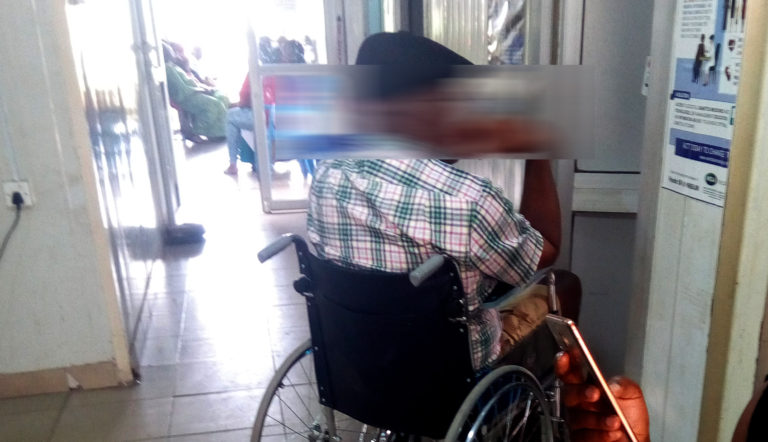
Suspected terrorists drug supplier

Recovered items include 14 blocks of cannabis sativa valued at over ₦1 million, 43.9 grams of “ice” worth more than ₦3 million, and two Army camouflage T-shirts allegedly used while distributing the drugs.

According to the military, preliminary investigations indicate that the seized substances will be handed over to the National Drugs Law Enforcement Agency (NDLEA)Yola Command, for further action.

The Military High Command commended the troops for their performance and urged them to sustain the operational tempo.

In May, The ICIR reported that the arrest of four security personnel was aiding terrorist operations in the North-East.

The suspects include two personnel from the hybrid forces who had been working alongside troops to combat the insurgency.

According to the Director, Defence Media Operations, Markus Kangye, the hybrid forces were arrested during operations from April 26 to 29 across Bama, Kukawa, and Madagali LGAs.

CAPPA urges FG to declare emergency on diabetes care, raise SSB tax

0

THE Corporate Accountability and Public Participation Africa (CAPPA) has urged the Federal Government to declare a national emergency on diabetes care.

The organisation, in a statement on Friday, November 14, also called on the government to increase taxes on sugar-sweetened beverages (SSBs) to curb the country’s growing diabetes crisis, as Nigeria joins the global community to mark World Diabetes Day.

The World Health Organisation defines diabetes as “a chronic disease that occurs either when the pancreas does not produce enough insulin or when the body cannot effectively use the insulin it produces.”

Symptoms may include intense thirst, frequent urination, fatigue, unintended weight loss and blurred vision. If untreated, the condition can lead to life-threatening complications affecting the eyes, kidneys, nerves and blood vessels.

Type 2 diabetes, the most common form, is strongly linked to obesity, sedentary lifestyles and diet while Type 1 diabetes, although less common, requires daily insulin treatment and currently has no known prevention method.

In its statement, CAPPA said recent data by Diabetes Association of Nigeria (DAN), showed that about 30,000 Nigerians die from diabetes yearly, while over 11 million people live with the disease.

The figures, according to the organisation, far exceeded the International Diabetes Federation (IDF) estimate of roughly three per cent prevalence, or about 2.99 million adults.

The group warned that the high cost of diabetes management, averaging ₦100,000 to ₦120,000 per month, made proper treatment impossible for most Nigerians and threatened the lives of many families struggling under economic hardship.

“This is yet another troubling statistic on the state of Nigeria’s non-communicable diseases (NCDs) burden, and the country’s public health system,” CAPPA stated.

It added, “It is no wonder that Nigeria’s life expectancy is the lowest globally, according to the latest United Nations’ (UN) global health report.”

The CAPPA Executive Director, Akinbode Oluwafemi, said unhealthy diets and the wide availability of sugary drinks and processed foods were driving the surge in diabetes and other non-communicable diseases.

He warned that without decisive policy action, Nigeria risked creating generations dependent on high-sugar beverages, leading to obesity, type 2 diabetes, cardiovascular disease, and early deaths.

Oluwafemi urged the government to implement strong prevention policies, including an SSB tax, front-of-pack nutrition labelling, sodium-reduction targets, and restrictions on marketing ultra-processed foods to children.

He added that the strongest prevention policies required a health system capable of supporting millions already living with diabetes.

The group welcomed the government’s efforts to channel revenues from taxes on tobacco, alcohol and other harmful products into health financing, saying dedicated funds could support NCD prevention and management while alleviating the financial burden on families.

“This is why the Federal Government’s ongoing effort to channel revenues from taxes on tobacco, alcohol, and other harmful products into health financing is significant.

“Dedicating these revenues to initiatives such as NCD prevention and management would provide the predictable funding Nigeria urgently needs, especially as the costs of treating diseases like diabetes continue to push families deeper into poverty,” it added.

The CAPPA stressed that increasing the SSB tax to at least ₦130 per litre and introducing mandatory nutrition labels would reduce consumption, encourage product reformulation, generate revenue for the health sector, and empower Nigerians to make healthier choices.

The ICIR reported that as part of this year’s commemoration, the WHO in a statement noted that diabetes increasingly affects people from childhood to old age.

With the theme, the organisation said every person living with diabetes should have access to supportive environments, policies and health services that promote dignity, effective self-management and long-term wellbeing.

WHO calls for better access to diabetes care amidst rising cases

0

AS the world marks World Diabetes Day today, November 14, the World Health Organization (WHO) has called for urgent improvements in access to care for the condition globally.

It said people living with diabetes at every stage of life deserved affordable and integrated healthcare services.

With the theme, “Diabetes Across Life Stages,” WHO in a statement noted that diabetes increasingly affects people from childhood to old age.

According to the organisation, every person living with diabetes should have access to supportive environments, policies and health services that promote dignity, effective self-management and long-term wellbeing.

The global health body defines diabetes as “a chronic disease that occurs either when the pancreas does not produce enough insulin or when the body cannot effectively use the insulin it produces.”

Symptoms may include intense thirst, frequent urination, fatigue, unintended weight loss and blurred vision. If untreated, the condition can lead to life-threatening complications affecting the eyes, kidneys, nerves and blood vessels.

Type 2 diabetes, the most common form, is strongly linked to obesity, sedentary lifestyles and diet while Type 1 diabetes, although less common, requires daily insulin treatment and currently has no known prevention method.

In 2021, diabetes and diabetes-related kidney disease caused over two million deaths, while high blood glucose contributed to 11 per cent of all cardiovascular deaths.

Rising Burden

Meanwhile, the 2024 data sheet released by WHO shows that the number of people living with diabetes surged from 200 million in 1990 to 830 million in 2022, with prevalence increasing faster in poorer countries.

Despite this rise, more than half of adults with diabetes were not on medication in 2022, a gap most pronounced in low- and middle-income regions.

In 2022, 14 per cent of adults aged 18 years and older were living with diabetes, an increase from seven per cent in 1990. More than half (59 per cent) of adults aged 30 years and over living with diabetes were not taking medication for their diabetes in 2022. Diabetes treatment coverage was lowest in low- and middle-income countries.

“In 2021, diabetes was the direct cause of 1.6 million deaths and 47 per cent of all deaths due to diabetes occurred before the age of 70 years. Another 530,000 kidney disease deaths were caused by diabetes, and high blood glucose causes around 11 pet cent of cardiovascular deaths (1),” the report read.

The WHO noted that diabetes deaths had risen steadily since 2000, even though the overall risk of dying from the four major noncommunicable diseases (cardiovascular diseases, cancer, chronic respiratory diseases and diabetes) fell globally by 20 per cent among people aged 30 to 70 between 2000 and 2019.

Push for preventive measures

The 2025 World Diabetes Day, WHO said, was an opportunity for governments and communities to raise awareness and commit to policies that help reduce the growing burden of the disease.

The agency urged countries to “spread knowledge and create lasting change for all affected by diabetes.”

In 2022, the global health body said its member states endorsed five global diabetes coverage targets to be achieved by 2030 as part of efforts to strengthen early detection and treatment.

These targets include diagnosing 80 per cent of all people with diabetes; ensuring 80 per cent of those diagnosed have controlled blood sugar; and ensuring 80 per cent have controlled blood pressure.

Others are providing statins to 60 per cent of people aged 40 and above; and guaranteeing that 100 per cent of people with type 1 diabetes have access to affordable insulin and blood glucose self-monitoring tools.

Tinubu reappoints Marwa as NDLEA chairman

0

PRESIDENT Bola Tinubu has approved the reappointment of Mohammed Marwa, a retired Brigadier-General, as the Chairman of the National Drug Law Enforcement Agency (NDLEA), extending his tenure till 2031.

This was contained in a statement by the Special Adviser to the President on Information and Strategy, Bayo Onanuga, on Friday, November 14.

The statement noted that the reappointment meant the Adamawa-born former military officer would remain at the helm of the NDLEA until 2031.

“Your reappointment is a vote of confidence in your onerous efforts to rid our country of the menace of drug trafficking and drug abuse. I urge you not to relent in tracking the merchants of hard drugs, out to destroy our people, especially the young ones”, Onanuga quoted Tinubu as saying.

He described Marwa’s tenure at the NDLEA as being marked by major drug busts, including the arrest of more than 73,000 drug traffickers and barons, as well as the seizure of over 15 million kilogrammes of assorted illicit substances.

“Under his leadership, the agency has also rolled out nationwide campaigns aimed at combating drug abuse,” he wrote.

Marwa was first appointed in January 2021 by former President Muhammadu Buhari, following his tenure as Chairman of the Presidential Advisory Committee for the Elimination of Drug Abuse between 2018 and December 2020.

Marwa, who previously served as military governor of Lagos and Borno States, is an alumnus of the Nigerian Military School and the Nigerian Defence Academy (NDA).

After being commissioned as a second lieutenant in 1973, he went on to serve as brigade major of the 23 Armoured Brigade, Aide-de-Camp (ADC) to the then Chief of Army Staff, Theophilus Danjuma, a retired lieutenant general, and later as academic registrar of the Nigerian Defence Academy.

He also served as Deputy Defence Adviser at the Nigerian Embassy in Washington, DC, and later as Defence Adviser to Nigeria’s Permanent Mission to the United Nations.

He holds two postgraduate degrees: a Master of Public and International Affairs from the University of Pittsburgh (1983–85) and a Master of Public Administration from Harvard University (1985–86).

2027: Is opposition politics on the verge of extinction in Nigeria?

0

IN recent months, Nigeria’s political climate has been confronted with a series of crises between opposition actors and state institutions. From police summons to attacks on rallies, the narrative is punctuated by claims of intimidation, suppression, and shrinking space for opposing voices.

Summons and sealed offices

On September 5, 2025, the Kaduna State Police Command extended invitations to former governor and opposition figure, Nasir El-Rufai, along with six senior members of the African Democratic Congress (ADC), for questioning on allegations including criminal conspiracy, incitement of public disturbance, mischief, and causing grievous hurt. 

The invitation, signed by the police’s Deputy Commissioner in charge of the State Criminal Investigation Department (CID), Uzainu Abdullahi, instructed the invitees to appear on September 8 to clarify complaints lodged by unnamed complainants. 

At the same time, the ADC office in Kaduna was sealed off by the police just hours before planned meetings. The police maintained that the sealing and summonses were part of their mandate to preserve peace in the state, while critics accused them of targeting legitimate political activity. 

El-Rufai declined physical attendance at the summons, sending lawyers instead, and lodged a complaint with the Police Service Commission (PSC) requesting review of what he called “unprofessional conduct” and alleged abuse of the Police Act.

Meanwhile, the Human Rights Writers Association of Nigeria (HURIWA) charged that the police and state actors had conspired with political thugs to sabotage peaceful opposition gatherings across Kaduna, Lagos, and Imo states.

ADC also responded to the summons by accusing the federal government of leveraging the police to intimidate opposition, describing the move as a broader assault on democracy.

The party demanded withdrawal of the invitations, unsealing of its offices, and public disclosure of the complaints’ authors.

Violence and rally disruptions

In Lagos, a rally organised by the ADC to welcome Peter Obi and Gbadebo Rhodes-Vivour was invaded by suspected thugs wielding cutlasses and clubs. 

The attackers targeted participants, caused injuries and damaged property, and appeared to overwhelmed police forces present.

Rhodes-Vivour claimed the attacks were coordinated in tandem with police actions: “They locked the gates; said we could not hold our event … In a church, they led thugs in, who came in and scattered everything.”

In response, the Lagos State Police described the allegations as false and insisted that deployed personnel acted professionally without bias. However, critics argued that silencing opposition rallies while protecting or enabling ruling party activity reflects a tilt in state enforcement power.

Coalitions and defections add pressure

The tensions above unfold against the backdrop of a growing opposition coalition and a wave of defections that challenge the balance of power in Nigeria. In July 2025, former Vice President Atiku Abubakar, El-Rufai, former Rivers State governor Rotimi Amaechi, and others launched a new party application, the African Democratic Congress (ADC), to challenge the dominance of the ruling All Progressives Congress (APC).

Still, defections from opposition ranks have surged. Against this trend, the Catholic Bishops Conference of Nigeria warned that the suppression of opposition voices and realignments appears to be driving Nigeria towards a de facto one-party state.

On Tuesday, October 14, the Enugu State governor, Peter Mbah, officially defected from the People’s Democratic Party (PDP) to the All-Progressives Congress (APC).

The governor made the declaration during a statewide broadcast, describing the decision as a necessary step to connect Enugu and the South-East region to the central government in Abuja.

“Today, after a long reflection, we have decided to join the APC,” Mbah Mbah said.

He also stressed that his defection is in the best interest of the region, adding that so many things are still unfolding.

Mbah’s defection came after the defection of the Delta State governor, Sheriff Oborevwori and Akwa Ibom governor, Umo Eno, also moved to the ruling APC.

In political commentary, some analysts attribute current developments to “hyper politics,” where political showmanship overshadows substantive democratic practice. They argue that constant politicking masks a weakening of accountability, inclusion, and policy responsiveness.

PDP in tethers as Atiku, other bigwigs endorse coalition ADC ahead of 2027

Meanwhile, the biggest opposition PDP, has been struggling to stay relevant in Nigerian politics following significant challenges confronting the party.

The internal discord has fractured the party’s leadership and raised questions about its future viability.

The PDP’s leadership void and indecisiveness have deepened internal divisions within the party, which once claimed to be Africa’s largest. National Chairman Umar Damagum’s perceived loyalty to certain party members and failure to address internal grievances have deepened cracks.

The current issues within the PDP, a party that ruled the country for 16 years, started from its 2023 presidential primaries. At the controversial primaries in 2022, former Vice President Atiku Abubakar and former Rivers State Governor Nyesom Wike clashed, a situation that set the stage for a prolonged discord.

A fragile democratic space

Opposition leaders have also accused federal agencies of being weaponised against dissent. Former Vice President Atiku alleged that the Economic and Financial Crimes Commission (EFCC) is used to harass and intimidate opposition members. He cited the arrest of ex-Governor Tambuwal as part of a pattern of targeting coalition actors.

The series of events, which includes police action against El-Rufai and ADC to rally disruptions and pressure on institutions, raises fundamental questions about how permissible it remains to oppose the government in practice. Though Nigeria retains a formally multiparty system, critics argue that the playing field is shrinking.

As institutions, opposition actors, civil society groups, judges, and ordinary citizens navigate these pressures, the capacity for political contest remains under strain. Whether opposition parties can survive and flourish in such an environment may well determine whether Nigeria’s democracy is resilient—or only intolerable.

As the ruling APC and opposition parties navigate the 2027 election terrain, Nigerians are yearning for a better future. Their interests revolve around achieving a more prosperous, stable, and united nation.

Analysts say this desire for a better Nigeria encompasses various aspects, including economic stability, good governance, security, peace, and quality education.

Nigeria qualifies for next round of 2026 World Cup playoffs, beats Gabon 4 -1

0

THE Super Eagles of Nigeria are through to the final round of the 2026 FIFA World Cup African playoffs after a thrilling 4–1 victory over Gabon in Rabat, Morocco, on Thursday night.

The tightly contested match saw Nigeria dig deep to overcome a stubborn Gabonese side, with late goals from Chidera Ejuke and Victor Osimhen sealing the win in extra time.

The Super Eagles appeared on course for victory when Akor Adams broke the deadlock in the 78th minute, taking advantage of a poor back pass from a Gabonese defender to slot the ball past the goalkeeper. But Gabon clawed their way back into the game, equalising in the 88th minute after a defensive lapse from Nigeria.

The tension intensified into extra time when Victor Osimhen missed a golden opportunity to seal the win for Nigeria, firing wide from close range in the 101st minute after being played through on goal.

The miss proved costly, as the match eventually went into extra time.

Meanwhile, seven minutes into the extra time, the Super Eagles regained control of the match, when substitute Chidera Ejuke fired home a clever pass from Wilfred Ndidi.

Their continued push for a security goal paid off when Victor Osimhen made it 3–1 in the 102nd minute, finishing clinically after dribbling past two defenders.

The one-time African Best Player went on to double his tally later in the second half of extra time with a fine finish to make it 4–1.

The result means Nigeria advanced to face the winner between Cameroon and the Democratic Republic of Congo in the final playoff round.

The victory provides a morale boost for the Super Eagles, who had been embroiled in a brief training standoff earlier in the week over unpaid allowances.

Despite the off-field distractions, the team had arguably their most impressive performance in the first half in a long time.

Kenyan Police nab 3 Nigerians over cyber-fraud, illegal stay

0

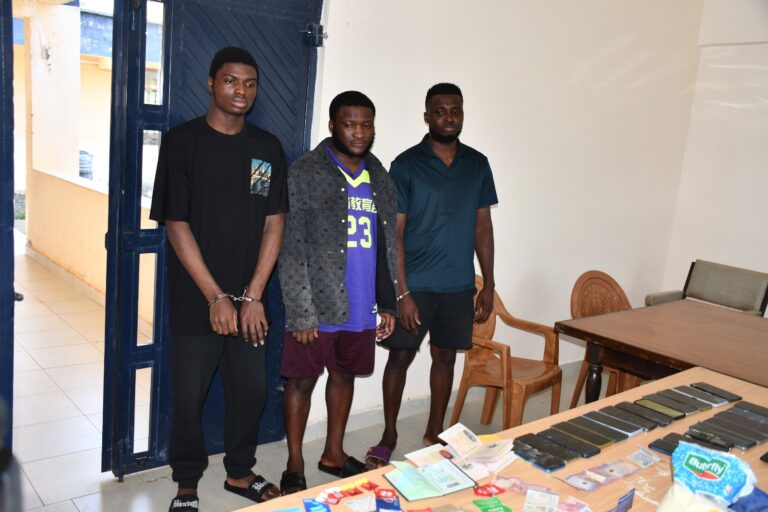
KENYAN police have arrested three Nigerians accused of living in the country illegally and engaging in cybercrime.

In a statement by Kenya’s Directorate of Criminal Investigations, shared on X, authorities said that the suspects, Peter Chukwujekwu, Alazor Chukulute Sunday, and Nnalue Chiagozie Samwel, were arrested during a multi-agency raid at Mwaliko Estate in Mwea town, following reports of suspicious activities in their apartment.

Items allegedly recovered from the suspects

“The suspects Peter Chukwujekwu, Alazor Chukulute Sunday, and Nnalue Chiagozie Samwel were flushed out after members of the public raised an alarm over suspicious movements and late-night activities inside a rented apartment,” the statement read.

The statement said that detectives seized 21 mobile phones, 79 SIM cards, a Dell laptop, and several credit cards from different banks items suspected to have been used in cyber fraud from the suspects.

Some of the items allegedly recovered from the suspects

The statement also noted that investigations showed the trio had overstayed their entry permits and lacked valid work documents to legally remain in the country.

“The three are currently cooling their heels in custody as investigators dig deeper into their network, tracing possible links to cross-border cybercrime syndicates.”

The incident adds to the list of Nigerians arrested for fraudulent activities in the diaspora.

The ICIR reported in January that that security agencies in Kuwait nabbed two Nigerians for allegedly robbing an exchange office in Mahboula.

In September, the Indian police arrested a Nigerian man, Stephane, also known as K Cee Dominic, in Tilak Nagar, West Delhi, for allegedly scamming more than 100 women across the country.

In November, eight Nigerians living in the United Kingdom were jailed for their roles in a string of violent robberies targeting mobile phone stores across London.

Libya deports 80 Nigerians over illegal stay

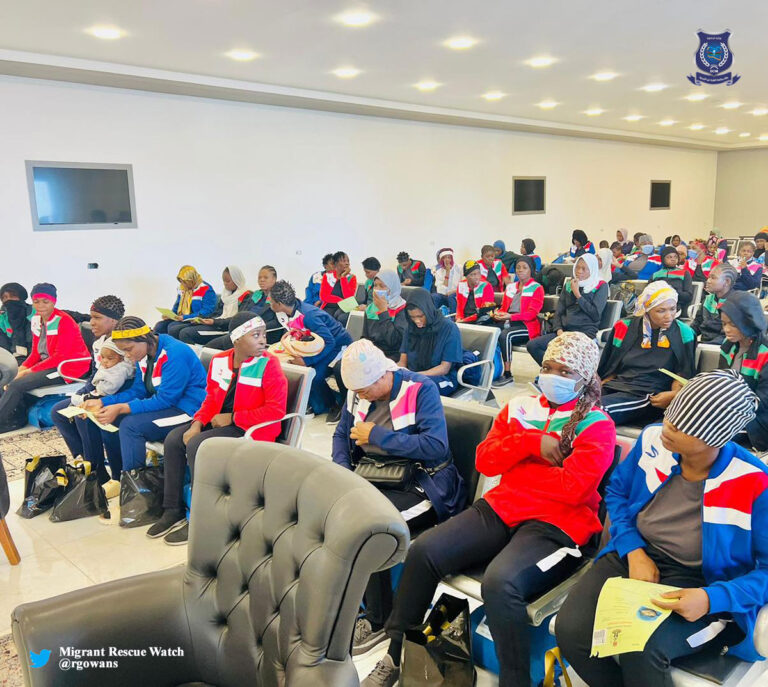
LIBYAN authorities have deported 80 Nigerian migrants from various detention centres as part of ongoing efforts to reduce irregular migration and decongest overcrowded facilities.

In a statement on Wednesday, Migrant Rescue Watch, a group monitoring migrant welfare and human rights in Libya, said the Department for Combating Illegal Migration (DCIM), in partnership with the Nigerian Consulate in Tripoli, facilitated the repatriation exercise via Mitiga International Airport.

“DCIM with Nigerian consular support, repatriated 80 migrants of Nigerian nationality via Mitiga Int. Airport in Tripoli. The group includes migrants transferred by the Judicial Police who were served with judicial deportation order,” part of the statement read.

It added that the latest group of returnees included migrants who had previously been transferred under judicial orders.

“Judicial Police Dept. on orders of Public Prosecutor’s Office transferred a group of undocumented migrant females of Nigerian nationality to DCIM custody in Tripoli. All females were served with judicial deportation order and are awaiting deportation,” the statement added.

It noted that the move came as Libyan authorities, working alongside diplomatic missions, stepped up efforts to manage undocumented migrants and tackle issues of overcrowding and human rights in detention centres.

This followed a similar action by the Libyan authorities in 2024, where 369 Nigerians and Malians were deported.

The ICIR also reported earlier today that International Organisation for Migration (IOM) revealed that two Nigerians were rescued, while two others lost their lives after a vessel carrying 49 people capsized in the Mediterranean Sea.

IOM said that Nigerians were among 49 migrants and refugees aboard a rubber boat that departed from Zuwara in northwest Libya around 3 a.m. on November 3.

Misleading post circulates that Trump revoked 80,000 Nigerian visas

0

A claim that Donald Trump has revoked 80,000 visas, all belonging to Nigerians, has surfaced online.

The claim was made in an X post by a user @MasterBolaji on the app.

The post read:  BREAKING: Donald Trump revokes 80,000 Visas all belonging to Nigerians

Since the claim was posted on Friday, November 7, 2025, it has garnered over 500,000 views, 3,800 likes, 1,000 reposts, and 1,400 comments.

CLAIM

Donald Trump revokes 80,000 visas, all belonging to Nigerians 

THE FINDINGS 

Findings by The FactCheckHub indicate that the claim is MISLEADING! 

Screenshot of the claim; Insert MISLEADING Verdict

A check on the keywords “Trump 80,000 Visas” brought out news-related searches from both international and local media outlets, indicating that the revoked visas affected Nigerians as well as nationals from other countries.

In a report published on November 6, 2025, Fox News stated that the U.S. Department of State had withdrawn the visas of more than 80,000 individuals as part of a broad immigration enforcement initiative launched in January under President Donald Trump’s administration. Those affected included both Nigerians and foreign nationals from other countries.

Similarly, Reuters confirmed that the revocation applied to citizens of multiple countries, including Nigeria, and linked the action to various offences such as driving under the influence, assault, and theft.

Several other local media organisations also reported the development, such as The Cable and BusinessDay, as seen here and here.

THE VERDICT

The claim that Donald Trump has revoked 80,000 visas belonging to Nigerians is misleading; other nationals were also included in the visa revocation.

Japa: 2 dead, 2 Nigerians rescued, 42 missing, in Mediterranean shipwreck 

0

THE International Organisation for Migration (IOM) has reported that two Nigerians were rescued, while two others lost their lives after a vessel carrying 49 people capsized in the Mediterranean Sea.

The News Agency of Nigeria on Thursday quoted the IOM as saying Nigerians were among 49 migrants and refugees aboard a rubber boat that departed from Zuwara in northwest Libya around 3 a.m. on November 3.

“The vessel capsized roughly six hours later after high waves caused the engine to fail. All passengers — 47 men and two women — were thrown overboard.

“The boat drifted for six days before Libyan authorities rescued seven men — four from Sudan, two from Nigeria, and one from Cameroon — on November 8,” the IOM said.

The agency noted that 42 people were missing and were presumed dead, marking the latest tragedy along the Central Mediterranean route.

“The missing passengers include 29 from Sudan, eight from Somalia, three from Cameroon, and two from Nigeria,” the agency added.

The agency explained further that the tragedy occurred just weeks after other fatal shipwrecks near Surman, Libya, and the Italian island of Lampedusa.

“Provided the survivors with emergency medical care, water, and food upon arrival at the disembarkation point in coordination with relevant authorities,” the agency added.

Recent data from the IOM’s Missing Migrants Project reveals that deaths along the Central Mediterranean route have already exceeded 1,000 in 2025 alone, as more people risk the dangerous sea crossing to Europe.

“With this latest shipwreck, the total has risen even further, reinforcing the urgent need for strengthened regional cooperation,” the IOM said.

The organisation also called for the expansion of safe and legal migration routes, as well as stronger search and rescue efforts to help prevent further loss of life.

It said since 2014, over 25,600 people had died or gone missing along the Central Mediterranean, the world’s deadliest migration route which runs from North Africa to Italy.

The alarming death toll has been linked to several factors, including the long and treacherous journey, increasingly risky smuggling practices, limited search-and-rescue operations, and restrictions on the activities of non-governmental organisations conducting sea rescues.

Moreover, many migrants make the journey in overcrowded, unseaworthy inflatable boats.

The IOM said the simultaneous launch of numerous unsafe vessels often hampered ongoing search-and-rescue efforts.

The ICIR reported in 2023 that data from IOM showed that about 1,200 Nigerians died while trying to cross the Sahara Desert and the Mediterranean Sea, two dangerous migration routes in the world.