THE International Organisation for Migration (IOM) has reported that two Nigerians were rescued, while two others lost their lives after a vessel carrying 49 people capsized in the Mediterranean Sea.
The News Agency of Nigeria on Thursday quoted the IOM as saying Nigerians were among 49 migrants and refugees aboard a rubber boat that departed from Zuwara in northwest Libya around 3 a.m. on November 3.
“The vessel capsized roughly six hours later after high waves caused the engine to fail. All passengers — 47 men and two women — were thrown overboard.
“The boat drifted for six days before Libyan authorities rescued seven men — four from Sudan, two from Nigeria, and one from Cameroon — on November 8,” the IOM said.
The agency noted that 42 people were missing and were presumed dead, marking the latest tragedy along the Central Mediterranean route.
“The missing passengers include 29 from Sudan, eight from Somalia, three from Cameroon, and two from Nigeria,” the agency added.
The agency explained further that the tragedy occurred just weeks after other fatal shipwrecks near Surman, Libya, and the Italian island of Lampedusa.
“Provided the survivors with emergency medical care, water, and food upon arrival at the disembarkation point in coordination with relevant authorities,” the agency added.
Recent data from the IOM’s Missing Migrants Project reveals that deaths along the Central Mediterranean route have already exceeded 1,000 in 2025 alone, as more people risk the dangerous sea crossing to Europe.
“With this latest shipwreck, the total has risen even further, reinforcing the urgent need for strengthened regional cooperation,” the IOM said.
The organisation also called for the expansion of safe and legal migration routes, as well as stronger search and rescue efforts to help prevent further loss of life.
It said since 2014, over 25,600 people had died or gone missing along the Central Mediterranean, the world’s deadliest migration route which runs from North Africa to Italy.
The alarming death toll has been linked to several factors, including the long and treacherous journey, increasingly risky smuggling practices, limited search-and-rescue operations, and restrictions on the activities of non-governmental organisations conducting sea rescues.
Moreover, many migrants make the journey in overcrowded, unseaworthy inflatable boats.
The IOM said the simultaneous launch of numerous unsafe vessels often hampered ongoing search-and-rescue efforts.
The ICIRreported in 2023 that data from IOM showed that about 1,200 Nigerians died while trying to cross the Sahara Desert and the Mediterranean Sea, two dangerous migration routes in the world.
THE Nigerian Midstream and Downstream Petroleum Regulatory Authority (NMDPRA) has urged Nigerians to avoid panic buying of petroleum products, assuring that there is sufficient supply across the country.
In a statement on Thursday, November 13, signed by the NMDPRA Director, Public Affairs Department, George Ene-Ita, the authority revealed that the implementation of the 15 per cent ad-valorem import duty on petrol and diesel had been suspended.
This followed reports that President Bola Tinubu had approved a 15 per cent import duty on petrol and diesel, a move that was expected to raise pump prices nationwide.
The directive, dated October 21, 2025, and communicated to the Federal Inland Revenue Service (FIRS), NMDPRA, and the Nigeria Customs Service, was reportedly aimed at aligning fuel import pricing with domestic production and protect local refineries.
According to the government, the tariff would be applied on the cost, insurance, and freight (CIF) value of imported petrol and diesel.
The government said move sought to stabilise the downstream petroleum market, promote energy security, and ensure fair competition between importers and local refiners.
The Presidency explained that the policy was part of wider reforms to strengthen domestic refining capacity and reduce reliance on imported fuel. It followed the Federal Executive Council approval of July 29, 2024, which allowed crude oil for domestic use and refined products to be traded in naira.
However, the NMDPRA, on Wednesday, said the implementation of the 15 per cent ad-valorem import duty on petrol and diesel had been suspended.
The organisation said there was a robust domestic supply of petroleum products sourced from both local refineries and imports, to ensure the timely replenishment of stocks at depots and filling stations nationwide.
“The Authority wishes to use this opportunity to advise against any hoarding, panic buying or non-market reflective escalation of prices of petroleum products.
“It should also be noted that the implementation of the 15 per cent ad-valorem import duty on imported Premium Motor Spirit and Diesel is no longer in view,” the statement read.
The NMDPRA added that it would continue to monitor the supply situation and take regulatory measures to prevent disruptions in distribution during this peak demand period.
It assured that the public could rely on the agency’s commitment to maintaining energy security, while appreciating stakeholders in the midstream and downstream sectors for their cooperation in sustaining stable supply.
“The Authority will continue to closely monitor the supply situation and take appropriate regulatory measures to prevent disruption of supply and distribution of petroleum products across the country, especially during this peak demand period.
“While appreciating the continued efforts of all stakeholders in the midstream and downstream value chain in ensuring a smooth and uninterrupted supply and distribution, the public is hereby assured of NMDPRA’s commitment to guarantee energy security,” he added.
THE Abuja Geographic Information Systems (AGIS) and the Department of Land Administration have directed their staff from Grade Level 14 and below to stop using android phones, iPads and related devices within their facilities, effective December 1, 2025.
The order came hours after an altercation between the Minister of the Federal Capital Territory (FCT), Nyesom Wike, and a military officer in the nation’s capital.
The order, meant to take effect immediately, was later suspended till December 1 through another directive.
The ICIR obtained the two circulars containing the orders on Wednesday, November 12.
Part of the first circular reads, “This is to inform all staff of AGIS and Department of Land Administration that with effect from Wednesday, 12th November, 2025, there shall be a ban on the use of mobile phones within the office premises for all officers on salary Grade Level (SGL) 14 and below.
“For the avoidance of doubt, affected staff are not permitted to enter the premises with their mobile phones henceforth. All concerned officers are hereby advised to comply strictly and be guided accordingly.”
However, by Wednesday afternoon, another memo emerged suspending the total phone ban. It maintained that from December 1, only “torchlight phones” would be allowed into the AGIS and Lands Offices, effectively barring the use of Android or smart devices.
“Sequel to the earlier directives on use of phones, I am directed to inform all officers on Grade Level 14 and below that the ban has been temporarily suspended. Consequently, with effect from 1st December.2025; the use of android devices (phones, iPads etc) will not be allowed into the office premises except torch light phones. Kindly note and make alternative arrangements,” the second memo read.
The ICIR reported that Wike had a confrontation with a Naval officer, A. M. Yarima, a lieutenant over an alleged land-grabbing case.
Wike in the video was captured angrily accusing the officer of unlawfully seizing a parcel of land and questioning why the military was claiming ownership of the property merely because it was linked to a former Chief of Naval Staff.
Nigerians, including the former Chief of Army Staff, Tukur Buratai, reacted to the development.
Buratai, in a statement, demanded that Wike tender an “immediate and unequivocal” public apology to President Bola Ahmed Tinubu as Commander-in-Chief, the entire Armed Forces of Nigeria, and the officer whose honour, he said, was violated.
Similarly, the former Minister of Aviation and Corps Marshal and Chief Executive of the Federal Road Safety Corps, Osita Chidoka, said any law enforcement officer in uniform or plain clothes, represented the president and the sovereignty of the Nigerian state.
He said abusing such an officer was to diminish the authority of the nation.
However, a renown human rights lawyer, Dele Farotimi, said the rule of law did not allow a Naval officer to secure a disputed plot of land.
THE Ghana Armed Forces (GAF) has confirmed six people dead from Wednesday’s stampede during its recruitment exercise at the El-Wak Sports Stadium in Accra.
The incident occurred around 6:20 a.m. when thousands of young Ghanaians gathered at the stadium in a desperate attempt to enlist in the Ghana Armed Forces. The massive crowd triggered chaos, leading to multiple fatalities and injuries while attempting to gain entry into the stadium.
Security personnel were said to have quickly cordoned off the area, while the military blocked all major roads leading to the stadium to maintain order and enable rescue efforts.
The GAF provided the update when President John Mahama visited the 37 Military Hospital in the country’s capital to obtain information regarding the stampede.
The GAF explained that 28 applicants were transported to the 37 Military Hospital for emergency treatment, noting that out of the number, six people were confirmed dead, five were receiving treatment in the Intensive Care Unit (ICU), while 12 others remained in critical condition.
While the identities of the deceased have yet to be disclosed, media reports indicate that most of the victims were women.
The Chief of Staff, Julius Debrah, the acting Defence Minister, Cassiel Ato Forson, and other government officials accompanied Mahama.
While assuring the public that necessary measures were being taken to prevent a recurrence, the GAF expressed condolences to the families of those who lost their lives and wished the injured a swift recovery.
The tragedy occurred during an extended recruitment period announced by the Ghana Armed Forces, initially set to end on October 31, 2025.
It was extended by one week due to technical issues with the recruitment portal.
The ICIR reports that the incident followed a similar tragedy in Nigeria in 2014 when the Nigeria Immigration Service’s recruitment resulted in fatalities in Abuja following a deadly stampede.
THE Minister of Defence, Mohammed Badaru, has assured that the Ministry of Defence and the military’s leadership would protect every soldier carrying out lawful duties.
He stated on Wednesday, November 12, amid controversy surrounding Tuesday’s confrontation between the Minister of the Federal Capital Territory (FCT), Nyesom Wike, and naval officers in Abuja.
Badaru was reported to have given the assurance while addressing journalists during a ministerial press conference on the Armed Forces Remembrance Celebration and Remembrance Day 2026 at the National Defence College, Abuja.
Responding to questions on the Wike-Naval officers’ rift, the minister said the military would not abandon any officer performing legitimate assignments.
“Well, at the Ministry, and indeed the Armed Forces, we will always protect our officers on lawful duty.
“So, we are looking into this issue, and we assure that any officer on lawful duty will be protected highly. We will not allow anything to happen to him so far he is doing his job, and he’s doing his job greatly well?” he was quoted to have said.
The ICIRreported that Wike was involved in a heated confrontation with the Naval officers, particularly their leader, identified as A.M. Yerima, a lieutenant, over an alleged land-grabbing incident at the Gaduwa District of Abuja.
A video of the confrontation captured Wike angrily accusing the officer of unlawfully seizing a parcel of land and questioning why the military was claiming ownership of the property merely because it was linked to a former Chief of Naval Staff.
The reactions generated mixed reactions among Nigerians, including former Chief of Army Staff Tukur Buratai, who condemned Wike’s actions, describing them as a “palpable threat to national security and institutional integrity.”
Burutai also demanded that the minister tender an “immediate and unequivocal apology” to President Bola Ahmed Tinubu, the Armed Forces, and the officer involved.
“His public disparagement of a uniformed officer of the Nigerian Armed Forces transcends mere misconduct; it represents a palpable threat to national security and institutional integrity,” the former chief of army staff said.
He criticised the minister’s verbal attack on a uniformed officer as “an act of profound indiscipline that undermines the chain of command and erodes morale across the armed forces.”
Similarly, former Minister of Aviation and ex-Corps Marshal of the Federal Road Safety Corps, Osita Chidoka, faulted Wike’s decision to personally enforce directives at the disputed site, describing it as “a fundamental misstep.”
““In a democracy, ministers act through process, not presence. A formal communication to the Minister of Defence, whose office oversees the Armed Forces, would have sufficed. If the officers were on illegal duty, the established disciplinary systems would have addressed it,” Chidoka said.
However, human rights lawyer Dele Farotimi offered a nuanced view, questioning the legality of the Naval officer’s presence at the disputed site.
“Have you wondered if the order Yerima is obeying is legal? If Yerima, Wike, and the officer who gave the order are subject to the rule of law, would the officer be able to order a Naval officer to secure a disputed plot of land? What is the role of the courts? I detest Wike’s methods, but my loyalty is to the law and the truth,” he wrote on his X handle.
NIGERIANS, including the former Chief of Army Staff, Tukur Buratai, have reacted to the Minister of the Federal Capital Territory, Nyesom Wike’s confrontation with a military officer in Abuja on Tuesday, November 11, over a land dispute.
The ICIRreported that Wike was involved in a heated confrontation with an unidentified military officer, over an alleged land-grabbing incident at the Gaduwa District of Abuja.
A video of the confrontation captured Wike angrily accusing the officer of unlawfully seizing a parcel of land and questioning why the military was claiming ownership of the property merely because it was linked to a former Chief of Naval Staff.
Reacting to the incident, Buratai in a statement demanded that Wike tender an “immediate and unequivocal” public apology to President Bola Ahmed Tinubu as Commander-in-Chief, the entire Armed Forces of Nigeria, and the officer whose honour, he said, was violated.
“The events of November 11, 2025, involving the Minister of the Federal Capital Territory, Barrister Nyesom Wike, demand an immediate and serious response.
“His public disparagement of a uniformed officer of the Nigerian Armed Forces transcends mere misconduct; it represents a palpable threat to national security and institutional integrity,” the former chief of army staff said.
He frowned at the minister’s verbal assault on a military officer in uniform, calling it “an act of profound indiscipline that strikes at the core of our nation’s command and control structure.
“It deliberately undermines the chain of command, disrespects the authority of the Commander-in-Chief, and grievously wounds the morale of every individual who serves under the Nigerian flag. Such actions erode the very foundation of discipline upon which our national security apparatus stands,” he added.
Buratai described Wike’s action undermining the Federal Government’s authority that should not be dismissed as political theatre, calling it a “reckless endangerment of national order.
“Our nation’s security must come first. It is time for decisive action, not the politics of military bashing. The integrity of our Armed Forces demands nothing less,” he said.
Similarly, the former Minister of Aviation and Corps Marshal and Chief Executive of the Federal Road Safety Corps, Osita Chidoka, said any law enforcement officer, in uniform or plain clothes, represented the president and the sovereignty of the Nigerian state.
He said abusing such an officer was to diminish the authority of the nation.
“Minister Nyesom Wike’s decision to personally enforce a directive at a disputed site was a fundamental misstep. In constitutional democracies, power operates through institutions not impulse,” he said.
Chidoka argued that executive authority must be exercised or adjudicated through the courts, ministries, and lawful instruments of state, and not through confrontation.
He insisted that no matter how justified a grievance, a minister could not become an enforcer. He said doing would violate the very idea of ordered government.
“In a democracy, ministers act through process, not presence. A formal communication to the Minister of Defence, whose office oversees the Armed Forces, would have sufficed. If the officers were on illegal duty, the established disciplinary systems would have addressed it.
“When a minister trades words with a uniformed officer acting under orders – lawful or otherwise – it corrodes discipline and confuses hierarchy,” said Chidoka.
He explained that the officer’s duty was to obey the chain of command, not verbal instructions on a roadside, while the minister’s duty was to act through lawful channels.
He insisted that the minister should apologise to the officer for using abusive language.
“The conduct of the DSS protective details was equally unprofessional. Their responsibility was to extract their principal from a rancorous and potentially dangerous situation, not to escalate it.
“Security officers must remember that their loyalty is to the state, not to personalities…This episode demeans the dignity of the office of the minister and undermines the image of disciplined governance,” he added.
He said if the security agencies had a lawful directive to implement, they must follow due process.
However, a renown human rights lawyer, Dele Farotimi, said the rule of law did not allow a Naval officer to secure a disputed plot of land.
“Have you wondered if the order Yerima is obeying is legal? If Yerima, Wike, and the officer who gave the order are subject to the rule of law, would the officer be able to order a Naval officer to secure a disputed plot of land? What is the role of the courts? I detest Wike’s methods, but my loyalty is to the law and the truth,” he wrote on his X handle.
Recall that the State Security Services (SSS) in 2016 alleged that Wike used his position as the Rivers State Governor to prevent its operatives from searching the house of and arresting a high court judge who allegedly kept two million United States Dollars in his residence.
The SSS said it raided the residences of two Supreme Court judges and two judges of the Federal High Court, based on allegations of corruption and other acts of professional misconducts by some judges.
IN November 2022, officials from the Awka North Local Government Area asked Ajuorah Chidinma, a Person With Disability (PWD), to come for her share of cassava stems, rice, and corn seedlings which, according to her, had come from the Anambra State government.
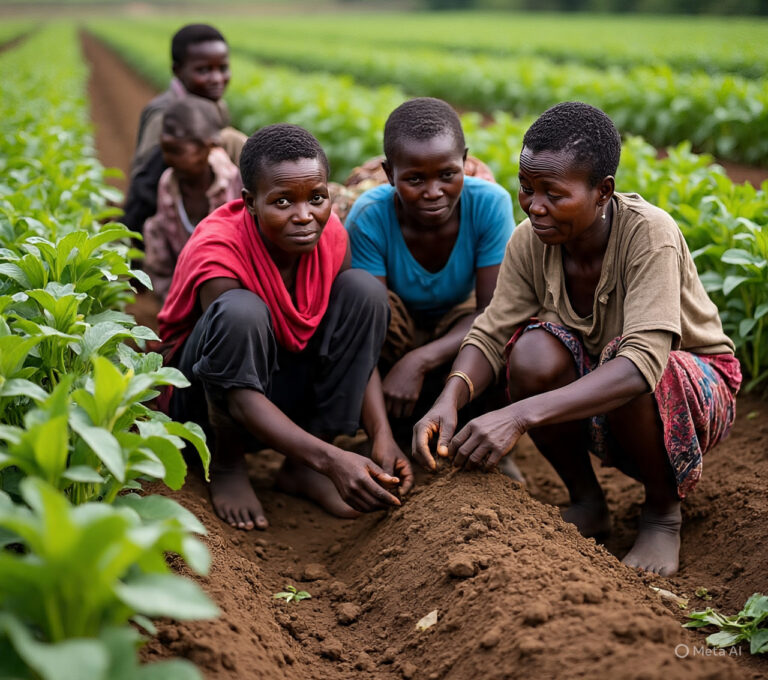
Chidinma owns a small plot of land in Isu-Aniocha, her community, where she cultivates cassava, corn, and black beans (akidi). A passionate farmer, she has worked on the land since 2019 and rushes to every government distribution she hears about, hoping to get some support for her farm.
Two years earlier, she began teaching at a nursey and primary school, where she earns N36,000 a month. From that, she spends about N16,000 on transport, leaving her with N20,000 as take-home pay. This goes into her farming business, which she once ran with her husband before his death, leaving her to care for their four children alone. To make ends meet, she also processes and sells garri.
So, when Chidinma heard about the 2022 input distribution, she did not hesitate. She spent N4,000 on transport to the local government headquarters in Achalla, joining about 25 PWDs from her community who were asked to sit under a canopy and wait.
Ajuorah Chidinma says she has spent alot on transportation but never gets any input
“When it was time for distribution, the inputs were handed over to individuals who were called women leaders instead of to us directly,” she recalled. “These women were supposed to share them among farmers from different communities. But, immediately, they loaded the supplies into their vehicles and left without telling us where to meet them.”
That was the last time Chidinma saw the farm inputs. The supposed women leaders were unfamiliar faces, not the recognised leaders in her community.
“I am one of the PWD leaders in Isu-Aniocha and I know my community’s woman leader. She wasn’t there that day, and she was not the one who received the inputs,” she said. “We have names of PWDs in every community,” Chidinma said. “The authorities even have our platform and contacts. So it’s not difficult to call us directly whenever inputs arrive,”.
That year, Chidinma bought cassava seedlings and other inputs on her own while government aid meant for farmers like her disappeared. For her, the 2022 experience was not the first of its kind. It paints a grim picture of what has now become a deeply entrenched culture that routinely sidelines smallholder farmers with disabilities from the distribution of agricultural inputs. Sometimes, they are not even invited when the government shares fertilisers, seedlings, or other support meant for farmers. And on the occasions when they are invited, they still return home empty-handed.
Road in Nkwelle through which farmers have to travel just to go and not be given inputs
An unequally treated population
Globally, an estimated 1.3 billion people, one in every six, live with a disability, according to the World Health Organisation. About 80 per cent of them live in low- and middle-income countries that depend heavily on agriculture. Over 700 million are women.
In Nigeria, there are approximately 35.5 million persons with disabilities, according to the National Commission for Persons with Disabilities (NCPWD). Although there is no reliable gender breakdown, many are smallholder farmers, the backbone of Nigeria’s food system, responsible for about 90 per cent of total agricultural output.
Nigeria officially committed to the Discrimination Against Persons with Disabilities (Prohibition) Act when President Muhammadu Buhari signed the bill into law on January 23, 2019. The act guarantees the full integration of persons with disabilities into all sectors of society, including economic activities like agriculture, on an equal basis with others.
Anambra State domesticated the Disability Rights Law after it was passed in 2018, prohibiting discrimination against persons with disabilities in any form or circumstance. Yet, despite these commitments, implementation remains largely on paper. In a state with more than 5,000 persons with disabilities – according to the coordinator of the Joint National Association of Persons with Disabilities (JONAPWD) in Anambra State, Ugochukwu Okeke, who said they have a list of all members – about 1,500 of whom are officially registered, farmers with disabilities continue to face systemic exclusion, with little to no access to fertilisers, seedlings, chemicals and other inputs that could boost their productivity.
Studies have shown that access to such agricultural inputs is crucial for meaningful participation in farming. But for many PWDs like Chidinma, it has become a symbol of broken promises, a reminder that, in Nigeria’s agricultural system, equality is still an aspiration, not a practice.
Treated as beggars
Before Bridget Anichebe’s husband died in 2023, the couple cultivated rice and cassava on two plots of land in Omor, a farming community in Ayamelum Local Government Area of Anambra State But after his death, the burden of providing for their seven children fell on her shoulders. With no capital to buy seedlings, chemicals, or fertilisers, she was forced to abandon rice farming.
Between that time and now, Bridget, who suffers from vaccine-associated paralytic poliomyelitis (VAPP), says she has witnessed several rounds of input distribution exercises in her local government, including those for rice seedlings. Each time, she said, she and other persons with disabilities were deliberately excluded.
Bridget Anichebe says PWDs are often treated as trash by officials
“Each time we hear about distributions, we go, but nobody attends to us. We usually would stay until they finish sharing everything, and then they tell us to go back home because we do not need the inputs for anything.”
Bridget alleged that officials at the local government headquarters often display openly discriminatory attitudes, treating persons with disabilities as “beggars” rather than productive farmers.
“They don’t see us as people who can work or contribute,” she said.
Now, Bridget survives by planting cassava and processing it into garri, which she sells in the local market to feed her family and keep her children in school. But that has become increasingly difficult. Without access to herbicides or fertilisers, she is forced to hire labourers to clear weeds, spending between N20,000 and N30,000.
“The high cost of labour affects my income,” she explained. “Many times, I have thought of stopping, but I have no other means to feed my children. Collecting loans has also become impossible because of the high interest rates.”
The stress of doing most of the farm work herself takes a toll on Bridget, who says constant bending and lifting have weakened her legs and waist, forcing her to rely on pain medication from local patent medicine stores just to keep working.
Rising cost of fertiliser, seedlings
Although knock knees are usually not considered a disability, Helen Emeka’s case affects her mobility and ability to live a normal life or pursue normal economic activities. She cultivates Cassava, Maize, and Egusi on two plots of land in Omor but says that PWD farmers are rarely notified when fertilisers, seedlings, and other inputs arrive from the government or when they are shared.
She said that she would have loved to add rice to her crops since she has the land, but she cannot afford the cost. According to her, a bag of rice seedlings sells for as much as N200,000 while fertiliser costs between N45,000 and N50,000.
Helen Emeka on her farmland
“Without government support, I am forced to buy everything myself, from cassava stems to maize seedlings, and fertiliser for my farm,” she added. “My mother used to help with weeding, but she’s become weak, so I now also pay for labour.”
Helen said the deplorable condition of roads leading to farmlands in Omor adds to the burden. “Only motorcycles can pass through, and the riders now charge more because of how bad the roads have become,” she said.
In August 2024, the state government launched the Farm to Feed Campaign intended to encourage citizens to venture into farming in order to boost both food production and combat hunger. The program encourages citizens to use every available space for backyard farming to boost food production and food security.
At the launch of the one-year initiative, the governor of the state, Charles Soludo said, “What we have come to launch is the issue of collective citizen’s action in partnership with the government at all levels to eradicate hunger ones and for all. Food supply is critical to address poverty and have a healthy nation”.
During the launch of farm to feed
The governor claimed that his administration has done a lot to address issues of policies and incentives, including providing access to cheap capital for agriculture, improved seedlings and some subsidised inputs, rural infrastructure to minimise post-harvest losses and improving supply chain to the urban centres which are critical to enable these processes to happen.
He, however did not specifically mention PWDs and persons with disability really believe that the programme is not meant for them. For Emeka and many others living with disabilities, the campaign might as well not exist as those interviewed by this reporter said they were not aware of the programme’s launch or how to be part of it.
Their exclusion from yet another agricultural initiative underscores what disability advocates like Gloria Nwafor, Director of the Care for the Physically Challenged and Destitute Foundation, describe as a systemic failure to implement inclusion policies.
‘It is all scam’
Ebere Okanmelu, who is visually impaired, owns a small provision store where she sells beverages and snacks in Nkwelle, a community in Oyi Local Government Area. Just behind her shop lies a farmland where she cultivates cassava, yams, and Cocoyams.
She doesn’t like to talk about government support for farmers, especially the distribution of farm inputs, which she bluntly describes as a scam. Now, each time she mounts a motorcycle, the main means of transportation in Nkwelle, to travel along the rickety road to the Oyi council headquarters, the trip drains her energy.
Ebere Okanmalu
“I have been invited several times and asked to write my name at the local government to receive cassava stems and fertiliser,” she recalled. “But that’s where it ends. Nothing ever comes to me. The next thing I hear is that the items have already been distributed.”’
With no government support, Ebere relies on proceeds from her provision store to sustain her small farm. Over time, she has given up hope and no longer bothers to show up whenever officials announce the distribution of inputs.
According to Okanmelu Ernest, chairman of the Nigeria Association of the Blind (NAB), Anambra State chapter, Ebere’s experience mirrors what PWDs face across different communities in the local government. He said that despite repeated complaints to the state government, nothing has changed.
Okanmelu Ernest, chairman of the Nigeria Association of the Blind in Anambra State
Political distribution
In 2022, the state government launched a Palm and Coconut revolution as part of a large-scale agricultural initiative aimed at economic empowerment and sustainable wealth creation. The government says it has distributed over 1.1 million improved seedlings of palm and coconut trees to about 130,000 households in the state since the launch.
“This initiative is one of our silver bullets in the fight against poverty. Our target is to distribute 10 million of these economic trees to communities and households in the next six years while providing them with relevant extension services to ensure a high survival rate of the seedlings,” Governor Soludo had said during the distribution of 700,000 more oil palm seedlings in 2024.
During the distribution in 2024
During the occasion, other economic trees that were, according to Governor Soludo, facing the danger of extinction, like African breadfruit (Ukwa seedlings), Bitter Cola (Akilu seedlings), Igbo Kolanut (Oji Igbo seedlings), Pawpaw seedlings, were also distributed. But many PWDs were not aware of the distribution. Those who knew about it said they were denied access in their local communities.
Ogugua Paul is the coordinator of PWDs in Ayamelum LGA, Anambra North zone. He confirmed that the seedling got to Omor, his community in Ayamelum LGA, but was distributed according to party affiliation.
Omor has three wards, including Orenja and Amikwe, Akanator and Aturia, Ogugua explained. But rather than give the PWDs community their own to distribute, it was handed over to councillors in the wards who went ahead to distribute them without involving them. Ogugua told this reporter that many PWDs have to join party parties just to be able to benefit from anything that comes from the government.
Chidinma Chigbo, a small holder farmer from Obosi in Idemili North LGA, did not know about the distribution till she went to work one day and saw her colleagues carrying coconut seedlings and when she asked, she was told it was from the government.
“Nobody collected for me or reached out to inform me about the distribution even though they knew I needed it for my farm. That was not the first time,”.
Nwafor, who doubles as the Anambra State Coordinator of Network of Women with disabilities (NWD), said that many PWDs did not get the input because it was distributed among councillors, like Paul alleged. She, however, said that she got the inputs because she was working at Anambra East local government, where it was brought and given to every staff.
Allegations of corruption
Some leaders of PWDs alleged that local government officials sell fertilisers, chemicals, seedlings, and other agricultural inputs meant for smallholder farmers in their communities.
Paul also said that the government officials demand payment on arrival at Ayamelum.
Paul Ogugua is the president of PWDs in Ayamelu LGA
“Sometimes, they send messages asking us to come for the government’s agricultural inputs but when we get there, they tell us to pay a certain amount before we can get anything. I paid N60,000 for organic manure, chemicals, and fertiliser,” he recalled.
Nwafor Shedrach, coordinator of PWDs in Awka North, also alleged that officials in the Social Welfare Department, where the disability unit is domiciled, and those in the Agriculture Department are not accountable. According to him, inputs meant for registered farmers with disabilities rarely reach their intended beneficiaries.
“From time to time, the unit receives inputs meant for PWDs, but we don’t get them,” Nwafor said. “We’ve also heard of trainings for smallholder farmers, but we are never informed or invited.”
The PWDs also say they have been sidelined from federal government agricultural support programmes. In August 2024, the government announced the distribution of agro-inputs worth N2.8 billion to 14,000 farmers in Anambra and Enugu states under the Agricultural Transformation Agenda Support Program, Phase One (ATASP-1).
The inputs, which reportedly cost N5 billion but were subsidised at N2.8 billion, included fertilisers, improved seeds, and agrochemicals. The initiative was part of the National Agricultural Growth Scheme Agro-Pocket (NAGS-AP), designed to boost food production and ensure food security nationwide. Beneficiaries were also to receive a N100,000 cash grant to prevent them from reselling the inputs.
Before the distribution, a five-member committee was set up by the Anambra State government to oversee the process. However, there was no representation of persons with disabilities, not even among the listed attendees.
Shedrach recalled that he and other farmers with disabilities were invited to the Awka North LG headquarters for data capturing.
“We filled out our names, gender, and National Identification Numbers (NIN), and they told us to go back home,” he said. “The next thing we heard was that the inputs had already been distributed.”
He said that denying PWDs access to farm inputs has become a long-standing culture in the local government. As a cooperative, he explained that they have farmlands in Isu-Aniocha and Amanuke communities that have remained uncultivated due to a lack of access to agricultural support.
“As PWDs, we have not benefited from the current government’s agricultural programmes,” Nwafor lamented. “We cannot survive without agriculture. Many of us are into cassava and rice farming, but we are increasingly being discouraged.”
Treat PWDs as a community, give them inputs directly
Okeke, JONAPWD coordinator, said that at the heart of the challenge facing PWDs in Anambra State is the lack of clear and inclusive policies, especially around the distribution of agricultural inputs and facilities.
“The government does not understand that we have barriers and that we are a community that should be treated differently,” he said. “Agriculture inputs often go to the community where members find it difficult to access them,”.
He explained that while it is deliberate exclusions sometimes, there are also accessibility issues, noting that a person in a wheelchair will not bother to come to a hall where he needs to climb stairs to be able to access inputs.
“The deaf do not have anyone to interpret and let them know when inputs will be distributed,”he said. “Same thing for the blind and people with albinism who would not want to stand in the sun during distribution and expose themselves to sunburn”.
According to him, all of this can be addressed when PWDs are allowed to handle inputs themselves. “You cannot say you are distributing farm inputs to us and we are not involved,” he said. “We want the government to give us what belongs to us directly or at least involve us in the distribution because we have leaders in various locations who can coordinate and make sure that we are reached,”.
Nwafor of NWDs said that handing inputs over to community leaders is not an option because PWDs cannot struggle for these inputs like those who are without disability, and many of them are not recognised by their people.
Nwafor recalled how she was selected under the previous administration to be part of the distribution of Garri and Corn from the state government and to also represent PWDs. She was on the ground during the flag-off of the distribution and made sure to follow up with the local government chairman.
“When it was sent to communities, I called the community leaders and told them that PWDs should be carried along in the distribution. We had different dates for distribution in each community, and I informed our members and was also on the ground to ensure that they got their share,”. But many people did not know about it in other LGAs because they were not carried along,”.
Ogugua also shared a similar experience, recalling when Ayamelum received Rice, Garri and Corn donations from private individuals. He said he was called to the headquarters as a stakeholder and representative of PWDs and was handed their own share.
“I called our members together and we distributed it; those who could not attend, we had to take it to them,” he said. It was seamless. If we are not carried along, we don’t know what happens to the inputs,”. Now, we hire the machine we use for processing Cassava and pay from our cooperative”.
A weak disability commission
With the passage of the Anambra State Disability Rights Law in 2018 came the formation of the Anambra State Disability Rights Commission, mandated to protect the rights of PWDs in the state and ensure that government policies about their welfare are implemented.
However, Okeke, the PWD chairman in Anambra state, says that the commission has not been as active as it should.
“We have a situation where the chairman of the commission and its members work part-time time and so that makes it difficult for us to table our complaints and have issues addressed, “he said. “We only meet 10 times yearly. Even if not all members will not work full-time, let the chairman and the secretary work always,”.
He noted that they have formed cooperative societies across the local governments to be able to engage the Ministry of Agriculture, having discovered that the state government does not like to deal with individuals but groups.
“We also have a disability community circle made of PWD leaders from different communities that will always work with the president generals whenever inputs come from the government. “For us, this is a plan B, in case it is difficult for the government to consistently deal directly with us,” he said. “The leaders will be responsible for mobilising our members at the community level.”
Budget gap
A review of Anambra State’s agricultural budgets reveals that while there are consistent provisions for items such as fertilisers, pesticides, seedlings and other inputs, actual fund releases remain a major challenge. Funds are either not released or only partially disbursed. Notably, none of the budgets analysed for 2023 to 2025 made specific provisions for PWDs.
In 2023 for instance, the government earmarked N50 million for fertiliser procurement and distribution and another N50 million for procurement of other agricultural inputs. However, by the fourth quarter, no funds had been released.
The 2024 budget included N2 billion for the coconut, palm and other seedlings programme with N1.3billion released by the fourth quarter. Another N50 million was budgeted under the “Procurement of Agricultural Inputs Program (Seedlings, Pesticides, Fertilizers),” yet no funds were released by year’s end.
Budget breakdown
Similarly, in 2025, the state government earmarked N2 billion for coconut, palm and other seedlings programme, N50 million for fertiliser procurement and distribution and N100 million for procurement of agricultural inputs programme (Seedlings, Pesticides, Fertilisers ETC).
Akomolafe Pius, chairman of the Justice Development and Peace Centre (JDPC), Public Finance for Agriculture Budget Committee (PFA) in Ondo State, said that state governments must ensure that PWDs are involved in participatory planning in matters that concern agriculture.
“There should be budget lines that specifically address their concerns, developed with them and their inputs and not for them,”. “The disability commission in the state must also be active as it serves as a bridge between the government and the PWDs, if there is a policy document that guides their actions, it can be reviewed, the government can achieve this by identifying NGOs working with PWDs and working with them for impact,”.
He noted that PWDs are trainable, hence efforts must also be made to understand their peculiarities and design training programs that meet their needs.
PWDs are involved in the entire process
Contrary to the findings of this investigation, Commissioner for Agriculture in Anambra State, Forster Ihejiofor, while responding to a Freedom of Information Act (FOIA) request, claimed that the Ministry’s implementation follows a bottom-up model, ensuring that local communities, ward committees, and cooperative clusters-particularly those representing vulnerable groups-participate directly in planning, identification, and distribution.
Response to FOIResponse to FOI 2
“The Ministry remains firmly committed to inclusive, transparent, and community-driven agricultural transformation where every citizen, regardless of physical ability or social status, has equitable access to opportunities in line with the Solution Agenda and Anambra Vision 2070.
The commissioner further claimed that a total of 1,286 PWDs across the 21 LGAs have benefited from various agricultural input distributions-seedlings, fertilisers, and capacity-building programmes, under the ongoing One Youth, Two Skills initiative and Palm & Coconut Revolution.
“In addition to palm and coconut seedlings, the Ministry has distributed tools through the Community-Based Input Distribution Framework improved cassava stems, rice seeds, fertilisers, agrochemicals, and farm (CBIDF) between 2022 and 2025. Each round of distribution included representation from PWD cooperatives and farmers’ associations,”. “This framework is guided by the APGA motto “Onye aghara nwa nne ya,” which underpins our “leave no one behind approach,”he said.
He said that distribution processes are monitored through a multi-stakeholder Agricultural Input Monitoring Committee (AIMC) comprising ministry officials, community leaders, LG/ward agricultural officers, and civil society representatives to ensure transparency, fairness, and direct reach to vulnerable farmers.
On allegations of corruption and irregularities, he claimed that the ministry operates a zero-tolerance policy on extortion or diversion of government inputs, adding that reports of irregularities are investigated promptly through the ANSEC Special Public Complaints and Anti-Corruption Committee (SPCACC) and that verified cases lead to sanctions and corrective actions.
PWDs share blame
In her own response, Permanent Secretary in the Ministry of Agriculture, Ifeyinwa Uzoka, recognised that PWDs face challenges in accessing agricultural inputs. She however put part of the blame on them.
“Part of the challenges is that PWDs in the state do not often inform the Ministry whenever they have events like their annual White Cain Day, which provides an opportunity for them to engage stakeholders about their needs,”she said.
“Speaking further, she said “We recognise that they have peculiar needs and are open to engaging for more impact at the Ministry, but they don’t expect us to know about their challenges if they don’t inform us. If they are left out during distributions, they should speak out. While we might not be completely right in our approach, they cannot also be absolved of blame too,”. They can do more advocacy, write us letters or pay courtesy visits,”.
She told this reporter that while there are no specific policies designed to deal directly with PWDs, the state government does not deliberately sideline them during the distribution of farm inputs. She explained that the ministry usually makes several announcements and jingles on radio stations like the Anambra State Broadcasting Service about planned distributions even before they begin to ensure that those in rural communities are aware.
“We ask them to go back to their wards and register with different Agric Supervisory Councillors at the ward level, “she said. “At the local government level, we also have heads of the Agric Department. To monitor distribution, we send extension workers into the communities,”.
She recalled that in 2024, during the distribution of Palm and Coconut seedlings, a PWD leader walked up to the ministry and identified himself and was given inputs for himself and other PWDs, adding that she collected the leader’s contact information for involvement in subsequent distributions. Okeke confirmed this, but said that the inputs received were not enough for members.
Uzoka attended the final validation of the Revised National Gender Policy in Agriculture and its Strategic Action Plan (2025–2030), a framework designed to ensure equity, inclusivity, and gender justice across the nation’s agrifood systems in Abuja this October. She said the meeting further exposed her to the need to ensure that no one is left behind.
“We have now included PWDs in the 2026 budget of the ministry, “she said. We will work on developing a template that includes massive sensitisation at the grassroots about the need to begin to recognise that PWDs are people with rights”.
REACTIONS have continued to trail the Super Eagles’ refusal to train on Tuesday ahead of their crucial World Cup playoff clash against Gabon, scheduled for Thursday, November 13, in Rabat, Morocco.
The boycott, reportedly over unpaid allowances and bonuses, has sparked outrage and disappointment among Nigerians, including politicians, sports analysts, and fans.
The players were on Tuesday, November 11, expected to resume training at a training camp in Rabat but declined to take part in the evening session, citing frustration over the Nigeria Football Federation’s (NFF) failure to clear several months of outstanding entitlements.
The players, in a short message sent to journalists, wrote: “The full squad including officials boycotted training today in Morocco because of the unresolved issues with outstanding payments.
“The Super Eagles is awaiting a quick resolution to continue the preparation for Thursday’s game with Gabon.”
The ICIR also gathered that the incident has continued to drag with no truce reached so far by the players and the NFF less than 36 hours to the crucial match.
Former Labour Party presidential candidate, Peter Obi, described the incident as “truly unfortunate,” condemning the government’s misplaced priorities.
“It is truly unfortunate that our Super Eagles who consistently give their best in representing our dear nation are being owed their allowances.
“We always seem to find money to waste on needless lavish spending and political patronage, yet we cannot pay those who patriotically raise our flag, bring us pride, and serve with dedication. That is what is found in a ‘now disgraced country,” Obi said in a post on his verified X handle.
He added that neglecting national representatives sent the “wrong message to our youth” that hard work and service are not rewarded.
Other Nigerians have also voiced their opinions, with many calling on the NFF and the National Sports Commission to immediately settle the debts.
Sports commentator, Buchi Laba, criticised the NFF for what he described as “wicked and selfish” management of players’ welfare.
“Unresolved bonuses and wages are the tip of the iceberg. It’s madness how these people running football in Nigeria are so greedy, wicked and selfish!
“The players and officials know this is the only way they will get their money! This is our most important game in the year!” he said
In another post, he wrote “This is the best time for the Super Eagles players and officials to demand what they’re owed. Important game. Important needs. Important decisions and important resolutions. I just hope they get assurances in writing and signed, not verbally.”
Another sport journalist, Adepoju Samuel, justified the players’ actions, saying “There won’t be any good time to ask for their backlog of bonuses and allowances.
“The NFF must learn from previous incidents and understand that the government is continuous. The NFF should source for funds that will be enough for their national teams’ activities. I have been saying this since yesterday; communication is key. They must also earn the trust of the players by keeping to their promises and agreement.”
However, others faulted the timing of the protest, warning that it could affect the team’s morale and preparation ahead of Thursday’s must-win match.
“Boycotting training on the eve of a crucial World Cup playoff game is a terrible choice by the Super Eagles. Embarrassing as it is for the NFF, putting World Cup qualification in jeopardy reflects badly on the players,” said a X user Biola Kazeem. “Qualifying first and making firm demands is a better strategy,”
Another user with the handle, Olawale Quadri, blamed the development on the team’s captain, Troost Ekong.
“In all of these, I will blame the players especially @WTroostEkong the leader of the Super Eagles 🇳🇬🦅
“No responsible team in the world will boycott training for unpaid allowance ahead of a crucial game. Why can’t they play the games and qualify first and then fight for whatever.”
Meanwhile, the Super Eagles are expected to resume training later today following ongoing talks between team officials and the football federation, sources told The ICIR.
The Super Eagles will on Thursday, November 13, face Gabon in a crucial 2026 FIFA World Cup playoff match in Rabat, Morocco. The encounter is a ‘do-or-die’ affair, as it will determine Nigeria’s progress to the next stage of the World Cup qualification series.
The team’s camp officially opened on Sunday in Rabat, with ten players arriving ahead of final preparations for the playoff.
Nigeria will qualify for the African playoff final if they defeat Gabon on Thursday. The winner will then face either Cameroon or the Democratic Republic of Congo on November 16, also in Rabat.
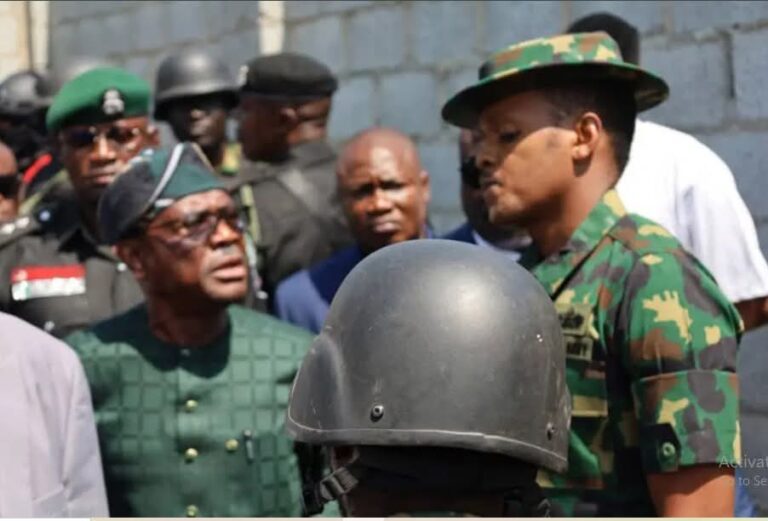
AN unidentified military officer was involved in a heated confrontation with the Minister of the Federal Capital Territory, Nyesom Wike, over an alleged land-grabbing incident at the Gaduwa District in Abuja on Tuesday, November 11.
A video of the confrontation, released by Channels TV, captured Wike angrily accusing the officer of unlawfully seizing a parcel of land and questioning why the military was claiming ownership of the property merely because it was linked to a former Chief of Naval Staff.
“Because you are an officer? Nobody does that. The man took land because he was the Chief of Naval Staff?” Wike said.
The officer, clad in military camouflage, cut in to defend himself, maintaining that the land acquisition was legitimate and that he had acted with integrity.
“I am an officer with integrity. Everything was acquired legally,” he replied.
Irritated by the interruption, Wike commanded the officer to “shut up”.
“I will not shut up,” the officer retorted, insisting that he was stationed at the site under official orders.
The confrontation intensified when Wike fired back, saying, “You are a very big fool. As at the time I graduated, you were still in primary school. You will see if you will not leave here. Go and develop there and let me see.”
Reacting to the video on his Facebook page, the FCT Minister’s Senior Special Assistant on Public Communications and New Media, Lere Olayinka, alleged that former Chief of Naval Staff, Awwal Zubairu Gambo, a retired vice admiral, deployed his armed military security aides to attack officials of the FCTA Department of Development Control.
“Today, the FCT Minister, Nyesom Wike, visited the site, after talking to the Chief of Defence Staff on Phone…Because he was told to stop building on a land he has no title document and building approval, former Chief of Naval Staff, Vice Admiral Awwal Zubairu Gambo, sent his armed military security details to attack men of the FCTA Department of Development Control.
“He also stationed armed military men to protect the illegal development, with the military men threatening to shoot anyone who interfered with them,” he wrote.
The ICIRreported that Wike, had given property owners in Asokoro, Maitama, Garki, and Wuse districts a final 14-day ultimatum, effective from Tuesday, November 11, 2025, to regularise their properties and comply with the approved land use and conversion terms.
Since taking office in August 2023, Wike has carried out multiple demolitions of what he termed illegal structures, pledging to reinstate the original Abuja Master Plan.
The FCTA had issued public notices on September 8, 9, and 10, 2025, through several national newspapers and online platforms, informing the public about the reviewed Land Use and Purpose Clauses for properties within the Federal Capital City (FCC).
Recall that in May, Wike announced the takeover of possession of 4,794 land titles in high-brow areas of the nation’s capital due to their owners’ failure to pay ground rent, which had been outstanding for periods ranging from 10 to 43 years.
The takeover occurred weeks after he had revoked the right of occupancy granted to the Peoples Democratic Party (PDP) National Secretariat, Central Bank of Nigeria headquarters, and scores of other buildings in the heart of Abuja over alleged non-payment of ground rent spanning two decades.
It claimed that despite multiple reminders and public notices issued since 2023, the landowners allegedly defaulted on their dues, which it said led to the revocation.
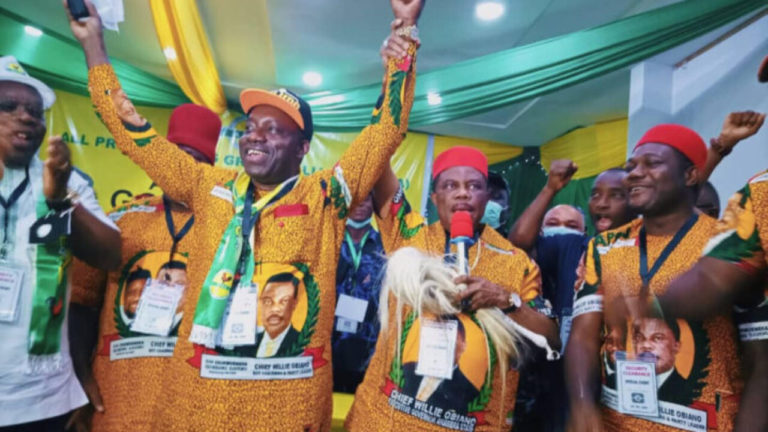
TWO days after securing victory in all 21 local government areas of Anambra State, Governor Charles Chukwuma Soludo of the All Progressives Grand Alliance (APGA) has been presented with his certificate of return by the Independent National Electoral Commission (INEC).
The event took place at the INEC headquarters in Awka on Tuesday, November 11.
The presentation followed Soludo’s re-election in Saturday’s governorship poll, where he polled 422,664 votes to defeat his closest rival, Nicholas Ukachukwu of the All Progressives Congress (APC), who scored 99,445 votes, while Paul Chukwuma of the Young Progressives Party (YPP) came third with 37,753 votes.
The ICIR reported that the State Returning Officer, Omoregie Edoba, declared Soludo the winner at about 8:20 a.m. on Sunday, November 9, after collating results from all the LGAs.
“I hereby declare that Soludo Chukwuma Charles of the APGA, having satisfied the requirements of the law, is hereby declared the winner and is returned elected,” Edoba said.
Presenting the certificate, the National Commissioner who supervised the Anambra election, Ukeagu Kenneth Nnamdi, said the exercise marked the completion of a transparent and credible process.
Nnamdi said the presentation was in line with Section 72(1) of the Electoral Act, 2022, which mandates INEC to issue certificates of return within 14 days to every candidate duly elected in an election conducted under the law.
According to him, the successful conduct of the election reflected the commission’s commitment to transparency and the collective determination of the people of Anambra State to strengthen democracy.
He commended security agencies for their professionalism. He also lauded INEC staff and corps members who served as ad hoc staff, noting that their diligence ensured the exercise was peaceful and credible across the 21 local government areas of the state.
“This certificate is not merely a document of victory; it is a symbol of renewed trust, confidence, and responsibility. Through their votes, the people of Anambra State have reaffirmed their faith in your leadership and vision. The renewed mandate carries with it a sacred obligation to serve all citizens of Anambra State, irrespective of political affiliation, religion, ethnicity, or social standing.
“I urge Your Excellency to approach the second tenure with an even greater sense of humility, accountability, and inclusiveness. As we often remind all elected officials, elections may produce winners, but governance belongs to the people,” he said.
In his response, Soludo expressed gratitude to God, his family, and the people of the state for what he described as a “divine project and a people’s movement.”
He reflected on the symbolic significance of receiving the certificate from the current INEC leadership, noting that it was the first to be issued by the new Chairman of the Commission since assuming office.
“It is quite historic that this happens in Anambra and under this administration,” he said.
Soludo described the election as ‘historic’ and ‘unprecedented’ in terms of voter participation and transparency, stating that for the first time in the state’s electoral history, votes “truly counted.”
He also pointed out that the election was the third time since 1999 that Anambra State had re-elected a sitting governor.