Home Blog Page 163

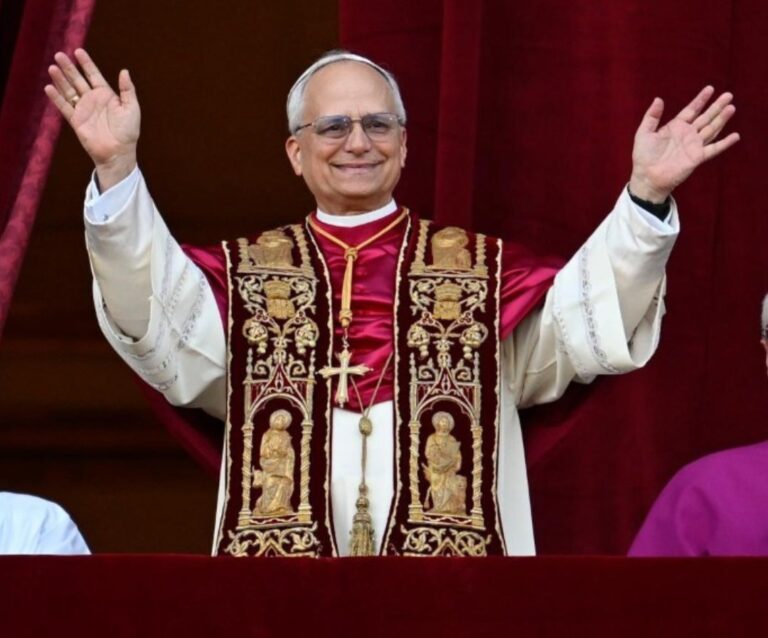
Pope Leo tells US bishops to address Trump’s immigration crackdown

0

POPE Leo has urged United States bishops to take a strong stand against the treatment of immigrants under President Donald Trump’s strict policies.

The bishops who visited the Vatican on Wednesday revealed this to Reuters, stating that the Pope is “very personally concerned about these matters.”

According to the report, Leo, being the first US pope, received dozens of letters from immigrants expressing their fears of deportation under the Trump administration’s policies during a meeting with bishops and social workers from the US-Mexico border.

One of the letters presented to the pope on Wednesday revealed the story of a family with two members lacking legal status in the US, who were too afraid to leave their home for fear of deportation.

The writer of the letter, written in Spanish, urged the Pope to speak out openly against the raids and the unfair treatment the community is experiencing.

El Paso Bishop Mark Seitz, who took part in the meeting, said that the Pope expressed his “desire that the US Bishops’ Conference would speak strongly on this issue.”

The ICIR reported in January that the Trump administration started a visa policy and illegal immigrants in the US.

Since he took power on January 20, Trump has made good his vow to carry out mass deportations of immigrants, among other sweeping reforms by his government.

On January 28, the Enforcement and Removal Operations division of the United States Immigration and Customs Enforcement reported that about 3,690 Nigerians in the US could be deported.

Elected in May to succeed the late Pope Francis, Leo has adopted a more reserved approach than his predecessor, who was known for his outspoken criticism of the Trump administration and his often spontaneous remarks, but Leo has increased his criticism in recent weeks.

On September 30, the pope questioned whether the Trump administration’s anti-immigration policies aligned with the Catholic Church’s pro-life teachings, remarks that sparked strong backlash from several prominent conservative Catholics.

The ICIR reported the United States Department of Homeland Security (USDHS) is set to launch a new programme offering unaccompanied migrant teenagers a one-time payment of $2,500 each if they agree to return to their home country voluntarily.

The USDHS said that the pilot initiative will initially focus on 17-year-old migrants and will require authorisation from an immigration judge before any departure takes place.

The payment, intended to support the minors’ reintegration, would be issued only after they return to their home countries, the memo disclosed.

Aftermath of UNGA 80: Time for African leaders to ponder on Vladimir Putin’s words

0

By Mukhtar Imam

AS the 80th session of the United Nations General Assembly (UNGA) rounded off, the world finds itself at an inflexion point. Great power competition is no longer an abstract concept — it is shaping trade flows, military alliances, financial systems, and the very language of global governance.

Yet, amid the cacophony of speeches and resolutions that filled the UN halls in New York, there is a message African leaders must not only hear but internalise.

It is a message that was not delivered at the UN but in Beijing: Vladimir Putin’s recent words — a sober warning to the West and a clarion call to the Global South — should serve as a mirror for Africa’s ruling class.

Putin’s statement, sharp and deliberate, was not merely a defence of Russian interests. It was a civilisational rebuke of a Western system that still seeks to dictate rather than engage, to dominate rather than respect.

His words resonate far beyond Moscow, Delhi, or Beijing — they should echo in Addis Ababa, Abuja, Nairobi, and Pretoria. Africa, home to 1.4 billion people and abundant resources, remains the last frontier of neocolonial manipulation. Unless African leaders draw the right lessons, they risk being mere spectators as the world moves toward a new multipolar order.

Ultimatums Don’t Work on Civilisations — Africa Included
The age of ultimatums — political, economic, or military — is over.

That is the heart of Putin’s argument, and it applies just as powerfully to Africa as it does to India and China. For centuries, Africa was treated as an open quarry, carved up at conferences like Berlin in 1884–85, stripped of its resources, and denied agency.

Today, the tools are more sophisticated — conditional loans, currency manipulation, sanctions, and “human rights” lectures that come with strings attached — but the effect is the same.

African nations are pressured to pick sides in conflicts that do not serve their interests, to open markets on terms they do not set, and to embrace governance models designed elsewhere.

The question that Putin implicitly poses to the Global South is simple: for how long will civilisations continue to be managed like colonies? Putin’s words are a clear message that the colonial mindset never died; it merely changed costume.

Gunboats and red coats have been replaced with sanctions, tariffs, conditional loans, and moral ultimatums. African nations are told which wars to condemn, which currencies to trade in, which allies to shun, and which economic models to adopt — often under the threat of losing aid, credit ratings, or access to global markets.

It is high time African leaders woke up to the realisation that Africa is not a charity case. It is a continent of 1.4 billion people, vast resources, and untapped potential. If India and China can stand firm against economic blackmail, why can’t Africa? If Russia can turn sanctions into self-reliance, why must African economies continue to beg for debt forgiveness instead of building their own resilience?

Ukraine is a mirror — Not a distraction

Some in Africa see the Ukraine war as a distant European quarrel, irrelevant to African realities. But this is a mistake. What is happening in Ukraine is not merely about borders in Eastern Europe — it is about the right of nations to resist being folded into someone else’s strategic design.

The West’s approach to Russia — isolate, sanction, contain — is the same playbook it uses on African states that resist its prescriptions. Whether it is the Central African Republic, Mali, Niger or Sudan working with non-Western partners for security, or Zimbabwe rejecting IMF dictates, the response is always punishment, never partnership. Africa must choose dignity over dependency.

As Putin noted, countries like India and China have refused to be bullied. They have built resilience: energy security, technological independence, and financial autonomy. Africa must do the same — not merely in rhetoric but in action.

This requires several steps. Economic Sovereignty: Establishing regional value chains, boosting intra-African trade under the AfCFTA, and moving away from commodity dependence that leaves economies vulnerable to external shocks.

Currency and financial independence: Strengthening African currencies, exploring continental settlement systems that bypass the dollar, and reducing exposure to debt denominated in foreign currencies.

Strategic non-alignment: Refusing to be conscripted into great-power conflicts. Africa must be free to engage with Moscow, Beijing, Washington, or Brussels based on interest, not intimidation.

Civilisational confidence: Reclaiming the narrative that Africa is not a problem to be solved but a partner to be respected. This means rejecting foreign prescriptions that undermine traditional systems of governance, culture, and identity.

Multipolarity is Africa’s opportunity

The West is not the only game in town anymore. Russia, China, India, Turkey, Brazil, and even Gulf states (BRICS) are willing to engage Africa on new terms — infrastructure-for-resources deals, technology transfers, security partnerships, and education exchanges. Multipolarity gives Africa leverage. But leverage only works if it is used. African leaders must negotiate like stewards of a great civilisation, not like supplicants in a donor conference.

A spiritual and historical reckoning

This moment is more than geopolitics — it is spiritual. For 500 years, Africa has lived under systems designed by others. Colonialism was not merely political domination; it was psychological warfare, teaching Africans to doubt their own capacity to govern and to see external validation as the highest form of legitimacy. Putin’s message — that civilisations do not take ultimatums — is an invitation for Africa to complete its own decolonisation, both materially and mentally.

African leaders must stop outsourcing the continent’s future to foreign capitals and start thinking like stewards of a civilisation with its own destiny. The memory of colonial exploitation is not just history — it is a warning. Those who forget it are doomed to repeat it.

The future will not wait

As the leaders of Africa gathered in New York for UNGA 80 and listened to their Western counterparts deliver lofty speeches about democracy, rules-based order, and global responsibility, Africa must listen politely — and then act in its own interest. These leaders must ask themselves whether they will keep playing the game of dependency or embrace the new world taking shape. The Global South is no longer whispering — it is speaking with confidence.

The West may threaten collapse, but Africa must learn to say, as Gerry Nolan puts it, “then collapse.” Africa must not be a pawn in someone else’s endgame. It must be an architect of the future — a future where no one issues ultimatums to civilisations, where no one dictates under threat, and where dignity, not coercion, is the currency of global relations. The message is clear: the age of empire is over. The question is whether Africa will act like it.

Imam, a Professor of International Relations and Diplomacy at Al Muhibbah University, Abuja can be reached on: mukhtarimam01@gmail.com

Court adjourns Kanu’s trial over delay in NMA report

0

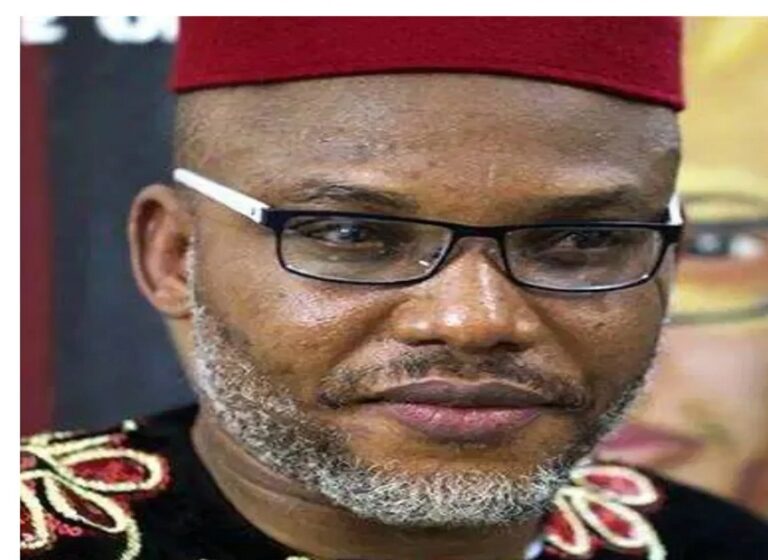
The Federal High Court in Abuja has adjourned the trial of the leader of the Indigenous People of Biafra (IPOB), Nnamdi Kanu, to October 16 following the inability of the Nigerian Medical Association (NMA) to submit its report on his health condition.

The judge, James Omotosho, announced the adjournment on Wednesday after counsel to the State Security Services (SSS), Suraj S’aad, informed the court that the NMA medical board had yet to complete its assessment. The report is expected to determine whether the SSS medical facility can adequately cater for Kanu’s health needs or if he should be moved to the National Hospital for treatment.

At the last sitting, the court directed the NMA president to constitute a medical panel comprising experts from different specialities to conduct an independent evaluation of Kanu’s health. The order followed conflicting claims between the prosecution and the defence over the state of his health and the quality of medical care provided by the SSS.

While the prosecution maintained that Kanu was receiving proper care under SSS supervision, his counsel, Onyechi Ikpeazu, argued that his client’s condition was deteriorating and requested that he be transferred to a public hospital.

The judge ordered the NMA to verify his medical status, assess the SSS medical facility, and determine whether he is fit to continue standing trial.

During Wednesday’s proceedings, the prosecution requested a one-week adjournment to allow the medical board to complete its findings. With no objection from the defence, the judge, Omotosho, adjourned the case to October 16 for the submission of the NMA report and to determine the next steps in the proceedings.

“The court is adjourned to 16 October for the report of the Nigerian Medical Association,” the judge ruled.

Kanu is facing a seven-count charge bordering on terrorism, treason, incitement, and defamation of Nigerian authorities. In a recent ruling, Justice Omotosho dismissed his no-case submission, holding that the prosecution had established a prima facie case warranting that he open his defence.

Reports by The ICIR show that the order for medical evaluation was issued on September 26 after the court reviewed separate medical claims from Kanu’s private doctors and the SSS.

The judge had directed the NMA to form a panel of eight to ten professionals, including a cardiologist, a neurologist, and the Chief Medical Director of the National Hospital, to assess his condition within eight days.

The ICIR earlier reported that Kanu’s legal battles date back to 2015, when he was first arrested by the SSS in Lagos. Although he was later granted bail, he fled the country after a military raid on his residence in Abia State in 2017. He was re-arrested in Kenya in 2021 and brought back to Nigeria, leading to renewed tensions and protests in parts of the South East.

His trial, which began in October 2021, has been marked by repeated adjournments, judicial recusals, and controversies surrounding his detention conditions and access to medical care.

The court is expected to decide on the next phase of proceedings after the submission of the NMA’s medical findings on October 16.

Tinubu reforms fail to lift 139 million Nigerians out of poverty, says World Bank

0

THE World Bank has raised concerns about the inability of the Bola Tinubu-led administration’s economic reforms to stabilise the economy and lift about 139 million Nigerians out of poverty. 

The World Bank Country Director for Nigeria, Mathew Verghis, made this known on Wednesday during the launch of the October 2025 edition of the Nigeria Development Update, titled “From Policy to People: Bringing the Reform Gains Home.”

“Despite these stabilisation gains, many households are still struggling with eroded purchasing power. Poverty, which began to rise in 2019 due to policy missteps and external shocks such as COVID-19, has continued to increase even after the reforms. In 2025, we estimate that 139 million Nigerians live in poverty,” he stressed.

The new figure marks a sharp rise from 129 million in April 2025 and 87 million in 2023, highlighting the worsening hardship faced by households despite the ongoing economic reforms.

The ICIR reported that the Central Bank of Nigeria pitched high interest rates as the most severe constraint affecting business operations in June 2025, overtaking long-standing challenges such as insecurity and poor electricity supply.

The apex bank disclosed this in its June 2025 Business Expectations Survey, which polled 1,900 firms across the agriculture, services, and industrial sectors. According to the report, high interest rates scored 75.6 on the constraint index, followed by insecurity at 75.2 and insufficient power supply at 74.3.

Accordingly, Verghis, in his latest remark, warned that the country could lose the progress made through these reforms if they do not lead to real improvements in citizens’ living conditions.

“Over the last two years, Nigeria has commendably implemented bold reforms, notably around the exchange rate and the petrol subsidy. These are the foundations on which the country has the opportunity to build a programme that can transform its economic trajectory,” he said.

Verghis explained that the report outlined three key priorities for turning Nigeria’s policy achievements into better living standards for its citizens: curbing inflation, ensuring more efficient use of public resources, and expanding social protection for the poor and vulnerable.

He stressed that tackling food inflation should be central to Nigeria’s policy response, warning that continued high food prices could undermine public support for reforms and slow down economic recovery.

“Food inflation affects everybody, particularly the poor. Persistent differences between Nigeria’s inflation rate and those of its trading partners will put pressure on the exchange rate and create a vicious cycle. Lower inflation will also allow interest rates to come down and support growth,” he stated.

The World Bank chief, however, praised Nigeria’s bold reforms in the exchange rate and fuel subsidy sectors, describing them as “foundational” measures capable of transforming the country’s long-term economic outlook.

Comparing Nigeria’s current reform moment to the historic policy changes implemented in India in the early 1990s, he stressed that such rare opportunities must be seized with determination or risk being squandered.

The Director, who also spoke on the positives in Tinubu’s reforms, said there are indications that economic growth is improving alongside the government’s revenues, adding that “debt indicators are strengthening, the foreign exchange market is stabilising, reserves are rising, and inflation is slowly easing.”

“These results are exactly what you need to see in a stabilisation phase. These are big achievements, and many countries would envy them,” he added.

He further warned that these macroeconomic gains have not yet resulted in better living conditions for ordinary Nigerians and called for complementary structural reforms to address deep-seated inefficiencies in food production, distribution, and market systems.

“Monetary and fiscal policies must be complemented by structural reforms aimed specifically at reducing food inflation, which is driven by deep-seated supply and market inefficiencies,” he added.

The World Bank further called on Nigeria to strengthen its public financial management systems to ensure that every naira spent yields measurable development results. It also urged the government to expand the national social safety net to shield the poorest citizens from the effects of ongoing economic reforms.

“The challenge is clear: to translate the gains from the stabilisation reforms into better living standards for all. These are not abstract ideas but practical steps that can turn macro stability into better livelihoods,” he said.

The ICIR reported in August that small-scale businesses and industries are expressing displeasure about the impact of President Bola Ahmed Tinubu’s economic reforms, which are raising further concerns about the negative effects on their operations.

Boko Haram on the rise again in Nigeria: how it’s survived and how to weaken it

0

By Saheed Babajide Owonikoko, Modibbo Adama University of Technology

ABUBAKAR Shekau, the erstwhile leader of the terrorist group Jama’at Ahl al-Sunna li al-Da’wa wa al-Jihad (JAS), died in 2021. The west African group, also known as Boko Haram, then fell into obscurity while its breakaway faction, Islamic State West Africa Province (ISWAP), steadily rose.

Early 2025 saw Boko Haram resurging in the Lake Chad region, however, with attacks in Nigeria and Cameroon. Lake Chad is in west-central Africa, in the Sahelian zone. It is located at the conjunction of Chad, Cameroon, Nigeria and Niger.

As a security studies scholar tracking Boko Haram, I discuss reasons for this resurgence, and its impacts, and recommend possible responses from Lake Chad region countries.

Evidence of Boko Haram resurgence

On 15 May 2025, Boko Haram massacred close to 100 residents of Mallam Karamti and Kwatandashi villages in Nigeria’s Borno State. A report has it that Boko Haram attacked the residents because they were loyal to, and served as informants for, Islamic State West Africa Province.

On 5 September, it attacked Darul Jamal village in Borno State, killing about 60 people. A researcher specialising in Boko Haram at the Institute for Security Studies, Taiwo Adebayo, was said to have spoken with residents of the community who attributed the attack to Boko Haram, possibly because of information about the group being shared with the Nigerian military.

There are also reports that the group has extended its reach beyond Lake Chad to North Central region of Nigeria, where it is operating with bandits and possibly Lakurawa, the new terrorist group in that region.

In Far North region of Cameroon, the group has also been active. Reports shared on LinkedIn showed that in July and August 2025, it was responsible for 101 attacks out of 144.

What explains the resurgence

Four factors explain why Boko Haram has become more active again in the Lake Chad region.

First, the rise of one of its leaders, Bakura Doro, and his efforts to sustain Boko Haram gains over Islamic State West Africa Province.

Doro was the Lake Chad Amir al-Fiya (zone commander) before Shekau’s death. He was announced as the leader in May 2022 after a violent takeover from Sahalaba, a cleric whom Shekau had reportedly designated as his successor in his will. Doro reinforced Boko Haram by fighting Islamic State West Africa Province, killing members and capturing its territories in Lake Chad.

He also shunned media propaganda, thus taking the public gaze away from Boko Haram while it grew unnoticed. Although reports said Bakura was killed in Niger in August 2025, the group denied it.

The second factor is that it received less attention from the Lake Chad militaries. Instead, attention was on Islamic State for its targeted attacks on military outposts since early 2025.

By July 2025, 15 outposts had been attacked. The Lake Chad region countries’ counterterrorism efforts focused on countering ISWAP, dangerously neglecting Boko Haram.

The third factor is the failure of reintegration programmes across the region. In Nigeria, for one, community rejection, unmet government promises, limited political will and a weak framework have caused many ex-combatants to return to the trenches.

The fourth factor is combat stress or fatigue among soldiers of the Lake Chad region countries. For instance, more than 1,000 soldiers resigned from the army between 2020 and 2024 in Nigeria. Nigeria’s total armed forces personnel was estimated at 230,000 in 2020.

The weakened commitment of the countries to the Multinational Joint Task Force adds to the problem. Nigeria established the force in 1994 to checkmate trans-border armed banditry around the Lake Chad Basin. In 1998, Chadian and Nigerien soldiers joined the task force.

Niger’s withdrawal in protest against Ecowas sanctions; Chad’s declining support; and strained Nigeria-Cameroon relations have limited the effectiveness of the task force.

All this gives insurgent groups impetus to intensify their attacks.

Implications of resurgent Boko Haram

To understand the implications, it is essential to distinguish Boko Haram’s ideology from that of Islamic State. While the latter primarily targets military forces and non-Muslim communities, Boko Haram’s violence is aimed at all, except its members.

The attempt by Shekau’s successor, Sahalaba, to align with Islamic State West Africa Province’s more selective attacks led to his death, leaving Boko Haram rigidly committed to ruthless attacks.

The result might be a worsening of humanitarian conditions and disruption of community resettlement programmes in the region.

According to a June 2025 report of the UN Office for the Coordination of Humanitarian Affairs, the region hosts 2.9 million internally displaced people and 272,000 refugees. I believe this figure may rise as violence escalates. But donor funding is shrinking.

Boko Haram’s blend of jihad with criminal activities such as robbery and kidnapping not only sustains its operations but may also attract disaffected youth, given the region’s fragile socio-economic conditions, especially the high rate of poverty and unemployment.

The competition between both insurgent groups, and between them and the military, places civilians in danger. Each actor seeks local support and intelligence, and communities risk severe punishment if perceived as loyal to the opposing side.

A constraint currently confronting Boko Haram is the shortage of weaponry. To bridge this gap, I believe it may focus its attacks on military outposts across the region. They may be encouraged by the successes of Islamic State’s attacks on the military outposts and the transfer of combat experience and technical expertise from former Islamic State fighters who have defected to Boko Haram. If it joins the attacks against military outposts in the area, the consequences will be fatal.

What can be done?

The governments and militaries of Lake Chad region countries should pay attention to Boko Haram as much as Islamic State in their counter-terrorism efforts.

There is a need to improve security cooperation among the countries by luring Niger back into the Multinational Joint Task Force and ensuring members’ commitment to the force.

Enhanced welfare services from the countries to their citizens can reduce incentives to join Boko Haram and other insurgent groups.

Strengthening defection programmes is crucial to prevent former terrorists from going back to groups like Boko Haram. I recommend harmonising regional deradicalisation efforts to enhance their effectiveness.The Conversation

Saheed Babajide Owonikoko, Researcher, Centre for Peace and Security Studies, Modibbo Adama University of Technology

This article is republished from The Conversation under a Creative Commons license. Read the original article.

Uche Nnaji: SSS, other screening agencies failed in due diligence, says Atiku

0

FORMER Vice President Atiku Abubakar has berated the professionalism of the State Security Services (SSS) and other screening agencies of the Federal Government over what he described as ‘failed due diligence’ following the resignation of the Minister of Innovation, Science, and Technology, Uche Nnaji, over allegations of certificate forgery.

The former Vice President argued that the situation raises questions about the integrity of government appointees and the effectiveness of Nigeria’s vetting institutions, including the State Security Services (SSS). He added that the agency, which screened the minister, failed in its duty of due diligence.

He has also called for a comprehensive investigation into the credentials of all members of the Federal Executive Council (FEC)

In a statement personally signed by him and released on Wednesday, October 8, Atiku said the development reflects what he described as a moral crisis within the current administration. He said the minister’s exit should not have been treated as a voluntary resignation but as a serious breach that warranted dismissal and prosecution.

“The resignation of the Minister of Science and Technology has once again brought to light the deep moral crisis at the heart of the administration. What should ordinarily be a matter of national shame is now being disguised as a voluntary resignation,” Atiku said.

Atiku said the incident is part of a wider pattern of falsehood in governance, calling for a transparent review of the credentials of all cabinet members. “When a man of questionable identity leads a country, deception becomes the standard of governance,” he said.

He urged anti-corruption and security agencies to conduct a thorough verification of the academic and professional records of public officials to restore integrity in the government.

“Nigerians deserve to know the truth about those who preside over their lives and resources,” he added.

Atiku said the country must now use this moment to strengthen institutional accountability and ensure that public office is reserved for individuals of proven integrity

Recent reports by the Premium Times revealed that the former minister allegedly forged both his university and National Youth Service Corps certificates.

The University of Nigeria, Nsukka, had earlier disowned the certificate, stating that there were no records showing he graduated in 1985 as claimed. The Federal High Court in Abuja has since adjourned a related case between the university and the minister to November 10 for hearing.

Earlier reports by The ICIR have shown that the Senate and the State Security Service often fail to uncover discrepancies during ministerial screening, largely due to political compromises and the long-standing “bow and go” practice.

The ICIR reports that the case adds to Nigeria’s shameful list of forged credential cases among public officials, as individuals with questionable qualifications or integrity slip through vetting processes put in place to uphold transparency and competence in public office.

Recall that then-Minister of Finance Kemi Adeosun brought the Muhammadu Buhari administration into national disrepute in 2018 after a Premium Times report revealed that she presented a forged NYSC exemption certificate as part of her credentials.

The purported NYSC certificate was said to have been signed by a former director-general of the NYSC, Yusuf Bomoi, in 2009.

However, Maharazu Tsiga, former NYSC DG, who took over from Bomoi, said Adeosun’s certificate could not have been issued by the NYSC.

Although former President Buhari had referred Kemi Adeosun and other ministerial nominees to the SSS for security screening in September 2015, it was unclear how her forged NYSC exemption certificate slipped through the agency’s scrutiny.

The minister consequently resigned from office after public backlash.

The ICIR reports that Forgery is a criminal offence under Section 465 of the Nigerian Criminal Code Act, which defines it as the making of a false document or alteration of a genuine one with the intent to deceive.

The offence is punishable under Section 467 of the Criminal Code Act.

EMILOKANSOMIASIS: The Plague And The Magic

0

BY ONOME OSIFO-WHISKEY

IN the late 1980s, The Guardian of London amidst rave reviews, drew a charmed embrace from the rest of the British press and the general public. That was when the paper’s Longman’s GUARDIAN New Words, a dictionary of new words that made entry into the English language by 1986, hit the streets and newsstands. The book’s over 1000 new words, according to its blurb, range “from scientific and technical terms to trend usage and the terminology of politics, business, social issues and leisure”. Similar innovative publications in Nigeria — were they to hit the local newsstands and bookshops in these giddy days and times — would have been mind-blowingly interesting to the reading or learned public. They could be heartbreaking as well. For instance, the Yoruba word japa, which Google translates as “to run away” or “to flee”, has in the last few years assumed a dimension at once negatively profound and acerbic with social, political and economic implications. While it captures the high tide of young, highly educated but frustrated Nigerians fleeing the country — for greener pastures — to

Today, he is the Lord of the Manor at Aso Rock Villa, Abuja, wielding power in humongous excess of his lilliputian ballot box victory.

He can annul governorship offices and yet return the fallen occupants to power at his presidential pleasure or based on his executive whims and caprices

America, Canada, Britain, Western Europe, Australia, New Zealand, etc, its serious indictment of our national politics [with its deep-seated corruption], economic woes and low leadership indices cannot be overemphasised.

Soro soke, another terminology or phrase [with a Yoruba origin],which means speak out, captures the courageous but peaceful civil protests in Lagos over economic hardships and bad governance during the era of late President Muhammadu Buhari. Of course, not every new word coming into the Nigerian public domain is a damning lambast of the government of the day. Words like berekete [plenty, abundance, surplus], wahala [trouble, challenge] and shakara [bragging, boasting] are a sumptuous parade of catchwords or phrases of a socially brilliant and creative public. Yet no inventor of new words or phrases of great aristocracy, intellect and class comes near Nigeria’s current President, Bola Ahmed Tinubu, whose jagabanised title of Asiwaju possibly makes him the nation’s political “front runner” of his era. In this regard, words of gorgeous, soapbox meaninglessness like boulabou need not come up for mention. Rather, Emilokan [It is my turn (to rule)], assuredly is it. When Tinubu came up with this phrase three years ago to jump start his presidential campaign, it did carry a weight higher than the cagey preposterousness of the oracular pronouncements of the godly Greek Lady of Delphi.

His self-assuredness was great, resting on the almighty truism that leadership and power in a politically debauched Nigeria were for those who have the gravitas to pocket same at will, the so called electoral supremacy of the ballot box notwithstanding.

Power Tinubu did get, whether or not it was just a win of 25 to 30 per cent of the vote. This is sweet magic but it is the reality. Yes, it is power at the speed of thought, power at the beck of oracular science! But it is power. Today, he is the Lord of the Manor at Aso Rock Villa, Abuja, wielding power in humongous excess of his lilliputian ballot box victory. He can annul governorship offices and yet return the fallen occupants to power at his presidential pleasure or based on his executive whims and caprices. He can executively will it that ministers and governors, like in the days of yore under the military, come to the airport to bid him goodbye or welcome him from many of his foreign trips — trips whose number only university professors of mathematics can possibly accurately calculate.

No matter? No, not quite so. While rights and powers like this may well be the legitimate Emilokan booty of his office, it sadly stamps on the office and person of the President the disease and sickness of Emilokansomiasis, itself some ravaging cancer of political selfishness. Emilokancracy, the government of “It is My Turn” may be too narrow, too insular, to be politically feasible. The President, a great K.O. Mbadiwe man of “timber and calibre”, would obviously not like to be so judged. It then becomes imperative to widen the strategic reach and accommodation of the Emilokansomiasis that brought him to power in the first place. Great and smart. So, without noise, without a boulabou hoopla, he had to deodorise both Emilokansomiasis and Emilokancracy into a wider Awalokan [It is OUR Turn] political construct, one that invests it with a tidy, strategic popularity in his native, geopolitically important Southwest. Logistically, and of course with perfumed Machiavellian and Buharian tactics, the Yorubas of the Southwest have to be made to greatly profit from a “system capture” of the nation’s commonwealth and its politics.

Straightaway, the Southwest suddenly becomes the new epicentre of political and economic power. Positions such as Governor of the Central Bank

In the circumstance, when tomorrow comes, the tomorrow of 2027, Emilokansomiasis, with all its seasoned braggadocio, all its sweeteningly revamped Awalokan political mathematics, may find it very pretty challenging guaranteeing the Jagaban of politics a Rock of Gibraltar standing in the Presidential election

of Nigeria, Minister of Finance, Chief of Army Staff, Inspector-General of Police, Minister of Petroleum Resources [held by Tinubu himself], Group Managing Director of Nigeria National Petroleum Company [NNPC], Comptroller-General of Customs, Comptroller-General of Immigration, Chairman, Federal Inland Revenue Service, and countless chairmanships and directorships of parastatals and companies are the special reserves for Tinubu’s Southwest. This is the great magic for both the Tinubu Emilokan and Awalokan structures in the land! Brilliant!!

Unfortunately, the magic of Tinubu’s Emilokansomiasis upsets the nation’s intricate ethnic balance, setting fire to its highly inflammable political structure. Thus, since the Nigerian Civil War, never have the trenches of ethnicity been so sharply deepened and widened. Between the Yorubas and Igbos, an underground war of tribal bitterness and attrition has been raging, itself largely the outcome of the defeat of Tinubu by Peter Obi of Labour Party in the 2023 Presidential election in Lagos State, the supposedly impregnable political fortress and headquarters of the President.

In the North, besides Boko Haram’s long existing war of attrition, the ravages of the internecine skirmishes thrown up by ragtag formations of Fulani cattlemen and Bandits [both groups, in the main, the encouragement, if not creation, of President Buhari for the promotion and sustenance of Fulani irredentism] have rendered the country socially and economically restive amidst grave political worries. Thus, Tinubu’s politics has not been able to endear him to the North.

In the circumstance, when tomorrow comes, the tomorrow of 2027, Emilokansomiasis, with all its seasoned braggadocio, all its sweeteningly revamped Awalokan political mathematics, may find it very pretty challenging guaranteeing the Jagaban of politics a Rock of Gibraltar standing in the Presidential election. That, in itself, is the way these things go by. Like with the Communists’ Marxist postulation by which the thesis gives rise to its antithesis, even Nigeria’s very gifted Machiavelli and power mathematician may find in his deft magic wand some real plague as well.

Oh, what a charmed political scenery ours is!

  • This article was originally published in Tell magazine. It is republished here with permission

Tinubu’s minister accused of certificate forgery resigns

0

THE Minister of Innovation, Science, and Technology, Geoffrey Uche Nnaji, has resigned from President Bola Tinubu’s cabinet following a report exposing how he allegedly forged his university and National Youth Service Corps (NYSC) certificates.

Nnaji’s resignation, confirmed in a statement issued by Bayo Onanuga, the Special Adviser to the President on Information and Strategy, came just days after a Premium Times investigation exposed discrepancies in the minister’s academic records and NYSC credentials.

The statement, which was released on Tuesday, October 7, noted that Tinubu has accepted his resignation, thanking him for his contributions to national development and wishing him success in his future endeavours.

On October 4, The ICIR reported how a two-year-long investigation by Premium Times found that both Nnaji’s university certificate and his National Youth Service Corps (NYSC) discharge certificate were forged.

According to the report, the University of Nigeria, Nsukka (UNN) disowned the Bachelor of Science certificate Nnaji claimed to have obtained from the institution, stating that there were no records showing he graduated in July 1985 as alleged.

The report quoted a response to a freedom of information request sent by the newspaper, which stated that while Nnaji was admitted in 1981, there is no record that he completed his studies or graduated in July 1985, as his certificate claims.

In a letter dated October 2, 2025, and signed by the Vice-Chancellor, Simon Ortuanya, a Professor, UNN disowned the certificate currently being paraded by the minister.

Further checks by the paper showed that although Nnaji was admitted to study biological sciences, he failed several courses before he was advised to withdraw.

In 1986, he reportedly wrote to the university seeking another opportunity to retake an examination, one year after claiming to have already graduated.

Premium Times reported that forensic analysis of the minister’s NYSC certificate also revealed glaring inconsistencies. 

The certificate bore the signature of a corps official who had only assumed office 18 months after the date it was supposedly issued. 

The report also noted that the certificate carried an invalid numbering system and suggested that Nnaji served for 13 months, contrary to the statutory 12-month programme.

The newspaper said that despite repeated requests for clarification, the minister failed to respond to the findings of its investigation.

Tinubu seeks $2.3 billion external loan to bridge 2025 budget gap

PRESIDENT Bola Ahmed Tinubu has asked the House of Representatives to approve an external borrowing plan of $2.3 billion to finance the 2025 budget deficit and refinance Nigeria’s maturing Eurobonds.

The request was contained in a letter read on the floor of the House by the Speaker of the House, Tajudeen Abbas, on Tuesday, October 7.

The President explained that the loan would be sourced from a combination of Eurobond issuance, loan syndication, bridge financing, and credit from international financial institutions.

A breakdown of the President’s letter disclosed that $1.2 billion of the amount would support the implementation of the 2025 Appropriation Act, while $1.1 billion would be used to offset Eurobonds, which are due for repayment.

Tinubu noted that Nigeria had made progress in raising funds domestically through the Sukuk bond programme, which generated over ₦1.39 trillion between 2017 and May 2025 for key road projects, adding that, “domestic borrowing alone could not close the existing infrastructure and financing gaps, hence the need to turn to external sources.”

The President also requested the legislature’s approval to issue a sovereign Sukuk bond worth up to $500 million, with or without a credit guarantee from the Islamic Corporation for the Insurance of Investment and Export Credit (ICIEC), an arm of the Islamic Development Bank. He explained that proceeds from the Sukuk would partly refinance more expensive debts, while the balance would be channelled into pre-selected infrastructure projects.

Notably, this proposal adds to a series of foreign loan requests made since Tinubu assumed office in 2023. Earlier in July 2025, the Senate had approved a $21 billion borrowing plan to finance key sectors, including health, education, agriculture, and housing. The same framework also covered a €4 billion facility, ¥15 billion from Japan, a $65 million grant, and $2 billion in local dollar-denominated loans.

Senate Appropriations Committee Chairman Solomon Adeola had said the plan was designed to ensure full implementation of the 2025 budget by combining revenue inflows with strategic borrowing.

Also in July, The ICIR reported that Tinubu formally requested approval from the National Assembly to borrow $347 million under the Federal Government’s 2025–2026 external borrowing plan.

The president cited urgent infrastructure and telecommunications needs for the decision.

The request was read on Wednesday, July 23, by the Speaker of the House of Representatives, Tajudeen Abbas, during plenary.

The request came a day after the Senate approved $21 billion borrowing framework for the same fiscal period.

The country’s public debt has, however, continued to rise. Data from the Debt Management Office (DMO) show that Nigeria’s total debt stock exceeded $108 billion by mid-2025, reflecting a growing dependence on loans to sustain fiscal operations amid revenue shortfalls.

Earlier in May, former Vice President Atiku Abubakar said Tinubu’s addiction to loans would mortgage Nigeria’s future.

He expressed his concern in a statement shared on his X handle on Thursday, May 29.

According to the former vice president, the announcement by the Tinubu-led All Progressives Congress (APC) government to pursue fresh external and domestic loans is a reckless and dangerous move that threatens the future of Nigeria and generations yet unborn.

“Despite national outrage, this administration is pushing ahead with plans to borrow $21.54 billion, €2.19 billion, and ¥15 billion — an equivalent of over $24 billion, which is more than 60 per cent of Nigeria’s total foreign exchange reserves.

“This borrowing spree will raise our total public debt from ₦144.7 trillion to a crushing ₦183 trillion,” he stated.

AFRICMIL petitions IGP over victimisation of police whistleblower in Katsina

0

THE African Centre for Media and Information Literacy (AFRICMIL) has petitioned the Inspector General of Police(IGP), Kayode Egbetokun, over the alleged victimisation and threats to the life of a Katsina-based whistleblower, Mubarak Bello, who exposed a ghost workers’ racket within the Katsina State Police Command.

The petition, dated October 6, 2025, followed an investigation by The ICIR, which detailed Bello’s arrest and ongoing persecution after he blew the whistle on payroll fraud involving senior police officers.

The letter, signed by AFRICMIL’s Coordinator, Chido Onumah, was also copied to the Attorney General of the Federation and Minister of Justice, Lateef Fagbemi; the Independent Corrupt Practices and other Related Commission (ICPC) Chairman, Musa Adamu Aliyu; Executive Secretary of the National Human Rights Commission (NHRC), Anthony Okechukwu Ojukwu; and the Executive Director of the Whistleblowing International Network (WIN), Glasgow, Anna Myers.

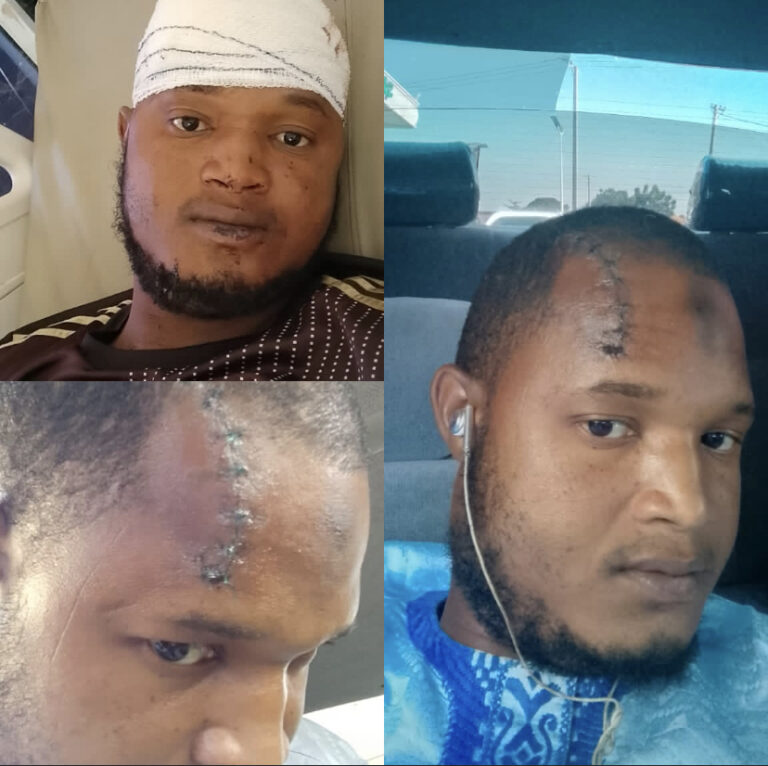
Bello, an entrepreneur who ran a business centre within the Katsina State Police headquarters, was arrested on September 13 after a night patrol intercepted his car.

Police alleged they recovered a locally made rifle, live cartridges and a fake police identity card. They accused him of impersonation, unlawful possession of firearms and use of a false ID.

However, investigations by The ICIR revealed that Bello had for years pursued allegations of a ghost-worker scheme within the Katsina command, petitioning the Economic and Financial Crimes Commission (EFCC), the ICPC, the Attorney General of the Federation and the Police Service Commission.

In his petition to the Attorney General of the Federation, Bello claimed the ID card was originally issued to him by the police when an attempt was made to enlist him and another individual into the force as part of the alleged fraud.

Although investigators confirmed that the ICPC invited key suspects, including finance officers Chief Superintendent of Police (CSP) Bashir Abubakar and the Assistant Superintendent of Police (ASP) Yakubu Ibrahim, the officers refused to appear, citing the need for approval from the former Inspector-General of Police, Mohammed Adamu.

That approval, ICPC officials said, never came, despite a couple of letters written to the Inspector General of Police.

The ICIR gathered that this consequently stalled the probe and has put the life of Bello, who has since been facing repeated attacks from the accused police officers, in danger.

In its petition, AFRICMIL said independent findings show Bello’s ordeal is a direct retaliation for exposing the payroll fraud.

Onumah said the organisation feared for Bello’s safety and that of his family, citing multiple attacks before and after his arrest.

The group urged the police authorities to ensure a thorough and transparent investigation into the alleged payroll fraud and to protect Bello from further harm.

“As a Nigerian who has undertaken a patriotic duty, he deserves the protection of the State. We hope you will use your good offices to intervene in this matter and bring it to a speedy conclusion, including a diligent investigation into the alleged payroll fraud and justice for Mr Bello for the retaliation he has suffered over the years,” the statement added.

In September 18, a coalition of media and civil society organisations under the Coalition for Whistleblower Protection and Press Freedom (CWPPF) also petitioned the Inspector General, demanding immediate protection for Bello and a thorough investigation into the alleged fraud.