Home Blog Page 171

Independence anniversary: FG declares Wednesday, October 1, public holiday

0
THE Federal Government has declared Wednesday, October 1, a public holiday to commemorate Nigeria’s 65th Independence anniversary.

The announcement was made in Abuja on Monday, September 29, by the Minister of Interior, Olubunmi Tunji-Ojo, in a statement signed by the ministry’s Permanent Secretary, Magdalene Ajani.

Tunji-Ojo congratulated Nigerians at home and abroad, urging them to remain committed to unity, patriotism, and resilience, which he described as the pillars that had sustained the country since independence in 1960.

He also appealed to citizens to continue supporting the “Renewed Hope Agenda” of President Bola Tinubu, “anchored on national rebirth, economic transformation, and shared prosperity.”

Meanwhile, the Minister of Information and National Orientation, Mohammed Idris, said the Federal Government had opted for a modest celebration.

Speaking at a pre-independence press conference in Abuja, Idris said the commemoration anniversary was themed “Nigeria @65: All Hands on Deck for a Greater Nation.”

According to him, activities kicked off with special prayers in mosques and churches, while other events include the unveiling of the National Value Charter, a framework developed by the National Orientation Agency (NOA) to strengthen national pride and responsible citizenship.

“The National Value Charter will highlight both the Nigerian Promise and the Citizens’ Commitment,” Idris explained, adding that “The government pledges equality, democracy, inclusivity, and meritocracy, while citizens are enjoined to embrace discipline, accountability, environmental awareness, tolerance, and resilience.”

The minister added that a national students’ debate had also been scheduled as part of efforts to engage young people in shaping the country’s future.

Idris stressed that the decision to keep the celebration low-key was informed by current economic realities, but he assured Nigerians that the anniversary would still reflect the spirit of unity and hope for national progress.

He expressed confidence that with the cooperation of all Nigerians, the country would continue to grow stronger in peace, development, and prosperity.

Nigeria gained independence from British colonial rule on October 1, 1960, and has since marked the day as a symbol of freedom and self-determination.

Nigerian man arrested in India for defrauding over 100 women

INDIAN police have arrested a Nigerian man, Stephane, also known as K Cee Dominic, in Tilak Nagar, West Delhi, for allegedly scamming more than 100 women across the country.

Deputy Commissioner of Police Shahdara, Prashant Gautam, revealed on Monday, September 29, that Dominic posed as a United Kingdom-based Korean businessman on a language exchange app, designed to help users practice languages with native speakers worldwide to target single women and win their trust through conversations before claiming to be stranded at Immigration with large-value cheques or documents pending clearance. 

Meanwhile, his accomplices would pose as officials during phone calls and pressure victims into transferring money digitally.

“Dominic would introduce himself as Duck Young, a Korean jewelry-based businessman who settled in the UK. He would then lure the victims with false promises of personal relationships and business partnerships,” Gautam said.

He added that they picked the 29-year-old into custody from his rented apartment in West Delhi.

Gautam explained that the case surfaced after a woman named Anjali filed a complaint on September 24, claiming she was defrauded of ₹48,500.

“Anjali met Dominic, introduced as ‘Duck Young’ through the app, who later claimed he was detained at the Mumbai airport for travelling without a medical facility card. Anjali also received calls from Indian numbers by people impersonating as Immigration officials and demanding money for Dominic’s clearance. After she transferred the money via UPI, Anjali was asked to pay an additional ₹2 lakh, which she refused. Following this, the accused cut off all communication with her,” he added.

The Deputy Commissioner of Police said the case was filed at Shahdara’s Cyber Police Station, where a team was set up to track the suspect. The police first examined call records, bank details, and social media accounts, which eventually led them to Dominic in West Delhi.

Police also seized a mobile phone from him, which contained the fake profile along with chat records involving over 100 women.

He said that during questioning, Dominic disclosed that he entered India in 2019 on a six-month tourist visa using a passport from the Ivory Coast, since Nigerian citizens were facing difficulties obtaining Indian visas.

After his visa lapsed, he remained in India illegally and, upon running out of savings, resorted to cyber fraud.

Dominic’s case adds to the list of Nigerians that have been arrested in diaspora this year.

The ICIR reported in April that the United States Federal Bureau of Investigation (FBI) arrested 22 Nigerians allegedly involved in a financially driven sextortion scheme linked to over 20 teen suicides in the country since 2021. 

The FBI said it launched Operation Artemis nearly two years ago after receiving thousands of reports of teen boys being coerced into sharing sexually explicit photos online and then extorted with threats of exposure unless they paid.

In May, a 28-year-old Nigerian residing in Toronto, Canada, Chimezie Nwabueze, was arrested by police and is facing multiple charges for allegedly defrauding two victims of over $600,000 through an online romance scam.

The Peel Regional Police said the victims were led to believe they were in a legitimate romantic relationship with the suspect between June 2021 and July 2023 after connecting with him on an online dating platform.

Court declares Pat Utomi’s ‘shadow government’ unconstitutional

0

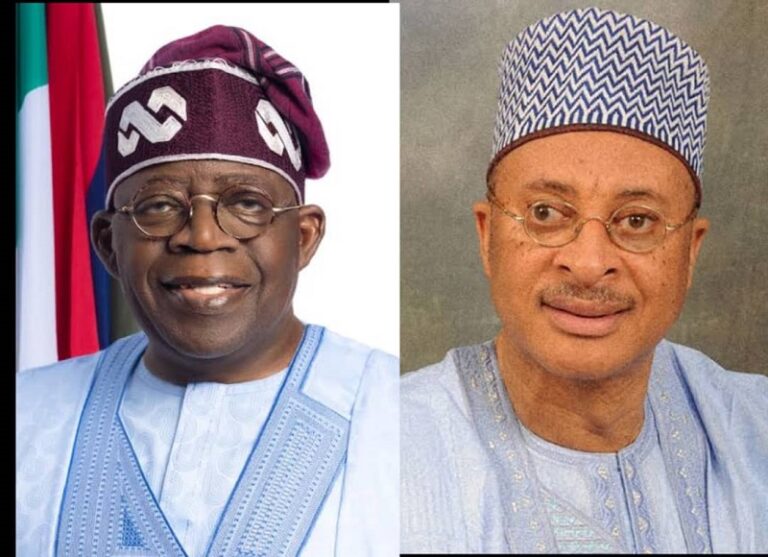
THE Federal High Court (FHC) in Abuja has declared as unconstitutional the shadow government launched by political economist Pat Utomi, earlier this year, ruling that the move was alien to Nigeria’s presidential system of government.

The judge, James Omotosho, while delivering judgment in a suit filed by the State Security Service (SSS), held that the Nigerian Constitution made no provision for any alternative or parallel government outside the one established through elections.

“The constitution is supreme and binding on all citizens, irrespective of political divides. No section of the law allows for a shadow cabinet.,” the court said.

The judge said the defendant could not import foreign constitutional models to confuse Nigerians.

“Therefore, any participation in any government which is unknown to law will be struck down by this court. I hereby declared the formation as void,” the judge ruled.

The case, marked FHC/ABJ/CS/937/2025, was initiated in May after Utomi announced the formation of a shadow government under the Big Tent Coalition.

He described the initiative as a platform to provide credible opposition to President Bola Tinubu’s administration and unveiled a shadow cabinet in July, comprising academics, lawyers, and civil society figures tasked with analysing policies and proposing alternatives.

The SSS argued that the plan usurped executive authority, threatened national security, and could incite unrest similar to the 2020 #EndSARS protests. It urged the court to declare the initiative illegal and restrain Utomi and his associates from pursuing it.

In his defence, Utomi contended that the suit lacked merit, arguing that the shadow government was merely a civic engagement platform protected under the constitutional rights of expression, association, and political participation. He insisted that the SSS was attempting to criminalise opposition politics.

But Omotosho ruled that Nigeria’s constitutional framework did not recognise such a body. Citing sections 1 and 14 of the 1999 Constitution (as amended), he said governance in Nigeria could only be carried out by elected officials. “Any participation in government unknown to law will be struck down by this court,” he declared.

The court also dismissed Utomi’s objection to its jurisdiction, affirming its authority to entertain the matter. To address the novelty of the issues raised, the judge had earlier invited senior lawyers and amici curiae to make submissions before arriving at Monday’s decision.

Utomi’s shadow government had attracted both support and criticisms since its launch. He had argued that the initiative would serve as a policy watchdog, scrutinising government performance and offering solutions in areas such as the economy, education, healthcare, and security.

The ICIR reported that the project generated widespread controversy. Legal experts argued that while opposition politics and policy critique were legitimate, declaring a parallel government structure was inconsistent with Nigeria’s presidential system. Ilorin-based lawyer Moshood Ibrahim described the move as ‘treasonous,’ noting that only elected officials could govern under the Constitution.

However, some analysts downplayed fears over it. Laolu Akande, a former presidential spokesperson, described Utomi’s proposal as a harmless exercise in political thought rather than a threat to national security. He urged security agencies to focus on tackling pressing security challenges instead of targeting civic initiatives.

Nigeria’s environmental crisis demands transparency, MRA says in new report

0

MEDIA Rights Agenda (MRA) has called on federal and state governments to strengthen citizens’ access to environmental information, warning that Nigeria’s weak response to climate and ecological challenges was costing lives, livelihoods and billions of naira in damages.

The appeal came on Monday, September 29, as the Lagos-based watchdog launched a report, ‘Access to Environmental Information and the Cost of Ignorance in Nigeria,’ to mark this year’s International Day for Universal Access to Information. 

The report, according to a statement by the organisation communication officer, Idowu Adewale, detailed the mounting toll of deforestation, flooding, desertification, oil pollution, plastic waste and worsening air and water quality, describing them as threats to ecosystems, public health and national stability.

The statement noted that the country already had constitutional guarantees, statutory provisions and international commitments that could support transparency and accountability, adding that public institutions had, however, remained reluctant to disclose data.

The MRA’s Programme Officer, Ayomide Eweje, was quoted as saying, “Critical to a national response framework is the right of citizens to access timely and reliable environmental information, without which their effective participation in environmental governance and the protection of their rights will not be possible. However, ensuring access to environmental information is not just about compliance with the law alone; it is also about empowering people to protect their health, livelihoods, and environment; hold duty bearers accountable; and build a future where development does not come at the expense of sustainability,” she added.

The group also highlighted key threats, including deforestation, desertification, recurrent flooding, oil pollution in the Niger Delta, rising plastic waste, and worsening air and water quality. 

It argued that public access to data on these issues was “not a luxury but a necessity” for protecting health, livelihoods and national stability.

Although Nigeria has constitutional guarantees and laws such as the Freedom of Information Act, the Climate Change Act and the Environmental Impact Assessment Act, MRA said government agencies rarely released information proactively and often ignored requests.

The group also criticised the exclusion of rural communities and women from decision-making, and urged authorities to invest in broadband expansion, solar-powered digital hubs and community ICT centres to bridge the rural digital divide.

“The cost of environmental devastation in Nigeria is already staggering, running into billions of dollars annually in destruction of public and private property, facilities and infrastructure; the displacement of millions of citizens; and the loss of thousands of lives. Without meaningful and effective access to environmental information, citizens cannot protect their health and livelihoods, or hold decision-makers accountable. This report underscores the urgency of transparency and public participation in environmental governance,” Eweje added. 

She, however, urged the federal and state governments to guarantee citizens easy access to environmental information, stressing that data availability and transparency were essential for public accountability in the digital era.

To achieve this, she said authorities should strengthen and enforce laws requiring proactive disclosure of environmental data in clear, user-friendly digital formats, and establish centralised open-access portals with regular updates on pollution levels, deforestation rates, water quality and climate risks.

MRA also called for investment in broadband expansion, solar-powered community ICT hubs, and digital training to bridge the rural connectivity gap.

It appealed to civil society groups, journalists, researchers, and technology companies to monitor and report environmental hazards and ensure that available data is accessible, comprehensible and actionable.

Ohaneze’s wake-up call: reclaiming Igbo language before it’s too late

0

By IfeanyiChukwu AFUBA

IT’S relieving to hear that the Igbo socio – cultural organisation, Ohaneze, is finally interested in checking the continued setback of Igbo language. Leadership newspaper of Saturday, September 13, 2025, reported  that John Azuta-Mbata, President of Ohaneze, pledged the organisation’s support on the mission of Igbo cultural renaissance.

The affirmation was made in the course of briefing on preparations for this year’s Ohajioku Festival, scheduled for September 26 at Owerri.  Ohajioku debuted in 1979 as a platform for fertilisation of the Igbo worldview. Mbata reportedly said the present Ohaneze leadership has sponsored endowment chairs for researches in Igbo language, history and culture. “We are encouraging studies and research on Igbo language and culture. We have set up a committee for that. Any role we are expected to play, we shall gladly play it at the Ahajioku lecture. Our people must be heard.”

In the past two decades of the alarm on eroding use of Igbo, Ohaneze leadership maintained scandalous silence. UNESCO has classified Igbo along with some other indigenous Nigerian Language as a ‘vulnerable’ language since 2004, warning of possible endangerment if current trends continue. No institution or study of note has controverted the UN agency’s prediction. The lack of contradiction is not surprising given the verifiable bases of language influences.

Ohaneze, in the past, had proved ineffectual on the issue of modern Igbo civilisation. Some would even say she was vacuous. Many have tried to exploit the body as leverage for political relevance and patronage. Sadly, in the intervening period since UNESCO’s alert, the fortunes of Igbo language has further diminished.

One indicator of decline is the reduced use of Igbo among educated speakers, often due to social and economic incentives to use English. Many educated Igbo prefer listening to radio and television news in English than Igbo which would pose problems of nuanced expression.

Although many factors contribute to the downward slide of Igbo, the major ones converge around three areas. They consist of the technological, political and social. The technological relates to the leaps in modernisation which have neither been reported nor domesticated in the language. Modern advances in learning, professions, science and technology, cannot be discussed in many native languages because they have not kept pace with the changes in time. Language does not exist in a vacuum. It grows and develops from lived experiences.

Consequently, a language like Igbo which is not a participant in the tradefair of the jet age, suffers two main disabilities. It becomes confined to it’s ancestral space, and even within that limitation, experiences shrinking patronage.  Dominant technologies, by their utilitarian value, exert influences on their recipients. You cannot be using American computers and say you don’t recognise American spelling in English. And so, lacking the feed of the new world order, the Igbo and members of her class live under danger of stunted growth.

Fortunes of the Igbo language have been further eroded as a result of the political disadvantage faced by about 40 – 50 million Igbo sub nationality. With the winner – takes – all equation that governs much of Nigeria’s power game, fluency in the language of the ruling ethnic group, could admit into the banquet hall. The post – Biafra officer was a spectator in the military manoeuvres for power.

Dispossessed in the judicial heights and other strategic centres through the unwritten law of marginalisation, it’s still an elusive chase under democracy. While some consciously embrace language of the ruling bloc, some others are subtly conditioned by the prestige and influence flowing from political authority. The political angle is also about what might have been on home front; the road not taken by governments of Igbo – speaking States. Were there not measures they could have put in place to bolster the use of Igbo? There were and there still are.

The social factor refers broadly to the impediments in intergenerational transmission of a language. According to Wikipedia, “following the rise of colonialism, language death has typically resulted from the process of cultural assimilation leading to language shift and the gradual abandonment of a native language in favour of a foreign lingua franca.”

For decades after independence, speaking Igbo in schools was discouraged or even punished, a policy that began under colonial rule and lingered into the late 20th century. In my five years of secondary education in Enugu, Igbo never appeared in the timetable and was not taught for one day. As if acting on cue, parents from about the 1980s, gradually took pride in making English the child’s first language at home. With Igbo taken out of the child’s early formative years, both at home and at school, the foundation was sadly laid for cultural alienation. How would generations, exiled from Igbo, as it were, be enthusiastic about using the language, let alone, ensuring it’s transfer to the next generation?

Of interest too, is a trend that may be described as the Igbo split personality. This shifty attitude speaks to a lack of consciousness of social imperatives. Even without any undue influence, some Igbo learn and choose to speak other languages simply to demonstrate their linguistic prowess. In itself, this seems a very positive attitude – but not when the apparent liberalism is at the detriment of the native language.

Consider the oddity of religious worship in Igboland, where members of the congregation are Igbo speakers, yet the choir busies itself singing hymns in other Nigerian languages. This is not an uncommon sight. And this in an age Christianity has emphasised local enculturation of the faith. The same zeal for sophistication continues outside the Church. Non Igbo speakers visiting or resident in the southeast, whose assimilation of the language would have added to the spread chain, are told not to bother. And Igbos gladly speak to other Nigerians in their sub national languages right in Igboland!

As it were, Ohaneze has it’s work on the language issue cut out for it. She has the dual responsibility of lobbying governments in the southeast and parts of Delta, Rivers, Benue, and Cross River States to adopt affirmative action on Igbo language use. Among other measures, these governments can give Igbo a boost by making it alternative communication medium for executive and legislative businesses.

Igbo-language broadcasting is still significantly less than English, possibly around 20 per cent on many stations, though figures vary. This lopsidedness can legitimately be rectified on the basis of public interest in government owned media. With time and sustained momentum, privately owned media should also see the need to key in.

On the other hand, Ohaneze leadership has some aspects of the language project to execute or oversee directly. There is need to have clear terms of reference for committees working on this brief as well as have their reports reviewed by a second body. Such a vetting process will help avoid the gaffe represented by “ututu oma” as Igbo new day salutation. Ututu oma is a product of validation mindset seeking to worship at English’s good morning altar. The transliteration neither reflects the communal ethos of “ndeewoo” nor the interactive forge of “unu aputago ula” with which most Igbo societies identify. This bland imitation ought to be discontinued immediately.

Top on the priority should be the compilation, publication and availability of a standard Igbo dictionary. Translation of general and literary classics into Igbo, beginning with Chinua Achebe’s Things Fall Apart should start apace.

Ohaneze is invited to consider creating substantial prizes for outstanding films, home videos, documentaries and novels rendered in Igbo. Quizzes and essay competitions on brilliant works of literature in Igbo will help to spur interest and readership. English will remain a dominant tongue for a long time to come but let Igbo function alongside.

Afuba  can be reached via afubaifeanyichukwu@gmail.com.

Panic buying hits Abuja as NNPC, NUPRC, NMDPRA shut over PENGASSAN strike

0

PANIC buying of petrol has spread across the Federal Capital Territory as the nationwide strike declared by the Petroleum and Natural Gas Senior Staff Association of Nigeria (PENGASSAN) shut down operations at Nigeria’s key oil and gas regulatory institutions.

Motorists were seen thronging fuel stations for panic buying in several parts of the city, including the Airport and Kubwa roads, while queues also stretched at Maple, Kugbo and Nyanyan areas of the nation’s capital .

The industrial action, which commenced on Monday, paralysed activities at the Nigerian National Petroleum Company Limited (NNPCL), the Nigerian Upstream Petroleum Regulatory Commission (NUPRC), and the Nigerian Midstream and Downstream Petroleum Regulatory Authority (NMDPRA).

According to Punch, at the NUPRC headquarters in Abuja, the main gate was firmly locked, leaving staff stranded outside. Security operatives confirmed that no entry was permitted in line with the union’s directive. Similar scenes played out at the NMDPRA office in the Central Business District, where offices were deserted.

Confirming the situation, PENGASSAN chairman at NMDPRA, Tony Iziogba, said the strike recorded “100 per cent compliance,” barring both staff and visitors from accessing facilities. He added that the same level of compliance was achieved at the NNPCL and other agencies nationwide.

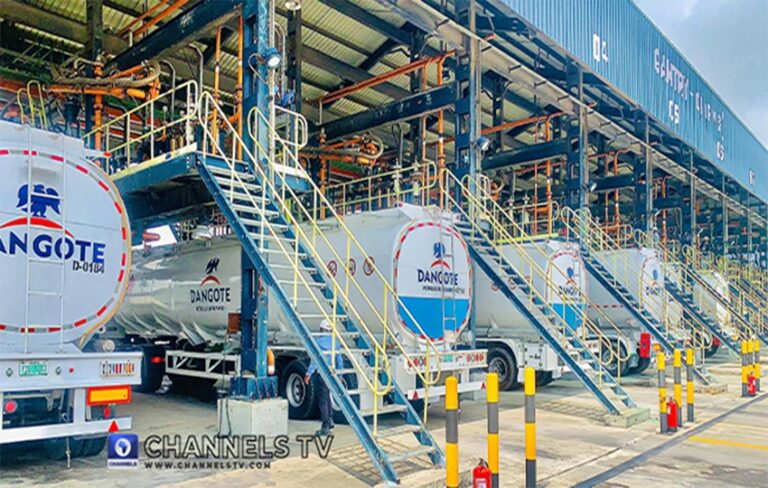
The strike followed PENGASSAN’s National Executive Council (NEC) resolution over the dismissal of about 800 workers at the Dangote Petroleum Refinery. The union accused the refinery of violating Nigerian labour laws and International Labour Organisation (ILO) conventions by sacking workers for joining the union and replacing them with foreigners.

“All processes involving gas and crude supply to Dangote Refinery should be halted immediately,” the NEC declared in a statement signed by PENGASSAN General Secretary, Lumumba Okugbawa. The resolution directed all international oil companies (IOCs) to cut crude and gas shipments to the plant.

The move has already triggered fears of acute fuel scarcity and blackouts. Marketers warn that halting supply to Nigeria’s largest refinery will disrupt distribution, drive up prices, and destabilise the downstream market.

On Sunday, September 27, the union instructed members in field locations to down tools from 6:00 am on September 28 and commence a round-the-clock prayer vigil, while all offices and oil facilities were ordered to shut from 12:01 am on September 29.

Just last week, the House of Representatives waded into the crisis, urging PENGASSAN to withdraw its order stopping crude and gas supply to the refinery and allow dialogue.

Chairman of the House Committee on Petroleum Resources (Downstream), Ikenga Ugochinyere, said the decision to halt supply could destabilise the sector, scare away investors, and worsen hardship for Nigerians. “The House does not support shutting down gas and crude supply without exhausting the dispute resolution processes provided in labour laws,” he said.

The committee announced the creation of a sub-committee led by Akin Rotimi to harmonise positions within 14 days, focusing on alleged retrenchments, union rights, and the extent of management powers in private companies.

On its part, Dangote Petroleum Refinery described the directive on the strike as reckless and illegal. The company argued that its contracts with crude and gas suppliers were not subject to union directives and warned that disruptions could undermine federal and state revenues, calling PENGASSAN’s action “economic sabotage.”

The refinery also accused the union of spreading misinformation, urging the Federal Government and security agencies to intervene. “Continued disruption could trigger scarcity of essential products such as petrol, diesel, aviation fuel and cooking gas,” the company warned.

The ICIR earlier reported that a similar dispute arose in September when the Nigeria Union of Petroleum and Natural Gas Workers (NUPENG) threatened a strike over the refinery’s refusal to recognise workers’ rights to unionise.

That action was only suspended after the Department of State Services (DSS) brokered a truce in a meeting with the Minister of Finance, Wale Edun, and the Nigeria Labour Congress (NLC).

Criminal defamation or criminal intimidation: exposing the phantom charges against me

0

By Chinedu Agu

IT is no longer news that on Wednesday, 17 September 2025, I honoured the invitation by the X-Squad Unit of the Nigeria Police Force, Imo State Command, over allegations of “Criminal Defamation of the Governor of Imo State” and “conduct likely to cause a breach of the peace.”

This account is not intended to sensationalise the matter, but rather to lay bare certain uncomfortable truths which I am prepared to stand by, as they are rooted in incontrovertible facts which demonstrate three clear points:

One:. The persecution against me was directly initiated by the Imo State Commissioner of Information.

Two: The so-called “civil society organisation” presented as the originator of the petition against me – Imo Democratic Alliance, allegedly coordinated by one Umukoro Marvis Udechukwu – does not exist in Nigeria. It is not registered and has no traceable office address anywhere in the country.

Three: But for the courage and professionalism of magistrates in Imo State, and the overwhelming solidarity of lawyers, civil society organisations, and friends, I would have been languishing in detention much earlier.

What follows should shed light on the rot, the decay, and the complicity that continue to fester in our Imo State.

At 12:47 p.m. on September 12, 2025, my phone rang. The caller introduced himself as a police officer and asked if I was Chinedu Agu. Without hesitation, he informed me that there was a petition against me for “criminal defamation of His Excellency, the Governor of Imo State.” He further requested me to honour an invitation to appear before the X-Squad Unit of the State Police Command on Wednesday, September 17, 2025.

Curious, I asked about the source of the petition. He replied that it came directly from the Imo State Ministry of Information and even went on to mention the name of the official who signed it.

When I requested for a copy of the petition, he responded I would have to “call Oga” for a copy. When I reached out, ‘Oga’ categorically told me I could not be given a copy of the petition except I applied formally to the Commissioner of Police for a Certified True Copy (CTC).

After we eventually settled on a date for my encounter with the X-Squad, the officer reluctantly sent an “Invitation Letter” to me via WhatsApp. That letter, bare as it was, stood as a symbol of something deeper – the rot and decay in our system, where power is wielded not to protect truth and justice, but to intimidate voices that dare to speak both.

This refusal by the police to furnish a citizen with a copy of the petition forming the basis of his invitation raises grave constitutional and statutory issues. Under Section 36(6)(a) & (b) of the 1999 Constitution, every person facing criminal allegations has the right to be informed “promptly and in detail” of the nature of the offence, and to have adequate facilities for the preparation of his defence. Denying access to the petition until one applies for a CTC clearly violates this right.

The Administration of Criminal Justice Law of Imo State, 2020 (ACJL) reinforces this. Section 8 of the ACJL guarantees fair hearing, while Section 17 mandates humane treatment and respect for the dignity of suspects. Transparency at the investigative stage is, therefore, not a matter of grace, but a constitutional and legal obligation.

This practice, whereby the police serve an invitation letter yet withhold the petition that underpins it, fosters intimidation, secrecy, and abuse of power. It effectively disarms the citizen and turns what should be a fact-finding process into a trap.

I digress.

On the agreed date, I arrived at the station accompanied by a team of lawyers numbering about 72. I was ushered in together with Chief Chris Ihentuge, Chairman of the Nigerian Bar Association (NBA), Owerri Branch, and Chief H.N. Duroha, Chairman of the Sports Committee of the branch. A police officer, who introduced himself as the “2/IC”, laboured rather gratuitously to persuade us that the petition did not emanate from the Ministry of Information but rather from “Imo Democratic Alliance”.

To convince us, he brought out a two-page petition and read the first page aloud. He then handed me over to the Investigating Police Officer (IPO) to whom the matter had been assigned.

At the IPO’s office, he made to read the petition to me. I politely requested to personally peruse it. What I saw was a farce: a hastily contrived letterhead, garishly designed, with “IMO DEMOCRATIC ALLIANCE” written in capital letters. Its motto, inscribed in red, declared “FOR GOOD GOVERNANCE.” On the top right corner of the page was a needless sketch of the map of Imo State. It bore no office or return address. The ‘petition’ was dated September 2, 2025 and captioned, “Criminal Defamation of the Governor of Imo State and Incitement of the Public Against Imo State Government and the Police by Barr. Chinedu Agu.”

The ‘petition’ referred to two articles authored by me: the latter article, “Imo State – Where Justice is On Vacation During Court Vacation”, was published 31 August 2025. The earlier one, “Tears From Enugu: A Lawyer’s Heartbreaking Diary From a State That Works To a State In Ruins”, was published one day earlier on 30 August. The author alleged that I published both with the “intention to incite an insurrection against state institutions through the vicious provocation of the citizens”. It concluded by warning that “if Barr. Agu is not called to order now, he may be on his way to inciting the citizenry into violent action.” Critically, the author did not say how either article had incited anyone nor suggest how I was to be called to order.

The petition was signed by one “Umukoro Marvis Udechukwu”, who claimed to be the “Co-ordinator” of the Imo Democratic Alliance.

In my response, I pointed out that this petition did not disclose any offence known to law. On the accusation of “criminal defamation”, everything I wrote in my two pieces is factual and truth is a complete defence to defamation. I requested the IPO to retrieve and review the full texts and identify a single line that was untrue.

I also added that the law does not permit a third party to lay such a complaint. Defamation is personal, and no busybody can initiate action in that regard. The fictitious organisation did not allege defamation of itself, nor did Umukoro Marvis Udechukwu allege defamation of his own person.

Importantly, the so-called petition did not annex the articles complained of. Instead, it imported mutilated texts, using only those parts that suited its persecutorial purpose. As for the allegation of “inciting the public,” I also invited the police to point to a single line in my articles that did any such thing.

Upon leaving the police, I immediately conducted a search on the portal of the Corporate Affairs Commission (CAC). Imo Democratic Alliance is legally non-existent. It is not a registered organisation. To use such a phantom entity as source for a law enforcement procedure is itself criminal.

On the evening prior to my scheduled encounter with the police on 17 September, I received credible information that my detention was already pre-determined. Indeed, the police made strenuous efforts to procure a magistrates’ signature for an order to detain me but none could be persuaded at the time to lend legitimacy to such illegality.

Frustrated by that setback, and confronted with the overwhelming solidarity of more than 72 lawyers who accompanied me to the station, the police chose to release me on bail, on self-recognizance. It was a temporary respite.

Thereafter, they fixed a fresh encounter for early afternoon on Tuesday, September 23. I shall honour that invitation once again to see what new tricks they will conjure.

One undeniable truth from this entire episode is that initiator of the police persecution against me is the Imo State Commissioner of Information. I welcome genuine legal process. I am not afraid of lawful process but I already suspect that is not what this is about.

A former secretary of the NBA, Owerri Branch, Chinedu Agu, wrote this piece on September 20, 2025. Since September 23, 2025, he has been detained at the direct instigation of the Imo State Government. He can be reached at ezeomeaku@gmail.com

Two drug kingpins arrested with consignments of cocaine, heroin, meth in Lagos

0

THE National Drug Law Enforcement Agency (NDLEA) has arrested two alleged drug barons in Lagos after uncovering consignments of cocaine, heroin, and methamphetamine destined for Europe.

The suspects, identified as Victor Nwosa, 64, and Felix Chika Obiegbu, 49, were apprehended in separate operations following weeks of surveillance by operatives of the agency’s Special Operations Unit (SOU).

NDLEA, in a statement on Sunday, September 28, by its spokesperson, Femi Babafemi, said Nwosa, who posed as a textile merchant, was arrested on September 17 at his residence on Femi Kila Street, Okota, where 4.33 kilograms of heroin and 448 grams of cocaine were recovered.

According to the agency, Obiegbu, who ran a wine distribution business, was picked up on September 11 at Shada Shonefun Street, Aguda Surulere, with 2.9 kilograms of methamphetamine seized from his home.

In separate operations in Borno and Yobe, the NDLEA said it intercepted suspected drug couriers believed to be supplying narcotics to terrorists and bandits.

In Borno, officers arrested 26-year-old Baba Kaka Ibrahim on September 27 at Njimtilo village while driving a Mercedes-Benz GLK. A search of the vehicle revealed 39,380 pills of tramadol and exol-5 hidden in the engine compartment.

On the same day, in Yobe, operatives stopped Halima Adamu along the Damaturu-Maiduguri highway with 39 parcels of Colorado weighing 1.4kg concealed in her luggage. A follow-up operation led to the arrest of another woman, Habiba Muhammad, at her residence on Baga Road, Maiduguri.

Seizures across states

The agency reported further arrests in other states. In Kano, two suspects, Aliyu Sani, 27, and Yahaya Tata, 26, were caught with 30,030 tramadol pills along the Zaria-Kano road. In Bayelsa, three men were arrested at Swali jetty, Yenagoa, with 12kg of skunk and 50 cartridges.

In Ekiti, an ex-convict identified as Femi Owoeye, alias “Do Good,” was arrested at his home in Ikere Ekiti on September 25 with 32kg of skunk and 10.5 grams of tramadol. He had previously served a three-year jail term for drug trafficking.

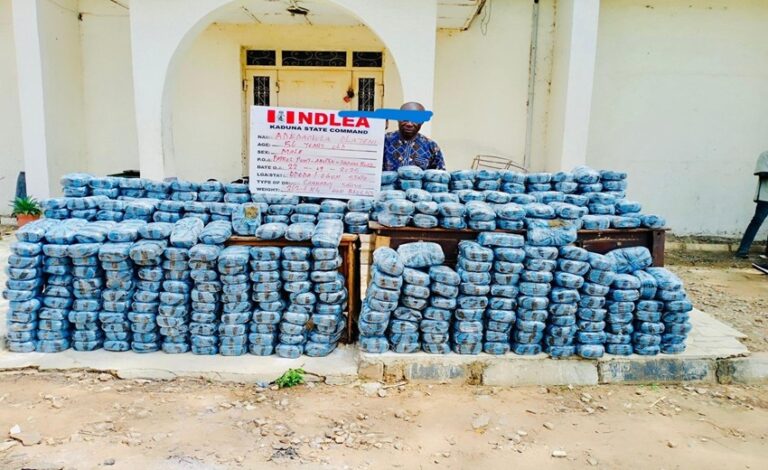
In Kaduna, NDLEA operatives intercepted a Honda Pilot vehicle at the Abuja-Kaduna tollgate on September 22 carrying 262.6 kilograms (kg) of skunk. The driver, Adedamola Olayeni, 56, was arrested. Another suspect, Zubairu Haruna, 30, was caught with 506 grams of methamphetamine at a checkpoint in the state, while a follow-up operation in Gombe led to the arrest of Babangida Mohammed, 25, said to be the intended recipient.

In Lagos, three suspects were arrested in Apapa with 85,100 opioid pills, while in Abuja, a 40-year-old man, Opeyemi Ogundipe, was arrested with 2.1kg of Colorado along the Abaji-Gwagwalada expressway.

Large-scale cannabis destruction in Edo

NDLEA officers also destroyed over 24,000kg of cannabis in Edo State. At Uromi forest, Esan West Local Government Area, 12,115kg was destroyed on nearly five hectares of farmland, while 345kg of processed cannabis was recovered. Two suspects were arrested.

At Ogu forest in Igueben Local Government Area, another 12,031kg of cannabis was destroyed on over four hectares, with 106kg evacuated.

The agency also intercepted a truck loaded with 1,025kg of cannabis hidden in charcoal bags along Wareke-Auchi road in Etsako West Local Government Area, arresting two suspects in the process.

The NDLEA Chairman, Mohamed Buba Marwa, commended officers involved in the various operations across Lagos, Borno, Yobe, Edo, Kano, Kaduna, Ekiti, Bayelsa, FCT, and Gombe.

He said the seizures and arrests highlighted the agency’s commitment to disrupting drug networks and protecting communities.

The agency also reported that its War Against Drug Abuse (WADA) sensitisation campaigns continued across schools, worship centres, and communities nationwide during the week.

Reps intervenes in Dangote, PENGASSAN dispute as labour tension deepens

0

THE House of Representatives has directed its Committee on Petroleum Resources (Downstream) to intervene in the ongoing industrial dispute between the Dangote Petroleum Refinery and the Petroleum and Natural Gas Senior Staff Association of Nigeria (PENGASSAN).

The committee, chaired by Ikenga Ugochinyere, urged PENGASSAN to withdraw its directive halting crude oil and gas supply to the refinery, allowing room for dialogue.

In a statement issued on Saturday, September 27, Ugochinyere said the union’s action could destabilise the downstream sector, frighten potential investors, and cause disruptions in the supply of petroleum products.

“The House of Representatives Committee on downstream petroleum resources disagrees with PENGASSAN’s order to stop gas and crude supply to the Dangote refinery without exhausting the dispute resolution processes provided in labour laws,” he said.

Ugochinyere explained that the committee had established channels of engagement with key industry players, including the Nigerian Midstream and Downstream Petroleum Regulatory Authority (NMDPRA), the Nigeria Union of Petroleum and Natural Gas Workers (NUPENG), and the Ministry of Labour.

He noted that a subcommittee chaired by Akin Rotimi, with Midala Usman, Billy Osawaru, and Mathew Nwaogu as members, had been set up to harmonise positions on the dispute. The subcommittee is expected to submit its findings within 14 days.

According to him, the intervention would focus on issues relating to union rights, alleged retrenchments, and the powers of private companies to manage their workforce in line with productivity demands.

“We call on PENGASSAN to return to the table for direct talks presided over by the committee, regulators and relevant stakeholders to reach a sustainable solution,” he said.

The legislative intervention comes amid escalating labour action. On Saturday, PENGASSAN’s National Executive Council (NEC) ordered members nationwide to withdraw services following what it described as the unlawful dismissal of over 800 Nigerian employees by the refinery.

The NEC accused the company of violating labour laws and International Labour Organisation (ILO) conventions by sacking unionised workers and replacing them with more than 2,000 foreign nationals.

The circular, signed by General Secretary Lumumba Okugbawa, instructed members across field locations to stop work from the morning of Sunday, September 28. It also ordered a total shutdown across offices, institutions, and oil facilities from Monday, September 29. In addition, branches were directed to cut crude and gas supply lines to the refinery, with international oil companies asked to suspend shipments destined for the plant.

“No man is bigger than our country,” the NEC declared, insisting that the strike would continue until the dismissed workers were reinstated.

In its response, Dangote Petroleum Refinery described the union’s directive as reckless and illegal. The company said supply contracts with gas and crude vendors were not subject to interference by PENGASSAN and warned that the disruption could trigger scarcity of essential products such as petrol, diesel, aviation fuel and cooking gas.

“PENGASSAN has no legal right to disrupt or interfere with the refinery’s contractual obligations,” the company stated. It argued that Nigeria is governed by law, and the union’s action amounted to “criminal interference” that could plunge the country into economic instability.

The refinery also accused PENGASSAN of economic sabotage and spreading misinformation. It urged the Federal Government and security agencies to intervene, stressing that continued disruption could harm state and federal revenues as well as ordinary citizens who rely on fuel for daily activities.

The latest face-off follows similar clashes earlier in September when NUPENG accused the refinery of reneging on an agreement to recognise workers’ rights to unionise.

The ICIR reported that NUPENG had suspended a nationwide strike only after a deal was reached at a meeting convened by the Department of State Services (DSS), attended by the Minister of Finance, Wale Edun, and the Nigeria Labour Congress (NLC).

At that meeting, the refinery reportedly agreed to respect unionisation rights. However, NUPENG later alleged that the company backtracked, ordering the removal of union stickers from trucks and failing to honour its commitments. The union threatened to resume its strike, warning against the use of security agents to suppress workers’ rights.

The refinery has consistently maintained that its actions are in line with labour laws and productivity requirements, while unions argue that its approach undermines Nigerian workers and prioritises foreign staff.

With both sides holding firm, the House committee stressed the need for negotiation and alternative dispute resolution. “While we acknowledge the concerns of PENGASSAN, the decision to halt gas supply is hasty and will have a multiplier effect on Nigeria’s energy needs and investment climate,” Ugochinyere said.

The committee also called on all parties to submit detailed information on the dispute and warned that disruptions at the country’s largest refinery could worsen hardship for Nigerians.

PENGASSAN orders nationwide strike amid face-off with Dangote Refinery

0

THE Petroleum and Natural Gas Senior Staff Association of Nigeria (PENGASSAN) has directed its members nationwide to down tools following the alleged dismissal of more than 800 Nigerian workers by Dangote Petroleum Refinery.

In a circular issued after an emergency National Executive Council (NEC) meeting on Saturday, September 27, 2025, and signed by General Secretary Lumumba Okugbawa, the union accused the refinery of breaching Nigeria’s labour laws, the Constitution, and International Labour Organisation (ILO) conventions by sacking workers who joined the association.

The NEC further alleged that the refinery replaced the dismissed staff with “over 2,000 Indians,” describing the move as “an affront to all Nigerian workers.”

To press its demands, PENGASSAN instructed members in field locations to withdraw their services from 6:00 a.m. on Sunday, September 28, with a nationwide shutdown across offices, companies, institutions, and agencies to begin at 12:01 a.m. on Monday, September 29.

It also directed that all processes involving gas and crude supply to the refinery be halted immediately, while international oil companies were ordered to ramp down production and supply to the plant.

The circular added that 24-hour prayer vigils would be held during the strike, stressing that no intervention would be entertained except in situations threatening personnel safety or critical assets.

“An injury to one is an injury to all. No man is bigger than our country,” the NEC declared, calling on the Federal Government to intervene and vowing that the strike would continue until the sacked workers were reinstated.

The directive comes amid a deepening labour dispute between the refinery and oil sector unions over workers’ rights and safety standards.