Home Blog Page 170

22 dead as youth-led protest spreads in Madagascar

0

PROTESTERS in Madagascar returned to the streets on Tuesday, a day after President Andry Rajoelina dismissed his cabinet in an attempt to calm unrest that had already left 22 people dead.

According to the United Nations, earlier demonstrations were met with a heavy police crackdown, leaving at least 22 people dead and over 100 injured, even though the government dismissed the figures as unverified and “based on rumours or misinformation”.

The ICIR reported that the police in Madagascar declared a dusk-to-dawn curfew after violent protests by Gen Z on Friday, September 26, sparked by recurring power outages and water shortages.

In Antananarivo, hundreds of mostly young protesters took to the streets, but the demonstration was forcefully broken up as police fired rubber bullets and tear gas to disperse the crowd.

Drawing inspiration from “Gen Z” protests in Indonesia and Nepal, the youth-driven movement is challenging entrenched misgovernance, driven by frustration over persistent water and power outages in the impoverished Indian Ocean nation.

On Monday, September 29, Rajoelina dismissed his entire cabinet, issued an apology for his ministers’ inaction, and pledged to address the nation’s challenges.

But the move failed to halt the demonstrations, as organisers called for another rally in the capital Tuesday morning.

“They call us the TikTok generation, a generation of idiots, and when we rise up, they won’t even let us speak,” a student protester said Monday, dressed in black in line with a call on social media to mourn those killed.

“Mr Andry Rajoelina, when you led protests, you were allowed to, it was fine. But when we young people rise to fight for our country, you try to silence us,” she said.

A strong police deployment was stationed in and around the city centre on Tuesday.

On the outskirts, activity slowly picked up as schoolchildren filled the streets and people pulled carts, though traffic stayed sparse.

Protesters are calling for the resignation of Rajoelina, a former mayor of Antananarivo, who rose to power through a coup that removed former president Marc Ravalomanana.

“When the Malagasy people suffer, I want you to know that I feel that pain too, and I have not slept, day or night, in my efforts to find solutions and improve the situation,” Rajoelina said late Monday.

The 51-year-old leader, who skipped the 2013 election under international pressure, returned to power through the ballot in 2018.

Philibert Tsiranana, who governed during the post-independence era, was compelled to cede power to the Army in 1972 after a popular uprising was violently crushed.

The protests began in the capital, Antananarivo, on Thursday and later spread to other cities across the nation of nearly 32 million people, according to World Bank data.

Following last week’s protests in Antananarivo, widespread looting broke out overnight.

On Monday, he called for applications for a new prime minister within three days, ahead of forming a new government.

Madagascar, the world’s top producer of vanilla, the second most expensive spice after saffron, remains among the poorest nations globally. 

In 2022, nearly 75 percent of its population lived below the poverty line, according to the World Bank.
Court adjourns Sowore’s arraignment in cybercrime case over non-service of charges

0

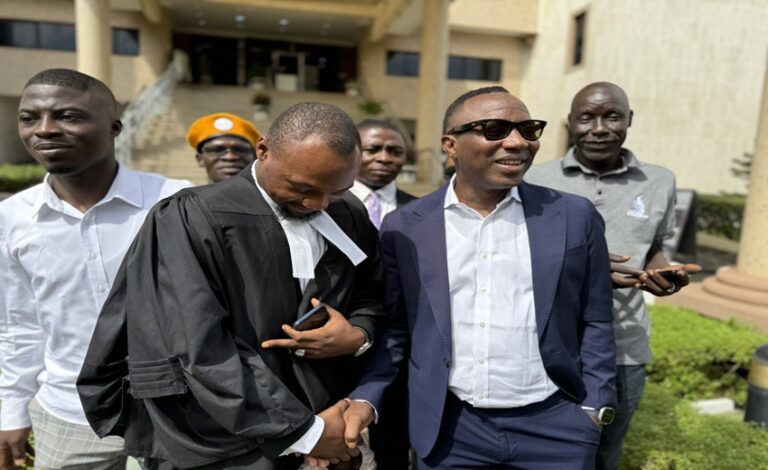
THE arraignment of human rights activist and publisher of Sahara Reporters, Omoyele Sowore, stalled on Tuesday, September 30, at the Federal High Court in Abuja, following the failure of the prosecution to properly serve him with the charges.

The government, through the State Security Services (SSS), had filed a five-count charge against Sowore for allegedly publishing false and defamatory statements against President Bola Ahmed Tinubu on his verified X handle and Facebook page in August 2025. Also listed as defendants in the case are X Corporation, owners of the social media platform X, and Meta Platforms Inc., operators of Facebook.

At the resumed hearing on Tuesday, Sowore’s counsel, Marshal Abubakar, objected to the arraignment, insisting that his client had not been served with the charges. He argued that since it was a joint charge involving multiple defendants, all parties must be served before proceedings could commence.

Prosecution counsel, Mohammed Babadoko Abubakar, the Director of Public Prosecutions of the Federation (DPPF), countered the claim, maintaining that service had been effected.

However, after examining the case file, the presiding judge, Mohammed Umar, ruled that Sowore had not been personally served, though the other defendants had received the charges electronically.

The court thereafter ordered that Sowore be served in open court. He accepted the service but invoked his right to a minimum of three days to study the charge and prepare his defence. The court granted the request and adjourned the matter to October 27 for arraignment.

During the session, counsel to Meta, Tayo Oyetibo, a senior advocate, also confirmed that his client had just been served in court and queried why Meta was included in the suit since no specific count was directed against it. X Corporation was not represented in court.

The charges against Sowore stem from posts he made on August 25 and 26, 2025, in which he referred to President Tinubu as a ‘criminal’ and accused him of falsely claiming during an official trip to Brazil that corruption no longer existed in Nigeria. The government alleges that the posts violated Section 24 of the Cybercrimes (Prohibition, Prevention, etc.) Amendment Act, 2024, and Sections 375 and 59 of the Criminal Code Act.

According to the charge sheet, Sowore was accused of using social media platforms to incite public disorder and tarnish the president’s reputation. The prosecution contended that the statements were false and intended to cause fear and unrest.

Before approaching the court, the SSS had written to X Corporation and Meta, demanding the removal of Sowore’s posts and suspension of his verified accounts. The agency also directed Sowore to retract the statements, issue public apologies on social media and in two national newspapers and make a formal representation to its headquarters. Sowore refused, describing the order as unlawful.

In a letter to the SSS on September 12, 2025, the activist said the agency lacked the legal authority to compel him to retract his criticisms of the president. He cited the 1985 Court of Appeal judgment in Arthur Nwankwo v. State, which declared criminal defamation unconstitutional, and invoked his rights under Section 39 of the Nigerian Constitution and Article 9 of the African Charter on Human and Peoples’ Rights.

Sowore, who has previously contested Nigeria’s presidential elections on the platform of the African Action Congress (AAC), said he would not be deterred from holding leaders accountable.

The case will resume on October 27 when Sowore and the co-defendants are expected to take their pleas.

NOSDRA, NIPC, ICPC top 2025 Transparency Index as over 500 MDAs perform poorly 

0

THE National Oil Spill Detection and Response Agency (NOSDRA) has emerged as the most transparent public institution in Nigeria in the 2025 Transparency and Integrity Index (TII).

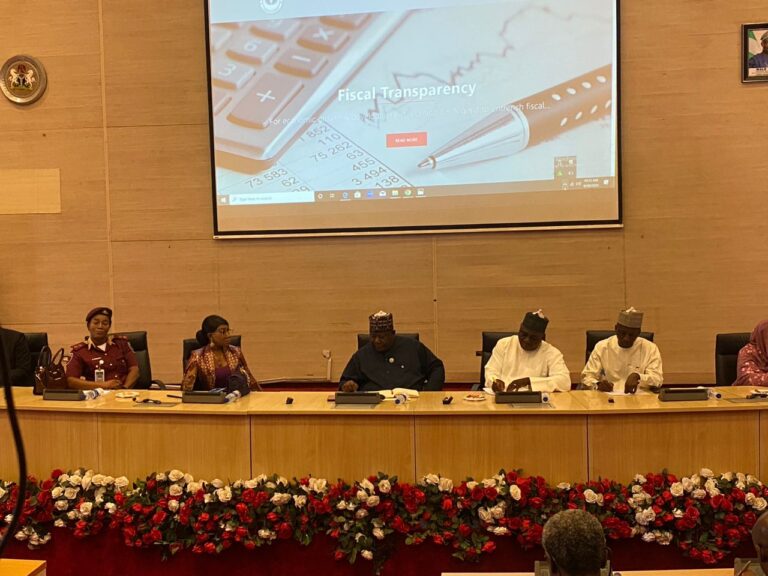
The report unveiled in Abuja, on Tuesday, September 30, by the Centre for Fiscal Transparency and Public Integrity (CeFTPI), NOSDRA led all 575 assessed Ministries, Departments and Agencies (MDAs) with a score of 78.84 per cent.

The agency was followed by the Nigerian Investment Promotion Commission (78.21 per cent) and the Independent Corrupt Practices and Other Related Offences Commission (78.13 per cent).

Most federal institutions scored poorly in the report, with many falling below the 50 per cent benchmark for average on openness, accountability, and compliance with statutory disclosure requirements.

According to the Centre, the index was conceived to strengthen integrity mechanisms in Nigeria’s public sector by assessing whether MDAs publish vital information on their websites and portals as required by law. 

The assessment focused on five key variables namely financial transparency, procurement, human resources and inclusion, control of corruption, and citizen engagement, with each attracting 20 per cent.

Top and bottom performers

A review of the report showed that out of 575 public institutions assessed, only six crossed the 50 per cent average threshold.

Beyond the earlier listed agencies, Development Bank of Nigeria (62.60 per cent) Tertiary Education Trust Fund (54.12 per cent) and Bank of Industry (51.29 per cent) were ranked 4th, 5th and 6th respectively.

Conversely, over 400 institutions scored within the range of 36 and 10 per cent, with no evidence of publishing basic governance information online. 

More alarming was that about 100 institutions recorded below 10 while nine institutions scored zero.

This means that they failed to publish any of the required information on budgets, procurement, staffing, or anti-corruption policies. 

Many of these included federal colleges, polytechnics, teaching hospitals, and river basin authorities.

For instance, Nigerian Coal Corporation, Federal Government staff Housing Loans Board, Federal Medical Centre Katsina, Federal College of Freshwater Fisheries Technology, Baga, Hadrian-Jama’are River Basin Development Authority, and Metallurgical Training Institute Onitsha scored zero in the ranking. 

Also, key ministries fared poorly. The Ministry of Agriculture and Rural Development, Ministry of Water Resources, Ministry of Youth and Sports Development were graded zero.

The Ministry of Power (21.0 per cent), the Ministry of Works and Housing (14.50 per cent), Ministry of Health (14.50 per cent), and Ministry of Defence (14.50 per cent) ranked low, which further highlighted persistent opacity in sectors critical to Nigeria’s development.

Legal obligations ignored

While presenting the report, the Executive Director of the Centre, Umar Yakubu, noted that public institutions are statutorily required under the Fiscal Responsibility Act (2007), the Freedom of Information Act (2011), and the Public Procurement Act (2007) to publish information such as budgets, procurement details, recruitment policies, audit reports, and anti-corruption frameworks.

According to him, while transparency is a vital principle of good governance, the findings show widespread disregard for binding statutes, with most institutions failing to meet even basic disclosure obligations.

Yakubu added that the 2025 Index revealed that despite government rhetoric on openness, Nigerian citizens continued to face barriers in accessing information about how public funds are allocated and spent.

The Centre urged all MDAs to align with Nigeria’s Open Government Partnership (OGP) Action Plan and ensure that transparency is embedded in day-to-day governance.

On his part, the Director-General of the Bureau of Public Service Reforms (BPSR), Dasuki Arabi, while delivering his welcome address described the Transparency and Integrity Index as one of Nigeria’s most vital platforms for promoting accountability in public service.

He explained that the parameters employed were in line with the National Strategy for Public Service Reforms (NSPSR 2021–2025) and the Freedom of Information (FOI) Act.

Arabi noted that the Index complemented the work of anti-graft bodies such as the Independent Corrupt Practices and Other Related Offences Commission (ICPC) and Economic and Financial Crimes Commission (EFCC) and aligned with Nigeria’s obligations under the United Nations Convention against Corruption (UNCAC). 

While acknowledging the support of development partners such as the Centre for Fiscal Transparency and Public Integrity (CeFTPI), Arabi urged MDAs to embrace transparency as a core governance principle rather than treat it as a compliance exercise.

Arise News anchor Somtochukwu was brought to Maitama Hospital dead – FCTA

0
THE Minister of the Federal Capital Territory (FCT), Nyesom Wike, has expressed grief over the death of Arise News anchor Somtochukwu Christelle Maduagwu, who was killed during an armed robbery at her residence in Katampe, Abuja, in the early hours of Monday, September 29.

In a statement on Tuesday by his Senior Special Assistant on Public Communications and Social Media, Lere Olayinka, Wike described the death of the 29-year-old journalist and trained lawyer as “tragic and painful,” assuring that her killers would be apprehended.

“I feel pained that such a wonderful soul could be cut down in its prime. It is sad,” Wike said, adding that the Federal Capital Territory Administration (FCTA) was working closely with the police to ensure a thorough investigation.

The statement added that Mandate Secretary of Health at the FCT, Dolapo Fasawe, said Maduagwu was brought to the Maitama General Hospital dead at about 4:30 a.m. on Monday. Wike said the preliminary medical report would be forwarded to the police to aid their investigation.

“The police will unravel the circumstances surrounding her death and bring those responsible to justice. At this period, we will continue to pray for the Almighty God’s support for the management of Arise News, especially the Chairman, Prince Nduka Obaigbena, and the family and friends left behind by the deceased,” the minister stated.

Wike described Maduagwu’s death as a loss not only to her colleagues but also to the Nigerian media and the entire nation. He prayed for the repose of her soul and strength for her family to bear what he called “an irreparable loss.”

The ICIR reports that media reports had blamed the Maitama Hospital, which has a history of allegations of delaying response to emergencies, for failing to promptly attend to Maduagwu when she was rushed to the facility for treatment.

However, an X user, Sani Yusuf, who claimed to be the deceased’s neighbour, and witnessed the robbery attack absolved the facility of any blame.

“You guys need to stop peddling information that is untrue. I personally paid for and filled her (Maduagwu) and Barnabas’s form, and I brought her ID to the hospital. The hospital never delayed treating anyone. Yeah, I have my personal gripe with them for how they handled the emergency. But stop spreading information that is not true,” he wrote.

Arise News, in its reaction to the killing, had described Maduagwu as “a vibrant voice that engaged and connected with our viewers,” noting that her passion and professionalism left a lasting mark on the newsroom.

Her killing has reignited concerns over rising violent crimes in Abuja. An ICIR report in August highlighted how the FCT has been grappling with recurring cases of armed robbery, kidnappings, cult clashes, and one-chance attacks despite repeated assurances of improved security.

Residents of Katampe and neighbouring Mpape have long complained of midnight invasions by armed robbers and violent street attacks. In April, armed men stormed a hotel in Mpape and robbed a driver attached to the Zamfara State governor’s convoy before police apprehended the suspects.

The city has also witnessed several one-chance killings, including the death of Freda Arnong in July and Greatness Olorunfemi in 2023, both victims of gangs posing as taxi drivers to rob passengers.

The killing of Maduagwu comes barely three months after the murder of a caregiver, Chinyere Anaene, and a toddler in Dawaki, another Abuja community, a crime that shocked residents and underscored persistent safety concerns.

Although the FCTA has cited reports suggesting a decline in crime rates, incidents like Maduagwu’s killing continue to fuel doubts about safety in Nigeria’s capital city.

How non-appointment of ambassadors threatens student exchange gains, Nigeria’s UN security council ambitions

0

NIGERIAN foreign missions abroad could be facing some limitations with respect to harnessing gains from the students foreign exchange programme and approval limits below $1,000 in the absence of ambassadors, diplomatic analysts have said.

Nigeria could also face backlash in the search for a permanent security seat at the United Nations Assembly with the non-appointment of ambassadors who are professional lobbyists for such high-level diplomatic engagements.

President Bola Tinubu made a case for the United Nations permanent seat at the UN Security Council, a post that requires intense diplomatic lobbying, albeit having foot soldiers in place, such as ambassadors.

Harping on the consequences of not having an ambassadorial appointment, analysts say, Nigeria is low-ranked in the diplomatic circle as a result of not having ambassadors under President Tinubu in most parts of the world.

Since President Tinubu recalled all the Ambassadors on September 2, 2023, Nigerian foreign missions have been without  ambassadors.

Diplomatic analysts say Nigeria could lose out on some foreign-interests advantages, such as student exchange programmes, multilateral and bilateral engagements, which in most cases require the presence of an Ambassador and not a charge d’affaires.

Specifically, the role of ambassadors and high commissioners is to market the specific countries where they represent and serve as an official representative of the country in a foreign mission.

“I discussed with a deputy Chinese ambassador, and he expressed worries that Nigeria is lagging on student exchange programmes because of poor follow-up from diplomatic missions and, most importantly, [lack of] an Ambassador,” Mukhtar Imam, a professor of Political Science and International Relations and Director of Strategic Partnerships at Al-Muhibbah University, Abuja, told The ICIR.

“The approval limit of $1000, and non-attendance of high-level diplomatic meetings are limitations to Nigeria not having Ambassadors under President Tinubu. In diplomatic parlance, there are limitations on where charge d’affaires can go and what an ambassador can do,” he added.

He stressed that both career and non-career diplomats have clearly defined roles, noting that “where you don’t have ambassadors in these countries, it means that these functions are halted or completely grounded.”

“It doesn’t speak well of Nigeria with our strategic position in Africa,” he added.

At the highest level of diplomatic engagement, the charge d’affaires has limitations on the functions they can perform.

“Charge d’affaires are administrative heads and have limits to the amount they can approve in consulate administration. In diplomatic parlance, there’s a limit to where a charge d’affaires can speak. In a huge gathering where ambassadors are gathering for an international meeting, he cannot be allowed to speak there,” Imam disclosed further.

The ICIR reports that without ambassadors to lead economic missions and negotiate bilateral agreements, Nigeria may miss out on potential foreign investment opportunities

For instance, Nigeria’s diaspora contributes over $20 billion annually to the economy, but without proper diplomatic representation, this amount could dwindle as follow-up engagement that requires top-notch diplomatic follow-ups could be lacking because of the absence of ambassadors.

More so, Nigeria’s absence from key diplomatic meetings can weakens its influence in multilateral bodies like the Economic Community of West African States (ECOWAS), the African Union, and the United Nations, diplomatic analysts say.

This reduces the country’s ability to shape decisions that impact its economic interests.

Speaking in a similar vein, Nigeria’s former Minister of Foreign Affairs, Bolaji Akinyemi, said not having an Ambassador for over two years have cost implications on President Bola Tinubu’s administration.

“Tinubu needs an adviser in foreign policy to ensure implementation of bilateral agreements and proper follow-ups to a successful fruition.

“I don’t know who’s in charge of foreign policy at the villa,” he queried.

He stated that the President owes Nigerians an explanation, while also rejecting the notion that the non-appointment was due to a lack of money, even when the government claimed to meet revenue targets before the end of the fiscal year.

He stressed that governments across the globe grade diplomatic relations low for countries that don’t have Ambassadors in their respective countries.

He further said that Nigeria’s intense campaign for a permanent seat at the United Nations may not have the needed breakthrough without ambassadors who need to lobby allied countries for such positions.

The ICIR reports that since September 2, 2023, when envoys of 109 diplomatic missions, comprising 76 embassies, 22 high commissions and 11 consulates, were recalled and ordered to return on or before October 31, Nigeria has not had full diplomatic representation in the rank of ambassadors.

The development comes with the possibility of harming the gains Nigeria is expected to reap from the President’s recent trips to China, France, South Africa, Brazil and the visit of Indian Prime Minister, Narendra Modi, to Nigeria, informed analysts say.

PENGASSAN’s ‘attack on Dangote Refinery is unconscionable’ – Manufacturers

0

MANUFACTURERS Association of Nigeria (MAN) has condemned the strike declared by Petroleum and Natural Gas Senior Staff Association of Nigeria (PENGASSAN) over its feud with the Dangote Refinery, which has led to a significant shut down of Nigeria’s economy.

The group said while PENGASSAN could fight for workers’ rights, it had no right to ground the nation’s economy.

Its Director-General, Segun Ajayi-Kadir, made the association’s position known on Tuesday, September 30, while reacting to the impact of the ongoing industrial dispute on the overall economy.

“The attack on Dangote Refinery is unconscionable, it is unreasonable and should be condemned by everyone. It appears the vultures are gathering to devour what should be a jewel of Nigerian manufacturing. This shouldn’t be allowed to go on further.”

He added: “There’s no way I will build a factory of $20 billion and I will allow it to be decimated. If there’s a labour issue you have with the refinery, deal with it. There are processes of law in dealing with it, and you have chosen to shut down the country because of disagreements. This is wrong.”

He urged PENGASSAN not to shut down the economy, warning that it would disincentivise private sector investment in the economy.

The ICIR reports that PENGASSAN and Dangote Refinery have been at daggers drawn following the alleged laying off of union members by the refinery management.

The union, in a statement on Thursday, September 25, signed by Abdullahi Muhammed, the refinery’s branch chairman, and Eseoghene Choice, the branch secretary, said the workers who voluntarily joined the union body had received an email terminating their appointments.

It added that the dismissals came after the successful unionisation of the refinery’s workers, the appointment of the caretaker committee of the branch executive council and submission of batch one of the unionised members’ list to management.

Meanwhile, the Federal Government’s efforts to broker peace between the refinery’s management and PENGASSAN over the alleged mass sack of union members ended in a deadlock on Monday night.

The ICIR reports that the meeting, which commenced at about 3:50 p.m. at the Minister of Labour and Employment’s Conference Hall in Abuja, stretched into the late hours.

Informed sources said talks were expected to resume at 2 p.m. Tuesday, September 30.

Residents flee Kwara community after bandits killed 12 vigilantes, traditional ruler

RESIDENTS of Oke-Ode in Ifelodun Local Government Area of Kwara State are fleeing their homes following a deadly attack that claimed at least 12 lives, including the Baale of Ogbayo.

A video circulating on social media shows residents, including school children, boarding buses and tricycles to leave the town. A male voice speaking in Yoruba language was heard lamenting that insecurity compelled the mass exodus.

Confirming the attack in a statement on Sunday, September 28, the Kwara State Police Command said armed men stormed the Ogbayo area of Oke-Ode around 7 a.m., shooting indiscriminately and targeting local vigilantes.

Police spokesperson Adetoun Ejire-Adeyemi disclosed that a joint response team of police operatives and personnel of the National Forest Security Service arrived at the scene but found 12 vigilantes already dead. Among them was the Baale of Ogbayo. Four others who sustained injuries were taken to the hospital for treatment.

“At about 7:00 a.m. today, armed men invaded the Ogbayo area of Oke-Ode, shooting sporadically. A combined team of police operatives and members of the National Forest Security Service responded swiftly to the scene, where they discovered 12 lifeless bodies of vigilante members, including the Baale of Ogbayo,” the statement partly read.

Ejire-Adeyemi added that the police, working with the military and other security agencies, had intensified efforts to track down the perpetrators. She assured residents that those behind the killings would be brought to justice.

Kwara State Commissioner of Police, Adekimi Ojo, described the killings as ‘heinous’ and commiserated with the victims’ families. He reaffirmed the command’s commitment to protecting lives and property.

The Oke-Ode attack was the latest in a series of violent raids across Kwara in recent weeks. On September 26, security operatives arrested five suspected kidnappers, including a notorious abductor, and seized 127 bags of cannabis hidden in a lorry loaded with yams along the Babanla–Oreke–Oke-Ode axis. Among the suspects was Tukur Ibrahim, identified as the mastermind of an August 8 abduction in Babanla.

The rising insecurity has triggered growing fear and protests in communities. Earlier in September, residents of the Isin Local Government Area barricaded the Ilorin–Omu-Aran–Kabba highway to demand stronger government intervention.

Demonstrators carried placards reading “Stop Kidnapping Our People” and “We Are Tired of Paying Ransom Without Results,” decrying repeated abductions and killings.

Community leaders told The ICIR that ransom payments have become routine, with millions of naira already paid to kidnappers. Yet, victims are often not released, while vigilantes who confront the attackers are either killed or whisked away.

The ICIR reported that Kwara South, once regarded as one of the most peaceful regions in the country, has been plagued by escalating violence. Attacks linked to bandits and armed herders have displaced families, forced farmers from their lands, and crippled local economies.

Civil society groups have also warned that Kwara’s porous borders with Niger and Kogi states have made it a transit route for armed groups fleeing military operations in the North-West and North-Central. The ICIR’s findings show that the violence has disrupted farming, leading to food insecurity and displacements in several communities.

Kwara State Governor AbdulRahman AbdulRazaq, through his spokesperson Rafiu Ajakaye, has said the government was working with traditional rulers, security agencies, and vigilantes to “roll back security breaches” in the state.

He noted that joint security initiatives and raids had recorded some success, but residents continue to insist that the measures are not enough.

Dangote, PENGASSAN’s meeting with FG deadlocked as crisis plunges Nigerian cities into darkness

0

THE industrial dispute between Dangote Refinery and Petroleum and Natural Gas Senior Staff Association of Nigeria (PENGASSAN) has caused most generating plants across the country to shut down, which depletes power supply to gas-powered stations.

This Nigerian Independent System Operator (NISO) confirmed that industrial actions within the supply chain triggered widespread gas shortages that resulted in a reduction of power generation by 1,100 megawatts by Sunday night.

The system operator also confirmed that available generation on the National grid fell sharply from over 4,300MW in the early hours of Monday, September 28, to about 3,200 to about 3,200MW at the lowest point.

Currently, most major cities, including Lagos and Abuja, are without light, with socio-economic lives of Nigerians adversely affected.

In a statement obtained by The ICIR in the early hours of Tuesday, September 30, NISO stated that the development heightened pressure on the grid, promoting emergency measures to stabilise supply and avert a nationwide blackout.

In an effort to address the concern, NISO said it ramped up generation from major hydropower stations, injecting over 400 megawatts (MW) to cushion the shortfall from gas-fired plants.

The agency further stated that it also implemented real-time load adjustments, frequency support measures, and selective load shedding to maintain operational security.

The agency reaffirmed its commitment to proactive grid management and best-in-class operational practices to guarantee a reliable electricity supply despite emerging challenges.

“The Nigerian Independent System Operator (NISO) wishes to notify the public of recent major generation shortfalls on the national grid, caused by industrial actions of the Petroleum and Natural Gas Senior Staff Association of Nigeria (PENGASSAN) within the gas supply chain.

The ICIR reports that shutting down power-generating plants comes with consequences which expose the machines to losses, and in some cases, grid collapse.

Experts in the power sector have lamented the increasing impact of grid collapses on  Generating Companies (GenCos) in Nigeria, citing that in 2024 alone, each incurred at least N21,873,684,285 in financial losses.

A power sector expert, Stephen Ogaji, told The ICIR that apart from great revenue loss due to the inability to generate power into the grid, grid collapse affects not only the utilities but also the entire economic system that depends on a stable power supply.

Ogaji stressed that grid collapses and forced shutdowns on thermal generating plants lead to a decrease in capacity utilisation, resulting in a decrease in revenue by the station, poor efficiency in gas utilisation, poor utilisation of contracted gas on take-or-pay commitment, and deterioration or damage of key mechanical and electrical equipment during frequent startups and shutdowns, among others.

PENGASSAN, Dangote meeting with FG deadlocked

Meanwhile, the Federal Government’s efforts to broker peace between the management of Dangote Refinery and the Petroleum and PENGASSAN over alleged mass sack of union members ended in a deadlock on Monday night.

The ICIR reports that the meeting, which commenced at about 3:50 p.m. at the Minister of Labour and Employment’s Conference Hall in Abuja, stretched into the late hours.

However, it broke up a few minutes after midnight without any agreement.

Informed sources said talks are expected to resume at 2 p.m. Tuesday, September 30.

Recall, the Federal Government, worried about the potential impact of the dispute on the nation’s economy and energy security, had summoned both sides to the negotiating table following reports of widespread discontent.

The rift stemmed from allegations by PENGASSAN that Dangote Refinery had embarked on the mass transfer and sack of union members.

Also, he allegedly replaced some Nigerians with foreign nationals, a claim the company has consistently denied.

At the meeting, PENGASSAN was led by its President, Festus Osifo, alongside the General Secretary of the Trade Union Congress of Nigeria, TUC, Nuhu Toro.

The Minister of Labour and Employment, Mohammad Dingyadi, led the government delegation, while Dangote Refinery was represented by senior management officials.

The session, originally scheduled for 2 p.m., began around 3:50 p.m. due to the late arrival of key stakeholders, before moving into a closed-door discussion that lasted several hours.

The Minister appealed to both parties to demonstrate good faith in dialogue, stressing that industrial peace in the oil and gas sector was critical at a time Nigeria is banking on the Dangote Refinery to boost local refining capacity and reduce dependence on imported petroleum products.

The deadlock means tension remains high, with PENGASSAN insisting its members will not return to work until alleged anti-labour practices are reversed, while Dangote Refinery maintains that its restructuring exercise is in line with global best practices.


ARISE News anchor Somtochukwu Maduagwu killed in Abuja

0

ARISE News has confirmed the death of its anchor, reporter, and producer, Somtochukwu Christelle Maduagwu, who was killed during an armed robbery at her residence in Katampe, Abuja, in the early hours of Monday, September 29.

Maduagwu, fondly called Sommie by colleagues, was 29 years old. She was also a trained lawyer.

Her employers described her as a professional, supportive colleague and friend to many.

In a statement signed by Hadiza Usman-Ajayi, on behalf of the station’s management, ARISE News expressed shock over the tragedy, describing her as “a vibrant voice that engaged and connected with our viewers.”

The statement added: “Her voice is now silent, but her spirit, passion and legacy will endure as part of our collective memory. We remain in shock and call for a speedy investigation, apprehension, and prosecution of the culprits.”

The station extended condolences to her family, friends, and colleagues, noting that she was not only an anchor but also a lawyer whose dedication and professionalism left a mark on the newsroom.

The statement added that the incident was under investigation by the Federal Capital Territory (FCT) Police Command.

Her death adds to a string of violent crimes that have unsettled Abuja in recent months.

An ICIR report in August detailed how the capital had been grappling with recurring cases of robberies, kidnappings, cult clashes, and one-chance attacks, despite police claims of improved security.

In Katampe and neighbouring Mpape, residents have long complained of being under siege from armed robbers, with reports of midnight invasions and violent street attacks.

In April, armed men stormed a hotel in Mpape and robbed a driver attached to the Zamfara State governor’s convoy before police arrested the suspects.

Similarly, one-chance robberies, where criminals disguise themselves as taxi drivers to rob passengers, have continued to claim lives in the city.

In July, the family of Freda Arnong, a young woman killed in such an attack, demanded justice from the government. Her case echoed that of Greatness Olorunfemi, another victim of a one-chance robbery in Abuja less than two years earlier.

The ICIR also reported several cases of kidnappings in the FCT this year, including the abduction of farm workers in Rubochi, Kuje Area Council, and a naval officer seized with two civilians in Mpape, all of whom were later rescued by security operatives.

The killing of Maduagwu comes barely three months after a school caregiver, Chinyere Anaene, and a 14-month-old child were murdered in Dawaki, Abuja, in a crime that shocked residents.

Although the FCT administration recently cited reports indicating a decline in crime rates, incidents like Maduagwu’s death continue to raise doubts about safety in the capital city.

Security analysts argue that tackling insecurity in Abuja will require stronger collaboration between the government, law enforcement, and residents, alongside deploying surveillance technology and addressing socio-economic drivers of crime.

World Cup Qualifier: Hope rises for Nigeria as South Africa loses 3 points

0

THE Super Eagles’ chances of qualifying for the 2026 FIFA World Cup received a boost on Monday, September 29, after world football governing body, FIFA, deducted three points from South Africa for fielding an ineligible player in a Group C qualifier.

In a statement, FIFA’s Disciplinary Committee announced that the South African Football Association (SAFA) breached Article 19 of the FIFA Disciplinary Code and Article 14 of the 2026 World Cup Preliminary Competition Regulations by featuring midfielder Teboho Mokoena in the March 21, 2025 fixture.

The player had accumulated two yellow cards in earlier matches, which automatically translated to his one-game suspension.

The ruling overturns the original result and awards the match to Lesotho, while SAFA must also pay a fine of 10,000 Swiss francs (about ₦18 million). 

“The FIFA Disciplinary Committee has sanctioned the South African Football Association (SAFA) for having fielded an ineligible player, Teboho Mokoena, in the South Africa v. Lesotho match played on 21 March 2025 in the FIFA World Cup 2026™ preliminary competition, thereby breaching article 19 of the FIFA Disciplinary Code (FDC) and article 14 of the FIFA World Cup 2026™ Preliminary Competition Regulations.

“Consequently, the FIFA Disciplinary Committee has declared the match in question to have been forfeited by the representative team of South Africa by a score of 3-0. SAFA has also been ordered to pay a fine of CHF 10,000 to FIFA, while Teboho Mokoena has been issued with a warning,” the statement read.

The FIFA added that all parties had been informed of the decision and given 10 days to request a written explanation, which would be published on legal.fifa.com. 

It noted that SAFA could appeal to the FIFA Appeal Committee, but the forfeiture remained in effect until any appeal is decided.

“The parties were notified of the terms of the FIFA Disciplinary Committee’s decision today. In accordance with the relevant provisions of the FDC, they have ten days in which to request a motivated decision, which, if requested, would subsequently be published on legal.fifa.com,” the statement read.

Meanwhile, the decision has thrown Group C wide open. Before the sanction, South Africa topped the table with 17 points and an eight-goal difference, followed by Benin on 14 points, while Nigeria trailed with 11 points and a +2 goal difference.

The three-point deduction now drops Bafana Bafana to 14 points, level with Benin but still ahead on goal difference. Nigeria, only three points behind with two matches remaining, suddenly have a realistic chance to finish top of the group.

The Super Eagles will face Lesotho and Benin during the October international break. Consecutive wins would move Nigeria to 17 points, but they must also hope that South Africa falter in their remaining fixtures against Rwanda and Zimbabwe.

Only the group winner is guaranteed an automatic ticket to the 2026 FIFA World Cup in the United States, Canada, and Mexico.

However, Nigeria still retains a lifeline even if they finish second. Under FIFA’s new qualifying format for Africa, the four best runners-up across the nine groups will advance to a CAF playoff, with the winners moving into an intercontinental playoff for a final spot.