Home Blog Page 169

NAPTIP arrests five suspected traffickers, rescues 24 at Abuja airport

0

THE National Agency for the Prohibition of Trafficking in Persons (NAPTIP) has arrested five suspected traffickers and rescued twenty-four in a special operation at the Nnamdi Azikiwe International Airport, Abuja.

In a statement issued on Wednesday, October 1, NAPTIP’s National Press Officer, Vincent Adekoye, revealed that among those arrested at the airport was a retired senior officer from one of Nigeria’s leading law enforcement agencies, alleged to be a key member of a trafficking syndicate operating in the South West.

He said that the latest raid followed a tip-off from concerned stakeholders and partners who alerted to an influx of suspected human trafficking victims at the international airport, Abuja, and the unwholesome activities of some suspected traffickers.

Adekoye explained that the victims, aged between 15 and 26, were recruited from Kano, Katsina, Oyo, Ondo, and Rivers States, and were being trafficked to Iraq, Sudan, Egypt, Saudi Arabia, Bahrain, and Afghanistan.

He noted that many of the victims could only speak their local dialects, while others did not know the countries they were being trafficked to.

According to Adekoye, one of the victims said the traffickers told her mother that they were taking her to Europe, where she would work and earn dollars, as he noted that her parents were happy and they allowed her to follow them.

He added that one of the victims pledged to pursue her father’s prosecution for deceiving her into making the journey, after the Director General personally counselled the victims and showed them video clips of stranded Nigerians and others on life support after suffering exploitation in destination countries.

The victim, whose father was among the traffickers arrested, said in her local dialect that her father only told her that his friend had a job for him at a supermarket in Baghdad.

Commenting on the development, NAPTIP Director General Binta Adamu Bello expressed concern over the actions of suspected human traffickers and unregistered labour recruiters who persist in deceiving, recruiting, and trafficking Nigerians for different forms of exploitation.

“I am impressed with the outcome of the operation today…We observed that the Nnamdi Azikwe International Airport is becoming a comfort zone for these traffickers, and that is why we have decided to shift attention to this airport. We will sustain this raid until they stop this unpatriotic and illicit trade in human beings.

“I was amazed that a father, who is a retired Law Enforcement Officer of senior Cadre, deceived his daughter and packaged her to be trafficked to Iraq for exploitation. This is incredibly unbelievable. Well, all of them will be thoroughly investigated, and they will face the law,” Binta said.

Binta also appreciated the effort of the Airport Authority,  the collaboration of the Department of State Service operatives at the Airport, the Airport Security Personnel, Immigration Officers, and airline operators for supporting NAPTIP in the success of the operation. 

“Human trafficking is a visible national concern, and we all must be on the same page to turn the heat on the traffickers. Our resolve to ensure the protection of Nigerians from all forms of exploitation is firm and resolute”, Binta declared.
US embassy in Nigeria ‘temporarily suspends’ social media updates amid budget cuts 

0

THE United States Embassy in Nigeria has announced that it will halt routine updates on its social media channels following a lapse in US government funding, stemming from the ongoing budget deadlock in Washington.

The Embassy revealed this in a post on X (formerly Twitter) on Wednesday.

“Due to the lapse in appropriations, this account will not be updated regularly until full operations resume, except for urgent safety and security information,” the social media post said.

It further stated that essential consular services such as passport issuance and visa processing will continue in the US, at embassies and consulates abroad, “as the situation permits.”

“At this time, scheduled passport and visa transit services in the United States and at U.S. Embassies and Consulates overseas will continue during the lapse in appropriations as the situation permits.

“We will not update this account until full operations resume, except for urgent safety and security information. For information on our services and operating status, visit http://travel.state.gov,” the tweet read.

The announcement follows a US government shutdown that took effect early Wednesday after lawmakers and President Donald Trump were unable to reach a deal on the federal budget.

The stalemate revolved around democratic calls for increased healthcare funding, resulting in a suspension of financing for numerous government operations.

Both Republicans and Democrats have pointed fingers at each other for the deadlock, which is anticipated to impact hundreds of thousands of government employees and millions of Americans dependent on federal services.

The shutdown, set to halt operations across numerous federal departments and agencies, comes amid sharp partisan divisions in Washington, raising concerns about its duration and potential impact.

Trump warned that he would penalise Democrats and their supporters by targeting progressive initiatives and implementing widespread public sector job cuts, marking the first government shutdown of his current term since a similar halt during his previous administration.

“So we’d be laying off a lot of people who are going to be very affected. And they’re Democrats; they’re going to be Democrats. A lot of good can come from shutdowns,” Trump told reporters in the Oval Office, suggesting he would use the pause to “get rid of a lot of things we didn’t want, and they’d be Democrat things.”

Government operations started to shut down at 12:01 a.m. (0401 GMT) on Wednesday, following a last-minute but unsuccessful attempt in the Senate to approve a short-term funding measure that had already passed the House of Representatives.

The shutdown will not impact essential services, including the Postal Service, the military, and welfare programs such as Social Security and food assistance.

Tinubu commiserates with Kogi over boat mishap that claims 26 lives

0

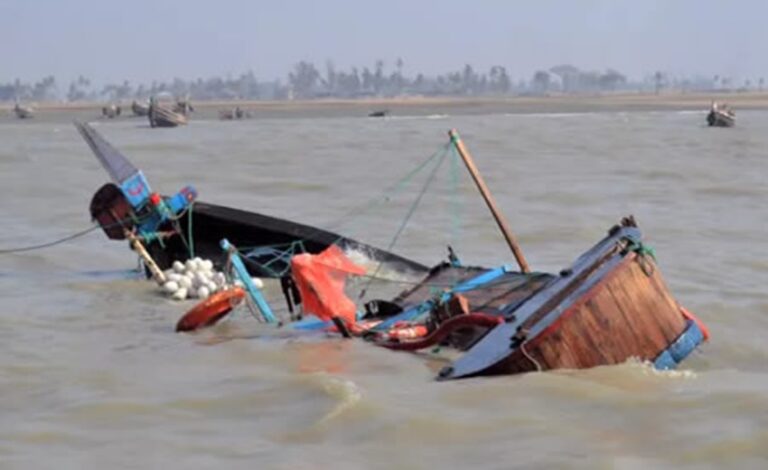
PRESIDENT Bola Tinubu has expressed condolences to the government and people of Kogi State following the death of at least 26 traders in a boat accident that occurred in Ibaji Local Government Area on Tuesday, September 30.

The victims were travelling from Ibaji to Ilushi market in Edo State when the boat capsized on the River Niger.

In a statement issued on Wednesday, and signed by his adviser on Information and Strategy, Bayo Onanuga,  the President described the incident as shocking and unfortunate, noting that the traders were engaged in their legitimate pursuit of livelihood.

He prayed for the repose of the deceased and comfort for their families, while also wishing the injured survivors a quick recovery.

“The loss of lives in this manner is deeply painful. I commend the efforts of first responders and urge emergency agencies at all levels to intensify their work in supporting survivors and the bereaved families,” the President said.

The President called on boat operators and water transporters to prioritise safety standards, including the use of life jackets and strict adherence to passenger limits, above financial gains.

The Kogi State Government also confirmed the tragedy. Commissioner for Information, Kingsley Fanwo, said in a statement that Governor Ahmed Usman Ododo had directed the State Emergency Management Agency to provide immediate relief to the victims’ families.

“This is a heartbreaking loss. Our thoughts and prayers are with the bereaved families and the entire Ibaji community in this moment of grief.”

He added that the governor assured that his administration would intensify safety measures on waterways in collaboration with federal authorities to prevent further tragedies.

“Reports indicate that the unfortunate incident has claimed the lives of not less than 26 passengers,” he stated.

The latest incident highlights the persistent challenge of unsafe water transportation in Nigeria. An ICIR report in September documented how at least 29 people died in a boat accident in Niger State when an overloaded vessel carrying over 90 passengers struck a tree stump on the River Niger.

Similar accidents were recorded in Sokoto linked to overloading, poor maintenance, and lack of safety gear.

In December 2024, no fewer than 54 bodies were recovered after a boat carrying about 200 traders capsized in Kogi, underscoring the recurrent nature of such disasters on the nation’s waterways.

The National Inland Waterways Authority (NIWA) and emergency agencies have repeatedly warned against overcrowding and neglect of safety protocols. Yet, ICIR found that many communities along Nigeria’s riverine belts remain dependent on rickety wooden canoes without proper regulation, leaving passengers vulnerable.

Nigerian US deportee accuses Ghanaian officials of ‘dumping’ him in Togo

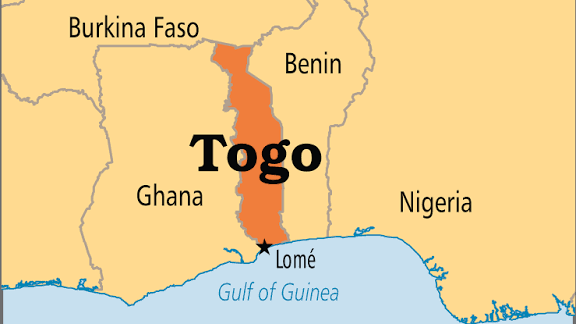
A Nigerian man deported from the United States to Ghana has complained of being left stranded in Togo after Ghanaian authorities secretly moved him and five others across the border.

The BBC reported on Wednesday that the man, who requested anonymity, said they were told they were being relocated from a military camp to improved accommodation but were instead “abandoned” in Togo.

“Life there was really hard, so we asked for a better place, better medication, better healthcare and better water,” he told the BBC while describing how the conditions at the Ghanaian military camp were harsh and  “deplorable.”

He said that when officials returned days later, supposedly to transfer them to a hotel, they were instead taken to Togo.

“When we arrived, we asked what we were doing at the border, and they told us they wanted us to sign some paperwork so they could take us to a hotel, but we didn’t sign anything,” he said.

The deportee alleged that the group was escorted into Togo through an unofficial route, after local police were bribed, without informing Togolese authorities.

“They did not take us through the main border; they took us through the back door. They paid the police there and dropped us in Togo,” he said.

He explained that four deportees are Nigerians and one Liberian who have now taken refuge in a hotel in Lomé, the Togolese capital near the border. 

“I have a house in the US where my kids live. How am I supposed to pay the mortgage? I don’t know how they’ll manage while I’m gone. My kids can’t see me, and it’s just so stressful,” he lamented while highlighting the personal impact of his removal. 

Explaining that he belongs to the Yoruba Self-Determination Movement- an activist group pushing for a separatist state in south-west Nigeria, and fears that returning home could expose him to arrest or torture, he also claimed to have court-ordered protection in the US that should have blocked his deportation, though the American authorities have not clarified why it was ignored.

Notably, the deportee was among a larger group of West Africans, including citizens of Togo, Liberia, and The Gambia, who were deported from US detention centres to Ghana in September. Already, the group’s lawyers have filed lawsuits against both the US and Ghana, accusing them of violating their rights.

Commenting on the deportation, Ghanaian officials, including Foreign Minister Samuel Okudzeto Ablakwa, said the country took in the deportees out of “pan-African solidarity,” stressing that no financial deal was attached.

The ICIR reports that the deportation agreement, announced by President John Mahama, has drawn criticism from opposition MPs, who are demanding its suspension until parliament ratifies it, even as the government prepares to receive another 40 deportees.

Nigeria immigration begins enforcement against expired visas on 1st October

0

THE Nigeria Immigration Service (NIS) has launched a crackdown on foreign nationals who have overstayed their visas or breached entry requirements.

The agency announced this in a public notice signed by its Public Relations Officer, Kinsola Akinlabi, stating that the move comes after the expiration of the Federal Government’s Expired Visa Initiative (Amnesty) program, which ended at midnight on September 30, 2025.  

“The initiative, which commenced on 1st May 2025, runs until 30th September 2025, and specifically applies to individuals who have either overstayed their visas or violated their visa conditions.

“With the expiration of the Amnesty period, effective 1st October 2025, enforcement actions will commence nationwide against foreign nationals who have overstayed their visa or violated their entry conditions,” Akinlabi said.

The ICIR reports that the Amnesty was designed as a three-month grace period, from May 1 to August 1, 2025, allowing foreign nationals with expired immigration status to regularise their stay, depart the country, or update their documents without facing penalties.

However, before the August 1 deadline, the NIS released a circular extending the grace period until September 30, 2025, granting affected individuals extra time to regularise their status in the country.

The agency outlined the penalties for foreigners who have overstayed their visas or failed to regularise their immigration status.  

“The amnesty applies to the following categories: Foreign nationals with Expired Visa on Arrival (VoA); Holders of Expired Single and Multiple-Entry Visas. Individuals with an Expired Combined Expatriate Residence Permit and Aliens Card (CERPAC), where renewal has exceeded 30 days post-expiration,” he added.

The spokesperson of the agency stated that the foreigners who violate Nigeria’s immigration laws will face sanctions such as overstay fines, deportation, and possible bans on future entry into the country.

“Less than 3 months overstay: Removal, $15 per day fine, or 2-year entry ban. 3 months to 1 year overstay: Removal, $15 per day fine, or 5-year entry ban. 1 year and above: Removal, 10-year entry ban or permanent ban,” he said.

He advised affected foreign nationals to promptly regularise their stay on their website within the grace period to avoid overstay penalties. 

The agency emphasised that the action is essential to protect national security and ensure order within the country’s immigration system.

The ICIR reported that the government is implementing a new visa regime that introduces an e-Visa platform, phases out Visa on Arrival, and automates landing and exit cards.

PENGASSAN to call off strike after FG’s intervention in Dangote Refinery dispute

0

THE Federal Government has announced that workers recently disengaged by the Dangote Petroleum Refinery will be redeployed to other subsidiaries within the Dangote Group.

This follows the resolution of a protracted industrial dispute with the Petroleum and Natural Gas Senior Staff Association of Nigeria (PENGASSAN).

The Minister of Labour and Employment, Mohammed Maigari Dingyadi, disclosed this in Abuja on Wednesday, October 1, stating that the affected workers would retain their salaries and benefits despite the redeployment.

“After examining the procedure used in the disengagement of workers, the meeting agreed that the management of Dangote Group shall immediately begin the process of redeploying the disengaged staff to other companies within the group, with no loss of pay. No worker will be victimised arising from their role in the impasse between Dangote and PENGASSAN,” Dingyadi said.

According to him, the truce followed a compromise by both parties, with PENGASSAN agreeing to suspend its nationwide strike action. He stressed that the right to unionise was guaranteed under Nigerian law and should be respected.

He further explained that both sides had reached a compromise, noting that “PENGASSAN agreed to start the process of calling off the strike. Both parties agreed to this understanding in good faith.”

“No worker will be victimised arising from their role in the impasse between Dangote and PENGASSAN,” the minister stated.

The development comes after weeks of confrontation between the refinery’s management and PENGASSAN, which accused the company of arbitrarily transferring and dismissing unionised staff while replacing them with foreign nationals. The refinery denied the allegations, insisting the restructuring was driven by operational needs.

The standoff escalated into industrial action after PENGASSAN directed its members to cut gas and crude oil supply to the refinery, a move that triggered widespread disruptions. By September 30, the Nigerian Independent System Operator confirmed that the strike had forced several gas-powered plants to shut down, resulting in a reduction of national electricity generation by approximately 1,100 megawatts and leaving major cities, including Lagos and Abuja, without power.

The House of Representatives had also intervened at the height of the crisis, mandating its Committee on Petroleum Resources (Downstream) to mediate. The committee urged PENGASSAN to resume supplies, warning that the dispute threatened the downstream sector, discouraged investors, and could worsen fuel scarcity.

During this period, the Manufacturers Association of Nigeria (MAN) criticised the union for grounding economic activity, describing the refinery as a critical $20 billion national asset that should not be paralysed by labour action.

The ICIR earlier reported that tension had been brewing since September, when PENGASSAN alleged that more than 800 Nigerian employees were unlawfully dismissed after workers unionised. The union stated that the dismissals coincided with the submission of its first membership list to management, a claim that the refinery rejected.

Previous efforts by the Federal Government to broker peace had ended in deadlock, with both sides holding firm on their positions. PENGASSAN insisted that its members would not resume work until alleged anti-labour practices were reversed, while the refinery maintained its right to restructure in line with global industry standards.

At Wednesday’s meeting, however, both parties reached common ground under government mediation. The Minister expressed optimism that the resolution would restore industrial peace in the oil and gas sector, which is central to Nigeria’s economic stability.

“The refinery is a key national asset, and industrial harmony is essential to enable it to deliver on its promise of boosting domestic refining capacity and reducing reliance on imported petroleum products,” Dingyadi said.

65th Independence: Nigerians question Tinubu’s claim of N330bn shared to poor families

0

PRESIDENT Bola Tinubu on Wednesday, October 1, announced that his administration has disbursed N330 billion to eight million Nigerian households under its social investment programme.

The disbursement has raised several unanswered questions from some Nigerians who demanded accountability on such payments amid the rising economic crunch faced by most Nigerians due to the impact of Tinubu’s reforms.

The president, in his national broadcast to mark Nigeria’s 65th Independence anniversary, said the intervention is part of efforts to support vulnerable Nigerians.

Under the social investment programme to support poor households and vulnerable Nigerians, N330 billion has been disbursed to eight million households, many of whom have received either one or two out of the three tranches of N25,000 each,” the president stated.

While touting other economic milestones, including a 4.23 per cent GDP growth in the second quarter of 2025 and inflation falling to 20.12 per cent—the lowest in three years—the president acknowledged that many Nigerians are still battling the rising cost of living.

He urged citizens to endure what he described as “biting effects of inflation,” adding that “Our macro-economic progress has proven that our sacrifices have not been in vain. Together, we are laying a new foundation cast in concrete, not on quicksand.”

“Credicorp, another initiative of our administration, has granted 153,000 Nigerians N30 billion affordable loans for vehicles, solar energy, home upgrades, digital devices, and more. 

“YouthCred, which I promised last June, is a reality, with tens of thousands of NYSC members now active beneficiaries of consumer credit for resettlement,” the president added.

However, many Nigerians took to social media to dismiss the claim of the N330 billion reportedly disbursed to eight million households, raising questions about the evidence and classifications of those who benefited from the disbursement.

They also noted that they are not aware of anyone who has benefited from the scheme.

While The ICIR cannot independently confirm whether any Nigerian has benefited from the distribution, it should be noted that such initiatives are often described as vague and unverifiable, with little evidence in the public domain to track actual beneficiaries. 

Over the years, successive governments have announced similar cash-transfer programmes, yet many citizens said they have never seen the funds nor know anyone who has. 

On X (formerly Twitter), users questioned the transparency of the programme, with some describing it as “audio money” and others demanding evidence of beneficiaries. 

A social media user @DeeVoidElder wrote, “They say ₦330 billion has been given to 8 million households. But honestly, where did it go? In my own community, no one has seen anything. Sometimes it feels like we are not even part of this country, or maybe these are just figures thrown around for headlines.

“Let’s break it down. ₦330 billion divided among 8 million families is about ₦41,000 each. Tell me, what can ₦41,000 do for a family in Nigeria today? Food alone can finish that in a week. Transport and fuel will consume it in a few days. That is not real support, it’s just crumbs presented as a big achievement.”

Another user with the handle AJDaniel questioned, “If N330 billion truly reached 8 million households, we should be seeing a visible impact in local communities. But with rising poverty, inflation and hunger, many are asking: where exactly did the money go?”

Also, Ali, with a username itsaleeyou, said, “Instead of this meaningless tokenism, that money could have been used to fix our collapsing schools, revive hospitals, create jobs, or even stabilise electricity, things that would actually change lives. Nigerians are hungry and tired, yet you keep serving us fairy-tale statistics. Stop insulting the intelligence of the people you’ve failed.”

Despite increased killings, Tinubu says Nigeria winning war against insecurity

0

PRESIDENT Bola Tinubu on Wednesday, October 1,  declared that Nigeria’s armed forces are winning the battle against terrorism, banditry and separatist violence, even as figures show a surge in killings across the country.

In his Independence Day broadcast to mark Nigeria’s 65th anniversary, Tinubu praised the military, saying they are ‘winning the war against terrorism.’

He also noted that they have stamped out Boko Haram terror in the North-east and banditry in the North-west.

He also stressed that ‘Peace has returned to hundreds of our liberated communities in North-West and North-East, and thousands of our people have returned safely to their homes.’

“We are working diligently to enhance national security, ensuring our economy experiences improved growth and performance. The officers and men of our armed forces and other security agencies are working tirelessly and making significant sacrifices to keep us safe. 

“They are winning the war against terrorism, banditry and other violent crimes. We see their victories in their blood and sweat to stamp out Boko Haram Terror in North-East, IPOB/ESN terror in South East and banditry and kidnapping. We must continue to celebrate their gallantry and salute their courage on behalf of a grateful nation. Peace has returned to hundreds of our liberated communities in North-West and North-East, and thousands of our people have returned safely to their homes,” he said.

But data reported by Reuters in July shows that at least 2,266 people were killed by insurgents and bandits in the first half of 2025, surpassing the 2,194 recorded in the whole of last year. 

The report, which quoted figures from the National Human Rights Commission (NHRC), also documented 857 abductions and deadly assaults on security forces, including the killing of more than 17 soldiers in Kaduna and Niger States and over 40 members of the Civilian Joint Task Force in Zamfara.

The situation worsened in June, when 606 people were reported killed nationwide, including nearly 200 in coordinated attacks on Yelewata and Dauda communities in Benue State.

Recall that The ICIR reported how the recent wave of violence swept through Logo and Ukum LGAs in April and May was only the latest in a long series of attacks that have devastated communities across Benue State. 

In Logo, Ukum, Gwer West, Guma, and other conflict-prone areas, residents said they have lost count of the number of attacks over the years. Some entire villages have been razed, and those who once thrived on subsistence farming now depend on aid or live in IDP camps with no clear path to reintegration with their homes.

This was the same situation in Plateau state, earlier this year, where dozens of people were killed in Plateau communities.

On September 30, residents of Oke-Ode in Ifelodun Local Government Area of Kwara State fled their homes following a deadly attack that claimed at least 12 lives, including the Baale of Ogbayo.

The ICIR also reported that the Oke-Ode attack was the latest in a series of violent raids across Kwara in recent weeks. 

On September 26, security operatives arrested five suspected kidnappers, including a notorious abductor, and seized 127 bags of cannabis hidden in a lorry loaded with yams along the Babanla–Oreke–Oke-Ode axis. Among the suspects was Tukur Ibrahim, identified as the mastermind of an August 8 abduction in Babanla.

The rising insecurity has triggered growing fear and protests in communities. Earlier in September, residents of the Isin Local Government Area barricaded the Ilorin–Omu-Aran–Kabba highway to demand stronger government intervention.

65th Independence: Nigeria has turned the corner,‘ the worst is over’, says Tinubu

0

PRESIDENT Bola Tinubu on Wednesday, October 1, assured Nigerians that the country has overcome its most difficult phase and is now on a path of economic recovery and stability.

In his Independence Day broadcast marking Nigeria’s 65th anniversary, the president stated that reforms undertaken by his administration since May 2023, including the removal of fuel subsidies and the unification of foreign exchange rates, have begun to yield results. 

He said the second quarter of 2025 recorded a 4.23 per cent growth in Gross Domestic Product, the fastest in four years, while inflation dropped to 20.12 per cent in August, the lowest in three years.

Tinubu listed 12 key achievements under his government, including a record non-oil revenue of over N20 trillion, improved external reserves now at $42.03 billion, the stabilisation of the naira, and a consistent trade surplus. 

He also said oil production had risen to 1.68 million barrels per day, with domestic refining of petrol resuming for the first time in four decades.

“We have attained a record-breaking increase in non-oil revenue, achieving the 2025 target by August with over N20 trillion. In September 2025 alone, we raised N3.65 trillion, 411% higher than the amount raised in May 2023. 

“We have restored Fiscal Health: Our debt service-to-revenue ratio has been significantly reduced from 97% to below 50%. We have paid down the infamous “Ways and Means” advances that threatened our economic stability and triggered inflation. Following the removal of the corrupt petroleum subsidy, we have freed up trillions of Naira for targeted investment in the real economy and social programmes for the most vulnerable, as well as all tiers of government.

“We have a stronger foreign Reserve position than three years ago. Our external reserves increased to $42.03 billion this September—the highest since 2019,” he added.

According to Tinubu, the country’s tax-to-GDP ratio has risen to 13.5 per cent from less than 10 per cent, adding that the ratio is expected to increase further when the new tax law takes effect in January. 

He stressed that tax law is meant to expand the base to build the Nigeria we deserve and provide tax relief to low-income earners.

Tinubu also said the country has recorded a trade surplus for five consecutive quarters, saying “We are now selling more to the world than we are buying, a fundamental shift that strengthens our currency and creates jobs at home. Nigeria’s trade surplus increased by 44.3% in Q2 2025 to ₦7.46 trillion ($4.74 billion), the largest in about three years. Goods manufactured in Nigeria and exported jumped by 173%. Non-oil exports, as a component of our export trade, now represent 48 per cent, compared to oil exports, which account for 52 per cent. This signals that we are diversifying our economy and foreign exchange sources outside oil and gas.”

The president mentioned that oil production has rebounded to 1.68 million barrels per day from barely one million in May 2023. 

He added that the increase occurred due to improved security, new investments, and better stakeholder management in the Niger Delta. 

While acknowledging the challenges posed by rising living costs, the President said the sacrifices Nigerians endured were necessary to avert economic collapse. He urged citizens to embrace productivity, patronise locally made goods, and support the government’s reforms.

The ICIR reports that the President’s declaration of victory over economic turmoil came against a backdrop of persistent challenges.

Food inflation is still high at 21.87 per cent and remains out of reach for millions, unemployment is widespread, and the government’s social investment programmes, while notable, have struggled to match the scale of deprivation.

Tinubu’s admission that Nigerians continue to grapple with a high cost of living underscores the gap between government statistics and the daily realities of households, analysts say.

New report warns of failing health infrastructure, rising costs of drugs in Nigeria

0

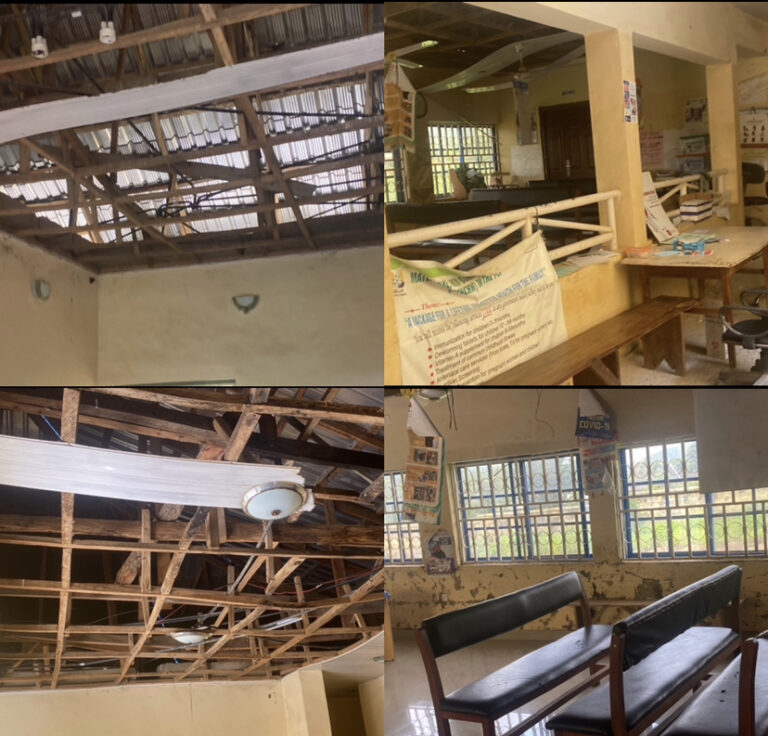
NIGERIA’S health system is facing severe strain and is unlikely to meet global targets for Universal Health Coverage (UHC), according to a new report by the Health Policy Research Group (HPRG) of the University of Nigeria, the Nigerian national centre for the African Health Observatory – Platform (AHOP).

The AHOP Country Health System and Services Profile, released by the World Health Organisation (WHO) African Region, revealed how Nigeria’s health sector had been struggling with weak governance, chronic underfunding, and decaying infrastructure.

The report warned that the system was not on track to achieve UHC, with a service coverage index of just 38.4 per cent. 

It also noted that overall, Nigeria’s health system delivered only 45 per cent of its potential, far below the African regional average of 56 per cent, adding that access, quality, and demand for essential health services scored 41, 40 and 42 per cent respectively.

This, the researchers said, left millions of Nigerians without reliable care.

“Moreover, Nigeria’s overall health system performance, at 45 per cent, is below the World Health Organization African Region average of 56 per cent. Performance in terms of sociocultural access has improved, with more women and girls in education and employment than before, which could in turn improve access to health services if financial risk protection and functional health facilities are implemented,” Executive Summary of the report read in part.

It added that about 80 per cent of the country’s health infrastructures “are dysfunctional”, consequently forcing many Nigerians to seek treatment abroad.

This shortfall is estimated to cost the country over $1 billion annually in outbound medical tourism as Nigerians seek care abroad.

According to the report, the healthcare costs fall heavily on individuals and that out-of-pocket spending accounts for 75 per cent of all health expenditure, leaving many households vulnerable. 

Despite being Africa’s largest economy, Nigeria spends just five per cent of its annual budget on health, well below the 15 per cent target agreed under the Abuja Declaration in 2001. 

While private providers deliver 70 per cent of services, regulation and accountability mechanisms in the private sector remain weak. 

The researchers stressed that Nigerian government struggled with implementing reforms such as the National Health Insurance Authority Act 2023 and the Basic Health Care Provision Fund. 

They noted that Nigeria had 3.95 doctors per 10,000 people, below the recommended 4.45 ratio, adding that domestic pharmaceutical production meets only 30 per cent of national needs, leaving the country dependent on imports, while only 51 per cent of childbirth deliveries are attended by skilled health workers.

“The current health workforce crisis is attributed in part to the insufficient implementation of existing policies and strategies, notably strengthening coordination between the national and subnational levels. 

“Capacity and competency shortfalls, industrial unrest, unfavourable working conditions and poor remuneration, especially in the public health sector, have negatively affected clinical outcomes and eroded public confidence in the health workforce. Mass emigration of health care personnel (brain drain), especially after the COVID-19 pandemic, has significantly weakened the remaining workforce. 

“Health workforce production, distribution, deployment and retention are constrained by common implementation challenges. The unreliability and incompleteness of health workforce data pose a significant challenge, with data on the distribution of the health workforce by cadre, gender,” the report added.

It said while policies and reforms existed on paper, weak coordination between federal, state, and local governments hindered progress.

“National policies and guidelines on medical product regulation and distribution exist but are poorly implemented and audited. Nigeria’s National Agency for Food and Drug Administration and Control plays a critical role in regulation, market authorisation and supply. Annual procurement plans for medical products and health technologies in Nigeria are coordinated and prepared by the FMOH Department of Procurement for ministries, departments and agencies. Assessing the quantities of medical products that need to be produced and imported is based on past consumption patterns. 

“More stringent policy implementation, tighter policy evaluation structures and the stipulation of sanctions are needed to support supply-side regulation. Existing national production capacity meets just 30% of the country’s needs, making Nigeria overly reliant on imported pharmaceuticals and medical supplies. Foreign direct investment in the pharmaceutical sector and tax incentives offered to local producers are needed to increase domestic production capacity,” the report stated.