Home Blog Page 168

Between Bauchi Gov’s big dream and citizens’ bigger concerns

ON Monday, September 30, the Bauchi State governor, Bala Mohammed, celebrated the completion of the International Conference Centre in the state while sharing photos of the newly completed space on X.

The governor said the completion of the International Conference Centre under his leadership showed Bauchi’s progress toward becoming modern and unstoppable.

“I dared to dream big for Bauchi, and I delivered. The International Conference Centre, built from start to finish under my leadership, is proof that the extraordinary is possible when vision meets courage. This is our Bauchi, fearless, modern, unstoppable,” Mohammed wrote on X.

However, the announcement attracted backlash from users in the comments section, many of whom questioned why the governor chose to focus on such a project instead of addressing high-priority issues.

@AminuMakama asked: “Have you tried to visit schools that are few meters away from this edifice and see the condition they are in, Sir?”

@tonario commented: “This is good but a focus on human capital development and industrialisation is better.”

Similarly, @udombiokoro questioned: “What’s it with international conference centers every governor wants to build?”

It is pertinent to note that Enugu State completed its own conference centre in December last year, Governor Ahmadu Fintiri recently held a groundbreaking event for a similar project in Adamawa State, and just a few days ago, President Bola Tinubu commissioned a new conference centre in Imo State.

As netizens argued that the project is not the priority of the Bauchi State government, the debate now turns to a pressing question: what should truly be the priority for Bauchi State?

According to the 2022 National Personnel Audit (NPA) Report, the education sector in Nigeria faces significant infrastructure and resource gaps. The pupil–teacher ratio stands at 54:1 in primary schools and 20:1 at the junior secondary (JSS) level. Sanitation facilities are grossly inadequate, with 868 pupils sharing a toilet in primary schools and 367 per toilet in JSS.

Furniture shortages are also evident, as one seat is shared by 11 pupils in primary schools and five in JSS. Only 40 per cent of public primary classrooms and 53 per cent of JSS classrooms are considered to be in good condition. 

Out of 3,055 public primary schools, just 194 have toilets, while only 425 of 751 public JSS schools are equipped with them. Furthermore, access to learning facilities remains limited, with only three per cent of public JSS schools having laboratories and four per cent possessing libraries.

Similarly, the 2022 Nigerian Multi-Dimensional Poverty Index (NMPI) highlights the scale of exclusion, revealing that 55.7 per cent of school-age children (6–15 years) in Bauchi State, equivalent to about 1.37 million children, are out of school.

Beyond education, broader socio-economic indicators also paint a troubling picture. The 2023 Nigeria Labour Force Survey (NLFS) Annual Report places Bauchi State’s unemployment rate at 4.2 per cent, pointing to limited job opportunities and persistent underemployment.

Poverty remains widespread, with 5.71 million people classified as poor according to the 2022 NMPI.

Maternal health outcomes are particularly alarming. Bauchi records a maternal mortality rate of 1,732 per 100,000 live births, meaning that for every 100,000 live births, 1,732 mothers lose their lives. This figure is among the highest in the country and significantly above national and global averages.

The ICIR reported that Yankari Game Reserve in Bauchi State, once renowned for its warm springs, elephant herds, and rich biodiversity, has suffered years of neglect and poor management. Visitors now lament deteriorating facilities, unreliable electricity, and inadequate maintenance, while weak promotion has further diminished its appeal. The reserve has also become a haven for terrorists, poachers, and intruders.

While the International Conference Centre may symbolise ambition and modernity, the statistics on poverty, education, unemployment, and maternal mortality highlight urgent needs that demand greater attention.

For many residents, the real measure of progress will not be in grand structures, but in whether governance translates into improved living conditions, better schools, access to healthcare, and opportunities that lift people out of poverty.


 

Philippine’s earthquake death toll rises to 72, with 20,000 displaced

THE Philippines’ government said the death toll from Tuesday’s 6.9-magnitude quake in the central Philippines has climbed to 72, as search efforts for the missing slowed and rescuers shifted their attention to 294 injured and the 20,000 displaced.

National Disaster Risk Reduction and Management Council spokesman Junie Castillo disclosed this on Thursday, October 2.

Castillo said that the bodies of the three victims were pulled from the rubble of a collapsed hotel overnight Wednesday in the city of Bogo.

“We have zero missing, so the assumption is all are accounted for,” Castillo said, adding that some rescue units in Cebu province have been told to “demobilise”.

He explained that 294 people were injured, about 20,000 displaced, and nearly 600 houses destroyed across northern Cebu, with many residents forced to sleep on the streets as hundreds of aftershocks continue to rattle the area.

“One of the challenges is the aftershocks. It means residents are reluctant to return to their homes, even those houses that were not (structurally) compromised,” Castillo said.

On Thursday, Cebu provincial governor Pamela Baricuatro called for urgent assistance, stressing that thousands of people needed clean drinking water, food, clothing, temporary shelter, and volunteers to help organise and distribute relief supplies.

According to the regional civil defence office, over 110,000 people across 42 quake-affected communities will require aid to rebuild their homes and recover their livelihoods.

Large parts of the area are still without power, while dozens of patients have been forced to take shelter in tents outside the quake-damaged Cebu provincial hospital in Bogo.

President Ferdinand Marcos, accompanied by senior aides, travelled to Cebu on Thursday to assess the damage.

He also toured a partly damaged housing project in Bogo that had been built for survivors of Super Typhoon Haiyan in 2013, one of the Philippines’ deadliest natural disasters.

The Philippines experiences earthquakes almost daily, as it lies along the Pacific “Ring of Fire,” a zone of frequent seismic activity that extends from Japan through Southeast Asia and across the Pacific basin.

While most tremors are too minor to be felt, powerful and destructive quakes occur unpredictably, with no existing technology able to forecast their timing or location.

Marking non-violence day: Nigeria’s ongoing quest for peace

0

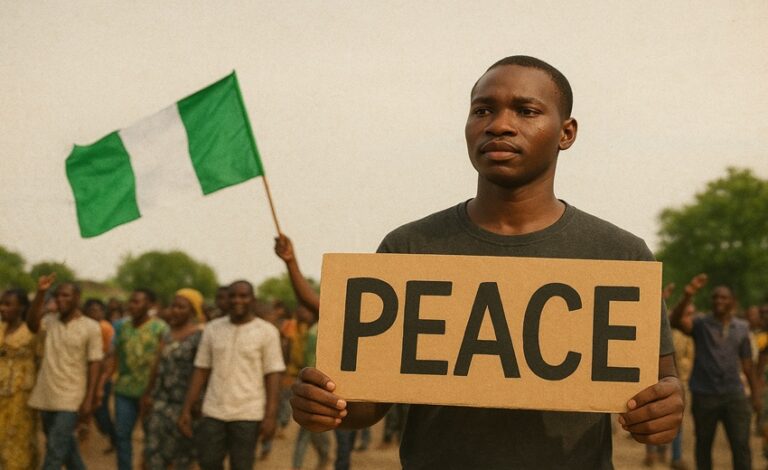
AS the world marks the International Day of Non-Violence on October 2, Nigeria finds itself at a crossroads as violence continues to plague the West African nation.

The International Day of Non-Violence was set aside by the United Nations in 2007 to honour former Indian leader, Mahatma Gandhi’s birthday. However, it is not just about remembering the Indian leader’s ideas, but also about confronting the modern challenges of violence and intolerance that threaten societies across the globe.

In Nigeria, the day resonates with Nigeria’s numerous conflict problems. From insurgency in the North-East to farmer-herder conflicts in the north central, separatist agitations in the South-East, banditry in the North-West, and rising political thuggery and kidnappings in the southwest, violence continues to define much of the country’s public life.

A country under siege

Various reports by The ICIR on insecurity highlight how violent conflicts have displaced millions and eroded public trust in state institutions. Communities in Benue, Plateau, Zamfara, and Borno live in daily fear of attacks, while schools across the North have been shut down due to recurring abductions.

Experts argue that this crisis is not just about the failure of security forces but also about the absence of a culture of tolerance and peaceful conflict resolution.

The ICIR report in 2024 states that, despite promises of security and peace, about 703 persons were abducted in 8 days under Bola Tinubu.

Also commenting on violence in Nigeria, Amnesty International (AI) said more than 400 displaced people in Borno state were abducted.

The organisation said on March 3, 2024, suspected Boko Haram fighters abducted at least 400 Internally Displaced Persons (IDP) – most of them women and children – from Babban Sansani, Zulum, and Arabic IDP camps in Gamboru Ngala, Borno State. 

Also on Thursday, March 7, a school teacher, Sani Abdullahi, said at least 287 students and a principal, Abubakar Isah, were abducted when bandits invaded the Local Education Authority (LEA) Primary and Junior Secondary School, Kuriga, in the Chikun Local Government Area of Kaduna State.

Peace message in Nigeria’s context

Gandhi’s philosophy of non-violence was not simply about refusing to fight. It was about challenging injustice through peaceful means like dialogue, protest, and civic resistance without dehumanising opponents.

Nigeria has examples that mirror this philosophy. In recent times, movements like Bring Back Our Girls drew strength from peaceful advocacy. Even the #EndSARS protest organised by youths in 2021 and the #EndBadGovernance protest of 2024 were initially peaceful before they were marred by state clampdowns and violence.

Why non-violence matters

Nigeria’s current trajectory makes non-violent lessons more urgent. According to the Institute for Economics and Peace, Nigeria remains one of the world’s most impacted countries by terrorism and communal violence. Beyond the loss of lives, the economic toll of insecurity is staggering, with agriculture, trade, and investment all affected.

For a security analyst, Emeka Okoro, promoting a non-violent approach in Nigeria is not optional but a practical necessity. He added that peaceful negotiation in farmer-herder disputes, effective mediation in ethnic conflicts, and a justice system that protects rights could reduce bloodshed.

Youths of Nigeria and peace

With over 60 per cent of Nigeria’s population under 25, young people are at the centre of both violence and peace building. Many have been recruited into violent gangs or extremist groups, while others have spearheaded peaceful campaigns on governance and human rights.

 A call for leadership

For Nigeria, commemorating the International Day of Non-Violence cannot be reduced to a symbolic gesture. It demands action from leaders, institutions, and citizens. Political rhetoric that incites division, excessive use of force by security agencies, and judicial impunity all fuel violence and must be curtailed.

Gandhi once said,There is no path to peace. Peace is the path.For Nigeria, this means choosing dialogue over war, fairness over oppression, justice over repression and tolerance over hatred across ethnic and religious lines.

The road ahead

There have been reported cases of how grassroots peace initiatives, such as community dialogues in Plateau and Kaduna, have reduced tensions where state security failed.

These efforts suggest that non-violence is not utopian but achievable when communities take ownership of peace.

Expert view

Commenting on the spate of violence in the country, a security expert, Oladele Fajana, told The ICIR in 2024 that he is disappointed in the approach of the government and security agencies towards peace and security.

Fajana said it is regrettable that government and security agencies still allow “unfortunate incidents like this (abductions) to keep happening again and again.”

“Our security forces are reactionary. We don’t have to wait until our schools are attacked before we react,” he stated.

On the way forward, Fajana said the security forces should continue to anticipate attacks and increase peace dialogues.

The managing director of Beacon Consulting Limited, Kabir Adamu, in a chat with The ICIR, said the government should focus on implementing its Renewed Hope Agenda.

He added that the government must ensure that national security formations are more effective and efficient and avoid using ad-hoc means to address security challenges.

In his opinion, the publicity director of Arewa Youths for Peace and Security, Dantata Mohammed, urged Tinubu to review the country’s security architecture by putting the right persons at the helm of affairs. 

He also called for adequate incentives for all the security agencies.

As Nigerians reflect on the International Day of Non-Violence, the challenge is clear: the culture of violence that has normalised killings, kidnappings, and hate speech must give way to a culture of peace and tolerance.

NEMA confirms 14 dead, 42 missing in Kogi boat mishap

0

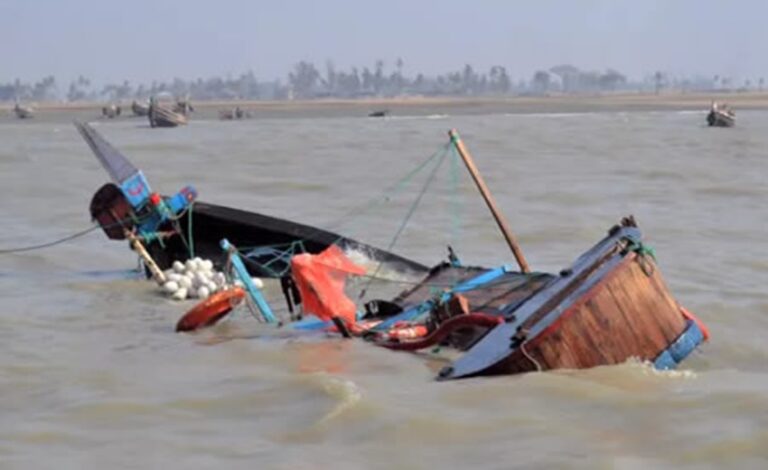
NATIONAL Emergency Management Agency (NEMA) has confirmed that at least 14 people have died while 42 others remain missing following a boat mishap on the River Niger in Ibaji Local Government Area of Kogi State.

According to the agency, the accident occurred at about 5:40 p.m. on Tuesday, September 30, when a boat carrying about 80 passengers capsized while travelling from Onugwa community to Olushi village.

In a statement posted on its X handle on Thursday, October 2, NEMA disclosed that 24 passengers have been rescued alive, while efforts are ongoing to find those still unaccounted for. 

“Search and Rescue (SAR) operations commenced swiftly, leading to the rescue of 24 passengers alive. Sadly, 14 corpses have so far been recovered, while 42 persons remain missing as efforts to locate and recover them continue.

“Community divers have been playing a critical role in the rescue operation, complementing the work of official response agencies.  The operation remains ongoing, and periodic updates will be provided as more information becomes available,” the statement added.

The agency emphasised the urgent need for strict adherence to water safety rules, including the use of life jackets and the avoidance of overcrowding on boats.

The ICIR earlier reported that President Bola Tinubu, on Wednesday, commiserated with the government and people of Kogi, who had earlier said that at least 26 people died in the incident.

However, NEMA’s confirmation indicates that the actual casualty figure stands at 14, with 42 others still unaccounted for.

The state commissioner for information, Kingsley Fanwo, stated in a press release that Governor Ahmed Usman Ododo had directed the State Emergency Management Agency to provide immediate relief to the victims’ families.

“This is a heartbreaking loss. Our thoughts and prayers are with the bereaved families and the entire Ibaji community in this moment of grief.”

The latest incident highlights the persistent challenge of unsafe water transportation in Nigeria. An ICIR report in September documented how at least 29 people died in a boat accident in Niger State when an overloaded vessel carrying over 90 passengers struck a tree stump on the River Niger.

Similar accidents were recorded in Sokoto linked to overloading, poor maintenance, and lack of safety gear.

In December 2024, no fewer than 54 bodies were recovered after a boat carrying about 200 traders capsized in Kogi, underscoring the recurrent nature of such disasters on the nation’s waterways.

The National Inland Waterways Authority (NIWA) and emergency agencies have repeatedly warned against overcrowding and neglect of safety protocols. Yet, ICIR found that many communities along Nigeria’s riverine belts remain dependent on rickety wooden canoes without proper regulation, leaving passengers vulnerable.

How Arise TV anchor Somtochukwu died during Abuja robbery-FCT Police boss

0

THE Federal Capital Territory (FCT) Police Command has confirmed that Arise Television anchor, Somtochukwu Christelle Maduagwu, died after jumping from the third floor of her apartment in Katampe while attempting to escape an armed robbery attack in the early hours of Monday, September 29.

FCT Commissioner of Police, Ajao Saka Adewale, disclosed on Wednesday, October 1, that officers responding to distress calls found the 29-year-old journalist unconscious on the ground floor of her residence, a three-storey twin block of 18 flats near the Gishiri axis of Katampe.

“She was immediately taken to Maitama General Hospital, where doctors tried to resuscitate her using CPR, but sadly, she could not make it,” Adewale said.

According to the police, armed men invaded the compound at about 3 a.m., shooting one of the private security guards on duty. In the panic that followed, Maduagwu, who lived on the top floor, leapt from her balcony in an attempt to flee the attackers.

“The consequences were tragic and very unfortunate,” the Police Commissioner said, adding that a team led by the Deputy Commissioner of Police (Investigation) had been set up to track down the assailants.

The FCT Minister, Nyesom Wike, also expressed grief over her death, describing it as “tragic and painful.” He assured that the Federal Capital Territory Administration would work with security agencies to ensure a thorough investigation.

“She was cut down in her prime. The police will unravel the circumstances surrounding her death and bring those responsible to justice,” Wike said in a statement signed by his aide, Lere Olayinka.

The FCT Health Mandate Secretary, Dolapo Fasawe, confirmed that Maduagwu was brought to the Maitama General Hospital dead at about 4:30 a.m. on Monday.

Arise News, in a statement, described her as “a vibrant voice that engaged and connected with our viewers,” noting that her passion and professionalism left a lasting impact on colleagues and audiences alike.

The killing of Maduagwu has reignited concerns about violent crimes in Abuja. Recent ICIR investigations highlighted persistent cases of armed robbery, kidnappings, cult clashes, and “one-chance” attacks on commuters despite official claims of improved security.

Residents of Katampe and neighbouring Mpape have repeatedly complained of night-time robberies and violent street attacks. In April, armed men stormed a hotel in Mpape and robbed a driver attached to the Zamfara State governor’s convoy before being arrested.

The capital city has also recorded several high-profile one-chance killings, including those of Freda Arnong in July 2025 and Greatness Olorunfemi in 2023, both victims of gangs posing as taxi drivers.

Barely three months ago, the murder of caregiver Chinyere Anaene and a toddler in Dawaki shocked Abuja residents and underscored the growing safety concerns in its suburbs.

Although the FCT Administration has cited reports suggesting a decline in crime rates, analysts told The ICIR that frequent violent incidents continue to cast doubt on the government’s assurances.

Meanwhile, the police have assured that “no stone will be left unturned” in bringing those behind the Katampe robbery and Maduagwu’s death to justice.

Fubara sacks commissioners, vows renewed service to Rivers

0

RIVERS State Governor, Siminalayi Fubara, has disengaged members of his cabinet affected by the recent Supreme Court judgment, ending the tenure of commissioners and public officers whose appointments were nullified by the court.

The announcement was made on Wednesday October 1, during a valedictory session with the outgoing cabinet at Government House, Port Harcourt, as part of activities to mark Nigeria’s 65th Independence Anniversary.

In a statement issued by his Chief Press Secretary, Nelson Chukwudi, the governor expressed gratitude to the affected officials for their service to the state over the past two years. “Your commitment and contributions have advanced the cause of development in Rivers State. I remain thankful for your sacrifices and dedication,” Fubara said.

The governor, who only recently returned to office following a six-month suspension under a federal state of emergency, urged Rivers residents to remain united and work with President Bola Tinubu “to build a peaceful, secure, and prosperous nation.”

The sack of the commissioners followed a Supreme Court verdict that nullified the appointments of several commissioners and public officers, effectively bringing their tenure to an end. Fubara said the decision to relieve them was in line with the judicial pronouncement.

The affected officials were part of the administration before March 2025, when President Tinubu declared a state of emergency in the oil-rich state, suspending Fubara, his deputy Ngozi Odu, and the state legislature.

The president cited insecurity and governance breakdown amid a prolonged rift between Fubara and lawmakers loyal to his predecessor, Nyesom Wike.

As The ICIR earlier reported, Tinubu’s intervention was controversial, defended under Section 305 of the Constitution but widely criticised by the Nigerian Bar Association (NBA) and civil society groups as an abuse of power.

During the six-month emergency rule, sole administrator Ibok-Ette Ekwe Ibas, a retired vice admiral, managed the state, supervised local government elections swept by Wike’s allies, and introduced new policies, including civil service verification.

On September 17, Tinubu announced the end of emergency rule, citing “a new spirit of understanding” among political actors in the state. By midnight of September 18, Fubara, Odu, and members of the state House of Assembly were reinstated.

Since his return, Fubara has sought to consolidate his administration while navigating a political terrain still influenced by Wike’s network of allies. His latest move to dissolve the cabinet marks one of his first major steps in reorganising the state’s executive arm.

Addressing Rivers people during the valedictory session, Fubara emphasised his renewed commitment to deliver on governance. “I assure you that we will continue to serve this state with vigour and sincerity. Together, we shall build the Rivers of our dreams,” he said.

The governor also used the Independence Day celebration to call for national unity.

“Nigeria’s 65th anniversary reminds us of our collective responsibility to keep faith with the ideals of peace, security, and prosperity. I urge everyone to support President Tinubu’s efforts to achieve this vision,” he added.

Observers say the disengagement of commissioners marks the beginning of a new phase in Rivers’ politics.

PENGASSAN suspends strike, urges Dangote to implement agreed terms

0

THE Petroleum and Natural Gas Senior Staff Association of Nigeria (PENGASSAN) has suspended its nationwide strike following the intervention of the Federal Government.

The union, however, stressed that the suspension is only temporary and warned that any breach of the new agreement would trigger an immediate resumption of industrial action.

PENGASSAN President, Festus Osifo, announced the decision at a press conference in Abuja on Wednesday, October 1, after negotiations with government officials and representatives of the refinery.

“We are only suspending, not calling off this strike,” he said, adding that “If any part of this agreement is broken, we will not give any warning. We will immediately resume our suspended industrial action.”

The union leader said the truce followed “intense intervention” from the Federal Government but admitted that PENGASSAN remained deeply sceptical about the sincerity of the Dangote Group.

Recall that as part of the truce, the Federal Government earlier announced that workers recently disengaged by the refinery will be redeployed to other subsidiaries within the Dangote Group.

Minister of Labour and Employment, Mohammed Maigari Dingyadi, disclosed this in Abuja, confirming that the affected staff would retain their salaries and benefits.

After examining the procedure used in the disengagement of workers, the meeting agreed that the management of Dangote Group shall immediately begin the process of redeploying the disengaged staff to other companies within the group, with no loss of pay. No worker will be victimised arising from their role in the impasse between Dangote and PENGASSAN,” Dingyadi said.

Meanwhile, the suspension brings relief after weeks of confrontation between the union and the refinery’s management. 

PENGASSAN had accused the company of unlawfully dismissing more than 800 Nigerian workers after they unionised, while replacing them with foreign nationals, allegations the refinery denied, insisting its restructuring was based on operational needs.

The standoff escalated when PENGASSAN ordered members to cut gas and crude oil supplies to the refinery, triggering disruptions across the country. 

By September 30, the Nigerian Independent System Operator confirmed that the strike had forced several gas-powered plants offline, reducing national electricity generation by about 1,100 megawatts and plunging cities such as Lagos and Abuja into darkness.

Fragile truce

While the Federal Government expressed optimism that the resolution would restore industrial harmony in the oil and gas sector, PENGASSAN warned that its patience should not be mistaken for weakness.

“The National Executive Council of PENGGASAN has decided that they will go ahead to take the moral high ground, that we will go ahead to prove to the government that we are extremely patriotic people, that love this country more than any single individual, that we will go ahead to suspend the industrial action that we started on Sunday, 28th day of September 2025.”

“Remember, we are only suspending, and we didn’t call off. We will be monitoring and following closely on any slip on the part of Dangote. If any part of this agreement, or any part of this communique as put up by the Ministry of Labour, is broken, we will not give any notice, we will not give any warning, and we will resume the suspended industrial action immediately.

“We have only suspended the industrial action in respect of the government of the land. As an institution, are we completely happy with what was provided? The answer for us is no,” he added.

NAPTIP arrests five suspected traffickers, rescues 24 at Abuja airport

0

THE National Agency for the Prohibition of Trafficking in Persons (NAPTIP) has arrested five suspected traffickers and rescued twenty-four in a special operation at the Nnamdi Azikiwe International Airport, Abuja.

In a statement issued on Wednesday, October 1, NAPTIP’s National Press Officer, Vincent Adekoye, revealed that among those arrested at the airport was a retired senior officer from one of Nigeria’s leading law enforcement agencies, alleged to be a key member of a trafficking syndicate operating in the South West.

He said that the latest raid followed a tip-off from concerned stakeholders and partners who alerted to an influx of suspected human trafficking victims at the international airport, Abuja, and the unwholesome activities of some suspected traffickers.

Adekoye explained that the victims, aged between 15 and 26, were recruited from Kano, Katsina, Oyo, Ondo, and Rivers States, and were being trafficked to Iraq, Sudan, Egypt, Saudi Arabia, Bahrain, and Afghanistan.

He noted that many of the victims could only speak their local dialects, while others did not know the countries they were being trafficked to.

According to Adekoye, one of the victims said the traffickers told her mother that they were taking her to Europe, where she would work and earn dollars, as he noted that her parents were happy and they allowed her to follow them.

He added that one of the victims pledged to pursue her father’s prosecution for deceiving her into making the journey, after the Director General personally counselled the victims and showed them video clips of stranded Nigerians and others on life support after suffering exploitation in destination countries.

The victim, whose father was among the traffickers arrested, said in her local dialect that her father only told her that his friend had a job for him at a supermarket in Baghdad.

Commenting on the development, NAPTIP Director General Binta Adamu Bello expressed concern over the actions of suspected human traffickers and unregistered labour recruiters who persist in deceiving, recruiting, and trafficking Nigerians for different forms of exploitation.

“I am impressed with the outcome of the operation today…We observed that the Nnamdi Azikwe International Airport is becoming a comfort zone for these traffickers, and that is why we have decided to shift attention to this airport. We will sustain this raid until they stop this unpatriotic and illicit trade in human beings.

“I was amazed that a father, who is a retired Law Enforcement Officer of senior Cadre, deceived his daughter and packaged her to be trafficked to Iraq for exploitation. This is incredibly unbelievable. Well, all of them will be thoroughly investigated, and they will face the law,” Binta said.

Binta also appreciated the effort of the Airport Authority,  the collaboration of the Department of State Service operatives at the Airport, the Airport Security Personnel, Immigration Officers, and airline operators for supporting NAPTIP in the success of the operation. 

“Human trafficking is a visible national concern, and we all must be on the same page to turn the heat on the traffickers. Our resolve to ensure the protection of Nigerians from all forms of exploitation is firm and resolute”, Binta declared.

US embassy in Nigeria ‘temporarily suspends’ social media updates amid budget cuts 

0

THE United States Embassy in Nigeria has announced that it will halt routine updates on its social media channels following a lapse in US government funding, stemming from the ongoing budget deadlock in Washington.

The Embassy revealed this in a post on X (formerly Twitter) on Wednesday.

“Due to the lapse in appropriations, this account will not be updated regularly until full operations resume, except for urgent safety and security information,” the social media post said.

It further stated that essential consular services such as passport issuance and visa processing will continue in the US, at embassies and consulates abroad, “as the situation permits.”

“At this time, scheduled passport and visa transit services in the United States and at U.S. Embassies and Consulates overseas will continue during the lapse in appropriations as the situation permits.

“We will not update this account until full operations resume, except for urgent safety and security information. For information on our services and operating status, visit http://travel.state.gov,” the tweet read.

The announcement follows a US government shutdown that took effect early Wednesday after lawmakers and President Donald Trump were unable to reach a deal on the federal budget.

The stalemate revolved around democratic calls for increased healthcare funding, resulting in a suspension of financing for numerous government operations.

Both Republicans and Democrats have pointed fingers at each other for the deadlock, which is anticipated to impact hundreds of thousands of government employees and millions of Americans dependent on federal services.

The shutdown, set to halt operations across numerous federal departments and agencies, comes amid sharp partisan divisions in Washington, raising concerns about its duration and potential impact.

Trump warned that he would penalise Democrats and their supporters by targeting progressive initiatives and implementing widespread public sector job cuts, marking the first government shutdown of his current term since a similar halt during his previous administration.

“So we’d be laying off a lot of people who are going to be very affected. And they’re Democrats; they’re going to be Democrats. A lot of good can come from shutdowns,” Trump told reporters in the Oval Office, suggesting he would use the pause to “get rid of a lot of things we didn’t want, and they’d be Democrat things.”

Government operations started to shut down at 12:01 a.m. (0401 GMT) on Wednesday, following a last-minute but unsuccessful attempt in the Senate to approve a short-term funding measure that had already passed the House of Representatives.

The shutdown will not impact essential services, including the Postal Service, the military, and welfare programs such as Social Security and food assistance.