Home Blog Page 1787

Nigerian telcos block Twitter access, say action based on national interest

NIGERIA’S telecommunications operators, under the auspices of the Association of Licensed Telecommunication Operators of Nigeria (ALTON), have complied with the Nigerian government’s directive to suspend the operations of US-based social media platform, Twitter, in Nigeria.

ALTON, in a statement jointly signed by its Chairman Gbenga Adebayo and its Executive Secretary Gbolahan Awonuga on Saturday, stated that it had conducted a robust assessment of the request in accordance with internationally accepted principles before its enforcement.

“Based on national interest provisions in the Nigerian Communications Act, 2003, and within the licence terms under which the industry operates; our members have acted in compliance with the directives of NCC.”

ALTON said it would continue to engage all relevant authorities and stakeholders and  act as might be further directed by the NCC.

“As an industry, we endorse the position of the United Nations that the rights held by people offline must also be protected online.

“This includes respecting and protecting the rights of all people to communicate, to share information freely and responsibly, and to enjoy privacy and security regarding their data and their use of digital communications.”

The association, however, said it would continue to support the Nigerian government in upholding the rights of citizens.

Meanwhile, Twitter suspension has continued to generate reactions in Nigeria, just as the major opposition party and the Nigerian Bar Association have asked the government to rescind the decision.


Makinde to FG: Reverse your decision on Twitter ban for greater good, investor confidence 

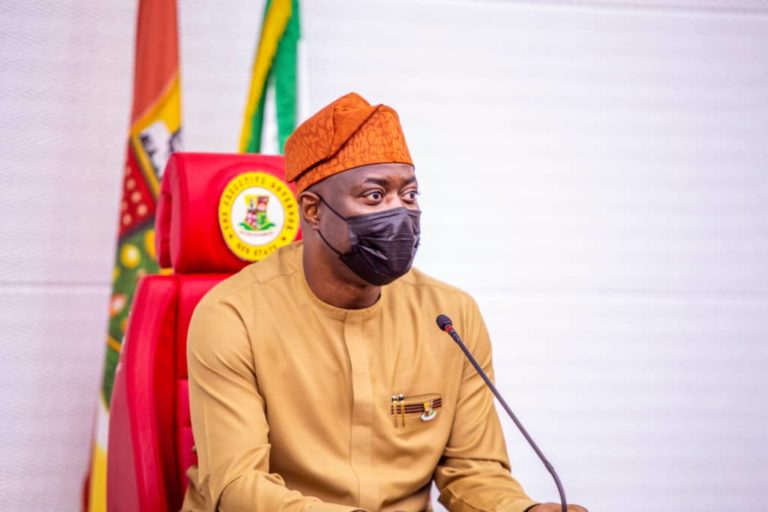
THE Oyo State Governor Seyi Makinde, on Saturday, reacted to the Federal Government’s decision to ban Twitter operations in Nigeria.

He told President Muhammadu Buhari-led Federal Government to reverse its decision for the greater good of Nigerians and to boost investor confidence.

In a statement issued on his personal website, Makinde charged the government to often consider how certain policies and actions adversely affected the masses, thus actions should be taken void of emotional reactions.


READ ALSO: 

Nigerian telcos block Twitter access, say action based on national interest

Civil society condemns Buhari’s Twitter ban in Nigeria

Twitter suspension: NBA challenges Buhari, says decision lacks legal authority


Makinde was elected as governor under the platform of the People’s Democratic Party (PDP). He is one of the remaining state governors in the major opposition party.

Governor David Umahi left the PDP in November 2020 to join the APC. About six months after, his counterpart from Cross Rivers Ben Ayade also decamped to the ruling party. Both are yet to respond to the Twitter ban.

However, in his reaction, Makinde noted that “as leaders, we should go beyond emotional reactions to issues and think about how our actions will affect the people we lead and our international ratings socially and economically. ”

“I believe the Federal Government should be actively interested in how certain policies and action will affect investor confidence. I, therefore, use this medium to appeal to the Federal Government to reverse this suspension for the greater good of Nigerians.”

He recognised how the micro-blogging application had remained a source of employment for some Nigerian youths, irrespective of religion or political affiliations.

Makinde stressed that entrepreneurs, who could not afford physical offices and stores also used the platform to showcase their businesses to attract better patronage.

He noted that Twitter had become an avenue for the young people and government agencies to express opinions and share information respectively.

“Twitter has become the platform for young people and indeed all Nigerians to exercise their fundamental right to express and publish an opinion. They use the platform to complain, argue and give feedback to the government and its agencies who in turn, use these to improve policies. This is a fundamental point that should be kept in mind as we debate the necessity of this suspension.

“We should also remember that Twitter has gone beyond a source of communication for many of our hardworking youths in Nigeria. It has become a source of livelihood for many, irrespective of their political affiliations or religious leanings. Nigerian youths and digital communications organisations earn a living from being able to use the platform to post communications on behalf of their clients,” Makinde stressed.

Oyo State governor was not the first to criticise the decision of the Federal Government to ban Twitter. Amnesty International, the Swedish Embassy, Civil Society Organisations (CSOs), Nigerian Bar Association (NBA), among others, have also condemned the action. The Socio-Economic Rights Accountability Project (SERAP) and some concerned Nigerians have also vowed to take legal action against the president on the Twitter ban.

The Minister of Information Lai Mohammed had issued the notice on the Twitter ban, following the decision of the international IT firm to suspend Buhari over his tweet to caution the Biafra agitators, believed to be behind attacks on state infrastructure.

Telecommunication operators in the country such as MTN, Airtel and Glo have also complied with the new rule to block Twitter access in Nigeria.

PDP rejects Twitter suspension, says Buhari is pushing Nigerians to the wall

NIGERIA’S major opposition party, the People’s Democratic Party (PDP), has rejected President Muhammadu Buhari’s suspension of the operations of a US-based social media platform, Twitter, in Nigeria, describing it as a draconian action and a slide towards a fascist regime.

PDP, in a statement signed by its National Publicity Secretary Kola Ologbondiyan, noted that the suspension was unwarranted, describing it as a vexatious, condemnable and barbaric move to muzzle Nigerians, particularly the youth from holding the government accountable.

“Our party is appalled that the Federal Government could exhibit such primitive intolerance and power intoxication because the social media giant demonstrated international best practices in not allowing the Buhari presidency to use Twitter as a platform to propagate and spread the Buhari administration’s hatred towards Nigerians.”


READ ALSO:

Twitter ban: Global bodies may have given up on Nigeria’s democracy – Analysts

Twitter suspension: Action undermines Nigerians fundamental freedom, says U.S

Like Buhari, Twitter deletes Nnamdi Kanu’s violent statement


Buhari had earlier, in a statement signed by Special Assistant to the President (Media), Office of the Minister of Information and Culture Segun Adeyemi in Abuja on Friday, announced the suspension of Twitter, saying the platform was persistently used for activities that could undermine the corporate existence of Nigeria.

The PDP stated that as opposed to the president’s claim, Nigerians,  particularly the youth, had been using the social media platform largely for activities promoting unity, as well as social, economic and commercial interaction in the country.

The party also added that the Nigerian government failed to cite an example of where Nigerians used Twitter as a platform to promote acts capable of undermining the country’s corporate existence as claimed.

“Of course, the failure to give any such instance, confirms that the Federal Government is only out to victimize Nigerians. The Buhari Presidency and the All Progressives Congress (APC) administration are only afraid of Nigerians on Twitter because of their evil machinations for which they dread the Nigerian youths.”

The party, however, charged President Buhari to rescind his decision to ban Twitter, adding that such move amounted to pushing the citizens to the wall.

“Afterall, it was the same Twitter that provided President Buhari and the APC the platform to campaign in 2015 and 2019. “

Twitter ban: More Nigerians become digital diasporans through VPN

AS reactions continue to trail the Nigerian government’s indefinite ban on Twitter on Friday which became effective on Saturday, many Nigerians are becoming digital migrants as they turn to the Virtual Private Network (VPN) technology to remain active on the platform.

Although telecommunication companies in Nigeria including MTN, Airtel, Glo and 9Mobile  started blocking access to the Twitter site on Saturday, a VPN allows you to access regionally restricted content from anywhere in the world.


READ ALSO:

Buhari, Osinbajo, Malami, others run active Twitter accounts despite prosecution threat

Fulani herdsmen kill residents, burn houses in fresh attack on Oyo community

Buhari’s IPOB tweet was statement of fact, not threat – Garba Shehu


It works by routing your device’s internet connection through your chosen VPN’s private server rather than your internet service provider (ISP) so that when your data is transmitted to the internet, it comes from the VPN rather than your computer. 

A VPN connection is also secure against external attacks as it creates a private ‘tunnel’ from your device to the internet and hides your vital data through something that is known as encryption. This disguises your IP address when you use the internet, making its location invisible to everyone. 

Although Nigerians are still able to use the platform since the ban was announced, some have already started downloading free VPNs such as: Windscribe, USA VPN, Nord, PIA and  IPvanish, to guarantee their continuous use of the platform. 

Nigerians in the diaspora, who ordinarily would not be affected by the suspension, have also sworn to amplify the voices during this period to draw the attention of the world to the plight of Nigerians back at home. 

Minister of Information and Culture Lai Mohammed announced the suspension of Twitter on Friday after the company removed a post by Nigeria’s President Muhammadu Buhari that vowed to punish separatists for the incessant attacks on security facilities and other federal properties in the country’s South-East.

“Many of those misbehaving today are too young to be aware of the destruction and loss of lives that occurred during the Nigerian Civil War. Those of us in the fields for 30 months, who went through the war, will treat them in the language they understand,” Buhari wrote.

The president’s Twitter account was also suspended for 12 hours as the company said his tweet violated its ‘abusive behavior’ policy.

However, Mohammed accused the company of persistently using their platform “for activities that are capable of undermining Nigeria’s corporate existence,” according to a statement from the Special Assistant to the President (Media) Segun Adeyemi.

Prominent Nigerian individuals and groups have continued to call out the government for the move which they say is an attempt to curtail the right of Nigerians to freely express their constitutionally guaranteed opinions through the medium.

President of the Nigerian Bar Association Olumide Akpata said he found no constitutional or legal authority to support the peremptory action of the Federal Government to suspend the operations of Twitter in Nigeria and threatened to challenge the move ‘in the interest of the public and for the sake of our democracy’ if the ban was not lifted.

Similarly, former Nigerian Minister for Education Oby Ezekwesili urged the government to be introspective and “walk away from this bad decision.”

Amnesty International has also condemned the suspension of a social media platform widely used by Nigerians to exercise their human rights, including their rights to freedom of expression and access to information and has called on the authorities to immediately reverse the “unlawful suspension and other plans to gag the media, repress the civic space, and undermine Nigerians’ human rights.”

“This action is clearly inconsistent and incompatible with Nigeria’s international obligations including under the African Charter on Human and Peoples’ Rights and the International Covenant on Civil and Political Rights,” it said. 

Buhari joins Trump, other world leaders whose tweets have been deleted by Twitter

ON June 2, Twitter deleted a post by Nigeria’s President Muhammadu Buhari where he referred to the 1967-1970 Nigerian Civil War as the way to treat ‘those misbehaving today,’ saying it was the ‘language they will understand.’

The tweet, according to Twitter, violated the platform’s safety rule.

Twitter also deleted a video posted on the official handle of the Government of the Federal Republic of Nigeria, @NGRPresident, where Buhari made the threat.

President Buhari had, in a series of tweets on Tuesday, threatened Biafra agitators, saying those responsible for the destructions of INEC properties would be treated the way a secessionist group, Biafra, was treated during the Nigerian Civil War

Screenshot of the deleted tweet

“Many of those misbehaving today are too young to be aware of the destruction and loss of lives that occurred during the Nigerian Civil War. Those of us in the fields for 30 months, who went through the war, will treat them in the language they understand,” Buhari said.

Twitter said a “user can violate its rule if he violates the safety rules of the platform, under the safety rules, the platform listed violence, terrorism/violent extremism, child sexual exploitation, abuse/harassment, hateful conduct, suicide or self-harm, sensitive media, including graphic violence and adult content, among others.”


READ ALSO: 

Twitter ban: More Nigerians become digital diasporans through VPN

PDP rejects Twitter suspension, says Buhari is pushing Nigerians to the wall

Saraki, Sani, others decry Twitter ban, call on Buhari to reverse decision


The Twitter violence rule states that a user must not threaten an individual or a group of people. The rule also states that a user must not glorify violence.

“Violence: You may not threaten violence against an individual or a group of people. We also prohibit the glorification of violence. Learn more about our violent threat and glorification of violence policies,” the rule states.

Apart from Buhari, other world leaders whose tweets have been deleted include: former United States President Donald Trump; Brazil President Jair Bolsonaro; Iran Supreme Leader Ayatollah Ali Khamenei, and Venezuela President Nicola Maduro.

Before his account was permanently suspended on January 8, some tweets from Trump’s account had been deleted in relation to US November presidential election.

A Trump post deleted by Twitter on January 6, 2021, reiterated the false claim that the election he lost was stolen and encouraged his supporters to remember that day going forward.

Trump had said, “These are the things and events that happen when a sacred landslide election victory is so unceremoniously & viciously stripped away from great patriots who have been badly & unfairly treated for so long,” he tweeted. “Go home with love & in peace. Remember this day forever!”

Twitter later took down the tweet, saying that it had violated the company’s rules.

A tweet he later sent out on the US official government account @POTUS was also deleted.

Trump had tweeted, “We will not be SILENCED!” from the @POTUS government account, with 33.4 million followers. Twitter had permanently suspended the president’s go-to megaphone, his @realDonaldTrump personal account, hours earlier.

“Twitter is not about FREE SPEECH,” Trump wrote in the now-deleted tweets, adding that he was considering building his own social media platform in the near future.

Another president whose tweets were also deleted is Jair Bolsonaro of Brazil.

Two tweets from Bolsonaro were deleted after they contained false or misleading information about COVID-19.

According to Brazilian newspaper Folha, the deletions were the first time the site had taken action against content posted by Bolsonaro, first elected in October 2018.

Bosolonaro had posted videos of himself taken during a walking tour in Brasília Sunday (30th of March, 2020), in which he praised the use of anti-malaria drug hydroxychloroquine for treating the virus and encouraged an end to social distancing and isolation measures in the country.

Bolsonaro’s tweet came after a small French study indicated chloroquine and hydroxychloroquine as positive cures for  COVID-19.

Bolsonaro, in one of the deleted videos said, “What I have been hearing from people is that they want to work. Brazil cannot stop or we’ll turn into Venezuela.”

Also, Venezuela President Nicola Maduro’s tweet, in which he publicly recommended a ‘natural brew’ as a potential cure for coronavirus, was also removed by the tech giant from its platform.

Twitter also removed one tweet from Iran Supreme Leader Ayatollah Ali Khamenei’s English account and suspending new posts on it.

Iran Supreme Leader

The Khamenei account had posted in January of 2021  that coronavirus vaccines produced by the U.S., Britain and France were ‘completely untrustworthy’ and accused the Western powers of trying to ‘contaminate’ other nations by offering to send them the vaccines.

Twitter said in an interview with VOA that the offending tweet violated the platform’s misleading information policy, and the @Khamenei_IR owner would have to delete the post before regaining access to the account.

Twitter suspension: NBA challenges Buhari, says decision lacks legal authority

THE NIGERIAN Bar Association has challenged the Nigerian government over the suspension of the operations of a US-Based social media platform, Twitter in Nigeria.

In a statement made by its president, Olumide Akpata, the NBA on Friday evening said Nigeria operates a constitutional democracy, which does not conform with the suspension placed on Twitter by President Muhammadu Buhari.

“Everything must be done according to law; government must be conducted within the framework of recognised rules and principles which restrict discretionary power.”

Buhari had in a statement signed by the Special Assistant to the President (Media), Office of the Minister of Information and Culture Segun Adeyemi in Abuja on Friday, announced the suspension of Twitter, saying the platform was persistently used for activities that could undermine the corporate existence of Nigeria.

While challenging Buhari’s decision in a statement on the verified Twitter handle of its president, the NBA added that it finds no constitutional or legal authority to support the Federal Government’s action.

“Beyond the dent on our constitutional democracy, at a time when the Nigerian economy is unarguably struggling the impact of arbitrary decisions such as this on investor confidence is better imagined.”

The NBA, however, threatened to challenge the decision for the interest of public and the sake of democracy.

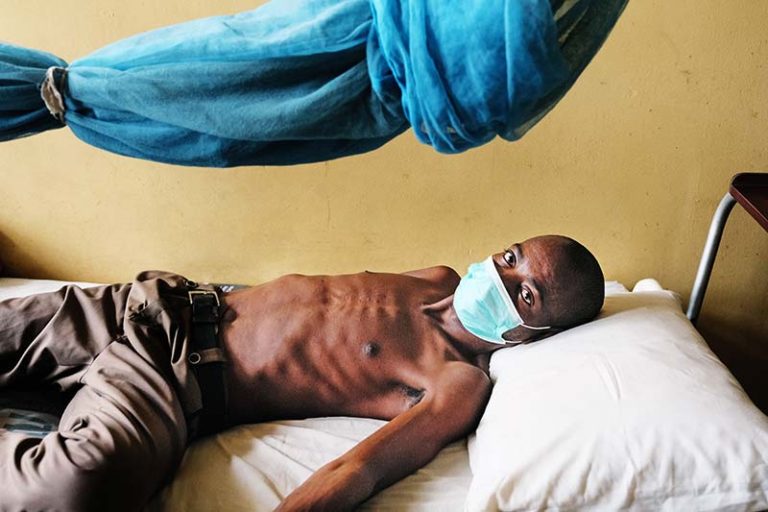
Nigeria likely to face TB crisis – Health ministry

NIGERIA risks facing major tuberculosis crisis, according to Director and National Coordinator of the National Tuberculosis, Leprosy and Buruli Ulcer Control Programme at the Federal Ministry of Health Chukwuma Anyaike.

Anyaike, who spoke with our reporter over challenges posed by the disease, said the nation needed to do more to contain it.

He said despite having the highest cases of TB in Africa, the Nigerian government provided only seven per cent of funds needed to fight the condition.

He explained that the country had a deficit of 70 per cent of the funds required to fight the disease, and foreign donors often provided 23 per cent of the available funds.


READ ALSO:

Doctors resign in Ondo over unpaid wages

Tuberculosis, Malaria keep spreading in Nigeria despite increased funding, strategic plans

To end tuberculosis, Nigeria needs stronger partnerships, domestic financing, community awareness


The growing number of drug-resistance TB cases in Nigeria also gave the government concern, Anyaike said.

Tuberculosis, otherwise known as TB, is a contagious infection that usually attacks the lungs.

The World Health Organization (WHO) says the disease is caused by bacteria (Mycobacterium tuberculosis).

TB is spread from person to person through the air. When people with lung TB cough sneeze or spit, they propel the TB germs into the air. A person needs to inhale only a few of these germs to become infected. The condition is curable and preventable, the health agency noted.

Chukwuma said Nigeria was number one country in Africa and sixth globally with highest TB burden.

“Nigeria is among the countries with a triple burden in the sense that we have a high prevalence of TB. We have a high prevalence of TB/HIV morbidity and high prevalence of drug-resistant tuberculosis.”

He warned that though funds for fighting the disease were inadequate, missing cases of TB portended great danger to the nation.

According to him, Nigeria was projected to have 440,000 new cases of TB yearly. He said the government, working with its partners, was making efforts to look into the cases.

“Last year, even amid COVID-19, we were able to notify 138,591 new cases. That means that we have above 200,000 new cases missing. We have also seen that the number of drug-resistance TB cases is increasing.

“Suppose you go by the evidence that one case that was not detected has the capacity to infect 10 to 15 people in a year. That means Nigeria is sitting on a keg of gunpowder as far as tuberculosis is concerned. If you multiply 200,000 by that number, you will see what it will give you,” he said.

He, therefore, called for more support from the government and well-meaning people in the country.

He also decried the low level of awareness of the disease among people in the country.

Only 27 per cent of Nigerians knew the seriousness of tuberculosis, he said.

Among the people mostly affected by the disease are persons with poor immunity, people in slums, those with HIV, people with poorly-managed diabetes mellitus, smokers and people with lung cancer.

Anyaike said there were efforts to increase TB case identification across Nigeria.

However, there is a huge setback for the government as only 40 per cent of local governments in the country have GeneXpert, the medical device used for diagnosing the ailment.

There are 389 geneXperts in the country, which are very inadequate to serve over 200 million projected to be living in the nation.

The Lancet, one of the world’s most renowned medical journals, says TB incidence rose in Nigeria from 418, 000 cases in 2017 to 429, 000 cases in 2018, and deaths also jumped from 155,000 to 157,000 within the same period, with treatment coverage for the disease stagnant at 24 per cent.


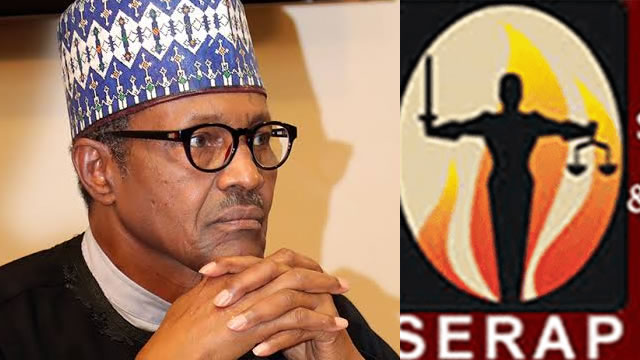
SERAP, other Nigerians to sue Buhari over Twitter suspension

THE Socio-Economic Rights and Accountability Project (SERAP) and other Nigerians are set to sue Nigeria’s President Muhammadu Buhari over his suspension of Twitter operations in the country.

SERAP said this via a tweet on Friday evening in reaction to the indefinite suspension of the social media platform.

“We’re preparing court papers to sue President Buhari and @NigeriaGov over the illegal and unconstitutional suspension of Twitter in Nigeria,” SERAP tweeted.

The organisation also invited Nigerians  interested in joining the suit as co-applicants.

Buhari had suspended operations of Twitter in Nigeria, saying the social media platform was persistently used to undermine the corporate existence of Nigeria.

The ICIR observed that many Nigerians under the tweet had indicated interest in joining in the suit to challenge the President’s position over the suspension.

A user identified as Ooni of Abuja, who tweets @bayorajayi, said although the Nigerian courts were on strike, the Economic Community of West Africa States (ECOWAS) could be approached over the suit.

“Even though the courts are on strike, we can approach ECOWAS court. I’m interested and can also give my legal support,” he tweeted.

His reaction was similar to that of many other angry Nigerians who showed dissatisfaction over the suspension of Twitter.

A legal affairs analyst and human rights activist Festus Ogun said the ban was a violation of Section 22 and 39 of the 1999 Constitution of the Federal Republic of Nigeria.

“Banning @Twitter violates S. 22 & 39 of the 1999 Constitution. Twitter seems to be the only medium through which we hold the reckless regime of Buhari responsible. We will resist the attempts to ban Twitter in Nigeria,” Ogun said in a tweet.

Section 22 of the Constitution states that “the press, radio, television and other agencies of the mass media shall at all times be free to uphold the fundamental objectives contained in this Chapter and uphold the responsibility and accountability of the Government to the people.”

Also, Section 39 (1) reads that “every person shall be entitled to freedom of expression, including freedom to hold opinions and to receive and impart ideas and information without interference.”

Another Twitter user, Dípò Awójídé @OgbeniDipo raised questions, arguing that jobs were being sustained through social media platforms like Twitter.

“Does President Buhari and the federal government know how much young Nigerians make on social media platforms like Twitter daily? Does Lai Mohammed know the number of jobs being sustained by Twitter in Nigeria? What is wrong with these people?” he said.

Buhari suspends Twitter operation in Nigeria

NIGERIA’S President Muhammadu Buhari has suspended the operations of a US-Based social media platform, Twitter in Nigeria.

This was contained in a statement signed by the Special Assistant to the President (Media), Office of the Minister of Information and Culture Segun Adeyemi in Abuja on Friday.

Adeyemi said the Minister of Information and Culture Lai Mohammed announced the suspension in a statement saying the Twitter platform was persistently used for activities that could undermine the corporate existence of Nigeria.

“The Minister of Information and Culture, Alhaji Lai Mohammed, announced the suspension in a statement issued in Abuja on Friday, citing the persistent use of the platform for activities that are capable of undermining Nigeria’s corporate existence,” the statement read.

Mohammed said the federal government had also directed the National Broadcasting Commission (NBC) to immediately commence the process of licensing all Over-the-top (OTT) and social media operations in Nigeria.

A few days ago, Twitter had removed a post by Buhari’s that threatened civil war treatment on some group of people in Nigeria.

The ICIR reported that the tweet was removed due to its violation of the Twitter rules about posts containing violence and other inciting contents.

According to Twitter’s rule, a user can violate its rule if he violates the safety rules of the platform, under the safety rules, the platform listed violence, terrorism/violent extremism, child sexual exploitation, abuse/harassment, hateful conduct, suicide or self-harm, sensitive media, including graphic violence and adult content, among others.

The ICIR called Mohammed on phone but he did not answer his call. He also did not respond to the text message sent to him concerning the suspension.

However, the minister on Wednesday said the actions of Twitter in Nigeria was ‘suspicious,’ accusing the platform of playing double standards by ignoring the posts of the leader of the Indigenous People of Biafra (IPOB) Nnamdi Kanu and deleting that of the president.

Mohammed also argued that Buhari had the liberty to express his views concerning the state of security in the South-East part of the country.

Earlier in April, Twitter had established its African Headquarters in the Republic of Ghana ignoring Nigeria that is the most populous African nation.

The founder of Twitter Jack Dorsey said the African Hq was established in Ghana because the country was a supporter of free speech, online freedom, and the open internet, which the platform was also an advocate.

Recall that the Nigerian government deliberated on a bill to censor open speech, most especially on social media in the country titled ‘Prohibition of Hate Speech Bill’. Senator Aliyu Sabi Abdullahi representing Niger North Senatorial District of Niger State sponsored the bill. There was also the Protection from Internet Falsehood and Manipulation and Other Related Offences Bill targeting Nigerians on social media.

And industry person told The ICIR that the government is likely to direc teleomm companies and data service providers  through NCC to suspend all IP addresses associated to Twitter.

Meanwhile, experts have explained that Twitter users can bypass Internet Service Provider (ISP) in Nigeria through Virtual Private Network (VPN) and continue to share information without interference from the Nigerian government. With VPN location spoofing, Twitter users can switch to a server in another country and effectively change their location.


Nigerian arrested for allegedly stealing $800,000 US payroll deposits

A Nigerian Charles Onus has been arrested in connection with a scheme to conduct cyber intrusions into multiple user accounts maintained by a company that provides human resources and payroll services to employers across the United States, in order to steal payroll deposits. 

This is coming barely a month after an aide to Governor Dapo Abiodun of Ogun state Abidemi Rufai was arrested for fraud in the United States.

Onus, 34, was arrested on April 14 in San Francisco and detained for his alleged participation in a scheme that stole nearly $1 million by hacking into a payroll processing company’s system to access user accounts and divert payroll to prepaid debit cards he controlled.

“From at least in or about July 2017 through at least in or about 2018, at least approximately 5,500 Company user accounts were compromised and more than approximately $800,000 in payroll funds were fraudulently diverted to prepaid debit cards, including those under the control of ONUS,” allegations filed before Magistrate Judge Sarah L. Cave in Manhattan federal court said.

READ ALSONigerians in US engage host government to address security challenges back home

Assistant United States Attorney Sagar K. Ravi in charge of the prosecution said during the course of the scheme, unauthorised access was obtained to over 5,500 company user accounts through a cyber intrusion technique referred to as ‘credential stuffing.’  During a credential stuffing attack, a cyber threat actor collects stolen credentials, or username and password pairs, obtained from other large-scale data breaches of other companies.

The threat actor then systematically attempts to use those stolen credentials to obtain unauthorised access to accounts held by the same user with other companies and providers, to compromise accounts where the user has maintained the same password.

“Cyber intrusions ripple through everything our society relies upon – this one impacted people’s paychecks.  The FBI’s goal is to prevent cyber criminals from causing harm and holding them accountable, but we can’t do it alone,” Federal Bureau of Investigation Assistant Director William Sweeney said on Wednesday.

Sweeney advised companies to continuously improve their cyber hygiene and awareness and take steps, such as training of their workforce, to defend the US from cyberattacks.

On his part, Special Agent in Charge of the New York Field Office of the Internal Revenue Service at the Criminal Investigation (IRS-CI) Jonathan Larsen said his office would always work with law enforcement partners to track down those trying to breach the country’s tax and financial infrastructure.

“We will continually endeavor to bring to justice criminals who think they can comfortably steal from victims in America while hiding behind their computer screens,” he added.

Customers to get less on bank deposits as CBN reduces interest rate from 3.9 to 1.25 percent

Onus was charged with one-count offense of  computer fraud for causing damage to a protected computer, which carries a maximum sentence of 10 years in prison, and one count of computer fraud for unauthorised access to a protected computer to further intended fraud.

He also had a one-count charge of receipt of stolen money, each of which carries a maximum sentence of five years in prison; one count of wire fraud, which carries a maximum sentence of 20 years in prison; and one count of aggravated identity theft, which carries a mandatory sentence of two years in prison to be served consecutively with any other sentence imposed.