Home Blog Page 1802

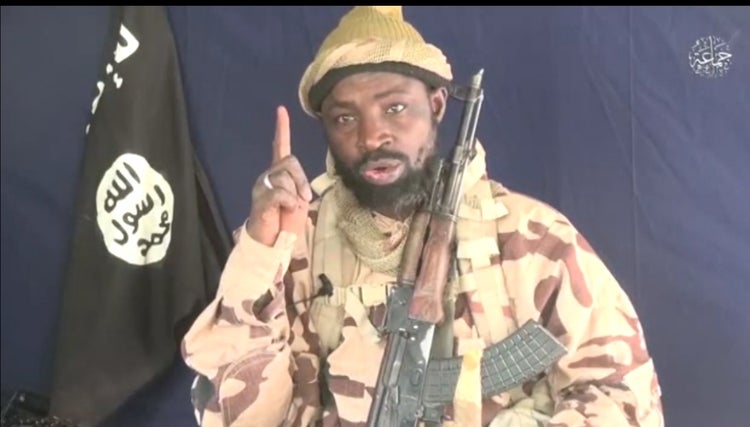
Boko Haram leader, Shekau, reportedly commits suicide after ISWAP attack

LEADER of Boko Haram terrorist group Abubakar Shekau has reportedly committed suicide after his ‘territory’ was attacked by a faction group, Islamic State West Africa Province (ISWAP).

According to HumAngle, the ISWAP fighters invaded the stronghold of Shekau and subdued his bodyguards in some parts of the Sambisa Forest ‘controlled’ by him.

After he was surrounded, Shekau reportedly blew himself up during a negotiation with some members of ISWAP who demanded that he pledge allegiance to them.

In another report, the AFP reported that although Skekau was surrounded by ISWAP fighter, he did not blow himself up, rather he shot himself in the shoulder to avoid being captured. The report further read that due to the gunshot, Shekau was badly injured.

ISWAP is a faction of Boko Haram that separated from the latter over a disagreement with the methodology. However, The ICIR is yet to confirm his death.

The Boko Haram terrorist group has claimed responsibility for several violent atrocities against Nigerians, including killings and abductions. The terrorist group was responsible for kidnapping 276 schoolgirls in Borno State.

READ ALSOREVEALED: Shekau, Boko Haram’s leader, left home as an almajiri and never returned

For more than six years, several reports about the death of Shekau have been in circulation across Nigeria and the Lake Chad Basin where the terrorist group is most dominant.

In 2014, the Nigerian Army claimed that it had killed Shekau in Buni Yadi, Borno State, but did not provide evidence to prove that he was killed. However, Shekau resurfaced in a video calling the bluff of the Army’s claim.

Two years later, the military again came out to say Shekau was fatally wounded during another military operation in Borno State.

The ICIR contacted Army spokesman Mohammed Yerima, but he said he would not talk about the issue. Defence spokesman Clement Nwachukwu did not respond to the reporter’s calls.

Malami’s statement on open grazing ban betrays terrible mindset -Akeredolu

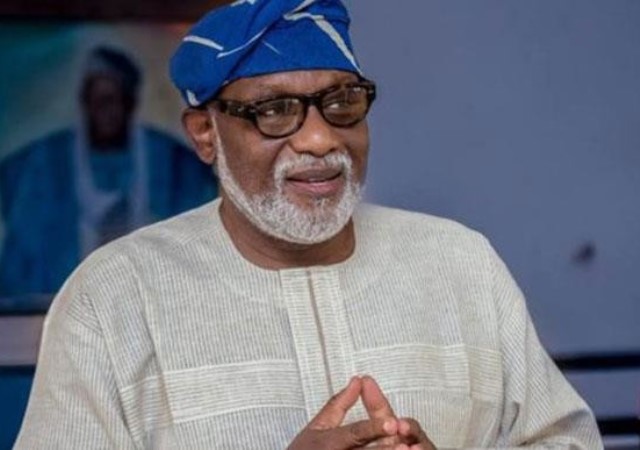
GOVERNOR of Ondo State Rotimi Akeredolu says a statement attributed to Minister of Justice and Attorney General of the Federation (AGF) Abubakar Malami, which criticised ban on open grazing by the Southern governors of the country, is annoying and betrays a terrible mindset.

Akeredolu, who is also the chairman of the South-West Governors Forum, said in a statement on Thursday that it was most unfortunate that the AGF could not distil issues as expected of a Senior Advocate of Nigeria.

Malami had, during his appearance on Channels Television on Wednesday, described the resolution of the southern governors to ban open grazing as unconstitutional.

He had said the decision to ban open grazing in the region was equivalent to prohibiting spare parts trading in the northern part of the country.

“It is about constitutionality within the context of the freedoms expressed in our constitution. Can you deny the rights of a Nigerian?” Malami had said.

READ ALSONigeria recovered $700m stolen funds from UK, US, others in four years – Malami

“For example, it is as good as saying, perhaps, maybe, the northern governors coming together to say they prohibit spare parts trading in the north. Does it hold water? Does it hold water for a northern governor to come and state expressly that he now prohibits spare parts trading in the north?”

However, Akeredolu has criticised the comments, saying that nothing could be more disconcerting.

The governor noted that Malami’s outburst should, ordinarily, not elicit a response from reasonable people who knew the distinction between a legitimate business that was not in any way injurious and a certain predilection for anarchy.

“Clinging to an anachronistic model of animal husbandry, which is evidently injurious to harmonious relationship between the herders and the farmers as well as the local populace, is wicked and arrogant'” he said.

“Comparing this anachronism, which has led to loss of lives, farmlands and property, and engendered untold hardship on the host communities, with buying and selling of auto parts is not only strange; it, annoyingly, betrays a terrible mindset.”

While stating that the ban had come to stay and would be vigorously enforced, Akeredolu advised Malami to approach the court to challenge the legality of the respective states’ laws banning open grazing and the decision of the governors taken in the interest of their people.

Ayade defects, declares Cross River APC state

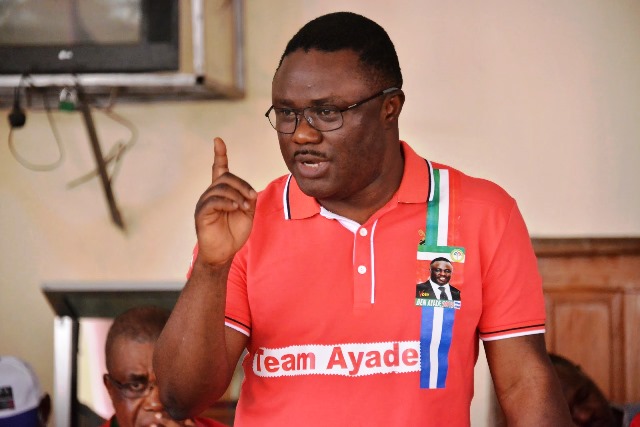
GOVERNOR of Cross River State Ben Ayade has withdrawn his allegiance to the People’s Democratic Party (PDP) and announced his defection to the All Progressives Party (APC).

He has also declared Cross River as an APC state.

According to a report by Channels TV, Ayade made the announcement on Thursday morning after a meeting with some APC governors and members of the National Assembly at Cross River Government House.

Members of the State Executive Council were also present at the meeting held to effect Ayade’s defection to the ruling party from the PDP.

Ayade successfully ran for the office of governor in 2015 on the PDP platform and won a re-election for a second term in 2019 under the same party, defeating the APC’s and other minor parties’ candidates.

READ ALSOMalami’s statement on open grazing ban betrays terrible mindset -Akeredolu

It was, however, reported that the governor had lamented over the conduct of the PDP ward and local government executives a few weeks ago, threatening to decamp if his complaints were not addressed.

Chairman of the PDP Governors’ Forum Aminu Tambuwal, along with two other governors, had visited the aggrieved governor and held extensive discussions which lasted about two hours.

Tambuwal described the discussions as fruitful and productive, stating that the report of the meeting would be taken back to the Governors’ Forum for deliberation and action.

National Publicity Secretary Kola Ologbondiyan had hinted that the APC was embarking on a wild goose chase by going after a committed member of the party.

“The APC should be made aware that Governor Ayade has assured our party of his unalloyed loyalty,” he had said.

Panic in cryptocurrency market as Bitcoin sees 40% slump

THERE is panic among cryptocurrency traders and dealers all over the world, most especially in Nigeria, as Bitcoin, world’s largest cryptocurrency, experienced a 40 per cent crash from its record high levels to $31,000 on Wednesday, a situation last seen in February this year.

A week ago, Bitcoin traded above $55,000. The other two popular cryptocurrencies  -Dogecoin and Ethereum -have also fallen by 45 per cent and 40 per cent respectively.

Experts blame Tesla CEO Elon Musk’s tweets and China’s recent action on the crypto front for the great fall.

“The combined impact of global sell-off, Elon Musk’s crypto reassesment and China’s action is behind the Bitcoin price drop,” said BuyUcoin CEO Shim Thakral

However, he asked to treat China’s event as an isolated event. “Any knee-jerk reaction to China’s action should be avoided. Dow Jones and major indices are down too,” Thakral added.

READ ALSOThe pros, cons of Nigeria’s cryptocurrency ban

On Tuesday, China banned financial institutions, including banks and payment companies, from providing services related to cryptocurrency transactions, and warned investors against speculative crypto trading.

A tweet by Musk saying Tesla would no longer accept Bitcoins started the sell-off in crypto market. He clarified in another tweet that he remained a strong believer in crypto, but it didn’t seem to impress Bitcoin holders and it has been pratfalls since then.

Though the fall looks dramatic, it is normal in many volatile markets, including crypto, especially after such a large rally, according to industry experts.

“Such corrections are mainly due to short-term traders taking profits. Long-term value investors might call these lower prices a buying opportunity, as MicroStrategy just did. Technical analysts would call this a test of the support level around $40,000,” said Co-CEO of ZebPay Avinash Shekhar.

The cryptocurrency market was on fire with the price of Bitcoin soaring 10 times, from around $6,000 in April last year to over $60,000 in April this year.

But the current dip provides investors a buying opportunity, said Thakral. However investors should educate themselves before buying into it just like they would do before buying a stock, analysts say

Some industry experts recommend building a long-term portfolio by investing in crypto currencies in a disciplined manner via SIP, like in mutual funds.

“Use strategies like rupee cost averaging and SIPs to more confidently manoeuvre through volatility and take a long-term view,” advised Shekhar.

NLC suspends warning strike in Kaduna to give room for negotiations

THE five-day warning strike embarked upon by the Nigerian Labour Congress (NLC) in Kaduna State has been suspended.

This suspension, according to the NLC President Ayuba Wabba, was to pave the way for negotiations as requested by the Federal Government.

He said the union’s leadership had been booked to attend a meeting on Thursday in Abuja in a letter signed by Minister of Labour Chris Ngige on Wednesday.

He said the strike embarked upon by the union since Sunday to protest the sack of its members by the state government ‘without due process’ was successful, noting that the NLC tried to maintain procedures of industrial action throughout the strike.

“This afternoon, an official letter was communicated to the NLC national headquarters signed by the Minister of Labour,” he said.

“We will honour the meeting as scheduled for tomorrow at 11:a.m. The labour leaders in Kaduna will also be present because they have the substance of the issues in the state.”

READ ALSOSenate seeks 15-year jail term for Nigerians paying ransoms to kidnappers

Minister of Information and Culture Lai Mohammed had said earlier on Wednesday that the Federal Government would intervene to bring the labour crisis rocking Kaduna State to a peaceful end.

“The Federal Government is not folding its arms and already, the Minister of Labour and Employment has waded in and he is in touch with both the government of Kaduna State and the Labour.”

Although the strike was taken over by hoodlums suspected to be loyal to the state government, Mohammed had said the security apparatus all over the country had taken pre-emptive measures to ensure that hoodlums did not take advantage of the situation.

He added that at the end of the day, all the parties in the strike would have to come back to the drawing table to agree and hammer out concessions and agreements.

Kaduna State Governor Nasir El-Rufai, who had declared the NLC President wanted for causing what he called ‘economic sabotage,’ on Tuesday, vowed his government would not negotiate with the striking workers.

He ordered the dismissal of Kaduna State University (KASU) lecturers who had joined in the strike. The governor also directed the state ministry of health to dismiss all nurses below Grade Level 12 downward for abandoning their duty posts to join in the strike.

Senate seeks 15-year jail term for Nigerians paying ransoms to kidnappers

THE Senate is seeking a 15-year jail term for any Nigerian who pays ransom to free a kidnapped victim.

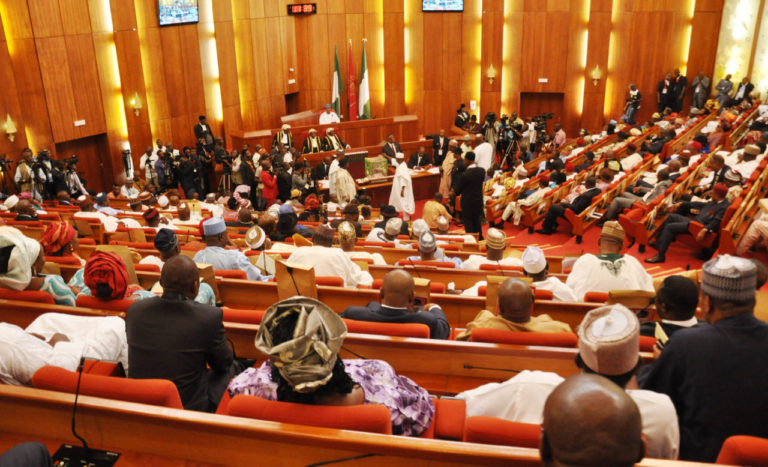
This is contained in a bill seeking to amend the Terrorism Prevention (Amendment) Act, 2013, sponsored by senator representing Imo East District Ezenwa Francis Onyewuchi, during Wednesday’s plenary.

The bill, which has scaled second reading, seeks to prohibit the payment and receipt of ransom for the release of any person kidnapped, imprisoned or wrongfully confined in the country.

According to Onyewuchi, the bill essentially sought to substitute for Section 14 of the Principal Act, which read: “Anyone who transfers funds, makes payment or colludes with an abductor, kidnapper or terrorist to receive any ransom for the release of any person who has been wrongfully confined, imprisoned or kidnapped is guilty of a felony and is liable on conviction to a term of imprisonment of not less than 15 years.”

While expressing concern over the alarming rate of insecurity in virtually all sections of the country, Onyewuchi noted that kidnapping had become the most pervasive and intractable violent crime among ‘unemployed youths’ in the country.

He lamented that kidnapping was on the increase in Nigeria and prevalent across all the geopolitical zones.

“Some blame the rise of this criminal activity on poverty, religion, politics, deficiency of existing laws, unemployment, connivance of security agents, corruption, and greed among others,” he said.

“Our unemployed youths are also turning to kidnapping to get money (ransom) as a survival strategy.

READ ALSONigerians knock Gumi over pro-bandits’ comments

“Whatever the reason, it is most obvious that kidnapping in Nigeria puts everyone at risk, the rich and the poor, old and young, male and female, foreigner or indigene, expatriate or non-expatriate, traditional rulers and religious leaders, among others.”

He noted that the reason behind payments of ransom was rooted in the fact that people easily identified with individual suffering.

Onyewuchi, however, said that history had shown that even when ransom was proven to have been paid, the life or safe return of a kidnapped victim might not be guaranteed.

The lawmaker called on government to provide adequate security, strengthen the nation’s economy as a matter of urgency, and accelerate its poverty alleviation programmes.

He also called for employment opportunities targeting youths who were mostly involved in abductions and kidnappings, strengthen law enforcement agencies while providing necessary support to end the menace of kidnapping.

At least $18 million was paid to kidnappers between June 2011 and March 2020, according to a report by Nigerian intelligence platform SB Morgen (SBM) Intelligence. The report entitled, ‘The Economics of the Kidnap Industry in Nigeria,’ found that the majority of that figure (nearly $11 million) was paid out from 2016 to March 2020, indicating that kidnapping was becoming more lucrative in the country.

Nigeria recovered $700m stolen funds from UK, US, others in four years – Malami

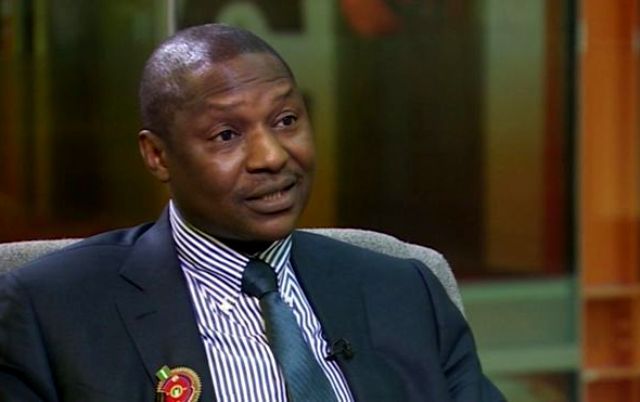
THE Attorney General of the Federation and Minister of Justice Abubakar Malami says Nigerian authorities recovered more than $700 million stolen funds from the United Kingdom, the United States and other countries in the last four years.

Malami said this on Tuesday during the International Conference on Illicit Financial Flows (IFFs) and Asset Recovery organised by the Independent Corrupt Practices and Other Related Offences Commission (ICPC) in collaboration with the AU-ABC and Coalition for Dialogue in Africa (CoDA).

The minister, who was represented by the Senior Special Adviser to the President on Justice Sector Reforms Juliet Ibekaku-Nwagwu, noted that developing countries in Africa lost over $148 billion to corruption annually partly due to IFFs.

“Nigeria, through proactive and collaborative efforts with other countries, has recovered and ensured the return of over $700 million from the United States, the United Kingdom, Bailiwick of Jersey, Switzerland, and Ireland in the past four years,” Malami said.

He explained  that Nigeria was still working with international partners to ensure that all of its identified assets were recovered, noting that IFFs had grown at 20.2 per cent annually in Africa because of weak national and regional capacity to stem the tide.

Malami further stated that the illicit movement of huge amounts of funds out of Africa had resulted in underdevelopment and insecurity across the continent.

During his address of welcome, ICPC Chairman Bolaji Owasanoye said a significant proportion of the losses suffered from IFFs were by developing countries in Africa.

Owasonaye noted that it was now paramount to stop IFFS, most especially because of the dwindling revenue of the Nigerian government, adding that they had deprived Africa of needed resources for development.

Also speaking at the conference, Minister of Foreign Affairs Geoffrey Onyeama, who was represented by the Permanent Secretary of the Ministry Gabriel Aduda, said the ministry was working assiduously to ensure the return of stolen funds and assets to Nigeria.

Onyeama said IFFs were responsible for many of the societal ills and underdevelopment Nigeria was grappling with, noting that the Federal Government had put in place measures to block illicit outflows of funds.

“Illicit Financial Flows deny developing countries of vital resources that belong to them; resources that should have be spent on their development priorities. It reduces tax revenues, hinders development endeavours, undermines constituted authorities and threatens the stability and sustainable development of all affected states,” Onyeama said.

Onyeama called on countries that were hotspots for IFFS to prevent and stop the receipt of such funds and assist in tracing, recovering and returning them.

Chairman of Human and Environmental Development Agency (HEDA) Olanrewaju Suraj said the political will of African states was important in stemming the tide of IFFs while suggesting serious and aggressive combat of the menace.

Suraj noted that some governments in Africa had shares in the big companies engaging in IFFs, thereby slowing down the progress of stopping it. He charged victim countries to challenge beneficiary countries as encouragers of IFFs.

He urged law enforcement agencies, civil society organisations of victim states to collaborate with their counterparts in beneficiary states in order to achieve the right pressure.

During a second plenary session at the conference, a US-based consultant on IFFs and Professor of Economics Melvin Ayogu advised governments to reduce their dependence on foreign aids and transaction costs.

Ayogu said instead of foreign aids, governments should look inwards through the development of Small and Medium Enterprises (SMEs), which would, in turn, increase its tax buoyancy.

Ayogu also said private-public partnership should be explored, especially in the areas of ICT and infrastructure.

Controversy trails selection of candidates for CMD position at UNIZIK

ON March 24, the board in Nnamdi Azikiwe University Teaching Hospital (NAUTH) announced shortlisted candidates for the position of substantive Chief Medical Director (CMD), but the process that led to that outcome raises questions.

The journey to finding a substantive successor to replace Professor Anthony Igwegbe, the immediate past CMD who completed eight years at the helm of NAUTH, started in January, following the expiration of his tenure.

Nineteen doctors applied to fill in the position of CMD based on the list released by the screening committee, but the committee cleared only 13 for the final interview slated to take place in Abuja. Six doctors were disqualified based on their age and failure to provide relevant documents with their application.

Two of the most senior doctors in the race who were not shortlisted for the final interview include Prof (Mrs) Echendu Adinma and Dr Chukwudi Egbunike, who have 36 and 37 years of medical practice, respectively.

Adinma will be 60 years in June; and Egbunike, 62 in November.

Adinma has petitioned the Minister of Health in a letter protesting her exclusion from the final interview. She noted that the selection committee made a wrong decision by claiming she was “overaged” to occupy the office of the CMD while she has 10 years more to hit the retirement age.

The ICIR reached out to Adinma to get her reaction to the screening committee’s decision but did not get a reply from her at the time of filing this report.

Other doctors excluded from the interview include Dr Elizabeth Nwasor with 31 years of medical experience in her belt, Dr John Chukwuka with 33 years of practice; Dr Prosper Adogu, who had spent 34 years in practice, Prof Onyire Benson with 36 years of experience and Dr Vincent Enumuo, who is 18 years of practice.

President Muhammadu Buhari, who is 78 years old, is the oldest President of Nigeria, and five ministers in his cabinet are septuagenarians.

They include the Minister of State of Niger Delta, Tayo Alasoadura, 71; Health Minister Osagie Ehanire, 74; Agriculture Minister Sabo Nanono, 74 and Defence Minister Bashir Magashi, 75.

Speaking to The ICIR, Prof Onyire said overlooking senior qualified doctors and favouring younger colleagues for the CMD’s position could lead to deteriorating quality because it means they were retiring experienced doctors.

“When you pick a junior ranked doctor to head a medical facility, and you ignore senior colleagues who taught them in class, invariably you are retiring the senior doctors,” he said.

Questions continue to trail the criteria applied by the screening committee to preclude NAUTH’s most experienced doctors from making a list of candidates to be interviewed for the CMD’s position.

The guideline

Section 5 of the University Teaching Hospitals 1985 Act stipulates that the Chief Medical Director shall be a person who is medically qualified and registered with the Medical Dental Council of Nigeria, MDCN, for a period not less than 12 years.

It also specifies that the person should be of a National Postgraduate of Nigeria or West Africa equivalent to the Medical Dental Council of Nigeria, MDCN, who has been a consultant for over five years.

The retirement age for all workers at the medical centres is 60 years. However, at teaching hospitals, consultants, like other university professors, stay on in service until 70 years, which is their official retirement age.

Lopsided selections

On December 4, 2019, an advert published in DailyTrust newspaper called on qualified to apply for the position of CMD, stating the conditions for consideration would be based on the University Teaching Hospitals 1985 Act.

It also required that 20 copies of the applicant’s CV and application letters be submitted as requirements for the position advertised.

Dr John Chukwuka followed the directives of the advertisement, sending twenty copies of his CV and application letter but was disqualified based on failure to attach his practising licence to his application.

The remarks made by the selection committee on his application stated –NOT SIGHTED, and he was disqualified because he did not have any document attached to his application.

“It was not stated on the advert to attach our medical license when I had applied for the position. Although this wasn’t announced in the call, I eventually sent copies of the documents via courier services, but the committee turned it down,” he told The ICIR.

Dr Orjiakor Samuel, who was shortlisted for the final interview, also failed to submit his medical license as the selection committee indicated his license was ‘NOT SIGHTED’.

However,  the selection committee offered him special consideration to present the missing document on the final interview day. Chukwuka did not get that privilege when he submitted his license for inspection as it was rejected.

Meanwhile, Adinma, who ticked all the boxes, was disqualified based on her age, though she is yet to hit the 70-year-old mark for retirement from public civil service as a university professor.

On the applications of some of the disqualified doctors who had practised medicine for over 20 years, the remarks made by the selection committee was vague. There was just a question mark on their ages in the document; it was not stated if the candidates were “overaged” or not.

The only shortlisted candidate for the final interview with over 30 years of experience is Prof Jude-Kennedy Emejuju, a Chief Consultant Neurosurgeon at NAUTH.

Dr Joseph Ugboaja, a specialist obstetrician, has been appointed as Acting Chief Medical Director (CMD) to pilot the hospital’s affairs. As the final selection of a substantive CMD is being awaited, he leads the doctors with less than 30 years of medical practice contesting for the position of  CMD at the teaching hospital.

According to the Nigerian Medical Association, NMA, there are 72,000 registered Nigeria doctors, but more than 50 per cent of them practice outside the country.

The ICIR contacted some selection committee members to verify the criteria used for shortlisting applicants for the final interview and why others were disqualified without explicit reasons.

NAUTH Director of Administration, and member of the committee, Chinyere Nwofor, said she was not authorised to speak to the press about the selection process.

“This is not something I can discuss with you on the phone. Besides, I am not authorised to speak on the selection procedure adopted by the committee. I would advise you to speak to the chairman of the board,” she said.

The ICIR contacted the Board Chairman of NAUTH Ezekiel Afukonyo, but he ended the call immediately after the journalist introduced himself. He also rejected subsequent calls to his line and did not respond to text messages sent via SMS and WhatsApp.

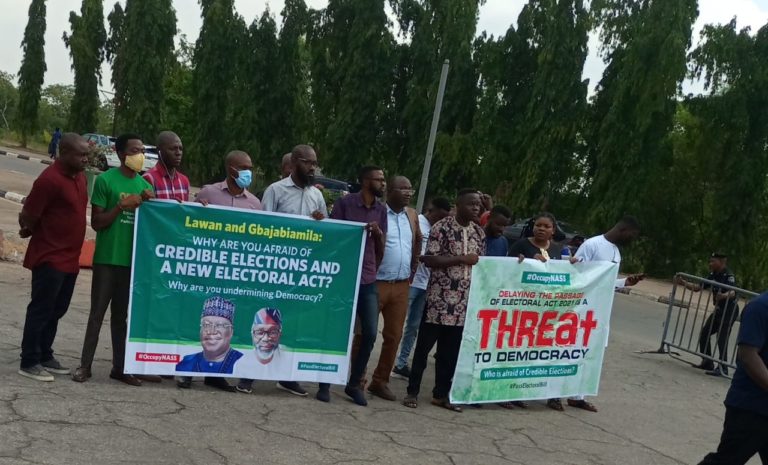
OccupyNASS: CSOs protest, accuse Lawan, Gbajabiamila of obstructing passage of Electoral Act

A group of protesters under the aegis of Alliance of Civil Society Organisation for Expansion of Electoral and Democratic Space (ACCESS) has accused the leadership of the National Assembly of delaying the passage of the Electoral Act.

The protesters, who gathered at the entrance of the National Assembly on Wednesday, said Senate President Ahmad Lawan and Speaker of the House of Representatives Femi Gbajabiamila should prove to Nigerians that the delay in the passage of the bill was not to rig upcoming elections.

Spokesperson for the coalition Ariyo Dare Atoye said Nigerians were worried that the National Assembly had failed to meet two deadlines for the passage of the electoral bill.

Atoye said the group was aware that the Joint Committee of the National Assembly had completed the technical process needed for the third reading and passage of the bill.

“…We are left to believe that, until proven otherwise, that the leaderships of the two National Assembly are obstructing the transmission of the same (bill) to the Plenary,” said Atoye.

He noted that the bill was necessary to prevent irregularities and discrepancies in the electoral process of Nigeria.

He insisted that the National Assembly must pass the bill before the Anambra elections, and before 9th June when it would be two years in office under Lawan and Gbajabiamila, to show Nigerians that lawmakers did not have ulterior motives

A human rights activist Usman Austin, who was also at the protest, said over the last weeks, several offices of the Independent Electoral Commission (INEC) were subjected to attacks, stressing that it was a sign that the era of analogue politics was over.

He noted that Nigerians were demanding the digitisation of the electoral process to ensure a truly democratic process.

“The only way the National Assembly can help in keeping this nation together is by giving the power back to the citizen. At this time, it is obvious that the judiciary now decides who is elected, this should stop. The world has moved forward and we are being left behind,” Austin noted.

A few weeks ago, Governor of Rivers State Nyesom Wike had accused the Nigerian government of deliberately delaying the passage and signing into law of the Electoral Act Amendment Bill in order to manipulate the 2023 general elections.

In 2018, the Electoral Bill was passed by the Bukola Saraki-led Senate, but President Buhari rejected it, citing an error in the bill. The rejection in 2018 was the fourth time that Buhari had dismissed the bill.

However, the National Assembly had said it would ensure the passage of the bill, saying that it was ‘firmly committed’ to it.

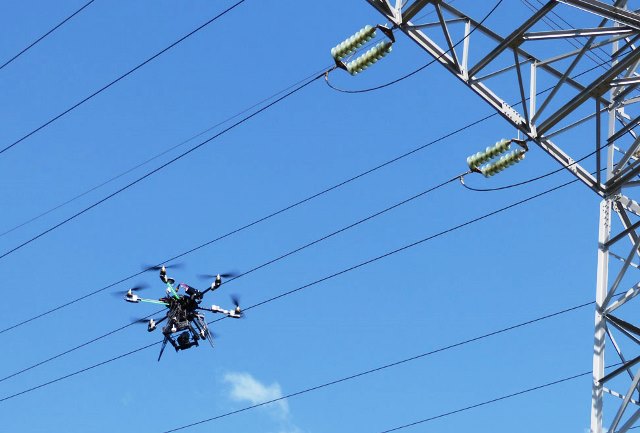
Insecurity, bad roads force Cross River, Kaduna to hire drones for COVID-19 vaccine distribution

THE governments of Cross River and Kaduna states have signed an agreement with Zipline International Incorporated to use drones to distribute COVID-19 vaccine to some areas affected by insecurity and bad roads.

Bloomberg said the company was completing the construction of hubs and distribution centers across the two states with a target to make the first deliveries within three months.

Zipline Senior Vice President Daniel Marfo cited bad road network and rising insecurity as reasons for the partnership.

Cross River State Commissioner for Health Betta Edu said that the state would not be able to reach out to ‘over 423 hard-to-reach communities,’  without the use of drones.

She added that the drones would help the state reach areas in less than 30 minutes that would have taken about two to three days by car.

The Kaduna government, on its part, said the company would use drones to deliver vaccines to “more than 1,000 health facilities serving millions of people.”

Zipline’s drones can carry 1.8 kilograms (3.97 pounds) of cargo, cruising at 110 kilometers (68 miles) an hour and have a round trip range of 160 kilometers, even in high-speed winds and rain, according to Marfo.

The company, which currently operates in Rwanda and Ghana on the continent, plans to expand to about six more African countries in the next two years, including Uganda, Kenya, South Africa, Benin and Morocco, Marfo said, adding that it would probably operate in eight Nigerian states during that period.

“We are very concerned about the hardest to reach and the poorest places,” he said.

“We’ll continue to focus our expansion in Africa and South America and part of southeast Asia primarily.”

Nigeria, which accounts for 166,000 of the world’s COVID-19 confirmed cases, has administered just under half of the four million AstraZeneca vaccine it received in March.

The hope for the country to vaccinate 70 per cent of its citizens above the age of 18 by next year is currently under threat as the Serum Institute of India (SII), the main supplier of the COVAX facility, says it may not resume export of vaccine doses till the end of this year.

In a statement on Tuesday, SII said it would focus on boosting the vaccination drive for India as the country battled a major spike in its infection rate.

According to the statement, the decision to support other countries was taken at a time when the daily cases recorded in India were low.

The Executive Director of the National Primary Health Care Development Agency (NPHCDA) Faisal Shuaib had said Nigeria was expected to receive 29 million doses of the Johnson & Johnson vaccine through the African Vaccine Acquisition Trust led by the African Export-Import Bank.