THE United States has called for a peaceful democratic transition of power as military name Idriss Deby’s son Mahamat Idriss Deby president of Chad Republic.
US State Department spokesman Ned Price stated the position of the US in a statement on Tuesday.
“We support a peaceful transition of power in accordance with the Chadian constitution,” he said.
The ICIR had reported how Deby, who just won his sixth re-election as the country’s president, died of injuries suffered on the frontline in battle with rebels in the troubled part of the country, where he had gone to visit soldiers.
The country’s Army spokesman Azem Bermandoa Agouna was quoted to have said in a statement on Tuesday that Deby “breathed his last defending the sovereign nation on the battlefield.”
The Army said Deby had been commanding his army at the weekend, battling against rebels who had launched a major incursion into the north of the country on election day.
The rebel group Front for Change and Concord in Chad (FACT), based across the northern frontier with Libya, attacked a border post in the provinces of Tibesti and Kanem on election day and then advanced hundreds of kilometres south, but suffered a setback over the weekend.
In a move that contradicts Chad’s constitution, Mahamat, a general in the Army, was announced by the military to head a 15-member military council that would lead the country for the next 18 months.
Chad’s constitution requires elections to be held within 90 days in the event the president’s post becomes vacant, while the Speaker of the House of Assembly becomes the president in the interim.
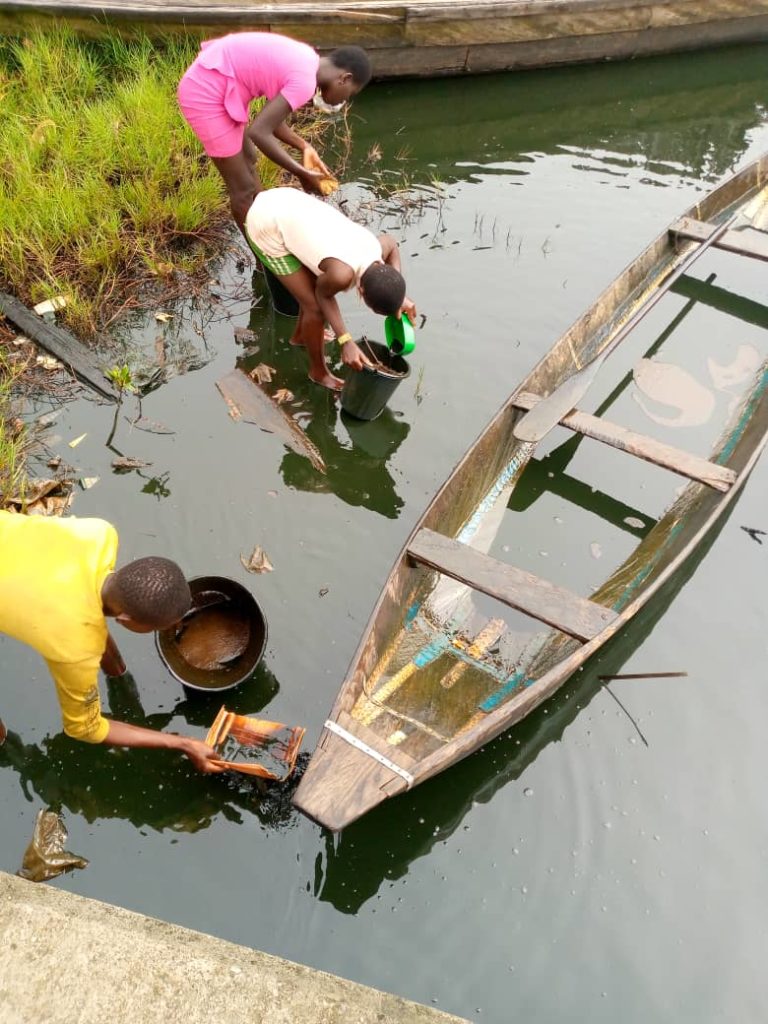
For six hours, Arinze CHIJIOKE travelled on water from Sapele to Opuama, a community in Delta State, to report the impact of an oil spillage that left many families in tears.
THE time was 10am in late March. Over 60 women, old and young, gathered outside the house of 90-year-old Julius Loboh, the oldest man in Opuama, a community in Egbema Kingdom, Warri North local government in Delta State.
Dead fish
“We are dying. There is no food. Our fishes are dead. Our trees are dead. We can’t take it any longer,” the women cried as they got ready to protest the latest oil spill that left one dead and many, especially children, suffering from varying kinds of sicknesses.
Their men had gathered earlier to continue discussions on what to do next after the spill.
Soon, the women got on boats and headed towards the Opuama flow station operated by the Nigeria Petroleum Development Company, NPDC, and Elcrest Exploration and Production, E&P Joint Venture, the companies said to be responsible for the spill.
This is the third time Opuama is experiencing oil spillage; the first happened in 2002 while the second was in 2009. But the latest spillage has proven to be the most devastating in terms of its spread and impact. In its aftermath, children were stooling and vomiting, severe headaches, stomach pain and cough.
Endless spills in the Niger Delta
Nigeria is said to be the largest exporter of oil in Africa and these exports account for at least 90% of the country’s foreign exchange and more than half of government revenue.
A report by the Nigeria Bureau of Statistics (NBS) showed that crude oil export accounted for N3.74 trillion or 70.84 per cent of total exports in the third quarter of 2019, while its contribution to the Gross Domestic Products (GDP) stood at 9.77%.
This makes it the most exported product in Nigeria, with bulk crude oil lying beneath farmlands and rivers in the Niger Delta region.
Sadly, more than six decades of oil spills and gas flaring have transformed the region, home to over 6.5 million local people whose livelihoods depend on fishing and farming, into one of the most polluted places on earth. These spills have left fishing habitat, swamps, agricultural land, groundwater, waterways, and more in ruins.
Nnimmo Bassey, an environmental rights activist, says the Niger Delta is where oil spills occur virtually every day.
After Shell discovered and first pumped oil in Bayelsa in the late 1950s, several international oil companies have exploited Nigeria’s oil reserve from across the Niger Delta.
While over two million barrels of oil have polluted the region in 2,976 separate oil spills since 1976, about 300 oil spills occur in the region every year. In 2011, a spill at Shell’s Bonga oil fields released 40,000 barrels.
Over 350 farming communities were affected, and 30,000 fishermen were forced to abandon their livelihoods.
The people of the Niger Delta have practically watched their future drain away as a result of oil spillage.
An Amnesty International report that exposed evidence of serious negligence in the Niger Delta shows that since 2011, Shell has reported 1,010 spills while Eni has reported 820 spills since 2014.
How it all happened
At exactly 4 am on Sunday, March 14, while families were still asleep, the major crude oil pipeline from the Opuama flow station under oil mining lease (OML) 40 and operated by the NPDC and Elcrest E&P Joint Venture ruptured, spilling gas over the community.
Immediately, the news went round that no one should light up a fire, else the entire community would go up in flames.
The entire Opuama River turned green.
The Public Relations Officer, PRO of Opuama Oil and Gas Committee set up to look into cases of oil spillage, Kintein Chico, said the spill was reported to the company and they immediately shut down the operation and gave instruction that nobody should tamper with the spill.
“But a lot of damage had been done by the spill. It covered the whole river so much that you cannot even stand at the river bank. We couldn’t even come out of our houses till the next day,” he explained.
Late Anthony Ebiogbo
The worse hit was the family of Anthony Ebiogbo, a member of the community who died a day after the spill. He had inhaled the gas.
He was said to have complained that he had a headache and that his eyes were itchy that Sunday while he was inside his tent.
Community members quickly got medication for him. But he died on Monday and was buried the same day.
He had only returned from Lagos, where he was selling Timber six months ago.
The spill inflicted different kinds of illnesses on children in the community. After inhaling the gas, they began to have severe headache, stomach pain, and cough, stooling and vomiting.
David Ebiogbo (Anthony’s brother) explains how he misses his brother
They were taken to Cottage Hospital owned by the NPDC and Elcrest and Alekoromoh, another privately owned hospital, where they were treated.
It has been endless tears for David Ebiogbo
At the entrance to the tent, just by the door side, where late Anthony Ebiogbo would normally sit and discuss with his friends, David Ebiogbo (Anthony’s younger brother) reminisced about the times they shared.
David said his brother would not have died if not for the oil spillage that ravaged his community. He said his late brother inhaled the gas after coming out that Sunday morning and couldn’t breathe.
“He held his head and was shouting. We tried to save his life. But he later died, he died,” he said.
Since then, David has not stopped grieving. He misses his brother with much pain in his heart and wishes he were still alive.
“I never imagined that Anthony would die because of the spill that covered our community, “he said, tears welling up in his tired eyes.
What is also worrying for David is that his elder brother had 13 children with two wives before he died. Although some of them have left home, he said it would not be easy for the family to cope without their father.
“If we knew he would come back and die, we would have asked him to stay back. But he is gone now,” he said, trying to hold back tears.
Economic impact of the spill
The Opuama spill polluted water bodies and slums, killing a lot of fishes and damaging the ecosystem.
This is highly worrying for members of the community who mostly depend on fishing and timber from their forests for survival.
Before the spill, members of the community only had to walk up to the river, cast their nets and come back for a full harvest of fish the next day. It was a huge source of income for many families.
But now, there is nothing to harvest. There is nothing to sell. There is nothing to eat. Families who can afford it have to wait for boats coming from Sapele before getting fish or travel to buy.
There is the cost of transportation. There is the risk involved in travelling on the water for hours. There is the stress.
Anytime there is no boat, there is no fish.
Oghene Ovo says there is nothing to chew after the spill
Oghene Ovo has been married in this community for over 40 years now. But she plans to return to Okpe in Sapele, where she comes from. She said she could no longer bear the hardship inflicted by the spill anymore.
The day it happened, she was fast asleep, and when she perceived the smell of gas, she thought it was an electrical fault.
After some time, she found it difficult to turn her body and breath. She quickly woke up.
“That was when my neighbour came into my tent to tell me that gas had spilt in the community. I had to go and get drugs,” she explained.
When the day finally broke, and Ovo and other community members came out of their tents, they could not see water, and gas had covered everywhere.
“Our fishes died. The spill flowed into our creeks and killed a lot of them. Our nets were empty”. Now, we are suffering to get fish”. We now have to pay N1,500 to get a carton of fish from Sapele. We are hungry. From morning till night, there is nothing to chew,” she lamented.
Hannah didn’t know her son would survive the spill
Hannah Uwale holds her six-month-old son, Ayibasinla Uwale who was affected by the spill
When 24-year- old Hannah Uwale perceived the smell of gas at exactly 4 am that Sunday, she quickly ran out of her bed. Her 6-month-old son, Ayibasinla Uwale, had already started coughing.
Her mother, Tennade Omoko, ignorant of what was going on, had woken up to lit up fire and boil water as she was wont to do.
“When my uncle, Godffrey Omoke, heard her trying to put fire, he quickly called from his room and asked her not to put fire as gas had covered up the entire community, “she said.
At 7 am, the cough had become severe, and she quickly ran to a chemist shop to buy him some cough syrup.
By Monday, the cough reduced and Uwale, who teaches in a private school, left her son with her mother. It was her turn to conduct the morning assembly that Monday.
But she had only finished saying the morning prayer and was about to take the national anthem when her cousin ran to where she was standing and said her mom was calling her.
“I thought she just wanted to see me and asked my cousin to go and that I would join them later,” she said.
Unknown to her, her son had started coughing again. “When we started the matching song, my mom came with my child. He was coughing hard. His eyes were closed, and my mom was crying,” she explained.
Immediately, Uwale took her son from her mother and ran to the chemist, where he was given several drips before his eyes opened. He only recovered after one week.
Ishmael fell at his school’ assembly ground
Goodluck Ishmael’s mum, Maria explains how her son fell at the Assembly ground
On Monday, a day after the spillage that ravaged his community, 10-year-old Goodluck Ishmael went to school, like every other child. He attends Stanley Dickson Samuel Devine nursery and primary school, Opuama.
While they were at the assembly ground and getting ready to go into their classes, Ishmael fell to the ground. He had inhaled the gas and become dizzy, losing control of himself.
Ishmael’s mom, Maria Ishmael, 35, said her son’s school had to go on break after he fell. She said she and her husband were surprised when they heard that their son had fallen in school because he wasn’t sick before he left home that Monday morning.
“When he fell, his teachers helped him up and one of them quickly called and said my child had fainted. Before my husband and I got to his school, we saw them carrying him and we rushed him to Akekoromoh clinic,” Ishmael’s mom said.
Ishmael was given some medication at the clinic, and the doctor confirmed that he had inhaled the gas.
He became well again. But weeks later, while his mother and other women had gone to protest at the flow station of the NPDC and Elcrest E&P, he started throwing up and stooling.
“My husband called to tell me that he had taken my son to the hospital and that I should come back. He was stooling and vomiting. At the clinic, we were told that he still had the gas in his system,” she explained.
Oil Spills and increased newborn mortality
A study by the University of Sankt Gallen in Switzerland, “The Effect of Oil Spills on Infant Mortality: Evidence from Nigeria,” has found that oil spills that occur within this 10-kilometre radius of human habitation increase the neonatal mortality rate by 38 deaths per 100,000 live births.
Using spatial data from the Nigerian Oil Spill Monitor and the Demographic and Health Surveys and relying on the comparison of siblings conceived before and after nearby oil spills, the study found that the chemicals can also be dangerous for unborn children in the region if their mothers live too close to an oil spill before the pregnancy begins.
The same study also estimated that in 2012 alone, 16,000 babies died within the first month of life because of oil pollution in the Niger Delta. Generally, children in this region grow up drinking, cooking and washing with polluted water.
Companies could be held responsible, but they don’t care
In 2008, four farmers from Oruma, Goi, and Ikot Ada Udo villages in Rivers and Bayelsa states, with backing from Friends of the Earth Netherlands, an environmental campaign group, instituted lawsuits against Shells Nigerian subsidiary, the Shell Petroleum Development Company of Nigeria (SPDC) in a Dutch court.
This was after leaks from underground oil pipelines cost them their livelihoods by contaminating land and waterways between 2004 and 2007.
On Friday, January 29, 13 years after, the court ordered the SPDC to pay a yet-to-be-established compensation, faulting the company for the environmental destruction caused by pipeline leaks in the affected villages.
While Shell said the leaks resulted from “sabotage” and criminal activities, the court said it could not establish beyond a reasonable doubt that saboteurs were to blame for leaks that spewed oil over an area of a total of about 60 football pitches in Oruma and Goi.
It, however, ruled that sabotage was to blame for an oil leak in the village of Ikot Ada Udo but insisted that the case over whether Shell was liable would continue.
Although the victory meant that farmers and others who have watched their livelihoods slip away in the Niger Delta could get justice, “getting the companies to behave better is an ongoing battle “Bassy, the Director Health of Mother Earth Foundation, HOMEF said.
He said the judgment at The Hague should be a signal to Nigerian and Transnational Oil Corporations to stop their misbehaviour in the Niger Delta.
“It is not like the people of Niger Delta are always looking for cases to take to court to get compensation. They want a clean environment. With the judgement, it was hoped that companies would behave better. But we are yet to see that happen”.
Alagba purged endlessly
Mathew Alagba is the prophet in charge of the Celestial Church of Christ in Opuama. He spoke of how he purged endlessly after he inhaled gas that Sunday Morning.
The entire Opuama water was green after the spill
He said he would have died if he had not been taken to a hospital outside the community to receive medical attention.
“I started purging from 9 pm on Sunday till Monday morning. It was more than nine times. I had a Cold that Sunday night, and that got my wife worried. She had to go and call some elders in the church,” he said.
When the elders got to his house and saw him lying down helplessly, they quickly sent for a community doctor who came and ran some tests on him. His blood pressure had gone up as a result.
“He started administering treatment on me. He gave me injections and other medications from that Sunday through Wednesday. On Thursday morning, he gave me the last injection and left,” he said.
Five minutes after the doctor left, Alagba began to shiver again. He was all alone this time. His wife had gone out. After boiling and taking warm water, he called one of his members, who ran down immediately.
“Other members came too. I asked them to take me to Warri that Thursday. They quickly went and got a speedboat, bought fuel and rushed me to Warri. When we got to the clinic, where I would always go for treatment, they said my temperature was very high.
Alagba was told that gas had occupied his entire system. His legs were shaking. He had to receive further treatment. The doctor said he needed to be admitted for seven days.
“They started to flush my system. At a point, my temperature calmed down a little. Every five minutes, I was releasing gas because of the treatment they were giving me. I received an injection through my veins. The stooling reduced, and they told me I had Malaria and Typhoid,” he explained.
Alagba is better now.
Accusations and denials
It is almost one month after the spill in Opuama. But there has not been effort by the companies who own the ruptured pipeline to clean up the environment.
PRO of Opuama Oil and Gas, Kintein Chico
The PRO of Opuama Oil and Gas Committee, Chico, said the companies recently brought food items to help them deal with hunger.
When this reporter visited, the spills were still floating on top of the water as community members watched helplessly.
But while they blamed the companies for the spill during a joint Inspection visit, which usually happens after incidents of oil spillage, the companies blamed it on saboteurs.
“The companies have not done anything to help deal with the effects of the spill. They said they could not pay since there was a third party,” Chico said, adding that they asked the community to sign the JIV report after blaming the spill on the third party. But the people refused.
When travelling to the community, boats are subjected to security checks by soldiers at least three military checkpoints who ensure that no boat carrying anything incriminating is allowed to pass.
Chico says this is enough to prove that the spillage resulted from equipment failure and not sabotage as claimed by the companies. “If it was sabotage, how did those responsible pass the checkpoints with whatever materials they used to destroy the pipeline,” he asked.
“This is usually the outcome of JIV visits. They would always blame the spills on criminal activities, “Bassy said.
He added that the most solid effort that has been made in terms of clean up in the Niger Delta was through the Hydrocarbon Pollution and Remediation Project (HYPREP) set up by the Federal government in 2016 to restore the environment and restore the livelihood of the people.
This was after the United Nations Environmental Programme, UNEP, commissioned by the government, conducted an assessment on the impact of oil extraction in Ogoni Land and made recommendations in 2011.
The report found that both soil and groundwater across Ogoniland have been severely contaminated even as public health was threatened by contaminated drinking water and carcinogens. It also found out that Delta ecosystems such as mangroves had been utterly devastated.
“That is the only comprehensive effort that is made. It is still ongoing and happening slowly”. Whenever there is an oil spill, the corporations will tell you they have done the cleanup, “he explained.
He noted the emerging trend of companies giving the jobs of environmental clean up to local companies who do not have the competence.
“These days, they use the crudest methods, with buckets and shovels and hoes. We have not had adequate clean up anywhere in the Niger Delta operations of Oil extraction commenced”.
Rising in arms
This is not the first time companies are being accused of contaminating the Niger Delta region through leaks from oil exploration and failing to compensate families and clean up the environment.
Persistent spills in the oil-rich region had grown into a major source of nightmare.
On November 10, 1995, Ken Saro-Wiwa and eight other Ogoni leaders were hanged by the military regime of late General Sani Abacha.
Their crime was fighting against oil pollution, which devastated their environment and inflicted poverty and disease on the people.
In 1990, Saro-Wiwa had co-founded the Movement for the Survival of Ogoni People (MOSOP), which launched mass campaigns to win compensation for environmental damages and demand that the region is given a fair share of oil profits.
25 years later, the killing of Wiwa and other leaders has watered the seeds of revolution against the Nigerian government and oil companies, leading to the rise of militant groups that attack and burn oil facilities and cause huge revenue losses.
Young men in the Niger Delta are demanding improved regulations and campaigning to restore their polluted land.
A signboard in Opuama
NPDC refuses to react to the spill
When contacted for comments on the Opuama Oil spill on March 6, the Manager, Community Relations of the NPDC, Dahiru Abubakar, refused to speak and asked this reporter to direct the questions to the External Relations Department. He could not provide the reporter with any contact details.
This reporter also contacted the Community Liaison Officer for the NPDC, Mr. Tom Abarigho, through a phone call on April 15. But he said he was not in the position to speak on the matter.
He, however, said that the company had given its position on the spill during the Joint Inspection Visit.
“I am not in the position to answer any question concerning the spill. If you want to ask those questions, you can channel it to the management of the NPDC,” he said.
Efforts to get through to the management of Elcrest could not yield any result as there was no access to the company’s contact.
The people of Opuama will not forget the month of March in a hurry. It will go down in history as the period when they lost a life to oil spillage.
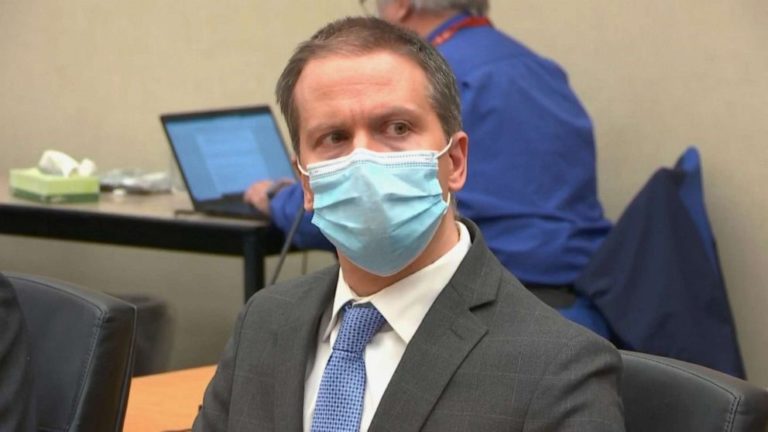
A jury in Minnesota, on Tuesday, found former Minneapolis Police officer Derek Chauvin guilty of murdering George Floyd, with his bail revoked upon prosecutors’ request.
Chauvin was charged with second-degree murder, third-degree murder and manslaughter in connection with the death of George Floyd, an African-American, during an arrest last May.
A viral video clip that captured the last moments of Floyd’s life showed him handcuffed and face down on the pavement while repeatedly saying that he could not breathe as Chauvin knelt on his neck. The video sparked an unprecedented wave of mass protests globally against Police violence and racism.
Chauvin’s sentencing is expected to take place in eight weeks and he could bag up to 40 years in prison, which is the maximum sentence for second-degree murder in Minnesota. Third-degree murder is punishable by up to 25 years in prison, while second-degree manslaughter is punishable by up to 10 years in prison.
Reactions to the verdict
Tuesday’s verdict was delivered to a country on edge, with demonstrators gathered in their hundreds outside the fortified downtown Minneapolis courthouse and several streets.
Law enforcement agents around the country braced for an anticipated widespread protest, which turned to loud cheers and jubilation as the verdict was announced.
“Today, we are able to breathe again,” Floyd’s younger brother Philonise said, adding that he felt ‘relieved’ and would finally have the opportunity of getting some sleep since the death of his brother.
People gather before a march in Atlanta, Tuesday, April 20, 2021, after former Minneapolis police officer Derek Chauvin was found guilty on all counts in the death of George Floyd. (AP Photo/Ben Gray).
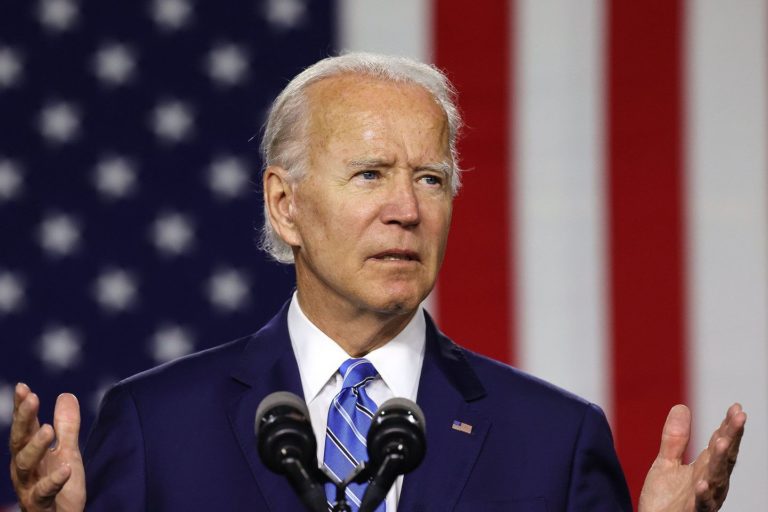
In his remark delivered after the court’s ruling on Tuesday, US President Joe Biden hailed the verdict as a step forward towards Police reform, adding that no one should be above the law.
“There’s meaningful Police reform legislation in George Floyd’s name, but it shouldn’t take a year to get it done. I assure the Floyd family that we’re going to continue to fight for the passage of the George Floyd Justice in Policing Act so I can sign it into law right away,” he added.
Vice President Kamala Harris urged the Senate to urgently pass the George Floyd Justice in Policing Act to hold law enforcement agents everywhere to the highest standards of accountability and help build trust between law enforcement and the communities.
“Today’s verdict brings us a step closer to making equal justice under law a reality. But the verdict will not heal pain that has existed for generations. It will not take away the pain felt by the Floyd family. That’s why we must recommit to fight for equal justice. We are all part of George Floyd’s legacy and now our job is to honor it—to honor him,” Harris said.
Attorney general of Minnesota Keith Ellison said while reacting to the conviction: “I would not call today’s verdict ‘justice,’ however, because justice implies true restoration. But it is accountability, which is the first step toward justice.”
Using similar words, Governor of Minnesota Tim Walz said: “Today’s verdict is an important step forward for justice in Minnesota. The trial is over, but our work has only begun.”
The Significance of the verdict
Some people were heard on the streets of Minnesota chanting: “All three counts!” and “Whose victory? Our victory!”
Floyd’s painful death became a rallying point for blacks and the jury’s verdict is now viewed as a significant landmark in the struggle against Police brutality and racial inequality, not only in America but everywhere in the world where they exist.
According to Floyd family’s attorney Benjamin Crump, the verdict went far beyond the city of Minnesota and had significant implications for the entire country and the world at large.
“Justice for Black America is justice for all of America. This case is a turning point in American history for accountability of law enforcement and sends a clear message we hope is heard clearly in every city and every state,” Crump said.
Former president and first lady Barack and Michelle Obama commended the jury for doing ‘the right thing’ but said true justice was much more than a single verdict in a single trial.
The Obamas, who are also African-Americans, acknowledged through a statement that “Black Americans are treated differently, every day…and millions live in fear that their next encounter with law enforcement could be their last.”
“While today’s verdict may have been a necessary step on the road to progress, it was far from a sufficient one. We cannot rest. We will need to follow through with the concrete reforms that will reduce and ultimately eliminate racial bias in our criminal justice system,” the Obamas said.
Democratic congresswoman from Minnesota Ilhan Omar said while the conviction was a necessary condition of justice, it was not sufficient.
She noted that for centuries, Black people had faced violence in the hands of state agents, as well as systemic inequalities in housing, income, education and criminal justice.
“Let this be a turning point, where we finally create a society that reflects the belief that all men and women are created equal. Let this be the moment where we implement a broad antiracist agenda to root out the inequalities that continue to plague us,” Omar said.
Chauvin’s track record of abuse
An article on police violence written by criminal justice scholar Jill McCorkel after George Floyd’s killing noted that Chauvin was “the subject of at least 18 separate misconduct complaints and was involved in two additional shooting incidents.”
During a 2006 roadside stop, Chauvin was among six officers who fired 43 rounds into a truck driven by a man wanted for questioning in a domestic assault. The man, Wayne Reyes, was said to have died. A Minnesota grand jury did not indict any of the officers.
“I think people’s belief in the system that we got in place is so bad that they don’t expect nothing good,” a Houston rapper Cal Wayne, who was a childhood friend of Floyd, told a local newspaper.
As celebrations over Chauvin’s conviction continue with renewed calls for an overhauling the policing system, some of the reforms Americans expect include: a ban on chokeholds, elimination of qualified immunity and a change in the legal standard for law enforcement using ‘objectively reasonable force’ to ‘necessary force.’
This means that officers would be legally allowed to use deadly force only if there were no other reasonable alternatives to prevent serious injury or death.
SOME gunmen have attacked and abducted a yet-to-be-known number of students from Green Field University in Kaduna State.
According to reports, the gunmen, who caried out the attack on Tuesday evening, shot a security guard attached to the school and abducted the students of the university.
Confirming the incident, Kaduna State Police Spokesperson Muhammad Jalige said the exact number of the abducted students could not be ascertained.
However, he said a roll call was being taken to ascertain the identities and number of the abducted.
He further stated that the Police and the military had moved to the school immediately after they got information about the abduction.
The authorities of Green Field University said they were not aware if there had been any communication from the abductees.
Jalige told The ICIR that he would not like to take further questions on the abduction, saying that every other question should be directed to the Kaduna State government.
Efforts to speak with Press Secretary to the Kaduna State governor Muyiwa Adekeye was not successful as he did not respond to calls and text messages from The ICIR over the abduction.
The abduction in Green Field is coming fewer than two months after gunmen attacked and kidnapped 39 students from the Federal College of Forestry Mechanization, Afaka, Kaduna State.
The 39 students were kidnapped by the gunmen on March 12. While some have been recovered, others are still in the custody of the kidnappers.
Kaduna State has recently become a hotspot for kidnapping, but Governor of the state Nasir El-Rufai has insisted that he will neither negotiate nor pay ransom to kidnappers.
El-Rufai said the only way to rescue the kidnapped students was through military action, adding that any other option was ‘emotional and irrational.’
THE United States online retail company Amazon has concluded plans to locate its African headquarters in South Africa, leaving out Africa’s most populous nation, Nigeria.
This was according to authorities in Cape Town, who confirmed this in a statement to newsmen on Tuesday.
The company will also serve as the anchor tenant for a new development in Cape Town, located at the site of the River Club.
The municipality has approved a 15-hectare parcel of land for development. According to the city, the development will cost R4 billion and include two precincts.
“US retail giant, Amazon, will be the anchor tenant, opening a base of operations on the African continent,” the city said in a statement.
“The development design intends to create a 150,000 square metre mixed-use space, divided into commercial and housing uses across two precincts. The developer intends 31,900 square metres to be used for residential purposes.
“The development will include both market-driven and affordable housing opportunities – the latter of which will be physically integrated with the other residential units in the apartment complexes.
“It is envisaged that 5,239 jobs will be created in the construction phase alone. The project will also create up to 19,000 indirect and induced jobs,” it said.
Reacting, the Democratic Alliance has welcomed the announcement, saying that the Amazon South Africa HQ has the potential to create up to 19,000 jobs.
DA Shadow Minister for Trade Dean Macpherson said it would also inject around R4 billion into the local economy.
He lamented that the extended COVID-19 lockdown had caused devastation in the South African economy.
This is coming one week after Twitter picked Ghana for its first African office and headquarters.
Nigeria, being the continent’s most populous nation and biggest economy, is expected to attract deep-pocket investors, but high cost of doing business, multiple taxation, lack of clear-cut ease of doing business plan, poor management of foreign exchange market, land tenure system and poor electricity supply are scaring investors away, analysts say.
Falsely accused of being a cultist, Ezeanozie Obinna narrates his harrowing ordeal in the hands of SARS, who hung and tortured him until he “slumped to the ground like a lifeless chicken.”
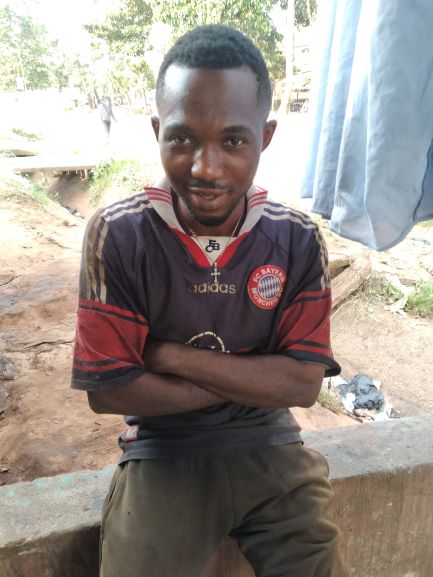
MY name is Ezeanozie Obinna. I’m a 24-year-old panel beater.
My SARS story started with a bang at 2 a.m. on May 23, 2020. My sleep was interrupted by a loud noise at the gate that leads into my compound, which is in the town of Ekwulobia, Anambra State.
Now wide-awake, I stared through the window and saw someone jump over the fence into the compound. I heard another bang at the backyard door. My dog started barking.
Soon, there was a knock at my bedroom’s door. The intruder was now at my doorstep.
It turned out not to be just an intruder, but intruders – six of them, in fact, scary men all carrying guns. I asked who they were and what the matter was. They said nothing was wrong, that they were security operatives. I was annoyed, and wondered what manner of security operatives would appear at a person’s house at this ungodly hour.
I immediately assumed they were local security men who had come to collect security fees or fines from those who had not yet paid.
But the men told me they were members of the Special Anti-Robbery Squad (SARS).
They asked me to come with them. I begged them to allow me to call someone so I could let them know what was happening to me, but they refused and dragged me out of the room.
Outside, the men led me to a Toyota Hilux and asked me to give them five names of people who were cultists. Confused, I asked why they would ask me about cultists when I was neither a cultist nor knew anything about cultism.
In the Hilux, were others who had been arrested earlier. The officers threw me into their midst. Like me, they had been forced out of their houses without knowing what was happening. We were all driven to the SARS station at Nnewi, a large town in Anambra State.
We reached Nnewi at about 4 a.m.
Monday Bala Kuryas, Anambra Police Commissioner
At the station, we were asked to call family members to tell them where we were. I called my parents.
Later, the officers interrogated us, one after the other, mainly about cultists.
I maintained my stance: I was not a cultist, and I knew nothing about cultism.
For that answer, I suffered the same fate suffered by those who had denied being cultists: my hands and legs were tied behind my back and a rod inserted in between. I hung in the air, my face staring at the ground. Then the SARS officers began hitting me with sticks.
I wept and wept. It was unbearable. The SARS officers took a break, sat in a corner, and filled their mouths with alcohol.
“It’s time you speak the truth,” one of them said to me. After drinking, one of the officers resumed the torture – mercilessly punching me. I screamed and wept. I was an absolute wreck.
Soon afterwards, when one of the SARS officers came and untied me, I remember slumping to the ground like a lifeless chicken.
At about 7 a.m. that same day, the SARS commandant asked us some questions about the cult group they accused us of being members of, and the names of the other members of that group.
I was given a piece of paper and told to write that I was a cultist.
After that, the officers collected our phones, clothes, and shoes and led us into a cell, where we were all subjected to various degrees of bullying at the hands of old inmates.
We were given a series of punishments like ‘mounting the wall’ which meant facing the wall and pretending to climb it. We were also ordered to ‘pick pin’ which meant hanging one leg in the air and pointing one finger to the ground. As we ‘performed’ the punishments, the inmates hit us with sticks.
At about 8 a.m., one of the SARS officers came into the cell and asked who Ezeanozie Obinna was. I answered. The officer told me to come out. I did.
At that moment, I remembered that an inmate had warned that if the officers came in and called my name, I should not answer because it was believed they called out inmates to kill them. This information dawned on me as I walked out, and tears began to well up in my eyes.
But it turned out to be good news. The officer led me to the counter, where he told me that they (SARS officers) had received a call from a Divisional Police Officer (DPO) who asked them to release me. The DPO had told them that I was not a cultist. He was my neighbour, and my parents had reported my arrest to him.
My belongings were returned. Six hours after I had been arrested and tortured, I was free. But I was weak, and to add insult to injury, I did not have a single Naira in my pocket.
I sat on the stairs of the station and wept. I hoped any of the SARS officers would give me transport-money. But no one did. Later, one of the SARS officers pushed me out of the station.
Outside, I stood by the gate for a while. Then I began acting like a gateman, opening the gate for whoever came in and went out, hoping that someone would notice me and give me money.
A man who happened to be the brother of one of the arrestees saw me and asked what the problem was. I told him that I had suffered the same fate as his brother. After the man had secured his brother’s release, I followed both of them. Coincidentally, they also lived in Ekwulobia.
The two men were surprised to learn that I had not paid for my release. With SARS, people are priced like goods. Relatives and friends of those arrested pay huge sums to secure the release of their loved ones.
The officers would ask for, say, 100,000 naira, and if you say you do not have that amount, they would tell you to go home and come the next day.
Though I was lucky to escape paying an expensive sum for my release, I couldn’t escape paying a lot of money to treat the injuries and wounds I sustained from being tortured. My hands were so useless, that a point, even feeding myself was a problem. For three weeks, I could not do anything.
My parents keep telling me they thank God I came out of that station alive.
I thank God, too.
This story is part of a multimedia project by Tiger Eye Foundation and media partners across Nigeria, documenting police brutality in Nigeria, and advocating for police reform.
PRESIDENT Muhammadu Buhari has mourned the death of his Chadian colleague Idris Deby, saying he was a friend of Nigeria.
This is contained in a statement signed by Presidential Spokesperson Garba Shehu on Tuesday.
Shehu said Buhari was deeply shocked and devastated by the sudden death of Deby on the battle front to defend the sovereignty of his country.
Buhari described the late Chadian leader as a friend of Nigeria who had enthusiastically lent his hand in the efforts to defeat the Boko Haram terrorists that had posed grave security challenges for Nigeria but also other African neighbours, particularly Chad, Cameroon and Niger Republic
According to him, the late Deby had played a very active role in the regional joint collaboration in the military campaign against the Boko Haram terrorists.
He added that the death of Deby would create a big vacuum in the efforts to jointly confront the Boko Haram terrorists and the Islamic State West Africa Province.
While condoling with the people of Chad and their new leader, Buhari called for greater collaboration to defeat the terrorists.
The ICIR had reported that Deby died of injuries suffered on the frontline in battle with rebels in the troubled part of the country, where he had gone to visit soldiers battling rebels.
The announcement of his death came a day after he won the country’s presidential election in a bid to rule for a sixth term, according to the provisional results released on Monday.
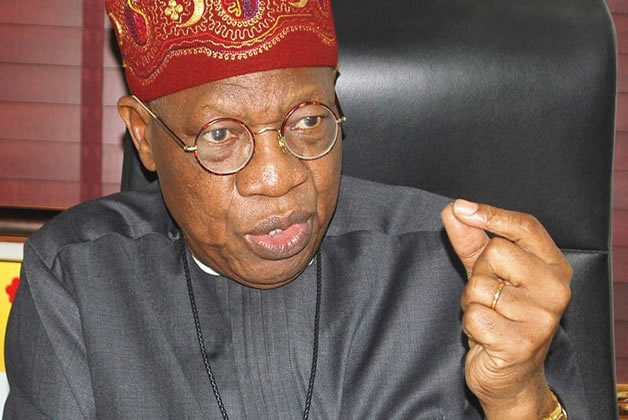
NIGERIA’S Minister of Information Lai Mohammed has said that reports on the United Kingdom granting asylum to persecuted secessionist groups -Indigenous People of Biafra (IPOB) and the Movement for the Actualization of the Sovereign State of Biafra (MASSOB) – is disrespectful to Nigeria.
Mohammed said this on Tuesday in a media chat with the News Agency of Nigeria in Abuja.
He said that although the situation was within the purview of the Minister of Foreign Affairs, he felt, as a spokesperson of the Federal Government, that there was something wrong with that.
“Against the background of the fact that IPOB is not only proscribed but also designated as a terrorist organisation here in Nigeria, the UK’s decision is disrespectful of Nigeria as a nation,” Mohammed said.
He noted that the decision also amounted to sabotaging the fight against terrorism and generally undermining Nigeria’s security.
The minister said that there had recently been heightened attacks against security agencies in the South-East zone, noting that IPOB had been fingered as being behind the attacks in spite of its denials.
The Nigeria government had, in September 2017, proscribed the secessionist group.
According to the report, the UK Visas and Immigration (UKVI) has released a new guideline to its officers on how to grant asylum to members of Biafran secessionist groups.
In the guideline, the UK said its officers should consider anyone who actively and openly supported IPOB and was likely to be at risk of arrest, detention, and ill-treatment which was likely to amount to persecution.
IPOB is agitating for the secession of South Eastern States from Nigeria even though the governors of the states are not in support of that.
There have also been violent clashes between the IPOB and Nigerian Army which have led to the death of civilians and destruction of properties in the South-East.
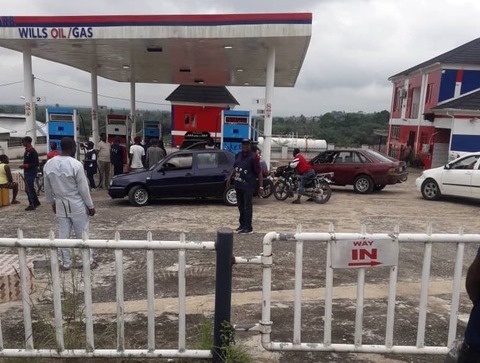
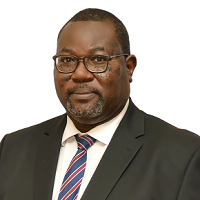
PRESIDENT of Major Oil Marketers Association of Nigeria Adetunji Oyebanji has assured residents of Nigeria’s capital city Abuja and other neghbouring states that long queues at various filling stations will ease by Wednesday.
Adetunji, who spoke with The ICIR on the phone, described fuel queues at various filling stations in the Federal Capital Territory (FCT), Niger and Nasarawa states as temporary, saying that tanker drivers’ earlier proposed industrial action had been called off following the intervention of the government and other relevant stakeholders.
“This is just a temporary hitch,” he said. “You know on Monday, there was strike by petroleum tanker drivers and there was no movement of stock in and out of various depots across the country. By tomorrow morning, I am sure this will be sorted out as they have started loading at various depots,” he noted.
Adetunji Oyebanji, President of Major Oil Marketers Association of Nigeria
“The government, you recall, had made the announcement about no plans to hike the fuel price. You know most often, towards the end of the month, most people resort to panic buying. It has nothing to do with the present situation as issues with the tanker drivers have been sorted out.”
Long queues resurfaced in Nigeria’s capital city on Monday, despite assurances by the Group Managing Director of the Nigerian National Petroleum Corporation (NNPC) Mele Kyari that the ex-depot price of premium motor spirit (PMS) remained unchanged with no plans to increase the pump price.
The Petroleum Tanker Drivers (PTD), with the responsibility to deliver fuel at filling stations, had earlier planned to go on strike over the failure of the National Association of Road Transport Owners (NARTO) to negotiate the renewal of the collective bargaining agreement for new working conditions.
The union had expressed worry that its members had been going through harrowing financial situations while rendering selfless national services to ensure delivery of petroleum products at various filling stations.
Nigeria is not totally out of woods regarding the problem of fuel subsidy – a situation most analysts describe as unsustainable. Experts say fuel subsidy puts pressure on the government’s finances, draining the scarce resources needed to advance the nation’s infrastructural development.
Kyari had, in a briefing to State House correspondents on Tuesday, said the queues currently witnessed in Abuja and neighbouring states would end on Tuesday, noting that the government had resolved the proposed industrial action with Tanker Drivers Association. But the situation did not change on Tuesday as observed by The ICIR at various filling stations.
“The government has assured that it is not changing price and people seem to be reacting with long queues. There’s always that belief and suspense once the month is coming to an end. There’s no need for the queues, the product is available, ” an oil sector governance expert Henry Adigun told The ICIR.
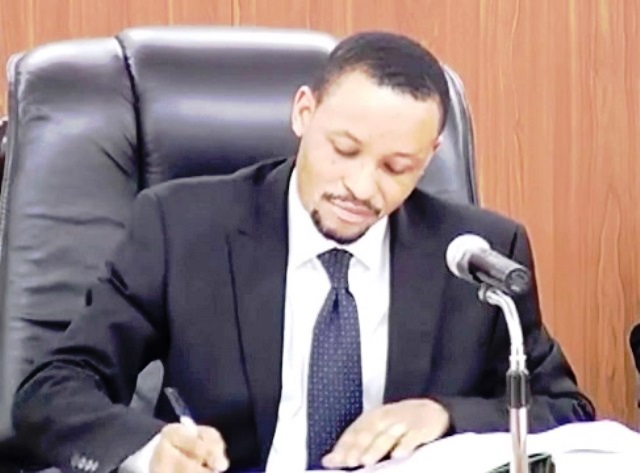
THE Nigerian Senate is considering a petition against Chairman of the Code of Conduct Tribunal (CCT) Danladi Umar over an assault on a security guard in Abuja.
During Plenary on Tuesday, Senator representing Plateau North Istifanus Gyang read the petition before the Senate concerning the assault on a member of his senatorial district, Clement Sargwak.
According to Gyang, the petition was submitted by one Samuel Ihensekhien seeking justice for the victim through the Senate.
After the petition was read by Gyang, Senate President Ahmad Lawan referred the petition to the Committee on Ethics, Privileges and Public Privileges.
Lawan further asked the committee to consider and report back to the Senate within four weeks.
The ICIR had reported how Umar assaulted 22-year old Sargwak at Banex Plaza in Wuse 2, Abuja, on March 29.
Sargwak, who is a personnel of Jul Reliable Security Guards, a private outfit, was allegedly manhandled by Umar when he approached the judge for parking his vehicle in an inappropriate manner at the plaza’s parking lot.
In a response to criticism of Umar’s action, the official statement from the CCT said it was the action of some ‘Biafran boys.’
“The boy was rude in his approach and threatened to deal with chairman if he refused to leave the scene,” the CCT spokesperson Ibraheem Al-Hassan had said.
Civil Society Organisations, the Nigeria Bar Association (NBA) and other groups have condemned the alleged assault on Sargwak, stating that the display of ‘naked power’ would not be condoned by people who were expected to exhibit a high standard of conduct.
“Further, as a member of the legal profession, Danladi Yakubu Umar Esq. is expected, by the extant rules that regulate the conduct of legal practitioners in Nigeria, to maintain a high standard of professional conduct, and not to engage in any conduct which is unbecoming of a member of the legal profession,” NBA said in a statement.