Home Blog Page 1830

Falana, rights groups to launch new political party

Human rights lawyer, Femi Falana, and other Nigerians in civil society groups are set to launch a new political party called The People’s Alternative Political Movement (TPAP).

Falana, a Senior Advocate of Nigeria, made this known when he featured on Arise Television on Thursday, stating that the decision was borne out of the ‘worsening state of the nation’.

The human rights lawyer said about 21 groups, consisting of political parties, labour organisations, human rights and other civil society organisations, had met in Abuja to review the nation’s state.

“…At the end of the review, we came to the irresistible conclusion that we can no longer standby or rather stand on the sidelines while anti-democratic forces and political buccaneers continue to keep our country underdeveloped, and so we have decided to intervene decisively in the political arena.”

He added that the groups also agreed that they would embark on consultations with other genuine progressive forces in the country for three months to form a political party whose ideology would be for the total reconstruction of the state of Nigeria.

According to Falana, the political party’s ideology would be an emphasis on chapter 2 of the Nigerian Constitution that guarantees the socio-economic rights of Nigerians.

The groups believed that there could be no talk of civil and political rights without economic empowerment, he said.

“We are bringing back the politics of ideology, the politics of programmes and manifestoes to address the problems confronting us as a people so that this country which is the largest concentration of black people on earth, can take its rightful place in the committee of nations.”

When asked about political followership in Nigeria and the offering of bribes to electorates, Falana said the ruling class had deliberately pauperised the people so that they are compelled to take pennies to sell their votes. Still, the emerging political party would put an end to it.

“We are going to stop that, by virtue of the electoral act, we are going to ensure that we make the law work, anyone or group that bribes voters, we are going to mobilise young people to ensure that the practice is stopped,” Falana said.

He noted that the Electoral Act provides that no one shall be given money or induced for election purposes. The group would mobilise the Independent Electoral Commission (INEC) and other security operatives to enforce the law.

Falana further said that the lessons from the ENDSARS protest, judicial workers protest, and other strike actions across the country have shown that Nigerians can be organised to make positive radical changes.

He said voters could collect bribes from politicians, but they should invest in their children’s future by voting for the right people.


EFCC’s occupation of seized hotel heightens calls for passage of Assets Forfeiture Law

0

THE Head of Judiciary Desk at Daily Trust, John Chuks Azu, has identified legislation as the best measure the federal government can implement to prevent impunity and mismanagement of seized assets by the Economic and Financial Crimes Commission (EFCC).

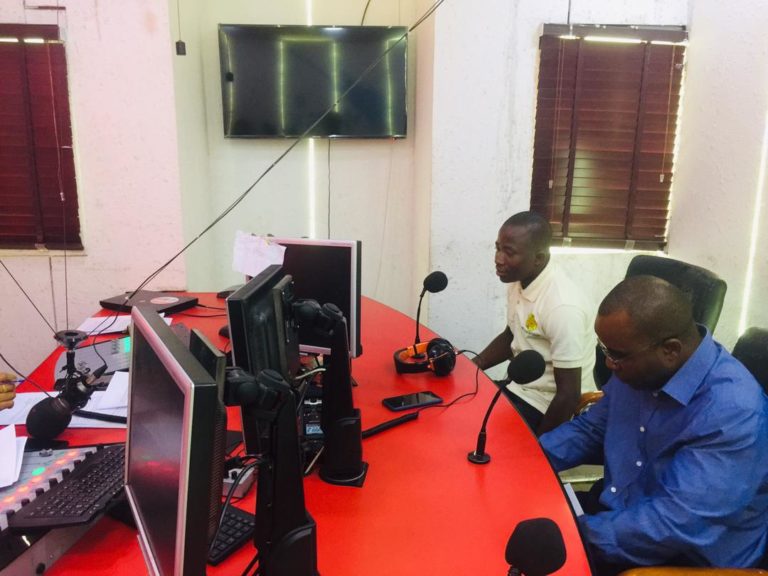
Azu, who was reacting to an investigation that exposed how EFCC operatives convert seized assets or properties under interim forfeiture to accommodation and transit camps, made this known during a radio program, PUBLIC CONSCIENCE by the Progressive Impact Organization for Community Development, PRIMORG, in Abuja.

He said that the regulatory framework for assets management would clearly define how recovered assets are managed. Lamenting that the lack of legislation breeds impunity, he added that Nigeria’s judicial system delay contributes negatively.

Azu noted that the used forfeited properties by EFCC staff and other security agencies remain a clear breach of due process. However, he disclosed that he was more worried that these seized properties are decaying and rotting away with time which is the more reason proceeds of crime forfeiture management bill should be speedily passed.

“We must keep our eyes on the Proceeds of Crime Recovery and Management Bill, which is before the National Assembly submitted by the Ministry of Justice and Attorney General of the Federation. Now that bill seeks to build a whole new regulation into either interim or permanently forfeited assets management.

“We have a challenge in not being able to distinguish between making good use of a property without having to waste resources.

“A company suspected of benefitting from proceeds of crime ought not to be completely stopped from operations. While that investigation is going on, you can continue to run it, and the staff would continue to earn their living pending when the outcome is reached otherwise.”

He maintained that the passage of the bill and the creation of an agency to manage it would certainly curb impunity and enhance accountability and transparency in the management of recovered assets in Nigeria.

“Assuming you are an EFCC official, recovers money from a suspect, as soon as you are coming out, you have recorded the money in your diary, and you are handing it over straight to the agency responsible for the management of proceeds of crime. So the issue of looting recovered assets will not come up, whether you are the boss of EFCC or an EFCC investigator,” Azu stressed.

On their own, the duo of Lami Sadiq and Idowu Isamotu, Kaduna Bureau Chief and Reporter on Crime and Security respectively at Daily Trust, alluded that seized properties they visited during the investigation were decaying, joining calling for urgent attention to be given to assets forfeiture law.

They revealed that the investigations were carried out in EFCC’s zonal offices; Enugu, Port Harcourt, Lagos, Abuja, Kano, and Kaduna.

In November 2020, the Attorney general of the Federation, Abubakar Malami had inaugurated the inter-Ministerial Committee on the Disposal of the Federal Government of Nigeria’s Forfeited Assets following President Muhammadu Buhari’s order to sell off forfeited assets in 6 months.

Public Conscience is a syndicated weekly anti-corruption radio program used by PRIMORG to draw government and citizens’ attention to corruption and integrity issues in Nigeria.

IPOB: We provide protection for those who need it, UK replies Nigerian government

The United Kingdom said it had a proud history of providing protection for those who needed it, in accordance with its international obligations under its Refugee Convention and European Convention on Human Rights.

It was reacting to comments by Nigeria’s Minister of Information Lai Mohammed that it was disrespectful to the country for the UK to consider granting asylum to persecuted members of the Independent People of Biafra (IPOB) and the Movement for the Actualisation of the Sovereign State of Biafra (MASSOB).

According to PUNCH, the British High Commission in Nigeria said  the UK constantly reviewed its immigration policy, noting that all asylum and rights from Nigeria were carefully considered before approval.

“Our country policy and information notes are published on the gov.uk website. They are kept under constant review and updated periodically – an update to the Biafra separatist note is expected shortly,” PUNCH had quoted the High Commission to have said.


READ ALSO:


“We publish them since our decisions can be appealed in the immigration courts, which are public, so it is clearer and fairer for all involved (applicants, their lawyers, judges, stakeholders such as the UNHCR) to know what our position and evidence base is.

“All asylum and human rights claims from Nigerian nationals are carefully considered on their individual merits in accordance with our international obligations.”

Meanwhile, IPOB has said it wants a referendum on self-determination for the South-East of Nigeria, not asylum. 

Pantami as a metaphor

By Ikechukwu AMAECHI


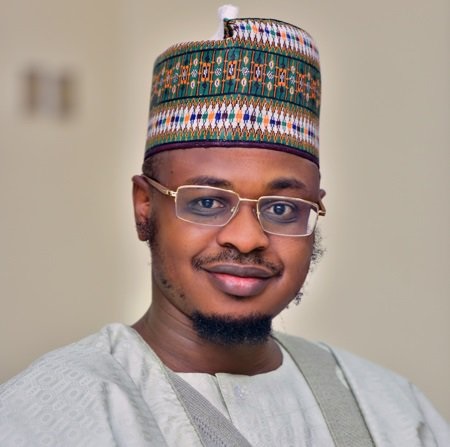
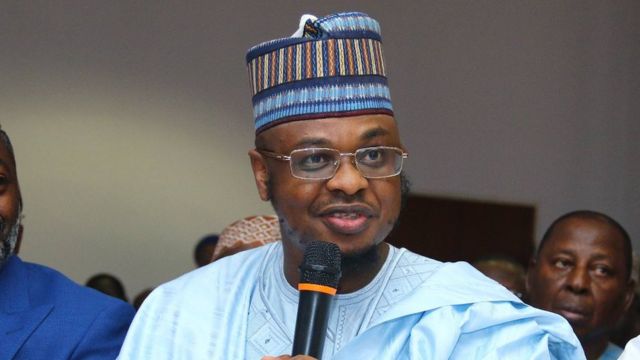
NIGERIANS are aghast, or so it seems, that Ali Isa Pantami, the Minister of Communications and Digital Economy, is, indeed, the jihadist in situ.

There is no gain in sugarcoating it. He is the Islamic militant within, well positioned in the corridors of power to deliver for his constituents – radical Islamists. And he has used his being “in place” to deliver handsomely.

Every well-meaning citizen of this country – Muslim, Christian, Northerner and Southerner – should be alarmed that a man who harboured such extremist views, even if it was in the past, made his way to such a high office.

Many questions remain unanswered. How did we get here? Who knew what?

In May 2020, a bitter conflict erupted between the Chief Executive Officer (CEO) of the Nigerians in Diaspora Commission (NIDCOM), Abike Dabiri-Erewa, and Pantami.

As the feud got messier on Twitter, Dabiri-Erewa – who had accused Pantami of ordering gunmen to throw NIDCOM staff out of the office given to them by the Nigerian Communications Commission (NCC) – made a quirky revelation.

Pantami denied her allegation and called her a liar. “This is a fat lie from her,” he tweeted all caps on May 24, 2020. In the evening of same day, Dabiri-Erewa punched back also calling him a liar.

But what raised eyebrows was not the fact of her fighting back but the telling insinuation. “An Islamic scholar should not lie Hon. Minister (PhD). You did that to me cos I am a woman. Your disrespect for women is legendary,” she wrote.

Why would a minister deny an agency of government an office space because the agency is headed by a woman? And why would Dabiri-Erewa consider such allegation an effective punch back in the circumstance?

In the last couple of weeks since Pantami became the issue in Nigeria’s never-ending debacle, one question has concentrated my mind. Was Dabiri-Erewa giving Nigerians a hint? Maybe! But Nigerians, not being prescient enough, failed to take the hint.

Things have since changed dramatically.

If Pantami has been a closet jihadist all along, the lid has been blown wide open with reports alleging that he was enamoured of terrorists and is now on the radar of America’s intelligence community.

His initial reaction was to bluster. But the more he blustered, the more his past was unearthed and brought to the public space. And they are damning. In the mid-2000s, Pantami was the ideologue of extremist Islamic groups like Boko Haram, Al-Qaeda and the Taliban. His preachments were fiery and most times resulted in violence.

His fellow feeling for domestic and international terrorists, wholesale endorsement of terrorism and intolerance of non-Muslims, would make Osama bin Laden green with envy.

Pantami was heard on video saying, “We are all happy whenever unbelievers are being killed, but the Sharia does not allow us to kill them without a reason.”

He said bin Laden’s penchant for killing unbelievers makes him a better Muslim than himself.

When President Goodluck Jonathan moved forcefully against Boko Haram terrorists, Pantami said it was genocide against Muslims.

“See what our fellow Muslim brothers’ blood has turned to? Even pig blood has more value than that of a fellow Muslim brother …. You caught someone sleeping and you killed him. If it is not Muslims that undergo such treatments who else?” Pantami lamented.

In the wake of the religious crisis that engulfed Yelwa Shendam, Plateau State in 2004, Pantami volunteered to lead a jihad against Christians and admonished Muslims to shun politicians and religious clerics who preached peace and restraint. “This jihad is an obligation for every single believer, especially in Nigeria,” he exhorted his followers.

When Abū Muṣ‘ab al-Zarqāwī, the leader of Al-Qaeda in Iraq, was killed in 2006, Pantami offered his public condolences.

His words: “May God have mercy on Aḥmad alFāḍil al-Khalayleh, raḥmatullāh’ alayhi. May God forgive his mistakes. He is a human being. He has certainly some mistakes in front of God, so may God forgive his mistakes. Who am I talking about? He is Abū Muṣ‘ab al-Zarqāwī.”

Commenting on the religious crisis in Bauchi in 2009, U.S. diplomats in Nigeria recorded in an April 15, 2009 diplomatic cable (exposed by WikiLeaks in 2011) that “Imam Pantami Isa, who preached at the mosque, had been previously thrown out of Abubakar Tafawa Balewa University and of a Gombe mosque for preaching inflammatory rhetoric.”

This is the man President Muhammadu Buhari appointed Minister of Communications and Digital Economy at the inception of his second term after he had served as Director-General and Chief Executive Officer of the National Information Technology Development Agency (NITDA) from 2016 to 2019.

In both capacities, Pantami presided and still presides over Nigeria’s telecom databases and sensitive national identity and critical biometric data infrastructure. He is in-charge of the mandatory National Identification Number (NIN) programme. A man that harbours affectionate sentiment for terrorist causes is the custodian of the biometric data of every single Nigerian. If this is not scary, then nothing else is.

In this era of social media, the evidence against Pantami is so overwhelming that he has climbed down from his blustering high horse. But without apologising, he has rationalised his extremism by claiming that some of those comments were based on his understanding of religious issues at the time they were made.

“Some of the comments I made some years ago that are generating controversies now were based on my understanding of religious issues at the time, and I have changed several positions taken in the past based on new evidence and maturity,” he reportedly said while responding to questions during his daily Ramadan lecture at Anoor Mosque in Abuja on Saturday.

“I was young when I made some of the comments; I was in university, some of the comments were made when I was a teenager. I started preaching when I was 13, many scholars and individuals did not understand some of international events and therefore took some positions based on their understanding, some have come to change their positions later.”

Of course, his reasons for extremist escapades are preposterous. He was not the only Islamic cleric of the era he was talking about. So, why didn’t others become radicalised or become agents of global jihadist groups?

It is also a “fat lie” for Pantami to claim age as an alibi for his religious zealotry. He was not a teenager when, as the Chief Imam of the Abubakar Tafawa Balewa University (ATBU) Bauchi mosque, his incendiary preachments resulted in the brutal murder of Sunday Nache Achi, a 400-level student, who was leader of the ECWA Student Ministries (ESM) on the campus on December 9, 2004.

Achi’s crime? Distributing a Christian tract which Pantami said blasphemed Islam and Prophet Mohammed.

In an exclusive interview with TheNiche this week, Nache’s father, Prof. Samuel Achi – CEO of the Federal College of Chemical and Leather Technology at the time his son was strangled in the mosque where Pantami held sway as an Islamic avatar – said there was absolutely nothing in the tract that should attract a fatwa.

Pantami’s claim of having disclaimed Boko Haram is hollow. Of course the Boko Haram of 10 years ago is still the Boko Haram of today. Why would he support the group yesterday and repudiate it today? The only logical explanation is that he is now in government.

So, what happens when Buhari leaves office? Will Pantami once again remember that “pig blood has more value than that of a fellow Muslim brother?”

Some Nigerians have called on him to resign or for Buhari to fire him. That is what happens in a sane country. But Nigeria under Buhari’s watch has gone too gaga and I dare say none of the two will happen. Pantami will neither resign nor be sacked by Buhari.

Why would Buhari sack him for the very tendencies that earned him a place of honour on the presidential dinner table? Will Buhari claim that he didn’t know about his extremist escapades before appointing him minister?

What should worry Nigerians most is the fact that Pantami went through both security and legislative screening and was given a pass to become a minister.

Didn’t the Department of State Services (DSS) unearth his entanglements with extreme religious ideologies? Or they found out but thought he was indeed a changed man and, therefore, it didn’t matter again? What did the Senate know?

Pantami is a metaphor for what Nigeria has become under Buhari’s watch. The Pantami metaphor explains why terrorists hold sway in all the nooks and crannies of the country today – kindred spirits are not only in government but also in power.

SARS Brutality: Detained in hell

THE story of how my life changed involves two cars: a Pathfinder Jeep, and a Toyota Avalon, and SARS.

Before I tell you this story, I should introduce myself. My name is Emeka Kennedy, and before this SARS wahala, I was a 35-year-old employee of the Importers Association of Nigeria (IMAN), a non-governmental organisation that checks all forms of illegal importation, including small arms and goods.

Everything changed on April 12, 2018, when I returned to Lagos from Anambra State where I had gone to drop a car (the Toyota Avalon) for my uncle.

My own car, a Pathfinder Jeep, was not where I left it, at the Trade Fair Complex on Lagos-Badagry expressway.

I asked the security man at the office where my car was. He said some men from Trade Fair Police Station had come to tow it. So I went to the police station.


You may wish to read

Killed by SARS: Shattered dreams

SARS Brutality: A final year to forget

ENDSARS: No justice in sight for victims of police brutality in Anambra as govt plays to the gallery


There, I met the Divisional Crime Officer (DCO) who said the officers that towed my car had left instructions: Anybody who came in search of the car should be detained. “For what?” I asked.  The DCO did not answer.

Instead, I was immediately detained.

A few hours later, four heavy-looking men entered the station. They wore vests with the words ‘Intelligence Response Team (IRT)’. Later, I learned that the IRT was collaborating with the Special Anti-Robbery Squad (SARS).

The IRT said they understood I had a Toyota Avalon in my possession.

Ah.

The Toyota in question had come through Cotonou and belonged to my uncle, Mr Ozor Kenneth. All I did was drive it to Anambra State, where I parked it for him to collect. I told the officers all of this, even stating that the car had a plate number and all of its documents were intact. They ignored me.

From Trade Fair Police Station, I was transferred to the Lagos State Police Command, Ikeja where the Commanding Officer of SARS, Superintendent Philip, was powerful.

At the Lagos State Police Command, I wrote a statement, telling the officers everything I knew about the car, and that I was innocent, but they did not believe me.

They locked me up in a cell, where for one week, they did not give me food or water.

Later, the officers took me to the station’s backyard, where they tied my hands and legs and hung me in the air for several hours. After they brought me down, I was so weak that I could not stand.

The officers had taken away my phone and switched it off. This meant my family did not know where I was or what was happening to me.

All the officers kept saying was that they would kill me.

Five days later, they took me back to the backyard and hung me in the air again.

The next few days felt like I was in a coma.

When I regained a bit of my strength and the officers saw that I could raise my hand, they took me to the backyard and hung me again.

This was our routine for about two weeks. Starve, hang, repeat.

Then, the four officers who had picked me up from the Trade Fair Police Station put me in their vehicle and drove all the way to Anambra State.

There, the officers went to Awka Police Station, in the capital city of Anambra,  to announce their arrival.

I took the officers to the house in Oko town where I had parked the Toyota Avalon. After that, the officers drove back to Badagry, Lagos, where I live.

It felt like I had been kidnapped, tortured, and my brutalized body was now being taken on a tour of Nigeria.

In Badagry, the officers, already armed with a search warrant, swept through my house. There was no one at home. My wife had travelled with our child to her parents in Lagos because of how uncertain things had become. The officers took everything they could find – shoes, clothes, belts, etc.

I spent a month and ten days in detention.

May 22, 2018, was the memorable mark of that dark period.

In the third week of this terrible experience, the officers asked me to call my relatives. I called my father-in-law, who came to my rescue.

My father-in-law and the officers started negotiating my release. Initially, the officers wanted 5 million naira, but they later dropped the price to 2 million. My father-in-law was still unable to raise that amount of money.

Later, I discovered that my wife usually came to see me, but the officers, especially the Investigating Police Officer (IPO), Sergeant Ermond, would send her away because she did not come with any money.

The cost of transportation from Badagry to Ikeja was N800 and, due to Lagos’ notorious traffic jams, the journey could linger for several hours.

My sister, who is a lecturer in the Federal Polytechnic in my hometown Oko, got tired of the officers’ shenanigans and, on May 22, 2018, wrote a petition to the then Inspector General of Police (IGP), Ibrahim Kpotun Idris, in Abuja.

The IGP ordered the officers to transfer my case to Abuja with all the files and everyone who was involved in the case.

Instead of obeying the IGP’s order, the officers took me to the Samuel Ilori Magistrate Court in the Ogba suburb of Lagos and slapped me with all manner of charges, including forgery. The judge, suspecting foul play, refused to proceed with the case. She asked them to go and change the charges.

But the officers did not want to change the charges. Later, the IPO came to me and said they would give me bail. All I had to do was to call my people and the matter would go away.

I was asked to bring two sureties, one relative and a non-relative, who were senior-level civil servants, and could deposit 400,000 naira. I was able to get one relative but could not get a non-relative. So, I remained imprisoned.

I was remanded in Kirikiri Medium Prison in Lagos. During my time at Kirikiri, somebody inside the prison advised that I go to the High Court because the officers were afraid of it.

My lawyer and I took my case to the Lagos High Court in Igbosere on Lagos Island. We earned a favourable verdict and I finally became a free man on November 28, 2018.

Over six months after I was first kidnapped by the Nigerian police.

I thought my troubles had ended. For where?

When I returned home, my landlord, with whom I had never previously had any issues, asked me to vacate his property. He did not want to rent his house to an ‘ex-convict.’

Me, my wife, and our eight-month-old baby left Lagos on December 15, 2018.

We now live in Nkpor, a small town in Anambra.

SARS finished me. I lost my friends, my job and myself.

I lost my home. You see, I started living in Lagos when I was 13. I went to secondary school and university in Lagos. Lagos was home. Here in my new life in Anambra, there is nothing. If we see food, we eat.

I am currently unemployed. My last job was driving passengers around in a bus, but the bus broke down.

Don’t even ask about the police case. That one has gone cold.

When my uncle went to the officers concerning the vehicle, they kept toying with him. The officers asked him to go and visit me in jail. They did not believe I had been set free, given the hefty charges they had levelled against me.

SARS finished me.

I’m not even asking for justice. The only thing that concerns me right now is finding a bus to drive so that I can feed my family.

That will happen soon by God’s grace.


This story is part of a multimedia project by Tiger Eye Foundation and media partners across Nigeria, documenting police brutality in Nigeria, and advocating for police reform.

Body of stowaway discovered after flight from Lagos to Amsterdam

A KLM flight from Nigeria to the Netherlands on Monday, April 19, ended tragically for an unidentified stowaway man whose body was found inside the landing gear compartment of the aircraft.

“We are investigating the discovery of a body in the landing gear of an airplane that arrived from Lagos (Nigeria),” the Royal Military Police tweeted on Tuesday.

Local media reported that the body was discovered by the airport technical staff in the KLM’s plane. The victim is believed to have died from hypothermia caused by low temperatures during the seven hours flight.

Amsterdam’s Schiphol Airport Police and forensic investigators have launched an investigation into the man’s identity and cause of death after he was discovered inside a wheel arch.

In spite of the potential risk associated with stoway travels, some desperate Nigerians seeking asylum or in search of better economic opportunities have found this means of traveling worth their adventures.

Last October, a ship from Lagos heading for England was illegally boarded by seven people believed to be Nigerians who were later detained on suspicion of seeking asylum in the UK.

Pantami: Presidency, SSS keep mum amid calls for minister’s sack over controversial statements

THE Presidency is keeping sealed lips despite  public outcry that has greeted controversial statements made in the past by Minister of Communication and Digital Economy Ali Isa Pantami in support of terrorist groups such as Al-Qaeda and Taliban.

The Presidency has so far remained silent on the matter as Nigerians demand the sack or resignation of the minister.

Nigerians began using hashtags, #PantamiResign and #PantamiResignNow, to demand his resignation after multiple reports accused him of endorsing terrorism and genocidal act.

Pantami was appointed in 2019 as a minister at the inception of President Muhammadu Buhari’s second tenure after spending three years (2016-2019) as the Director-General and CEO of the National Information Technology Development Agency (NITDA).

The ICIR had earlier reported that Pantami’s statements of admiration for the Taliban’s, Al-Qaeda and Jihad came from some of his preaching and lecture recordings translated by a professor and African expert at Naples University in Italy Andrea Brigaglia, and a Nigerian scholar Musa Ibrahim of the University of Florida in the United States, both of whom contributed to the academic paper published in March 2019 that explored the emergence of Boko Haram in Nigeria.

Brigaglia, in his contributing paper to ‘Debating Boko Haram,’ documented how some clerics in Northern Nigeria, including Pantami, and late Sheikh Ja’afar Adam, who was assassinated at his mosque in 2007 in the northern city of Kano, created mass support for Jihadism in Nigeria.

The journal article was titled ‘The ‘Popular Discourses of Salafi Counter-Radicalism in Nigeria’ Revisited: A Response to Abdullahi Lamido’s Review of Alexander Thurston, Boko Haram.’

Calls to the known telephone numbers of both President Muhammadu Buhari’s Special Adviser on Media and Publicity Femi Adesina and the Senior Special Assistant on Media and Publicity Garba Shehu were not answered.

Also, two text messages sent to both presidential aides asking whether President Buhari was aware of the allegations against Isah Pantami regarding his purported support for terrorist groups were not responded to as of the time filing this report.

The messages sent to the presidential aides were marked ‘delivered.’

A message to the Director of the State Security Service (SSS) Spokesperson Peter Afunanya, inquiring about the findings made by the SSS during the screening of Pantami and whether  the SSS were aware of the previous controversial positions of the minister on terrorism and terrorist groups, was also not responded to.

FEC did not discuss Pantami – Lai Mohammed 

Minister of Information and Culture Lai Mohammed, on Wednesday, said the Federal Executive Council did not discuss the issue of Isa Pantami during its meeting presided over by President Muhammadu Buhari.

Mohammed, according to The Nation,  told State House Correspondents that “I’m not going to go into the issue of whether government is comfortable or not. I will answer your question directly. It was not discussed at the council meeting.”

Buhari’s aide shows support for Pantami

Meanwhile, Personal Assistant to the President on Digital and New Media Bashir Ahmad, on Sunday, shared a solidarity photo with the embattled minister on his verified Facebook page.

Bashir shared a photo showing himself with Pantami at a function in Abuja.

Also on his Twitter handle @BashirAhmad, Bashir tweeted a photoset of quotes from Pantami in solidarity with the minister over calls for his resignation.

No way DSS wouldn’t have done thorough checks on Pantami – Ex-SSS official

A former Director of the State Security Service (SSS) Mike Ejiofor has said that there is no way the SSS wouldn’t have done a thorough check before his appointment as minister in 2015.

The former SSS director said this during an interview on Channels Television’s Sunrise Daily on Monday, stating that the secret service had prompted the Senate via a report which barred the National Assembly from confirming the appointment of a former acting Chairman of the Economic and Financial Crimes Commission (EFCC) Ibrahim Magu.

“I am not the spokesperson of the SSS, but I can tell you that it would be difficult for that information to have passed the State Security Service.

“They must have it on record of his sympathy for Al-Qaeda and some of these terrorist organisations. If the State Security Service submits a report on an individual to government and government fails to act on it, who is to blame?” he questioned.

How dysfunctional health system robs Nigerian children of vaccines (Part 2)

Adetola BADEMOSI, in this concluding segment of a two-part report, writes on how children miss out on important vaccines and irregularities between public and private hospitals routine immunisation schedules.


VACCINES racketeering thrive in some government hospitals visited

DURING this investigation,  Nigerian Tribune discovered nurses also engage in sharp practices through vaccine racketeering for interested parents.

Once they sense mothers’ willingness and readiness to get the vaccine, they offer to provide the shots at a cost believed to be lesser than what is obtainable in private hospitals.

Sadly, the trend has continued to thrive because parents can strike a bargain with the nurse, making fast money.

For instance, findings in the FCT revealed that a dosage of chickenpox vaccine in a private hospital costs N22,000 or more, depending on the healthcare provider. Simultaneously, the same can be gotten from between N16,000 to N18,000 in a public hospital.

A child between ages 12-15months is then required to take the first and second doses at different intervals, making a total of N36,000.

At a popular private hospital within the Central Business District (CBD), close to Church Gate, the cost of getting the Hepatitis A vaccine is N16,500.

In an interaction with this reporter, a parent, Mrs. Gloria Ndubuisi, explained how she could get the Chickenpox and Pneumococcal IV vaccine at the sum of N22,000 altogether with the help of a nurse at a popular Government hospital in Abuja.

To further authenticate the racketeering claim, this reporter visited the Federal Staff Hospital, Abuja, with a two-year-old child to enquire about the cost of getting a child immunized against Hepatitis A.

The dark, slim nurse on duty, who owns an account with Access bank account number 0041***183, tactically ushered this reporter to a quiet corridor and said, “we don’t give, but if you need it, I can get it for you. It is N8,000 for a dose. The second dose will be after four weeks.”

However, the efficacy or safety of these vaccines cannot be vouched for, as inappropriate storage could affect its potency.

The WHO 2015 report on vaccine storage titled:” The vaccine cold chain” describe vaccines as sensitive biological products. While some vaccines are sensitive to freezing, some are sensitive to heat and others to light.

According to the report, vaccine ability to adequately protect the vaccinated patient can diminish when exposed to inappropriate temperatures.

“Once lost, vaccine potency cannot be regained,” the report stated.

“To maintain quality, vaccines must be protected from extreme temperatures. Vaccine quality is maintained using a cold chain that meets specific temperature requirements.”

While confirming the findings by Nigerian Tribune, the National Primary Health Care Development Agency (NPHCDA) said it had commenced a discreet investigation in partnership with the Department of State Services (DSS) to arrest perpetrators in Abuja.

It particularly mentioned such acts were mostly rampant at the Jabi Medical Centre, Abuja.

But the case was completely different at the Lagos State University Teaching Hospital (LASUTH).

The immunisation nurses on the seat had instead directed this reporter to get a vaccine prescription from the staff clinic before proceeding to the pharmacy to make payment.

After the process was completed, the total cost for a dose of both the MMR and Chickenpox vaccine, alternatively known as varicella, was put at N14,630.

Rota., Chickenpox, MMR, PCV IV, how important?

According to the WHO, Rotaviruses are the most common cause of severe diarrhoea disease in young children worldwide.

As a result, it recommends that rotavirus vaccines be included in all national immunization programmes and considered a priority, particularly in South and Southeast Asia and sub-Saharan Africa.

While corroborating this, the Centre for Disease Control and Prevention (CDC) says the virus can easily spread among children and could cause severe watery diarrhoea, vomiting, fever, and abdominal pain.

UNICEF describes diarrhoea as the leading killer of children, accounting for approximately 8 per cent of all deaths among under-five globally, as of 2017.

Besides exclusive breastfeeding, UNICEF, among several other preventive measures, recommended the rotavirus vaccine, saying it “protects one of the most common causes of childhood diarrhoea-related death.”

On the other hand, chickenpox is described by UNICEF as, “single virus that can linger for a lifetime.”

According to WHO 2015 report titled: Immunization, Vaccines and Biologicals, the varicella virus, alternatively Chickenpox, is regarded as highly transmissible via respiratory droplets or direct contact with characteristic skin lesions of the infected person.

When infected, the virus remains latent in nerve cells and may be reactivated, causing a secondary infection called herpes zoster in adults.

The report adds that the Varicella vaccines are available either as a single antigen and in combination with measles, mumps and rubella vaccine (MMR).

While the WHO describes measles as a highly contagious disease caused by a virus that mostly results in high fever and rash, Rubella is an acute, contagious viral infection that usually causes a mild fever and rash in children and adults.

Although Nigeria has introduced the Measles II vaccine dose in the national schedule, the WHO recommends that countries take the opportunity of accelerated measles control and elimination activities to introduce rubella-containing vaccines.

FG, stakeholders react

When contacted Dr Bassey Okposen, Director, Disease Control and Immunisation, National Primary Health Care Development Agency (NPHCDA), in a 26 minutes interaction with this Reporter, affirmed this reporter’s findings on government skipping the Rota Vaccine despite its inclusion in the schedule.

He said the vaccine included in the national schedule was not approved because the GSK brand being sought for was not available globally.

But, Okposen disclosed that its roll-out would commence in the third quarter of 2021 as the agency already got its approval.

“We have currently gotten approval from GAVI. It is the timeline of delivery which we are looking at in the third quarter.

“For us, we are bent on getting the RotaSiil because it is the best in the world. That is the brand from GSK, but the story is that it is not available globally, and for Nigeria, it will not be enough.”

Okposen further stressed that the MMR vaccine had not been approved by the FG, saying: “you cannot introduce MMR in a country if you don’t have a routine immunization of 80 per cent and above. It’s the standard anywhere.”

He argued that introducing mumps to the measles shot may prime children for CRS or down syndrome.

“We have severally said this, there is no need to introduce mumps vaccine in Nigeria like the MMR, but if you go to private clinics, you will see it, and many such children will still come down with CRS,” he stated.

Like others, he asserted that private hospitals who give such vaccines are merely “out for business”.

For other vaccines listed in the report, the Director noted that the government could not fund vaccines for diseases or viruses considered eradicated.

From his explanations, he said before vaccines are introduced, the significance of such disease on public health is considered.

“…If you look at chickenpox, for instance, where did you see a typical case of such? So why would we give the vaccine? We will just be wasting money,” says Okposen.

On the likelihood of disease resurgence, he explained that: “In public health, once the herd immunity is building, the disease disappears on its own, and that is what we are trying to do in COVID-19. Once we have herd immunity of 70 to 80 per cent on its own, it will move to where the herd immunity is low. It is natural.”

On the contrary, a Virologist and Medical Laboratory Scientist, Dr Solomon Chollom, argued that every disease prevention vaccine should be administered regularly.

He reminded that Nigeria lacks vaccine-producing institutions and resorts to importing these vaccines, which cost the nation a fortune.

As a result, Dr Chollom said: “in an attempt to cut costs, they look at the epidemic map in Nigeria to see which diseases are much more prevalent and likely. So they seem to streamline.”

He, however, said irrespective of the circumstances surrounding this, every vaccine-preventable disease that already has a vaccine developed for it, should be captured in the schedule.

The Virologist further faulted claims that the MMR vaccine could prime children to CRS or down syndrome, saying: “…but there have not been such clear cut instances that had to do with safety.

“You need to understand that when people want to do the wrong things, they will always get intelligent reasons. They put up intelligent reasons to defend their positions but scientifically, there is no evidence backing that claim.”

In his reaction, Dr Chris Akude, a Family Physician with a leading private hospital in Abuja, countered claims that such vaccines were listed to swindle parents.

He said public hospitals do not list them in their schedule as they are paid for.

“It is not entirely true. You know, sometimes, when you don’t answer a question, you label everyone as bad. It is not swindling. Secondly, those you actually pay for them, those who can afford it get it and those who can’t don’t get it.

“So what it means is that their children will be exposed to it. If you go abroad, all those things are covered. It is not covered. It is like here if you want to do a CT scan, it is N60,000. How many people can afford that? But it is there in private hospitals. Does that now mean we are swindling them? It only means that we can provide the service to those who can afford them.”

This report is done with support of Wits Journalism and the African Investigative Journalism Conference.’

Senate ignores Nigeria’s rising debts, approves fresh $1.5bn, €995m loans for FG

DESPITE public concerns on Nigeria’s rising debts, the Senate has approved fresh external loans of $1.5 billion and €995 million for the Federal Government.

The loans were approved by the lawmakers after considering the report of Clifford Ordia-led committee on local and foreign debts during Wednesday’s plenary session.

The €995m loan is meant for agricultural mechanisation across the 774 LGAs while the $1.5bn loans will be used to fund critical infrastructure in the aftermath of the COVID-19 pandemic across the 36 states and the Federal Capital Territory (FCT).

This is coming a week after Edo State Governor Godwin Obaseki expressed concerns about the country’s rising public debts.

According to the Debt Management Office (DMO), Nigeria’s total public debt as of December 31, 2020, was N32.915 trillion, representing a 20.13 per cent rise from N27.40 trillion recorded in  December 2019.

The increase in the country’s total debt stock was mainly due to a 40.82 per cent rise in external debt to N12.71 trillion as at December 2020, from N9.02 trillion in December 2019.]

READ ALSO: FACT CHECK: Claim that Anambra’s debt profile is over N200bn is FALSE

The Nigerian economy is in dire straits. Oil price has hit over $60 per barrel, but the country is wasting its market gains on petrol subsidy which gulps N120 billion every month.

“We may be eating up the future with the way we are going. For some of us, we cannot say this enough. This is not the way to go. Most often, I wonder what the Nigerian Labour Congress wants to achieve in the way and manner they tread with the government on the subsidy issue. We cannot keep making economic decision political all the time You can see the way we’re struggling to pull this through.” Chairman of Major Oil Marketers Association of Nigeria Adetunji Oyebanji told the ICIR  on Tuesday.

Nigeria’s inflation rate rose to 17.33 per cent in February 2021, from 16.47 per cent recorded in the previous month. This represents the highest inflation rate recorded in four years. Unemployment reached 33 per cent in the last quarter of 2020, putting the country among the highest in the world. States are struggling to pay salaries and even the Nigerian National Petroleum Corporation (NNPC) cannot meet its cash-call obligations to international oil companies (IOCs).

Investigate alleged threat to life of Daily Nigerian publisher, MRA urges FG

THE Media Rights Agenda (MRA) has called on the Federal Government to investigate the alleged threat to the life of fleeing Daily Nigerian Publisher Jaafar Jaafar.

It said that the government had an obligation to protect members of the media, especially when their lives, safety and security were threatened by government officials.

MRA’s Communications Officer Idowu Adewale, in a statement to The ICIR on Wednesday, said: “As a journalist, Jaafar, has a constitutional right and duty to hold government and its officials accountable. Since he is a Nigerian citizen and a journalist, the Police have a duty on both counts to protect him from any form of harassment or threat as well as any danger on his life or the lives of members of his family and any attempt to prevent him from performing his professional duties.”

He argued that there was no way Jaafar could get or expect any fair treatment in the hands of the Police who had levelled spurious charges of inciting violence and spreading injurious falsehood against their boss, the Inspector General of Police, and were at the same time purporting to conduct an investigation into their own accusations against him, adding that “such a process makes an outrageous mockery of our system of justice.”

Adewale said MRA shared Jaafar’s concerns that the allegations and the invitation to report to the Police for questioning were merely an attempt to lure him into their custody so that they could do him harm.

He, therefore, called on the government to ensure that a thorough investigation was conducted into the threats to Jaafar’s life, with a view to bringing the perpetrators to justice and ensuring that no harm came to him. He noted that the Federal Government of Nigeria would be liable under international law for the actions of the Police and any state government that violated the country’s treaty obligations.

Adewale urged the government to live up to its obligation to ensure the safety of Jaafar and other media practitioners, including  preventing attacks on them whenever possible and ensuring that all attacks or threats were investigated and the perpetrators prosecuted and punished.

Jaafar has come under threat from Kano State Governor Ibrahim Ganduje since the journalist published video clips  in October 2018, showing him allegedly collecting bundles of dollars in a bribery scandal from a contractor.

In an interview with the BBC Hausa Service on March 19, 2021, Ganduje boasted that there were ongoing plans to deal with those who released the videos, following which Jaafar wrote a petition to the then Inspector-General of Police Mohammed Adamu over the renewed threats to his life.

On April 14, 2021, Jaafar received an invitation from the Inspector-General of Police (IGP) Monitoring Unit to report for questioning on charges of criminal libel based on an allegation that he was inciting violence and spreading injurious falsehood against the IGP.

The journalist has since gone into hiding as a result of fear for his life. Reports say unidentified persons who are likely to be ‘hitmen’ have been stalking him both at his Abuja and Kano residences.