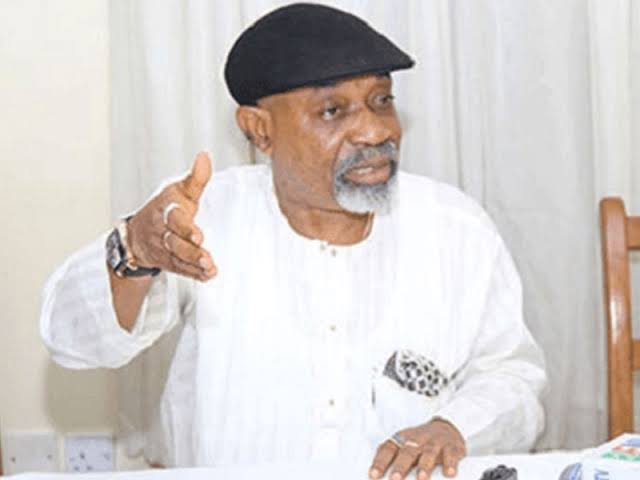
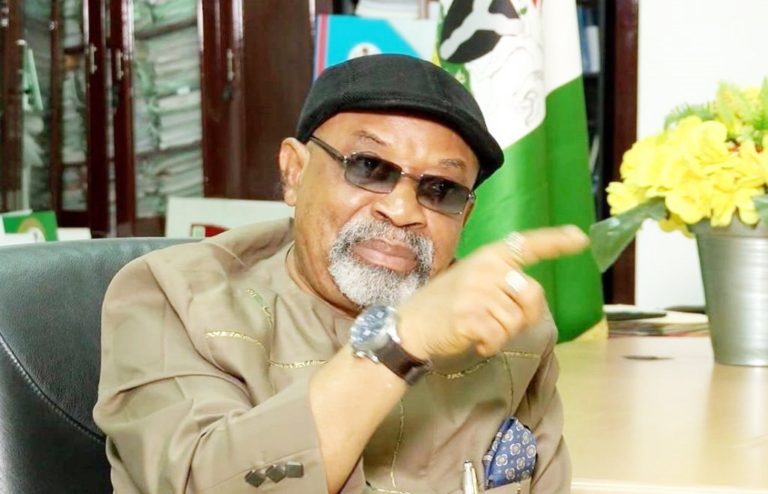
THE Nigerian Medical Association (NMA), on Saturday, said Minister of Labour and Employment Chris Ngige erred in his claim that resident doctors were not paid by government or institutions outside Nigeria.
NMA said, in a statement signed by its president and secretary-general Innocent Ujah and Philips Ekpe respectively, that the claim was a hate speech and capable of bringing down the nation’s health sector.
The doctors said against Ngige’s claim, resident doctors were paid where they worked in the US and UK, as well as other parts of the world.
“The NMA is totally in disagreement with the way and manner some government functionaries carry out their duties, which is completely insensitive to the plight of the people. Accountability is the fulcrum for good governance in all facets and we do not demand anything less from those charged with the responsibility of governing the people,” part of the statement read.
According to NMA, government should improve the welfare of doctors and other health workers, saying it was the most sustainable means of delivering quality health care to the people of the country.
“Perhaps, this will help to reduce the current brain drain being experienced, that is dealing a deadly blow to our health care delivery system, which has made our hospitals to be regarded as mere consulting clinics,” the group added.
Ngige had said, in an interview with Channels Television on Friday April 2, 2021, that resident doctors were only paid in Nigeria, but not in the US, UK and other nations.
But, facts obtained by The ICIR showed the minister was wrong.
The ICIR gathered from several websites that UK pays its trainee doctors. A 2015 BBC’s report appeared most authoritative among others obtained by our reporter while filing this report.
A screenshot of John Hopkins Hospital’s website indicating how resident doctors are paid.
Similarly, resident doctors are paid in the US. The John Hopkins Hospital in the US pays resident doctors, as many website linked with the US show resident doctors in the country are paid.
Ngige had said in 2019 that doctors were free to leave Nigeria, boasting that the country had enough. He received wide bashings for the comment.
Ngige is a medical doctor who retired from the Federal Ministry of Health before becoming governor of Anambra state in 2003.
The ICIRhad reported on Tuesday, March 30, 2021, that National Association of Resident Doctors (NARD), one of the groups of medical doctors in the country, would be embarking on strike over failure of the government to pay housemen and meet other demands of the association.
NARD made true its threat on April 1 as it directed its members across all public health facilities in the country to down tools.
The strike has led to partial or complete absence of medical services in most public tertiary institutions in the country.
As all attempts to placate the practitioners yielded no result, the federal government, through Ngige, threatened to invoke ‘no work, no pay’ against the doctors on Friday April 2.
But, the practitioners have vowed the action would continue.
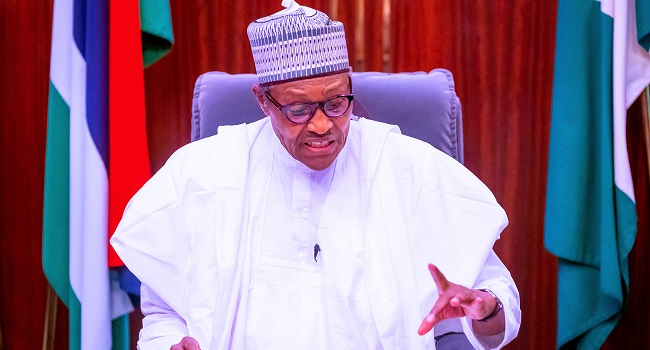
PRESIDENT Muhammadu Buhari has ‘strongly condemned’ two recent violent attacks in Nigeria, five days after the incidents had taken place.
Buhari, who is in the United Kingdom on a medical trip, ‘condemned’ the attacks in his usual manner via a statement signed by Special Assistant to the President on Media and Publicity Garba Shehu.
The violent attacks, which took place in Ebonyi and Anambra states, took the lives of seven and three persons respectively, including policemen.
In Ebonyi State, three communities in Íshíelu Local Government Area (LGA) – Egedegede, Obegu and Amuzu -were attacked on Monday night by suspected herdsmen, according to the State Police Command.
Reacting to the incidents on Saturday, the president said he had directed law enforcement agencies to fish out the attackers and make them face justice, adding that the perpetrators of the ‘heinous attack’ should not be spared.
In the same statement, Buhari expressed sympathy over the attack on former Governor of the Central Bank of Nigeria and a member of the Presidential Economic Advisory Council Chukwuma Soludo.
Soludo was attacked by gunmen in Aguata LGA of Anambra State during a political rally in respect to his gubernatorial aspiration in the state.
Buhari reassured Nigerians that ongoing efforts, which had led to the record recovery of illegal weapons and arrests of a large number of arms suppliers, would be intensified.
“I strongly condemn the cowardly terrorist attack on an outstanding Nigerian, Professor Chukwuma Soludo.
“Our prayers are with him and the families of the security operatives who lost their lives trying to defend innocent citizens assembled for a peaceful meeting,” Buhari said.
Although the president did not comment on three policemen that were killed during the attack, he said his administration would ‘continue’ to empower the Police and other armed forces in their fight against terrorism, banditry and kidnapping in the state.
While the Ebonyi attack happened on Monday night, the attack on Soludo occurred on Wednesday.
In recent times, some have argued that the president has not shown Nigerians that he is in charge of the country due to his slow responses and sometimes silence on national issues. Nobel Laurette Wole Soyinka had said in an interviewwith Arise Tv on February 11 that he was not sure Buhari was in charge of the country as the Commander in Chief.
The Nobel Laurette, while commenting on the farmers-herders crisis in the nation, said being the president was beyond contesting and winning. He stressed that it was about governing the country.
“It’s not possible, in my view, that in a country that has a Head of State, Commander-in-Chief of the Armed Forces that says he is presiding over a nation, and things get to this level. Something is critically wrong in and within the leadership of this nation,” Soyinka said.
Buhari comments on foreign incident, ignores attacks in Nigeria
Although the president has been in London for his ‘routine medical checks,’ he has responded to issues concerning another country while playing blind to fatal attacks in his own country.
On Thursday, Buhari ‘condemned’ the coup attempt in Niger Republic, few days to the swearing-in of a new president.
Buhari condemned the coup attempt through a phone call to the Nigerien president Issoufou Mahamadou, which was eventually posted on the official Twitter handle of the Presidency @NGRPresident after the Anambra and Ebonyi state attacks had occurred before his reaction on Saturday.
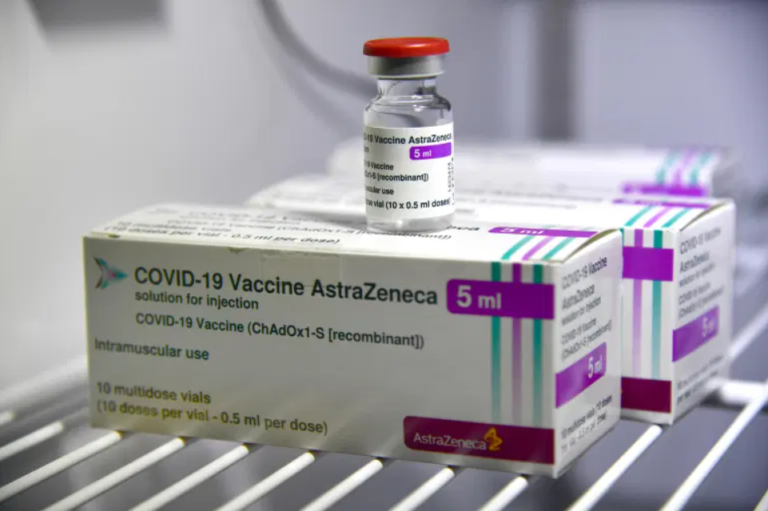
GLOBAL Media Relations Director for AstraZeneca Kim Blomley has confirmed that the company has renamed its COVID-19 vaccine in conjunction with the British University of Oxford.
Blomley, in a conversation with The ICIR on Saturday, stated that the vaccine had been renamed ‘Vaxzevria,’ adding that the name was only for the European Union.
“The product name has changed – but only for the EU as registered with the European Medical Authority,” said Blomley.
Blombley noted that the new name had been planned for many months before its implementation, saying it did not change the vaccine’s policy and supply.
“The use of the brand name does not signify any changes in AstraZeneca’s policy to supply the vaccine at no-profit during the pandemic.”
Blombley said the change to a permanent trade name was customary and did nothing to the product.
“For instance, Pfizer/Biontech’s BNT162b2 is now COMIRNATY in the EU,” Blombley added.
The EMA had stated that the Vaxzevria vaccine was safe in people over 18 years of age, but had reduced its effectiveness from 79 to 76 percent.
The ICIR had reported how Nigeria took the delivery of 3.9 million doses of the vaccine in March.
Germany, France, Thailand, 15 others countries have suspended the administration of the vaccine over growing concerns of blood clots. However, many countries now accept its use.
The World Health Organization(WHO) and European regulators have continued to express confidence in its safety.
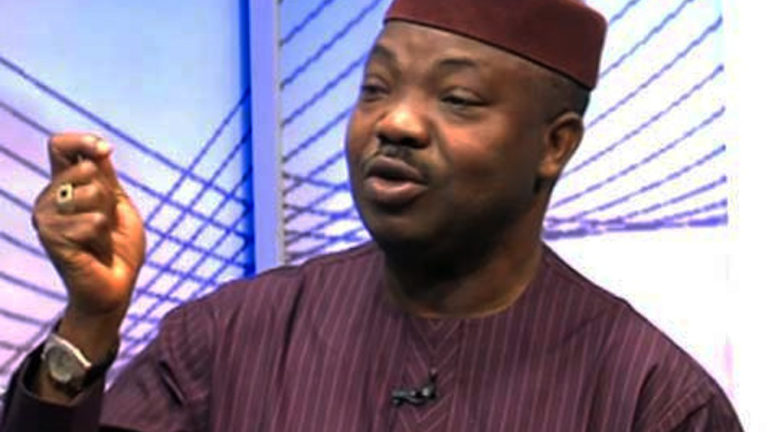
NATIONAL Publicity Secretary of Afenifere Yinka Odumakin was confirmed dead on Saturday morning following complications from COVID-19.
A human rights activist, Odumakin was one of the most active image makers of the pan-Yoruba socio-cultural organisation in its 23-year history.
Odumakin was pronounced dead at the Lagos State University Teaching Hospital after health complications.
Before his death, Odumakin had been one of the strong members of the National Democratic Coalition (NADECO) who fought against the military regime of General Sani Abacha that annulled the 1993 presidential election.
The group called on Abacha to step down in favour of late Moshood Abiola, who was the winner of the 1993 presidential election.
Odumakin, who was married to an activist Joe Odumakin, threw his weight behind several agitations in support of the Yoruba citizen.
Before his death, he had been one of the critics of the President Muhammadu Buhari administration, saying that the federal government represented only Fulani interests against those of Yoruba, Igbo, Junkun, Ijaw and other tribes in Nigeria.
Odumakin said this while reacting to the Federal Government’s comment that criticised the position of Rotimi Akeredolu who asked Fulani herders to vacate the state’s forest reserves.
“The Fulani criminals have caused untold hardships in Ondo State and other Yoruba towns and cities in recent times and only an irresponsible government that wants to behave like our Federal Government that cares will continue to fold its arms,” Odumakin said.
Before his death, he had also advocated the establishment of the Western Nigeria Security Network (WNSN) codenamed Operation Amotekun.
According to Odumakin, Operation Amotekun was to “secure lives and property, to aid the police where the police have failed, to fill in the gap.”
Reacting to the death of the human rights activist, President Buhari condoled with his family and friends while describing him as a man of conviction.
Buhari said Odumakin, who was his spokesman in 2011 during his contest for the Nigerian president, was a dutiful person while expressing sorrow over his death.
“The President recalls Odumakin as dutiful, and a person of conviction, expressing sorrow at his demise, when he had a lot more to contribute to society and the nation at large,” a statement from the Presidency read in part.
THE Nigerian Army has punished a senior journalist Amadin Uyi for asking questions on how it spent allocations on armaments and other logistics for the prosecution of war against insurgency and related security threats facing the nation between 2015 and 2019.
Peeved by Uyi’s ‘irrelevant questions,’ the Army’s public relations department removed him from a WhatsApp platform where it shares information on its activities with journalists.
Boko Haram Insurgents had unleashed massive terror attacks at various locations in Nigeria, resulting in deaths and destruction and displacements of many people and livestock.
Apart from being the most reliable platform for journalists covering the Army to obtain and confirm information, the platform has the contacts of all spokespersons of the Army divisions and its main spokesperson at the headquarters, Mohammed Yerima, a brigadier-general.
Yerima was appointed the director of information of the Army on February 9, 2021, taking over from Sagir Musa, a brigadier general.
News-Central TV, where Uyi serves as its Abuja bureau chief, however, stands by its reporter and calls on the Army’s leadership to answer the questions raised by the journalist.
In a statement mailed to The ICIR on Friday April 2, 2021, the television station says Amadin Uyi is an award-winning journalist who has covered the Nigerian military and defence operations for close to a decade. “He has an uncanny knack for investigative reportage and is not known for asking frivolous questions,” his employers add.
As an investigative journalist, Uyi was with the CNN team that broke the news of Chibok school girls kidnap in 2014. He worked with etv South Africa as its Abuja reporter, A24 media based in Kenya and was a content producer for Germany-based Ruptly.
He was a pioneer member of staff of Nigeria’s first 24 hours based television: NN24 TV; had stints with We FM, Silverbird television and headed Plus TV Africa northern operations for three years.
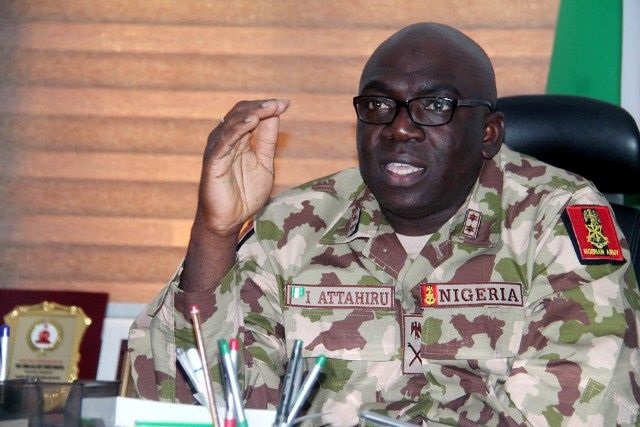
Uyi’s ‘irrelevant questions’ bothered on recent statements made by chief of Army staff Ibrahim Attahiru, a leutenant general, at a press conference where he promised to “work towards addressing logistics challenges” for his personnel.
“The senior reporter requested an explanation of this statement, considering that about N2.6 trillion had been spent between 2015 and 2019.
“With such a huge amount expended within the period, #AmadinUyi also questioned the COAS’s remark that directives had been given for ‘more weapons to be procured,’ when the initially disbursed funds could have purchased enough armaments.
“Because the public will want details, Uyi also asked if the army had previously abandoned the damaged and unserviceable equipment in the theatre of war, after the COAS talked about back-loading them and instructing that they be repaired immediately.
Boko Haram kill about 30 travellers, burnt 18 vehciles at Auno, Borno State on February 9, 2020. Source: Pulse
“Rather than address these concerns to satisfy public curiosity and accountability, the Nigerian Army Public Relations Unit simply took #Amadin Uyi off the platform after challenging him for asking what they described as ‘irrelevant questions,’” News-Central TV states.
While noting that Uyi has since his removal from the platform conducted himself with utmost professionalism, the TV station creates the hash tag #QuestionNoBeFight #JusticeForNCReporter #AmadinUyi #FreedomOfThePress @NewsCentralTV to raise global awareness to the action of the Army.
Shortly after the former chief of Army staff Turkur Buratai alongside his counterparts in the Air Force Sadique Abubakar and Navy Ibok-Ete Ekwe Ibas as well as the chief of defence staff General Gabriel Olonisakin resigned on January 26, 2021, after illegally overstaying in office, the national security adviser Babagana Munguno alleged that billions of naira allocated for arms could not be accounted for under Buratai’s watch.
He later denied the confession, saying he was misquoted.
During his first tenure, President Muhammadu Buhari administration’s much-hyped anti-corruption campaign was largely hinged on $2.1 billion misappropriated arms fund claimed to have been spent on re-election bid of former President Goodluck Jonathan in 2015. No major convictions have been made in the trials involving officials who were fingered in the crime.
Nigeria’s Chief of Defence Staff, Gen. Leo Irabor. Source: The ICIR
In 2017, the Federal Government resolved to release one billion US dollars from the country’s Excess Crude Oil account to fight insurgency in the country, despite allocating the largest chunk of the nation’s yearly budgets to security.
Reports also indicate that soldiers fighting insurgents desert warfronts because they are ill-quipped to face ‘superior’ firepower of the terrorists.
The ICIR had, on March 26, 2021, reported how soldiers in terror battleground protested poor equipment, unpaid salaries in Borno State – the epicenter of terrorists attacks in Nigeria. The report followed a similar one published on July 2, 2018, where mobile policemen in the state protested against unpaid six months allowances.
Nigeria has been faced with insecurity challenges comprising insurgency, banditry, kidnapping, among others, in the past decade, amidst other socio-economic challenges threatening the continued existence of the nation.
Though the nation’s military has recorded victories over the insurgents in recent times, banditry and kidnapping, which are considered internal security issues, have snowballed.
MINISTER of labour and employment Chris Ngige has said that the federal government will not fail to implement the ‘no work, no pay’ policy on the striking National Association of Resident Doctors (NARD) if they fail to resume work.
Ngige stated this on Friday during an interview on Channels Television’s Politics Today.
The minister said he would invite the doctors for a dialogue after the Easter break, just as he threatened to invoke one of the weapons in the labour laws on them if they refused to refuse work.
“By Tuesday, I will invite them back. If they become recalcitrant, there are other things I can do. There are weapons in the labour laws, I will invoke them. There is no work, no pay.
“Their employers have a role also to keep their business afloat, to keep patients alive. They can employ local doctors. We won’t get there, but if we are going to get there, we will use that stick.”
He added that the doctors’ hazard allowance currently pegged at N5,000 would be reviewed in five weeks’ time.
“It is the last NMA President Faduyile that called my attention that the hazard (allowance) was ₦5,000. I raised it with the finance minister and the vice president in the Economic Sustainability Meeting. In fact, to use the words of the vice president, it is criminal, it shouldn’t happen.
“The new hazard allowance will be done in the next five weeks. It is in the Memorandum of Action that we signed. Immediately after the Easter break, I will convene a meeting to look at it holistically,” he added.
Why the doctors are on strike
The Nigerian medical practitioners had, on Thursday, April 1, commenced strike to protest working conditions and salary arrears, just two days after the president had left the country for a medical checkup.
Prior to the commencement of the strike, NARD had warned the government of impending strike if the government failed to address their grievances.
NARD cited unjust delay of salaries of its members, non-implementation of 50 percent hazard allowance for all health workers and failure of the government to pay house officers for three months as reasons for the strike.
NARD had also lamented the rate of brain drain of medical practitioners in the country, blaming it on lack of employment in hospitals, poor remuneration and poor conditions of service.
The ICIR had earlier reported how work pressure forced Nigerian doctors and nurses to relocate abroad while the government looked away
FORMER presidential aide Reno Omokri and other Nigerians have demanded the return of President Muhammadu Buhari to Nigeria, following his travel to the United Kingdom on a medical trip.
The protesters, who were at Abuja House in London on Friday, asked the president to return to Nigeria and fix its healthcare system, instead of seeking medical aid in another country.
The ICIR had reported that Buhari left the country for a ‘routine medical checkup’ days before doctors in Nigeria, under the aegis of the National Association of Resident Doctors in Nigeria (NARD), embarked on strike over unpaid emoluments and other agitations.
Omokri, who led other protesters, also said the president had sent soldiers to shoot at peaceful protesters in Lekki, Lagos State, on October 20, 2020.
According to Omokri, who was an aide to former President Goodluck Jonathan, since Buhari’s assumption of office in 2015, he had budgeted N10.2 billion for Aso Rock healthcare but had failed to build good hospitals that could treat him and other Nigerians.
“You are not building hospitals for people and you are coming here to come and enjoy the best of the health sector in a country that has law and order,” Omokri said in video footage posted on his Twitter handle.
With the Twitter hashtag #HarassBuhariOutOfLondon, some other Nigerians also joined in the calls for the president to come back to Nigeria and fix the nation’s health system.
A Twitter user identified as Winifred Mnim, with the handle MHC @iamwinyjoe, said the president had no right to enjoy what he could not provide for the citizens of the country he governed.
That man has no right to enjoy what he can’t give his citizens!!’ Say no to Medical Tourism ! #HarassBuhariOutOfLondon
“That man has no right to enjoy what he can’t give his citizens!!’ Say no to Medical Tourism! #HarassBuhariOutOfLondon,” the tweet read.
Another user, Godwin Uchenna, with the handle @godwin_ucee, also demanded the president’s return to Nigeria. Uchenna said there was no medical check-up or treatment beyond Nigerian doctors, hence Buhari should return home.
“What Nigerian doctors can not treat or the medical check-up that cannot be done in Nigeria does not exist…#HarassBuhariOutOfLondon Mr President Return Home. Come back and invest in your country,” Uchenna tweeted.
What Nigerian doctors can not treat or the medical check-up that cannot be done in Nigeria does not exist…#HarassBuhariOutOfLondon Mr President Return Home. Come back and invest in your country… pic.twitter.com/IL9QRJXaIb
Nigeria has budgeted just 3.7 percent of its 2021 national budget to the health sector.
Out of the N13.58 trillion budget for the year, the government devoted only N514.8 billion to the sector (in both concurrent and capital projects sections of the budget).
The allocation, which has largely revolved around this percentage for many years, is a contravention of the 2001 Abuja Declaration, where heads of governments in Africa agreed to set aside at least 15 percent of their annual budgets to the health sector. Nigeria is a signatory to the agreement.
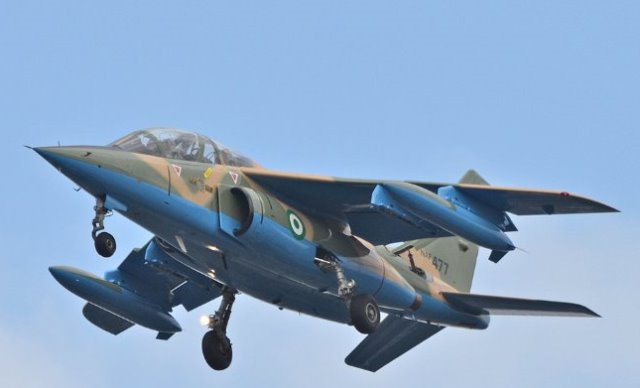
THE Nigerian Airforce (NAF) has said that one of its fighter jets earlier declared missing on Wednesday might have crashed along with two pilots of the force.
This is contained in a statement issued by NAF director of public relations and information Edward Gabkwet on Friday in Abuja.
Gabkwet said intelligence report gathered by the NAF indicated that the alpha jet aircraft (NAF475) that went off the radar with two crew members on board on March 31 might have crashed.
He also disclosed that the cause of the crash as well as the whereabouts of two pilots in the jet remained unknown.
According to Gabkwet, the pilots were John Abolarinwa and Ebiakpo Chapele -both Flight Lieutenants.
NAF said extensive search and rescue efforts were still ongoing by the force’s surveillance aircraft as well as NAF Special Forces and Nigerian Army troops on the ground.
“At this point, the NAF is not ruling out anything regarding the incident. It however remains hopeful that the crew would soon be found and rescued,” the statement read in part.
The ICIR had reported that the alpha jet was said to have lost contact with radar in Borno State while on an interdiction mission in support of ground troops fighting the insurgency.
“The mission was part of the ongoing counterinsurgency operations in the North East. The loss of radar contact occurred at about 5:08 pm on 31 March 2021,” The ICIR had reported.
Borno State, where contact was lost with the fighter jet, is one of the hotspots of the activities of Boko Haram insurgents that have terrorised North-East Nigeria for over a decade.
This is coming less than two months after seven officers lost their lives to a jet crash in Abuja after reporting engine failure.
NIGERIANS may have to wait much more longer for meters as poor coordination between the Nigerian Electricity Regulatory Commission (NERC) and meter providers weakens access for millions of citizens.
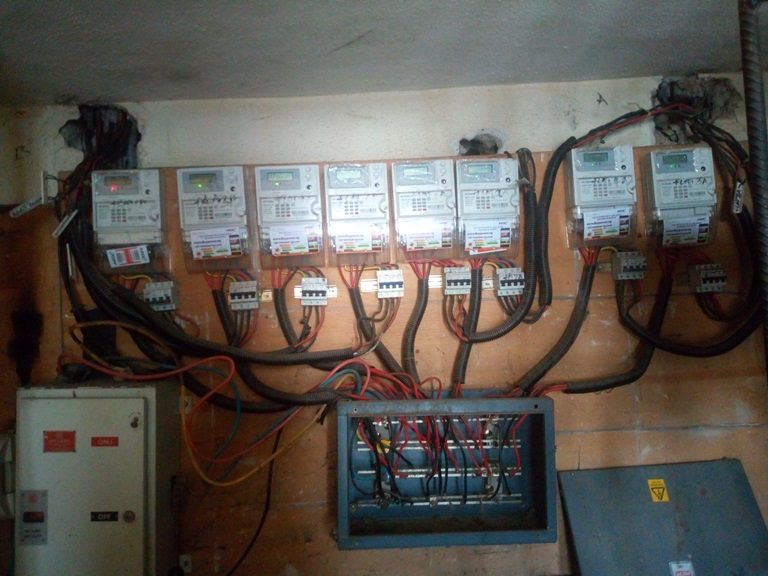
The federal government began the distribution of one million free meters in October 2020. However, many Nigerians are yet to get theirs, leaving them in the hands of power distribution companies (DisCos) who estimate their bills and most times overcharge them.
Findings by The ICIR show that many indigenous meter manufacturers lack the capacity to close the metering gap on the back of weak production, importation and logistic concerns. These factors make it difficult for them to close the metering gap in excess of over six million meters.
Indigenous meter manufacturers have not been able to produce up to 20 percent of the needed meters, according to findings, putting unmetered Nigerians under the pressure of waiting endlessly.
“Currently, Nigeria cannot manufacture all the components of meter locally. There is still reliance on importation logistics for some of the components. Getting cargo across the ports comes with some difficulties. The issue of foreign exchange, pandemic, and Customs logistics cannot be perfect within months in terms of metering millions of Nigerians.” chairman of the Association of Nigerian Electricity Distribution (ANED) Sunday Oduntan told The ICIR.
Oduntan stressed that the over 500,000 meters had been provided through the Meter Asset Provider Policy of NERC, but admitted that a lot of work needed to be done to close the metering gap of over six million households.
Metering takes lots of efforts and logistics, and it is not like buying a phone and slotting a sim card on it, he stressed.
The NERC has failed to ensure that Nigerians who have paid for their meters through the Third Party Meter Asset Provider regulations and those in the National Mass Metering Programme (which is free) are not lumped together.
James Momoh, NERC Chairman
The Third-Party Meter Asset Provider Regulation is a scheme launched by NERC in 2018 to close metering gap through a third party policy regulation, working with the distribution companies. Some Nigerians are wondering why they should pay for meters when government says the items are free. They also wonder why the regulator, NERC, has failed to come up with a policy to properly define how the two schemes could be used to deliver meters to Nigerians.
Nigeria seeks to close the metering gap of over six million to help build a credible electricity market and attract investors to the fledgling power sector. However, analysts say the federal government should come up with multi-thronged approach, rather than rely on indigenous meter manufacturers who lack capacity to close the gap.
The federal government has, through the National Mass Metering Programme, which is a key component of the Economic Sustainability Plan, targeted bridging the metering gap by building capacity of indigenous local meter manufacturers in order to create wealth along the value chain, amid concerns of Covid-19 impact on the economy.
Meter manufacturers’ position
However, meter manufacturers say they can produce enough for Nigerians but call for convivial government policies and good operating enviromnent.
The Electricity Meter Manufacturers Association of Nigeria (EMMAN), in a recent press statement, said the directive to defer 35 percent import duty on pre-paid meters was an incentive for mass importation of the meters.
The association noted that local manufacturers were not being patronised by off-takers in the downstream power sector as they were not ready to cut corners. They said they were hampered by foreign exchange scarcity hurting the Nigerian economy – as meter parts were imported.
The association urged the government to encourage importers to set up factories so as to have a value chain that would create jobs for Nigerians.
The group had also noted that a recent presidential approval of tax deferment on importation of three million finished electricity meters was a disincentive and would have negative effects on local meter production.
Manufacturers’ challenge
Like manufacturers of other items, meter makers face challenges ranging from foreign exchange scarcity to high energy cost. The Manufacturers Association of Nigeria says the players are hard hit by the nation’s ports and lack of patronage.
Manufacturers struggle with poor infrastructure, high energy cost, regressive port system and multiple taxation, said MAN.
Capacity utilisation in the manufacturing sector slowed to 54.1 percent in the first half of 2019, from 54.50 percent recorded in same half of 2018, said MAN. Average number of power outage in the first half of 2019 increased to five times dally from four times daily recorded in the second half of 2018.
“Lingering foreign exchange (FX) crisis was perhaps the most significant challenge for the sector in 2020 as most industry players found it increasingly difficult to access FX meant for importation of critical factor inputs,” the Lagos Chamber of Commerce and Industry (LCCI) said in a 2020 economic review and 2021 outlook signed by Muda Yusuf, its director-general.
CBN N40bn disbursement
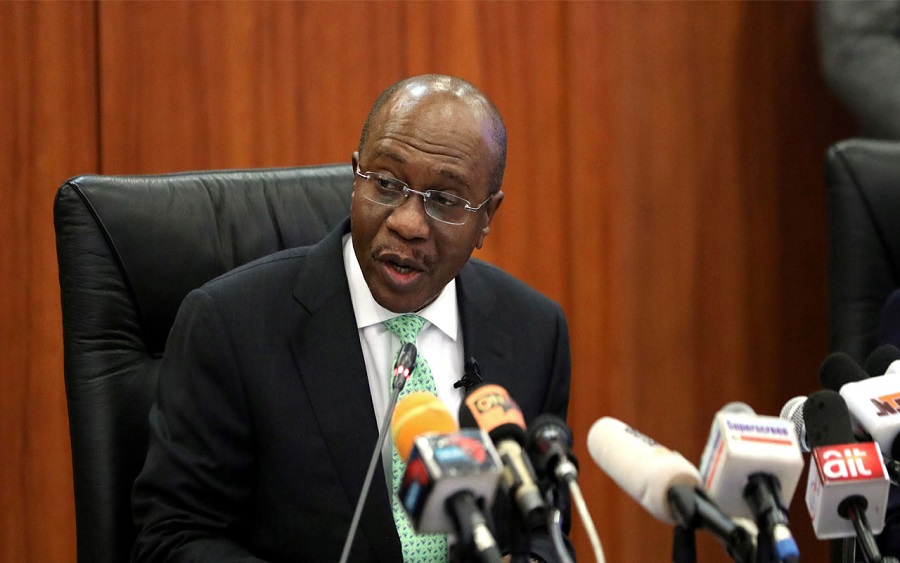
The Central Bank of Nigeria (CBN) has disbursed over N40 billion to indigenous meter manufacturers for the mass metering programme. However, findings have revealed the slow pace of the programme since October 2020 when it was launched.
A file picture of Godwin Emefiele, Governor of CBN
One source said the CBN recently appointed consultants to track and monitor the disbursement of the mass metering from the indigenous meter manufacturers. The source raised concerns on why the apex bank would disburse funds for mass metering first before appointing consultants to monitor and track mass metering and capacity of indigenous companies.
” It means the apex bank did not do its due diligence before disbursing the funds,” the source, who did not want her name in print because she works for the government, said.
Available data from the NERC put the number of unmetered and unidentified customers at 4.09 million households. Obsolete meters for possible replacement are estimated at 1,7 million. Also, unidentified and disconnected customers have a recorded figure of 33.1 million customers.
The World Bank recently approved $750 million to support mass metering and network improvement, but has hinged the disbursement on credible electricity market reforms.
Analysts say the government, rather than pay billons of naira in electricity subsidy, needs to remove bottlenecks in metering programme ,while suggesting multi-thronged approach of allowing importation of meters while supporting indigenous local meter manufacturers to closie the metering gap.
“Metering is evolving and we would continue to come up with the right policies that ensure Nigerians are metered adequately, taking cognisance of emerging estates and housing expansion,” Frank Okafor, commissioner for engineering, NERC, told The ICIR.
FOR OVER 26 years, the family of Ayamolowo has been pursuing justice over an alleged killing of Prince Adekeye Nelson Ayamolowo by officers of the disbanded Special Anti-Robbery Squad (SARS).
The family had in several years petitioned the Nigeria Police Force, but all their efforts were futile because there was no positive response from the security agency before the family turned to the EndSars panel for justice.
Narrating the bitter experience the family had with the police to The ICIR, a son to the late victim, Okikiola Ayamolowo, said his father had an encounter with an officer of the Nigerian Police Force at Ijebu-Ode area of Ogun state while on his way from a visit to his mum.
Okikiola also explained that the police officer reportedly shot his father in the head, which eventually led to his death.
“While my dad, Prince Adekeye Nelson Ayamolowo was on his way back from his hometown where he had gone to visit his mum, he encountered the NPF around Ijebu Ode area, for reasons only known to the wicked and corrupt police officer, he shot my dad in the head and my dad died on the spot.
“The police officer in question ran back to the police station, abandoned his rifle and later went to the police barracks and absconded with his family, while he left another family in tears and despair.”
Late Prince Adekeye Nelson Ayamolowo
Okikiola, who said he was barely five years of age when the incident happened, said the family has been struggling to get justice for his deceased father for the past 26 years.
“We have been chasing and crying for justice over 26 years without any closure. Our pursuit for justice is why I and my family have approached the Ogun state judicial panel in the hopes that we may get justice and closure.
“I was barely 5 years old when the incident happened, older members of my family had reached out to the Nigeria police force at the time of the incident but the NPF was not forthcoming as you would expect a reputable organisation to,” he said.
Speaking on what the family lost financially, Okikiola said, “the financial loss is unquantifiable, starting with the destiny of a young man being cut short. He had a successful and thriving business at the time. Who knows if he would have grown to be in the financial class of Dangote and the likes today.”
He added that the untimely death of his father turned his mother, a poor widow to someone shouldering the responsibilities of four children.
“The wicked actions of the police officer also forced my mother to become a single mother to care for four children on her own. Toiling day and night to pay school fees, provide food and maintain a household.”
The story of Ayamolowo is not isolated; it reflect the experience many Nigerians go through in the hands of the security operatives. Many have been illegally arrested, detained and some even killed without getting justice.
One of such cases is that of Olaoluwa Bolarinwa. Narrating his experience, Bayo Adeshina said his brother, Bolarinwa alongside his nephew Oreoluwa Abiona, were arrested by policemen on 29th March 2020, but while Oreoluwa was released after paying the sum of N10,000, Olaoluwa was reportedly shuffled among various stations and eventually announced dead.
“I was on my way to Mokola Police Station Ibadan when I was informed that he (Olaoluwa) has been moved to Ayobo Police Station in Lagos State, I went to the police station to inquire about Olaolu, there I was told they do not have such name in their incident book, then a police officer later advised me to go to Mokola Police Station and ask of him.
“On getting to Mokola Police Station, I got to know he was taken to Obada Police Station in Ogun state and I saw the name of the police officer that arrested him, he was called “Ijoba System.” The following week, I went to Obada, but I didn’t find him there.
Adeshina said the policeman later told him he was using the boy to track some criminals.
“I got the number of Ijoba System from Oreoluwa the deceased’s brother and I called him to ask of Olaolu, he acknowledged that he knew Olaolu and that he didn’t have an offence against him but he is using Olaolu to track some people and as soon as he gets them, Olaolu will be released.”
He said the family learnt from different police sources that Olaoluwa had been moved to Obalende police station, then later Abuja. They were later told that Olaoluwa was an armed robber and had died in custody days after the arrest.
Adesina, who argued that there was no way Olaoluwa could have been involved in the robbery, added that the deceased was not even taken to court before he was convicted and pronounced an armed robber. He said more baffling was that the commander and her men refused to release Olaoluwa’s remains for proper burial.
Late Olaoluwa Bolarinwa
He narrated: “They called my brother an armed robber even without taking him to court. Nigerians should stand up and fight for us. My brother’s death is a case of extrajudicial killing. He was murdered!
“My brother was not a thief and neither was he an armed robber. My brother was a community leader in his community and everyone knew him.”
My wife’s concubine paid SARS operatives to torture me
A middle-aged man, Muraimo Akintunde also narrated how he was thoroughly tortured by officers of the Special Anti-Robbery Squad Operatives.
Akintunde said he was arrested by SARS operatives on June 14, 2020, with the help of one Mr Seun Akinwande, who had him reported and also paid the SARS operatives to have him tortured.
The victim disclosed that Seun Akinwande was his wife’s boyfriend and they have had altercations on the phone over Akinwande lusting after his wife.
He said, “The SARS operatives took me to their station at Magbon from Ayetoro where I live and they tortured me, they said I was a cultist and demanded where I kept my gun and where my gangs were, and also proceeded to search my house and found nothing”.
“They tortured me till the point I was bleeding from the left side of my face and my left leg till I was going in and out of consciousness.
Akinwande said the SARS operatives wrote a statement for him and forced his thumbprint on the statement.
“The SARS Operatives demanded 300,000 naira bail which my sister and wife later negotiated to N100,000, they released me not after they insisted I write an undertaking that I would not harm Mr Seun Akinwande, which I did.
“I thought I was going to die because I was bleeding seriously for a crime I did not know of.”
Victims put hope on Judicial Panel of Investigation
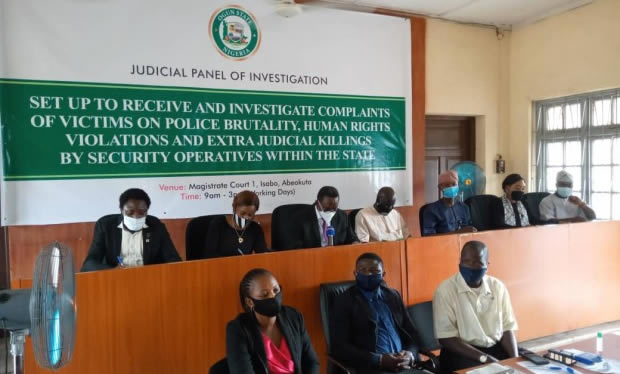
Despite despondency expressed towards the Nigerian judicial system, the recent composition of the judicial panel of investigation across the country, particularly the Ogun State judicial panel chaired by retired Justice Solomon Olugbemi has raised the hope of many victims of police brutality in the state.
Those who have had bitter experiences with the men of the Nigeria Police force in the past, who spoke with The ICIR expressed satisfaction over the composition of the panel.
Okikiola said he is optimistic that the panel will be able to give the family the justice they deserve.
He added, “I appreciate what the panel represents and the platform it has given the likes of myself, my family and other victims out there to have a voice and at the least, express our frustrations. However, there is nothing compared to having actual justice and closure.
“Justice is not just about financial compensation which is also a must to soothe a tiny part of the pains and agony caused by the NPF. Justice in this matter also involves the NPF doing their job which is to fight and deter crime by bringing the culprits to face the law. In our case, bringing my dad’s murderer to pay for his actions.”
Adesina expressed optimism that the panel would produce justice because of the way it was composed.
Over 2,500 petitions submitted across the country
While the hearings of petitions across the country are moving at a slow pace, The ICIR findings revealed that over 2,500 petitions have been submitted to the panels.
Data obtained from the Youth Initiative for Advocacy, Growth & Advancement (YIAGA) revealed that the following number of petitions submitted across the country: FCT – 250 petitions, Rivers State – 188 petitions, Anambra State – 310 petitions, Edo State – 164 petitions, Lagos State – 230 petitions, Imo State – 110 petitions, Abia State – 87 petitions, Akwa Ibom State – 159 petitions, Ekiti State – 81 petitions, Plateau State – 58 petitions, Cross River State – 61 petitions, Ogun State – 105 petitions, Oyo State – 50 petitions, Enugu State – 75 petitions, Benue State – 51 petitions, Ondo State – 44 petitions, Osun State – 32 petitions, Bayelsa State – 40 petitions, Kwara State – 24 petitions, Nasarawa State – 36 petitions, Delta State – 78 petitions, Ebonyi State – 37 petitions, Taraba State – 28 petitions, Adamawa State – 14 petitions, Gombe State – 15 petitions, Bauchi State – 10 petitions, Kaduna State – 29 petitions.
Data showing petitions received at ENDSARS panel across the couuntry
We will pursue the matters to a logical conclusion – Counsel
One of the counsels for the victims, Taiwo Olawanle from Falana & Falana Chambers, said the matters would be pursued to a logical conclusion.
Olawanle stressed that there is a need to end the impunity of some of the security forces by ensuring they get punished for offenses they committed.
His words, “As for us in Falana & Falana Chambers, we are interested in following the matters to a logical conclusion. We need to end the impunity of our security forces, get the operatives involved punished according to the dictates of the relevant laws and get the families of the victims compensated.”
He added that getting justice for the people would relieve them of the pains they have suffered.
“This would go a long way to relieve the relations of the victims and also serve as deterrence to the future occurrence of such extrajudicial killings by the Police.”
We will get justice for the victims – Panel
Meanwhile, one of the members of the judicial panel in Ogun State, Olayinka Folarin has disclosed that the panel is concerned about getting justice for the victims. Folarin explained that the panel would be making their recommendations after listening to the two parties involved.
He, however, noted that the essence of the panel is to ensure the victims get justice, stressing that the recommendation of the panel would ensure justice for the victim.
He said, “We have been hearing petitions and at the end of the day, we will make our recommendation which undoubtedly will aim to get justice for the victims. The essence of the panel is to achieve justice for the victim.
“Our first report will come in very soon. It will analyse cases that have been concluded because we don’t just conclude a case in a day. We have to give a fair hearing to everybody; we hear from the petitioner and the respondents before we form our opinion and then make our recommendations. Definitely, there shall be justice.”
We are not disturbing the panel from getting justice for victims – Police
Abimbola Oyeyemi, the Ogun State Police Command Public Relations Officer
The Ogun State police command says it has been been trying its best in ensuring the petitioners get justice at the panel. Abimbola Oyeyemi, the Ogun State Police Command Public Relations Officer, who spoke to The ICIR said the command has been producing the accused police at the panel.
“We are not in anyway preventing the petitioners from getting justice at the panel and that’s why we have been answering the panel’s summon.”
“I have personally appeared before the panel before,” says Oyeyemi.
When asked if the police officers indeed perpetrated and guilty of the crimes the petitioners accused them of, Oyeyemi said it is left for the panel to determine who is guilty of any crime or not.