Home Blog Page 1867

Dozens dead in army barracks’ blast in Equatorial Guinea

By Lisa VIVES

A series of four explosions heard in Equatorial Guinea’s commercial hub, Bata, left a huge plume of smoke hanging over the city. 

News reports say 20 have died and there is significant damage. Health workers have been asked to report to the city’s hospitals, says the Spanish news agency EFE.

The TVGE channel broadcast footage of wrecked and burning buildings, with people — including children — being pulled from the rubble and the wounded lying on a hospital floor. A video posted on the social media shows a chaotic scene of distressed people fleeing from the site of the explosions.


Read Also:


The blasts were caused by ‘negligence’ relating to the storage of dynamite at the barracks, President Teodoro Obiang Nguema was reported to have said. The impact of the explosion “caused damage in almost all the houses and buildings in Bata,” he added, and called for international help with aid.

The camp houses elements of the army’s special forces and the paramilitary gendarmerie, a journalist said.

Bata is the largest city in the oil- and gas-rich nation, with around 800,000 of the nation’s 1.4 million population living there — most of them in poverty.

Report blames rising piracy in Gulf of Guinea on weak response by Nigerian government

The president’s son, Teodoro Nguema Obiang Mangue, a vice president with responsibility for defense and security, has appeared in television footage at the scene of the blasts inspecting the damage, accompanied by his Israeli bodyguards, the French news service AFP reports.

African women speak out on International Women’s Day

By Lisa VIVES


MARCH 8 marked the United Nations’s International Women’s Day — an occasion meant to be a global celebration. But with more and more women suffering each day, there is little to rejoice in Africa, say many women leaders from the continent.

“International Women’s Day should celebrate the fruits of decades of activism. But on a continent where those who stand accused of sexual abuse often get rewarded rather than punished, what is there to be proud of?” said Cameroonian journalist Mimi Mefo Takambou.

“The theme for the 2021 International Women’s Day celebrations is ‘Women in leadership: Achieving an equal future in a COVID-19 world’ — yet I’m having a hard time fully embracing that idea, given the pain and destruction that COVID-19 has caused, especially to women.”

And who can forget the story of Fezekile Ntsukela Kuzwayo, who accused South Africa’s former president Jacob Zuma of rape, sparking a national debate about rape culture in a country where, according to the ‘Rape Crisis’ advocacy group, 40 percent of women experience rape at least once in their lifetime?

Read AlsoIWD: 16 Nigerian women breaking the glass ceiling in diaspora

Despite the mounting evidence against Zuma, it was only his account that eventually held up in court, namely that the sex acts had been consensual.

First Lady of the Democratic Republic of Congo Denise Nyakeru Tshisekedi, reflected on the state of progress in preventing violence against women. In the first six months of last year, 26,000 cases of sexual violence were registered, according to the UN, an increase of 28 percent compared to 2019.

“Several actions have been carried out since March 2019,” commented the First Lady. “These include awareness-raising meetings that I organise with young people from different provinces of my country to discuss, by example, on positive masculinity.”

Winnie Byanyima of UNAIDS, observed: “Women leaders have provided a guiding light for the world in responding to the COVID-19 crisis, from heads of government to coordinators of grass-roots social movements. They have reminded the world how crucial it is to have critical numbers of women, in all their diversity, in positions of leadership.”

“But the COVID-19 crisis has seen progress towards equality pushed back. It has widened the gap between women and men in wealth, in income, in access to services, in the burden of unpaid care, in status and in power.”

Male Nation: Number shows how Nigeria discriminates against women in political leadership

The pandemic has brought into sharp and painful focus that even before COVID-19 an estimated 34 million girls between the ages of 12 and 14 years had been out of school, one in three women globally reported having experienced physical or sexual violence and women the world over worked longer hours for less or no pay.

“Gender inequality is not only wrong, it is dangerous. It weakens us all. A more equal world will be better able to respond to pandemics and other shocks; it will leave us healthier and safer and more prosperous.”

#ChoosetoChallenge: Mos-Shogbamimu calls out British royal family, Morgan over racism claims

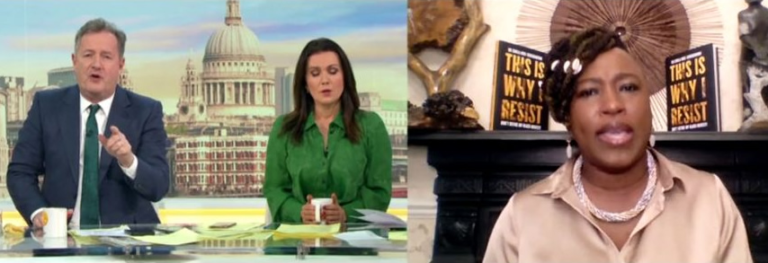
SHOLA Mos-Shogbamimu, Nigerian political and women’s rights activist, was involved in a heated argument with Piers Morgan, host of the Good Morning Britain show, which aired on ITV on Monday, when she challenged systemic racism and colonialism practised by the British royal family.

The discussion centered on the recent bombshell interview which Harry and Meghan, the Duke and Duchess of Sussex,  had with Oprah Winfrey that aired on Sunday night, where they made personal, never-heard-before revelations about their struggles, including Meghan’s suicidal thoughts, which compelled them to step back from life as working royals, leaving the UK in search of a more peaceful life in California.

Morgan accused the couple of trashing the queen and of unacceptably implying that “everybody in the royal family is a white supremacist.” He called it ‘contemptible’ and said it was the “most incendiary charge I’ve seen in my career.”

“This is a two-hour trash-athon of our Royal Family, of the monarchy, of everything the Queen has worked so hard for and it’s all been done as Prince Philip lies in hospital,”    Morgan said of the #MeghanHarryOprah interview which aired in the United States on Sunday, March 7, from 8 to 10 p.m. It will air in the UK on ITV on Monday at 9 p.m.

Read AlsoNigerian becomes first non-British flying officer in the RAF

Reacting to some of his comments about Harry and Meghan, Mos-Shogbamimu slammed Morgan, calling him a disappointment and accusing him of constantly using his platform ‘as a wealthy, white-privileged man with power and influence’ to aggravate and escalate sexist and racist attacks, in a bid to express blind love for the Queen.

She reminded him that he could still show his love for the Queen without turning a blind eye to actions by the royal family that were wrong and called out Queen Elizabeth for not using her power to protect her grandson, Harry, and his family from racist media reports.

“You’re more outraged that Harry and Meghan had the audacity to speak their truth. You want to deny that the royal family has any racist undertone or actions against the first biracial (sic) simply because you’re in love with the Queen…The Royal Family as an institution is rooted in colonialism, white supremacy, and racism. The legacy is right there,” the rights activist said.

Picture claiming Queen Elizabeth wrote a condolence letter to Nigeria over Buhari’s death resurfaces, but it’s fake

She queried, “What kind of grandmother, would be so close to her grandson, Harry, but did not use her power and influence as Queen to protect them from the racist media coverage?”

In an earlier #choosetochallenge video message to mark the 2021 International Women’s Day which she posted on YouTube, Mos-Shogbamimu had stressed that speaking up as a woman was important and even more important was speaking up as a black woman.

Read AlsoPicture claiming Queen Elizabeth wrote a condolence letter to Nigeria over Buhari’s death resurfaces, but it’s fake

“We can’t talk about gender equality without talking about racial equality, because within the gender equality are marginalised black and ethnic minority women and we have to ensure that we are constantly intentional about resisting the status quo,” she had said.

IWD: Aisha Buhari calls for concerted efforts to end schoolgirls’ abduction

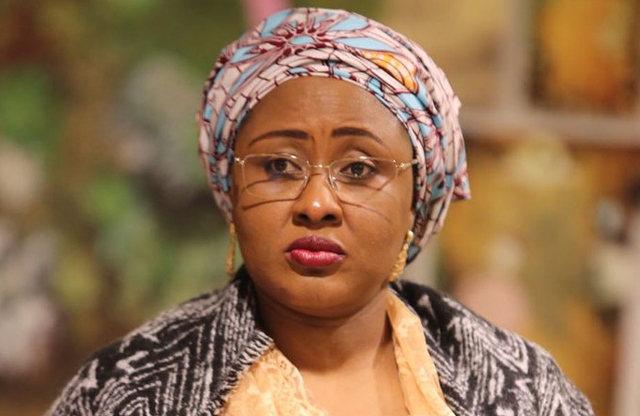
AISHA Buhari, wife of President Muhammadu Buhari, has called for concerted efforts by governments and other stakeholders to bring an end to abductions of schoolgirls and women in Nigeria.

She said this in a statement released on Monday in commemoration of this year’s International Women’s Day, which is celebrated across the world.

The first lady, who complained that girl-child education was being affected by abductions in the country, noted that the plight of women had further been affected by the outbreak of COVID-19.

She called for support for those who had been impacted negatively by the pandemic.

Read AlsoAisha Buhari insists she flew abroad for medical treatment

“COVID-19 has had a huge impact on women, disrupted education and careers, lost jobs, brought about descent into poverty, and proliferation of domestic violence. Many have also died or suffered due to lack of access to basic information on the pandemic,” parts of the statement read.

“It is, therefore, important, not just to continue spreading the message of the COVID-19 protocol, but to remember and support those who have been affected negatively by the pandemic in one way or another.

“Away from COVID-19, women and girls in Nigeria have continued to suffer abductions both in the hands of insurgents and bandits.

“As a mother, I share the sorrow and agony of the victims and their families. I am also not unaware of the impact that these abductions could have in reverting many successes we have hitherto achieved, especially in terms of girl-child education and early marriages.

“I call on all stakeholders to continue to exert their different levels of influence and bring these abductions to an end and to assure us that girls are safe anywhere they may find themselves.

Over 881 students kidnapped under Buhari’s administration

“My best wishes to women all over the world for their resilience, hard work and commitment to the progress of humanity. Happy International Women’s Day. “

Since 2014, about 693 school girls have been kidnapped by Boko Haram insurgents and terrorists operating in the name of bandits in the northern part of the country.

The United Nations and civil societies organisations have continued to call on the Nigerian government to protect the girl-child by providing adequate security around schools, most especially in the northern part of Nigeria.

Opposition seethes in Congo as 77-year-old president seeks another term

By Lisa VIVES


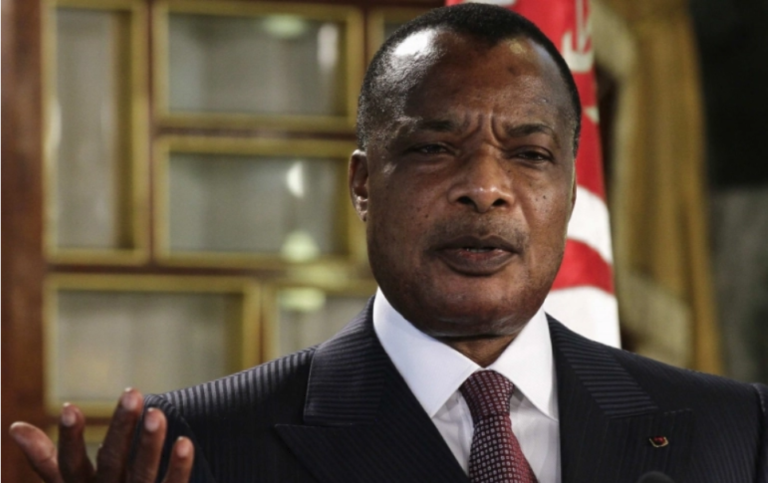
DENIS Sassou Nguesso, president of the Republic of Congo, has declared his intention to seek yet another term in office. He has held that position for 36 years, making him one of the longest-serving presidents in Africa. Elections are scheduled for March 21.

He faces seven challengers, though the main opposition party says it will boycott the event. They faulted the president for the short run-up to the polls.

‘’Can’t the elections be postponed for two or three months to allow time for the competent bodies to organise the pre-election operations?’’, Crepin Gouala, leader of the opposition Alliance pour l’République a la d démocratie (ARD), asked.


Read Also:


For independent candidate, Pandi Ngouari, “this kind of injustice is imposed on us by the same generation as a soccer team that trains for years even though we are aware that the referee is not always fair, but we are forced to go and beat this team on its own field with its own referee.’’

Ruling party members defended the choice of the 77-year-old leader. “We said the choice of Denis Sassou Nguesso is an inevitable choice,” party leader Leonidas Mottom told the French news agency AFP.

“It’s the choice of change in continuity, it’s the choice of stability and the choice of peace,” said Mottom.

Sassou Nguesso’s political history has been marked by controversy. After coming to power in 1979, he headed a single-party regime for 12 years.

Political pluralism was introduced in 1991 and the following year Sassou Nguesso lost his presidential bid. He returned to power in October 1997 after his rebel forces ousted the president at the time, Pascal Lissouba of UPADS, and a two-year civil war ensued.

Presidential elections were held in 2002 that Sessou Nguesso controversially won. He was re-elected in July 2009 in a poll boycotted by the main opposition candidates.

A new constitution, approved by referendum, enabled him to stand again in 2016, and he won by a first-round majority, a result that again was contested by the opposition.

His re-election in 2016 triggered unrest in Brazzaville and armed conflict in the fertile region of Pool that cut off freight trains on the vital rail line between the capital and Pointe-Noire.

President Nguesso’s rivals in 2016, former general Jean-Marie Michel Mokoko and former minister Andre Okombi Salissa, remain in jail today.

They had disputed the election results, were then arrested, put on trial and each handed 20 years in jail on charges of undermining state security.

Concern is growing in the Congo over the nation’s deep economic crisis triggered by the slump in oil prices and worsened by long-standing debt.

Health researchers say e-cigarettes targeted at university, college students

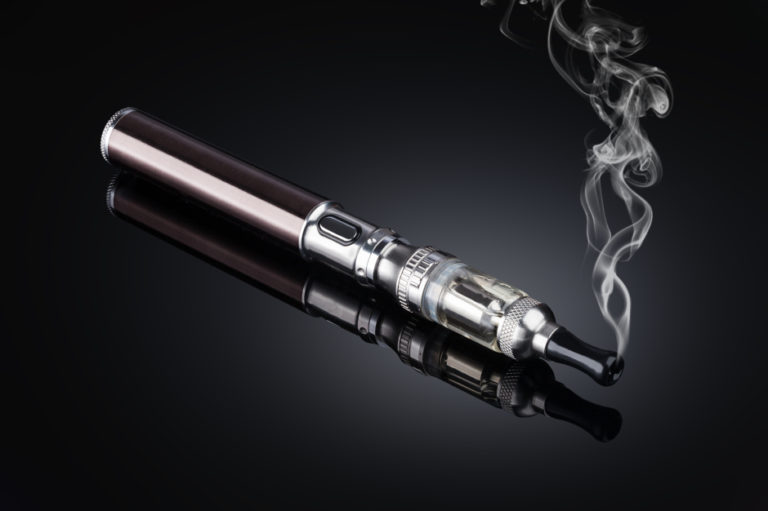
E-CIGARETTES are targeted at university and college students in South Africa, according to Lekan Ayo-Yusuf, professor of health and executive director of Africa Centre for Tobacco Industry Monitoring and Policy Research (ATIM) at Sefako Makgatho Health Sciences University, while referring to a recent report by health researchers.

Ayo-Yusuf said the research in question found that of the over 240 vape shops in South Africa, 39 percent were within a 10km radius of a university or college campus, while 65.3 percent were within a 20km radius of a university or college campus.

The professor of health noted that although the e-cigarette industry had positioned itself as a cessation aid, the research found out that the products had limited effectiveness.


Read Also:


“While the tobacco and e-cigarette industry likes to position e-cigarettes as cessation aids, the limited effectiveness of these products for long-term quitting, the health harms associated with usage and the industry’s clear and targeted marketing to the youth are facts which are conveniently omitted from their narrative. This series of studies provides very useful information to guide policymakers in South Africa,” Ayo-Yusuf said.

Based on two large population-level surveys, the research being referred to by Ayo-Yusuf, showed a growing prevalence of regular e-cigarette use by South Africans older than 16 years. It noted that 2.71 percent of adults, translating to 1.09 million people, used e-cigarettes during 2018. Most of these e-cigarette users were concurrently regularly smoking cigarettes, the research found.

The research, conducted by the ATIM and the South African Medical Research Council (SAMRC), assessed local e-cigarette use, evaluated the effectiveness of e-cigarettes as cessation aids, and analysed the costs of e-cigarette usage while using geospatial mapping to understand the distribution of vape shops across South Africa and how this might impact youth usage.

The second part of the research concluded that any presumed benefits of e-cigarettes on cessation might be partly attributable to pharmacotherapy and counselling, given the concurrent use patterns among past quit attempters using e-cigarettes.

The study showed that awareness of cessation aids among current smokers was 50.8 percent for smoking cessation programmes; 92.1 percent for nicotine replacement therapy, and 68.2 percent for prescription cessation medication.

Among current combustible smokers who attempted to quit in the past, ‘ever’ e-cigarette users were more likely than ‘never’ e-cigarette users to have used other cessation aids. Furthermore, among current smokers who had ever attempted to quit, past users and over half of current e-cigarette users were more likely than ‘never’ e-cigarette users to have used cessation aids.

For ‘ever’ smokers who had tried to quit, e-cigarette use was associated with a higher likelihood of short-term, but not long-term quitting. The study, in fact, showed a higher likelihood of smoking relapse among ‘ever’ smokers in South Africa who had tried to quit using e-cigarettes

The likelihood of long-term quitting lasting 6-12 months was 80 percent lower among those who used e-cigarettes rarely, 70 percent lower among former e-cigarette users, and 77 percent lower for regular e-cigarette users compared to ‘never’ users.

Despite this evidence of limited effect on cessation, the study also suggested more e-cigarette ‘ever’ as compared to ‘never’ users still believed e-cigarettes could assist smokers completely quit (35.5 percent vs. 20.4 percent) or cut down (51.7percent vs. 26.5percent). This dominant belief among those who had ever tried e-cigarette was likely a result of the manufacturers’ marketing of these products as cessation aids, despite not having scientifically tested them as such in South Africa or similar poor resource settings.

The cost study revealed that, contrary to claims made by e-cigarette manufacturers, using e-cigarettes was more expensive than smoking cigarettes when comparing daily users over a one-year period. Annual cost associated with daily use was 6,693 rand for manufactured cigarettes and up to 19,780.83 rand for e-cigarettes.

The study further stated that implementing excise taxes on e-cigarettes at 75 percent of the cigarette excise tax rate could generate annual revenue of up to 2.20 billion rand for South Africa.

“Untaxed for more than a decade in South Africa, e-cigarettes will only be taxed from this year, at a rate of 75 percent of the tax on tobacco. This will likely reduce initiation by youth and provide additional revenue to cover the health and economic harms they cause while contributing to NHI funding,” said Catherine Egbe of SAMRC.

Ayo-Yusuf recommended pending the signing of the Tobacco Control Bill 2018 into law, saying that advocacy groups and researchers could maintain vigilance in relation to the tobacco industry, to identify and publicise any evasive or deceptive marketing.

He also urged pharmacies to voluntarily remove e-cigarettes from their shelves as a health promotion initiative, suggesting that parents and caregivers could adopt voluntary smoke-free home and car rules prohibiting all forms of tobacco and e-cigarette use.

“Globally, research on these relatively new products is guiding better regulation, and we trust that South Africa will implement the Tobacco Control Bill as a comprehensive, evidence-based policy,” Ayo-Yusuf stated.

In rally for economic and political change, thousands in Senegal say ‘enough’

By Lisa VIVES


FOR centuries, Senegal was called the ‘country of teranga’ or ‘country of hospitality.’ This week, the mask of hospitality was lifted to expose the frustration of thousands of young Senegalese fed up with government corruption and what was called ‘wealth hoarding by the political class.’

Protestors are also demanding the release of political prisoners and reform of the criminal justice system.

“Trop c’est trop! Enough is enough! We won’t move back,” read one online tweet under the hashtag #Free Senegal as demonstrators clashed with police, converting Dakar into a war zone, according to an observer.

“I don’t think things will be calm. People are rising up,” 24-year-old fashion worker Souleymane Diallo told Reuters. The spark for the protest was the arrest of a prominent opposition leader Ousmane Sonko, in what protestors claimed was a trumped up charge.


Read Also:


At least five people have died in the protest which started last Wednesday. It has been called one of the worst outbreaks of political unrest in years but not unexpected in a country lacking opportunities for youth.

Shops, gas stations and banks are closed, and long lines formed for gas and groceries on Sunday.

Independent radio and television stations saw their signals cut while pressure mounted on President Mackey Sall, whose is said to be considering to extend his rule beyond the allotted two-term limit.

Sonko has accused President Sall of trying to remove potential opponents ahead of the 2024 polls. Two other opposition leaders were excluded from the 2019 election after being convicted on charges which they say were politically motivated.

“In an effort to silence the people,” wrote ‘Aisha Fall’ on Twitter, “the Senegalese government has restricted access to social media platforms… Educate yourself about Senegal’s current situation…”

The economic devastation caused by the COVID-19 pandemic, a nightly curfew to contain its spread and a ban on mopeds and motorcycles have only stoked frustrations. But the rape charge has created a gender gap in the protest movement. Some have called Sonko’s accuser a liar and a tool of the government and she is reportedly receiving death threats.

“When a woman speaks out and says that she was raped, we need to listen to her seriously,” said Coumba Touré, of Africans Rising, a pan-African group focused on social justice.

Meanwhile, Amnesty International has raised concerns about opposition leaders facing unfair trials, lengthy detentions and uneven access to lawyers. The opposition Movement to Defend Democracy (M2D) coalition called for three days of nationwide protests beginning on Monday.

“M2D … calls on the Senegalese people to pursue its mobilization and peaceful struggle by using all of its constitutional rights to reject the dictatorship of Macky Sall,” the group said.

Hijab controversy: Kwara govt withdraws re-opening order for 10 schools

AS the controversy surrounding the use of  hijab in missionary schools rages on, Kwara State government has withdrawn the reopening order earlier given to 10 grant-aided secondary institutions in the state.

In a statement signed by Kemi Adeosun, permanent secretary of Kwara State Ministry of Education and Human Capital Development on Monday, the schools were asked to remain shut until a later date, due to security reasons.

“This decision has been taken for safety reasons. The government, therefore, directs school children and teachers in the affected schools to remain at home until the contrary is announced. The government remains committed to fairness, pluralism, and respect for the law and rights of every citizen at all times,” the statement read in part.

The ICIR had reported in February that the state government had closed down schools owing to the controversy surrounding the use of Muslim veil, known as hijab, by Muslim students in Christian missionary schools. The schools involved were:  C&S College Sabo Oke; ST. Anthony College, Offa Road; ECWA School, Oja Iya; Surulere Baptist Secondary School; Bishop Smith Secondary School, Agba Dam; CAC Secondary School Asa Dam Road, and St. Barnabas Secondary School Sabo Oke. Others included:  St. John School Maraba; St. Williams Secondary School Taiwo Isale, and St. James Secondary School Maraba.

A committee was set up to look into the crisis going on in the school. Weeks after, Kwara State government approved the use of hijab in missionary schools in the state.

However, Christian leaders in the state have insisted that the government’s position over the matter cannot stand.

The Christian leaders from Baptist Conference and Evangelical Church Winning All (ECWA) said, in separate press conferences held in Ilorin, Kwara State, last week, that government’s position was one-sided .

“We want to warn the government that the step it wants to take by approving the use of hijab for all public schools and grant-aided schools will lead to an avalanche of reactions, the end of which no one can predict.

“By this move, the state government is saying the Muslims’ purported rights are superior to that of the Christians,” Victor Dada, president of Kwara Baptist Conference, had said.

Women’s Day: FG working on special court for gender-based violence, says Malami

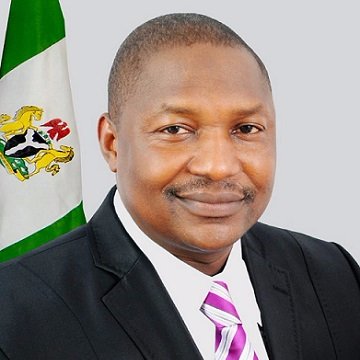
ABUBAKAR Malami, minister of justice and attorney-general of the federation, has said that the federal government is working towards establishing specialised courts and judicial divisions that will focus on sexual and gender-based violence (SGBV).

Malami disclosed this while speaking at a virtual session on ‘Special Event on Gender Dimensions of Criminal Justice Responses to Terrorism’ organised by the UN Office on Drug and Crime (UNODC) as part of events commemorating the 2021 International Women Day holding at Kyoto, Japan, on Monday.

The minister said he had, in 2020, inaugurated the Inter-Ministerial Management Committee on Eradication of Sexual and Gender-Based Violence with the hope that it would be an important tool to address gender-based crimes in Nigeria.


Read Also:


He noted that the Complex Case Group under his office, in collaboration with relevant stakeholders, led in the efforts to bring suspected terrorists to justice.

“We also, in collaboration with the military, police and other security service investigators from the multi-agency Joint Investigation Centre in North-East, worked to include sexual violence-related charges against Boko Haram suspects,’’ Malami said.

Read AlsoOne too many: In Abuja, sexual and gender-based violence happens frequently but perpetrators often walk free

“Preventing these crimes and bringing those who commit these acts to justice remain a priority of the government of President Muhammadu Buhari.

“Another emerging area of grave concern is the abduction and kidnapping of teenagers in boarding houses for ransom.

“The perpetrators target this group of people possible to scare them from schooling and this is indeed a sad situation.

“We must work to prevent both male and female perpetrators from carrying out these acts and support those who have been victims,” Malami stated.

According to the AGF, the Nigerian armed forces and law enforcement agencies were working day and night to combat insecurity, terrorism, kidnapping and abduction of people in the country.

VIDEO: Survivors narrate harrowing experience of Domestic Abuse during COVID-19 lockdown

He further stated that in partnership with UNODC and the European Union, the federal government had launched the ‘Nigeria Training Module on Gender Dimensions in the Criminal Justice: Response to Terrorism.’

About eight months ago, Julie Okah-Donli, director-general of the National Agency for the Prohibition of Trafficking in Persons (NAPTIP), had disclosed that plans were on to establish a special court to try rapists.

Okah-Donli said this while speaking at a press briefing in Abuja, on July 11, 2020, stating that the agency would meet with the Federal Ministry of Justice on the proposed special rapist court.

The ICIR had reported that some states had established special courts for sexual-related offences in Nigeria. Some of the states include Lagos and Ogun.

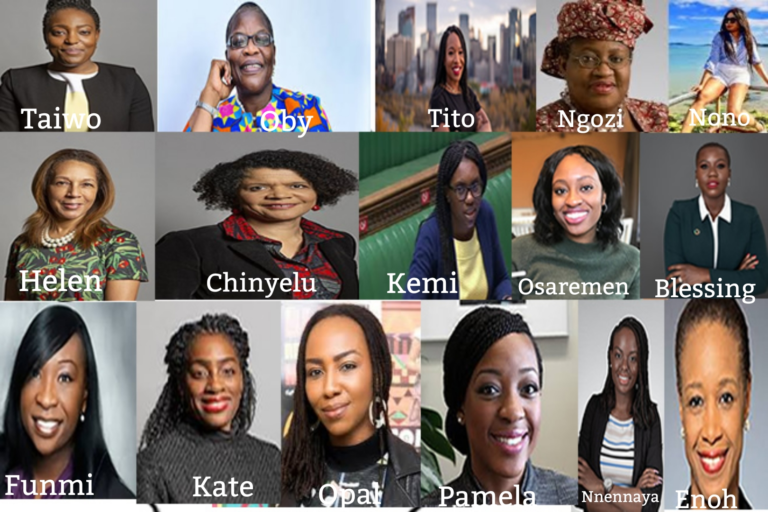
IWD: 16 Nigerian women breaking the glass ceiling in diaspora

MINORITY women in white-majority countries often find it difficult to advance to the top of their careers as they face a subtle, yet damaging form of discrimination, first because they are women and second because they are black.

Despite their best efforts and suitability, women are unable to explore the opportunities right in front of them as research suggests that they are 18 percent less likely to be promoted than their male co-workers and hold below five percent of board of directors and corporate officer positions in most corporations. Women have also been disproportionately affected by the Covid-19 pandemic, representing 54 percent of overall job losses.

The glass ceiling is, therefore, a metaphor for the invisible barrier that prevents people, especially women, from rising to top positions. The barriers are most often unwritten, meaning that those affected are more likely to be restricted from advancing through accepted norms and implicit biases rather than defined corporate policies.

However, women’s equality/empowerment is one of the 17 Sustainable Development Goals (SDG) and by 2030, the world is expected to have achieved some gender equality as set out in the targets under SDG5. The International Women’s Day 2021  is themed ‘Women in leadership: Achieving an equal future in a COVID-19 world’ and focuses on the role women can play in ‘building back better’ and take on more challenging roles in the workplace.

To mark this year’s International Women’s Day celebration, The ICIR, in this report, highlights women of Nigerian decent who are already making significant groundwork all over the world to accelerate a cultural shift in the social perception of women and ensure that they have equal access to economic opportunities, as well as more voice in decision-making.

 Okonjo-Iweala

Ngozi Okonjo-Iweala, an economist and international development expert, is the current director-general of the World Trade Organization(WTO), the first woman and the first African to hold the office. She also sits on the boards of Standard Chartered Bank, Twitter, Global Alliance for Vaccines and Immunization, and the African Risk Capacity. 

Okonjo-Iweala had previously spent 25 years building her career at the World Bank and scaling the ranks to the number two position of managing director, operations. Back in Nigeria, she served as the first female finance minister and worked in that capacity with two Nigerian presidents between 2003–2006 and 2011–2015, the only woman to achieve that feat. 

Ezekwesili

Obiageli Ezekwesili is chartered accountant and works as a public analyst/senior economic advisor at the Africa Economic Development Policy Initiative (AEDPI), a  programme that advises African heads of states and relevant ministries on economic and policy reform issues. She was a co-founder of Transparency International, serving as one of the pioneer directors of the global anti-corruption body. 

Ezekwesili also served as the vice-president of the World Bank’s Africa division from May 2007 – May 2012 and is also a former federal minister of solid minerals and later headed the Federal Ministry of Education. She was a 2018 nominee for the Nobel Peace Prize for her work in transparency in the extractive sector.

READ ALSOMale Nation: Number shows how Nigeria discriminates against women in political leadership

Ebong, Okolo, Badejo in Biden’s cabinet

In the U.S., at least three Nigerian women are currently serving in the President Joe Biden’s administration. Enoh T. Ebong was appointed to serve as the acting director of the U.S. Trade and Development Agency, an agency that partners with the U.S. private sector to develop sustainable infrastructure and foster economic growth in emerging economies, while supporting U.S. jobs through the export of the country’s goods and services. 

Osaremen Okolo, a former senior health policy advisor at the United States House of Representatives, was appointed as a Covid-19 policy advisor to the president. Similarly, Funmi Olorunnipa Badejo, a former counsel for policy at the White House Counsel’s Office, was appointed as a White House counsel. Badejo was also attorney advisor at the Administrative Conference of the United States during the Obama-Biden administration.

Udochu

At Intel Corporations, California, Nnennaya Udochu, a power integrity engineer, works as an analog engineer, leading platform designs for 2020 Microprocessor Projects and the technical collaterals of the Platform Design Guide. She had previously worked with Cisco and has been an adjunct professor at the University of Portland, Oregon. Udochu also serves on the board for Society of Women Engineers, Columbia River Section, and Engineers Without Borders Portland, Oregon. 

Adewoyin

Pamela Adewoyin is the counsel, business & legal affairs at Netflix, where she negotiates and drafts development agreements for a multitude of unscripted series. She also provides legal support and advice to department heads on all corporate, vendor, lease, and sale agreements.

Do women need the approval of male relatives before adopting children in Nigeria?

Tometi

Human rights activist, writer, strategist and community organiser, Opal Tometi, is a co-founder of Black Lives Matter (BLM) and has campaigned for advancing human rights, migrant rights, and racial justice worldwide. She is also former executive director of the United States’ first national immigrant rights organisation for people of African descent, the Black Alliance For Just Immigration (BAJI). Tometi was included in Time magazine’s 100 Most Influential People of 2020 and she was on the list of the BBC’s 100 Women announced in November 2020.

Omakwu

Blessing Omakwu is a deputy director at the Bill & Melinda Gates Foundation, where she leads the Goalkeepers initiative, which is a campaign and community that serves as a catalyst for action on the Sustainable Development Goals. Prior to joining the Gates Foundation, she had worked with and advised a variety of international organisations and government agencies, including the ONE Campaign, the Nigerian Federal House of Representatives and the United Nations Development Program. 

A recipient of the 2012 USA National Association of Women Lawyers Outstanding Law Graduate award, Omakwu was also recognised as one of the top 50 emerging global policy leaders by the British Council in 2017.

Onwurah

Similarly, Nigerian women in the UK are breaking through barriers, especially in the political arena. Chinyelu Susan Onwurah, a Labour Party politician, has served as the Member of Parliament (MP) for Newcastle upon Tyne Central since 2010. She was shadow minister for industrial strategy, science and innovation from October 2016 until 9 April 2020, when she was appointed as shadow minister for science, research and digital.

Prior to joining politics, Onwurah had been head of telecoms technology at Ofcom, with a focus on broadband provision. In 2018, Onwurah was added to the Computer Weekly’s ‘Most Influential Women in UK IT’ Hall of Fame alongside Hannah Dee, Sarah Wood and Sherry Coutu and in 2020 was made an Honorary Fellow of the British Science Association.

Grant

Helen Grant, born of an English mother to a Nigerian father, is an orthopedic surgeon by training but veered into politics. She was appointed special envoy of UK Prime Minister, Boris Johnson, on Girls’ Education in January, 2021. Before her appointment, she had become the first black woman of mixed heritage to be elected in 2010 as an MP under the Conservative Party. She also became minister for sports and tourism in 2013, a post she held until after the 2015 general election.

Osamor

Ofunne Kate Osamor is the Labour and Co-operative Member of Parliament for Edmonton since 2015 and has consistently argued for much fuller representation of Black and Ethnic Minority communities in political bodies, causing her to successfully win re-election in 2017 and 2019 general elections. She is a former minister for women and equalities and former shadow secretary of state for International Development. Osamor was appointed to the House of Lords in 2018 and is chair of the All-Party Parliamentary Group (APPG) on Nigeria.

Owatemi

Another Labour Party politician in the UK, Taiwo Owatemi, was first elected as the MP for Coventry North West in the 2019 election, making her one of Coventry’s three female MPs, alongside Zarah Sultana and Colleen Fletcher. She has served in a number of roles in the Young Fabians and as a trained pharmacist has published several articles on health policy.

Badenoch

In February 2020, Olukemi Badenoch was appointed exchequer secretary to the Treasury and Parliamentary Under-Secretary of State (Minister for Equalities) in the Department for International Trade. She has also been a Conservative politician since 2017 when she won the seat of MP for Saffron Walden, becoming the first woman to represent that constituency, and was later appointed minister of children and families by Boris Johnson in 2019.

Okeke

At the Central Bank of Ireland, a young Nigerian woman, Nono Okeke, recently won the Spotlight Award, the bank’s highest award which she dedicated to Okonjo-Iweala for being a source of inspiration to her and many young women.

Daodu

Nigeria’s Tito Daodu is the first black woman to become a pediatric surgeon in Canada and currently works at Alberta’s Children’s Hospital Foundation. Daodu has a passion for global health and promoting justice and equity in medicine. She is actively involved in Global and Public Health Research, focusing on improving surgical outcomes and making surgical care more equitable and accessible in Canada and around the world.

The 2021 International Women’s Day is celebrated today with the hashtag #choosetochallenge and is spotlighting the achievements of women and calling attention to the need to create a more inclusive world with equal opportunities for women of diverse backgrounds.