Home Blog Page 187

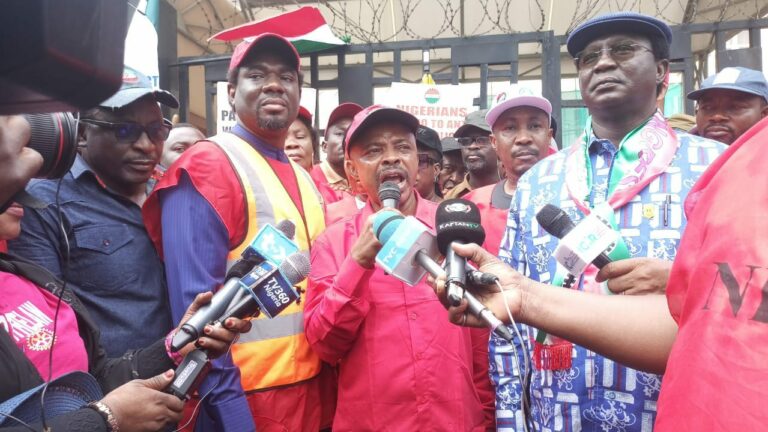
NUPENG, Transporters’ union dismiss FG’s conciliatory talks, insist on strike

0

TRANSPORT Owners’ Union has ignored the Federal Government’s last-ditch efforts to suspend its planned industrial action, vowing to proceed with the strike in solidarity with the National Union of Petroleum and Natural Gas Workers (NUPENG).

The Nigerian Association of Road Transport Owners (NARTO) and the Petroleum Products Retail Outlets Owners Association of Nigeria (PETROAN) has also declared solidarity with NUPENG in a nationwide industrial action that could paralyse fuel distribution and the economy across the country.

The strike, scheduled to begin on Monday, September 8, 2025, comes amid mounting fears over alleged monopolistic practices in the downstream oil and gas sector, particularly linked to the Dangote Group’s operations.

This is not the first time the union body has expressed such concerns in the lead-up to Dangote’s proposed role in dominating the petroleum distribution value chain.

Earlier, The ICIR reported a claim by PETROAN that a large chunk of its business would be disrupted when the Dangote Refinery implements its new nationwide market distribution plan.

On Sunday, June 15, the Refinery announced plans to begin a nationwide targeted distribution of premium motor spirit (PMS) and diesel to major retail outlets across the country, a move seen as a disruption to the petroleum tanker distribution body across the country.

The distribution was to serve marketers, petrol dealers, manufacturers, telecoms firms, aviation, and other large users across the country.

Accordingly, NUPENG, in a strongly worded statement signed by its President, Williams Akporeha, and General Secretary, Afolabi Olawale, on Sunday, September 7, dismissed reports that tanker drivers had withdrawn from the strike, calling it “a management-inspired fabrication.”

The General Secretary of NUPENG, Olawale Afolabi, said the union was going ahead with its planned action notwithstanding intervention from any quarter.

It accused the Direct Trucking Company Drivers Association (DTCDA) of being an “artificially created union” sponsored by business moguls Aliko Dangote and Sayyu Dantata to undermine NUPENG’s Petroleum Tanker Drivers (PTD) branch.

“The DTCDA is the association which Dangote Group of Companies has formed for the drivers to join compulsorily rather than allowing drivers to join NUPENG, which is the only statutorily recognised union authorised to unionise petroleum tanker drivers,” the statement said.

It further alleged that the DTCDA was being housed in the Lagos office of MRS Energy Limited, owned by Dantata.

“Slavery ended centuries ago, but some unscrupulous capitalists are making efforts to bring it back. Any worker who cannot exercise the right of association is no better than a slave. Ordinary Nigerians should neither encourage nor support slavish working conditions,” NUPENG warned.

The union called on its members and the public to disregard “propaganda and misinformation” and assured that “solidarity remains constant, for the union makes us strong.”

 

FG woos investors with reforms, incentives in deepwater sector

0

THE Federal Government has renewed its call on major engineering, procurement, and construction (EPC) companies to return to Nigeria, assuring them that previous concerns in the sector had been addressed through bold reforms and investor-focused incentives.

Minister of State for Petroleum Resources (Oil), Heineken Lokpobiri, gave the assurance at the EPC Deepwater Investment Roundtable organised by the Oil Producers Trade Section (OPTS) in London at the weekend.

He declared that Nigeria was ready for business under a transformed operating environment.

“When we say Nigeria is open for business, we’re not making a statement of intent; we’re pointing to the reforms we’ve implemented, the policies we’re enacting, and the partnerships we’re building. The landscape has changed, and this can be confirmed directly from the IOCs, who are already seeing the results,” the minister said in a statement signed by his Special Adviser on Media and Communications, Nneamaka Okafor, on Sunday, September 7.

He highlighted the reasons many EPC firms had scaled down or exited Nigeria in the past, such as contracting inefficiencies, regulatory ambiguity, security issues, and fiscal uncertainty.

“But those reasons no longer exist. Through the Petroleum Industry Act (PIA), we have streamlined fiscal terms, strengthened regulatory clarity, and committed to project security in partnership with the Nigerian Navy and other security agencies,” he said.

The minister appealed to International Oil Companies (IOCs) and deepwater operators to continue making Final Investment Decisions (FIDs), stressing that EPC firms would only return if there were active projects.

“The EPCs will not return if there are no projects, and there can be no projects if operators are not investing. I want to thank those who are already taking advantage of the government’s efforts, but we must do more. The projects must flow for the EPCs to come back,” he stated.

Lokpobiri highlighted the globally competitive incentives under the PIA for deepwater operations.

These include reduced royalty rates for deep offshore production, ranging from five per cent to 7.5 per cent depending on water depth; removal of cost recovery limits, allowing companies to recover full development costs before profit sharing; tax credits and allowances for frontier exploration; contract sanctity and investor protection mechanisms to guarantee stability; and streamlined approvals with shorter contracting cycles currently under review.

He emphasised that these incentives were not designed for IOCs alone but would also extend to EPC contractors executing technically demanding projects.

“These giant EPC companies, who once left, are exactly the kind of players who can thrive in deepwater. The same way we have fine-tuned incentives for operators, we will ensure those benefits are extended to EPCs, because without them, these projects cannot be delivered,” he said.

The ICIR reported that President Tinubu’s recent visit to Brazil once again reignited talks for the return of Brazil’s state-owned oil company, Petrobras, to Nigeria, which focuses largely on deepwater offshore oil investments.

Brazil’s state-run oil company Petrobras, which left Nigeria five years ago, should be able to return quickly, Nigerian President Bola Tinubu told a press conference with his Brazilian counterpart, Luiz Inacio Lula da Silva, during the visit.

“We have the largest gas repository. I don’t see why Petrobras shouldn’t return as a partner in Nigeria as soon as possible,” he added.

Over 1,800 killed in South-East in 3 years- Amnesty International report

0

AMNESTY International has raised alarm over worsening insecurity in Nigeria’s Southeast region, revealing that more than 1,844 people were killed between January 2021 and June 2023.

The organisation’s new report shows that the region’s violence has become a hybrid of political and criminal attacks, involving multiple actors such as IPOB and its armed wing, the Eastern Security Network (ESN), so-called “unknown gunmen,” cult groups, and state-backed forces like Ebube Agu.

Amnesty noted that the complexity of actors has often been reduced to a single narrative of secessionist agitation, even though various groups are involved.

The findings highlight that the so-called “unknown gunmen” are not faceless but known individuals within their communities, operating from forest camps across Imo, Anambra, Enugu, and Ebonyi states. Clashes between farmers and herders have also claimed lives, while cult-related killings linked to drug networks remain rife in Anambra towns such as Onitsha and Awka.

Security forces and state-backed militias were also accused of serious violations. The report cited arbitrary arrests, enforced disappearances, torture, extrajudicial executions, and destruction of property during operations such as “Python Dance” and “Operation Udo Ka,” as well as airstrikes in Imo and Anambra communities.

Amnesty further alleged that authorities have targeted suspected IPOB supporters with unlawful killings, abductions, secret detentions, and unfair trials.

Communities such as Agwa and Izombe in Imo have been described as “ungoverned spaces” where gunmen hold sway, while the enforcement of IPOB’s sit-at-home order has denied residents their rights to life, education, and freedom of movement.

Amnesty International urged the Nigerian government to conduct independent and transparent investigations into abuses by both state and non-state actors, prosecute those responsible, and provide justice and compensation for victims.

The group also called on authorities to notify families of the whereabouts of persons arrested or disappeared, criminalise enforced disappearance under domestic law, and provide humanitarian support to displaced communities.

The organisation stressed that urgent action is needed to ensure accountability, protect civilians, and prevent the South-East from descending further into lawlessness and human rights abuses.

UN demads probe over killing of 63 civilians by Boko Haram in Borno

0

THE United Nations (UN) has condemned the alleged killing of 63 people in Borno State, by Boko Haram militants.

In a statement issued on Sunday, September 7, UN Humanitarian Coordinator, Mohamed Fall, urged Nigerian authorities to bring the perpetrators to justice.

Recall that a fresh attack on Daral-Jamal, a community located along the Bama-Banki Road in the Sambisa Forest, on the evening of  September 5 left five soldiers and 58 civilians dead.

The insurgents also burnt down over 20 houses, vehicles, foodstuff and other valuables belonging to the resettled Internally Displaced Persons (IDPs).

Fall extended his condolences to the families of the victims and urged security agencies to apprehend those behind the heinous attack and ensure they are brought to justice without ddelay, calling  for the immediate release of all abducted persons.

“I am deeply appalled and saddened by Friday’s reported killing of dozens of civilians in Darajamal Village, Bama Local Government Area (LGA), in Borno State in Northeast Nigeria. Civilians should never be a target!.

“Preliminary reports indicate that more than 50 civilians were killed when suspected members of a non-state armed group (NSAG) attacked Darajamal on the evening of 5 September. An unknown number of people were also allegedly abducted, with others fleeing with injuries. At least 28 houses were also reportedly burned during the attack. The number of casualties is expected to change as more information becomes available.

“On behalf of the United Nations in Nigeria, I convey my heartfelt condolences to the families of those killed and those affected, and to the government and the people of Borno State and wish the injured a speedy recovery.

Fall highlighted that the recent civilian killings in the region serve as a stark reminder of the escalating violence and insecurity that have plagued Borno State this year.

“Multiple attacks against civilians have been recorded, leading to the deaths of hundreds of civilians in Borno alone. The attacks, ranging from targeted attacks on communities to internally displaced persons (IDP) camps, using improvised explosive devices, suicide bombings and other tactics, have targeted civilians, including farmers, fishermen, travellers and traders.

“Deadly attacks against civilians have also been recorded in neighbouring Adamawa and Yobe states, with a rural health centre, grain stores and a market among targeted areas,” he added.

The UN coordinator reiterated the appeal to all parties involved in the conflict to safeguard civilians and their property and to fully comply with international humanitarian and human rights laws.

“The UN reaffirms its commitment to continue supporting people affected by conflict to complement Government efforts,” he said.

The ICIR reported in May that Borno State Governor, Babagana Zulum, accused some Nigerian politicians and members of the armed forces of serving as informants and working with Boko Haram insurgents.

While outlining some of the challenges his state had encountered in its fight against insurgency, Zulum called on President Bola Tinubu to prioritise ground-level intelligence and heed professional advice from the military.

N70,000 minimum wage no longer sustainable, NLC says, demands  upward review

0

THE Nigeria Labour Congress (NLC), has called for an immediate upward review of the national minimum wage, stressing that the current N70,000 is no longer adequate to meet rising living costs.

NLC Acting General Secretary, Benson Upah, told NAN on Sunday that inflation has eroded the value of the N70,000 minimum wage, leaving many workers struggling to cover basic necessities.

“The truth is that ₦70,0000 is not sustainable under the present economic situation. Workers are under immense pressure, and unless the government responds quickly, the crisis of survival will only worsen.

“We have since engaged the Federal Government on this matter at different times and forums. It is our hope that the government would see both the economic and moral obligations to do so expeditiously,” he said.

They pressed their demand after several states across the country took bold steps to raise workers’ minimum wage above the N70,000 benchmark in response to current economic realities.

President Bola Tinubu signed the new National Minimum Wage Bill into law  in July 2024, increasing the minimum wage from N30,000 to N70,000.

The amended law covers the entire country, extending to the federal, state, and local governments, as well as the private sector, which took a while to implement in some states, while other states implemented higher minimum wages for their workers immediately.

 Governor Babajide Sanwo-Olu of Lagos State announced minimum wage increase to N85,000, with a promise to further raise it to N100,000 in 2025.

Rivers State equally approved N85,000 minimum wage on October 18, 2024, while Bayelsa, Niger, Enugu, and Akwa Ibom states approved N80,000 for their workers.

Ogun and Delta states are implementing a N77,000 minimum wage, Benue and Osun states raised the wage to N75,000, while Ondo state pegged its own to N73,000.

Recently, Imo State Governor Hope Uzodinma announced an increase in its state minimum wage from N70,000 to N104,000, alongside adjustments across the entire salary structure for its civil servants on August 27, 2025.

Uzodinma explained that the salary review, reached in agreement with organised labour, was aimed at enhancing the welfare of workers.

In his remarks on Sunday, Upah noted that although labour would continue to explore dialogue, industrial action could be an option if negotiations break down.

He further called on workers to stay united and engaged in union activities to reinforce the collective struggle.

Customs approves $300 duty-free limit for small imports

0

NIGERIANS shopping online or returning from trips abroad with small items may soon save money at the ports, as the Nigeria Customs Service Board (NCSB) has approved a De Minimis threshold of $300 for low-value imports.

The decision, reached at the board’s 63rd regular meeting chaired by the Minister of Finance and Coordinating Minister of the Economy, Wale Edun, will take effect from Monday, September 8, 2025.

Explaining the new policy, the board stated: “By definition, it is essential to note that the De Minimis threshold is the value below which imported goods are exempted from payment of customs duties and related taxes established by the national legislation.”

It added that the approved $300 limit “aligns with the best global practices that aim to simplify clearance processes for low-value consignments, enhance trade facilitation, and provide clarity for e-commerce stakeholders and travellers.”

The exemption, however, is restricted to four importations per annum per individual. Customs also warned that anyone who attempts to manipulate invoices or evade duty obligations will face penalties.

“Noncompliance penalties include forfeiture, arrest, and other sanctions stipulated in the NCS Act, 2023,” the board warned.

To help with implementation, the Service announced that it will set up “multi-channel helpdesk platforms” to provide guidance for travellers, online shoppers, and stakeholders.

On disciplinary matters, the board also reacted to viral videos showing misconduct by some officers. Two officers were demoted and ordered to undergo medical re-evaluation, while two others were reinstated after their cases were reviewed.

“The Board further issued a stern warning to all officers against the abuse of banned substances and other forms of unethical behaviour, stressing that such conduct will not be tolerated under any circumstances,” the statement read.


US visa policy now requires interviews in country of residence

0

THE United States Department of State has introduced a new policy for non-immigrant visa applicants, mandating that they book their interviews at the US Embassy or Consulate located in their country of nationality or residence.

The policy was published on September 6, 2025, on the State Department’s official visa portal, stating that it takes effect immediately.

“Applicants must be able to demonstrate residence in the country where they are applying, if the place of application is based on their residency,” the statement read.

The Department said that the revised policy specifically ends the long-standing practice of non-immigrant applicants traveling to neighboring countries to secure interview appointments.

The ICIR reports that Nigerian applicants frequently sought appointments at consulates in countries like Cameroon, Namibia, Ghana, Ivory Coast, Canada, or even the Dominican Republic to bypass delays when slots were unavailable in Abuja or Lagos.

The policy is expected to impact Nigerian applicants who already face a difficult process, particularly due to the long wait times in the country.

The Department stated that the new directive overrides all previous guidelines on designated visa processing locations.

“Nationals of countries where the U.S. government is not conducting routine nonimmigrant visa operations must apply at the designated embassy or consulate, unless their residence is elsewhere,” the statement read.

The designated locations include provisions for nationals from conflict-affected or diplomatically restricted countries such as Afghanistan (Islamabad), Belarus (Vilnius, Warsaw), Cuba (Georgetown), Iran (Dubai), Russia (Astana, Warsaw), Venezuela (Bogotá), and Yemen (Riyadh).

Applicants are also warned of other critical changes, like the appointment availability.

“Applicants applying outside their country of nationality or residence should expect to wait significantly longer for an appointment.

“Applicants who schedule nonimmigrant interviews at a US embassy or consulate outside of their country of nationality or residence might find that it will be more difficult to qualify for the visa. Fees paid for such applications will not be refunded and cannot be transferred,” it added.

However, the Department clarified that existing appointments “will generally not be cancelled” and stressed that the new policy does not apply to diplomatic, NATO, or UN-related visa categories.

It added that exceptions may still be granted for “humanitarian or medical emergencies or foreign policy reasons,” it said.

The Department advised applicants to visit the websites of their local embassies or consulates for information on requirements and wait times, noting that the broad policy shift is aimed at streamlining nonimmigrant visa processing while addressing global backlogs and security concerns.

The ICIR reported that the US Mission in August issued a directive that Nigerian visa applicants must submit a detailed list of their social media accounts on the DS-160 visa application form.

Nigeria, Ghana, others to witness lunar eclipse on Sunday

0

NIGERIA and several other countries across Africa will witness a lunar eclipse this Sunday, September 7, 2025.

According to scientists cited by NTA, the celestial event is expected to last about 83 minutes, beginning around 8:00 p.m. Nigerian time.

The eclipse will be visible across most of Africa, though some western regions may miss parts of the early penumbral or partial phases as the moon rises closer to or during totality.

Countries set to experience the phenomenon include, Nigeria, Ghana, Cameroon, Gabon, Equatorial Guinea, Benin, Togo, Niger, Chad, and São Tomé and Príncipe.

Experts explained that a lunar eclipse occurs when the sun, earth, and moon align in space, with earth positioned in the middle, casting its shadow on the moon. Unlike solar eclipses, lunar eclipses are completely safe to watch with the naked eye.

This Sunday’s spectacle will give stargazers and skywatchers in Nigeria and beyond a rare opportunity to witness one of nature’s most striking astronomical events.

Clean energy transition: NEITI urges caution to protect Nigeria economy

0

THE Nigeria Extractive Industries Transparency Initiative (NEITI), has cautioned that the nation’s shift to cleaner energy should not be approached without consideration to its local context.

The Executive Secretary of NEITI, Orji Ogbonnaya Orji, who made this remark during an exclusive interview with The ICIR stressed that the country must adapt the global energy transition within its own local context to avoid economic and social disruption.

He said the global movement towards renewable energy and net-zero emissions by 2060 was a reality Nigeria could not ignore.

However, he cautioned that the transition must take into account the nation’s dependence on oil and gas revenue, which currently sustains jobs, government budgets, and energy security.

“Energy transition is a very important development. For Nigeria, it’s a reality we cannot ignore. But we must approach it considering our national interest and sovereignty,” he said.

According to him, oil and gas revenues remain the backbone of the economy, with monthly allocations to states still dependent on crude oil earnings.

“Oil has sustained us, and it’s what governors gather every month to share. So if oil gives way to green energy, what happens to jobs, the budget, livelihoods tied to oil and gas?”

He noted that while developed countries were well ahead in renewable infrastructure, Nigeria lacked the institutional capacity and facilities to switch overnight.

“Developed countries are ready — they have Teslas, carbon-free cars, renewable infrastructure. Are we ready in Nigeria? No. Our infrastructure cannot support it immediately. Our institutions are not ready,” he stressed.

He noted that NEITI commissioned a study on the impact of energy transition on Nigeria’s economy with support from the Ford Foundation to guide policy.

Orji disclosed that the interim report is currently under review, after which a comprehensive policy brief will be released to provide government with data-driven recommendations.

“We want an empirical basis for engaging government on a national policy. When the study is concluded, we will prepare a policy brief so that government will have facts and figures to guide decisions. Because as we transition, we must ensure our reserves, jobs, and livelihoods are not jeopardised,” he explained.

Although Nigeria has developed a national energy transition plan with a net-zero emissions target of 2060, Orji described implementation as slow and symbolic.

“Government has developed a national energy transition plan with a net-zero target of 2060. But the road to 2060 has not fully started. The vehicle has not moved — maybe it’s still loading,” he remarked.

The NEITI helmsman emphasised that while Nigeria must embrace global best practices in sustainability, it cannot afford to copy developed nations without adaptation.

“Is it a concept we can ignore? No. It is global, and it concerns us. But we must approach it within our local context. That’s why NEITI is interfacing with all relevant agencies and companies in Nigeria,” he said.

He added that energy transition should be anchored on Nigeria’s peculiar needs — expanding investment in ICT, agriculture, and entertainment while managing oil revenue prudently to cushion the eventual decline of fossil fuel demand.

“What matters now is balance. As the world shifts, Nigeria must prepare carefully, so we don’t sacrifice jobs, revenue, and energy security on the altar of transition,” Orji said.

SERAP sues RMAFC over planned salary increase for political office holders

0

THE Socio-Economic Rights and Accountability Project (SERAP) has taken legal action against the Revenue Mobilisation Allocation and Fiscal Commission (RMAFC) over its proposal to raise the salaries of political and public office holders, including the President, Vice President, Governors, their deputies, and members of the national assembly.

The ICIR reported in August that RMAFC Chairman, Mohammed Shehu, disclosed the commission’s proposal to increase, claiming that the salaries for these office holders are “paltry.”

Shehu stated that President Bola Tinubu currently earns N1.5 million monthly, a figure he described as laughable for a nation of over 200 million people, adding that the amount has remained unchanged since 2008.

In a statement issued on Sunday, September 7, SERAP’s Deputy Director, Kolawole Oluwadare, confirmed that RMAFC had been taken to court, though a hearing date is yet to be set.

He explained that in suit number FHC/ABJ/CS/1834/2025, filed last week at the Federal High Court in Abuja, SERAP is asking the court to decide whether RMAFC’s proposed salary increase for the president, vice president, governors, their deputies, and lawmakers is not unlawful, unconstitutional, and inconsistent with the rule of law.

He said that SERAP is urging the court to declare that the proposed salary hike for politicians as unlawful, unconstitutional, and contrary to the rule of law, as it breaches the provisions of the 1999 Nigerian Constitution (as amended) and the RMAFC Act.

“An order of injunction restraining RMAFC, its agents and privies from taking any step to review upward the salaries of the president, vice-president, governors and their deputies, and lawmakers in Nigeria.

“An order directing RMAFC, its agents to review downward the salaries and allowances of the president, vice-president, governors and their deputies, and lawmakers in Nigeria to reflect the economic realities in the country,” Oluwadare added.

In the suit, SERAP contended that preventing the commission from arbitrarily raising the salaries of these persons would protect legitimate public interest.

“Reviewing downward the salaries of the president, vice-president, governors, their deputies, and lawmakers would be entirely consistent and compatible with the Nigerian Constitution, the country’s international human rights obligations, and the current economic realities in the country.

“The imminent pay rise for political office holders is a gross violation of the provisions of chapter 2 of the Nigerian Constitution relating to fundamental objectives and directive principles of state policy, and the country’s international human rights obligations.

“The combined provisions of chapter 2, and chapter 4 on fundamental rights particularly section 42 give meaning and substance to the socio-economic rights of Nigerians and their right to equality and non-discrimination,” Oluwadare added.

The ICIR reported that prominent Nigerians, including human rights lawyer, Femi Falana, criticised the proposed salary hike for political office holders, calling it grossly insensitive in light of Nigeria’s prevailing economic hardship.

Falana, a senior advocate, took a swipe at RMAFC accusing it of misplaced priorities and neglecting the daily hardships faced by millions of Nigerians.

The Nigeria Labour Congress (NLC) was among the first group of Nigerians to oppose the plan.

The NLC cited growing inequality, and the hidden perks politicians enjoy as reason why such plan should be dropped. It said workers earned only N70,000 as minimum wage monthly, which did not reflect the hardship faced in the country.

Similarly, former presidential candidate and Labour Party leader, Peter Obi, criticised the proposal describing it as a “shameless grab for more” at the expense of Nigeria’s struggling majority.