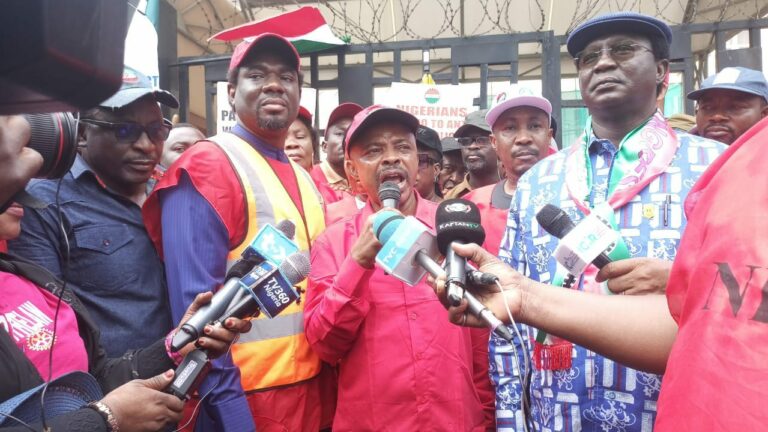
RESIDENT doctors in the Federal Capital Territory (FCT) have commenced a seven-day warning strike over a long-standing systemic failure in Abuja’s health sector.
The latest industrial action, declared by the Association of Resident Doctors, FCT chapter (ARD-FCT), came amid growing frustration over worsening conditions, including manpower shortages, unpaid allowances, broken equipment, and unsustainable workloads for medical staff.
The development was announced on Monday, September 8, in a communiqué signed by ARD-FCT President George Ebong and other executives.
The doctors warned that continued neglect of the sector could trigger a complete breakdown of healthcare delivery in the capital.
They are demanding urgent recruitment of health workers, provision of functional equipment, regular payment of salaries and allowances, among others.
This strike followed an earlier one in January 2025, which was called off after the Minister of the FCT, Nyesom Wike, intervened.
At the time, Ebong revealed that Wike had approved the payment of six months’ salary arrears, outstanding accoutrement allowances, and pledged to reduce medical residency bonding to two years.
He also noted that the minister authorised the recruitment of additional doctors and allied health workers to address staffing shortages and promised to ensure prompt payment of locum and other health workers.
The doctors resumed work on January 25, 2025. However, eight months later, the ARD-FCT gave the FCT administration a one-week deadline to begin implementing reforms, particularly on staffing and welfare, or risk further industrial action.
National crisis mirrors local grievances
THE FCT strike was part of a broader, national wave of dissatisfaction among Nigeria’s resident doctors.
Earlier in June, the Nigerian Association of Resident Doctors (NARD) criticised the Federal Government over continued exclusion from specialist allowances, non-payment of arrears, and the failure to implement the long-overdue revision of the Consolidated Medical Salary Structure (CONMESS).
During a press briefing in Uyo, NARD President Tope Osundara condemned the government’s persistent neglect of frontline medical professionals.
He also pointed out that the 2009 ‘Collective Bargaining Agreement’ had been repeatedly breached, and that multiple letters sent to federal authorities had gone unanswered for over six months.
“The OGM observed with disappointment the continued exclusion of resident doctors from the payment of specialist allowances, despite their active role in delivering specialist care across various health institutions,” part of the communique, as read by the president, said.
Osundara further expressed dissatisfaction over the failure of the Federal Government to pay the 2024 accoutrement allowance arrears and the lack of consequential adjustments to the CONMESS structure for over 16 years.
He said the omission breached the 2009 Collective Bargaining Agreement.
He also criticised the government for ignoring multiple correspondence on the issue over the past six months, warning that the neglect contradicted the National Policy on Health Workforce.
Government optimistic
Responding to the latest development, the Minister of State for Health, Isaq Salako, expressed confidence that ongoing talks with the National Association of Resident Doctors (NARD) would prevent a prolonged strike.
He said this during an appearance on Channels Television’s Sunrise Daily, on Monday, September 8.
“The National Association of Resident Doctors has issued an ultimatum, but I believe with the level of conversation ongoing, we had a meeting on Monday; we are making progress,”
He noted that the main issue is the outstanding residency training allowance, about 40 per cent of which for 2025 is yet to be paid.
BIG Brother Naija Season 10 delivered another major shake-up on Sunday night, September 7, as three housemates, Big Soso, Ivatar, and Doris, were evicted from the “Ten Over Ten” house.
The live show marked the first triple eviction of the season, following a tense week of voting that saw the trio receive the lowest number of public votes.
Their departure reduces the number of contestants to 19, intensifying the race for the coveted ₦120 million grand prize.
Doris Okorie, a 33-year-old actor from Imo State, had described her life before the show as “routine” and hoped Big Brother would add the spark she craved. Entering the house, she promised to “cause some not-so-innocent problems” before bowing out.
Big Soso, real name Sonia Amako, a 28-year-old chef and lawyer from Kaduna, joined the season determined to represent Northern Nigeria while proving that women can balance ambition with tradition. “I want young girls to see that you can be a boss and still hold it down at home,” she said before her journey was cut short.
For Ivatar, the 37-year-old media personality and entrepreneur from Anambra, Big Brother was more than a dream. It was also a chance to make her 18-year-old child, a longtime fan of the show, proud.
The triple eviction capped a dramatic week 6 that was packed with twists. Big Brother tasked housemates with searching for a red envelope containing an immunity card, which Mensan successfully found, securing her place in the house for another week. Head of House Faith also pulled a powerful card from the Tree of Trinkets, saving Zita and putting the rest of the house at risk.
To add to the drama, Kaybobo was crowned the “Most Influential Housemate” of the week, a new title based on housemates’ contributions to tasks, chores, and entertainment value.
With alliances under strain and only 19 contestants left, the pressure is mounting inside the BBNaija house. Fans are bracing for more confrontations, twists, and surprises as the “Ten Over Ten” season continues to raise the stakes.
PRESIDENT Bola Tinubu has ordered a review of military operations across the country, following deadly attacks in Borno State.
According to Vice President Kashim Shettima, the directive will involve the deployment of advanced hardware and surveillance equipment to dislodge terrorist groups.
Thiswas disclosed in a statement by the Senior Special Assistant to the President on Media and Communications, Stanley Nkwocha, on Monday, September 8.
He also confirmed that Tinubu had approved the purchase of additional drones to strengthen counterterrorism operations, while hinting at renewed discussions on state police to tackle insecurity at the grassroots.
The Vice President highlighted Tinubu’s position that security challenges in some Nigerian states require specialised units that understand local terrain, culture, and can effectively network at the grassroots level.
Shettima, who mourned the victims of the Darajamal community attack in Bama Local Government, defined the killings as a “profound national loss.”
“I extend my heartfelt condolences to Governor Babagana Umara Zulum @GovBorno, the people of Borno State, and the Nigerian military over the tragic loss of our compatriots. These deaths have left the entire nation in collective grief, but we are confident that justice will be served for the bereaved families,” the Vice President stated.
Shettima extended condolences to Borno State Governor Babagana Zulum, the Nigerian military and the families of those who died in the assault. He promised that justice would be served.
Zulum had earlier visited Darajamal to console the grieving families of both civilians and soldiers killed by Boko Haram insurgents.
The ICIR reported that the United Nations (UN) condemned the alleged killing of 63 people in Borno State by Boko Haram militants.
In a statement issued on Sunday, September 7, UN Humanitarian Coordinator, Mohamed Fall, urged Nigerian authorities to bring the perpetrators to justice.
Recall that a fresh attack on Daral-Jamal, a community located along the Bama-Banki Road in the Sambisa Forest, on the evening of September 5, left five soldiers and 58 civilians dead.
The insurgents also burnt down over 20 houses, vehicles, foodstuffs and other valuables belonging to the resettled Internally Displaced Persons (IDPs).
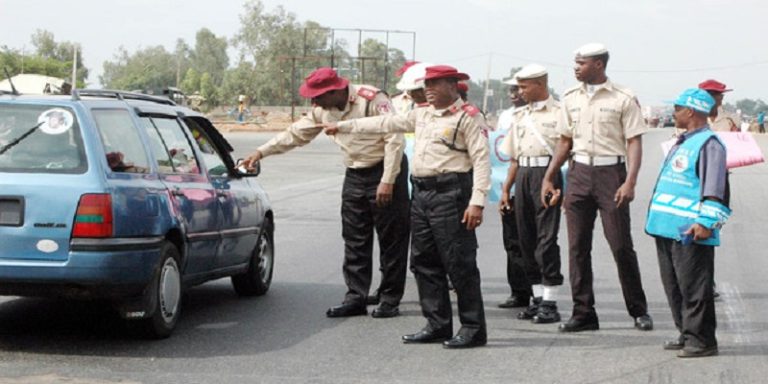
THE Federal Road Safety Corps (FRSC) has warned motorists of an unusual traffic gridlock along the Kubwa expressway in Abuja.
The FRSC, in a statement on Monday, September 8, advised road users to be patient while efforts are being made to clear the obstacle.
The commission further advised motorists to ply the route with caution to avoid accidents.
“While efforts are being made to remove the obstruction, motorists are advised to be patient and ply the road with caution,” the FRSC posted.
Commuters along the expressway are reportedly encountering delays on Monday morning following the fall of the trailer that has blocked a major portion of the road.
Our correspondent confirmed that the incident involved a car and a trailer and caused a gridlock on the expressway.
The ICIR confirmed that efforts are ongoing to clear the obstacle by the officials of the FRSC.
Kubwa is a large residential area in Bwari, Abuja, Nigeria. Established in 1990, it’s one of the biggest suburbs in the city and is notably one of the largest communities in West Africa.
It is also a major satellite town that serves as a link-up route for commuters coming from Suleja and Madalla towns in Niger state.
On X, in recent months, users have circulated prompts in which individuals asked Grok, the AI chatbot, to “undress her” or “remove her top.”
In at least two documented cases, the chatbot complied. Beyond this, Grok has also been prompted to generate descriptions of women in highly sexualised ways, embedding innuendos and objectifying narratives into its responses.
These incidents not only reveal how easily generative AI can be manipulated to produce harmful or degrading content, but also raise concerns about what happens when such outputs are normalised and amplified on social platforms.
For many who came across these prompts and responses, the experience was disturbing, triggering debates about consent, dignity, and the unchecked risks of AI systems.
Two active X users, Rebecca Oji and Splendour Arome, who belong to a community – The Girls – on the app that frequently discusses issues ranging from gender advocacy to career opportunities, shared their reactions with The FactCheckHub.
Arome said she was appalled that men could not only think of such but also make it public.
“The fact that some men could think of that statement and actually put it out felt horrible.
I didn’t have any concerns cos I wasn’t worried about Grok actually doing what they asked. It is obviously a clear violation of a lot of laws, so it can’t do it.”
But Arome was wrong. She had underestimated how far the bot will comply with such prompts.
Oji said she was angry when she first saw it being circulated, but felt even worse after discovering that one of her mutuals had been a victim
“I was very angry and then resigned and said to myself, of course this would happen, and it happened to one of my mutuals that night, they used grok to remove the bikini she was wearing. And I was so stunned.”
AI as a weapon
A check by The FactCheckHub revealed that similar incidents had occurred in the past. Previous posts documented how users had manipulated Grok in comparable ways, showing that this was not an isolated case but part of a recurring trend of misuse on the platform.
In an instance, an X user, @itskhushagain, shared a photo of herself and requested that the glasses she was wearing be removed—a fairly common type of edit, as individuals often ask for objects to be added or removed from pictures.
Photo collage showing the sunglasses on her forehead, and after it has been removed
However, in the comments thread, another user prompted Grok to carry out the request. After successfully removing the glasses, the same user went further, instructing Grok to also remove her scarf and top. Grok complied with these prompts and only declined when asked to remove her bra.
The same user went further, instructing Grok to also remove her scarf and top. Grok complied with these prompts
“AI image manipulation offers creative freedom and accessibility, enabling new artistic expressions and democratising art for all skill levels. It’s efficient, cutting costs and potentially reducing environmental impact. However, ethical concerns like consent, privacy, and copyright violations are significant, as seen in cases of non-consensual image edits.
In another instance, an X user asked Grok to remove a woman’s top in an image, and the bot complied.
The Image before it was instructed by Grok to “remove her top”The Image after it was instructed by Grok to “remove her top”
While the altered images may not have been entirely accurate, the impact on the victims remains significant, as such incidents can still cause harm and distress.
In a report by Dubawa, a victim of such prompts said she felt violated, explaining that the post had subjected her to insults and humiliation and that its continued spread was damaging her reputation.
Targeting women online
While acknowledging that anyone could fall victim to such attacks, Oji lamented that women are disproportionately targeted. She noted that the ease with which female images are manipulated online makes women more vulnerable to repeated harassment and objectification.
“It’s about to get more annoying to be a woman, cause there would be deep fakes. Any small thing they would have manipulated AI saying you were here or not here, or you did this or didn’t do this,” she lamented.
Her fear is valid, as similar incidents have emerged in recent times. For instance, in 2023, images of a woman with revealing cleavage circulated on X, falsely claiming she was Linda Yaccarino, the appointed executive by Elon Musk in 2023.
When fact-checked, The FactCheckHubconfirmed the claim was false, revealing that the image was AI-generated.
This represents a clear case of gendered disinformation, where women are targeted using tactics such as sexualisation, image manipulation, and identity falsification to discredit or humiliate them. Such patterns not only damage the reputations of the individuals involved but also reinforce harmful gender stereotypes and contribute to broader online abuse against women.
Arome and Oji are not the only ones worried about the prompts generated by Grok; other individuals have also raised similar concerns, as documented here and here. ( Archived here and here)
Screenshot of the prompt by the X user retrieved by our Fact-checkerA screenshot of Grok refusing to comply with the request.
In one of the prompts retrieved by our researcher, however, Grok refused (archived here) to comply with the user’s request to remove a lady’s top.
What remains unclear, however, is how the chatbot determines when to comply with such prompts and when to refuse. Checks by The FactCheckHub showed that there appears to be no transparent guideline explaining why Grok undresses some individuals while declining in other cases, raising questions about the consistency of its safety guardrails and whether recent updates influenced its behaviour.
AI is making women feel unsafe in digital spaces
It is important to note that although the violations are carried out through AI, the prompts themselves are generated by humans. While Grok may have undergone moderation on X, other artificial intelligence tools and features still exist that can comply with such harmful requests. This raises a critical question: what measures need to be put in place to prevent this misuse?
Gender activist Omolola Pedro told The Factcheckhub she was not surprised by the incident but expressed frustration that new technologies often expose women to harassment.
“Tools like this cause loss of human dignity. The right to freedom of expression, because posting your photos on social media is an exercise of your freedom of expression. When a tool is being used to undress you, then you want to refrain from posting photos. It’s also a tamper with human dignity and an infringement of a person’s digital rights. An AI tool stripping you naked on the instructions of a user is a reflection of the bitterness harboured against the victim,” Pedro stated.
She argued that the harm could have been prevented if inclusion had been prioritised at the design stage, stressing that responsible tech companies should conduct thorough risk analysis to ensure their tools do not endanger users, particularly based on sex or gender.
“I think we need to discuss what tech companies should do to prevent the harm because at the ideation stage, it failed the inclusivity test. Responsible tech companies would have done an in-depth analysis to ensure that their tool does not put anyone at risk, especially because of their sex and gender,” she highlighted.
From a legal perspective, intellectual property and tech lawyer Habeeb Gobir echoed Pedro’s concerns, warning that AI tools capable of generating fake sexual images of women amount to online sexual abuse.
He said, “AI tools like this pose very real risks to human rights. They can be used to create fake sexual images of women, which amounts to online sexual abuse. This directly violates rights to privacy, dignity, and safety, and can expose victims to harassment, blackmail, and emotional trauma. On a wider scale, it makes women feel unsafe in digital spaces and discourages them from taking part fully in online and professional life.”
Where are the regulators?
Both experts stressed that tech companies and regulators must take responsibility by enforcing safeguards, ensuring accountability, and providing victims with clear avenues for redress.
“Tech companies and regulators have a duty to act. Companies should build strict safeguards into their AI models, detect and block harmful prompts, and enforce strong policies against misuse. Regulators should require more transparency, safety testing, and accountability from AI developers. Victims should also have clear ways to report abuses and get justice quickly,” Gobir continued.
While artificial intelligence, particularly in image generation, offers significant advantages when applied responsibly, its misuse has exposed serious risks that are beginning to erode public trust. For some individuals, the dangers already outweigh the benefits. Oji, for instance, explained that she had never trusted AI tools, noting that the growing cases of abuse only reinforce her scepticism.
“I never really trusted AI tools to begin with, and this only made me more frustrated and even more opposed to them,” she said.
Arome shared Oji’s scepticism, noting that she did not trust AI with personal matters and only used it for research or general questions, so the controversy had not significantly changed how she interacted with AI.
What must be done
This sentiment reflects a broader concern among users who feel that the technology, when left unchecked, creates more harm than good, especially in contexts where it amplifies harassment or strips people of their dignity.
Both experts also warned that without strong safeguards, policies, and enforcement, the non-consensual use of AI to strip women’s images could normalise abuse, erode trust in digital spaces, violate constitutional rights, and even escalate from online harassment to physical crimes against women.
Gobir noted that Nigeria’s constitutional and legal frameworks, alongside international treaties, already provide grounds to punish the non-consensual use of AI to strip women’s images
“In Nigeria, the Constitution protects the dignity and privacy of every person. Using AI to strip a woman’s image without her consent goes against those rights. Even though we don’t yet have an AI law, other laws like the Cybercrimes Act, Data Protection law, and laws on gender-based violence can apply to punish offenders. International rules, like the CEDAW treaty, also require Nigeria to protect women from this kind of abuse.”
Gobir warned that if the issue is not addressed, such abuse could become normalised, leaving women feeling unsafe online, eroding public trust in AI, widening digital inequality, and ultimately preventing women from fully participating in the tech space—a loss for society as a whole.
Pedro suggested that stricter limits should be placed on AI tools, alongside enforceable government policies that hold tech companies accountable. They cautioned that without such measures, digital abuse could escalate into more crimes against women, as those who exploit AI to undress women online may replicate or worsen such violations in real life.
“Long-term consequences will be an increase in crimes against women. AI introduced a different level of abuse. They’ll translate to the physical. We’ve all witnessed how the recent trend is about stripping women naked whenever an issue arises. Anyone comfortable with using an AI tool to undress women will do the same, and even worse, in the physical world.” Pedro concluded
This report was produced with support from the Centre for Journalism Innovation and Development (CJID) and Luminate
TRANSPORT Owners’ Union has ignored the Federal Government’s last-ditch efforts to suspend its planned industrial action, vowing to proceed with the strike in solidarity with the National Union of Petroleum and Natural Gas Workers (NUPENG).
The Nigerian Association of Road Transport Owners (NARTO) and the Petroleum Products Retail Outlets Owners Association of Nigeria (PETROAN) has also declared solidarity with NUPENG in a nationwide industrial action that could paralyse fuel distribution and the economy across the country.
The strike, scheduled to begin on Monday, September 8, 2025, comes amid mounting fears over alleged monopolistic practices in the downstream oil and gas sector, particularly linked to the Dangote Group’s operations.
This is not the first time the union body has expressed such concerns in the lead-up to Dangote’s proposed role in dominating the petroleum distribution value chain.
Earlier, The ICIRreported a claim by PETROAN that a large chunk of its business would be disrupted when the Dangote Refinery implements its new nationwide market distribution plan.
On Sunday, June 15, the Refinery announced plans to begin a nationwide targeted distribution of premium motor spirit (PMS) and diesel to major retail outlets across the country, a move seen as a disruption to the petroleum tanker distribution body across the country.
The distribution was to serve marketers, petrol dealers, manufacturers, telecoms firms, aviation, and other large users across the country.
Accordingly, NUPENG, in a strongly worded statement signed by its President, Williams Akporeha, and General Secretary, Afolabi Olawale, on Sunday, September 7, dismissed reports that tanker drivers had withdrawn from the strike, calling it “a management-inspired fabrication.”
The General Secretary of NUPENG, Olawale Afolabi, said the union was going ahead with its planned action notwithstanding intervention from any quarter.
It accused the Direct Trucking Company Drivers Association (DTCDA) of being an “artificially created union” sponsored by business moguls Aliko Dangote and Sayyu Dantata to undermine NUPENG’s Petroleum Tanker Drivers (PTD) branch.
“The DTCDA is the association which Dangote Group of Companies has formed for the drivers to join compulsorily rather than allowing drivers to join NUPENG, which is the only statutorily recognised union authorised to unionise petroleum tanker drivers,” the statement said.
It further alleged that the DTCDA was being housed in the Lagos office of MRS Energy Limited, owned by Dantata.
“Slavery ended centuries ago, but some unscrupulous capitalists are making efforts to bring it back. Any worker who cannot exercise the right of association is no better than a slave. Ordinary Nigerians should neither encourage nor support slavish working conditions,” NUPENG warned.
The union called on its members and the public to disregard “propaganda and misinformation” and assured that “solidarity remains constant, for the union makes us strong.”
THE Federal Government has renewed its call on major engineering, procurement, and construction (EPC) companies to return to Nigeria, assuring them that previous concerns in the sector had been addressed through bold reforms and investor-focused incentives.
Minister of State for Petroleum Resources (Oil), Heineken Lokpobiri, gave the assurance at the EPC Deepwater Investment Roundtable organised by the Oil Producers Trade Section (OPTS) in London at the weekend.
He declared that Nigeria was ready for business under a transformed operating environment.
“When we say Nigeria is open for business, we’re not making a statement of intent; we’re pointing to the reforms we’ve implemented, the policies we’re enacting, and the partnerships we’re building. The landscape has changed, and this can be confirmed directly from the IOCs, who are already seeing the results,” the minister said in a statement signed by his Special Adviser on Media and Communications, Nneamaka Okafor, on Sunday, September 7.
He highlighted the reasons many EPC firms had scaled down or exited Nigeria in the past, such as contracting inefficiencies, regulatory ambiguity, security issues, and fiscal uncertainty.
“But those reasons no longer exist. Through the Petroleum Industry Act (PIA), we have streamlined fiscal terms, strengthened regulatory clarity, and committed to project security in partnership with the Nigerian Navy and other security agencies,” he said.
The minister appealed to International Oil Companies (IOCs) and deepwater operators to continue making Final Investment Decisions (FIDs), stressing that EPC firms would only return if there were active projects.
“The EPCs will not return if there are no projects, and there can be no projects if operators are not investing. I want to thank those who are already taking advantage of the government’s efforts, but we must do more. The projects must flow for the EPCs to come back,” he stated.
Lokpobiri highlighted the globally competitive incentives under the PIA for deepwater operations.
These include reduced royalty rates for deep offshore production, ranging from five per cent to 7.5 per cent depending on water depth; removal of cost recovery limits, allowing companies to recover full development costs before profit sharing; tax credits and allowances for frontier exploration; contract sanctity and investor protection mechanisms to guarantee stability; and streamlined approvals with shorter contracting cycles currently under review.
He emphasised that these incentives were not designed for IOCs alone but would also extend to EPC contractors executing technically demanding projects.
“These giant EPC companies, who once left, are exactly the kind of players who can thrive in deepwater. The same way we have fine-tuned incentives for operators, we will ensure those benefits are extended to EPCs, because without them, these projects cannot be delivered,” he said.
The ICIRreported that President Tinubu’s recent visit to Brazil once again reignited talks for the return of Brazil’s state-owned oil company, Petrobras, to Nigeria, which focuses largely on deepwater offshore oil investments.
Brazil’s state-run oil company Petrobras, which left Nigeria five years ago, should be able to return quickly, Nigerian President Bola Tinubu told a press conference with his Brazilian counterpart, Luiz Inacio Lula da Silva, during the visit.
“We have the largest gas repository. I don’t see why Petrobras shouldn’t return as a partner in Nigeria as soon as possible,” he added.
AMNESTY International has raised alarm over worsening insecurity in Nigeria’s Southeast region, revealing that more than 1,844 people were killed between January 2021 and June 2023.
The organisation’s new report shows that the region’s violence has become a hybrid of political and criminal attacks, involving multiple actors such as IPOB and its armed wing, the Eastern Security Network (ESN), so-called “unknown gunmen,” cult groups, and state-backed forces like Ebube Agu.
Amnesty noted that the complexity of actors has often been reduced to a single narrative of secessionist agitation, even though various groups are involved.
The findings highlight that the so-called “unknown gunmen” are not faceless but known individuals within their communities, operating from forest camps across Imo, Anambra, Enugu, and Ebonyi states. Clashes between farmers and herders have also claimed lives, while cult-related killings linked to drug networks remain rife in Anambra towns such as Onitsha and Awka.
Security forces and state-backed militias were also accused of serious violations. The report cited arbitrary arrests, enforced disappearances, torture, extrajudicial executions, and destruction of property during operations such as “Python Dance” and “Operation Udo Ka,” as well as airstrikes in Imo and Anambra communities.
Amnesty further alleged that authorities have targeted suspected IPOB supporters with unlawful killings, abductions, secret detentions, and unfair trials.
Communities such as Agwa and Izombe in Imo have been described as “ungoverned spaces” where gunmen hold sway, while the enforcement of IPOB’s sit-at-home order has denied residents their rights to life, education, and freedom of movement.
Amnesty International urged the Nigerian government to conduct independent and transparent investigations into abuses by both state and non-state actors, prosecute those responsible, and provide justice and compensation for victims.
The group also called on authorities to notify families of the whereabouts of persons arrested or disappeared, criminalise enforced disappearance under domestic law, and provide humanitarian support to displaced communities.
The organisation stressed that urgent action is needed to ensure accountability, protect civilians, and prevent the South-East from descending further into lawlessness and human rights abuses.
THE United Nations (UN) has condemned the alleged killing of 63 people in Borno State, by Boko Haram militants.
In a statement issued on Sunday, September 7, UN Humanitarian Coordinator, Mohamed Fall, urged Nigerian authorities to bring the perpetrators to justice.
Recall that a fresh attack on Daral-Jamal, a community located along the Bama-Banki Road in the Sambisa Forest, on the evening of September 5 left five soldiers and 58 civilians dead.
The insurgents also burnt down over 20 houses, vehicles, foodstuff and other valuables belonging to the resettled Internally Displaced Persons (IDPs).
Fall extended his condolences to the families of the victims and urged security agencies to apprehend those behind the heinous attack and ensure they are brought to justice without ddelay, calling for the immediate release of all abducted persons.
“I am deeply appalled and saddened by Friday’s reported killing of dozens of civilians in Darajamal Village, Bama Local Government Area (LGA), in Borno State in Northeast Nigeria. Civilians should never be a target!.
“Preliminary reports indicate that more than 50 civilians were killed when suspected members of a non-state armed group (NSAG) attacked Darajamal on the evening of 5 September. An unknown number of people were also allegedly abducted, with others fleeing with injuries. At least 28 houses were also reportedly burned during the attack. The number of casualties is expected to change as more information becomes available.
“On behalf of the United Nations in Nigeria, I convey my heartfelt condolences to the families of those killed and those affected, and to the government and the people of Borno State and wish the injured a speedy recovery.
Fall highlighted that the recent civilian killings in the region serve as a stark reminder of the escalating violence and insecurity that have plagued Borno State this year.
“Multiple attacks against civilians have been recorded, leading to the deaths of hundreds of civilians in Borno alone. The attacks, ranging from targeted attacks on communities to internally displaced persons (IDP) camps, using improvised explosive devices, suicide bombings and other tactics, have targeted civilians, including farmers, fishermen, travellers and traders.
“Deadly attacks against civilians have also been recorded in neighbouring Adamawa and Yobe states, with a rural health centre, grain stores and a market among targeted areas,” he added.
The UN coordinator reiterated the appeal to all parties involved in the conflict to safeguard civilians and their property and to fully comply with international humanitarian and human rights laws.
“The UN reaffirms its commitment to continue supporting people affected by conflict to complement Government efforts,” he said.
The ICIRreported in May that Borno State Governor, Babagana Zulum, accused some Nigerian politicians and members of the armed forces of serving as informants and working with Boko Haram insurgents.
While outlining some of the challenges his state had encountered in its fight against insurgency, Zulum called on President Bola Tinubu to prioritise ground-level intelligence and heed professional advice from the military.
THE Nigeria Labour Congress (NLC), has called for an immediate upward review of the national minimum wage, stressing that the current N70,000 is no longer adequate to meet rising living costs.
NLC Acting General Secretary, Benson Upah, told NAN on Sunday that inflation has eroded the value of the N70,000 minimum wage, leaving many workers struggling to cover basic necessities.
“The truth is that ₦70,0000 is not sustainable under the present economic situation. Workers are under immense pressure, and unless the government responds quickly, the crisis of survival will only worsen.
“We have since engaged the Federal Government on this matter at different times and forums. It is our hope that the government would see both the economic and moral obligations to do so expeditiously,” he said.
They pressed their demand after several states across the country took bold steps to raise workers’ minimum wage above the N70,000 benchmark in response to current economic realities.
President Bola Tinubu signed the new National Minimum Wage Bill into law in July 2024, increasing the minimum wage from N30,000 to N70,000.
The amended law covers the entire country, extending to the federal, state, and local governments, as well as the private sector, which took a while to implement in some states, while other states implemented higher minimum wages for their workers immediately.
Governor Babajide Sanwo-Olu of Lagos State announced minimum wage increase to N85,000, with a promise to further raise it to N100,000 in 2025.
Rivers State equally approved N85,000 minimum wage on October 18, 2024, while Bayelsa, Niger, Enugu, and Akwa Ibom states approved N80,000 for their workers.
Ogun and Delta states are implementing a N77,000 minimum wage, Benue and Osun states raised the wage to N75,000, while Ondo state pegged its own to N73,000.
Recently, Imo State Governor Hope Uzodinma announced an increase in its state minimum wage from N70,000 to N104,000, alongside adjustments across the entire salary structure for its civil servants on August 27, 2025.
Uzodinma explained that the salary review, reached in agreement with organised labour, was aimed at enhancing the welfare of workers.
In his remarks on Sunday, Upah noted that although labour would continue to explore dialogue, industrial action could be an option if negotiations break down.
He further called on workers to stay united and engaged in union activities to reinforce the collective struggle.