Home Blog Page 1880

Forbes to prison: US court sentences Invictus Obi to 10 years imprisonment

0

OBINWANNE Okeke, also known as Invictus Obi, who was arrested by the Federal Bureau of Investigation (FBI) at Dulles International Airport while absconding from the US over his involvement in 11 million-dollar internet fraud, has been sentenced to 10 years imprisonment.

Raj Parekh, acting U.S. attorney for the Eastern District of Virginia, and Brian Dugan, special agent in charge of the FBI’s Norfolk Field Office, made the announcement after the sentence by Rebecca Beach Smith, chief U.S. district judge.

Before his prosecution, Invictus Obi had been listed in 2018 by Forbes as among the ‘100 Most Influential Young Africans.’

He was, alongside three others, nominated for the All African Business Leaders Award for Young Business Leader (West Africa).

However, he was later arrested and charged for his involvement in cybercrime through fraudulent wire transfers in a massive, coordinated, business e-mail compromise scheme amounting to 11 million dollars.

EFCC secures conviction of internet fraudster wanted by FBI

The Nigerian entrepreneur was also found to have participated in victimising Unatrac Holding Limited, the export sales office for caterpillar heavy industrial and farm equipment through fraudulent wire transfers.

During the commencement of his trial, Obi had pleaded not guilty to the charges, but in 2019,  he pleaded guilty to a two-count charge of forgery and fraud when he appeared before a court in the Eastern District of Virginia.

Speaking on the judgment, Parekh said the sentence demonstrated the commitment of the US law agencies towards pursuing justice on behalf of its citizens.

“Today’s sentence further demonstrates EDVA’s and FBI’s worldwide reach in vigorously pursuing justice on behalf of American victims and others and holding international cybercriminals accountable, no matter where they commit their crimes,” Parekh said.

The Economic and Financial Crimes Commission (EFCC) had also confiscated Obi’s assets and monies in Nigeria to the tune of 280.6 million naira, which was allegedly traced to the bank accounts of Invictus Oil and Gas Limited, and Invictus Investment Limited, which he owned.

Poverty deepens in Nigeria as inflation jumps to 16.47%, highest in 34 months

NIGERIA’S January (2021) inflation rate peaked at 16.47 percent, from 15.75 percent reported in December 2020, data on the Consumer Price Index (CPI) released by the National Bureau of Statistics (NBS) on Tuesday shows.

This is the highest inflation rate recorded in 34 months and a big signal that poverty rate is deepening in Africa’s most populous nation.

Africa’s largest economy is currently grappling with its economic crisis as it is going through the second recession in four years.

The Consumer Price Index (CPI), which measures inflation, increased by 0.72 percent from 15.75 percent recorded in December 2020.
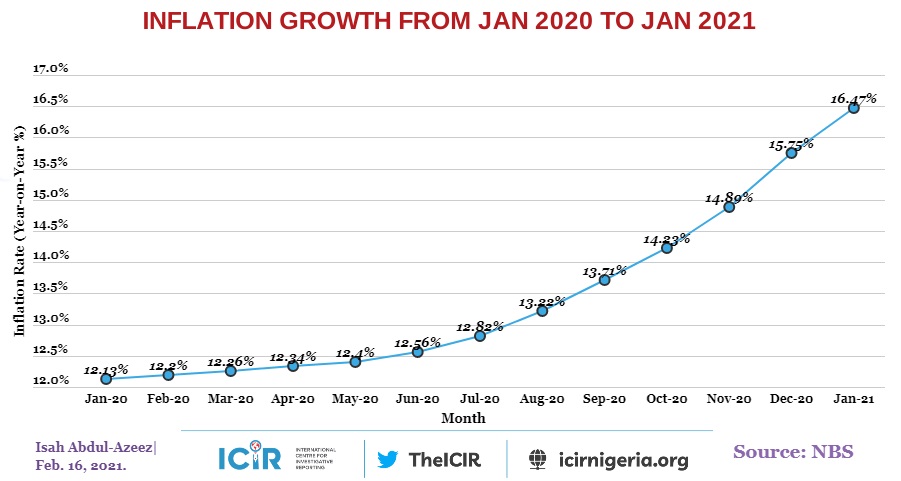
The CPI measures price changes over a period of time.

As Nigeria currently wrestles with insecurity and the global pandemic, major activities driving food production and consumption have been disrupted. 

The killings of civilians and farmers by herdsmen, abduction, cult clashes and communal conflicts are some of the insecurities threatening food production and charging inflation in the country, with farming, proper preservation and transportation of food items heavily affected, experts say.

All Item Index

According to the report by NBS, the headline index increased by 1.49 percent (month-on-month) in January 2021. This represents a 0.12 decrease from the 1.61 percent recorded in December 2020 (1.61 percent).

Urban and rural inflation rates also increased to 17.03 percent and 15.92 percent in January 2021, from 16.33 percent and 15.20 percent recorded in December 2020, respectively.

For the 12-month year-on-year average percentage change, the corresponding urban index was 14.23 percent in January 2021. This percentage is higher than the 13.86 percent reported in December 2020, while the corresponding rural inflation rate in January 2021 was 13.04 percent compared with the 12.67 percent recorded in December 2020.

Food Inflation

The composite food index rose by 20.57 percent in January 2021, compared with 19.56 percent in December 202. The ‘Food and non-alcoholic beverages’ was responsible for this rise. 

In January 2021, Kogi State recorded the highest food inflation (26.64 percent), followed by Oyo (23.69 percent) and Rivers (23.49 percent), while Ondo (17.20 percent), Abuja (16.73 percent), and Bauchi (16.37 percent) recorded the lowest rates.

However, on a monthly basis, food inflation was the highest in Oyo (4.47 percent), Lagos (3.86 percent), and Rivers (3.11 percent), while Akwa Ibom (0.25 percent) and Bayelsa (0.13 percent) recorded the lowest rises, with Edo reporting price deflation or negative inflation (general decrease in the general price level of food or a negative food inflation rate). 

The high inflation rate for Oyo State in January could also be attributed to the herdsmen crisis and communal clashes in January.

In addition to the insecurity currently faced, The ICIR had reported the 2020 economic review and outlook for 2021 by the Lago State Chamber of Commerce and Industry (LCCI) which predicted that poverty, inflation, and debt might increase in Nigeria due to the COVID-19 pandemic resurgence and poor economic fundamentals.

Read Also: Nigerians to see poverty, inflation, debt worsened in 2021— LCCI

Manufacturers react

The Manufacturers Association of Nigeria(MAN) said rising inflation would crimp the revival or growth of the industrial sector.
“As you are aware, the manufacturing sector has been struggling, particularly in the past 4 quarters due to the combined effect of COVID-19, deteriorating infrastructure, high regulatory compliance cost and tax obligations,” said Segun Ajayi-Kadir, director-general of MAN, in a statement sent to The ICIR on Tuesday.
He said rising and  high inflation, perennially high interest rates and scarce/high rate of foreign exchange had compounded the challenges facing the sector, stressing that they eroded the purchasing power of consumers, crippling their capacity to buy locally manufactured goods. 
“The increase in the headline inflation from 15.75 to 16.47 percent is a threat to the envisaged recovery and the growth of the industrial sector. There is also the rise in food inflation which will compound the high cost of living and the disposable income of the average Nigerian. The resulting weak consumer spending will worsen the the high stock of unplanned inventory that the manufacturing sector in confronted with,” he explained.
He said MAN was duly armed  with  economic recovery  recommendations  that relevant  government  authorities could implement  to speedily revive the economy  from its current state.
He said, for instance, government could intensify efforts at stabilising the consumer price level through growth in agricultural output and diversification of the Nigerian economy in order to guarantee stable prices in both agricultural and manufactured goods.
“Also, there are quite a number of moribund industries in the country that should be resuscitated to boost output and thereby reduce prices,” Ajayi-Kadir recommended.
“Government should also partner with the Manufacturers Association of Nigeria to accelerate the success in the resource-based Industrialisation initiative of the Association,” he further said, stressing that  there was a strong relationship between manufacturing sector growth  and  inflation rate, just like exchange  and  interest  rates.
“Therefore, for this moment and in the immediate future, government should assist manufacturing  productivity with  credit at competitive rates. This could be in the form of concessions and enhancing existing special credit windows or creating additional ones  for this important sector of Nigerian economy,” he noted.
He said deliberate policies to stimulate domestic production and  increase domestic and foreign demands for goods would, in the long run,  lower  inflation and enhance exchange rate appreciations.
Nigeria is world’s poverty capital, with almost 45 percent of the population in extreme poverty, according to the Brookings Institute. Inflation raises poverty by eroding the purchaing power of consumers, pricing out the poor members of the society, economists say.

NCDC awarded N43.5 million Adamawa COVID-19 Testing Centre to non-existing company

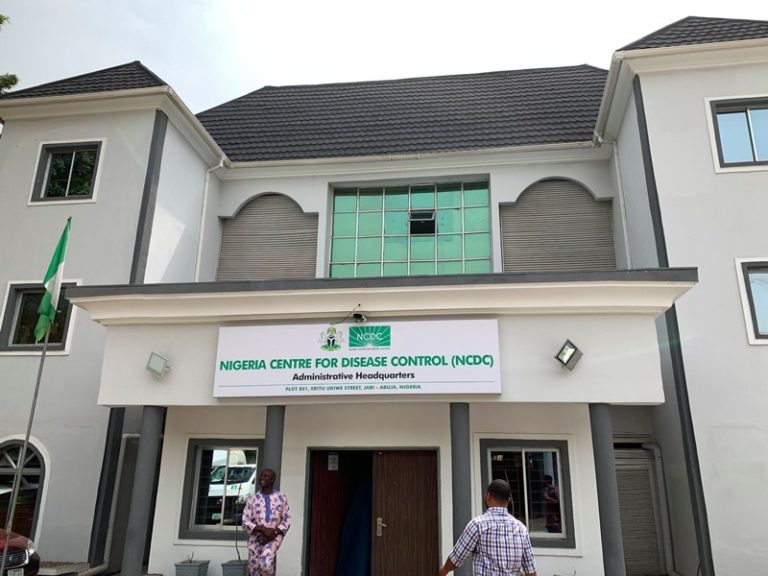
THE Nigeria Centre for Disease Control (NCDC) has awarded the construction of COVID-19 Molecular Laboratory Testing Centre in Adamawa State, northeast Nigeria, at N43.5 million to a non-existing company.

Under the deal, NCDC, a government agency established to lead the preparedness, detection, and response to infectious disease outbreaks and public health emergencies awarded the contract to M/S Malina Pharmaceutical Limited, a fake company that  has never existed, MAWA Foundation investigation has revealed.

Budeshi, a web platform that links budget and procurement data to different public services using the Open Contracting Data Standards, had last year published how the NCDC expended the sum of N43.5 million for the establishment of Molecular Laboratory Testing Centre in Adamawa State, using M/s Malina Pharmaceutical Limited as a contractor.

This publication triggered MAWA Foundation interest, leading to an investigation that revealed NCDC’s contract award to a fake and non-existing company.

MAWA Foundation wrote a Freedom of Information letter to the Corporate Affairs Commission, CAC, asking it to provide names of the individual owners of M/S Malina Pharmaceutical Limited and its office contact address.

In response to MAWA Foundation FOI request, CAC in a letter dated 22nd day of December 2020, signed by Maimunat Aliyu, said there is no record of M/S Malina Pharmaceutical Limited readily available as a registered entity.


However, it asked MAWA Foundation to forward other documents at its disposal to help further investigate the company.

The Foundation wrote and FOI letter to NCDC on the 16th day of December 2020, asking for the report of procurement /tender bid leading to the selection of M/S Malina Pharmaceutical Limited for the contract award.


Read Also:

Also, MAWA demanded a copy of advertisement leading to M/S Malina Pharmaceutical Limited’s selection and a bank statement of all payments made to M/S Malina Pharmaceutical Limited regarding the contract execution.

The NCDC has refused to respond to this request despite a follow-up letter it received on January 18.

When the Foundation sought NCDC explanation regarding a response to the FOI, an official in charge of mails at the NCDC Director-General office, said, the centre has no response.

Also, an NCDC official, who did not want to be mentioned for fear of losing his job, told MAWA Foundation that there was no procurement process followed in selecting M/S Malina Pharmaceutical Limited for the contract. He accused the NCDC senior officials of breaching the procurement process and awarding contracts to their friends. He has called on the anti-graft agency to investigate and prosecute those involved immediately.

Having realized that the COVID-19 Molecular Laboratory Testing Centre in Adamawa State is for the sole purpose of containing the coronavirus which is a public health issue, MAWA Foundation using the FOI, on the 16th December 2020, wrote to the Ministry of Health through the Permanent Secretary, asking it to provide same information it requested from the NCDC.

In its response to the MAWA Foundation FOI request, the ministry of health in a letter signed by Mr. Muhammad Diri, the Director of Legal Services, appealed to MAWA to be patient while promising to respond soon. But the ministry did not give an exact time when it will respond.

MAWA Foundation’s verification visit to Adamawa

In January, MAWA Foundation visited Yola, the Adamawa state capital to inspect the COVID-19 Molecular Laboratory Testing Centre, NCDC claims to have established.

During the visit, health officials who spoke to MAWA confirmed that the NCDC had not constructed any testing centre in the state. However, there is a collaboration between the state and federal government on COVID-19.

Some of the officials at the Specialist Hospital and Federal Medical Centre Yola, who took MAWA Foundation round the COVID-19 facility, disclosed that the state government established the centres and not the NCDC.

MAWA Foundation found that despite the NCDC’s claim it has spent the sum of N43.5 million to establish COVID-19 testing centres in Adamawa, Mr. Peter Makanto, a Bishop in Upper Room Cathedral Yola donated a 50-bed space for the coronavirus patients to the state government.

A senior official at the Federal Medical Centre told MAWA Foundation officials at Yola; they are aware that NCDC exists but denied effective collaboration with them.

This is even as he disclosed that 143 COVID-19 patients had been treated at the centre, and no single death was recorded. He revealed that they identify COVID-19 patients through a search by the state surveillance team.

An official of the Adamawa state COVID-19 taskforce team who did not want his identity told MAWA Foundation at Yola that the NCDC did not establish any COVID-19 in Adamawa state, and has since challenged the NCDC to disclose a location it founded a testing centre in the state to fight the coronavirus.

Some medical personnel at the Specialist Hospital and FMC, who spoke to MAWA official in Yola, said they are aware of the collaboration between the state and federal government in the fight against COVID-19, but, they are not aware of any COVID-19 centre established by the NCDC.

In the two COVID-19 Centres visited by the MAWA Foundation official, no single patient was found as the officials claimed they have all recovered and have been discharged.

Mr. Philip who does not want his name mentioned, while speaking MAWA Foundation, disclosed that a good number of the ad hoc health workers in the Adamawa State COVID-19 isolation centre were not paid for three months – from September to November last year and were asked to stop work in December.

This report is supported by the Public and Private Development Centre and Dataphyte.

FG spends over N50bn monthly on electricity subsidy -Power minister

0

THE federal government spends over 50 billion naira monthly subsidising electricity, Saleh Mamman, minister of power, has said. He said the rationale behind the subsidy was to ensure that energy was not taken away from the reach of the common man.

Receiving members of the Hausa Guild of Actors and Film Producers, otherwise known as Kannywood, on Tuesday, the minister said the funds were provided to augment the shortfall by the distribution companies (DisCos) who had failed to pay for the electricity supply wheeled to them.

In a statement, Aaron Artimas, special adviser on media and communications to Mamman, said the minister expressed serious concern over the failure of the DisCos to stabilise their operations and meet their financial obligations to other players in the sector.

He said following a minor increase in the tariff regime, the subsidy had now decreased by half, but still constituted a serious drain on the nation’s economy.

READ ALSOINVESTIGATION: Southwest communities live in darkness despite FG’s huge investments in electricity

“Nigerians must understand that these companies were privatised long before the advent of this administration, but the government has no alternative than to continue managing the sector before a final solution is secured,” the minister said.

“Through the Presidential Power Initiative and other intervention measures, the government is diligently working to massively resolve all these inherited problems that have continuously frustrated the success of the sector.”

The minister noted that most of the DisCos were sold off and managed as family businesses, making it difficult to professionally manage them.

He added that Nigerians now enjoyed a stable power supply.

Mamman called on the DisCos to expedite action on free distribution of meters to their consumers as a way of lessening their problems.

Lawyers excited as court scraps fees on human rights applications

0

THE Federal High Court  in Abuja has scrapped payment of monetary claims and default fees in cases bordering on fundamental human rights.

The notice was contained in a circular issued Tuesday and signed by Jane Egbo, assistant chief registrar (litigation).

The circular titled ‘Re; Monetary claims and default fees in fundamental right applications’ stated that T. Tsoho, chief judge of the Federal High Court, had informed all deputy chief registrars and station registrars of the development.

“I have been directed by the chief judge of the federal high court, Hon. justice J. T. Tsoho to inform all DCRs (deputy chief registrars) and station registrars that henceforth, monetary claims and default fees in respect of fundamental human right applications should no longer be charged. Be so informed and comply accordingly,” the notice read.

Reacting to the development, Solomon Okedara, co-founder of Digital Rights Lawyers Initiative, a non-governmental organisation that represents cases bordering on digital rights pro bono, told The ICIR that it was a step in the right direction.

Read also: Protests trail Supreme Court ruling on Nasarawa guber polls

Okedara stated that the initiative would promote human rights in the country as applicants would not, for the fear of charges, decide not to file a case on human rights infringement.

Explaining how the development would benefit human rights cases in Nigeria, Okedara said before now, applicants of fundamental human rights cases paid fees to fight their applications in the court, most especially when there were monetary claims involved.

He added that before now, lawyers were made to pay as much as 50,000 naira in order to make monetary claims of damages incurred.

“For instance, the Digital Rights Lawyers Initiative that takes on cases pro bono, if our case has monetary claims, we have to pay some sort of amount in order to file such claims,” Okedara said.

He added that it had long discouraged applicants from filing cases bordering on human rights cases in federal high courts.

Okedara also noted that on the default charges, before now, if a legal counsel or the applicant was served a legal notice and failed to respond within the stipulated time by the court, there would be charges to pay.

According to him, the default charges had also discouraged respondents who, for one reason or the other, had failed to respond to the legal notice within the stipulated time.

On his part, Samuel Oyigbo, a lawyer and human rights activist, noted that the move would deepen human rights in the country by ensuring that applicants came forward to seek redress.

Senate wants FCCPC, NAFDAC to track injuries from cosmetics in Nigeria

0

THE Nigerian Senate wants the Federal Competition and Consumer Protection Council (FCCPC) and the National Agency for Food and Drug Administration and Control (NAFDAC) to monitor consumer injuries arising from the use of cosmetics.

The Senate resolved to mandate these government agencies to carry out this task during a plenary session on Tuesday following a motion moved by Remi Tinubu, Senator representing Lagos Central.

According to Tinubu, there was a need for the NAFDAC to regulate the formation and distribution of cosmetics in Nigerian markets.

Matthew Urhoghide, Senator representing Edo South Senatorial District, said many Nigerian users did not know the content of their cosmetics, stressing that the industry must be regulated and monitored.

“I rise to support this motion ably moved by Senator Remi Tinubu. Cosmetics generally are preparations that we call creams, lotions, solutions and ointment. A lot of the users do not know their content. They use them as a cosmetic products on their skin.

“There is a need for regulation. NAFDAC now needs to go deeply into the market so that they will know the ones to go into our market and the one that should not,” Urhoghide said.

Following contributions from other Senators, the Senate resolved to direct NAFDAC and the FCCPC to collaborate towards ensuring the tracking of consumer injury.

The Senate also resolved to mandate the Committee on Health to investigate the procedures in place for certification of quality and safety of cosmetics and propose a way forward for accountability.

Also, the Senators directed NAFDAC to maintain a products database, showing name and address of manufacturers and ingredients list, urging the commission to embark on sensitisation and awareness campaign on the ills of such harmful substances.

In some part of the world, citizens have been warned against taking some cosmetics products due to the discovery of toxic chemicals in them.

Efforts to reach the NAFDAC proved abortive as calls and messages sent to the commission’s spokesperson, Jimoh Abubakar was not responded to as of the time of filing this report.


Akeredolu orders investigation as brother accuses Ondo chief judge of unlawful detention

0

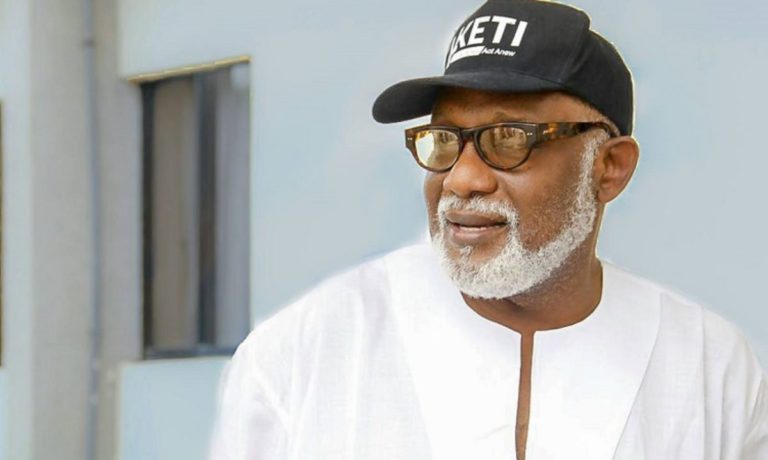
ROTIMI Akeredolu, Ondo State governor, says he has directed state’s attorney-general to investigate the allegation of unlawful detention against Olubunmi Olateru-Olagbegi, state chief judge, by  Olupelumi Fagboyegun, her half-brother.

Fagboyegun was seen in a viral video on Monday calling on President Muhammadu Buhari and all well-meaning Nigerians to get justice for him after accusing the judge of using her office and influence to cause his arrest and subsequent detention because he went to their father’s house.

He said he had been arraigned five times while the charges had also been amended five times all in a bid to delay his trial.

“I am calling on you to rescue me from the Ondo State judiciary, which is being run as a family affair, that if you don’t know anybody, you cannot get justice. I have been living abroad for over 30 years,” he said.

“I came for holiday in Nigeria and to my father’s house. I share the same father with the chief judge of Ondo State. I was arrested at my father’s place, was locked up and charged with forceful entry into my father’s house.

“Even if I was convicted of this crime, it only carries a one-year prison penalty. But I have been on open remand for the past three years. The case has been on for three years because the chief judge of Ondo State influenced the judicial system and I have been unable to get justice.

“They have changed judges five times and have arraigned me five times. They have changed their charges five times and up till today, February 15, 2021, the case is still pending. Please come and rescue me.”

READ ALSO: Fulani herdsmen: FG should examine what led to Igboho’s intervention -Akeredolu

Reacting, the governor promised  to ensure a thorough and fair investigation into the allegation.

https://twitter.com/RotimiAkeredolu/status/1361618660251627521?s=20


Police affairs minister says Lekki Toll Gate not a place for protests

0

MOHAMMED Dingyadi, Nigeria’s minister of police affairs, has said that Lekki Toll Gate is not a place for protests, noting that there are designated places for peaceful protests across the country.

He justified the use of force on #OccupyLekkiTollGate protesters.

“Lekki is not a place for protest. There are specific areas that are assigned or designated as areas for protests,” said Dingyadi, while appearing on Channels Television’s Sunrise Daily programme on Tuesday.

“We agree that protests should be conducted when the need arises, but we cannot be protesting everywhere at all times. We have to have specific locations where these protests are conducted and they have to be orderly, they have to be reasonable and they have to be with level of minimum sense of nationality so that we don’t just allow every protest to take place without any course,” he noted.

The social media was awash on Saturday with footages of protesters being forcefully hauled by security men into a waiting Black Maria ready to convey them to unknown destinations.

Read Also: Insecurity: APC senator knocks Buhari, says he is incompetent

The protesters had gone to the toll gate to express discontentment with the decision of the Lagos State Judicial Panel of Inquiry to allow the Lekki Concession Company (LCC) to reopen the Lekki Toll Gate without granting justice to those that were killed there by security operatives during the #ENDSARS protest on October 20th, 2020.

Debo Adebayo, a popular Nigerian comedian, who is also known as Mr Macaroni, was seen with other arrested protesters half-naked and cranked together in a van, while sweating profusely.

The scenes have drawn the irk of Nigerians and civil society organisations like the Amnesty International and the Socio-Economic Rights and Accountability Project (SERAP), who called for their unconditional release and prosecution of the officers responsible for such dastardly and inhumane acts.

Hakeem Odumosu, state commissioner of police, while reacting to the outrage, condemned the conduct of his men, saying the conduct was not in line with the standard operating procedure of the police.

According to him, he had ordered Adegoke Fayoade, deputy commissioner of police in charge of the State Criminal Investigation Department (CID), Panti, to analyse the video and bring to book whoever must have been responsible for the act.

But the minister, who expressed his admiration for the way the policemen were deployed to the venue of the protest well-kitted, justified the use of force deployed against some of the protesters.

He said the use of minimum force was needed by the police to arrest the protesters.

“This is the kind of things that we want to take place in any situation that we find ourselves. Like what you saw in Lekki, this is how it is supposed to be. They were fully equipped, well-uniformed and they were ready for the #EndSARS protesters. That was why we were able to contain the situation.

“Minimum force was used. People always say that the police use force but you forget the fact that for you to ask somebody to please move this side, please be orderly, you have to use some level of force, you have to use some minimum level of force to ensure that people comply with what you are saying. I am not talking about shooting, I am not talking about teargas, you have seen some people ask some people to go into (Black) Maria,” he said.

Reacting to reports that some of the arrested persons were just passersby but indiscriminately picked up by the police, Dingyadi said, “How will the police arrest you if you are not part of a situation? How will they see you to arrest you? If you are not in Lekki, why will they arrest you? They cannot pursue people on the street to arrest them.”

What does Nigeria Constitution and International Law say?

Although Section 40 of the 1999 Constitution (as amended) provides that every person is entitled to assemble freely and associate with other persons, the Nigerian Constitution does not specifically state where protests can be held or not.

Internationally, the right of assembly is guaranteed.

Nigeria is party to the International Covenant on Civil and Political Rights (ICCPR) 1966.

Article 21 of ICCPR, which governs the right to peaceful assembly, provides thus: “The right of peaceful assembly shall be recognised. No restrictions may be placed on the exercise of this right other than those imposed in conformity with the law and which are necessary in a democratic society in the interests of national security or public safety, public order (ordre public), the protection of public health or morals or the protection of the rights and freedoms of others.“

Nigeria is also party to the African Charter on Human and Peoples’ Rights.

Article 11 of the Charter provides that: “Every individual shall have the right to assemble freely with others. The exercise of this right shall be subject only to necessary restrictions provided by law, in particular those enacted in the interest of national security, the safety, health, ethics, and rights and freedoms of others.“


6 months after Magu’s suspension, Buhari nominates Bawa as EFCC chairman

0

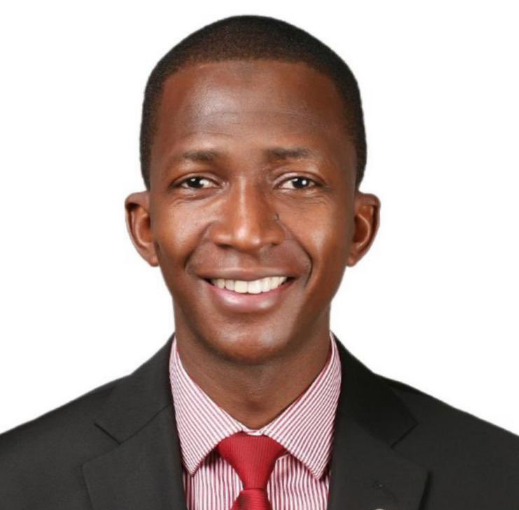
MORE than six months after the suspension of Ibrahim Magu as acting chairman of the Economic Financial Crimes Commission (EFCC), President  Muhammadu Buhari has nominated Abdulrasheed Bawa as substantive chair of the anti-graft commission.

This is contained in a letter sent to the Nigerian Senate by Buhari on Tuesday, according to a statement by Femi Adesina, special assistant to the president on media and publicity.

Adesina said the letter addressed to Ahmad Lawan,  Senate president, was seeking confirmation of Bawa as the EFCC chairman in accordance with Paragraph 2(3) of Part1, CAP E1 of EFCC Act 2004.

According to Adesina, Bawa, 40, was a trained EFCC investigator with vast experience in the investigation and prosecution of advance fee fraud cases, official corruption, bank fraud, money laundering, and other economic crimes.

He said Bawa, who holds a bachelor’s degree in Economics and master’s in International Affairs and Diplomacy, had undergone several specialised trainings in different parts of the world and was one of the pioneer EFCC Cadet officers in 2005.

Following the suspension of Magu earlier in 2019, Buhari had appointed Mohammed Umar, a director of the commission, to act in the capacity of the suspended acting chairman.

The beginning and end of Magu in EFCC

In 2016, during the first stint of Buhari as Nigerian president, Magu’s name was sent to the 8th Assembly of the Nigerian Senate led by Bukola Saraki as the Senate president.

However, the State Security Service (SSS) wrote the Senate that Magu was unfit to serve as the chairman of the commission.

The Nigerian Senate invited the then director-general of DSS, Lawal Daura, to appear before the Senate and state why Magu should not be appointed.

Daura was summoned after Buhari had, again, sent Magu’s name to the Senate in 2017 for confirmation.

In a letter to the Senate, the DSS said Magu was unfit to become the EFCC chairman due to several misconducts while he was in the Nigeria Police Force and with the commission.

Magu was accused of possessing documents belonging to the EFCC which were not supposed to be in his custody.

The SSS also said during a search on Magu’s residence, a fake letter from the Office of the Vice President was discovered.

Further stating reasons why he must not be confirmed as EFCC chair, the DSS said investigations revealed that Magu embarked on private trips with one Umar Muhammed who was at the time being investigated by the EFCC.

Due to this and several other reasons, the Senate refused to confirm Magu’s appointment as the substantial chairman of the commission.

However, Buhari went on to appoint Magu as the acting chairman of the EFCC, a position he held until mid-2019.

The end of his days came following a power tussle with Abubakar Malami, attorney-general of the federation.

Malami and a special presidential probe panel known as Presidential Committee on Audit of Recovered Assets (PCARA), in a report entitled ‘Mismanagement and Lack of Transparency in Managing Recovered Assets,’ indicted Magu of diversion of the fund, mismanagement of recovered assets, among others.

Magu, who spent about 10 nights in detention while being interrogated by the probe panel in his defence, argued that the allegations were targeted at him in order to tarnish his name and the image of the commission.

He was eventually suspended from his position while Umar, a director in EFCC was appointed to act in his capacity.

The 40-year-old Bawa’s appointment is subject to the approval by the Nigerian Senate.

Why we want Lekki tollgate reopened -Lekki Concession Company

0

THE Lekki Concession Company (LCC) has cited huge debts owed by the company to both local and international banks as reasons why the Lekki tollgate must be reopened.

Yomi Omomuwasan, the LCC manager, who said this at a press conference on Monday, stated that the company is owing N11.5 billion and $31 million respectively as of 2020 to banks.

He added that 90 percent of its employees anticipate returning to work since the gate’s closure.

“As of 2011, we had a balance of about 24 billion in naira owed to local banks and $49 million owed to an international development bank,” he said.

“Through the operation of the toll progressively, payments are being made. It is on record, the company borrowed money, and we keep mentioning areas where people can verify. They are local banks, Nigerian banks, they have names and have records. There is no way a company can lie that we are owing when they are not owing.

“90 per cent of them are youths and asking if they will be back in their jobs; this is another reason the company needs to return to operations.”

While stating that the COVID-19 outbreak impaired the company’s revenue, he said it was not right for the LCC to be shut down forever following the #ENDSARS protests and related events.

READ ALSOI joined #OccupyLekkiTollGate to save lives of protesters, says Mr Macaroni

“There is nowhere in the world where an event happened at a place, and you close it forever,” he said.

Speaking on calls by some members of the Lagos Judicial Panel of enquiry on police brutality and protests for the gate to remain close pending when those that were killed in the event of October 20, 2020, by operatives of the Nigerian army would get justice, the manager said that there was never an order shutting down Lekki tollgate. Still, the company only stopped operations to allow for a forensic analysis of what happened during the #ENDSARS protests.

“We believe there may be some things that will be important to the panel by way of forensic audit on the scene, and we agreed that pending when this forensic audit will be done, we would not go there to do anything, because going there for us would mean clearing some burnt items, removing some certain things, calling on our insurance company to do some evaluations and calling our engineers to do some things.”

“There was not a time when we were given a preventive order, an order saying LCC cannot resume operation. We just agreed to work together in the interest of peace to allow some certain facts which some people think in their own arguments may be there.”