Home Blog Page 1891

Again, FG extends deadline for NIN-to-SIM integration

THE federal government has, again, extended the deadline for the ongoing integration exercise of the National Identification Number (NIN) and Subscriber Identity Module (SIM) by eight weeks.

According to Channels Television, the deadline was contained in a joint statement by Ikechukwu Adinde​​​, director, public affairs, Nigerian Communications Commission (NCC) and Kayode Adegoke, director of corporate affairs, ​Nigeria Identity Management Commission (NIMC) on Monday.

”Dr Pantami stated that the extension is to give Nigerians and legal residents more time to integrate their NIN with the SIM,” the statement had said.

”The meeting was chaired by the Honourable Minister and attended by key stakeholders, including the EVC/CEO of the Nigerian Communications Commission (NCC), DG/CEO of the National Identity Management Commission (NIMC),DG/CEO of the National Information Technology Development Agency (NITDA) and the chairman of the Association of Licensed Telecommunications Operators of Nigeria (ALTON). Others include the MD/CEOs of MTN, Airtel, 9Mobile, Ntel, Spectranet and SMILE, as well as the COO of Globacom.

”It was reported that a total of 56.18 million NINs have been collected by the mobile network operators. Each NIN is usually tied to an average of 3 to 4 SIMs and this infers that the current figure accounts for a significant portion of the existing SIMs. This number of NINs collected represents a significant increase when compared with the 47.8 million reported by the Technical Committee on January 18, 2021.

”Furthermore, over 1060 registration centres for NIN have been activated and made operational by NIMC across the country, while Mobile Network Operators (MNOs) have opened hundreds of centres and are rapidly deploying resources to open thousands of other NIN enrolment centres across states of the country. This is in line with the policy of the administration of President Muhammad Buhari to enhance security and make the process of obtaining NINs easier for Nigerians.”

The is the second time the registration has been extended by the Nigerian government since it directed telecoms service providers to block SIM cards not linked to NIN by December 30, 2020, with a vow to withdraw licenses of any service providers who failed to so.

The directive has led to mammoth crowds across major cities around the country as people struggle to get themselves registered, leading to flagrant abandonment of COVID-19 protocol.

The exercise has also been characterised by allegations of extortion by officials of the National Identity Management Commission (NIMC).

Wike’s N500m donation to Sokoto can construct, rehabilitate 17 health centres in Rivers

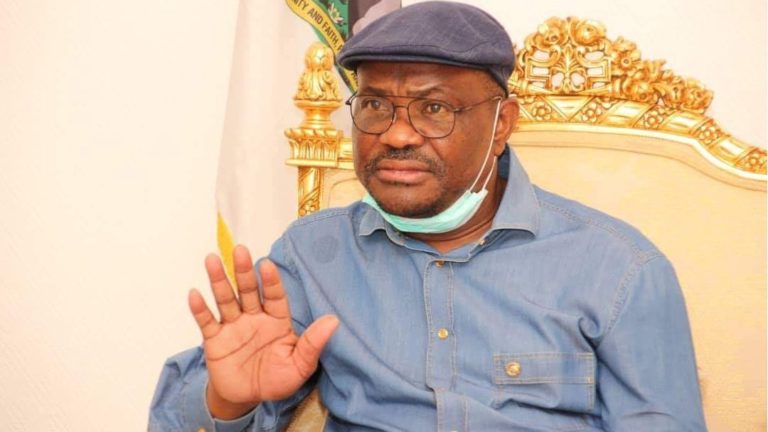
NYESOM Wike,  Rivers State governor, recently donated 500 million naira to Sokoto State government over a fire incident that affected some farmers in the North-West state.

Though the gesture may make political sense to Wike and his supporters, it flies in the face of economics.

The ICIR checks show that the amount can build and rehabilitate 17 primary health centres (PHCs) in Rivers, his own state.

According to the statement signed by  Muhammed Bello, spokesman to Tambuwal, the donation was meant to support the state’s rebuilding efforts and provide assistance to the affected traders.

“Rivers State government has pledged the sum of half a billion naira to support Sokoto State government in rebuilding the Sokoto central market ravaged by fire on Tuesday morning,” the statement read in part.

However, some are of the opinion that instead of donating to another state government, Wike should have focused on providing for the welfare of his people, for which he was elected. They argue that there are pending basic issues the governor should have channelled the 500 million naira proposed ‘gift’ to.

Some have tagged the governor’s promise as a political gesture, given that Wike belongs to the same political party as Aminu Tambuwal.

Others associate it with the politics of 2023. Wike was heavily criticised by social media users who condemned the governor’s action as financial recklessness and an act to score cheap political points.

N500 million can construct, rehabilitate 17 health facilities in Rivers

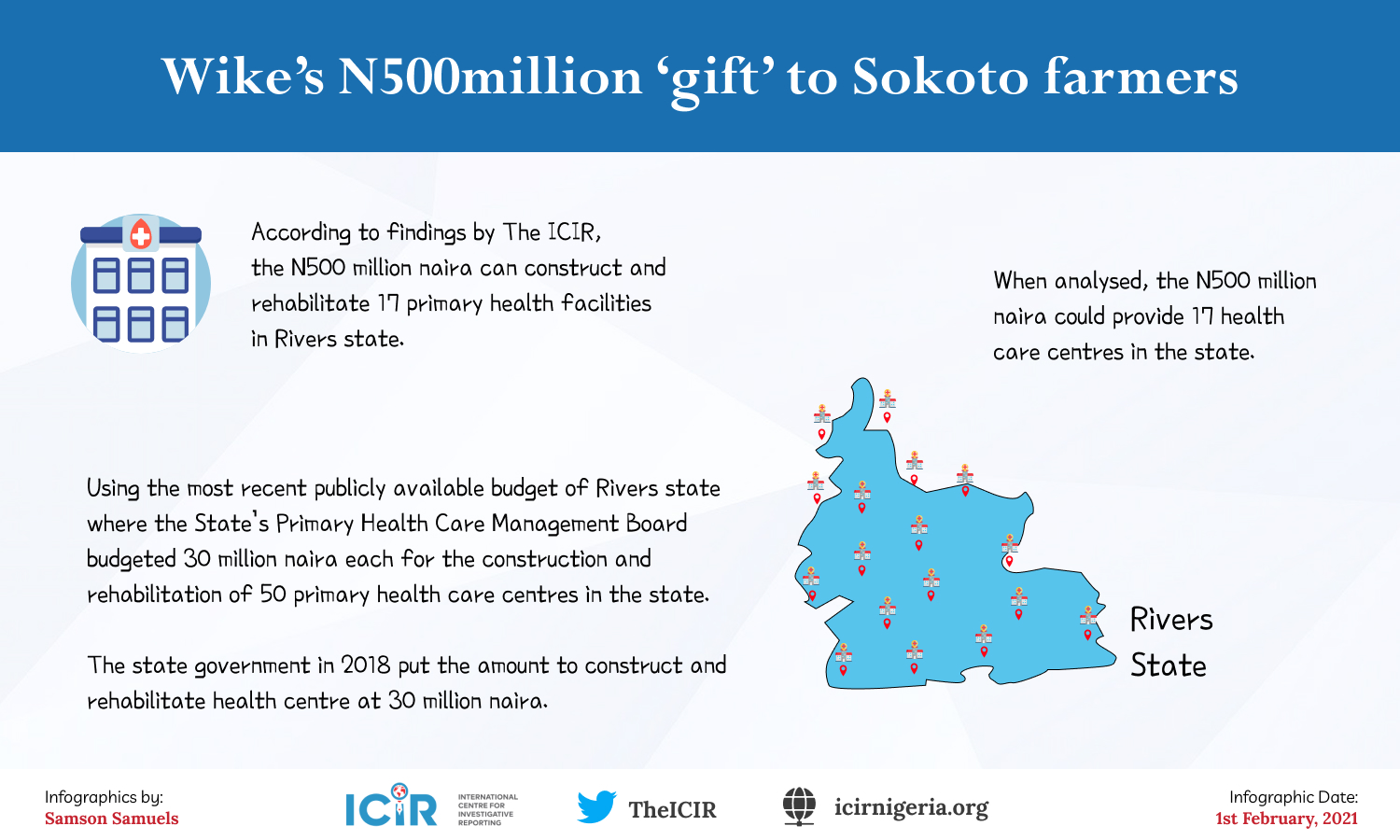
According to findings by The ICIR, the 500 million naira can construct and rehabilitate 17 primary health facilities in Rivers State.

Using the most recent publicly available budget of Rivers State, where the State’s Primary Health Care Management Board budgeted 30 million naira each for the construction and rehabilitation of 50 primary health care centres in the state, the ICIR’s calculations show that the amount donated by Wike could build 17 PHCs.

The state government in 2018 put the amount to construct and rehabilitate each health centre at 30 million naira.

As highlighted earlier, the 500 million naira can provide 17 PHCs in the state.

Out of the 23 local governments in the state, if 17 of them are equipped with quality health facilities, they would lessen the health infrastructural deficit in the state, most especially in the middle of a pandemic.

Read Also: Corruption: Lawal, Kalu, Amosu, Metuh top EFCC’s major arraignments for 2021

APC, Group condemn governor’s action

Sobomoba Jackrich, convener of a civil society organisation called Network for Defence of Democracy and Good Governance (NDDGG) said the governor did not have a clear vision for the future of the Rivers State.

Jackrich said this in a statement on behalf of the group, stressing that Sokoto was not a territory of Rivers State.

“The NDDGG wish to sound it loud and clear that Sokoto is not a territory of Rivers warranting such unaccountable obligation,” the statement read in part.

He added that it was also worrisome that the governor made such promise a few days after confirming the receipt of 78.9 billion naira from the federal government as a refund for constructing federal roads.

“The action of the governor clearly proves that he does not seem to have a protected future at stake or vision for our dear state,” the group said.

According to NDDGG, Wike was unbothered about how Rivers State ranked as one of the states with the highest unemployment rate in Nigeria.

Chris Finebone, a former spokesperson for the Rivers State All Progressives Congress (APC), described the proposed gift as another politically motivated donation.

“People believe that Governor Wike is trying very hard to buy the 2023 presidential or vice-presidential ticket of the PDP with Rivers taxpayers’ money. This is the latest in the string of politically-motivated donations the governor has been making across Nigeria,” Finebone said.

He added that the governor who gave out donations to Sokoto farmers had, in the past, ignored some victims of flood and market fire disasters in his own state.

“This unbridled profligacy flies in the face of the fact that Rivers pensioners are owed gratuities and pension while …even some victims of market fire disasters and flooding in the state are ignored by the governor,” he noted.

Defending the governor’s action, Paulinus Nsirim, state commissioner for information and communications, said : “As Rivers people, we have our challenges but that doesn’t mean we have lost our sense of humanity and this is what Governor Wike epitomises with great equanimity and humility.”

NBS Job Data on Rivers State

Despite its humongous earnings as an oil-producing state, Rivers is among the top three states with worst unemployment numbers in Nigeria. According to the National Bureau of Statistics (NBS), Rivers State unemployment rate is 43.7 percent, implying that almost one in every two citizens of the state is jobless. The 500 million naira donated by Wike to Tambuwal can pay the minimum wage of 30,000 naira for 1,388 jobless citizens in the state for one year. It can also set up micro businesses for at least 500 jobless people in Rivers, providing 1 million naira each to them.

According to Waheed Olagunju, former acting managing director of the Bank of Industry, one micro business creates a minimum of 3 to 5 jobs. Going by this argument, channelling the money to micro businesses could create between 1,500 and 2,500 new jobs in the state, with potential spin-offs.

COVID-19: PTF warns against visiting Kogi, says state is high-risk

The Presidential Task Force (PTF) on COVID-19 has warned against travelling to Kogi after classifying the state as ‘high-risk.’

The PTF hinged its decision on the state government’s repeated denial of the existence of the deadly disease and its poor attitude towards report tests and isolation centres.

According to The Cable, Mukhtar Muhammad,  national incident manager of the PTF, made the announcement during a media briefing on Monday, stating that Kogi was not testing at all.

He said, “We have states where data is not coming forth. If we don’t test, your data will not be analysed, and if your data is not analysed, we won’t know the level of the pandemic in your state,” he said.

“Notable among the states that have not been reporting adequately are Yobe, Jigawa, Zamfara and Kebbi and, of course, Kogi that has not been reporting at all.”

“States that are not testing are probably at much higher risk than the states that are currently known as high burdened states.”

“A state that is not testing at all is an absolute high-risk for Nigerians to go there because there is no testing facility and even if you fall sick, there is no isolation centre and they don’t even acknowledge that the disease exists. So for that reason, we put that state at the top of the high-risk state,” he said.

While some states across the country have seen an increase in cases in the second wave, Kogi, as of the time of filing this report, had only reported five of the novel coronavirus.

Lagos State has recorded 49,274 cases; FCT, 16,863; Plateau state, 7,894; while Kaduna State has recorded 7,661 cases.

Nigeria has recorded 131,242 positive cases out of 1,302, 410 tested samples, with 1,586 deaths related to COVID-19.

Out of the total 131,242 positive cases, 104, 989 have recovered, and only 24,667 are active cases.

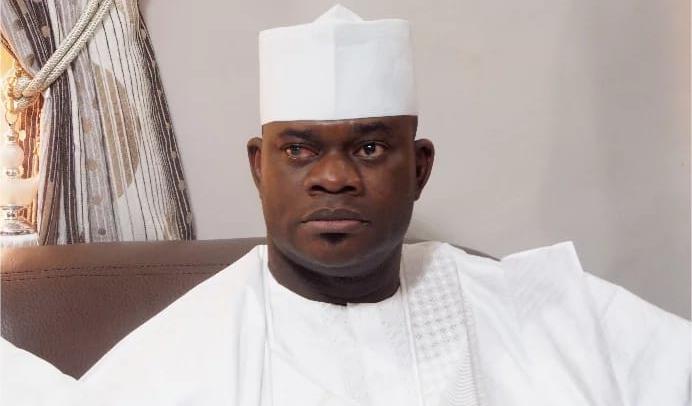
Yahaya Bello, Kogi State governor, has, on numerous occasions, rejected the existence of the virus and was seen lately discouraging a crowd of supporters from taking COVID-19 vaccines.

He had told the cheering crowd, without evidence, that vaccines introduced to combat the virus was intended to kill people.

“…They want to use the (COVID-19) vaccines to introduce the disease that will kill you and us. God forbid!” he said.

“These vaccines are being produced in less than one year of COVID-19. There is no vaccine yet for HIV, malaria, cancer and for several diseases that are killing us… We should draw our minds back to what happened in Kano during the polio vaccines that crippled and killed our children. We have learned our lessons.

Visit the ICIR COVID-19 portal

“If they say they are taking the vaccines in the public, allow them take their vaccines. Don’t say I said you should not take it, but if you want to take it, open your eyes before you take the vaccines.”

https://www.facebook.com/ibrahim.adamu.1048/videos/1548623982004291

He had also, in his new year broadcast, said his administration would not respond to the second wave of COVID-19 with ‘mass hysteria.’


Manufacturers identify dollar scarcity, cost of funds as biggest business impediments

0

THE Manufacturers Association of Nigeria (MAN) says scarcity of foreign exchange (FX) and high cost of funds are two biggest hiccups facing industries in the country.

Reviewing challenges faced by manufacturers in 2020 at a luncheon held in Lagos recently, Mansur Ahmed, president of MAN, said high costs of energy, funds and logistics were key issues hurting the growth of manufacturing companies in the country.

Ahmed explained that low purchasing power of consumers had resulted in decreased demand for locally manufactured products, leading to unsold inventories in many companies.

He pointed out that regulatory pressure, poor port administration and policy somersaults were other challenges faced by players in the sector.

“The implication of these challenges highlighted is that it impedes the growth and development of the manufacturing sector, thereby affecting the attainment of the sector’s full potential of massive job and wealth creation,” Ahmed said.

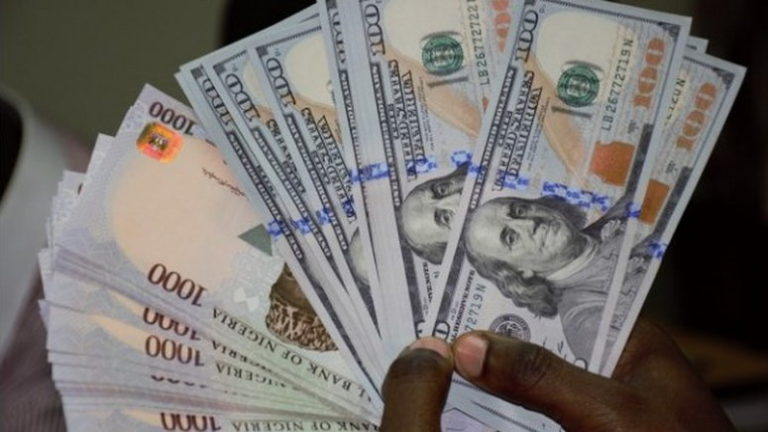
Nigeria relies on crude oil proceeds for  90 percent of foreign exchange and more than 50 percent of revenue, according to government documents. Low crude oil prices since late 2014 have led to diminished dollar inflows, resulting in acute foreign exchange scarcity in Africa’s biggest economy.  Nigerian manufacturers import 40 percent of their raw materials, sourcing 60 percent locally, according to the latest Executive Summary of Economic Review published by MAN (in 2019).  Manufacturers are struggling to find the greenback needed to import inputs, with many of them unable to meet supply targets due to lack of raw materials. Two top manufacturers who spoke with The ICIR on the condition of anonymity, for fear of being victimised by the Central Bank of Nigeria(CBN), said they only got 2 to 10 percent of their dollar needs from the foreign exchange market in the last two years.

“We asked for 60,000 dollars to import our raw materials, but we were only given 3,000 dollars by our bank,” one manufacturer in the textile sector, who imports inputs from China and India, said.

Another manufacturer complained that apart from dollar scarcity, exchange rate differentials between dollar and naira had shot up production cost.

Frank Udemba Jacobs, former MAN president, had previously admonished the CBN to adequately fund the FX needs of local manufacturers to boost job creation, FX inflows and economic growth.


Cost of funds

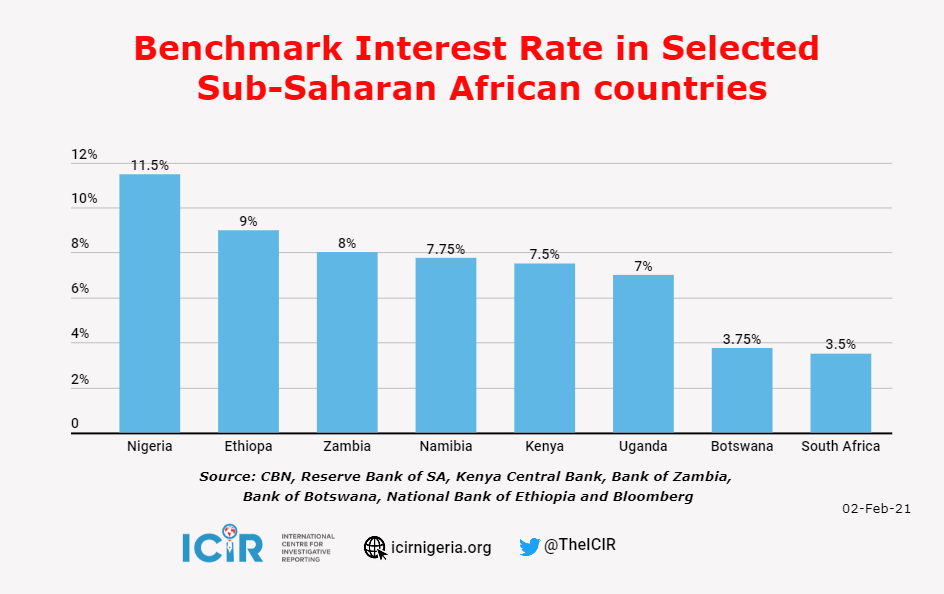
Apart from dollar scarcity, cost of funds in Nigeria is high in Nigeria compared with many Sub-Saharan African (SSA) countries. Nigeria’s Monetary Policy Rate (MPR), which is the benchmark interest rate in the economy, is 11.5 percent, according to the CBN. This is higher when compared with South Africa’s 3.5 percent; Kenya’s 7.5 percent; and Zambia’s 8 percent, according to their central banks. In Ethiopia, another SSA nation, the benchmark interest rate was put at 9 percent, according to the National Bank of Ethiopia. Botswana’s rate is estimated at 3.75 percent while  Uganda’s is 7 percent. Similarly, while Namibia’s benchmark rate is 7.75 percent, Mali’s is 9.12 percent. These are benchmark interest rates, meaning that lending rates from commercial banks to customers will be higher.

Benchmark Interest Rate in Selected Sub-Saharan Countries


MAN said  in the Executive Summary that its members were charged 21.25 percent interest rate by deposit money banks in 2019.

The association noted that high cost of borrowing remained a core challenge for the manufacturing sector in the country.

At a press conference held in Lagos last Thursday, the Lagos Chamber of Commerce and Industry (LCCI) said low interest rate was needed in Nigeria to boost manufacturing and other sectors of the economy.

“A low interest regime will encourage blue-chip corporates to undertake further investments, thereby stimulating aggregate demand and
economic growth,” said Toki Mabogunje, president of the LCCI.

Mass protest rocks Caracas over Venezuelan diplomat detained in Cape Verde

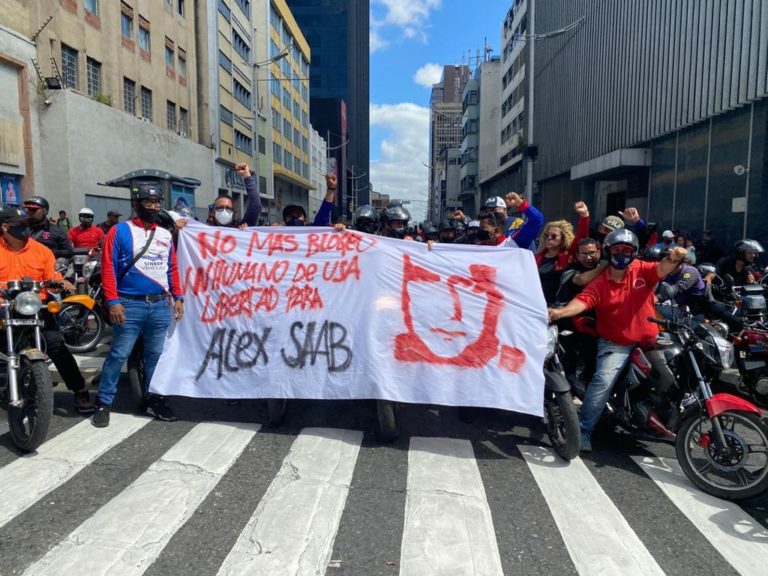
SOME Venezuelans have taken to the street of the nation’s capital, Caracas, to protest the continued detention of its diplomat, Alex Saab, who is in the custody of the Cape Verdean authority.

The protesters, who gathered in numbers on Sunday, demonstrated their displeasure over Saab’s detention in the African island nation, Cape Verde.

According to pictures and videos seen by The ICIR, the Venezuelan protesters carried placards demanding an unconditional release of the special envoy.

The protest was said to have gathered momentum on the social media following comments by Ulisses Correia, Cape Verdean prime minister, who told the nation’s parliament that Cape Verde “did well” by arresting Alex Saab under a request from the United States during the administration of former President Donald Trump.

The ICIR had reported how Saab, who was alleged by the US government to have been involved in money laundering, was arrested and detained in Cape Verde.

His extradition was requested by the US government over allegations of money laundering, a move the Venezuelan government faulted with claims that the businessman is its special envoy on a ‘humanitarian mission.’

The Venezuelan government claimed that before his arrest, Saab had been on a mission to get food and medical supplies, stopping over in Cape Verde where he was arrested by security operatives.

There have been several legal battles between Venezuela, Saab’s lawyer and the Cape Verdean government over the detention of the diplomat.

Read Also: Ugandan Election: Opposition leader, Bobi Wine, in court to challenge Museveni’s victory

Saab’s legal team led by Femi Falana approached the Economic Community of West African States (ECOWAS) court to stop Saab’s extradition to the US.

The ECOWAS Court of Justice on 2nd December, 2020, gave a ruling that the extradition process be put on hold pending the determination of the case of illegal detainment brought before it.

The African regional court, ECOWAS, also ordered that Saab be placed on house arrest and be allowed to access facilities when needed.

Checks by The ICIR confirmed that the ECOWAS Court of Justice will commence the hearing of the case marked ECW/CCJ/APP/43/20, bordering on violation of human rights, on February 2nd, 2021.

Nigeria’s Ehiarinmwian is USO Soldier of the year 2020

MARY Ehiarinmwian, a Nigerian-born sergeant of the 523rd Engineer Support Company, a unit which falls under the brigade’s 84th Engineer Battalion in the U.S. Army, has been named the United Services Organization (USO), Soldier of the Year 2020, for her show of bravery when she rescued a fellow soldier from a burning car in June.

This was contained in a statement released by the U.S. Army.

Ehiarinmwian who is assigned to the 8th Theater Sustainment Command’s 130th Engineer Brigade, was on her way to Physical Training (PT), when the driver of a black Honda CR-X, who unknown to her was also a soldier from her unit, lost control of his car and collided with a road sign before somersaulting and piercing through the top of a security gate.

The brave soldier who later said she believes there was a purpose for her being there, followed her instincts without hesitation; she pulled over, got out of her car, and rushed toward the injured driver pulled him from the smoke-filled vehicle with an underarm drag after assessing that he was okay and not in any pain before proceeding to attend her PT.

“I felt like the car was going to burst into flames, but at the time, I didn’t think of the danger,” she recounted, adding that she believes she could have simply called first responders instead of taking action but explained that “every second counts” in emergency situations and every little hesitation could have led to a worse result.

READ ALSO: Two Nigerian-Americans clinch legislative seats in US elections

According to Ehiarinmwian, “It’s good to lend a helping hand. If I didn’t stop, no one would have been there to help him. After all, it’s just human nature to help other people.”

Michael A. Grinston, the Sergeant Major of the Army said of her: “I’m very proud of Sgt. Ehiarinmwian. This is exactly the type of leader the Army builds — someone that is decisive and quick to take the appropriate action. After talking with her and hearing her story, it’s a great reminder that our Army is full of people from all walks of life, looking for something bigger than themselves”.

Born in Nigeria, Ehiarinmwian immigrated to Germany as a child. After getting married and finishing school, she relocated to the United States in 2016, in search of something different. She first worked at Fort Leonard Wood, Missouri, where she was inspired by the professionalism of the local drill sergeants and in 2017, she joined the Army.

The USO is a nonprofit organization that focuses on armed forces members and their families. Each year, the United Service Organizations (USO) honours the heroism of junior enlisted service members, E-5 or below, with the USO Service Member of the Year Awards.

Service members from each branch of the military are nominated by their command leadership for performing acts of valour that go above and beyond the call of duty and who embody the standards and values of the Armed Forces and the USO.

Obasanjo backs calls for creation of state police

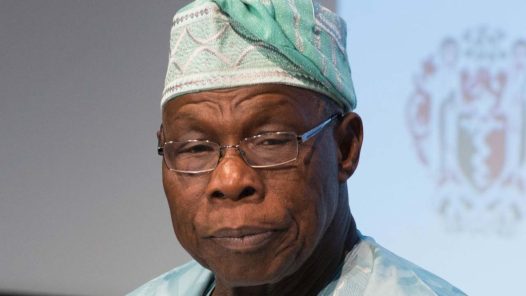
OLUSEGUN Obasanjo, Nigeria’s former president, on Sunday, lent his voice to calls by Darius Ishaku, governor of Taraba State, for Nigeria to consider the creation of both state and local police to address the ravaging insecurity across the country.

He made this call during a virtual interview hosted by Toyin Falola, a foremost Nigerian historian and columnist.

Obasanjo, who had in the past dismissed such calls because he believed the action could take Nigeria back to the 1950s, said there was the need for devolution of powers, responsibilities, and resources to allow for healthy competition among states.

“Why can’t we now have state police? I have been to a country like Colombia, in the last five years, at least a dozen times. They did exactly what we did. They moved from local and state police to national police. But now, they have gone back to state police or provincial police. Why can’t we do that? If we do that, there will be no need for Amotekun.

READ ALSO: Police reform: Buhari Panel recommends creation of state police, dismissal of 37 officers

“I was watching the governor of Taraba not too long ago. He was saying Nigeria will have no peace and security until we have state police. I believe that the time has come when we should talk of state police and allow it to be. The governor of Taraba said the national police have been overwhelmed, and I believe he is right.

“There will still be the need for federal police to look after federal territories and what I call major entry points – international airports and international seaports. The Federal Government can have mobile police and station them in strategic places, and only deployed when the state governor requires for it.”

Earlier on Sunday, Ishaku had re-echoed the need for the federal government to consider giving the mandate to state governments to set up both state and local government police when he paid a condolence visit to the residence of the Salihu Dovo, late ArdoKola local government chairman, who was abducted and killed by gunmen.

The governor argued that a lot was wrong with the current security arrangement and urged both the Senate and the House of Representatives to consider amending the constitution to accommodate state and local government policing.

According to him, “since I came to power, I have repeatedly said we need to break down the strata of the security apparatus in the country, especially the Police. There must be a state and local government police. The federal government alone cannot handle the security because overtime this method has failed. Where we copied our constitution is the United States of America and the USA has federal, state, and the local government police.

READ ALSO: Only self-deluded people would claim that all is well in Nigeria – Obasanjo

“Over there, the military is always the last resort but for us, the military is the first resort. In this state, I have lost so many people to insecurity, including a local government chairman and a member of the state house of assembly, Hosea Ibi.

“We can’t continue to keep quiet as if nothing is happening because a lot is going on which desperately needs to be addressed. I am challenging the senators and members of the House of Representatives to check our constitution with a view of amending it immediately,” the governor said.

Nigerian Defence says ‘Chibok schoolgirls not in our custody’

CONTRARY to some media reports, the Nigerian Defence has said that the missing Chibok schoolgirls reported to have escaped from Boko Haram are not in their custody.

Lucky Irabor, Chief of Defence Staff, made this known on Sunday while addressing journalists during an operational visit to the Headquarters, Command and Control Centre of Operation Lafiya Dole in Maiduguri, the Borno state capital.

“What we know is that we do not have any of the Chibok girls in our custody, that is (with us). All I can tell you is that yes, we desire that all the Chibok girls would receive their liberty and if our operations have helped those ones that have been alleged to have escaped, I think we are glad, we hope to strengthen the efforts that we are putting on in order to free the rest that are behind lines,” Irabor said while responding to questions from journalists.

He added that the Defence has been conducting operations that have led to hostages escaping the custody of their captors.

“Yes, the operations that we have been conducting is not new, the operation has been on for well over one month and so the intensity of the operation is what of course has led to so many of those who have been held behind lines to escape,” he added.

On Friday, January 29, the CNN reported that some of the Chibok schoolgirls abducted by Boko Haram about seven years ago have escaped from their captors.

According to the CNN, father of one of the escaped schoolgirls, Ali Maiyanga, said his daughter Halima Ali Maiyanga told him that she and others are being looked after by the Nigerian Army.

When The ICIR contacted Sagir Musa, the Army spokesperson, he said all questions concerning the Chibok schoolgirls should be directed to the Nigerian Defence.

In 2014, no fewer than 276 female students were abducted from the Government Secondary School in Chibok town, Borno state by the armed insurgent group, Boko Haram.

Since their abduction, the government has only been able to secure the release of 107 while 57 others reportedly escaped from their abductors, while the whereabouts of the remaining 112 Chibok schoolgirls have remained unknown.

 Trump hires new lawyers to defend second impeachment before US Senate

DONALD Trump, the former United States President, has hired two new lawyers to defend his second impeachment case before the US Senate.

Trump announced Sunday that David Schoen and Bruce L Castor would lead his new legal team after his former lawyers dumped him. The CNN had reported that five members of Trump’s legal team resigned about a week to his trial before the Senate.

Butch Bowers and Deborah Barbier, who had led Trump’s defence said they could no longer defend the 45th US president. Other lawyers including Josh Howard, Johnny Gasser and Greg Harris have also pulled out of the Trump’s defence team.

The former US president was impeached for the second time by the US House of Representatives led by Democrat, Nancy Pelosi, a democrat.

Trump became the only president of the United States to be impeached twice as two hundred and twenty-two (222) Democrats and ten (10) Republicans voted to him on Wednesday, 13th January.

Read also: Trump pleads not guilty, arrested on criminal charges

The move to impeach Trump for a second time followed charges of ‘incitement of insurrection’ at the US Capitol Hill on January 6, 2021.

Five people died in the Capitol Hill attack, including two police officers. Trump made inciting comments before the incident, asking his supporters to fight to regain their country.

Trump had told his supporters to ‘fight like hell’ in clear attempt to overturn election defeat to Joe Biden, the US president-elect.

Trump has also refused to concede defeat after losing the November 2020 election to Joe Biden.

As the Senate sits next week at Trump’s trial, if found guilty of inciting violence in the Capitol riot, he could be banned from further engaging in politics in the US.

The one-term president would not be allowed to contest for presidency in 2024 and might face legal prosecution as he would be stripped of immunity deserved of a former president.

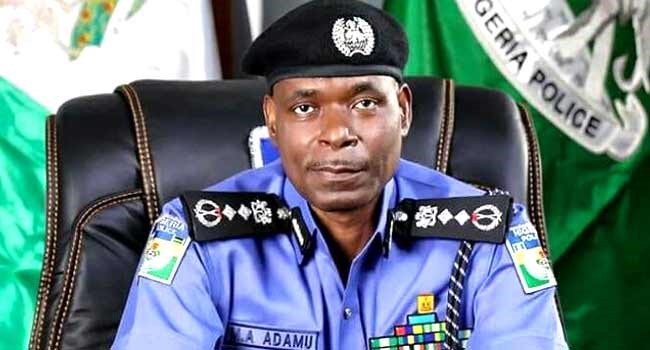
As Adamu retires today, presidency says no date yet for announcement of next IGP

THE presidency says there is no date yet for the announcement of a new inspector-general of police (IGP) as Mohammed Adamu, current IGP who has attained the mandatory 35 years in service, vacates office today.

Adamu joined the service on February 1, 1986, and took over from Ibrahim Idris as the 20th IGP in January 2019.

The amended Police Act, signed into law by President Muhammadu Buhari recently in September 2020, pegs the retirement age of police officers at 60 years of age or 35 years of service.

By precedence and practice, a replacement for the Adamu ought to have been announced few days to his retirement.

However, Garba Shehu, senior presidential spokesperson, said while appearing on Channels Television’s Sunrise Daily on Monday that he was not aware of the imminent announcement of a new police chief.

“The President returns to Abuja on Tuesday. He should be on his desk by Wednesday. I don’t know when he will do this. One thing I can assure you is that in places sensitive like that, there is no vacuum that will subsist, so therefore (sic) the system will take care of itself,” he said.

Garba also dismissed call by the Ohanaeze Ndigbo General Assembly Worldwide (OGA) that the next IGP should be selected from the South-East region of the country.

Read also: IGP Adamu reportedly recalls police officers attached to Fani Kayode, former senators, other VIPs

He said it was impracticable for top security appointments to be made based on factors such as ethnicity or regions, stressing that the appointment of the next IGP would not be based on ethnic considerations.

“The president will rather have an inspector-general of police who will make you and I safer, protect life and property than one who is more pronounced by his tribal marks,” he said.

“If you are going to appoint the service chiefs from every ethnic group in this country, you are going to have more than 250 IGPs, 250 chiefs of army staff, 250 chiefs of naval staff,” he said. “It’s not going to work like that. And they have their own systems of producing leadership.

“If we say we are going to use ethnicity or region as the basis, then we have lost it. This is about law and order, it is not about ethnic identity. This country finished with tribalism in the 1960s, why are we back to it now?

“But if you have two, three positions – look at what happened with the service chiefs just appointed: two from the South, two from the North. If you are talking about religion, two Muslims, two Christians. So what do you want again?”

He added that the appointment would be based on who could best help to protect lives and properties across the country.