Home Blog Page 1892

National Gallery of Graft: How directors embezzle money for the arts


The investigation uncovered a discrepancy between the records of the Office of the Accountant General of the Federation (OAGF) and the National Gallery of Art,  revealing how misappropriation of public funds had occurred in tranches over years.


SOMETIME in November, a Nigerian Professor of Art History, Moyo Okediji, announced on Facebook that he was building an art gallery in Austin, Texas, United States.  He wrote that the Gallery is nearing completion and would hopefully be ready by January 2021.  That is a timeline of about three months

Eight years earlier, the National Gallery of Art, an agency under the Ministry of Information and Culture, made a similar announcement to build galleries in Taraba, Niger, Anambra, and Imo states.  None of the galleries are near completion, let alone open for business.

Although abandoned government projects litter many states in Nigeria, very little is reported about neglected art projects.

The general assumption is that the government does not fund art due to a lack of funds and zero interest in creative works.  While this claim may be valid, it is often exaggerated.

The federal government in 1993 established the National Gallery of Art, with headquarters in  Abuja and branches in the country’s six geo-political zones, to collect, preserve and document Nigerian contemporary artworks.

Inside sources allege that directors at the Gallery have misappropriated over N200 million released for the construction of galleries in the four states, all within ten years, misconduct that contravenes the Procurement Act 2007 and Finacial Regulations 2009.

While investigating this claim, The ICIR discovered that the directors also failed to account for N394 million within the same period, according to the record obtained from the Office of the Accountant General of the Federation, OAGF.

The ICIR compared records obtained from the OAGF with the National Gallery of Art records.

While OAGF’s records show that the Gallery was paid a total of N2.7 billion in capital allocation in the last ten years, it could only account for N2.3 billion, showing that nearly 15 per cent of federal funding has gone missing in one decade.

 But the money did not disappear in one single tranche.

 In 2010, when OAGF released N629, 141, 77.43 as capital allocation, the Gallery only accounted for N539,128,305.43.  In 2011, N199,674,285.77 was released, but only N129,11,500 was accounted for.  In 2012, a sum of N263, 516, 135.57 was disbursed while the Agency accounted for N191, 002,427.26.  In 2013, the Gallery accounted for N300,127,739.60 out of N333, 861,059 allocated as capital budget.  The following year, NGA received N247,202,373.90 but declared N202, 189, 873.90.  In 2018, NGA only declared N361, 999,174.72 against N444, 567, 706.23 received in capital allocation.
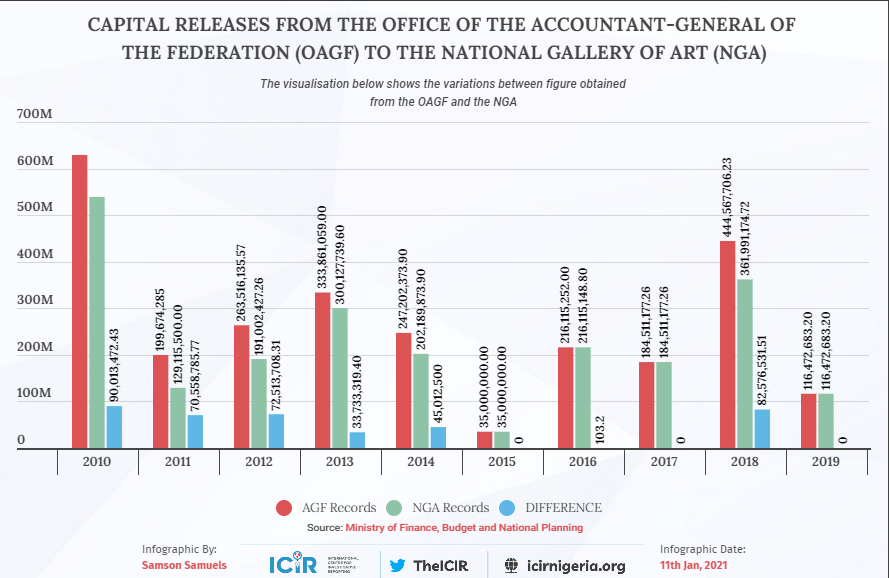
 

Capital release from the Office of the Accountant-General of the Federation (OAGF) to the National Gallery of Art (NGA).

Except for three years (2015, 2016, and 2019), when the records of a capital allocation from OAGF correspond with the documents tendered by NGA, the books are not balanced for the other years.  So, how did over one-third of a billion naira disappear?

The ICIR wrote FOI letters to the Gallery and OAGF seeking an explanation for the missing fund.  The Director of Funds at the OAGF, Sabo Mohammed, in his reply, wrote: “The Office of the Accountant -General of the Federation had cash-backed in full all the Capital Allocations released to National Gallery of Art within the period requested.” In other words, capital projects at the Gallery for which funds were released have all been paid.

However, Mohammed directed the reporter to the Budget Office and Cash Management Department of the Ministry of Finance for further confirmation.

In an interview, Muhammad M. Saleh, the Director at the Cash Management Department, told The ICIR that the office was created in 2018, so it was responsible for disbursement only for the last two years.

“The Accountant General Office was directly responsible for the disbursement between 2010 and 2018, and whatever record the Office gave is accurate,” he said.

The ICIR then contacted Abdullahi Muku, the Director-General of the National Gallery, between 2010 and 2019 for clarification.

In a WhatsApp message sent to The ICIR on November 13 2020, he wrote: “I left office honourably.  I was highly celebrated when I was leaving.  I should please be allowed to manage my life.  If there is anything I deserve, it is a commendation for my achievement while serving the nation my fatherland as DG, NGA.”
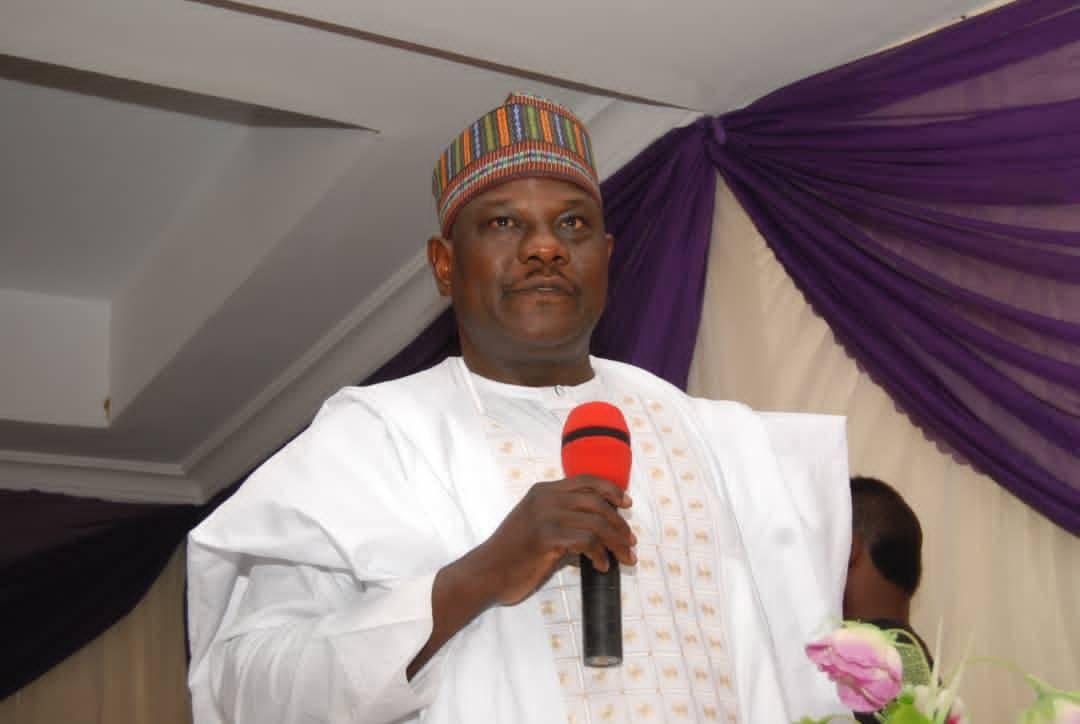
Abdullahi Muku
Abdullahi Muku, former Director-General National Gallery of Art (2010 to 2019) accused of inflating contracts and other corrupt practices

Not satisfied with the response, The ICIR requested that he answer specific questions about the allegation of misappropriation levelled against him.

On Wednesday, November 18, 2020, Muku showed up at the Abuja office of The ICIR, where he was asked to explain the disappearance of N394 million in six years.

The former DG told The ICIR that he could not explain the difference because he is no longer in service.

“I have left the office since March 2019; I no longer have a recollection of the money received and money spent,” he said.

He still could not offer a useful explanation when shown the records of capital allocations obtained from his former office and the OAGF.

Instead, he urged the reporter to dismiss “smear campaigns” launched against him by some Gallery staff members he described as “disgruntled elements.”

 According to him, the allegation of corruption started while he was in office.

“They have used media to attack me and destroy my reputation.  They have failed, and that is why they came to you too,” Muku said.

Colleagues have indeed petitioned the former Gallery boss, accusing him of stealing from the public purse, which, according to them, he successfully masterminded with other directors’ help.

According to the whistleblowers, the suspected accomplices include the immediate past acting director-general of the parastatal, Simon Ikpakronyi; director of finance and account, Henry Achugbu; retired director of document, Lilian Kangan and Adamu Tanko of the Curational Service Department.

Allegation of stealing project funds

In the petition reportedly sent to the anti-graft agency, a copy of which was obtained by The ICIR, Muku and Ikpakoroyin, who was then the Director of Research and Publications, together with other directors, were accused of “diverting” another N359,000,000 between 2013 and 2019.  The allocation was meant for research and other educational projects.

Other funds allegedly misappropriated by the directors include N68 million for purchasing library books and equipment, N25 million for computers, and N55 million for furniture and fittings.

In 2018, just a year before Muku retired, N5 million was released to publish a compendium of artists, but publication does not exist to date.

When The ICIR asked about the publication, the former DG said he was unaware of the compendium.
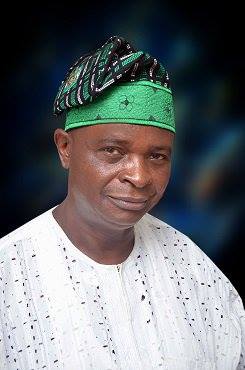
Dr. Simon Ikpakronyi.
Immediate past acting Director-General of National Gallery of Art, Dr. Simon Ikpakronyi.

Similarly, Muku and other directors were accused of stealing from the funds allocated between 2011 and 2019 to construct galleries in Imo, Taraba, Anambra and Niger states.

For example, between 2011 and 2019, a total of N67.2 million was released for the construction of Oriental Heritage Galaxy Centre Mbutu, Imo state N28 million for the construction of National Gallery of Art Centre, Ukpor Nnewi South Anambra state, and N11.9 million for the construction of Kulili Gallery of Art Centre, Kulili, Lau, Taraba state.

Other projects captured in the 2019 budget as ERGP27105289 include an office building in Port Harcourt, Rivers state and Kano, Kano state.  The total sum was N57,542,330.

According to the 2015  report from the Office of Auditor-General, a consultancy contract to organise and manage the National Gallery of Arts Management/Curators Retreat was awarded to a company in the sum of N7 million on December 1 2013.

The auditor general reported that “a payment voucher was raised for the contract sum on the same day the contract was awarded, contrary to extant regulations.  But all relevant supporting documents to back up the payment were not sighted, lending credence to the fact that the voucher was raised to effect payment without work done.”

FOI request letter to the Office of the Accountant General of the Federation

Similarly, the contract for Nupe Gallery’s construction in Niger  State was awarded to a company in 2012 in the sum of over N80 million.  Upon further examination, it was observed that the sum of N5 million was charged as “Contingencies” in the Bill of Quantities (BOQ).  The sum of N98.8 million, including VAT and Withholding Tax, was paid to the contractor at the end of the project.  This, in effect, means an overpayment occurred, and the contractor did not pay the relevant tax.

The auditor noted that contingency provisions in contract awards do not always occur.  Where they do, extant regulations provide that they should be activated by a contractor’s written application detailing item-by-item requirements and costs, subject to the awarding body’s approval.

Therefore, the auditor general called the attention of former DG Muku to these discrepancies through the Audit Inspection Report Reference No.  OAuGF/P&PAD/NGA/08 dated September 21 2015.  And when Muku responded, the auditor noted that his response dated October 7, 2015, was “unsatisfactory”.

Offence concerning public procurement attracts a term of imprisonment not less than five calendar years but not exceeding ten calendar years without an option of a fine, according to the Procurement Act 2007.

 The whistleblowers who spoke to The ICIR on the condition of anonymity said the directors used fraudulent contractors as conduit pipes for the diversion of project funds, who eventually returned the payment in foreign currency through the account of selected junior staff and the Gallery’s cooperative society.

The suspected staff involved in this racket include Chibuzor Udemba, Vincent aka Vamaco, contractors and consultants; Onanusi Olakitan, the cash officer and Musa Mudashiru, the chairman of the Gallery’s cooperative society.

Mudashiru denied all the allegations against him in a phone interview with The ICIR.  “I am not part of them.  If I am, I should have benefited from certain privileges that other senior staff benefited from.”

Response from the Office of the Accountant General of the Federation

Hold lawmakers accountable for uncompleted galleries, says former DG.

The former Gallery boss also denied all the allegations.  According to him, most of the Gallery’s construction projects are constituency projects initiated by lawmakers, influencing the funds’ disbursement.

“Those galleries are constituency projects; they were not initiated by us,” he told The ICIR.

According to him, the Mbutu gallery project was the project of the former Deputy Speaker of the House of Representatives, Emeka Ihedioha; Anambra gallery by the Honourable, and Taraba Gallery by Honourable Jerry Samuel Manwe, who was the House of Representative member from Taraba and the Chief of Staff to former Speaker Yakubu Dogara.

Muku referred to “budget padding” by Nigerian lawmakers, a practice that has become the norm in the National Assembly.

Every year, legislators of the two chambers rewrite the budget, introducing items outside the estimates prepared and submitted by various Ministries, Department and Agencies (MDAs) through the president.  As a matter of yearly ritual, both chambers include what they call constituency projects whose costs are arbitrarily fixed by legislators.

In 2016, Honourable Abdulmumin Jibrin, a lawmaker from Kano and former Chairman of the House Committee on Appropriation, called Nigerians’ attention to the criminal conspiracy among the Senate members and the House of Representatives.

Jibrin disclosed that the lower chamber unilaterally included 2,000 items in the 2016 budget.

Also, a human rights lawyer, Femi Falana, alleged that constituency projects worth over N100 billion were inserted into the national budget.  The Senate and the House of Representatives allocated to themselves N60 billion and N40 billion, respectively.

Drawing from sections 4 and 5 of the 1999 Nigerian Constitution (as amended), lawyers have condemned lawmakers for initiating constituency projects.  They argue that such a practice is the exclusive role of the executive, but legislators remain unpersuaded.

Between 2011 and 2019, a total of N67.2 million was inserted into the National Gallery’s budget to construct the Mbutu Gallery in Imo state, according to the document obtained from the Agency.  But Muku tried to exonerate himself by shifting blame to the lawmakers.

“We are in a very sorry situation in this country.  The National Assembly is our major problem.  Without them, Nigeria will move forward,” he said.

By pointing an accusing finger at the lawmakers,  the former DG indirectly cast aspersions on himself because his office was used for the personal enrichment of public officers.  Yet, he played down his culpability by simply saying, “I did not say I am a saint too.”

On December 22, The ICIR sent an SMS and WhatsApp messages to Ihedioha, who was then representing Aboh Mbaise/Ngor Okpala Federal Constituency of Imo State, to explain why the Mbutu gallery remains uncompleted nearly nine years after the project’s contract was awarded.  But he did not respond.  The Centre called him again on Tuesday, December 29, 2020, and when he answered, he tacitly directed the reporter to contact the National Gallery of Art about the project.  He did not say anything further before he cut the call.

Ihedioha holds a National Honor as Commander of the Order of the Niger (CON).

Manwe was also contacted on January 6 via the Facebook account he set up to engage his constituency in Taraba state.  The ICIR asked him to explain why the Kuluu Lau gallery’s construction, to which N12 million has been released, remained abandoned for more than eight years.  But the lawmaker did not respond.

Meanwhile, the president of the Society of Nigeria Artists, Oliver Ewonwu is unhappy with the country’s state of the art.  He is even more disappointed with the administrators’ poor performance in the art sector.  He lamented that there is no befitting national gallery to warehouse many artworks created in Nigeria.

In an interview with The ICIR, he questioned the federal government’s idea of setting up galleries in all states when the government could have located galleries only in Lagos and Abuja, the two capital cities.
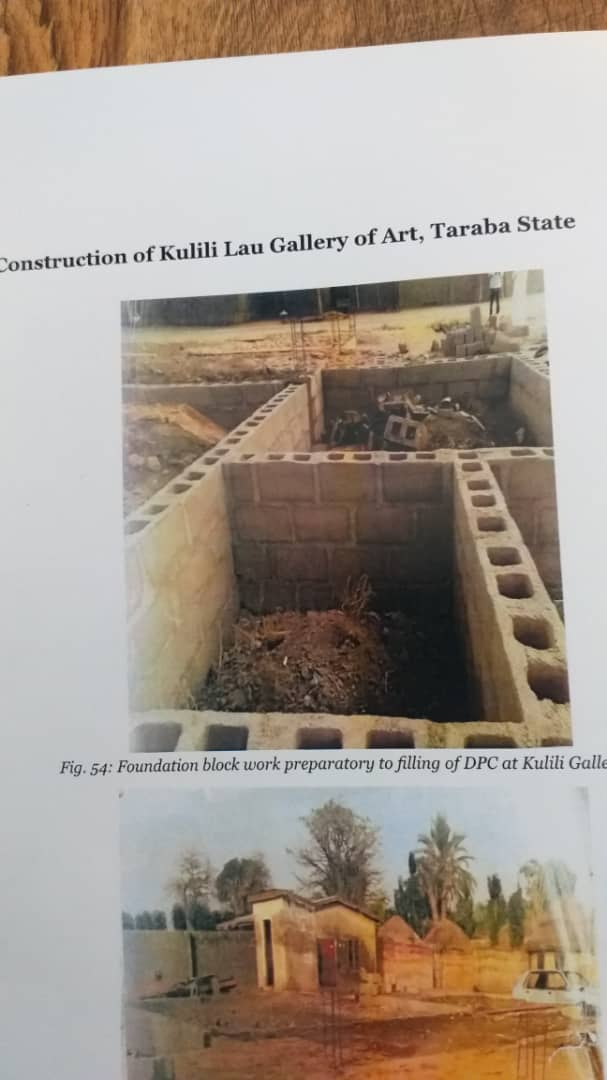
Kulili Gallery in Taraba state is still at a foundational level. CREDIT: NGA
Kulili Gallery in Taraba state is still at a foundational level.  CREDIT: NGA

Gallery’s finance director explains differences in conflicting records but silent on other disbursements.

The ICIR contacted the current DG of the Gallery, Ebetan Ivara, via Whatsapp, on the allegation of misappropriation in his office, and he exonerated himself.

His reply: “I am sure you know that I was not here as the DG during the period you are investigating the allocations.  I am barely four months old in the Agency and have not been furnished with this account and expenditures.  You should carefully handle your investigation with him and not publish what will run my Agency down and bring the new administration into a bad light.  You may come to my office from January 5 to give me time to find out the DFA’s responses to the alleged financial expenditures.”

True to his word, on January 13, a response from the Director of Finance and Account (DFA), Achugbu, arrived.

He wrote that: the “appropriation /budget performances as forwarded to you[The ICIR] are in line with our budgetary allocations, releases and expenditure for the relevant years.”

However, he added that “the information supplied by the Accountant General included releases from the services-wide votes which are not part of the appropriation/budgetary allocation, or budget releases but are accounted for separately.”

In other words, the previous records of releases sent to The ICIR by Achugbu did not contain other disbursements to the Gallery.  In a letter dated December 17, 2020, sent to the finance director, the Accountant General also confirmed the omission.

“I am directed…to inform you that from the records available to this Office, the discrepancies you referred to may be about releases effected from Service Wide (Capital) Vote effected through AIE instrument in favour of your Agency.  It may appear you did not capture such releases in your report,” director of funds Mohammed wrote.

However, it remains suspicious that Mr. Achugbu failed to capture the releases in the earlier report submitted to The ICIR. This action violates the Freedom of Information  Act (FOIA) 2011.

According to FOI Act,  a  deliberate attempt to distort public information is a violation.  Section 10 of the FOIA  states that:  “It is a criminal offence punishable on conviction by the Court with a minimum of 1-year imprisonment for any officer or head of any government or public institution to which this Act applies to willfully destroy any records kept in his custody or attempt to doctor or otherwise alter same before they are released to any person, entity or community applying for it.”

Rather than explain why an important financial record was omitted in the document submitted, Achugbu praised his Agency, saying the relevant government authorities have never found the Agency wanting.  But this claim is untrue.
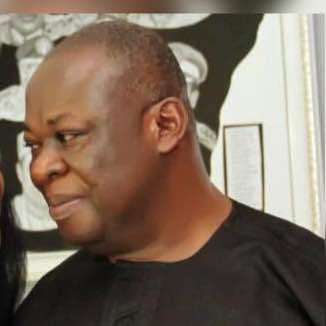
Henry Achugbu
Gallery Director of Finance and Account, Henry Achugbu

As of May 2010, the Economic and Financial Crime Commission, EFCC reported 52 “high-profile” ongoing cases.  The published list of those cases includes the prosecutions of Joe Musa, another former Director-General of Abuja’s National Gallery of Art.

In a petition sent to the EFCC, the former DG was accused of corrupt practices, including over-invoicing, inflated contacts, bloated wage bills, falsification of tour documents, and false claims on seminars, exhibitions and training that were never organised.

The former DG Muku had told The ICIR that lawmakers at every budget cycle include constituency projects in the budget of the MDAs and asked civil servants to bring the money through their chosen contractors and later ask them to retire it without executing the projects.

Okey Epia, the publisher of Orderpaper, a news website that covers the Nigerian parliament, told The ICIR in an interview that the practice of inserting constituency projects in MDAs’ budgets by lawmakers has become the norm though unethical.

Notwithstanding, he said heads of MDAs are indeed liable for all the allocation approved and released for later abandoned projects, not the lawmakers.

“Indeed, lawmakers often insert constituency projects into the budget of the MDA, but legally speaking, the head of the Agency is liable for any misappropriation.  The MDAs would be held responsible for any project failure.”

Explaining how the process works, Epia said constituency projects are inserted by lawmakers who would later send a contractor to bid for the project.  The Agency will eventually release the money to the contractor.  Often, the project is abandoned midway or does not commence at all, but the money would have been shared among all the key actors, including the head of the parastatal.

The ICIR’s investigation shows that this sharp practice was rife throughout the administration of the former DG Muku, and his predecessor.

Additional report by Damilola Ojetunde and  Samad Uthman.
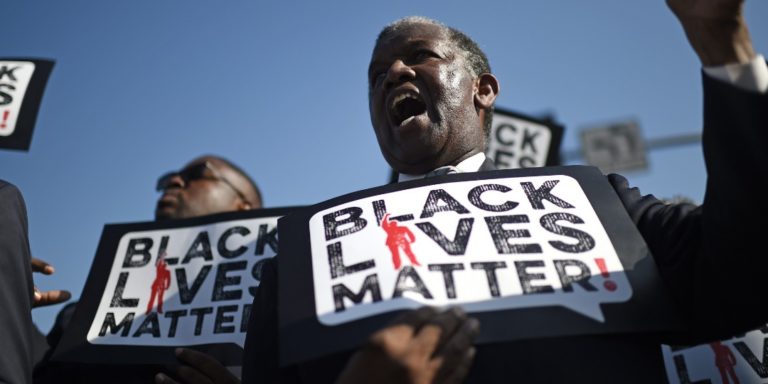
Black Lives Matter movement nominated for Nobel Peace Prize

THE Black Lives Matter (BLM) movement has been nominated for the 2021 Nobel Peace Prize for championing an awakening against racial discrimination worldwide.

The BLM movement was co-founded in 2013 by Alicia Garza, Patrisse Cullors and Opal Tometi in response to the acquittal in the United States of a man who shot Trayvon Martin. It gained wider recognition in 2014 following protests over the deaths of Michael Brown and Eric Garner, and became an international focus in 2020 following the deaths of George Floyd and Breonna Taylor.

Petter Eide, a member in the Norwegian parliament, who nominated the group, said it deserved the award because of how the movement had “had a tremendous achievement in raising global awareness and consciousness about racial injustice.”

“I find that one of the key challenges we have seen in America, but also in Europe and Asia, is the kind of increasing conflict based on inequality. Black Lives Matter has become a very important worldwide movement to fight racial injustice,” Eide said.

The 61-year-old politician, who has been a member of parliament since 2017, said he didn’t want his nomination to be seen as interference in US politics. He also dismissed insinuations by Donald Trump, former US president, and right-wing politicians that the group had been behind some major violence in US cities.

“Studies have shown that most of the demonstrations organised by Black Lives Matter have been peaceful. Of course, there have been incidents, but most of them have been caused by the activities of either the police or counter-protestors.”

“There is actually a tradition for doing this, It’s a strong linkage between anti-racism movements and peace, and a recognition that without this kind of justice, there will be no peace and stability in the society,” he argued.

He stressed that “Awarding the peace prize to Black Lives Matter, as the strongest global force against racial injustice, will send a powerful message that peace is founded on equality, solidarity and human rights and that all countries must respect those basic principles.”

Nominations for the Nobel Peace Prize are accepted from any politician serving at a national level, and they are allowed in just 2,000 words to state their case. The deadline for this year’s submission is February 1, and by the end of March, the committee prepares a shortlist. The winner is chosen in October and the award ceremony is scheduled for 10 December.

Albert Luthuli and Nelson Mandela received the prize in 1960 and 1993 respectively for advocating against racial discrimination in South Africa, and Martin Luther King was awarded the prize for non-violent resistance against racism in the US in 1964.

Corruption: Lawal, Kalu, Amosu, Metuh top EFCC’s major arraignments for 2021

THE Economic and Financial Crimes Commission (EFCC) says it hopes to overturn the rulings that freed Orji Kalu, current Senate chief whip and Olisa Metuh, former national publicity secretary of the People’s Democratic Party (PDP) from prison this year.

The commission, through its monthly publication entitled ‘EFCC Alert’ listed Babachir Lawal, former secretary to the government of the federation; Adesola Amosu, former chief of air staff; Abdulrasheed Maina, former chairman of the Pension Reform Task Team; Andrew Yakubu, former group managing director of the Nigerian National Petroleum Corporation (NNPC); Babangida Aliyu, former governor of Niger state, and Winifred Oyo-Ita, former head of civil service of the federation as some of the prominent Nigerians whose corruption cases would continue in court this year.

The publication also named Muktar Yero, former governor of Kaduna State; Doyin Okupe, Tanimu Turaki and Mohammed Adoke, former senior special assistant on public affairs, minister of special duties and inter-governmental affairs, and former minister of justice and attorney-general of the federation respectively in the administration of former President Goodluck Jonathan as former public office holders whose corruption cases would also continue in court.

Others in the roll call are Murtala Nyako and Gabriel Suswam, former governors of Adamawa and Benue state respectively; George Turnah, a former special adviser to Dan Abia, erstwhile managing director of Niger Delta Development Commission (NDDC); and Abubakar Mohammed Sani, deputy comptroller of the Nigerian Correctional Service, Katsina Command.

The commission also expressed delight with the conviction of a former managing director of Finbank, Okey Nwosu, on January 5, 2021, by Justice Okunnu of the Lagos State High Court.

He is to serve a three-year jail term.

Nwosu’s conviction came nine years after the EFCC had filed a case, accusing him of 19.2 billion naira fraud at the Finbank.

Deposed Emir of Kano and former governor of the Central Bank of Nigeria (CBN) had on October 9, 2010, predicted Nwosu’s imprisonment.

Sanusi made the prediction when exposing the malpractices in the bank: ““In each of those banks, I know what I saw and I told you from the very first day that it was unbelievable, but I know what I saw. And I have no doubts in my mind that each and every one of those people will go to jail.”

According to the EFCC, mismanagement by Nwosu led to Finbank’s distress and its eventual acquisition by First City Monument Bank (FCMB).

EFCC logo. Source: EFCC Twitter

Babachir Lawal

He is standing trial before Justice Charles Agbaza of the Federal Capital Territory (FCT) High Court over 544 million naira ‘grass-cutting scandal.’

Lawal was accused of  illegally benefitting from  approval of the 544 million naira, which was from irrigation/grass cutting contract on the camps of internally-displaced persons in the North-East.

The contract was awarded under the presidential Initiative for North East (PINE).

Orji Uzor Kalu:

The former governor of Abia State, and current chief whip of the Senate was freed on May 8, 2020, by the Supreme Court after spending six months of his 12-year jail term at Kuje prison.

He had been sentenced by Justice Idris Mohammed of a Federal High Court, Lagos, on December 5, 2019.

The Supreme Court ruled that Mohammed had been elevated to the Court of Appeal before giving the ruling and was no longer a judge of the lower court.

READ ALSO: Maina, like other public officials accused of corruption, feigns sickness in court

It, therefore, ordered a retrial of Kalu for alleged 7.1billion naira fraud.

EFCC said the Abuja division of the Federal High Court had slated February 2, 2021, to re-arraign the politician in Abuja.

A chieftain of the All Progressives Congress (APC), Orji is rumoured to be a major contender for the 2023 presidency.

Olisa Metuh

The PDP’s former national Publicity Secretary was convicted on February 25, 2020 by Justice Okon Abang of the Federal High Court in Abuja.

Among others, the court found Metuh guilty of fraudulently receiving 400 million naira from the Office of the National Security Adviser in November 2014. His case dragged for four years in the court.

“The Abuja Division of the Court of Appeal, on December 16, 2020 upheld the appeal of Metuh, and set aside the conviction handed down on him by Justice Okon Abang of a Federal High Court, Abuja, citing bias, without considering the merits in the money laundering case. Metuh at the time had already commenced his seven-year jail term at the Kuje Prison.

“However after a review of the ruling, the EFCC has approached the Supreme Court to set aside the judgment of the Court of Appeal on the grounds that the appellate court erred by restricting itself to only two grounds (12 and 14) of the appeal that dwelt on the alleged bias of the trial judge, without examining the merit of the judgment of Justice Abang,” EFCC Alert, January 2021 edition, said.

Adesola Amosu

The retired military chief is standing trial before Justice Chukwujekwu Aneke of the Federal High Court Court sitting in Ikoyi, Lagos. He is joined by two others, namely, Jacobs Adigun, an air vice marshall and former NAF chief of accounts and budget, and Owodunni Olugbenga, an air commodore and former NAF director of finance and budget for allegedly diverting about 21 billion naira of the Nigerian Air Force funds for personal use.

Babangida Aliyu

Aliyu is standing trial alongside his then chief of staff, Umar Nasko, on an alleged 2 billion naira money laundering charge contained in an amended three-count charge by the EFCC. He is also accused of diverting, for personal use, the ecological fund meant for his state where he served as a two-time governor.

Andrew Yakubu

Yakubu, former group managing director of the NNPC is accused of engaging in money laundering running into several billions.

The EFCC had, on a tip-off, raided his guest house situated at Sabon Tasha, Kaduna State on February 3, 2017, and reportedly recovered stacks of monies in a fireproof safe.

According to the anti-graft agency, 9.8 million US dollars and 74,000 pound sterling were discovered in the building.

Justice Ahmed Mohammed of the Federal High Court Abuja has fixed February 17, 2021, to rule on the request by the EFCC which urged the court to visit the Kano branch of the CBN and inspect the sums of 9.77 milion dollars  and 74,000 pounds traced to him.

Abdulrasheed Maina

Maina is standing trial for two billion naira pension fraud. He allegedly committed the crime using his office as the chairman of the Pension Reform Task Team.

After reportedly jumping bail and fleeing Nigeria, he was caught by Interpol on November 30, 2020, in Niger Republic and was later extradited to Nigeria.

“Maina on December 9, 2020, filed a no-case submission before Justice Okon Abang of a Federal High Court, Abuja.

“Justice Abang had adjourned till December 10, 2020 for the defence to argue the application and for the prosecution to respond to same orally, but on the said date, there was some drama in court as Maina collapsed in the courtroom.

“Before then, Maina had jumped bail, prompting the court to jail his surety, Senator Ali Ndume. With collaboration between the EFCC and INTERPOL, Maina was arrested in Niger Republic and brought back to Nigeria to face his trial,” EFCC stated in its publication.

Winifred Oyo-Ita:

The former head of civil service is facing an 18-count charge of official corruption and money laundering to the tune of 570 million naira, which allegedly involved obtaining estacodes and duty travel allowances for journeys either not undertaken or non-existent.

Standing trial alongside Oyo-Ita are Frontline Ace Global Services Limited; Asanaya Projects Limited; Garba Umar and his companies: Slopes International Limited and Gooddeal Investments Limited.

Others are: Ubong Okon Effiok and his companies, U&U Global Services Limited and Prince Mega Logistics Limited.

EFFC operatives in action. Source: BusinessDay

Their trial continuedbefore Justice Taiwo Taiwo of a Federal High Court, Abuja, on January 28, 2021.

Muktar Ramalan Yero:

The former governor of Kaduna State is standing trial before Justice Z.B. Abubakar of the Federal High Court sitting in Kaduna over his involvement in the ‘sharing’ of 700 million naira provided by a former minister of petroleum resources, Diezani Alison-Madueke, to allegedly influence the outcome of the 2015 presidential election.

Yero is standing trial alongside a former minister of state, Nuhu Somo Waya; former Kaduna State PDP chairman, Abubakar Haruna Gaya, and the former secretary to the state government, Hamza Ishaq, on an amended eight-count charge.

The case has been adjourned till February 23, 2021, for continuation of trial.

Kabiru Tanimu Turaki

The trial of the former minister of special duties and inter-governmental affairs, alongside his personal assistant, Sampson Okpetu, continued on January 25, 2021.

They are standing trial before Justice Inyang Ekwo of the Federal High Court, Abuja, for an alleged 714.6million naira fraud.

Two companies standing trial alongside the former minister are: Samtee Essentials Limited and Pasco Investment Limited. The case has been adjourned till February 9 and 10, 2021.

Mohammed Adoke:

Adoke is in court over alleged money laundering involving about 400 million naira.

The trial was stalled on January 11, 2021, before Justice Inyang Ekwo of the Federal High Court, Abuja, due to the absence of the defendant. He was reportedly stranded in Dubai, United Arab Emirates, after he tested positive for the coronavirus disease. The court had earlier granted his request to travel to Dubai for medicals. He was said to have been on the verge of returning to the country when he found out that he was positive for the virus.

Adoke, who is reported to have tested negative, was said to have been unable to fly back in good time for his trial.

He is standing trial alongside Aliyu Abubakar on an amended 14-count charge of money laundering. They are expected back in court on March 1, 2021.

Abubakar Mohammed Sani

The deputy comptroller of the Nigerian Correctional Service, Katsina Command, is alleged to have obtained money running to about 2.8 million naira from unsuspecting jobseekers, under the guise of securing government jobs for them.

Sani, who was the works officer at the headquarters of the Correctional Service, was first arraigned on December 9, 2020, before Justice Hadiza Sabi’u Shagari of the Federal High Court Katsina and he pleaded ‘not guilty.’

The case has been adjourned to February 3 and 4, 2021, for the defence to cross-examine the prosecution witness

Murtala Nyako

The EFCC had, on January 16, 2020, closed its case in the 29 billion naira fraud trial of the former governor of Adamawa State.

In its publication, the commission said rather than open defence, Nyako, and his co-defendants – his son, Abdul-Aziz Nyako; two companies – Sebore Farms and Extension Ltd and Pagado Fortunes Ltd; Zulkifik Abba, Abubakar Aliyu, Blue Opal Ltd, Tower Assets Management Ltd and Crust Energy Ltd filed a no-case submission.

Following their application, Justice Okon Abang has fixed February 26, 2021, to enable the defendants reply to the prosecution’s counter-affidavit on point of law.

Gabriel Suswam

Suswam is standing trial for alleged 3.1billion naira fraud.

On November 2, 2020, the former Benue State governor alongside his then commissioner of finance, Omodachi Okolobia, was re-arraigned before Justice Ahmed Mohammed of the Federal High Court, Abuja.

The trial judge was the one presiding over the case, before it was reassigned to Justice Okon Abang, and then brought back to Justice Mohammed.

The trial judge ordered the court registry to go through the records and sort out the exhibits earlier admitted by the court and to make sure that they were marked accordingly, in order for the trial to continue from where it stopped.

Doyin Okupe:

Okupe is being prosecuted by the EFCC alongside his two companies: Value Trust Investments and Abrahams Telecoms on a 59-count charge bordering on money laundering and criminal diversion of funds to the tune of 702 million naira.

Justice Ijeoma Ojukwu of the Federal High Court Abuja, on November 16, 2020, adjourned his trial to February 8 and 9, 2021.

UAE amends laws to allow foreigners, including Nigerian property owners, to become citizens

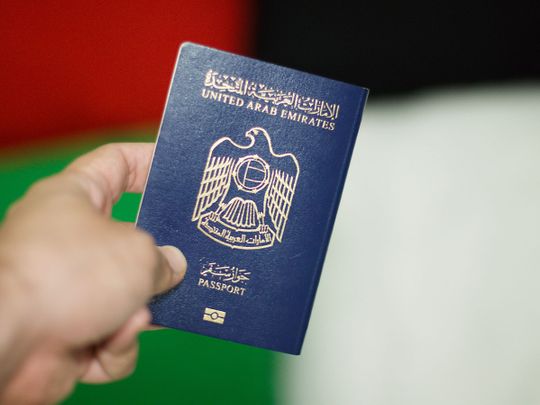
THE United Arab Emirates has adopted laws that will grant citizenship to a select group of foreigners, including investors and property owners. ‎

A category of foreigners that could be granted citizenship, as announced by ‎Mohammed bin Rashid Al Maktoum, vice president and prime minister of the UAE and ruler of Dubai, in a tweet on January 30, 2021, are professionals such as doctors, scientists, engineers, artists, authors and their families.

The development followed the amendment of the executive regulation of the federal law concerning nationality and passports.

To secure the citizenship, investors must own a property in the UAE, according to a statement on UAE state news agency, WAM.

Scientists eligible for citizenship must obtain one or more patents that are approved by the UAE Ministry of Economy or any other reputable international body, in addition to a recommendation letter from the ministry.

Also, to obtain UAE citizenship, doctors and specialists must‎ be specialised in a unique scientific discipline or any other scientific principles that are highly required in the Gulf state.

Eligible scientists are required to be active researchers in universities or research centres or in the private sector, with practical experience of not less than 10 years in the same field.

In the same vein, individuals with creative talents, such as intellectuals and artists, should be pioneers in the culture and art fields, and winners of one or more international awards. A recommendation from related government agencies is also mandatory for the citizenship offer.

The UAE cabinet, local courts and executive councils will nominate the foreigners eligible for the citizenship under criteria set for each category.

However, the amended laws will allow foreigners who received the UAE passport to keep their existing citizenship, meaning that Nigerians and citizens of other countries who become citizens of the UAE under the arrangement will now have dual citizenship.

READ ALSO: Why Nigeria’s political elite led by Bagudu, Ekwerenmadu others, stash N164 billion worth of properties in Dubai – Study

The citizenship can be withdrawn upon breach of certain conditions, according to the statement.

While it is not immediately clear whether the foreigners who will be bestowed citizenship would have the full rights and benefits of the Emirati, as natives of the UAE are known, Bloomberg, in an analysis, noted that the amendment, which it described as a ‘major policy shift,’ was aimed at attracting talents in a way that will boost economic growth in the UAE, home to the Middle East’s finance and travel hubs – Dubai and Abu Dhabi.

Although foreign residents make up more than 80 percent of the population of the UAE’s seven sheikhdoms and have been the mainstay of the UAE economy for decades, they have lacked a clear path to citizenship, even for those born and raised in the country.

Hitherto citizenship was reserved for foreigners only in special cases, particularly for service to the UAE. ‎

Bloomberg further observed that governments of the Gulf states, including the UAE, have long resisted offering permanent residency to their millions of foreign workers in a bid to protect generous privileges enjoyed by their citizens. However, the 2014 oil-price slump is forcing them to prepare their economies for a post-fossil fuel world and they are now seeking to entice wealthy people to stay.

According to Bloomberg, the UAE in 2020 abolished companies having Emirati shareholders in a major shake-up of foreign ownership laws aimed at attracting investment into the economy,  which has been hit by the coronavirus pandemic and decline in oil prices.

Before coming up with the amended laws that allow granting citizenship to select foreigners, the UAE had announced a plan to grant ‎visas of five to 10 years to wealthy property investors and entrepreneurs, as well specialised researchers.

Not fewer than 800 Dubai choice property worth over $146 billion linked to Nigerian politically exposed persons (PEPs)

‎Checks by The ICIR show that several wealthy Nigerian politicians could qualify for UAE citizenship, under the amended laws, by virtue of their ownership of choice, luxurious property in Dubai, the financial and travel centre of the UAE. ‎

A report titled ‘Dubai Property: An Oasis for Nigeria’s Corrupt Political Elites,’ authored by Mathew T. Page and published by the Carnegie Endowment for International Peace on March ‎19, 2020, noted that no fewer than 800 Dubai properties were linked to Nigerian politicians.

According to the report, information on property owned by Nigerian politicians in Dubai ‎came to light after the Center for Advanced Defense Studies (now known as C4ADS), in 2016, acquired the data of a private database of Dubai real estate information (dubbed the  ‘Sandcastles’ data).

“At least 800 properties were found to have links to Nigerian politically exposed persons‎ or their family members, associates, and suspected proxies,” the report said.

Politically exposed persons are individuals who are or have been entrusted with prominent public functions. The report observed that for those of them with ill-gotten wealth, Dubai is an alluring destination for investing their gains.

“Although certainly not the only place to stash money, Dubai – dubbed the commercial capital of the Middle East – exercises minimal oversight and has few legal or logistical obstacles to transferring large amounts of cash or purchasing property.”

Highlighting the scale and significance of Nigerian PEPs Dubai property holdings, the report stated, “The 800 Dubai properties linked to Nigerian PEPs are estimated to be worth well over 146 billion naira (N) ($400 million). ‎This equals roughly two-thirds of the Nigerian Army’s annual budget and over three times the annual budget of the country’s Independent National Electoral Commission.”

It added that Dubai property ownership is an indicator – not definitive proof – that a particular politically exposed Nigerian possesses unexplained wealth.

“Although many PEPs’ property purchases exceed what their official salaries should permit, some politically exposed Nigerians have complicated personal financial portfolios combining marital and family assets, business holdings, charitable foundations, and other offshore wealth,” the report noted, adding that “‎Nigerian elites face few obstacles transferring large quantities of cash to Dubai as banks or other money transfer agents in both Nigeria and the UAE do not appear to be reporting large or otherwise suspicious transactions by PEPs to national authorities.”‎‎

Going by the Sandcastles data, ‎politically exposed Nigerians that were linked to Dubai property include state governors; state governors’ allies; heads of federal government ministries, departments, and agencies (MDAs); individuals already investigated or convicted by anti-corruption agencies; petroleum sector officials; security sector figures; legislators; and suspected proxies. A judge and a handful of traditional leaders were also linked to Dubai property in Sandcastles data.

‎Dubai is a very attractive destination for Nigerians due to its accessibility as a major transportation hub and the home of Emirates Airlines, ‎and the fact that it is easier for a Nigerian to get a UAE visa than it is for them to get a visa for the United States or United Kingdom.‎

‎The number of Nigerians traveling to Dubai has continued to rise. According to the report, the number of Nigerians arriving in Dubai increased by 28 per cent in the first half of 2019 (compared to the same period in 2018).

As a result, according to the report, Nigeria has become one of the top 20 countries from where visitors arrive in Dubai.‎

COVID-19: World Bank approves $12bn to support vaccination in Africa

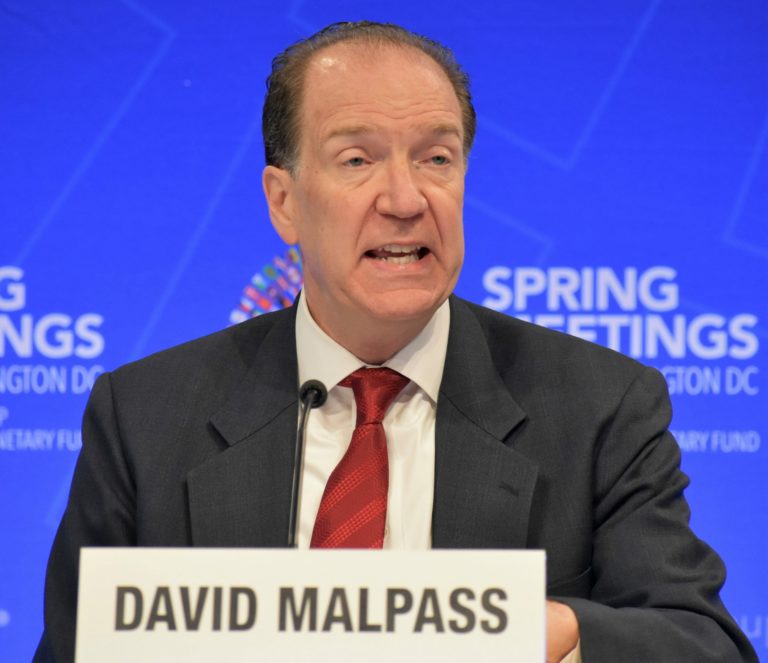
THE World Bank has earmarked 12 billion US dollars to support vaccination against COVID-19 in Africa. 

David Malpass, president of the bank, said the fund would be in the form of grants or on ‘highly concessional terms,’ Bloomberg reported on Saturday.

The decision, the reports said, was sequel to January 27 virtual meeting on the Africa COVID-19 vaccine financing and deployment strategy.

Nigeria, Africa’s biggest economy and one of the countries with the highest infections and fatalities from the virus on the continent, was not among the few countries listed as beneficiaries of the fund by Malpass. However, two-thirds of the benefitting countries were not immediately listed by the bank’s chief.

“We’re preparing emergency vaccine financing projects in 21 countries in Africa, including the Democratic Republic of Congo, Ethiopia, Niger, Mozambique, Tunisia, Eswatini and Cabo Verde to name a few; the funds are available now,” Malpass said.

He added:  “Since the outbreak of COVID-19 last March, the bank has committed 25 billion dollars to African countries to support their health and economic recovery, and we expect to commit an additional 15 billion dollars by June. We urge leaders of African countries to move quickly to secure vaccinations for their populations, and to avail themselves of the financing available from us.”

Data from the Africa Centre for Disease Control as of Saturday morning showed that African Union member countries (55 in total) had reported 3.534 million cases, 3.014 recoveries and 89,839 deaths, with Nigeria having 128, 674 and 1,577 of the cases and deaths respectively.

The Africa Centre for Disease Control had suggested that it would cost between 10 billion dollars and 15 billion dollars to vaccinate 60 percent of Africa.

Nigeria had, in early January, promised to secure 100,000 doses of the Pfizer-BioNTech vaccine which it said would first be administered on frontline health workers and other vulnerable people in the country. The vaccine would come courtesy the World Health Organisation which advocates equity in vaccines distribution to ensure developing nations are not left out in the immunisation campaign.

The announcement came after the President Muhammadu Buhari-led government had proposed 400 billion naira for the purchase of COVID-19 vaccine with which it hoped to vaccinate 70 percent of its estimated 200 million population.

READ ALSOFG considers lockdown in Abuja, Lagos, others as COVID-19 cases surpass 127,000

The country’s decision to spend such a sum on vaccine  given the strong immunity of Nigerians against the disease has attracted more criticisms than applause.

Most prominent of the critics is Bill Gates, world’s biggest individual vaccine funder and fourth richest on the globe.

Gates had opined while addressing journalists that funding the nation’s weak primary health care system would  do the nation greater good than purchasing COVID-19 vaccine.

He had said, “There is no doubt that the impact of putting money into the health system, particularly the primary healthcare system, will be very high in terms of saving children’s lives.

“Nigeria should not divert the very limited money that it has for health into trying to pay a high price for COVID-19 vaccines.”

Apart from COVID-19 in which it has had high infections but comparably low fatalities, Nigeria currently parades some of world’s worst health statistics, namely maternal and child morbidity and mortality, HIV/AIDS, neglected tropical diseases (NTDS), malaria, tuberculosis.

The country also has high cases of non-communicable diseases such as cancer, hypertension and diabetes – of which it has no official data. Experts have blamed these conditions on underfunding of the nation’s health sector, inadequate manpower, brain drain, ill-equipped and insufficient facilities, policy summersaults, lack of political will, corruption and other ills.

Visit the ICIR COVID-19 portal

The ICIR checks show that Nigeria ranks 75th among 192 countries, regions and sovereignties whose COVID-19 data has been captured by John Hopkins Coronavirus Resource Centre, one of world’s most credible platforms for information on the disease.

Nigeria has conducted over 1.2 million COVID-19 tests out of its estimated over 200 million population.

Challenged by the second wave of the virus, the federal government has hinted it could lock down major cities in the country, including Lagos and Abuja.

Nigeria’s economy, as other countries of the world, has been negatively affected by the pandemic as government revenues have plunged, resulting in job losses and wage cuts.

The crisis has further compounded the nation’s standing as world’s poverty capital based on the projection by World Poverty Clock, compiled by Brookings Institute in 2018.

Untold stories of victims kidnapped by Nigeria’s gunmen

AS fear grows in Nigeria over rising insecurity, aggravated by banditry, kidnapping, insurgency, militancy, and other social ills, The ICIR’s Marcus Fatunmole and Bamas Victoria report tales of citizens who were kidnapped and held hostage, including those who were released after paying huge sums as ransoms.

“My daughter gets frightened whenever she sees a policeman or hears loud banging.”

“She was three when I was kidnapped,” Uzoma tells the ICIR.

“She says ‘police came to pick my daddy,’ but I keep on correcting her that they were not police but bad people.”

Uzoma, like several victims of abduction, lives with constant reminder of the sordid ordeal long after it has happened.

He says he constantly has to tell his now five-year-old daughter that not all armed men are ‘bad people.’ He explains that whenever she sees an armed policeman, she still insists that they want to ‘take my daddy.’

A black Christmas

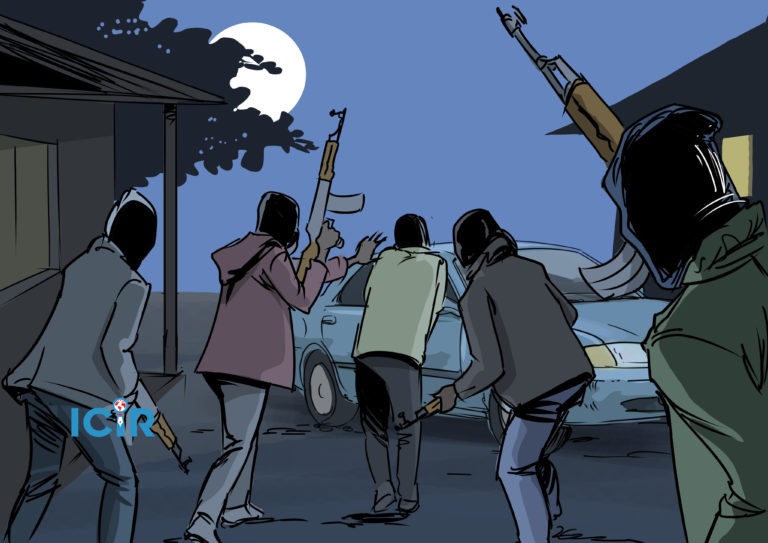
Two days to the Christmas of 2019, Uzoma was abducted in his house in the presence of his family – a wife and three children, the youngest, a month-old infant.

He recalls that he was in his room with his daughter when he started hearing loud noises.

“At first I thought it was knockouts,” he says. But as the sound continued, he decided to check.

He went to the kitchen door, but several things happened simultaneously in few seconds.

First, he made an eye contact with an armed person. Secondly, there was a realisation that the sounds were gunshots, that he was being robbed and needed to secure the door and get his family to safety.

Doors from Uzoma's house
Doors from Uzoma’s house.

“I could hear gunshots fired at the door and later what appeared to be a dagger being used to hack the kitchen door,” he says.

A few minutes later, there was loud banging on the bedroom door where Uzoma and his family were hiding. Meanwhile, he had contacted the neighbourhood vigilante who also said they could hear the gunshots.

“I don’t blame them, what do you expect them to do against such firepower?”

“The vigilante were proactive, but these people overpowered them. They had Dane guns, but the abductors had AK-47, so you cannot compare them.”

The abductors had two two extra magazines each, Uzoma explains.

Uzoma says he opted to call the vigilantes first instead of the police because they were closer.

The banging was now on his bedroom door. He took his family into the bathroom. They gained access and their next port of call was the bathroom door. The sound was getting louder and his son was crying, which made his wife open the door.

He saw several armed men in the room. One of them was going round taking all the valuables he could find, including money, clothes, bedsheets, and towels. The armed men also had his wife’s phones.

“I told them to take everything, and they could have our cars too,” Uzoma says. But the only response he got was “Muje, let’s go” from one of the armed men who handed him a dashiki shirt.

That was when he realised that this could be an abduction.

He was taken outside where he was made to sit down on the ground alongside three other men. One of the men was bleeding from a machete cut which he sustained while trying to escape.

Uzoma says he counted 15 abductors with nine of them armed with guns.

“It is incredible. They even had bags containing bullets,” Uzoma says, still in disbelief.

The long trek and the many Abuja mountains

Abuja is filled with hiking clubs.  At weekend members hike numerous hills, rocks, and mountains. But for Uzoma, his hiking that day was not for pleasure.

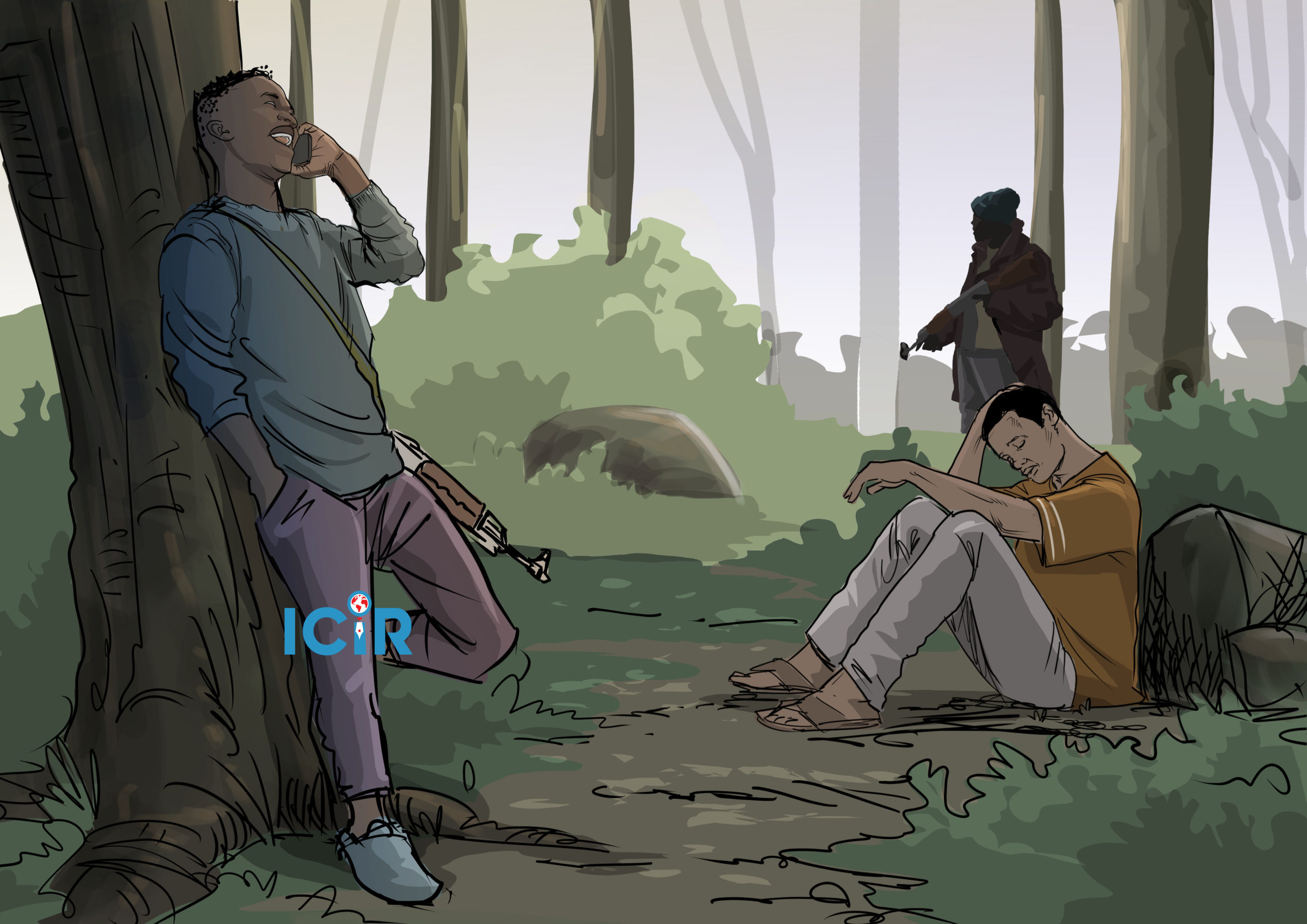
The abductors had a tracker called ‘Smallie’ who knew the route. “I am not sure that boy is up to 20, he wasn’t carrying a gun,” Uzoma recalls.

“I think he is a younger brother to the leader,” he explains.

“They had cooking utensils; they even had a solar panel used to charge their phones and a translator,” he says.

The translator, a Tiv man, went by the alias ‘Abiola.’

Abiola was the only non-Fulani among the kidnappers.

Uzoma says when the trek began, the abductors were 15 with nine guns, but when they got to their first stop, their number decreased to 13. Two persons had left; one with a gun and another without.

He says that they came across a herd of cows at one point and an elderly man appeared. The leader of the abductors walked quickly towards the man and knelt. He spoke in a language Uzoma suspected to be Fulfulde and the elderly man responded as if he was giving them direction.

The trek continued. They avoided villages, came across some palm wine tappers and the abductors forcefully collected their palm wine. They walked until it was 6am. Uzoma says he knew the time because his wife’s phone alarm had gone off. And still, they did not stop.

During his abduction, Uzoma, who could not understand the Hausa language, came to know words like ‘Kwanta,’ ‘Muje,’ ‘Tashi’ – Lie down, Let’s go, Get Up . These were words used to bark commands at him.

Uzoma says he noticed that the abductors gave him a special treatment in the sense that they did not give him tasks or ask him to carry luggage like they did others.

He later found out that the three other abductees were not targeted, they were just in the wrong place at the wrong time. At the end of the first day, the three of them were released after paying a total of 1 million naira ransom and 15,000 naira call card vouchers.

They had to relocate, which meant another round of trekking. He says he knew they were in Kuje Area Council because he could see the Nnamdi Azikiwe international airport lights.

The journey had begun from Ketti, a community around Lugbe axis in Abuja Municipal Area council.

Uzoma says the kidnappers would never use their lines to contact the victims’ families – they instead used the victims’. They also demanded that the victim’s families send airtime to the phone line. And after every conversation with a victim’s family, they would call and relay the message to someone whom they referred to as ‘Yellow.’

Uzoma believes Yellow calls the shot, because he (or she) determines whether they should collect a negotiated sum or not.

They asked his family to bring 30 million naira for his release.

He laughed when he was notified.  “I told them, ‘If I have 30 million naira, would I be living in that community?”

They frequently changed location; this meant more trekking.

The double life of Kidnapers

Folarin Philip Banigbe was abducted in the early hours of May 1, 2016, in Port Harcourt. His was targeted.

Folarin would later document his experience in a book titled, ‘The Abduction Chronicles.’

Folarin Philip Banigbe
Folarin Philip Banigbe captured his kidnap experience in his book “The Abduction Chronicles”.

“I assumed they were area boys trying to steal a few things, but afterwards, I realised they were more serious criminals. When I engaged them, they shot into the house. They knew who they wanted and robbed us blind before taking me,” Folarin says.

He explains how sophisticated he realised the criminality was.

READ ALSO: Accidents, deaths and kidnappings escalate as FG drags feet on Abuja-Kaduna-Kano road construction

“Those who picked me up were different from the transportation party who then handed me over to the keeper, before allowing me to talk to the negotiator,” Folarin says.

There were three people per shift and three shifts in a day.  One of the guards was nick-named ‘WAEC Boy.’

He was guarded by nine persons, but he picked interest in the WAEC Boy  because “he engaged me the most from the moment I was captured.”

“From him, I realised that criminals rationalise their criminality. Nigerians have multiple personalities. The way you see somebody in a church, or a mosque is pretty much not who he is at home or in the presence of his friends,” Folarin explains.

Some of guards talked about how they were going to take some girls out later and have some drinks.

These men had taken criminality as an occupation, but would often go back to their normal lives.

He stated that “I looked around and kept asking myself how many people like this could be regular people by day but criminals in the night and you will not even know.”

This is a similar observation shared by Uzoma who says his kidnappers said Muslim prayers in batches, usually in the morning and evenings.

Towards the end of his captivity, Abiola had become chatty, always making calls to his wife and his mistress and talking about how women could be problematic.

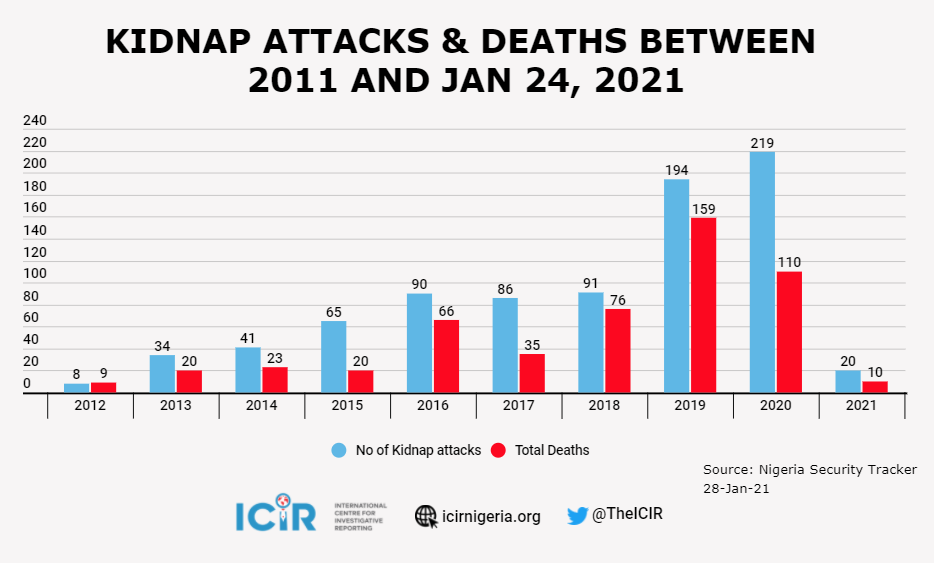
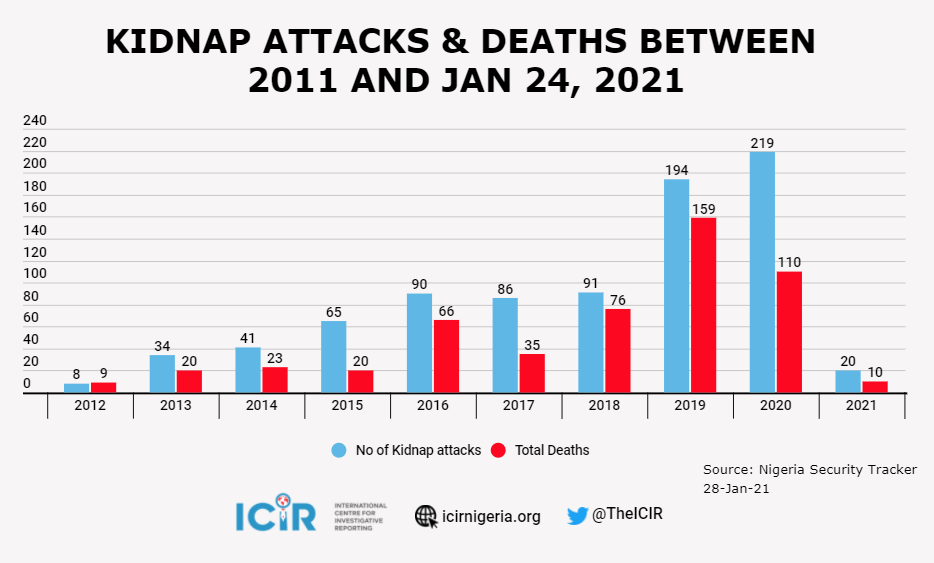
Kidnap attacks and deaths between 2011 and January 24, 2021

Uzoma feels that his abductors were either from Sokoto State axis or their next job was slated in Sokoto. This was because they mentioned ‘Sokoto’ a lot in their conversations.

At their next location, which would turn out to be the last, Uzoma could pick out the infrequent sound of motorcycles. This meant they were close to a village.

Abiola told him they had reached an agreement with his family. His brother, who was to deliver the ransom, was asked to come with a Hausa interpreter and call card vouchers.  This was December 27, 2019.

His brother brought the money-over 4 million naira.

“Do you know that these people took their time to count the money to make sure it was complete before they released me?” Uzoma asks rhetorically.

Uzoma speaks about other kidnappers:  Biggie who was big and not very bright but shows incredible dexterity at dismantling and coupling guns; Tallest who was the tallest and had a gun with a spearhead; and there was an effeminate one who he says ‘walks like a woman.’

Ransom paid – free at last but the hurdles are not yet over

Aside the paperwork at the police station, Uzoma’s extended family and friends had to foot his medical bills. He also had to relocate his family 24 hours after his release. This meant paying rent and shouldering the all expenses that came with moving.

A series of kidnappings in Ketti had left people leaving the community.  He would later find out from the police that the informant, who told the abductors about him, was paid 75,000 naira.

It is over one year now but Uzoma is still paying off “the debt that was incurred from paying the ransom.”

He had built a house in the community because it was cheaper and gave him time to save and buy in one of the Abuja estates. But he is back to square one.

His family are still traumatised Aside his daughter, his wife lives in constant trepidation. And him? He often cannot sleep without sleeping pills. “It is an experience I do not wish on my enemies,” Uzoma says, while shaking his head.

Between 2011 and January 2021, a total of 849 kidnap incidents in the country, leading to 529 deaths, were recorded, data from Nigeria Security Tracker shows.  A total of 1,990 persons were kidnapped and 288 kidnappers were neutralised by security agencies in the country.

The crime peaked in the country in 2020, as 219 cases and 110 deaths of victims were recorded, respectively. Number of victims were 601, and 58 of the kidnappers were neutralised.

These numbers are not all-encompassing as they are limited to those that made the news.

A considerable number of these victims ended up paying negotiated ransoms.

A robbery? No, a kidnap and one location too many

On July 19, 2020, Bem, a developmental worker, was in his house in Logo Local Government Area of Benue State. When he heard a noise, he opened his door to check and he came face to face with a hooded man holding a gun.

“The first thought that crossed my mind was that it was a robbery,” Bem recalls.

The man was not alone. They were four armed hooded men.

They came into his house, took all the valuables they could find, including his phone and laptop, and asked for his car keys. They covered his face with a beanie and sandwiched him at the back of his car.

They drove for hours. At a point, they ditched the car and continued the journey on motocycles.

His abductors spoke in Tiv – they were most likely locals or people from Tiv land or those who had lived in the area for a long time.

He was taken to a thatched hut where he would spend the next five days before his release on the July 24, 2019.

They took out all the money in his account using his ATM cards and demanded for 7 million naira ransom.

When the family finally paid a negotiated sum, they took him on a motocycle after a few hours and left him stranded.

“I didn’t know where I was. I had no money, and it was dark already,” Bem told The ICIR

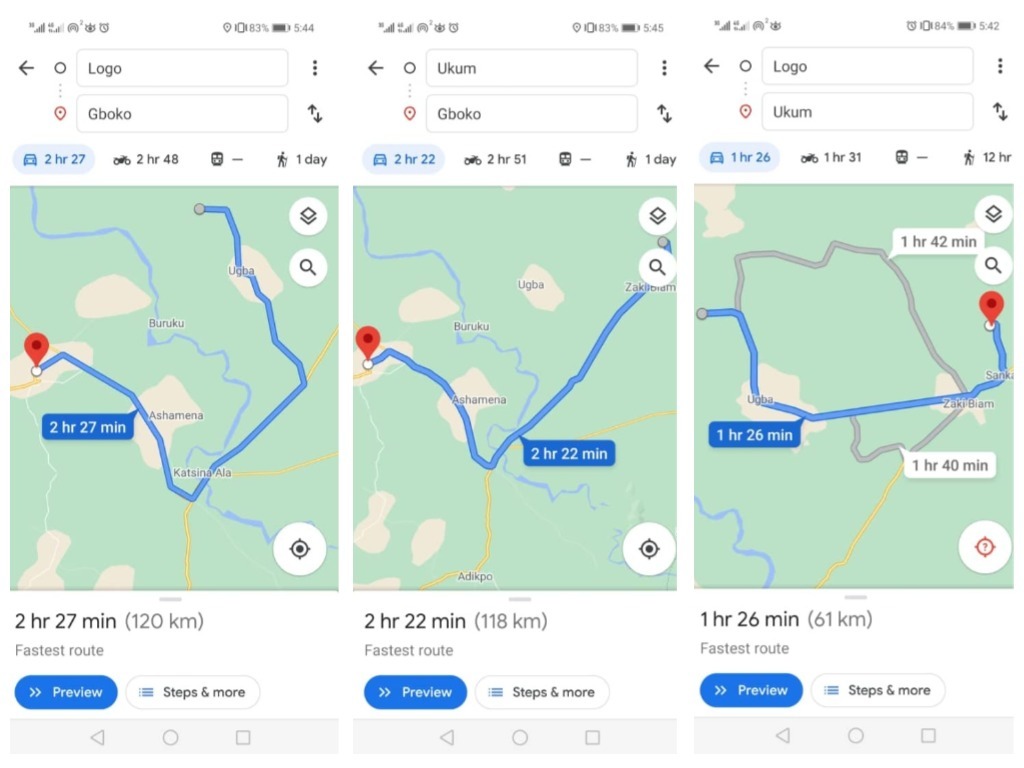
He walked until he got to a police checkpoint. “I told them, ‘Officers, I don’t know where I am.”  This got their attention. Because it was late, he had to sleep at the checkpoint. This was at Ukum LGA of Benue State, 61km from where he was abducted.

Bem would later learn that the ransom was collected at yet another LGA, Gboko. This was 118km from Ukum and 120km from Logo.

He also believed the negotiator was also in another Local government. He was probably held in a local government different from where he was released.

Kidnapping Nigeria gunmen
The many locations used in Bem’s kidnapping

Unlike in the case of Uzoma, but like in the case of Folarin, the abductors holding him hostage were not directly involved in the negotiation, neither were they involved in the ransom pick-up.

“These people are highly organised,” Bem says.

His family had picked up his vehicle where it was ditched. After his release he wemt to the police station, made his report, picked up his vehicle, got to his apartment, packed his things and left for good.

Bem, who now stays in Markurdi ,has no plans of returning to Logo in the nearest future. It is not a memory he wants to relive.

He also says there is no form of mental, physical, psychological, financial assistance or referrals or system put in place for people like him. At least, none from the police station, which is usually one of the first points of contact for kidnapped victims. Uzoma also holds the same belief.

Bem was not the actual target. He says it was a case of the abductors coming to the wrong house.

From shortcut to 9 days captivity

Adekola, a retired senior official of the Nigerian Security and Civil Defence Corps (NSCDC), was driving home from Kuje on Monday October 7, 2019.

He stays in Pegi, a community in Kuje Area Council of the FCT.

He opted to take a shorter but bushy route against his wife’s advice because he wanted to get home faster as “It was getting late,” he says.

A few poles after driving past the community vigilantee, he was flagged down by armed men.

His car was not the only one. The men selected captives from different vehicles while discharging the lucky ones.

Getting home faster was no longer a priority for Adekola but making it out alive.

This was the beginning of a long tortuous and haunting nine-day experience for him, his teenage cousin and the other abductees.

He counted 15 men all armed with AK-47 and other rifles.

The kidnappers and their characters

The kidnappers, who were mainly of Fulani descent from their looks, spoke Fulfulde and the Nigerian pidgin English, Adekola says.

After trekking for many hours, their valuables were taken, they were beaten and asked to state their names, state of origin, among other bios.

“We were made to run like cows in the bush and it was a big offence for anyone not to run as the kidnappers did. They always wanted everything to be done fast,” Adekola narrates.

“They threatened and hit us with daggers, guns, sticks, machetes and other weapons as if they just wanted us to die by any means other than gunshot or butchering,” he says.

They were asked how much they could pay as ransom – an unfavorable answer meant severe beatings. This was also repeated in the hearing of an abductee’s family whenever they negotiated for a lower fee.

Adekola says the kidnappers worked in shifts. Every morning, a new set would be brought in.

Different states, different victims same modus operandi

The kidnappers would only communicate with the victims’ families through abductees’ phones. And they spoke to a person’s family only once in a day, Adekola explains.

A man was brought in. His job was to appeal to them to cooperate with their captors – a tactic of the kidnappers to use carrot-and-stick approach.

Victim lost all contract money paid into his account because of credit alert

Adekola narrates the account of one of the victims who got a credit alert while in captivity. The money was meant for a contract. The kidnappers would hear nothing of such. They made the elderly man transfer the money to them. He was left with 189 naira. And it did not stop them from whipping him or demanding ransom from his family.

Our kidnappers would threaten us: ‘We are asking you to pay 10 million naira, you said you could not afford it – money that is not enough for us to buy bullets. We will waste you, the money that your family cannot find to bail you here, they will look for it to do your obituary.

“Our kidnappers would threaten us: ‘We are asking you to pay 10 million naira, you said you could not afford it – money that is not enough for us to buy bullets. We will waste you, the money that your family cannot find to bail you here, they will look for it to do your obituary,” Adekola recounts.

They were fed once a day by meals prepared by their captors. They slept on the ground, in the open, under the rain which fell almost every day.

Their legs and hands were bound and then they were chained together. This made a bad situation even worse as they could not turn while lying down.

“Donkeys were better than me in those days,” he says.

It is over a year now, but Adekola, who is a retired security officer, is still haunted by his experience. He visibly shakes while recounting his travail.

The series of kidnappings put fear on the residents of Pegi community. Those who could afford to relocate did.

Kidnappers confused on whether to sell or release victims

As days went by, so also were abductees whose ransoms were paid released. This brought their number to four.

The kidnappers were at an impasse about what to do with them. Some wanted them to be sold to a herbalist in Enugu while others insisted it should be in Benue. This meant walking in one direction and then turning to another depending on who was winning the argument.

His teenage cousin and another child were released. This brought momentary relief for Adekola. But the fear that his cousin, who was new in town, would not be able to make it out of the bush took over.

Fortunately, they made it out a few days later.

Adekola narrates the story of another elderly abductee who was diabetic, and his leg got swollen and could barely move. He was beaten mercilessly.

“So, at a point, he could no longer bear the pain. He asked his son to look for a stick with sharp edge to burst the swollen leg for him. Immediately the boy did it, huge fluid spurted out of the leg” he states.

Adekola gathered the man was the main target. Unlike Uzoma, who got preferential treatment for being the main target, this man was the recipient of the kidnappers’ ire.

At one time, a helicopter flew past, which meant more beating for the man.

The kidnappers told the man that it was his family that were mounting pressure on security agencies to hunt for them.

The man’s family eventually paid 2 million naira and Adekola’s family brought 1 million naira. They were then taken on motorcycles and released around Abaji, another area council in the FCT.


At Abaji, a combined security team were already patrolling the area because the news had gone wide. They were taken to the hospital and the bill settled by the Federal Capital Territory Administration, Adekola says.

A tale of two brothers and their neigbhours

In Kaduna, two young brothers were part of the people kidnapped, at Rido in Chikum LGA of the state in February 2020.

They regained their freedom after 13 days and 1 million-naira ransom paid.

Two of their neighbours, a father and daughter, were also abducted the same night, the young brothers’ guardian, Stephen says.

The kidnappers also collected call cards worth 200,000 naira from the two families.

One of the brothers has returned to their village vowing never to live or work in Kaduna township again because of the fear of being re-kidnapped. The traumatised graduate of Kaduna State University now farms with his parents.


They were kidnapped while at home, made to trek for days and an initial 30 million naira asked as ransom.

“Initially, they asked for N30 million for the four of them. We kept negotiating till they settled for 500,000 naira each. We later paid the money, making it 2 million naira for all of them. We were also made to pay for recharge cards which they used to communicate with us. That was 100,000 naira. They told us they did not want money, but the recharge card. So, we were able to buy the card from the people printing recharge card.”

“When we paid the money, the abductors did not release them immediately. They told our brother-in-law that took the money to them to go home. They promised they would release them. So, our brother-in-law went home and by evening of that day, they were released,” Stephen told the ICIR.

We did not involve the police as they told us they would “waste the lives of our people” if we reported.

From work to kidnappers’ den

In the second week of December of 2020, Abiodun, a father of four ,was kidnapped alongside two men and a woman.

Abiodun had gone to a community in Kaduna to work on roofing a house belonging to an engineer.

At midnight, gunmen stormed their lodge and took them to the forest.

“We walked in the forest for three days,” he says, as he shows a scar from an injury he sustained from the period.

He is resident in Abuja.

Abiodun did not want to speak to the press because he believed the kidnapers had informants and knew the city.

After his  release, he went to report at a police station at Rijana community in Kaduna state.

Abiodun was the first to be released after his family had paid the 500,000 naira ransom. He confirmed others were eventually released for the same amount.

He said his kidnappers had a radio from which they monitored news, adding that they made jest of threats by security agents to fish them out.

The visibly trembling man said the kidnappers used charms, guns, and other weapons to conduct their ‘business.’

Anti-kidnapping laws

Not all victims of kidnapping make it out alive to tell their stories.

It is 2021 and reports of kidnapping still abound in the media space. This is despite the anti-kidnapping laws put in place by states.

Some state governors have signed anti-kidnapping bills into law to curb the crime within their jurisdictions.

In the anti-kidnapping bill signed by Governor Abdullahi Ganduje, kidnappers who kill their victims are to face death penalty, while those who kidnap but do not kill their victims will be sentenced to life imprisonment.

Bauchi, Bayelsa, Osun, Katsina, Nasarawa, Plateau, Lagos, Benue, Enugu, Kogi, Delta, Imo, Akwa-Ibom, Rivers, Edo, Abia, and Kaduna are some states that have similar laws and/or have approved maximum punishments for kidnappers.

The Nigerian Senate had in 2017 approved death sentence for kidnappers in the country.

The bill also prescribes 30-year jail term for persons who collude with kidnappers in the country.

The names in this report, except one, were changed to protect the identities of the victims. Data was sourced by Oluwadamilola Ojetunde.

My kidnappers spoke good English, claimed they were jobless graduates – Akinbami, Ekiti oil mogul

SULEMAN Akinbami, an Ekiti oil mogul, has narrated his ordeal during a week-long stay in the hands of kidnappers.

He was kidnapped at his filling station along Ado-Ijan Road, Ado Ekiti, at about 9 pm on Sunday, January 10, 2020, while conducting a routine check at the facility.

Narrating his experience in an interview with Punch Newspaper, Akinbami said his kidnappers were gun-wielding four young men with a good mastery of the English and Yoruba languages. He said they told him they were jobless graduates.


Read Also:


“They spoke good Yoruba and good English. I want to believe that if they are not Yoruba, they had been in Yorubaland for long. They spoke good Yoruba. They spoke good English as well. They claimed to be jobless graduates,” he said.

“My kidnappers were angry people. They were very angry; I think they listened to radio and watched television. While I was there, they drove my car to town. In the town, they listened to radio and watched television, they listened to news, they said they saw me on national and international television news, and heard my name on radio. They asked – ‘Who are you? Why is your news everywhere? Are you the first person to be kidnapped? Why all this noise? Who are you by the way? What are you? What is your worth? Why are people shouting Akinbami, Akinbami?’ However, it is surprising that they drove my car around town for a week without removing the number plates and nobody challenged them. They went to town with my car, they came back, they did not remove the number plates and nobody challenged them. It is surprising.”

According to him, his abductors also told him they were sent to kidnap him because he collected 60 million naira from someone, to which he denied.

“Yes, they did. They established contact with my family on the third day. They said it was the 60 million naira, which they alleged that I collected from a certain person. I told them I did not collect any money from anybody. I told them that fortunately, I had just received my statement of account which they could check in the car to see if there was any 60million naira, even N20m or N10m inflow from anybody into my account. I told them to check and that I could not be keeping money at home.”

“When I returned, people told me how they were praying for me, even in Saudi Arabia, following contacts. Prayers from several universities, NASFAT in Ekiti here, the Grand Imam, traditional rulers, Muslims, Catholics on the order of the Catholic Bishop of Ekiti prayed for me. Also. Christians fasted, prayed and had vigil because of me. I am surprised. It was when I returned that I heard about all these. I am surprised.

“I thank all of them for the love they showed me. I shed tears when I came back and heard all these. That they did all these for me – What am I? Who am I? I am nothing and they were sympathetic to my cause. They prayed that God should protect me, I thank all of them. I appreciate them. God will continue to protect them and every member of their families. I pray to God to please repay their kindness.

“One should always be with his God. Don’t do evil. Don’t cheat anybody, be sincere. Be truthful; be honest in everything you do. Be godly.”

While stating that he was only released after paying an undisclosed amount as ransom, he appealed to governments at all levels to create an enabling environment that would productively engage the youth, lamenting that kidnapping had become a huge trend in Nigeria.

“I was released after the ransom was paid. Somebody from my family brought the ransom to them in the bush between Kuje in the Federal Capital Territory and Kogi State. They collected it and released me and as well handed over my car to me. It was after I was released and left the bush that I knew where I was. All the time they were taking me here and there, I did not know where I was. It was on leaving there that I started looking at signposts to see names of towns. I have forgotten the names of the villages in Kogi State close to Abuja. I do not want to remember the experience. I want it to go off my memory.

“Kidnapping has now become a trend. It is my prayer that we quickly find a solution to it. In the bush over there, one day, the kidnappers were elated that one of their victims had paid the balance of his ransom. They told me that they kidnapped somebody who they collected 30 million naira from. They said the victim initially paid 27 million naira and paid the 3 million naira balance that day.

“I am appealing to government; the economy is not helping matters; those in authority should try and see how they can help the unemployed graduates through employment creation. Let the youth have something doing. The truth is that without jobs, it will be easy to recruit them into kidnapping, and nobody will be safe. I appeal to the state government and the federal government to please find a solution because my case will not be the last. They have kidnapped others. Government should do something to, at least, create employment so that those who have no job now will have means of livelihood. Somebody who has no job can be easily convinced to join these groups of people.”

Kidnappers on the prowl in Nigeria

Kidnapping for ransom, which has assumed a worrisome state, is one of the biggest organised or gang crimes in Nigeria.

But in recent years, the narrative has changed,: Kidnapping has assumed a frightening dimension, and is often violent. Not a few victims have lost their lives to either resistance or failure of their family members or security operatives to ‘cooperate’ with the kidnappers.

The current wave of abductions across the country makes every person a potential target, regardless of social class or economic status–unlike political kidnappings of the past. Terror groups waging wars against the country have also added a new dimension to it, especially in Nigeria’s North-East and North-West, whereby they kidnap school children in their numbers, both to generate fund for their criminal activities and to negotiate the release of their captured partners in crime.

According to figures by Nigeria Security Tracker, a total number of 1,990 persons have been victims of kidnappers between 2011 and January, 2021. The figures also showed that no fewer than 849 well-coordinated kidnap attacks were launched by these criminal elements across the country.

The breakdown also revealed that about 529 persons have died from these attacks.


HIV prevention, rape: Vaginal ring to the rescue!

0

By Tobore OVUORIE


BETTER days are ahead for women globally as the World Health Organisation (WHO) has recommended a vaginal ring, which can prevent the contracting of HIV, to be added as a prevention choice for women who are substantially at risk of the virus.

This was disclosed Thursday, at the HIVR4P virtual conference by Michelle Rodolph of the WHO, while addressing the 2021 HIVR4P media Fellows. The ring, Ms. Rodolph said would be offered as a choice preventive like other contraceptives.

The WHO guideline is a critical step for having HIV prevention choices for women and this is considered a win by Ms. Chilufya Kasanda, Programmes Officer, Treatment Advocacy and Literacy Campaign (TALC) Lusaka, Zambia. “Many women in Africa for a long time have lacked options which they can control. Thus, the ring empowers women to make better choices as they continue to be affected by HIV,” she said.

Global statistics indicate that the global burden of HIV falls on women in sub-Sahara Africa as no fewer than 60 percent of all new adult infections are among women. “This is why they urgently need and deserve more choices for HIV prevention,” says International Partnership for Microbicides (IPM); inventors of the ring, in one of the firm’s videos about the product.

Dapivirine vaginal ring

Made of silicon, the ring, when set near the cervix in the vagina, releases an antiretroviral called dapivirine at the sight of potential infections and blocks the virus. A ring is to be set in the vagina; near the cervix every month and wouldn’t need to be removed during menstruation or sexual intercourse, as it cannot be felt. The IPM says the long-acting vaginal ring for HIV prevention reduces HIV risk by 50 percent and should be used with either male or female condoms.

The ring would last for 28 days in the vagina before a replacement is needed. Reproductive and Sexual Health experts say it would save on time, cost and give a sense of security. “Because if raped, a woman wearing the ring is protected from contracting HIV. It is better having a ring inside of me than nothing else for protection,” the HIV prevention advocate; Ms. Chilufya said.

Ms. Chilufya explained that the ring is a long-acting choice many women in Africa have longed for and is very discreet, so, can be used without a partner’s permission.

Vaginal Ring To The Rescue
Vaginal Ring

Many times, women don’t have a choice when it comes to HIV prevention because most options require reaching a compromise with their partners except for PrEp (pre-exposure prophylaxis) – an oral option.  With the ring, this is different as there is a privacy that goes with the ring because no one will be able to tell when inserted in the vagina unlike the oral PrEp which doesn’t provide such privacy.

Ms. Chilufya emphasized that the ring is a great solution for women who are presently experiencing Gender Based Violence (GBV) due to the COVID-19. Studies so far reveal that though quarantine is a necessary and major way to reduce the COVID-19 spread, it has birthed serious psychological and socially disruptive consequences including a surge in the cases of gender violence within many families and homes.

Nigerians welcome product with mixed reactions

The ring which is yet to arrive sub-Sahara Africa already has several challenges awaiting its arrival in Nigeria. In an online survey which this reporter started conducting via various social media outlets immediately after the media brief ended, cultural and religious beliefs and practices topped the list of major barriers awaiting the ring’s arrival in Nigeria.

Apostle Chibuzor Ofoegbu, a clergy with the Eternal Sacred Order of Cherubim and Seraphim in Lagos, South-West Nigeria said he will discourage his wife from using the vaginal ring and would be mad at her if he discovers she is using it without first telling him. He said he doesn’t like a vaginal ring.

Dr. Ezinne Ezepue, a lecturer at the Theatre and Film Studies Department of the University of Nigeria, Nsukka, said she would not use the vaginal ring because she doesn’t feel threatened and so has no need to protect herself. She however added: “I know someone who would very much love to use the product but she doesn’t use a smartphone and so cannot respond (to the reporter’s survey). I would like to gift her one just for her to protect herself.”

Mr. Joseph Okoghenun a Public Relations professional in Lagos, said “It is her body. Whatever she does with it that doesn’t affect my and her health and socio-economic wellbeing negatively, is welcome by me. But I hope feminists won’t raise eyebrows when masculinity advocates start criticizing this secrecy.”

Ms. Rita Akpojaroh an educationist and entrepreneur said she will not use the vaginal ring because it is unnecessary for her to. “I am 100 percent sure I am my husband’s only sexual partner and he is mine, as well.”

But Ms. Justina Auta, a journalist in Nigeria’s Federal Capital Territory, said she will use the vaginal ring not because she doesn’t trust her partner but to further protect herself from contracting HIV in view of the increasing cases of sexual violence in the Nigerian society. “Women and girls are being raped by known and unknown persons,” she emphasized.

Ms. Temple Ajilola, an Abuja-based journalist said she would not use the vaginal ring except she gets more information about it with full details about the side effects.

Samuel Okolo, a spoken-word poet says he wouldn’t encourage his partner to use the ring and will frown at her using it without informing him before commencing. “I wouldn’t encourage her on religious and spiritual ground of upholding celibacy,” he explained.

Mr. Ireho Aito, a Lagos-based radio journalist says he will encourage his partner to use the vaginal ring and would have no hard feelings towards her should she commence usage without informing him.

A relationship coach who chooses to be anonymous pleaded that the vaginal ring should be made available in Nigeria immediately. “Anything that will save lives is welcome by me. If this will prevent infection, then there is hope,” he said.

Mr. Ben Pemii, a Port-Harcourt based independent journalist and author in South-South Nigeria said “Given the superabundance of conspiracy theories, the use of this ring needs to be further subjected to detailed examination to ensure there are no side effects. I would use it if I were a female.

“But if I’m sure that I’m negative, then there is no need to encourage my partner to use it. I’ll encourage a partner to use it in a situation where the male partner is sexually reckless. My finding out that my partner uses the ring without my knowledge won’t carry any serious reaction though I would be surprised,”

Cultural beliefs and practices have been identified as major challenges ahead of the acceptance of the ring in Africa because women in many African communities like in some parts of Nigeria, are not allowed to put anything in their vagina especially in communities with high stakes for feminine virginity.

Solutions

Ms. Chilufya recommends breaking down the science of and around the ring to local languages. She enjoins all HIV prevention advocates and the media to work together to ensure a seamless and better awareness creation about the vaginal ring so that more women particularly in Africa will make better choices and live healthier lives.

Addressing the fears of possible side effects, Ms. Rodolph explained that the product stops working three hours after removing the ring from the vagina. “So, if a woman feels she is having side effects, she can remove it.”

Ms. Rodolph said the ring will cost about seven or eight dollars but as production increases, the price too will reduce. She hinted that donors are looking at getting onboard so it will get to women for free.

Investigation: How illegal gold miners milk FCT of billions in revenues

WHILE Zamfara State government rakes in billions of naira from its large gold deposits, the Federal Capital Territory Administration(FCTA) loses a large chunk of the mineral resource to illegal miners. Marcus FATUNMOLE reports.


ABUJA, Nigeria’s capital, is currently forfeiting revenue from its gold deposits to illegal miners, findings by The ICIR have shown.

The loss results from the failure of relevant government agencies to prevent unlicensed artisanal miners from plundering the valuable mineral resources.

The revenue haemorrhage has led  to the rising calls on government to harness the nation’s resources, especially now that economic condition is worsening amidst  COVID-19 pandemic.  The call also comes amidst shrinking revenue from crude oil,  the mainstay of the country’s economy.

Background to this story

The ICIR investigated activities of the illegal miners in Kundu, Kwali Local Area Council, Abuja, and found that many youths of the community are involved in the artisanal mining.

Kundu, a ward in Kwali area council, has over 5,000 residents, according to Bello Magaji, leader (Aguma) of the community. The ICIR, however, has no means of verifying this claim because the last national census was conducted more than 15 years ago. Kundu is a remote and agrarian village, and it takes about 40 minutes to reach the community from Kwali via motorbike. The only road leading to the settlement is untarred, and motorbike operators charge each passenger between N500 and N700 from Kwali. Only a few vehicles, mostly used for agricultural purposes, ply the rough road.


Read Also:


The locality lacks major basic amenities such as electricity , pipe-borne water,  and modern means of communication. Homes in Kundu are mostly made of mud.

Kundu has a public primary school and a primary health centre, but the primary school’s roofs have been blown off by the wind, and the school has been shut down after efforts to get the attention of the government for its repair, failed.

Closure of the school makes it possible for children to spend more time to join the miners at work. Some of the children support their mothers who sell foods to the miners. A few other women in the community also participate in mining.

As rain retreats for the year, farming – the community’s main source of income, winds up. Children, therefore, help their mothers with the chores at home while men ventures out to win bread for their families.  Scores of Kundu youths also have found a new trade in mining; they spend most part of each day excavating the earth under the village river for gold.

Miners are from Zamfara, other places, Kundu monarch says

The impact of gold mining on Kundu River


But according to Magaji, (the Aguma),  only youths from Zamfara and other parts of the country are involved in the mining. He said the number of miners could grow beyond 5,000 (more than Kundu’s population) at the peak of the dry season.

Given their experience in the business, Zamfara youth are skilled in gold mining and were trooping into his community and environs to help themselves with the gold deposit, he added.

Some of the youth who spoke with our reporter boasted they could become millionaires within weeks. “It is all by luck, we can make up to N500, 000 in one week,” Musa Aliyu said.

“What I can tell you is that no one comes here and chooses to do anything else again until he ‘hammers’ (a local parlance for making huge financial breakthrough).

The ICIR gathered that the miners could go as far as killing one another whenever they find gold that is a finger size, or more. Such discovery could make them swallow the mineral and excrete it much later, in ravenous bid to keep sizeable part of their harvests from others. Up to a million naira could be made from excreted gold, The ICIR gathered.

The mining process

Heaps of gravels surround the mining site. The stones are first excavated before reaching the muddy earth from which the mineral is extracted. The miners have no use for the gravel stones, which though is another source of huge revenue; they only are after the precious stones.

They work in groups. Some persons excavate the earth under the river, separating gravel and other unwanted substances from the soil; about two or three scoops the miry water, and sieve gold from muddy dirt. The person who sieves carefully ensures the tiny yellowish substance finds its way into a small bowl where the mineral is further extracted from dirt. The gold appears, in most cases, as tiny glistening yellowish substance amidst some dirt. It is usually difficult to see it, as it mixes with soil participles, but it glints. Sand around the river also shines under the scorching sun, as it appears to contain a negligible amount of the mineral.

Buyers come from outside the community, but only on appointment, the miners said. They are however always open to highest bidders. So, there is no permanent client.

The Kundu River

The Kundu river flows through Gwagwa community (before Jiwa) to Bassa, Zamani, Nuwalege through Sauka, linking Gwagwalada and Pai in Kwali before rushing through Kundu. The river heads towards Kogi and Niger states where River Niger, one of Nigeria’s most famous rivers, has its bed before forming a confluence with River Benue in Lokoja, Kogi state.

While most communities where the river flows through has a specific name for it, the river is called “Suma” by Kundu people.

A lot of fishing  and little of gold mining activities take place in these communities during the dry season, but none of the villages has the size of people with mining acumen as Kundu. The river is very wide in Pai and Kundu because of large excavations that have opened up banks of the river; exposing a mass of small rocks beneath and around the water. Canoes are used in Pai to ferry people across the river.

How mining affects community

Speaking on environmental hazards caused by mining in the village, Aguma of Kundu said the business is making the river to become wider and that the activity affects farming in the area because of increased erosion.

Aguma of Lindy (3rd left), flanked by his Elders in Council
Aguma of Kundu (3rd left) flanked by his Council of Chiefs


Magaji said there had been no sickness associated with mining in his village, but the fishes in the river were dying. According to him, the river is the community’s only source of water and it is facing increasing pollution.

The chief appealed to the government to intervene and stop illegal mining in the area. He also sought help for potable water in Kundu from the government.

The 40-year-old leader noted that mining activities are usually low during the raining season but increase during the dry season because the water level would have reduced to allow for increased excavation.

He said  some of the miners sleep in the river because they don’t have accommodation in Abuja. “They come from Kano, Zamfara and other states. Any time a car comes to the village, it is the buyers that bring food to them or come to buy the gold,” he noted.

Meanwhile, Magaji later admitted that some of his subjects had been trained by the “foreigners” to engage in the trade.

He said the mining had been on for over 10 years, stressing that only a few people were coming to mine when the business was introduced to the village. The mining, which appears to be done in the crudest form, is done both day and night, he said.

He added: “The mining is done at different locations and all the locations are around Kundu village. We could have engaged the police if they are close to us. The nearest police station is the Kwali Divisional Police Headquarters.”

“The community is not benefitting anything from the mining. They just come to the village and do their work without any commission or benefit for us; neither are the villages around this place getting anything in return from the activities,” the Aguma told our reporter.

Similarly, Idris Mohammed, head of public health centre in Kundu, confirmed to The ICIR that the river is the main source of water for the settlement. He said diseases such as cholera and dysentery are very common in the community.

He also told The ICIR that schistosomiasis – a major neglected tropical disease (NTD) contractable from water – is very common in the village. Mohammed, who has been working in Kundu since 2013, however, said though they are water-borne, none of the diseases is directly linked to mining in the community.

The world of miners

The ICIR met scores of youth who grouped at different ends of the river, after walking through the river with a village guide. Unlike Pai community, there is no canoe to ferry people through the river at Kundu. The miners smartly carry out their business at the other end of the river, so they could not be located easily by outsiders. They either have to swim or walk through the breadth of the river, which is about 700 meters. They help themselves with dozens of wraps of Indian hemp, cigarettes and other “energy-boosting” substances.

“We don’t allow anyone to come here without prior notice because what we are doing here is illegal. We did not get anybody’s permission to be here. We know those we transact with. But if you are here to offer higher bid, we’ll sell the gold for you,” one of the miners said as his group took our reporter through the process of the mining.

Another miner said: “Don’t look at us as illiterates. Even though we didn’t go to school much, we are big boys on our own. We can make in short time all the money that those of you who went to school very well would make in your offices, depending on the luck we have here.”

From their look, the miners are largely between age 18 and 40.  Despite claims they could make fortunes within days if luck smiles on them, the miners looked haggard. But, they were ambitious and agile.

Police react

Meanwhile, Mr Vitalis Obiano, the Divisional Police Officer, Kwali, who was alleged to be conspiring with the miners by a source, vehemently denied having knowledge of gold mining in the area.

He told The ICIR during a visit to his office that the government should be able to explore the resource as a good source of income to boost its gross domestic product.

He said if the mining is found to be an illegal activity, the community should inform the police.

“Is there a complaint? Let them bring up the complaint. Once the community brings the issue up, we’ll put an end to it; we’ll raid the place because such an economic resource should be for the state.

Please, whenever the community wants us to come in, we’ll be available; provided it (the mining) is illegal,” he vowed.

Kwali Council Chairman fails to comment

Danladi Chiya, chairman, Kwali local council area, turned down the request to speak on the development with The ICIR. After waiting in his office for hours, our reporter approached him to speak on the illegal mining,  he headed straight in a waiting car and was driven off in the company of his gun-wielding security aides.

Nigerian government controversially defends miners

Backing the miners, Eng. Frank Odoom, Acting Director, Mines, Federal Ministry of Mines and Steel Development,  said he had 98 percent assurance that there is no illegal mining activity in the FCT. “I am telling you the truth because of the coverage. We have a very strong collaboration with the DSS. We have informal mining. Some of them have small scale mining. You might look at them as illegal because of the way they are working. Their operation is quite informal.

“They are not organized, they are crude in nature, but they might be under the artisanal mining. You don’t say they are illegal, but they are not formal. Government is trying to bring them into the formal sector because most of them were pushed into it because of poverty. We’ll try to accommodate them and try to bring them in and try to train them on safe mining and the likes.”

Similarly, Mohammed Bature, Federal Mines Officer for the nation’s capital in the ministry, said the government was aware of the existence of the mineral resource in the FCT, but noted that quantifying the reserve was very difficult for him.

Mohammed Bature
Mohammed Bature

He said nobody could go into mining without acquiring a licence in the city.

“These people have a licence. They are the operators; they have the licence. They have the mineral title,” he said.

When confronted that the miners claimed they didn’t have the title, he insisted they had it.

“Most of these people have mineral titles. If you have a mineral title over land, anybody can come and do the work. Maybe those people are working under a licence because you cannot issue two licence in one place. A man has the title over that place, maybe the people are working under him,” he said.

Asked if it means that all the locations in the communities have been given out legally for mining, he answered emphatically in the affirmative. “They are not working illegally. There is the mineral title over there,” he said with an air of finality.

He said the mineral title holders pay a royalty to the Federal Government, but failed to state how much had been paid and the modality for payment.

He also explained that there is a task force comprising operatives of most of the nation’s security agencies working to ensure the laws guiding mining in the country are obeyed.

Gold mining hazards, not health ministry’s priority – spokesperson

Olujimi Oyetomi, Director of Information and Head, Media and Public Relations Unit in the ministry, rebuffed The ICIR’s efforts to get a reaction of the Federal Ministry of Health on this report.

He said coming to the ministry for such an “insignificant” issue as illegal gold mining was a misplaced priority for The ICIR.

Oyetomi said with the issue of COVID-19, communicable and non-communicable diseases in the country, the ministry had no time to respond to issue of illegal gold mining.

He mentioned two directors in the ministry who had turned down media requests for the position of the ministry on issues they thought were of no importance to the government.

Dangers of illegal mining, by WHO, CDC

Illegal and artisanal mining can be very detrimental to human and livestock health.  In May 2019, the World Health Organization said no less than 850,690 people in Nigeria were at risk of mercury poisoning. Mercury is a chemical used by artisanal and small-scale gold miners.

The WHO noted that artisanal and small-scale gold mining is the main source of the largest release of mercury emissions around the world.

WHO had listed 12 states in Nigeria as high-risk places where gold mining could trigger health crisis.

The states (which have gold deposit in Nigeria) are FCT, Niger, Osun, Zamfara, Kebbi, Katsina, Kaduna, Kwara, Borno, Kaduna, Jigawa, and Yobe.

Similarly, responding to a national tragedy and historic poisoning and deaths from lead in Zamfara in 2010, the US Centre for Disease Control joined the Federal Ministry of Health and other leading global health institutions to warn against illegal and unsafe mining.

It said gold ore could produce lead and the lead could pose a serious risk to the health of people and animals in neighbourhoods where mining takes place.

In Zamfara, over 400 children were reported dead, alongside animals and birds between March and June 2010. But for late response from government and lack of needed enlightenment, the tragedy would have been averted.

Nigerian experts speak on illegal gold mining 

Dele Ayanleke, an engineer and secretary, Miners Association of Nigeria told The ICIR that the miners are only looking for their daily bread and are not licensed.

He said artisanal miners are not professionals and would not be directly engaged by licensees as professionals.

Similarly, Sani Shehu, another engineer and immediate past president of the association,  said illegal mining is criminal and that government should view it in that prism. He decried the dimension which illegal mining is taking in the country as worrisome.

He said government officials in charge of mining and extraction of mineral resources in the nation hardly know what happens in remote communities because they would not be willing to go far into those communities to monitor mining and extractive works, as according to him, most of the illegal mining activities take place in distant communities from where government offices are located.

He said the reason illegal mining is booming in the country is that people do what they like in areas where no one could challenge them.

He also decried huge loss of revenues to illegal miners by the nation, amidst dwindling revenues to government.

He said rather than making arrests, government should engage traditional leaders in communities where the activity takes place to engage the miners on how to stop the practice.

Gold mining licensees in Abuja

Meanwhile, the Nigeria Mining Cadastral Office, an agency of the Federal Ministry of Mines and Steel Development in charge of licensing mining and extraction of mineral resources in the country, made available to The ICIR a list of mining licensees in the FCT.

As at 30th November 2020, there were 66 mining licensees in the nation’s capital whose operations cover gold, copper, columbite, lead, zinc, tin, niobium, tantalum manganese, lithium, marble aggregates, among others.

Only seven of them were permitted to mine gold within the Kwali Area Council. They are Gamla Nigeria Limited; Cypress Logistics and Construction Limited; Jordan Plains & Minerals International Limited; Sky Digital Mineral Nig. Ltd; Zicorp Limited; Morris Forte Limited, and Resident Investment Limited.

Gamla Nigeria Limited told The ICIR through its Business Development Manager, Obinna Ihebon, that it hadn’t started operation in the area and had not requested anyone to work on its behalf.

Similarly, Henry Oti, who spoke with our reporter on behalf of Cypress Logistics And Construction Limited said nobody mines for the firm in the area. “Anybody you see there went there on his own,” he stated.

Efforts by The ICIR to get the reaction of Jordan Plains & Minerals International Limited; Sky Digital Mineral Nig. Ltd; Zicorp Limited; Morris Forte Limited, and Resident Investment Limited proved abortive, as the phone numbers they provided to the Cadastral Office could not be reached.

For over two weeks, the companies also failed to respond to emails sent by The ICIR to get their reactions to this report.

President Muhammadu Buhari had on July 16, 2020, decried loss over three billion dollars to illegal gold mining in the country between 2012 and 2018. Buhari said this when he received locally-mined gold bars from the Presidential Artisanal Gold Mining Development Initiative (PAGMDI) in Abuja.

268 million naira cheque signed by the Central Bank of Nigeria. Source: Sun newspaper


His administration launched the initiative in 2019 as a way of diversifying the country’s economy, creating jobs and blocking the conduit through which revenues from gold is plundered.

The Central Bank of Nigeria presented a cheque of N268 million for a 12.5kg gold bar at the event, the first time the nation would officially refine its own gold through artisanal mining.

The Federal Government had in 2018 established a Federal Gold Reserve Scheme to support its economic diversification programme and as part of the implementation of the Economic Recovery and Growth Plan (ERGP) of the Buhari’s government.

With the scheme, the government would purchase gold from local refineries, subject to international standards such as the London Bullion Market Association.

Nigeria only could export 63,250 dollars worth of gold (unwrought or in semi-manufactured forms, or in powder form) in 2018, according to UN ComtradeThe ICIR could not find any official data on gold deposit and market in Nigeria.

Meanwhile, according to the report of the Auditor General of the Federation, total mining rents that accrued to the FG in 2014 was 1.5 billion naira. It came down to 889 million naira in 2017. That is a far cry from  revenue generated from gold mining by other countries such as South Africa.

The total revenue generated by the South African mining industry for the year ended 30 June 2019 was R529 billion. That is over 13 trillion naira.


Amid health and environmental hazards, Nigeria spends $2.4bn on generators in 2 decades

THOUGH emissions from electric generators contribute major health and environmental hazards in Nigeria, the country spends huge foreign exchange importing the alternative power sources.
According to data from the United Nations International Trade Statistics Database, UN Comtrade,  Nigeria has spent not less than 2.4 billion dollars on importation of generating sets in the last 24 years. 
UN Comtrade, the largest depository of international trade statistics, captures Nigeria’s generator imports between 1996 and 2019.
In 2013, the country imported 262.5 million dollars worth of generators, the highest in two decades.
The importation of generators has been on the rise since 1996 and reached the zenith in 2013.
Worth of electric generators imported by Nigeria between 1996 and 2019
This is not surprising as the average cumulative power supply received per day by Nigerian households between 2013 and 2015 was below 6 hours per day, according to a survey by NOI Polls.
In fact, the average operational capacity of power infrastructure in the country is estimated at 3,879 (MW).
The poor power supply in the country  has, therefore, forced Nigerians to seek alternative power sources. Between 2015 and 2019, Nigerians have spent nearly 500 million dollars on importation of generators.

READ ALSO: In Abuja, failing power supply disrupts operations at primary health centres

It is worth noting, however, that only 37 percent of the amount expended on generators in 2018 was spent in the subsequent year.
This necessarily does not mean that there was an improvement in the power supply.
In fact, the average daily supply of 3,800 megawatts (MW) in 2018 dropped to 3,775MW in 2019.
President of the Nigerian Association of Energy Economics, Prof. Yinka Omorogbe, once described the energy sector in Nigeria as ‘a dismal failure.’
A direct effect of the poor power supply is attributed to the 77.5 percent  Nigerians who have resorted to purchasing and using alternative sources of power such as generators and others, according to NOI Polls.
Nigeria is among the top six countries generating energy by back-up generators.
Others are India, Iraq, Pakistan, Venezuela, and Bangladesh.
These six countries account for over 50 percent of the electricity generated (and fuel burned) by back-up generators in the 167 countries modeled by International Finance Corporation, IFC.
The World Bank group estimates that Nigeria spends three times as much on back-up generator power as compared to the grid.
Generators contribute significantly to health, environmental hazard
Despite the huge amount spent on alternative energy, exhaust from generator contributes significantly to the emissions of fine particulate matter (PM2.5), sulfur dioxide (SO2), nitrous oxides (NOx ), carbon dioxide (CO2) and other pollutants that compromise human health and contribute to climate change.
A research conducted by IFC shows that the CO2 emitted from generators in Sub-Saharan Africa is equal to about 20 percent of the total emissions from vehicles—the environmental equivalent to adding about 22 million passenger vehicles onto the road.
“Nitrogen Oxides (NOx)emissions are associated with combustion, usually from burning of fossil fuel in vehicles or for energy generation.
“Exposure to NOx has been associated with increased risk of numerous respiratory illnesses.
“NOx can also form other pollutants that impact health (i.e. ozone, particles) and the environment (i.e. particles, acid rain).
“Our results suggest that generators account for 5 percent of NOx emissions across all modelled countries and 15 percent in Sub-Saharan Africa.”
There is also evidence associating excess noise with health challenges such as high blood pressure and hearing loss.
 Assessment in Nigeria from 2013-2015 showed noise levels of most common generators are beyond WHO limits (greater than 90db).