MARY Ehiarinmwian, a Nigerian-born sergeant of the 523rd Engineer Support Company, a unit which falls under the brigade’s 84th Engineer Battalion in the U.S. Army, has been named the United Services Organization (USO), Soldier of the Year 2020, for her show of bravery when she rescued a fellow soldier from a burning car in June.
This was contained in a statement released by the U.S. Army.
Ehiarinmwian who is assigned to the 8th Theater Sustainment Command’s 130th Engineer Brigade, was on her way to Physical Training (PT), when the driver of a black Honda CR-X, who unknown to her was also a soldier from her unit, lost control of his car and collided with a road sign before somersaulting and piercing through the top of a security gate.
The brave soldier who later said she believes there was a purpose for her being there, followed her instincts without hesitation; she pulled over, got out of her car, and rushed toward the injured driver pulled him from the smoke-filled vehicle with an underarm drag after assessing that he was okay and not in any pain before proceeding to attend her PT.
“I felt like the car was going to burst into flames, but at the time, I didn’t think of the danger,” she recounted, adding that she believes she could have simply called first responders instead of taking action but explained that “every second counts” in emergency situations and every little hesitation could have led to a worse result.
According to Ehiarinmwian, “It’s good to lend a helping hand. If I didn’t stop, no one would have been there to help him. After all, it’s just human nature to help other people.”
Michael A. Grinston, the Sergeant Major of the Army said of her: “I’m very proud of Sgt. Ehiarinmwian. This is exactly the type of leader the Army builds — someone that is decisive and quick to take the appropriate action. After talking with her and hearing her story, it’s a great reminder that our Army is full of people from all walks of life, looking for something bigger than themselves”.
Born in Nigeria, Ehiarinmwian immigrated to Germany as a child. After getting married and finishing school, she relocated to the United States in 2016, in search of something different. She first worked at Fort Leonard Wood, Missouri, where she was inspired by the professionalism of the local drill sergeants and in 2017, she joined the Army.
The USO is a nonprofit organization that focuses on armed forces members and their families. Each year, the United Service Organizations (USO) honours the heroism of junior enlisted service members, E-5 or below, with the USO Service Member of the Year Awards.
Service members from each branch of the military are nominated by their command leadership for performing acts of valour that go above and beyond the call of duty and who embody the standards and values of the Armed Forces and the USO.
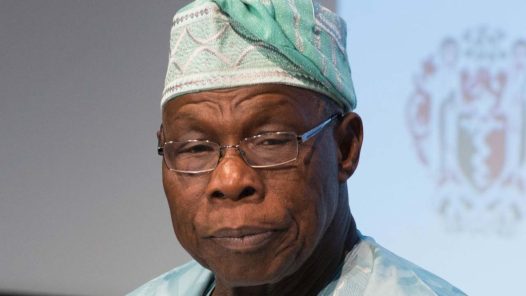
OLUSEGUN Obasanjo, Nigeria’s former president, on Sunday, lent his voice to calls by Darius Ishaku, governor of Taraba State, for Nigeria to consider the creation of both state and local police to address the ravaging insecurity across the country.
He made this call during a virtual interview hosted by Toyin Falola, a foremost Nigerian historian and columnist.
Obasanjo, who had in the past dismissed such calls because he believed the action could take Nigeria back to the 1950s, said there was the need for devolution of powers, responsibilities, and resources to allow for healthy competition among states.
“Why can’t we now have state police? I have been to a country like Colombia, in the last five years, at least a dozen times. They did exactly what we did. They moved from local and state police to national police. But now, they have gone back to state police or provincial police. Why can’t we do that? If we do that, there will be no need for Amotekun.
“I was watching the governor of Taraba not too long ago. He was saying Nigeria will have no peace and security until we have state police. I believe that the time has come when we should talk of state police and allow it to be. The governor of Taraba said the national police have been overwhelmed, and I believe he is right.
“There will still be the need for federal police to look after federal territories and what I call major entry points – international airports and international seaports. The Federal Government can have mobile police and station them in strategic places, and only deployed when the state governor requires for it.”
Earlier on Sunday, Ishaku had re-echoed the need for the federal government to consider giving the mandate to state governments to set up both state and local government police when he paid a condolence visit to the residence of the Salihu Dovo, late ArdoKola local government chairman, who was abducted and killed by gunmen.
The governor argued that a lot was wrong with the current security arrangement and urged both the Senate and the House of Representatives to consider amending the constitution to accommodate state and local government policing.
According to him, “since I came to power, I have repeatedly said we need to break down the strata of the security apparatus in the country, especially the Police. There must be a state and local government police. The federal government alone cannot handle the security because overtime this method has failed. Where we copied our constitution is the United States of America and the USA has federal, state, and the local government police.
“Over there, the military is always the last resort but for us, the military is the first resort. In this state, I have lost so many people to insecurity, including a local government chairman and a member of the state house of assembly, Hosea Ibi.
“We can’t continue to keep quiet as if nothing is happening because a lot is going on which desperately needs to be addressed. I am challenging the senators and members of the House of Representatives to check our constitution with a view of amending it immediately,” the governor said.
CONTRARY to some media reports, the Nigerian Defence has said that the missing Chibok schoolgirls reported to have escaped from Boko Haram are not in their custody.
Lucky Irabor, Chief of Defence Staff, made this known on Sunday while addressing journalists during an operational visit to the Headquarters, Command and Control Centre of Operation Lafiya Dole in Maiduguri, the Borno state capital.
“What we know is that we do not have any of the Chibok girls in our custody, that is (with us). All I can tell you is that yes, we desire that all the Chibok girls would receive their liberty and if our operations have helped those ones that have been alleged to have escaped, I think we are glad, we hope to strengthen the efforts that we are putting on in order to free the rest that are behind lines,” Irabor said while responding to questions from journalists.
He added that the Defence has been conducting operations that have led to hostages escaping the custody of their captors.
“Yes, the operations that we have been conducting is not new, the operation has been on for well over one month and so the intensity of the operation is what of course has led to so many of those who have been held behind lines to escape,” he added.
On Friday, January 29, the CNN reported that some of the Chibok schoolgirls abducted by Boko Haram about seven years ago have escaped from their captors.
According to the CNN, father of one of the escaped schoolgirls, Ali Maiyanga, said his daughter Halima Ali Maiyanga told him that she and others are being looked after by the Nigerian Army.
When The ICIR contacted Sagir Musa, the Army spokesperson, he said all questions concerning the Chibok schoolgirls should be directed to the Nigerian Defence.
In 2014, no fewer than 276 female students were abducted from the Government Secondary School in Chibok town, Borno state by the armed insurgent group, Boko Haram.
Since their abduction, the government has only been able to secure the release of 107 while 57 others reportedly escaped from their abductors, while the whereabouts of the remaining 112 Chibok schoolgirls have remained unknown.
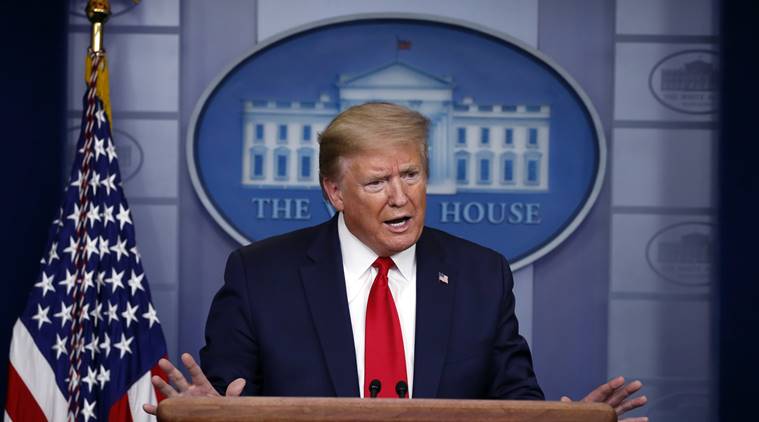
DONALD Trump, the former United States President, has hired two new lawyers to defend his second impeachment case before the US Senate.
Trump announced Sunday that David Schoen and Bruce L Castor would lead his new legal team after his former lawyers dumped him. The CNN had reported that five members of Trump’s legal team resigned about a week to his trial before the Senate.
Butch Bowers and Deborah Barbier, who had led Trump’s defence said they could no longer defend the 45th US president. Other lawyers including Josh Howard, Johnny Gasser and Greg Harris have also pulled out of the Trump’s defence team.
The former US president was impeached for the second time by the US House of Representatives led by Democrat, Nancy Pelosi, a democrat.
Trump became the only president of the United States to be impeached twice as two hundred and twenty-two (222) Democrats and ten (10) Republicans voted to him on Wednesday, 13th January.
The move to impeach Trump for a second time followed charges of ‘incitement of insurrection’ at the US Capitol Hill on January 6, 2021.
Five people died in the Capitol Hill attack, including two police officers. Trump made inciting comments before the incident, asking his supporters to fight to regain their country.
Trump had told his supporters to ‘fight like hell’ in clear attempt to overturn election defeat to Joe Biden, the US president-elect.
Trump has also refused to concede defeat after losing the November 2020 election to Joe Biden.
As the Senate sits next week at Trump’s trial, if found guilty of inciting violence in the Capitol riot, he could be banned from further engaging in politics in the US.
The one-term president would not be allowed to contest for presidency in 2024 and might face legal prosecution as he would be stripped of immunity deserved of a former president.
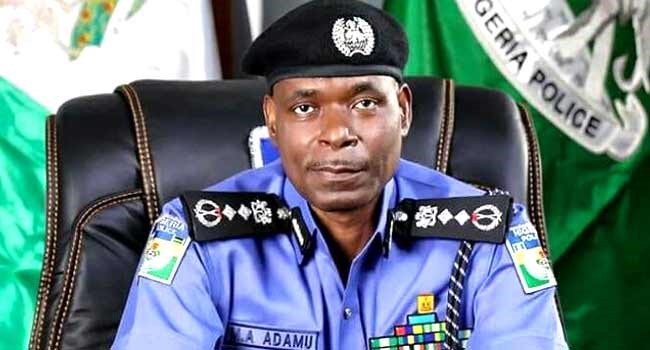
THE presidency says there is no date yet for the announcement of a new inspector-general of police (IGP) as Mohammed Adamu, current IGP who has attained the mandatory 35 years in service, vacates office today.
Adamu joined the service on February 1, 1986, and took over from Ibrahim Idris as the 20th IGP in January 2019.
The amended Police Act, signed into law by President Muhammadu Buhari recently in September 2020, pegs the retirement age of police officers at 60 years of age or 35 years of service.
By precedence and practice, a replacement for the Adamu ought to have been announced few days to his retirement.
However, Garba Shehu, senior presidential spokesperson, said while appearing on Channels Television’s Sunrise Daily on Monday that he was not aware of the imminent announcement of a new police chief.
“The President returns to Abuja on Tuesday. He should be on his desk by Wednesday. I don’t know when he will do this. One thing I can assure you is that in places sensitive like that, there is no vacuum that will subsist, so therefore (sic) the system will take care of itself,” he said.
Garba also dismissed call by the Ohanaeze Ndigbo General Assembly Worldwide (OGA) that the next IGP should be selected from the South-East region of the country.
He said it was impracticable for top security appointments to be made based on factors such as ethnicity or regions, stressing that the appointment of the next IGP would not be based on ethnic considerations.
“The president will rather have an inspector-general of police who will make you and I safer, protect life and property than one who is more pronounced by his tribal marks,” he said.
“If you are going to appoint the service chiefs from every ethnic group in this country, you are going to have more than 250 IGPs, 250 chiefs of army staff, 250 chiefs of naval staff,” he said. “It’s not going to work like that. And they have their own systems of producing leadership.
“If we say we are going to use ethnicity or region as the basis, then we have lost it. This is about law and order, it is not about ethnic identity. This country finished with tribalism in the 1960s, why are we back to it now?
“But if you have two, three positions – look at what happened with the service chiefs just appointed: two from the South, two from the North. If you are talking about religion, two Muslims, two Christians. So what do you want again?”
He added that the appointment would be based on who could best help to protect lives and properties across the country.
The investigation uncovered a discrepancy between the records of the Office of the Accountant General of the Federation (OAGF) and the National Gallery of Art, revealing how misappropriation of public funds had occurred in tranches over years.
SOMETIME in November, a Nigerian Professor of Art History, Moyo Okediji, announced on Facebook that he was building an art gallery in Austin, Texas, United States. He wrote that the Gallery is nearing completion and would hopefully be ready by January 2021. That is a timeline of about three months
Eight years earlier, the NationalGallery of Art, an agency under the Ministry of Information and Culture, made a similar announcement to build galleries in Taraba, Niger, Anambra, and Imo states. None of the galleries are near completion, let alone open for business.
Although abandoned government projects litter many states in Nigeria, very little is reported about neglected art projects.
The general assumption is that the government does not fund art due to a lack of funds and zero interest in creative works. While this claim may be valid, it is often exaggerated.
The federal government in 1993 established the National Gallery of Art, with headquarters in Abuja and branches in the country’s six geo-political zones, to collect, preserve and document Nigerian contemporary artworks.
Inside sources allege that directors at the Gallery have misappropriated over N200 million released for the construction of galleries in the four states, all within ten years, misconduct that contravenes the Procurement Act 2007 and Finacial Regulations 2009.
While investigating this claim, The ICIR discovered that the directors also failed to account for N394 million within the same period, according to the record obtained from the Office of the Accountant General of the Federation, OAGF.
The ICIR compared records obtained from the OAGF with the National Gallery of Art records.
While OAGF’s records show that the Gallery was paid a total of N2.7 billion in capital allocation in the last ten years, it could only account for N2.3 billion, showing that nearly 15 per cent of federal funding has gone missing in one decade.
But the money did not disappear in one single tranche.
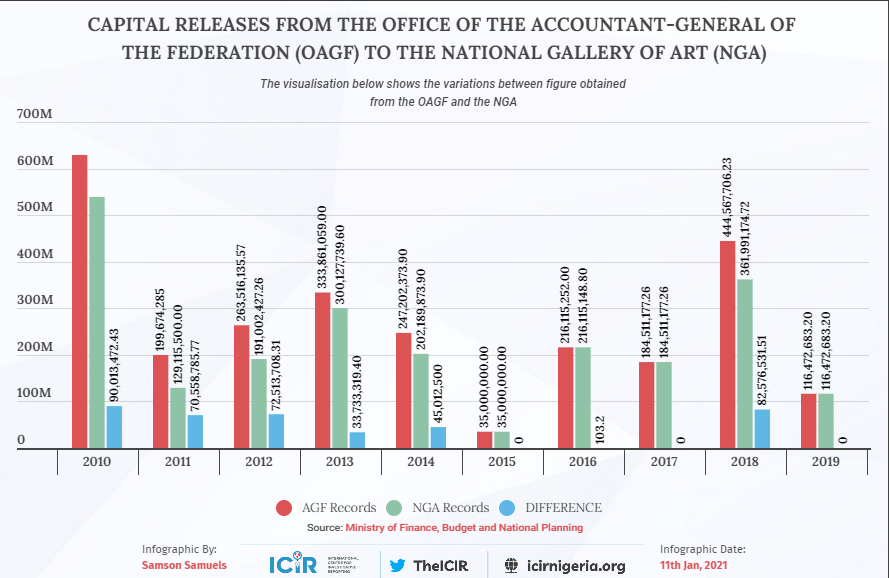
In 2010, when OAGF released N629, 141, 77.43 as capital allocation, the Gallery only accounted for N539,128,305.43. In 2011, N199,674,285.77 was released, but only N129,11,500 was accounted for. In 2012, a sum of N263, 516, 135.57 was disbursed while the Agency accounted for N191, 002,427.26. In 2013, the Gallery accounted for N300,127,739.60 out of N333, 861,059 allocated as capital budget. The following year, NGA received N247,202,373.90 but declared N202, 189, 873.90. In 2018, NGA only declared N361, 999,174.72 against N444, 567, 706.23 received in capital allocation.
Capital release from the Office of the Accountant-General of the Federation (OAGF) to the National Gallery of Art (NGA).
Except for three years (2015, 2016, and 2019), when the records of a capital allocation from OAGF correspond with the documents tendered by NGA, the books are not balanced for the other years. So, how did over one-third of a billion naira disappear?
The ICIR wrote FOI letters to the Gallery and OAGF seeking an explanation for the missing fund. The Director of Funds at the OAGF, Sabo Mohammed, in his reply, wrote: “The Office of the Accountant -General of the Federation had cash-backed in full all the Capital Allocations released to National Gallery of Art within the period requested.” In other words, capital projects at the Gallery for which funds were released have all been paid.
However, Mohammed directed the reporter to the Budget Office and Cash Management Department of the Ministry of Finance for further confirmation.
In an interview, Muhammad M. Saleh, the Director at the Cash Management Department, told The ICIR that the office was created in 2018, so it was responsible for disbursement only for the last two years.
“The Accountant General Office was directly responsible for the disbursement between 2010 and 2018, and whatever record the Office gave is accurate,” he said.
The ICIR then contacted Abdullahi Muku, the Director-General of the National Gallery, between 2010 and 2019 for clarification.
In a WhatsApp message sent to The ICIR on November 13 2020, he wrote: “I left office honourably. I was highly celebrated when I was leaving. I should please be allowed to manage my life. If there is anything I deserve, it is a commendation for my achievement while serving the nation my fatherland as DG, NGA.”
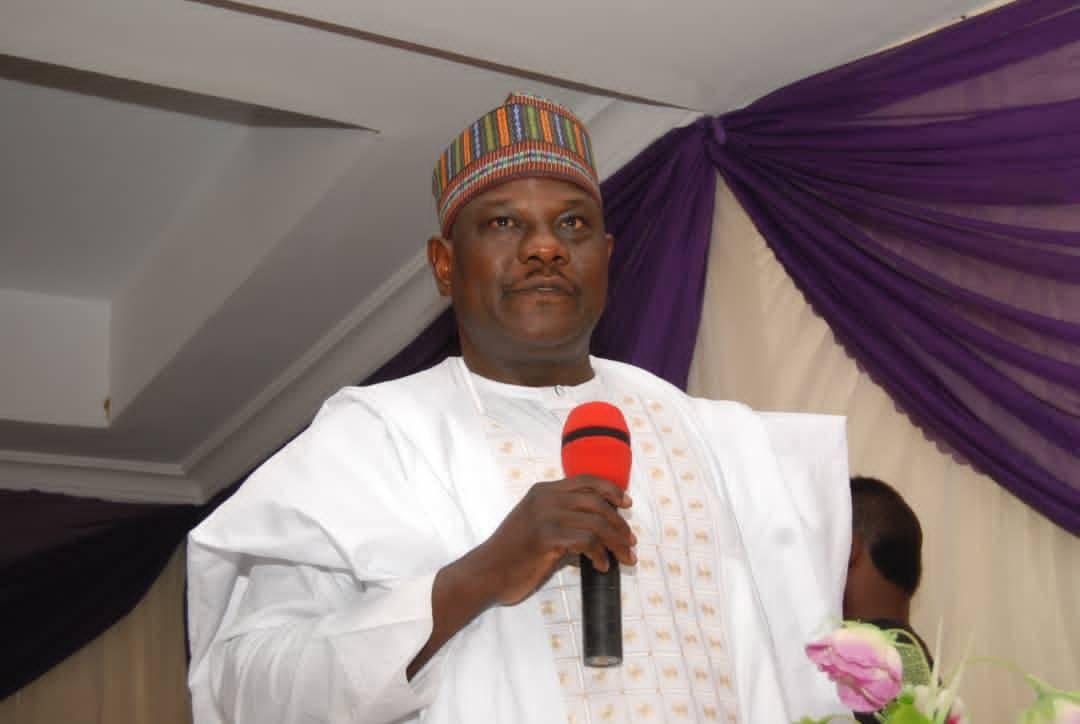
Abdullahi Muku, former Director-General National Gallery of Art (2010 to 2019) accused of inflating contracts and other corrupt practices
Not satisfied with the response, The ICIR requested that he answer specific questions about the allegation of misappropriation levelled against him.
On Wednesday, November 18, 2020, Muku showed up at the Abuja office of The ICIR, where he was asked to explain the disappearance of N394 million in six years.
The former DG told The ICIR that he could not explain the difference because he is no longer in service.
“I have left the office since March 2019; I no longer have a recollection of the money received and money spent,” he said.
He still could not offer a useful explanation when shown the records of capital allocations obtained from his former office and the OAGF.
Instead, he urged the reporter to dismiss “smear campaigns” launched against him by some Gallery staff members he described as “disgruntled elements.”
According to him, the allegation of corruption started while he was in office.
“They have used media to attack me and destroy my reputation. They have failed, and that is why they came to you too,” Muku said.
Colleagues have indeed petitioned the former Gallery boss, accusing him of stealing from the public purse, which, according to them, he successfully masterminded with other directors’ help.
According to the whistleblowers, the suspected accomplices include the immediate past acting director-general of the parastatal, Simon Ikpakronyi; director of finance and account, Henry Achugbu; retired director of document, Lilian Kangan and Adamu Tanko of the Curational Service Department.
Gallery of Art, Ukpor, Anambra state
Gallery of Art, Mbutu, Imo State
Gallerry of Art, Kulili, Taraba state
Allegation of stealing project funds
In the petition reportedly sent to the anti-graft agency, a copy of which was obtained by The ICIR, Muku and Ikpakoroyin, who was then the Director of Research and Publications, together with other directors, were accused of “diverting” another N359,000,000 between 2013 and 2019. The allocation was meant for research and other educational projects.
Other funds allegedly misappropriated by the directors include N68 million for purchasing library books and equipment, N25 million for computers, and N55 million for furniture and fittings.
In 2018, just a year before Muku retired, N5 million was released to publish a compendium of artists, but publication does not exist to date.
When The ICIR asked about the publication, the former DG said he was unaware of the compendium.
Immediate past acting Director-General of National Gallery of Art, Dr. Simon Ikpakronyi.
Similarly, Muku and other directors were accused of stealing from the funds allocated between 2011 and 2019 to construct galleries in Imo, Taraba, Anambra and Niger states.
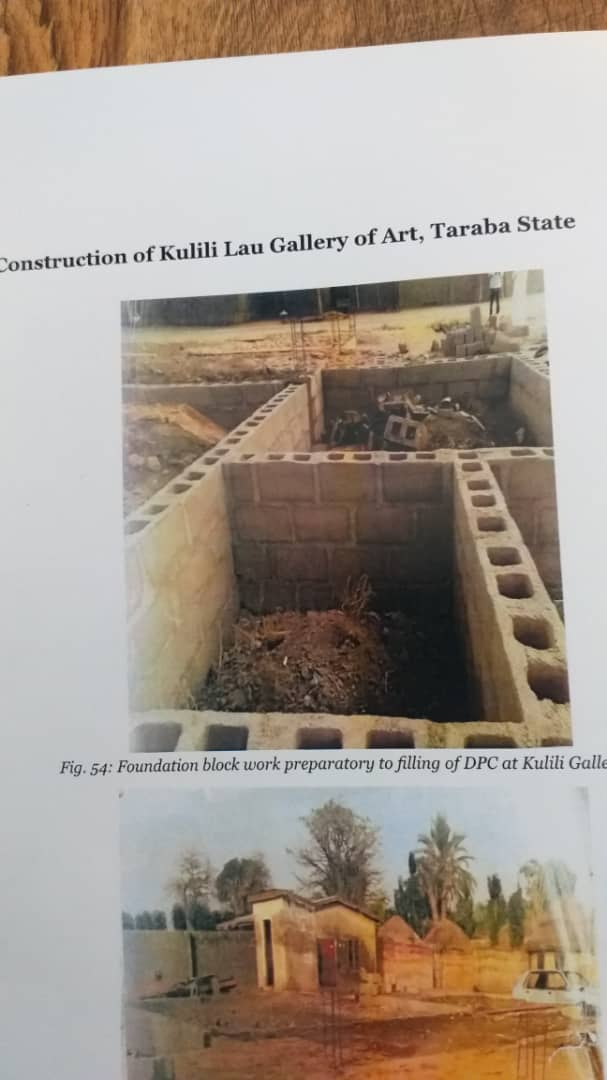
For example, between 2011 and 2019, a total of N67.2 million was released for the construction of Oriental Heritage Galaxy Centre Mbutu, Imo state N28 million for the construction of National Gallery of Art Centre, Ukpor Nnewi South Anambra state, and N11.9 million for the construction of Kulili Gallery of Art Centre, Kulili, Lau, Taraba state.
Other projects captured in the 2019 budget as ERGP27105289 include an office building in Port Harcourt, Rivers state and Kano, Kano state. The total sum was N57,542,330.
According to the 2015 report from the Office of Auditor-General, a consultancy contract to organise and manage the National Gallery of Arts Management/Curators Retreat was awarded to a company in the sum of N7 million on December 1 2013.
The auditor general reported that “a payment voucher was raised for the contract sum on the same day the contract was awarded, contrary to extant regulations. But all relevant supporting documents to back up the payment were not sighted, lending credence to the fact that the voucher was raised to effect payment without work done.”
FOI request letter to the Office of the Accountant General of the Federation
Similarly, the contract for Nupe Gallery’s construction in Niger State was awarded to a company in 2012 in the sum of over N80 million. Upon further examination, it was observed that the sum of N5 million was charged as “Contingencies” in the Bill of Quantities (BOQ). The sum of N98.8 million, including VAT and Withholding Tax, was paid to the contractor at the end of the project. This, in effect, means an overpayment occurred, and the contractor did not pay the relevant tax.
The auditor noted that contingency provisions in contract awards do not always occur. Where they do, extant regulations provide that they should be activated by a contractor’s written application detailing item-by-item requirements and costs, subject to the awarding body’s approval.
Therefore, the auditor general called the attention of former DG Muku to these discrepancies through the Audit Inspection Report Reference No. OAuGF/P&PAD/NGA/08 dated September 21 2015. And when Muku responded, the auditor noted that his response dated October 7, 2015, was “unsatisfactory”.
Offence concerning public procurement attracts a term of imprisonment not less than five calendar years but not exceeding ten calendar years without an option of a fine, according to the Procurement Act 2007.
The whistleblowers who spoke to The ICIR on the condition of anonymity said the directors used fraudulent contractors as conduit pipes for the diversion of project funds, who eventually returned the payment in foreign currency through the account of selected junior staff and the Gallery’s cooperative society.
The suspected staff involved in this racket include Chibuzor Udemba, Vincent aka Vamaco, contractors and consultants; Onanusi Olakitan, the cash officer and Musa Mudashiru, the chairman of the Gallery’s cooperative society.
Mudashiru denied all the allegations against him in a phone interview with The ICIR. “I am not part of them. If I am, I should have benefited from certain privileges that other senior staff benefited from.”
Response from the Office of the Accountant General of the Federation
Hold lawmakers accountable for uncompleted galleries, says former DG.
The former Gallery boss also denied all the allegations. According to him, most of the Gallery’s construction projects are constituency projects initiated by lawmakers, influencing the funds’ disbursement.
“Those galleries are constituency projects; they were not initiated by us,” he told The ICIR.
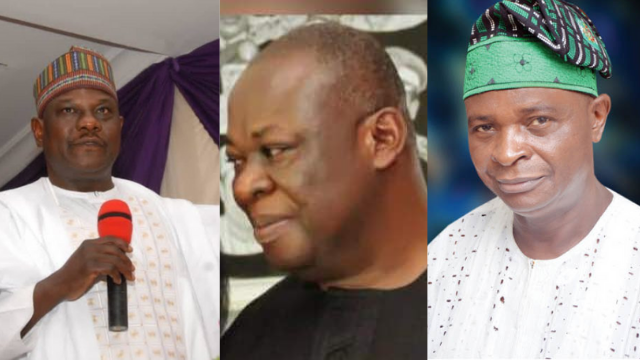
According to him, the Mbutu gallery project was the project of the former Deputy Speaker of the House of Representatives, Emeka Ihedioha; Anambra gallery by the Honourable, and Taraba Gallery by Honourable Jerry Samuel Manwe, who was the House of Representative member from Taraba and the Chief of Staff to former Speaker Yakubu Dogara.
Muku referred to “budget padding” by Nigerian lawmakers, a practice that has become the norm in the National Assembly.
Every year, legislators of the two chambers rewrite the budget, introducing items outside the estimates prepared and submitted by various Ministries, Department and Agencies (MDAs) through the president. As a matter of yearly ritual, both chambers include what they call constituency projects whose costs are arbitrarily fixed by legislators.
In 2016, Honourable Abdulmumin Jibrin, a lawmaker from Kano and former Chairman of the House Committee on Appropriation, called Nigerians’ attention to the criminal conspiracy among the Senate members and the House of Representatives.
Jibrin disclosed that the lower chamber unilaterally included 2,000 items in the 2016 budget.
Also, a human rights lawyer, Femi Falana, alleged that constituency projects worth over N100 billion were inserted into the national budget. The Senate and the House of Representatives allocated to themselves N60 billion and N40 billion, respectively.
Drawing from sections 4 and 5 of the 1999 Nigerian Constitution (as amended), lawyers have condemned lawmakers for initiating constituency projects. They argue that such a practice is the exclusive role of the executive, but legislators remain unpersuaded.
Between 2011 and 2019, a total of N67.2 million was inserted into the National Gallery’s budget to construct the Mbutu Gallery in Imo state, according to the document obtained from the Agency. But Muku tried to exonerate himself by shifting blame to the lawmakers.
“We are in a very sorry situation in this country. The National Assembly is our major problem. Without them, Nigeria will move forward,” he said.
By pointing an accusing finger at the lawmakers, the former DG indirectly cast aspersions on himself because his office was used for the personal enrichment of public officers. Yet, he played down his culpability by simply saying, “I did not say I am a saint too.”
On December 22, The ICIR sent an SMS and WhatsApp messages to Ihedioha, who was then representing Aboh Mbaise/Ngor Okpala Federal Constituency of Imo State, to explain why the Mbutu gallery remains uncompleted nearly nine years after the project’s contract was awarded. But he did not respond. The Centre called him again on Tuesday, December 29, 2020, and when he answered, he tacitly directed the reporter to contact the National Gallery of Art about the project. He did not say anything further before he cut the call.
Manwe was also contacted on January 6 via the Facebook account he set up to engage his constituency in Taraba state. The ICIR asked him to explain why the Kuluu Lau gallery’s construction, to which N12 million has been released, remained abandoned for more than eight years. But the lawmaker did not respond.
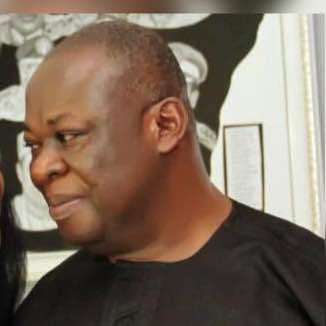
Emeka Ihedioha, a member of the Peoples Democratic Party (PDP) who represented the Aboh Mbaise/Ngor Okpala Federal Constituency of Imo State from 2003 to 2015.
Jerry Manwe, a former member of the House of Representatives, Taraba
Meanwhile, the president of the Society of Nigeria Artists, Oliver Ewonwu is unhappy with the country’s state of the art. He is even more disappointed with the administrators’ poor performance in the art sector. He lamented that there is no befitting national gallery to warehouse many artworks created in Nigeria.
In an interview with The ICIR, he questioned the federal government’s idea of setting up galleries in all states when the government could have located galleries only in Lagos and Abuja, the two capital cities.
Kulili Gallery in Taraba state is still at a foundational level. CREDIT: NGA
Gallery’s finance director explains differences in conflicting records but silent on other disbursements.
The ICIR contacted the current DG of the Gallery, Ebetan Ivara, via Whatsapp, on the allegation of misappropriation in his office, and he exonerated himself.
His reply: “I am sure you know that I was not here as the DG during the period you are investigating the allocations. I am barely four months old in the Agency and have not been furnished with this account and expenditures. You should carefully handle your investigation with him and not publish what will run my Agency down and bring the new administration into a bad light. You may come to my office from January 5 to give me time to find out the DFA’s responses to the alleged financial expenditures.”
True to his word, on January 13, a response from the Director of Finance and Account (DFA), Achugbu, arrived.
He wrote that: the “appropriation /budget performances as forwarded to you[The ICIR] are in line with our budgetary allocations, releases and expenditure for the relevant years.”
However, he added that “the information supplied by the Accountant General included releases from the services-wide votes which are not part of the appropriation/budgetary allocation, or budget releases but are accounted for separately.”
In other words, the previous records of releases sent to The ICIR by Achugbu did not contain other disbursements to the Gallery. In a letter dated December 17, 2020, sent to the finance director, the Accountant General also confirmed the omission.
“I am directed…to inform you that from the records available to this Office, the discrepancies you referred to may be about releases effected from Service Wide (Capital) Vote effected through AIE instrument in favour of your Agency. It may appear you did not capture such releases in your report,” director of funds Mohammed wrote.
However, it remains suspicious that Mr. Achugbu failed to capture the releases in the earlier report submitted to The ICIR. This action violates the Freedom of Information Act (FOIA) 2011.
According to FOI Act, a deliberate attempt to distort public information is a violation. Section 10 of the FOIA states that: “It is a criminal offence punishable on conviction by the Court with a minimum of 1-year imprisonment for any officer or head of any government or public institution to which this Act applies to willfully destroy any records kept in his custody or attempt to doctor or otherwise alter same before they are released to any person, entity or community applying for it.”
Rather than explain why an important financial record was omitted in the document submitted, Achugbu praised his Agency, saying the relevant government authorities have never found the Agency wanting. But this claim is untrue.
Gallery Director of Finance and Account, Henry Achugbu
As of May 2010, the Economic and Financial Crime Commission, EFCC reported 52 “high-profile” ongoing cases. The published list of those cases includes the prosecutions of Joe Musa, another former Director-General of Abuja’s National Gallery of Art.
In a petition sent to the EFCC, the former DG was accused of corrupt practices, including over-invoicing, inflated contacts, bloated wage bills, falsification of tour documents, and false claims on seminars, exhibitions and training that were never organised.
The former DG Muku had told The ICIR that lawmakers at every budget cycle include constituency projects in the budget of the MDAs and asked civil servants to bring the money through their chosen contractors and later ask them to retire it without executing the projects.
Okey Epia, the publisher of Orderpaper, a news website that covers the Nigerian parliament, told The ICIR in an interview that the practice of inserting constituency projects in MDAs’ budgets by lawmakers has become the norm though unethical.
Notwithstanding, he said heads of MDAs are indeed liable for all the allocation approved and released for later abandoned projects, not the lawmakers.
“Indeed, lawmakers often insert constituency projects into the budget of the MDA, but legally speaking, the head of the Agency is liable for any misappropriation. The MDAs would be held responsible for any project failure.”
Explaining how the process works, Epia said constituency projects are inserted by lawmakers who would later send a contractor to bid for the project. The Agency will eventually release the money to the contractor. Often, the project is abandoned midway or does not commence at all, but the money would have been shared among all the key actors, including the head of the parastatal.
The ICIR’s investigation shows that this sharp practice was rife throughout the administration of the former DG Muku, and his predecessor.
Additional report by Damilola Ojetunde and Samad Uthman.
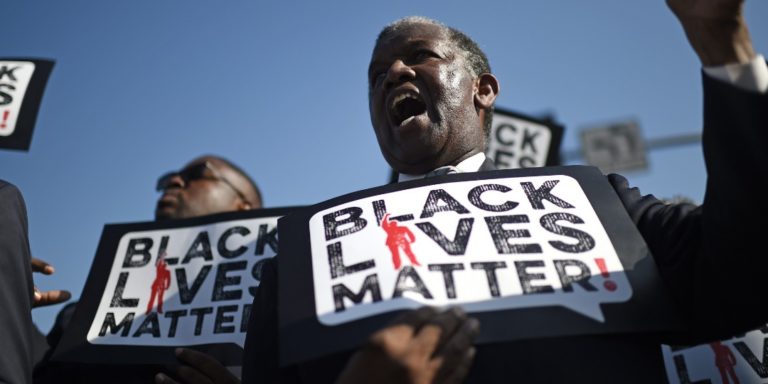
THE Black Lives Matter (BLM) movement has been nominated for the 2021 Nobel Peace Prize for championing an awakening against racial discrimination worldwide.
The BLM movement was co-founded in 2013 by Alicia Garza, Patrisse Cullors and Opal Tometi in response to the acquittal in the United States of a man who shot Trayvon Martin. It gained wider recognition in 2014 following protests over the deaths of Michael Brown and Eric Garner, and became an international focus in 2020 following the deaths of George Floyd and Breonna Taylor.
Petter Eide, a member in the Norwegian parliament, who nominated the group, said it deserved the award because of how the movement had “had a tremendous achievement in raising global awareness and consciousness about racial injustice.”
“I find that one of the key challenges we have seen in America, but also in Europe and Asia, is the kind of increasing conflict based on inequality. Black Lives Matter has become a very important worldwide movement to fight racial injustice,” Eide said.
The 61-year-old politician, who has been a member of parliament since 2017, said he didn’t want his nomination to be seen as interference in US politics. He also dismissed insinuations by Donald Trump, former US president, and right-wing politicians that the group had been behind some major violence in US cities.
“Studies have shown that most of the demonstrations organised by Black Lives Matter have been peaceful. Of course, there have been incidents, but most of them have been caused by the activities of either the police or counter-protestors.”
“There is actually a tradition for doing this, It’s a strong linkage between anti-racism movements and peace, and a recognition that without this kind of justice, there will be no peace and stability in the society,” he argued.
He stressed that “Awarding the peace prize to Black Lives Matter, as the strongest global force against racial injustice, will send a powerful message that peace is founded on equality, solidarity and human rights and that all countries must respect those basic principles.”
Nominations for the Nobel Peace Prize are accepted from any politician serving at a national level, and they are allowed in just 2,000 words to state their case. The deadline for this year’s submission is February 1, and by the end of March, the committee prepares a shortlist. The winner is chosen in October and the award ceremony is scheduled for 10 December.
Albert Luthuli and Nelson Mandela received the prize in 1960 and 1993 respectively for advocating against racial discrimination in South Africa, and Martin Luther King was awarded the prize for non-violent resistance against racism in the US in 1964.
THE Economic and Financial Crimes Commission (EFCC) says it hopes to overturn the rulings that freed Orji Kalu, current Senate chief whip and Olisa Metuh, former national publicity secretary of the People’s Democratic Party (PDP) from prison this year.
The commission, through its monthly publication entitled ‘EFCC Alert’ listed Babachir Lawal, former secretary to the government of the federation; Adesola Amosu, former chief of air staff; Abdulrasheed Maina, former chairman of the Pension Reform Task Team; Andrew Yakubu, former group managing director of the Nigerian National Petroleum Corporation (NNPC); Babangida Aliyu, former governor of Niger state, and Winifred Oyo-Ita, former head of civil service of the federation as some of the prominent Nigerians whose corruption cases would continue in court this year.
The publication also named Muktar Yero, former governor of Kaduna State; Doyin Okupe, Tanimu Turaki and Mohammed Adoke, former senior special assistant on public affairs, minister of special duties and inter-governmental affairs, and former minister of justice and attorney-general of the federation respectively in the administration of former President Goodluck Jonathan as former public office holders whose corruption cases would also continue in court.
Others in the roll call are Murtala Nyako and Gabriel Suswam, former governors of Adamawa and Benue state respectively; George Turnah, a former special adviser to Dan Abia, erstwhile managing director of Niger Delta Development Commission (NDDC); and Abubakar Mohammed Sani, deputy comptroller of the Nigerian Correctional Service, Katsina Command.
The commission also expressed delight with the conviction of a former managing director of Finbank, Okey Nwosu, on January 5, 2021, by Justice Okunnu of the Lagos State High Court.
He is to serve a three-year jail term.
Nwosu’s conviction came nine years after the EFCC had filed a case, accusing him of 19.2 billion naira fraud at the Finbank.
Deposed Emir of Kano and former governor of the Central Bank of Nigeria (CBN) had on October 9, 2010, predicted Nwosu’s imprisonment.
Sanusi made the prediction when exposing the malpractices in the bank: ““In each of those banks, I know what I saw and I told you from the very first day that it was unbelievable, but I know what I saw. And I have no doubts in my mind that each and every one of those people will go to jail.”
According to the EFCC, mismanagement by Nwosu led to Finbank’s distress and its eventual acquisition by First City Monument Bank (FCMB).
EFCC logo. Source: EFCC Twitter
Babachir Lawal
He is standing trial before Justice Charles Agbaza of the Federal Capital Territory (FCT) High Court over 544 million naira ‘grass-cutting scandal.’
Lawal was accused of illegally benefitting from approval of the 544 million naira, which was from irrigation/grass cutting contract on the camps of internally-displaced persons in the North-East.
The contract was awarded under the presidential Initiative for North East (PINE).
Orji Uzor Kalu:
The former governor of Abia State, and current chief whip of the Senate was freed on May 8, 2020, by the Supreme Court after spending six months of his 12-year jail term at Kuje prison.
He had been sentenced by Justice Idris Mohammed of a Federal High Court, Lagos, on December 5, 2019.
The Supreme Court ruled that Mohammed had been elevated to the Court of Appeal before giving the ruling and was no longer a judge of the lower court.
It, therefore, ordered a retrial of Kalu for alleged 7.1billion naira fraud.
EFCC said the Abuja division of the Federal High Court had slated February 2, 2021, to re-arraign the politician in Abuja.
A chieftain of the All Progressives Congress (APC), Orji is rumoured to be a major contender for the 2023 presidency.
Olisa Metuh
The PDP’s former national Publicity Secretary was convicted on February 25, 2020 by Justice Okon Abang of the Federal High Court in Abuja.
Among others, the court found Metuh guilty of fraudulently receiving 400 million naira from the Office of the National Security Adviser in November 2014. His case dragged for four years in the court.
“The Abuja Division of the Court of Appeal, on December 16, 2020 upheld the appeal of Metuh, and set aside the conviction handed down on him by Justice Okon Abang of a Federal High Court, Abuja, citing bias, without considering the merits in the money laundering case. Metuh at the time had already commenced his seven-year jail term at the Kuje Prison.
“However after a review of the ruling, the EFCChas approached the Supreme Court to set aside the judgment of the Court of Appeal on the grounds that the appellate court erred by restricting itself to only two grounds (12 and 14) of the appeal that dwelt on the alleged bias of the trial judge, without examining the merit of the judgment of Justice Abang,” EFCC Alert, January 2021 edition, said.
Adesola Amosu
The retired military chief is standing trial before Justice Chukwujekwu Aneke of the Federal High Court Court sitting in Ikoyi, Lagos. He is joined by two others, namely, Jacobs Adigun, an air vice marshall and former NAF chief of accounts and budget, and Owodunni Olugbenga, an air commodore and former NAF director of finance and budget for allegedly diverting about 21 billion naira of the Nigerian Air Force funds for personal use.
Babangida Aliyu
Aliyu is standing trial alongside his then chief of staff, Umar Nasko, on an alleged 2 billion naira money laundering charge contained in an amended three-count charge by the EFCC. He is also accused of diverting, for personal use, the ecological fund meant for his state where he served as a two-time governor.
Andrew Yakubu
Yakubu, former group managing director of the NNPC is accused of engaging in money laundering running into several billions.
The EFCC had, on a tip-off, raided his guest house situated at Sabon Tasha, Kaduna State on February 3, 2017, and reportedly recovered stacks of monies in a fireproof safe.
According to the anti-graft agency, 9.8 million US dollars and 74,000 pound sterling were discovered in the building.
Justice Ahmed Mohammed of the Federal High Court Abuja has fixed February 17, 2021, to rule on the request by the EFCC which urged the court to visit the Kano branch of the CBN and inspect the sums of 9.77 milion dollars and 74,000 pounds traced to him.
Abdulrasheed Maina
Maina is standing trial for two billion naira pension fraud. He allegedly committed the crime using his office as the chairman of the Pension Reform Task Team.
After reportedly jumping bail and fleeing Nigeria, he was caught by Interpol on November 30, 2020, in Niger Republic and was later extradited to Nigeria.
“Maina on December 9, 2020, filed a no-case submission before Justice Okon Abang of a Federal High Court, Abuja.
“Justice Abang had adjourned till December 10, 2020 for the defence to argue the application and for the prosecution to respond to same orally, but on the said date, there was some drama in court as Maina collapsed in the courtroom.
“Before then, Maina had jumped bail, prompting the court to jail his surety, Senator Ali Ndume. With collaboration between the EFCC and INTERPOL, Maina was arrested in Niger Republic and brought back to Nigeria to face his trial,” EFCC stated in its publication.
Winifred Oyo-Ita:
The former head of civil service is facing an 18-count charge of official corruption and money laundering to the tune of 570 million naira, which allegedly involved obtaining estacodes and duty travel allowances for journeys either not undertaken or non-existent.
Standing trial alongside Oyo-Ita are Frontline Ace Global Services Limited; Asanaya Projects Limited; Garba Umar and his companies: Slopes International Limited and Gooddeal Investments Limited.
Others are: Ubong Okon Effiok and his companies, U&U Global Services Limited and Prince Mega Logistics Limited.
EFFC operatives in action. Source: BusinessDay
Their trial continuedbefore Justice Taiwo Taiwo of a Federal High Court, Abuja, on January 28, 2021.
Muktar Ramalan Yero:
The former governor of Kaduna State is standing trial before Justice Z.B. Abubakar of the Federal High Court sitting in Kaduna over his involvement in the ‘sharing’ of 700 million naira provided by a former minister of petroleum resources, Diezani Alison-Madueke, to allegedly influence the outcome of the 2015 presidential election.
Yero is standing trial alongside a former minister of state, Nuhu Somo Waya; former Kaduna State PDP chairman, Abubakar Haruna Gaya, and the former secretary to the state government, Hamza Ishaq, on an amended eight-count charge.
The case has been adjourned till February 23, 2021, for continuation of trial.
Kabiru Tanimu Turaki
The trial of the former minister of special duties and inter-governmental affairs, alongside his personal assistant, Sampson Okpetu, continued on January 25, 2021.
They are standing trial before Justice Inyang Ekwo of the Federal High Court, Abuja, for an alleged 714.6million naira fraud.
Two companies standing trial alongside the former minister are: Samtee Essentials Limited and Pasco Investment Limited. The case has been adjourned till February 9 and 10, 2021.
Mohammed Adoke:
Adoke is in court over alleged money laundering involving about 400 million naira.
The trial was stalled on January 11, 2021, before Justice Inyang Ekwo of the Federal High Court, Abuja, due to the absence of the defendant. He was reportedly stranded in Dubai, United Arab Emirates, after he tested positive for the coronavirus disease. The court had earlier granted his request to travel to Dubai for medicals. He was said to have been on the verge of returning to the country when he found out that he was positive for the virus.
Adoke, who is reported to have tested negative, was said to have been unable to fly back in good time for his trial.
He is standing trial alongside Aliyu Abubakar on an amended 14-count charge of money laundering. They are expected back in court on March 1, 2021.
Abubakar Mohammed Sani
The deputy comptroller of the Nigerian Correctional Service, Katsina Command, is alleged to have obtained money running to about 2.8 million naira from unsuspecting jobseekers, under the guise of securing government jobs for them.
Sani, who was the works officer at the headquarters of the Correctional Service, was first arraigned on December 9, 2020, before Justice Hadiza Sabi’u Shagari of the Federal High Court Katsina and he pleaded ‘not guilty.’
The case has been adjourned to February 3 and 4, 2021, for the defence to cross-examine the prosecution witness
Murtala Nyako
The EFCC had, on January 16, 2020, closed its case in the 29 billion naira fraud trial of the former governor of Adamawa State.
In its publication, the commission said rather than open defence, Nyako, and his co-defendants – his son, Abdul-Aziz Nyako; two companies – Sebore Farms and Extension Ltd and Pagado Fortunes Ltd; Zulkifik Abba, Abubakar Aliyu, Blue Opal Ltd, Tower Assets Management Ltd and Crust Energy Ltd filed a no-case submission.
Following their application, Justice Okon Abang has fixed February 26, 2021, to enable the defendants reply to the prosecution’s counter-affidavit on point of law.
Gabriel Suswam
Suswam is standing trial for alleged 3.1billion naira fraud.
On November 2, 2020, the former Benue State governor alongside his then commissioner of finance, Omodachi Okolobia, was re-arraigned before Justice Ahmed Mohammed of the Federal High Court, Abuja.
The trial judge was the one presiding over the case, before it was reassigned to Justice Okon Abang, and then brought back to Justice Mohammed.
The trial judge ordered the court registry to go through the records and sort out the exhibits earlier admitted by the court and to make sure that they were marked accordingly, in order for the trial to continue from where it stopped.
Doyin Okupe:
Okupe is being prosecuted by the EFCC alongside his two companies: Value Trust Investments and Abrahams Telecoms on a 59-count charge bordering on money laundering and criminal diversion of funds to the tune of 702 million naira.
Justice Ijeoma Ojukwu of the Federal High Court Abuja, on November 16, 2020, adjourned his trial to February 8 and 9, 2021.
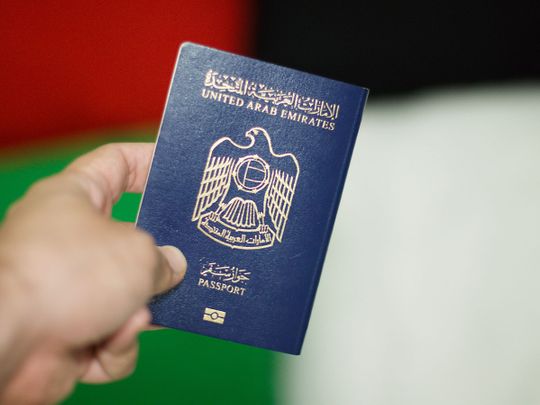
THE United Arab Emirates has adopted laws that will grant citizenship to a select group of foreigners, including investors and property owners.
A category of foreigners that could be granted citizenship, as announced by Mohammed bin Rashid Al Maktoum, vice president and prime minister of the UAE and ruler of Dubai, in a tweet on January 30, 2021, are professionals such as doctors, scientists, engineers, artists, authors and their families.
The development followed the amendment of the executive regulation of the federal law concerning nationality and passports.
To secure the citizenship, investors must own a property in the UAE, according to a statement on UAE state news agency, WAM.
Scientists eligible for citizenship must obtain one or more patents that are approved by the UAE Ministry of Economy or any other reputable international body, in addition to a recommendation letter from the ministry.
Also, to obtain UAE citizenship, doctors and specialists must be specialised in a unique scientific discipline or any other scientific principles that are highly required in the Gulf state.
Eligible scientists are required to be active researchers in universities or research centres or in the private sector, with practical experience of not less than 10 years in the same field.
In the same vein, individuals with creative talents, such as intellectuals and artists, should be pioneers in the culture and art fields, and winners of one or more international awards. A recommendation from related government agencies is also mandatory for the citizenship offer.
The UAE cabinet, local courts and executive councils will nominate the foreigners eligible for the citizenship under criteria set for each category.
However, the amended laws will allow foreigners who received the UAE passport to keep their existing citizenship, meaning that Nigerians and citizens of other countries who become citizens of the UAE under the arrangement will now have dual citizenship.
The citizenship can be withdrawn upon breach of certain conditions, according to the statement.
While it is not immediately clear whether the foreigners who will be bestowed citizenship would have the full rights and benefits of the Emirati, as natives of the UAE are known, Bloomberg, in an analysis, noted that the amendment, which it described as a ‘major policy shift,’ was aimed at attracting talents in a way that will boost economic growth in the UAE, home to the Middle East’s finance and travel hubs – Dubai and Abu Dhabi.
Although foreign residents make up more than 80 percent of the population of the UAE’s seven sheikhdoms and have been the mainstay of the UAE economy for decades, they have lacked a clear path to citizenship, even for those born and raised in the country.
Hitherto citizenship was reserved for foreigners only in special cases, particularly for service to the UAE.
Bloomberg further observed that governments of the Gulf states, including the UAE, have long resisted offering permanent residency to their millions of foreign workers in a bid to protect generous privileges enjoyed by their citizens. However, the 2014 oil-price slump is forcing them to prepare their economies for a post-fossil fuel world and they are now seeking to entice wealthy people to stay.
According to Bloomberg, the UAE in 2020 abolished companies having Emirati shareholders in a major shake-up of foreign ownership laws aimed at attracting investment into the economy, which has been hit by the coronavirus pandemic and decline in oil prices.
Before coming up with the amended laws that allow granting citizenship to select foreigners, the UAE had announced a plan to grant visas of five to 10 years to wealthy property investors and entrepreneurs, as well specialised researchers.
Not fewer than 800 Dubai choice property worth over $146 billion linked to Nigerian politically exposed persons (PEPs)
Checks by The ICIR show that several wealthy Nigerian politicians could qualify for UAE citizenship, under the amended laws, by virtue of their ownership of choice, luxurious property in Dubai, the financial and travel centre of the UAE.
A report titled ‘Dubai Property: An Oasis for Nigeria’s Corrupt Political Elites,’ authored by Mathew T. Page and published by the Carnegie Endowment for International Peace on March 19, 2020, noted that no fewer than 800 Dubai properties were linked to Nigerian politicians.
According to the report, information on property owned by Nigerian politicians in Dubai came to light after the Center for Advanced Defense Studies (now known as C4ADS), in 2016, acquired the data of a private database of Dubai real estate information (dubbed the ‘Sandcastles’ data).
“At least 800 properties were found to have links to Nigerian politically exposed persons or their family members, associates, and suspected proxies,” the report said.
Politically exposed persons are individuals who are or have been entrusted with prominent public functions. The report observed that for those of them with ill-gotten wealth, Dubai is an alluring destination for investing their gains.
“Although certainly not the only place to stash money, Dubai – dubbed the commercial capital of the Middle East – exercises minimal oversight and has few legal or logistical obstacles to transferring large amounts of cash or purchasing property.”
Highlighting the scale and significance of Nigerian PEPs Dubai property holdings, the report stated, “The 800 Dubai properties linked to Nigerian PEPs are estimated to be worth well over 146 billion naira (N) ($400 million). This equals roughly two-thirds of the Nigerian Army’s annual budget and over three times the annual budget of the country’s Independent National Electoral Commission.”
It added that Dubai property ownership is an indicator – not definitive proof – that a particular politically exposed Nigerian possesses unexplained wealth.
“Although many PEPs’ property purchases exceed what their official salaries should permit, some politically exposed Nigerians have complicated personal financial portfolios combining marital and family assets, business holdings, charitable foundations, and other offshore wealth,” the report noted, adding that “Nigerian elites face few obstacles transferring large quantities of cash to Dubai as banks or other money transfer agents in both Nigeria and the UAE do not appear to be reporting large or otherwise suspicious transactions by PEPs to national authorities.”
Going by the Sandcastles data, politically exposed Nigerians that were linked to Dubai property include state governors; state governors’ allies; heads of federal government ministries, departments, and agencies (MDAs); individuals already investigated or convicted by anti-corruption agencies; petroleum sector officials; security sector figures; legislators; and suspected proxies. A judge and a handful of traditional leaders were also linked to Dubai property in Sandcastles data.
Dubai is a very attractive destination for Nigerians due to its accessibility as a major transportation hub and the home of Emirates Airlines, and the fact that it is easier for a Nigerian to get a UAE visa than it is for them to get a visa for the United States or United Kingdom.
The number of Nigerians traveling to Dubai has continued to rise. According to the report, the number of Nigerians arriving in Dubai increased by 28 per cent in the first half of 2019 (compared to the same period in 2018).
As a result, according to the report, Nigeria has become one of the top 20 countries from where visitors arrive in Dubai.
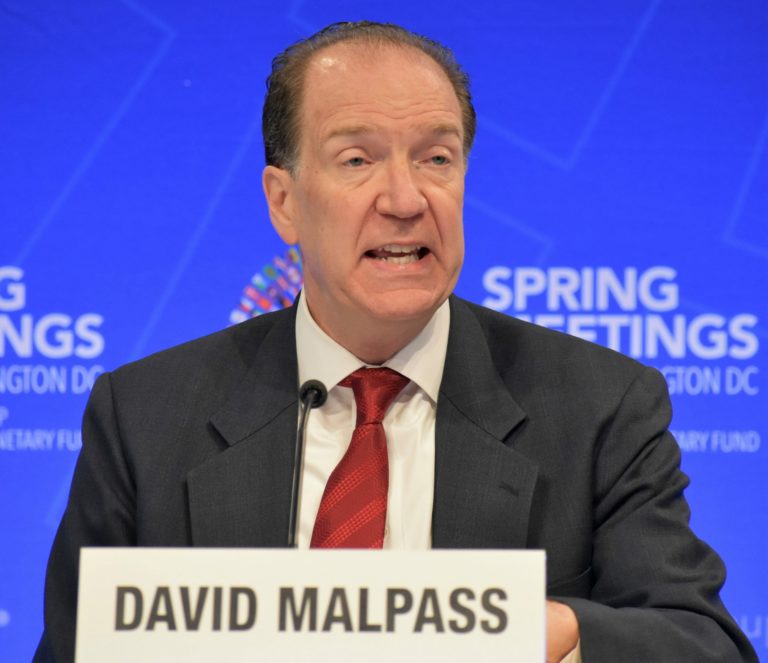
THE World Bank has earmarked 12 billion US dollars to support vaccination against COVID-19 in Africa.
David Malpass, president of the bank, said the fund would be in the form of grants or on ‘highly concessional terms,’ Bloomberg reported on Saturday.
The decision, the reports said, was sequel to January 27 virtual meeting on the Africa COVID-19 vaccine financing and deployment strategy.
Nigeria, Africa’s biggest economy and one of the countries with the highest infections and fatalities from the virus on the continent, was not among the few countries listed as beneficiaries of the fund by Malpass. However, two-thirds of the benefitting countries were not immediately listed by the bank’s chief.
“We’re preparing emergency vaccine financing projects in 21 countries in Africa, including the Democratic Republic of Congo, Ethiopia, Niger, Mozambique, Tunisia, Eswatini and Cabo Verde to name a few; the funds are available now,” Malpass said.
He added: “Since the outbreak of COVID-19 last March, the bank has committed 25 billion dollars to African countries to support their health and economic recovery, and we expect to commit an additional 15 billion dollars by June. We urge leaders of African countries to move quickly to secure vaccinations for their populations, and to avail themselves of the financing available from us.”
Data from the Africa Centre for Disease Control as of Saturday morning showed that African Union member countries (55 in total) had reported 3.534 million cases, 3.014 recoveries and 89,839 deaths, with Nigeria having 128, 674 and 1,577 of the cases and deaths respectively.
The Africa Centre for Disease Control had suggested that it would cost between 10 billion dollars and 15 billion dollars to vaccinate 60 percent of Africa.
Nigeria had, in early January, promised to secure 100,000 doses of the Pfizer-BioNTech vaccine which it said would first be administered on frontline health workers and other vulnerable people in the country. The vaccine would come courtesy the World Health Organisation which advocates equity in vaccines distribution to ensure developing nations are not left out in the immunisation campaign.
The announcement came after the President Muhammadu Buhari-led government had proposed 400 billion naira for the purchase of COVID-19 vaccine with which it hoped to vaccinate 70 percent of its estimated 200 million population.
The country’s decision to spend such a sum on vaccine given the strong immunity of Nigerians against the disease has attracted more criticisms than applause.
Most prominent of the critics is Bill Gates, world’s biggest individual vaccine funder and fourth richest on the globe.
Gates had opined while addressing journalists that funding the nation’s weak primary health care system would do the nation greater good than purchasing COVID-19 vaccine.
He had said, “There is no doubt that the impact of putting money into the health system, particularly the primary healthcare system, will be very high in terms of saving children’s lives.
“Nigeria should not divert the very limited money that it has for health into trying to pay a high price for COVID-19 vaccines.”
Apart from COVID-19 in which it has had high infections but comparably low fatalities, Nigeria currently parades some of world’s worst health statistics, namely maternal and child morbidity and mortality, HIV/AIDS, neglected tropical diseases (NTDS), malaria, tuberculosis.
The country also has high cases of non-communicable diseases such as cancer, hypertension and diabetes – of which it has no official data. Experts have blamed these conditions on underfunding of the nation’s health sector, inadequate manpower, brain drain, ill-equipped and insufficient facilities, policy summersaults, lack of political will, corruption and other ills.
The ICIR checks show that Nigeria ranks 75th among 192 countries, regions and sovereignties whose COVID-19 data has been captured by John Hopkins Coronavirus Resource Centre, one of world’s most credible platforms for information on the disease.
Nigeria has conducted over 1.2 million COVID-19 tests out of its estimated over 200 million population.
Challenged by the second wave of the virus, the federal government has hinted it could lock down major cities in the country, including Lagos and Abuja.
Nigeria’s economy, as other countries of the world, has been negatively affected by the pandemic as government revenues have plunged, resulting in job losses and wage cuts.
The crisis has further compounded the nation’s standing as world’s poverty capital based on the projection by World Poverty Clock, compiled by Brookings Institute in 2018.




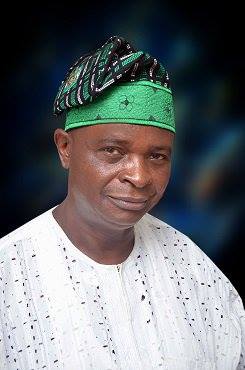

 The suspected staff involved in this racket include Chibuzor Udemba, Vincent aka Vamaco, contractors and consultants; Onanusi Olakitan, the cash officer and Musa Mudashiru, the chairman of the Gallery’s cooperative society.