THE Nigeria Governors Forum (NGF) has distanced itself from comments made by Yahaya Bello, Kogi State governor, condemning the use of COVID-19 vaccine.
Bello, who has consistently denied the existence of COVID-19 in his state, was seen addressing a crowd of supporters in a viral video last week, expressing doubts on the authenticity of the vaccine and alluding that there was no cure for Covid-19, HIV and many other diseases troubling mankind.
Citing a 1996 Pfizer vaccine in Kano that had an adverse effect on its recipients, the governor stressed that the vaccine was intended to introduce diseases that would kill Nigerians and the rest of the world.
“Vaccines are being produced in less than one year of COVID-19. There is no vaccine yet for HIV, malaria, cancer, headache and for several other diseases that are killing us. They want to use the (COVID-19) vaccines to introduce the disease that will kill you and us. God forbid,” he had said.
“We should draw our minds back to what happened in Kano during the Pfizer polio vaccines that crippled and killed our children. We have learned our lessons.
“If they say they are taking the vaccines in the public, allow them take their vaccines. Don’t say I said you should not take it, but if you want to take it, open your eyes before you take the vaccines.”
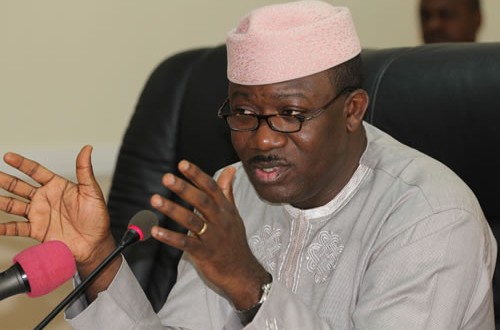
But, Kayode Fayemi, governor of Ekiti State, who also doubles as the chairman of the Nigeria Governors Forum (NGF), said in a communique issued after the end of a virtual meeting of the NGF held on Wednesday but made public on Thursday, that the Forum would only be guided by science and take decisions with public and professional trust.
“On the ill-fated pronouncement made by a member of the Forum regarding the Covid-19 vaccine in a national daily, the Forum totally and categorically dissociated itself from the statement, emphasising that the Forum will continue to be informed and guided by science and will ensure that every decision it takes retains public and professional trust and is not compromised by conflicts of interest,” he said.
Nigeria to receive COVID-19 in February
Fayemi also revealed that Nigeria and 12 other African countries had been selected to benefit from the first shipment of COVID-19 vaccines for developing countries by the end of February.
Fayemi said it was discussed during his meeting with Ngozi Okonjo-Iweala, board chair of the Global Alliance for Vaccines and Immunizations. He noted that Nigeria had expressed its readiness to benefit from the arrangement made by the World Health Organization (WHO) for vaccines procurement through COVAX.
“The NGF Chairman, Kayode Fayemi, briefed State governors on a meeting with Ngozi Okonjo-Iweala, chair of the Board of Gavi, the Global Alliance for Vaccines and Immunizations, on the rollout of the COVAX facility which is a global risk-sharing mechanism co-led by Gavi, the Coalition for Epidemic Preparedness Innovations and the World Health Organization to facilitate pooled procurement and the equitable distribution of COVID-19 vaccines across developing countries,” he said.
“Nigeria is among 12 countries in Africa that have indicated readiness of the 92 qualified countries for the facility and will by end of February 2021 receive its first shipment of vaccines.”
He added the vaccines would first be administered to frontline health workers, the aged and persons with underlying medical conditions.
“The National Primary Health Care Development Agency has indicated that vaccines will be administered in four phases, based on vaccine type and availability, initially for frontline health workers, then the aged (55yrs and above), persons with underlying medical conditions and other target groups.”
BARELY 24 hours in his presidency, Joe Biden, United States 46th president, has reversed the discriminatory immigration policies of Donald Trump, his predecessor, which banned immigrants from Nigeria and 11 other countries from entering the US.
Trump had, in a 2017 executive order, banned citizens from Nigeria, Chad, Eritrea, Sudan, Tanzania, Kyrgyzstan and Myanmar, among others, from entering the US. He had erroneously classified all the 12 countries, including Nigeria, as ‘Muslim countries.’
However, Biden, who was sworn in on Wednesday, in his first day as president, reversed the policies.
He signed 17 executive orders and two action plans before the end of his first day in office. On policy concerning the control of COVID-19 in the US, Biden made it mandatory for all Americans to wear face masks in all federal buildings and during inter-state travel.
In his statement, Biden reiterated his stance to reporters that, “It’s requiring, as I said all along, where I have authority, mandating masks be worn, social distancing be kept on federal property.”
He also reversed Trump’s policies on COVID-19 and climate change, ordering that the United States re-join the Paris Climate Change Agreement and the World Health Organisation (WHO), which Trump taunted.
He directed the Customs and Immigration to reverse actions which would cause family separation.
The president also halted the US- Mexico border wall construction project by Trump, targeting two other orders to provide succour for American citizens who lost their jobs as a result of the coronavirus.
In his quest to make every American citizens equal, Biden signed an order to address racial disparities and inequality within the US government and its operations.
He directed the federal bureaucracy to review every clause seeking to isolate some groups based on racial inclination, particularly in terms of resource allocations.
By this action, the 1776 Commission which the Trump administration signed into law last September was dissolved.
Another order signed by Biden was for the protection of citizens from sexual discrimination in the workplace and the protection of the LBGTQ Americans.
He promised to roll out up to 53 orders in the next 10 days of his stay in office.
Lawyers say there are no special or absolute rights for herders or any set of citizens in the Nigerian constitution, arguing that a state governor has the right to make decisions that will guarantee safety of lives and properties of the people.
Their reaction is sequel to the impasse between Ondo State governor and herders resulting from an order to vacate state forest reserves.
INIBEHE Effiong, a human rights lawyer, on Thursday, said that the nation’s constitution did not give any special rights and preference to herders found in different parts of the country.
The lawyer queried if the herders were tenants in the forests, stressing that the 1978 Land Use Act subjected the entire lands under the control of state governments. He noted that if any part was to be used, there should be a permission from the state authority.
Besides, he argued that Section 41 of the Constitution only guaranteed freedom of movement and not freedom to trespass on state’s property.
“My understanding is that the governor has not asked them to vacate the state. What he said was that they should leave the forest. I do not think that is the business of the federal government because all lands under the Land Use Act of 1978 are under the control of governors. Governors own lands in trust. The federal government has no control over land,” Effiong said, in an interview in Abuja.
“Given the criminal activities that have been established, which have also been linked to some of these herdsmen, the governor has the right constitutionally and legally to give that directive and he is not saying they should not do their business. In any event, herdsmen do not have any special rights under the constitution.
“It is also shameful that the federal government is sharing so much passion in the matter when they have thoroughly failed to address…Herdsmen have been given the impression that they own the government and the president is one of them. You can now see the sentiment that Garba Shehu expressed. I don’t think the governor has infringed on their rights in any way,” he added.
Akeredolu had, on Monday, blamed the persistent kidnappings and related criminal activities on individuals who hid in the forest reserves, ‘masquerading as herdsmen,’ to perpetrate atrocities
“As the chief law and security officer of the state, it is my constitutional obligation to do everything lawful to protect the lives and property of all residents of the state…,” he stated in his verified social media account.
Solomon Okedara, Human Rights Lawyer
The presidency, has, however, kicked against the quit notice issued to the herders.
Garba Shehu, presidential spokesperson, acknowledged efforts of the state government in the past four years towards fighting criminality in the state. But, he described, as the least expected, unilateral decision of Akeredolu to send packing ‘thousands of herders’ who had reportedly lived their all lives in the state.
He criticised the state government for linking the herdsmen to criminalities in the state, especially kidnapping and demanding of ransoms to free victims of abductions.
“…kidnapping, banditry and rustling are crimes, no matter the motive or who is involved. But to define crime from the nameplates, as a number of commentators have erroneously done, which group they belong to, the language they speak, their geographical location or their faith is atavistic and cruel,” Shehu stated.
But, in its reaction, the state government, through Donald Ojogo, its commissioner for information, criticised presidency’s position, describing it as emotionally attached to the herdsmen. He, however, explained that the directive was targeted at unregistered herdsmen residing in the forest, and the Fulani herders were not asked to vacate the state.
Meanwhile, elders in the Yoruba ethnic group threw their weight behind Akeredolu, chastising the presidency for meddling into the state’s affair.
In a statement issued by Tunde Aremu, national coordinator of Coalition of Oduduwa Elders, the elders said Buhari had failed to protect the citizens, despite being the custodian of the normal security architecture in the country.
Ayo Oluseye, a lawyer, supported the governor but noted he should have sought the support of the Ondo State Assembly beyond mere pronouncement.
“Just like states which legislated they wanted to be practising Sharia, they went through the state assembly and it became the state’s religion. It is the same way Ondo State could legislate against actions of the open grazing,” Oluseye said.
Solomon Okedara, another lawyer and co-founder of Digital Rights Lawyers Initiative (DRLI), cited Section 41 of the Constitution, saying that no right was absolute, especially as it concerned security breach or public safety.
He advised the state government to achieve the same objective without breaching the constitution by leveraging existing criminal law in the state dealing with the destruction of lives and property.
“When you look at it, the Ondo State government, which made that declaration, seeks the peace and goodwill of his people,” he said.
In his remarks, Joseph Dabo, a lawyer, shared a similar position on the governor being the chief security officer of the state. He said, within the power surrounding the appellation, Akeredolu had the right to make decisions that would ensure the safety of lives and properties of his people.
“You can imagine the impunity in our administration. Of course, the laws are clear. Once it’s a matter of security threat, we all know it is within rights of the governor to give such directives.”
Ayo Yinka, also a lawyer, alluded to other similar arguments that the action was within the rights of the governor. She claimed that some of the herders who came into the country were from as far as Niger, Chad and could not be considered Nigerians, as such might lack the legal right to reside in the countr. She further said that the state government would not jeopardise residents’ safety over herders.’
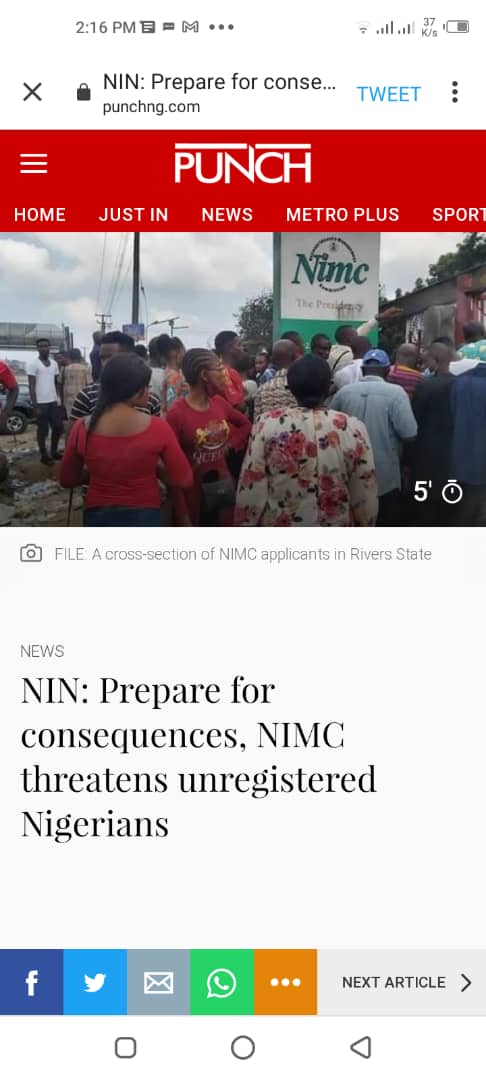
THE Punch newspaper on Tuesday, January 19, 2021 reported that the federal government of Nigeria told subscribers yet to do the Subscriber Identification Modules (SIMs) linkage with valid National Identity Numbers (NINs) to prepare or face the consequences.
The government had ordered telecommunications companies to deactivate the telephone lines of subscribers who failed to link their SIMs with valid NINs.
January 19 and February 9 were given as deadline for those with and without NINs respectively.
The Punch, in the report published on their website, but now deleted, said all SIMs not linked with valid NINs would be blocked following the January 19 deadline. (See the Google cached version of the report here).
The Claim
The National Identity Management Commission (NIMC) threatens Nigerians yet to do the NIN-SIM linkage to prepare for consequences as deadline comes to a close.
Screenshot of the report, which was later deleted by the newspaper.
The findings
Findings by the FactCheckHub show that the newspaper relied on information provided by a parody Twitter account of the NIMC in writing the news report.
The report read in part: The National Identity Management Commission says Nigerians who have not registered and obtained their National Identity Numbers should be ready to face the consequences.
NIMC stated this in a tweet on Tuesday.
“By order of the Federal Government, today is given as the last chance to register your NIMC or face the wrath of what comes next,” NIMC tweeted.
Kayode Adegoke, Head, Corporate Communications, NIMC told the FactCheckHub that the news in circulation is false.
“The news did not emanate from us,” Adegoke said via telephone conversation.
The NIMC has also disclaim the page on its authentic Twitter handle.
Ikechukwu Adinde, the Director of Public Affairs at the Nigerian Communications Commission also stated in a press release obtained by the FactCheckHub that the NIN-SIM linkage has been extended to February 9, 2021.
“At the end of a review meeting on 18th January 2021, the Technical Implementation Committee under the Ministerial Task Force has reported significant progress in the ongoing NIN-SIM linkage exercise.
“So far, a total of 47.8 million NINs have been collected by the mobile operators. At an average of three to four SIMs per subscriber, this means many millions will be linked up before the deadline in February 2021,” he said.
The verdict
The report which claimed that the National Identity Management Commission (NIMC) threatens Nigerians yet to do the SIM-NIN linkage is FALSE because the media house relied on a parody account as the basis for the report.
However, January 19, 2021 was the deadline given for telecommunication companies to deactivate subscribers who failed to link their SIMs with NIN, whereas February 9, 2021 is the deadline for subscribers without NINs.
During the COVID-19 lockdown that lasted for over five months in Nigeria, a lot of Nigerians particularly the vulnerable were unable to access health centres. The ICIR’s NIYI OYEDEJI reports on how people living with Sickle Cell Disease (SCD) battled for survival during the lockdown.
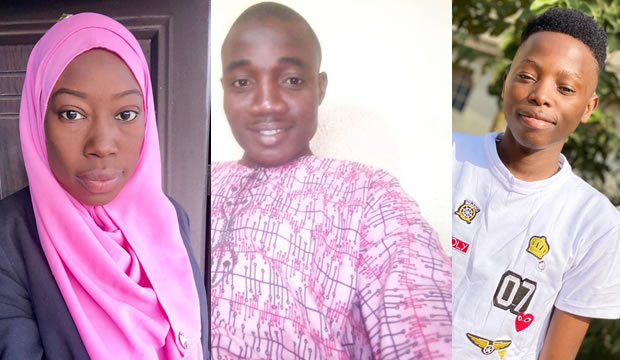
ON April 16, 2020, in the middle of the COVID-19 lockdown in Nigeria, pregnant Hauwah Abdulkareem, 34, a resident of Ilorin, who lives with Sickle Cell Disease (SCD) approached the University of Ilorin Teaching Hospital (UITH) while she was suffering from the vaso-occlusive crisis.
The mother of two said she was astonished when she got to the UITH and was told to go back home, although she held a referral form from a professional hematologist, she was told that her condition was not an emergency case
“The doctor, whose name I can’t recall told me the hospital was only attending to those showing symptoms of COVID-19 or emergency cases,” Abdulkareem recounted.
Hauwah Abdulkareem
The woman, who was in her second trimester, said the crisis was eating her up, and she was scared for her life and that of her yet to be born baby when she was turned back at the hospital.
“I was having severe bone pains and couldn’t even walk, yet the doctors at the UITH thought my condition wasn’t severe enough to guarantee me an admission.
“There and then, I started making calls before I was finally admitted into the hospital. Many thanks to the hematologist for her prompt intervention,” Abdulkareem told The ICIR.
While Abdulkareem was fortunate to be admitted into the hospital after her doctor’s plea, many others who are also living with sickle cell disease weren’t that fortunate. They were not only denied proper health care but were confined at home while struggling to survive during the lockdown.
Trapped at home in crisis
A sickle cell crisis, according to American Family Physician Journal, is pain that can begin suddenly and last several hours to several days. It happens when sickled red blood cells block small blood vessels that carry blood to the bones.
It might cause those with sickle cell to have pain in their back, knees, legs, arms, chest, or stomach. The pain can be throbbing, sharp, dull or stabbing. How often and how bad the pain gets varies a lot from person to person and from crisis to crisis.
Due to the lockdown that shut many Nigerians out of the hospital, many Nigerians, particularly those living with sickle cell disease were not only terribly affected but were trapped at home to deal with their crisis.
In late March, 2020, 24-year-old Breakthrough Adekunle, who was born with sickle cell disorder, was on a visit to her Aunt in Owerri when the Federal Government placed a ban on inter-state movement, he had one of his reoccurring crises – vaso-occlusive there.
“I fell sick during the pandemic and was unable to access the hospital. I wasn’t even in Lagos then, I was on a visit to my aunt in Owerri.”
And he couldn’t approach the hospital because he had never used any hospital in the state before.
Breakthrough Adekunle
Adekunle was therefore trapped at her aunt’s place in Owerri, while battling several forms of health crises ranging from stomach, back and chest pains.
“It was one of the most painful crises I have ever had; it would start at night and last for 2 days. I saw hell, my Aunt thought I was going to die,” Adekunle recounted the horrible crisis.
Like Adekunle, 12-year-old Shakirat Adebayo was another sickle cell patient who was trapped in crisis during the lockdown. The young girl, who lives with her parents in the suburb of Ketu, Lagos State was said to have experienced leg ulcer during the lockdown but was not given any medical attention when taken to the Gbagada General Hospital in Lagos.
Her mother, Afusat Adebayo, who spoke with this reporter, narrated how devastated she felt when they were turned back at the hospital.
“We were not even allowed into the hospital premises before we were turned back home.
“The person who addressed us together with other patients outside the gate said the hospital was only attending to those with coronavirus symptoms or emergency cases,” says Adebayo.
Left with self-medication
According to a Pan-African medical journal, 60 to 90 percent of Nigerians adopt self-medication, with the attitude prevalent among the undergraduate students of Nigerian higher institutions, where 67 percent of them is said to indulge in self-medication.
While many Nigerians indulge in self-medication because they can’t afford the hospital bill, some other people embrace self-medication because they can’t access the health centres.
For instance, some Nigerians living with sickle cell disease who spoke with this reporter said they had no choice but to adopt self-medication when they couldn’t access the health facilities during the lockdown.
Breakthrough Adekunle, who has been tagged a “sickler” by his peers and couldn’t proceed to higher institution after leaving secondary school in 2012 because of his incessant crises said he had no choice but to adopt self-medication during the lockdown.
“When I couldn’t access the hospital and was down with vaso-occlusive, I had to start using Diclofenac, which was not even effective.
“I was taken to a nearby pharmacy, where I was given Pentazocine and Promethazine,” Adekunle told The ICIR.
Afusat Adebayo, whose daughter was turned back at the Gbagada General Hospital, said she had no choice but to start treating her daughter’s leg ulcer with balm and hot water.
Sheriff Ajayi on his own part did not even bother to approach the hospital when he had his own crisis during the lockdown.
The 33-year-old teacher, who lives with Sickle Cell Disease in Ipaja Ayobo, Lagos, said his experience at Igando General Hospital when his niece was sick discouraged him from approaching the hospital.
Sheriff Ajayi
Ajayi, who said he was faced with COVID-19 symptoms, said he couldn’t even attempt to approach the hospital because of how the doctors abandoned his niece, another sickle cell patient who had a low PCV and needed blood during the lockdown.
“I had COVID-19 symptoms such as catarrh, cough, runny nose, loss of sense of smell and taste but couldn’t approach the hospital because of how my niece was abandoned a month earlier before my illness.
“I treated myself with steam inhalation, Black Seed and Vitamin C,” Ajayi told The ICIR
The death of Glad Odu
While most of those living with Sickle Cell, who spoke with this reporter, shared their horrible experiences during the lockdown, Glad Onyekachi Odu did not live to tell her story, she died during the lockdown.
Odu, who was a 20-year-old final year student of the Health Education department at the University of Benin died around 4 a.m on Monday, July 6, 2020.
Her sister, Victory Odu, who spoke with The ICIR, said her sister had battled several sickle cell crises before succumbing to Malaria on that fateful day.
She said her younger sister who could not access the University of Benin Teaching Hospital because of the lockdown took her last breath at a nearby private hospital.
“My sister only complained of Malaria on Sunday, July 5, and was taken to a private hospital where she died at the early hours of the following day.
Her parents were grief-stricken and unwilling to talk about the loss of their daughter.
The elder Odu said her sister was a sickle cell warrior who had battled vaso-occlusive and leg ulcers for several years before her death.
“My sister battled sickle cell crises throughout her life. She collected over 70 pints of blood during her lifetime and had a severe leg ulcer that kept her out of school for months which terribly affected her self-esteem. She even attempted suicide at a point.
She added that her parents were really supportive and spent heavily to keep her alive but still lost her in the end.
Burden of Sickle Cell Disease in Nigeria
Globally, Nigeria currently has the highest rate of sickle cell disease. The country is estimated to bear the burdens of 30 percent of the sickle cell patients in the world.
Isaac Odame, a professor and the director of the Global Sickle Cell Disease Network, a community of clinicians and scientists who study the disease globally disclosed to Africa Check that Nigeria bears 30 percent of the global sickle cell burden.
Odame added that one in every three babies born with sickle cell in the world is a Nigerian.
Similarly, a research on the global burden of sickle cell in children under the age of five revealed that as of 2010, Nigeria, India, and the Democratic Republic of Congo represented 57 percent of the annual number of newborns with sickle cell anaemia.
The research further stated that 91,000 babies in Nigeria were estimated to be born with sickle cell anaemia in 2010.
The researchers, however, submitted that Nigeria and the Democratic Republic of Congo will probably still be the countries most in need of policies for the prevention and management of sickle cell anaemia in 2050.
According to the National Health Institute (NHI), the childhood survival rate of children with sickle cell in Nigeria is 10 percent.
NGOs to the rescue
Although, Nigeria has the highest burden of sickle cell disease in the whole world, yet the country had no plan for this vulnerable group during the lockdown.
Unlike Nigeria, some other countries with significant populations of people with SCD are studying the implications of COVID-19 on these set of people and are developing measures to assist them.
In the US, with approximately 70,000 to 100,000 people living with sickle cell, associations of haematologists and other public health agencies have outlined protocols for treating and managing COVID-19 patients with sickle cell.
The US Centers for Disease Control and Prevention (CDC), also issued special precautionary advisories directly to patients living with chronic diseases such as sickle cell.
Similarly, in the United Kingdom, where there is another phase of lockdown due to the second wave of COVID-19, the government has created a list known as the Shielded Patient List for the vulnerable like people living with sickle cell in the country.
This set of people are regarded as clinically extremely vulnerable and are being advised by the government via letters on how to protect themselves from contracting coronavirus.
The government of Ghana through its ministry of health signed a Memorandum of Understanding with global medicines company Novartis to improve the diagnoses and accelerate treatment for people with Sickle Cell Disease (SCD).
With the MoU, Ghana became the first African country committed to offering the global standard care for people with SCD.
In contrast, Nigerians living with sickle cell disease after been abandoned by the government lived at the mercy of Non-Government Organisations (NGOs), during the lockdown.
Halimah Ganiyu, a resident of Ibadan, Oyo State, said the fear of catching COVID-19 made her stay indoors during the lockdown before the Sickle Cell Aid Foundation (SCAF) came to her aid.
“I was extra cautious and I still am because I know I might not survive it if I catch the virus. So the fear of having it made me extra cautious. During the lockdown, I didn’t step out.”
She said the organisation gave her foodstuff, drugs and face masks to protect herself during the lockdown.
“I was given 1kg rice, a couple of spaghetti and macaroni, spices, sugar, salt, face mask; all Dangote products and the typical everyday drugs that sickle cell patients use.”
Yejide Adewakun, the vice president admin and legal adviser for SCAF said the organisation is committed to the welfare of people living with sickle cell.
It, therefore, saw the pandemic as an avenue to further ensure that the welfare of that group of vulnerable people are well taken care of, hence the reason for the creation of SCAF Registry for Persons Living with Sickle Cell Disorder.
“Recognising this challenge and the potential impact of COVID-19 on persons with SCD in Nigeria, SCAF sought to register sickle cell warriors. Our aim was to ensure the welfare of those living with SCD during the pandemic and beyond.
“We also used this registry to identify persons and provide them with free essential medications and basic supplies during the imposed quarantine period across the country. In addition, we have partnered with a mental health organisation to provide access to platforms for emotional and mental health support for persons with SCD on the registry.”
Similarly, Damilola Ajibade, the founder of Damilola Sickle Cell Foundation, another foundation committed to the welfare of people living with sickle cell in Kwara State, said the foundation saw how helpless some people living with sickle cell were during the pandemic and decided to assemble a group of medical practitioners to help them out.
“During the lockdown, our doctors were able to administer drugs virtually for those who had slight crisis.”
Experts proffer solution
In order to achieve adequate welfare for those living with sickle cell disease in Nigeria, experts have urged the government to prioritise their health, consider them in future lockdowns and create an healthy environment for them to grow without being stigmatized.
Damilola Ajibade, founder of Damilola Sickle Cell Foundation said, “Apart from considering people living with sickle cell during any pandemic in the country, there is a need for the government to assist people living with sickle cell disease by creating more enabling environment for them to grow.”
She further opined for the need for the government to collaborate with non-governmental organisations in ensuring adequate medical care is given to them.
“By working with non-governmental organisations committed to the welfare of people living with sickle cell in Nigeria, the government can ensure adequate medical care is given to these set of people and as well, eradicate the stigmatisation against them.”
In his own words, Olaniyi Owoeye, a consultant haematologist with Synlab Nigeria, advocated the need for government to ensure the availability of medications to solve the painful crisis people living with sickle cell usually encounter.
He added that there is a need for government to always ease mobility for people living with the sickle cell during a pandemic like COVID-19
“The availability of medications for their painful crisis, as well as other complications, should not be affected by the lockdown. Also, they should be afforded ease of mobility during such periods.”
Government declines comment
The ICIR tried to speak with government officials, particularly at the federal level and in Lagos state for their comments on what the government is doing to prioritise the healthcare of those living with sickle cell disease, especially during a pandemic like COVID-19.
Olujimi Oyetomi, the director of information/head of media & public relations at the federal ministry of health, did not respond to the questions by this reporter, he instead said he is at the verge of leaving the ministry due to his health.
“Although, the website and social media of the ministry bear my details I am no more there due to my health.”
Oyetomi also declined the request of this reporter on releasing the contact of the minister or anyone to speak with at the ministry.
An email sent to the federal ministry of health also was neither acknowledged nor responded to.
Tunbosun Ogunbanwo, the director of public affairs at the Lagos State Ministry of Health also declined comment.
This report was facilitated by the Wole Soyinka Centre for Investigative Journalism (WSCIJ) under its Free to share project.
AS Nigeria grapples with rising infections caused by the second wave of the COVID-19 pandemic, a team of international public health researchers has revealed that lockdown and restrictions imposed on the country between March and May 2020 might have averted no fewer than 5.8 million infections.
The team of researchers drawn from the United States, South Africa and Nigeria said their findings “support the use of restricted mobility as a measure for infection control in Nigeria.”
They, however, pointed out that, even during the lockdown and restrictions, noticeable spikes in people’s movement occurred on Saturdays and Sundays which could be attributed to social events such as parties (Ówàmbē in a local dialect) and religious activities.
The research findings, which are based on information from confirmed COVID-19 cases provided by the Nigeria Centre for Disease Control (NCDC) from February 27 to July 21 2020 and Nigeria-specific mobility data from Google in same period, was published by the highly-rated public health journal JAMA Network Open.
The researchers are drawn from institutions in the United States (i.e. Parexel International, Harvard University and Holly Hill Hospital), South Africa (i.e. Sefako Makgatho Health Sciences University) and Nigeria (Benue State University as well as Universities of Ibadan, Lagos and Calabar).
The researchers explained that their work was motivated by the need to better understand how the lockdown affected peoples’ movement and community spread of COVID-19. This information could inform future public health responses to subsequent waves of COVID-19, they said.
“.. our study goals were to measure the association of government-mandated closures and restrictions with aggregate mobility, to evaluate associations between aggregate mobility and number of individuals with laboratory-confirmed SARS-COV-2 infections and to estimate the number of SARS COV-2 infections that may have been averted.,” they noted.
They observed that the World Health Organization (WHO) director-general, Tedros Adhanom Ghebreyesus, had, on January 30, 2020 declared the COVID-19 outbreak a public health emergency of international concern, asking all countries to prepare for containment, active surveillance, early detection, isolation, case management and contact tracing.
“Most countries, including Nigeria (Africa’s largest economy and the most populous country), responded accordingly, and part of the Nigerian government response included socioeconomic and public health interventions to reduce impact of the pandemic.
“Socioeconomic interventions included providing cash transfers, lines of credit and food assistance to poor and high-risk households, while public health interventions included government-mandated closures and restrictions on schools, social gatherings and all forms of transportation (locally referred to as lockdown).”
The closures and restrictions were initiated on March 30, 2020, and partially eased on May 4, 2020. The researchers used sophisticated statistical techniques to analyze NCDC data on daily infection counts, anonymised Google mobility data from Nigeria (covering about 40 million individuals who activated location historyightn their smartphone google accounts), and publicly available information on the lockdown (e.g. dates for initiating and partially easing the lockdown).
The cross-sectional study found that government-mandated closures and restrictions in Nigeria owing to COVID-19 was associated with significantly reduced aggregate mobility everywhere (except in residential areas) and might have averted up to 5.8 million corona virus infections. Additionally, they found that community spread of COVID-19 in Nigeria might have been faster in residential areas , transit stations (e.g. motor parks) and workplaces (including likely venues of social events).
While stressing that “our findings support the use of restricted mobility as a measure of infection control in Nigeria should there be additional COVID-19 waves in the future,” the researchers pointed out that “restrictions on movement are unsustainable in the long term, and that “future closure and restrictions, if warranted, need to be more effective. Suggested areas of improvement include tougher restrictions n movement and more robust contact tracing in residential areas, transit hubs and workplaces, greater testing capacity and more political support for testing. ”
Others were greater access to COVID-19 data for policy and process evaluation to identify opportunities for efficiency gains; more personal responsibility above and beyond the public health campaign dubbed the 3 Ws (iwashing hands or using hand sanitiser regularly, wearing a cloth mask over the nose and mouth, and waiting 6 feet apart or social distancing).”
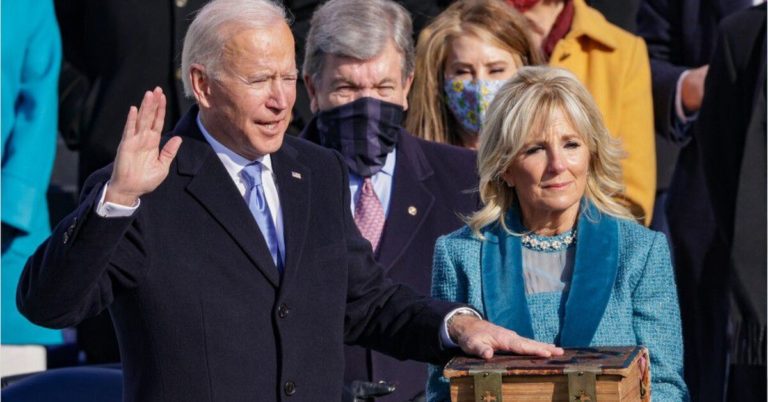
ON Wednesday, Joe Biden was officially sworn in as the 46th President of the United States of America, USA, succeeding Donald Trump who lost the 2020 presidential elections described as one of the “most divisive ” in the nation’s political history.
Biden was sworn into office at an inauguration ceremony in Washington DC, attended by leaders in the US as John Roberts, chief justice of the United States, administered the oath of office on him.
High profile guests who graced the event include former president Barack and Michelle Obama, George and Laura Bush, and Bill and Hillary Clinton.
There was also an unprecedented deployment of military and law enforcement personnel who stood guard at the Capitol to forestall any form of civil unrest.
In his inaugural address, Biden who is the nation’s second Catholic president after Bill Clinton made a call for the country to unite in the face of its multiple crises and resort to peaceful co-existence.
“We have learned again that democracy is precious, democracy is fragile and at this hour democracy has prevailed,” he said.
The transition process after the elections has been chaotic leading to the invasion of the Capitol by supporters of former US President Trump as Biden says the country must confront the rise of white supremacy, and reject manufactured facts.
“Politics doesn’t have to be a raging fire, destroying everything in its path. Every disagreement doesn’t have to be a cause for total war. And we must reject the culture in which facts themselves are manipulated and even manufactured.
“To overcome these challenges, to restore the soul and secure the future of America, requires so much more than words and requires the most elusive of all things in a democracy: unity,” he said.
“Few people in our nation’s history have been more challenged or found a time more challenging or difficult than the time we’re in now,” he said. Kamala Harris was also sworn in as the 49th US vice-president , becoming the first female and first black American to occupy the position.
Trump had flown to Florida after attending a small farewell party organised on his behalf as he exited the White House and did not attend Biden’s inauguration, breaking from the tradition of every departing president in United States history.
Biden defeated Trump in the November 3, 2020, US presidential elections with 81,283,098 votes after flipping some Republican strongholds, leaving the ex-president with 74,222,958 votes.
On December 14, 2020, the electoral college voted just as the states’ ballot went, handing Biden 306 votes while Trump got 232 votes.
Efforts by Trump’s camp to overturn the election outcome in the courts was unsuccessful due to lack of material evidence.
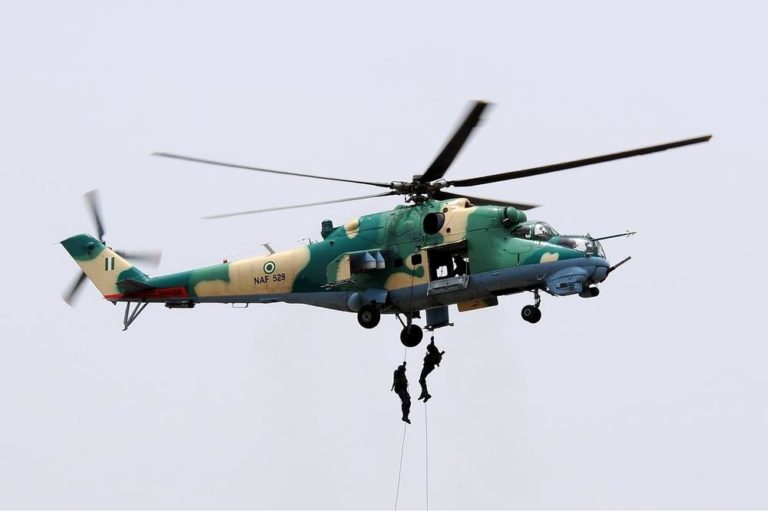
THE Nigerian Air Force has apologised for sharing old pictures as a recent victory in its ongoing fight against terror in the Northeastern part of the country.
On Monday, the Airforce came under criticism after it shared on its official Twitter page old images of its ‘onslaught against Boko Haram terrorists’ in Marte, Borno State.
(2/2) @CAS_AMSadique, Air Marshal Sadique Abubakar, while commending the gallantry & professionalism of the ATF, urged them to sustain the onslaught on the criminals, in synergy with sister Services & other security agencies, in order to rid the Nation of all terrorist elements pic.twitter.com/9tz5LMup3S
But in a statement on Wednesday, the Airforce admitted that it was a mistake by the Operation Lafiya Dole (OPLD) Theatre.
While expressing it regrets over the action, it noted that the error does not underscore the ongoing successes being achieved by its men against terror in the region.
“Our attention has been drawn to the inclusion of some erroneous pictures amongst those posted earlier on the terrorists’ gun trucks & other vehicles destroyed by the Air Task Force of Operation LAFIYA DOLE (ATF OPLD) at Marte on 15/16 January 2021,” it said.
“On further investigation, it has been discovered that the pictures sent from the OPLD Theatre inadvertently included a few pictures from other encounters with terrorist elements. The error is highly regretted.
“The Nigerian Air Force (NAF) wishes to state that the inclusion of the pictures was not deliberate & does not take anything away from the huge success of the air operation that dealt a decisive blow on the terrorists as shown in the widely circulated video.
“Most of the pictures earlier circulated were indeed from the recent successful airstrikes at Marte. The few erroneous pictures have now been expunged & all pictures here are those from the “Battle of Marte”. Thank you for your understanding and continued support for the NAF.”
GLOBACOM Limited (GLO) and Airtel Networks Limited are yet to commence SIM replacement processes for their subscribers despite an order lifting suspension on SIM replacement by the Nigerian Communication Commission (NCC).
The federal government, through Isa Ali Pantami, minister of communication and digital economy, in a statement on December 31st, 2020 lifted the temporary suspension on SIM replacement in Nigeria, but the sim operators have refused to comply with the order, thereby creating unnecessary inconveniences for their subscribers.
Flora Bossey, a victim of Airtel SIM replacement refusal, narrated her experience when speaking to our reporter.
“It all started on the first Sunday of January when I was about to go for a training in Ibadan. I was robbed of my phone and some other valuable items at gunpoint,” she said.
“As I went to retrieve my line at one of the Airtel offices in Ibadan, I stood for hours but was not attended to. When I inquired, one of the staff members replied that they had been given orders not to carry out any SIM card retrieval until further notice.
“My line is linked with my National Identification Number (NIN) already so I wonder why I have to go through so much stress,” Flora added.
Further findings by The ICIR revealed that, indeed, Airtel outlets are yet to commence retrieval of SIM for customers.
On Friday, January 12, The ICIR reporter visited an Airtel registration outlet at Kubwa, Abuja, requesting a SIM retrieval, but the agent insisted that the telecoms firm was not working yet.
“We are not working on anything till further notice,” the agent told the reporter.
The same morning, The ICIR reporter also visited a GLO outlet at Wuse 2, Abuja, requesting a SIM retrieval.
Glo at Wuse 2
The GLO agent also insisted that the telecoms company was currently not retrieving SIM cards and asked the reporter to come back in two weeks’ time.
While waiting around the GLO outlet, a subscriber walked in the office to make a complaint about a lost SIM card.
“I came here last week to retrieve my SIM but GLO refused to attend to me,” the lady, later identified as Glory, said.
“After my phone was stolen, the thieves got access to my account and purchased recharge cards worth 15,000 Naira from my bank account through my GLO SIM.
“After reporting to the police, I was directed to a GLO office branch where the manager told me there was no way the company could help in getting access to the number.
“The manager said GLO could not be of help and so I left the office after waiting for some time. Since then, I have been returning there for my SIM but they kept postponing it, saying that they are not attending to customers for now,” Glory lamented.
The ICIR had, on January 13, reached out to Erhumu Bayagbon, spokesperson of Airtel, to get answers as to why the telecoms company had refused to comply with the NCC directive on SIM replacement. After five days of several calls and mails, Bayagbon, on Monday, January 18, said the company had no response.
“We do not have any response for now,” Bayagbon told the reporter in a telephone conversation.
Spokesperson of GLO could not be reached as several calls placed to his line did not connect and message sent to his line was not responded to.
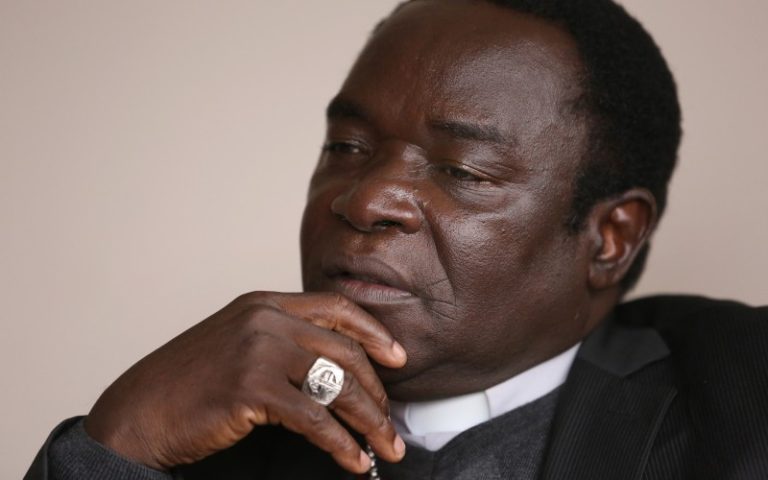
A coalition of civil society organisations (CSOs) and human rights activists has asked President Muhammadu Buhari to sanction those issuing threats to Matthew Hassan Kukah, Catholic bishop of Sokoto, over his Christmas message.
“The campaign against Bishop Kukah confirms the fear that the regime is reluctant to conform to basic constitutional standards. The regime can end these fears by taking immediate action to bring those threatening Bishop Kukah to justice,” said the coalition, in a joint statement obtained by The ICIR on Wednesday.
The coalition noted that as long as the current administration failed to do so, Nigerians and the international community must hold it responsible for any harm that could befall Kukah or any member of Nigeria’s civil community.
Kukah recently came under sharp criticism and threats following his state-of-the-nation Christmas message where he condemned how Buhari was handling the affairs of the country.
He had accused the president of turning nepotism into a state policy, noting that there could have been a coup if a non-northern Muslim president had done a fraction of what the president was doing.
He had also said that the president was promoting and institutionalising a northern hegemony that had reduced others in public life to second-class status.
The handlers of the president, sympathisers of the Buhari administration, socio-political bodies such as the Arewa Youth Consultative Forum (AYCF) and religious bodies like Muslim Rights Concern (MURIC) have all accused Kukah of instigating a forceful change of democratically elected government and hate against Islam.
In a sermon on Friday, 15 January, 2020, Abubakar Malami, an Islamic cleric based in Sokoto, threatened to kill the cleric by ensuring that “he will be crucified” if he challenges government, warning that they “will not listen to anybody when we are crucifying him.”
On Tuesday, 12 January, an unknown group known as Muslim Solidarity Forum (MSF) issued an ultimatum requiring him to “quickly and quietly leave” his seat in Sokoto, north-west Nigeria.
In response to the statement by the MSF, presidential spokesman, Garba Shehu, on 13 January, issued a statement in which he vehemently condemned the group for their threat. He also accused Bishop Kukah deliberately of ‘anti-Islamic rhetoric.’
However, the coalition noted in the statement that Buhari’s administration was moving towards silencing the clergyman through targeted intimidation, based on invented, sectarian distortion of his 2020 Christmas Day message.
“This is designed deliberately to incite deadly physical harm against him in a region characterised by indiscriminate violence,” the coalition said.
“In response to the violent threats against Bishop Kukah, the regime has chosen to take no steps but have, to the contrary, issued a statement that implicitly lends backing to those who have threatened on sectarian grounds to liquidate Bishop Kukah or run him out of his seat in Sokoto.
“The conduct of the regime and its spokespersons and supporters is in keeping with a pattern of attacks, intimidation and persecution of voices who have sought to speak truth to the regime in the exercise of civic and constitutional rights and duties.”
The group noted that the text of Kukah’s message contained no reference to Muslims, adding that Nigeria’s Constitution guarantees a right to freedom of movement within the country to all citizens. It stated that Kukah was an unarmed full-blooded citizen of Nigeria.
Citing the recent arrest of arrest of Omoyele Sowore, publisher of Sahara Reporters and four others during a crossover protest in Abuja, the coalition stressed that “Section 15 of the 1999 Constitution of the Federal Republic of Nigeria guarantees the Federal Republic of Nigeria as a state based on the principles of democracy and social justice and confers sovereignty upon the people of Nigeria from whom government through the Constitution derives all its power and authority.
“Section 17(2)(c) of Nigeria’s 1999 Constitution requires that ‘governmental actions shall be humane.’ Bishop Kukah’s Christmas message invited the government to take this charge seriously. Rather than do that, the regime has launched a campaign of dog whistle against him in a pattern consistent with the escalating efforts to shut down Nigeria’s civic space.
“The Nigerian state must be built on the ideals of freedom, equality and justice that can secure every Nigerian equal significance in the affairs of the country,” it added.
On New Year’s Day, officers of Nigeria’s security services severely assaulted and injured peaceful citizens, including Omoyele Sowore, who were exercising their right to symbolic protest as their act of cross over into the new year. They were released after 12 days in detention.
Some of the CSOs which signed the statement included: House of Justice, Global Rights, TAP Nitiative, SESOR, Open Bar Initiative (OBI), CedarSeed Foundation, We The People, among others.
Individuals who joined in signing the statement included: Others Chidi Anselm Odinkalu, Abiodun Baiyewu, Gloria Mabeiam Ballason, Mike Utasha, Silas Joseph Onu, Steven Kefas, among others.