THE Socio-Economic Rights and Accountability Project (SERAP) has petitioned the United Nations Working Group on Arbitrary Detention over the arrest and continued detention of Omoyele Sowore, former presidential candidate, and four others.
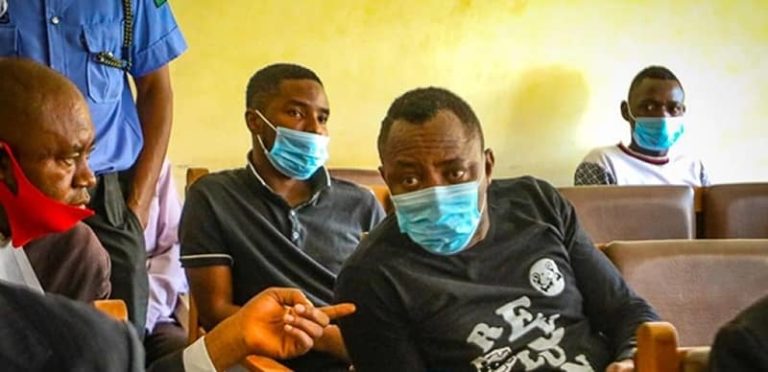
Sowore, together with Juwon Sanyaolu, Peter Williams, Emmanuel Bulus and Damilare Adenola, was arrested following a protest in the Federal Capital Territory (FCT), Abuja, on the eve of New Year.
They were arraigned before Taye Maibel at the Magistrate Court in Wuse Zone 2, Abuja, on Monday by the police after spending four nights in detention on three counts of unlawful assembly, criminal conspiracy and inciting public disturbance.
J. C. Idachaba, who led the prosecuting team, told the court that they were arrested for disturbing the peace of the nation.
The court, however, ordered them to be remanded in Kuje Correctional Centre pending the consideration of their bail applications on Tuesday (today). They were later brought to Magistrates’ Court, Wuse, in handcuffs on Tuesday morning
SERAP had, in a statement on Tuesday by its deputy director, Kolawole Oluwadare, who said the petition was sent to the UN body on Monday, January 4, noted that the arrest of Sowore and “four other activists constitutes an arbitrary deprivation of their liberty because it does not have any legal justification.”
It noted that the detention also did not meet minimum international standards of due process and therefore called for their immediate release.
“The arrest, continued detention and torture and ill-treatment of Mr Sowore and four other activists solely for peacefully exercising their human rights to freedom of expression and peaceful assembly are flagrant violations of the Nigerian Constitution, 1999 (as amended) and international human rights law. They are now facing bogus charges simply for exercising their human rights.
“We urge the Working Group to request the Nigerian government to investigate and hold accountable all police officers and security agents suspected to be responsible for the unlawful arrest, continued detention, and torture and other ill-treatment of Mr Sowore and four other activists.”
SERAP also urged the UN to compel the Nigerian government to award Sowore and four other activists compensation “for the violations they suffered as a result of their unlawful arrest, arbitrary detention, torture, and other ill-treatment.”
This is not the first time Sowore would be arrested for leading a protest.
In 2019, he was illegally abducted and detained by operatives of the State Security Service (SSS) for planning to stage the RevolutionNow protest which called for an end to bad governance in Nigeria.
After much pressure from within and from some members of the international community, Muhammadu Buhari-led federal government released him from illegal detention.
He is currently being arraigned in court on ridiculous charges bordering on money laundering, treasonable felony and cyberstalking Buhari.
THE race of who becomes the next Vice-Chancellor of the 9-year old Federal University Oye Ekiti (FUOYE), is getting uglier by the day as various labour unions within and without the institution have continued to kick against the shoddy manner the selection process is being handled by both Kayode Soremekun, the institution’s outgoing VC and Lawan Muhammadu Yahuza, Chairman FUOYE Governing Council.
More recent is the call by the Integrity and Transparent Watch (ITW), a civil society organisation in Ekiti state.
The ITW in a petition written by Adegboyega Richard, its Coordinator, to the institution’s Council Chairman on the 21 December, 2020, wants Abayomi Sunday Fasina, the current Deputy Vice-Chancellor, who The ICIR learnt has been pegged to likely take over from the outgoing VC, be excluded from the race for breaching the nation’s civil service rules.
Fasina is being alleged to have collected double salaries from both FUOYE and Ekiti State University despite the expiration of his sabbatical leave between October 2016 and February 2017.
“The above-mentioned action of Prof. Fasina is a gross violation of Civil service rules of the Federal Republic of Nigeria,” ITW said, citing the case Aminu Ahmed Rufal, a former professor of the Department of Human Anatomy, College of Medical Sciences, Abubakar Tafawa Balewa University, Bauchi, that got dismissed by the University in 2018 because of the same infraction like Fasina.
Fasina had earlier toldThe ICIR in November, 2020 that all the allegations against him had been investigated and that he had been cleared from them.
“Those allegations have been investigated a long time ago and I have been cleared. It has been cleared,” said Fasina.
He added that the management of FUOYE has also responded to the allegations and confirmed the allegations are untrue.
However, when The ICIR tried to reach him on Sunday night for further comments, he indicated from his mobile phone that he was busy.
Other candidates the group wants to be excluded are Abiodun Adimula and Olayide Lawal, a professor of Industrial Chemistry, who currently serves as the Dean of Faculty of Science for their various misconducts.
ITW wants Adimula to be excluded from the race because he held a position as the Director of Information and Communication Technology while he was on sabbatical leave from the University of Ilorin between 2016-2017 to the Physics department in FUOYE to which the ITW said is a violation of civil service rules.
He was also accused of violating academics ethics when he led the accreditation team of the National Universities Commission (NUC) to the accredit FUOYE Physics department during the period his sabbatical leave elapsed.
“It is forbidden for someone who is on full time appointment in one organization to take a position meant for a full time staff in another organization (e.g. Director, e.t.c.). It was equally learnt that Prof. Adimula accepted and led National Universities Commission (NUC) accreditation team to the Department of Physics, Federal University Oye-Ekiti in the year 2017 to do accreditation of the Department. This implies that Prof Adimula came to accredit himself being a staff of this Department at the time of the accreditation exercise. The action of Prof Adimula is a gross violation of academics ethics and act of conflict of interest which is a serious offence. It was the height of dishonesty and academic fraud anybody could have committed and by this, he is not fit to become a Vice-Chancellor of University.”
In his response, Adimula told The ICIR that the Nigerian University laws permit that a visiting lecturer can take up any role from the institution he or she is visiting.
“The University laws permit it. It permits that a visiting lecturer can take up roles,” he said.
On whether he led an accreditation panel to FUOYE for accreditation, he said he had already left FUOYE in September 2017 before he was called upon in December same year for the assignment.
Olayide Lawal on the other hand is accused of being indicted of sexual harassment during his employment as a lecturer at Olabisi Onabanjo University, Ago-Iwoye, Ogun State before coming to FUOYE.
The group accused FUOYE management under the leadership the outgoing VC of providing a cover-up for him.
“Our investigation on this matter revealed that Prof. Lawal was investigated at the Olabisi Onabanjo University and when he heard that he will be dismissed for the offence, he ran to the outgoing Vice-Chancellor of FUOYE, Prof. Kayode Soremekun for assistance. We were told that after his discussion with Prof. Kayode Soremekun, he quickly withdrew his service from the Olabisi Onabanjo University and move to the Federal University Oye-Ekiti so that he can escape judgment. Sir, it is unthinkable that Prof. Olayide Lawal is vying to occupy the position of a Vice-Chancellor of a University with his questionable background,” it said.
Olajide could not be reached for comments as at the time of filing this report as his phone has remained switched off since this reporter tried to contact him through calls and text messages.
Council Chairman avoids questions
Every attempt to reach out to Yahuza, Chairman FUOYE Governing Council, were unsuccessful. He said he was in a meeting and asked this reporter to call him back in an hour time when this reporter called him around 11:41 am on Sunday. He refused to pick up subsequent calls put across to his phone around 1:55 pm.
He also did not reply to a text message sent to his phone around 2:23 pm.
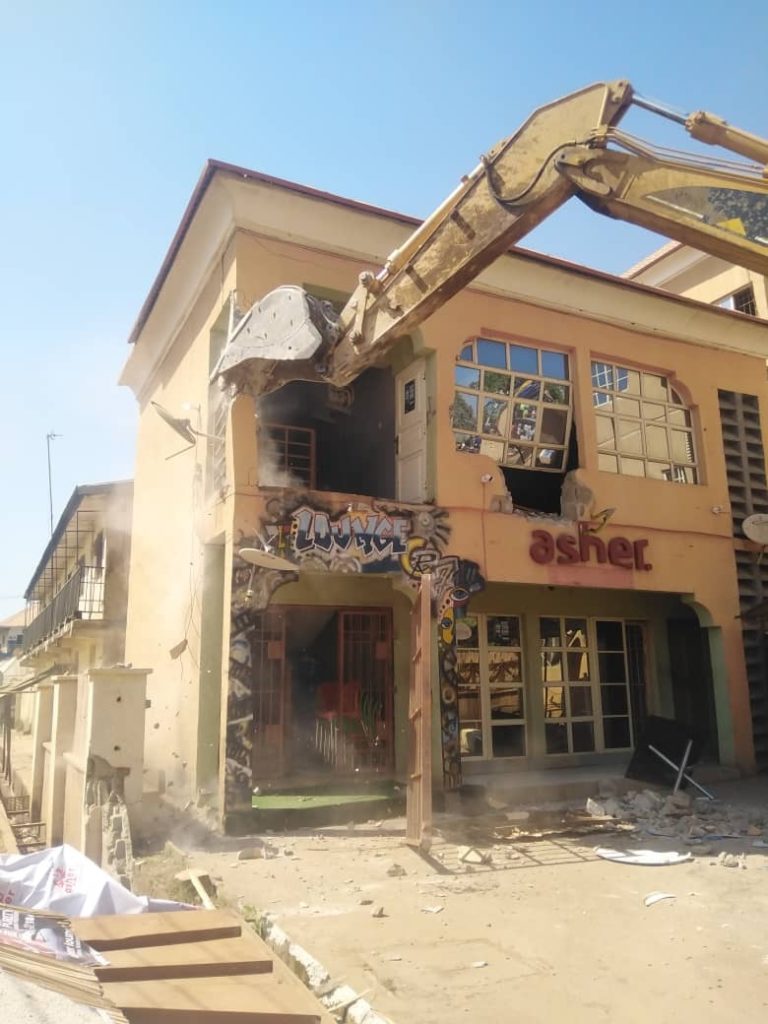
On Thursday, the 31st December, 2020, while Nigerians were waiting in anticipation for the New Year, the Kaduna State Urban Planning and Development Authority (KASUPDA), a body charged with the responsibility of the planning and development of all urban areas within Kaduna State, announced on its social media platforms that it had demolished a proposed venue for a sex party in Barnawa, Kaduna South.
The state government had gotten wind of the controversial party due to its wide publicity on the social media and had directed on the state police command to wade the matter by arresting the organizer of the event.
“When we got to know of this development, the government was disturbed, so the governor, Mallam Nasir El-Rufai, informed the police,” Abdullah Yunus, special assistant to Governor El-Rufai on media, had told newsmen.
Asher Kings and Queens Restaurant
The Asher Kings and Queens Restaurant is 34 sitting capacity, located at 75, Kachia Road, Sabon Tasha, Kaduna State. The ICIR gathered that it was registered under the Companies and Allied Matters Act 1990 for food production and processing services on 5th December, 2016, with the Corporate Affairs Commission. The registration number is BN2463851.
It is a one-storey building structure, with a VIP Lounge section, where premium customers relax to watch football league games in a cozy environment, with all the comfort; air conditioners and light music.
Whilst the ground floor is where the kitchen and serving spot is, also with chairs and tables for customers to sit and eat their food as required.
We hire/rent the VIP section for light events, of not more than 26 customers.
Controversy
But controversy has continued to trail the demolition as Aisha Mercy Yakubu, the owner of the restaurant in an issued statement on Saturday said the VIP Lounge of the restaurant was hired by one of her customers, who is into fashion on the 27 December, 2020, to host a reunion party for customers.
“On the 27th December, 2020, a customer hired the VIP Lounge for a 15-man reunion/Clothing line promo, to appreciate his customers for their good patronage of his brands,” parts of her statement read.
She added that “Before the event proper commenced, a friend of mine and noticed an unusual movement around the main gate to the restaurant as it was half opened to avoid a crowded environment. We approached the main gate and on getting there I saw two truck load of heavily armed officers of the Nigeria Police Force (NPF).
“I asked the team leader what was going on but he ignored my question and said he will explain to me when we get to the Police Station, Sabon Tasha Division.”
Aisha noted that it was when she got the police station that she got to know that the venue had been advertised on social media for a proposed sex party. She said the police detained her and her staff for more than 24-hours despite denying the knowledge of the event.
According to her, the next day, the police also arrested those who had initially hired the place for a reunion and were only released after they paid a whopping sum of 100,000 naira for their bail.
“When we arrived the Police station, my customer, who accompanied me to the station, enquired what the matter was and the Police showed us a poster on a GSM phone belonging to one of the officers by name Inspector Felix. It was a poster of an event titled; KADUNA SEX PARTY, which the Police claimed the venue for the supposed “sex party” was scheduled to hold at my restaurant, even though with no address of where it will take place on the poster.
“I denied knowledge of that event as there was nothing of that sort taking place at the restaurant and I wouldn’t stoop so low to entertain such illicit activity at my place, but the Police refused to believe me and had my friend and two of my staff detained for one night, one day until the customer that had earlier hired the place for usage on that fateful day was also arrested the next day.
‘They were released after paying a “bail fee” of #100,000 to Inspector Felix and one other lady Officer, fair in complexion.
“I noticed how incompetent the NPF were, I suggested to them to call the number on the supposed “Kaduna Sex Party” poster, which they immediately put a call through and a name came out using the True Caller App as MARVELLOUS AKPAN.”
She was asked by the police to a sum of N20,000 which she did to enable them to track the so called Akpan. The police arrested Akpan and in his confessionary statement, he denied knowing where the restaurant was located and the owner.
“The Police asked me to pay a fee of #20,000 for them to do their job of tracking the user of the phone number, which I immediately paid them so that they will swing into action.
“Marvellous Akpan was arrested the next. He was interrogated and he obliged to owning the phone number on the poster and printing of the poster which was posted on Social Media, assisted by a friend of his named Noah and one other guy. On further interrogation, Mr Marvellous Akpan confessed to the Police that he doesn’t know me and has never being to my restaurant nor have any knowledge of its address. Mr Chimeze,who had hired the place was released, summarily, after the successful arrest of Mr Akpan.
She thought the matter has ended with the arrest of Akpan but was surprised on the New Year eve when she saw a payloader accompanied by security operatives to demolish the building hosting the restaurant without any prior notification.
“The next day, 31st December, while at the other Branch of my restaurant, at Court Road, Sabon Tasha, Kaduna, a friend of mine called me asked me to go to the main Restaurant and see what was going on. I immediately went and saw a combined team of Policemen, Soldiers, KASTLEA and Vigilante groups guarded a Payloader to demolished my restaurant.
“No prior notice was served to me before the demolition, there was no form of communication between I and the Kaduna State Property Development Agency (KASUPDA) who came to demolish the building structure. Even when they arrived at the location, the main entrance to the main Restaurant and the restaurant was under lock and key. There was no any form of communication to me!
“I watched them pulled down the building without allowing me remove any item before the demolition. As a result of the trauma, I lost my one month old pregnancy.”
Aisha has vowed to take legal action against the statement stating she lost her valuables ranging from:
Cooking utensils;
Furniture;
Electric appliances;
Chillers;
Deep freezers;
Bemarrings outdoor catering utensils
Cash, and other valuables that all worth over #32 million, as the place was abruptly vandalised after the demolition.
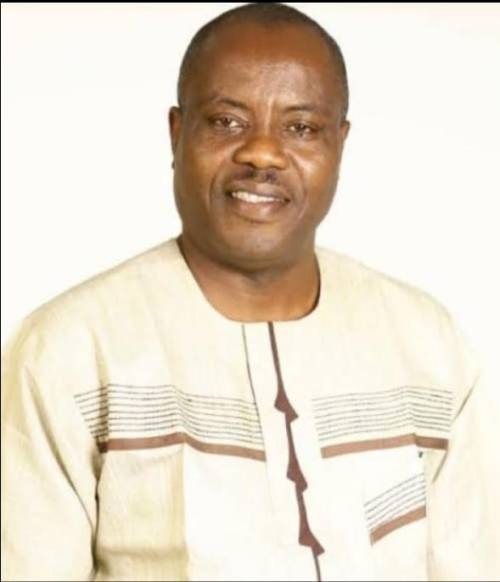
THE Ogun state government has suspended Abiodun Abudu-Balogun, commissioner for environment, accused of sexual harassment by Barakat Mayowa Melojuekun, a 16-year old secondary school in the state.
Tokunbo Talabi, secretary to the state government, announced this in an issued statement on Sunday.
He said the decision to suspend the commissioner from office was to enable him to cooperate fully with the ongoing investigation being carried out by the Nigerian Police.
“Whilst taking cognisance of the principle of a suspect being presumed innocent until proven guilty and the public statement issued by Hon. Abudu-Balogun denying the allegation, as a government with zero tolerance for gender-based violence and indeed any criminality, the suspension is a further demonstration of the commitment of Prince Dapo Abiodun Administration to fairness, equity, justice and the rule of law, no matter who is involved,” parts of the statement had read.
While directing the suspended commissioner to hand over to the permanent secretary, ministry of environment, the statement assured the public that the state government would do everything to ensure that justice was served in this case.
The ICIR had reported how Barakat accused the commissioner of an attempt to rape her in a confessionary statement to security operatives.
She said the incident occurred on Thursday, December 31, 2020, at the residence of the commissioner at Ita Otu, Ogun Waterside Local Government Area of the state.
Malojuekun said she had met with Abiodun, who voluntarily gave her a ride on December 29, 2020 while she was going to register for her National Identity Number. She noted that the commissioner tried to ask for her number as soon as he dropped her from the car but she told him to get it from his uncle who worked at a nearby motor park.
She further narrated that one Lasisi came to lure her to the commissioner’s house on the pretence that her service as a computer literate was needed at a place which was unknown to her.
She added that on getting to the commissioner’s house, she was again lured into his bedroom by another of his aides after which the commissioner came in and bolted the door. The commissioner allegedly sat close to her on the bed and was caressing her body, while offering her money.
She said while she was trying to resist him the commissioner was reciting incantations and was trying to lay his hand on her.
She was only allowed to go out after repeated screams by her.
Meanwhile, Abdul-Balogun has denied the allegation, describing it as a game of local politics by some people who are trying tarnish his image because of his ‘visions’.
“You know we are politicians and you know the game of politics, especially local politics, as people would want to destroy you once you have the visions. This is happening from my homestead. I have been in Ijebu for the past one week for the festivity. So, I am just getting back. So, it is all about some people; so, I know the game. But I can tell you that there is more to this than what we are seeing. It is just lies, blackmail and falsehood,” he said.
“Look at the video and see that somebody was asking leading questions from the girl in question. They are not her original words.”
Abimbola Oyeyemi, spokesperson of the Ogun state police command told The ICIR that Kenneth Ebrimson, state commissioner of police, has directed investigation into the allegation.
Space Research and Development Agency, NASRDA, had defended the recruitment of candidates with religion degrees as full-time staff.
NARSDA image-maker, Felix Ale who spoke to The ICIR, said employing young Nigerians at the space centre irrespective of their educational discipline is not a problem if it addresses the issues of unemployment in the country.
He made this comment against the background of the comment made recently by Senator Ajayi Boroffice, the deputy Senate majority leader.
Boroface made a shocking revelation at its last annual national conference on space science and technology organised by the Space Research and Development Agency, NASRDA on June 2020.
At the event held in Abuja, Senator Boroffice said the space agency had engaged in actions, he described as “misemployment” by employing graduates of religious studies and other unrelated courses as support staff constituting 80 per cent of its workforce.
“How can you be taking people with religious studies in the space centre? It is misemployment when the support staff constitute about 80 per cent of the workforce. It is wrong.
“I also learnt that the Independent and Corrupt Practices Commission, ICPC is around, scrutinising employment documents, I heard employment at the space centre is earned for between N2 million to N2.5 million. It is sad,” he said.
Borroffice who was the pioneer Director-General of NASRDA said the agency needs scientists to make up 70 per cent of the workforce for efficiency.
Ogbonnaya Onu, the Minister of Science and Technology who was also at the event corroborated Senator Boroffice allegations stating the Federal Government was determined to correct the mistakes already made.
“I will like to assure the deputy majority leader of the Senate that we agree with you about the mistakes that were made here,” he said.
NASRDA had pitched an ambitious goal in 2016, to send a Nigerian trained astronaut to space, locally design and build a satellite that would be launched from a spaceport in Nigeria by 2030.
The space agency is saddled with the responsibility of providing disaster and environmental monitoring, scientific research support, and security intelligence for the country.
Four years after, the short term goals of the space agency still appear bleak. The ICIR found that the affairs of NARSDA which is burdened by misplaced priorities as a majority of its staff are not skilled in space science.
Seidu Mohammed, former Director-General of NASRDA in an interview with CNN in 2016 revealed that NASRDA staff strength was 2,000 employees. The number of scientists with PhD degrees at the time was 70, while 50 employees of the agency were studying for advanced degrees.
Checks made by The ICIR revealed that in 2016, NASRDA spent N1.44 billion ($2.9 million) on personnel costs comprising of salaries and allowances of staff, including office running costs while ₦777.75 million ($2.04 million) was utilised on its capital projects.
This indicates that 58.7 per cent of NARSDA’S total spending for 2016 had been on salaries and allowances of its staff and the daily running cost of agency for which over 80 per cent of its staff were not specialised space engineers and scientists.
NASRDA spent 46 per cent of its total allocation of ₦2.22 billion in 2016 on salaries compared to the South Africa National Space Agency, SANSA, which spent 92.8 per cent of its total budget which is pegged at R1.11 billion rand ($73.9 million) on its capital projects.
However, SANSA spent R96.08 million ($6.5 million) which is 7.17 per cent of its total budget on workers salaries and allowances in 2016 whose staff strength was 183.
The turnover profits of the South African space agency for 2016 was R110.4 million ($7.6 million) while its Nigerian counterpart did not record any profit for the same year, despite its large employee strength.
Between 2012 and 2018, NARSDA had been appropriated a total of N12.6 billion of which N9.05 billion was released by the Federal Government for NARSDA to carry out its capital projects and cater to the salaries and allowances of its staff with more than 50 per cent of its revenue on personnel costs.
Infographic
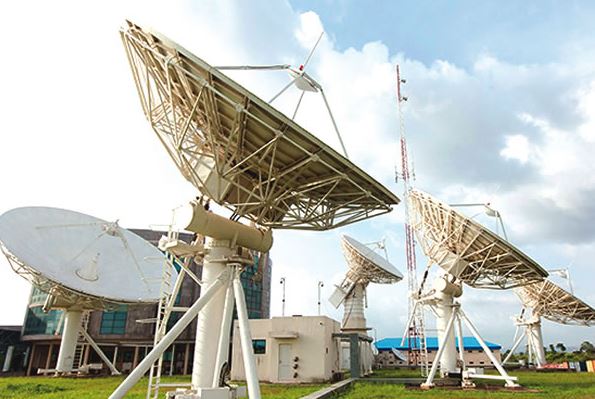
Nigeria ranks joint third in Africa, alongside Algeria among the 11 elite African countries with satellites in space with six satellites after South Africa boasting of 8 satellites and Egypt with nine satellites.
The only functional satellite owned by Nigeria is the NigComSat-1R launched in 2011, however, the Nigeria Communications Commission, NCC, says the satellite contributes 0.2 per cent to Nigeria’s internet connectivity.
Despite the operations of NigComSat-1R, telecommunications companies in Nigeria still spend over $2 billion annually in getting satellite services from foreign providers.
But when The ICIR contacted Ale, NARSDA’s media and communication officer to ascertain the exact number of staff currently working at the space agency, he said he had no approval from the Director-General to disclose the numerical strength of NARSDA staff.
“I need to get approval from the DG to disclose that information to you, I can’t just release it to you,” he said in a phone conversation.
The benchmark recommended by the European Space Agency specifies that 80 per cent of the vacancies at a space agency be reserved for individuals with a scientific or technical background.
The Algerian Space Agency currently boasts of 1,200 specialised technical staff comprising of space engineers and scientists, exceeding its 2020 target of 600 indigenous scientists and space engineers working at the agency.
South African space agency currently has a staff of 187 employees, the Libyan Center for Remote Sensing and Space Science which is responsible for Libya’s space exploration activities has 300 employees, Ethiopia’s space agency has 400 employees and Ghana’s space agency has a staff strength of 20 employees.
However, Nigeria’s satellite in space is expected to improve its national security, internet access, and broadcast services and boost the country’s revenue but the reverse has been the case.
NARSDA defence
According to Ale, employing young Nigerians at the space centre irrespective of their educational discipline is not a problem if it addresses the issues of unemployment in the country.
“On the issue of unemployment in the country, I think we need to fine-tune a strategy to engage the youths so when you have an establishment like (NARSDA) there should be a platform for everybody to operate.
“If we have an organisation like this and cannot provide employment for our youths who are wallowing in the streets without jobs then we should ask ourselves questions? he said.
He acknowledged that the problem is not the creation of employment at the space centre for Nigerians without the requisite scientific or technical skill but the performance of the agency.
“We should try to pity our young school leavers that have graduated for years without jobs and not hide under the guise that some particular agency is for a specialised discipline. Are they not Nigerians? I think we should find a way of addressing the challenges of these people because that is the only way we can make progress in this country,” he said.
Ale continued, “In China, most of the staff at their space agency don’t have university degrees so the excuse that NARSDA should employ people with only technical skills does not hold water. NARSDA performance should be the question we should be asking,” he said
BARAKAT Mayowa, a 16-year old secondary school student, has accused Abiodun Abdul-Balogun, the Ogun state commissioner for environment, of sexual harassment.
Sahara Reporters reported that Barakat in her confessionary statement told the operatives of the state police that the incident occurred on Thursday, December 31, 2020, at the residence of the commissioner at Ita Otu, Ogun Waterside Local Government Area of the state.
According to her, she said she had met with Abiodun, who voluntarily gave her a ride on December 29, while she was going to register for her National Identity Number. She noted that the commissioner tried to ask for her number as soon as he dropped her from the car but she told him to get it from his uncle who worked at a nearby motor park.
She further narrated that one Lasisi came to lure her to the commissioner’s house on the pretence that her service as a computer literate was needed at a place which was unknown to her that it was the commissioner’s house on the day the incident happened.
“What transpired between me and honourable (the commissioner) is that on December 29, which was a Tuesday, I was on my way to register for my National Identity Number. So, I came across the man who happened to be a commissioner at the Waterside Park. I was with a friend,” she said.
“So, he called me and said he knew me from somewhere. I said no, he said, maybe I resembled someone he knew. He asked where I was living and I told him. Then I left. He sent a young man after me to get my number. I said no, that my father’s elder brother stays in the park and that he should get my number from him.
“There was another Austin, a friend, who teaches at a government grammar school. They know the guy. So, the guy gave them my number. It was the commissioner who sent them to get my number.
“On December 31, one Mr Lasisi came to my grandparents’ place in the area, and said he knew someone who needed a computer operator and asked if I knew how to operate a computer. I said yes. Then he said I should get dressed and that we would go together to the place.”
Barakat Mayowa (File: Sahara Reporters)
She added that on getting to the commissioner’s house, she was again lured into his bedroom by another of his aides after which the commissioner came in and bolted the door. The commissioner allegedly sat close to him on the bed and was caressing her body, while offering her money.
She said while she was trying to resist him the commissioner was reciting incantations and was trying to lay his hand on her hand.
She was only allowed to go out of fear for neighbours after repeated screams by her.
“When we got there, it was the honourable’s house. A lady, Maryam Odunnuga, came to pick me and took me into a living room. Mr Austin now came out and asked me to come over to a room. The honourable now came inside and Mr Austin went outside immediately.”
“The honourable locked the door instantly and put the key in his pocket. So, he moved close to me and asked for the name of my school. He also asked for the amount I was paying as school fees, I replied by saying N30,000. He asked me who was paying my school fees, I told him my daddy. He said if I had thought of starting a business before going to school.
“I said I wanted to go to a higher institution. Then he said if I would need some money now, how much would I need? I said, any amount. He said I should state an amount. He now moved closer and pressed (fondled) my breasts. So, I moved his hand away. He now said won’t I cooperate. He now started pressing (fondling) my breasts and my body.
“I was struggling to free myself from him. Then he started reciting some incantations. He wanted to touch my head. I now moved his hand away so that he should not touch my head. He now wanted to force me inside his bathroom.
“But I struggled with him and started shouting. He did not want people around his house to know what was going on. He now left me and gave him four, N500 notes, that is N2,000 as my transport fare. I rejected the money.
“He said if I didn’t collect the money, he would not let me go. So, I collected it. He now asked Austin to drop me in our house. I want Nigerians to help me to take up this matter against him.
She is calling on all Nigerians to seek justice for her stating that the incident has not happened to before.
“This had never happened to me in my life. Right now, I am so shocked. I had never been harassed like that in my life,” she said.
Meanwhile, Abdul-Balogun has denied the allegation, describing it as a game of local politics by some people who are trying tarnish his image because of his ‘visions’.
“You know we are politicians and you know the game of politics, especially local politics, as people would want to destroy you once you have the visions. This is happening from my homestead. I have been in Ijebu for the past one week for the festivity. So, I am just getting back. So, it is all about some people; so, I know the game. But I can tell you that there is more to this than what we are seeing. It is just lies, blackmail and falsehood,” he said.
“Look at the video and see that somebody was asking leading questions from the girl in question. They are not her original words.”
Abimbola Oyeyemi, spokesperson of the Ogun state police command told The ICIR that Kenneth Ebrimson, the state commissioner of police has directed a swift investigation into the allegation.
Editors Note: Not all names used in this article are real name of the speakers as some spoke to us on condition of anonymity for fears of intimidation
THE world football governing body, FIFA, in 2010 created an online platform called Transfer Matching System (TMS) for its member’s association to record player transfer between clubs.
This was to improve transparency, efficiency and governance among clubs and football associations, and, also, to eradicate conflicts among clubs on the legal ownership of footballers.
On this platform, all football clubs in the world register their players and indicate the outgoing and incoming ones when necessary.
Investigations, however, revealed that the TMS platform has been turned into a conduit pipe in Nigeria to enrich a few individuals within the football’s administration.
According to FIFA and global practice, players are registered on the platform free. Findings revealed that clubs are made to pay N150,000 into a Zenith Bank account via online transfer to register their players.
The account, it was discovered, is owned by Nasiru Jibril, Personal Assistant to Amaju Pinick, President of the Nigerian Football Federation (NFF). Jibril is also the Chairman of NFF Staff Union.
Part of the goals of introducing the TMSby the FIFA is to allow both clubs and coaches to benefit from the transfer fees of their players, but the practice in Nigeria is robbing them of this opportunity.
A number of coaches who spoke during this investigation lamented this ‘day light robbery’.
“We are not supposed to pay the N150, 000 for registration of our players on Domestic Transfer Monitoring System (DTMS) that they (NFF) charged,” said Kingsley Amaechi, a grassroots football academy owner whose club cannot be named for fear of intimidation.
“NFF’s responsibility is to collect data from clubs and send it to FIFA. FIFA stated it categorically that registration on the platform is free. NFF also knows this but collected N150,000 from me, asked me to pay it into a private account and the person said when I do the transfer he will train me. Since 2017, I have not been trained, three years after,” he added.
If a European club signs a new player directly from a Nigerian football club, the new club pays a fraction of the sign-on fee to clubs that contributed to his development from age of 12. If the player is 18, for example, the new club pays for club/s that trained the player in the past six years. The Nigeria Football Federation knows this and deliberately denies Nigerian clubs the opportunity to register their players who are 12 year on TMS until they’re 17.
Meanwhile, countries like Ethiopia, Ghana and South African, among others, allow clubs to register players from 12 years. Despite not allowing clubs to register from 12, the Nigerian federation, through some ‘non-existing’ football academies, receives money from foreign clubs. These academies only exist on paper. Theirs names and account details are forwarded to European clubs when they want to pay the 5 percent for clubs that have trained the player they sign from Nigeria.
However, such briefcase academies are not involved in the process of discovering, grooming and development of young athletes that, among others, are the major reasons a football academy is set up.
There is a calculated amount for each year that’s paid by the European club from the twelfth birthday to the age when the player is signed. In Nigeria, most of the players who have started their career at 12 do not have records with their grassroots academies. Yet, the new club pays a fraction of 5 percent but these monies are always diverted by submitting account details of ‘non-existing’ football academies to the foreign clubs.
In a situation where there is no record of player’s youthful club, such monies are supposed to be paid into NFF’s account for youth development programme, but, in Nigeria the monies are diverted into individuals’ account.
“When my former player was transferred to Belgium, I didn’t get what was supposed to be sent to me from the new club. I went to the NFF only to find out that the name of academy has been substituted by a non-existing academy. And that was where the money that was supposed to be sent to me was paid.” Ismaila Bagudu, another grassroots coach who pleaded that the club’s name should not be mentioned told this reporter.
“Can you imagine how much Nigeria would have and can make from the years that they cannot account for, and the foreign clubs pay for these years? Do you know how much other countries make from those years that there were no records of the player playing for a particular academy? Is it because NFF does not give statement of account? Bagudu asked rhetorically.
When contacted for comments on October 25, Jibril, the Personal Assistant to the Nigeria Football Federation President, who is also the person in charge of the TMS in Nigeria, Jibril, refused to comment on the subject matter and frustrated all efforts to get his side of the story. The Secretary General of the NFF, Sanusi Mohammed, also failed to respond to the FOIA letter sent to the football body and received by him.
On three occasions in October, Jibril declined talking on the registration of players on TMS and when our correspondent spoke with him on phone, and immediately the issue of TMS came in, he excused himself.
He claimed he was attending a FIFA online course and that the caller should get back to him three hours later but refused to pick the calls subsequently. He also did not respond to all text messages sent to him.
He also kept silent on an FOIA Request written to his office by this newspaper to seek some clarifications on the TMS and other related information.
In an effort to get their response, as the supervising ministry over the NFF, this newspaper also wrote an FOIA Request to the Permanent Secretary and the Minister, Ministry of Youth and Sports Development on November 26 and after waiting for fifteen days without expected response, reminders were sent to the Permanent Secretary, Gabriel Aduda and the Minister of Sports, Sunday Dare, on December 10.
In a response letter from the ministry on December 2, signed by the Head, FOI Committee, Ministry of Sports, Ramon Balogun, the ministry acknowledged receipt of our FOI letters and promised to forward our request to the NFF and get back to us.
“I am directed to inform you that your request is receiving utmost urgent attention in the ministry as it would be forwarded to the Nigeria Football Federation (NFF) (a parastatal under the ministry of sports) towards receiving appropriate response that are peculiar to your request,” the letter reads in part.
Not satisfied with the response, the reporter visited the Ministry of Sports on December 15. A director, who does not want to be named because of possible risk of sack, confirmed the dirty deals and hinted that the request can never see the light of the day, according to him, the NFF officials are more powerful than the Ministry.
“It is not new to us. There are many dirty deals going on in the NFF that we know about but we cannot do anything to stop it. They’re well connected and don’t send anybody. Even me, as a director, I will not try to force them respond to your FOI request. If I try it, they will disgrace me. Is it Sanusi or Pinnickthat I will call to respond? Who am I?
“And we are talking about a parastatal under this ministry. See, let me tell you, we have many FOIA letters lying down here, written from different organisations about NFF corruption. Till now, they’re here with us. And nothing happens.” The senior government official who didn’t want to be identified said.
Efforts to speak with Director of Press, Mrs Lere Adams, met a brick wall, as she was not on seat when the reporter visited the ministry.
However, the Special Assistant to the Minister of Sports, Tunde Akpeji, told the reporter that he is aware of the letters, adding that the office of the Permanent Secretary is looking into it.
“You’re here for your FOIA letters? I am aware of it. I saw your letter of reminder as well”,Akpeji said with a smile on his face.
“The Office of the Permanent Secretary is looking into it. When they’re done they will send your request to the NFF for appropriate responses.”
Taking it further, the newspaper wrote an FOIA letters to Central Bank of Nigeria (CBN) on November 26 and Ministry of Finance four days later. The CBN responded saying we need to give them time to collate the information we requested for and that they will get back to us when they are ready. On its part, the Ministry of Finance failed to respond even after sending a reminder eight days later without response. The access to information provides for seven days for public institutions to respond to requests for information and, in some circumstances, including when the information would be in large volumes, an additional seven days.
Most of the requests sent are over two weeks now.
The illegal diversion of funds through the TMS is one of the major reasons Nigeria football is deteriorating. Recently, former Super Eagles star and coach, Daniel Amokachi, blamed the ouster of Nigeria Flying Eagles from WAFU U20 Cup in Benin Republic on the federation’s decision to stop the payment of bonuses to all underage national teams.
According to the Nigeria Football Ambassador and Special Adviser on Sports to the President, cancellation of bonuses and allowances affects the performances and commitment of the players in the tournament.
The federation, which announced the cancellation of payment of bonuses and allowance to all age-grade teams in 2019, on its parts, claimed there was no money to pay these players.
Had the money from the TMS been well-managed and accounted for, there would have been enough to cater for the payment of players as well as backroom staff of all the age-grade national teams.
Also, if registration of players on TMS is free as it is meant to be, this will allow the grassroots coaches (who are the bonafide owners of the players) to earn money from the 5% paid from the sign-on fee of player. This will in turn helps the coaches to attend courses and helps to produce better athletes. It will also help them to buy latest equipment with which to train their athletes and produce players that can contest with anyone in the world.
*This report was done with the support of the John D. and Catherine T. MacArthur Foundation and the International Centre for Investigative Reporting.
MATTHEW Hassan Kukah, Bishop of Sokoto Catholic Diocese, has reacted to the furore that followed his statement on how President Muhammadu Buhari is handling the affairs of the nation during in his Christmas message to his teeming congregation in Sokoto.
Kukah had in his message accused President Buhari of turning nepotism into a state policy, noting that there could have been a coup if a non-northern muslim president had done a fraction of what the president is doing.
He further accused the president of promoting and institutionalizing a northern hegemony that has reduced others in public life to second-class status.
“This government owes the nation an explanation as to where it is headed as we seem to journey into darkness,” he said.
“The spilling of this blood must be related to a more sinister plot that is beyond our comprehension. Are we going to remain hogtied by these evil men or are they gradually becoming part of a larger plot to seal the fate of our country?
“President Buhari deliberately sacrificed the dreams of those who voted for him to what seemed like a programme to stratify and institutionalise northern hegemony. He has pursued this self-defeating and alienating policy at the expense of greater national cohesion.
“Every honest Nigerian knows that there is no way any non-Northern Muslim President could have done a fraction of what President Buhari has done by his nepotism and gotten away with it.
“There would have been a military coup a long time ago or we would have been at war. The President may have concluded that Christians will do nothing and will live with these actions,” Kukah had added.
While Lai Mohammed, Nigeria’s minister of communication and culture; Lauretta Onochie, the president’s special assistant, social media, the Arewa Youth Consultative Forum (AYCF) and Muslim Rights Concern (MURIC), had knocked Kukah for his statement and accused of trying to instigate a forceful regime change, the Catholic Church in Nigeria, the Southern and Middle Belt Leaders Forum (SMBLF) and the Christian Association of Nigeria (CAN) have defended him.
However, in a press briefing with newsmen on Monday, the cleric urged Nigerians to get the accurate statement rather than, relying on different lies being peddled about in his name.
Kukah, who stated that his statement was based on his love for the country with no political or ulterior motive, added that his statement is a reflection of every Nigerian.
He stressed that it was sad that most Nigerians always shift their focus from what he called the larger picture to reading meanings into whatever anyone calling the president to account said.
“I am saddened and pained that my critics never see that many innocent lives are being lost on daily basis. The loss of lives in the last ten years, even before the advent of this administration, calls for concern,” he said.
“What I said, was my opinion based on evidence and what has happened in Nigeria and if you looked into the records, there are pieces of evidence that justify that statement and, if anyone thinks I am wrong, they should come out with a superior position.
“It is unfair and unjust imagination of those who said I called for a coup while I am expressing my personal view about Nigeria,” he noted.
He also maintained his stand that there was no way any non-Northern Muslim President could have done a fraction of what President Buhari had done by his nepotism and gotten away with it.
A TOTAL number of 50 journalists were killed globally in 2020, a report published by Reporters Without Borders (RSF) has shown.
The report which was published on Tuesday is the second part of its (RSF) annual round-up report of the abusive treatment and violence against journalists across the globe also shows that two journalists fell victim to the climate of violence accompanying protests, especially protests against the brutality of police operatives in Nigeria.
It noted that while the number of journalists killed in countries at war continues to fall, more are being murdered in countries not at war.
More concerns
RSF noted with concern that 32% of the fatalities are in war-torn countries such as Syria or Yemen or in countries with low or medium-intensity conflicts such as Afghanistan and Iraq. while 68 percent (more than two thirds) of the fatalities are in countries “at peace,” above all Mexico leading with eight journalists killed, India with four, the Philippines with three and Honduras, three.
It further stated that 84 percent of those that were killed in connection to their work were knowingly targeted and deliberately murdered, as compared to 63% in 2019. While some were murdered in a particularly barbaric manner.
In Mexico, Julio Valdivia Rodríguez, a reporter for the daily El Mundo, was found beheaded in the eastern state of Veracruz, while Víctor Fernando Álvarez Chávez, the editor of the local news website Punto x Punto Noticias, was cut to pieces in the western city of Acapulco. In India, Rakesh “Nirbhik” Singh, a reporter for the Rashtriya Swaroop newspaper, was burned alive in December after being doused with a highly flammable, alcohol-based hand sanitiser in his home in the northern state of Uttar Pradesh by men sent by a local official whose corrupt practices he had criticised, while Isravel Moses, a TV reporter in the southeastern state of Tamil Nadu, was hacked to death with machetes.
In Iran, it was the state that acted as executioner. Rouhollah Zam, the editor of the Amadnews website and Telegram news channel, was hanged after being sentenced to death in an unfair trial. Although executions are common in Iran, it was the first time in 30 years that a journalist has been subjected to this archaic and barbaric practice.
“The world’s violence continues to be visited upon journalists,” RSF secretary-general Christophe Deloire said. “Some may think that journalists are just the victims of the risks of their profession, but journalists are increasingly targeted when they investigate or cover sensitive subjects. What is being attacked is the right to be informed, which is everyone’s right.”
As in the past, the most dangerous stories are investigations into cases of local corruption or misuse of public funds (10 journalists killed in 2020) or investigations into the activities of organised crime (four killed). In a new development in 2020, seven journalists were killed while covering protests.
In Iraq, three journalists were killed in exactly the same way: by a shot to the head fired by unidentified gunmen while they were covering protests. A fourth was killed in Iraq’s northern Kurdistan region while trying to flee from clashes between security forces and demonstrators.
In Colombia, a reporter for a community radio station was fatally shot while covering an indigenous community protest against the privatisation of local land that was violently dispersed by regular police, riot police and soldiers.
In the 2020 annual round-up of journalists who are detained, held hostage or missing at the end of the year, published on 14 December, RSF reported that 387 journalists are currently detained in connection with their work. This is virtually the same as a year ago and means the number of journalists detained worldwide is still at a historically high level.
2020 has also seen a 35 percent increase in the number of women journalists arbitrarily detained, and a fourfold increase in arrests of journalists during the first three months of Covid-19’s spread around the world. Fourteen journalists who were arrested in connection with their coverage of the pandemic are still being held.
As Nigeria faces a second wave of COVID-19 pandemic, CBN’s COVID-19 loan hangs in the balance for small businesses;
Small business owners share mixed feelings over the disbursement of CBN’s ₦50bn COVID-19 credit facility;
Lagos, Abuja lead COVID-19 SME beneficiaries’ list as thousands still expect feedback from NIRSAL MfB;
NIRSAL MfB declined to respond to FOI request; lawyer says action violated section 7 of the Freedom of Information, warranting litigation.
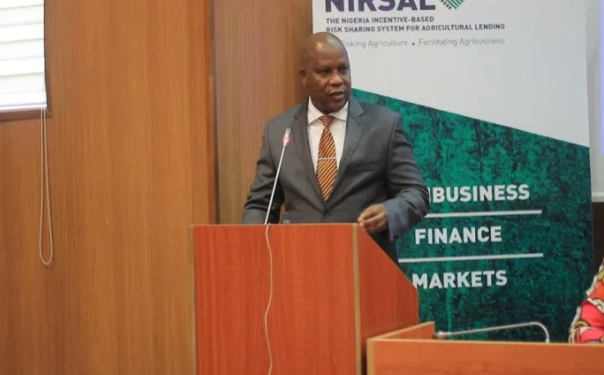
“Submissions have closed, and we are working on applications for those who applied for the CBN’s COVID-19 stimulus package for Micro, Small and Medium Enterprises (MSMEs),” an official at the NIRSAL Microfinance Bank Headquarters told this reporter.
“If you applied online, you will get a text message on how to get your loan. There are still batches of applicants yet to come out. They are working on them,” she added preferring anonymity.
Her conversation with the reporter is the message of hope thousands of Nigerians are waiting to hear after submitting their loan applications since April, May, and June 2020.
Applicants speaking with front desk officials at NIRSAL MfB headquarters Abuja / Aderemi Ojekunle/Dataphyte
As Nigeria faces a second wave of COVID-19 pandemic, information inadequacy and lack of transparency continue to flaw credit facilities meant for small businesses during the period.
In this special report, Dataphyte’s Aderemi Ojekunle examines issues around the disbursement of the ₦50 billion Targeted Credit Facility (TCF) launched by the Central Bank of Nigeria (CBN) to assist small businesses.
In March 2020, the Central Bank of Nigeria (CBN) introduced the ₦50 billion soft loan to MSMEs whose economic activities have been significantly disrupted by the COVID-19 pandemic.
The Nigeria Incentive-based Risk Sharing System for Agricultural Lending (NIRSAL) Microfinance Bank Ltd (NMBL) disbursed the stimulus package. In April 2020, NIRSAL said it recorded 80,000 applications, but administrative bottlenecks involved in getting the funds made Nigerians described it as ‘audio money’ (non-existent fund).
Lack of transparency on loan disbursement – Applicants share mixed feelings
Mr Olu Oseni, a 32-year-old graduate of Ladoke Akintola University of Technology (LAUTECH) and an engineer, said he applied for the COVID-19 SME loan. Still, NIRSAL MfB changed it to a Household loan without stating any reason.
“I submitted my application for COVID-19 SME loan in June 2020 with a ₦500,000 request, but when I saw the offer, it has been changed to a Household loan for ₦200,000.”
I tried to get the attention of NIRSAL here in Lagos, but they said the processes were being done in Abuja.
“I later decided to accept the offer because the lockdown and COVID-19 affected my business and the family.”
Mr Oseni, howbeit, noted that the loan helped him to fix some things during the pandemic.
Another entrepreneur who identified himself simply as Oke describes NIRSAL Microfinance officials as ineffective in handling the COVID-19 loan. For Oke, the loan acquisition process is tedious and frustrating.
“I applied for the loan. I was shortlisted and went to the headquarters in Abuja on September 14. They gave me a note to their office at the Postal Service Office. At the office, the man in charge said he has his own time, and the head office cannot dictate to him.”
“The NIRSAL process is frustrating because the staff cannot do the job alone.” Mr Okeke advised the Central Bank of Nigeria (CBN) and other government agencies to consider other disbursement organisations.
The story remains unchanged for Mrs Aisha Aliyu, who was livid at NIRSAL’s sluggishness. However, the 34-year-old pharmacist and drug store owner remained optimistic about her second submission in early December.
“This is my fourth time coming here. Since I did not get the COVID-loan, I have decided to apply for the Youth investment loan. I came here to see If I can submit my documents.
“There is ₦75 billion again for youth investment. I am praying I can get this; it will really help my business.”
The CBN’s ₦75 billion Nigerian Youth Investment Fund (NYIF) was set up in October 2020 by the Federal Ministry of Youth and Sports Development to help build sustainable businesses and increase job opportunities in Nigeria.
Sharing her experiences with the COVID-19 SME loan, Mrs Aliyu also expressed dissatisfaction about the inefficient ways of handling loan disbursement by NIRSAL. “Some of my colleagues with whom I applied got a message to accept the loan offer in August, but they are yet to get their money, and this is December.”
But perhaps the most infuriating part for Ms Aliyu was the feedback or rather lack of it. “No one is saying anything, no email, no phone call. Not even on their (NIRSAL) social media accounts. We are just in the dark,” she added.
Repayment hurdles and communication gap
Kayode Adegbola, an advisor at Golborne Road Advisory, said he experienced a seamless process during application.
“For my team and me, it was a seamless process. I applied with my phone number online. A few weeks later, I got a text message and an email requesting me to follow a link to get the cash from a dedicated account created by NIRSAL MfB.”
He, however, decried the inadequate information on repayment plans.
“Unfortunately, we have tried to get information on repayments and the processes for paying back and if we can pay back early.
“We have written to the bank (NIRSAL) but no decisive information yet. My team also visited their offices in Abeokuta and Lagos to get feedback on repayment and how we are going to make a repayment, still no headway.”
Mr Adegbola said he needs to pay-off his loan since it has fulfilled its purposes. “I am trying to avoid harassment from any agent attached with the credit Bureau for defaulters.”
Hunye Adebayo, a barber and owner of a barbing salon in Satellite town, Lagos, said he received the money in August 2020. He also expressed worry over the lack of information about repayment, saying some of his friends are already insinuating that the government is not collecting the money back.
“I applied for ₦450,000 but got ₦700,000.
“I am thinking about how to repay my money, but there is no information on repayment. We submitted our Bank Verification Numbers (BVN), maybe they will start withdrawing at the moratorium date.”
Mr Adebayo urged the CBN to ensure effective communication and properly informed citizens about such facilities.
On the application form, NIRSAL fixed the interest rate at 5% per annum (all-inclusive) up to February 28, 2021. From March 1, 2021, beneficiaries are to pay 9% per annum (all-inclusive).
NIRSAL MfB declines response to FOI request, CBN elusive
For further clarity, Dataphyte sent Freedom of Information petitions to CBN and NIRSAL microfinance bank. The petition queried how much was disbursed so far, and the number of beneficiaries. While the apex bank acknowledged the request, NIRSAL dismissed the bid, noting that the FOI Act does not apply to a private institution as itself.
Responding to the request, Maishanu H.A, Head, Risk Management and Compliance, NIRSAL MfB Limited stated: “…the Freedom of Information Act 2011 (FOIA) which is created to improve transparency and public information disclosure by public institutions as specifically noted in the Act does not apply to this bank.”
However, this claim is untrue because the FOI act does not exempt private companies using public funds.
Section 2 (7) states thus: “Public institutions are all authorities whether executive, legislative or judicial agencies, ministries, and extra ministerial departments of the government, together with all corporations established by law and all companies in which government has a controlling interest and private companies utilising public funds, providing public services or performing public functions.”
Maishanu further claims that NIRSAL cannot comply with the FOI request because it could not disclose customers’ personal information.
“…As a financial institution, we are bound by the duty of confidentiality to the Customer of the Bank, and on this ground, the Bank is unable to disclose confidential customer information to a third party, save where there is a Court order, or the Customer authorises such disclosure.”
The Bank argued that one of the requests – a list of beneficiaries – is confidential information, forgetting that it was previously made public on its website, albeit temporarily. Thus, it begs the question as to whether beneficiaries of public funds constitute confidential information.
Mr Edetaen Ojo, a lawyer and the Executive Director of Media Rights Agenda, said the NIRSAL MFB position on the FOI is wrong and inaccurate.
“Under the act, once you utilise public funds or you are using public funds for the public good, the FOI applies to such entities.
“The unwillingness of NIRSAL MfB to release such information suggests something is wrong, and they have something they are hiding.”
The lawyer also noted how the microfinance bank’s actions could attract litigation, seeing as they violated section 7 of the Freedom of Information Act.
As for the money regulator, its tactic was less dismissive and more elusive. Mr Osita Nwasinobi, CBN’s spokesperson, asked the reporter to send questions via WhatsApp. But he never responded, despite repeated reminders and calls.
NIRSAL MfB also did not reply to messages sent to the company’s official email addresses. Subsequently, the company’s secretary requested that the reporter direct the email to the Managing Director, Mr Abubakar Kure.
Lagos, Abuja lead COVID-19 SME beneficiaries’ list
Notwithstanding, this reporter’s investigation revealed that the NIRSAL Microfinance Bank granted credit facilities to 382 small businesses across the country out of the 80,000 applications it has so far received.
COVID-19 Targeted Credit Facility SME Beneficiaries : Sheet1
Data from the NIRSAL MfB website showed that Lagos leads with 71 beneficiaries, followed by Abuja with 67 and Kaduna with 21 beneficiaries. Kwara and Kano came distant fourth and fifth with 16 and 13 beneficiaries, respectively.
Additional findings revealed that some small business owners registered their companies only to get the SME credit facility. At least four MSMEs registered businesses with the Corporate Affairs Commission (CAC) after the application deadline. They still got the loan.
The Central Bank of Nigeria and NIRSAL MfB announced the MSME loan applications in March and ended online applications by June 30, 2020.
Specifically, CAC records showed that Zee’S Planete Enterprise and Taimako Titus Farm Ltd applied for registration after the NIRSAL deadline. Also, Olaitan Ultimate Ventures Intl registered with the CAC on July 3, 2020. Another company, Isah Idris Poultry and Eggs Production, got the MSME loan before CAC registration. The company registered as a company on December 3, 2020, according to CAC records.
Questionable MSME COVID-19 grantees
Also, out of the 382 beneficiaries, 107 small business owners have no record on the CAC portal. Although, this might be due to technical inadequacies with the CAC database. The inadequacies include search query error, the omission of names on the portal, among others.
When contacted on the phone, Mr Aliyu Yazid, the Deputy Director of Public Affairs, Corporate Affairs Commission (CAC), said the commission frequently performs an upgrade on the public search portal.
“You can try it next time, but most times, if there is no result for the company, it is either the company has not registered, or the name of the company is not well written.
“Most times, they (business owners) may add space between the company name or change some letters. By doing so, it becomes difficult for a searcher to get the desired result.”
Thousands expecting feedback from NIRSAL MfB
Out of 80,000 applicants that applied within the first month, according to NIRSAL MfB, only 382 applicants have benefitted from the loan. This means that only 0.48 percent of the total applicants received a certain amount from the ₦50 billion credit facility. The remaining 79,618 business owners and other applicants are still expecting feedback from the NIRSAL MfB.
On December 9, 2020, this reporter sampled the opinion of members of a Facebook Group (platform created to help members and citizens secure NIRSAL Microfinance Bank CBN Covid-19 loan through interaction and information dissemination). More than 100 active online members claimed they applied for the loan and are still expecting feedback [E3] from NIRSAL.
For instance, one Abore Gembu said he applied for the MSME loan on June 27th and has not received any feedback from the NIRSAL. “I hope they will reconsider their position and grant approval to all outstanding successful applicants.”
Another applicant, Ms Obiunegbu Chigozie, said she also applied since June 27th and only received an automated message on July 1st, 2020, indicating that her application is in process.
Some entrepreneurs on the group also complained that the NIRSAL MfB portal failed to recognise their BVN details. “Whenever I put my BVN, the portal says it does not exist. I don’t know what is wrong,” Mr Orichi commented on a post seeking clarifications from members.
“When I put my BVN, the website says it does not exist. What is the problem,” Mr Suraj asks.
Mr Oladipo Olawumi Ezekiel said he applied for the MSME COVID-19 loan on the same date with his wife, and they are still expecting to hear from NIRSAL.
“Is there any hope, please I don’t think we will get approved?” another applicant, Abubakar Shehu Abubakar, posted.
NIRSAL MfB receives backlash on Social Media
On its official Facebook account, NIRSAL Microfinance Bank received backlash for lack of transparency and inadequate information dissemination on the disbursement of the COVID-19 loan.
Mr Bayode J. Omotola, one of the applicants, who commented on a NIRSAL MfB post, complained over the inability to reach the Bank on phone lines and email addresses. Another applicant, Ms Oviero Ebika Happiness Fruebi, the CEO of D’z Sellectionz Empire, also made such complaints on the Facebook page of NIRSAL MfB.
Mr Umarfaruk Dauda said the inability of NIRSAL MfB to respond via its official social media accounts and telephones are creating rooms for scammers and exploitation of grantees.
“I applied for the CBN Covid-19 loan under the SME category in June 2020. Till now, no approval yet. I want to know if the SME loan category is suspended or still pending?, one Mike Ejunka asked in late November without any response from the NIRSAL MfB team.
This reporter reached out to one of the complaints on Facebook, Mr Adebola Moses, founder of DictionCoach. Mr Moses, who complained about the lack of proper communication channels, said he later got the loan approved. He urged the NIRSAL MfB to work on the duration between documentation and disbursement of the loan.
He advised NIRSAL MfB to make more funds available so that a critical mass can access the offer.
On Twitter, applicants also expressed frustration over NIRSAL MfB inability to respond to queries and questions surrounding the COVID-19 MSME loan. In October, one Inno Saint, @sainte2k, lamented over the inability of NIRSAL MfB to respond to emails or even tweet.
Good morning. I've noticed that you people don't respond to mails or even tweet, I don't know why. But as a corporate organization I think that the interest of your client (customers) is paramount. I wonder why you careless about their view.
When this reporter visited the NIRSAL office in Abuja, it was the same pattern from the security post to the secretary desk. Applicants dropped their details and reason for visiting at the security post. Officials at the security and reception desks told applicants to continue to check their emails.
When the reporter requested to see the manager or someone in charge of the COVID-19 MSME, the receptionist said they are all not available.
Experts call for transparency, capacity building for effective loan disbursement
Celestine Okeke, a policy expert, said NIRSAL Microfinance Bank lacks the capacity to run smooth loan disbursement. Currently, they are managing five to six credit facilities for the government.
“Most of the NIRSAL staff were hired for Agric-based facilities, moving them into other capacities without requisite knowledge is a huge problem.
“There is no means to track progress. Progressions are no longer valid because of the exchange rate – people have lost jobs, those with businesses looking at how to get funds to run their businesses.
“Vital questions that NIRSAL MfB and CBN failed to answer border on application processes, selection procession, and criteria. Without adequate information on this, businesses that need loans will also want to engage in corruption to get the credit.”
Prof. Mike I. Obadan, a director and member of the CBN Monetary Policy Committee (MPC), urged the effective implementation of the apex bank’s Targeted Credit Facility aimed at households and MSMEs.
In his statement at the end of the 133 MPC Meeting in November 2020, Professor Obadan described the credit facility as one of the needs for Nigeria to exit recession quickly.
*This report was facilitated by the Wole Soyinka Centre for Investigative Journalism (WSCIJ) under its COVID-19 Reality Check project.
This report was originally published by DATAPHYTE.