Home Blog Page 1909

NIN: FG orders investigation into allegations of extortion, insists registration is free

0

THE federal government has ordered an investigation into the allegation of extortion that has characterized the ongoing national identity card registration in some parts of the country.

Femi Adeluyi, the technical assistant on information technology to Isa Pantami, the minister of communications and digital economy, who stated this in a statement on Saturday,  insisted that registration and getting the national identity number (NIN) is totally free.

He noted that the national identity card is the right of every Nigerian, stressing that the government has made adequate budget and provision for it to ensure a hitch free exercise.

“The National Identity Number is completely free for all Nigerians and legal residents with Resident Permit from the Nigeria Immigration Service.

“The National Identity Number is the right of every citizen, based on the National Identity Management Commission (NIMC), Act 2007, ” he said.

He said the minister had instructed Aliyu Abubakar Aziz, the director-general of NIMC to investigate the allegations with a view to bringing the perpetrators to book.

“The Director-General will also provide a platform for such allegations to be reported,” Pantami added.

He commended the sacrifice of the Management and staff of NIMC who have carried out their assignment conscientiously during, and even outside, working hours.

He disclosed that the ministry was working to ensure the conditions of service and welfare of the staff were favourable.

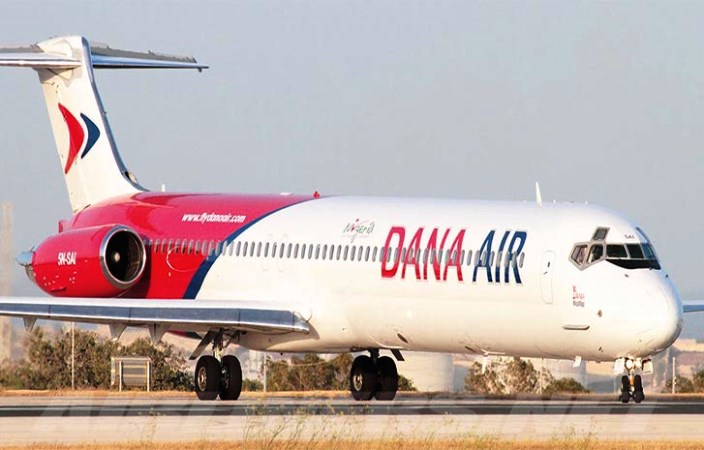
Dana Airline abandons passengers at Abuja Airport for 14hrs

PASSENGERS on Nigerian domestic carrier, Dana Air, were stranded for at least 14 hours at the Nnamdi Azikiwe International Airport, Friday, as three scheduled flights by the airline were delayed.

“No apology was tendered. We were left to our fate. They showed no concern after some of us paid about N100,000 for the flight,” one of the passengers, Atsenokhai Aloy, told The ICIR.

Among the abandoned passengers were pregnant women, nursing mothers and their babies, he said.

Aloy had thought of arriving early in Lagos Friday evening to sleep in his home, but he was abandoned with scores of other passengers by Dana Air at Abuja Airport lobby till 8am Saturday, when the flight conveying him and others finally arrived.

He said by 1am on Saturday, an aircraft landed and picked passengers that were supposed to fly at 11am the previous day.

He said he had arrived at the airport and checked in before 6pm on Friday. But getting to the departure hall, he met scores of other passengers who were supposed to have left for Lagos but stranded.

“I slept in the airport waiting for a flight!! Dana air kept passengers including nursing mothers, pregnant women, and children in the airport from 7pm yesterday till this time I am typing this message (Saturday morning).

“We were all checked in and given our boarding pass. But there was no aircraft to convey us! From 7pm yesterday till now, myself and several other passengers are all seated in the departure hall of Abuja Airport waiting for the aircraft that will take us to Lagos.

“I have heard of delayed flights, but never in my life did I ever imagine that I will sleep in the airport waiting endlessly for a flight that no one knows when it will arrive.

“At some point, three different sets of passengers bound for Lagos were all waiting. There was no aircraft and Dana wasn’t ready to give us any sensible explanation. I am sure they know that there won’t be consequences for this unbelievable service failure. After all, this is Nigeria…

“By 1am, one aircraft landed. It picked passengers that were supposed to fly at 11am yesterday. Passengers scheduled for 11am flight on Friday morning eventually left by 1am on Saturday morning. I was scheduled for 7pm and I am still here. I have been in the airport for over 10hrs!!!

“No apologies from anyone, no food offered, no empathy from the airline, just nothing! This is the height of incompetence, insensitivity, and extreme wickedness. The ministry of aviation must do something about Dana airline to protect Nigerians. We can’t be treated so shabbily in our own country without consequences.

“An airline that doesn’t have planes to fly passengers must not be selling tickets. People have different reasons for travelling and you can’t just hold them hostage. I can’t begin to imagine what others have missed,” he lamented in a message he sent to ICIR.

Efforts by The ICIR to get reaction of the airline were futile, as the company’s spokesperson Okwudili Ezenwe, refused to pick calls put across to him by our reporter. He also failed to respond to text message sent to him on the allegation.

Like some of its contemporaries, Dana Airline is notorious for delaying flights and disappointing its passengers.
On Friday, July 12, 2019, the airline failed to convey its passengers from the Abuja airport to Port-Harcourt, with the stranded passengers alleging there was no flight.

On May 26, 2016 pilots working with Dana Air embarked on strike, forcing the airline’s passengers scheduled for flight that day to be stranded across the country.

The pilots reportedly embarked on strike to compel the airline’s management to pay backlog of salaries and other entitlements they were owed.

Simillarly, an aircraft belonging to Dana Air skidded off the runway and was partly damaged while landing at the Port Harcourt Airport in Rivers state on February 20, 2018. After 24 hours, passengers on the aircraft complained they had not gotten their luggage.

Also, on February 8, 2018, the airline blamed its passengers for one of its doors that fell off while taxiing at the Abuja airport. The flight was from Lagos.

Reports indicated that passenger on the aircraft vehemently denied allegation by the airline that a passenger tampered with the aircraft doors.

On June 3, 2012, 153 passengers died in a Lagos-bound aircraft, operated by Dana Air.

The flight took off in Abuja and crashed into a two-storey building at Ishaga, killing all its passengers.
The Nigerian government punished the airline by suspending its operating license on June 5, 2012 before it was later restored in September same year.

The government again, through the Nigerian Civil Aviation Authority (NCAA), withdrew the licence over the 2012 crash on October 6, 2013, claiming it was to enable it conclude investigation into the unfortunate crash.

Nigerians are usually in mad rush to travel during Yuletide season.

The rush results in skyrocketing ticket prices, delay and cancellation of flights. Prices of tickets have been unusually high this year because of the COVID-19 pandemic.

Airline employees usually use the period to make brisk money by exploiting passengers through illegal hike in price of tickets, use of touts to offer unsolicited aid among others.

It is customary, however, that an airline apologizes to its passengers whenever it fails to airlift them as scheduled.

Global standard practice requires such an airline to feed and accommodate the passengers.

A senior official of NCAA who spoke on condition of anonymity with The ICIR said: “The global standard requires that any airline that cancels or delays its flight must provide its passengers accommodation and feeding where the passenger is already at the airport for his or her trip. But, this doesn’t happen because of politics and deception.

“The foreign airlines are doing it here, but the local ones are not doing it. It is just because of politics.

“In other climes, the operators can apologize that the aircraft is not in good condition. You don’t expect the airline to fly an aircraft that is not good. So, the airline will accommodate and feed the passengers within that period.

The ICIR reports that passengers who experience disservice from airlines can claim compensation.

Part 19 of the NCAA Consumer Protection Regulations provides certain degree of compensation for travellers if their flights are delayed are cancelled.

Options are also available for claiming this compensation, which range from refund of at least 25 percent of ticket price and more, depending on the hours the flight is delayed or number of days the cancellation takes.

A passenger making this claim must have confirmed reservation on the airline and must have presented himself for check in by the airline.

Getting compensated in this sense requires the aggrieved passenger to do a letter of complaint containing the ticket booking number, date of the flight and name of the airline.

The passenger will detail his experience with the airline, response of the airline to the delay, the inconvenience caused by the passenger by the delay and will forward the complaint to the airline.

Should the airline fail to offer satisfactory response, the passenger can forward the complaint to the Consumer Protection Directorate of the NCAA.

The protest can be taken further to the Federal Competition and Consumer Protection Council (FCCPC).

Even if the FCCPC fails to do justice, the passenger can proceed to court to seek redress.

The court option can be taken at any point the passenger did his complaint. It is his exclusive right.

Functional airports in Nigeria usually enjoy surge in activities following disasters that usually characterize the use of the  highways. Main challenges with the use of Nigerian highways are poor state of the roads, abduction, killing and attacks by gunmen or bandits.

The ICIR had on December 17 published a report captioned: Yuletide: Flashpoints for abduction, crashes on Nigerian highways

Imo SUBEB caught in the web of bogus contracts, politics and corruption.

By Paul EMOGHENE


IT was a rainy Thursday morning on the September 15. Some aggrieved Imo State contractors gathered in front of Universal Basic Education Commission (UBEC) head office in Abuja with placards. They were protesting the non-payment of alleged N4.2 Billion owed them by Imo State Universal Basic Education Board, IMSUBEB, which they lamented was crippling their businesses.

Williams Ejiakor, leader of the contractors, told newsmen that the contractors were protesting in front of UBEC head office because the Commission is a major stakeholder and having supervised and released its own counterpart funds, it should prevail on the Imo State government to pay them for contracts executed.

According to Ejiakor, UBEC has advised the state governor, Hope Uzodinma, to pay them but he is insisting that he would not pay for contracts awarded by Emeka Ihedioha, the immediate past governor of Imo state.

“Most of us borrowed money from banks, and the interest is piling every day. We lost a woman three weeks ago. We are appealing to Senator Hope Uzodinma to temper justice with mercy and pay us our money. We did not commit any crime by working for the state. Government is a continuum,” he said.

It was not the first time the contractors would gather and speak on the matter to newsmen with placards in their hands. On July 14, the same contractors stormed the Imo State Government House, Owerri, blocking the entrance gates to demand payment for contracts they executed for IMSUBEB.

In spite of the early morning rains, the aggrieved contractors, numbering over one hundred, sang solidarity songs, bearing placards with such inscriptions as, “IMSUBEB save our souls and pay us”; “Imo government save our properties from our creditors”; “Hope, interests on loans are piling, save our souls”; “UBEC from Abuja has sent the money, please pay us”, amongst other things.

Ironically, that same Tuesday morning, another set of contractors and government officials were gathered at the Conference Hall of IMSUBEB office in Owerri for the opening ceremony of a bid opening process for new UBEC/IMSUBEB Intervention Projects.

Fresh contracts were going to be awarded and the governor, who was represented at the event by the Commissioner for Education, Prof. Bernard T.O Ikegwuoha, assured the contractors who were present for the bidding that the required counterpart fund for the project had been fully paid for by the state and that the project would start from the beginning to the end without interruption.

The governor explained that the project, which will be a six-classroom block in each of the 305 Independent National Electoral Commission (INEC) wards of Imo State, would be of international standard with ICT, water borehole, a First Aid Clinic with a nurse and a kitchen for the home grown feeding programme for primary school pupils. They would also have administrative offices for the headmistresses and assistant headmistresses; all geared towards provision of qualitative education for Imo children.

It sounds great, doesn’t it?

However, when this Journalist caught up with Ejiakor, he alleged that the UBEC/IMSUBEB accounts in Imo State had been frozen. Ejiakor displayed a copy of the letter they wrote to UBEC, which detailed the steps they had taken to get the attention of the Imo State government concerning the non-payment for the work done so far by the contractors.

“And this resulted to UBEC writing the governor a letter and also blocking the account. The account in Zenith bank is now blocked, also by the UBEC law you are not supposed to award any new job without first paying the previous ones up to 70 percent”, said Ejiakor, who claimed that most of the jobs done were 100 percent completed by the contractors.

Upon investigation, it was found that the 2016/2017 UBEC/IMSUBEB Revised Action Plan covered about 265 projects in 25 local government areas (LGAs) of Imo State. Our reporter investigated 20 of the projects located in 20 different schools in 13 LGAs of the State.

He discovered that many of the contracts were haphazardly awarded first, without finding out the needs of the schools. In some schools, one building was slated for innovation, leaving surrounding dilapidated ones unattended.

In other cases, there were discrepancies in the amounts paid out to contractors for same or similar jobs, indicating that there were no set standards. For example, while one contractor was paid over N25 million for the renovation of a block of five classrooms with an office, another one got just over N12 million. Then another contractor got N18 to renovate a block of six classrooms with three offices.

Owerri municipality LGA

At Housing Estate Primary School, Aladinma, Owerri Municipality LGA. the contract to renovate a six classroom block and three offices was awarded to Efob International Limited at the cost of N18, 645,291.00 in 2019. About 80 percent of the project had been executed but the work has stopped. It was gathered that the contractor, like other aggrieved contractors, started work without mobilization but stopped working when he learnt that the new government of Hope Uzodinma was reluctant to pay for the project.

At Community School, Ulakwon, in Owerri North LGA, Cathnel Services Limited got the contract to construct a three classroom block with office and store at a contract sum of N16, 500,000.00. In a document which document is this? (The document is a detailed progress report of work done so far by the contractors, which was compiled by Williams Ejiakor, the chairman of the aggrieved contractors.) made available to this Journalist, the level of work done was put at 75 percent. However, when the reporter visited the school, there was nothing on site to show that any form of construction or renovation was going on.

The fourth photograph looked like a building that was recently built, but it was not a three – classroom block with office, as stated in the contract document but a two classroom block with no office. The building is 100 percent completed, in contrast to the 75 percent of work done in the document. The only building in the school that had UBEC printed on it was a dilapidated block of classrooms.

At the time of visit, schools in Imo State were shut due to Covid-19 lockdown. There were no staff or authority to talk to. Darling FM tracked down Mr. Amanze Chinemere Fred, a representative of Cathnel Services Limited who described the location of the project. “The structure is facing the main road direct. It is between the main road and the football pitch. We have constructed the doors and the windows for the project. We have gotten to the roofing level; that was where we stopped for now”, he explained. The reader would be left guessing here. You should confirm here if any such structure exists or not.

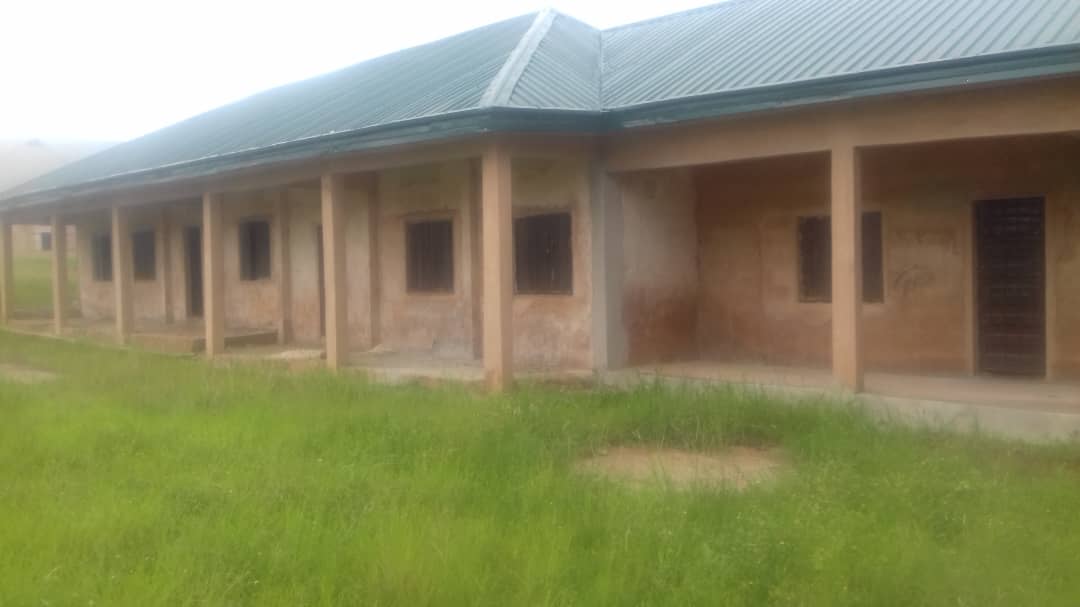
The reporter went back to Community School, Ulakwon to verify his claim and found an abandoned structure that fits Mr. Fred’s description.

When asked why there was no worker on site, Mr. Fred said they had not been paid at all for the project and that they are pleading with the Imo State government to release funds so that the project can be completed.

Ikeduru LGA

Next stop was at Inyishi Central School and Ugirike Community Primary School, both in Ikeduru LGA. At Inyishi Central School, the contract to renovate a block of eight classrooms and office building was awarded to Austin Best Building Resources Ltd at the cost of N14, 850,800.00.

When our reporter visited the site, he saw a building with eight classrooms and an office that was recently renovated with new doors, new windows, new roof and painting. However, the headmistress, who does not want to be named, said the renovation was poorly done. According to her, there were no toilets for staff and students, the doors and windows were wrongly fixed, and she expressed worry that the students may not be provided with chairs, desks or even boards to write on.

Builder Austin Best, the contractor in charge of the project via a phone interview said the contract did not include toilet facilitates for the students or teachers, or provision of desks or boards for learning. On why the windows and doors were wrongly fixed, he blamed the headmistress for introducing an incompetent welder for the job. He claimed he had gone back with another welder to correct the errors and that the work is 100 percent completed.

At Ugirike Community Primary School in Ikeduru LGA, a block of three classrooms under renovation was awarded to Patcordel Ventures at the contract sum of N9, 036,708.20. When our reporter visited the school, he saw a heap of sharp sand in front of the project and scraps of roofing sheets inside the uncompleted building, which indicated that the renovation was recent. Though the building had been roofed, it had no ceiling, no windows and no doors. The wall was yet to be plastered and painted. The project seemed to have been abandoned as there was no worker on site.

Owerri West LGA

At Nekede Secondary School, Owerri West LGA, the renovation of a five-classroom block was awarded to Eldov Transnational Services Limited at the cost of N17, 288,985.00. Mr. Elochukwu Agha, the contact person for the company claimed that the work done was 80 percent. Our reporter saw a five-classroom block being renovated, but there were no workmen on site. The building had a new roof, new doors and windows, cemented walls but yet to be painted. The doors were locked so he could not gain access to ascertain the work done inside the classrooms. The entire school was deserted on the day of visitation.

At Ara Secondary School, also in Owerri West LGA, the renovation of a block of five classrooms was awarded to Benjonalson Nig Limited for N12, 555,467.40. The contractor, Engr. Emeka Anyanwu, claimed that the work is 80 percent completed but what our reporter saw was a building that had been partially demolished and new blocks were being used to patch up the walls. The building had no roof, and no ceiling, no windows or doors. The renovation appeared to be ongoing as woods were hanging from the roof and all over the floor. Also seen were sharp sand and building blocks but the project was far from being 80 percent completed from the reporter’s assessment. There was no worker on site and the school was also deserted.

Isu LGA –

The renovation of a five-classroom block in Central School II, Ekwe was awarded to Panda Giant Developers Ltd at the cost of N11, 420,539.73. The progress report of work done so far by the contractors, as compiled by Williams Ejiakor, the chairman of the aggrieved contractors says the project is 90 percent completed.

Our reporter saw a completely renovated L – shaped five classroom block when he visited the school. The building was not labelled and as such proper verification of who renovated it could not be ascertained. Apart from the renovated building, other structures were in bad shape. The school also has another section named Central School 1. This section needs urgent intervention and overall rehabilitation.

B.U Igweokwu and Associates got the contract to construct a three-classroom block with office, store and toilet at the cost of N16, 500,000.00 in State Primary School, Amandugba. The site engineer who is also the contractor Mr. Boniface Igweokwu claimed that the work is 70 percent completed.

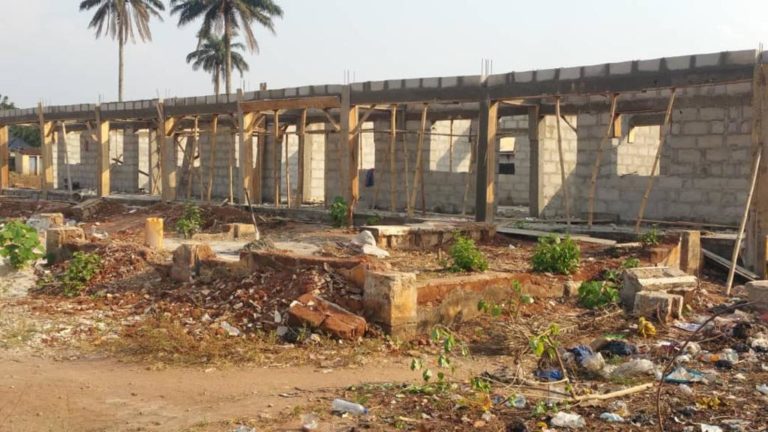
However, what is on ground is an abandoned skeleton of a building that has been built up to lintel level. There was also an abandoned borehole project in the school compound, which was not fenced and the surroundings were over grown with weeds.

Mr. Boniface Igweokwu said the government’s refusal to pay contractors is the reason why the project is abandoned at the moment.

“I have done more than 40-50 buildings, through-out Imo State, in every local government, from Achike Udenwa regime to Ikedi Ohakim, Rochas Okorocha, Emeka Ihedioha and I’ve not seen any government like this Hope Uzodinma’s government. We should have finished this job. The students are supposed to be using this project by now. As I’m talking with you, thieves have stolen all the building materials at the site. If Governor Hope Uzodinma knows the kind of suffering he is causing us, he will pity for us. We can’t sleep normally anymore. We are paying interest, not less than five hundred thousand naira every month on the money we borrowed to make sure we execute these jobs”, he said.

Okigwe LGA

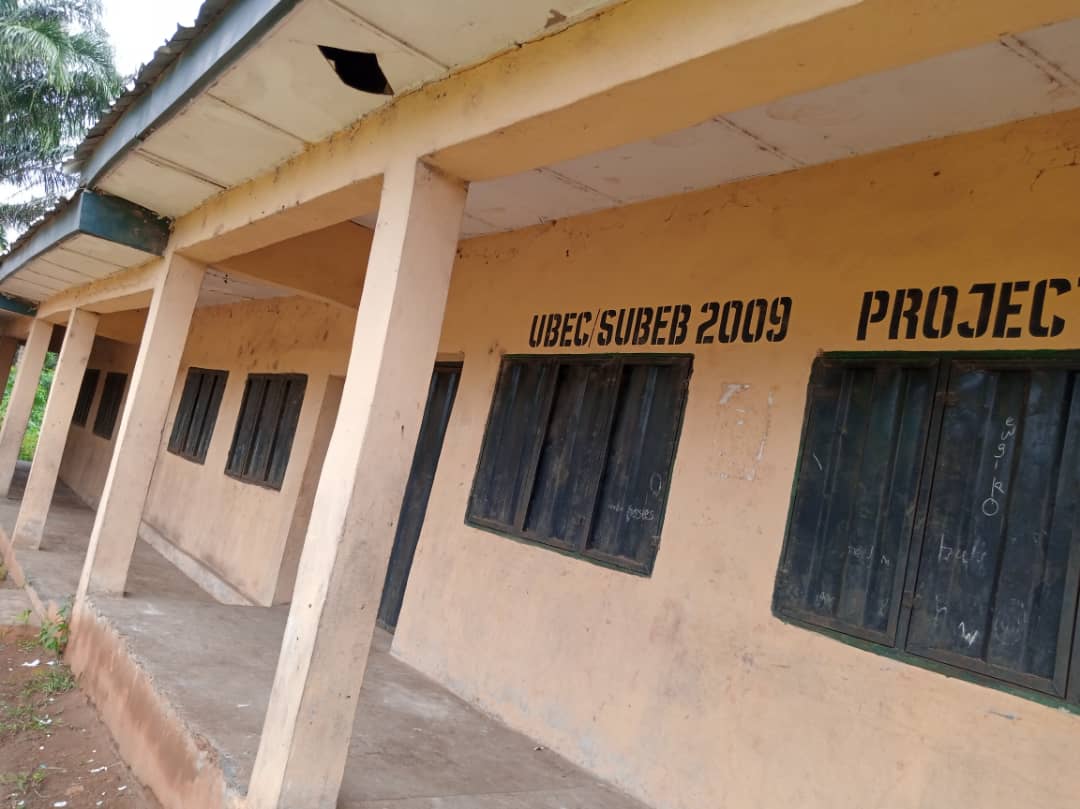
Pete Vincent Entreprises got the contract to renovate a four-classroom block and office at the cost of N10, 589,853.12 in Oguiji Community Primary School. The contractor Sir James Uzoma claimed that the work is 80 percent completed but when we visited, we could not find any structure that was undergoing renovation or construction. The only building with a UBEC sign on it was already in use. Please what exactly does the sign say? Does it give any details you can quote? The sign is UBEC/SUBEB 2009 PROJECT.

Sir Uzoma, in a phone interview insisted that the work he did was the newest building in the school and that what is left for the work to be completed is painting, “If you are entering the school, the building I did is by the left hand side. I have finished my building from ground level, I have roofed it. I have put the whole doors and the whole windows.” Please you need to cconfirm – is this the building you say is under use?

When our reporter went back to Oguiji Community Primary School to verify Sir Uzoma’s claim, a project that fits the contractor’s description was found just by the entrance of the school.

The reporter missed it the first time he visited because there was no sign post to show that the building was a UBEC/IMSUBEB project.

At Ubaha Township Primary School, E Works & Engineering Services Company got the contract to renovate a four-classroom block, office and store at the cost of N10, 589,853.12. Builder Oliver Junior, the project manager for E works and Engineering Services Company claimed that the work was 95 percent done. He described the project as the only recently renovated building in the school.

“The school is seriously suffering from dilapidated buildings, they only have two structures standing there, one of them is the one I have concluded, and it is painted yellow with a green roof.” The Project Manager said.

When our reporter visited Ubaha Township Primary School, he saw that the only building in the school that looked like a recently renovated classroom block had no sign to show that it was done by IMSUBEB/UBEC.

Builder Oliver blamed the Works Department of IMSUBEB for their failure to mount a sign post to indicate the project and the contractor handling the project. He said they have finished the project and sent a letter to IMSUBEB for inspection and payment, and that IMSUBEB has visited and confirmed the work done but they have not been paid a dime.

Oguta LGA

At Unity primary school, a contract was awarded for the renovation of a five-classroom block with Office at the cost of N25, 126,951.50 to Wijiak Nigeria Limited, which, interestingly, belongs to Williams Ejiakor, the chairman of IMSUBEB contractors who has been at the forefront of the protests. Also interesting is the fact that other contracts for the construction of five classroom blocks with office cost far less, sometimes even half of this.

Ejiakor claimed that the project is 80 percent completed. The reporter could not see any special reason why the renovation of a five – classroom block with office was awarded for a contract sum of N25 million. It does not have any special design to justify the contract sum. Parts of the old building were even being patched with new blocks. When the reporter spoke with the contractor about the contract amount, he said he did not determine the bid, so such question should be directed to IMSUBEB.

Ejiakor also said that the government had not paid him anything for the job done.

The project for Priscilla Memorial Sec School also in Oguta LGA is a solar powered borehole with a contract sum of N4, 225,000.0 and awarded to Blez Integrated Services. Mr. Edwin Nwosu, the contact person for the company said the project is 95 perfect completed.

However, when our reporter visited, there was no indicator of an ongoing work for the installation of solar powered borehole in the school. At the time of visit, the school was not in session due to Covid-19 lockdown so we could not get information about the project from the school authority. We however met Mr. Ndubuagwa, a resident of the community inside the school premises who took us round the school. From our verification, we found two Man-Power Pump taps, which were not functional. We also saw an unnamed, uncompleted borehole structure right in front of the principal’s office that fits the description of the IMSUBEB project. It seemed work had been suspended. The only UBEC project seen in the school was that of 2008.

Ubah Community School is the third school visited in Oguta LGA. Oweni Nigeria Limited got the contract to construct a three-classroom block at the cost of N16, 500,000.00.

At the school premises, our reporter saw a building under construction that fits the description of a three-classroom block. The building has green roof but the walls had not been plastered and it had no ceiling, doors or windows. A heap of sharp sand overgrown with weeds was in front of the building. Aside the uncompleted building most of the school facilities were in bad shape.

Wisdom Ukaegbu, a resident in the community who worked as a bricklayer on the project, said the work started in December 2019 but has been abandoned since February of 2020.

At the New School in Ikenazizi community, Obowo LGA, Lynbon Integrated Ltd got the contract to renovate two classrooms and an office at the sum of N6, 000,000.00.

The reporter saw a completely renovated building with a new green colored roof and yellow painting when he visited. It has green colored doors and windows that were shut and padlocked with keys.

At Ofekata Comprehensive Secondary School in Mbaitoli LGA, Benzo Associates Limited got the contract to install a solar-powered borehole at a contract sum of N4, 460,000.00. In the progress report document, the project completion was put at 80 percent, but when the reporter visited, the project was already in use.

It was also noticed that the contract ID was on the project. The reporter wanted to find out why the project was already in use when the Imo State government is yet to pay for it and who wrote the contract ID on the project.

Mr. Duru Benneth, the spokesperson for Benzo Associates Limited said that they finished the project within a month and handed it over to IMSUBEB in the presence of the school management, students and people from the community, with the hope that they would get paid within a short time.

He said the borehole had been in use for more than five months, serving both the school and the community but all effort to get the Imo state government to pay has fallen on deaf ears.

“We have taken so many steps to get our money, one, by writing to the government, both open and private letter, and then also to SUBEB Acting Chairman who seems helpless. We have also written to UBEC who is the supervisory agency to IMSUBEB. we have protested at government house, where they came and addressed us, we have also moved to Abuja for a protest at UBEC office, and since then we’ve writing letters, raising voices, the last thing we did was to resort to fasting and prayer and leave everything to God”, Mr. Benneth said.

At Alaogidi Primary School, in Ideato North LGA the project also had the contract ID on the wall. Spectrum Contractors who got the contract to construct a three – classroom block with office, toilet and store at a contract sum of N16, 500,000.00, claimed that the work done is 100 percent.

The reporter could not gain access into the building to check the inside for the toilet, office and store because it was locked. However, he saw a completely renovated building with green roof, windows and doors. The walls had brown colored brick designs, which was by far the best compared to the other schools visited.

Engr. Kingsley Okwara, the technical director for Spectrum Contractors said the doors are locked and the project not in use by the staff and students of the school because the Imo State government is yet to pay for the construction. He said the school headmistress can attest that the building has three classrooms, an office, a store and toilet facility, and that they even went a step further to furnish the classrooms with white boards.

“After completing the project, I personally went to see the Acting Chairman of IMSUBEB to give her my project completion letter and request for payment, but she rejected the letter. I went again two weeks later but they’ve been giving me different stories. We sourced for funds and started the work in good faith. My creditors are on my neck and I don’t know where to start. We finished the work since February, and since then I’ve been paying loans”, he lamented.

When Darling FM wrote to IMSUBEB requesting for an interview with the Acting Chairman, the request was rejected on the basis of that she is in acting capacity.

Davanla Limited got the contract for the construction of a three – classroom block with office, store and toilet at the cost of N16, 500,000.00 at the Unity Primary School, Obinwanne – Umuaka, in Njaba LGA. Mr. Nocholas Elochukwu Agha, the managing director of Davanla Limited claimed that the work done is 75 percent completed.

Our reporter saw an uncompleted building built to lintel level. It had no roof, no plastering and there were no building materials like sand, gravel and wood at the site, to suggest that work was ongoing.

Mr. Agha, said they suspended work on the project since March 2020 because the Imo State government instructed that contractors should not be paid.

“They have refused to evaluate the work done. They said they will set up a committee to look into the matter but nothing has been done. They refused to attend to the letter of evaluation we sent to the Acting Chairman. When a job has been done up to 75 percent the contractor is supposed to be paid for work done, but nothing has been paid. I had to dispose one of my property in Lagos to fund this project, I even had a terrible accident when I was coming to request for my money…it’s just terrible”, he lamented.

Ngor-Okpala LGA

The contract detail says Nick Peace Limited got the contract to renovate a five-classroom block at the cost of 18,794,169.98 in Nguru Umuaro Secondary School.

There is evidence of renovation of a five classrooms block inside the school premises. The building had a new green roof with no ceiling. The old walls of the classrooms were patched with new blocks. Apart from a small heap of sand seen in front of the building, there was nothing else to show that the work was ongoing.

However, Leo Oke, an old student of the school who was inside the school said the building was being renovated by the Old Boys Association of the school, and not by IMSUBEB/UBEC.

The school was closed when the reporter visited so he could not verify Oke’s claim. Also, all efforts to reach the contractor for comments failed. Please it is not enough to say you could not reach the contractor. State what the efforts were. When and by call or text. What were your questions. Darling FM reached out to Williams Ejiakor, the Chairman of the aggrieved contractors for Nick Peace Limited’s phone number, after IMSUBEB refused to attend to request for information about the contractors. Williams provided a phone number that he said belong to the contractor. Darling FM called the number severally and sent a text requesting for information about the IMSUBEB project at Nguru Umuaro Secondary School, but there was no response.

A similar scenario played out when the reporter visited Ngor Okpala High School where Phillip Darason Dynamic Venture got the contract to renovate a school hall and offices at the cost of N9, 250,310.00.

Abara Calistus, a Project Manager the reporter met at building site inside the school premises said the renovation of the hall and office was done by the Old Boys Association of the school and not IMSUBEB/UBEC. He wondered why the Imo State government would choose to renovate a school hall when the classrooms and laboratory were in dire need of renovation.

The contractor, Philip Darason, said that the hall the Old Boys Association built is different from the one constructed by his company and that his is 100 percent completed.

“I have all the evidence. You should have met the principal of the school; they are in the position to show you the IMSUBEB project. We finished the project since April. We gave the notice to IMSUBEB that we were through with the project. Instead of paying us they told us that the government has not settled down so we should exercise patience”.

“Till now I have not been paid! I took loan from Sterling Bank to finish this work. My father died in July and I don’t have money to bury him. I never expected that my father will be in the mortuary for seven months now, but in all things I give God the glory. Please help me beg the Governor to pay us our money…please pay us our money”, Darason pleaded.

Schools in Imo state were shut down because of Covid-19 at the time our reporter visited many of the schools so the school authorities could not be reached for comment in many instances.

Another thing we observed was that the previous IMSUBEB/UBEC projects in the schools were either 2009 or 2013 Action Plans, which implies that they have no IMSUBEB/UBEC projects for 2014 and 2015. The 2016 and 2017 Action Plans are now being implemented in 2020, but with the impasse between the Imo State government and contractors, no one is certain of when the projects would be completed, inaugurated and handed over to the schools.

Professor Obioma Iheduru, who was the Executive Chairman of IMSUBEB at the time the 2016/2017 IMSUBEB contracts were awarded provided some explanation.

“N3.8 Billion came from the Federal government for those three project years (2016, 2017 and 2018) and to access it, you have to pay your matching grant of 50 percent, which is N3.8 billion. The previous administration under Governor Rochas Okorocha was unable to pay it. It was after the election of Rt. Hon Emeka Ihedioha in 2019, that money was paid, and that money came from Paris Fund Refunds that was due to the state”.

As for the 2016/2017 Action Plan, Prof. Iheduru said the IMSUBEB board decided to renovate one school in the 305 wards of Imo state at a budget sum of N4, 656, 740, 421, 14, but rather than award contracts for 305 projects they settled for 285 in 25 LGAs, so 20 projects in two LGAs were excluded because the budget could not go round.

Darling FM invited a Civil Engineer Mr. Okoro George, to take a look at some of the pictures taken from the project sites and estimate the cost of the projects. Mr. George said the renovation of a five-classrooms block in Nekede Secondary School, for example, which has a contract sum of N17, 288,985.00 should not be more than N3 million.

“Building a new six-classroom block will cost close to N9 million from foundation to the finishing. We built some in Abakaliki in 2019 for the Ebonyi State government,” the engineer stated.

Darling FM wrote to Imo State Bureau of Public Procurement, Price Intelligence and Related Matters (BPPPI) to find out if IMSUBEB followed due process in fixing the prices for the contracts and whether the contractors met the requirements of the agency before the contracts were awarded. What happened? You did not say anything about their reaction

The Bureau advised that enquiries should be directed to the Chairman, Imo State Universal Basic Education Board (IMSUBEB) for appropriate response.

Darling FM also wrote to IMSUBEB to request for an interview with the Executive Chairman. The letter was acknowledged but the Secretary said they could not grant the request because the chairman is in acting capacity.

However, Prof. Bernard Thompson Ikegwuoha the Commissioner for Education accepted our invitation for a radio interview.

When asked why the Imo state Government was yet to pay the IMSUBEB contractors?, the Commissioner for Education said the contractors went about organizing protests and talking to the Press instead of bringing their grievances to his office, and that when Williams Ejiakor, the chairman of the aggrieved contractors eventually brought the matter to his notice, he decided to set up a five-man committee at IMSUBEB to help him know the fact of the matter, since the contracts were awarded before he became the commissioner for education. The commissioner used the opportunity, during the live radio broadcast to announce that every aggrieved contractor should go and individually lay their complaint before the committee.

The interviewer asked the commissioner to explain why a committee had to be set up when the records of the contracts are with IMSUBEB, his response was that he needs to get the contract documents from the contractors and juxtapose them with records at IMSUBEB.

“You know what happens in Nigeria, they may perfect the document at IMSUBEB. Remember, the Chairman of IMSUBEB is now EX, Professor Iheduru. Remember, the Governor of Imo State who awarded the contract is now EX. They may perfect the document here, but what the other ones have are not the real thing. I’m not alleging anything, but it is better to err on the side of caution” he says.

During a prior interview with Prof. Obioma Iheduru, the immediate past chairman of IMSUBEB, who was present when the contracts were awarded, Prof Iheduru said the contractors were not being attended to because IMSUBEB do not have an executive chairman, and that the bank account of IMSUBEB has been frozen by UBEC due to illegality currently going on at IMSUBEB.

When these claims by Prof. Iheduru were brought before the commissioner for education, he said Prof. Ozioma Iheduru was wrong.

“IMSUBEB account is not frozen as of today. Secondly, the board as has been said will be constituted very soon… the Governor has to take his time to make sure he appoints the right people at the right places, and one last thing, UBEC is a joint venture with Imo State, they give 50 percent and Imo State gives counterpart funding of 50 percent, if they want to freeze account, they freeze their 50 percent, they cannot freeze the 50 percent that belongs to Imo” the commissioner said.

However, available information as can be seen in Part 6.2 in the document above (SEE ATTACHMENT FOR DOCUMENT) shows that the 2016 and 2017 projects were awarded with the full knowledge of both Imo State government and the federal entities, and that UBEC did not receive any complaints either from Imo state BPPPI or other state agencies concerning the contracts.

Also, in a letter written to Governor Hope Uzodinma, and dated 8th May, 2020, UBEC revealed that IMSUBEB, in the Nation’s Newspaper of Monday 4th May 2020, invited the public to tender for UBEC/IMSUBEB projects, without mentioning the intervention year or source of funding. UBEC clearly reminded the Imo State government that the 2016 and 2017 intervention projects should have been completed and payment for work done.

After the radio interview with the Commissioner for Education and his announcement that all aggrieved contractors should go meet a 5-man committee at IMSUBEB, Williams Ejiakor came to Darling FM to say that no committee was set up by the commissioner. He said the letter above has been sent to the commissioner to inform him of their findings and that he was yet to get.

Be that as it may, the charade between Imo State government and IMSUBEB contractors continues with all the stakeholders suffering in the face off. The government appears to be persecuting the contractors because the contracts were awarded by a defunct opposition government. To save the situation, Imo state government should verify the claims of work done and pay the contractors accordingly.

* This investigative report was supported by the John D. and Catherine T. MacArthur Foundation and the International Centre for Investigative Reporting, ICIR.

Wastefulness, underfunding cripple key infrastructure in Abuja stadium complex

By Kolapo OLAPOJU

In part two of the series highlighting corruption and mediocrity in the Nigerian sports administration, KOLAPO OLAPOJU spotlights the decay of the Abuja Stadium complex.


WHEN most people hear of the Abuja National Stadium Complex, the ‘main bowl’ is what readily comes to mind but there is more to the ultra-modern modern sports complex than the football pitch.

The stadium is divided into two sections, namely Package A and Package B. The former comprises the 60,000 capacity main bowl while the latter consists of a 3,000 capacity indoor sports hall, 2000 capacity gymnasium, 2,000 swimming pool, among others.

Grass starting to grow in the swimming pool area

Built at a cost of N54 billion seventeen years ago, the stadium is now starting to look like a shadow of itself due to the badly maintained facilities and equipment. Although it was among the best of its kind when used for the first time at the 2003 All-Africa Games, these days, the facility is broken-down.

Poor maintenance

The main bowl and surroundings located in package A often appear desolate, largely because of the ongoing, but painfully slow, renovation by Dangote Ltd through the ‘adopt-a-pitch- initiative of Sunday Dare, minister of sports and youth development.

Abuja Stadium
Main bowl, National Stadium, Abuja

The package B area, on the other hand, is more frequently used owing to the facilities located there. Yet, the regular use of the facilities has done little to stop it from slowly becoming decrepit. The gymnasium, which appears out of use, is surrounded by overgrown weeds and human waste.

A better part of  Package B axis also is taken over by bush so much that  it is easy for a newcomer to miss the cricket pitch. Though, the handball and tennis courts as well as the indoor sports hall are functional, the Olympic swimming pool has been abandoned,  and now derelict. Although shut down, weeds can be seen growing out of the concrete and falling into the pool which now plays host to tadpoles and mosquitoes. Seats by the stand are falling apart with their insides sticking out and much of the metal work has gone to rust.

Faeces at the back entrance of the gymnasium

The ICIR learnt that the much of the maintenance problems in the stadium is due to insufficient attention as only  few personnel are engaged to care for the 29 hectares of land on which it is built.

Some of the stadium workers disclosed that various departments are understaffed, forcing the supervisors to prioritise the places and locations to be maintained. One of such departments is security. Out of six gates in package A, only one is in use and manned,  and same for package B. One of the guards disclosed that the facility manager has written to the minister to request for more personnel.

Disused athlete’s hotel

Along the road leading to the package B axis lies a dilapidating massive building. From a distance, it appears unoccupied but on close inspection, one would discover that people reside there.

External view of Athletic Hotel in Abuja

Alas, it is a 250-room hotel which was constructed and abandoned in 2003. According to people who have worked in the stadium since inception, the initial plan was to use the facility as a lodging area for athletes and national teams when in the Federal Capital Territory for sporting engagements.

It was also intended to generate revenue for the sports ministry. The idea was for it to be used commercially by members of the public – but for the past 17 years, none of those plans has come to fruition.

Several rooms in the facility are now home to the  homeless and destitute while the rest are left to decay.

In the past nine years, several sports ministers have attempted to complete and furnish the facility but their efforts, but none of the succeeded.

In 2011 when Bolaji Abdullahi was sports minister, N81 million was earmarked for the completion of the facility and it was included in the budget of that year. Two years later, another N600 million was budgeted for the same purpose; ‘Completion of Athletes Hostel’.

Internal view of Athletes’ hotel

During the tenure of Solomon Dalung as minister, N14 million and N10 million were budgeted for ‘additional access road to athletes hostel’ and ‘additional furnishing of athletes hostel’ respectively.

The ICIR sent a Freedom of Information request to the ministry of sports and youth development in December 2, asking to know the amount of capital allocation released to the ministry, the contracts approved and executed in respect of the athletes’ hotel between 2011 and 2020. Though the ministry acknowledged receipt of the letter, there’s no response till date.

Similarly, the Budget Office in clear violation of FoIA 2011 failed to respond to a request for a breakdown of the amounts released for the rehabilitation, renovation and/or completion of the athletes’ hotel between 2011 and 2020.

To stop the facility from going under, the ministry of sports has now taken steps to concession it to a private developer with “requisite technical and financial capabilities, as well as operations and management expertise”.

In a request for qualification publicised by the Infrastructure Concession Regulatory Commission, it was noted that the ministry “is desirous of transforming the Athletes’ Hostel, Abuja located in Abuja Stadium (Package B) Complex into a world-class facility to accommodate athletes and provide ancillary commercial activities during local and international competitions”.

Curious case of the high performance centre

A high-performance training program is designed to refine the skills and performance of individuals participating at a high level. The objective is to apply scientific knowledge to develop and enhance the physical capability of athletes.

A functional high performance centre must be situated in a university premises because of the presence of experts in sports medicine, nutrition, physiology, psychology and biomechanics, according to Ken Anubide, director, UNIPORT Sports Institute.

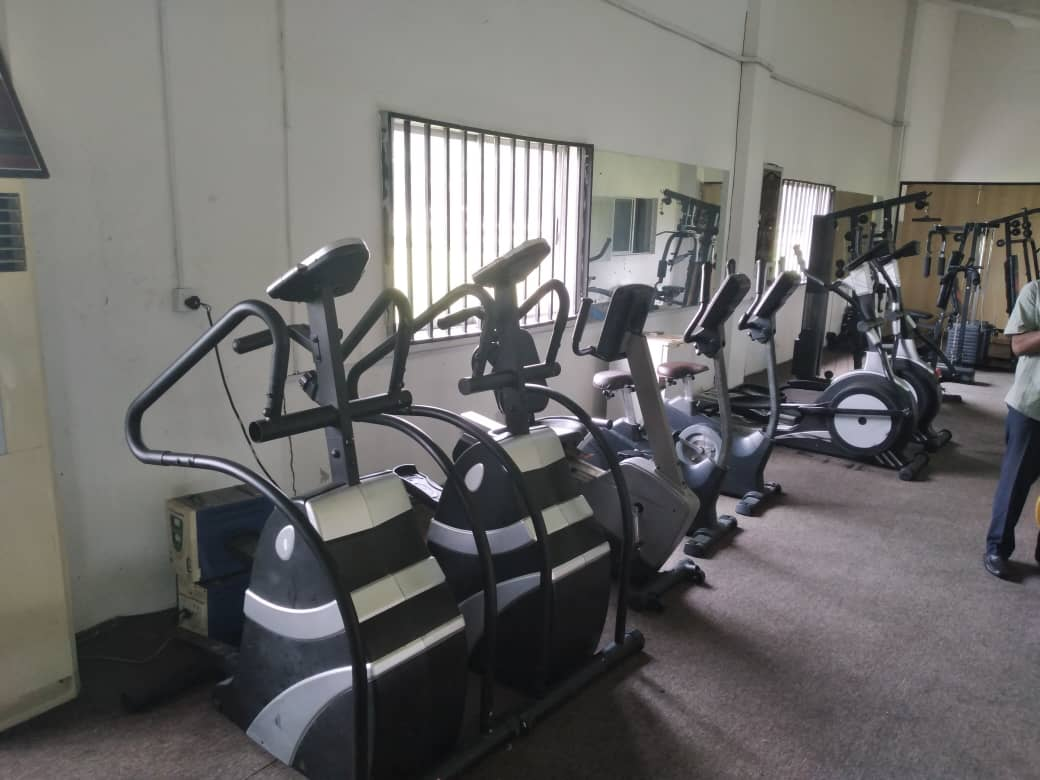
Facilities in the gymnasium at UNIPORT HPC ( now called African Athletics Development Centre)

This line of reasoning was also put forward in 2014 by Solomon Ogba, former AFN president when the HPC was being built in the Abuja Stadium and sports complex. At the time, he said the decision of the National Sports Commission (NSC) to build it in the stadium would be “counterproductive to athletes’ development”.

Five years down the line, that prophecy has come to pass as the HPC in Abuja has not produced any known athlete representing Nigeria at the global stage, when compared to its counterpart in the University of Port Harcourt (UNIPORT).

Also established in 2014, the HPC in UNIPORT, now known as African Athletics Development Centre, has produced superstar athletes like Divine Oduduru, Tobi Amusan, Ese Brume, and Raymond Ekewo. Funded by the Confederation of African Athletes and World Athletics, it also serves athletes from other countries including Gambia and South Sudan.

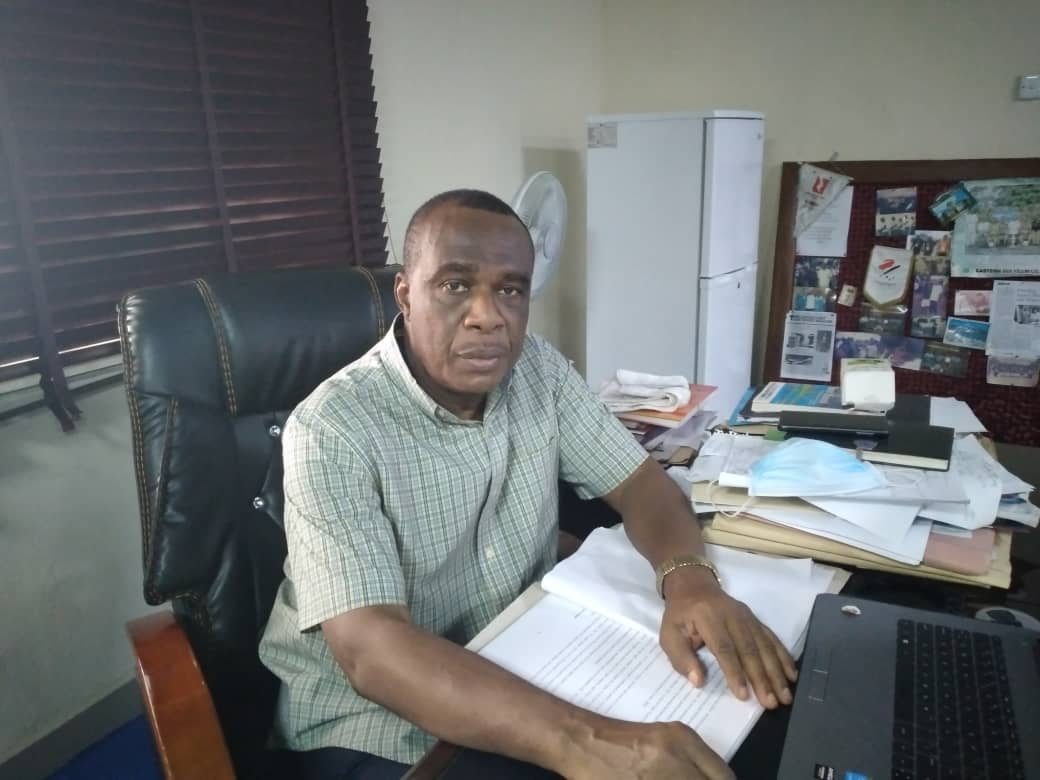
Professor Ken Anubide, director UNIPORT Sport Institute

“Here, we develop the physical and psychological needs of athletes,” says Anubide. “For physical training, we have equipment for strength, endurance, flexibility, speed and agility training. Once you use those equipment appropriately, you can develop the physical capacity of the athlete to any level you want. But they must be put to appropriate use.”

How Abuja got it wrong

A typical HPC is designed to be a concentration camp for athletes to train and lodge before international or national competitions – but that is not the case in Abuja.

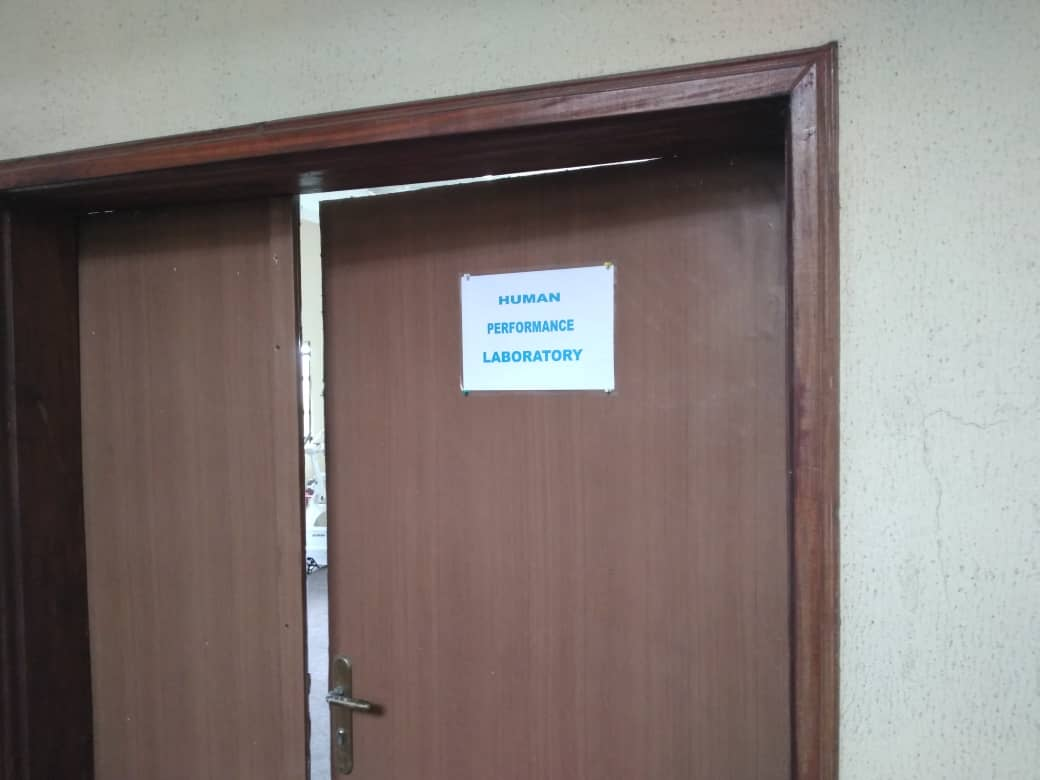
Entrance of Human Performance Laboratory, UNIPORT HPC

Unlike the HPC in UNIPORT, that of Abuja lacks the required facility and equipment. Apart from a 48-room hostel and a sports medicine department, there is not much else in place. The Abuja HPC is bereft of a fully-equipped gym room, diagnosis centre, indoor training arena, beach set-up for leg muscle training, among other facilities – which can be found in UNIPORT.

Medical Examinations Room, UNIPORT HPC

An athletics coach said the Abuja centre was faulty from the beginning, particularly the decision to employ coaches without the scientific advice of experts.

“They just built a place for athletes to come and train. There is no scientific input in it. The coaches – Eric Campbell, Angie Taylor – left after some time because they were not producing athletes and were being owed salaries.”

In 2016, former minister Solomon Dalung alleged that N3bn was approved for the HPC by the Goodluck Jonathan administration. All attempts to reach Bolaji Abdullahi – who was minister at the time the funds were supposedly released – proved abortive. According to Dalung, funds which were meant for equipping the centre and paying experts ended up being diverted.

Around the time Dalung made the claims, Ogba also called for a probe into how the funds meant for equipping the Abuja HPC were diverted but till date, no  investigation has been carried out  by any of the anti-corruption agencies.

Notwithstanding, there seems to be a little hope for the centre at the moment, considering the positive energy of the incumbent minister, Sunday Dare.

But not many staff of the ministry are optimistic yet.  “We are a long way from having a functional facility. It can’t even happen in the next 3 years,” said a doctor who works with athletes.

You can also read the first and third parts of this series: 

INVESTIGATION: How ‘Pinnick era’ of funds misuse, zero transparency is killing Nigerian football

INVESTIGATION: Poor pay, shaky structure, zero transparency sound death knell for Nigeria’s premier football league

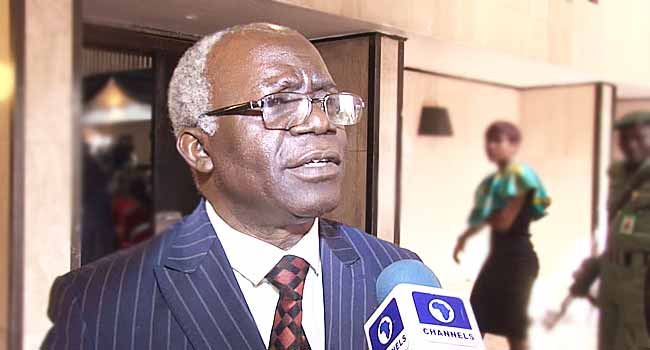
ENDSARS: Falana-led group launches panel to investigate rights abuses by police, others

MORE respite has come the way of persons who have suffered rights violations in Nigeria from law enforcement agents, as a group led by foremost human rights lawyer and activist, Femi Falana (SAN) has unveiled an investigative panel into such abuses.

The group, Alliance for Survival of COVID-19 and Beyond, (ASCAB) in a statement said though the formation of the panel was on the backdrop of recent #EndSARS protest across the country, the panel would welcome petitions on all forms of abuse from security operatives, regardless of when the infringements occurred, in as much as such violations can be substantiated.

ASCAB claimed it is Nigeria’s leading coalition, comprising 80 civil society groups, including but not limited to the nation’s leading labour movements.

Nigeria witnessed unprecedented nationwide protest against police brutality in October 2020.

The protest, among other demands, sought the scrapping of Special Anti-Robbery Squad (SARS) unit of the nation’s police – a unit that was notorious for the crimes it was meant to prevent.

Citizens in the diaspora, renowned personalities from different parts of the world and top artists citizens physically joined the protest in embassies outside Nigeria and cities witin the country, while other eminent persons across the globe showed solidarity on social media, using the hashtag EndSARS.

The protest was later hijacked by hoodlums who resorted to arson, looting and wanton killings.

The Federal Government abolished the unit but soon came up with the Special Weapon and Tactic (SWAT).

One of the decisions taken by government, in response to the rage, was to set up judicial panel to investigative the infractions and award penalties for erring officers and compensation for victims.

About 30 states have set up the panel, including Katsina, Kogi, Bayelsa, Delta, Ekiti, Plateau, Bauchi, Anambra, Enugu, Nasarawa, Adamawa, Taraba, Edo and Ondo states. The panels have been since been sitting.

ASCAB’s said persons who have already filed petitions before the state-backed tribunals can further approach its “Citizen Tribunal” since outcomes and investigations of petitions might defer in form or content.

In the statement tagged “Call for complaints of Human Rights Violations by Police, Military and Other Law Enforcement Agencies in Nigeria,” ASCAB said the Citizen Tribunal would enrich investigations into the age-long abuses suffered by Nigerians in the hands of the nation’s security outfits.

The Citizen’s Tribunal parades an array of seasoned labour, civil society and a retinue of experts from the international community, the group boasted. It is headed by a Senior Advocate of Nigeria, (SAN), Mr Chino Obiagwu.

“The Panel is to receive complaints from the general public of violations, before, during and after the #EndSARS protests across Nigeria. To this end, the panel hereby calls on the general public, especially families of those who lost their lives or who suffer one form of human rights violation or another” ASCAB said in the statement signed by the panel’s chairman.

The panel said: “All interested victims regardless of whether they have approached the official commissions of inquiry set up by the state governments or not can submit memos to the Citizens Tribunal. To this end, all victims that have submitted a petition to the official commissions of inquiry should indicate if they have, and specify which of the commissions they submitted their petitions to. This will enable us follow up and track petitions at the official commissions.”

Every complaint is expected to contain the names of the victim(s), date, time and place of violations, type of violation suffered, name of the perpetrator (if known), name of agency of the perpetrator and any action already taken in the matter.

The Citizen Panel is open to all Nigerians including the media, Mr Falana said. He noted that the panel would employ best global practices to unravel the misery encountered by victims of the disbanded SARS.

He said ASCAB would employ litigation where necessary to enforce justice which may include compensation for victims.

“ASCAB also wants victims to submit contact details of the petitioner, including name, residential and office address, functional numbers including whatsapp number (if available) and email address.

“According to the complaints can be submitted in writing or by SMS, WhatsApp message, email or by telephone call to the address and telephone numbers through citizenstribunalng@gmail.com, peoplestribunalng@gmail.com, 09153684686 (Whatsapp), 09025243545, 08098944313, 09134868681

“Obiagwu said the panel would hold public sittings at various locations across Nigeria to hear oral testimonies of complainants, and demand accountability from the concerned law enforcement agency.

“Where it is not possible to have physical meetings with any victim and his or her family, the panel will arrange virtual meeting,” the statement reads.

Nigeria has been rife with rights abuses, as soldiers, police and officers of paramilitary agencies have been variously accused of assaults, arbitrary arrest, detention, rape, killing, extortion among other heinous crimes against people in the country.

In November, a short video circulated on the social media showing a soldier whipping a woman over alleged indecent dressing.

The state government promptly issued a statement notifying the public of the officer’s arrest by the authorities.

After the EndSARS protest, a number of rights abuses have been recorded against the Nigerian police.

On Wednesday December 16, angry youths burnt down Igboukwu police station in Aguata local government area of Anambra state, following the shooting and killing of a motorcycle rider by a police officer in the area.

Revelations emerging from judicial panels sitting in various states in the country over the EndSARS protest and previous abuses have been making headlines since they were inaugurated.

A slap in the face for Mr President

0
BY Ayodele AKINKUOTU

AFTER a seven-day retreat on his farm in Daura, Katsina State, President Muhammadu Buhari must be back in Abuja by now. The one week holiday should have given him some respite from the hurly burly of governance. Certainly, even in the best of times, running the affairs of Nigeria is an onerous task.
There is no doubt the job must have become more daunting, especially this year which has been laid prostrate globally on the socio-economic sphere by the challenges of the COVID-19 pandemic. For our country, the challenges are more grave because they have been compounded by criminalities of all kinds, insurgency in the Northeast, banditry in the Northwest, kidnappings and robberies in the South.
That is aside the restiveness in the Niger Delta., which is the goose that lays the country’s golden eggs. Yet, while leaving Abuja for his home state, Buhari could not have believed that his government was about to be confronted by another security challenge from Boko Haram right in his backyard.
The nation woke up on the morning of Saturday, December 12 to learn that some students of Government Science Secondary School, Kankara had been kidnapped. For a country where transparency in governance is an aberration, there is already confusion as to the number of students that were abducted. While the federal government claims 10, Katsina State government says it is 333, but the abductors put their own number at 523. It is a repetition of the dispute in figures that happened late November, when the same insurgents murdered farmers in Borno State. The official figure was 48; one of the survivors put the number at 78, because, according to him, there were still many bodies yet to be retrieved from the forest as at the time of the burial of his colleagues; but a United Nations agency said at least 110 farmers were killed.
In the 10 years of the insurgency, about 30,000 civilians are believed to have been killed by the insurgents. And hundreds of soldiers have paid the supreme sacrifice. Over two million people have been displaced. Many are in refugee camps, while a substantial number have become beggars in the Nation’s urban areas. The rising prices in foodstuffs have been attributed to farmers’ inability to cultivate their lands in peace because of insurgency.
What is amazing about the Kankara kidnapping is its brazenness. That the bandits could decide to strike on a weekend the Commander-in-Chief was enjoying his sleep some kilometres away from their target speaks loudly not only of their dare-devilry, but that the country’s security architecture has become impotent. This is not the first time they are giving Mr. President a slap in the face.
In the same Katsina, someone close to him was kidnapped not too long ago. So, as they get bolder by the day, the bandits are simply telling us that anybody is game in this business for ransom. They showed us a definitive example of this when they attacked the convoy of Governor Babagana Umara Zulum of Borno State twice within three days last September. Many people in the convoy, including policemen and soldiers, lost their lives in the encounters. If they had succeeded in overwhelming the security men guarding the governor, would they not have abducted him?
What the insurgents’ effrontery clearly indicates is that the 10-year war against insurgency seems to have become grounded. Rather than being on the offensive, the Nation’s gallant soldiers are now on the defensive. And for a Nation’s military to be in that stage in an unconventional war leaves much to be desired.
The impasse the nation is in today is not new. Under President Goodluck Jonathan, Buhari’s predecessor in office, a large swathe of Borno State was captured by Boko Haram. Led by Abubakar Shekau, they even made Gwoza, a popular town in the state, the capital of their Caliphate. They were emboldened by the ease with which they kidnapped 276 female students of Chibok Secondary School. That was in April 2014. Six years later, while some of the students had regained their freedom, about a hundred of them are still with their abductors.
In fact the terrible insecurity in the land was the major albatross of the Jonathan administration. Buhari was in the forefront of the call for Jonathan’s resignation if he could not guarantee the security of Nigerians. And when Buhari decided to contest for President in 2015, his third attempt, his campaign was hinged on the promise to put an end to the crippling insecurity in the land.
Shortly after he assumed office, true to his words, the insurgents were flushed out of the 15 local governments in Borno where their word had become law. However, since those initial gains, the country has slipped back into that climate of fear, where kidnappings, robberies, and cold-blooded murder of innocent and law-abiding citizens have become the norm.
This state of perpetual siege has given rise to calls from all over the country for an overhaul of the security architecture. Top on the list of that overhauling is the demand from both laymen and security experts for the chiefs of staffs of the army, navy and airforce to be replaced. The incumbents in those positions have been there for five years. In the 15 years, 1999 -2015, that’s beginning from May 29, 1999, there were eight chiefs of army staff. But the incumbent, General Yusuf Buratai, and his colleagues, have been in office for five years, and still counting, thus becoming the longest serving service chiefs since 1999. Many of their juniors, some of who should have succeeded them, have retired from service.
One prominent Nigerian, who lately called the government’s attention to the deteriorating security situation in the country is the Sultan of Sokoto, Alhaji Muhammad Sa’ad Abubakar. At the quarterly meeting of the Nigeria Inter Religious Council, the Sultan highlighted the need for a serious dialogue to discuss insecurity in the country. According to him, “we have not run out of patriotic, distinguished Nigerians who can proffer solutions to the problem”. And Governor Kayode Fayemi of Ekiti State is of the view that the current military chiefs have been overwhelmed. Thus they are unable to bring something new to the table in the bid to revamp the war against Boko Haram.
Shortly after the massacres of the farmers in Borno, the House of Representatives requested the President to come to the National Assembly to brief the nation on what was happening. Initially, the President agreed. Twenty-four hours before he was due to appear, however, he changed his mind. Abubakar Malami, Attorney General and Minister of Justice, claimed that the lawmakers cannot summon the President.
With that development, many Nigerians could not but raise their eyebrows as to what is going on. Why would the President remain silent while criminals are on the rampage? Even if the lawmakers did not request him to brief the nation, why does he and his aides not deem it fit for him to so do to assuage the apprehension that has held the country by the jugular.
Buhari was elected in 2015 on his promise to change the poor security narrative, by rescuing Nigeria from the abysmal depth of despair it had found itself. While not a few thought that he performed poorly in his first term, his second term which is 19 months old is looking gloomier. Thus his two-term presidency, without any significant achievement to show for the eight years, may end up as a mere footnote in the Nation’s history.
What is amazing is the kind of asinine reasons given for the failures of the military in the war against insurgency. We have been treated to laughable postulations by government spokesmen on the inability of the military to procure equipment and arms. This is because some countries have allegedly refused to sell arms to Nigeria. So, if the West is hostile to us on the issue of arms, why not look elsewhere? Are Russia and China also our “enemies”? It is curious that insurgent groups like Boko Haram are able to purchase high-grade weapons, and a legitimate government with all the money budgeted for defence yearly is unable to do so.
What is not in doubt is that some people are certainly profiting from the chaos that has become second nature in the Nation’s security architecture. Or how do we explain what transpired in Abuja on Wednesday, December 16? Some groups, consisting of several social and religious groups from the 19 Northern states had gathered to deliberate on the insecurity situation in the country. Shortly before their deliberations started, some hoodlums stormed the venue and chased them out. Certainly, the godfathers of these thugs are part of the reasons why the Nation’s security architecture is comatose. So, where do we go from here? As he returns from his not so restful retreat, President Buhari needs to find the answers to the security challenges because the buck stops on his desk.

Two Bauchi Senators took N249 million for dubious Constituency Projects

By Haruna Mohammed SALISU


SENATORS representing Bauchi North and Bauchi South received 249 million Naira in 2019 for constituency projects but blew the opportunity to use it to empower scores of their poor constituents.

Not only was the shoddy training politicized, the beneficiaries in Bauchi North were all trained in one day for less than six hours, jam-packed in a single hall for all the trades without the chance to choose which trade they preferred. Many of the beneficiaries were neither given start-up capital nor did they get working equipment to practice the trades for which they were trained.

Also, the National Productivity Centre and the Federal College of Horticulture, which are the implementing agencies for the two constituency projects, could not offer any explanation as to how the projects were implemented.

A sunny Saturday of October 31, 2020, was like any normal day for Danlami Badamasi, a resident of Gamawa town, over 259 kilometres away from Bauchi metropolis. Badamasi had come out for his usual welding job, a business he has done for close to two decades. He is one of few All Progressives Congress’s (APC) card-carrying members in Gamawaand describes himself as a ‘staunch supporter’ of Adamu Muhammad Bulkachuwa, senator representing Bauchi North Senatorial District.

Badamasi was one of the youths selected in 2019 from across the 7 local government areas that make up the Bauch North Senatorial District where they converged at the Event Centre, Azare, for a one-day training on four vocational skills sponsored by Bulkachuwa, their representative at the Upper legislative chamber.

Several beneficiaries of the training said they were all put in one hall and trained in different trades, including barbing, hair dressing, detergent and pomade making,all within the space of six hours.

This newspaper could not obtain the exact number of the trainees, as the constituency office of the senator was uncooperative, but Badamasi puts their total number at around 70.

In 2019, about N169,000,000 was disbursed in three tranches to Senator Bulkachuwa of for “skill acquisition training and youths and women empowerment” projects which covers Zaki, Shira, Jama’are, Giade, Gamawa, Katagum and Itas Gadau local government areas of Bauchi State.

The project was domiciled at the National Productivity Centre (NPC) through Ministry of Labour for implementation.

Badamasi was selected through campaign coordinator for Bulkachuwa,Bello Shehu Gololo, who later metamorphosed into his legislative aide.

“I had no knowledge whatsoever on the kinds of training that would be offered until I went to the venue of the training”, Badamasi said.

“If I was given a choice, I wouldn’t have opted to learn barbing or detergent making, I would have chosen to learn new techniques that will help me improve the business I am known with for close to 20 years. I would have expanded the business and incorporated a lot of other things; especially, I would have been building modern doors by now if I got more skills and enough capital”

What amazed Badamasi was that the training conducted for few hours housed different kinds of trades such as pomade making, detergents preparations and barbing for both men and women—all carried out in few hours in a single classroom.

Badamasi said they were given various trainings at once and in a single hall “as against the initial plan they told us, where everyone was supposed to be trained on one skill that they can utilised after the training.

“I was given N50, 000 and a generator after the training, but I sold the generator at the rate of N8, 000 after the training because it was not good”

When asked why he sold the generator at a giveaway price, Badamasi said “it has coil problem, and I cannot endure fixing it”

Danlami Badamasi, Bulkachuwa’s barbing trainee, originally a welder

Although Badamasi and Umar Lamara live approximately 100km apart, they share many things in common—they are both trainees of Bulkachuwa’s empowerment project who were unable to put into practice what they were purportedly trained.

For Lamara from Shira Local Government Area, the training was a complete waste of time because “it was too short to enable us master the skills for implementation”.

Lamara said although he got selected through his mother, who is the APC women leader in Shira LGA, he got N50, 000 after the training but could not practice the trade he was hastily trained in.

Lamara’s mother Hajiya Rabia Isyakawas also a beneficiary of the empowerment project. At first, Rabia tried to convince WikkiTimes that the training actually took place and it was “very effective”. When our correspondent inquired further, requesting that she takes him to where she was preparing the detergents for which she was trained, the narrative changed.

At a point she told our reporter that she was producing the detergents at another place and that she had used the N50,000 given to her during the training “for buying and selling of wrappers”; at another point, it was a different story.

When the reporter insisted that he wanted to see some of the detergents Rabia was producing and how she was making profit, she took the reporter inside her house and presented to him a locally carved wooden chair as the proceeds of the empowerment training.

“But this is not detergent Hajiya?”, WikkiTimes pressed. She smiled and said “you know it’s a decision of our leaders, we don’t have any option, and we can’t challenge them”.

Rabia later conceded to WikkiTimes that the training was indeed ineffective and could not yield the desired result in allowing women and other trainees put into use the skills they learnt.

Rabia Isyaka, displaying her carved wooden chairs as against detergents for which she was trained

Like her son and Badamasi, Rabia confessed that had she been consulted before the training, she would have preferred to be trained on how to modernize her local trade to carve modern wooden chairs, which she says were more marketable and profitable within her domain than detergents.

“If I will be consulted next time for training, I will prefer to be trained on what am doing and a capital of N100,000 will turn my fortunes around as a woman”, she said.

She admitted that lack of proper consultation of the beneficiaries to know what kind of handwork they are interested in and whether such skill they will be trained on has market value or not is part of the reasons why some women have remained poor despite being trained in some skills.

She said if women are given training in the areas of tailoring, knitting, pomade making “and have enough capital base, it will go a long way in changing their narrative for the better and they will make more sales that will sustain them and their families.”

In Jama’are local government where Bulkachuwa was said to have also trained about 11 beneficiaries, WikkiTimes tracked only two beneficiaries – Hamza Ahmad (AKA Amjet) and ShuaibuBazataro. The two were trained alongside others in various skills, but they were initially shortlisted to be trained in barbing.

Ahmad Amjet, Bulkachuwa’s trainee who did not receive empowerment support

Bazataro is the only beneficiary that was given a tiger generator and N50, 000 start-up capital to expand his business, “because I’m already a full-time barber even before the training was held”.

His colleague, Ahmad was only given the sum of N50,000, “but I was not fortunate enough to get other equipment like generator, clippers and so on like my colleague who got the money as well as the barbing equipment and a generator.”

“They promised to make them available to me but up till now that I am talking to you, I have not heard from them. It was Shehu Gololo (Bulkachuwa’s legislative aide) that promised that I will get the rest of the package after the training, but up till now, nothing is been heard from him,” Ahmad lamented.

The two beneficiaries who spoke to WikkiTimes in Jamare said of the 11 beneficiaries that were trained there, only one was fully equipped with empowerment tools and start-up capital to fully put into use the skills they have acquired, but Ahmad managed to move on with his business even without the remaining equipment since he was already a barber like his colleague.

“Only two of us are currently operating at the moment, out of the 11 beneficiaries”, Bazataro has said.

The same scenario played out in Shira Local Government Area where only one beneficiary, Abdullahi Muhammad SarkinAska, was fully operating as a barber after the training “because it has been my business even before we were co-opted to participate in the training”.

SarkinAska, Bulkachuwa’s only trainee Shira LGA who was able to continue his trade after the empowerment training

But two other colleagues, Rabia and her son, Lamara, were not so lucky to commence business since the training did not accord them the opportunity to select skills of their choices, just as it did not give them the equipment and capital to commence operations.

Of all the beneficiaries tracked by WikkiTimes, this medium can authoritatively report that “so called empowerment training” was marred by glaring irregularities, just as its impact is not felt by the beneficiaries of the training.

WikkiTimes Reporter Threatened

At about 12:45pm, on November 1st, WikkiTimes reporter accompanied by his fixer drove to Gamawa to identify and interview some beneficiaries of Bulkachuwa’s constituency projects. The reporter’s fixer called one Bashir Shehu from Gamawa who was privy to the training and through whom the team hoped to get other beneficiaries of the training.

Bashir who said he had limited knowledge about the beneficiaries of the training resolved to call Bulkachuwa’s legislative aide, Buba Shehu Gololo, who was said to be the architect of the empowerment training in the seven LGAs that make up the constituency. Although this reporter could not hear the phone conversation between Bashir Shehu and Mr. Gololo, Shehu later sighed and dropped the call.

When WikkiTimes inquired why he dropped the call with Gololo so abruptly, Shehu, who looked visibly frustrated, became uncooperative.

“I’m sorry, I can’t go on giving you guys any information because Gololo just warned me that I should not in any way link you up with any beneficiary of the training. “The whole thing is fishy in my opinion, so for anyone to be warning me using insulting language on me, I can’t tolerate this.”

Bashir Shehu answering calls from Gololo, Bulkachuwa’s legislative aide

“They are telling me that I have committed a crime by attending to you guys; let me even tell you, my involvement in Senator Bulkachuwa’s political sojourn is just a waste of time on my side because I did not benefit anything despite the suffering, we did for him.

“He said if I go on with you guys, I’m doing so at my own peril”, Bashir told our reporter in anger. He apologized, jumped on his motorcycle and left the reporter and his fixer stranded in Gamawa with no one to talk to.

But the reporter and his fixer remained undeterred despite Gololo’s warning. WikkiTimes moved round the town to inquire from people whether they know anyone who received empowerment training, in the end, only one beneficiary, whose story was mentioned before was tracked and interviewed.

The same stumbling block played out in Zaki LGA. Claims suggest there are other beneficiaries of the project in the LGA, but Gololo’s move blocked the reporter from accessing the supposed beneficiaries. The reporter’s fixer had initially called one Abdullahi Tijjani, who agreed to help the team meet some beneficiaries, but the story changed upon their arrival.

“Gololo warned us not to attend to you, he said you guys should call him if you want any information about the beneficiaries of the empowerment training”, said Abdullahi Tijjani.

The reporter decided to call Gololo to explain why WikkiTimes was interested in tracking and interviewing the beneficiaries of the intervention.

‘I just had a conversation with Senator Bulkachuwa regarding what you guys are trying to do, he told me to convey to you that he is not interested in anyone tracking beneficiaries of his training for whatever motives.

“Anyone who insisted in doing that, he is doing so at his own risk, that is what Senator Bulkachuwa told me to convey to you. Since you were in Gamawa, I learnt that you guys are trying to speak to the beneficiaries, anybody who does any form of interview in the name of tracking empowerment training beneficiaries is just risking his life”, Bello Shehu Gololo warned WikkiTimes correspondent on telephone.

A few minutes later, Gololo called WikkiTimes for the second time.

“Mallam Haruna, this message I’m delivering to you is directly from Senator Bulkachuwa, the senator said he is not interested whatsoever and for whatever mission for someone to come and do any form of press coverage with the intent to promote him or whatever, and he asked me to tell you that anyone who interviews anybody on this project has done so at their own risk”, Gololo told our reporter.

A subsequent visit to other LGAs to track and interview supposed beneficiaries was unsuccessful as Gololo had reportedly communicated to beneficiaries not to entertain any press inquiry regarding Senator Bulkachuwa’s constituency activities.

Another scam-like training programme in Bauchi South Senatorial District

Lawal Yahaya Gumau, Senator representing Bauchi South Senatorial District is also involved in glaring constituency scam.

Senator Lawal Yahaya Gumau got N80 million (Eighty million naira) in 2019 for constituency projects at different intervals for “empowerment and training in dry seasonfarming in Tilde, Toro LGA and empowerment of youths in Agricultural practices and development in Bauchi South senatorial district.”

The project was domiciled at the Federal College of Horticulture,Dadin Kowa, Gombe as implementing agency, which was to identify and train beneficiaries in Bauchi South Senatorial District.

Investigations revealed that no such training was carried out by the Federal College of Horticulture. Instead, youths and women were partially trained by a local Non Governmental organization, NGO, on computer skills, tailoring and detergents making.

Almost all the beneficiaries interviewed by WikkiTimes said they received the training halfway and there was no empowerment equipment or start-up capital given to them to commence operations.

For instance, Aisha Dauda, from Tilden Fulani, was trained on how to make pomade cream and liquid detergents for car wash.

During the training, they were jam-packed at a Tilden Fulani Primary School and trained for just a few hours.

Aisha said she along with 29 other women, were trained in detergents making, but unfortunately for her, the training remains a waste of time because she lacks the basic capital to commence operation.

Aisha said she needed only between N30, 000 and N50, 000 as capital to commence operations, but regretted that the promised made during the training that Senator Gumau’s constituency package also involves capital for them to start their businesses remains a fiction.

“In fact, even the chemicals used during the training, we had to buy them,” she said.

Aisha, a firewood seller, said she had to revert to her usual business after “the so-called empowerment training”, which she considers a waste of time.

She also lamented that “in my street alone there are six of us who received similar training, but we still could not do anything because we don’t have capital to commence business.”

Lack of capital to start the business was not the only concern Aisha had. She also wondered how about six of them living on the same street could be trained in same skill without due recourse to potential market for the beneficiaries.

Asmau’u Mohammed Ahmad is an SS2 Students at Comprehensive Secondary School Tilden Fulani. She said she was privileged to be shortlisted to participate in the training through her father, a card-carrying member of the APC and a staunch supporter of Senator Gumau.

Asma’u was trained in tailoring, but no startup capital and no sewing machine was given to enable her start operations. At the moment, she has jettisoned the training to continue with her education.

Rahama Abdullahi was enrolled during the training to learn tailoring. She said she was selected because of her loyalty to the All Progressives Congress, having worked for the success of Senator Lawal Gumau.


Her major regret is that upon completion of the training, she was not given the sewing machine promised to her during the training.

She said she was trained for one month but the training ended in futility since what she was trained on is not what she currently does.

Gumau Connived With Local NGO For Jamboree Trainings

In order to facilitate his shoddy constituency empowerment training, Lawal Yahaya Gumau connived with a local non-governmental organization, NGO, African Unity Foundation, to train constituents as against the statutory implementing agency, the Federal College of Horticulture Dadin Kowa, Gombe.

The local NGO also trained in computer skills acquisition as against “empowerment of youths in agricultural practices and development”, for which the money was principally allocated.

In order to establish how the lawmaker connived with the NGO, WikkiTimes’ correspondent pretended to be calling on behalf of a federal lawmaker in Plateau State who was impressed with the training conducted by the organisation on behalf of Lawal Yahaya Gumau in Bauchi South Senatorial District.

In a telephone conversation with Barrister Umar Munir, the Executive Director of the NGO, the reporter said he wanted a similar training to be conducted on behalf of a Plateau lawmaker.

Findings by this reporter suggests that Lawal Yahaya Gumau trained a paltry of 30 constituents on computer acquisition skills with no empowerment materials or start-up capital to enable them become self-reliant as has been the objectives of every empowerment training.

Asked whether Yahaya Gumau gave laptops for the beneficiaries after the training, he said “No,we did not give them any computer, we only gave them certificate after the training.”

The NGO says apart from computer acquisition trainings, they also trained constituents on “soap making and other household programs.”

It said that it cost N7,500 to train each beneficiary on computer skills acquisition that will last between three weeks to one month.

Federal College of Horticulture Fails to Provide Training Details

On November 23, 2020, this reporter headed to Dadin Kowa, about 45km away from Gombe to inquire whether the Federal College of Horticulture, the implementing agency for the youth development programmes carried out the training.

The Provost of the College, Dr. Babawuro Mahmud,  turned down a request to interview his principal.

“You are a journalist, what is your business with constituency projects”, Babuwuro started.

The Provost, who was visibly angry with this reporter, started shouting even before he was availed details of what the information required.

“Hey, listen to me my friend, we have to be very careful, the members of NASS are our bosses, do you understand, it’s their works. Because we don’t know who you are, maybe you’re their political rival, so we cannot just start giving information like that”.

When our reporter tried to explain to the Provost that he was bound by law to make the information available based on the provisions of the Freedom of Information Act, FOIA, Babuwuro refused to listen but kept interrupting him.

“Let me tell you, that is not your work, it’s not your business whatsoever to try to find out any details about constituency projects; just wait, if we finish building our website, all this information will be uploaded there for everyone to see”, he insisted.

“In fact, where is your ID card, you are a reporter of which medium”, he queried.

When the reporter presented his Identity card, Babawuro said “then what is your business with all the information you are trying to obtain? As far as I’m concerned, you are a card-carrying member of the PDP.

“Because it appears as if you are working for the PDP. Fine, you are trying to find information about the projects right?, he asked.

“We have done all of them. It’s a continuous process. We have done all the projects and we are still doing more”, he said.

When WikkiTimes insisted that Babawuro present a comprehensive list of the beneficiaries, their location, when the training took place, and pictures or any other means of verification to buttress his claim that the training actually took place, he vehemently rejected the plea.

“You don’t have any business with that information my friend, you guys would have attended when the training was going on if you actually wanted to see us doing the training.

“Why are you even interested in 2019 training, why wouldn’t you look forward and focus on the upcoming trainings, answer me; are you an auditor?

“Please can you guys leave my office; we are having a meeting.”

“You cannot be asking us on something that has already been concluded, we are doing another one in 2021, we cannot be answering questions on something that has already been concluded.

“Let me tell you, I was invited to Abuja by the office of Public Account Committee. You don’t even know the implication of what you are talking about.”

“Anybody who would say that, let him go and say it, we can sue him to court. Look, we have a lot of works, even in 2021, more works are coming that this institution will carry out, we have done plenty of projects including in Maiduguri”, he argued.

Babawuro presented a training Manual where the institution conducted “Orchard Establishment, Management and Handling of Fruits and Vegetables in Borno and Gombe States” in 2020 to substantiate his claim that the college had conducted a lot of constituency trainings.

Asked to present a similar training manual for the training he said was conducted in Bauchi, he failed to do so, just as he failed to provide details on the number of beneficiaries of the training, selection criteria used in selecting them, the trades the beneficiaries received training on, the empowerment materials distributed and so on.’

Dr. Babawuro presented Borno and Gombe training manual

Questionable Empowerment Projects

Traditionally, a legislator is expected to identify the location and the kinds of project to be implemented in their constituencies. After identifying the needs of his/her constituents, the National Assembly then reflects such needs in the budget of relevant ministries, departments and agencies, MDAs, which then advertises the project in line with Public Procurement Act.

WikkiTimes findings revealed that the process of implementation of the investigated Bauchi constituency projects remain cloudy as there is no evidence to suggest that the relevant MDAs, National Productivity Centre under ministry of Labour and Federal College of Horticulture were the implementers of the two projects.

For instance, Federal College of Horticulture failed to provide any evidence that they trained women in dry land agriculture in Bauchi. The college handed down a training manual they conducted in Borno and Gombe states, but failed to produce same manual or any other information that will buttress their claims that such trainings were conducted in Bauchi South.

Constituency Empowerment Projects as Reward for Political Loyalists

Despite the fact that the two lawmakers’ projects were marred by glaring irregularities and sharp practices, it was discovered that the empowerment projects were used to reward their political loyalists.

Of all the beneficiaries tracked and interviewed by our reporter in the two senatorial districts, most admitted that at one point or another, they had worked for the victory of AdamuBulkachuwa and Lawal Yahaya Gumau, noting that the training was a payback time for most of them.

For instance, when asked how he was selected to participate during the training in Azare, Mustapha Lamara, said “I’m a staunch supporter of the APC. My mother is the women leader here and my uncle is the APC Chairman, and we all contributed during the elections to ensure that the senator emerged victorious.”

Ado Mahmud Tilde, the APC Chairman Tilden Fulani ward in Toro LGA, who conceded that the party was instrumental in selecting beneficiaries of the Gumau’s empowerment trainings equally admitted that the beneficiaries are loyalists of the APC.

* This investigation is supported by the John D. and Catherine T. MacArthur Foundation and the International Centre for Investigative Reporting.

INVESTIGATION: How ‘Pinnick era’ of funds misuse, zero transparency is killing Nigerian football

By Kolapo OLAPOJU

AS the wind of discontent blows from North to South, it’s easy to conclude that Nigerian football has seen better days. From the national teams to the various leagues, the state of affairs fails to inspire confidence in fans and stakeholders. Allegations of corruption, lack of transparency and accountability have dogged Nigeria’s football industry – particularly in recent years. And it is prevalent in various government parastatals and football management across the country. Since the beginning of Amaju Pinnick era in 2014, financial discrepancies, misappropriation and series of anomalies have been the order of the day in the operations of the Nigeria Football Federation, NFF so much so that stakeholders and even members of the football body have written several petitions to FIFA.  But these actions have failed to change much in the system. KOLAPO OLAPOJU takes a deep dive into the reckless use of funds and wanton disregard for due process that have tainted the NFF.


Misuse of FIFA Development Funds

In 2015, FIFA released a $2.5m grant to Nigeria as part of its FIFA Assistance Programme. The money was to be dedicated to football development programmes in the country.

The use of the grant, which was disbursed in five tranches between May and October 2015, raised eyebrows at FIFA. The football governing body expressed concerns over a lack of transparency, noting that the NFF leadership was unable to prove that the funds were not fraudulently expended.

FIFA also bemoaned the fact that the funds were not used for the approved programmes.

Consequently, PwC carried out a review and presented its findings to FIFA in October 2016.

In its findings, PwC said it “detected circumstances which may indicate or lead to a misuse of funds” and also noted that in several cases, the use of FIFA development funds could not be traced to supporting documentation or failed to align with FIFA prescribed purposes.

“We detected a misuse of funds or other non-compliance with FIFA regulations. These findings require immediate action,” the report added.

NFF

According to the report, the NFF made disbursements in cash, and as such, it could not be determined if the final recipient actually received the funds. Furthermore, the report noted that “nine cases totalling $801, 929 were identified where there was no supporting documentation to substantiate the subsequent disbursements”.

In conclusion, PwC stated that as a result of the lack of transparency, the FIFA development funds may have been misused or misappropriated. It also noted that the NFF management was unable to demonstrate that there was no fraudulent use of the funds.

BDC over CBN

Days later, the NFF issued an official response to the report through a letter addressed to the FIFA secretary-general by Sanusi Mohammed, NFF general secretary.

In a bid to defend the cash withdrawals, Sanusi wrongly informed FIFA that because Nigerian banks transactions are not denominated in dollars, the NFF had no choice but to “make cash withdrawals and exchange to naira to make payments”.

Sanusi went on to note that cash disbursements were rampant because FIFA sent the funds in dollars and since payments are made in naira to person/entities who maintain naira accounts, the NFF “needs to withdraw cash in dollars, exchange it into naira for onward payments to their various beneficiaries”.

But contrary to that argument, Nigerian banks are known to provide the option of paying an account holder in naira, even if the money received is in a foreign currency.

Another point made by Sanusi to justify the cash withdrawal is that the NFF chose to exchange the dollars paid by FIFA at the parallel market – popularly known as Bureau De Change – so as to get a higher rate than the official rate of the Central Bank of Nigeria (CBN).

This course of action is however frowned upon by the CBN, with the governor of the apex bank, Godwin Emefiele, recently describing the practice as illegal.

According to Emefiele, “the parallel market is a tainted market in Nigeria where people who desire to deal in illegal foreign exchange transactions” operate. So, it begs the question as to why a government agency would be carrying out forex transactions in the parallel market.

When contacted over the issue, Demola Olajire, NFF spokesman, noted that “FIFA Development Funds are not paid to NFF”.

Curious cash payments

In May 2018, Harrison Jalla, former president of National Association of Nigerian Footballers, petitioned the ethics committee of FIFA to investigate Sanusi, secretary-general of the NFF, on allegations of unethical and corrupt practices which he claimed violated the FIFA code of ethics.

Providing documentary evidence, Jalla accused Sanusi of misappropriating funds, embezzlement and abuse of position. He alleged that Sanusi colluded with Pinnick, NFF president, and Shehu Dikko, NFF second VP, to perpetrate these acts.

Citing the $8,400,000 World Cup participation fee paid to NFF by FIFA in 2014, Jalla said there was “massive misappropriation”, “embezzlement”, and “diversion” of the money for personal gains by the aforementioned trio. He alleged that “imaginary items of financial transactions” were listed in the retirement of funds and statement of expenditure.

In the NFF statement of expenditure released to defend the disbursement of the World Cup fund, a constant red flag is the repeated listing of “cash payments” even in the cases of high amounts.

Between December 2014 and July 2015, $167,503 was disbursed as cash payments for “various office expenses” but Jalla claimed that this is misleading, owing to the fact that the ministry of youth and sports provides monthly allocations to the NFF for the running cost of the office.

The NFF’s statement of expenditure also listed that the sums of $100,000, $240,000 and $310,000 were spent to facilitate an international friendly match between the Super Eagles of Nigeria and Bolivia in 2015. However, no such match ever took place and there has thus far been no account of how the sums were expended.

Super Eagles 2015 friendlies

Nigeria vs Ivory Coast
Date: 11/01/2015
Venue: ZSC Stadium

Nigeria vs Uganda
Date: 23/05/2015
Venue: Godswill Akpabio Stadium

South Africa vs Nigeria
Date: 29/03/2015
Venue: Mbombela Stadium

Nigeria vs Niger
Date: 08/09/2015
Venue: Adokiye Amiesimaka Stadium

Nigeria vs Congo
Date: 08/10/2015
Venue: Stade de la Cite de l’Oie

Nigeria vs Cameroon
Date: 11/10/2015
Venue: Edmond Machtens-Stadion

Similarly, the NFF said it spent a total of $541, 373 as payment for the 2015 CAF Congress in Egypt, despite the fact that the African football body has said it makes provision for accomodation, transportation and logistics to every participant of the event.

Untraceable Nike contract money

In the past six years, there has been no transparency in how sponsorship monies received from companies, individuals and government agencies are spent.

Since Pinnick came on board, the practice has always been, in most cases, to use Financial Derivatives to receive payment from sponsors, with no record of the transactions made available nor the accounts where the funds are lodged made known. This is in spite of the fact that the NFF has an account with the CBN. Insiders at NFF allege that the sole purpose of this arrangement is to bypass the Treasury Single Account policy of the federal government.

While some NFF sponsors pay money into the account of Financial Derivatives, a few others, case in point; Emzor, NIKE and Nigerian Breweries make payment into the NFF account.

The payment made by NIKE appears to be shrouded in secrecy, going by the missing records in the statement of account issued by Salihu Cheku Mohammed, director of finance and administration of the NFF to the ministry of youth and sports in 2018. Till date, the total amount received by the NFF from its contract with NIKE remains unclear, seeing as there are no records of receipt. The first NIKE deal is believed to be worth $4.7 million with a duration of three years – April 2015 to 2018.

According to that first contract signed in April 2015, NIKE is also expected to pay NFF a royalty of 8% on net sales of licensed products that NIKE sells during each contract year.

Prior to the last World Cup in 2018, NFF was reported as saying that NIKE received three million pre-orders for the jerseys priced at $90 at the time.

The jersey was in high demand and it sold out shortly after it became available. If you do the maths of what was sold that day in June 2018, it will amount to $270 million and if NFF received 8% of this figure, that will amount to approximately $21.6 million.

NIKE is also expected to pay performance bonuses for the participation of the national teams in major tournaments – $250,000 for qualifying for the World Cup, $80,000 for entering Round of 16 and $40,000 for coming third in the African Cup Of Nations (AFCON).

When contacted for clarification, Tina Salminen, Nike’s Regional Sports Marketing Director for Africa, refused to divulge any information on the agreement with NFF or payment made.

To ascertain the true state of things, the following questions were put across to her;
1. Since the start of the sponsorship of Nigeria’s kits, what has been the yearly net sales of the licensed product – Nigeria’s kits?
2. Has NIKE always paid NFF the stipulated 8% on net sales of licensed products?
3. How much has NIKE paid in match bonuses since 2015?

In response, Salminen said: “Unfortunately all [the questions] are contract related so I am not able to reveal any such details.”

The NFF has a current deal with Nike till 2022 with an option to extend for another four years. It is probably the biggest partnership deal in the history of the NFF, yet a lot of the finer details remain unknown, thereby eliminating the chances of holding anyone accountable.

Double budgeting 

The NFF under Pinnick has been accused of applying for and receiving money from multiple sources for the same purpose. Tunde Aderibigbe, in a 2018 petition to EFCC, described international friendly matches as “conduit pipes” for stealing money from the NFF with “recklessness and impunity”.

Aderibigbe, former head of protocol at NFF, said between 2014 and 2018, there were no records of the contractual agreement entered into for the 16 friendly matches played. He added that “there is absolutely no traceable record on general revenues pertaining to sponsorship/advertisement/broadcast rights and ticket sales” of the games.

Speaking in the same vein as several sports journalists and industry insiders, he alleged that the NFF is in the habit of collecting funds from the federal government, host state government, FIFA, CAF for the same event.

According to the petition, all the sums listed by NFF as match payments for international friendlies are dubious – because “Super Eagles friendlies are sponsored by the NFF match agent” who is meant to promote the games.

Donations unaccounted for

The Pinnick-led NFF has also faced multiple allegations of collecting monies from state governments, companies and individuals – and failing to declare them to the executive committee of the NFF or the ministry of sports.

Ahead of the 2018 World Cup, not less than N730 million was received by the NFF from various state governments, agencies and even a former senate president. The monies, which varied in figures, were categorized as ‘donations’.

While there are records of some of the aforementioned sums getting into the account of the Financial Derivatives, it is not clear how they were spent. Following the World Cup, the ministry of youth and sports responded to the allegations of corruption and embezzlement by setting up a committee to investigate the leadership of the NFF. The committee was set up as a result of a petition written by James Peter, former technical director of the NFF, to the Economic and Financial Crimes Commission (EFCC).

During its sittings, the committee invited Pinnick, Dikko, Sanusi and Seyi Akinwunmi but none of them heeded the invitation. In its findings, the committee noted that contrary to the federal government regulations, the NFF executive committee made use of the account of a private company,

Financial Derivatives, to keep funds accruing to the NFF, particularly the aforementioned sponsorship monies.

The committee said it failed to find any record of the sponsorship contracts entered with the likes of Nigeria Breweries, Payporte, Guinness Nigeria Limited, Rivers state govt, Akwa Ibom govt, Lagos govt, NDDC, Coca-Cola, Wamco Peak Milk, Supersports, Simba Group, Brila Sports and Globacom.

It also noted that most of the income generated from the sponsorship deals were not treated as revenue and were paid into independent accounts belonging to private companies rather than into the TSA or NFF’s account with the CBN.

In July 2018, Salihu Mohammed, NFF director of finance and administration, wrote to former minister of sports, Solomon Dalung, about the sources of sponsorship funds received by NFF. In the letter, Mohammed said when he was posted to the NFF, he wrote a memo requesting that the funds in the custody of Financial Derivatives should be transferred back to the federation’s account “since such funds are public funds and kept with the federation in trust”.

More violations, and abuse of office

In its observations, the committee pointed out several anomalies and infractions in the operations of the NFF.

The committee said it was not allowed access to the books of accounts of the NFF, despite official requests. It also failed to find any evidence of the NFF executive committee’s approval for the appointment of Mediterranean Sports Limited as sponsorship agent or any records that could authenticate the genuiness of a valid contract between the two parties.

The committee also noted that “contrary to the provision of financial regulations and other extant rules of the government guiding the operations of government parastatals, NFF does not seek the approval of the accountant general of the federation regarding any financial matters on which the statutes are silent” while adding that the “NFF does not comply with FR 3210 that requires the submission of both annual audited accounts and management reports to the auditor general of the federation”.

Consequently, the committee recommended that its report should be forwarded to the EFCC or ICPC with a directive to probe the activities of the NFF from 2014 when Pinnick assumed office.

The committee noted that the oversight roles of the ministry of youth and sports development should be strengthened to curb the impunity “that seems pervasive in the federation’s financial dealings”.

The committee said the NFF should be made to comply with the federal government directive that all revenues be paid into the TSA, such as grants and sponsorship funds.

The rules and regulations guiding the appointment of external auditors, sports marketers, fund managers and other third party associates should be clearly spelt out so as to reduce discretionary and subjective executive decisions, it added.

The committee also called for the termination of the engagement of PwC as an external auditor, saying it was not in consonance with the provision of the federal government’s financial regulations on guidelines for the appointment of external auditors.

According to section 3210 (I & II) of the financial regulations, in the event that a parastatal is choosing an external auditor, it shall be the duty of the auditor-general to provide a list of external auditors qualified to be appointed and guidelines on the level of fees to be paid.

Reacting to the committee’s findings, Olajire said he is “not aware of any report by any investigative committee of the Ministry of Youth and Sports that the NFF has not provided a robust response to”.

AGF office, FIFA, Pinnick, Dikko keep mum

In the past two years, there have been multiple court actions bordering on funds misappropriation against the NFF trio: Pinnick, Sanusi and Dikko but so far, none has managed to stick.

The Special Presidential Panel On Recovery Of Public Property (SPIP) once charged them with corruption, including embezzlement of millions of dollars but when the panel was dissolved by President Muhammadu Buhari, the office of the Attorney-General of the Federation took over the case and it was subsequently dismissed by a federal high court in Abuja.

Similarly, the Economic and Financial Crimes Commission (EFCC) sought to join Pinnick and Sanusi in the case against three NFF accounts department staff – director of finance, Christopher Andekin; head of finance and accounts Jafaru Mamza and Rajan Zaka, a cashier.

According to reliable sources in the EFCC, the application to amend the charge was shut down by the judge, citing “double jeopardy,” owing to the fact that they had already been charged for the same issue in another court and the case was dismissed.

The AGF office was not forthcoming when asked to offer clarification on why the SPIP case was withdrawn. Spokesman of the AGF Umaru Gwandu declined to comment further when the questions were put to him.

An insider privy to the developments said the trio were not arraigned, noting that “they never took their plea… the judge compromised the issue by discharging and acquitting them”.

The insider disclosed that the NFF leadership was able to successfully instill the fear of ‘FIFA sanction’ into government officials, hence the decision to withdraw the case and steer clear of NFF business.

The insider said FIFA’s stance on government interference in football, many believe, is why the NFF leadership has been able to get away with lack of transparency, accountability and misappropriation of funds. But in spite of the fact that some of their actions breach its code of ethics, FIFA has thus far failed to take action against the NFF top brass.

Recently, Ahmad Ahmad, president of CAF, was banned for five years for breaking several ethics codes between 2017 and 2019. One of his offences was employing Tactical Steel, a gym manufacturer, to supply sportswear to CAF. The owner of the company, Romuald Seillier, is said to be a friend of Ahmad’s former attache.

Another infraction was misuse of funds; using CAf funds to pay for 15 Muslim presidents of African football to travel with him to Mecca.

Neither Pinnick nor Dikko responded to attempts to get possible clarifications from them regarding misuse of funds, lack of transparency and allegations of corruption. Both NFF leaders failed to respond to messages sent to them and questions asked of them.

Similarly, Fatma Samoura, FIFA secretary-general, failed to respond to enquiries as to why no action has been taken against Pinnick, Sanusi and Dikko despite being found guilty of similar breaches of its codes of ethics.

“There is conspiracy between (Gianni) Inafantino and the NFF,” Harrison Jalla alleged, adding that he has since petitioned the Federal Bureau of Investigation (FBI) and Interpol over the matter.

“FIFA is fuelling corruption in Nigeria. Ahmad Ahmad was found guilty of the same offence for which we petitioned FIFA.”

You can also read the second and third parts of this series: 

Wastefulness, underfunding cripple key infrastructure in Abuja stadium complex

INVESTIGATION: Poor pay, shaky structure, zero transparency sound death knell for Nigeria’s premier football league

NHRC, ActionAid take campaign against infanticide to FCT communities

NATIONAL Human Rights Commission (NHCR) in partnership with Action Aid Nigeria on Wednesday embarked on a sensitisation campaign against killing of infants in communities within the Federal Capital Territory (FCT).

The locals were enlightened on the implications of infanticide and the need to implement the Child Rights Act in the territory.

Reports have shown that killing of twins is a common occurrence in the FCT, especially in Gwagwalada, Abaji and Kuje.


Read Also:

“It has been almost two years since we started the sensitisation and it has recorded a great reduction in the cases of infanticide in the FCT,” Saadahi Shettima disclosed at the training of Child Rights Implementation Committee in Kuje.

“At least, a lot of people are now aware of the fact that it is a punishable offence and children should have the right to live. To some extents we have recorded great improvement.”

She said prior to the visit, similar trainings and awareness programme were organised for residents in Kwali, Abaji, Kuje and Gwagwalada area councils of FCT.

Funded by the European Union, Shetima described the training as apt, stressing that the public should have better understanding on the implication of their actions once they engage in infanticide.

In his remarks, Ubong Tommy, Team Lead on the Mobilizing Action Towards the Abolition of Infanticide (MATAI) Project, said the sensitisation was to ensure residents adhere to the Child Rights Act 2003.

The Act directs all area councils to set up local committees for proper implementation of the legal framework and to ensure regional and continental agreements on the rights and welfare of children are implemented.

“We supported these area councils to set up the child rights implementation committees and now we are also supporting them by creating awareness on the dangers of infanticide and the implementation of child rights act in the FCT.

“We hope that the government can provide more funding for child protection in Nigeria,” he disclosed.

He expressed optimism that the various budget lines for children would be funded and the funds promptly released.

Emmanuel Magaji, Desk officer on Orphan and Vulnerable Children, Kuje Area Council applauded the groups for their intervention.

He said the training would largely help reduce violation of the child right Act, and by extension put a stop to all forms of violation against children in Kuje Area Council.

Abducted Katsina school children regain freedom

0

MORE than 300 school children abducted from the Government Science Secondary School, Kankara, Katsina state, have regained their freedom after spending almost one week in captivity.

The news was broken on Twitter by the presidency on Thursday.

President Muhammadu Buhari has welcomed release of kidnapped students of Government Science Secondary School, Kankara, Katsina State, describing their safe return as a big relief to their families, the entire country and international community, the president’s spokesman, Garba Shehu tweeted.

“On the issue of detainees held elsewhere in the country by either terrorists or bandits, the President gave assurances that his administration is aware of its responsibility to protect the life and property of the Nigerians.

“President Buhari urged the citizens to be patient and fair to the administration as it deals with the problems of security, economy and corruption.”

The ICIR had reported how gunmen attacked the school last week Friday in motorcycles and took away the children under the shadow of the night.

On Monday, Boko-Haram had claimed responsibility for the abduction.

Al Jazeera English had quoted AFP news agency saying that Abubakar Shekau, the factionalized leader of the militant sects claimed that his brothers were behind the kidnap in short footage rendered in both Hausa and Arabic languages.

On Thursday, a video footage believed to have been released by Boko-Haram, showed some of the children crying and looking very dejected.

The Boko Haram video showed one of the abducted schoolboys pleading for the scrapping of vigilante groups in Katsina and the closure of all schools including Islamic schools. The boy is believed to have been forced by the kidnappers to make the statement.

While the boy spoke, a voice believed to be from one of the abductors interjected saying that all the students are in good health, assuring the governor of Katsina State that the boys are safe.

In the video, the boy pleaded with the Nigerian government to recall all the soldiers trying to rescue them from the terrorists.

Also, Bashir Ahmad, the personal assistant to the president on new media, confirmed this in a Twitter post.

“The abducted students of the Government Science Secondary School, Kankara has been rescued, the Katsina State Government has confirmed the news,” he tweeted.

Also, Punch newspaper has reportedly quoted Governor Aminu Masari saying on Thursday night that the boys were at Tsafe, Zamfara State, and would be transported to Kankara on Friday.

According to him, the release of the schoolboys was facilitated by the leadership of MACABAN/Miyetti Allah.

Ibrahim Kastina, the special adviser to the Katsina governor on Security, has also confirmed the release of the students.

Reiterating his principal’s position, he said the students were at Tsafe (82.5km via road) from Kankara town in Katsina.

“Alhamdulillah. The boys have been rescued and are now at Tsafe, Zamfara State. But, we shall be moving them to Kankara tomorrow (Friday),” Ibrahim said.