Home Blog Page 1910

How push for investigation of corruption allegations ‎against DG of Copyright Commission led to sack of board chairman by Buhari

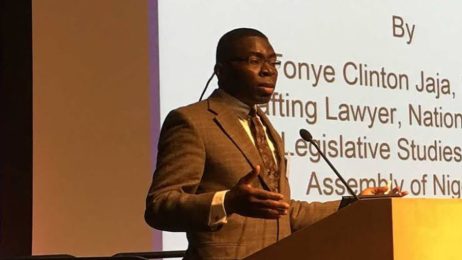
THE recent sack of the Chairman of the Board of the Nigerian Copyright Commission (NCC), Dr Tonye Clinton Jaja, was as a result of the corruption allegations against the Director-General of the agency, Mr John Asein, the ICIR has gathered.

Jaja, a lawyer and lecturer at the National Institute for Legislative Studies, was inaugurated as Chairman of the Board of the NCC ‎on May 28, 2019. After about a year in the office, Jaja was sacked by President Muhammadu Buhari on October 15, 2020.

Jaja‎’s removal from office was announced in a letter dated October 15, 2020, and signed by Dayo Akpata, SAN, the Solicitor-General of the Federation and Permanent Secretary in the Federal Ministry of Justice.

The letter read, “I have been directed to notify you of your removal as the Chairman, Governing Board of the Nigerian Copyright Commission by the President of the Federal Republic of Nigeria, His Excellency, Mohammadu Buhari, GCFR, as conveyed vide letter Ref: 59312/V/230 of 28th September, 2020. Your removal is with immediate effect and you are, therefore, expected to handover all the properties of the Commission in your possession to the Director General. While wishing you success in your future endeavours, please accept the assurances of the warm regards and best wishes of the Honourable Attorney-General of the Federation and Minister of Justice.”

The letter did not state the reason for Jaja’s sack.

Interestingly, the sack letter was forwarded to Jaja through the Director General of the NCC, Asein. As at the time of his unexpected sack as Chairman of the Commission’s board, Jaja was spiritedly pushing for the suspension of the DG to pave way for thorough investigation of allegations of corruption against him (DG).

The alleg‎ations against DG, Nigerian Copyright Commission

Asein was accused of continuing to hold the full-time position of Executive Director of the Reproductive Rights Society of Nigeria (REPRONIG), a collective management organisation (CMO) for Nigerian authors and publishers regulated by the Nigerian Copyright Commission, from January 10, 2017, to January 8, 2019, despite having been appointed the DG. He was also alleged to have continued to act as the sole signatory to REPRONIG’s bank accounts, long after assuming office as NCC DG, in the course of which he allegedly signed Society’s funds in dollars to himself.

Asein was also alleged to have, on December 19, 2019, received the sum of $22,000 from the UBA domiciliary account of REPRONIG.‎

NCC Jaja Buhari

Asein’s relationship with REPRONIG, an organisation regulated by NCC which he heads, was the basis of the ‘conflict of interest’ allegation against him, which is subject to investigations by the Code of Conduct Bureau.

Asein was also accused of brokering a deal between the copyright commission, Agency Francaise De Development (AFD), Punuka Attorneys and KPMG without carrying the NCC board and management along in the transaction.

Also, while serving as a public officer, Asein was alleged to be, at the same time, director of a private company, Books & Gavel Limited, contrary to Article 030424 of the Public Service Rules.

Asein, in the same vein, was alleged to ‎be receiving pension as a retired public officer and at the same time receiving remuneration as a serving public officer, in contravention of section 4(1) of the Code of Conduct for Public Officers.

C‎ode of Conduct Bureau investigation ‎

Jaja, as chairman of the Board of the NCC, submitted a memorandum to the Co‎de of Conduct Bureau (CCB) as part of investigations into the allegations against the DG, Asein. The erstwhile board chairman’s memorandum, forwarded to S.P. Gwimi, Director, Intelligence, Investigation and Monitoring, Code of Conduct Bureau, was dated August 24, 2020.

In‎ the memorandum, Jaja noted that the investigation into the allegations against the DG of the NCC was of ‘national interest’ considering the contribution of the copyright aspect of the creative industry to the economy. He also raised concerns that Nigeria risks losing out from serving as the host African country for the World Intellectual Property Organisation (WIPO), as, according to him, stakeholders in the organisation were uncomfortable with the conflict of interest allegation against the NCC DG. Jaja, who enclosed an affidavit he swore in a Federal Capital Territory High Court to confirm the veracity of the contents of the memorandum, explained that he was acting due to his pledge to uphold the law, and put the interest of the country first, during his inauguration as Chairman of the Governing Board of the NCC.

“‎In my capacity as Chairman of the Governing Board of the Nigerian Copyright Commission, I received several petitions containing allegations of conflict of interest and abuse of office committed by Mr John Asein, the DG of the Nigerian Copyright Commission,” Jaja noted in the memorandum, adding, “Upon receipt of the first petition, I held a meeting with Mr John Asein and the petitioner, Mr Tony Okoroji, Chairman of the Copyright Society of Nigeria (COSON), on 30th January 2020, at my office at the National Institute for Legislative Studies. During the meeting, Mr John Asein admitted that it was an ‘indiscretion’ for him to continue to perform duties for REPRONIG after his appointment as DG of the NCC. This is because REPRONIG is one of the private collective management organisations regulated by the NCC.”

Jaja added that during the January 30 meeting, Asein did not provide any letter of resignation as evidence that he has resigned from REPRONIG. “To the contrary he (Asein) stated that it was because nobody was available to take over from him that is why he continued to perform duties for REPRONIG (in his capacity as Executive Director of REPRONIG) after his appointment as the DG of the NCC. One of his staff of the NCC, who was also engaged and used by Mr John Asein to perform duties for the REPRONIG, ca‎me to my office and confessed that after his appointment as DG of the NCC, he (Asein) continued to perform duties for REPRONIG.”

Related StoryBoard chairman sacked while probing allegations against DG, says he was not queried before dismissal

Jaja also informed the Code of Conduct Bureau investigators that at the January 30, 2020 meeting, Asein admitted that he received salaries after retirement for the months of January, February, March and April 2016 due to the policy of the President Goodluck Jonathan administration that prescribed retirement for any person who has served as director for more than eight years and so he was retired prematurely, and therefore, entitled to the salaries after retirement.

Also, Jaja disclosed that he sighted a certified true copy of the incorporation of a private company, Books & Gavel Limited, where Asein’s name was listed as a Director with majority shares.

Jaja‎, in his capacity as chairman of the governing board, issued a query dated February 4, 2020 to Asein, demanding a written response to Okoroji’s petition. According to Jaja, when Asein refused to respond to the query, he (Jaja) notified the Minister of Justice and Attorney General of the Federation of the development in a letter dated February 7, 2020.

Jaja, in the memorandum, urged the Code of Conduct Bureau to investigate and make specific findings on the allegations against the NCC DG, ‎Asein.

Jaja writes Buhari, seeks suspension of NCC DG

Jaja, in the memorandum to the CCB, suggested that it would be proper to place Asein ‎on suspension to allow for unfettered investigation of the allegations. “The suspension of Mr John Asein will allow members of staff of the NCC to submit written and oral testimony without fear of intimidation,” he said, noting that some members of staff who previously submitted petition to him against the DG later reneged due to a combination of threats and financial inducement.

Also, Jaja forwarded a letter to President Buhari, dated September 22, 2020. In the letter, he urged the President to suspend Asein.

The letter, seen by The ICIR, was titled ‘Re: Circular Ref. No. SGF/OP/1.S.3/T/163 – Approved Disciplinary Proced‎ure Against Chief Executive Officers of Federal Government Parastatals, Agencies and Departments: Written Decision of Members of the Governing Board of the Nigerian Copyright Commission Recommending the Suspension/Interdiction of Mr John Asein, Director General of the NCC Pending Completion of the Investigation by the Code of Conduct Bureau’.

The ‎letter read, “By a letter dated 14th August 2020, the Code of Conduct Bureau invited the Chairman of the Governing Board of the NCC to submit a memorandum and oral submission about the ongoing investigation of Mr John Asein, the Director General of the NCC. A copy of the memorandum is enclosed. Members of the Governing Board of the NCC were invited by a letter dated 18 September 2020 to submit their written decisions. Out of four (4) members, three (3) members (including myself) wrote in support of the decision to recommend the suspension of Mr John Asein, the DG of the NCC. Copies of the said letters are enclosed. While ‎thanking Your Excellency in advance for your anticipated prompt and positive response, please accept assurances of our esteemed respect and regards.”

The ICIR also saw a letter from one of the board members, Dr Alewai J. Mamza, which endorsed the recommendation for Asein’s suspension. ‎

NCC Governing ‎Board members disown Jaja

However, ‎the matter took a different turn after the representative of the Ministry of Justice on the NCC Governing Board, Mrs Maria Towo Austin-Odigie, and four other members, issued a memo to disown the letter written by Jaja to President Buhari to request the DG’s suspension. In the memo, they accused Jaja of orchestrating phantom allegations and petitions against Asein. They alleged that Jaja’s action was borne out of undue interference in the running of the NCC, as well as vendetta in respect of allegations of plagiarism levelled against him (Jaja) by Asein. “By stating that three out of four members of the Board have recommended the DG’s suspension, the Chairman (Jaja) is being economical with the truth, giving his Excellency the impression that a majority of the Governing Board of the Commission had taken the decision to suspend the DG of the Commission. This is barefaced falsehood,” the memo said.

When contacted by The ICIR, Jaja refused to speak on the record concerning the issues surrounding his removal from office. He noted that most of the issues are subject to lawsuits that are pending in court.

Edo connection?

However, The ICIR saw a letter, addressed to President Buhari, through the Attorney-General of the Federation, by the Bori, Rivers State, branch of the Nigerian Bar Association. The letter,  dated October 19, 2020, said there was an urgent need for the President’s intervention over the violation of the Federal Character Principle at the Nigerian Copyright Commission. According to the letter, signed by the chairman of the Bori NBA branch, Ledum Finor-Puene, and other officials, four members of the Governing Board of the NCC – Mrs Towo Austin-Odigie, Mr John Asein (the DG), Comrade Salisu Othman and Rev Bayo Awala – were all from Edo State.

Asein denies allegations

When contacted by The ICIR, Asein insisted that he was not guilty of the allegations, particularly the accusation of conflict of interest.

“That is not true. I don’t have any conflict of interest situation,” Asein simply said in response to enquiries by our correspondent.

‎Asein said he would not be able to comment on some aspect‎s of the allegations, which he said are subject of a pending lawsuit filed by the Copyright Society of Nigeria (COSON) against the commission.

Jaja axed over allegations against DG

A source in the copyright commission, who did not want to be named, told our correspondent that the board chairman, Jaja, was sacked because of the allegations against Asein. The source added that Jaja was also sanctioned for misrepresenting the Governing Board of the NCC, and, allegedly, taking sides with COSON against the commission.

Investigation discontinued on orders from above? Code of Conduct Bureau pleads for ‘patience’

The ICIR could not immediately confirm claims, by sources familiar with the matter, that the investigation into the allegations against Asein has been discontinued ‘based on orders from above’. ‎

The ICIR contacted the Code of Conduct Bureau to ascertain the status of the investigation, and also to find out if the matter had actually been discontinued, as alleged.

In response to enquiries, an Investigating Officer of the C‎ode of Conduct Bureau, Abdullahi Aliyu,‎ urged our correspondent to be ‘patient’ with the organisation. But Aliyu also said he was not in a position to provide answers to The ICIR‘s questions. “I am only but one of the investigating officers on the case, I do not have the requisite approval to give out all the answers to your queries. I will have to defer to my superiors for necessary action. While I appreciate the work you do for the public, I implore that you be patient with us for now,” the CCB investigating officer said in a WhatsApp message in response to The ICIR‘s enquiries.

Lawyer goes to court to stop Minister of Justice from supervising Nigerian Copyright Commission 

Meanwhile, a lawyer, Tosin Ojaomo, has asked the Abuja Federal High Court to declare that, going by the provisions of the Copyright Act, the Minister of Information and Culture ‎is the rightful minister to supervise the Nigerian Copyright Commission, and not the Minister of Justice. The Copyright Act stipulated that the minister in charge of culture should supervise the commission.

‎The lawyer, in a suit numbered FHC/ABJ/CS/1649/2020, filed on December 10, 2020, also asked the court to declare that the statutory recommendation made by the Attorney-General of the Federation to the President for appointment of any person into the position of DG of the NCC was null and void and of no legal effect.

The lawyer equally asked the court to declare that all appointments made by the President to the position of DG of the NCC were illegal, and that all statutory functions performed by any person so appointed are null and void. ‎

In the same vein, Ojaomo asked the court to order the Minister of Information and Culture to take over the supervision of the commission.

‎The Nigerian Copyright Commission was originally a parastatal under the then Ministry of Culture and Tourism, which is now part of the Ministry of Information and Culture.

However, in February 2006, the Federal Executive Council, during the administration of former President Olusegun Obasanjo, transferred the supervision of the Copyright Commission to the Ministry of Justice. ‎The decision followed a recommendation in the White Paper on Harmonisation of Government Agencies and Parastatals, 2000.‎

But the Copyright Act was not amended to reflect the change in the status of the commission as a parastatal under the Ministry of Justice, a development which means that the supervision of the agency by the Minister of Justice and Attorney General of the Federation was contrary to constitutional provisions.

How Dana Airline’s discriminatory policy, flight rescheduling landed physically challenged man in police custody

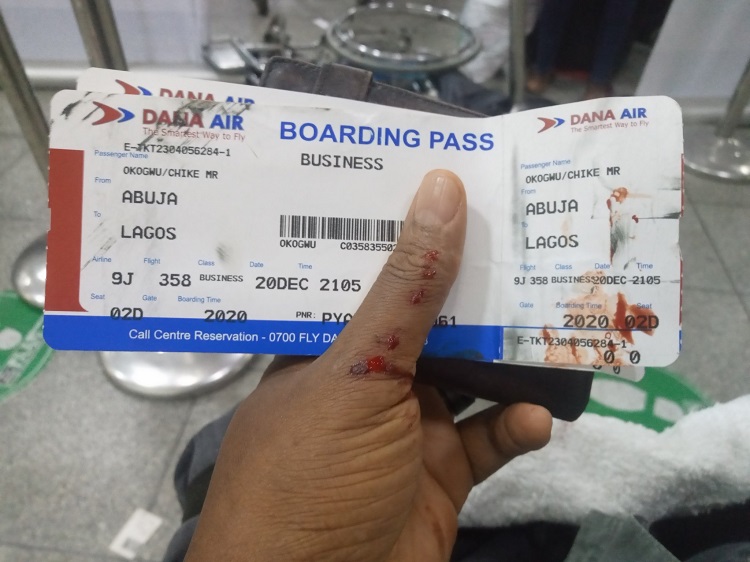
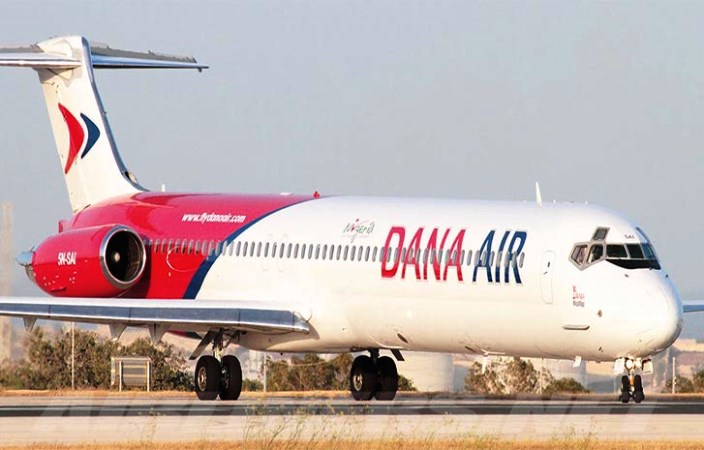
CHIKE Okogwu, a 50-year-old man on Sunday, December 20, was to board an aircraft managed by Dana Airline to the Murtala Muhammed Airport (MMA), Lagos. The airline was scheduled to depart the Nnamdi Azikwe International Airport (NAIA) at  7:20 pm.

But then, the flight was rescheduled to 9:05 pm.

This postponement and the fact that Okogwu, a development expert, is physically challenged cost him his trip to Lagos.

He missed the flight because Dana claims it does ‘not fly people with disability at night.’

The airline subsequently advisedhim to opt for a 7 .00 am flight the next day. This decision contravenes its policy of helping the physically challenged.

In anger, Okogwu allegedly destroyed computers at the airline’s counter, damaged customer relations gadgets and passengers’ database. There was also alleged bodily harm and fracture on the airline’s duty manager.

Computers and other electronic devices allegedly destroyed by Dr. Chike Okogwu. Photo Credit: Dana Airline

This comes about 24 hours after the airline’s passengers were reportedly abandoned at the Abuja airport for 14 hours due to  flight postponement. A flight scheduled to take off at 11.00 am on Saturday did not leave until the next day.

The security operatives stationed at the airport eventually arrested Okogwu.

How it began

“I arrived at the Abuja airport at about 7.00 pm and got my boarding pass for my flight on Dana Air to Lagos,” Okogwu said while narrating his ordeal.

“A few minutes later, the lady who gave me my boarding pass informed me that as a result of my being on a wheelchair,because of a Dana Air Policy of not boarding persons on the wheelchair, I will not be boarded unto the aircraft.”

https://www.facebook.com/297904423657616/posts/3532202503561109/

Okogwu later approached the duty manager to verify the claim and was told it was true.

He said the manager told him he could not board the flight because it was the last night flight, even though the customer reminded the Dana staff that the flight postponement was not his fault.

“I explained that it was Dana Air that changed my flight which hitherto was a 7:20 pm flight,” he wrote in a statement of complaint/accused form provided by the Directorate of Aviation Security, Crime Investigation and Intelligence Unit, Federal Airports Authority of Nigeria (FAAN).

He added that he was willing to pay men who would convey him on board the air craft, as that was the practice in all his years of flying Dana.

Ezenwa Okwudidli, Dana Communications Manager had earlier confirmed to The ICIR that Okogwu had been a frequent customer. That implies Okogwu never lied of steadily patronising the airline. But the operator’s spokesperson was quick to reflect the victim’s flight history. To him, it was not too pleasant.

“So, this person in question flies Dana Air regularly and he has an unusual history,” Okwudili said.


Dana Air Statement on incident regarding Dr Chike Okogwu

Yes, I destroyed their counter out of provocation – victim

Irked by the poor treatment, Okogwu was aggravated,wondering how he could be treated in such a manner having purchased a business class ticket .

Besides, he was to keep a medical appointment to treat what he described as a ‘debilitating ulcer’.

Moreover, he claimed the airline never provided prior notice of such policy to warrant such treatment.

“I got enraged by their nonchalance and insensitivity. And yes, damaged their counter,” he affirmed, adding that he was provoked after being denied his rights.

When The ICIR contacted him for comment, he said the matter was being handled by the police authorities. Both parties were to meet with the security operatives at about 3.00pm. He told this reporter he was ready to let go once the airline apologises, otherwise, he would continue with the matter.

In January 2019, President Muhammadu Buhari signed the Nigerian Discrimination Against Persons With Disabilities (Prohibition) Act, 2018 after a decade of advocacy from disability rights groups and activists.

The law prohibits all forms of discriminations against persons with disability. If an individual is found guilty, he/she would pay a fine of N100, 000 or six-month imprisonment.

Moreover, the discrimination against such an individual is prohibited in public transportation facilities and service providers are to make provisions for the physically, visually and hearing impaired.

Part IV, Section 14 of the Act mandates all airlines operating in the country to, “(a) ensure accessibility of their aircraft to persons with disabilities.

“(b) Make available presentable and functional wheelchairs for the conveyance of persons with disabilities who need them to and from the aircraft.

“(c) Ensure that persons with disabilities are assisted to get on an off-board in safety and reasonable comfort.

“(d) Ensure that persons with disabilities are accorded priority while boarding and disembarking from the aircraft.”

“All airports shall make available for the conveyance of persons with disabilities who need presentable and functional assistive and protective devices to and from the aircraft,” Sub-section 2 of the Act reads further.


Let the law take its course, he is an unruly passenger – Dana  

Kingsley Ezenwa, Dana Corporate Communications Manager
Photo Source: File Copy

The ICIR reached out to Okwudili to verify claims made by the physically challenged passenger. He also affirmed the policy stressing that the airline had to come up with the position due to previous experiences from the special passengers which they term ‘reduced mobility’.

As for the airline, it is expected for the category of passengers to travel while being assisted by a relative.

Okwudili alleged some airlines don’t fly physically challenged passengers but Dana does, still with a condition. “Our policy says if you are flying, someone must accompany you to the airport and the person must assist you.”

While reacting specifically on Okogwu’s case, the spokesperson explained that when the victim arrived, a staff of the airline thought it wise to save him the normal passenger stress of getting his boarding pass.

He said two of the operator’s airlines had developed a fault, hence, the rationale for flight reschedule.

“We have been having issues with our flights. Two of our aircraft developed faults so we concluded we are going to follow the safety standards.”

“So, he was told we cannot carry passengers with disabilities in the night.”

The ICIR asked when Dana commenced the policy of not flying physically challenged persons at night but he could not answer.

The ICIR checked the airline’s website but no such policy was found. Rather, there was a commitment to help the incapacitated.

Yet Okwudili insisted on the proprietary of the action by Dana. “We look at the issues we have been having and we decided that the category of persons need to come with someone who could assist them so it doesn’t become an issue,” he said.

Even if the victim has issues with the employees, he should have engaged the appropriate authority, he added

“In the case of Dr Chike, he came to the airport but his flight was rescheduled as a result of what I explained earlier. And a female duty manager explained to him that sir, we don’t fly people with disability at night. He should come back tomorrow.”

“Only for him to attack the duty manager, causing her bodily injury and fracture. She is in the hospital now.”

The ICIR demanded the name of the hospital the manager was hospitalised. He promised to provide the name but never reverted.

Okwudili further accused the victim of damaging computers and equipment.

When asked why the airline failed to provide prior information on the policy, he simply responded that the victim should have engaged the airline’s officials rather than taking laws into his hands.

“The man has been taken to the police station, so we will allow the police to do their work.”

FCCPC Reacts

Babatunde Irekera, Head, Federal Competition and Consumer Protection Commission (FCCPC), has since resolved to take up the matter as it falls under the mandate of the commission which is to ensure consumers rights are protected at all times.

“This is outrageous and unbelievable,” he reacted.

“I am hopeful this could never be the reason for denied boarding. However, if it is, I am keenly interested In holding Dana accountable. And ensuring they or others don’t ever behave in a similar manner.”

COVID-19: FG orders restriction on religious gathering, closure of bars, night clubs, event centres

AS new strain of the Coronavirus Disease (COVID-19) emerges, President Muhammadu Buhari on Monday ordered the reactivation of restrictions on religious centres across the countries.

The religious centres, henceforth are to operate in 50 per cent capacity for the next five weeks.

Restriction, according to the Presidential Task Force (PTF) on COVID-19 is also extended to other public functions such as the end of the year events, conferences, weddings among others.

But all relaxation centres such as bars, night clubs, public event centres and recreational centres are to be shut.

Speaking during its regular briefing in Abuja, Boss Mustapha, the PTF Chairman said all state governments including the Federal Capital Territory (FCT) are to commence enforcement of the new restriction orders.

The decision, he emphasised is to check the second wave of the pandemic in the country.

Atiku Abubakar, the former Vice President had earlier raised concerns on why the federal government should take swift action due to the new strain of the virus recorded in the United Kingdom.

Civil servants below Grade Level 12 are, however, asked to stay off work for the next five weeks while schools are to remain closed until January 18, 2021.

“The PTF has surveyed developments and actions taken by governments around the world, assessed our domestic environment and has accordingly submitted its recommendations to Mr President on immediate measures to be taken.

“Accordingly, His Excellency, Muhammadu Buhari, President of the Federal Republic of Nigeria has authorised the PTF to engage with the States and the FCT to assume full ownership of this stage of the response by deploying legal structures and resources, including enforcement to manage the pandemic within their jurisdictions:

“In line with the authorisation, the PTF wishes to issue the following advisories to sub-national entities for implementation over the next five weeks because these activities are considered super spreader events:

“Close All bars, night clubs, pubs and event centres, and recreational venues; Close all restaurants except those providing services to hotel residents; takeaways, home deliveries and drive-ins shall remain closed; Restrict all informal and formal festivity events including weddings, conferences, congresses, office parties, concerts, seminars, sporting activities, end of year events shall be restricted to not more than 50 persons,” Mustapha stated.

“Limit All gatherings linked to religious events to less than 50% capacity of the facility of use during which physical distancing; mandatory use of face masks shall be strictly enforced; Where more than 50 persons are attending, any such events, the gathering should be held outdoors only;

“Public transportation systems are to carry passengers not more than 50% of their capacity in compliance with social distancing rules. Enforce compliance with NPI protocols especially the advisory on wearing of face masks in public spaces;

“To reduce overcrowding in public spaces, markets, shopping centres, offices and schools States are advised to implement the following: Encourage virtual meetings in government Offices. The leadership of such offices are to ensure that all offices are well-ventilated offices, and encourage staff to work from home where possible;

“All government staff on GL.12 and below are to stay at home for the next 5 weeks; Permanent Secretaries and Chief Executives are to be held accountable for enforcing NPI rules in their domains with frequent spot checks;

“The PTF on the advice of the Federal Ministry of Education, expects that schools would have vacated from the 18th December 2020 and remain closed till at least the 18th of January, 2021 to enable the measures introduced to take effect;

“All persons above the age of 60yrs and/or with comorbidities are to be encouraged to stay at home and avoid crowds; All non-essential travels – both domestic and international during the holiday season are seriously discouraged;

“To strengthen risk communication and community engagement activities over the next 5 weeks, States are encouraged to; Engage community and religious leaders, arrange town hall meetings (ideally set outdoors) to address concerns;

“Intensify public messaging activities, leveraging on existing government and partner assets; Reach out to youths and younger adults with health promotion activities; Invest in local face mask purchase and distribution to the general public to encourage use,” he said.

According to the SGF, the PTF would be submitting its end of the year (2020) report to the President tomorrow Tuesday 22nd December by 3:00pm.

The SGF blamed non-compliance with the COVID-19 protocol as part of the reasons for the new surge.

He also identified non-pharmaceutical interventions among events contributing factor.

He said further that besides the enforcement instruction issued to the states and the FCT by the President, the PTF would also, in necessary circumstances, play roles to ensure the measures are complied with.

“Where applicable, the PTF shall also implement these authorisations. For example, it shall work with the Nigeria Immigration Service to impose sanctions on all in-bound travellers who violated the travel protocols and endangered the lives of their loved ones and other citizens by refusing to take the post-arrival test,” Mustapha added.

Do not patronise these micro-finance banks, CBN warns

0

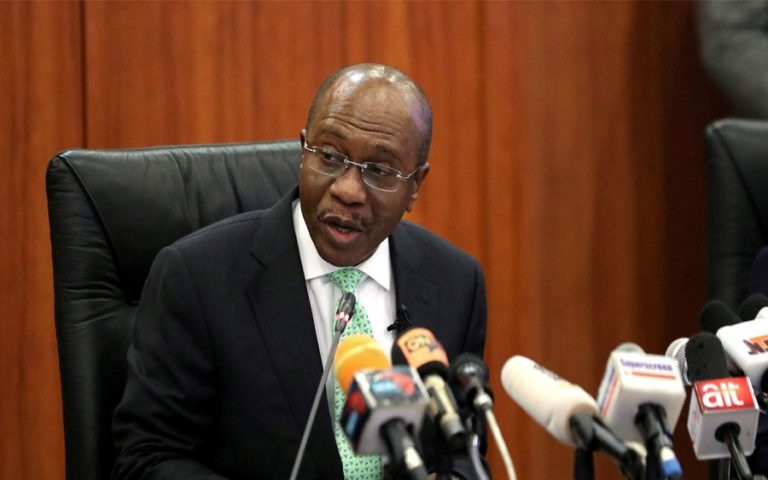
THE Central Bank of Nigeria (CBN) has revoked the operating licenses of 42 micro-finance banks.

This was made known in a statement by the Nigeria Deposit Insurance Corporation  (NDIC), on its website on Friday.

According to the statement, the banks’ licenses were revoked beginning from November 12th, 2020.

“This is to inform the depositors, creditors, shareholders and the general public that the operating licenses of the under listed Forty-Two (42) Microfinance Banks (MFBs) have been revoked by the Central Bank of Nigeria (CBN) effective 12th November, 2020,” NDIC said.

NDIC called on all the depositors at the banks to avail themselves to its officials at any of the closed banks for data verification of their claims which will begin from Monday December 21, 2020.


READ ALSO:

“The Nigeria Deposit Insurance Corporation (NDIC), the official Liquidator of the banks whose licenses were recently revoked, is in the process of closing the listed banks and pay their insured Depositors. We therefore request that all depositors of these banks should visit the closed banks’ addresses and meet NDIC officials for the verification of their claims, commencing from Monday, 21st December 2020 till Thursday, 24th December, 2020.”

The affected banks are:

  1. Hedgeworth MFB, Utako, Abuja;
  2. Future Growth MFB, Utako, Abuja;
  3. Bagwai MFB, Bagwai LGA, Kano;
  4. Ere City MFB, Oriade LGA, Osun State;
  5. Cafon MFB, Garki II, Abuja;
  6. Akcofed MFB, Uyo, Akwa-Ibom State;
  7. Gufax MFB, Uyo, Akwa Ibom State;
  8. Partnership MFB, Onitsha, Anambra State;
  9. ICB MFB, Ilah, Delta State;
  10. Onima MFB, Ezinihite Mbaise LGA, Imo State;
  11. Hometrust (NATIONS) MFB, Nkwere, Imo State;
  12. Ringim MFB, Ringim, Jigawa State;
  13. Bigthana MFB, Ali Akilu Road, Kaduna;
  14. Rogo MFB, Rogo LGA, Kano State;
  15. Makoda MFB, Makoda LGA, Kano;
  16. Takai MFB, Takai LGA, Kano State;
  17. Bebeji MFB, Bebeji L.G.A., Kano State;
  18. Ajingi MFB, Ajingi LGA, Kano State;
  19. Garko MFB, Garko, Kano;
  20. Kangiwa MFB, Kangiwa LGA, Kebbi State;
  21. Augie MFB, Augie LGA, Kebbi State;
  22. Mopa MFB, Mopa, Kogi State;
  23. Solid Base MFB, Ijumu LGA, Kogi State;
  24. Ultimate Benefit MFB, Lokoja, Kogi State;
  25. Ovidi MFB, Okene, Kogi State;
  26. Kirfi MFB, Kirfi LGA, Bauchi;
  27. Credit Express MFB, Kakawa Street, Lagos;
  28. King Solomon MFB, Western Avenue, Iponri, Lagos;
  29. Riggs MFB, Victoria Island, Lagos;
  30. Billionaire Blue Bricks MFB, Ajah, Lagos;
  31. Susu MFB, Yaba, Lagos;
  32. Wealthstream MFB, Apapa, Lagos;
  33. Aguda Titan MFB, Ogba, Lagos;
  34. Sapphire MFB, Uyo, Akwa Ibom State.
  35. Metro MFB, Ogba, Ikeja, Lagos;
  36. Mountain Top MFB, Trade Fair Complex, Lagos;
  37. Unyogba MFB, Ofu LGA, Kogi State;
  38. Wapo MFB, Okene, Kogi State;
  39. Ibogun MFB, Ifo LGA, Ogun State;
  40. Korede MFB, Igbotako, Ondo State;
  41. Ahetou MFB, Ogba/Egbema/Ndoni LGA, Rivers State;
  42. Fufore MFB, Yola, Adamawa State.

National Assembly wants electoral act amended to allow underage married girls to vote

0

THE joint committee of the National Assembly on the Independent National Electoral Commission (INEC) matters has called for the amendment of the electoral act to pave way for underage married girls below the 18-years constitutional qualification to be able to vote.

Kabiru Gaya, the chairman, Senate committee on INEC, Senator, and Aisha Dukku, his counterpart in the house of representatives, proposed this on Wednesday before the technical committee on electoral reform.

Members of the technical panel include lawmakers, INEC officials, and civil society groups dealing with election matters. It has the mandate to work on the electoral act being proposed by the national assembly.

In their presentations, during the panel’s inaugural sitting, Gaya and Dukku said the proposal was a unanimous decision of the joint committee of the national assembly.

“The joint committee has proposed a review of the section of the Electoral Act that pegged the eligibility age of voters at 18 years,” Gaya said.

“The joint committee has proposed that if a lady who is not up to 18 years is married, she should be considered to be mature enough and be eligible to vote.”

According to Punch newspaper, Mahmood Yakubu, INEC chairman who was present at the sitting dismissed the proposal, citing aspects of the constitution that also pegged marriageable age at 18-years.

Yakubu’s response did not go down well with Dukku, who immediately said the INEC boss should not have dismissed the proposal with a wave of hand because the joint panel had adopted it.

“It was one of the submissions on the day of the public hearing in the last Assembly that a married lady or a girl who is not up to 18 years should be considered as an eligible voter,” Dukku.

“It is already in the Electoral Act amendments submitted in the last Assembly; so it cannot be thrown away just like that. We should look at it and come up with something instead of throwing it away. It is not from us but from the stakeholders on the day of the public hearing held in the 8th Assembly.”

Another issue raised by the joint panel which they wanted the new Electoral Act to determine is whether the political party or candidate is the owner of votes cast on Election Day.

They cited the case of a Kogi State governorship election won by the late Abubakar Audu, who died before the results were announced, and that of the recent Imo North Senatorial Bye-Election where INEC declared the All Progressives Congress, which had no candidate as the winner.

The lawmakers argued that the candidate and not the party should be the beneficiary of the votes.

Yakubu said all the issues would be discussed at the technical session.

The Chairman, Senate Committee on Judiciary, Human Rights and Legal Matters, Opeyemi Bamidele, said the matter would be dealt with at the technical committee level where robust discussions on it would take place.

Bamidele also said the issue of defection should be addressed in the new Electoral Act that would spell out the conditions for those holding elective positions in the executive arm of government.

The INEC chairman pledged that the commission would work with the National Assembly committees on INEC to produce a brand new Electoral Act for the nation.

‘Digital farmers’ scandal: Nigerians lose hope, investment to phoney agro projects

It is now commonplace to see advertisements, especially on social media, placed by farms asking investors to invest in a section of their outfits for high Return On Investment (ROI), sometimes at over 60 per cent per annum.

In this report, GBENGA SALAU trailed three digital farmers, who promised investors high ROI to their offices in Lagos and farms in Oyo and Ogun states. The farms of two of the digital farmers could not be located at the advertised sites, while one of them that could not fulfill its financial obligations to investors has a closed office. The promoter of the third farm, though existing, has failed to give investors their ROI, more than three months after the due date.


WHEN Prosper Onyekachukwu saw an advert by HO Corn, a digital farm, in January this year that investors would get 50 per cent Return On Investment after six months for investing in its corn farm, the offer got him thinking deeply. This was because though he had no money to invest, the ROI was tempting. He thought it was a good business opportunity that should not pass him by. So, he took a loan from his organisation’s cooperative society to invest.

But nine months after, Onyekachukwu regretted taking that step, as HO Corn farm has neither delivered on its promise to return a 50 per cent profit on investment nor paid back the capital.

“I borrowed from my office cooperative to invest in HO Corn in January with the hope of paying back in July, as your CEO said payment would be made on or before six months after investment,” he wrote to HO Corn in desperation. “Since this disappointment on the payment date, I have been servicing the debt from August till date. So, I am hereby humbly reminding you that if your company fails to pay me on or before December 1, I will have to pay again for the coming month, which will be very painful to me.”

He said the failure of HO Corn team, led by Andrew Harrison Osemwengie, to pay when due has been making him lose money monthly. “I have literally spent the so-called ROI on servicing the debt. This is coupled with the recession that has drastically affected the initial invested capital. Please, pay my money. I am accumulating more interest. I am losing my sanity because of you. Stop being wicked to your fellow citizens, who trusted you with their money. It is for 11 month plus now. By next month, it will be one year since I invested in your company. Please, my case is peculiar, I need to return the money to the cooperative society,” Onyekachukwu pleaded.

Harrison Osemwengie Andrew
Harrison Osemwengie Andrew, HO Corn CEO/Founder

But Onyekachukwu is not the only one experiencing this agony. There are more than 100 other investors, who are suffering a similar fate. Recently, about 40 of these investors formed a pressure group to demand the return of their seed capital and the ROI. One of them claimed that the total investment by members was over N30m. So, it was not surprising that they employed a lawyer, who wrote HO Corn on their behalf, aside petitioning the Economic and Financial Crime Commission (EFCC) on the issue.

Narrating her ordeal, Esther Oluwaseun, another investor, said she got to know about the investment opportunity through a marketer.

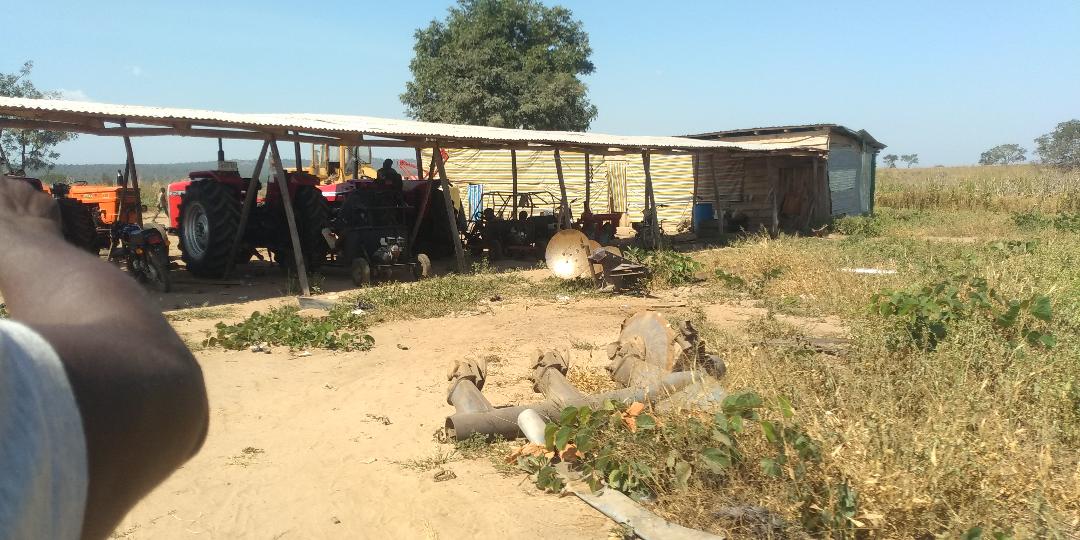
HO Corn Farm’s tractors

“One of their marketers gave me their flier earlier this year around Ogba Market. I called the phone number on the flier for enquiries. Thereafter, I went online to do my research. I came across their adverts online, interview with Channels TV and I also saw their website. So, I was convinced that the company was genuine and it would be a good investment.”

Like Onyekachukwu, Oluwaseun had to go looking for a loan. The only difference was that the N300, 000 she invested was obtained from friends. She explained that she did not envisage any disappointment, based on the ‘evidence’ on the ground, which was why she did not entertain any fear when committing the money.

She said: “I borrowed money to add to what I had to invest. Not only have they tied down my money, but I have also not been able to pay back those I took the loan from. It would have been a great relief, if the money had been paid at the stipulated time, because of the financial strain I experienced during the lockdown period. It also affected my business greatly.”

Oluwaseun belongs to the group of aggrieved investors that contracted a lawyer to write a petition to HO Corn, but without response. She personally visited HO Corn office on Lagos Island but met no one. This is aside calling the official numbers, which did not connect to anyone. “I have expressed my displeasure on their active social media handle, but I keep getting the same automated response. And the payment date has been shifted three times,” she told The Guardian.

Violet Idunije Andrew
Head of Procurement/Operations HO Corn

Commenting on HO Corn Instagram page after a mail from the farm outfit hit her mailbox, Oluwaseun said: “I just went through your mail. I invested in other platforms after you, and they have paid me my returns. Which pandemic are you lying about? So many farmers went to the farm to plant. To be sincere with you, there is a shortage of maize in the country. Government also banned the importation of corn, so I know there are many buyers around. But if you say you do not have buyers, I will do my best to connect you with buyers. Now, I have many requests, but first of all, show me your maize storage unit, and what is left on the farm.” But she got no response from HO Corn.

Tunde Ilupeju also invested with HO Corn. He explained that the investment was meant to last from February to July. But in July, he was informed that due to COVID-19, the payment date had been changed to August and later October. “While still expecting the payment in October, I received a mail that payment is ongoing and everyone will be paid by December 30. Even though they always respond to my messages, but why I’m a bit uncomfortable is because I’m yet to see anyone who has been paid,” Ilupeju said.

But some investors like Adetunji Akande Tajudeen argued that HO Corn team’s inability to deliver on its investment promise was because it was a scam.

Commenting on HO Corn Instagram page, Tajudeen said: “You are a big scam. You don’t have any farmland anywhere. Your office is under lock when it is time for you to pay. It is only a criminal that acts as you do. HO Thieves. You shall be dragged to filth. You have toyed with the wrong set of people. We won’t rest. We shall exhaust all mechanism to retrieve our money to the last kobo. You criminals.”

Tajudeen said he had to lash out at the agric company because he was frustrated. He claimed to have invested N200, 000, which was meant to pay his house rent. But with the unfortunate development, he has been unable to pay his rent. Currently, he is in a dilemma as to where to get money to pay the rent.

The Guardian correspondent’s visit to HO Corn’s office on Victoria Island, Lagos, yielded no fruit initially, as he was told that the outfit was no longer operating on the Third Floor of the Africa Re-Insurance Building. An officer disclosed that the HO Corn team left the facility about three months ago and that the facility was only a workstation.

Surprisingly, the security men at the main gate of the gigantic building did not show signs that anything was amiss when the reporter visited HO Corn’s office. But returning to the main gate after the enquiries, a security man accosted the reporter, asking if anything was wrong. This led to a discussion where he revealed that many investors had been coming around, complaining and lamenting their plight, including a female naval officer, who claimed she invested N1.5m: N500, 000 each for herself, the husband and her first child.
The security officer said the naval officer was very bitter and visibly angry during their interaction.

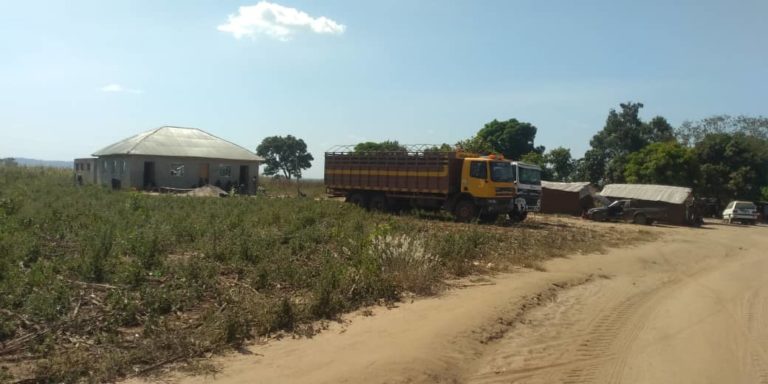
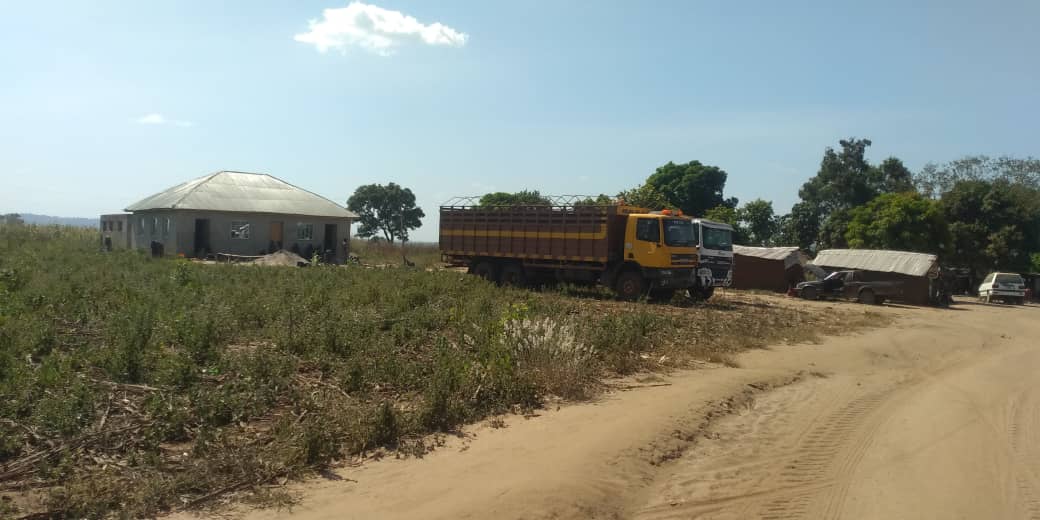
Trucks waiting to convey farm produce from Ho Corn farm

With nobody in the office to explain why HO Corn has failed to deliver, the next step was to visit the farm. The idea was to see if actually there was a corn farm, as some investors had insinuated that there was none. On its website, HO Corn claimed its farm is located in Iseyin-Ofiki town in Atisbo Local Government, Oyo State.

Upon arrival at Iseyin, locals disclosed that Ofiki town is not part of Iseyin, though it is under Atisbo Local Government, and Iseyin is not part of Atisbo Local Government. The next day, the reporter headed to Ofiki town, which is over an hour drive from Iseyin. On getting to the town, a resident in the community said HO Corn farm actually existed. Located in Oke Iluku part of Ofiki, the farm is, however, inaccessible by vehicles, as the road is rough. The resident said it would take about 40 minutes riding on bike to get to the farm. The journey was actually an hour and 10 minutes.

At the farm’s entrance were two security men armed with local guns. It was indeed a massive maize farm. The reporter asked to see Harrison, whom the security men said was sleeping in one of the farmhouses. After waiting for about 30 minutes, and he failed to show up, the reporter approached the farmhouse, where Harrison was supposed to be. After waiting for another five minutes, a lady came out to ask what the reporter’s mission was.
After telling her, she directed the reporter to stay in an open space around the farm kitchen, where workers usually assemble during the break. She added that once Harrison was awake, he would come to meet the reporter though that might be in the evening.

Not deterred, the reporter headed to the open space. After waiting for about two hours and Harrison failed to show up, the reporter left the farm.


Ho Corn warehouse

While on the farm, however, the reporter interacted with some workers to have an insight into activities within the farm. This is more so since HO Corn had claimed that one of the major reasons it could not pay investors was because there were no buyers for its harvest. But when two workers were asked if there had been challenges selling corn harvest from the farm, they disclosed that nothing like that happened. Rather, the challenge has been meeting buyers’ demands. One of them pointed to two trucks waiting to pick produce, which were stationed some metres away. He explained that when harvest started, trucks were always coming to move to produce to town.

And probably to ensure that there was no gap in meeting customers’ demands, it was gathered that another planting season process has commenced on the farm. The source said planting should have started a day before the reporter came, but surely it would start the next day, as everything had been put in place to commence another round of planting.

On the farm were about four tractors, two of which looked new. Some metres away from the tractors’ garage was the farm warehouse. There, some workers were seen shedding dry corn.

Attempts to get Harrison to speak on phone afterwards were unsuccessful. His personal line was switched off, just like the official line.

HO Corn claimed on its website that it was covered by Anchor Insurance, but The Guardian investigation showed that the insurance policy it took had been terminated, as it failed to provide the insurance company with the whole truth about its business activities.

A spokesperson for Anchor Insurance said: “If you go to our website, you will see the explanation of agric insurance products, that it covers the crops. For instance, if there are fire incidents on the farm, flood, drought, pests and diseases that normally disturb or damage crops, those are the risks that we insure against, not against invested money. We are not an investment outfit. It is just like you insure your car against accident and fire. Anywhere in the insurance sector, the agric insurance policy covers those risks.”

On whether HO Corn reached back concerning having challenges on its farm, he said: “No, it did not. There was no claim reported to us. We got to know that HO Corn customers were thinking their financial investment was covered by the policy, they were wrongly informed, especially as we were not privy to the agreement between the investors and HO Corn. But when they kept calling us, we invited HO Corn to find out why their customers should be calling Anchor Insurance, as it does not have any business with them. We reprimanded them and terminated the policy because there is what we call Uberrima fides in insurance, that is, Utmost good faith. When you are taking an insurance policy, you ought to declare the truth. And when it is discovered that you did not tell the whole truth, then the insurance company has the right to terminate the policy, which we did.”

On the size of farmland that was insured with Anchor, he said: “I do not know that”

The Alageere of Ofiki, Oba Bashir Iyiola Oyesiji, the traditional ruler who gave out the farmland to HO Corn on rent, disclosed that the only challenge the chief promoter of HO Corn discussed with him was around April or May when Harrison complained about insufficient rain. Consequently, the king said he consulted different religious groups, to appease the gods for rain, which eventually fell.

The royal father commended Harrison, saying he was organised and committed with the way he went about his farming, which was why it prospered.

However, claims by investors like Tajudeen that the whole HO Corn project might be a scam could be true. This is because on the management team of HO Corn, Mr. Edimaobong Matthew, who was designated as a Software Engineer/Data Security Expert on the company’s site, has started another crowdfunding farming business. He named it Farmtisa, which specialises in the piggery. HO Corn website described him thus: “Edimaobong Matthew is an experienced software engineer with a passion for developing innovative programmes that expedite the efficiency and effectiveness of organisational success. Well-versed in technology and writing code to create systems that are reliable and user-friendly. He is a certified Digital Marketing Expert and Data Security Expert.”

Edimaobong Matthew
Software Engineer/Data Security Expert HO Corn

Interestingly, when Farmtisa was contacted through WhatsApp and was asked about its pedigree, it claimed to have been into pig farming for the past 10 years and has recorded great successes. A search on the Corporate Affairs Commission’s website, however, showed that the company was registered in August 2020.

UNLIKE HO Corn, whose farm is about two states away from Lagos, though still difficult to access, Farmtisa claimed its pig farm is located in Akwa Ibom. It also did not provide the farm’s specific location, saying the farm’s is located in Etim Ekpo Local Council. And while Farmtisa Lagos office exists, it is a workstation in the Ajah area of Lagos. It is just like that of HO Corn located on Victoria Island, but the difference is that while those manning the Victoria Island workstation knew and accepted that HO Corn used to be a client, those at the Ajah workstation said they did not know Farmtisa, as an organisation. While HO Corn promised 50 per cent, Farmtisa promised 25 per cent after six months. HO Corn has a management team, Farmtisa does not, especially if the information provided on its website is anything to go by.

Farmtisa claimed its farm was insured by the Nigerian Agricultural Insurance Corporation, which turned out to be false. HO Corn claimed its farm was insured by Anchor Insurance, but the policy it took was terminated on the basis that it did not provide full information before taking the policy.

Just like HO Corn desires to be the largest corn farm in Africa, Farmtisa wants investors to collaborate with it to build the biggest pig farm in Africa.

Investing in agriculture seems to be the new business in town, as many organisations now claim to be digital farmers, engaging in crowdfunding to finance their farming business with bogus ROI.

On many social media platforms, Nigerians are invited to invest or sponsor a section of a farm with Return On Investment sometimes yielding between 15 to 70 per cent within a year. As an assurance, investors are told that the farms are insured in most cases.

There are a number of such farms, and they include Abande Farms, which promises 30 per cent ROI, with claims that the farm is fully insured by Leadway Assurance, while Farmtify promises N500, 000 returns every three months. For Eatrich Farms, it is 50 per cent ROI after six months. On its part, Ampersand Farms promises 30 percent ROI after five months. AgroEmpire Estate asked investors to invest in its rice processing business with a 25 per cent ROI in four months.

Other farms in this category are SGL Farms, Ajebo Farmers, Dickem Farms Africa, Blue Farms, Famerboy.ng and Farmfunds, among others.

Aside HO Corn, efforts were made to identify if SGL and Menorah Farms existed. While SGL Farms is still asking investors to come on board and is presently doing mop-up sales, Menorah Farm like HO Corn has failed to pay its investors.

Menorah Farm
Screengrab of Menorah Farm Instagram Account

SGL claimed it has farms in Ogun and Oyo states. In Oyo State, SGL said its farms in towns and villages around Iseyin L.G.A alone include, Wasimi; 150 acres SGL Farms Rice Field; Ado Awaye I; 250 acres SGL Farms Rice Field; Ado Awaye II, and 150 acres SGL Farms Rice Field.

When the reporter visited Ado-Awaye in Oyo State, there was no rice farm belonging to SGL Farms, though it made attempt to set up a rice farm at Wasimi, a neighbouring community to Ado-Awaye. Indigenes of Wasimi said there was an attempt, but they were surprised when about four months ago, promoters of the rice farm moved out of the community, discontinuing its farming. It was learnt that all the signposts announcing the rice farm were pulled off and taken away. They did not know if SGL was the promoter of the rice farm. They said it moved out after it brought some people, who might be investors to see the farm.

Seun Adegoke, MANAGING DIRECTOR SGL Farms

The Chairman, Ado-Awaye Community and Apex Chairman, Psaltry International Outgrowers Association, Pa Nasiru Oladokun, said no such farm operated within the Ado-Awaye community. He also said there was never any attempt by SGL Farms to set up a rice farm within the community. He explained that though there are rice farms in the community, they are smallholder rice farmers, who are residents of the community. He invited two of such small-scale rice farmers to interact with the reporter and both confirmed that SGL Farm does not operate within the community.

The reporter visited the two offices of SGL Farm in Lagos. The one-tagged Island office is located in Ajah and was operated by a lady, who said she was the company’s representative. According to her, the company investment offer was still open, as it is engaging in mop-up sales. So, instead of the six months investment plan, the mop-up sales is for four months and the ROI is still 50 per cent. She said the rice farm the mop-up sales is catering for is located in Ogun State, and that the farm is insured by Anchor Insurance.

Timothy Michael Nohl
Timothy Michael Nohl, HEAD OF OPERATIONS SGL Farms

The same narration was tendered, when the reporter visited SGL Mainland office in Ikeja. The only difference and addition was that while on the Island the farm is located in Anilado, the Ikeja office said the farm is in Wasimi. Also, while the Island office could not provide any information about the farms in Oyo, the Ikeja office said the Oyo farm is still on, though not open to new investors.

Yemi Hassan
Yemi Hassan, ​EXECUTIVE DIRECTOR
SGL Farms

Menorah Farms claimed its farm is in Ago-iwoye, Ogun State. And unlike SGL Farms that is still inviting investors to come on board, Menorah Farms like HO Corn has failed to pay investors.

When the reporter visited Menorah Farms office around the Idimu-Ikotun area of Lagos, the compound looked deserted. But after repeated knocks on the gate, a young man came down from the top floor of the one-storey building. The reporter asked if the compound housed Menorah Farms office, he said not any more. It moved out about four months ago. He enquired why the reporter was asking for the company, but before a reply came, he asked again if the reporter invested with Menorah Farms and that many had come asking for the farm’s promoters, as they invested and could no longer reach the company’s promoters.

The visit to Menorah Farm was after combing the whole of Ago-Iwoye, navigating through the various farm estate settlements in the community to identify where Menorah Farm is located, which turned out to be a wild goose chase. Efforts were also made to identify the farm through small and large-scale farmers in Ago-Iwoye, to no avail.

A former Menorah Farm manager could not identify where the farm is located. And though the description she gave that the farm is close to a quarry in Ago-Iwoye was followed, it yielded no result. She later claimed she did not know the name of the community hosting the farm, as she only visited once or twice.

But many of these investment and digital farms boosting investors’ confidence and giving the impression that their money is safe, often claim they were insured. When Leadway Assurance, which many of the farm promoters often claim as their insurer, was contacted, a staff said some of the farms are a bit fraudulent in the way they put out their message. She said the impression that the investment is insured is a lie, as it is only the farms that could be insured.

The spokesperson of Leadway Assurance said: “It is a wrong impression that they are insured by Leadway, and some of them do not even have a policy with us. Regardless of the names on the list of farms with an insurance policy with Leadway Assurance, the important thing to note is that the farm, whether it is poultry or corn farm that is insured, protected against agricultural risks. We do not have anything to do with those investing in the farm, as we do not have any contractual agreement with them. We only have the platform in terms of the farm. For instance, if something happens to the farm, such as flood, pest infection and it is covered in the policy, we would pay the insurance claim to the farmer. We do not have any contractual agreement with the investors. One of the things we are doing now is to tell people about this, as well as the platforms, not to say “insured by,” but “farm insured by Leadway”, not the investment.

“The problem is that many of these farms do not have an insurance policy with Leadway Assurance and they are just using our logo. Also, a lot of them do not insure their farms 100 per cent, but just a fraction of it. There is a lot of work and we are getting around it. In case of any damage and we pay the claim, we cannot even mandate them to pay the investors.”

When contacted, the spokesperson of Nigeria Agriculture Insurance Corporation (NAIC) said: “We do not insure by proxy. We insure what is on the ground and we do not insure based on return on investment. So, they cannot be telling investors that they are insured by NAIC. We do pure insurance.

“They should show evidence of their insurance with us. We have a lot of these going on now by fraudulent people. They mention our name because they know that we do agriculture insurance,” she said.

COMMENTING on the issue, the Technical Adviser, Knowledge Management and Communication to the Minister of Agriculture and Rural Development, Mbaram Richard-Mark, said though farm companies are private businesses that entered a contractual agreement with their investors, those who feel aggrieved in the contractual have a right to seek redress in court and through relevant government agencies for remedy.

Richard-Mark added that due to complaints, the minister is already looking at setting up some form of regulatory appraisal body that will bring these people or their activities under some form of regulations.

He said: “Most of them hide under the disguise of Information Communication Technology (ICT) competencies to do some of these things. There was one that information has reached us about, because a lot of people on social media had complained that they have not received payment, despite making a commitment over a period.

“We also know that because of the pandemic, which disrupted a lot of things, most businesses went under, particularly agriculture businesses. And they would have been the first line of casualties, given the economic downturn caused by the pandemic.

“Nevertheless, they owe their subscribers some measure of information and good faith to be able to indicate their challenges. These are realities, but we have got to learn going forward and ensure that people are not swindled. I do not want to call them criminals, persons with the intention that is not to steal. But those who ordinarily go out to capitalise on such circumstances to undermine people should be checked. So, we are looking at regulations very strongly.”


This report is funded by the International Centre for Investigative Reporting, ICIR.

INVESTIGATION: Poor pay, shaky structure, zero transparency sound death knell for Nigeria’s premier football league

Like a bedridden patient whose condition has failed to improve despite a series of interventions from physicians, so is the story of the Nigerian Professional Football League (NPFL). Its fate is uncertain; the present state is abject and its future looks bleak.


INSIDERS who are privy to the workings of the League Management Committee, LMC, claim that there is little transparency in the management of the NPFL and that clubs are habitually shortchanged “while the leadership keep lining their pockets and smiling to the bank”.

In a bid to unravel the actual state of things at the LMC and NPFL, KOLAPO OLAPOJU undertook this investgaton and these are his findings.

Dikko’s dealing

Shehu Dikko, chairman of the LMC, was among the Nigeria Football Federation, NFF, leadership investigated in 2019 by the Economic and Financial Crimes Commission, EFCC, Independent Corrupt Practices Commission, ICPC, and the dissolved Special Presidential Investigation Panel, SPIP, over allegations of corruption and misappropriation of funds.

Mediterrenean Sports Ltd, a company which Dikko once served as director, plays the role of marketing agent for the NFF. The company receives 20% commission on sponsorship contracts with the NFF. As the second vice president of NFF and chairman of marketing, sponsorship and broadcast and TV rights sub-committee, Dikko finds himself in a convenient position of influence. His prior relationship with Mediterrenean also constitutes a conflict of interest with duty, and a violation of the section 5 of the Code of Conduct Bureau and Tribunal Act 1991.

This conflict of interest was one of the impetus for the setting up of a committee by the ministry of youth and sports to look into the activities of the NFF. Around the time the committee was mandated to carry out its investigation in 2018, documents obtained show that the Corporate Affairs Commission, CAC, verified and approved the resolution for removal of Dikko as a director at Mediterrenean Sports.

But curiously, the date for the resolution of removal was dated March 13, 2014, which means the CAC did not approve until four years later.

Although Mediterrenean Sports acts as a marketing agent to the NFF, there is no record of the company being appointed to undertake the task. There is also no evidence that the executive committee of the NFF ratified the appointment of Mediterranean Sports as NFF marketing agent.

Several documents obtained show that Pinnick authorized Financial Derivatives to make multiple payments to Mediterrenean Sports. But in April 2018, Pinnick wrote a letter of appreciation to Isima Ekere, former managing director of Niger Delta Development Commission, NDDC, over the promise to release funds to support the Super Eagles World Cup campaign. Deviating from the usual norm of presenting the account number of Financial Derivatives for payment, Pinnick instead provided the Ecobank details of Mediterranean Sports.

All efforts to contact representatives or officials of Mediterrenean Sports Ltd proved abortive. During a visit to the registered address of the company, it was discovered that there is no ‘Plot 1467’, rather a ‘No 42’ Hon. Justice Mamman Nasir Crescent Asokoro Abuja. Also, the building houses Mediterrenean Hotel and the workers said they have never heard of a Mediterrenean Sports Ltd.

In a petition addressed to FIFA, Harrison Jalla also alleged that Dikko failed to honour the contract between NFF and LMC, which states that the latter must remit 5% of its net earnings to the former. Rather than make the payment, he was said to have presented an account of expenditure on how the money was spent.

Dikko was also alleged to have failed to give accounts of sales of tickets, advertisements, broadcast and television rights for friendly matches played by the Super Eagles.

Supersport-LMC contract

In 2013, the league signed a five-year deal with Supersport to show two NPFL matches every weekend. The five year deal, which was to kickstart at the commencement of the 2015 season, amounted to a reported $8.5 million annually.

That deal was supposed to be the start of the new dawn of the league, with the television package expected to increase visibility and attractiveness. According to an insider, “the deal was more like a corporate social responsibility on the part of Supersport”, owing to the fact that it was not favourable to them financially.

“The only way Supersport could have made money was through advertisement placement and sponsorship, but since that is not prevalent in the Nigerian league, Supersport could not recoup its television rights investment in the league,” the source said.

To produce one match at the time, it cost Supersport a conservative N5 million per match day to cater to logistics and crew finances. This continued for years until 2017 when the naira’s fortunes took a downturn. Consequently, Supersport resolved to renegotiate the terms of the contract, so as to pay in naira. Failing to reach a compromise, the deal suffered a premature death.

To legally pull out of the deal, Supersport cited breach of contract on the part of LMC “because there were actually several breaches”. Supersports was said to have pulled out of the deal following allegations of funds mismanagement, embezzlement and lack of accountability. That was how Supersport stopped showing the league.

Despite receiving millions of dollars annually from Supersports between 2015 and 2017, the LMC was unable to adequately develop and standardize the NPFL so as to make it attractive to fans and brands.

Why  NPFL is unattractive

When compared to the South African league, the NPFL is perceived as below-par in many aspects. Issues such as player remuneration challenges, fan attitude, playing environment, organization, poor coaching and refereeing contribute to the failure of the league to live up to its potential. “All these things make it hard for fans to forge a connection with the local teams and get sponsorship,” according to the chairman of a north-west top tier club.

Poor remuneration

Although some football players are paid monthly allowances as much as N800,000, the payment does not come as promptly as expected. Most clubs tend to owe players for long periods of time. In 2011, Kaduna United players were not paid for 9 months despite having a record-breaking goalscorer like Jude Aneke in their team at the time.

Delayed remuneration is not the only problem, allegations of referees getting bribed to fix matches are also rampant. Some referees are even believed to collect money from both sides.

Although referees are paid per game by the NFF, an insider at the LMC alleged that there are situations whereby home teams pay referees and offer them other forms of gifts – which will undoubtedly influence officiating.

In the NPFL, there is a popular notion that it would take a miracle for a home team to lose a game, as a result of the aforementioned inducement. 

Bayelsa United Football Club Head Coach Tiebowei Diprieye believes that the “home team must win” syndrome is crippling the league.

He said: “We would like a situation where teams can go away with the mindset that they can win games. We should be able to get rid of this notion that to win an away match in Nigeria is difficult.”

In the last full season of the NPFL (2018/19) which had 264 games, there were only 28 away victories – which represents a 10.6% away victory ratio. The away win ratio of the English Premier League last season was 31%. Since the EPL was founded in the 1992/1993 season, the lowest away win ratio has been 24% which was obtainable in two back to back seasons; 2009/2010 and 2010/2011.

NPFL 2018/2019 away win ratio

Administrative problems

The administration of the league by the LMC leaves a lot to be desired as it seems to take its cue from the NFF. Whenever there is a crisis at the NFF, the LMC would by effect become unstable, case in point is the leadership tussle between Chris Giwa and Amaju Pinnick in 2018 which led to the suspension of the NPFL after 24 games.

During that season, there was no champion and no relegation. A player who chose to remain anonymous described it as a “wasted season”.

A recent addition at Akwa United, Harrison Ibukun believes that the stakeholders at the LMC know what to do to improve the league yet there is no significant improvement.

Kano Pillars forward player, Nyima Nwagua, highlighted key areas where improvement would be welcome. “The areas I think we should look into is the calendar and sponsorship side,” he said. Nwagua’s concern regarding the League calendar is not unfounded. Rescheduling of NPFL games is a norm. The reasons for these vary, and they all have one thing in common – poor planning. An example of poor planning was when continental engagements of Lobi stars and Rangers international led to the rescheduling of several games during the 2018/19 season.

“A situation where the league is stable, and nothing interrupts the season when it is on would go a long way to improve the league,” Nwagua added.

Flying Eagles striker, Jesse Akila believes that improving the welfare of the players would improve the league. He noted that “players should travel to match venues with proper means. For instance, a flight for any trip that is longer than a six-hour drive”.

Poor facilities & insecurity

Several stadiums across the country are in terrible condition and as a result, it scares fans away. In March 2020, Chineme Martins, a 22-year-old Nasarawa United defender, slumped and died in a football match against FC Abuja. He could have been saved but the ambulance at the stadium was non-functional and there was no working defibrillator.

Commenting on the sorry state of stadium infrastructure, Bayelsa United coach Diprieye noted that “If you do not have good infrastructure, good management, good welfare, It will be very difficult for us to move forward”.

Apart from the infrastructure challenge, no one is safe when watching a live match in the NPFL. In most games, there exists the threat of insecurity. Fans of home teams, more often than not, come to stadiums bearing arms – machetes, stones and sticks. When things don’t go their way, they storm the pitch, beat up referees, coaches and their opponents. 

While serving as coach of Enyimba several years ago, Kadiri Ikhana’s legs were severely damaged after he was beaten up by home fans during a game in Kaduna.

Situations such as this make it difficult for away teams to be at their best and for referees to be as fair as possible with their decisions.

According to an official of a south-west club who craved anonymity, home clubs sometimes instigate fan violence to scare referees and away teams. In the event of violence, they are fined between N500, 000 to N5 million and this is easily payable by most club owners – which are state governments. 

To make matters worse, there is a lot of laxity regarding implementation of penalties on fan violence by the LMC and critics opine that they need to be stiffer. 

“Presently, the penalties include fines, exile from your home stadium for an entire season, which is not an effective deterrent because most of the fans lack the necessary emotional connection to the clubs so as to discourage them from perpetrating violence when their clubs are no longer playing in town,” an LMC employee said.

Why state governments own most football clubs

Even though FIFA’s rules frown upon government interference in footballing activities, a blind eye is turned to the fact that most clubs in the country are under the control of state governments. The funding of such clubs by state governments is viewed as “interventions”. But even if FIFA decides to kick against it, can it be helped? In every practical sense, most likely not.

The administration of a football club in Nigeria is so expensive and so unprofitable, hence a lot of private individuals do not venture into it. There are only a handful of private clubs in the country. 98% of the clubs in Nigeria are owned by the government, save for MFM FC and IfeanyiUbah FC.

From a business point of view, there are no returns. Averagely, an NPFL club will spend N100-N300 million in a 10-month season, so It doesn’t make business sense for a private individual to own a club, seeing as there is no viability in the investment. In the past, the private club owners were mostly politicians or corporate entities. 

“We are a private club, spending from our pocket. The league is not marketable. No club makes money in Nigeria,” says an official of IfeanyiUbah. “We are always hoping that it gets better.”.

The issue of government interference is also cause for concern, according to insiders. LMC sometimes asks some clubs whose stadiums are in terrible shape to play from another state, but they often refuse. Eventually, they will complain to their state governments, which will in turn talk to the LMC or NFF and “force their hands” to reverse the directive. “There is a lot of politics in the league which also affects the credibility”.

State-owned football clubs in the NPFL

Wikki Tourists – Bauchi state government

Rivers United  – Rivers state government

Enugu Rangers – Enugu state government

Niger Tornadoes – Niger state government

Lobi Stars – Benue state government

Katsina United – Katsina state government

Kwara United – Kwara state government

Sunshine Stars – Ondo state government

Enyimba – Abia state government

Remo Stars – Ogun state government

Bendel Insurance – Edo state government

Yobe Desert Stars – Yobe state government

Abia Warriors – Abia state government

Plateau United – Plateau state government

Kano Pillars – Kano state government

Heartland – Imo state government

Akwa United – Akwa Ibom state government

El Kanemi Warriors – Borno state government

Delta Force F.C. – Delta state government

Gombe United – Gombe state government

Deal with Next Digital, and Readstrike

A common concern about the league voiced by all the players interviewed is the absence of games on international television, local television, or any screen for that matter. Plateau United and former Flying Eagles striker, Jesse Akila, says the league will improve if the games are televised because “referees/officiating will be under more scrutiny”.

Two years after the collapse of the Supersport deal, the LMC in 2019 entered into a commercial rights agreement with Next Digital Broadcasting.

The deal, said to be worth $225 million, was criticised as being unviable, because games were expected to be broadcast via Over The Top (OTT) transmission (ie; streaming service) to the public while they would also be made available to TV channels willing to pay.

An LMC official who spoke anonymously disclosed that “the deal was not exactly viable, seeing as it is a data-intensive arrangement. Even the one on TV was hardly watched, so how will poor Nigerians use their hard-earned data to watch the league”.

According to the outline of the partnership obtained from parties privy to the agreement, the OTT arrangement was supposed to be carried out in partnership with 9mobile.

The agreement with Next Digital Broadcasting included the production of NPFL matches for distribution, sale of NPFL content produced, commercialization of NPFL rights to generate enough revenue.

But less than a year into the five-year deal that commenced in November 2019, the rights were sold to Redstrike Media Nigeria.

Although the LMC has been tight-lipped about the reason for changing partners, documents obtained from insiders revealed that RedStrike submitted a formal interest for the acquisition of the entire shareholding in Next Digital Broadcasting LTD.

“We are therefore writing to advise that a Redstrike-led Consortium of investors/financiers is interested in developing all the Commercial opportunities currently held by Next TV including but not limited to the NPFL commercial rights,” said the letter addressed to Prince Malik Ado Ibrahim of Next Digital by Howard Thomas, CEO of Redstrike.

The letter, dated April 2020, came three months after Next Digital had already issued the payment of $300,000 to the LMC as signature fee and negotiation guarantee. Insiders say this and other payments cannot be accounted for by the LMC management.

Asides from the fact that details of the Redstrike deal are shrouded in secrecy, a possible complication is the fact that Next Digital had collaborated with the LMC to form a JVC known as NPFL-NEXT Marketing Media Company. The company was incorporated in March 2020 and Next Digital Broadcasting has 51% controlling shares in it.

Following the announcement of RedStrike as the new owner of the NPFL’s commercial rights , it was reported that Next Digital was suing the NPFL for a breach of contract and seeking N7 billion in damages. But within a week of the report, the LMC and Next Digital released a joint statement saying that they had “resolved amicably” all “contentious matters” between them.

When asked via email about the nature of the “contentious matters” and other related issues, Next Digital failed to respond.

Delayed COVID-19 Funds

Ahead of the post-COVID resumption of the NPFL, many clubs find themselves in dire financial straits, given the effects of the pandemic on the purse of private owners and government.

The league, rescheduled to resume on December 13, failed to start and insiders attribute the delay to a number of reasons, including paucity of funds and also the fact that the LMC and club owners were supposed to ratify the resumption date at an AGM which is yet to take place.

Another stumbling block in the path of the NPFL’s resumption is a new LMC directive which mandates clubs to have in place insurance for players, acceptable facilities at stadiums, and sufficient funds that guarantees they have the ability to pay players.

Meanwhile, sources say several club administrators would rather push back the resumption date, with many still scrambling to upgrade their stadia to meet acceptable licensing standards. 

The delay in the disbursement of the FIFA COVID-19 fund by the NFF also didn’t help matters. In August, the NFF announced that the palliative will be shared among the clubs in the league to help them prepare for the 2020/21 season. NFF president Amaju Pinnick had said the NFF received $1 million and it would be shared across the various clubs and governing bodies of the various leagues. Based on the breakdown made available by the NFF boss, the NPFL is to get $500,000 while the Women Football League (NWFL) will also get $500,000.

Two months later in October, Pinnick confirmed on Twitter that the funds had been received and that disbursement would start in a week.

According to an insider in the NFF, FIFA released half of the COVID-19 palliative to all association members in July, with the rest to be disbursed in January 2021.

“It is surprising and suspicious that the disbursement started towards the end of November. No one can explain why there was a four months delay,” the insider said.

While the Sports Writers Association of Nigeria, SWAN, and the Professional Footballers Association of Nigeria, PFAN, recently announced receipt of their portion of the funds, several clubs in the NPFL insist that they are yet to get paid.

But Demola Olajire, NFF spokesperson, maintains that the funds have been disbursed.

“The payments were made from the same CBN platform. Anyone who has not received will eventually receive,” he said.

As of Friday morning, the chairmen of 10 clubs confirmed that they had received 50 percent of the money – well over five months after NFF was credited by FIFA.


Additional report by Tomiwo OJO

You can also read the first and second parts of this series: 

INVESTIGATION: How ‘Pinnick era’ of funds misuse, zero transparency is killing Nigerian football

Wastefulness, underfunding cripple key infrastructure in Abuja stadium complex


NIN: FG orders investigation into allegations of extortion, insists registration is free

0

THE federal government has ordered an investigation into the allegation of extortion that has characterized the ongoing national identity card registration in some parts of the country.

Femi Adeluyi, the technical assistant on information technology to Isa Pantami, the minister of communications and digital economy, who stated this in a statement on Saturday,  insisted that registration and getting the national identity number (NIN) is totally free.

He noted that the national identity card is the right of every Nigerian, stressing that the government has made adequate budget and provision for it to ensure a hitch free exercise.

“The National Identity Number is completely free for all Nigerians and legal residents with Resident Permit from the Nigeria Immigration Service.

“The National Identity Number is the right of every citizen, based on the National Identity Management Commission (NIMC), Act 2007, ” he said.

He said the minister had instructed Aliyu Abubakar Aziz, the director-general of NIMC to investigate the allegations with a view to bringing the perpetrators to book.

“The Director-General will also provide a platform for such allegations to be reported,” Pantami added.

He commended the sacrifice of the Management and staff of NIMC who have carried out their assignment conscientiously during, and even outside, working hours.

He disclosed that the ministry was working to ensure the conditions of service and welfare of the staff were favourable.

Dana Airline abandons passengers at Abuja Airport for 14hrs

PASSENGERS on Nigerian domestic carrier, Dana Air, were stranded for at least 14 hours at the Nnamdi Azikiwe International Airport, Friday, as three scheduled flights by the airline were delayed.

“No apology was tendered. We were left to our fate. They showed no concern after some of us paid about N100,000 for the flight,” one of the passengers, Atsenokhai Aloy, told The ICIR.

Among the abandoned passengers were pregnant women, nursing mothers and their babies, he said.

Aloy had thought of arriving early in Lagos Friday evening to sleep in his home, but he was abandoned with scores of other passengers by Dana Air at Abuja Airport lobby till 8am Saturday, when the flight conveying him and others finally arrived.

He said by 1am on Saturday, an aircraft landed and picked passengers that were supposed to fly at 11am the previous day.

He said he had arrived at the airport and checked in before 6pm on Friday. But getting to the departure hall, he met scores of other passengers who were supposed to have left for Lagos but stranded.

“I slept in the airport waiting for a flight!! Dana air kept passengers including nursing mothers, pregnant women, and children in the airport from 7pm yesterday till this time I am typing this message (Saturday morning).

“We were all checked in and given our boarding pass. But there was no aircraft to convey us! From 7pm yesterday till now, myself and several other passengers are all seated in the departure hall of Abuja Airport waiting for the aircraft that will take us to Lagos.

“I have heard of delayed flights, but never in my life did I ever imagine that I will sleep in the airport waiting endlessly for a flight that no one knows when it will arrive.

“At some point, three different sets of passengers bound for Lagos were all waiting. There was no aircraft and Dana wasn’t ready to give us any sensible explanation. I am sure they know that there won’t be consequences for this unbelievable service failure. After all, this is Nigeria…

“By 1am, one aircraft landed. It picked passengers that were supposed to fly at 11am yesterday. Passengers scheduled for 11am flight on Friday morning eventually left by 1am on Saturday morning. I was scheduled for 7pm and I am still here. I have been in the airport for over 10hrs!!!

“No apologies from anyone, no food offered, no empathy from the airline, just nothing! This is the height of incompetence, insensitivity, and extreme wickedness. The ministry of aviation must do something about Dana airline to protect Nigerians. We can’t be treated so shabbily in our own country without consequences.

“An airline that doesn’t have planes to fly passengers must not be selling tickets. People have different reasons for travelling and you can’t just hold them hostage. I can’t begin to imagine what others have missed,” he lamented in a message he sent to ICIR.

Efforts by The ICIR to get reaction of the airline were futile, as the company’s spokesperson Okwudili Ezenwe, refused to pick calls put across to him by our reporter. He also failed to respond to text message sent to him on the allegation.

Like some of its contemporaries, Dana Airline is notorious for delaying flights and disappointing its passengers.
On Friday, July 12, 2019, the airline failed to convey its passengers from the Abuja airport to Port-Harcourt, with the stranded passengers alleging there was no flight.

On May 26, 2016 pilots working with Dana Air embarked on strike, forcing the airline’s passengers scheduled for flight that day to be stranded across the country.

The pilots reportedly embarked on strike to compel the airline’s management to pay backlog of salaries and other entitlements they were owed.

Simillarly, an aircraft belonging to Dana Air skidded off the runway and was partly damaged while landing at the Port Harcourt Airport in Rivers state on February 20, 2018. After 24 hours, passengers on the aircraft complained they had not gotten their luggage.

Also, on February 8, 2018, the airline blamed its passengers for one of its doors that fell off while taxiing at the Abuja airport. The flight was from Lagos.

Reports indicated that passenger on the aircraft vehemently denied allegation by the airline that a passenger tampered with the aircraft doors.

On June 3, 2012, 153 passengers died in a Lagos-bound aircraft, operated by Dana Air.

The flight took off in Abuja and crashed into a two-storey building at Ishaga, killing all its passengers.
The Nigerian government punished the airline by suspending its operating license on June 5, 2012 before it was later restored in September same year.

The government again, through the Nigerian Civil Aviation Authority (NCAA), withdrew the licence over the 2012 crash on October 6, 2013, claiming it was to enable it conclude investigation into the unfortunate crash.

Nigerians are usually in mad rush to travel during Yuletide season.

The rush results in skyrocketing ticket prices, delay and cancellation of flights. Prices of tickets have been unusually high this year because of the COVID-19 pandemic.

Airline employees usually use the period to make brisk money by exploiting passengers through illegal hike in price of tickets, use of touts to offer unsolicited aid among others.

It is customary, however, that an airline apologizes to its passengers whenever it fails to airlift them as scheduled.

Global standard practice requires such an airline to feed and accommodate the passengers.

A senior official of NCAA who spoke on condition of anonymity with The ICIR said: “The global standard requires that any airline that cancels or delays its flight must provide its passengers accommodation and feeding where the passenger is already at the airport for his or her trip. But, this doesn’t happen because of politics and deception.

“The foreign airlines are doing it here, but the local ones are not doing it. It is just because of politics.

“In other climes, the operators can apologize that the aircraft is not in good condition. You don’t expect the airline to fly an aircraft that is not good. So, the airline will accommodate and feed the passengers within that period.

The ICIR reports that passengers who experience disservice from airlines can claim compensation.

Part 19 of the NCAA Consumer Protection Regulations provides certain degree of compensation for travellers if their flights are delayed are cancelled.

Options are also available for claiming this compensation, which range from refund of at least 25 percent of ticket price and more, depending on the hours the flight is delayed or number of days the cancellation takes.

A passenger making this claim must have confirmed reservation on the airline and must have presented himself for check in by the airline.

Getting compensated in this sense requires the aggrieved passenger to do a letter of complaint containing the ticket booking number, date of the flight and name of the airline.

The passenger will detail his experience with the airline, response of the airline to the delay, the inconvenience caused by the passenger by the delay and will forward the complaint to the airline.

Should the airline fail to offer satisfactory response, the passenger can forward the complaint to the Consumer Protection Directorate of the NCAA.

The protest can be taken further to the Federal Competition and Consumer Protection Council (FCCPC).

Even if the FCCPC fails to do justice, the passenger can proceed to court to seek redress.

The court option can be taken at any point the passenger did his complaint. It is his exclusive right.

Functional airports in Nigeria usually enjoy surge in activities following disasters that usually characterize the use of the  highways. Main challenges with the use of Nigerian highways are poor state of the roads, abduction, killing and attacks by gunmen or bandits.

The ICIR had on December 17 published a report captioned: Yuletide: Flashpoints for abduction, crashes on Nigerian highways

Imo SUBEB caught in the web of bogus contracts, politics and corruption.

By Paul EMOGHENE


IT was a rainy Thursday morning on the September 15. Some aggrieved Imo State contractors gathered in front of Universal Basic Education Commission (UBEC) head office in Abuja with placards. They were protesting the non-payment of alleged N4.2 Billion owed them by Imo State Universal Basic Education Board, IMSUBEB, which they lamented was crippling their businesses.

Williams Ejiakor, leader of the contractors, told newsmen that the contractors were protesting in front of UBEC head office because the Commission is a major stakeholder and having supervised and released its own counterpart funds, it should prevail on the Imo State government to pay them for contracts executed.

According to Ejiakor, UBEC has advised the state governor, Hope Uzodinma, to pay them but he is insisting that he would not pay for contracts awarded by Emeka Ihedioha, the immediate past governor of Imo state.

“Most of us borrowed money from banks, and the interest is piling every day. We lost a woman three weeks ago. We are appealing to Senator Hope Uzodinma to temper justice with mercy and pay us our money. We did not commit any crime by working for the state. Government is a continuum,” he said.

It was not the first time the contractors would gather and speak on the matter to newsmen with placards in their hands. On July 14, the same contractors stormed the Imo State Government House, Owerri, blocking the entrance gates to demand payment for contracts they executed for IMSUBEB.

In spite of the early morning rains, the aggrieved contractors, numbering over one hundred, sang solidarity songs, bearing placards with such inscriptions as, “IMSUBEB save our souls and pay us”; “Imo government save our properties from our creditors”; “Hope, interests on loans are piling, save our souls”; “UBEC from Abuja has sent the money, please pay us”, amongst other things.

Ironically, that same Tuesday morning, another set of contractors and government officials were gathered at the Conference Hall of IMSUBEB office in Owerri for the opening ceremony of a bid opening process for new UBEC/IMSUBEB Intervention Projects.

Fresh contracts were going to be awarded and the governor, who was represented at the event by the Commissioner for Education, Prof. Bernard T.O Ikegwuoha, assured the contractors who were present for the bidding that the required counterpart fund for the project had been fully paid for by the state and that the project would start from the beginning to the end without interruption.

The governor explained that the project, which will be a six-classroom block in each of the 305 Independent National Electoral Commission (INEC) wards of Imo State, would be of international standard with ICT, water borehole, a First Aid Clinic with a nurse and a kitchen for the home grown feeding programme for primary school pupils. They would also have administrative offices for the headmistresses and assistant headmistresses; all geared towards provision of qualitative education for Imo children.

It sounds great, doesn’t it?

However, when this Journalist caught up with Ejiakor, he alleged that the UBEC/IMSUBEB accounts in Imo State had been frozen. Ejiakor displayed a copy of the letter they wrote to UBEC, which detailed the steps they had taken to get the attention of the Imo State government concerning the non-payment for the work done so far by the contractors.

“And this resulted to UBEC writing the governor a letter and also blocking the account. The account in Zenith bank is now blocked, also by the UBEC law you are not supposed to award any new job without first paying the previous ones up to 70 percent”, said Ejiakor, who claimed that most of the jobs done were 100 percent completed by the contractors.

Upon investigation, it was found that the 2016/2017 UBEC/IMSUBEB Revised Action Plan covered about 265 projects in 25 local government areas (LGAs) of Imo State. Our reporter investigated 20 of the projects located in 20 different schools in 13 LGAs of the State.

He discovered that many of the contracts were haphazardly awarded first, without finding out the needs of the schools. In some schools, one building was slated for innovation, leaving surrounding dilapidated ones unattended.

In other cases, there were discrepancies in the amounts paid out to contractors for same or similar jobs, indicating that there were no set standards. For example, while one contractor was paid over N25 million for the renovation of a block of five classrooms with an office, another one got just over N12 million. Then another contractor got N18 to renovate a block of six classrooms with three offices.

Owerri municipality LGA

At Housing Estate Primary School, Aladinma, Owerri Municipality LGA. the contract to renovate a six classroom block and three offices was awarded to Efob International Limited at the cost of N18, 645,291.00 in 2019. About 80 percent of the project had been executed but the work has stopped. It was gathered that the contractor, like other aggrieved contractors, started work without mobilization but stopped working when he learnt that the new government of Hope Uzodinma was reluctant to pay for the project.

At Community School, Ulakwon, in Owerri North LGA, Cathnel Services Limited got the contract to construct a three classroom block with office and store at a contract sum of N16, 500,000.00. In a document which document is this? (The document is a detailed progress report of work done so far by the contractors, which was compiled by Williams Ejiakor, the chairman of the aggrieved contractors.) made available to this Journalist, the level of work done was put at 75 percent. However, when the reporter visited the school, there was nothing on site to show that any form of construction or renovation was going on.

The fourth photograph looked like a building that was recently built, but it was not a three – classroom block with office, as stated in the contract document but a two classroom block with no office. The building is 100 percent completed, in contrast to the 75 percent of work done in the document. The only building in the school that had UBEC printed on it was a dilapidated block of classrooms.

At the time of visit, schools in Imo State were shut due to Covid-19 lockdown. There were no staff or authority to talk to. Darling FM tracked down Mr. Amanze Chinemere Fred, a representative of Cathnel Services Limited who described the location of the project. “The structure is facing the main road direct. It is between the main road and the football pitch. We have constructed the doors and the windows for the project. We have gotten to the roofing level; that was where we stopped for now”, he explained. The reader would be left guessing here. You should confirm here if any such structure exists or not.

The reporter went back to Community School, Ulakwon to verify his claim and found an abandoned structure that fits Mr. Fred’s description.

When asked why there was no worker on site, Mr. Fred said they had not been paid at all for the project and that they are pleading with the Imo State government to release funds so that the project can be completed.

Ikeduru LGA

Next stop was at Inyishi Central School and Ugirike Community Primary School, both in Ikeduru LGA. At Inyishi Central School, the contract to renovate a block of eight classrooms and office building was awarded to Austin Best Building Resources Ltd at the cost of N14, 850,800.00.

When our reporter visited the site, he saw a building with eight classrooms and an office that was recently renovated with new doors, new windows, new roof and painting. However, the headmistress, who does not want to be named, said the renovation was poorly done. According to her, there were no toilets for staff and students, the doors and windows were wrongly fixed, and she expressed worry that the students may not be provided with chairs, desks or even boards to write on.

Builder Austin Best, the contractor in charge of the project via a phone interview said the contract did not include toilet facilitates for the students or teachers, or provision of desks or boards for learning. On why the windows and doors were wrongly fixed, he blamed the headmistress for introducing an incompetent welder for the job. He claimed he had gone back with another welder to correct the errors and that the work is 100 percent completed.

At Ugirike Community Primary School in Ikeduru LGA, a block of three classrooms under renovation was awarded to Patcordel Ventures at the contract sum of N9, 036,708.20. When our reporter visited the school, he saw a heap of sharp sand in front of the project and scraps of roofing sheets inside the uncompleted building, which indicated that the renovation was recent. Though the building had been roofed, it had no ceiling, no windows and no doors. The wall was yet to be plastered and painted. The project seemed to have been abandoned as there was no worker on site.

Owerri West LGA

At Nekede Secondary School, Owerri West LGA, the renovation of a five-classroom block was awarded to Eldov Transnational Services Limited at the cost of N17, 288,985.00. Mr. Elochukwu Agha, the contact person for the company claimed that the work done was 80 percent. Our reporter saw a five-classroom block being renovated, but there were no workmen on site. The building had a new roof, new doors and windows, cemented walls but yet to be painted. The doors were locked so he could not gain access to ascertain the work done inside the classrooms. The entire school was deserted on the day of visitation.

At Ara Secondary School, also in Owerri West LGA, the renovation of a block of five classrooms was awarded to Benjonalson Nig Limited for N12, 555,467.40. The contractor, Engr. Emeka Anyanwu, claimed that the work is 80 percent completed but what our reporter saw was a building that had been partially demolished and new blocks were being used to patch up the walls. The building had no roof, and no ceiling, no windows or doors. The renovation appeared to be ongoing as woods were hanging from the roof and all over the floor. Also seen were sharp sand and building blocks but the project was far from being 80 percent completed from the reporter’s assessment. There was no worker on site and the school was also deserted.

Isu LGA –

The renovation of a five-classroom block in Central School II, Ekwe was awarded to Panda Giant Developers Ltd at the cost of N11, 420,539.73. The progress report of work done so far by the contractors, as compiled by Williams Ejiakor, the chairman of the aggrieved contractors says the project is 90 percent completed.

Our reporter saw a completely renovated L – shaped five classroom block when he visited the school. The building was not labelled and as such proper verification of who renovated it could not be ascertained. Apart from the renovated building, other structures were in bad shape. The school also has another section named Central School 1. This section needs urgent intervention and overall rehabilitation.

B.U Igweokwu and Associates got the contract to construct a three-classroom block with office, store and toilet at the cost of N16, 500,000.00 in State Primary School, Amandugba. The site engineer who is also the contractor Mr. Boniface Igweokwu claimed that the work is 70 percent completed.

However, what is on ground is an abandoned skeleton of a building that has been built up to lintel level. There was also an abandoned borehole project in the school compound, which was not fenced and the surroundings were over grown with weeds.

Mr. Boniface Igweokwu said the government’s refusal to pay contractors is the reason why the project is abandoned at the moment.

“I have done more than 40-50 buildings, through-out Imo State, in every local government, from Achike Udenwa regime to Ikedi Ohakim, Rochas Okorocha, Emeka Ihedioha and I’ve not seen any government like this Hope Uzodinma’s government. We should have finished this job. The students are supposed to be using this project by now. As I’m talking with you, thieves have stolen all the building materials at the site. If Governor Hope Uzodinma knows the kind of suffering he is causing us, he will pity for us. We can’t sleep normally anymore. We are paying interest, not less than five hundred thousand naira every month on the money we borrowed to make sure we execute these jobs”, he said.

Okigwe LGA

Pete Vincent Entreprises got the contract to renovate a four-classroom block and office at the cost of N10, 589,853.12 in Oguiji Community Primary School. The contractor Sir James Uzoma claimed that the work is 80 percent completed but when we visited, we could not find any structure that was undergoing renovation or construction. The only building with a UBEC sign on it was already in use. Please what exactly does the sign say? Does it give any details you can quote? The sign is UBEC/SUBEB 2009 PROJECT.

Sir Uzoma, in a phone interview insisted that the work he did was the newest building in the school and that what is left for the work to be completed is painting, “If you are entering the school, the building I did is by the left hand side. I have finished my building from ground level, I have roofed it. I have put the whole doors and the whole windows.” Please you need to cconfirm – is this the building you say is under use?

When our reporter went back to Oguiji Community Primary School to verify Sir Uzoma’s claim, a project that fits the contractor’s description was found just by the entrance of the school.

The reporter missed it the first time he visited because there was no sign post to show that the building was a UBEC/IMSUBEB project.

At Ubaha Township Primary School, E Works & Engineering Services Company got the contract to renovate a four-classroom block, office and store at the cost of N10, 589,853.12. Builder Oliver Junior, the project manager for E works and Engineering Services Company claimed that the work was 95 percent done. He described the project as the only recently renovated building in the school.

“The school is seriously suffering from dilapidated buildings, they only have two structures standing there, one of them is the one I have concluded, and it is painted yellow with a green roof.” The Project Manager said.

When our reporter visited Ubaha Township Primary School, he saw that the only building in the school that looked like a recently renovated classroom block had no sign to show that it was done by IMSUBEB/UBEC.

Builder Oliver blamed the Works Department of IMSUBEB for their failure to mount a sign post to indicate the project and the contractor handling the project. He said they have finished the project and sent a letter to IMSUBEB for inspection and payment, and that IMSUBEB has visited and confirmed the work done but they have not been paid a dime.

Oguta LGA

At Unity primary school, a contract was awarded for the renovation of a five-classroom block with Office at the cost of N25, 126,951.50 to Wijiak Nigeria Limited, which, interestingly, belongs to Williams Ejiakor, the chairman of IMSUBEB contractors who has been at the forefront of the protests. Also interesting is the fact that other contracts for the construction of five classroom blocks with office cost far less, sometimes even half of this.

Ejiakor claimed that the project is 80 percent completed. The reporter could not see any special reason why the renovation of a five – classroom block with office was awarded for a contract sum of N25 million. It does not have any special design to justify the contract sum. Parts of the old building were even being patched with new blocks. When the reporter spoke with the contractor about the contract amount, he said he did not determine the bid, so such question should be directed to IMSUBEB.

Ejiakor also said that the government had not paid him anything for the job done.

The project for Priscilla Memorial Sec School also in Oguta LGA is a solar powered borehole with a contract sum of N4, 225,000.0 and awarded to Blez Integrated Services. Mr. Edwin Nwosu, the contact person for the company said the project is 95 perfect completed.

However, when our reporter visited, there was no indicator of an ongoing work for the installation of solar powered borehole in the school. At the time of visit, the school was not in session due to Covid-19 lockdown so we could not get information about the project from the school authority. We however met Mr. Ndubuagwa, a resident of the community inside the school premises who took us round the school. From our verification, we found two Man-Power Pump taps, which were not functional. We also saw an unnamed, uncompleted borehole structure right in front of the principal’s office that fits the description of the IMSUBEB project. It seemed work had been suspended. The only UBEC project seen in the school was that of 2008.

Ubah Community School is the third school visited in Oguta LGA. Oweni Nigeria Limited got the contract to construct a three-classroom block at the cost of N16, 500,000.00.

At the school premises, our reporter saw a building under construction that fits the description of a three-classroom block. The building has green roof but the walls had not been plastered and it had no ceiling, doors or windows. A heap of sharp sand overgrown with weeds was in front of the building. Aside the uncompleted building most of the school facilities were in bad shape.

Wisdom Ukaegbu, a resident in the community who worked as a bricklayer on the project, said the work started in December 2019 but has been abandoned since February of 2020.

At the New School in Ikenazizi community, Obowo LGA, Lynbon Integrated Ltd got the contract to renovate two classrooms and an office at the sum of N6, 000,000.00.

The reporter saw a completely renovated building with a new green colored roof and yellow painting when he visited. It has green colored doors and windows that were shut and padlocked with keys.

At Ofekata Comprehensive Secondary School in Mbaitoli LGA, Benzo Associates Limited got the contract to install a solar-powered borehole at a contract sum of N4, 460,000.00. In the progress report document, the project completion was put at 80 percent, but when the reporter visited, the project was already in use.

It was also noticed that the contract ID was on the project. The reporter wanted to find out why the project was already in use when the Imo State government is yet to pay for it and who wrote the contract ID on the project.

Mr. Duru Benneth, the spokesperson for Benzo Associates Limited said that they finished the project within a month and handed it over to IMSUBEB in the presence of the school management, students and people from the community, with the hope that they would get paid within a short time.

He said the borehole had been in use for more than five months, serving both the school and the community but all effort to get the Imo state government to pay has fallen on deaf ears.

“We have taken so many steps to get our money, one, by writing to the government, both open and private letter, and then also to SUBEB Acting Chairman who seems helpless. We have also written to UBEC who is the supervisory agency to IMSUBEB. we have protested at government house, where they came and addressed us, we have also moved to Abuja for a protest at UBEC office, and since then we’ve writing letters, raising voices, the last thing we did was to resort to fasting and prayer and leave everything to God”, Mr. Benneth said.

At Alaogidi Primary School, in Ideato North LGA the project also had the contract ID on the wall. Spectrum Contractors who got the contract to construct a three – classroom block with office, toilet and store at a contract sum of N16, 500,000.00, claimed that the work done is 100 percent.

The reporter could not gain access into the building to check the inside for the toilet, office and store because it was locked. However, he saw a completely renovated building with green roof, windows and doors. The walls had brown colored brick designs, which was by far the best compared to the other schools visited.

Engr. Kingsley Okwara, the technical director for Spectrum Contractors said the doors are locked and the project not in use by the staff and students of the school because the Imo State government is yet to pay for the construction. He said the school headmistress can attest that the building has three classrooms, an office, a store and toilet facility, and that they even went a step further to furnish the classrooms with white boards.

“After completing the project, I personally went to see the Acting Chairman of IMSUBEB to give her my project completion letter and request for payment, but she rejected the letter. I went again two weeks later but they’ve been giving me different stories. We sourced for funds and started the work in good faith. My creditors are on my neck and I don’t know where to start. We finished the work since February, and since then I’ve been paying loans”, he lamented.

When Darling FM wrote to IMSUBEB requesting for an interview with the Acting Chairman, the request was rejected on the basis of that she is in acting capacity.

Davanla Limited got the contract for the construction of a three – classroom block with office, store and toilet at the cost of N16, 500,000.00 at the Unity Primary School, Obinwanne – Umuaka, in Njaba LGA. Mr. Nocholas Elochukwu Agha, the managing director of Davanla Limited claimed that the work done is 75 percent completed.

Our reporter saw an uncompleted building built to lintel level. It had no roof, no plastering and there were no building materials like sand, gravel and wood at the site, to suggest that work was ongoing.

Mr. Agha, said they suspended work on the project since March 2020 because the Imo State government instructed that contractors should not be paid.

“They have refused to evaluate the work done. They said they will set up a committee to look into the matter but nothing has been done. They refused to attend to the letter of evaluation we sent to the Acting Chairman. When a job has been done up to 75 percent the contractor is supposed to be paid for work done, but nothing has been paid. I had to dispose one of my property in Lagos to fund this project, I even had a terrible accident when I was coming to request for my money…it’s just terrible”, he lamented.

Ngor-Okpala LGA

The contract detail says Nick Peace Limited got the contract to renovate a five-classroom block at the cost of 18,794,169.98 in Nguru Umuaro Secondary School.

There is evidence of renovation of a five classrooms block inside the school premises. The building had a new green roof with no ceiling. The old walls of the classrooms were patched with new blocks. Apart from a small heap of sand seen in front of the building, there was nothing else to show that the work was ongoing.

However, Leo Oke, an old student of the school who was inside the school said the building was being renovated by the Old Boys Association of the school, and not by IMSUBEB/UBEC.

The school was closed when the reporter visited so he could not verify Oke’s claim. Also, all efforts to reach the contractor for comments failed. Please it is not enough to say you could not reach the contractor. State what the efforts were. When and by call or text. What were your questions. Darling FM reached out to Williams Ejiakor, the Chairman of the aggrieved contractors for Nick Peace Limited’s phone number, after IMSUBEB refused to attend to request for information about the contractors. Williams provided a phone number that he said belong to the contractor. Darling FM called the number severally and sent a text requesting for information about the IMSUBEB project at Nguru Umuaro Secondary School, but there was no response.

A similar scenario played out when the reporter visited Ngor Okpala High School where Phillip Darason Dynamic Venture got the contract to renovate a school hall and offices at the cost of N9, 250,310.00.

Abara Calistus, a Project Manager the reporter met at building site inside the school premises said the renovation of the hall and office was done by the Old Boys Association of the school and not IMSUBEB/UBEC. He wondered why the Imo State government would choose to renovate a school hall when the classrooms and laboratory were in dire need of renovation.

The contractor, Philip Darason, said that the hall the Old Boys Association built is different from the one constructed by his company and that his is 100 percent completed.

“I have all the evidence. You should have met the principal of the school; they are in the position to show you the IMSUBEB project. We finished the project since April. We gave the notice to IMSUBEB that we were through with the project. Instead of paying us they told us that the government has not settled down so we should exercise patience”.

“Till now I have not been paid! I took loan from Sterling Bank to finish this work. My father died in July and I don’t have money to bury him. I never expected that my father will be in the mortuary for seven months now, but in all things I give God the glory. Please help me beg the Governor to pay us our money…please pay us our money”, Darason pleaded.

Schools in Imo state were shut down because of Covid-19 at the time our reporter visited many of the schools so the school authorities could not be reached for comment in many instances.

Another thing we observed was that the previous IMSUBEB/UBEC projects in the schools were either 2009 or 2013 Action Plans, which implies that they have no IMSUBEB/UBEC projects for 2014 and 2015. The 2016 and 2017 Action Plans are now being implemented in 2020, but with the impasse between the Imo State government and contractors, no one is certain of when the projects would be completed, inaugurated and handed over to the schools.

Professor Obioma Iheduru, who was the Executive Chairman of IMSUBEB at the time the 2016/2017 IMSUBEB contracts were awarded provided some explanation.

“N3.8 Billion came from the Federal government for those three project years (2016, 2017 and 2018) and to access it, you have to pay your matching grant of 50 percent, which is N3.8 billion. The previous administration under Governor Rochas Okorocha was unable to pay it. It was after the election of Rt. Hon Emeka Ihedioha in 2019, that money was paid, and that money came from Paris Fund Refunds that was due to the state”.

As for the 2016/2017 Action Plan, Prof. Iheduru said the IMSUBEB board decided to renovate one school in the 305 wards of Imo state at a budget sum of N4, 656, 740, 421, 14, but rather than award contracts for 305 projects they settled for 285 in 25 LGAs, so 20 projects in two LGAs were excluded because the budget could not go round.

Darling FM invited a Civil Engineer Mr. Okoro George, to take a look at some of the pictures taken from the project sites and estimate the cost of the projects. Mr. George said the renovation of a five-classrooms block in Nekede Secondary School, for example, which has a contract sum of N17, 288,985.00 should not be more than N3 million.

“Building a new six-classroom block will cost close to N9 million from foundation to the finishing. We built some in Abakaliki in 2019 for the Ebonyi State government,” the engineer stated.

Darling FM wrote to Imo State Bureau of Public Procurement, Price Intelligence and Related Matters (BPPPI) to find out if IMSUBEB followed due process in fixing the prices for the contracts and whether the contractors met the requirements of the agency before the contracts were awarded. What happened? You did not say anything about their reaction

The Bureau advised that enquiries should be directed to the Chairman, Imo State Universal Basic Education Board (IMSUBEB) for appropriate response.

Darling FM also wrote to IMSUBEB to request for an interview with the Executive Chairman. The letter was acknowledged but the Secretary said they could not grant the request because the chairman is in acting capacity.
However, Prof. Bernard Thompson Ikegwuoha the Commissioner for Education accepted our invitation for a radio interview.

When asked why the Imo state Government was yet to pay the IMSUBEB contractors?, the Commissioner for Education said the contractors went about organizing protests and talking to the Press instead of bringing their grievances to his office, and that when Williams Ejiakor, the chairman of the aggrieved contractors eventually brought the matter to his notice, he decided to set up a five-man committee at IMSUBEB to help him know the fact of the matter, since the contracts were awarded before he became the commissioner for education. The commissioner used the opportunity, during the live radio broadcast to announce that every aggrieved contractor should go and individually lay their complaint before the committee.

The interviewer asked the commissioner to explain why a committee had to be set up when the records of the contracts are with IMSUBEB, his response was that he needs to get the contract documents from the contractors and juxtapose them with records at IMSUBEB.

“You know what happens in Nigeria, they may perfect the document at IMSUBEB. Remember, the Chairman of IMSUBEB is now EX, Professor Iheduru. Remember, the Governor of Imo State who awarded the contract is now EX. They may perfect the document here, but what the other ones have are not the real thing. I’m not alleging anything, but it is better to err on the side of caution” he says.

During a prior interview with Prof. Obioma Iheduru, the immediate past chairman of IMSUBEB, who was present when the contracts were awarded, Prof Iheduru said the contractors were not being attended to because IMSUBEB do not have an executive chairman, and that the bank account of IMSUBEB has been frozen by UBEC due to illegality currently going on at IMSUBEB.

When these claims by Prof. Iheduru were brought before the commissioner for education, he said Prof. Ozioma Iheduru was wrong.

“IMSUBEB account is not frozen as of today. Secondly, the board as has been said will be constituted very soon… the Governor has to take his time to make sure he appoints the right people at the right places, and one last thing, UBEC is a joint venture with Imo State, they give 50 percent and Imo State gives counterpart funding of 50 percent, if they want to freeze account, they freeze their 50 percent, they cannot freeze the 50 percent that belongs to Imo” the commissioner said.

However, available information as can be seen in Part 6.2 in the document above (SEE ATTACHMENT FOR DOCUMENT) shows that the 2016 and 2017 projects were awarded with the full knowledge of both Imo State government and the federal entities, and that UBEC did not receive any complaints either from Imo state BPPPI or other state agencies concerning the contracts.

Also, in a letter written to Governor Hope Uzodinma, and dated 8th May, 2020, UBEC revealed that IMSUBEB, in the Nation’s Newspaper of Monday 4th May 2020, invited the public to tender for UBEC/IMSUBEB projects, without mentioning the intervention year or source of funding. UBEC clearly reminded the Imo State government that the 2016 and 2017 intervention projects should have been completed and payment for work done.

After the radio interview with the Commissioner for Education and his announcement that all aggrieved contractors should go meet a 5-man committee at IMSUBEB, Williams Ejiakor came to Darling FM to say that no committee was set up by the commissioner. He said the letter above has been sent to the commissioner to inform him of their findings and that he was yet to get.

Be that as it may, the charade between Imo State government and IMSUBEB contractors continues with all the stakeholders suffering in the face off. The government appears to be persecuting the contractors because the contracts were awarded by a defunct opposition government. To save the situation, Imo state government should verify the claims of work done and pay the contractors accordingly.

* This investigative report was supported by the John D. and Catherine T. MacArthur Foundation and the International Centre for Investigative Reporting, ICIR.