THE Kaduna state government has charged residents of the state on the need to adhere strictly to the COVID-19 protocols amidst the increase of new cases in the state.
Amina Mohammed Beloni, the state commissioner for health, who gave the charge during a press briefing on Saturday, said that the state is now recording high infection figures reminiscent of the first wave of COVID-19 spread in April, May and June 2020.
She said the lowering of the infection rate following the first wave encouraged the government to approve the recommendation of the State COVID-19 Task Force for a significant reopening of the state.
“However, we are saddened to report that the conditions that compelled the 75day lockdown of the state are now being replicated. On 26th November 2020, the state recorded 74 positive results from 531 samples.
“The quantum of infections since then suggest both high infection rates and the reality of that a new wave of infections is spreading across the state. As at yesterday, 11th December, the state recorded 117 positive cases from 518 samples. (This translates to almost one in four samples testing positive).
“There is now a veritable danger to lives and livelihoods with the renewed Covid-19 infections. If the spread continues at the current rate, it may challenge and overwhelm the health system despite our efforts to improve the resilience of that sector.”
She noted that the state was able to contain the first wave of the infection because citizens observed and practised the COVID-19 prevention protocols.
While lamenting that people no longer adhere to the provisions put in place to safeguard them from the infection, the commissioner added that if there is a further increase in the numbers of cases, the state will have no option than to close all public places in the state.
“We had previously observed the wholesale abandonment of any compliance with protective measures. We cautioned against this and reminded citizens that the relaxation of lockdown measures did not mean that Covid-19 had been defeated or disappeared. The rising infections is a reminder that Covid-19 remains a potent danger to lives and livelihoods. Anyone who remembers the pains and sacrifices of the lockdown period will not want that to be repeated.
“As part of the consultations that preceded the easing of the Quarantine Order, religious groups, professional and business associations, transporters, traders and other stakeholders assured the government that they and their members would comply with Covid-19 protocols. It is now time for all the stakeholders to discharge their responsibilities, comply with commitments they made and ensure that all their members conduct themselves in ways that advance Covid-19 prevention efforts.
“The Ministry of Health as the lead agency for implementing Covid-19 containment measures will be availing the State Covid-19 Taskforce of all the relevant data to monitor and access the rate of voluntary compliance. If the rate of spread retains or exceeds the current pace, then we will have no option to recommend the temporary closure of public spaces, including schools, markets, offices and places of worship. But there is a less costly way out. And that involves citizens living their lives and conducting themselves in ways that do not spread the disease. That way, lives and livelihoods are protected while public health officers try to contain and manage the disease without causing painful disruptions.”
AMA Onyamia, mother of three was among those who jumped for joy when officials of the Ghana Electoral Commission (EC) in her polling unit announced her candidate as winner of the presidential poll.
It was about 6:53pm Ghanaian time.
Vote counting for the December 7 election was about coming to a close at the 36,622 polling stations across the 275 constituencies nationwide, except for few locations where little delays were recorded.
At that moment, Onyamia didn’t realise her candidate’s fate would largely depend on polls from across the 16 regions in Ghana. She was just excited he won.
Nana Akufo-Addo‘s success at her immediate polling unit was to her a huge victory.
Ama Onyamia, Orange seller at Akumaje Mantse Polling Unit, Greater Accra. Photo Credit: Olugbenga Adakin, The ICIR
Akufo-Addo was later declared the president-elect by jean Adukwei Mensah, Chairperson of the electoral commission two days after the election. He had initiated a Free Senior High School (SHS) policy for all Ghanaian students, during his first inauguration as part of measures to increase access to quality education.
About 424,092 students from the 2017/2018 academic year benefited from the flagship programme. Report says the project costs government about $90 million.
“We want parents to see education as what can transform this nation,” Yaw Osei Adutwum, Deputy Minister of Education told the New York Times last year while justifying rationale for the initiative.
The locals were satisfied with this gesture, aside revitalising of the National Health Insurance Scheme (NHIS) which had suffered setback under the previous administrations.
Onyamia would sell oranges just by the Akumaje Mantse Polling Unit 1 in Jamestown, Odododiodio Constituency, in the Greater Accra Region to support her family take care of their three children who are still in primary schools.
She wanted the free education policy sustained. And she is hopeful at least, one of her daughters would benefit from the initiative before Akufo-Addo, the President-elect completes his second tenure office.
Same reason her sister had to join in the jubilation. Her first daughter is already in the junior secondary school. So, she currently benefits from the initiative.
“The health insurance scheme has been working since he came. Additionally, the free SHS, so Nana is doing a very good job. We want him to continue,” the women said through a fixer engaged by The ICIR.
These are almost similar stories from the locals, taxi drivers and traders who prefer Akufo-Addo is re-elected.
Ebenezer Tetteh, one of the taxi drivers engaged by this reporter was more interested in the free education. In Ghana, especially in the rural communities alot of parents he said, could not afford the cost of sending their wards to schools but the free education reversed the situation.
As he drives his unbranded Toyota towards the Kotoka International Airport, Ebenezer narrated how most of the secondary school students performed excellently well in the last Senior School Certificate Examination (SSCE). These won’t have been possible, he beleived but for the policy. He further shared a story of a boy in a village identified as Adeato who made distinctions in his SSCE examinations.
“As i speak to you, in one village at Adeato, one boy who treks to school, through this policy got 8 As in his SSCE,” Tetteh said with excitement. He was quick to add how the opposition parties queried the project sustainability.
Though, others were of contratry opinion. They believe the president also failed in his campaign promise of tackling corruption.
“He is very corrupt. He is extremely corrupt,” a lady who pleaded anonymous said. She made reference to the controversial Agyapa Gold Royalties Deal which forced Martin Amidu, a man the president-elect personally appointed as Ghana Special Prosecutor to resign over threat to life.
Amidu had raised serious allegation against the gold royalty deal saying it has the potential of being used for illicit financial flow, money laundering and other corrupt activities.
Why Ghana December 7 general election was full of apprehensions
The December 7 Presidential and Parliamentary election in Ghana is one that caused a lot of anxiety.
Though Ghana election is known to be relatively peaceful, at least when compared with its fellow Economic Community of West African States (ECOWAS) country – Nigeria, decision of John Mahama, a former President to contest the poll particularly raised apprehension.
He is a chieftain of the National Democratic Congress (NDC) and presidential flag bearer of the major opposition party in the election.
It could be recalled that Nana Akufo-Addo, the president-elect forfeited Mahama’s chances of seeking re-election in 2016.
Yet, the president-elect polled so much popularity despite Mahama’s political history of being a former Assembly Chairman (Local Government Area), former Lawmaker, ex-Vice President during the administration of the late John Atta Mills before he was endorsed by his party in 2012 and elected as president in 2012.
Four years after, Mahama was defeated by Akufo-Addo during the 2016 election. Mahama got 44.4 per cent of the total valid votes cast while the current president-elect polled 53.5 per cent. Incidentally, four years after the 2016 poll – December 2020, history repeated itself.
Akufo-Addo beat Mahama with 6,730,413 votes about 51.295 per cent of the total valid votes, excluding Techiman-South Constituency to emerge winner of the 2020 election.
These were part of the reasons the electorate raised concerns on the poll prior to its commencement. But as the voting process commenced at about 7am, people came out at their convenient time to exercise their voting right. The voting exercise did not disrupt normal business activities. People still went on with their normal trading activities across the major markets.
So long voters could visit the polling unit before the 5pm deadline, they are entitled to vote.
From 7am to 5pm, voting across the country was very peaceful. Perhaps, reason some quarters described the election as boring and perhaps, the dullest election in Africa in 2020.
The Common Wealth International Observer also adduced to the level of orderliness, serenity and compliance to the COVID-19 guidelines. Right from the airport to the polling units, this reporter also observed the strict adherence to the pandemic safety protocols.
Emmanuel Ugirashebuja, Head of Commonwealth Observer Group with a fellow observer during the Ghana Presidential and Parliamentary Election. Photo Credit: Olugbenga Adanikin, The ICIR.
Is Ghana election truly the most boring poll in 2020?
Findings revealed the electoral officials, security operatives and ultimately the voters were willing to comply to the rules. The electoral umpire particularly engaged COVID-19 ambassadors stationed across the polling units nationwide.
“It is an exceptional effort, very difficult to deal with by some countries but we are really impressed by the measures undertaken by and large,” Emmanuel Ugirashebuja, Head of Commonwealth Observer Group toldThe ICIR during an assessment of the election.
Ugirashebuja, a former President of the East Africa Court of Justice described the election process as impressive.
But at about 5pm things took a twist. By this time vote counting and collations had started, pockets of skirmishes were being recorded in few of the constituency collation centres.
In Odododiodio Constituency, City Engineers Collation Centre about three persons were shot dead. The incident occurred at about day break around Modark Hotel, James Town, Greater Accra Region.
The deceased comprises two males and a female. One of the males, The ICIR gathered is a party agent of the NDC.
Nil Lante Vanderpuye, the NDC parliamentary candidate for Odododiodio Constituency was arrested on the election night and accused of the shooting incident which led to the death of the three casualties. He was later released following interventions from his lawyers.
In two other Constituencies, Senya West and Bawku Central, there were reported cases of attempt to dump fake ballot papers into the ballot boxes.
Similar incident was reported in Asawase Constituency by a lawmaker, Mubarak Muntaka.
“The electoral commission, working closely with the security services thoroughly investigated the incident and identified that a voter unscrupulously and unsuccessfully attempted to put in fake ballots into a parliamentary ballot box,” the commission stated in its reaction to the allegation.
A case of parliamentary votes that mysteriously caught fire in Asutifi South Constituency also dotted the election. The incident which was confirmed by election observers occurred minutes before counting was to commence. All agents at the polling unit were eventually arrested by the police and kept in custody.
As of December 9, the Police officially had announced five deaths as casualty figure, over a dozen injured and other forms of public disturbances reported in 21 locations across country.
Joyce Lomotey, a 35-year-old physically challenged woman displays her voters card at a polling station in Odododiodio Constituency, Accra Ghana. Photo Credit: Olugbenga Adanikin, The ICIR
Political parties’ self-declaration as winner
One of the notable incidents after the Ghana election was the self-declaration by the two major competing parties. 24 hours after the election, the EC was yet to announce winner of the presidential poll. Party chieftains and their loyalists, thus came up with their figures. They stormed the respective party headquarters in jubilation all through the night self-believing their candidates won.
They called for media briefings, churned out statistics justifying why they were convinced of winning the poll, even though no official declaration was made by the electoral body.
Major roads across the city were filled with trains of supporters in a convoy of party loyalists. But, by Wednesday, December 9, Adukwe declared Akufo-Addo winner of this year presidential election. He won his rival with a margin of 515,524 votes.
While Akufo-Addo obtained 6,730,587 votes from the total valid votes cast pegged at 13,434,574, Mahama polled 6,213,182. The winner was declared without collated votes from Techiman-South constituency.
“It is important to note, however, that the difference between the total number of votes between the first and second candidates is 515, 524 votes. As a result, if we are to add the 128,018 full results to the result of the second candidate, it will not change outcome of the election.
“Hence, our declaration of the 2020 presidential result without Techima-South. Indeed, if we are to collate the entire result of the Techima South constituency and add to the percentage of the second candidate, John Mahama, he will obtain 47.83 percent of the total vote cast and Akufo-Addo will obtain 50.8 per cent of the total vote cast.
“It is on that basis that we say the outcome of the election will not change, hence, our declaration of our 2020 presidential election result without Techima south,” Mensah explained.
“On the basis of the foregoing, by the power vested in me, I declare Nana Akufo-Addo President-Elect of the Republic of Ghana,” she declared.
Mahama is from Bole District in Bole-Banboi Constituency, the Savannah Region while Nana Akufo-Addo originates from kyebi, a town and the capital of the East Akim Municipal District in Eastern Region.
Mahama won his constituent with 144,244 votes, but his party has since rejected the overall result declared by the electoral commission.
“I stand before you tonight unwilling to accept the fictionalised results of a flawed election. We will take all legitimate steps to reverse this tragedy of justice,” he declared during a press conference.
Nevertheless, until the court’s ruling, Akufo-Addo remains the winner of the 2020 presidential election, as Ghanians hope the free school education policy is sustained and not abruptly cut short.
THE Kwara State government has willfully disobeyed the Freedom of Information Act which holds the government and officials answerable, while hiding under the justification that the FOI Act hasn’t been domesticated by the state.
The Freedom of Information Act 2011 is an Act enacted by the National Assembly to make public records and information more freely available, provide for public access to public records and information, and to protect public records.
According to a Premium Times report, a decade after the Freedom of Information (FOI) Act was legislated in the country, no fewer than 16 states are yet to domesticate it or create comparative and parallel mechanisms that serve to promote transparency and accountability in government.
The 16 states include Imo, Anambra, Akwa Ibom, Edo, Osun, Ogun, Plateau, Kogi, Nasarawa, Niger, Kano, Sokoto, Bauchi, Adamawa, Taraba, Yobe and Kwara.
How Kwara Ministries Violate FOl Act
Recently, The ICIR approached the Kwara State government requesting for information about Covid disbursements to the state by Federal Government.
The FG granted the sum of 1 billion nairas to Kwara State and another 100 Million Naira from the REDISS (World Bank) programme disbursed through NDDC as Covid-19 support for the Kwara State government.
While speaking with Mr. Rafiu Ajakaye, the chief secretary to the Governor, he directed that a formal letter should be written to the concerned ministries to get the document on how the Covid-19 fund is spent in Kwara State and the details of contract awarded under Covid-19 projects.
“Please submit it to the relevant ministry you want to answer your questions. They will then copy the ministry of justice, ” he said.
The ICIR then wrote a letter dated November 20 requesting the details of how the Covid-19 fund is expended in Kwara State.
The letter was submitted to the ministry of finance on Monday, 23 and the scretary to the commissioner informed this reporter to come back on Thursday, 26th of November 2020 to obtain a reply.
When the reporter returned to the ministry on Thursday, 3rd of December 2020, the secretary to the commissioner instead directed this reporter to the permanent secretary’s office, and from there to the director’s office before he was later directed to the office of Olarenwaju O. Kikelomo who is in charge of FOI letter submitted to the ministry.
Mrs. Olanrewaju told this reporter to come back without any stipulated date, noting that the letter was still going through the due process and she requested for the reporter’s contact, with a promise to call to notify the reporter whenever the result of the letter is released.
Meanwhile, section 4 of the FOI Act specifies seven-day deadline for all requests.
Yet, a week after Mrs. Olanrewaju promised to contact this reporter, she defaulted.
When the reporter got to the ministry a week after, Thursday, 3rd of December, she informed this reporter to sign on the original document of the memorandum which contains that the Freedom of Information Act hasn’t been domesticated in Kwara State, and according to the legal input of the state’s ministry of justice, the FOIA doesn’t have an automatic application to states, and concluded that the document for the details on how Covid-19 fund is spent cannot be released.
When she was informed about the recent case between ALO v. Speaker, Ondo State House of Assembly in which the court held that the FOI Act is binding on all 36 states in Nigeria whether it has been domesticated or not. She replied that she was working on the order she was given, noting that she is not a lawyer but just a civil servant.
“That’s the response we received from Ministry of Justice,”– says Permanent Secretary to the Commissioner for Finance
In an interview with the permanent secretary, Folohunsho Abdulrasak, he explained that a letter was written to the ministry of justice and the reply the finance ministry gotten is that Kwara State is not binding to follow the FOI Act cited in the letter submitted to the ministry.
When he was asked whether the ministry of justice was not aware of the court of appeal ruling on the domestication of FOI Act in the state, he emphasised that’s the final response received from the ministry, and that the ministry even quoted a Supreme Court ruling to support their decision.
FOI Act applies to all states in Nigeria, Appeal Court rules
Nigerian states have no powers to deny requests filed under the Freedom of Information Act (FoI), the Court of Appeal has ruled.
In a March 27 decision at the Akure Division, the Court of Appeal ruled that the requests for information, particularly around public expenditure, under the FoI, are made in the public interest and should be honoured by all states.
This is an appeal case between ALO v. SPEAKER, ONDO STATE HOUSE OF ASSEMBLY & ANOR CITATION: (2018) LPELR-45143.
The decision was made in an appeal filed by Martins Alo who requested the audited report of Ondo State Government between 2012 and 2014 to properly access how public funds are utilised in the state. But the request was rejected, which made him seek judicial redress.
The Akure Division of Ondo State High Court had previously ruled in 2016 that Mr. Alo had no right to demand how the state was spending money, stating that the FoIA did not apply to states and the request was not in the public interest, to begin with.
The decision of the High Court was quashed by the three members panel of the court of appeal when they agreed with the appellant, Mr. Ilo that the FOI Act is applicable in all states and it was in the public interest for the state government to release its audited report.
Therefore, the refusal of the Kwara State Ministry to provide information on the details of how the Covid-19 fund is spent in Kwara state after 11 days of the receipt is a clear violation of section 4 of FOI Act which stated that;
“Where information is applied for under this Act the public institution to which the application is made shall, subject to sections 6, 7, and 8 of this Act, within 7 days after the application is received- (a) (b) 5. (1) make the information available to the applicant.
In addition to that, the Civil Society Network Against Corruption (CSNAC) has once written to the Lagos State Auditor General for Local Governments, in response to the latter’s assertion that the Freedom of Information Act does not apply to public records of the Lagos State Government.
According to the CSNAC letter which was signed by the Chairman of the organisation, Olanrewaju Suraju, the Auditor General’s statement had come up during the submission of the 2012 audited report of Local Governments and Local Council Development Authorities of Lagos State, as requested by the CSNAC.
Attempting to correct this position, the CSNAC wrote, “All states in Nigeria are bound to the Freedom of Information (FOI) Act, 2011. We argue not indeed that the National Assembly and House Assembly have concurrent powers to make laws within their respective powers of jurisdiction but this is not inclusive of all laws as is the case of the FOI Act.
The letter went further to outline precedent and patterns that establish the above.
“On September 17, 2013, the Attorney General of Oyo State also proposed the same argument at the Oyo State’s Stakeholders’ Town Meeting on Monitoring Democratic Governance project (1999 Constitution Review), South West geo-political Zone, when requested to make a pronouncement on the State’s position on the FOI Act. In his words,
“When the Federal Government passed the FOIA, information is not a matter under the exclusive list in the constitution… it is on the concurrent list. If the matter is on the exclusive list like aviation, maritime… it means it is being legislated for all of us. This is what we call the doctrine of covering the field”
An Oyo State High Court sitting in Ibadan Judicial division held that the application of the Act is for the entire federation, therefore, it does not need to be domesticated by any state before taking effect in all states across the federation.
According to a Business Day report showed that the presiding judge of the court, Justice S.A Akinteye said the National Assembly has the legislative competence to make laws for the peace, order and good government of Nigeria that is applicable to all states of Nigeria without infringing on the autonomy of the states if such legislation is designed to correct a malaise plaguing the country.
Justice Akinteye’s judgment was as a result of an application brought before the court by an Ibadan-based human rights activist and lawyer, Mr. Yomi Ogunlola, seeking the court to determine whether the Act needs to be domesticated by Oyo State before it becomes operational in the state.
Ogunlola had written a letter to the clerk of the Oyo State House of Assembly, requesting information according to section 2 of the FoI Act. The lawyer in his letter dated July 23, 2012, sought to know the source of the funding of the legislators’ wives trip to London, having regard to the fact that the women were neither public servants nor civil servants.
The Clerk, while replying to the letter dated July 25, 2012, stated: “You may, however, be informed that the FoI Act, 2011, under which you are requesting for the information contained in your letter is not presently applicable in Oyo State because it has not been domesticated by the state and this is similar to the response of Kwara State Ministry for Finance.
Meanwhile, despite the court of appeal ruling in the case of ALO V. Speaker Ondo State House of Assembly, Kwara State ministry of justice still wrongly advised the ministry of finance, claiming that FOI Act is not applicable in the state and that the Act doesn’t have an automatic application to States.
Experts weigh In
While speaking at the refresher course, a judge of the Kwara State High Court, Justice Abiodun Adebara stated that the FOI Act provides that “Everyone has a right to access information or records in the custody of public institutions (which includes relevant private entities), irrespective of the form in which such information or records are kept.”
He further noted that “People don’t have to provide any reason for requesting information or records. The Public institutions are statutorily obliged to create, keep, organize and maintain records/information about their set up, structure, operations, et al, in a manner that facilitates public access to such information,” the letter explained.
Also, “Chief Justice of Nigeria (CJN), Justice Aloma Mukhtar, speaking at the refresher course for judges on the Act charged them to have a proper understanding of the Freedom of Information Act 2011 as, according to her, the FOI Act is a watershed in Nigerian human rights jurisprudence.
In an Interview with Sofiullahi Balogun, the former Court of Appeal Judge, Law Student Judiciary, ABU Zaria, he clarified that the ruling in the case of ALO V. Ondo Speaker House of Assembly applies to all states, noted that the Supreme Court hasn’t made any decision on the domestication of FOI in the states contrary to what the permanent secretary to the commissioner said on FOI Act.
THE Shell Petroleum Development Company of Nigeria (SPDC) says the allegations in a Dutch Television documentary that its staff were involved in pipeline vandalism for personal gains lacks evidence.
It will be recalled that a Dutch Television in a documentary produced in collaboration with an environmental rights group Milieudefensie and aired on Thursday alleged that staff of SPDC benefit from vandalism of assets.
Reacting to the alleged complicity of staff, Mr Bamidele Odugbesan, SPDC’s Media Relations Manager said in a statement on Friday that there was no report of any staff involved in vandalism before it, adding that when there is any evidence the oil firm investigates it.
“SPDC does not have any formal report of named SPDC staff members or contractors involved in pipeline vandalism or crude oil theft.
“SPDC, like other Shell companies globally, investigates all credible reports it receives of misconduct or unethical behaviour and takes robust action where evidence exists.” Odugbesan said.
Odugbesan explained that SPDC has multiple ways the public can report allegations of wrongdoing by anyone working for SPDC, including a telephone helpline available round the clock and a dedicated email address.
He said the company monitored its facilities while any incident or suspected criminal activities are promptly reported to the regulators and government security agencies for investigation and possible prosecution.
He said that as part of measures adopted to discourage host communities from tampering with SPDC assets in their communities, clean up jobs were not give to community contractors if the leak was traced to sabotage.
He noted that as a policy the oil firm does not payil compensation for spills found to have resulted from sabotage activities.
“All spills are assessed by a government-led joint investigation team.
“Where sabotage is established, the clean-up contract is not awarded to contractors from the host community to ensure that possible accomplices do not benefit from such activities.
“SPDC cleans up and remediates areas impacted by spills that come from its operations, irrespective of cause of spill,” Odugbesan said.
SCORES of school children have been reportedly abducted by bandits at Government Science Secondary School, Kankara, in Kankara Local Government Area of Katsina State.
The incident occurred few hours after President Muhammadu Buhari arrived the state for a week long private visit.
Until Friday, the president last visited his home state in December 2019. ThisDay reported the abduction occurred Friday night, leaving parents and people of the community perplexed.
After terrorizing the community, the assailants went on to abduct the students, while those who were lucky to escape fled into nearby bushes to find their way to safety.
As at Saturday morning, parents were reportedly looking for their children whose whereabouts were not known.
The bandits rode on motorbikes and shot into the air sporadically before storming the school to whisk the children away.
A source in the school told the newspaper: “They abducted many of our students who were inside their hotels. I cannot say how many people were kidnapped, but they went away with many students.
“As we speak this morning (Saturday), our remaining students had left the school and their parents are here with us trying to know their whereabouts.
On April 2014, 276 female students were kidnapped from Chibok, Borno state by Boko Haram.
A large number of the children are yet to be found till date.
The belligerent group also abducted 110 schoolgirls from Government Girls’ Science and Technical College Dapchi in Bulabulin, Yunusari Local Government area of Yobe State on February 19 2018.
Five of the children were killed during the attack.
Over 100 of the girls were however released by the insurgents, while they held on to one of the girls, Leah Sharibu, who is said to remain with the group because of her refusal to renounce her Christian faith.
The abductions in Borno and Yobe states have been followed by several others in Kano, Lagos and other states in the country.
Nigeria faces security challenges, aggravated by emergence of Boko Haram insurgents in Borno state a decade ago.
Boko Haram, now joined by the Islamic State in West Africa Province (ISWAP) and other non-state fighters, has killed thousands, displaced millions, orphaned many children and destroyed infrastructures and means of livelihood in Borno, Yobe and Adamawa, which have been the epicentre of their operations.
After killing of nearly a hundred people in Zabarmari in Borno state fortnight ago, the House of Representatives passed a resolution inviting President Buhari to give account of his stewardship on security in the country.
The president, who had agreed to appear before the House last Thursday, suddenly made a U-turn before traveling to his home town Daura for a private visit.
AFTER the International Criminal Court, ICC announced an investigation into possible war crimes committed in Nigeria, Allamin Foundation for Peace Development, AFPD, a civil rights group has lauded the move and called on the ICC to ramp its efforts to ensure justice prevails especially for victims of enforced disappearances by security forces.
Hajia Hamsatu Alamin, founder of the Maiduguri-based group disclosed this to The ICIR on Friday, saying the call for speedy justice dates back to the early days of insurgency in the North East where security forces would make arrests and the suspects would disappear without a trace.
“Between 2012 to 2015, in the early days of insurgency before the declaration of State of emergency in the name of counter-terrorism, whenever there is an attack the Nigerian military would conduct house to house operations to arrest of young people who till date have not been heard from.
“While several of these young people who were arrested have no records with the military or the security forces to know their whereabouts others were shot and killed openly without accountability or a transparent process to determine if they were actually Boko Haram members or not,” she said.
The ICC is set to review the conflict in the Northeast and the operation of the Nigerian security forces and Boko Haram including its various splinter groups since 2010.
The insurgency has claimed the lives of thousands of Nigerians and left many more displaced.
Alamin who also doubles as the leader of a coalition of women in Bornu State whose family members “disappeared” after being arrested by members of the Nigerian security forces described the ICC intervention as a breath of fresh air.
“Many times when investigations were carried out on activities of the military in the North East. It has always revealed that the security forces in a bid to fish out terrorists have intentionally directed attacks against the civilian population who are not involved in hostilities.
“And findings of such investigations are usually swept under the carpet or it is denied by the military but with the involvement of the ICC we are excited that an independent body is looking at these crimes and we hope for speedy execution of justice,” she said.
Efforts to curb terrorism led to the formation of the Civilian Joint Task Force, CJTF, a network of vigilantes supported by the military.
Human Rights Watch, a New York-based human right organisation in a report says conscription of minors combatants or spies in hostilities is prevalent with Boko Haram and its splinter groups and the CJTF is not exempted.
However, Alamin told The ICIR that she has no substantive evidence on the conscription of minors in conflicts by either the military or the terrorist groups as her organisation amplifies the voices of women whose family members were forcefully disappeared in the conflict.
“I cannot comment on that because I don’t have evidence to show but if it is about the atrocities committed by both the Nigerian security forces and Boko Haram against civilians then I can talk about it because the evidence abounds,” she said.
PRESSURE is being mounted on President Muhammadu Buhari to reverse the ‘illegal’ transfer of the Nigerian Copyright Commission to the Ministry of Justice.
The law that established the Copyright Commission – the Copyright Act, 2004 – placed the commission under the supervision of the ‘minister charged with the responsibility for culture’, and the agency was originally a parastatal under the then Ministry of Culture and Tourism, which is now part of the Ministry of Information and Culture.
In February 2006, the Federal Executive Council, during the administration of former President Olusegun Obasanjo, ordered the transfer of the supervision of the Copyright Commission from the Ministry of Culture and Tourism to the Ministry of Justice.
The decision followed the recommendation of the White Paper on Harmonisation of Government Agencies and Parastatals, 2000.
“In implementation of the Federal Government White Paper of year 2000 on Harmonisation of Government Agencies and Parastatals, the President of the Federal Republic of Nigeria, at a Federal Executive Council meeting in February 2006, ordered the transfer of the responsibility for the supervision of the Nigerian Copyright Commission from the then Ministry of Culture and Tourism to the Federal Ministry of Justice. The objective of the transfer was to properly align the mandate of the commission with the administration of justice in Nigeria as well as ensure conformity with international best practices in the copyright system,” an extract on the website of the Nigerian Copyright Commission read.
However, the Federal Government did not amend the Copyright Act to reflect the new status of the Copyright Commission as an agency under the Ministry of Justice. As a result, while the establishing law, the Copyright Act, stipulated that the Copyright Commission should be supervised by the minister in charge of culture, the agency is currently being supervised by the Minister of Justice and Attorney General of the Federation.
Going by constitutional provisions, the supervision of the Copyright Commission by the minister of justice is unconstitutional, illegal, and contrary to the rule of law.
Stakeholders in the Nigerian copyright sector have been kicking against the development. A bid by the Performing and Mechanical Rights Society of Nigeria (PMRS) to get the Federal Government to reverse the status of the Copyright Commission suffered a legal setback when a Federal High Court ruled that the President has the right to authorise any minister to oversee any government agency, even without recourse to constitutional provisions.
“The President may, in his discretion, assign to the Vice President or any Minister of the Government of the Federation responsibility for any business of the Government of the Federation, including the administration of any department of government,” the court held, citing Article 148 (1) of the 1999 Constitution.
The Performing and Mechanical Rights Society of Nigeria had in the suit argued that the President acted unconstitutionally by ordering the transfer of the Copyright Commission to the Ministry of Justice without any legal backing from the National Assembly in the form of an amendment of the Copyright Act.
Also, checks by our correspondent indicate that stakeholders in the creative industry believe that the ministry of justice is not the appropriate government organ that should supervise the Copyright Commission, as, according to them, copyright mostly has to do with issues relating to culture, entertainment, information and publications, which are more in tune with the mandate of the Ministry of Information and Culture.
If the Federal Government is to reverse the transfer of the supervision of the Copyright Commission to the Ministry of Justice, the agency would automatically come under the Ministry of Information and Culture.
Our correspondent learnt that officials in the Ministry of Information and Culture, in league with some stakeholders in the copyright sector, have been lobbying for the ‘return’ of the Copyright Commission to the ministry.
A source in the Ministry of Information and Culture, who pleaded anonymity because he was not authorised to comment on the matter, disclosed that the lobby for the reversal of the transfer of the agency to the Ministry of Justice is mostly premised on the “unconstitutional nature of the continued supervision of the Nigerian Copyright Commission by the minister of justice”. They also point to provisions of the Copyright Act which clearly stated that the supervising ministry should be the ministry responsible for culture, which, currently, is the Ministry of Information and Culture.
The source added that stakeholders recognised the advantages of placing the Copyright Commission under the Ministry of Information and Culture, as already stipulated by the Copyright Act, moreso as the functions of the ministry are more aligned with the creative industry.
The ICIR contacted relevant government officials from the concerned institutions to get official reactions to moves by ‘stakeholders’ to reverse the transfer of the Copyright Commission to the Ministry of Justice.
Director General of the Copyright Commission, Mr John Asein, said it would not be ‘fair’ to expect him to comment on the matter, as it concerns the responsibility of his ‘superiors’ in the government.
Asein also observed that a court had made a pronouncement on the issue in the past.
“I don’t know if my views matter in this issue. I am in the Commission and it wouldn’t be fair to ask me to comment on which of my superiors should be doing what. That will be unfair.
“But I just have to mention that this question has been one of the issues canvassed in court and a judge had made a pronouncement on that issue and to that extent there is a court pronouncement so it will also not be fair for me to talk about the judgment. What the judge said was that the President has the powers to assign any agency or any duty to any minister,” Asein told The ICIR.
Special Assistant on Media and Public Relations, Office of the Minister of Justice and Attorney General of the Federation, Dr Umar Gwandu, asked our correspondent to send questions to him for ‘appropriate’ response. But, although questions were sent to him through WhatsApp on Thursday, December 10, he was yet to reply as of the time of filing this report.
Gwandu said, “I will find out (about the lobby) and get back to you. Write the questions, send to me and I will get back to you with the appropriate answers.”
Although the Special Assistant, Media, to the Minister of Information and Culture, Mr Segun Adeyemi, noted that he was not aware of the lobby for a return of the Copyright Commission to the Ministry of Information and Culture, he admitted that ‘representations’ had been made on the matter.
Speaking with The ICIR, he said, “I haven’t heard about the lobby by stakeholders but I know that the Copyright Commission used to be under the Ministry of Information and Culture and I know that it was taken away from here to the Ministry of Justice and I know there has been representations on whether it should go back to its original home but I don’t know of any lobby going on. It is not about what I think, it is about what the law says.
“If the enabling Act said it should be here (Information and Culture) then the government in its wisdom need to take a look at that. I do not know those who are lobbying but the information that the agency used to be under the ministry of Information and Culture is right.”
CSO threatens court action over Buhari’s silence on demand to return Copyright Commission to Ministry of Information and Culture
Meanwhile, a civil society organisation, Human & Environmental Development Agenda (HEDA) has said it would go to court to compel President Buhari to reverse the transfer of the supervision of the Copyright Commission to the Ministry of Justice.
HEDA had in a letter addressed to Buhari, dated June 9, 2020, demanded “the reversal of the position in the Federal Government White Paper of Year 2000 on Harmonisation of Government Agencies and Parastatals and decision of a Federal Executive Council on February 2006 and return the Ministry of Information and Culture as the supervisory agency in charge of the Nigerian Copyright Commission, as it is contained in the Act establishing the Commission”.
In the letter titled ‘Change of power – Appointment of the Minister of Information and Culture’, HEDA noted that, going by the Copyright Act, the Ministry of Information and Culture was the ministry that should exercise a supervisory role over the Nigerian Copyright Commission.
“As a believer in the rule of law, you will agree with us that the decision of the Federal Executive Council and a White Paper recommendation cannot override the provision in an Act of Parliament properly accented to by the President. Based on the above relayed, the current ministry supervising the Nigerian Copyright Commission is the Ministry of Justice, contrary to the Copyright Act, 2004.
“In relation to the above, we write for your urgent action and directive for the immediate reversal of supervisory over the copyrights to be reversed to the supervising ministry in accordance with the Act,” HEDA said in the June 9, 2020 letter to Buhari.
HEDA also noted that if the President feels strongly about the need to place the Copyright Commission under the supervision of the Ministry of Justice, an amendment of the Copyright Act should be proposed to the National Assembly with immediate effect.
With no response, or action, from the President, the group sent a reminder to Buhari on September 2, 2020. In the follow-up letter, the group noted that “Our letter was delivered in June 2020, however, up till date, we are yet to get any response to the letter, or on our request”.
“We hereby write to reiterate the urgent need for installation of the Ministry of Information and Culture as the supervisory ministry in charge of the Nigerian Copyright Commission as contained in the Copyright Act, 2004,” the civil society organisation added in the reminder.
The CSO said it would institute a court action over the matter if the President does not accede to the demand within two weeks of the September 2, 2020 reminder.
More than three months after the reminder, the President is yet to act on the demand for transfer of the supervision of the Copyright Commission to the Ministry of Information and Culture.
Chairman of HEDA, Mr Olanrewaju Suraju, told The ICIR on Friday, December 11, that the group will be going to court to compel the President to reverse the transfer of the Copyright Commission to the Ministry of Justice, in violation of the Copyright Act.
Suraju did not say whether the letter to the President, and the subsequent threat of court action, was part of the ‘lobby’ to return the Copyright Commission to the Ministry of Information and Culture, but when asked what was his organisation’s interest in the matter, he said “We (HEDA) are interested in all matters that concern accountability, transparency, good governance and strict adherence to the rule of law. Government should not violate the rule of law in its actions”.
“The second thing is that copyright has to do with culture, entertainment, information and publications and it is not something that should be handled by the Ministry of Justice.
Copyright should be handled by the Ministry of Information and Culture which deals with and understands the relevance of information, publications, entertainment and culture, so it is the appropriate ministry that should take care of that. It (Ministry of Information and Culture) is the ministry that has the requisite manpower and mandate to supervise issues relating to copyright,” he added.
Suraju noted that Obasanjo was merely playing politics when he ordered the transfer of the Copyright Commission to the Ministry of Justice in 2006.
“I think it was as a result of the politics that was playing out at that time, during the administration of former President Olusegun Obasanjo, in 2006. It is a matter of whether the President liked your face or not. It was also due to the arbitrariness of some government officials in the Obasanjo administration. If there was a need to transfer supervision of the Copyright Commission to the Ministry of Justice, the right thing that should have been done at that time was to simply ask the National Assembly to amend the law,” Suraju added.
“There was no response (to the letter) but we are going to court. The supervision of the Copyright Commission by the Ministry of Justice is illegal,” Suraju insisted.
The Nigerian Copyright Commission is the government agency responsible for all copyright matters in Nigeria, including administration, regulation, enforcement and prosecution, under the Copyright Act. Its statutory mandate include enlightening and informing the public on matters relating to copyright, and maintaining a data bank on authors and other copyright holders and their works.
FATOU Bensouda, Prosecutor of the International Criminal Court (ICC), says her office has enough evidence to open a probe into human right abuses perpetrated by members of the Nigeria Security Forces (NSF), in Nigeria.
This was contained in a statement issued by the ICC prosecutor on Friday.
According to the statement, the ICC said its preliminary investigation into the situation in Nigeria has revealed that members of security forces in Nigeria are culpable of committing what she described crimes against humanity and war crimes.
“We have also found a reasonable basis to believe that members of the Nigerian Security Forces (“NSF”) have committed the following acts constituting crimes against humanity and war crimes: murder, rape, torture, and cruel treatment; enforced disappearance; forcible transfer of population; outrages upon personal dignity; intentionally directing attacks against the civilian population as such and against individual civilians not taking direct part in hostilities; unlawful imprisonment; conscripting and enlisting children under the age of fifteen years into armed forces and using them to participate actively in hostilities; persecution on gender and political grounds; and other inhumane acts,” part of the statement said.
While stating that the allegations were sufficiently enough to begin an investigation into the abuses, Fatou noted that the preliminary investigation which had started since 2010 took too much time to complete because her office has been supporting the Nigerian authority in dealing with these abuses domestically.
“These allegations are also sufficiently grave to warrant investigation by my Office, both in quantitative and qualitative terms. My Office will provide further details in our forthcoming annual Report on Preliminary Examination Activities.
“The preliminary examination has been lengthy not because of the findings on crimes – indeed, as early as 2013, the Office announced its findings on crimes in Nigeria, which have been updated regularly since. The duration of the preliminary examination, open since 2010, was due to the priority given by my Office in supporting the Nigerian authorities in investigating and prosecuting these crimes domestically.
“It has always been my conviction that the goals of the Rome Statute are best served by States executing their own primary responsibility to ensure accountability at the national level. I have repeatedly stressed my aspiration for the ability of the Nigerian judicial system to address these alleged crimes. We have engaged in multiple missions to Nigeria to support national efforts, shared our own assessments, and invited the authorities to act. We have seen some efforts made by the prosecuting authorities in Nigeria to hold members of Boko Haram to account in recent years, primarily against low-level captured fighters for membership in a terrorist organisation. The military authorities have also informed me that they have examined, and dismissed, allegations against their own troops.
“I have given ample time for these proceedings to progress, bearing in mind the overarching requirements of partnership and vigilance that must guide our approach to complementarity. However, our assessment is that none of these proceedings relate, even indirectly, to the forms of conduct or categories of persons that would likely form the focus of my investigations. And while this does not foreclose the possibility for the authorities to conduct relevant and genuine proceedings, it does mean that, as things stand, the requirements under the Statute are met for my Office to proceed,” she said.
She noted that the next step will be to request authorization from the judges of the pre-trial chamber of the court to open investigations into the abuses. She also called for the full support of the Nigerian authorities as the next step into the investigation begins.
“As we move towards the next steps concerning the situation in Nigeria, I count on the full support of the Nigerian authorities, as well as of the Assembly of States Parties more generally, on whose support the Court ultimately depends. And as we look ahead to future investigations in the independent and impartial exercise of our mandate, I also look forward to a constructive and collaborative exchange with the Government of Nigeria to determine how justice may best be served under the shared framework of complementary domestic and international action.”
The ICC’s announcement comes days the Amnesty International indicted both Boko-Haram and the Nigerian military in a report of committing egregious human rights abuses especially against older people in the Northeast.
THE Lagos state police command says it has recovered the stolen mace of the Ogun State House of Assembly.
On Thursday, Abimbola Oyeyemi, the Ogun state police spokesperson had confirmed to news men that the assembly was burgled by some hoodlums who carted away the assembly’s symbol of authority.
He, however, added that the coat of the arm on the mace has been recovered but the stick was still missing, saying the command has launched an investigation into the incident.
But in a statement on Friday, Muyiwa Adejobi, his Lagos state counterpart, said the police operatives attached to Trade Fair Station of the Lagos state police, acting on credible intelligence, recovered the mace around the Abule Ado area of Lagos.
“The police operatives attached to Trade Fair Station of the Lagos State Police Command today, Friday, December 11, 2020, recovered the missing mace of the Ogun State House of Assembly at Abule Ado Area of the state at about 8.30 am,” he said.
“The police operatives, who were responsive, worked on intelligence from the members of the community that someone in a moving vehicle, suspected to be Toyota Sienna Space Wagon, threw out an object into the nearby bush and recovered the object which was later identified to be the Ogun State House of Assembly Mace.”
He added that the mace has been handed over to the Commissioner of Police, Lagos State, Hakeem Odumosu, who later instructed the DCP State CID, Lagos State, Yetunde Longe, to protect the mace and liaise with the Ogun State Police Command on the return of the recovered mace to Ogun State.
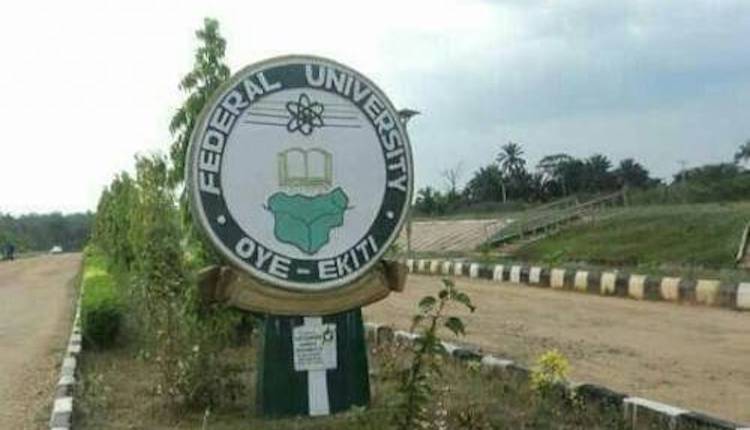
MEMBERS of the Academic Staff Union of Universities (ASUU) Federal University Oye Ekiti (FUOYE), chapter have expressed concerns over what they described as the skewed process in which the appointment of the next Vice Chancellor of the university has been handled.
The tenure of Professor Kayode Soremekun, incumbent Vice Chancellor of the university will soon come to end and the search for a suitable candidate for the post has pitched the academic union and university management against each other over the choice of Professor Sunday Fasina, a Deputy Vice-Chancellor as a replacement.
In a letter obtained by The ICIR, and signed by Habibat Adubiaro, Vice-Chairperson of ASUU in the university, the union accused Soremekun, and Lawan Muhammadu Yahuza, Chairman FUOYE Governing Council, of working together to scuttle and manipulate the process in favour of a certain candidate.
The letter which was addressed to the federal ministry of education, the national university commission and federal character commission, ASUU alleged that despite previous intervention by concerned authorities, the VC and the council chairman are not following due process in the exercise.
According to ASUU, two out of the external members council and a representative of the ministry of education in the council had recused themselves from the process due to the high handedness of the council chairman.
The three members, who complained that the process for the vice-chancellor selection had been subverted for a suitable and qualified candidate to emerge, had subsequently sent official letters to the secretary to the council and registrar of FUOYE, indicating that they were recusing themselves from the illegality being conducted by the council chairman.
The representative of the minister for education in the council who observed that the selection committee had been totally sidestepped, advised the university management and council to adhere strictly to the administrative procedure of proper selection of a new vice-chancellor as laid down by the federal ministry of education through the National Universities Commission.
Alkali Aji Kolo, another external council member who had recused himself from the process pointed to an existing court order that stops them from going ahead with the appointment ánd selection of a new vice-chancellor for the university which the pro-chancellor and council chairman and the outgoing vice-chancellor, have all ignored.
The union noted that the council chairman, who did not regard the concerns raised by the three members still went ahead to conduct a shadow council meeting consisting of himself and four internal members whose allegiances are to the outgoing vice-chancellor to perfect plans of imposing the supposed candidate.
ASUU wants both the vice-chancellor and council chairman to rescue themselves from the selection process to give room for a credible and emergence of a qualified candidate.
ASUU alleged that the “outgoing vice-chancellor is desperate to continue to control the Internally Generated Revenue (IGR) of the university even after leaving office, so his interest in installing his successor.”
While calling for the process to start afresh, ASUU wants the vice-chancellor to proceed on a terminal leave demanding that an acting VC should be appointed pending the conclusion for the selection of a new VC.
“From the above, it is clear that the process of selecting a new Vice-Chancellor for FUOYE has been compromised. The process needs to be halted, outgoing Vice-Chancellor recused from the selection process and due process followed whereby the selection committee is allowed to operate.
“The Chairman of Council should be advised to protect the best interest of FUOYE so that competent academics can successfully steer the ship of the university.”
More petitions
Similarly, the Senior Staff Association of Nigeria Universities (SSANU), Non-Academic Staff Union of Universities (NASU) and National Association of Academic Technologists (NAAT), in a joint statement addressed to Mallam Adamu Adamu the federal ministry of education, shared the position of ASUU.
The statement which was signed by Comrades Ojumoola Ayodele, Oyelude Yekeen, Abioye James, Ayeni Abraham, Faleye Benjamin O. and, Babafemi Oluwasola, chairmen and secretaries of SSANU, NASU and NAAT respectively, complained that the university governing council did not follow due process in the VC selection noting that “such is not good for the future of the university.”
Governing council suspends selection process
When contacted, Adeyinka Ademuyiwa, the institution’s deputy director of corporate services, referred this reporter to an earlier press statement and publication of The ICIR that announced the suspension of the VC selection process by the governing council on Thursday.
He said the council took the decision in order to address the concerns and complaints of some stakeholders involved in the selection exercise.
According to him, the council has received not less than 120 petitions before it
He added that since FUOYE is handling the process of appointing the vice-chancellor for the first time, human errors are bound to occur in what is essentially a learning process and assured that the institution management is ready to correct such errors and deliver an acceptable appointment process.
Ministerial directive
Sources at the Federal Ministry of Education told our reporter that the Minister of Education has directed Professor Abdulrasheed Abubakar, the NUC Executive Secretary to summon the council members, VC, Registrar and all members of both Search and Selection Committees.
“They were summoned on Tuesday 8th December 2020,” a ministry official who did not want to be named because he was not authorised to speak to the press said.
“At the meeting where everybody was allowed to express their minds, the Executive Secretary having listened to all parties warned the VC never to interfere in the appointment processes again,” said another source who was privy to the meeting.
“In fact, the Secretary told the VC that he has no job at the meetings of any of the committees that his job stopped at the election of the Selection Committee by the University Senate.”
He said the NUC Executive Secretary also warned the Council Chairman against further defiance to the laws and guidelines on the appointment of VC.
Abubakar was reported to have blamed the university Registrar of incompetence that he ought to have advised the Council appropriately if he knew the job.
“The Secretary recommended the Registrar for training immediately so as to avoid further administrative errors.”