THE Oyo state House of Assembly on Tuesday passed the Child Sexual Offences bill, 2019 into law.
The law which is aimed to protect the rights of children in the state finds any person who engages in domestic sexual violence with a child is guilty of an offence and liable on conviction to a minimum of five years imprisonment or minimum of N500,000 or both.
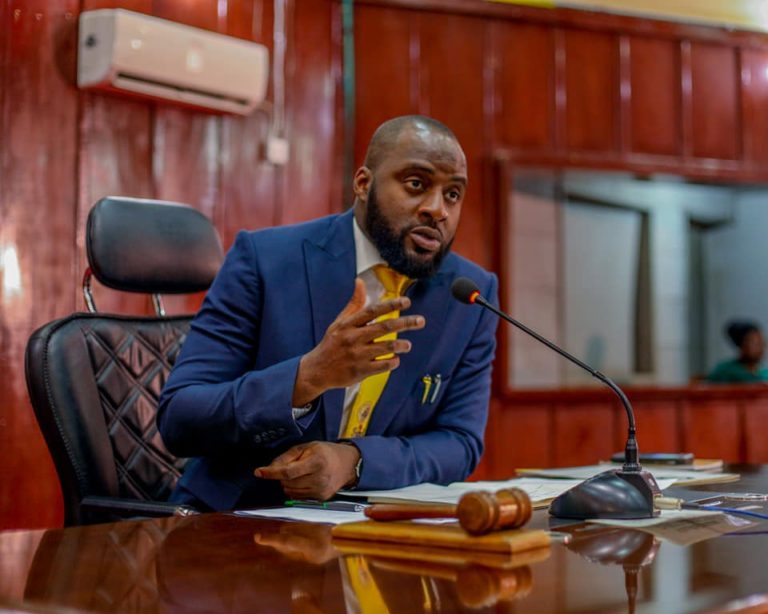
Adebo Ogundoyin, the Speaker of the House, while speaking during the house’s plenary decried the rising cases of child abuse in the state.
Ogundoyin, while stating that the Oyo State government is committed to nipping rape and other sexual offenses in the bud, added that relevant laws are needed to ensure offenders are duly punished.
He stressed that the bill is an effort towards ending rape, child abuse and other sexual offenses in the state.
“Aside offenders of domestic sexual violence, any person who causes pornographic materials to be sent to public space or cyber space to which a child may have access is guilty of an offence and also liable on conviction to five years imprisonment or fine of N5,000,000 or both.
“Likewise, any person who stigmatizes a victim of sexual offences under this just passed bill is guilty of an offense and liable on conviction to maximum of two years imprisonment and maximum fine of N200,000,”he said.
He commended the committee on women affairs and community development for its due diligence in the passage of the bill.
“The committee on women affairs and community development have done commendable work and we trust the executive will assent the law in no time for proper implementation and effectiveness.”
Marcus Williams, the Chairman of the Ministry of Women Affairs and Social Inclusion’s Rapid Response Team on Sexual, Gender-Based Violence and Child Abuse, in Oyo State, during a report presentation to the state’s Ministry of Women Affairs in July, said seventeen child abuse cases were reported in Oyo State between March and June, 2020, with victims’s age ranging from one to 17.
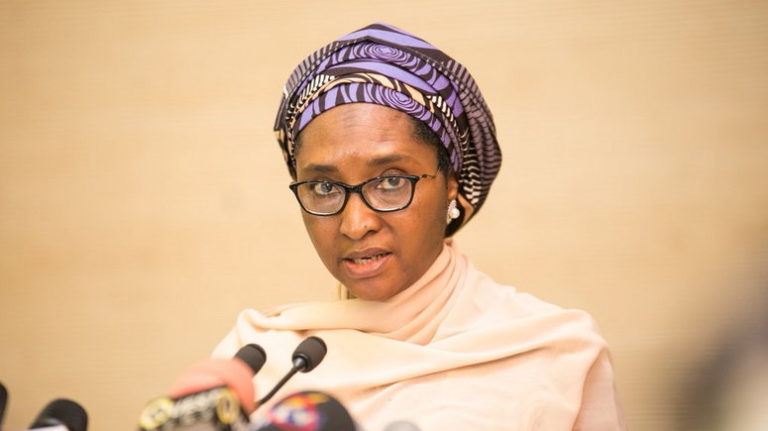
ZAINAB Ahmed, Nigeria’s Minster of Finance, has said that Nigeria land border closed to be reopened ‘very soon’.
Ahmed disclosed this during a round-table discussion at the 26th Nigerian Economic Summit on Wednesday.
“We will be expecting that the borders will be reopened very soon. The date will be decided by Mr President,” said Ahmed.
Ahmed said all the members of a committee set up by Muhammadu Buhari, the Nigerian President has agreed and recommended that it is time for the border to be reopened.
“We have made an assessment. The president set up a committee and we have made an assessment and all the members of the committee agreed and are recommending to the president that it is time to reopen the borders,” she added.
According to the Finance Minister, the targeted objective of the border closure has been met and ‘lessons has been learnt.
“The objective has been met in the sense that we have been able, over these couple of months, to work together with our partners in a tripartite committee and do a joint border patrol together and reinforce the sanctity of the commitments that we made to each other.
“So, each side has learnt its lesions. Nigeria has been affecting our partners in terms of businesses that we have in Nigeria as well,” she stated.
However, Ahmed did not state when Buhari would announce a date for the reopening of the various land borders across the country.
Earlier in October 2019, the Federal government ordered the closure of all its land borders to curb smuggling and encourage internal production of food in the country.
Buhari had in a statement said that Nigeria has been able to save ‘millions of dollars’ due to the border closure and also curb the smuggling of arms and ammunition into the state.
He added that the partial border closure has helped Nigeria curb the importation of illegal goods, most especially drugs and small arms, which he said were threats to the country.
“We have saved millions of dollars. We have realised that we don’t have to import rice, we have curtailed the importation of drugs and proliferation of small arms which threaten our country,””the president said in the statement.
The Nigeria government’s decision to close its land borders resulted into alleged retaliation and criticism from its neighbouring countries especially Ghana.
Nigerian –owned business operating in Ghana were said to have been attacked due to the border closure.
Nana Akufo-Addo, the Ghanian President also lamented that due to the closure of Nigeria’s borders by the Federal Government, about 300 trucks plying the region have been stranded at the borders.
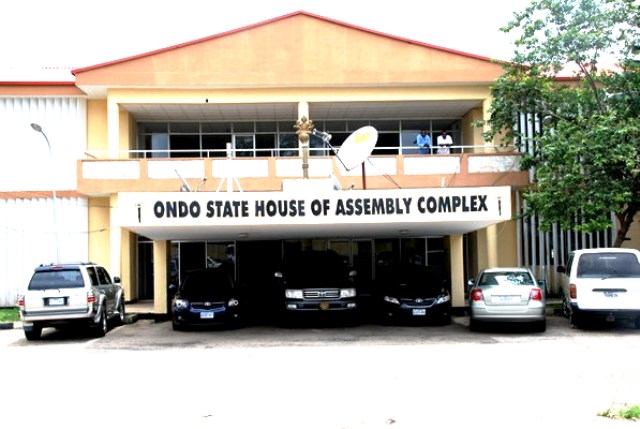
FOLLOWING the removal of Iroju Ogundeji as the deputy speaker of the Ondo State House of Assembly, nine other lawmakers have kicked against his impeachment, saying that it was unconstitutional.
Jamiu Maito representing Irele State Constituency and Ademola Edamisan said this on behalf of other seven lawmakers on Wednesday in Akure, the state capital.
The lawmakers said other members who rejected the impeachment include Rasheed Elegbeleye, Adewale Williams-Adewinle, Festus Akingbaso, Ogundeji Iroju, Favour Tomomowo, Tomide Akinribido and Success Tuhurkerijor.
The lawmakers argued that the process to Ogundeji’s removal contravenes the constitutional provision of the Constitution of Federal Republc of Nigeria that states that a two-third majority of the House must vote before the impeachment is valid.
“The section 92 sub 2C of the 1999 constitution of the Federal Republic of Nigeria as amended requires a two-thirds majority and the provisions of the standing order of the House for the impeachment of the Speaker or his Deputy,” the lawmakers argued.
The lawmakers said the motion for the impeachment of the deputy speaker was never moved in the House plenary.
“There was no place during a sitting of the Assembly either at the plenary or parliament where the decision to remove Ogundeji took place,” the lawmakers said.
One of the lawmaker who is outside of Nigeria, Akingbaso, representing Idanre State Constituency in a letter addressed to the leadership of the Assembly faulted the impeachment of the deputy speaker.
Akingbaso said before he left the country, he was not aware of such motion being considered in the House.
He added that he has also contacted his colleagues who confirmed to him that such motion was never moved in the House plenary.
“That to the best of my knowledge, that before I traveled out of the country, there was no time that the impeachment of the Deputy Speaker, Rt Hon, Iroju Ogundeji was discussed either at the parliamentary or plenary.
“And I have also contacted my colleagues especially the eight lawmakers who dissociated themselves from the plot to impeach the Deputy Governor, Hon Agboola Ajayi and they have also affirmed that nothing of such happened since I traveled out of the country,” Akingbaso said.
Ogundeji was removed on Tuesday according to Gbenga Omole, the Chairman of the House Committee on Information.
Omole confirmed that 20 out of the 26 members of the House signed the impeachment notice of the deputy speaker.
Earlier in June, the nine lawmakers had stood against the impeachment of the state’s deputy governor, Agboola Ajayi who eventually contested abnd lost in the polls to his former boss and incumbent governor of the state, Rotimi Akeredolu.
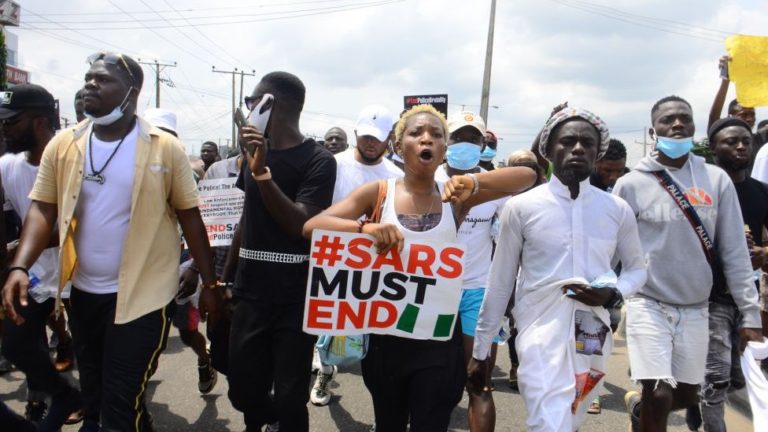
NIGERIANS on social media have submitted several takes since the United Kingdom (UK) parliament on Monday debated imposing sanctions against Nigerian officials alleged to have been responsible for using excessive force on peaceful #EndSARS protesters.
Dwelling on the use of brutal force by the Nigerian military on protesters, members of the UK parliament advocated for sanctions against the Nigerian government – a debate that has pushed many young Nigerians to question why the National Assembly is yet to initiate any of such discourse.
In the UK, petitions that carry at least 10,000 signatures get a response from the government and petitions that garner up to 100,000 signatures are considered for debate in Parliament. No such law applies in Nigeria.
Over 220,000 people had signed a petition, asking the UK government to impose sanctions on the Nigerian government for human rights violations perpetrated by men of the Nigerians Army and the controversial Special Anti-Robbery Squad (SARS), a rogue police unit.
Theresa Villiers MP, a member of the Petitions Committee, opened the debate, drawing focus on the deeds of SARS officials against Nigerian citizens.
“This petition is being prompted by the disturbing event in Nigeria in recent weeks. The SARS unit has a deeply controversial reputation. Reports of violence and human rights abuses by SARS date back to several years but these latest protests follow a video in October which many believe shows a man being killed by SARS officers,” she said.
The MPs submitted that government officials responsible for the abuse of human rights in the country should be denied the opportunity to enjoy amenities in the UK.
In response, Nigerians on social media praised the efforts of the UK parliament.
Tope Akinyode, a lawyer, in a post on Twitter said: “In one day, the UK Parliament did more than Nigeria‘s Senate, House of Rep, EFCC, IGP, & ICPC combined together. In one day, the UK parliament destroyed Buhari’s anti-corruption campaign of 5 years & exposed the high-ranking corruption profile of Gen. Gowon. I’m still in shock.”
Another Twitter user identified as Ambrosia Ijebu question why the UK parliament was taking more stringent actions, while the National Assembly remains quiet about the demand for an end to police brutality.
“How can the UK Parliament be showing more care and concern for Nigerians than the highly paid GOVERNMENT OF NIGERIA itself??? Are they not embarrassed???,” Ijebu asked in a post shared on his Twitter page.
Tola Onayemi, another Twitter user advocated for laws that empower Nigerians to drive policy change and hold the gvoernment accountable for its actions.
“Nigeria actually needs laws that empower citizens to hold government accountable & demand specific government actions in same way UK parliament had to discuss #EndSARS in Nigeria because a specific number of people signed a petition. Our laws should give powers to the citizens,” Onayemi shared in a post.
Sharing an opposing view, a Twitter user identified as Cyril Emeka slammed the action by the UK parliament.
He said: “What an insult.. Please Nigeria should sanction the UK parliament for even debating this issue. Then we should seize all their assets here in Nigeria. Then lastly we must ban Queen Elizabeth from entering Nigeria.”
Meanwhile, Kate Osamor, member of the United Kingdom parliament, has described Lai Mohammed, Nigerian minister of information and culture’s response to the investigation by CNN on the shootings of unarmed #ENDSARS protesters by operatives of the Nigerian Army as undemocratic conduct.
“The Minister for the Federal Ministry of Information and Culture went on record to state that the CNN reporting of the massacre was “fake news”. That is undemocratic conduct that needs to be called out,” she said.
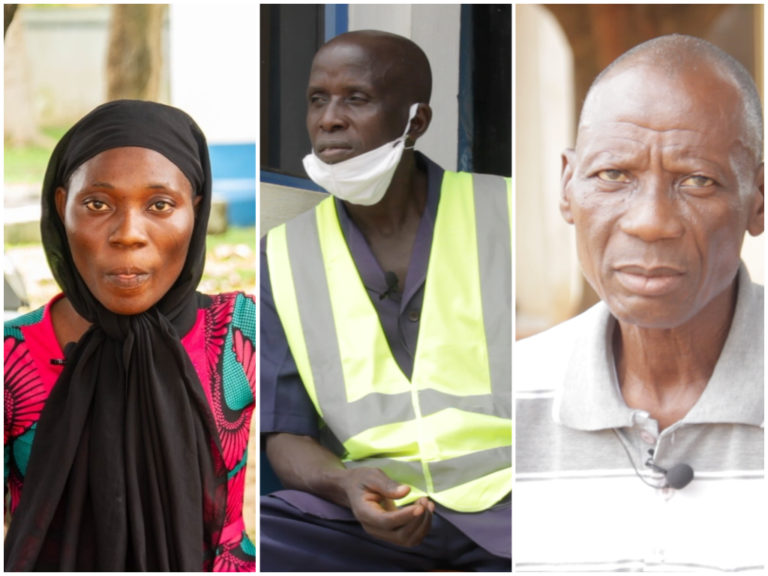
ARMED only with a cutlass, 52-year-old Yisa Burawa, a security guard at Unique International School located in the Bwari area of Abuja, once chased away an intruder who tried to gain access to the school premises through the back door. Even when the school is not in session, Burawa’s job requires keeping the school properties safe, and he has been doing this for the past 13 years.
Having lived in the area for many decades, Burawa’s competence as a security guard is in his knowledge of the environment and a fraternity with a network of guards, who share intelligence in cases of danger.
But when Nigeria recorded its first case of COVID-19 late February, Burawa who has three wives and 18 children found he couldn’t machete his way out of the hardship the pandemic presented and neither did his government provide much needed help.
The outbreak of the novel coronavirus ushered a new, descriptively cruel reality for many globally.
In Nigeria, a developing country which has 40 percent of its estimated 200 million population living below the poverty line, according to a 2019 Nigeria Bureau of Statistics (NBS) report, the situation was much more dire.
In March, lockdown orders imposed by the Federal Government in an attempt to curb the spread of the virus, prompted the shutting down of schools across the country.
With physical class sessions halted, teachers had to rethink methods to educate their students from home.
But as classroom education moved into homes, custodians of the school buildings known as security guards remained on the line of duty.
This group provides protection for both infrastructure and persons, and are the first line of defense incase of an attack, though they are classified as the lower echelon in any organizational structure, and the least income-earners.
In April, the Federal Government announced plans to distribute palliatives to targeted low-income earners across the country, to alleviate the negative effect of the pandemic on the economy.
We only heard about the palliatives, we never received anything
On April 8, the Federal Government announced that 77,000 metric tons of food will be distributed to vulnerable households affected by the lockdown in Lagos, Ogun, and Abuja. President Muhammadu Buhari also stated that at least 3.6 million households will benefit from the direct distribution of food and cash during the lockdown period but while stimulus packages were rolled out, many who needed it never received it. In fact, The ICIR found that most security guards who still had to work during the lockdown to guard school buildings were left out.
For Gumsi Sanni, a security guard at Stella Maris College located in the Life camp area of Abuja, news about palliatives rocked the airwaves and he developed hope that himself and his family would benefit from it. Living with his wife, five children and three of his siblings, Sanni already had it rough, only to hit rock bottom when the government imposed lockdown measures in the wake of the pandemic.
Gumsi Sanni – Security guard at Stellamaris college PHOTO: Aanu OG
“My wife had to stop her business because of the COVID-19 and it was really difficult for us. All we had was my salary and it wasn’t enough but we had no choice,” he said.
Sanni like many of his colleagues never got palliatives promised by the government. In fact, being a security guard and having to report to work during the lockdown worsened his situation. As a result of the movement restriction, getting transportation to his work place was most times impossible and he would spend twice the usual to report to his duty.
The reality is no different for Jumai Samuel, a female security guard at Sheikh Hamdan school located in Gwagwalada. Samuel lives several kilometers away from her workplace and during the lockdown period, she struggled commuting to work.
But beyond suffering the disadvantage of the movement restriction, Samuel also found it hard to put food on her table.
“It’s not easy for me. I’m the only female security in the school and during the lockdown, things were really bad,” she narrated.
Samuel who lives with her sibling complained of how the lockdown affected her sister’s hairdressing business. Stranded at home, Samuel’s sister would have been relieved if the promised palliative ever got to them but that never happened.
Jumai Samuel – Security guard at Sheikh Hamdan PHOTO: Aanu OG
“I did not get anything from the government. It wasn’t brought to my school or my house,” Samuel recalled, adding that although she was aware of the distribution, the palliative package which she heard contained 5kg of rice, beans and sachets of tomato paste would have only lasted her and her sibling a little over a week.
Dansuma Aminu, a security guard with Valid Crown School in Gwagwalada area of Abuja also heard about the distribution of palliatives in his area. Like Samuel, he confirmed the meagre items were distributed but recalled that only a few people got the items as he and his family never received anything from the government.
The same is repeated by the chief security officer of a private school in Kuje, who pleaded for anonymity. According to him, salaries were slashed during the lockdown period when schools were closed and while he heard of the distribution of palliatives, he never received anything.
“I don’t know if there is a government in Nigeria. Nothing got to me or my family or any of the security men in my school,” he said with a tone of disappointment.
These accounts put to question the statement of Sadiya Umar Farouq, the minister of Humanitarian Affairs, Disaster Management and Social Development, who while accounting for the distribution of palliatives across the country said practically everyone in the country got the palliative.
“There’s hardly anyone in Nigeria who didn’t receive the Federal Government palliative care during the COVID-19 pandemic period. All the tribes in Nigeria received the palliative. In fact, it was evenly distributed,” she said before she later retracted the statement and said: “it is impossible to give palliatives to all Nigerians.”
Indeed, only 1.2 percent of Nigerians received any form of the Federal Government’s palliatives, according to research done by SBM, a geopolitical intelligence platform, which carried out surveys in 18 states across Nigeria, including the Federal Capital Territory (FCT) to determine the effectiveness of the government’s response in handling the COVID-19.
It found that less than 2 percent of the surveyed population admitted to having received some form of support from the government during the peak of the pandemic.
We spent N3.5 trillion on COVID-19 palliatives – Central Bank of Nigeria (CBN)
How CBN disbursed N3.5 trillion for COVID-19 Palliatives PHOTO: ICIR
While many Nigerians lamented not getting any support from the government, the CBN said it disbursed N3.5 trillion to cushion the effect of the COVID-19 pandemic on the country’s economy.
“… in response to COVID-19, we are strengthening the Nigerian economy by providing a combined stimulus package of about N3.5 trillion in targeted measures to households, businesses, manufacturers and healthcare providers,” the apex bank disclosed in a communique published on the bank’s website, signed by Godwin Emefiele, the governor of CBN.
Though the CBN’s interventions were reportedly injected in different sectors of the country’s economy including providing direct support to households, there has been no disclosure of beneficiaries of the direct food and cash stimulus packages despite calls by a consortium of anti-corruption organisations demanding transparency.
Human Rights Watch (HRW), a non-governmental organization in its report noted that only a fraction of Nigerians gained from the direct distribution of cash set up by the government. On April 1, the Humanitarian Affairs Ministry began paying 20,000 Naira (about $52) to families registered in the National Social Register of Poor and Vulnerable Households, according to Farouq.
The minister had revealed that the National Social Register included 11,045,537 people from 2,644,493 households, figures that HRW described as ‘few’ given the fact that over 90 million Nigeriansare estimated to live in extreme poverty.
Aside from the distribution of cash, the government had also said it was targeting dispersal of food items to the ‘most vulnerable in the society’ but modalities of the distribution have remained unclear, casting doubt on the impact of the support initiative set up by the Federal Government.
Palliatives discovered in state-owned warehouses
The government announced its plan to begin distribution of COVID-19 palliatives in April but as of October, many Nigerians still reported not having received any form of support.
It was later discovered that COVID-19 palliatives donated by the Coalition Against COVID-19 (CACOVID), a group consisting of Nigerian businesspersons and corporate organisations, were locked up in warehouses in several states across Nigeria.
CACOVID, in an attempt to alleviate the effect of the pandemic on the most vulnerable citizens, donated billions of naira but the support provided by the group never got to the intended recipients.
In October, reports of Nigerians looting COVID-19 palliatives purportedly hidden in state-owned warehouses crowded social media. In Lagos, Osun, Kwara, Cross River, Kaduna, and Plateau, video clips of people breaking into warehouses and hoarding food items which were clearly marked ‘CACOVID’ became evidence that stimulus packages never touched the hands of those in need of it.
In defense, Nwanosiobi Osita, who doubles as the Central Bank of Nigeria’s acting Director, Corporate Communications and spokesperson of the coalition, said in a statement that the relief items were to be delivered to about 2 million most vulnerable families in 774 LGAs across the country but for number to be catered for was large, causing bottlenecks.
“The very large size of the order, and the production cycle required to meet the demand caused delays in delivering the food items to the states in an expeditious manner; hence, the resultant delay in delivery of the food palliatives by the state governors.
“Although various states and the FCT had commenced flag-off of the distribution of the food items since early August, some could not conclude the distribution as they were yet to receive complete deliveries of the items allotted to them,” he said.
What happened to government-provided palliatives?
According to the Farouq, vulnerable groups in the FCT were targeted as foremost beneficiaries of the palliatives. In an interview with TheICIR, the minister through her aide, Nneka Eze, said stimulus packages were shared to different vulnerable groups numbering over 1,500 households.
She however noted that the ministry didn’t participate in the distribution process but handed the palliatives over to local area councils and Non-governmental organisations to share among the vulnerable groups.
For states distribution, the minister said it gave out palliatives to state government for onward distribution to the targeted beneficiaries and maintained that it didn’t directly give out the palliatives to the intended beneficiaries.
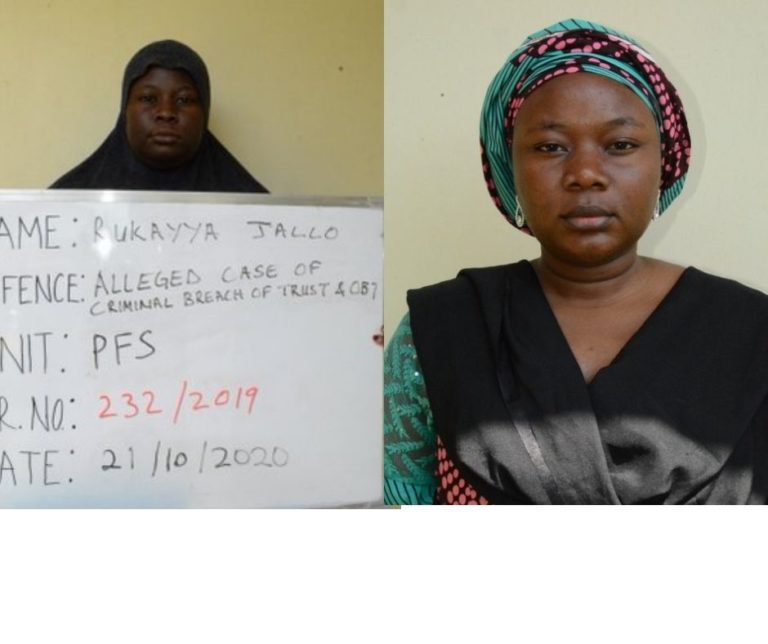
A STATE High Court sitting in Kaduna has sentenced two sisters to ten years imprisonment for failing to deliver donated fund to a paralysed patient, but gave an option of N100,000 fine.
This was disclosed in a statement signed by the Economic Financial Crimes Commission (EFCC) on Tuesday.
According to EFCC, the sisters, Maryam Jallo and Rukaiya Jallo were arraigned over an amended one-count charge on the 30th day of March 2019.
The commission said one Badamasi Shanono alleged in a petition that, in 2019, Jamal Health Foundation owned by the convicts used its social media platform to solicit for donations and contributions from donors for the medical expenses of one Usman Umar.
According to the petition, Umar had been bedridden for over two years suffering from partial paralysis
Upon donation by Shanono and one other Adio Bukar Hashia for medical treatment of Umar, the convict ‘dishonestly misappropriated the fund’.
EFCC said the offence is contrary to Section 293 of Kaduna State Penal Code Law, 2017 and punishable under Section 294 of the Same Law.
After their charge was read to them, the defendants pleaded ‘guilty’ to the amended charge preferred against them by the EFCC.
Delivering his judgement, the sitting judge on the case, Muhammad Tukur of the State High Court, Kaduna found the accused guilty of criminal breach of trust.
Justice Tukur convicted and sentenced them to ten years imprisonment with an option of N100, 000 fine.
For over nine years, the 14 – kilometre road connecting Pegi community to Kuje area of Abuja, Nigeria’s capital, has been left uncompleted. The situation has inflicted hardship on the residents despite the fact that N676 million was awarded for the project. THE ICIR’s Niyi OYEDEJI reports on why and how the project was abandoned.
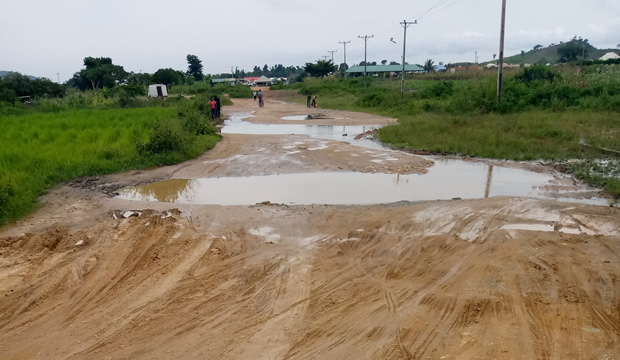
LATE September, a wraith-silver of moon hung in the lonely sky when this reporter set out on a journey to Pegi community. Tugging at his heart was the fact that the road leading to the community had been abandoned for almost a decade. More painful is the fact that a whooping sum of N676 million had been spent to upgrade the road to help people of the area commute more comfortably.
In fifteen minutes, he shuttled from the Abuja central area to Kuje. From there, he had planned to take a cab to Pegi community. Sadly, to his utmost dismay, all the taxi drivers he approached declined his request. Stunned, he asked why? And like a well-rehearsed movie script; they all told the reporter they could not convey him to the community due to the terrible state of the road.
The reporter had no other choice than to hop on a motorbike. The rider billed him N400, twice the amount the reporter paid for the journey from the heart of Abuja to Kuje.
Inside Pegi community
Pregnant Felicia Anthony had envisaged a smooth ride that ought not to exceed 30 minutes of commuting from Pegi to Abuja city centre.
Anthony Felicia
The woman, in her second trimester, had to visit her hospital for a scheduled session. She was on her way to the clinic within the Abuja metropolis when the motorbike she was riding on from Pegi to Kuje got involved in an accident. There and then, Felicia suffered a miscarriage.
She would later spend a month in the hospital to recuperate from the wounds she suffered and, more painfully, from the miscarriage.
Recalling the incident, she said “the motorcycle slipped from a hilly part of the road and rammed into an on-coming vehicle.”
“I had landed at the hospital before I knew what was going on. That was how I lost my four-month-old pregnancy,” she lamented.
Speaking from an expert’s view, the Chief Medical Officer (CMD), of the only government health care facility at Pegi community, Mary Innocent-Dike, disclosed that Felicia was just one of five pregnant women who lost their pregnancies in the first week of September 2020 due to the bad nature of the only road that connects the community to Kuje Area Council and Abuja city centre.
She said that the 14 – kilometre road, which has been abandoned for over nine years, is terribly inflicting hardship on patients, particularly pregnant women and nursing mothers.
Innocent-Dike, who is the only medical officer attached to the health centre, also narrated how it has always been difficult for her to refer patients to hospitals in the city for proper care due to the bad shape of the road.
The pegi medical officer
Pegi Clinic
“The road is really having a bad impact on this health centre. Most of our patients die on the road when we refer them to hospitals in the city for proper medical attention,” she said.
“In fact, it is always very difficult for us to get vehicles that would convey our patients from here to the city, as commercial vehicles always run away from us. They decline our invites no matter how much we offer them. You know it would be difficult for us to transport pregnant women to wherever they need to get further treatments with motorcycles.”
Surprisingly, Pegi community, where over 70,000 people reside, has just a single ill-equipped health centre that could hardly cater for the medical needs of the community.
Pegi to the heart of Abuja where good hospitals are located is only 40 kilometres. But residents have to contend with the bad 14 – kilometre stretch for about 30 minutes before making it to Kuje and then the city centre.
Advent of Pegi Community
In 2006, Pegi was one of the six resettlements created by Nasir El-Rufai, former Minister of the Federal Capital Territory (FCT), to mark 30 years of creation of Abuja.
Pegi Gate
Fourteen years on, despite its geometrical population growth, the community, has not witnessed a corresponding infrastructural development.
In terms of infrastructure, it has just a primary school, one secondary school and one health centre provided by the past FCT administration of Adamu Aliero, former governor of Kebbi State.
Before he left office after the demise of the late President Umar Musa Yar’ Adua, Aliero, on March 21, 2011, approved the award of contract for the construction of 14 km Pegi-Kuje road to Verallen Nigeria Limited.
Contract signpost
However, almost ten years after, The ICIR investigation reveals that the road has been abandoned despite a total of N110 million mobilisation fee being paid to the contractor for the project worth a total of N676 million.
Residents’ real nightmarish ordeals
Unlike other communities in the FCT that have various exit and entry roads, Pegi community has just a single road that leads to the city of Abuja and that’s the 14 km road that connects them to Kuje, which has remained abandoned over the years.
“So many lives have been lost, cars and motorcycles damaged and painfully, we are cut off from the main city where we could access sound health care system and good schools for our children because of this terrible road,” says Isaac Aderibigbe, chairman, Pegi Estate Community Development Association (PECDA).
Pegi, located in Gaube Ward of Kuje Area Council, is predominantly a settlement of civil servants, majority of whom work is located in the heart of Abuja.
Aderibigbe, like many of his compatriots, is not finding life comfortable due to the bad nature of the road. Often, the road has also been an avenue where bandits and kidnappers waylay road users.
A level-12 officer at the Federal Ministry of Environment in Abuja, Adejare Samson, also stated that he no longer rides his car to office because of the awful state of the road, which keeps making his car to develop one fault or another almost every week.
“If it is an alignment problem today, I could suffer deflated tyres on the road the following day. That’s why I just had to park the car at home to avert all these avoidable faults,” exasperated Samson narrated to The ICIR.
Samson and other residents of the community no longer ride in their private vehicles to their respective offices because what they spend to repair damage parts of their vehicles are becoming enormous. Hence, they have opted for public transport, which in itself is unreliable.
George Gloria, a banker with a third generation bank in Wuse district of Abujastated that she gets to work late on most occasions because of the road, which commercial motorcyclists are always running away from plying.
The 28-year-old lady told The ICIR that getting a motorcyclist that would take her to Kuje, where she would board a commercial bus to her place of work could be a Herculean task, especially during the rainy season when the already deteriorated road is badly unmotorable.
“I am so tired of taking this road to my place of work. It is always slippery during the rainy season and that’s why most of the motorcyclists always run away from taking us to the town. In fact, it takes an expert to ply this road without having an accident with how terrible this road has become,” she said.
The crippling state of the road has also made the community to be a den for armed robbers and kidnappers. Between 2018 and 2020, there have been about three cases of kidnapping recorded in the area. While some of the victims were rescued alive, others were unlucky to have died from gunshot wounds.
“In the year 2018, we suffered our first kidnapping incident and since then, there has been a series of kidnapping and different forms of armed robbery attacks on the residents of this community. All these attacks could have been avoided if we had an easily motorable road that could effortlessly allow security operatives to reach our community as fast as possible,” Aderibigbe, the PEDA chairman told The ICIR.
On December 6, 2018, nine residents of the community were kidnapped; three personnel of the Nigerian Navy sustained gunshot injuries in the process. Although, no lives were lost but ransom was paid for those kidnapped to be released.
Barely a year after the first kidnapping incident in Pegi, kidnappers clad in military uniform on October 7, 2019 stormed the community again tokidnap nine persons, including a 12-year-old boy.
“Two officers of the Nigerian Security and Civil Defence Corps were shot during the attack. Unfortunately, one of them in person, CSC Samuel Akor, died from complications suffered from the gunshot injuries. The seven other residents were released after ransom had been paid,” Aderibigbe recalled.
On October 9, 2019, the residents of the community trooped out in their numbers to peacefullyprotestthe kidnapping incidents tormenting their lives, after which Ramatu Tijjani Aliyu, the Minister of State for Federal Capital Territory (FCT) on October 14, 2019, visited the community to sympathize with them.
She also used the condolence visit to promise them speedy completion of the abandoned 14 km road. One year after, the road is still in its terrible state and kidnappers have continued to haunt the residents of the community.
Fourteen members of the community, including Mohammed Baba, former Vice Chairman of the Kuje Local Government Area, were kidnapped in the mostrecentattack that happened in the community on October 10, 2020.
Isaac Solomon who was among the residents that were kidnapped during the 2019 attack on the community shared his experience. He was kidnapped on the road while driving back from work, an attempt he said could have not been possible if the road was in good shape.
“Sometimes in October last year, I was coming back from work when the armed kidnappers stormed the road while I was trying to navigate my way on the road filled with potholes. Before I realized what was going on, the armed men had dragged me inside their vehicles and drove off, the rest is history.”
FCTA Pegi Road Contract Document
Documents obtained by The ICIR revealed that the Federal Capital Territory Administration (FCTA) on March 21 awarded the 14km Kuje-Pegi road to Verallen Nigeria Limited for the sum of N676,463,262.30 (Six Hundred and Seventy-Six Million, Four Hundred and Sixty-Three Thousand, Two Hundred and Sixty-Two Naira, Thirty Kobo), following his Tender of August 8, 2010.
The document, which was signed by Ahmad Muhammad Joda, the Procurement Director for the FCTA asked the contractor to indicate in writing his acceptance or otherwise of the award within two weeks of the receipt of the award letter.
Letter of Award
Acceptance Letter of Contract
It also stated that the contractor was expected to complete the project within nine months.
Another document obtained by The ICIR showed how Allen Egbe, the Managing Director of the Verallen Nigeria Limited, on March 23, 2011 sent his acceptance letter to the office of the Minister for the Federal Capital Territory.
In the letter, Egbe stated that he accepted the offer as contained in the award of contract letter dated 21st of March.
The ICIR investigations further revealed that the sum of N101,469,489.35 (One Hundred and One Million, Four Hundred and Sixty-Nine Thousand, Four Hundred and Eighty-Nine Naira, Thirty-Five Kobo), about 15% of the contract sum, was paid to the contractor, which he also confirmed to this reporter during a telephone conversation.
1 kilometer out of 14 kilometer road constructed ― Contractor
Investigation revealed that the contractor on May 18, 2020, tarred just 1 kilometer out of the 14-kilometer road after having abandoned the project since 2011 when it was only graded.
Claiming that was when he was mobilised back to the site, Egbe said that while Verallen Nigeria Limited had abandoned the road, it is the Federal Capital Territory Administration (FCTA) that should be blamed for that problem.
Egbe said the road was truly awarded to his company and mobilisation fee was received from the government, but on getting to the site, it was realised that the road design awarded to his firm was different from what they met.
Pegi Road in Abuja
“The road was truly awarded and a mobilisation fee was paid only for us to get to the site and discovered that the design that was given to us was a completely wrong design. Promptly, we informed the government about it. A new design was later approved. And we told them that the old design and the new design can not be the same amount. Sadly, this became an issue we dragged for long before I took ill,” Egbe recounted.
Egbe said that was why he later went back to the site to construct one kilometer part of the road duly paid for out of the 14km.
“Up till now, we are waiting for the FCTA to pay more before we would continue with the remaining aspect of the project” he stated.
The ICIR asked Egbe if the 1km is all he has to show for the sum of N101 million paid to him for the contract, he affirmed that and said he was waiting for more payment before going back to the site. He did not give the breakdown of how the money was spent.
“We have done asphalting of 1km and we have started road work towards the community gate but waiting for the government to come and take measurement and pay us before going back to the site,” Egbe insisted.
FCTA declines comment
For over two months, The ICIR tried to speak with top officials of the FCTA for their comments on the abandoned road project. All the efforts were fruitless.
Special Adviser on Media to the FCT Minister, Abubakar Sani, was not available for comments. He did not answer multiple calls put through to his mobile phone and did not reply to text message sent to his phone.
After repeatedly calls put through to Sani, this reporter on October 24 sent a text message to him, asking him to comment on the abandoned road project but he neither acknowledge nor respond to the text.
A letter of request for an interview session was also on November 12, sent to the Minister of State, Federal Capital Territory (FCT), Dr. Ramatu Tijjani Aliyu. She too, has neither acknowledged receipt nor respond let alone, grant the reporter’s interview request till the time of publishing this report. It has been a case of loud silence from the government quarters.
A road expert’s perspective
Road safety personnel, Adesola Akinniyi, expressed fear over the impact of bad roads on the lives of road users. He stated that a terrible road will not only cause loss of finances but could also lead to deterioration of human resources as well as their overall well-being.
“One of the most common social impacts of poor road connection that we are all aware of is loss of human resources. Accidents can lead to a vast number of fatalities and injuries to the travelers.
“Huge sums of money are used to build automobiles for transport. Commodities of transport like cars and bikes are not affordable for everybody. Therefore, for a person earning just enough to sustain his families’ basic needs, it would be very difficult for him to buy a vehicle again immediately, that’s not to talk of how much it would cost to maintain their health,” stressed Akinniyi.
* This investigation is supported by the John D. and Catherine T. MacArthur Foundation
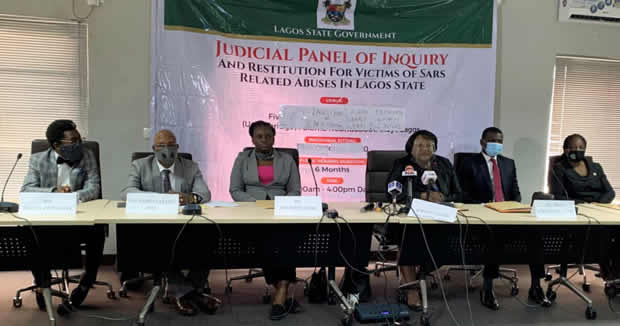
CHUKWU Vincent, a businessman in Lagos on Tuesday told the Lagos Judicial Panel of Inquiry how his cousin, Basil Ejiagwa, who is now dead developed brain tumour after his skull was broken by operatives of the disbanded Special Anti-Robbery Squad (SARS).
Vincent, who testified before the panel said his cousin was arrested and severely tortured in 2014, adding that, the boy eventually died on November 17.
While being led in evidence by his lawyer, T.O Gazhali, Vincent said, “My cousin was arrested in May 2014 by policemen from the Igando police station in 2014 when he was returning home from his shop in Alaba International Market and he was detained for five days and tortured without committing any offence.”
He said the police broke two legs before transferring him to the SARSoffice where he suffered another round of brutal torture.
“The policemen hit him with brick iron hammer on his two legs until his legs were broken. After the torture, he was transferred to the SARS office at the Lagos police command in Ikeja where the torture continued.
“It was at the Ikeja SARS office that he had his skull fractured and suffered memory loss.”
Vincent said his cousin’s head had been fractured before he was eventually released by the SARS officers, thereby causing him brain tumour.
“When he was eventually released on May 31, 2014, they told us at the hospital at the Lagos state General Hospital at Igando that his head had been fractured with the butt of the gun.
“My cousin could neither walk nor remember anything. It was so bad that he couldn’t even remember that he had placed an order for his goods. He could not remember that his goods are on the sea.”
He said eventhough the court had ruled that the police should pay his cousin N40 million for damages but the police are yet to comply.
“He later developed a brain tumour as a result of the fractured skull. We have approached the Federal High Court in Lagos where the Judge ruled in favour of my cousin and ordered the police to pay him N40m damages which they are yet to pay. “
The panel admitted as exhibits hospital documents, including a bill of N1m and a doctor’s report; as well as the judgment of the Federal High Court in Lagos awarding N40m damages to the victim.
Counsel for the police, Joseph Ebosereme, sought an adjournment to cross-examine the witness.
The panel, however, adjourned till December 4, 2020.
A Federal High Court sitting in Abuja has summoned a member of the House of Representatives, Sani Umar Dangaladima, representing the Kaura-Namoda Federal Constituency of Zamfara State, to appear in court over trial of AbdulRasheed Maina, a former chairman defunct Pension Reformed Task Team.
Okon Abang, the trial judge summoned Dangaladima on Tuesday due to the absence of Faisal Maina at the court trial.
Dangaladima had stood as surety for Faisal’s bail and had since refused to attend the trial after he was arrested alongside his father.
At the resumed hearing of Faisal’s trial on Tuesday, the Economic and Financial Crimes Commission’s prosecution counsel, Mohammed Abubakar, said both the defendant and his surety had not attended court since June 24, 2020.
At the resumed trial in Absentia of Maina and his son, Faisal, his surety, nor his lawyer was present at the court.
Consequently, Abubakar applied for the revocation of his bail and his arrest citing section 184 of the Administraton of Criminal Justice Act.
EFCC also applied for the court to order his trial in absentia as provided by 352(4) of ACJA.
“My third application is for the issuance of summons on the surety, and for him to show cause why he should not forfeit the bail bond,” Abubakar added.
Abang summoned Dangaladima to appear before the court and explain why he should not forfeit the N60m bail bond which he signed for Faisal’s bail.
Abang had on Tuesday revoked the bail granted Faisal Maina, the son of Abdulrasheed Maina, and ordered his arrest for jumping bail in his trial on money laundering charges.
The trial judge also ordered that his trial on money laundering charges would proceed in absentia pending when the security agencies would be able to arrest and produce him in court. The judge granted the prayers and adjourned till Wednesday.
THE Federal High Court sitting in Abuja on Tuesday continued the trial of a former Chairman of the defunct Pension Reformed Task Team, Abdulrasheed Maina after jumping bail.
Maina, who is currently being prosecuted by the Economic and Financial Crimes Commission, EFCC on N2 billion money laundering charges, after attending his last court session on July 2, during the cross-examination of the sixth prosecution witness by his legal team.
He failed to attend subsequent proceedings since September 29, 2020, prompting the presiding judge, Justice Okon Abang, to adjudge him as having jumped bail in a ruling delivered on November 18.
In his ruling, Justice Abang revoked the bail earlier granted him, ordered his arrest, and directed that his trial would proceed in his absence.
On Monday, the judge also ordered the remand of Maina’s bail surety, Senator Ali Ndume, until he is able to produce the fleeing defendant in court or pay the N500 million bail bond to the Federal Government.
Maina was also absent at the resumed hearing in the case on Tuesday.
There was no lawyer to represent him or his company charged along with him as his second defendant.
Following the request of the prosecuting counsel, Mohammed Abubakar, the judge closed the right of Maina to continue cross-examining the sixth prosecution.
He also dispossessed the second defendant’s right to cross-examine the witness.
The seventh prosecuting witness, Ali Sani, also testified, with defendants and their lawyers unavailable to cross-examine him.
The judge, who also closed the defendants’ right to cross-examine the witness, also admitted an exhibit tendered by the prosecuting without any objection.
Justice Abang held that the defendants had the opportunity to cross-examine the witnesses and oppose the admissibility of the exhibit tender but failed to take advantage of it.
“They have themselves to blame,” the judge repeated each time he had to take a decision closing or foreclosing the defendants’ rights in the course of the trial.