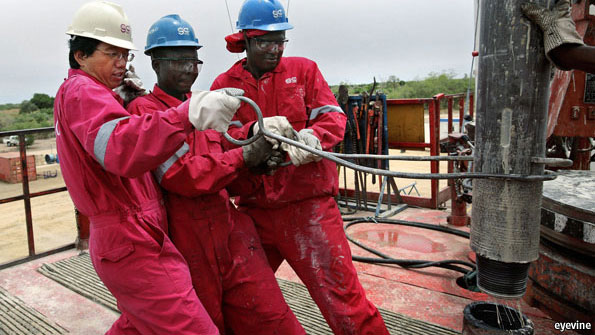
CRUDE oil prices rose globally to an eight-month high since March, following anticipation for the launch of a COVID-19 vaccine which brightened chances of increased fuel consumption.
Nigeria’s crude oil equivalent, Brent crude price increased by more than 3 per cent to climb $47.82 per barrel rising by 78 cents. Western Trade International, WTI, Crude, the US crude equivalent also rose by 72 cents per barrel to settle at $45.66 per barrel from $44.91 per barrel.
This is prompted by a flurry of tenders from Chinese and Indian refiners seeking crude oil for January, the latest sign of roaring strength in Asian markets.
The last time WTTIl Crude traded at $45 per barrel was eight months ago, in early March this year, before Saudi Arabia and Russia disagreed on how to manage oil supply in the pandemic and started a brief oil price war that contributed to the price collapse together with the demand destruction.
The global oil market now awaits the upcoming OPEC and non-OPEC Ministerial Meeting on Dec. 1, which is expected to provide clarity over the OPEC+ alliance’s production plan going into 2021.
Crude oil value has risen by more than a quarter this month as positive vaccine results. With the market’s prospects picking up, Brent crude could reach $60 a barrel by the summer of 2021, according to Bank of America Corporation.
The University of Oxford and AstraZeneca recently announced that interim trial data from their Phase III trials confirms their candidate vaccine is effective at preventing COVID-19 and offers a high level of protection.
Since the first announcement from Pfizer, the energy sector has been one of the biggest winners on the market, having been the worst hit when demand for crude oil initially crashed in the pandemic.
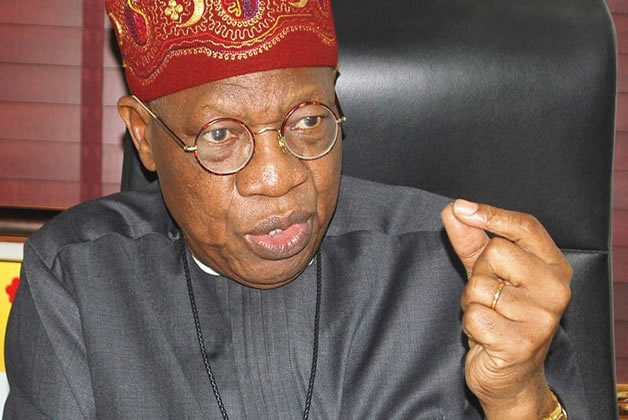
LAI Mohammed, the Minister of Information and Culture has said that the Nigerian economy is improving though the country is in recession.
Mohammed said this on Thursday when he featured on a breakfast programme, “Good Morning Nigeria” aired on the Nigeria Television Authority (NTA).
“By comparison, South Africa recorded a decline of -50 in 02 2020. The economic conditions are actually improving, with 17 activities recording positive real growth in the third quarter, compared to 13 in Q2. Also, 36 of 46 economic activities did better in Q3 2020 than Q2 2020, Mohammed said.
Mohammed stated that the decline of -3.62 percent in Q3 is much smaller than the -6.10 percent recorded in Q2.
According to the minister, the -3.62 percent contraction recorded in Q3 2020 was better than the -6.01 percent earlier forecast by the National Bureau of Statistics, adding that this outperformed several domestic and international forecasts.
He noted that before COVID-19, the Nigerian economy had been experiencing sustained growth that was improving every quarter until Q2 2020 when the impact of COVID-19 was felt.
Mohammed said the major reason for the economic downturn is the COVID-19 pandemic.
He argued that Nigeria is not alone as dozens of countries, including economic giants like the United States, United Kingdom, and Canada, had entered recession due to the global pandemic
The minister said other countries in recession include Austria, Belgium, Denmark, Estonia, Finland, Hungary, Ireland, Italy, Latvia, Lithuania, Mexico, Netherlands, Norway, Romania, Russia, and Spain.
He also said the oil sector was largely responsible for the slow-down in economic activity in Q3 2020.
The reason is the slow-down in global economic growth and oil demand due to COVID 19 pandemic as well as Nigeria’s obligations to meet OPEC cuts,” Mohammed stated.
The minister said although the non-oil sec also contracted in Q3 2020, the decline in the A sector by -2.51 percent year on year in Q3 was significantly better when compared to the contraction of -6.05 percent year on year recorded in Q2 2020.
He, however, said the latest recession would be short-lived and the country would return to positive growth “soon unlike the 2016 recession which lasted five quarters.”
Mohammed explained that the recession would be short-lived because of several complementary fiscals, real sector, and monetary interventions proactively introduced by the government
However, Mohammed did not specifically state how the country would exit the economic recession.
The ICIR had reported that Nigeria is officially in recession following a data report released by the National Bureau of Statistics (NBS).
According to the NBS, Nigeria’s economic growth contracted by -3.62 percent in the third quarter of 2020 recording a second consecutive quarterly Gross Development Product, GDP decline since the recession of 2016. The cumulative GDP for the first nine months of 2020 stood at -2.48 percent.
A civil society organization, the Socio-Economic Rights and Accountability Project (SERAP) in an open letter to President Muhammadu Buhari had demanded a cut in the cost of governance in order to exit the economic recession.
SERAP charged the government to implement bold transparency and accountability policy as a way of responding to the economic recession.
“This economic crisis provides an opportunity to prioritise access of poor and vulnerable Nigerians to basic socio-economic rights, and to genuinely re-commit to the fight against corruption. The country cannot afford to get back to business as usual,” the letter read in part.
THE chairman of the Abuja council of the Nigeria Union of Journalists, Emmanuel Ogbeche on Wednesday urged government to recover over N4.6 billion paid into private accounts of individuals in a federal ministry in 2019.
Participants and callers to a radio program, Public Conscience in Abuja lamented the inaction of government since Premium Times reported the unwholesome practice in the federal ministry.
Ogbeche and other stakeholders made the call during a radio program, Public Conscience produced by the Progressive Impact Organization for Community Development, PRIMORG.
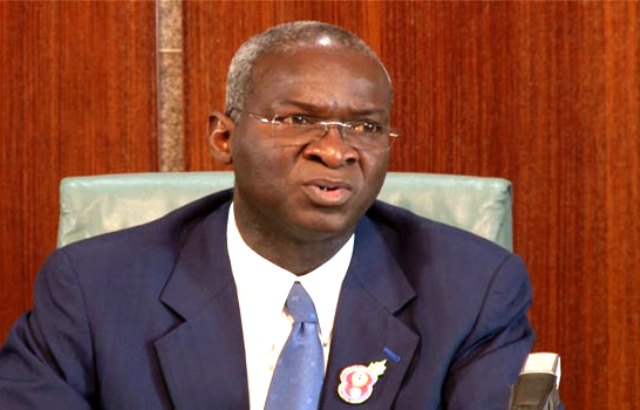
Ogbeche was reacting to an investigative report exposing illegal payment of ₦4.6 billion into private accounts of directors and employees of the then Federal Ministry of Power, Works and Housing, under Babatunde Raji Fashola.
He said it was worrisome that extant laws of the nation were violated by MDAs, decrying that Nigeria is building a legacy of corruption.
He emphasised that successive administrations have paid lip service instead of genuinely tackling issues of accountability, transparency and corruption in the public sector.
Ogbeche identified lack of political will as a major impediment of the fight against corruption, as well as bemoaned President Muhammadu Buhari’s lackluster attitude against corruption.
“For a government that came to power on the basis of anti-corruption stance, one would have imagined that we would have seen a more robust engagement on the fight against graft and other financial vices, but we haven’t seen it.”
He lauded the efforts of PRIMORGin bringing corruption stories to public notice, adding that public advocacy remains the best way to get anti-graft agencies to be alive to their duties.
Similarly, the Program Officer at BudgIT, a civic tech organisation, Chinwe Umeh-Ujubuonu stated that the dangers of misappropriation of public funds and flagrant abuse of extant laws is the reason for a general lack of trust by the citizens.
According to her, corruption in the MDAs is largely responsible for high rates of child mortality, out of school children, unemployment, robbery, kidnapping and so on. She revealed that mismanagement of public funds occasioned by lack of transparency and accountability is now the order of the day in all government MDAs.
She made these startling revelations: “We noticed between January and July, 2019, over two thousand, nine hundred individual payments were made into private accounts which cut across all the MDAs and came up to N51 billion paid into individual accounts without description.
“We found one that was paid into an individual account and the description says, “for transfer to NCDC for emergency Lassa Fever response”. The question is, why pay it into an individual account? Why not pay to NCDC directly? She queried.
“We found out that five thousand individual payments were made without description which cut across all the MDAs and came up to about N278 billion. Also, we discovered about two hundred and seventy-five payment records that didn’t have beneficiary name, ministry name, organization name and they were among the payments that didn’t have description,” Umeh-Ujubuonu disclosed.
Public Conscience, the syndicated radio program is produced by PRIMORG with the support from the McArthur Foundation.
LEADERS of the South-South have made a strong case for restructuring of the country and the practice of true federalism that includes the devolution of powers to all the federating units.
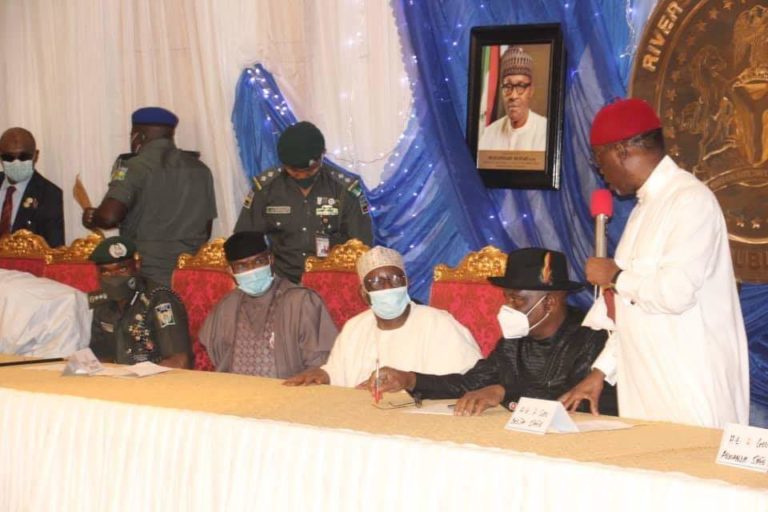
The leaders made these demands on Tuesday during a consultative meeting with the delegation of the federal government led by Ibrahim Gambari and with governors, ministers and other stakeholders from the region at Government House, Port Harcourt.
Ifeanyi Okowa, Chairman of the South-South Governors’ Forum and Governor of Delta, who presented the region’s demand, said that the nation was not at peace because the country had failed to practice true federalism.
Okowa said that it was time to restore the country back to a true federation with all the attributes and nuances of a federal state.
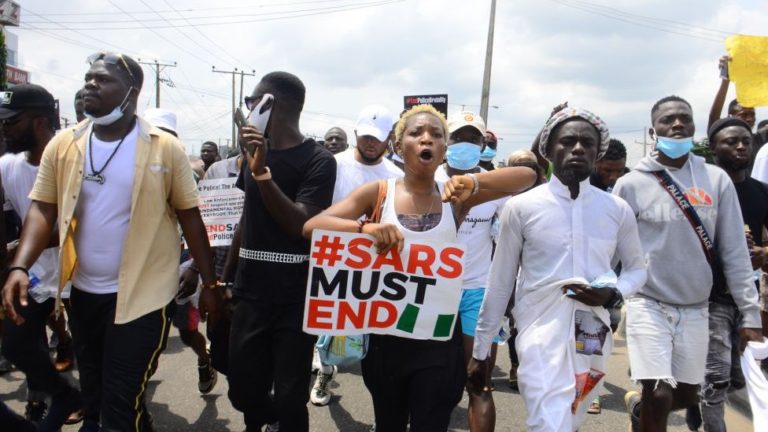
“For us in the South-South, the #ENDSARS protest is a metaphor of almost all that is wrong with us, our refusal to properly understand issues, and imbibe and entrench the virtues of justice, fairness and equity,” he said.
“The previous system of true federalism was jettisoned and it created a powerful center controlling and distributing all the resources unevenly.
“There was now a strong desire to restructure the country in order to guarantee peace, security, stability and progress of the nation.
“The region demands true federalism and devolution of powers to the states, including creating and managing their own police and security architecture, true fiscal federalism guided by the principle of derivation, revenue sharing and control of resources by each state.”
He decried the deliberate lack of understanding, empathy and uncompromising attitudes of some Nigerians, who refused to understand the peculiar challenges of the South-South region, especially the degradation of the environment and the pollution of our waters.
“All we demand and ask for is fairness and equity and as we await actions to restructure the country, we hereby renew our demands for: ‘The relocation of the headquarters of major oil companies in Nigeria to the region; relocation of several NNPC subsidiaries from Lagos and Abuja to the region.
“The region further requested the completion without delay of the East-West Road and all federal roads in the region; Construction of the Lagos-Calabar railway, reconstruction and rehabilitation of the region’s major seaports notably the Port Harcourt, Calabar and Warri”.
The leaders also demanded the privatisation of the Port Harcourt and Warri refineries after several failed turn-around maintenance attempts.
The region called for the release of all funds owed Niger Delta Development Commission (NDDC) and for the amendment of the NDDC Act to place the commission on a first-line charge.
The stakeholders decried annual flooding challenges in the region and called for the establishment of buffer dams to control flood waters in the region.
They also called for the completion of the abandoned Gas Revolution Industrial Park at Ogidigben and the stepping down of electricity at the Okpai and Utorogu gas plants.
Ibrahim Gambari, thanked the people of the South-South for their cooperation, and assured that all issues raised at the meeting would be communicated to the President.
Gambari apologised for the failure of the meeting to hold on Nov. 17 earlier slated, and said “we are here on behalf of the President as part of the ongoing and continuing conversation on how to make our nation better and I must thank the Governor of Delta, Senator Ifeanyi Okowa, for his tireless effort in ensuring that this meeting held.
“Our youths took to the streets to express their bitterness on ill-treatment meted out to them by the police and the President, recognising the importance of the demands made by the protesters agreed to implement the five demands.
“All over the world, people have the right to protest but in doing so, the respect for law and order must be adhered to and they must also respect the rights of others.
“The President commends governors, traditional rulers and other stakeholders for their role in handling the protesters,” he said.
THE Oyo state House of Assembly on Tuesday passed the Child Sexual Offences bill, 2019 into law.
The law which is aimed to protect the rights of children in the state finds any person who engages in domestic sexual violence with a child is guilty of an offence and liable on conviction to a minimum of five years imprisonment or minimum of N500,000 or both.
Adebo Ogundoyin, the Speaker of the House, while speaking during the house’s plenary decried the rising cases of child abuse in the state.
Ogundoyin, while stating that the Oyo State government is committed to nipping rape and other sexual offenses in the bud, added that relevant laws are needed to ensure offenders are duly punished.
He stressed that the bill is an effort towards ending rape, child abuse and other sexual offenses in the state.
“Aside offenders of domestic sexual violence, any person who causes pornographic materials to be sent to public space or cyber space to which a child may have access is guilty of an offence and also liable on conviction to five years imprisonment or fine of N5,000,000 or both.
“Likewise, any person who stigmatizes a victim of sexual offences under this just passed bill is guilty of an offense and liable on conviction to maximum of two years imprisonment and maximum fine of N200,000,”he said.
He commended the committee on women affairs and community development for its due diligence in the passage of the bill.
“The committee on women affairs and community development have done commendable work and we trust the executive will assent the law in no time for proper implementation and effectiveness.”
Marcus Williams, the Chairman of the Ministry of Women Affairs and Social Inclusion’s Rapid Response Team on Sexual, Gender-Based Violence and Child Abuse, in Oyo State, during a report presentation to the state’s Ministry of Women Affairs in July, said seventeen child abuse cases were reported in Oyo State between March and June, 2020, with victims’s age ranging from one to 17.
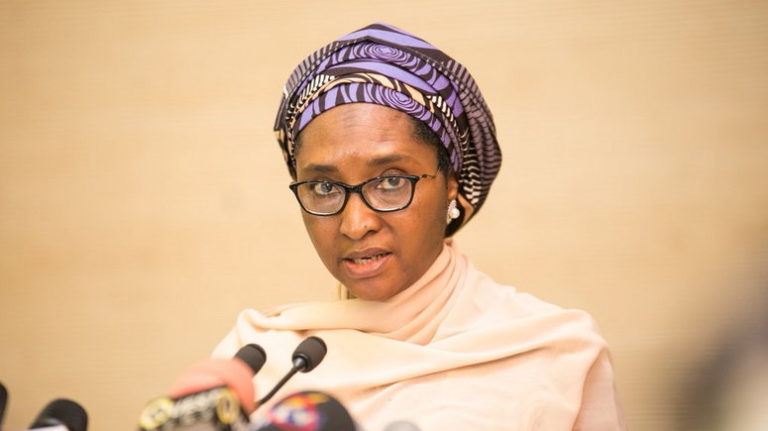
ZAINAB Ahmed, Nigeria’s Minster of Finance, has said that Nigeria land border closed to be reopened ‘very soon’.
Ahmed disclosed this during a round-table discussion at the 26th Nigerian Economic Summit on Wednesday.
“We will be expecting that the borders will be reopened very soon. The date will be decided by Mr President,” said Ahmed.
Ahmed said all the members of a committee set up by Muhammadu Buhari, the Nigerian President has agreed and recommended that it is time for the border to be reopened.
“We have made an assessment. The president set up a committee and we have made an assessment and all the members of the committee agreed and are recommending to the president that it is time to reopen the borders,” she added.
According to the Finance Minister, the targeted objective of the border closure has been met and ‘lessons has been learnt.
“The objective has been met in the sense that we have been able, over these couple of months, to work together with our partners in a tripartite committee and do a joint border patrol together and reinforce the sanctity of the commitments that we made to each other.
“So, each side has learnt its lesions. Nigeria has been affecting our partners in terms of businesses that we have in Nigeria as well,” she stated.
However, Ahmed did not state when Buhari would announce a date for the reopening of the various land borders across the country.
Earlier in October 2019, the Federal government ordered the closure of all its land borders to curb smuggling and encourage internal production of food in the country.
Buhari had in a statement said that Nigeria has been able to save ‘millions of dollars’ due to the border closure and also curb the smuggling of arms and ammunition into the state.
He added that the partial border closure has helped Nigeria curb the importation of illegal goods, most especially drugs and small arms, which he said were threats to the country.
“We have saved millions of dollars. We have realised that we don’t have to import rice, we have curtailed the importation of drugs and proliferation of small arms which threaten our country,””the president said in the statement.
The Nigeria government’s decision to close its land borders resulted into alleged retaliation and criticism from its neighbouring countries especially Ghana.
Nigerian –owned business operating in Ghana were said to have been attacked due to the border closure.
Nana Akufo-Addo, the Ghanian President also lamented that due to the closure of Nigeria’s borders by the Federal Government, about 300 trucks plying the region have been stranded at the borders.
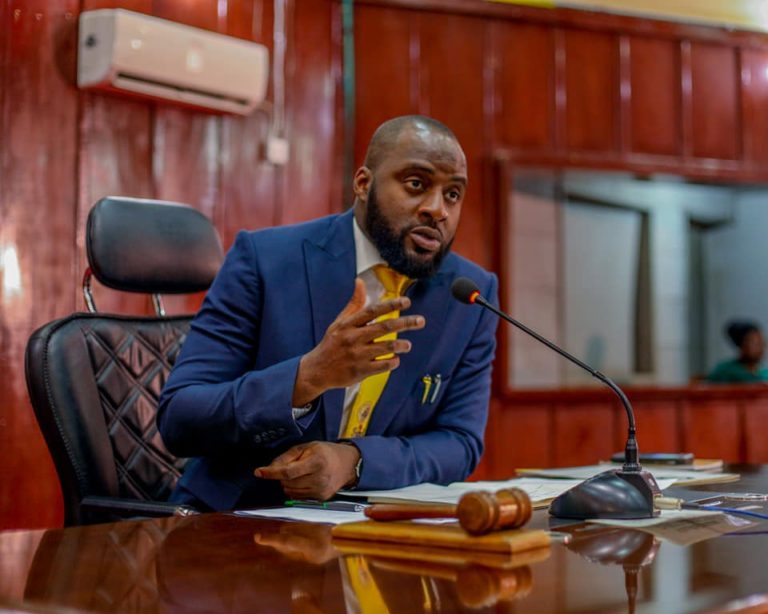
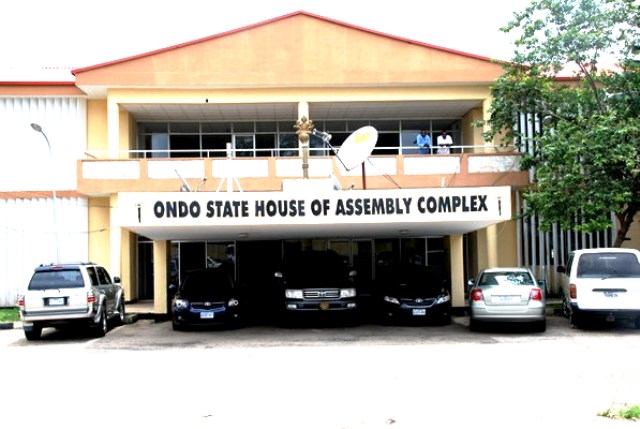
FOLLOWING the removal of Iroju Ogundeji as the deputy speaker of the Ondo State House of Assembly, nine other lawmakers have kicked against his impeachment, saying that it was unconstitutional.
Jamiu Maito representing Irele State Constituency and Ademola Edamisan said this on behalf of other seven lawmakers on Wednesday in Akure, the state capital.
The lawmakers said other members who rejected the impeachment include Rasheed Elegbeleye, Adewale Williams-Adewinle, Festus Akingbaso, Ogundeji Iroju, Favour Tomomowo, Tomide Akinribido and Success Tuhurkerijor.
The lawmakers argued that the process to Ogundeji’s removal contravenes the constitutional provision of the Constitution of Federal Republc of Nigeria that states that a two-third majority of the House must vote before the impeachment is valid.
“The section 92 sub 2C of the 1999 constitution of the Federal Republic of Nigeria as amended requires a two-thirds majority and the provisions of the standing order of the House for the impeachment of the Speaker or his Deputy,” the lawmakers argued.
The lawmakers said the motion for the impeachment of the deputy speaker was never moved in the House plenary.
“There was no place during a sitting of the Assembly either at the plenary or parliament where the decision to remove Ogundeji took place,” the lawmakers said.
One of the lawmaker who is outside of Nigeria, Akingbaso, representing Idanre State Constituency in a letter addressed to the leadership of the Assembly faulted the impeachment of the deputy speaker.
Akingbaso said before he left the country, he was not aware of such motion being considered in the House.
He added that he has also contacted his colleagues who confirmed to him that such motion was never moved in the House plenary.
“That to the best of my knowledge, that before I traveled out of the country, there was no time that the impeachment of the Deputy Speaker, Rt Hon, Iroju Ogundeji was discussed either at the parliamentary or plenary.
“And I have also contacted my colleagues especially the eight lawmakers who dissociated themselves from the plot to impeach the Deputy Governor, Hon Agboola Ajayi and they have also affirmed that nothing of such happened since I traveled out of the country,” Akingbaso said.
Ogundeji was removed on Tuesday according to Gbenga Omole, the Chairman of the House Committee on Information.
Omole confirmed that 20 out of the 26 members of the House signed the impeachment notice of the deputy speaker.
Earlier in June, the nine lawmakers had stood against the impeachment of the state’s deputy governor, Agboola Ajayi who eventually contested abnd lost in the polls to his former boss and incumbent governor of the state, Rotimi Akeredolu.
NIGERIANS on social media have submitted several takes since the United Kingdom (UK) parliament on Monday debated imposing sanctions against Nigerian officials alleged to have been responsible for using excessive force on peaceful #EndSARS protesters.
Dwelling on the use of brutal force by the Nigerian military on protesters, members of the UK parliament advocated for sanctions against the Nigerian government – a debate that has pushed many young Nigerians to question why the National Assembly is yet to initiate any of such discourse.
In the UK, petitions that carry at least 10,000 signatures get a response from the government and petitions that garner up to 100,000 signatures are considered for debate in Parliament. No such law applies in Nigeria.
Over 220,000 people had signed a petition, asking the UK government to impose sanctions on the Nigerian government for human rights violations perpetrated by men of the Nigerians Army and the controversial Special Anti-Robbery Squad (SARS), a rogue police unit.
Theresa Villiers MP, a member of the Petitions Committee, opened the debate, drawing focus on the deeds of SARS officials against Nigerian citizens.
“This petition is being prompted by the disturbing event in Nigeria in recent weeks. The SARS unit has a deeply controversial reputation. Reports of violence and human rights abuses by SARS date back to several years but these latest protests follow a video in October which many believe shows a man being killed by SARS officers,” she said.
The MPs submitted that government officials responsible for the abuse of human rights in the country should be denied the opportunity to enjoy amenities in the UK.
In response, Nigerians on social media praised the efforts of the UK parliament.
Tope Akinyode, a lawyer, in a post on Twitter said: “In one day, the UK Parliament did more than Nigeria‘s Senate, House of Rep, EFCC, IGP, & ICPC combined together. In one day, the UK parliament destroyed Buhari’s anti-corruption campaign of 5 years & exposed the high-ranking corruption profile of Gen. Gowon. I’m still in shock.”
Another Twitter user identified as Ambrosia Ijebu question why the UK parliament was taking more stringent actions, while the National Assembly remains quiet about the demand for an end to police brutality.
“How can the UK Parliament be showing more care and concern for Nigerians than the highly paid GOVERNMENT OF NIGERIA itself??? Are they not embarrassed???,” Ijebu asked in a post shared on his Twitter page.
Tola Onayemi, another Twitter user advocated for laws that empower Nigerians to drive policy change and hold the gvoernment accountable for its actions.
“Nigeria actually needs laws that empower citizens to hold government accountable & demand specific government actions in same way UK parliament had to discuss #EndSARS in Nigeria because a specific number of people signed a petition. Our laws should give powers to the citizens,” Onayemi shared in a post.
Sharing an opposing view, a Twitter user identified as Cyril Emeka slammed the action by the UK parliament.
He said: “What an insult.. Please Nigeria should sanction the UK parliament for even debating this issue. Then we should seize all their assets here in Nigeria. Then lastly we must ban Queen Elizabeth from entering Nigeria.”
Meanwhile, Kate Osamor, member of the United Kingdom parliament, has described Lai Mohammed, Nigerian minister of information and culture’s response to the investigation by CNN on the shootings of unarmed #ENDSARS protesters by operatives of the Nigerian Army as undemocratic conduct.
“The Minister for the Federal Ministry of Information and Culture went on record to state that the CNN reporting of the massacre was “fake news”. That is undemocratic conduct that needs to be called out,” she said.
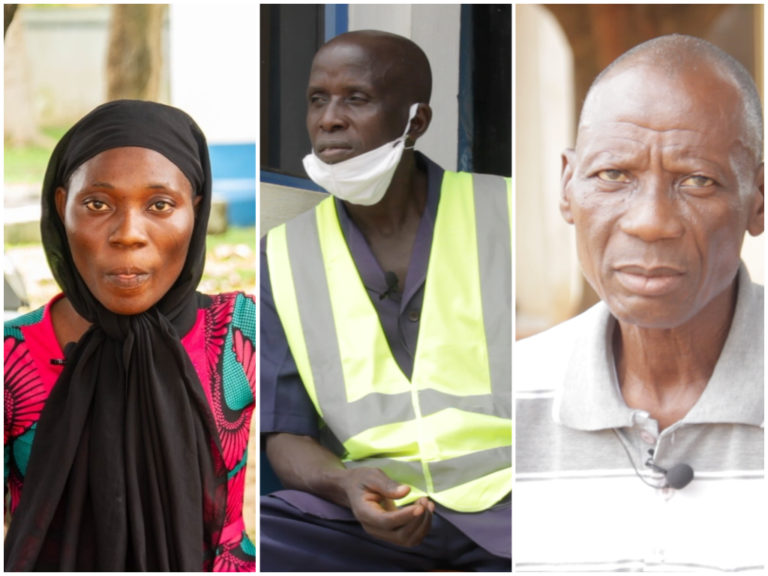
ARMED only with a cutlass, 52-year-old Yisa Burawa, a security guard at Unique International School located in the Bwari area of Abuja, once chased away an intruder who tried to gain access to the school premises through the back door. Even when the school is not in session, Burawa’s job requires keeping the school properties safe, and he has been doing this for the past 13 years.
Having lived in the area for many decades, Burawa’s competence as a security guard is in his knowledge of the environment and a fraternity with a network of guards, who share intelligence in cases of danger.
But when Nigeria recorded its first case of COVID-19 late February, Burawa who has three wives and 18 children found he couldn’t machete his way out of the hardship the pandemic presented and neither did his government provide much needed help.
The outbreak of the novel coronavirus ushered a new, descriptively cruel reality for many globally.
In Nigeria, a developing country which has 40 percent of its estimated 200 million population living below the poverty line, according to a 2019 Nigeria Bureau of Statistics (NBS) report, the situation was much more dire.
In March, lockdown orders imposed by the Federal Government in an attempt to curb the spread of the virus, prompted the shutting down of schools across the country.
With physical class sessions halted, teachers had to rethink methods to educate their students from home.
But as classroom education moved into homes, custodians of the school buildings known as security guards remained on the line of duty.
This group provides protection for both infrastructure and persons, and are the first line of defense incase of an attack, though they are classified as the lower echelon in any organizational structure, and the least income-earners.
In April, the Federal Government announced plans to distribute palliatives to targeted low-income earners across the country, to alleviate the negative effect of the pandemic on the economy.
We only heard about the palliatives, we never received anything
On April 8, the Federal Government announced that 77,000 metric tons of food will be distributed to vulnerable households affected by the lockdown in Lagos, Ogun, and Abuja. President Muhammadu Buhari also stated that at least 3.6 million households will benefit from the direct distribution of food and cash during the lockdown period but while stimulus packages were rolled out, many who needed it never received it. In fact, The ICIR found that most security guards who still had to work during the lockdown to guard school buildings were left out.
For Gumsi Sanni, a security guard at Stella Maris College located in the Life camp area of Abuja, news about palliatives rocked the airwaves and he developed hope that himself and his family would benefit from it. Living with his wife, five children and three of his siblings, Sanni already had it rough, only to hit rock bottom when the government imposed lockdown measures in the wake of the pandemic.
Gumsi Sanni – Security guard at Stellamaris college PHOTO: Aanu OG
“My wife had to stop her business because of the COVID-19 and it was really difficult for us. All we had was my salary and it wasn’t enough but we had no choice,” he said.
Sanni like many of his colleagues never got palliatives promised by the government. In fact, being a security guard and having to report to work during the lockdown worsened his situation. As a result of the movement restriction, getting transportation to his work place was most times impossible and he would spend twice the usual to report to his duty.
The reality is no different for Jumai Samuel, a female security guard at Sheikh Hamdan school located in Gwagwalada. Samuel lives several kilometers away from her workplace and during the lockdown period, she struggled commuting to work.
But beyond suffering the disadvantage of the movement restriction, Samuel also found it hard to put food on her table.
“It’s not easy for me. I’m the only female security in the school and during the lockdown, things were really bad,” she narrated.
Samuel who lives with her sibling complained of how the lockdown affected her sister’s hairdressing business. Stranded at home, Samuel’s sister would have been relieved if the promised palliative ever got to them but that never happened.
Jumai Samuel – Security guard at Sheikh Hamdan PHOTO: Aanu OG
“I did not get anything from the government. It wasn’t brought to my school or my house,” Samuel recalled, adding that although she was aware of the distribution, the palliative package which she heard contained 5kg of rice, beans and sachets of tomato paste would have only lasted her and her sibling a little over a week.
Dansuma Aminu, a security guard with Valid Crown School in Gwagwalada area of Abuja also heard about the distribution of palliatives in his area. Like Samuel, he confirmed the meagre items were distributed but recalled that only a few people got the items as he and his family never received anything from the government.
The same is repeated by the chief security officer of a private school in Kuje, who pleaded for anonymity. According to him, salaries were slashed during the lockdown period when schools were closed and while he heard of the distribution of palliatives, he never received anything.
“I don’t know if there is a government in Nigeria. Nothing got to me or my family or any of the security men in my school,” he said with a tone of disappointment.
These accounts put to question the statement of Sadiya Umar Farouq, the minister of Humanitarian Affairs, Disaster Management and Social Development, who while accounting for the distribution of palliatives across the country said practically everyone in the country got the palliative.
“There’s hardly anyone in Nigeria who didn’t receive the Federal Government palliative care during the COVID-19 pandemic period. All the tribes in Nigeria received the palliative. In fact, it was evenly distributed,” she said before she later retracted the statement and said: “it is impossible to give palliatives to all Nigerians.”
Indeed, only 1.2 percent of Nigerians received any form of the Federal Government’s palliatives, according to research done by SBM, a geopolitical intelligence platform, which carried out surveys in 18 states across Nigeria, including the Federal Capital Territory (FCT) to determine the effectiveness of the government’s response in handling the COVID-19.
It found that less than 2 percent of the surveyed population admitted to having received some form of support from the government during the peak of the pandemic.
We spent N3.5 trillion on COVID-19 palliatives – Central Bank of Nigeria (CBN)
How CBN disbursed N3.5 trillion for COVID-19 Palliatives PHOTO: ICIR
While many Nigerians lamented not getting any support from the government, the CBN said it disbursed N3.5 trillion to cushion the effect of the COVID-19 pandemic on the country’s economy.
“… in response to COVID-19, we are strengthening the Nigerian economy by providing a combined stimulus package of about N3.5 trillion in targeted measures to households, businesses, manufacturers and healthcare providers,” the apex bank disclosed in a communique published on the bank’s website, signed by Godwin Emefiele, the governor of CBN.
Though the CBN’s interventions were reportedly injected in different sectors of the country’s economy including providing direct support to households, there has been no disclosure of beneficiaries of the direct food and cash stimulus packages despite calls by a consortium of anti-corruption organisations demanding transparency.
Human Rights Watch (HRW), a non-governmental organization in its report noted that only a fraction of Nigerians gained from the direct distribution of cash set up by the government. On April 1, the Humanitarian Affairs Ministry began paying 20,000 Naira (about $52) to families registered in the National Social Register of Poor and Vulnerable Households, according to Farouq.
The minister had revealed that the National Social Register included 11,045,537 people from 2,644,493 households, figures that HRW described as ‘few’ given the fact that over 90 million Nigeriansare estimated to live in extreme poverty.
Aside from the distribution of cash, the government had also said it was targeting dispersal of food items to the ‘most vulnerable in the society’ but modalities of the distribution have remained unclear, casting doubt on the impact of the support initiative set up by the Federal Government.
Palliatives discovered in state-owned warehouses
The government announced its plan to begin distribution of COVID-19 palliatives in April but as of October, many Nigerians still reported not having received any form of support.
It was later discovered that COVID-19 palliatives donated by the Coalition Against COVID-19 (CACOVID), a group consisting of Nigerian businesspersons and corporate organisations, were locked up in warehouses in several states across Nigeria.
CACOVID, in an attempt to alleviate the effect of the pandemic on the most vulnerable citizens, donated billions of naira but the support provided by the group never got to the intended recipients.
In October, reports of Nigerians looting COVID-19 palliatives purportedly hidden in state-owned warehouses crowded social media. In Lagos, Osun, Kwara, Cross River, Kaduna, and Plateau, video clips of people breaking into warehouses and hoarding food items which were clearly marked ‘CACOVID’ became evidence that stimulus packages never touched the hands of those in need of it.
In defense, Nwanosiobi Osita, who doubles as the Central Bank of Nigeria’s acting Director, Corporate Communications and spokesperson of the coalition, said in a statement that the relief items were to be delivered to about 2 million most vulnerable families in 774 LGAs across the country but for number to be catered for was large, causing bottlenecks.
“The very large size of the order, and the production cycle required to meet the demand caused delays in delivering the food items to the states in an expeditious manner; hence, the resultant delay in delivery of the food palliatives by the state governors.
“Although various states and the FCT had commenced flag-off of the distribution of the food items since early August, some could not conclude the distribution as they were yet to receive complete deliveries of the items allotted to them,” he said.
What happened to government-provided palliatives?
According to the Farouq, vulnerable groups in the FCT were targeted as foremost beneficiaries of the palliatives. In an interview with TheICIR, the minister through her aide, Nneka Eze, said stimulus packages were shared to different vulnerable groups numbering over 1,500 households.
She however noted that the ministry didn’t participate in the distribution process but handed the palliatives over to local area councils and Non-governmental organisations to share among the vulnerable groups.
For states distribution, the minister said it gave out palliatives to state government for onward distribution to the targeted beneficiaries and maintained that it didn’t directly give out the palliatives to the intended beneficiaries.
A STATE High Court sitting in Kaduna has sentenced two sisters to ten years imprisonment for failing to deliver donated fund to a paralysed patient, but gave an option of N100,000 fine.
This was disclosed in a statement signed by the Economic Financial Crimes Commission (EFCC) on Tuesday.
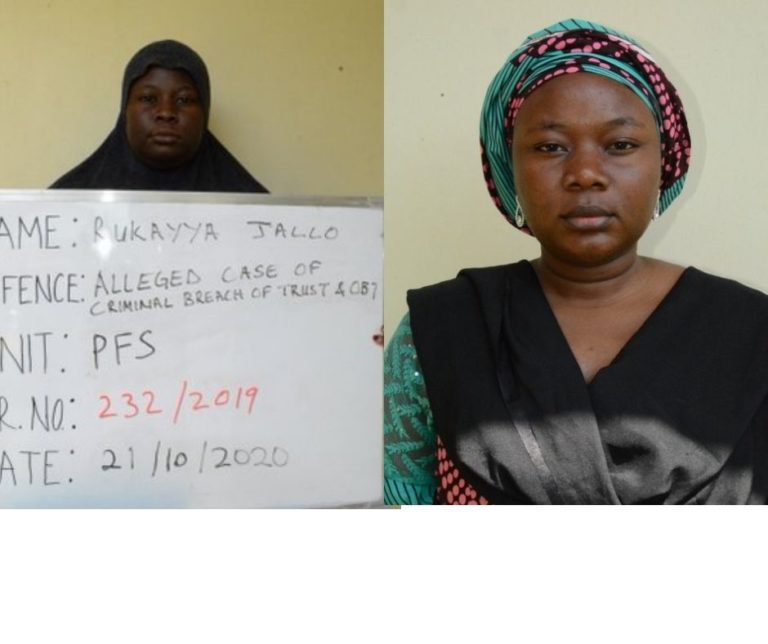
According to EFCC, the sisters, Maryam Jallo and Rukaiya Jallo were arraigned over an amended one-count charge on the 30th day of March 2019.
The commission said one Badamasi Shanono alleged in a petition that, in 2019, Jamal Health Foundation owned by the convicts used its social media platform to solicit for donations and contributions from donors for the medical expenses of one Usman Umar.
According to the petition, Umar had been bedridden for over two years suffering from partial paralysis
Upon donation by Shanono and one other Adio Bukar Hashia for medical treatment of Umar, the convict ‘dishonestly misappropriated the fund’.
EFCC said the offence is contrary to Section 293 of Kaduna State Penal Code Law, 2017 and punishable under Section 294 of the Same Law.
After their charge was read to them, the defendants pleaded ‘guilty’ to the amended charge preferred against them by the EFCC.
Delivering his judgement, the sitting judge on the case, Muhammad Tukur of the State High Court, Kaduna found the accused guilty of criminal breach of trust.
Justice Tukur convicted and sentenced them to ten years imprisonment with an option of N100, 000 fine.