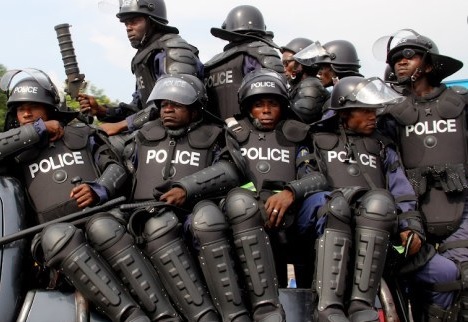
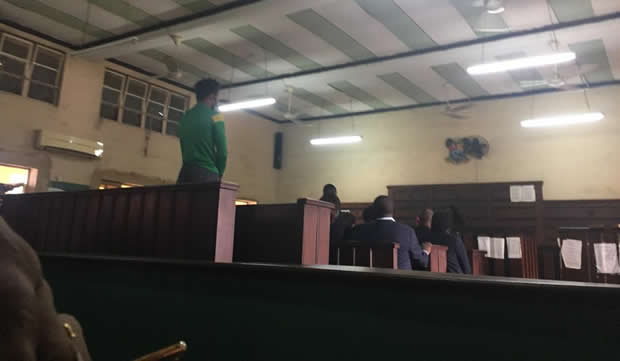
THE eight-man panel led by Ifiok Ukana, a retired justice on Monday stated that a total number of 92 petitions were submitted before the Panel of Inquiry on Police Brutality in Akwa Ibom State.
Appearing before the panel, Obong Paul Etim Ekpo, a 73–year old resident of Ikot Ambon in Ibesikpo Local Government Area of the state narrated before the panel how the police denied him access to his hypertensive drugs, while he was being unlawfully detained for three days over a land dispute.
Ekpo said he was arrested together with his 21-year-old son, on the orders of Eventus Etim Ekpo, a Police Inspector attached to Ibesikpo Police Station.
He said Ekpo facilitated his arrest over a land dispute he had with him, adding that he was later falsely detained over a fictitious charge of kidnapping.
“At about 9 pm on October 18, 2014, I and my son, Destiny Paul Ekpo, were arrested by a team of five policemen. We were taken to the Police Headquarters, Ikot Akpan Abia and detained there,” Ekpo recounted.
“They accused us of kidnapping the Inspector’s wife, Mrs. Glory Etim Ekpo, when in reality nothing of such ever happened.”
Ekpo also told the panel that the police deprived him of his personal liberty and subjected him to dehumanizing conditions, despite his hypertensive condition
“From that Friday, October 18, 2014, when we were arrested till Monday, October 21, 2014, the police kept me outside throughout. While my son was lucky to be detained in the cell, I was stripped of my clothes and left out in the rain and cold for three days, without committing any crime,” he said.
“The police also deprived me of access to my hypertensive drugs, food and any means to contact my family.”
Ekpo, however, asked the panel to bring the police officer, his wife Glory, and the policemen who arrested and unlawfully detained him, to justice.
Seven other petitions were also presented for hearing were adjourned to November 23, to enable the panel to serve the summons on the parties against whom allegations were made in the petitions.
NIGERIA has approved the operations of Lufthansa and Air France/KLM to operate international flights into the country after placing restrictions on foreign airlines during the COVID-19 lockdown.
Hadi Sirika, the Minister of Aviation revealed in a tweet on Tuesday and also added that Qatar Airways has been granted approval to resume flights to Abuja.
“We are working with Ministry of Health, CACOVID & The PTF to open Kano, Port Harcourt & possibly Enugu airports before the end of the year.
“Also Lufthansa, Air France/KLM have been given go-ahead to resume. Qatar Airways is approved to start Abuja. Thank you for your patience,” he tweeted.
We are working with Ministry of Health, CACOVID & The PTF to open Kano, Port Harcourt & possibly Enugu airports before the end of the year. Also Lufthansa, Air France/KLM has been given go ahead to resume. Qatar Airways is approved to start Abuja. Thank you for your patience🙏🏽🇳🇬
The Minister also hinted at the possibility of opening Mallam Aminu Kano International Airport in Kano, Port Harcourt International Airport and Enugu Airport to accommodate foreign travellers before the end of the year.
President Muhammad Buhari in March had ordered the suspension of international flights to curb the influx of imported cases of the COVID-19 virus in the country.
Nigeria had in August vowed to implement a reciprocity clause by banning flights and airlines from countries that put similar bans on flights from Nigeria as nations open their airspace amidst the COVID-19 pandemic.
The airlines include Air France, KLM Royal Dutch, Lufthansa, Etihad Airways, RwandAir, Air Namibia, Royal Air Maroc and TAAG Angola.
Some of the airlines were denied permission to enter the country because Nigerians with tourist visas had been banned from entering those countries. The ones that fell under this category include Air France, KLM Royal Dutch, Lufthansa and Etihad Airways.
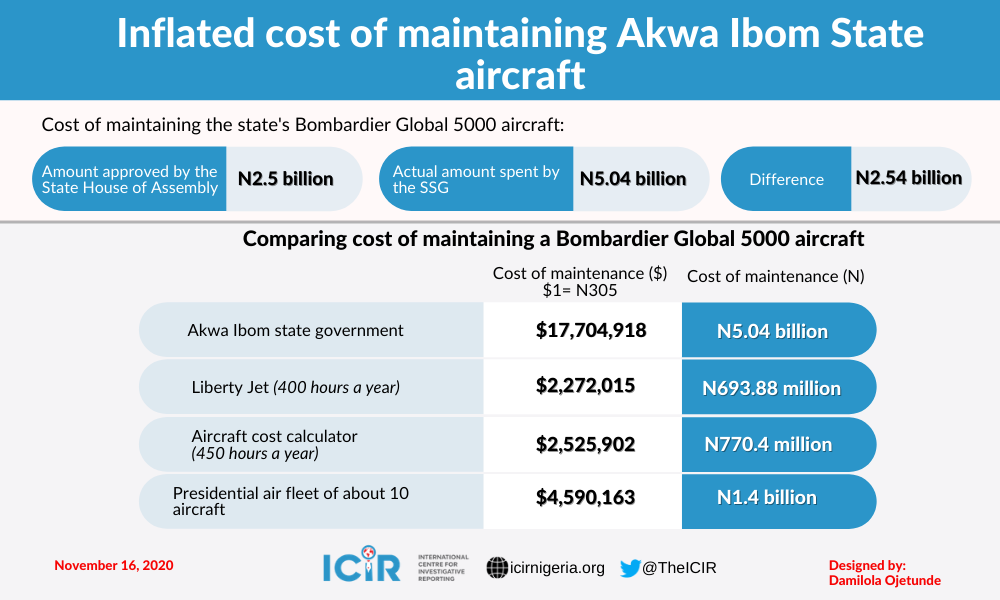
AN investigation published by The ICIR has revealed how the Akwa Ibom State government spent N5.4 billion in 2019 on the maintenance of only one state-owned aircraft, a Bombardier Global 5000 strictly meant for the use of the governor, Emmanuel Udom and members of his family.
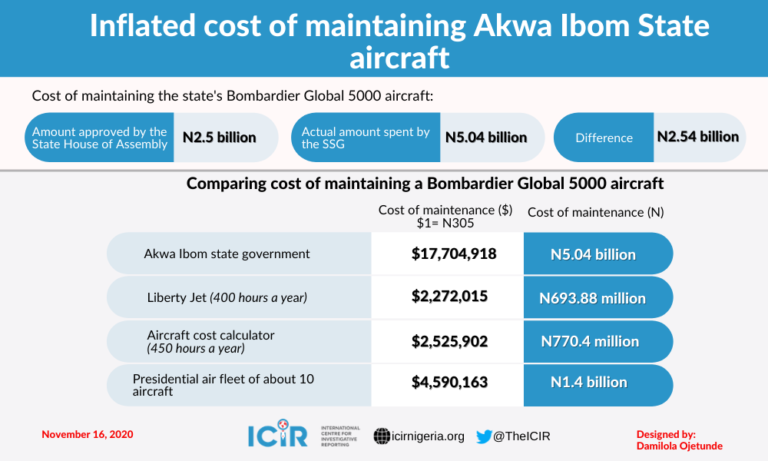
The State House of Assembly had approved N2.5 billion for that purpose but the office of the Secretary of the State Government (SSG) spent N5.04 billion.
In the investigation, Liberty Jet, a New York-based airline operator said the annual cost of flying and maintaining a Bombardier Global 5000 for 400 hours a year is approximately $2,272,015 which is only N693.88 million, at the exchange rate of N305/$1 in 2019.
Another aviation cost company called Aircraft Cost Calculator said the cost of flying and maintaining a Bombardier Global 5000 is $2,525,902 which is equivalent to N770.4 million at 450 hours per year.
Akwa Ibom state government spent N4.86 billion on cars in 2019–2
Aside from this, details of the company contracted for the maintenance of the aircraft was concealed by the government.
However, further findings revealed that a firm based in Centurion, Gauteng, South Africa named Continued Airworthiness Maintenance Organisation (CAMOSA), was in charge of the maintenance.
The ICIR investigation found that CAMOSA had been conducting business in Nigeria before it was registered with the Corporate Affairs Commission (CAC) and has not been paying taxes despite the government’s clampdown on tax defaulters.
Unlike the Akwa Ibom government under Udom’s administration, in 2015, only N1.4 billion was spent on the maintenance of ten presidential fleets of Nigeria.
Apart from this, the amount spent on maintenance of the aircraft is over 40 percent of the amount spent on its purchase.
Former governor of the state, Godswill Akpabio during his term had purchased the state aircraft in June 2012 for the sum of 45 million dollars.
As seen in the state’s budget for 2019, only N1.963bn was budgeted for rural development of Akwa Ibom state while N1.531 was to be spent on Industries and commerce.
ELDER statesman and eminent lawyer, Prof Ben Nwabueze, has said the system of government that is being practised in Nigeria is ‘personal rule’, rather than constitutional democracy.
Nwabueze made the assertion in an article he authoured. The write-up was titled ‘We’ve abandoned constitutional democracy for personal rule’.
The constitutional lawyer, in the piece, which was published in some national dailies on Tuesday, November 17, examined the state of the nation, how Nigeria’s constitution is being subverted, and ways to deepen democracy in the country.
He cited President Muhammadu Buhari’s continued retention of former acting chairman of the Economic and Financial Crimes Commission, Ibrahim Magu, despite the Senate’s refusal to confirm his appointment, as a ‘gross manifestation of personal rule’.
Magu headed the EFCC for a period of about five years until his suspension on July 7, 2020, despite never being confirmed by the Senate.
Nwabueze noted that in keeping Magu in office without Senate confirmation, Buhari flouted the provisions of Section 2(3) of the EFCC Act which stated that “The Chairman and members of the Commission other than ex officio members shall be appointed by the President and the appointment shall be subject to confirmation of the Senate.”
Stressing that Magu’s tenure as EFCC chairman was illegal, Nwabueze said, “Magu was in fact kept as EFCC acting chairman for four and half years without Senate confirmation; his tenure of the office for those years is illegal, a gross manifestation of personal rule”.
Magu’s appointment was twice rejected by the Senate, reportedly based on a critical report by the Department of State Service (DSS) which impugned his credentials as a person unfit for the position of EFCC chairman.
Making further reference to the development, Nwabueze noted, “Instead of sending another person to replace him the Vice-President, Professor Yemi Osibanjo, was reported to have said: “Magu will be EFCC chairman as long as Buhari and I remain in office”.
Nwabueze observed, “Coming from an esteemed constitutionalist, this is an incredible thing to say. The statement amounted to a defiance not only of the command of the Constitution requiring the approval of the Senate for everyone to occupy certain important or strategic offices in the state (see section 147), but it is also a defiance of the decision of the Senate which twice rejected the appointment of Magu for weighty enough reasons. The statement is also a repudiation of the cogent reason for requiring Senate approval for important, strategic appointments.”
Nwabueze insisted that, for unconstitutionally standing by Magu, both Buhari and Osinbajo are liable for any misdemeanours committed by the suspended EFCC acting chairman during his ‘illegal’ stay in office.
“And so it happened that, for nearly four and half years, Magu functioned, albeit in an acting capacity, as chairman of EFCC without Senate approval. The implication, from the legal standpoint, is that the President and Vice-President who enabled him to so act and who defiantly stood by him while he was so acting are vicariously liable for his acts.
“Indeed, their liability is more than a vicarious one; by standing defiantly behind him for nearly four and half years while he did those acts, they are directly liable; it is as if they did the acts by themselves directly,” Nwabueze said.
Explaining the need for Senate confirmation in the appointment of certain category of public officers by the President, Nwabueze pointed out that “for this purpose the Senate is the ‘public eye’ for ensuring that the appointment of the President’s principal assistants conforms to the standards of integrity, competence and national interest required for the efficient management of the nation’s affairs.
“Apart from the scrutiny of the character and suitability of the persons for ministerial and other strategic appointments, the check also enables the Senate to ensure that such appointments comply with constitutional provisions prescribing qualifications and disqualifications for such appointments, and that, as directed by the Constitution, it reflects the federal character of the country.
He added, “The President may well lose sight of these in a desire to favour friends or to satisfy pressure from party leaders. There is, of course, nothing in the Constitution to prevent the President from re-submitting a name earlier rejected or the Senate from reversing an earlier rejection if it is satisfied, on the basis of fresh information, that the earlier decision had been wrong, but a reversal is not to be lightly made if the Senate is to retain credibility with the public.”
Nwabueze further pointed out that the President’s power to remove some public officials, including the Chief Justice of Nigeria, requires the Senate’s approval.
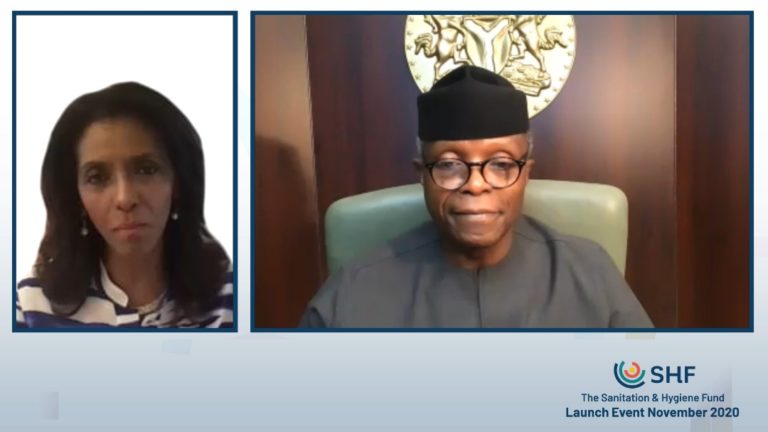
YEMI Osinbajo, Vice president of Nigeria, has joined other leaders across the globe to launch and call for investment into the just launched US$2 billion Sanitation and Hygiene Fund.
The Sanitation and Hygiene Fund is a global financing mechanism to support country-driven programmes to bring sanitation and hygiene to all. It is seeking US$2 billion over the coming five years to provide a 21st-century solution to the decades-old crisis on sanitation, hygiene and menstrual health. Investing in a public-private approach, the fund aims to capitalize on the strengths of its in-country and global partners.
Osinbajo said, “The Sanitation and Hygiene Fund is in many senses a lifesaver. One of the features that I particularly like is that it is tied to measurable performance.”
Amina J. Mohammed, Deputy Secretary-General of the United Nations, said during the launch said the Fund will be critical to dramatically scale up investments to reach everyone with sanitation services.
She described safe sanitation and hygiene as “critical to the response that we want to see, first, because it is about human dignity. Second, it is a health issue.”
The coronavirus pandemic has made clear the fundamental role that sanitation and hygiene play in stopping the spread of disease. But it has also exposed the vast inequities that exist in access to sanitation, hygiene and menstrual health.
She emphasized that “basic hygiene of washing your hands and being able to have a toilet that is accessible is key to enabling healthy communities in the longer term.”
The online launch event was moderated by international broadcaster Ms. Zeinab Badawi and is available on the SHF website and its YouTube channel.
“We know that money, well utilized, has the ability to drive positive and lasting change,” says Dominic O’Neill, Executive Director of the Sanitation and Hygiene Fund. “This is not only a struggle to improve health; it is a fight for respect and basic human rights and an end to stigma.”
Henrietta Fore, Executive Director of UNICEF, called sanitation and hygiene “a great equalizer for children.”
“During a lockdown, how do you cope with the fact that your household does not have a toilet? This is particularly difficult for girls and women. If everyone had access to sanitation and hygiene in households, in their schools, in their health facilities and communities, it would make an enormous difference in our world,” she said.
“Good sanitation has to be a public good. Governments have to own the fact that sanitation is their problem to solve, and that they have ways to solve it,” Ms Fore added.
Currently, half the world’s population does not have access to safely managed sanitation. 620 million children attend schools that do not have toilets. 1 in 3 schools do not have even basic sanitation and hygiene services, and 1 in 5 healthcare facilities have no sanitation services whatsoever. The estimated cost of lack of sanitation and hygiene is US$222 billion per year in lost productivity, increased health expenditures, and economic output.
The Sanitation and Hygiene Fund sits within the United Nations Office for Project Services (UNOPS). Grete Faremo, Executive Director of UNOPS, added that proper sanitation is at the core of development to any community, family or individual. “UNOPS and its infrastructure work very often see that schooling comes down to proper sanitation facilities.”
However, at current rates of progress, SDG 6.2 – sanitation and hygiene for all – will not be achieved until the 22nd century. This is primarily due to underinvestment over the past several decades. This has had a profound negative impact on health, education and economic outcomes for countries and communities. Large-scale investments in sanitation and hygiene are needed to reverse this situation and instigate the changes that are needed for widespread and lasting impact.
Welcoming the Sanitation and Hygiene Fund as “an important mechanism to increase and catalyze national investment,” Zsuzsanna Jakab, Deputy Director-General of the World Health Organization, said that investment in sanitation and hygiene is cost-effective. “The economic benefits of sanitation are about five times the cost, and the cost of inaction is far greater.”
“In a world that is experiencing deep social and economic upheaval in the face of COVID-19, the launch of the Sanitation and Hygiene Fund is a hopeful sign. There is an urgent need to do more. This fund will bring much-needed funding for sanitation, hygiene, and menstrual hygiene management,” said Mr. Gilbert Houngbo, Chair of UN-Water and President of the International Fund for Agricultural Development.
The online event also included interventions by Petronila Musonye of Kenya Water for Health Organization and Abenmire Adi, Gender Rights and Sanitation Advocate for Cross River State, Nigeria, speaking on behalf of civil society.
The Sanitation and Hygiene Fund provides catalytic funding to countries with the heaviest burden and least ability to respond, focusing on four strategic objectives: expanding household sanitation; ensuring menstrual health and hygiene; providing sanitation and hygiene in schools and health care facilities; and supporting innovative sanitation solutions.
In a 2019 survey by the United Nations Children’s Fund (UNICEF), the use of contaminated drinking water and poor sanitary conditions result in increased vulnerability to water-borne diseases. The survey shows that it is only 26.5 percent of the Nigerian population that have access to improved drinking water sources and sanitation facilities.
AT the sitting of the Lagos State Judicial Panel on police brutality on Tuesday, the Intelligence Response Team (IRT) of the Nigeria Police force has said it has been unable to obey a court order that ruled for the compensation of victims of police brutality due to non-availability of fund and miscommunication.
Nosa Uhumwango, the legal officer who represented the IRT said this at the Lagos State Judicial Panel hearing on Tuesday over failure to honour the court judgement.
“Most times, we have a lot of issues, once court judgement is being given, they ought to be forwarded to the police command that is Abuja and for the payment of such amount of money because we normally have a lot of constraints to pursue a case in the court of appeal and the constraint is finance.
“To pursue cases up to the supreme court, most times we stop at the court of appeal. In this case, it was the commander himself that has been footing the filing of the matter,” said Uhumwango.
He added that sometimes there are miscommunications when such court judgements are filed.
“The police are all over the place in the country and they might channel the matter to a wrong place, there are formations and commands in the police. The zone is different from state commands. Such cases have been happening where it is sent to the wrong place,” he added.
A couple, Okechukwu Obechina and Nzube Obechina had petitioned the panel complaining that the Police had failed to obey the judgement by two courts.
During Nzube’s first appearance before the panel on October 31st, she narrated how she had lost her two months’ pregnancy while she was detained for 22 days by the defunct Special Anti-Robbery Squad (SARS) in Ikeja, Lagos State.
On Tuesday, she told the panel that her husband was not allowed to bail her on three attempts on the excuse that the money for bail was incomplete.
However, the police argued that the couple were arrested while investigating the case of Evans, accused of kidnapping who was eventually arrested.
Nzube argued that after she was questioned, the SARS operatives refused to release her two weeks after.
“One week after he (Evans) was arrested, they detained my husband for one week more while I was detained for another two weeks. My husband was released earlier so he can go look for money to bail me out,” Nzube told the panel.
Uhumwango tried to argue in favour of the IRT over the bail of the victims and allegations of human rights violation but the chairman of the panel, Doris Okuwobi said the panel cannot revisit a case that has been decided by the court adding that that is not the focus of the petition before the panel.
Consequently, the case was adjourned while the registrar called for another case.
THE Akwa Ibom State government this year released the Account General’s annual report and audited financial statements for 2019. A careful analysis of the report reveals that the offices of the State Governor and the Secretary to the State Government approved several questionable and extra-budgetary expenses in 2019. These bizarre expenses spent on cars, aircraft maintenance, fuel, government special projects and governor’s hospitality exceed N10 billion.
N4.864 billion spent on cars
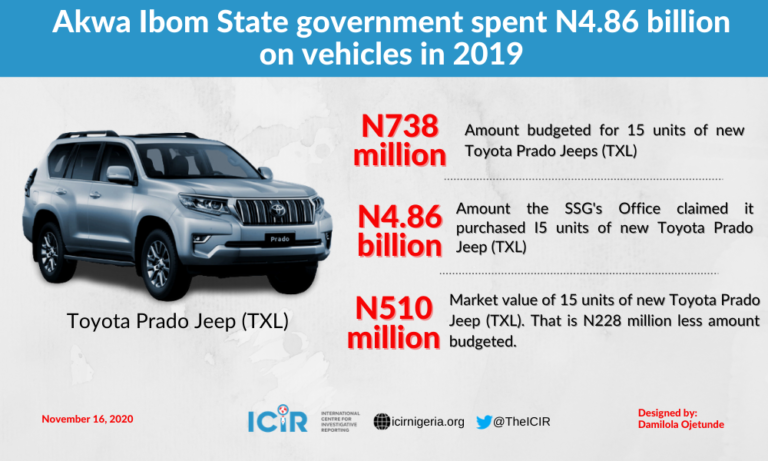
The report reveals that the office of the SSG purchased 15 new Toyota Prado Jeeps (TXL) for the sum of N4.864 billion, though the approved budget for that item was N738 million. So an extra N4.126 billion was posted for the purchase of these cars.
The figures in the financial report, imply that the unit cost for one Toyota Prado Jeep (TXL) is more than N324 million. But a market price survey conducted in October 2020 by our reporters showed that the current unit price of the car is N34 million. Cheki cars, a reputable car company in Lagos, said 15 new Toyota Prado Jeep (TXL) would be sold for N510 million only, which is N228 million less than the original amount approved for the vehicles.
Even with a mark up of 20 per cent profit for the supplier of the vehicles, they should not have cost more than N612 million.
Through a Freedom of Information (FOI) request, our reporter sought information from the office of the Secretary to the State Government, Dr Emmanuel Ekuwem, on the purchase of the 15 number Toyota Prado Jeeps. Ekuwem did not respond to the request sent to his office on 24th September 2020 and the follow- up reminder sent to him two weeks later.
N5.04 billion spent on maintenance of state aircraft
A big recurrent expenditure item in the 2019 financial report under the SSG’s office is the maintenance of the state aircraft. The House of Assembly approved N2.5 billion for this item in 2019 but the SSG’s office spent N5.04 billion on the maintenance of one aircraft, a Bombardier Global 5000, which is used exclusively by the governor and the first family.
Akwa Ibom state government spent N4.86 billion on cars in 2019–2
According to Liberty Jet, a New York-based airline operator, the annual cost of flying and maintaining a Bombardier Global 5000 for 400 hours a year is approximately $2,272,015, N693.88 million, at the exchange rate of N305/$1 in 2019.
Also, an aviation cost evaluation company, Aircraft Cost Calculator, puts the cost of flying and maintaining a Bombardier Global 5000, at $2,525,902 (N770.4 million) at 450 hours per year.
Expenses incurred by the state on the maintenance of the aircraft have outraged Akwa Ibom indigenes, Civil Society and Civil Liberties Organizations.
At one point, Senator Ita Enang, currently serving as Senior Special Assistant on Niger Delta Affairs to President Buhari, called on the state government to sell the aircraft and invest the money in education and agriculture.
Arc Ezekiel Nya-Etok, a respected politician and advocate of good governance, advised the state government to push the state aircraft into the fleet of Ibom Air, Akwa Ibom State-owned airline, for chartered services to help the state get economic value from it.
The state government keeps posting fees for maintenance and repairs of the state aircraft, even as information on the company maintaining the aircraft remained a top secret.
After spending a month scouting for leads on the company in-charge of the maintenance and repairs of the state aircraft, our reporters through a critical source outside the state got briefs that CAMOSA (Continued Airworthiness Maintenance Organisation), an aviation consultant based in Centurion, Gauteng, South Africa, was in-charge of the maintenance of the aircraft.
Checks on the company at the Corporate Affairs Commission, CAC, and the Federal Inland Revenue Service, FIRS, show that CAMOSA was registered to do business in Nigeria in December 2019, with the name “CAMOSA Projects Limited”. The company’s address on the CAC and FIRS is Udo Udoma Avenue (House number withheld).
After a long search for the company’s address in Uyo, it was discovered that the company has been operating surreptitiously from a property allegedly owned by the Akwa Ibom State Commissioner for Special Duties and Aviation Development, Mr Okpolpum Etteh.
During a physical check at the address, there was no signboard or any other proof that the company occupies the flat, instead, another company linked to Etteh, had small signage on the door to the flat.
A critical source who spoke about the operations of the company, told our reporters, that CAMOSA Projects Limited only “squatted a while in the facility and used the address to formalize their registration but had moved out to a new office in Shelter Afrique.” Shelter Afrique is a high-brow, government-owned residential estate in Akwa Ibom State where top government functionaries live.
Investigations revealed that CAMOSA has been in charge of the maintenance of the Akwa Ibom state aircraft since Mr Udom Emmanuel came on board as governor in 2015, but the company got registered in Nigeria with the CAC on 4th December 2019 with registration number 1638800.
Our findings suggest that the aviation service company with unconfirmed links to Governor Emmanuel has not paid relevant tax to the state government as the company is not on the taxpayers’ database of the state.
The Akwa Ibom State government under Governor Emmanuel has been unrelenting in its clampdown on companies that evade taxes, with AKIRS recently sealing up some companies that defaulted in tax payment.
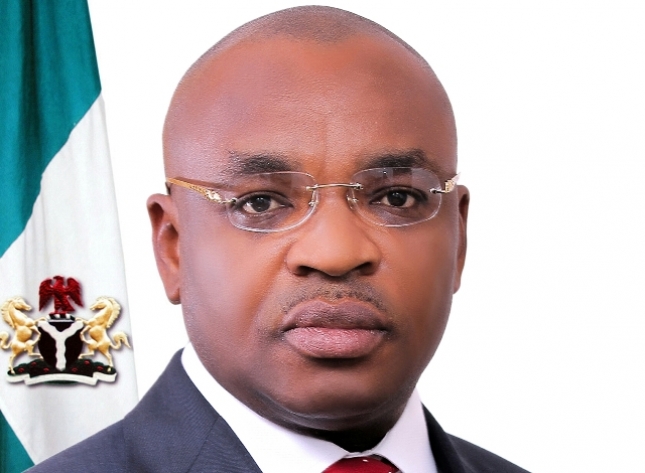
Akwa Ibom State Governor, Emmanuel Udom CREDIT: Leadership Newspaper
It was further gathered within the state civil service that the office of the governor now handles matters concerning aviation development.
“The Aviation Development arm of the Ministry of Special Duties and Aviation Development only exist in the name”, a senior civil servant in the Ministry who cannot be named in this report because civil service rules forbid a civil servant from speaking to journalists, said.
According to him, “Since the current state exco was inaugurated after the 2019 election, aviation matters have been taken away from the Ministry of Special Duties. Aviation development is handled under the office of the governor. That is why we now have the Managing Director and CEO of the Victor Attah International Airport, Mr Uwem Ekanem, serving as Senior Special Assistant (Aviation Development) to the governor.
“What the Ministry does is only supervisory. We supervise jobs in the aviation sector after they are awarded by the Governor but we do not have any hand in anything happening at the airport.”
The Commissioner for Special Duties and Aviation Development, Mr Okpolupum Etteh, avoided making comments on this when he was reached on phone.
He did not respond to phone calls and SMS sent to him. One of Etteh’s aide whom he directed to meet with these reporters said the Commissioner has seen the SMS and will speak to us over one of the weekends. However, he did not keep the appointment and did not respond to further phone calls.
Interestingly, expenses on the maintenance of the Akwa Ibom State aircraft in 2019 alone (N5.04 billion) are over three times more than the amount of 1.4 billion approved for the maintenance of 10 aircraft in the presidential fleet for the same year. Even the N2.5 billion originally approved by the state assembly for the maintenance of the aircraft more than doubles what was budgeted for maintaining the ten aircraft in the presidential fleet.
The amount the government claimed it spent is also more than 40 per cent of the cost of the aircraft. Chief Godswill Akpabio administration bought the state aircraft in June 2012 for the sum of 45 million dollars.
The SSG and his office also ignored requests seeking information and invoices on how N5.04 billion (N2.107 billion higher than the budgetary approval) was spent on the maintenance of the state aircraft, a Bombardier Global 5000 (N224BH) in 2019.
N2.7 billion spent on fuel and lubricants
Also, Akwa Ibom State Government House made huge discretionary spending on fuel and lubricants in 2019. More money was spent to run generators and fuel the governor’s and deputy governor’s cars as well as those of their family members and appointees than what was spent on capital projects for the education sector N2.10 billion in 2019.
In the budget, N1.3 billion was approved for “fuel and lubricants” for Government House; however, N2.70 billion was spent on these two items at the end of the fiscal year. The expenditure on fuel and lubricants was also 42 times the cost of what the state government spent on capital projects for the Ministry of Science and Technology in 2019, which was N49.25 million.
Our findings revealed that the Akwa Ibom State Government House fuel dump managed by Mr Udo Ekwere receives and uses five trucks of 45,000 litres of fuel (Premium Motor Spirit) every two months and 10 trucks of 45,000 litres of diesel (Automotive Gas Oil) for the same period.
Five trucks of PMS amount to 225,000 litres, meaning that 1,350,000 litres would be bought for the year. PMS was sold at N145 per litres in 2019. Thus, 1,350,000 litres would be bought at the cost of N195,750,000.
For diesel (Automotive Gas Oil), 10 trucks of 45,000 litres amount to N450,000 2,700,000 litres would be bought for the year. The average pump price for diesel in 2019 was N220 per litres. Thus, in a year, the projected cost of 2,700,000 litres of Automotive Gas Oil will be N594 million.
Hence the total cost of PMS and diesel utilised for one year should amount to N689,750,000.
N4.4 billion spent on govt special projects
Also, a Freedom of Information request seeking information from the Permanent Secretary, Office of the Governor, on the items called “government special development projects”, which his office spent N4.491 billion on in 2019 was rebuffed. The sum of N3.6 billion was approved in the 2019 budget for “government special development projects”. An extra N1.431 billion was spent on this item. This extra-expenditure alone was five times higher than the capital expenditure of the Ministry of Investment, Commerce and Industry for that year.
N13.2 billion spent on security services, N1.18 billion on hospitality and gifts
Again, the 2019 financial report shows that N1.18 billion was spent on the governor’s hospitality and traditional gifts. This amount was N382.4 million higher than the N800 million approved for that purpose.
The governor also spent N13.28 billion on security services, that is N1.28 billion higher than approved expenditure for that subhead.
The sum of N75 million was approved for medical/clinic equipment for Government House, but N153 million was actually spent. The variance in this item is higher than the capital expenditure of the Bureau of Rural Development and Cooperatives, which was N49.5 million.
The Government House spent N46.95 million on “tours and visits” but N20 million was approved. The variance in this item is higher than the capital expenditure of N25 Million for the State Environmental Protection and Waste Management Agency, called AKSEPWMA.
Fraud in Akwa Ibom State Pilgrims Welfare Board
According to the 2019 annual financial report, the State’s Pilgrims Welfare Board spent N120 million on the production of “security encoded ID cards” for intending pilgrims. The approved budget for this item was N9 million.
The report also claimed that N25 million was spent on public orientation seminar/workshops and screening materials for intending pilgrims. N15 million was approved in the budget for this item. Our investigation revealed that the public orientation took place at Destiny International Mission, a Church belonging to the Chairman of the Pilgrims Welfare Board.
Our investigations also revealed that despite raising the expenditure on the security encoded identity cards for the intending pilgrims by N111 million, no ID card was produced for any of the 123 persons from the state who were taken to Jerusalem in 2019. Checks with the Board shows that state government sponsored 120 out of the 123 persons who went on pilgrimage that year.
Staff at the Pilgrims Welfare Board told these reporters in confidence that the agency did not produce identity cards for intending pilgrims. Some of the 2019 pilgrims from the state corroborated this.
For more than a month, the State Pilgrims Board ignored all efforts made to get its response on this issue. These reporters had visited the Board thrice to speak with the leadership of the Board. When the management of the Board was not seen, a letter requesting an audience with the Secretary of the Board was sent. The letter was not responded to.
The Akwa Ibom State Pilgrims Welfare is chaired by His Grace, Archbishop Cletus Bassey, the immediate past chairman of Christian Association of Nigeria, CAN, Akwa Ibom state chapter, and the champion of Akwa Ibom Christian Assembly.
Archbishop Bassey was not in Nigeria throughout the two months period this investigation lasted but when our reporters reached out to him via telephone, he directed them to the Secretary of the Board, Mrs Nsikak-Abasi Nnam-Okuo Orok.
When asked about the overpayments made on the security encoded identity cards, Mrs Orok said she is surprised to hear the claims made in the Accountant General’s report that money was spent on the production of security ID.
“I am surprised! I am just hearing that for the first time. For you to say that there was approval, I’m even surprised. We never even applied for the production of any ID. They wouldn’t have even given us approval of N120 million for an item that had N9 million approved for it in the budget. And, how will you apply for something that was N9 million and the Governor will give you N120 million?”
“I think something is wrong somewhere. We didn’t receive the said amount for public orientation. I didn’t have this information, I will reach out to the Accountant General (Pastor Uwem Andrew-Essien). Thank you for drawing my attention to this.”
House of Assembly unaware of the extra-budgetary expenditure
Meanwhile, the chairman of the state House of Assembly Committee on Appropriations and Finance, Mr Uduak Odudoh, whose committee has oversight powers on the Ministry of Finance, said the House was not aware that the Executive arm spent more on items in the budget than what was approved.
He said there was no supplementary budget for the 2019 fiscal year. “I am surprised to hear that! We have not given any approval besides the budget that was passed into law. Of course, you are aware that there was no supplementary budget in 2019”, he said.
Odudoh argued that it was not the responsibility of his committee alone to perform oversight on the government’s expenditure.
“We are 26 members in this House with chairmen of respective committees; so every committee has a responsibility to do oversight on-budget implementation. My committee often carries out an appraisal of the expenditures of the executive quarterly but we were limited in performing the appraisal for 2019 owing to the COVID-19 outbreak”, Odudoh added.
Also, the Chairman, House Committee on Public Accounts, Mrs Charity Idio, whose committee is mandated under section 125 (5) of the 1999 Constitution as amended to receive and consider the audited financial statement of the state, said her committee had received and considered the state’s audited report for 2019.
When asked if the State Auditor General’s the audited report had raised questions on why N4.864 billion was spent on the purchase of 15 Toyota Prado Jeeps TXL, after a short silence, she said, “I will not answer that.”
Commissioner for Finance responds
The Commissioner for Finance in the state, Mr Linus Nkan, insisted that there were no aberrations in the 2019 expenditure. He said the executive leveraged on the margin of increased cost in the budget office to spend more than what was approved on some budget items based on their importance as determined by the Governor.
“There is what we call budget margin. Budget margin is where we leveraged on for shortcomings. It is not always easy to anticipate everything that will be needed to be done immediately. So, provisions must be made for unforeseen circumstances or events.”
He said the Executive moved money from the sub-head (margin of increased cost in budget office) to where more money was needed to be spent. When asked to clarify the puzzling N 4.864B expenditure on the 15 Toyota Prado Jeeps the Commissioner said there could have been an “error somewhere.” He did not point out where the error occurred.
The argument canvassed by the Commissioner for Finance has been found to be misleading and incorrect.
Experts on public finance and fiscal governance who looked at the budget said the approved margin of increased cost in the budget office, (which was N6.3 billion but overspent by N2.99 billion) was for the budget office and not a sector-wide margin of increased cost which the commissioner for finance implied.
However, our investigations revealed that N16.317 billion was approved as the sector-wide margin of increased cost in the budget and this was for recurrent expenditure. The purchase of cars and other items which the over-expenditures were made on were not covered under this margin.
Meanwhile, A non-governmental organisation working on fiscal justice, Policy Alert, has said the state-wide margin of increased cost in the 2019 budget was outrageous and gave cover for financial profligacy by the executive.
Executive Director of Policy Alert, Mr Tijah Bolton-Akpan, said “over the years the margin provided in Akwa Ibom state budget is too wide and provides too much room for discretionary spending. A margin is what it is, a small leg-room for emergency and inflationary purpose. It is not in the best interest of the state that in 2019, N225.1 billion was budgeted for recurrent expenditure and a margin of N16.32 billion as a sector-wide vote, that is more than 7.2 per cent of the total recurrent. That is too wide for a margin.”
A Professor of Finance at the Federal University, Otuoke, Bayelsa State, Prof Emmanuel Bush said that executive has some powers to raise a requisition for virement when necessary.
“In a controlled setting like the public sector, you don’t just spend as it pleases you. You must get approvals. There is supposed to be checks and balances. You don’t just spend because you are in a position to spend.”
“When you have exigencies, you go back to where you got the approval and make these points known to them. You say this is what I wanted to buy which N1 million was approved, but over time, it is now N1.2 million. That you have the yam does not mean you should cut the yam at random. After the normal budgeting, you can come back to apply for some adjustments.”
“If you are a Governor or a Local Government Chairman, you don’t use your veto to spend more than that which is approved in a budget. Take, for instance, N100 was budgeted then you spend N120 and say you are taking from here to cover and later you explain. No! You must seek recourse and go back to the approval mechanism which is the legislature.”
“You cannot just put your hands in the coffers may be because the money is there from another source to spend. You need to get clearance and put to them that it is an extra-budgetary arrangement to cover for this extra circumstance”, Bush said.
Akwa Ibom State Pensioners
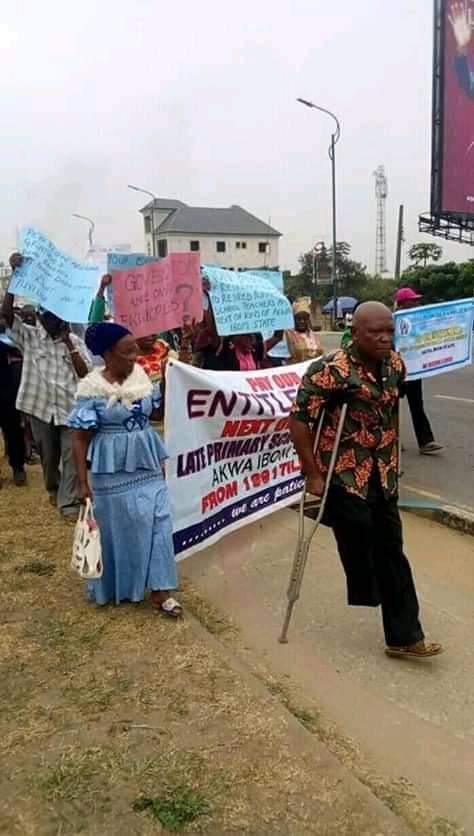
Curiously, even with these huge extra-budgetary expenses in 2019, the Akwa Ibom State government was unable to pay gratuity and pension arrears forcing about 100 pensioners and next-of-kins of primary school teachers, some very aged and sick, to march on December 16th 2019, from Ibom plaza to the Government House in Uyo, protesting the non-payment of their entitlements. Payment of gratuities and pension arrears has remained a top-burner issue in the state since 2015.
Also, Governor Emmanuel administration is struggling to complete some road projects it started more than five years ago and others it inherited from the previous administration. Some of these road projects like the Uyo-Ikot Ekpene road, Ikot Oku Ikono-Etinan road, Etinan-ONNA road, and Etinan- Eket road, have been delayed unnecessarily despite their economic importance to the state.
Ironically, the state government complains of lack of funds to complete these and other crucial projects even as the Commissioner for Finance and the Accountant General of the state keep moving money secretely from budget subheads to items that have no direct impact on the masses and the state economy.
*This investigation is supported by the John D. and Catherine T. MacArthur Foundation and the International Centre for Investigative Reporting.
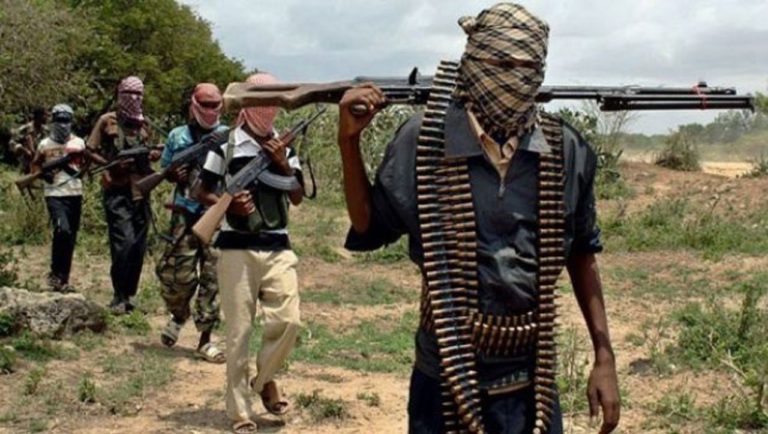
IN the early hours of Tuesday, gunmen attacked Gidan Zaki in Zangon Kataf local government of Kaduna State killing Haruna Kuye, the District Head of Gidan Zaki and his son, according to a statement by the Kaduna State Government.
Samuel Aruwan, the Kaduna State Commissioner for Internal Security and Home Affairs confirmed the development in a statement saying the monarch’s wife also sustained machete wounds while the daughter sustained gunshot injury.
“The security report further stated that the act was carried out by about five men wielding AK-47 rifles and machetes, who also tried to burn the house and a vehicle.
“The military added that location that three empty cases and a live round of 7.62mm special ammunition were recovered at the scene. Troops in collaboration with other security agencies are carrying out investigations and trailing the assailants,” the statement read.
Governor Nasir El-Rufai has condemned the killings as evil and violation of the sanctity of the human lives by enemies of peace who must be fished out and made to face the wrath of the law.
The Governor also directed the Commissioner of Police and Director of the Department of State Services to team up with the military forces on the ground to ensure diligent investigations.
Speaking to The ICIR, Mohammed Jalige Police spokesperson in Kaduna was asked about the response of the police to the heightened insecurity in the state and measures to address the situation.
“I will get back to you about it. I will give you a call,” he said.
However, at the time of filing this report, he could not be reached via calls or text messages.
In another development, the Kaduna State Government also confirmed another attack by gunmen at Albasu village of Igabi local government of the state.
The update identified the eleven persons killed includes Amadu Mallam, Idi Gefefe, Isah Goma, Awwalu Goma, Babangida Iliyasu, Lado Iliyasu, Ya’u Jumare, Hamza Umaru, Shehu Jibril, Tukur Albasu Musa and Adamu Muruzuwa.
The following victims who sustained injuries are Muazu Albasu, Samaila Junaidu Husaini and a yet to be identified woman earlier thought to have been killed.
Similarly, the security agencies have identified another victim Albarka Addu’a, a former village head of Kyemara Gari who was killed by bandits on Sunday while armed gunmen kidnapped two persons at Maraban Kajuru in Kajuru local government area.
THE Honourable Magistrate O.A. Salawu of the Yaba Magistrate Court, Lagos on Tuesday granted Eromosele Adene a bail of One million naira after rejecting the application of the police to keep him in detention for 30 more days.
Eromosele was on November 7 arrested at his home in Ikeja, Lagos. Since his arrest, he had been taken to the police command headquarters and then transferred to the Area F Command before the police detained him at the SCID, Panti. He was last Monday flown to Abuja and detained for seven days before being brought back to Lagos on Sunday.
The ICIR had reported how the policemen attached to the State Criminal Investigation Department (SCID) in Lagos approached the Yaba Magistrate Court, Lagos on Monday to file an application seeking to remand Eromosele for 3o more days.
Earlier before the judgement, the counsel representing the Commissioner of Police urged the court that the application to remand Eromosele for 30 more days was meant for investigation and not prosecution.
Meanwhile, Eromosele’s lawyer, argued that the court should reject the remand application to keep him, citing executive recklessness and legislative rascality.
He, however, asked that he should be granted bail instead. The Magistrate after listening to the two arguments obliged him awarded Eromosele bail to the tune of one million Naira alongside two sureties who must be his family members.
In this concluding part, Arinze CHIJIOKE discovers that apart from the Obohia-Ohuru-Aba Road, there are similar projects initiated by the NDDC in Abia State which have either been abandoned, not started or poorly executed.
CYNTHIA Abraham has not walked on a well-constructed road in her community since she was born in 1982, except on occasions when she travelled out. And so, she always hoped for the day when the adjoining tarred roads would be constructed in her Umuwaga community in Ukwa West. Abraham’s community is one of the major oil producing areas in Ukwa West, in Abia State.
In 2011, the NDDC awarded a contract for the construction of the Umuwaga Internal roads in Ukwa West at a sum of N124,039,000 to Kenchez Nig. Ltd. It was prayer answered for Abraham and many others in the community.
“The entire community was happy. We danced and celebrated because we had waited to see this for years,” she said, voice tenor, switching between contempt and rage.
Youths in Umuwaga were mobilised to help construct the drainages for the roads in 2011. As work progressed in the construction of the drainages, their hope burned out like flames. In 2012, the contractor came and graded the roads and poured gravel on them.
The drainages had not been fully constructed though. Their expectations were beginning to come to life before their eyes. But it was soon cut short when the contractor suddenly stopped coming to the site.
Members of the community waited throughout 2012, hoping that he would return to site, but that did not happen. That was the last time Abraham and other members of her community saw or heard from him.
“We all thought he had finished working on the road and we began to make use of it,” she said.
Pothole-ridden
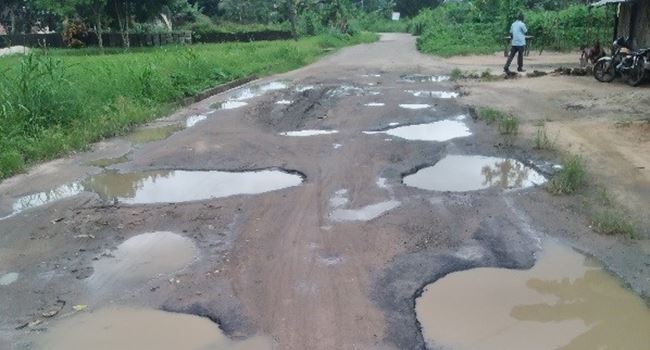
After six months, however, the reality began to unfold. The roads started to fail. Potholes and waterlogs everywhere and the road become almost impassable anytime it rains. Most of the time, because of the poor construction of the drainage system, water finds its way into the wrong places and sweeps debris into people’s homes.
Section of the Umuwaga pothole ridden roadAnother section of the Umuwaga pothole ridden road
Another community member, Abraham Uchenna, confirmed to this reporter that other roads that were awarded at the same time to the contractor have become bad and impassable to road users too.
“We are calling on the government to come and intervene because we need the roads, especially for our economic activities. Cars cannot come in and go out, not even motorcycles,” he said.
Uncompleted drainage, impassable road
John Nwabueze clearly remembers when workers with Estuary Integrated Service arrived in Ụmụaka, a community in Ukwa West, another oil producing area in Abia State in early 2015. The NDDC had awarded to the company the contract for the construction of Umuodeke – Uzomkpuri – Railway Road, Asa South at a contract sum of ₦94,537,775.
When they arrived, they had a major challenge of where to stay, while work was going on. But Nwabueze offered his home. And they promised to pay him some money at the end of the project.
“The money they were going to pay me was not my major concern. We have always had a great need for the road and so, I was happy that they were here to work on it.”
To show their level of excitement with the project, youths from Ụmụaka Community had also offered to help dig the ground for drainages at the request of the contractor. They even helped clear the bushes for the grading of the road. When they commenced the drainage construction, everyone in the community was happy.
Yet, after some time, like others before it, they said their materials had finished and that they had to go and get more. They were away for several months, he said, before they came back again and continued with the drainage.
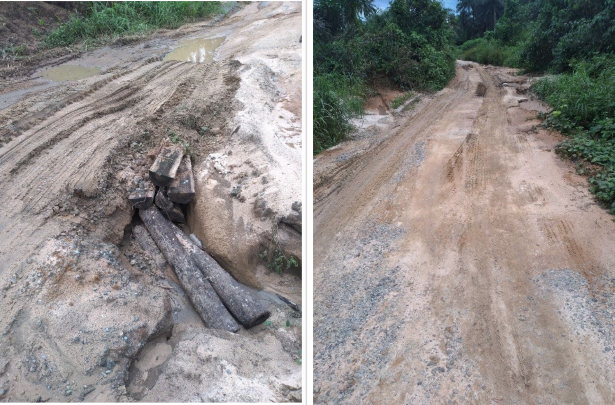
Abandoned and impassable Uzomkpuri – Railway RoadGravel abandoned by workers with Estuary Integrated Service
But “they did not get to the end of the road. They also did a bit of the grading and stopped.”
When community members tried to find out what was slowing the pace of work, the contractor said he had been using his money since he had not been paid by the NDDC for the project and so, he couldn’t continue to work.
“They took what was left of their materials from my house without even paying me and left,” Nwabueze said, adding, “they got another project to work on. Since then, we have not heard from them. Some of their materials are still with me, their shovel and head pans,” for instance.
Now, the road has become completely impassable, discouraging many people who would have come into the community for their businesses. This hurts Nwabueze really bad because he had expected the road to be completed so it can open up more opportunities for the people. “NDDC should try and look into the matter so the contractor can return to the site,” he said.
John Nwabueze housed the workers in 2015
Another community, same problem
When workers with Sidney Construction Company arrived in Ohanso in 2014, after the NDDC awarded the contract for the construction of the Ohanso-Obunku Road, the people were happy.
They had prayed and waited to have their road reconstructed, years after it fell. Chief Nwokoma, who was then the youth leader of the community, said he provided them with a place to stay and went as far as mobilising some youths in the community who helped in digging the drainage. He also made sure the workers were comfortable.
Nwokoma said: “When some people came to demand a matching grant from the contractor, I refused because we needed the road. I made sure they were not disturbed while working.”
But after constructing 1.3km of drainage, the engineer stopped working and went away and when Nwokoma made enquiries, he was told by Emmanuel Udah, the engineer, that he had finished his own milestone for the job.
In a bid to unearth the truth behind the project, which has been left unattended to since 2015, this reporter contacted Udah, who worked on the project for Sidney Construction Company. Udah, who focuses majorly on drainage construction, revealed that Moshor African Co. Ltd, the original owner of the contract, approached Sidney and Sublet the drainage construction contract to it.
After discussing how much the project will cost with Moshor, an agreement was reached and Moshor provided the materials needed for the job, including sand, chippings, rods, cement and other materials.
Section of the pothole ridden Ohanso-Obunku Road with uncomplete drainageAnother section of the pothole ridden Ohanso-Obunku Road with uncomplete drainage
Udah explained: “We went to the site and started work with some youths from the community after they insisted and some workers with my company. After some time, money for the workers finished and I asked Moshor but he refused. So, we had to leave after constructing 1.3km of the drainage.”
The director of Sidney Construction, Sidney Oji, said that his company had to take part of the work on the drainage but Moshor failed to pay for the construction till 2018, three years after. He was surprised that the road has not been completed since 2015, after his company worked on the drainage, which was the first milestone for the project.
“That means that Moshor lacked the capacity to do the job that he collected from the NDDC. If he had paid us, we would have completed our own part of the project,” he added.
Now, the road is worse than it used to be, with most of it washed away by erosion. This is due to the none-completion of the 1.5km drainage and failure of the original contractor, Moshor African Co. Ltd, to come to site.
Nwokoma blamed the poor state of the road which was awarded at a sum of N238,019,535 on the fact that the original contractor, Moshor, sublet his contract to a different company. In its PMIS portal, the NDDC said that the project for the construction of the Ohanso-Obunku Road in Ukwa East has not started.
Erosion threatening community
The poor construction of the drainage and sudden abandonment of the road project in Ohanso has continued to threaten the existence of several households in the community. The traditional ruler of Ohanso, where the project is located, Eze D.I.C Nwankwo, said that the poor construction of the drainage, which makes it impossible for water to pass, has created different erosion channels in the community.
He said: “We are afraid houses might begin to fall with time. Our people are predominantly farmers. But they can’t take their goods to the market whenever it rains here. I was not even informed when the project started.”
Signboard showing the road project
Nwankwo, along with other leaders in his community, have written several letters to both the state government and the NDDC, seeking intervention, but nothing has been done yet. Efforts to get Moshor to react on the state of the road did not yield results, as this reporter could not locate the company or its owners. Checks on the website of the Corporate Affairs Commission (CAC), indicated that it was not registered.
That is a breach of the Procurement Act, which mandates that all government contractors must not only be registered with the commission but must be responsible organisations with a record of filing tax returns.
Road completely washed off
B.C Nwafor hardly talks about the Umahala Road because he has always been angry each time he has to do so. The road, located in Ukwa West, was awarded by the NDDC to S.J. Odioka Solid Nig. Ltd at the sum of ₦243,698,750. Since March 2011, when the contract was awarded till 2020, the road has remained only but a shadow of its old self, creating several water channels and sending water into people’s homes anytime it rains.
Section of the abandoned Umahala Road
It was observed that most of the chippings poured on it by the contractor had been washed off. The drainage constructed on both sides of the road has since been covered with sand. With several waterlogs, it has become almost impossible for cars and motorcycles to travel on the road, forcing the community to lose several investment opportunities.
Nwafor, who is the Community Development Councilor of Umahala, said the contractor only came in 2011 after the contract was awarded and graded the road, poured chippings and then he left.
“The last time we saw the contractor was in 2015. The road is not even motorable anymore. There are lots of uncompleted roads by the NDDC in our community. They went to the media and said they had finished the project,” he said.
He, however, said the contractor called him in 2019, and promised they were coming to finish up the project, but he did not show up. “We are very close to Rivers State yet, we are not developed, even though we are part of the communities that produce oil in Abia State,” he noted.
Completed, in use
Unlike other project locations spread across Ukwa East, which were either not started or abandoned, the contract for the rehabilitation and reasphalting of Akwete – Umuagbai was completed and is being used by members of both Akwete and Umuagbai communities. Awarded at a cost of ₦300,000,000 to ALADEX Nigeria Limited on December 10, 2004, some residents said that the 8km road project, since it was completed, has brought some relief to both communities as they travel through it to transact their businesses.
The rehabilitated and reasphalted Akwete – Umuagbai road
One of such residents, an Okada rider, identified himself simply as Eze, said that since the road was completed, it has not had any challenge. “This is like the only completed project by the NDDC we have around here and so, we are lucky and happy at the same time. Who wouldn’t be,” he said.
When contacted, the Executive Director of ALADEX, Abiodun Ajala, said that sincerity is the company’s signature. We are glad the people are happy with our effort in doing what we promised in our contractual agreement.
NGO reacts to non-execution of NDDC road projects
Since 2000, the Foundation for Environmental Rights, Advocacy and Development (FENRAD), has been engaged in the monitoring of road projects awarded by the NDDC across local governments in Abia State.
Using the instrument of the Freedom of Information (FOI), FENRAD has always made requests for such information as publications used in the procurement process. Questions are also asked about details of the bidding process, contractors who are supposed to execute such projects, executed /location of the projects as well as amount budgeted and the process of the disbursement.
The ED FENRAD, Comrade Nnanna Nwafor, however regretted that most of the NDDC projects monitored have either not been executed or poorly executed, even when funds were released for them. He confirmed that Abia State has a total of 628 projects captured in the NDDC but that years of corruption in the award and execution of the contract have undermined the developments of the state.
In early January, civil society organisations under the platform of the Open Government Partnership (OGP) set up a committee across the 17 local government areas in Abia State to document “failed” NDDC projects in the state.
The committee in its submission noted with disappointment the most worrisome fact of its investigations, the fact that the failed or abandoned projects were awarded to contractors, who hailed from Abia State.
The probe
The NDDC was established under the Olusegun Obasanjo-led administration by the NDDC Act of 2000, to among other things, birth plans and implement programmes and projects for the sustainable development of the Niger Delta and other oil producing regions.
Sadly, however, the Commission has been on the spotlight, following a series of allegations of corruption in the award and execution of contracts, including road construction, electricity, water and schools across the oil producing states.
These corrupt allegations may have been what prompted President Muhammadu Buhari, to order a forensic audit of the Commission from 2001 to 2019 in October 2019. He was worried that what was on ground in the oil regions does not justify the huge resources that have been made available to the Commission.
The President said: “I try to follow the Act setting up these institutions, especially the NDDC. With the amount of money that the Federal Government has religiously allocated to the NDDC, we will like to see the results on ground; those that are responsible for that have to explain certain issues.”
Road transforms to refuse dump site
Prior to 2011, indigenes of Akwete, one of the oil producing communities in Abia State, could comfortably bury their dead because passing through the road that leads to the Akwete cemetery was without stress.
The people had always wanted a road constructed to link the cemetery road to Ohanso, one of the villages. But since no one seemed to care, they had to make do with the road, which had only been graded.
In February 2011, the NDDC decided to award a contract for the construction of the Akwete Cemetery Road Linking Ohanso –Obunkwu Ukwa East to Rustech Nig. Ent Ltd at a contract sum of ₦245,000,000. The sum of N36,750,000 (Thirty Six Million, Seven Hundred and Fifty Thousand naira) was committed to the project in 2012.
In the same year when the contractor arrived, he began the construction of drainage on one of the roads and the people hoped he would complete the project. But their hopes were dashed as the contractor suddenly stopped coming to site.
The traditional ruler of Amakam, one of the villages in Akwete, Okere Eruba, said that apart from failure to finish the drainage, it was also poorly constructed. He was dismayed that no one had seen or heard from the contractor ever since.
“Today, the road has become completely impassable, worse than a shadow of its old self. Each time it rains, the road is flooded owing to the poor construction of the drainage, which is usually filled with filth. It has been turned into a refuse dump site and the people wish the contract was not awarded in the first instance,” the monarch further said.
Eruba said that apart from the Cemetery Road project, Akwete does not have any project by NDDC that has been completed and that they have either been abandoned or not even started at all.
“We do not feel the presence of the Federal Government in our community. We had high expectations. But now, they have been dashed. We have been crying out for help. Our people are suffering as a result of the filth near our market which has become unbearable,” he added.
Meanwhile, the NDDC indicates on its PMIS portal, a database which has the commission’s projects since early 2000s, that the contract for the construction of the Akwete Cemetery Road linking Ohanso –Obunkwu Ukwa East is “ongoing”
To bury their dead now, the people of Akwete have to hire and pay youths that will clear the road that leads to the cemetery. Visibly irked by the inconveniencies, Chima Okeke, a community member, said the NDDC has to go in search of the contractor so he can finish it up because, according to him, “it’d be unfair to abandon the project after collecting money for it. That will amount to man inhumanity to man.”
NDDC Abia refuses to respond, directs reporter to headquarters
This reporter visited the state office of the commission, which is located at OkeikPe-Asa in Ukwa West LGA in a bid to get the reactions of the NDDC, following a series of allegations of corruption in the execution of projects by indigenes of the two oil producing LGs. At the reception, the reporter was given a form to fill, indicating reasons for coming, what organisation he represents and whether or not the meeting was scheduled.
After waiting for a couple of minutes, the reporter finally gained entry to the Director’s office. He however, refused to take questions bothering allegations of corruption, because, according to him, “I don’t have such a mandate to say anything concerning the projects.”
The State Director of the NDDC, who gave his name as MassaLinus, told this reporter that the engineers that are supposed to respond to such enquiries are new and do not have the required details about projects in the area. He however, said they are not allowed to comment on projects except there is an approval from the commission’s headquarters in Port Harcourt, Rivers State.
He said: “I can’t authorise anybody to commend on any project. You would have to go to Port Harcourt and get a letter of approval asking me to speak. This is public service and you will not be happy with what will happen if I say anything without approval. We shall be willing to follow you to the locations to know what the problem is when you get the approval.”
FOI request denied
In order to get the contact details of the contractors who were handling the contracts being investigated, this reporter sent an FOI via the International Centre for Investigative Reporting (ICIR), to the NDDC on October 5.
But while the request was acknowledged three days later, on October 8, the Commission failed to respond, nearly a month after the request was sent, thus making it difficult for the reporter to reach out to them.