Home Blog Page 195

Access Holdings Plc announces Ogbonna’s board exit, appoints Ike CEO

ACCESS Holdings Plc has announced the resignation of a non-executive director, Roosevelt Ogbonna, from its board, after serving for three and a half years.

It announced this in a statement on Wednesday, August 27.

It said Ogbonna will continue to serve as the Managing Director/Chief Executive Officer of its flagship subsidiary, Access Bank.

According to the holding company, his resignation will allow Access Holdings to comply with the Central Bank of Nigeria’s (CBN) Corporate Governance Guidelines for Financial Holding Companies in Nigeria, 2023, which stipulate a maximum of nine directors for the board of a Financial Holding Company.

“The Board appreciates Mr. Ogbonna for his outstanding and continued contributions to the Access Group,” Access Holdings stated.

The ICIR reports that Roosevelt Ogbonna was appointed managing director and CEO of Access Bank in May 2022, after serving as deputy managing director from 2017 and executive director from 2013.

He joined Access Bank in 2002 from Guaranty Trust Bank and has built up more than two decades of experience in the banking industry.

His background combines both professional and academic achievements. He is a Fellow of the Institute of Chartered Accountants of Nigeria (FCA), an Honorary Member of the Chartered Institute of Bankers (HCIB), and a CFA charter holder.

Innocent Ike exits Access Holdings board

In a related development Access Holdings on Thursday, August 28, announced the appointment of Innocent Ike as the substantive group managing director/chief executive officer (GMD/CEO) of the company.

His appointment takes effect from August 29, 2025, following the receipt of regulatory approval, according to an official disclosure on Thursday.

By the appointment, Ike will succeed Bolaji Agbede, who has served as the company’s acting GMD/CEO for the past 18 months.

Access Holdings hinted that following regulatory stipulations on the required years of experience for a Financial Holding company’s managing director, Agbede will revert to her substantive role as the company’s executive director, business support.

Commenting, Access Holdings Chairman, Aigboje Aig-Imoukhuede, said, “We are thrilled to welcome Mr. Innocent Ike as we move forward. At the same time, we want to express our deepest gratitude to Ms. Bolaji Agbede. Her outstanding contributions over the past 18 months have been invaluable, and we appreciate her dedication in navigating the Company through challenges and opportunities. While regulatory requirements necessitate this change, we are grateful for the strong foundation that has been laid.”

Ike holds a bachelor’s degree in Accounting from the University of Lagos.

He is a Fellow of the Chartered Institute of Bankers of Nigeria (CIBN), a Fellow of the Institute of Chartered Accountants of Nigeria (ICAN), and a Certified IFRS expert.

He has over three decades of experience in banking and financial services, ten years of which were spent at Access Bank, where he rose to General Manager, overseeing portfolios in corporate, commercial, and public sectors.

He served as the Managing Director/Chief Executive Officer of Polaris Bank from 2020 to 2022, during which he launched VULTe, the bank’s digital banking platform.

“I am honoured to take on the role of Group Managing Director /Chief Executive Officer and excited to work alongside the talented team at Access Holdings. I look forward to building on the strong legacy established by Herbert Wigwe and Bolaji Agbede, and driving our vision forward, ensuring we continue to deliver exceptional value to our shareholders and stakeholders,” Ike said.
Minister seals illegal gold mining site in Abuja

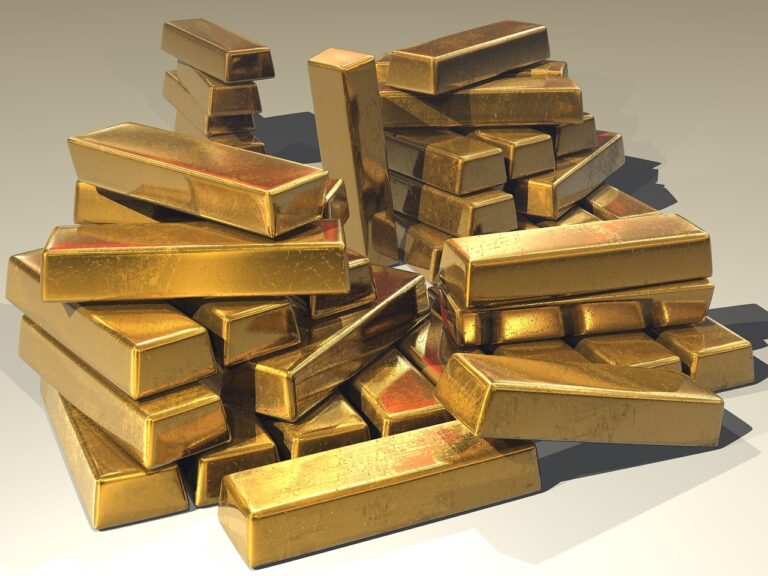
THE Minister of Solid Minerals Development, Dele Alake, has directed the sealing of a mining site in Gwagwalada Area Council, Federal Capital Territory (FCT).

According to a statement by his Special Assistant on Media, Segun Tomori, the minister took the decision following reports of illegal gold mining at the site and to mitigate potential environmental hazards.

The ministry said the action came in the wake of an earlier operation by the mining marshals, which led to the successful recovery and sealing of a mining site around the District 2 Extension layout in Gwagwalada on August 16, where 16 suspects were arrested and would be prosecuted soon.

“Preliminary investigations reveal that illegal artisanal miners invaded the area after the accidental discovery of a gold vein during the digging of a soakaway pit near a residential property.

“The most recent incident took place on a farmland located behind CKC in Gwagwalada. Upon receiving intelligence reports of renewed unlawful mining activity, Alake promptly ordered the deployment of mining marshals to secure the site,” the ministry stated.

The ministry said officials, led by the Director of Mines Inspectorate and represented by the Deputy Director, Sunday Okhuoya, carried out an on-the-spot assessment of the area on Wednesday.

It expressed satisfaction with the level of compliance with the minister’s directive and disclosed that relevant departments of the ministry had launched a thorough investigation to determine the root of the incidents, while also recommending measures to prevent a recurrence.

Similarly, the Commander of the Mining Marshals, Assistant Commandant of Corps (ACC) John Attah Onoja, confirmed that his team had established 24-hour surveillance over both sites, pending the outcome of the Federal Government’s ongoing inquiry.

In view of the potential environmental and public health risks associated with the illegal mining operations, the minister advised residents to steer clear of the affected areas while enforcement and remediation efforts are underway.

The minister reiterated the Federal Government’s resolve to eradicate illegal mining activities across the country, adding that his ministry was fast-tracking the deployment of satellite surveillance technology to monitor mining operations nationwide and significantly strengthen enforcement capacity.

In 2021, The ICIR, in an investigation, exposed how illegal gold mining thrived in Kundu, a remote community in the Kwali Area Council of the Federal Capital Territory.

The investigation revealed that thousands of miners, many of them from Zamfara and other parts of Nigeria, had taken over the area without licence, leaving residents to grapple with environmental degradation, polluted water sources, and declining farmland.

Despite the revelations and President Muhammadu Buhari’s public admission in 2020 that Nigeria was losing billions of dollars to illegal mining, his administration failed to act decisively.

Instead, government officials downplayed the problem, describing the miners’ activities as ‘informal’ rather than illegal. This neglect allowed the practice to flourish unchecked in Abuja and beyond.

The consequence has been the loss of billions of naira in potential revenue for both the FCT and Nigeria. While other countries generate huge earnings from their mining industries, Nigeria continues to make only a fraction of it should earn.

The ongoing seizure of the FCT’s mineral resources through illegal mining highlights how severely the country is bleeding from illegal mining.

Student apologises for sharing viral video of lecturer, student clash

0

A 300-level History and Diplomacy student at Niger Delta University, Bayelsa State, identified as Favour, has apologised for sharing a video showing a violent clash between a lecturer and a female student in her department.

In a video shared by This is Bayelsa on Wednesday, August 27, she said, “I want to sincerely apologise for my role in the circulation of a video that has caused embarrassment to my department and the school.

“I did not record the video but I acknowledged the fact that forwarding it to my class group contributed to its viral spread.

“I am sorry. I know my actions were wrong and careless, and I regret it deeply. I’m sorry to the school. I’m sorry to my department. I’m sorry to my lecturers. It was never my intention to bring shame to the department or the university. I’ve learnt a very important lesson, and I promise to be more responsible,” she said.

The ICIR reports that Favour’s apology bothers on a video shared on Monday by This is Bayelsa on social media, which captured a female student confronting a lecturer in a lecture hall, during which the lecturer was seen punching and headbutting her.

Reports indicate that the incident occurred after the lecturer allegedly caught the student cheating during an exam and ordered her to leave the hall.

The student, however, declined to leave, insisting on collecting her phone first.

In the video, a voice was heard saying, “Young lady, leave the hall first. You were caught cheating. Instead of you to leave the hall, you’re still doing ‘give me my phone.'” 

The ICIR reports that the incident adds to the series of viral altercations on social media that have trended in Nigeria in recent weeks.

Recall that last week, videos surfaced online showing armed men in mufti clothes storming corps members’ lodge in Oba community, Anambra State, where they were seen beating and harassing a female corps member.

The state governor’s Special Adviser on Community Security, Ken Emeakayi, confirmed that the men seen in the video were members of Operation ‘Udo Ga-Achi,’ also known as the Agunechemba Vigilante Group. 

That was a week after a viral video showed Comfort Emmanson, an ‘unruly’ passenger on Ibom Air at the Murtala Mohammed International Airport, Lagos, being dragged half naked out of the aircraft by four men, some of whom put on the Ibom Air’s reflective jacket.

Emmanson’s case surfaced a week after fuji musician Wasiu Ayinde Marshal, popularly known as KWAM 1, obstructed the safe operation of the ValueJet aircraft at the Nnamdi Azikiwe International Airport, Abuja.

Nigeria debt grows as debt-to-GDP ratio to hit 60%

NIGERIA will face a worsening debt burden in the coming year as the Federal Government has projected a rise in the debt-to-GDP (gross domestic product) ratio to 60 per cent by 2027.

The country currently has a debt-to-GDP ratio of 52.25 per cent as of December 2024, now expected to rise by 7.75 per cent.

Economic watchers say this would amount to higher inflationary pressure and create more currency problems for Nigeria, which could see Nigeria pay higher cost to service borrowed funds and trapped in debt.

With the debt surge, there are also growing fears of sovereign default, the possibility that Nigeria might struggle to meet its debt obligations.

Nigeria’s fiscal position has deteriorated significantly over the past decade, with public debt rising, driven largely by currency devaluation and persistent fiscal deficits.

“FGN’s public debt has continued to skyrocket. In just two years of this administration, the debt has doubled what the previous administration accumulated in eight years,” says Adonri,”Vice Chairman at Highcap Securities, David Adonri, said.

“While the naira-denominated debt may be covered with Ways and Means (central bank financing) at the risk of hyperinflation, escalating foreign debt must be extinguished with hard currency, which may not be available when needed. That is the real threat; a sovereign default could occur if this pace of foreign borrowing continues unchecked. We are already in a debt trap, borrowing new funds to pay old debts. If the federal government doesn’t de-leverage soon, insolvency could be imminent.”

A debt-to-GDP ratio is used to measure a country’s debt as a percentage of its GDP, which indicates its ability to repay its debt.

While a low ratio suggests a stronger economy and greater capacity to meet debt obligations, a high ratio signifies a heavier debt burden and potential repayment difficulties.

In a recent disclosure, the Debt Management Office (DMO) said that Nigeria’s debt-to-GDP ratio will rise to 60 per cent by 2027.

It disclosed this in the recently approved Medium-Term Debt Management Strategy (MTDS) for the 2024-2027 fiscal year, dated August 22.

It said the approved MTDS would ensure debt sustainability while meeting the country’s financing needs.

The MTDS, developed with technical support from the World Bank and the International Monetary Fund (IMF), is a globally recognised tool for managing public debt.

The framework aims to balance borrowing costs with associated risks, deepen the domestic securities market, and optimise the composition of Nigeria’s debt portfolio.

“The key objectives of the MTDS are to meet the Government’s financing needs and payment obligations in the short to medium term, taking into consideration the costs and risks trade-offs in the debt portfolio.

“To achieve optimum composition of the public debt portfolio that ensures debt sustainability; and to further deepen the domestic securities market through the introduction of new products,” the DMO stated.

It explained that the preparation of the MTDS usually involves the consideration of alternative funding strategies available to the government, as it seeks to meet its financing needs, taking into consideration the cost of borrowing and the associated risks, while ensuring debt sustainability in the medium to long-term.

It stressed that nominal debt as a percentage of GDP is expected to be capped at 60 per cent by 2027, compared to 52.25 per cent as at end-December 2024.

Other projections in the framework included that interest payments will not exceed 4.5 per cent of GDP compared to 3.75 per cent in 2024, while sovereign guarantees are to remain below 5 per cent of GDP, up from the 2.09 per cent

It revised domestic to external to “55:45, compared to 48:52 previously, while maintaining domestic borrowing at least 75 per cent long-term instruments against a maximum of 25 per cent short-term.

Refinancing risk is to be contained, with debt maturing in one year not to exceed 15 per cent of the total portfolio

The DMO stated further that the foreign exchange (FX) debt will be capped at 45 per cent of the entire debt stock.

It noted Nigeria’s average debt maturity of 11.05 years and average time to refixing of 10.74 years already exceeded the minimum thresholds of 10 years set in the strategy.

Nigeria’s total public debt burden has risen to N149.39 trillion as of the first quarter of this year, The ICIR reported.

It rose by N27.72 trillion year-on-year from N121.67 trillion as of the first quarter of 2024.

It is likely to rise higher in the second quarter of this year by the time the DMO releases its next report as the National Assembly had approved new foreign loans worth $24.14 billion requested by President Bola Tinubu.

Ex-convict bodybuilder Akinwale Arobieke found dead at home in Liverpool

0

AKINWALE Arobieke, better known in the UK as “Purple Aki,” has reportedly been found dead at his home in Toxteth, Liverpool.

The 64-year-old British-Nigerian bodybuilder was discovered unresponsive at his residence on Devonshire Road around 8:30 p.m. on Tuesday, August 26, according to reports.

He was pronounced dead at the scene, and authorities confirmed that his death is not being treated as suspicious.

“We can confirm that emergency services were in the Toxteth area following a non-suspicious death last night, August 26.

“At around 8:30 p.m., officers were made aware of a man in his 60s who was found unresponsive at an address on Devonshire Road, Princes Park. He was sadly pronounced deceased at the scene.

“The man’s death is not suspicious and a file will be prepared for the coroner,” a Merseyside Police spokesperson was quoted to have said.

Born Akinwale Oluwafolajimi Oluwatope Arobieke on July 15, 1961, at Crumpsall Hospital in Lancashire, Aki was of Nigerian descent.

His mother, then a secretarial student, placed him in care at just six months old. He later spent time in a Barnardo’s home in Llandudno.

As an adult, he worked in modest jobs, including as a tunnel cleaner in the Mersey Tunnels and as a messenger for Liverpool City Council.

For decades, Arobieke remained a well-known and controversial figure in Merseyside, where he was depicted in local folklore as a “bogeyman.”

He gained notoriety in the 1990s for approaching young men and asking to touch their muscles.

In 1986, he was initially convicted of the involuntary manslaughter of 16-year-old Gary Kelly, who died after coming into contact with a live rail while attempting to flee from him.

The conviction was later overturned on appeal, and Arobieke was awarded £35,000 in compensation.

Beyond that, he was also convicted of touching and measuring the muscles of young men and asking them to squat his body weight.

In 2003, Arobieke was sentenced to six years in prison for multiple counts of harassment and witness intimidation, following incidents that spread fear among young men in the region.

Similarly, in 2006, authorities imposed a Sexual Offences Prevention Order (SOPO) on him, even though he had no sexual convictions. The order prohibited him from touching, feeling, or measuring muscles, loitering around gyms or schools, or entering specific towns such as St Helens and Warrington.

The order was lifted in May 2016.

Mixed reactions as court orders 6 banks to release Sowore’s account details to IGP

0

MIXED reactions have trailed Federal High order directing six banks to release human rights activist Omoyele Sowore’s account records and transaction details to the Inspector-General of Police, covering January 2024 to August 2025.    

The ICIR reports that the judge, Emeka Nwite, on Tuesday in Abuja, granted the order following an ex parte motion by the IGP’s lawyer, Wisdom Madaki, who said that Sowore, publisher of Sahara Reporters, was being investigated for alleged terrorism financing, money laundering, and fraud.

“He is being investigated for terrorism financing, money laundering, and fraudulent activities. That the complainant has commenced an investigation into the activities of the 1st respondent. That the accounts for which the statements are sought are those being used by the 1st respondent for terrorism financing and money laundering,” the motion read in five grounds of argument.

Madaki said at least 26 bank accounts linked to Sowore were under investigation, including those of Sahara Reporters Media Foundation and the African Action Congress. 

In the ex parte motion marked FHC/ABJ/CS/1757/2025, the IGP named Sowore and Sahara Reporters Media Foundation as the 1st and 2nd defendants, while United Bank for Africa Plc, Guaranty Trust Bank Plc, Zenith Bank Plc, Opay Digital Services Ltd, Moniepoint, and Kuda Microfinance Bank Ltd were listed as the 3rd to 8th defendants.

“An order directing the following banks: UBA Plc, GTB Plc, Zenith Bank Plc, Opay Digital Services Ltd, Moniepoint, and Kuda Microfinance Bank Ltd to furnish the applicant, through the office of the Inspector-General of Police Monitoring Unit, with the account opening package/mandate card and certified true copies of statements of account reflecting transfers and account numbers of both inflows and outflows from January 2024 to date,” the motion read.

Madaki insisted that granting the request was crucial to support police investigations and that denying it would hinder the process.

Reacting on X, some users condemned the IGP’s action, while others saw it as a welcome development.

OyinAtiBode opined that Sowore could be stubborn but would not be involved in terrorism, insisting that Nigeria was drowning in insecurity, but police prioritised hunting critics.

Patrick Daniels wrote “If there’s anyone to be prosecuted for terrorism, it should be the IGP not Sowore.”

Gbengulo noted, “The same IGP should name sponsors of terrorism in Nigeria and should stop using state resources to shield them.” 

Similarly, Olusegun said “After he revealed the recent fraudulent promotion…”

Mr Tims also said “It’s important to consider the legal implications of requesting sensitive information such as @YeleSowore’s’s bank statement, especially given that @IGP does not have the authority to access these details.”

Users like Teejay 2 believe the directive is an excellent move.

Similarly, Naija Pinkin said “Those sponsoring Sowore to destabilise Nigeria should be exposed.” 

Tunji Jide said “If they found Sowore culpable, he’s finished.”

Son of God noted “Sowore, you allowed yourself to be used by outsiders to destabilise your country. Enemies within plenty for this country working against her.” 

The ICIR reported last week that Sowore, accused the Nigeria Police Force, of orchestrating a fresh plot to intimidate him and muzzle the operations of his media platform, Sahara Reporters.

He said he was once again summoned by the IGP Monitoring Unit to question him over Sahara Reporters Media Foundation and Sahara Reporters Ltd., after obtaining documents from the Corporate Affairs Commission (CAC).

This invitation came just days after Sowore regained freedom on August 8, 2025, following nearly three days in police custody. 

The ICIR reported that his detention was based on two petitions, one alleging forgery of a police document and another accusing him of criminal defamation of a senior female officer.

Sowore described that arrest as “unjust, unwarranted and unlawful.”

During his detention, he accused police operatives, including the Head of the IGP Monitoring Unit in Abuja, Akin Fakorede, a Commissioner of Police, of assaulting him and breaking his hand, while the police insisted they were merely following due process and didn’t assault the activist.

NGX Group urges Tinubu to fact-track listing of state-owned enterprises, NNPC

THE Nigerian Exchange Limited (NGX) Group has called on President Bola Tinubu to fast-track the listing of state-owned enterprises, including the Nigerian National Petroleum Company (NNPC) Limited on the stock market.

The Group Chairman, Umaru Kwairanga, made the call at a meeting with the President on the sidelines of his two-day state visit to Brazil.

His call was contained in a statement on Wednesday, August 27 to The ICIR, signed by the Special Adviser to the President on Information and Strategy, Bayo Onanuga.

Tinubu’s state visit was aimed at reconnecting and strengthening Nigeria’s bilateral ties with the Southern American country.

Quoting the NGX chairman, Onanuga stated, “He urged the fast-tracking of the listing of major state-owned enterprises, such as NNPC Limited, and the introduction of tax incentives to sustain this momentum.

“He also invited the President to visit the NGX trading floor to recognise these achievements.”

Commending the President for his bold reforms, the NGX Group chairman said that trading volumes and market values on the NGX have nearly tripled since the commencement of the current administration.

The ICIR reports that amid the recent call on the President to fast-track listing of state-owned enterprises on the Exchange, there has been concern over the NNPC’s delay in listing its shares on the capital market.

These worries had followed its initial plan to list in the middle of 2023 but failed to do so, despite having transitioned into a Limited Liability Company on July 19, 2022, with the signing of the Petroleum Industry Act (PIA) 2021 into law.

The PIA provides for the NNPC to list its shares in the capital market in line with the provisions of the Companies and Allied Matters Act (CAMA) 1990.

Since then, the company has been postponing its plans to list on the NGX.

Earlier in March this year, it said it was in the final stage of getting listed in the capital market, in line with the provisions of the PIA. 2021.

Market analysts believe that listing on the Nigerian stock market will allow investment into the national oil company and provide funds to drive other state-owned enterprises, thereby providing more funds for the government to execute fiscal projects and limit its borrowing.

In July, however, the NNPC Group Chief Executive Officer, Bayo Ojulari, said the company had shifted its plans of listing its shares on the stock exchange till 2028, The ICIR reported.

At the meeting with the President were the NGX Group Chief Executive Officer, Temi Popoola, and the Director-General of the Securities and Exchange Commission (SEC), Emomotimi Agama.

Popoola stressed the need to position the Nigerian capital market as a global investment hub through stronger partnerships, modernised market infrastructure, and deeper product innovation.

He believes that expanding retail investor participation through digital channels will promote inclusive and sustainable market growth.

Agama described the recent signing of the Investment and Securities Act (ISA) 2025 as one of Africa’s most comprehensive legal frameworks for capital markets.

He anticipates that the Act will propel Nigeria toward a N300 trillion market while ensuring equitable wealth distribution through strong investor protection and regulatory clarity.

The NGX Group further cited exchange rate stability and macroeconomic predictability under the new government as drivers of the company’s growth, urging Nigerian businesses to list on NGX as a pathway to democratising wealth and broadening participation.

On his part, President Tinubu commended the capital market’s remarkable growth since he assumed office on May 29, 2023.

He noted the phenomenal rise in market capitalisation and increased trading activity, which have broadened investment opportunities for Nigerians and international investors.

He described the market’s performance as a clear reflection of investor confidence in his administration’s reforms and bold economic measures.

“Nigeria’s markets must be a trusted engine of enterprise and prosperity. My government will continue to pursue reforms that unlock capital, protect investors, and drive innovation, so that our economy works for every Nigerian,” Tinubu said.

Uzodimma approves N104,000 minimum wage for Imo workers

0

IMO State Governor Hope Uzodimma has approved a new minimum wage of N104,000 for the state civil servants.

The governor announced the increment during a meeting with labour union leaders Tuesday night at the Government House, Owerri.

According to the News Agency of Nigeria (NAN), the minimum wage was raised from N76,000 to N104,000. Also adjusted were the salaries of doctors, which increased from N215,000 to N503,000, and those of tertiary institution lecturers, from N119,000 to N222,000, among others.

Uzodimma said the decision was part of his administration’s commitment to improving workers’ welfare despite challenges such as insecurity, COVID-19, economic reforms, and subsidy removal.

“When workers are paid well, productivity rises, families are happier, and the local economy grows. This is our way of investing in Imo people,” the governor said.

He disclosed that the state’s Internally Generated Revenue (IGR) had risen from N400 million to over N3 billion monthly, while federal allocations had increased from about N7 billion in 2020 to N14 billion. The state’s debt profile, he added, had reduced from over N280 billion to less than N100 billion.

Uzodimma further revealed that the government would begin payment of the last batch of gratuities, amounting to N16 billion, to pensioners from August 27. He also highlighted reforms in the health sector, including the launch of a health insurance scheme and equipping hospitals for improved service delivery.

The governor urged workers to maintain ethical standards and shun redundancy, while calling on labour unions to sustain cordial relations with the government.

Responding, the Imo State Chairman of the Nigeria Labour Congress (NLC), Uchechigemezu Nwigwe, hailed the development as “a victory for the entire workforce in the state.”

“Today, no worker in Imo will say you have not been fair to us,” Nwigwe told the governor, pledging workers’ continued diligence and efficiency.

Also speaking, the state Chairman of the Trade Union Congress (TUC), Uchenna Ibe, lauded Uzodimma’s “political will” in embarking on people-oriented policies, including the new wage increase.

With the new pay structure, Imo becomes one of the states offering the highest minimum wage to workers in Nigeria.

The ICIR reports that the decision came less than two months after the NLC national leadership joined the state chapter of the group to protest alleged poor welfare for workers by the Nzodimma’s government.

The NLC president was reportedly brutalised and arrested during the protest.

He said many of the state workers had died because of non-payment of their salaries by the state government.

He listed some of Uzodimma’s alleged offences against its employees as the purported inability to implement prior agreements; unpaid salary arrears of nearly two years; labelling of employees as ghost workers; and due gratuity arrears, among others.

Ajaero also complained about the state government’s noncompliance with the federal minimum wage, stating that Uzodinma had opposed the use of dialogue and collective bargaining to address the problems.

One killed, two injured as building foundation collapses in Abuja

0

THE Federal Capital Territory Emergency Management Department (FEMD) has said the collapsed foundation of a building in the Garki Area of Abuja killed one person and left two others injured. 

In a statement by the Department’s Head of Public Affairs, Nkechi Isa, on Tuesday, the FEMD said the incident occurred at about 5:50 pm on Monday and the life of a 25-year-old man, who was a labourer on the site.

The incident occurred within the premises of Radio House, Area 8, Garki.

According to FEMD, two workers were trapped underground after digging about seven feet deep.

Isa said emergency responders managed to pull one of the trapped men out alive, while the second, a 25-year-old, sustained fatal injuries and was pronounced dead.

Acting Director-General of FEMD, Abdulrahman Mohammed, described the incident as avoidable, stressing that strict compliance with safety standards in construction was non-negotiable.

He appealed to developers to engage certified professionals and avoid using unqualified hands, while reminding residents to call the toll-free 112 line in emergencies.

Building collapse incidents remain a frequent issue in the nation’s capital.

In June 2024, two people were rescued from a collapsed building at the Gudu District in Abuja, the FCT.

The collapsed building was located at Close 10, Drive 5, Second Gate at the Prince and Princess Estate, Gudu.

Isa, on Saturday, June 20, 2024, confirmed that every person working in the building left the premises as soon as they noticed signs that the building was about to collapse.

Nevertheless, the debris from the fallen structure trapped two people inside the attached building within the premises.

The ICIR reported in August 2023 that two people also died in a building collapse at Lagos Street in the Garki area of the FCT.

Thirty-five others were injured in the collapse and were taken to hospitals around the area.

The incident occurred at about 11.30 pm on Wednesday, August 23, according to Isa.

In August 2022, a three-storey building collapsed in Kubwa, killing two and injuring four. Months later, in February 2023, an illegally modified structure in Gwarinpa crumbled, leaving three dead and over 20 survivors.

Experts say repeated building collapses are largely caused by weak enforcement of regulations, the use of substandard materials, and developers hiring unqualified workers.

In response, Abuja authorities have recently demolished several illegal structures. In May 2025, more than 10 duplexes built on waterways and green areas in Wumba and Utako were removed, with the FCT Administration pledging to protect the city’s master plan and clamp down on unsafe construction practices.


Tinubu lampooned for claiming ‘no more corruption’ in Nigeria

0

NIGERIANS are lashing out at President Bola Tinubu for claiming that his administration had rid their nation of corruption.

The president made the claim on Tuesday, August 26, during an official engagement in Brazil.

He argued that his administration’s economic reforms had successfully dismantled corrupt practices in government.

“The reforms I’ve embarked upon since I took over in Nigeria have been very impactful. I can beat my chest for that. It was initially painful, but today the result is blossoming. It’s getting clearer to the people. We have more money for the economy… no more corruption,” Tinubu told his audience.

The president’s remarks appear to focus on his economic agenda, including the removal of fuel subsidies, floating of the naira, and recent tax reforms, as decisive tools in curbing graft.

However, his assertion that corruption had been eradicated in Nigeria drew the ire of citizens on social media, where many accused the president of being detached from the reality.

Nigerians react

On X, users questioned the accuracy of Tinubu’s claim, pointing to persistent scandals attached to his administration.

Sani Shinkafi, a political commentator, challenged the president’s anti-corruption credentials by drawing attention to some of his ministerial appointments.

“President Tinubu said Nigeria is a corruption-free nation. How? When he has appointed ministers with questionable characters and pending petitions before anti-graft agencies,” he wrote.

Another user, @saadibrahimwazi, highlighted the systemic nature of corruption in Nigeria, particularly in public contracts.

“Corruption in Nigeria is multifaceted. When you have contracts awarded and paid upfront without being executed, diversion of budgetary allocations, and roads left in deplorable condition, these remain menaces to the country,” he posted.

Others were more critical in their reactions. @MukhtarAyagi dismissed Tinubu’s statement as “a lie,” insisting that “corruption keeps developing across the country.”

Another X user, @abdulbaiwa50, lamented the hardship many Nigerians face, writing: “Big fat lie, so unfortunate. I can barely eat, and this guy has the audacity to say his policies are bringing light.”

In his remark, @ima_smilez wrote: “Maybe in his dreams, certainly not this Nigeria we are all living in.”

Others like @MezieAbia accused the president of presiding over a government plagued by mismanagement and fresh scandals.

“Under Tinubu’s watch, there’s a $1.5 million corruption case in the NNPC involving top security aides and the NNPC CEO, yet Tinubu hasn’t addressed it. Until he accounts for the loans his government has been taking, he cannot claim to have ended corruption.”

Nigeria has long been ranked among countries struggling with endemic graft. Transparency International’s (TI) Corruption Perceptions Index has consistently ranked Nigeria near the bottom globally, with public trust in government institutions deteriorating over decades of scandals—from inflated contracts to embezzlement of public funds.

Tinubu’s administration came to power on the back of promises to reform the economy and restore accountability. While policies such as subsidy removal and fiscal tightening have been praised by a few, they have also triggered inflation, widespread hardship, and public anger.

Some Nigerians believe that declaring Nigeria “corruption-free” is unprecedented and hasty for any Nigerian leader.

For many Nigerians struggling with economic hardship and widespread reports of graft, the president’s assertion appears not just premature but contradicts reality.

As one user, @Davejaz86, put it: “Maybe Mr. Tinubu is referring to another country no one knows about yet. So unfortunate.”