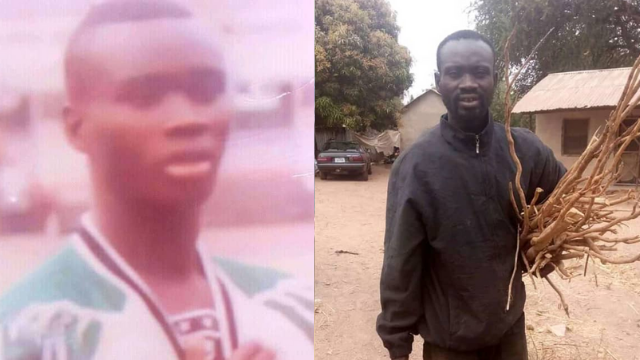
EVERY athlete embarks upon a unique journey in life but for former Nigeria U23 forward, Kaseem Yebsaya, his pursuit for a remarkable football career later ended in misery and regret.
During the 1995/96 football season, Yebsaya was a player some of the best teams in Europe were jostling to add to their squads. This followed his brilliant performance for Nigeria during the 1996 Olympic African qualifier. After he helped Nigeria qualified for the 1996 Olympic in the USA, Turkish Super Lig side, Denizlispor quickly outsmarted other European clubs and signed him on January 13th, 1996 to become one of their 12 foreign players during the season January transfer window. Discovering a dream life of playing in Europe, he concentrated all his efforts on winning the heart of the coach and fans of his new team.
His determination paid off six weeks after joining the Turkish club, he was listed among the 18-man squad in Denizlispor’s 3-1 home win against Antalyaspor. Following his hard work and improvement in training, he made his first appearance on the league match-day 22 when he was subbed on in the 8th minute in his team 2-1 loss to Samsunspor. During his short stay with the Turkish giant, he made the team list 8 times, one start, subbed in three times, and was on the bench 4 times.
His performance in the national team and his new club did not go unnoticed, at the end of the 1995/96 season, one of the most successful clubs in the world, Ajax Amsterdam invited him for trials, but the invitation marked the beginning of his miserable life.
The 1994/95 season saw Ajax win both the Uefa Champions League and the League titles after going unbeaten in both tournaments. The following season, Ajax needed to replace seven first-team players that left the team in 1996 and 1997. Two Nigeria internationals, Kanu Nwankwo and Finidi George were among the players who moved to other clubs. The success also saw the then Ajax coach, Louis Van Gaal left for Barcelona and Morten Olsen was chosen as the replacement. To maintain the success he met in the team, Olsen needed a better replacement for the departed key players. Kaseem was seen as one of the perfect replacement and was invited for a trial with Ajax Amsterdam. Before Kaseem’s invitation, Ajax had signed another Nigeria winger, Tijani Babangida in the summer of 1996 in a long-anticipated move from Roda JC. Unlike Kaseem, Tijani Babangida was part of the victorious Nigeria U23 national team.
Seeing this as a rapid rise to success, Kaseem Yebsaya left for Ajax with the hope of tying down a permanent deal following the successful stints of Nigerian players in the club’s history. But disappointedly, he picked up a knee injury and also failed the medicals during the trial and was told to leave the team’s camp. His decision to concentrate on climbing the ladder of success in his club career, despite contributing to seeing the Nigeria U23 team qualified for the Olympic, made him miss being part of the Nigeria success as the first country to win a gold medal in the Men’s Football event in the `96 Olympic in Atlanta, USA.
Nigeria 1996 U23 Dream Team
Kaseem Yebsaya was reportedly mad when he was told that the 1995 European champions could not sign him not because he was not good enough for the club but was let go due to his health issues.
“The former Iwuanyanwu Nationale and Concord FC player decided to leave Nigeria for Turkey after helping the ‘Dream Team’ picked the Olympic ticket,” Yusuf Ubale stated. Tijani Babangida accommodated him in Holland for three months when his ill-health issues started and was homeless following his rejection from the Ajax camp. As time goes on, the health issues degenerated, and was deported to Lagos, Nigeria. And from Lagos, he was transported to Kaduna where he started his professional football career. In Kaduna, he was seen roaming the streets before he was moved to his village, Takum in Taraba State,” Ubale who helped in his rehabilitation said.
“I got to know about his ill-health issue when he was in Takum. I went to see him but I was shocked to see him dressed shabbily and saying words I cannot understand. I recorded the video interview with him and posted it on my Facebook wall seeking financial assistance to help rehabilitate him,” The former footballer added.
“He came for trials in Ajax from his team in Turkey but got injured and was flown to Lagos from Holland where he was moved to Kaduna,” former Super Eagles and Ajax winger, Tijani Babangida confirmed to the reporter.
“When he was mentally affected and admitted into a hospital in Holland and his health issue got worsen, they advised him to go back to Nigeria where his families are,” he added.
“While in Kaduna, he continued, the League Management Chairman, Shehu Dikko paid for his medical bills in a hospital in Zaria. He is recovering now but the only issue now is that there is no money to purchase his yearly drugs which finished before the Coronavirus pandemic.
Kaseem Yebsaya elder brother, Wukari Yebsaya who spoke with the reporter confirmed that the former Nigeria international is in Kaduna staying with a friend (Haruna) and presently in need of money to purchase drugs from the hospital in Kaduna.
Wukari said: “My younger brother (Kaseem Yebsaya) was playing in Turkey then, from Turkey he went to Holland to play for Ajax. At that time, we discovered that he neither called nor visit us in Taraba state for a very long time. No calls, nothing to trace him. Then, after some years, we decided to find him but we didn’t get results. But later, we heard that they have deported him as a mad person to Lagos, Nigeria in 2013. When he came to Taraba with the sickness, we tried all we could to get him back to normal but all attempts failed.
“So, we took him to the psychiatric hospital in Barnawa in Kaduna State and they were able to resuscitate him and even came back to his senses after staying there receiving treatment for four months.
“In 2018, he started a coaching career and led his local government team, Takum Local Government Football Club to the quarter-finals of the 2019 Taraba State Governor’s Cup. Few months after that, we discovered that his character changed. Recently, my younger brother called and informed me that he (Kaseem) needed medical attention again. So, I went home to see him. When we sat together and started talking, I discovered from the way he talked that something was wrong. And the family decided that we should take him back to Kaduna.
“Then, Yusuf Ubale contacted people we could help us to raise funds. Ubale came and transported him to Kaduna, when they reached the hospital, the doctor said his drugs finished and he has not been taken the drugs regularly for a while and that led to his current situation.
“When I heard that, I told his friend (Haruna) who is based in Kaduna to go to the hospital and find out what we are going to do so that he can stay in the hospital for at least six to eight months so that they monitor him to take his drugs and survive the trauma. When Haruna went to the hospital and made enquiries. After two days, he called me and said that doctor told him that the hospital cannot admit him because of the Coronavirus. This is where are now. I am even preparing to go to Kaduna but because of the nature of my work, I could not.”
”Presently, he needs money to buy drugs so that he can get back to normal,” he concluded.
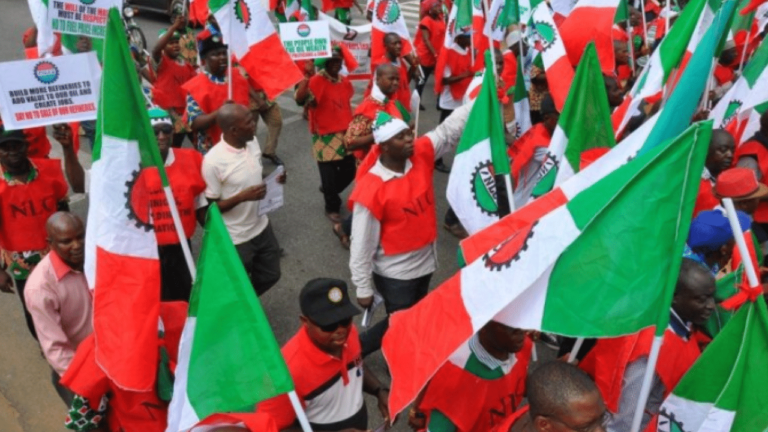
NIGERIANS who were disappointed after the Nigerian Labour Congress (NLC) called off a planned industrial action which was meant to force the government to reverse the hike in fuel pump price and electricity tariff should not have expected much in the first place, as the development mirrored the manner in which labour capitulated in a similar situation in 2016.
Also, it appeared that, in accepting the deregulation-influenced hike in the cost of petrol, labour betrayed the vow it made, while suspending the 2016 strike, to always “rise and stand with the people” whenever the government raises the fuel pump price.
Back in May 2016, labour embarked on a nationwide strike after the President Muhammadu Buhari administration jerked up the fuel pump price from N86 to N145.
The strike crippled economic activities across the country, and with labour refusing to shift grounds, the government unleashed security agents on the protesters, leading to the intimidation, harassment, arrest and detention of some labour members, especially in Ebonyi State.
However, after four days, labour suddenly called off the strike after its National Executive Council (NEC) met at Bolton White Hotels, in Abuja, on Sunday, May 22.
Interestingly, in the communique it issued to call off the 2016 strike, labour described the exercise as a ‘success’, even though, at the end of the day, the government had its way and Nigerians started paying N145 for a litre of petrol.
The 2016 communique, signed by Ayuba Wabba, NLC President, and Dr. Peter Ozo-Eson, who was at the tine the General Secretary, read in part, “After an exhaustive deliberation, NEC noted its protest action was informed by the twin issues of the unjustified and illegal hike in electricity tariff and increase in the pump price of petroleum products. NEC adjudged the protest action to be a success in spite of both internal and external challenges.
“NEC reiterated the correctness of its position on the twin issues of electricity tariff hike and astronomical increase in the pump price of PMS and the hardship they portend for Nigerian masses.
“NEC also acknowledged that the temptation to compare the strike action to that of 2012 could be compelling but that the scenario had changed as both the actors and the terrain were different.”
The communique went ahead to suggest that, even as they were embarking on the industrial action in 2016, the labour leaders never expected the strike to succeed in forcing the government to reverse the highly unpopular decisions.
In what appeared to be a curious mixture of admission of its latent ineffectiveness and self-praise, the communique said, ”NEC said before it had embarked on the action, it had anticipated a probable outcome and therefore was not surprised by government’s negative response. Nonetheless, it felt fulfilled by having the presence of mind and courage to identify its mission and fulfilling it, stressing that if a similar situation arises again, it will still rise and stand with the people.”
However, four years later, it seems labour jettisoned the part about ‘standing with the people’ after it accepted deregulation, without bothering to make good its threat to go on strike over the matter, at Sunday’s nocturnal meeting with the representatives of the government.
Even though the 2016 strike ultimately failed to achieve its objectives, the communique issued by the NLC NEC to announce that it has been called off “commended those who took part in the action in one way or the other”.
The communique noted that the decision to embark on the strike action was taken in the best interests of the poor and the weak and “in drawing government’s attention to the dangers of relying on importation of petroleum products as a sustainable strategy for making available petroleum products”.
“It (NLC NEC) expressed the belief that in the days ahead, time would prove its position right,” the communique added.
Remarkably, the communique noted that Congress “singled out for commendation” the leadership of the National Assembly and All Progressives Congress led by Senator Ahmed Bola Tinubu, who had mediated on behalf of the government to get labour to stop the strike.
The NLC also commended its state councils, affiliates and patriotic Nigerians “who at very short notice picked up the gauntlet for the struggle”.
Declaring the strike action, which commenced on Wednesday, May 18, 2016, suspended with immediate effect, the communique added, “Congress will resume negotiations with government on the twin issues of the hike in electricity tariff and an increase in the pump price of petroleum products and any other issue that may arise thereof.
“It similarly remains committed to genuine dialogue within the framework of internationally established and recognised principles of representation.
“The Congress will continue to resist wrong legislations, policies and programmes and will always act in the best interests of Nigerians as it remains the only pan-Nigerian organisation not affected by religion, region, creed, partisanship or primordial sentiments.
“The Congress urges the government to play by the rules in its engagement with its constituent parts, stakeholders and non-state actors as proof of its commitment to deepening of our democracy and also in acknowledgement of the well-worn dictum that what goes around, comes around.
“The Congress also urges the citizenry to be vigilant at all times as the price of freedom is eternal vigilance.”
After the release of the communique nothing was heard about labour’s ‘further discussions’ with the Federal Government concerning the 2016 fuel pump price and electricity tariff hikes and Nigerians duly went ahead to pay the new price regimes introduced by the government.
The situation remained the same, until four years later, in September 2020, when labour again called for a nationwide strike after further hikes in electricity tariff and fuel pump price.
As it turned out, the strike did not take place – labour backed down, even accepting the higher fuel pump prices that come with deregulation without making any attempts to force the government to shift its position on the issue.
Apart from a two-week suspension of the implementation of the hike in electricity tariff, the reasons for labour’s decision to call off the strike was mainly the ‘commitment’ by the Federal Government to increase local refining capacity, including speedy rehabilitation of the country’s four refineries.
The inclusion of the national leadership of the Nigeria Union of Petroleum and Natural Gas Workers (NUPENG) and Petroleum and Natural Gas Senior Staff Association (PENGASSAN) in a steering committee already established by the Nigeria National Petroleum Corporation (NNPC) on the rehabilitation of refineries and delivery of modular ones also appeared to have won the hearts of the labour leaders at the meeting with the government.
The government also agreed to implement some measures in order to cushion the impacts of the downstream sector deregulation and tariffs adjustment in the power sector.
The measures include the isolation of a specific amount from the Economic Sustainability Programme Intervention Fund to be accessed by Nigerian Workers, participation of workers in agricultural ventures through the Central Bank of Nigeria and the Ministry of Agriculture, removal of tax on minimum wage, provision of mass transit buses, and housing.
However, the anger expressed by Nigerians, who were disappointed that the strike could not go ahead, shows that labour was expected to do better.
But Nigerians who remember how labour suddenly ended the strike that it embarked on to force a reversal of the hike in fuel pump price and electricity tariff in 2016 might not be so surprised at what happened when the government, again, jerked up the cost of fuel and electricity, four years later.
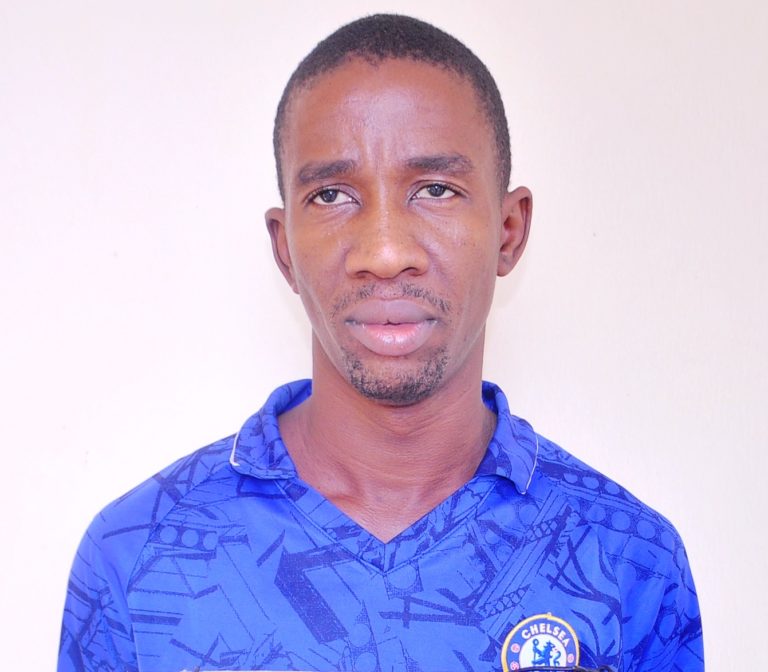
A Borno State High Court sitting in Maiduguri has convicted one Allen Abel to a cumulative term of 125 years in prison for fraudulently obtaining bags of rice and Spaghetti cartons valued at N12, 879,800.
Wilson Uwujaren, the Economic Financial Crimes Commission (EFCC) Head of Media and Publicity disclosed this in a statement emailed to The ICIR on Wednesday.
According to the statement, Alen falsely acquired the fund on the pretext of executing a fake contract for the Federal Ministry of Humanitarian Affairs, Disaster Management and Social Development under the School Feeding Social Intervention Programme (SIP) of the Federal Government.
The anti-graft agency arraigned him before Justice Aisha Kumaliya on Thursday, July 2 alongside Suleiman Adamu, Usman Adamu and Kingsley Madubuagu on 20 count charges bordering on forgery, possession of false documents, impersonation and obtaining by false pretence.
Uwujaren stated that one of the charges upon which Abel was convicted read that he obtained ‘the 1313 cartons of spaghetti and 480 bags of rice both worth N12, 110,000.00 from one Lelle Hyelwa Sini of Lelle Foresight Construction Co. Ltd. under the false pretence of executing a contract of supply of food items, purportedly awarded by the Federal Ministry of Humanitarian Affairs Disaster’.
The EFCC spokesperson noted that Abel pleaded guilty to the 20 count charges upon arraignment and Justice Kumaliya convicted him accordingly and adjourned to September 30 for sentencing.
“At the resumed hearing on Wednesday, September 30, Justice Kumaliya sentenced Abel to seven years imprisonment each on counts 1 to 6, and 9 without an option of fine; five years imprisonment each on counts 7, 8 and 11-20 respectively without an option of fine. All sentences are to run consecutively,” EFCC stated.
The Judge further ruled that the convict is to restitute to Lele Foresight Construction Company the total sum of N12, 110,000 and HIE Global Investment Limited the sum of N769,800.
This is coming barely 24 hours after the Commission secured the conviction of Oreoluwa Adesakin, a former staff of FirstBank of Nigeria Limited, who was sentenced to a cumulative 98 years in prison.
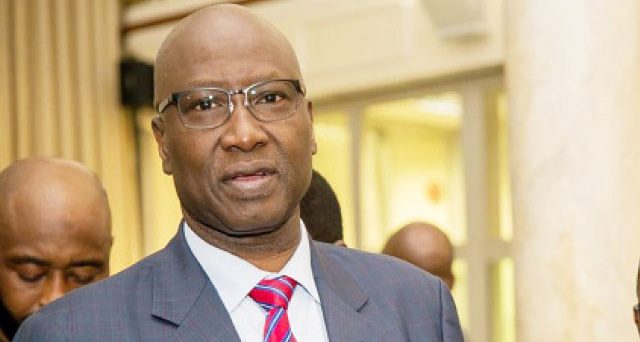
BOSS Mustapha, the Secretary to the Government of the Federation (SGF), has said his comment that Nigeria may break up was misunderstood.
Mustapha who represented Yemi Osinbanjo, Nigeria’s Vice President at an interdenominational church service to commemorate Nigeria’s 60th independence anniversary on Sunday, warned that there were cracks in the nation’s wall, which if not addressed, could lead to its possible breakup.
The SGF statement had attracted condemnation from the Arewa Consultative Forum (ACF), which admitted that there are “unhealthy cracks” in the nation’s wall but cautioned the Vice President against utterances that could worsen the tension.
The ACF through Emmanuel Yawe, its National Publicity Secretary in an interview with The Punch, also warned other leaders to “watch their words.”
Yawe added that with time the nation will overcome its cracks.
“The cracks are unhealthy but we expect the Vice President to calm nerves and not make a pronouncement that will aggravate the situation,” he said.
“The ACF is hopeful that Nigeria will overcome its current travails as it did in the past and even overcame a fratricidal war to breakup Nigeria. To do this, Nigerian leaders like Osinbanjo should watch their words,” he said.
However, in a statement on Wednesday, the SGF said he and the Vice President remain committed to an indivisible Nigeria and that he appreciates the efforts of President Muhammadu Buhari in strengthening the country’s unity.
He added that any contrary opinion was a clear misinterpretation of the government’s position.
“I have observed with concern, the apparent sensitization of the remarks I made at the 60th Independence Anniversary Church Service, where I stood in for His Excellency, the Vice President,” Mustapha said.
“For the avoidance of doubt, I want to affirm that His Excellency, the Vice President, and I remain very firmly and irrevocably committed to the ideal of one indivisible Nigerian nation.
“We are also deeply appreciative of President Muhammadu Buhari’s consistent efforts to strengthen the unity of the Nigerian nation.
“Any suggestion to the contrary is a clear misinterpretation of our common position as a Government.”
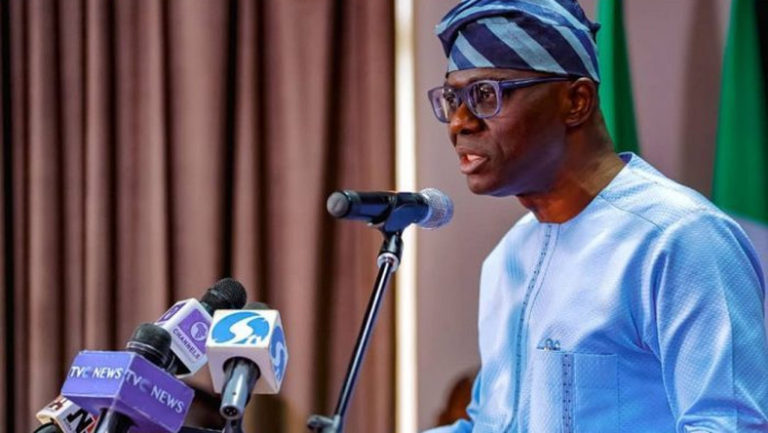
BABAJIDE Sanwo-olu, Governor of Lagos State has cancelled the parade and other activities scheduled to mark the nation’s 60th independence anniversary that would involve the gathering of more than 50 people.
Sanwo-olu gave the directive in a statement by Gbenga Omotoso, Lagos State Commissioner of Information and Strategy issued on Wednesday, noting that the decision was due to the COVID-19 pandemic.
Omotoso said the governor, “congratulates Lagosians on this auspicious occasion and strongly advises that they should celebrate quietly at home and pray for the country. They should also observe the COVID-19 protocols, including wearing of face masks to protect themselves and their loved ones.
He urged Lagosians not to relax their vigilance against COVID-19 so as not to reverse the gains that the state has made in fighting the disease.
“They are to keep embracing physical distancing and washing of hands with soap and water. Anybody who feels unwell should stay indoors and contact health authorities,” Sanwo-olu said.
“The police and other security agencies have been directed to ensure that nobody flouts these directives in the interest of all of us, especially now that the Nigeria Centre for Disease Control (NCDC) is warning that a second wave of the deadly disease could occur.”
Since its outbreak in Nigeria, Lagos State has accounted for the highest number of COVID-19 cases in the country with a total number of 19,310 confirmed cases. It has 15,246 recoveries with 205 deaths.
THE National Agency for Science and Engineering Infrastructure (NASENI) has violated the Nigerian Freedom of Information law as the agency refused to grant a request of details of its capital releases to the International Centre for Investigative Reporting (ICIR).
The Agency denied the request in a letter signed by Hussaina Shehu, NASENI Principal State Counsel on behalf of the Executive Chairman, and addressed to The ICIR.
The Centre had requested for the Capital releases to NASENI from the Office of the Accountant General of the Federation (OAGF).
Responding to the request, NASENI wrote that it was unable to grant the request due to ‘its policy and practice’.
“In view of our policy and practice to observe certain laid down procedures and legal obligations, the Agency wishes to state that it is unable to grant absolute or partial disclosure of the items you are requesting on the following grounds,” the letter read.
According to NASENI, it has pending petitions with the Economic Financial Crimes Commission (EFCC), Independent Corrupt Practices and Other Related Offenses (ICPC), and the Nigeria Police Force (NPF) concerning the years the Centre had requested for.
“In the Agency’s opinion, it is prejudicial to the relevant investigating agencies and NASENI to grant your organization access to these documents and the years you requested which is already the subject matter of the pending investigation,” NASENI wrote.
NASENI violated the section 1 (1) of the Freedom of Information Act of the Federal Republic of Nigeria that states that “Notwithstanding anything contained in any other Act, law or regulation, the right of any person to access or request information, whether or not contained in any written form, which is in the custody or possession of any public official, agency or institution howsoever described, is established”.
The Agency also violated the section 4 of the FOI Act where it is made a law that “Where information is applied for under this Act the public institution to which the application is made shall, subject to sections 6, 7, and 8 of this Act, within 7 days after the application is received – make the information available to the applicant”.
Another violation is the FOI Act section 2 (4) which reads that “A public institution shall ensure that information referred to in this section is widely disseminated and made readily available to members of the public through various means, including print, electronic and online sources, and at the offices of such public institutions”.
During the 2020 ranking of Federal Agencies’ compliance to the FOIA, NASENI ranked 140th position with zero points from the level of disclosure.
The FOI act signed into law in 2011 provides that public institutions are to make public records and information more freely available and to provide for public access to public records and information.
NASENI joins Office of the Accountant General of the Federation (OAGF), Code of Conduct Bureau (CCB) among others who have failed to comply with the law.
The ICIR had filed a case against the CCB over its refusal to provide details of asset declaration forms of all cabinet members of Muhammadu Buhari including the Secretary to the State Government, Chief of Staff to the President, Head of Civil service and other ministers.
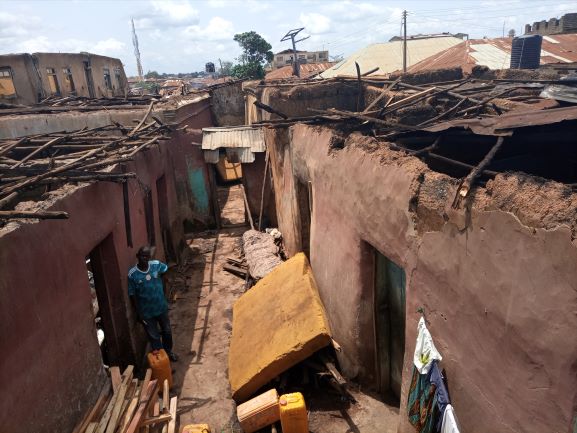
ALIYU Akuji and his family were already asleep when a heavy rainstorm began. Smitten with fear and turmoil, they watched helplessly as the rainstorm blew-off their rooftops allowing heavy water flow into their apartment. Their properties destroyed, and the rainstorm left them with no option than to seek shelter and protection in neighbouring houses.
“This kind of incident is unprecedented. The rainstorm destroyed my house and shop. I can’t do anything right now. My children and wife are yet to find any stable place to settle, we all went separately in the night to seek refuge at any place we find and meet again in the morning,” Akuji narrated his ordeal to this reporter.
He said the heavy rainstorm is double jeopardy for him. Apart from the fact that it blew-off his residence, it also destroyed his shop leaving him homeless and jobless at the same time.
September 19, 2020, will remain a night of gloom for residents in several communities in Kwara State where the heavy rainstorm destroyed houses and shops, blew-off rooftops, and left many less-privileged persons homeless.
This reporter who visited some areas in Ilorin, the state capital observed that since the incident, many victims are still stranded due to lack of shelter. The persistent rainfalls accompanied by a heavy flood in the state have made life very difficult for many residents.
Many of these displaced persons are currently taking refuge in mosques while others are putting up with their families and friends living within the neighbourhood.
According to the Kwara state government survey, at least 12 local government areas with about 15,000 households across 357 communities were affected, and 13 deaths were also recorded during the incident. Farmers suffer a loss of 10bn and damage to properties, according to the survey.
The areas affected by the rainstorm are Ilorin East, Ilorin West, Ilorin South, Patigi, Edu, Moro, Kaiama, Ifelodun, Baruten, Asa, Isin, and Irepodun LGAs among others.
Earlier this year, the National Emergency Management Agency (NEMA) had alerted Nigerians to prepare for heavy rain between the months of August and October this year.
The agency in its alert made reference to a prediction from the Nigerian Meteorological Agency (NiMeT) in February, as well as Nigeria Hydrological Service Agency (NIHSA) in May, informing Nigerians of impending heavy rainfall due to climate change and the melting of the ozone layer.
Some of the displaced persons who spoke with this reporter could not hold back their emotions as they reflected on the loss the ravaging storm has brought upon them. With deep anguish, they called on the government, corporate organisations, and privileged individuals to come to their aid.
In Olokonla Compound, Ilorin, Kwara State out of the 27 households in the compound only 3 buildings were untouched. Alhaji Sambo Olokonla explained that more than 100 people were displaced by the rainstorm within the household.
“Husbands, wives, and children are sleeping anywhere they see, we only met in the morning. Anybody who sees the havoc wreaked on us by this rainstorm does not need to be told before they know that we need assistance” Alhaji Olokonla said with dismay.
One of the affected residents who identified herself as Alhaja Fatiu explained that the rainstorm has made life unbearable for her, her husband, and her children. She explained that her husband also got injured during the incident.
“All our rooftops are leaking and many of our properties sank in the water. We can’t find any place to place our heads. In fact, my husband got injured when the incident occurred.”
Alhaji Ibrahim Bobonkiri, a resident of Bobonkiri compound in Ilorin Kwara state recounted the ordeal of his family during the incident, he explained that the neighbouring residents who were not affected by the rainstorm borrowed them rooms which they squashed themselves in. He also said some residents lodged in the nearby mosques to sleep.
“5 out of 7 households in this compound were affected. All of us are just loitering around, neighbouring houses squat few of us in their houses, while others squat in the mosque”
He appealed to the government and the public for household materials and other relief materials.
The Internal Displacement Monitoring Control(IDMC) survey in 2018 reveals that “every year, floods, storms, earthquakes, and other natural hazards are the reasons which forced two-thirds of new internal displacements in 2018 representing 17.2 millions of people to abandon their homes.”
The agency also noted that, “Losing everything is usually the first of many disruptions that the victims of natural disasters usually suffer.”
It also added that “affected people may be forced to move multiple times once they become displaced, and it can take months or even years before they can return home. Those who do return often face unsafe conditions and the prospect of becoming displaced again by the next disaster.” This now rings true for the individuals affected by the Kwara rainstorm.
The rainstorm in Kwara, aside from displaced persons, it also affected economic activities. Several shops were destroyed alongside valuable properties.
Recounting her loss, Roheemat Jimoh who is into event planning, decoration, and cake explained that the rain invaded her shop and destroyed some bags of flour, and cakes meant for an event.
” The rainstorm destroyed some bags of flours, colouring, mirrors, cakes, and other materials in my shop which are worth almost #100,000. We even have a wedding to plan on Saturday but the materials that we are supposed to use have been destroyed and you know our customers won’t listen and we are yet to find a way out.”
Like Roheemat, Abdulgafar whose provision store was destroyed explained that the rain invaded his shop and drenched many of his provisions in water.
“The rain destroyed a lot of things in my shop, most of the glasses and cartons of provisions in my shop were destroyed. As of now, we are yet to start a normal business, I am still looking for a way out.”
Ismail Oke, who is into Aluminum business also recounted the havoc the rainstorm wreaked on his business appealing to the government to come to their aid.
“The rainstorm destroyed some aluminum materials and other properties worthy of #500,000. All the glasses that we wished to deliver to some people too have been destroyed by the flood and rainstorm. We call on the government to assist us.” Ismail said.
What has the government done?
On Monday, two days after the incident, the Kwara State Governor, Abdulrahman Abdulrazaq set up a nine-person committee to conduct an assessment of the damage caused by the rainstorm in different parts of the state especially the state capital Ilorin.
The Kwara state Government during a tour to the affected communities
The committee is to collate data of areas affected and determine how the state government can offer support to the victims based on available resources.
The Governor and his cabinet assured the community that the state government will promptly provide palliatives to the victims to ease their hardship.
During his visit to President Muhammad Buhari on Monday, the governor appealed to Federal Government to assist the state with food items, housing materials, and other relief materials.
In the meantime, the state government has flagged off the distribution of palliatives to the residents of Jebba and some north senatorial districts and there are expectations that the support would be extended to other communities as soon as their data is collated.
The Chairlady of the Committee on the rainstorm incident, Mrs. Saadat Modibbo Kawu on behalf of the government commiserated with the victims, she explained that the government is working round the clock to assist the victims.
“We have been going around, what we have been doing is to capture those houses that have been affected and to commiserate with the families, we have been to many local government areas within the state and we are still doing that, hopefully within the shortest period of time, the data will be submitted and the committee will do the distribution of relief materials.”
She however assured the victims of the government’s impelling intervention and advised the residents of the state to ensure that they use good household materials in building their houses and to endeavor to seek the advice of building experts saying that most of the affected houses are old and too weak to withstand heavy rainstorm.
Meanwhile, some non-governmental organizations and wealthy individuals have also come to the aid of some of the affected victims. However, there remain scores of affected victims who are yet to receive any form of support from the government, corporate organisations, NGO, or individuals at the time of filing this report.
THE Ikeja distribution company (DisCo) is the highest consumer of energy in 2019 out of the 11 DisCos in the country, a report by the National Bureau of Statistics (NBS) has revealed.
The NBS in its “Energy Generated and Sent Out and Consumed and Load Allocation” report on Tuesday revealed that the Ikeja Disco consumed 4,087,971 (14.95 percent) megawatt-hour (MWh) out of the 28,026,503 MWh consumed by the 11 DisCos.
This indicates that the energy need of Lagos State is higher than that of other states.
With over 20 million population, Lagos is the most densely populated city on Nigeria.
Yola DisCo consumed the lowest energy with 1,122,534 MWh accounting for 4 percent of total energy consumed in 2019.
The top five energy-consuming DisCos include Ikeja DisCo- 4.08 million MWH, Abuja DisCo- 3.7 million MWh, Ibadan DisCo- 3.52 million MWh, Eko DisCo- 3.51 million MWh, and Port Harcourt DisCo-3.1 million MWh.
The least six DisCos are Yola DiSco- 1.1 million MWh, Jos DisCo- 1.2 million MWh, Enugu DisCo- 1.6 million MWh, Kano DisCo- 1.8 million MWh, Kaduna DisCo- 1.9 million MWh, and Benin DisCo- 2.3 million MWh.
The report revealed that a total of 33,448,633 MWh of energy was generated by power stations in 2019. Privatised generating companies (GenCos) generated 19,692,683 MWh, Independent Power Producer (IPP) GenCos generated 7,798,253 MWh while the National Integrated Power Projects (NIPP) GenCos generated 5,957,697 MWh.
The total Energy sent out by GenCos stood in 2019 at 32,799,114MWh. Privatized GenCos sent out 19,233,151 MWh, IPP GenCos sent out 7,648,700 MWh while the NIPP GenCos sent out 5,917,262 MWh.
Cross Border Electricity Transactions showed that Benin and the Niger Republic were supplied a total of 1,278,344 MWh and 1,048,807 MWh of electricity respectively, according to the report.
PRIOR to his journey to borstal home, 18-year-old Nuel had abused drugs and substances such as codeine, cannabis and refnol.
And while doing that, he also had stolen valuable items before he was eventually sent to the correctional facility in March 2019 where he is to spend three years.
Nuel is among the 161 children kept in the custody of the Borstal Training Institute in Ilorin, Kwara State.
The borstal home is one of the three federal government-funded insitutions that hold juvenile with anti-social behaviour.
The population consists of students from Kwara State, 76; Nasarawa, 9; Anambra, 8; Oyo state, 12 while others are from states in the North-west, North-central, South-east and South-south.
SIGNPOST at the entrance of Ilorin borstal training home , Ganma, Kwara State.
When Nuel was newly admitted, he experienced withdrawal syndrome for almost six months, which, according to experts, include anxiety, fatigue, depression, and hallucinations among others. But he is now doing better.
Now, he thinks being sent to the institute might be a good idea. Through consistent counselling, he has decided to focus on his education. He told this reporter that he prefers academics pursuits to acquiring vocational skills, the two major tools of rehabilitation at the borstal home.
His story is not so different from 24-year-old Femi, who was admitted into the institute due to his addiction to smoking gum.
The habit had transformed him into a tormentor of his parents ‘peace of mind’, before they finally handed him over to the authorities of the borstal home.
“My physical appearance during this five year when I used to smoke gum and drink codeine was a reference point of sadness. Hence, my parents just wanted me away from home, that is why they brought me here,” he narrated.
Officials of the institute said none of the children is in conflict with the law, apart from those reported for committing minor theft. Majority are drug addicts and are uncontrollable by parents.
To prevent the young boys from absconding, the institute locks them up in the dormitory for mostly 18 hours every day. So, they hardly see anyone from outside except family members who rarely visit.
Nuel and Femi are, however, privileged to have their relatives checking on them monthly unlike others.
Majority of the children at the borstal come from broken homes, therefore, some of the children presently may not have a home to return after spending 3 years in the Institute, a staff said.
One of the unlucky juveniles who has never received a visitor is Timothy. He was supposed to have been discharged since March 2020, but he is still at the facility as at September, because his mother who is supposed to pick him from the institute said she has been affected by lockdown in Ghana as a result of COVID-19 pandemic.
Timothy’s story is a reflection of the experience of other teenagers at the borstal home in Ilorin, as only 20 percent of children in the juvenile home have the opportunity of their families checking on them, according to Mrs Abimbola Ogunyemi, the school principal who doubles as the Controller of Corrections.
“Parents are meant to visit their wards once every month but, as it is, majority of the parents just dump their wards here and they don’t return to check on them as expected,” she said.
The attitude of parents stems from the belief that the borstal homes are resourceful enough to cater to their wards in their absence. Often time, this is not so.
Though section 234 and 236 of the Child Right Act mandates welfare homes to provide accommodation, education or vocational training, employment and other supports, and ensure that the child does not leave the institution educationally disadvantaged, and the Ilorin Borstal Training Institute tries to do this, but could only achieve a little. Instead, the borstal homes run likes adult prison.
“Their conditions are not too different from those of adults in conflict with the law, like the prisons, their being locked up in the dormitories appears more punitive than rehabilitating,” a staff told The ICIR in confidence.
First, the location of the Ilorin borstal home is hardly accessible by road, especially to potential donors. The road leading to the facility from Ganmo –Afon junction has been worsened by erosion.
Ten out of 12 dormitories are functional and shelter over 160 youths. Thus, not fewer than 19 inmates are huddled together in a room where they share a pit toilet with bathroom.
The windows have no nets nor louvres except for the burglaries holding the window frames, exposing the occupants to inclement weather and insect bites.
The bathroom and toilets are located in the same place they sleep, and the whole dormitory is frequently enveloped in stench odour.
The institute though have workshops such as tailoring, welding and knitting centre but they are all in poor condition. Save for the tailoring centre, others are ill-equipped.
Older students of the institute under close surveillance are engaged to repair the students’ beddings when need arises.
The classrooms are also inadequate, and the few ones are bereft of furniture and teaching aids such as computers. The only laboratory in the school has no equipment.
Though there are table tennis and volleyball courts, the football field is overgrown with grasses.
There are a few bags of foodstuff in the store, an indication that children are not in starvation.
The daily menu comprises only beans, rice and eba, according to an alumnus of the Ilorin borstal home.
The institute runs a functional sick bay managed by a nurse who has served in the school for 10 years. But she is the only health officer now left in the entire institution.
Borstal institute’s sickbay
The psychologist who used to assist her left about four years ago. But no one cares much because malaria seems to be the major sickness afflicting the children.
The large expanse of land hosting Ilorin borstal home is heavily guarded by officers of the Nigerian Correctional Service.
Majority of the children at the borstal come from broken homes, therefore, some of the children presently may not have a home to return after spending three years in the Institute, a member of staff said.
“Their conditions are not too different from those of adults in conflict with the law, like the prisons, their being locked up in the dormitories appears more punitive than rehabilitating,”.
Our experience at borstal homes, ex-students
Former residents of the borstal home shared their experience with The ICIR. Temidayo was at the home 2008 and 2010.
“They used to lock us in, the officers would release us for one hour in the evening between 4-5pm for sports, then we do have prep time for another one hour for some of us preparing for junior WAEC to study, some use the opportunity to wash their clothes.”
Temidayo, a truant at school, was first taken to remand home in Oko-Erin, Ilorin, Kwara State before he transferred to Ilorin borstal training institute where he spent 2years.
He was in junior secondary school when he joined borstal and sat for junior WAEC in the institute.
“I learnt my lessons at the remand home first before I was taken to borstal again, they used to chain our two legs but during evening period they will lose one chain then at the remand home, due to the strenuous treatment I came back to my senses but my mother was not still satisfied, she complained to the judge that I was not reformed at the remand home, the Chief judge yielded to her plea and she secured a warrant that landed me in Ilorin borstal home, I was in borstal institute for two years, between 2008 and 2010, I was 14 years then, we were about 92 students during my set”.
Temidayo said the condition of the institute then might have contributed to why some students used to escape from the home.
“There was a time we suffered for water between 11months to a year, they would select few students to fetch from outside then. Then the pits toilet in the dormitories were dilapidated, they need to renovate the toilets, then the septic tank, we would use sand to cover-up bad spots, back then in my dormitory we were 25 people with two pit toilets, it was even dilapidated but the junior students used to wash it, the highest number of students in a dormitory was 27 and we only had six dormitories as at that period.”
Describing borstal as a wild world, he revealed how sodomy was rampant among students, and how some students smuggled cannabis into the school with the help of some officials.
“That is the place I ever first heard about sodomy among the students.”
He said borstal institute has been 45 percent punitive and 55percent reformative. “They used handcuffed for those with serious offence, like students that commits sodomy, those that attempted escape, and those that gets into fight every time, they handcuffed their legs and hands, they used to beat us with lorry and trailer fan belt. Many students ran away, majority of whom came from outside Ilorin. About 11 students ran away during my period of staying there, the majority were taken back to the institute, whenever they run away, they got lost, majority of them ran away with borstal attire.”
The 26-year-old revealed that inequality existed at borstal home even though they were all brought in because of their anti-social behaviours.
“Some of the officers we had around then used to pamper the children of the rich than we that were vulnerable if we committed offence, there used to be lesser punishment for the children of the rich people”.
Temidayo narrated how donors visited the institute with relief items and cash which some officials of the institution help themselves with.
“I remember Mrs Toyin Saraki visited us, some ministers, and some wealthy parents whenever they donated money, provisions or some relief materials, you will watch some officers share it among themselves, and give us small”
Temidayo called on the government to show greater care to children in borstal homes. He decried the manner at which the juveniles are locked up like prisoners.
He said the institute needs the services of a professional psychologist to help the children deal with different forms of challenges they face at the institute.
Jamiu also did not have a good account to give about borstal home.
“The time I spent in borstal was very terrible I cannot forget at all. Then we were more than 20 boys in my dormitory, and we all shared pit toilet and bathroom were together in a place that is inside where we sleep, even our septic tank was terrible, the block was dilapidated.”
Speaking about the food served at the institution, Jamiu said he hated the beans served every morning.
The ICIR asked the Public Relations Officer of the institution, Bamigbade Olumuyiwa, about the reason why they lock up the students for long hours, he said it was a way of protecting the children away from contracting COVID-19.
A child rights activist and education adviser, Riplington Education Initiative, Abiola Sanusi, decried the continuous use of old systems such as the dormitory system of keeping the children, saying, it is a total violation of child rights acts.
Mrs. Sanusi emphasised the place of synergy between the Federal Ministry of Education and the Federal Ministry of Interior, saying the borstal homes need the services of experts such as specially trained guidance and counsellors, for the provision of psycho-social supports and intensive drug counselling for the juveniles.
She pointed that there is a need to properly engage the time spent by the children at the reformatory home, adding that keeping the children behind the 24 hours is damaging to their essence of being at the institute,
“These children are young Nigerians that must not be subjected to such treatment, children cannot be kept locked up in such institute, the key objective is the need for authorities to utilise those hours to engage them productively, we need to recognise this, the juveniles reintegration back into the society is most important, children cannot be kept locked up and expect them to be productive when they leave the borstal home”
“The present situation of children in borstal homes in Ilorin and across Nigeria shows that the federal government has not caught up with Lagos state module. If they are still using the dormitory and other old systems, it is a violation of child rights acts”
“There is need for synergy, in a correctional facility like that, it is crucial to partner with the Federal Ministry of Education, the education experts, such as guidance and counselling, they will be the one to offer professional services of giving psychosocial supports and intensive drug counselling,’
Sanusi called for redirecting of resources towards proper rehabilitation of the children in the juvenile home, there must be synergy to achieve this aim, authorities must prioritise the adequate provision of vocational and technical skill facilities.
“The environment and necessities of the school should be given more attention, these are the same young people that we expect to participate in building the society, so more attention is needed in the area of rehabilitation, so as to allow them to fully participate” she added.
Speaking with FIDA Kwara State Chairperson, Barrister Salmat Iyabode Muhammed, she expressed worry about the developments and queried why the children would be locked behind the bar when they are not in conflict with the law.
“We have been there in the past years, but in the past two years we’ve not been able to go there but now that we have this information we will go and find out should they have to be locked behind the bar”
The Children and Young Persons’ Law, CYPL, which gave legal backing to borstal home in Nigeria frowns against the maltreatment and neglect of juveniles and provides that juveniles must be properly lodged, fed, cared for and instructed.
Authorities managing the borstal home in Ilorin said drugs and food are provided to the school through contractors, many Non-Governmental Organisations, religious bodies, pay a visit to the home to donate and give out relief materials to the juvenile.
It was further gathered that the NGOs also bring in computer systems to train the children inclined in academics.
I also learnt that heads of religious institutions visit occasionally to counsel the juveniles.
Among the gifts the children usually receive includes slippers, sanitary items, bathing soap, towel, blankets.
The Secretary of a group, Member of Muslim Media Practitioners of Nigeria, Moshood Sarumi, who paid visit to the borstal home recently, said the children displayed decency through their responses.
“I believe if the environment is more conducive, the reformatory agenda will be achievable within the time frame of nine months to three years that the law provides for a juvenile to at the home, the authorities needs to keep where the juveniles sleep more humane”.
“The school being a reformative institution needs more commitment from the government, if more attention can be given to the school it will reduce crime and social vices, the officials at the facility should also be trained especially on strategies to handle these children from preventing them from becoming more hardened ”
Dr Aiyeleso Oluwadamilare, a religious leader who visits the remand home regularly to counsel the children before the pandemic, noted that the government cannot do it all, and advised well-spirited members of the public to support the efforts of the government.
Oluwadamilare mentioned that consistent counselling is key to the rehabilitation of the juveniles.
Meanwhile, a Medical doctor, James Agbeluyi, expressed concern over the living conditions of the children and its consequence on society.
Agbeluyi pointed out that the kind of welfare given to the children can in turn make them unhappy with society.
The medical expert specifically condemned the dormitory system of accommodating the children. He said that it is a threat to their health.
Meanwhile, Nuel and Femi were among 31 students of the institute who recently sat for WAEC and Joint Admissions Matriculation Board examinations and they both look forward to gaining admission into higher institutions to study Criminology and help other children in the society.
“We usually have one-hour PREP time, when they will allow us to prepare ahead of our next exams, we don’t have enough books in the library, but we make do with the few textbooks our parents make available for us,” Nuel said.
This report was supported by the Institute of War and Peace Reporting, IWPR and the International Centre for Investigative Reporting, ICIR under its Human Rights Accountability and Justice project.
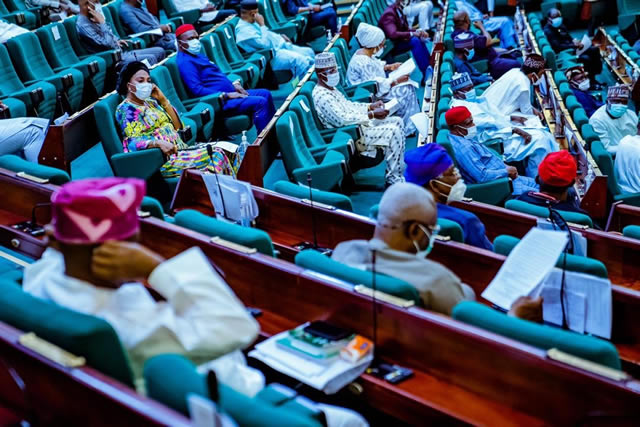
THE House of Representatives on Tuesday backed down further legislative action on the passage of the controversial Water Resources Bill.
The lawmakers after a motion moved by Benjamin Mzondu (Benue/PDP), unanimously resolved that the Bill should be regazetted for fresh consideration in line with the House Rules.
Mzondu in his motion complained that his privilege as contained in the House rules was breached as he was denied the opportunity to make inputs to the bill because the legislation wasn’t gazetted and copies distributed to House members in line with normal House rules and procedures.
He alleged that the House rules were breached in the consideration and passage of the bill which was recommitted and reconsidered by the House on July 23.
According tohim, when the Bill was considered by the House, he was denied the opportunity of contributing to its debate because the bill wasn’t gazetted and distributed to House members as required by Orders 12, 16, 17, and 18 of the House rules.
” I wish to refer to Order 6, Rule 1(1), 2 and 3 and Order 12, Rule 18 to state that I was deprived of my legislative privilege of sighting gazetted copy of the National Water Resources BillHB 921, and such could not participate in the consideration of the report by the Committee of the Whole, which also deprived me of my rights and privilege of representation to my people.
“Mr. Speaker, Hon. Colleagues, it is in the effort to eliminate the “Element of Surprise”, that the House in its wisdom, included in its Standing Rule, that every Bill, must be gazetted or clean copies circulated. It is important to note that the word emphasized here, is “gazette”, which means appearing in the Bills Journal of the House.
“The words used are clear and unambiguous, they ought to be given their ordinary meaning, as stated.
“Mr. Speaker, Hon. Colleagues, I was misled by the use of order 12, Rule 18 of our Standing Orders. Mr. Speaker, Hon. Colleagues, it is an issue of law and procedure, and Hon. Speaker, the onus of interpretation, lies with you. Where the Bill was labeled as Bill 2020, it was not considered as such.
“The laws lay, on your shoulder to interpret these rules as stated in Order 7 Rule 1(7). It is important to emphasize that I have painstakingly searched through all the journals of the House, and cannot find where the Bill is gazetted and I stand to be challenged or corrected.
“The next question for your consideration, Hon. Speaker, deals with jurisdiction, whether the House such powers to entertain a bill, such proceedings become a nullity, ab initio no matter how conducted and decided”.
“So having not met this condition, I wish to move, relying on Order8 Rule 8 and the above-stated rules, that “The House do rescind/expunge its decision of 23rd July 2020, which adopted the National Water Resources Bill, 2020 HB921 to have been read the Third time from our records,” he stated.
The Speaker, Femi Gbajabiamila in his ruling on Mzondu’s point of order, directed that the Bill be regazetted and reintroduced for consideration and passage or otherwise of the bill since it failed normal House legislative procedures.
Gbajabiamila stated that fundamental issues have been raised regarding the manner in which the Bill was passed, declaring that ordinarily “a matter of privilege is not debated, but l allowed contributions by members because of the importance of the matter.”