THE People’s Democratic Party (PDP) caucus in the House of Representatives has condemned the clampdown on governors by security officers in Benin City, Edo state capital few hours to the election.
Kingsley Chinda, representing Obio/Akpor Constituency of Rivers state who identified as the leader of the caucus said this in a press statement on Friday, describing the act as an unacceptable activity of security agencies whose duty is to ensure the safety of lives and property rather than cause chaos in the state.
“The party expressed shock that security agents were detailed to lay siege at the lodge of our governors to harass and intimidate them.”
“Whereas APC Governors, including the governor of Kano state, Abdullahi Ganduje, his Imo state counterpart, Hope Uzodimma as well as the Deputy President of the Senate, Senator Ovie Omo-Agege, are left free in the comfort of the residence of the sacked national chairman of the APC, Adams Oshiomhole in GRA, Benin City,” the statement read.
According to the statement, ‘the caucus finds the current siege on Governors by men of the Nigeria Police force and other security officials as disturbing and unacceptable ahead of the election’.
“As a democratic society, Nigerians should be given the right to free movement, association and above all right to vote leaders of their choice to govern the affairs of the state in the interest of the people,” the statement read.
Chinda added that the security agencies have abandoned their core duties to laying siege on Governors who are out to perform their legitimate duties in Edo State.
Chinda in the statement urged Nigerian President, Muhammadu Buhari to intervene in the matter in order to allow the Edo state to vote leaders of their choice.
“Our Caucus considers this siege on persons that enjoy immunity as unconstitutional, provocative and completely unacceptable as there cannot be two sets of laws for the citizens of our nation. In as much as the APC governors are given the liberty to stay in Benin City, our governors must not be harassed or stampeded to leave the state,” Chinda said in the statement.
On behalf of the PDP, Chinda further urged stakeholders in the Edo governorship election, particularly the security agencies, to work towards a peaceful, credible, transparent, free and fair election on Saturday.
On Friday evening, the hotel where the Governor of Rivers State, Nyesom Wike is lodging in Benin, Edo State was allegedly held on the siege by over 300 Policemen according to Rivers State PDP chairman, Akawor Desmond.
Desmond said in a statement that the Inspector General of the Police (IGP) would be held responsible if anything happens to the governor while he is in Edo State.
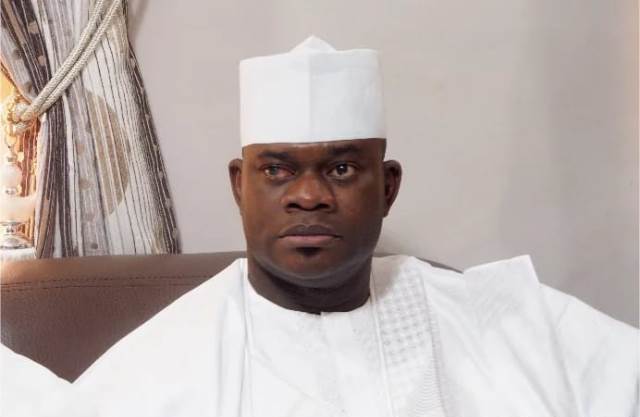
YAHAYA Bello, Governor of Kogi State has accused US Government of partisanship with the visa ban placed on him and other politicians believed to be masterminds of electoral violence in the 2019 general elections in Nigeria.
The US government had imposed visa restrictions on some Nigerians for undermining electoral processes in the country noting that the restriction covered from the 2019 general elections in Nigeria through the off-cycle November 2019 gubernatorial elections in Kogi and Bayelsa states to the upcoming governorship elections in Edo and Ondo states.
But in a protest letter sent to the U.S Ambassador in Nigeria by Folashade Ayoade, Secretary to the Government of Kogi State, Bello accused the US Government of partisan politics.
In the letter dated September 16 and obtained by journalists in Abuja on Friday, the Governor of Kogi State admitted that ‘elections in Nigeria are complex affairs which will continue to require improvements for the foreseeable future.’
He argued that the violent incidents in the November 16, 2019 governorship election in his states were limited to a few polling units.
“For the most part, we concede that elections in Nigeria are complex affairs which will continue to require improvements for the foreseeable future,” Bello said.
“The 2019 Kogi State Gubernatorial Election was also not without its challenges.
“However, it is also crystal clear from critical and composite analyses of the records (official, media, observers, etc) of the Nov. 16, 2019 polls that regrettable incidents were limited to a few polling units.’’
According to him, the overwhelmingly larger portions of the election were free, fair and credible.
“Further, and in line with Nigerian law, the few political parties and individuals who alleged widespread electoral malpractice had free rein to contest the outcome in court.
“They vigorously litigated their claims over a gruelling nine-month period, through a three-step hierarchy of courts, to the inescapable conclusion at the Supreme Court of Nigeria that the said elections satisfactorily complied with the Nigerian Constitution and the Electoral Act,” Bello said.
He further stated that the concern of Kogi State Government was not the prerogative of the U.S. to impose entry restrictions on anyone, for any or no reason, but “the misinformation which the timing and the mention of the Kogi election had created in the state, especially on the second term mandate freely bestowed on him by the people of the state.”
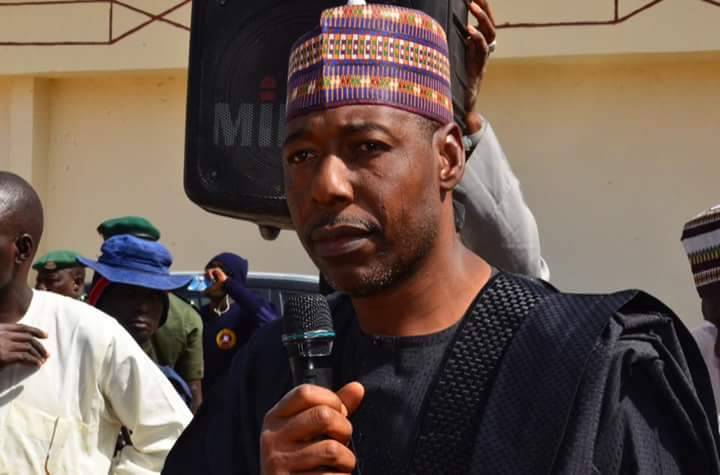
BABAGANA Zulum, Governor of Borno State has expressed deep concern over the rise in recruitment of children by insurgents in the state, noting that high rate of unemployment provides an attraction for the hapless youths.
The governor said this while receiving a committee of members of the House Of Representatives at his office in Maiduguri, Borno State on Thursday, warning that situation may worsen if there is no quick intervention.
Zulum said the number of able-bodied people residing in the Internally Displaced Persons (IDPs) camps left with nothing to do is an indicator of the impending problems.
He suggested that these groups of persons be allowed to return to their homes and sustainable development is carried out in their communities before things escalate and get out of control.
“The only solution we have now is to ensure the safe return of our people to their homes in a dignified manner. If nothing is done believe me sincerely we shall face a very serious challenge even more than what we are facing now.
“This is because right now the insurgents are recruiting many of our children into the sect because of the increasing unemployment rate,” he said.
In July, Zulum berated the Nigerian Army over an attack on his convoy in Baga area of the state while he was on his way to distribute relief materials to people affected by the insurgency.
The governor lamented that despite having 1,181 soldiers in Baga town which is five kilometres away from the military base, his convoy was still attacked.
Meanwhile, the European Union (EU) says it will continue to stand with Nigeria in the battle against terrorism and extremism, as it condemned an attack by terrorists that had claimed the lives of 81 people in, Gubio village, Borno State.
Josep Borrell Fontelles, EU High Representative for Foreign Affairs and Security Policy who reacted to the killings described the attack as a despicable and deliberate act of terror.
“More than 70 civilians have been killed in Borno State, Nigeria Yet another despicable and deliberate act of terror in a region which is the victim of so many attacks,” Fontelles who is also the Vice President of the Commission wrote on Twitter.
THE International Centre for Investigative Reporting (ICIR), Premium Times Centre for Investigative Journalism (PTCIJ) and two other Nigerian media outfits have announced a partnership to report instant field reports from observers deployed by the PTCIJ for the Edo and Ondo states elections.
Mboho Eno, PTCIJ’s Programme Manager said in a statement on Friday that the partnership is ‘designed to help “deepen democratic engagement and strengthen institutions through civic and media strategies during the electoral cycle.’
According to Eno, the partnership is a loose coalition that includes the Premium Times Centre for Investigative Journalism (PTCIJ), the Premium Times newsroom, the International Centre for Investigative Reporting (ICIR), The Cable and Daily Trust.
“It is basically a resource sharing initiative to help deepen the nation’s democratic gains through ensuring the accountability of the electoral process,” said Eno.
He added that the partnership is at no cost rather it is drawn out of a high sense of constitutional responsibility to extend news coverage through collaborative reporting.
Eno noted that the idea of a media coalition for election reporting is strongly located in the vision of the Support to Democratic Governance in Nigeria of the European Union, (EU-SDGN), that the PTCIJ is implementing with the aim to contribute to the reinforcement of Democracy in Nigeria.
Tosin Alagbe, PTCIJ’s Programme Director said the importance of collaboration in the media, particularly around “high-value issues like elections.
“When we collaborate meaningfully like this, we can aid promoting transparency and accountability around elections in Nigeria, which are the sure paths to democratic consolidation,” said Alagbe.
Alagbe expressed her appreciation to the European Union for the EU-SDGN programme and enjoined all partners, agents and citizens alike to join in the movement to lead the country’s democracy to greater heights.
THE Nigerian Defence Headquarters on Friday said the military has raised the bar in the fight against crude oil theft, pipeline vandalism, economic saboteurs and other criminal activities in the country.
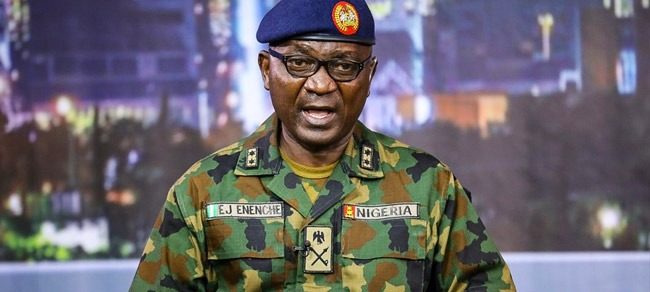
A two-star general who also doubles as Coordinator, Defence Media Operations, John Enenche, in a Twitter post revealed that over the past week, the military had arrested seven alleged oil thieves and destroyed several illegal refineries in the South-South zone.
In his statement, the Nigerian Navy Ship PATHFINDER patrol team in Rivers State, located and immobilised an illegal refining site at Mudukiri Creek, Degema Local Government Area of Rivers.
“The site had a metal reservoir laden with an estimated 150,000 litres of illegally refined gas. In the same vein, Forward Operating Base BONNY patrol team discovered and dismantled an illegal refining site in Ataba, Andoni LGA of Rivers.
“The team discovered eight metal storage tanks and four dugout pits laden with about 1,289.45 barrels of product suspected to be stolen crude oil,” he said.
He said that Nigerian Navy Ship JUBILEE clearance operation team acting on credible intelligence on suspected pirates and sea robbers’ camp at Otoyo, Akwa-Ibom, raided the camp.
He said that the patrol team with superior power dislodged and deactivated the camp in the area. “The team recovered one AK 47 rifle with two magazines, two Pump Action Rifles, 20 rounds of 7.62 and 39mm ammunition, one Fishing Gun, one Tecno phone, a bag of hard drugs, one diving face mask and one handheld metal detector.
“Between Sept. 12 and Sept. 17, Forward Operating Base IBAKA patrol team around Utan Inyata Creek arrested two suspects and two small-sized wooden boats laden with 165 bags of 50kg of foreign parboiled rice suspected to be smuggled from the Republic of Cameroon,” he said.
According to him, the items and suspects are currently in the custody of the base and will be handed over to Nigeria Customs Service Component of Operation SWIFT RESPONSE for further action.
“Also, within the period under review, Forward Operating Base IBAKA patrol team arrested five suspects with 45 drums of products suspected to be Premium Motor Spirit (PMS).
“The suspects and items are currently in custody and will be handed over to NSCDC Uyo Command for further necessary action,” he said.
According to him, on Sept 11, Nigerian Navy Ship BEECROFT handed over MT SEA SUPPLY and her crew to NIMASA after proper documentation in line with the existing Standard Operating Procedure.
“Troops have continued to dominate the general area with clearance and aggressive patrols while maintaining surveillance to rid the area of pipeline vandals and other economic saboteurs,” he said.
He commended the gallant troops of the Armed Forces and personnel of other security agencies involved in various operations across the country for their commitment, determination and dedication.
“Members of the general public are hereby assured that the Armed Forces of Nigeria working with other security agencies will continue to tackle the security challenges and will ensure that normalcy is attained in all the geo-political zones of the Country.
He, therefore, solicited the support of the public in providing credible information to assist the military’s operations.
MEDICAL referral kickback is a leading cause of why a majority of Nigerians who pay for medical bills out of pocket are increasingly finding it difficult affording treatment for illness as well as the main cause of misdiagnosis and other medical complications, medical laboratory scientists and physicians told PREMIUM TIMES.
The experts also identified lax regulation as the reason the fraudulent referral kickback scheme has become entrenched.
Describing fee-splitting and the payment of kickbacks to doctors as “racketeering”, “criminal”, and “unethical”, the Association of Medical Laboratory Scientists of Nigeria (AMLSN), the professional association of medical laboratory practitioners in the country, told PREMIUM TIMES that the practice is not only entrenched but “one of the banes of the health sector in Nigeria”.
“Any place that relies on a referral laboratory service, you can be sure that they are doing fee-splitting,” Casimir Ifeanyi, the national publicity secretary of AMLSN told PREMIUM TIMES. “It is racketeering. It is destroying the system.”
Mr Ifeanyi added that the practice of fee-splitting ultimately affects the quality of diagnoses conducted by laboratories.
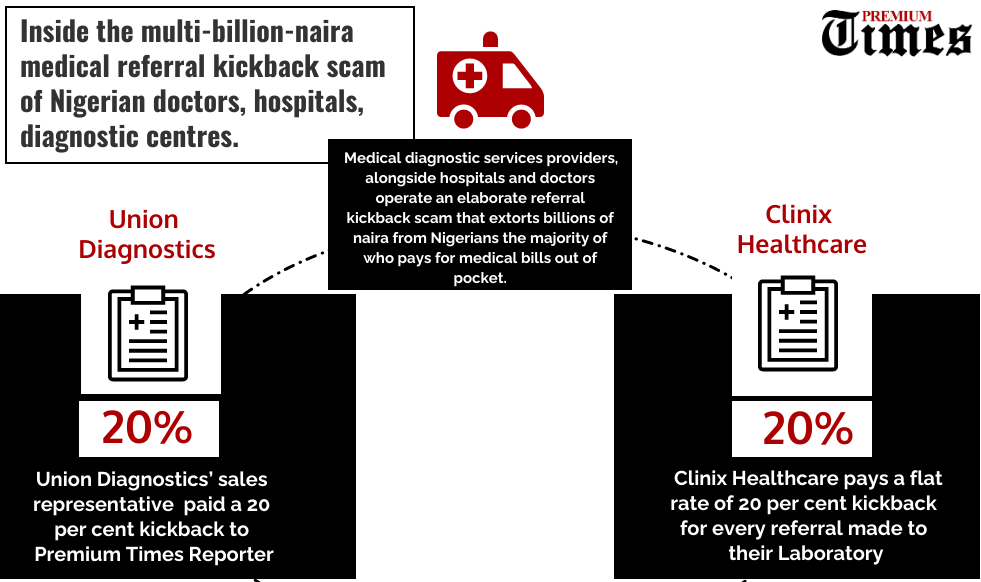
“They pay from 20 to sometimes 30 and 40 per cent,” he said. “If I have to pay that much to someone else, what will happen is that such operator will clandestinely cut corners and compromise the system because I do not see you following standard operating procedure to analyse samples using the requisite material and all the inputs and break-even so much so that you can part with up to 35 per cent.”
Medical misdiagnosis is one of the leading causes of deaths in the country. In a 2018 publication, a former president of AMLSN, Toyosi Raheem, told the Nation newspaper that misdiagnosis results in administering the wrong treatment on patients and prolong hospital stay.
“It may also cause further damage, prolonged hospital stay, unnecessary financial burden and may cause death. This will also lead to relative poor rating of Nigerian healthcare services when compared to other countries of the world,” he reportedly told the newspaper.
Mr Raheem blamed the incidence of misdiagnosis in the country on the use of substandard reagent and equipment by medical laboratory services providers, and on regulatory failure.
“Fake or substandard medical diagnostic devices/equipment and their accessories find their ways into the Nigerian market through the porous Nigerian borders. Inadequate regulatory activities of health regulatory bodies e.g. Medical and Dental Council of Nigeria, Medical Laboratory Science Council of Nigeria, Nursing and Midwifery Council of Nigeria etc.
“These health regulatory bodies statutorily regulate the activities, equipment and work environments of the respective health professionals. When the regulatory activities of the health regulatory bodies are absent, inadequate or frustrated, medical misdiagnoses will increase and sanctions on offenders will be slowed down or impossible,” Mr Raheem said.
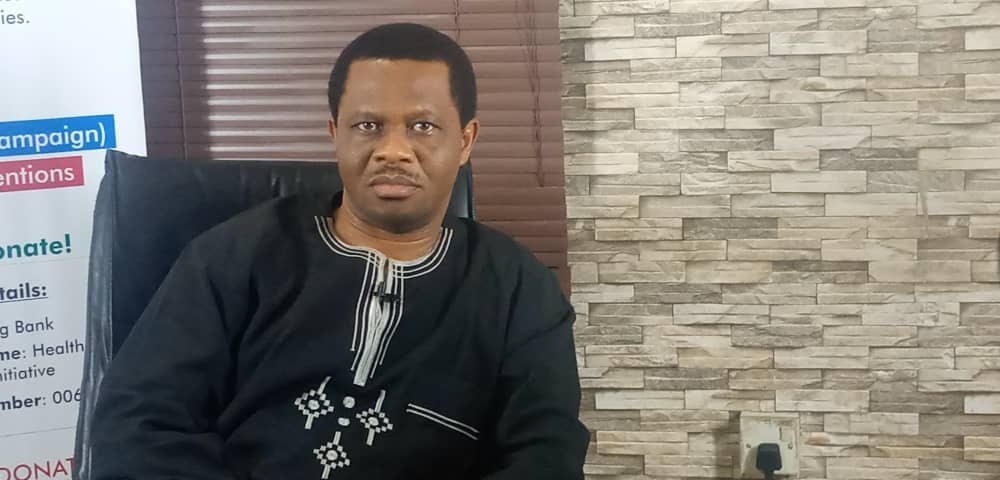
Paschal Achunine
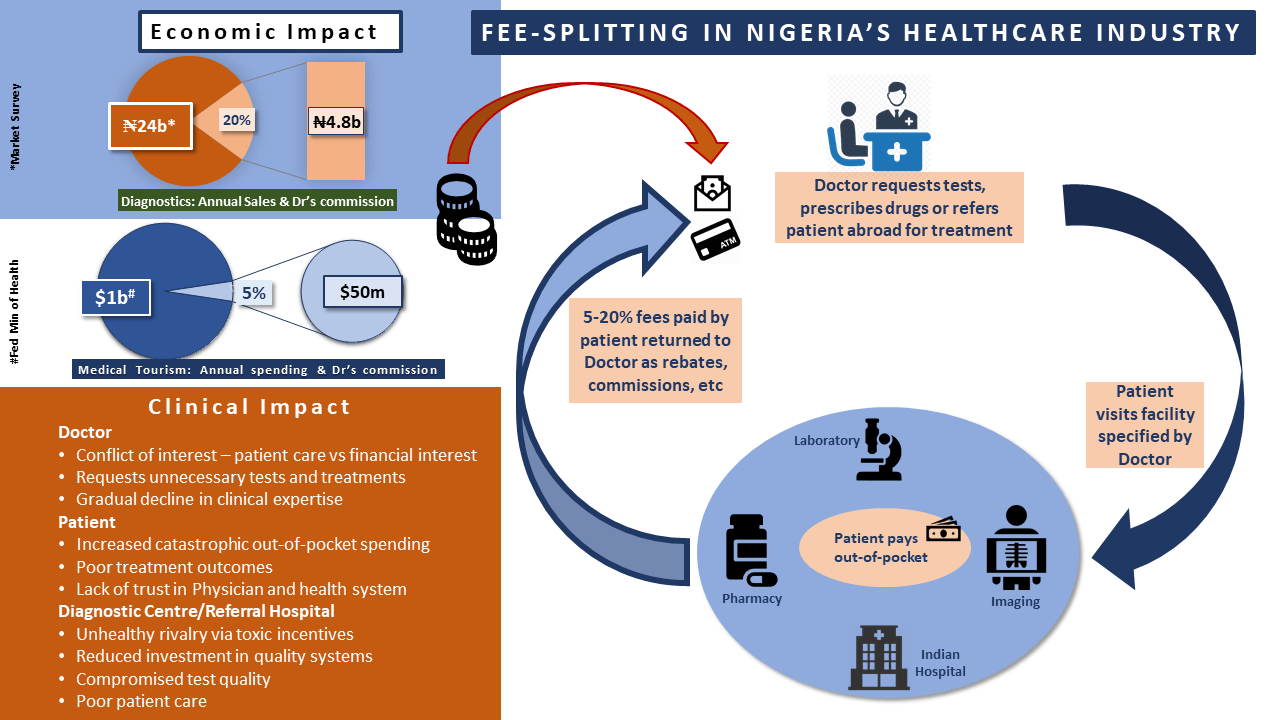
Paschal Achunine of Health Emergency Initiative (HEI), a not-for-profit organisation that provides medical assistance for people who are financially distressed, said this kickback arrangement does not only lead to a hike in the cost of medical diagnosis, doctors are enticed to send patients for unnecessary tests knowing that the higher the volume of the referral they make the more money that will accrue to them.
“It means that the patient potentially pays out of his pocket. Because the doctor has a cut, there are three things that would happen, the patient will pay more for that lab, there might even be some tests that are not required but in order to increase the cumulative income of the doctor he could add those tests, it is percentage based and the doctor will have more money accrued to him,” he said.
Because Nigerians don’t have recourse to the law, people feel they are helpless because the legal system is not effective.
The goldmine of the healthcare sector
Although there are no official data of the actual revenue of hospitals and diagnostic centres in the country, a group of Nigerian doctors, who are opposed to the unethical referral kickback scheme, in 2018 estimated that at least N4.8 billion naira is stolen annually from poor Nigerians, majority of who pay for medical bills out of pocket.
The doctors, who asked not to be identified because they fear they would be blacklisted by their colleagues and diagnostic centres, explained that they arrived at the estimate by computing the monthly revenue of some leading diagnostics firms in the country.
The doctors also estimated that another $50 million (being 5 per cent of the $1 billion Nigerians spend on medical tourism yearly, according to a Nigerian Ministry of Health estimate) is paid to doctors and others for referral for treatment abroad.
Fee splitting
If one considers the large number of unregistered diagnostic centres in the country and the estimated 8.5 per cent compound annual growth rate (CAGR) of the sector, the annual amount lost to this cut arrangement is several times the value of the estimate arrived at by the doctors.
Also, the Association of Medical Laboratory Scientists of Nigeria (AMLSN), the professional body of medical laboratory practitioners in the country, said medical laboratory services are the “goldmine” of the health sector.
“If a hospital, private or public, turns in N1 billion in a year, 70 per cent of that N1 billion gross earnings are earned from laboratory testing,” Mr Ifeanyi, the spokesperson for AMLSN told PREMIUM TIMES.
He said the earnings from the pharmaceutical and hospital consulting sub-sector of the healthcare sector do not come close to what accrued from medical laboratories.
“There is no drug that you will buy, there is no consultation fee you will pay, that will be several hundred per cents the cost of rendering that service. So, the goldmine in the health sector is the medical laboratory science profession,” Mr Ifeanyi added.
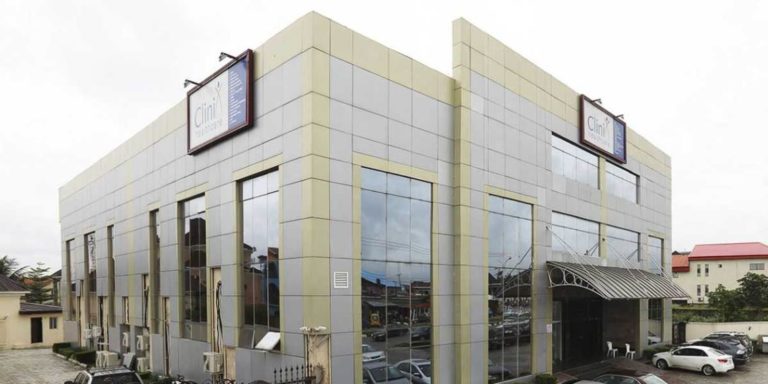
Union Diagnostics and Clinix Healthcare fee splitting.
Loose regulation
In spite of how entrenched this illicit practice is, the regulators who should be protecting the public seems to be doing nothing about it.
PREMIUM TIMES sent an email to the Medical Laboratory Science Council of Nigeria asking what it is doing to stop the practice but weeks after the email was sent the council neither acknowledged nor replied.
When a reporter from this newspaper visited the head office of the council in Abuja, an official of its Corporate Affairs and Public Relations unit, who refused to say her name, swore she has never heard of fee-splitting between hospitals and diagnostic centres before.
“We have not had any case of medical laboratories paying doctors since we started. It is unheard of and it is impossible for medical lab scientists to pay doctors a percentage of their fee,” she said.
When reached for comment, the Medical and Dental Council of Nigerian (MDCN) said doctors reported for such misconducts are prosecuted by its disciplinary tribunal.
It, however, added that its disciplinary tribunal only reconvened in 2019 after four years of inactivity following the Nigerian government’s dissolution of the boards of agencies and parastatals in 2015.
The council added that after it reconvened in 2019, its disciplinary tribunal has, however, prosecuted two cases of fee-splitting.
“The Tribunal has tried the concerned doctors,” Enejo Abdu, an assistant registrar in charge of professional discipline, said in an email. “One was found guilty and suspended from practising Medicine in Nigeria for six months.”
However, Mr Abdu did not reveal the identity of the doctor that was sanctioned.
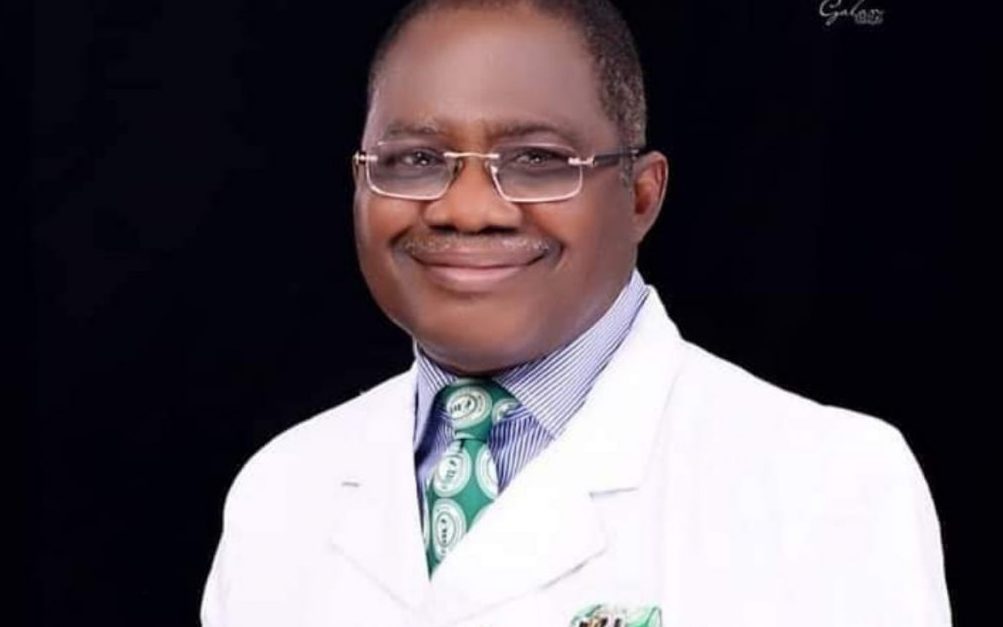
Innocent Ujah, the President of the Nigerian Medical Association (NMA), said he was unaware doctors receive kickbacks from medical laboratory service providers.
Innocent Ujah (NMA President)
But when pressed further, he suggested that there was nothing wrong with the practice and compared it with the commission earned by beer suppliers from breweries.
Mr Ujah made his shocking and ludicrous comparison despite the Nigerian Code of Medical Ethics expressly prohibiting doctors from earning commissions from referrals and other services provided.
“I am not aware of that as the NMA president,” he said. “You said anybody. So, it doesn’t have to be a doctor. If you say they claim (to be doctors), then I don’t agree with you. If you say you are a doctor and they (diagnostic centres) don’t verify, then it is their own business.
“If I am doing business with you, let’s say a carton of beer and I say if I sell to you, I need a commission, that is a commission actually. Is that not what you are saying? And it is not about doctor’s alone, it is about anybody who refers a patient to them. There must be an understanding; an MoU,” he said.
When asked if the practice won’t ultimately lead to an increase in the cost of diagnosis, Mr Ujah initially said he was not in a position to comment but admitted that that was the case when pressed further.
Mr Ujah, however, became furious when told that the diagnostic centres that were the subject of this investigation made no attempt to verify if this reporter, posing as a doctor, was indeed a doctor.
“You went as a private doctor and was not identified by anybody? Then that person is a fool. That shows how porous Nigeria is. That means anybody who goes anywhere and says ‘I am a doctor’ people do not bother. That is why many people are being killed anyhow. If you come to me and say you are a doctor, you must show evidence that you are a doctor before I will talk to you. The greed in us as people. That means our patients are not protected,” he said.
But while Nigerian regulators snore away, ethical watchdogs elsewhere are wielding the big stick against doctors and laboratories involved in fraudulent practices.
In 2014, Nigerian-born Chikezie Onyenso, a certified paediatrician was sentenced to 20 months “in prison for soliciting and taking cash and rental payments as kickbacks for his patients’ diagnostic testing referrals, the United States Department of Justice announced in a statement.
“Onyenso was a licensed and board-certified paediatrician and internist who owned his own medical practice, Total Support Medical Group, in Irvington, N.J. From the summer of 2010 through December 2011 he conspired to take illegal kickbacks in exchange for sending his patients to Orange MRI. Onyenso sought and accepted thousands of dollars of cash in envelopes in exchange for referring his Medicare and Medicaid patients to Orange MRI for MRIs and CAT scans. For his ultrasound referrals, Onyenso received from Orange MRI more than $25,000 in kickback payments disguised as rental payments and documented by a bogus, $1,000-per-square-foot lease. He was recorded taking cash kickbacks in his Irvington office on Oct. 11, 2011, and Nov. 22, 2011,” the statement stated.
The judge ordered Mr Onyenso to pay a fine of $40,000 and ordered him to forfeit $42,176.
Similarly, Ashokkumar Babaria, an Indian American radiologist was sentenced to 46 months in prison for a referral scam and ordered to forfeit $2 million.
Not done in Patients’ best interest
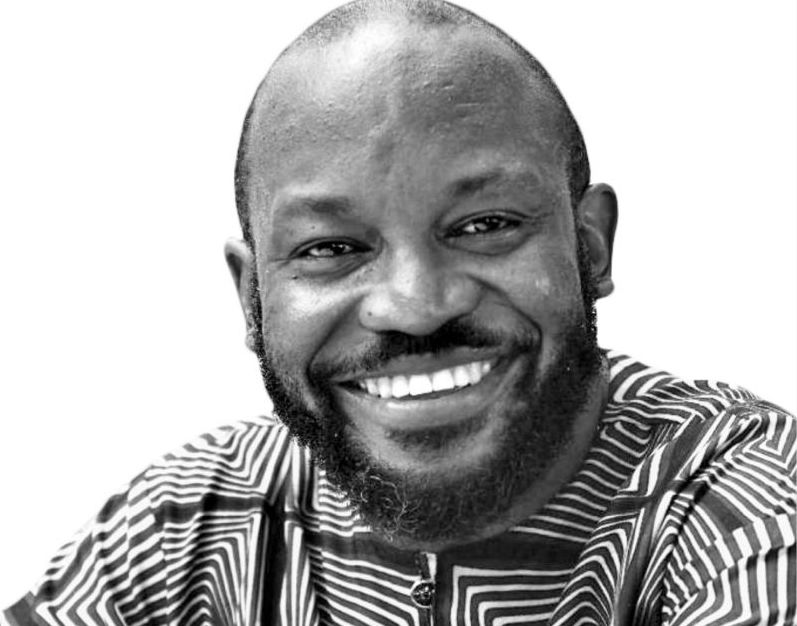
Ike Anya, a London-based doctor, said the practice of paying kickbacks to doctors for referrals is not a recent occurrence. He said the practice was very much in play in the 1990s when he was a young doctor in Nigeria.
Dr Anya, who also teaches Ethics at the London School of Hygiene and Tropical Medicine (LSHTM), said the practice is one hitting at the core of medical ethics.
Dr. Ike Anya
“If a doctor is benefitting from a referral how are the patients convinced that the referral is in their own best interest and not motivated by the doctor’s benefits. There is no way of telling that,” he said.
“That is why medical ethics states that you are always making decisions in the patient’s best interest and not any other considerations and certainly not for financial benefits to yourself.”
Dr Anya said although the practice of paying and collecting kickbacks in the health industry is not unique to Nigeria, in other places where it occurs, regulators are quick to put it in check, unlike Nigeria.
“It has been shown to happen even in the US and in the UK in various forms – private hospitals having some form of formal arrangements where they try to steer patients towards each other,” he said. The challenge, particularly in Nigeria, is where is the regulator in all of these?”
He said in a situation where the statutory regulator in Nigeria was without a board for four years makes regulation even more porous. He said doctors and other medical practitioners need constant reminders of the ethics of their professions.
He also said campaigns to enlighten the public about possible unethical practices and their rights may help to dissuade some medical practitioners from indulging in unethical practices.
“There is the question of the educators of doctors and medical laboratory scientists. Medical ethics is something that is not emphasis much in our training in Nigeria,” Dr Anya added.
“In terms of solutions, regulators need to up their game. There is a need for constant education about ethics to doctors and medical practitioners.
“Public awareness but what is the patient going to do? When a patient is going to the doctor there is what the economists call asymmetry of information. The doctor is the one who knows what tests you need. It is the doctor that knows that. And if they say to you go to this lab, you are not in a position to say I don’t want to go to that lab.
“Also, when you are ill, it automatically puts you in a vulnerable position, no matter how powerful or how rich you are when you are ill, you just want to get better. You just want to do whatever it is to get better.
“In spite of that, there should be public awareness and campaign to tell patients that this is what is going on, maybe if more patients start asking questions, it might turn some people to stop.”
We will investigate laboratories if presented with evidence of wrongdoing – Consumer Agency
The Federal Competition and Consumer Protection Commission (FCCPC) said it is neither aware of the rebate arrangement between diagnostic centres and doctor nor has it received any complaint of that nature.
It, however, vowed to intervene, using the appropriate legislations, if presented with evidence of such unethical practices.
“A key and flagship initiative of the FCCPC is the Patients Bill of Rights (PBoR), which requires transparency in billing and full disclosure of necessary procedures and cost of such procedures by the relevant facility. As such, under the PBoR, this would be wrong,” the director-general of the commission, Tunde Irukera, told PREMIUM TIMES.
“In addition, S.17(g) and (s) prohibit unfair, unconscionable, obnoxious and deceptive marketing, trading and business practices as well as unscrupulous exploitation of consumers.
“With respect to direct provisions on pricing S.115, 127 prohibit unclear and well as unreasonable or manifestly unjust pricing (gouging or profiteering), while S.124 prohibits unfair dealings such as using unfair tactics to take advantage of consumers, or anyone’s vulnerability.
“With the combination of these provisions, if the FCCPC has probable cause or receives credible allegations or intelligence, the Commission will certainly proceed to open an investigation into the operations of the target of the investigation, and to the extent that evidence leads further, broaden the investigation to address an expanded scope if it’s an industry-wide practice.
“In addition, the FCCPC will coordinate and collaborate with the relevant professional disciplinary regulator and provide the outcome of its investigation to see any professional disciplinary action required, where applicable,” he said.
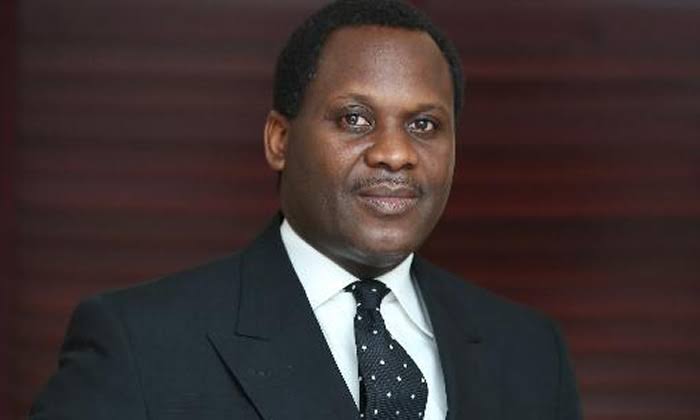
The Director-General of the Commission, Federal Competition and Consumer Protection Commission (FCCPC), Babatunde Irukera.
He said the outcome of its investigation and consequences will result in “a behavioural modification and a regulatory tool that prevents continuing abuse.”
Mr Irukera also said consumer education about the existence of the practice will help in addressing it.
“Further, consumer education about the existence of such a problem, and advice to consumers about their rights in the circumstances will assist in addressing the problem. Finally, engagement and advocacy with the relevant trade or professional associations about enforcing their ethics or other behavioural codes will be helpful,” he said.
THE anger and frustration on Adelana Martins’ face are unmistakable – there is a power outage just about the time he wants to iron his clothes.
The power failure has thwarted his plan to appear at work by 2 pm in crispy uniform. Yet, he dares not appear in office in mufti, and he cannot be absent from duty without prior notice or a genuine reason.
Martins, 47, and a resident of Igbusi community of Ifo Local Government Area of Ogun State, like many others in the community agonize daily on the epileptic power supply from the Ibadan Electricity Distribution Company (IBEDC).
IBEDC is one of the eleven private companies licensed by the Nigerian Government to distribute power to customers since the privatisation of what used to be Power Holding Company of Nigeria (PHCN) in September 2013.
He was visibly agitated not only about the epileptic power supply in his community but also the ‘crazy bills’ that IBEDC charges even for the poor service.
“We have not had light for two hours in the last 24 hours and we don’t even know when next they would restore it,” Martins says, as he looks forlorn at his wrinkled uniform on a pressing table.
“It can be like this for the next three days, yet they would bring a humongous bill for us to settle at the end of the month,” he adds.
Nigeria currently generates about 4000MW which is insufficient for the consumption of about 200million of its population. According to USAID in a report, Nigeria, the largest economy in Sub-Saharan Africa has the potential to generate 12,522 megawatts (MW) of electric power from existing plants because of its huge endowment in oil, gas, hydro and solar resources.
Martins and other residents in his shoes pay as much as N10,000 estimated bills at the end of every month for electricity supply, which according to him, they “never enjoyed.”
“We only pay for darkness,” he says.
Like Martins, Folarin Gbadamosi , who runs a barbing shop in Oke-Ijebu area of Akure, Ondo State, southwest Nigeria decries the high power bill that does not reflect the electricity consumption in his area.
“They only give us power for about four hours out of the 24 hours in a day, yet we pay N8,000 bill every month,” Gbadamosi laments.
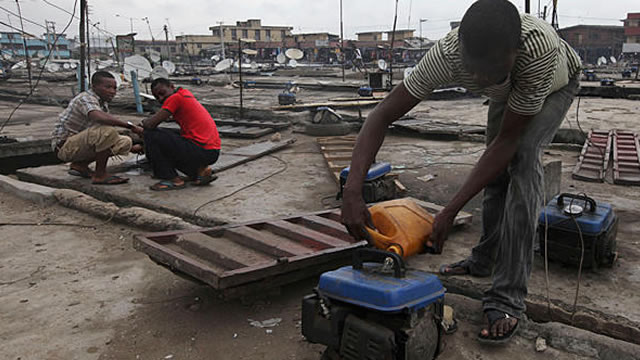
The alternative power source which is a small generating set known among locals as “I pass my neighbour” is also not sustainable because of the daily cost of fuelling it. The dismal supply of electricity in the area threatens the survival of his barbing business.
“This electricity no longer favours me, I will soon disconnect myself from it to concentrate on powering my shop with a generator, says the barber angrily “
Tariffs amidst poor power generation, distribution and COVID-19 pandemic
Power generation and distribution have been two major challenges confronting Nigeria’s power sector, despite being the largest economy in Africa. Its generation has not gone beyond 4,000MW while poor distribution is the reason the government cited recently to announce tariffs hike.
Infographics on Energy generation in Nigeria by Niyi Oyedeji
Nigerians on September 1, woke up to a 100 percent increment on the electricity tariff plan, a surge that caught many people unaware.
The Nigerian Electricity Regulatory Commission (NERC) suddenly increased the light bill known as electricity tariff from 30.23 Naira for one kwh (kilowatt unit of energy per hour) to as much as 62.33 Naira per kwh.
The NERC is primarily to regulate the tariff of power generating companies owned or controlled by the government, and any other generating company which has a license for power generation and transmission of energy, and distribution of electricity.
Explaining his plight with the recent increment, Abiodun Olusoji, a resident of Chika area of the Federal Capital Territory, Abuja, Nigeria’s capital city says the increment in the electricity tariff does not only caught him unaware but would make life difficult for him as a worker with a private organisation.
“It’s like the government is out to make life difficult for us in this country, despite the coronavirus pandemic that has crippled so many businesses, the government still deemed it fit to increase the electricity and fuel price now,” Olusoji said.
Victoria Dennis, a resident of Ikorodu, Lagos State, Nigeria who is also dissatisfied with the recent increment in the electricity tariffs stated that the unit of power she bought recently was sold at a double amount, an increment she said would affect her cost of living.
“I went to buy electricity yesterday for our prepaid meter and I could only get a 25-kilowatt unit for 1,500 when I could have gotten like a 60-kilowatt unit for the same amount.”
Despite the increase in Nigeria’s electricity tariff, an outrageous number of the country’s population still lack access to electricity,
Bloomberg reported that an average home in Nigeria gets national grid power for about nine hours daily, which could be worse in some communities and homes.
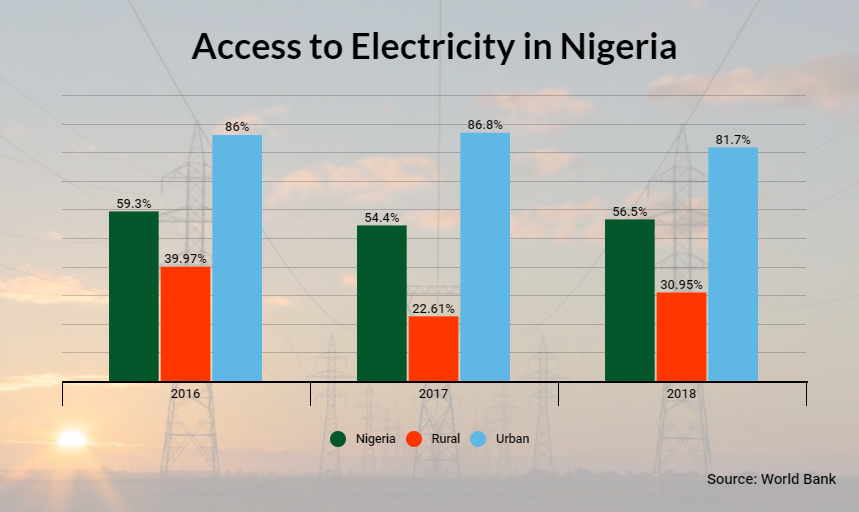
The World Bank noted that only 57 percent of the country’s 200 million population have access to electricity.
While just 31 percent of people living in the country’s rural areas have access to electricity, the 82 percent of people living in the urban areas who have access to electricity still usually experience persistent power outages.
Infographics on Access to Electricity in Nigeria by Niyi Oyedeji
Bridging the gap with sustainable solutions
In a bid to solve the country’s power problem, Nigeria’s Government has so far spent over N1.7 trillion on the country’s power sector in the last three years but had little or no impact on the already privatized sector.
Meanwhile, so many recommendations made towards salvaging the country’s energy crisis hinged on exploring renewable energy potentials.
Alice Adedayo, Principal consultant at African Energy Advocacy Initiative noted that one of the major keys to sustainable energy in Nigeria is to decentralise energy generation for communities that are off the national grid, adding that such efforts can be made through the use of renewable energy solutions such as bioenergy, solar and wind energy to power underserved communities.
“The government should also ensure full operationalisation of Feed-in Tariff, which allows private companies to send excess energy generated from other energy sources into the national grid, hence the need for policy harmonization across complementary ministries in the power sector value chain,” she said.
On her own part, Yetunde Fadeyi, founder of Renewable Energy and Environmental Sustainability Initiative for Africa (REES Africa) noted that even though access to energy is fundamental for socio-economic development and poverty eradication but the country needs to do more in diversification and exploration of sustainable energy sources to ensure problems surrounding energy access is solved.
“There is a need for scenarios that ultimately include the hybridization, exploitation and promotion of renewable energy resources, energy efficiency practices, as well as the application of energy conservation measures in various sectors,” Fadeyi recommends.
“There is also a need for favourable policy intervention and incentives to further drive access to power significantly for the pro-poor and encourage low carbon decentralization instead of the use of dirty fossil fuels.”
The United States Agency for International Development (USAID) also noted that improving the power sector is critical to addressing development challenges in Nigeria.
Oluwaseyi Falaye, the Chief Executive Officer (CEO) of Econergco limited, who stated that the carbon emissions in the country remain on the upward trajectory because of the continuous intensive use of fossil fuel-powered electricity due to erratic power supply from the national grid stressed the need for advancement in sustainable energy technologies.
“The advancement in sustainable energy technologies like energy storage, smart grid solutions, continue falls in the cost of solar power and energy storage, and renewable energy sources in the country serve as an impetus for solving the energy crisis in the country sustainably,” Falaye states.
“The renewable sources in Nigeria are estimated to worth over 500 gigawatts of power and that includes; about 500 gigawatts from solar energy, over 15 gigawatts from hydropower, while wind and bioenergy are estimated to have the capacity to provide 10 gigawatts of clean, green, and sustainable power but for Nigeria to enjoy reliable electricity supply through sustainable power sources there is a need for the government to provide an enabling environment and fiscal regime to attract foreign direct investment for renewable energy projects development,” he said.
This story was written as part of the Sustainable Energy for All fellowship, by Climate Tracker and Hivos.
THE latest data released by the National Bureau of Statistics revealed that the average transport fare for bus journey within cities in the country increased by 12.70 percent, month-on-month, in August 2020.
The NBS Transport Fare Watch report for August 2020, which was released on September 16, 2020, and posted on the Bureau’s website, covered categories such as bus journey within the city per drop constant route; bus journey inter-city, state route, charge per person and airfare charge for specified routes single journey.
It also covered the journey by motorcycle (okada) per drop and water-way passenger transport.
According to the executive summary of the report, the average fare paid by commuters for bus journey within the city increased by 12.70 percent, month-on-month, and by 48.02 percent, year-on-year, to N278.88 in August 2020 from N247.46 in July 2020.
The NBS further reported that, in the period under review, states with the highest bus journey fare within the city were Zamfara (N550.10), Cross River (N400.00), and Ekiti (N386.67).
On the other hand, states with the lowest bus journey fare within the city were Bauchi (N162.41), Kebbi (N180.18), and Rivers (N182.40).
Also, according to the NBS report, average fare paid by commuters for bus journey inter-city increased by 8.69 percent month-on-month and by 26.98 percent year-on-year to N2,063.12 in August 2020 from N1,898.14 in July 2020.
States that recorded the highest bus journey fare inter-city were Abuja, Federal Capital Territory, (N4,234.00), Sokoto (N2,953.27) and Lagos (N2,943.27) while States with lowest bus journey fare within city were Bayelsa (N1,300.00), Bauchi (N1,321.50) and Edo (N1,435.21).
Also, average fare paid by air passengers for specified routes single journey increased by 5.60 percent month-on-month and by 26.56 per cent year-on-year to N38,659.86 in August 2020 from N36,611.22 in July 2020.
NBS data shows that states with highest air fare were Abuja FCT (N43,000.00), Lagos (N40,600.00), Borno (N40,000.00) while States with the lowest airfare were Ekiti (N37,450.00), Akwa Ibom/Edo (N37,500.00), and Nasarawa (N37,600.00).
The NBS also reported an increase in the fare paid by commuters for the journey by motorcycle.
Transport fare for journey by motorcycle per drop increased by 14.37 percent month-on-month and by 63.48 percent year-on-year to N197.23 in August 2020 from N172.46 in July 2020.
States with the highest journey fare by motorcycle per drop were Kogi (N300.54), Rivers (N300.48), and Lagos (N300.00).
On the other hand, states with the lowest journey fare by motorcycle per drop were Adamawa (N80.24), Katsina (N97.40), and Kebbi (N100.25).
In the same vein, the average fare paid by passengers for water-way passenger transport increased by 5.79 percent month-on-month and by 24.33 percent year-on-year to N685.82 in August 2020 from N648.26 in July 2020.
States with highest fare by water-way passenger transport in the period under review are Rivers (N2,005.61), Delta (N2,000.00), and Bayelsa (N1,980.60) while states with the lowest fare by water-way passenger transport were Borno (N194.95), Gombe (N200.00), and Abuja FCT (N268.47).
The NBS explained that fieldwork for the report was carried out by over 700 staff in all states of the federation, supported by supervisors who were monitored by internal and external observers.
Prices were collected across all the 774 local governments across all states and the FCT from over 10,000 respondents and locations, according to the Bureau.
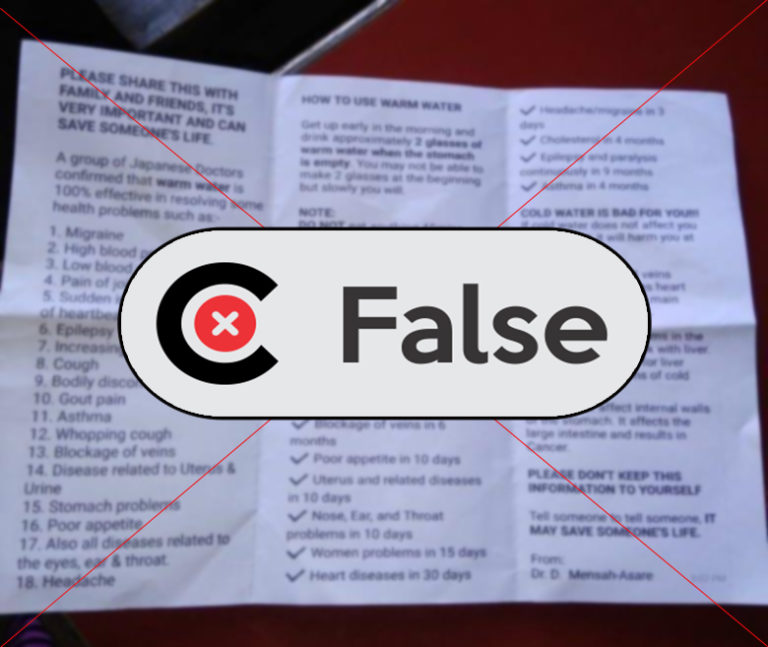
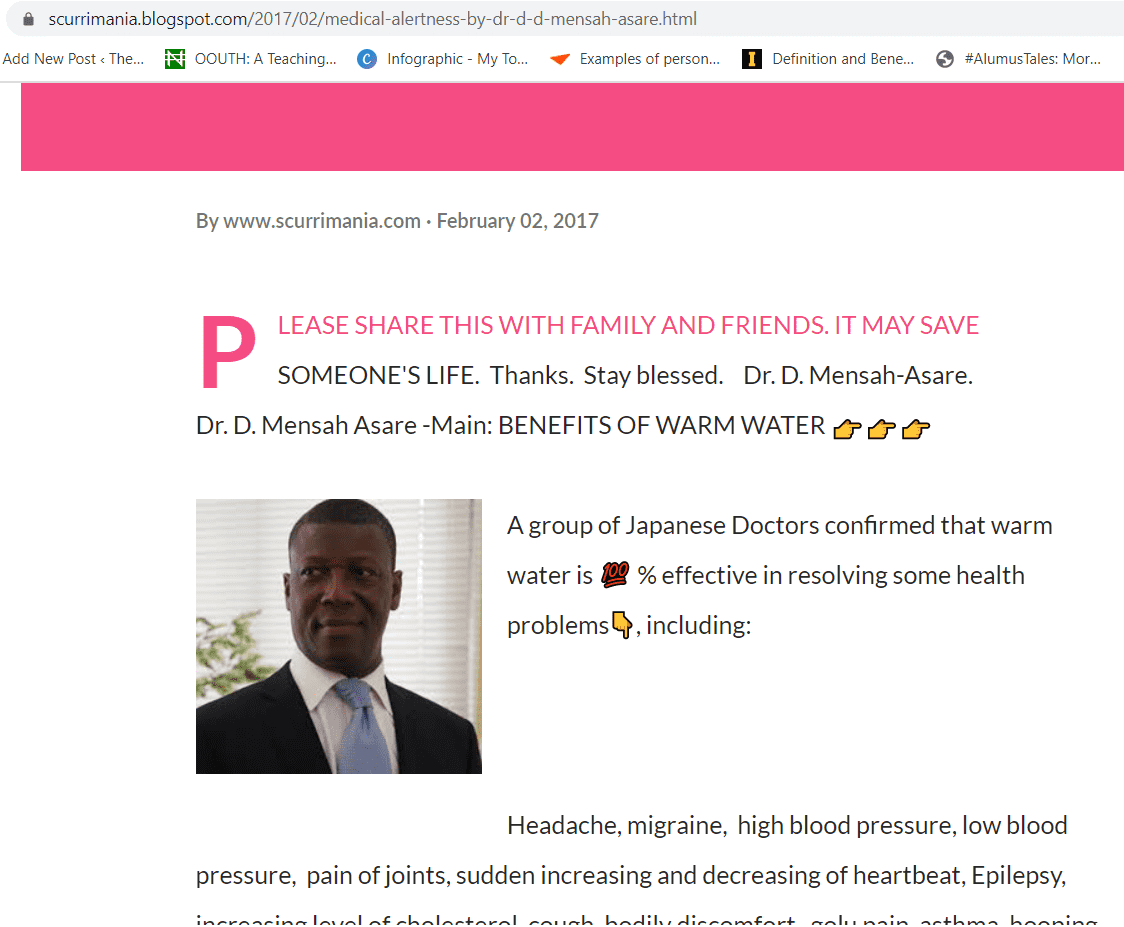
A VIRAL post on WhatsApp retrieved on August 16 claims that drinking warm water ‘will resolve’ many health conditions, including epilepsy and high blood pressure.
The claim read thus: “a group of Japanese doctors confirmed that warm water is 100 percent effective in resolving some health problems such as epilepsy, high blood pressure, migraine, pains of joint, asthma and others.”
According to the claim, epilepsy and paralysis could be resolved in nine months, while diabetes and high blood pressure could be resolved in 30 days with two glasses of warm water daily.
“Get up early in the morning and drink approximately 2 glasses of warm water when the stomach is empty. You may not be able to make 2 glasses at the beginning, but slowly you will. Do not eat anything for 45mins after taking the water,” the message on the pamphlet shared on WhatsApp reads.
The pamphlet also claimed that drinking cold water is “bad for you”. ‘If cold water does not affect you at a young age. It will harm you at old age.
It further claims that cold water closes four veins of the heart and causes the attack.
Cold drinks are the main cause of heart attack. It also creates problems in the liver. It makes fat stuck with the liver. Most people waiting for liver transplant are victims of cold water drinking.
Cold water affects the internal walls of the stomach. It affects the large intestine and results in cancer.
The claim on the pamphlet was said to be from Dr. D. Mensah-Asare.
FINDINGS
The ICIR found that the claim about warm water as a cure for several diseases has been available since 2017 and has been shared widely on social media and blogs.
Dr. Richard FRU, a Cameroon-based naturopathic doctor and researcher also posted the claim on Facebook on the 9th of July, 2017.
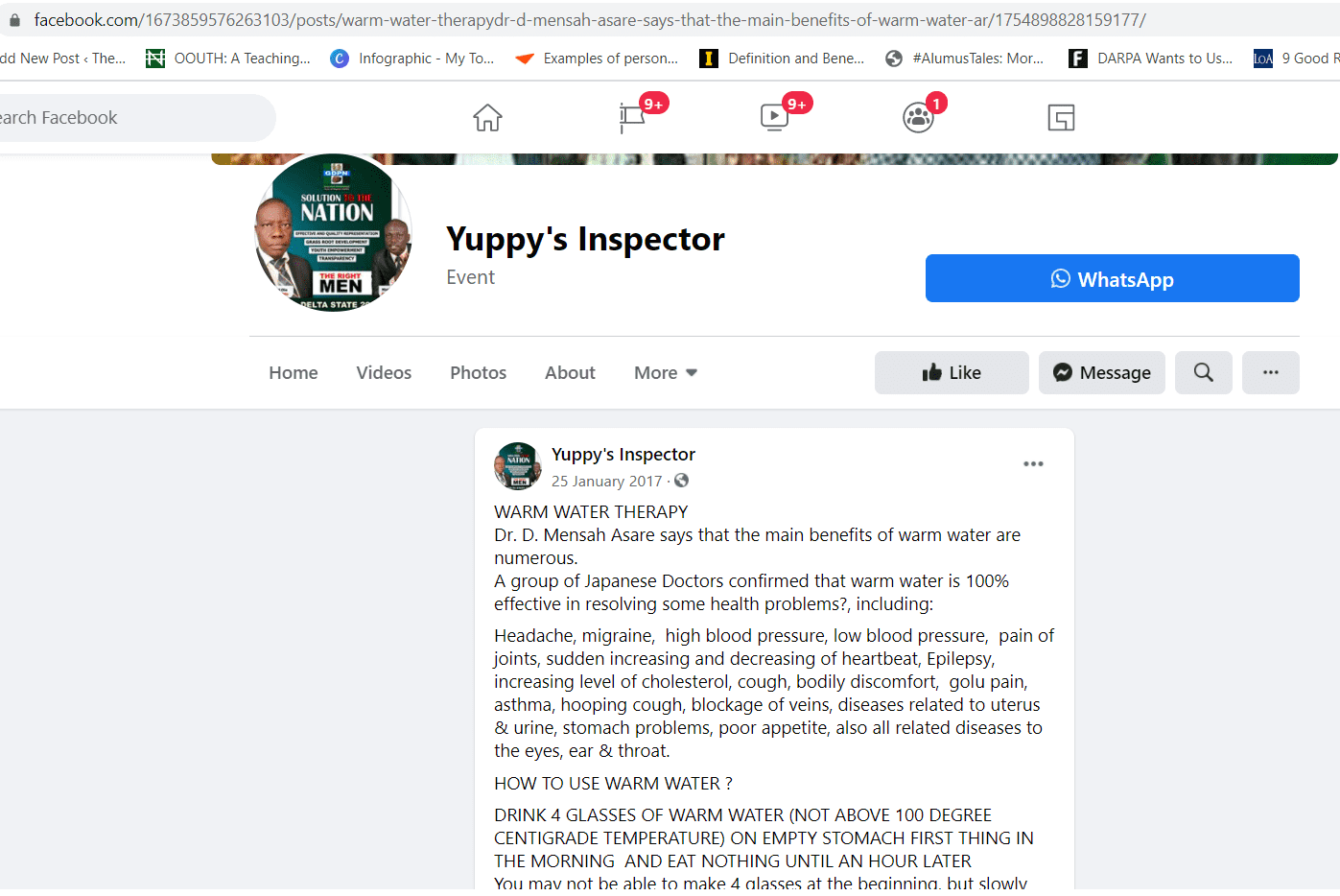
Yuppy’s Inspector Facebook Post
Also, a Facebook user Yuppy’s Inspector shared it on the 25th of January 2017 generating 85 comments and 110 shares.
The ICIR also found that the message attributed to a group of Japanese Doctors’ or ‘Dr. D. Mensah Asare is shared on Pinterest, Twitter, Nairaland and Reddit.
They attributed the source of the report to “message trending on Whatsapp”.
A message to the Editor of Daily Times, Omokioja Julius Eto about the report was not responded to after nine days.
Multiple searches by The ICIR to discover the identity of Dr. D. Mensah-Asare, the doctor to whom the claim was attributed to or any hospital with the name through a google search proved abortive.
A blog post by scurrimania.blogspot.com used an image that The ICIR through a google search discovered to be of a Ghanian Businessman, Asare Akuffo, the former Managing Director of HFC Bank.
Scurrimania 2017 Post
Dr. Opeyemi Adeyemi, a medical practitioner at the Olabisi Onabanjo University Teaching Hospital in Sagamu, Ogun State in an interview with The ICIR said warm water has benefits but doesn’t cure any ailment.
She said though warm water has health benefits, but saying that it cures an ailment, like a disease that is where it is wrong.
“Warm water has benefits but doesn’t cure an ailment. Once somebody has been diagnosed with an ailment, warm water is not going to have any effect or say curing the disease”, she said.
Also, Dr. Femi Ajose of the Olabisi Onabanjo Teaching University Hospital, Shagamu (OOUTH) in an interview with The ICIR said the claim in the pamphlet is a palpable display of folly.
He said, “this is a palpable display of folly! How will just one remedy be a panacea to various ailments? This is highly non-scientific and hence doesn’t hold water, at all. These are just some Myths they sell to people to collect their hard-earned money.”
“This is not to rule out what warm water does, but it hasn’t been proven to be a treatment alternative for any of the above listed.”
“There’s another one they call cellegivity. It’s an antioxidant. Which of course is a good one. But people marketing it went as far as saying it cures Diabetes and Hypertension. They convinced people to stop their routine medications for cellegivity and that caused more harm than good.”
“Anything NOT scientifically proven is HERBAL (alternative) Medicine.”
VERDICT: Based on the above findings, the claim that warm water is 100 percent effective in resolving some health problems is FALSE as The ICIR couldn’t find any medical records to support the claim.
THE Nigerian Government has retracted and apologised over its earlier statement that asked every person that owns an account with any financial institutions to undergo a self-certification process.
The Nigerian Government in the now-deleted tweets had in a statement shared on its official Twitter account on Thursday announced the introduction of new directives stating that account-holders are required to obtain, complete and submit the self-certification forms to their respective financial institutions.
The decision which immediately generated controversy was met with criticism online and some Nigerians online accusing the government of engaging in poor communication techniques.
Many of those who reacted also questioned the directives, arguing that the Bank Verification Number (BVN) and the National Identification Number (NIN) are enough to provide needed data for the government.
Others also questioned the timing and government insistence on self-certification due to the Coronavirus Disease (COVID-19) pandemic.
The government had said individuals holding accounts in different financial institutions are required to complete and submit the form to each one of the institutions.
It also said the self-certification form is in 3 categories; “Form for Entity”, “For Controlling Person (Individuals having controlling interest in a legal person, trustee, etc)” and “Form for an individual”.
The tweets read, “This is to notify the general public that all account holders in Financial Institutions (Banks, Insurance Companies, etc) are required to obtain, complete and submit Self – Certification Forms to their respective Financial Institutions.”
“Persons holding accounts in different financial institutions are required to complete & submit the form to each one of the institutions. The forms are required by the relevant financial institutions to carry out due diligence procedures in line with the Income Tax Regulations 2019.”
The self-certification form is in 3 categories: – Form for Entity – For Controlling Person (Individuals having a controlling interest in a legal person, trustee, etc) – Form for the individual.”
It further said failure to comply with the requirement to administer or execute the form will attract sanctions which may include monetary penalty or inability to operate the account.
The FG in its clarification said the notice does not apply to everybody.
The tweet read, “We apologize for the misleading tweets (now deleted) that went up yesterday, regarding the completion of self-certification forms by Reportable Persons. The message contained in the@firsNigeria Notice does not apply to everybody. FIRS will issue appropriate clarification shortly.”
Also, the FIRS in a statement after the FG retraction said the ultimate objective of the Automatic Exchange of Information is to improve transparency in Nigeria’s tax system and boost the anti-corruption drive of the Government.
Stating that the exercise is required for due diligence in line with requirements of Income Tax (Common Reporting Standards) Regulations 2019.
It also said the Self-Certification Forms are to be administered by Financial Institutions to enable account holders to clearly document their respective jurisdictions of tax residence. Relevant Financial Institutions and other stakeholders have been adequately sensitised on this process.
Meanwhile, the FIRS had earlier in order to clarify the government directives, the Federal Inland Revenue Service (FIRS) in a statement posted on Twitter said the reportable persons are often non-residents and other persons who have residence for tax purposes in more than one jurisdiction or country.
It said, “This is to clarify the publication for financial institutions account holders in Nigeria to complete the self-certification form, pursuant to the Income Tax (Common Reporting Standard) Regulations 2019 which is for the fulfilment of Automatic Exchange of Information Requirements.”
“The Self Certification form is basically to be administered on Reportable persons holding accounts in Financial institutions that are regarded as “Reportable Financial Institutions” under the CRS.”
“Reportable persons are often non-residents and other persons who have residence for tax purposes in more than one jurisdiction or Country. Financial Institutions are expected to administer the Self Certification form on such account holders when the information at its disposal indicates that the Account holder is a person resident for tax purpose in more than one jurisdiction.”
“The information that indicates an account holder is a resident for tax purposes in more than one jurisdiction, is expected to be available to Financial Institutions during the account opening processes for the KYC and AML purpose.”