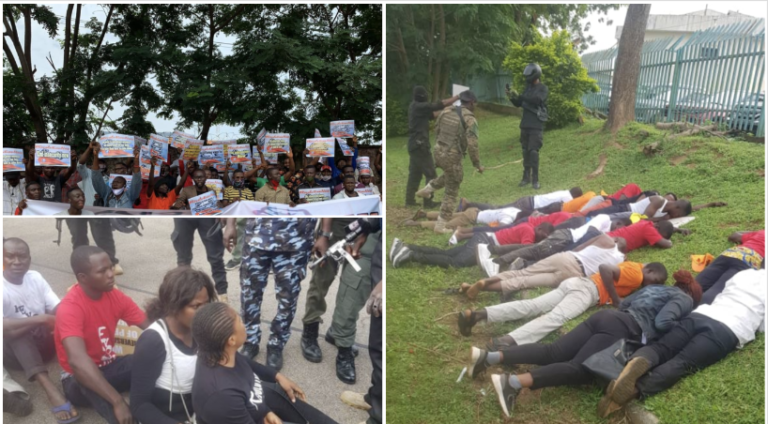
OLAWALE Bakare and Agba Jalingo, Cross River-based journalist, have been arrested for participating in the RevolutionNow Protest on Wednesday.
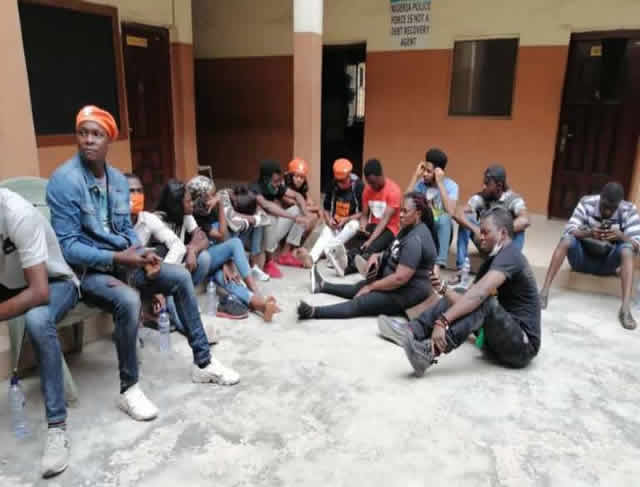
Bakare was arrested alongside seven others participating in the RevolutionNow protest in Osogbo, Osun State capital.
They were arrested by operatives of the State Security Service (SSS) while converging at the Correspondent’s Chapel of the Nigerian Union of Journalists (NUJ) Chapel in Osogbo.
Bakare and other protesters were whisked away from the scene of the protest by the armed SSS officers.
In Ikeja, Lagos State, Agba Jalingo, Femi Adeyeye and 13 other protesters were arrested by officers of the Nigeria Police during the protest.
The 13 other protesters arrested include, Omolara Alagbala, Kelly Orodu, Kolawole Adenekan, Fela Samson Okafor, Akinnubi Margaret and Orunsolu Oluremi.
The protesters were said to be held at Area F Police station in Lagos State.
In Abuja, however, protesters who were arrested Wednesday morning have been reportedly released.
Deji Adeyanju, a human rights activist who was part of the Abuja Revolution Now protest and reported that protesters were arrested, said they have been released.
“All Abuja comrades arrested earlier have been released. Aluta Continua,” Adeyanju wrote on Twitter.
The Revolution Now protest was started in August 2019, by Omoyele Sowore, the publisher of Sahara Reporters, who was eventually arrested, detained and prosecuted alongside Bakare.
The Federal Government said Sowore was arrested because he was planning to overthrow a democratically elected government.
Jalingo, a critic of the Ben Ayade Cross Rivers State government administration was also detained and prosecuted for publishing an article against the governor.
Meanwhile, Amnesty International has demanded for an immediate release of all protesters arrested during the protest.
Protest is a human right and no one should be arrested for exercising their right to freedom of assembly and speech,AI said on Wednesday.
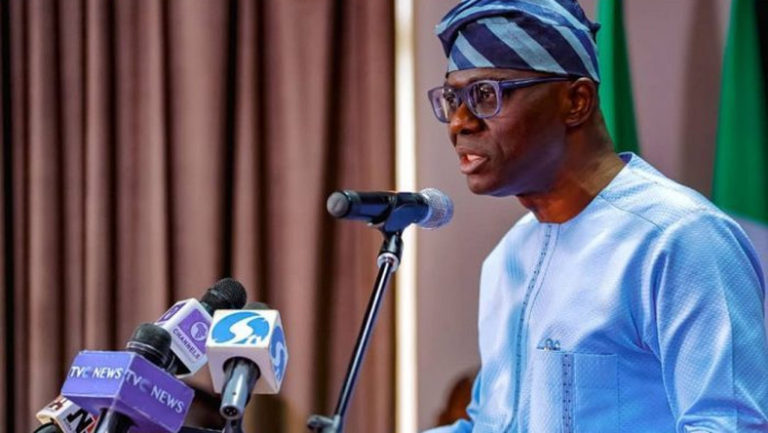
THE Lagos State Government on Wednesday reviewed the 2018 Land Use Charge, stating the decision was to reduce the financial pressure on Lagosians relating to land use.
The state government in a statement signed by Dr. Rabiu Olowo, its Commissioner for Finance, explained that it is imperative to review the land use charge due to the high rate of the Land Use Charge in the state.
“In 2018, there was an increase in Land Use Charge rate as well as the method of valuation of properties, this shock had a sporadic increase in Land Use Charge payable by property owners,” Olowo said.
“In view of the aforementioned, the current administration decided to review the Land Use Charge law by reversing the rate of Land Use Charge to pre-2018 while upholding the 2018 method of valuation.”
He stated that penalties for Land Use Charges for year 2017, 2018 and 2019 have also been waived, which translates to N5,752,168,411.03 potential revenue waived by the state.
The Commissioner also disclosed that, “in additional to the re-introduction of the 15 per cent early payment discount, an additional COVID-19 incentive of 10 per cent would be granted on the total amount payable.
This makes the total discount for early payment 25% if payment is made before due date, he said.
He, however, added that the penalty for obstruction of officials and damage to property identification plague has been reduced from N250,000 to N100,000 while penalty for inciting a person to refuse to pay LUC has been reduced from N250,000 to N100,000.
Meanwhile, the 2020 LUC Law introduced a 10 per cent and 20 per cent special relief for Vacant properties and Open empty land, respectively.
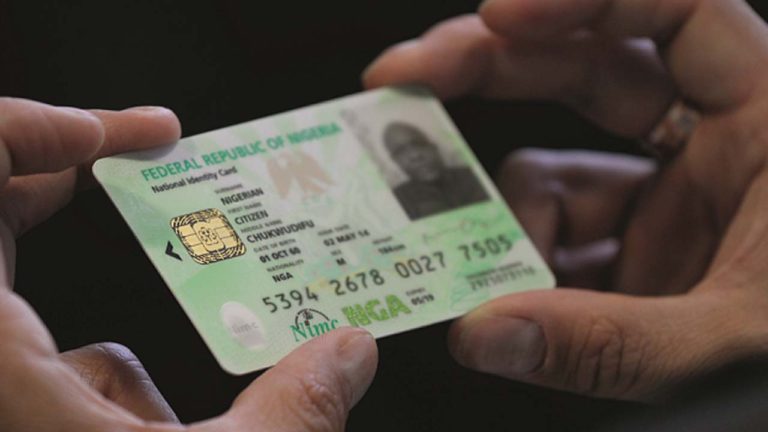
A viral social media post pulled from the WhatsApp platform on July 27, says the National Identity Management Commission (NIMC), an agency under the Presidency has designed a mobile phone application capable of integrating all Federal Government-approved social identity cards.
The mobile phone application identified as MWS: NIMC Mobile ID was credited as property of the Nigerian government.
Based on the post, registered subscribers could retrieve private information about their Drivers License Number (DLN), Voters Identity Number (VIN), Bank Verification Number (BVN), National Passport Book Number (PPN), and Tax Identity Number (TIN).
“In fact, you only require your full National Identification Number (NIN), your Mobile Number and a PIN to protect the app,” reads the post which have been shared multiple times across several WhatsApp groups.
A screenshot of the message on WhatsApp
THE CLAIM:
Claim 1: That NIMC is behind the “MWS NIMC Mobile ID” Application.
Claim 2: That the viral message was from NIMC
THE FINDINGS
The ICIR observed that the app which is hosted on Google Play Store has been downloaded over 10,000 times.
The logo of NIMC is displayed on every page of the app. In addition the Nigeria’s coat of arm emblem was also included on the app.
More so the Developers’ contact email address says “mobileId@nimc.gov.ng” and lists “11 Sakode Crescent Wuse Zone 5 Abuja, Nigeria” as address, this is also the organsiation’s office address.
The final stage of the registration process requests users to verify their identities by providing the 11 digits national identification number with a mobile number.
Users are however not allowed to include their Bank Verification Number (BVN) otherwise, they risk being blacklisted. The warning inscription was emphasised in red.
A screenshot of a page in the mobile app.
The ICIR reached out to Kayode Adegoke, the Spokesperson for NIMC, and in the phone interview he acknowledged the existence of the app.
He also stated that he has it downloaded on his mobile.
He however, dismissed the viral message being shared on WhatsApp platforms, saying it did not originate from NIMC.
“The message is not from us,” Adegoke said. “We have our official communication channels which include but not limited to our website, press releases or official social media platforms. Anything outside that is not from us.”
“The general public should be aware so that they won’t be swindled of their money.”
“We are building up the mobile applications where Nigerians can actually access their cards. We are doing the pre-trial stage but we have never asked anyone to supply their BVN number or Tax number or so,” Adegoke explained.
He added that “We notice that some unscrupulous elements want to manipulate Nigerians. It is still being processed, that’s why it has not been officially launched.”
THE VERDICT
Based on the available findings, the claim about the mobile application belonging to the NIMC is TRUE but it has not been launched as it is still at the pretrial stage.
However, the claim that the message originated from NIMC is FALSE.
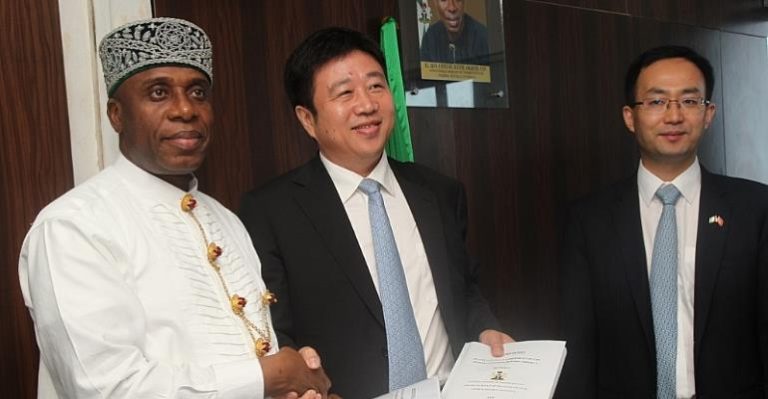
ROTIMI Amaechi, the Minister of Transportation has disclosed that the Nigerian government has applied for a $5.3 billion loan and also in the process of applying for another N3 billion loan from the Chinese Government.
The Minister who disclosed this while speaking on Channels Television’s Politics Today on Tuesday, said that the $5.3 billion loan will be used to execute the rail from Ibadan to Kano, while the $3 billion loan is planned to be used in executing the rail from Port Harcourt to Maiduguri.
“The reason why I said that is because we have already applied for $5.3 billion to execute the rail from Ibadan to Kano. We are about applying for about $3 billion to execute the rail from Port Harcourt to Maiduguri,” Amaechi revealed.
Nigeria is still in the process of clearing the $500 million Chinese loan borrowed for infrastructural projects.
According to the Minister, the country has already paid up to $98 million and is still owing over $400 million.
Despite the country’s growing debts, he said that Nigeria is only able to successfully embark on infrastructural projects because of available loans, adding that the country’s only challenge is its debt to revenue ratio.
However, there has been public outcry over the rising debt profile of the country.
Controversy has trailed the conditions in which these loans are obtained, including a much-debated ‘wave of sovereignty’ clause that exits in the $500 million loan agreement between Nigeria and China.
But Amaechi has maintained that such clauses are natural developments in any business transactions between two countries.
“It’s a standard clause, whether it’s with America you signed it or with Britain or any country, because they want to know they can recover their money. What the clause does is to say to you, I expect you to pay according to those terms and conditions. If you don’t pay, don’t waive your immunity on me (the lender) when I come to collect back what is the guarantee you put forward,” the Minister had earlier stated.
According to the Debt Management Office (DMO), between 2010 and March 31, 2020, Nigeria Government has taken 11 loan facilities from the China Exim Bank.
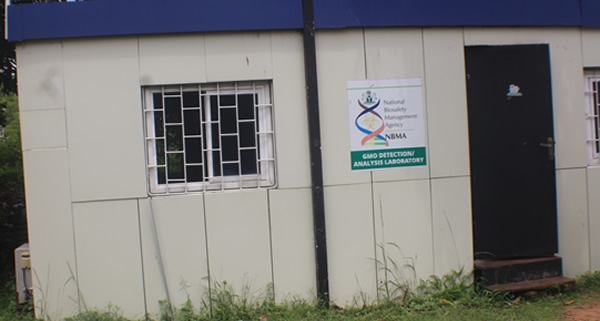
THREE weeks after The ICIR’s investigation that exposed how the National Biosafety Management Agency’s fund for capital projects was mismanaged via inflated project prices, the agency has petitioned Abubakar Malami, the Attorney general of the Federation (AGF) and the Minister of Justice.
The agency in the petition written to the AGF and signed by Dr. Rufus Egbeba, its Director-General, alleged that The ICIR misused the Freedom of Information Act (FOIA) in the course of the investigation.
The ICIR had in the investigation exposed how the agency spent over N365 million on vehicles, computers, and equipment, all between 2016 and 2019, but were all inflated beyond the market price.
Documents obtained from NBMA through FOIA request by this newspaper show how the agency has executed no fewer than 30 capital projects but at inflated prices.
For example, the investigation shows that the agency has spent over N170 million on only five operational vehicles between 2016 and 2019.
Reacting to the report, the agency had on July 27 written to The ICIR, demanding that the story be pulled down within 48 hours insisting that the report was a misrepresentation of what was contained in the procurement documents.
After then, the agency petitioned the AGF alleging that this newspaper, “maliciously abused use of information obtained from the National Biosafety Management Agency under the provisions of the Freedom of Information Act.”
It further alleged that the investigation was calculated to tarnish its image and thereby called on the AGF to investigate and prosecute The ICIR.
Meanwhile, The ICIR in a letter dated July 30 had invited the agency to share invoices and other documents that show the correct value of the purchases within the period in question in order to further ascertain its claims, but NBMA had not responded as at the time of filing this report.
Instead, the agency which ranked 56th position in the 2018 FOIranking opted to petition the AGF to call for a clampdown on FOIA instead of providing clarification. The lowest ranking position in that year was 82nd.
The Freedom of Information Act was passed into law on May 28, 2011, but despite the passage, many government agencies still consider public records in their custody as private information which can only be disclosed only according to the whims and caprices of the public officers.
It is noteworthy that Nigeria still ranks a woeful 132 out of 162 countries in the FOI compliance, according to the 2018 Human Forum Index.
Similarly, Transparency International in 2019 ranked Nigeria 146 out of 180 countries in Transparency International’s corruption perception index.
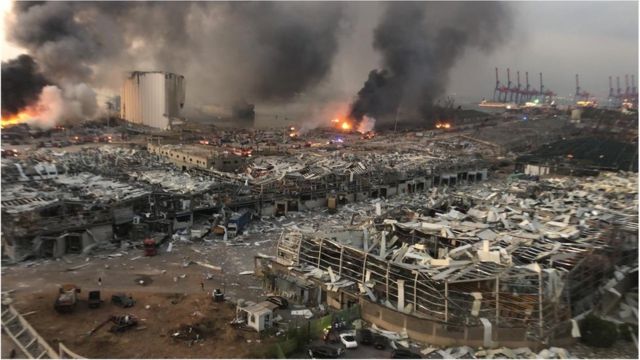
RESCUE workers in Lebanon are searching for survivors, as they dig through wrecked buildings on Wednesday, after a warehouse explosion in Beirut claimed at least 100 lives, with over 4,000 people injured.
The death toll grew to over 100 and with an unknown number still missing as officials expect the number of casualties to rise.
George Kettani, head of Lebanon’s Red Cross revealed that rescue workers were combing the site of the explosion after confirming that at least 100 people died from the blast.
“What we are witnessing is a huge catastrophe, there are victims and casualties everywhere. We are still sweeping the area there could still be victims but I hope not,” he said.
Kettani said the Red Cross was coordinating with the Health Ministry to set up morgues because hospitals were overwhelmed.
The force of the blast threw victims into the sea and rescue teams were trying to recover bodies. Several people killed by the blast were port and custom employees and people working in the area or driving through during the Tuesday afternoon rush hour.
More than 4,000 people were injured, overwhelming the city’s hospitals.
Lebanese President Michel Aoun said about 2,750 tonnes of ammonium nitrate, used in fertilisers and bombs, had been stored for six years at the port without safety measures
Describing the failure to deal with the ammonium nitrate as “unacceptable” and vowed the “harshest punishment” for those responsible.
However, an investigation has been launched, and the committee was directed to refer its findings to the judiciary within five days.
The blast is described as the most powerful ever in Beirut, a city under the throes of civil war and yet to make a comeback from an economic meltdown including a rise in coronavirus infections
Haman Hamad, Lebanon’s health minister said there was an anticipated increase in the death till as enquiries about missing people have increased in 24 hours.
“There are many people missing now. People are asking the emergency department about their loved ones and it is difficult to search at night because there is no electricity,” he said.
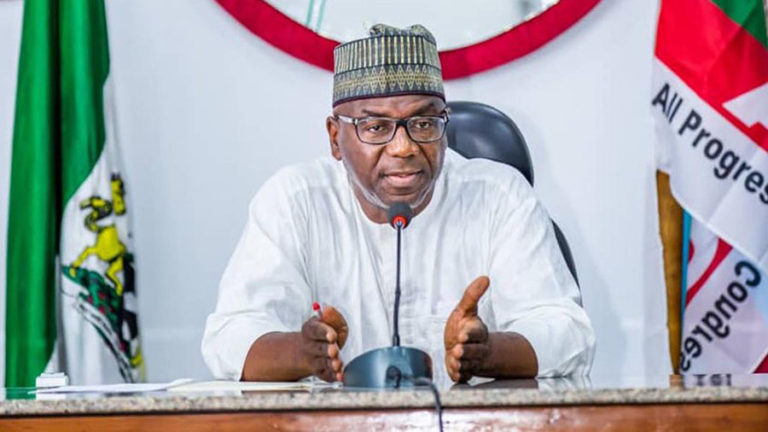
ABDULRAHMAN Abdulrasaq, Governor of Kwara State, has set up a six-man committee to investigate the sale or unlawful acquisition of government’s properties between May 29, 1999 and May 29, 2019.
This is coming in less than 24 hours after the governor inaugurated panel to probe local government spending in the state.
Members of the committee include Olabanji Orilonishe, a retired justice who serves as the chairman, Job Kolawole Buremoh, Isiaka AbdulKarem, Safiya Usman, Alhaji Salihu Yaru; and Muhammed Baba Orire as the secretary
While inaugurating the committee, the governor charged its members to spotlight properties of the state, including shares, stocks and bonds, that were sold or unlawfully acquired between May 29, 1999 to May 29, 2019.
He said the committee should hold public hearings involving various stakeholders, including persons who may have benefited from the sales of the properties
Abdulrazaq further charged them to scrutinise the rationale behind the sales of the properties while determining whether such sales complied with the existing guidelines, rules and regulations governing the sales of government properties
He also enjoined the panel to recommend measures to curtail unlawful sale of government properties in the future.
“Determine whether the disposal of government-owned shares, stocks and bonds were done in the best interest of the state, make recommendations in respect of — recovering the government properties wrongfully sold or disposed of, or unlawfully acquired,” he said.
“Recommend appropriate sanctions against persons involved in the wrongful disposal or unlawful acquisition of such properties; and appropriate measures to be put in place to protect government properties against indiscriminate sale, disposal or unlawful acquisition in future.”
It would be recalled that the state government in January 2020, demolished a building belonging to the late Olusola Saraki in Ilorin, the state capital.
The decision to revoke the late Saraki’s property was, according to the governor, due to alleged illegality in its acquisition.
He said the land was originally designated for the construction of a secretariat and parking lot of the civil service clinic, but that it was unlawfully allocated to a private firm — Asa Investments Limited — without any record of payment to the state government.
But Bukola Saraki, the late Saraki’s son and former senate president refuted the allegations, saying that his father lawfully acquired the land from the state government
Many businesses have been struggling to survive in Nigeria, even before COVID-19. But the situation has got worse with the outbreak of the coronavirus pandemic in Nigeria around February. Despite the hard time faced by the Nigerian business community, the local authorities in the Federal Capital Territory Abuja are fleecing small and medium business owners by compelling them to pay multiple taxes. JOSEPHINE EJEH reports about the frustration of many SME owners in the FCT who are compelled to pay various taxes but yet are denied access to basic social amenities.
SITTING on a bench in front of her shop made of zinc and woods, the expression on the face of Ojo Elizabeth was that of despondency as she thought of how to raise money to buy the next meal for her children.
It was past 2 pm, but she had not made any sales for the day. Lost in thought, all she could do was just wish that customers would come to patronize her before the close of business– to save the day.
Though Elizabeth works very hard, the daily sales are utterly poor, and the proceeds are hardly enough for her family, especially now that her husband’s carpentry business has stagnated due to the recent outbreak of the novel Coronavirus disease.
Petty trader, Elizabeth Ojo
Owing to the alarming unemployment rate in Nigeria and the inability of the government to create an adequate opportunity for more jobs for the teeming population of the unemployed, many Nigerians, like Elizabeth and her husband, rely on beggarly earnings from small scale businesses to pay their house rent, feed their families, pay children school fees, pay electricity bills, and other bills.
Life became even more difficult for the petty trader, since the outbreak of the novel coronavirus disease.
“I wake up very early to open my shop but unfortunately, at the end of each day, I don’t make any tangible sales. The period of the lockdown imposed by the government to curtail the spread of the coronavirus was very bad for us. It was by the grace of God that my family survived it. From that time up till now, we have been struggling to survive by the grace of God,” she told The ICIR.
For her, the day usually begins at 4 am when she wakes up to say her prayers, do the house chores, fix breakfast and lunch for the children before proceeding to her shop located along the Bwari Timber shed market.
Each day, her expectation was to make sales that would enable her to take care of the immediate needs of the family, but she always went home after the day’s business, disappointed.
A few minutes past 2 pm on the day The ICIR visited her shop, Ojo who sells soft drinks, snacks, recharge cards, satchels of milk, milo, detergent, and other items in her shop, looked gloomy, an indication that all was not well with her.
Her countenance soon lit up a bit when this reporter approached her and asked for a bottle of soft drink and snacks.
At the Timber market area where her shop is located, businesses are dwindling due to what operators blamed on the poor road network to the market.
“Since I opened this shop three years ago in the timber shed area, business has not been good. Everything is going down on a daily basis,” she said.
The ICIR’s check showed that the common challenges confronting Small and Medium Scale Enterprises (SMEs) in the Bwari area include, inadequate basic infrastructure that could have made the environment more conducive for small businesses, shortage of water supply, lack of electricity and poor road networks linking the markets and some parts of the town.
This lack of physical infrastructure contributes to hampering the growth of SMEs in Bwari town since it costs business owners so much in providing an alternative in the absence of government intervention.
Further checks also showed that multiple taxation has become a major problem that is stifling businesses in the area as business owners say they pay their taxes, but the area council administration does nothing in return to help businesses grow.
Commonly, the taxes imposed on Small and Medium Scale Enterprises in Nigeria include: business registration fee, environmental sanitation fee, fire service fee, emblem levy, retail permit, and trade permit, development tax, market taxes, produce a fee, revenue tax, most of which from the investigation, are being imposed on traders in the Bwari area council.
Bwari Area Council Secretariat
Elizabeth told The ICIR that initially, she ran her business in the heart of Bwari town, but was later forced to close the shop due to the exorbitant shop rent, coupled with the huge taxes she was compelled to pay.
When she relocated to the present location where she now operates, she thought she had escaped from paying not only shop rent but the taxes which she said, contributed to crippling her business in the other location.
Now she is face-to-face with the same predicament even as she has been notified to prepare to start paying her taxes in her present location.
Elizabeth Ojo’s shop located along the timber shed section
“When I was having a shop inside Bwari town, I used to pay N3, 000 every month to the revenue officials. I moved from that place to Timber Shed because I could no longer cope with the high shop rent and the taxes. I was paying N50, 000 for the shop. Now in this place that I am now, the revenue collectors have notified me to get ready because they would soon serve me papers to start paying taxes for where my shop is now,” she said.
Elizabeth does not see reasons why revenue officials should still bother her with the issue of taxes considering the state of businesses in the area, occasioned by the bad road network that links the Timber market.
“As the roads connecting this market are not good, it is directly affecting my business. People that are supposed to come to this place to patronise timber sellers, mechanic and spare part sellers operating at close proximity, prefer to go to other places. If the road is good, people will troop here. It is the customers that visit these traders that patronize us. Business is very bad here. Since 9 am and up till now (referring to the time The ICIR visited her at around past 2 pm), I haven’t even sold anything today.
Yesterday, I made sales of N500 throughout the day,” she lamented.
Elizabeth is not the only small business owner in Bwari affected by multiple taxations and lack of infrastructure.
According to PricewaterhouseCoopers Inc (PwC), Small and Medium Scale Enterprises (SMEs) account for 96 percent of businesses and 84 percent of employment in Nigeria. In Abuja, Nigeria’s Federal Capital City, thousands of SMEs operate under harsh conditions. In Bwari area councils, the situation is worse.
SMEs are struggling to Survive
Like Elizabeth, Ekene Sunday’s motor spare part business is also struggling to survive.
Sunday relocated to the Bwari area in Abuja in 2012 to establish the spare parts business at the Technology Village in Bwari, after serving his master for eight years.
Spare parts dealer, Ekene Sunday
He also said business has not been moving well since he started because customers prefer to go somewhere else to buy their motor spare parts and fix their cars.
“Business is very dull in Bwari. Many people living here in Bwari used to go to town to repair their cars, leaving us here to our fate. We have everything that customers need here, yet they will leave us and go to Kubwa and Apo, so we are not doing well at all,” he said.
Sunday says he pays N6,000 tax to the area council every year for operating business in the Motor Spare part section of the Technology Village where his shop is located, yet the council does not show any concern towards the growth of businesses in the area. He also attributed the poor patronage to the bad road network which discourages customers from driving into the market.
Against his expectation, eight years on, Sunday says his dreams of making it in Abuja is far from becoming a reality. His dream was to build a house of his own in Abuja, buy a car and give his family the best of life.
For Moses David, a Keke NAPEP tricycle operator who has been doing business in Bwari town for three years, tricycle business was never something he would have ventured into if his dream to work in an office had come through years ago.
Moses David, Keke NAPEP Operator
He says on a good day, he makes between N3,000 and N6,000 from which he pays the owner of the tricycle and buys fuel. At the end of the day, he is left with peanuts.
Yet no matter how low he made in a day, David is forced to pay N50 levy daily, amounting to an average of N300 every week.
“Apart from paying taxes, another challenge we are facing here is the bad roads. This has caused a lot of damage to my tricycle and unnecessary spending. Today, you are repairing something, tomorrow you are fixing another fault.
“What we want the government to do is to fix the road because bad roads are affecting our business. This will reduce our spending. If the road is good, business will be good,” he said.
Commercial motorcyclists, popularly known as Okada riders operating in different parts of Bwari, also shared similar experiences, lamenting how multiple taxes and levies enforced by transport unions and the area council administration stifle their businesses.
Dr. Cross Ogohi Daniel of the Department of Business Administration, Nile University of Nigeria, Abuja, in his recent research on the Effect Of Multiple Taxation On Small/Medium Enterprises in Nigeria, concluded that multiple taxations affect the survival and growth of SMEs in Nigeria, yet government at all levels keep overburdening business owners with multiple taxes.
The study affirmed that since small-scale enterprises are vital to employment generation, the transformation of the economy and production of goods and services, as such, they should not be overburdened with multiple levies and taxes to enable them to stay in the business and lend their support to the industrialization processes of the state.
“Tax must be done in such a way that puts their revenue and need for survival into consideration. It is expedient that enough profit is allowed for them for the purpose of expanding their businesses,” he said.
Apart from taxes, commercial motorcyclists spend a lot on repairs
Shamsudeen Aliyu, who has been into the Okada riding business for 10 years in Bwari town, says there are different bodies that collect levies from commercial motorcyclists which include Amalgamated Commercial Motorcycle and Tricycle, Motorcycle Transport Union of Nigeria(MTUN), Owners, Repairers and Riders Association of Nigeria, ACOMORAN and the area council.
His daily earning ranges between N1,500 and N2,000 but when business is not good, he goes home with only N1,000, and sometimes he doesn’t even get up to N1,000.
“Sometimes I make a gain, sometimes I don’t make any gain. It is very frustrating’, he said, adding, “to avoid the council tax collectors from confiscating his bike which attracts N1,500 fine, he buys a daily ticket at the rate of N50 which sums up to between N300 in a week, he also buys a sticker for N500 which expires in every 12 months.
His problem is further compounded by the bad road which makes him visit the mechanics regularly.
“Some of the roads here are good but some are in bad shape, so it affects our motorcycle. It cost us a lot of money sometimes to fix our bikes.
He appealed to the area council administration to salvage the Okada riding business by fixing all the bad roads.
Bad roads as “killer” of businesses in Bwari
Haruna Musa, a motor mechanic at the Mechanic Village, says after 28 years of doing business in the area, he still could not boast of having any savings because things have not really changed since these past years.
Haruna Musa(1st from the right) and his apprentices at work
“We are trying to move on. But because of where this workshop is located due to the bad road, business is not moving well as it should be,” he stated.
On a normal day, Musa makes between N3,000, N5,000 and sometimes, up to N7,000 in a day, but spends up to N3,000 or more on the water every week.
“A bag of pure water is N100 or N120. If it is Mai-Ruwa (Water vendor) a jerrycan is N50 or N70. In a week, we spend between N3,000 and N5,000 on the water every week,” he said.
Apart from the N6,000 tax he pays to the area council, Musa says he pays other fees to the association of business operators in the area for maintenance of the road.
Putting the relevance of SMEs to the growth of the Nigerian economy into perspective, recently, Vice President Yemi Osinbanjo noted that: “MSMEs(Micro, Small and Medium Scale Enterprises) are the bedrock of Nigeria’s industrialization and inclusive economic development; and the most important component of industrialization as set out in the Economic Recovery and
Growth plan of the Nigerian government.
A National Survey 2017 Report represented by the Statistician-General of the Federation in Nigeria/ CEO of National Bureau of Statistics, Dr. Yemi Kale on July 11, 2019, further noted that SMEs are critical for economic growth as they play a significant role for economic transformation and industrialization for both developed and developing countries.
The report noted that as of December 2017, MSMEs generated 59,647,954 jobs, 5 percent of the total figure of the jobs which is equivalent to 2,889,715 jobs, were created by SMEs, increasing job creation and skills development, particularly for youth, women, and elderly.
The report was the outcome of a survey conducted in all 36 states of the federation, including the Federal Capital Territory (FCT), Abuja. Both urban and rural enumeration areas (EAs) were covered.
In view of its potential to unlock Nigeria’s economic growth, governments at all levels are expected to create an enabling environment for SMEs to thrive.
This is, however, not the case in the Bwari area council, where authorities have been burdening small business owners with taxes that do not commensurate with deplorable existing infrastructure.
In spite of the revenue the local authorities generate from taxing businesses across the council, traders say there is nothing on ground to show for it because the council authorities are not utilizing the funds adequately, for the benefit of the taxpayers.
Traders Resort to Self Help to Fix Dilapidated Roads After Years of Government Negligence
In the absence of any intervention by the area council, a joint association of traders in the Bwari Area Council, comprising of the Motor Parts Dealers, Motor Mechanics, Timber Shed and Building Materials dealers, have in the past years, resorted to self-help by mobilizing resources from individual traders to fix the dilapidated roads linking the markets.
A section of the deplorable road connecting the timber shed and building materials market
During this investigation, The ICIR observed that the roads linking the various markets are still in bad shape but probed further, the Chairman of Motor Dealers Association in Bwari, Ossai Godwin opened up that it used to be worse than what it is presently.
In a desperate move to save their business from total collapse, Godwin said as a palliative measure to reduce the effect of the bad road networks on the markets, the association resorted to self-help after years of government negligence.
“Last two years, the four units of this market, consisting of Motor Parts Dealers, Motor Mechanics, Timber Shed and Building Materials, raised one million, fifty thousand Naira to grade the roads. Individual shop owners contributed N5, 000 because when we go to the area council to remind them about our request for them to fix the roads, they will assure us that they are coming but they never did, so we decided not to wait for the government anymore.
“We wrote letters to the area council with no response. We tried on many occasions to follow up, but nobody is taking our complaints seriously,” he stated.
Godwin confirmed that the traders pay between N6, 000 and N9, 000 tax per shop. While bigger shops pay N9, 000, smaller shops pay N6, 000.
Like the other traders, he sees no reason why they should continue to pay taxes since there were no benefits attached to it.
“The light here is not reliable. You subscribe to GoTV but you will not use it for one week before the month ends and it expires just like that. We don’t have boreholes here, we buy from mai-ruwa (Water vendors).
“Government is supposed to provide good roads and boreholes here for traders, so we can have water. We need light because we have welders here, battery chargers and electricians, restaurants, relaxation centres and other people that use electricity,” he said.
As noted by Daniel, taxes generally provide a basis for government revenue, which help
them in carrying out their functions, but in this context, the traders said they have been deprived of their entitlement.
Godwin says if the government was living up to its responsibility of providing “stable electricity and a good road for us, we won’t complain about the tax, but as it is, “we don’t see the benefit of paying taxes. It is not only to come and collect money, the government should do something, at least give us good roads, water and light. Most of our customers say they prefer repairing their cars in town because of the road since there is no use fixing their cars here because the too much gallop and pothole will end up causing another damage to their cars,” he emphasized.
The traders have made it a matter of priority to work on the road at intervals to make it a little bid accessible to would-be customers.
“Again, in the last two weeks the association of spare part dealers and motor mechanics mobilized our people to do the work on the roads and with this little repair we have done on the roads, a few people are encouraged to come to the market,” the chairman added.
A tyre dealer, Eze Mathew says since he started the business in Bwari in 2008, the challenges of infrastructure had been an issue of concern to traders in the markets.
“They say we should pay the N6, 000 tax which we have been faithful in paying. People don’t normally enter this market because they say the road will spoil their cars. We expect that the area council should fix the road and provide water inside the market because we don’t have any facility inside the market,” said Mathew.
A restaurant operator, who preferred not to be named, appears to have lost fate in the ability of the area council to create a conducive atmosphere for businesses to grow in the area.
Asked how his business has been coping with the unstable power supply, the owner of the popular Peace Restaurant located opposite the area council secretariat said the light issue has lingered for about two decades now. “We have gotten used to it.”
Speaking on government failure to provide infrastructure commensurate with tax collected, he said “These issues have been there, so it is not today. I don’t think these issues can be solved. We have been in Nigeria and we have been managing the situation just like that.”
A hairdresser, Odesanmi Blessing whose saloon is also located opposite the Bwari Area Council secretariat, says “with the way business is going, she’s not sure of her chances of survival in the nearest future.
Hairdresser, Blessing Odesamni inside her saloon
Blessing, who has been operating the saloon for 12 years, is sad that the council collects taxes from business owners and yet does not care whether their businesses are doing well or not.
Misappropriation of public funds rampant
Misappropriation of public funds has become very rampant in Nigeria where the masses are left to suffer the consequences which range from underdevelopment, lack of basic amenities because taxpayers funds that are supposed to service the provision of infrastructure end up in private pockets of government officials.
She alleged that the manner the taxes were collected is suggestive that the money may be going into private pockets because the tax collectors usually do not issue receipts for payments made.
“If they serve us the paper, they will give us a week interval before coming back to collect the money. When we pay, instead of giving us a receipt, they will just write it on the paper. Sometimes we give them N1, 500, sometimes, we give them N2, 000, N500 or N1, 000. There was a time they served me the paper, then I went to their office inside the Secretariat to pay. They told me to go back, saying that those that gave me paper will come and collect the tax from my shop. So, they later came, and I gave them the money,” the hairdresser alleged.
“Sometimes I used to challenge them that they are not doing anything to help us. We are the ones working and giving them money and we are not seeing anything. There is hardly any electricity supply. In a month, we can just see light three to four times and they will still bring the bill. We rely majorly on generators. It is very sad because here, whether you use light or not, you still pay electricity bills because they still bring bills for you. We don’t know where the revenue is going. Looking at the situation of this road, there is nothing to show,” Blessing said.
Area Council says no adequate fund to provide infrastructure
Anyadalo Danlami, Chief Revenue Officer, Bwari Area Council who was authorized to speak after the council subjected this reporter to so many protocols and ordeals for days, admitted that the area council was aware of the plights of the traders at the council but was cash- strapped that it cannot address all the needs of the people.
Speaking to The ICIR, he insisted that the amount paid by the traders as taxes was too meagre for them to expect that all their needs for infrastructure would be met by the council.
“We have heard their complaints many times but if you consider how much that is collected from them as taxes, it cannot even do anything,” he said.
He blamed the problem on the poor allocation to the council from the Federal Government, saying, the council Chairman would have done more if the funding was adequate.
“I believe with the kind of Chairman we have now, supposing the allocation we are getting from the Federal Government is enough, all those problems would have been a thing of the past,” he stated.
“We discussed with the market association the true situation of things that the money we are getting is not enough to do everything everywhere. For example, you can see Sabon- Gari road, the Chairman has tiled the road. How much is the allocation we are getting from the Federal Government? It is not something to write home about. So, to me, the Chairman is doing his best and truly, if we are encouraged and the allocation increases, things would be better,” Danlami said.
He called on the federal government to increase its allocations to the FCT administration but also promised to try harder as a revenue unit.
On how the council is spending the revenue collected from traders, the Chief Revenue Officer of the Council said: “It is a thing that is glaring. If you go round around, you see boreholes constructed by the administration and we are getting water from it. It is as a result of the revenue we are getting.”
Anyadalo Danlami, Chief Revenue Officer of Bwari Area Council
Prodded further on the complaints of traders in the market about not having water, Danlami said: “No matter what you do for them even if you build the road for them they will still complain. But the executive chairman is doing his best to ensure that they have a good road.”
He listed some of the taxes the business operators at the council pay to include daily ticketing for Keke NAPEP and Okada operators which is N50 each. Shops pay rental fees of N6, 000, tenement rate which varies from N2, 000, N3, 000, N5, 000 and above, development levies, market fees and other levies.
Speaking on revenue leakages, he said the revenue department carries out intensive supervision to ensure that shop owners pay their taxes directly to the council’s bank accounts, after which they are expected to present the bank tellers to the council to be issued receipts for their payments.
He said all shop owners were expected to pay taxes in the bank, appealing to them to report any tax collector who attempts to collect cash from them directly.
“No tax collector is allowed to collect cash and that is why the demand notice we usually issue to shop owners have account numbers. Anybody found wanting will be disciplined,” he said.
The Chief Revenue Officer of the council could not account for how much money the area council generates either daily, monthly, or yearly when questioned.
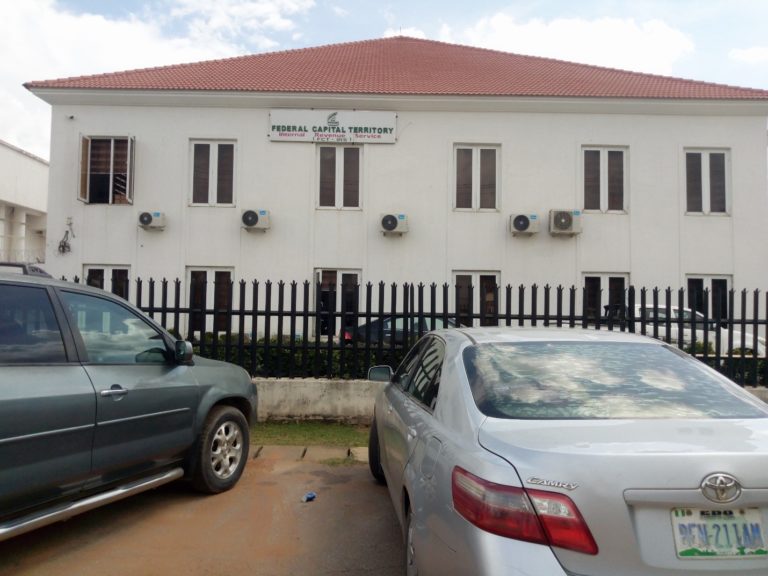
The ICIR contacted the information unit of the Federal Capital Territory Internal Revenue Service (FCT-IRS) in Abuja for more enquiries but the officer met on the desk declined to comment, saying all staff of the FCT-IRS were on secondment and answerable to the FCT administration, so they are not allowed to speak on any tax issues.
Earlier, efforts by The ICIR to know how much Bwari area council generates from taxes and how it spends the funds collected from traders was frustrated by officials of the council at the information office.
After several attempts, this reporter was directed to an officer identified as Emma, said to be the right person to speak on the issue.
But when contacted, he was antagonistic, threatening to take action should this reporter publish anything untoward against the council.
Federal Government Allocations Are Evenly and Promptly Disbursed to Area Councils
Olanikpekun Omolola, the Acting Secretary of the FCT Area Council Services Secretariat told The ICIR that from January to May this year, the FCT administration has disbursed over N2.7bn to the area councils in the FCT as their share of the Federal Government allocation, to run their operations and projects.
The secretariat is the mother body of all the six area councils of the FCT which carries out supervisory roles on the council and ensures that the allocations from the Federal Government are being given to the area councils evenly, through the Joint Area Council Allocation Committee (JAAC).
Reacting to comments by the Chief Revenue Officer who blamed the lack of infrastructure in the council to poor government allocation, she says, “As the allocation comes, there is no delay from the administration. The administration ensures prompt disbursement by quickly having a meeting at least within 24 hours everything goes to the council chairmen and nothing, absolutely nothing is taken away from them.”
Omolola says in January, Bwari area council alone received over N90, 306, 851.82 while its entitlements in the subsequent months were also paid promptly.
She disagreed that the Bwari area council had not done much in the provision of infrastructure. According to her, the area council has made some giant strides that is commendable.
“If I will talk about the allocations that have come this year, from January to May there have been allocations coming from the federal government which have promptly been distributed to all the councils. All the councils are getting what accrues to them.
“In January, over N90. 306, 851.82 given to Bwari area council. I wouldn’t say Bwari council is doing really bad because no matter what, recently they have embarked on projects even with what is going on.
“The area council embarked on projects on health which I recalled that they requested the attention of the Minister of State for FCT to come and commission that project. They also wrote to us about the road and the other one I can remember. It is an improvement and a laudable achievement to that area council. They also constructed 5 markets to attract revenue, so the Bwari area council is trying. These facts are not a hidden thing,” she said.
Aside the Federal Government allocation, Omolola said the FCT administration always dedicates 10 percent of its Internally Generated Revenue (IGR) which still goes back to the council for implementing and for servicing the people.
“The FCT administration to the best of my knowledge has not been withholding or delaying any allocation for the councils. As it comes, it gives,” she stressed.
She gave the breakdown of the total revenue disbursed to all the six area councils from January to May respectively, as follows: January-N704,693,562, February-N444.767,553.28, March, N674,379,984.03, April-N293,794,682.43, May-N601,352, 696.88, noting that the FCT administration had a dwindling allocation from the Federal Government this past few months because of the Coronavirus epidemic which has affected not only the Nigerian economy alone but the global economy.
Speaking on the efforts of the administration to boost revenue generation of the area councils, she said the administration was making sure there is an implementation of projects that could draw more revenue, like the construction of markets through Public-Private Partnership (PPP) arrangement.
“We are talking with developers to complete abandoned market projects to speed up revenue generation. We are looking inwards with a survey to see what can help,” said the acting Secretary.
On revenue leakages, she said the FCT Minister had been working on harmonizing all taxes to make sure it gets into the TSA and that nobody collects taxes directly from taxpayers.
“We are looking at a system where only one person prints the tickets and then he is controlling it from his own ends to ensure the authenticity of the receipt or tickets. We will assist the area councils in monitoring to ensure individuals don’t collect taxes directly,” she said.
A renewed protest to demand good governance under the aegies of #RevolutionNow was on Wednesday disrupted by soldiers and police men in Abuja, the Federal Capital Territory (FCT) and other cities like, Lagos, Ondo and Osogbo, capital of Osun State.
The protest tagged national day of action is being held in major cities of the country in commemoration of the first anniversary of the #RevolutionNow Movement held on August 5, 2019 under the leadership of Sowore Omoyele, publishers of Sahara Reporters and a former presidential candidate.
In Abuja, the protesters who converged at the popular Unity Fountain, located at Shehu Shagari Way, Maitama at about 8am, were seeing holding placards with several inscriptions, depicting the state of poor governance across the country.
As they chanted songs, demanding the Federal Government to address many of the issues plaguing the country, officers of Nigeria Police prevented them from going on with the protest.
About 60 protesters were reportedly arrested after police took over the protest at the Unity Fountain.
Deji Adeyanju, a human rights activist who was part of the Abuja protest posted on his Twitter page pictures of protesters who were ordered to lie face down by a team of heavily armed security agents.
“Security agents harrasing peaceful protesters but they run or cry when they see Boko Haram or bandits,” Adeyanju wrote.
He lamented that the country is back in the era of military, noting that the government deployed a combined team of police, soldiers, DSS and others because of the protest.
“We are currently witnessing a joint madness by the military, police and other security agencies as over 60 of our comrades have been arrested over peaceful #RevolutionNow protest. The Abacha days are here once again,” Adeyanju wrote in another tweet.
Across major entry points in Abuja like Dutse, Airport road, security agents including soldiers, police, SSS, Civil Defence Corps and FRSC took strategic positions conducting stop and search on vehicles.
At the popular Berger Roundabout, a joint team of police, SSS, Civil Defence Corps and FRSC were seeing heavily armed under the bridge.
Reports say all the protesters at Berger Roundabout were arrested by the security operatives who came in about 10 vehicles.
“Yes, they came with about 10 vehicles, I mean the security operatives and they packed all the protesters away,” an eyewitness told The ICIR.
Protesters were also not allowed in Lagos, Ondo and Osogbo where security agents reportedly fired tear gas to disperse them.
According to PM News, Agba Jalingo, Publisher of Cross River Watch, was arrested alongside some journalists and Revolution protesters in Ikeja Lagos.
The protest also took place in Oyo State, though no report of arrest, even as protesters also converged in London.
The organisers of the protest had earlier on Tuesday announced details of the mass action, including convergence points in 10 different states across the nation, The Cable reports.
So far, arrests by security agents of the government have been made in Abuja, Lagos and Osun, where citizens and members of the Revolution Now protest have gathered to demand a functional government, The ICIR gathered.
Sowore, who mobilised for the protest was arrested on August 3, 2019 for planning to organise a protest which the government said was an attempt to take over power from the sitting president.
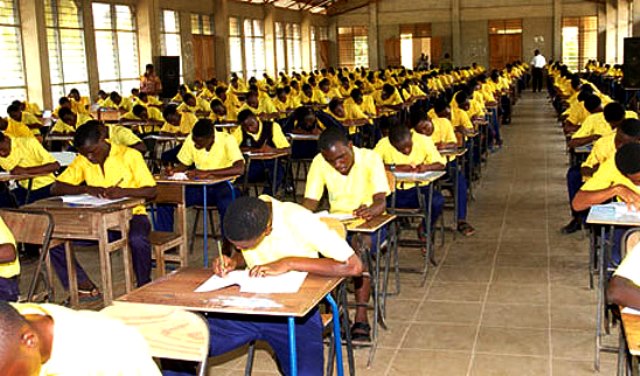
THE West African Examination Council (WAEC) has announced the release of the timetable for the 2020 senior secondary school certificate examination (WASSCE).
The examination council disclosed this through a statement on its official Twitter handle signed by Demianus Ojijeogu, the WAEC Head of Public Affairs.
“The West African Examination Council (WAEC) wishes to inform its stakeholders-schools, parent and candidates that the Final International timetable for the conduct of WASSCE for school candidates, 2020 has been released,” the statement read.
According to the examination body, several versions of the timetable have been circulated, but should be disregarded, because “they did not emanate from the council.”
The Council said its examination would commence on Monday, August 17.
“The examination which has been slated to begin on Monday, August 17, 2020, will end on Saturday, September 12, 2020.
According to the Timetable, students will sit for Mathematics on August 17 and English Language on August 24.
Practicals for science students begin this Friday, August 7 with Chemistry.
“The Council hereby urges the candidates to abide by the rules and regulations guiding the conduct of the examination by shunning all acts of malpractice and obeying all Covid-19 protocols that have been put in place at the examination centres,” the statement further read.
Schools across the country have been resuming in preparation for the examination after five months break due to COVID-19 pandemic.