The Socio-Economic Rights and Accountability Project (SERAP) has asked President Muhammadu Buhari to immediately reverse the sudden increase in hate speech fine announced on Tuesday.
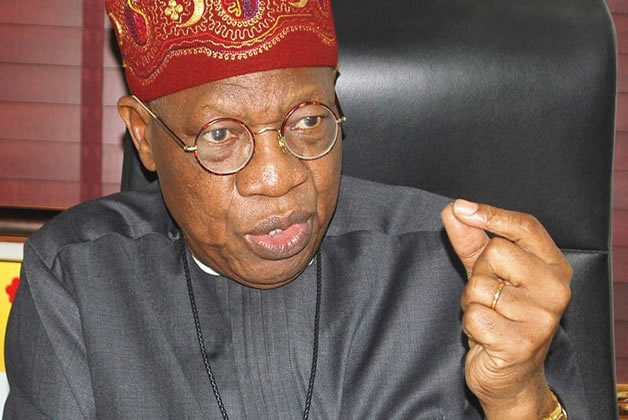
Lai Mohammed, the Minister of Information and Culture, while unveiling the Reviewed Broadcasting Code in Lagos on Tuesday , announced that the Federal Government has increased the fine on hate speech from N500,000 to N5 million.
According to the minister, the hike was necessitated by a “presidential directive, in the wake of the 2019 general elections, for an inquiry into the regulatory role of the National Broadcasting Commission (NBC) as well as the conduct of the various broadcast stations before, during and after the elections.”
He equally said the decision was approved by the President.
However, in a statement on Tuesday, SERAP said the sudden increase is unconstitutional and illegal, and should therefore be reversed.
“We’re calling on President Buhari to immediately reverse the unconstitutional and illegal increase in ‘hate speech fine’ from N500,000 to N5 million,” SERAP said in a Twitter message.
“We’ll fight to challenge this illegality in court to make sure that the fine doesn’t become another tool for repression.
“This fine would further curtail freedom of expression and open the door for law enforcement officials to target critics.”
The organisation vowed to contest the legality of the fine in court if it is not immediately reversed.
“The fine fails to meet the standards of legality, necessity and proportionality in article 19(3) of the International Covenant on Civil and Political Rights,” SERAP said.
The Buhari government should be removing restrictions on freedom of expression, not imposing heavy fines that risk stifling critical public debate on important issues,” it said.
SERAP enjoined the leadership of the National Assembly to publicly condemn the acts.
RELIGIOUS leaders under the aegis Nigerian Inter-Religious Council (NIREC) have called on the Federal Government to buckle up and provide effective security for citizens.
NIREC is under the leadership of Muhammadu Sa’ad Abubakar, the Sultan of Sokoto and President General of the Nigeria Supreme Council for Islamic Affairs (NSCIA) and Samson Ayokunle, President of the Nigerian Baptist Convention and President of the Christian Association of Nigeria (CAN). They are both the Co-Chairmen of the Council.
In a press statement signed by Cornelius Afebu Omonokhua , the Executive Secretary of NIREC, the religious leaders expressed worry over the rising insecurity in the country, condemning recent attacks in Sokoto, Zamfara, Kaduna and Kogi states.
“We condemn the carnage on human life especially the recent killings of 76 people in Sabon Birni Local Government of Sokoto State, RuwanTofa Dansadua district in Zamfara State, Zagon Kataf Local Government Area in Kaduna State, Bethel Baptist Church Aguda-Dauruwan Kogi State and the attack on the convoy of the Borno State Governor, Babagana Umara Zulum at Baga,” the statement read in part.
NIREC further urged the government to double up its efforts of securing the lives and property of the citizens, adding that the perpetrators of the incessant attacks must be found and made to face justice.
The Council said it has always condemned the terrorists’ attacks on innocent citizens in the North-Eastern part of Nigeria and the various criminal activities in the various parts of the country.
It added that it was worried that the threats and killings keep spreading.
Citing a ‘Save Our Soul’ cry by the Shehu of Borno, Abubakar Ibn Umar Garbai ElKanemi who recently lamented that: “My people in Borno are no longer safe,” NIREC said Maiduguri, in particular should not be allowed to be run over by the insurgents who have been throwing mortals there, killing people.
“These show how serious the state of insecurity is in the nation. These situations and the likes are of grave concern to NIREC. The unabated carnages leave the citizens in a state of complete despair as economic activities are almost paralyzed,” the Council said in the statement.
It noted that it was constrained once again to call on the government at all levels to take security as a top priority for every Nigerian.
The security agents, the Council said, must mop up the arms and ammunitions in the hands of criminals.
The government must ensure a complete stop to the proliferation of all forms of weapons that criminals use to destroy life and property, it said.
Earlier, the Nigeria Governors’ Forum (NGF) submitted that the growing rate of insecurity in the country shows the fragility of Nigeria’s security architecture.
The same message has been re-echoed by the National Assembly, which in July, called for the resignation of Service Chiefs.
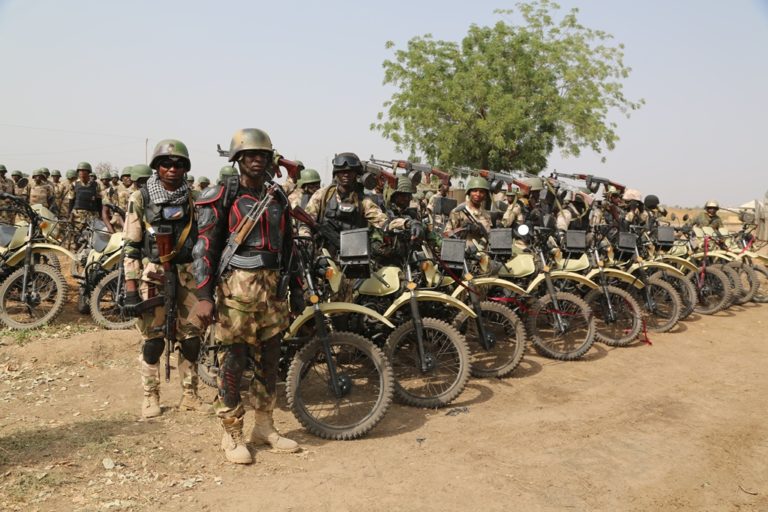
The lawmakers raised a point of order demanding that Tukur Buratai, Chief of Army Staff; Sadique Abubakar, Chief of Air Staff; Gabriel Olonisakin, Chief of Defence Staff and Ibok-Ete Ekwe Ibas, Chief of Naval Staff, step aside for new appointments to be made.
However, the presidency in response said the appointment or sack of Service Chiefs remains a power vested in the president, adding that President Muhammadu Buhari would do what is in the best interest of the nation.
According to the Council on Foreign Relations’ Nigeria Security Tracker, Boko Haram has killed nearly 30,000 people in Nigeria since 2009.
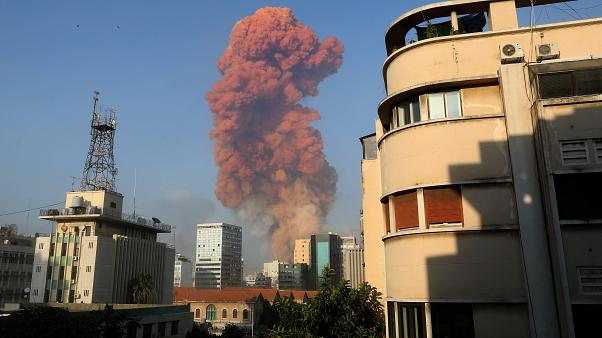
TWO explosions shook the Lebanese capital Beirut on Tuesday, with at least 10 people dead and dozens of others injured amid the widespread damage of properties with the numbers likely to rise.
Videos of the explosion shared by residents on Twitter showed smoke rising from the port district before an enormous blast ensued.
The video footage which initially appeared to be a big blaze was thrown backwards by the shock of the explosion.
The loud blasts in Beirut’s port area were felt across the city and beyond and some districts lost electricity.
The cause of the explosion was not yet known as the Lebanese Red Cross confirmed in a tweet that 30 more than 30 teams were responding to the scene of the blast with ambulances.
Beirut Port Explosion: 🚨more than 30 teams are responding to the explosion. Please make way to our ambulances!🚨
Lebanese media showed images of people trapped under rubble, some bloodied, while local televisions stations reported the blast originated inside an area where firecrackers were stored.
According to an AFP report, at the scene of the explosion, most shops in the Hamra commercial district had sustained damage, with entire shopfronts destroyed, windows shattered including cars which were wrecked.
It stated that injured people were walking in the street, while outside the Clemenceau Medical Centre, dozens of wounded people, some who were covered in blood were admitted to the centre including children.
The loud blasts in Beirut’s port area were felt across the city and beyond and some districts lost electricity.
Online footage from a Lebanese newspaper office showed blown-out windows, scattered furniture and demolished interior panelling.
Guys ,the next time you see an explosion, stop recording and lie down. There is a second shockwave that hits about 2 seconds later that flips cars breaks windows and throws you away. Let's pray for Beirut and Lebanon all in all pic.twitter.com/seqiY5pSMY
— Jayden, go home, you're drunk. (@mkufuuu) August 4, 2020
Lebanese President Michel Aoun summoned an emergency meeting of the country’s Supreme Defence Council, according to a report by Aljazeera.
Farhan Haq, United Nations, spokesman said it was not immediately clear what the cause was, and that there was no indication of any injuries to any UN personnel.
“We do not have information about what has happened precisely, what has caused this, whether it’s an accidental or manmade act,” he said.
The explosions came at a time when Lebanon is suffering its worst economic crisis in decades, which has left nearly half of the population in poverty.
Lebanon’s economy has dropped in recent months, with the local currency plunging against the dollar, as businesses were shutting down enmass and poverty rising at the same rate as unemployment.
The explosions also come as Lebanon awaits the verdict on Friday on the 2005 murder of former Lebanese premier Rafic Hariri, killed in a huge truck bomb attack.
Four alleged members of the Shiite Muslim fundamentalist group Hezbollah are on trial in absentia at the court in the Netherlands over the huge Beirut suicide bombing that killed Sunni billionaire Hariri and 21 other people.
Tensions have also been high with neighbouring Israel after Israel said it thwarted an infiltration attempt by up to five Hezbollah gunmen, a claim denied by the Iranian-backed group.
THE National Universities Commission (NUC) has commended no fewer than 32 universities that have been involved in various COVID-19 researches.
Professor Abubakar Rasheed, the Executive Secretary, of NUC made this known in Abuja on Tuesday while briefing journalists on the contribution of the Nigerian University System in mitigating the impact of Covid-19.
He disclosed that the research which was in different stages was aimed towards addressing direct and collateral impacts of COVID-19.
“As at June 22, not less than 32 universities are involved in different stages of research aimed at galvanising research towards the development of vaccines and non vaccines for COVID-19,” he said.
He stated that the pandemic has challenged many countries to embrace robust research and innovation work.
“As in many other parts of the world, the pandemic has challenged our knowledge system, which has proved inadequate and insufficiently robust enough to respond to the challenges.
“Only few institutions have been able to utilise open and distance learning system to keep students engaged while the pandemic lasted and only few laboratories continued with research and development activities.
”Nonetheless, the few who engaged in research and innovation work have demonstrated the need for a well-funded and robustly organised national research and innovation system to catalyse the national response,” he said.
Rasheed added that in the area of Genomic research, the African Centres of Excellence (ACE), particularly the Centre for the Genomics of Infectious Diseases at the Redeemer’s University, Ede was collaborating with the University of Cambridge for the development of vaccines.
He said that other ACEs in Ahmadu Bello University, Zaria, Universities of Lagos, Benin, Port Harcourt and Jos, which served as national testing and screening centres had proved that world-class research and development was possible in Nigeria.
He, however, added that the country’s university system could be readily effective and relevant to national development if research was valued and adequately funded and the institutions provided with resources to motivate researchers and innovators including students.
On the current efforts of herbal remedies, Rasheed said the directive of President Muhammadu Buhari on herbal and natural products development was acknowledged, following the great demonstration of enviable political leadership by the President of Madagascar.
“Such will go a long way to motivate homegrown developments and innovation in science and technology by the NUC, including anti-COVID-19 human immunity-boosting foods.
“Furthermore, Nigeria needs to develop homegrown capabilities in the production and manufacture of the most basic medical and pharmaceutical products such as PPEs, WASH accessories, and ventilators.
” Limited developments are reported from the few ongoing research, but these give some hope that the NUC can provide the R&D base for responding to these needs and much needed structural reconfiguration of the economy.
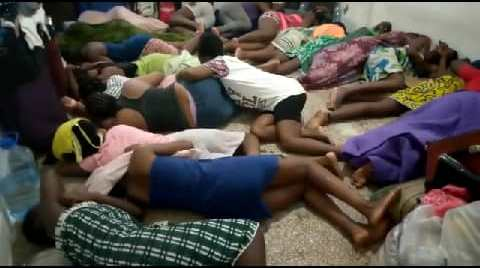
THE Nigerians in Diaspora Commission (NIDCOM) says 30 Nigerians who were stranded in Lebanon have been rescued, relocated and waiting be evacuated to Nigeria with 150 others.
Gabriel Odu, NIDCOM Media, Public Relations officer said this in a statement on Tuesday in Abuja.
“30 Nigerians in a video appealing for help have been rescued by the Nigerian Mission in Lebanon, and have been relocated to a more conducive apartment,” the statement read.
According to NIDCOM, the 30 Nigerians would be part of 150 others trafficked and stranded in Lebanon to be evacuated back to Nigeria.
Houssam Diab, the Lebanese Ambassador to Nigeria disclosed the evacuation plans when the Management of Nigerians in Diaspora Commission, NIDCOM, led by Sule Yakubu Bassi, the Secretary visited the Embassy in Abuja.
Diab said the 150 girls would be returned home in batches, stating that the first batch of 110 would leave Beirut, Lebanon on August 12 to Lagos while the second Batch will be returned to Abuja on August 16.
He commended the efforts of the Lebanese Community and the Oyo State Government which is sponsoring the return of 55 of the girls.
A breakdown of the number of girls shows that a large proportionate of them are from South-western Nigeria.
Oyo State has 41, Ogun State 21, Lagos State 12, Ondo State 18, Osun State 26, Imo State 3, Kwara State Ekiti State 6.
Enugu, Kogi, Edo, Delta, Ebonyi, Benue, Abia, Akwa Ibom and Anambra States have 1 indigene each in the list of the girls ready to be evacuated to Nigeria.
On July 30, a viral video on social media showed how the Nigerian ladies cried out to the Federal Government to rescue them from Lebanon.
The ladies alleged that the Nigerian Embassy in Lebanon had shunned their calls for help claiming that the embassy officials did not allow them to meet with the ambassador.
THE Federal Government says it has raised the fine for hate speech from N500,000 to N5 million for defaulters.
Lai Mohammed, the Minister of Information, disclosed this in Lagos on Tuesday while unveiling the reviewed Nigeria Broadcasting Code which contains the Antitrust provision aimed at boosting local content and encouraging the growth of the local industry, among other provisions.
The Minister said the Antitrust provision would boost local content and local industry due to laws prohibiting exclusive use of rights by broadcasters who intend to create monopolies and hold the entire market to themselves.
He said the Antitrust provision would also encourage open access to premium content.
According to him, the amended Code also includes the provision raising the fine for hate speech from N500,000 to N5 million.
There have been attempts by the Federal Government through the National Assembly to regulate hate speech in the country.
In 2019, the Senate reintroduced a bill that seeks to penalise persons found guilty of hate speech.
The National Commission for the Prohibition of Hate Speech Bill was sponsored by Aliyu Abdullahi, the Deputy Chief Whip.
It prescribes death penalty for anyone found guilty of spreading a falsehood that leads to the death of another person.
“I must explain that this provision is not new to Nigeria Broadcasting. Exclusivity was disallowed at a certain time in the history of our broadcasting. I recall Multichoice sub-licensing EPL matches to other local operators in Nigeria. I recall HITV engaging several local operators on sub-licensing the EPL when they got the rights,” Mohammed said.
He said the revised Code contains the law prohibiting backlog of advertising debts in order to promote sustainability for the station owners and producers of content, as well as the law on registration of Web Broadcasting, which will grant the country the opportunity to regulate negative foreign broadcasts that can harm the nation.
The amendment to the existing 6th edition of the Code, was initially launched in Kano in July 2019.
Mohammed stated that the amendments were necessitated by a Presidential directive in the wake of the 2019 general elections, for an inquiry into the regulatory role of the National Broadcasting Commission (NBC) as well as the conduct of the various broadcast stations before, during and after the elections.
Before the launch of the Code in Kano, there were wide stakeholder meetings and discussions on virtually all the provisions of the 5th edition, which was now reviewed as the 6th edition.
Mohammed explained that following the inquiry, President Muhammadu Buhari approved many recommendations that would reposition the NBC to perform its regulatory role better.
Key among the recommendations is the need to amend the provisions in the Code and Act.
He added that the amendments were mostly in the areas of political broadcasting, local content, coverage of emergencies, advertising, and anti-competitive behaviour.
The Minister also advised that Sub-licensing and Rights sharing would create opportunities for local operators to also gain traction and raise revenue for their services.
”The law prohibiting backlog of advertising debts will definitely promote sustainability for the station owners and producers of content,” he said.
”The law on registration of Web Broadcasting grants the country the opportunity to regulate negative foreign broadcasts that can harm us as a nation. Such harms could be in the area of security, protection for minors, protection of human dignity, economic fraud, privacy etc.”
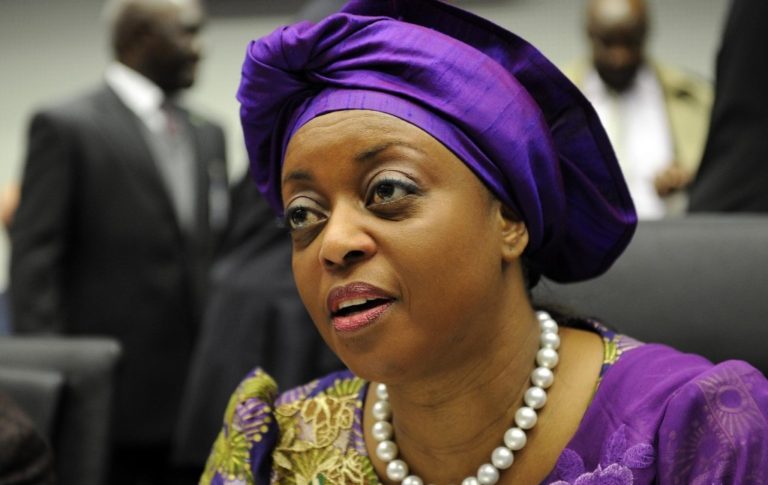
The British Government has promised to work with the Federal Republic of Nigeria in ensuring the prosecution of Diezani Alison-Madueke, a former Petroleum Minister, and other Nigerians suspected of fraud, bribery and corruption offences in the UK.
According to a statement by the All Progressives Congress (APC) UK chapter on Tuesday in Abuja, the British Government made the promise through James Brokenshire MP, its Minister of State for Security.
The statement was signed by Jacob Ogunseye, the APC UK Publicity Secretary and made available to the News Agency of Nigeria (NAN).
The statement said the British Government also promised to help the Federal Republic of Nigeria fight corruption to a standstill by ensuring that persons involved in criminal acts were duly prosecuted.
It said Brokenshire’s promise followed a petition initiated by the APC UK legal department to the British Government on the need to prosecute the former petroleum minister and other Nigerians suspected of fraud, bribery and corruption offences in the UK.
The statement said the petition was made sequel to a plea by Ibrahim Magu, former Chairman of the Economic and Financial Crimes Commission (EFCC) at the UK’s virtual meeting before his suspension.
According to it, Magu had appealed to Nigerians in Diaspora to assist the commission in putting pressure on the British Government to repatriate the former petroleum minister to Nigeria to answer for her alleged crime.
It said the APC UK legal department headed by Mr Joseph Adebola took the challenge by initiating a legal process reminding the British Government of Madueke’s arrest on October 2, 2015 by its National Crime Agency (NCA) in London.
The group recalled that Madueke was arrested alongside four other persons on suspicion of bribery and corruption offences and was later bailed.
It added that the APC UK legal team went further to request for reasons for the loss of traction by the United Kingdom NCA in prosecuting the former minister since her bail in 2015.
The Department, it added also demanded for a speedy trial of the former petroleum minister in the UK or in the alternative, facilitate her immediate repatriation to Nigeria to face charges of graft.
The statement quoted Ade Omole leader of the chapter as saying that a fair trial as enshrined in Article 6 of the Human Rights Act would be followed if Madueke was repatriated to Nigeria to face trial.
“APC UK supported the legal process with petitions through Members of Parliament and Peers in the House of Lords, the British Government was left with no choice but respond promptly to the issues raised.
“The British Government responding through its Minister of State for Security, Rt. Hon. James Brokenshire, promised to work with the Federal Republic of Nigeria in ensuring that corruption is fought to a standstill and persons involved in criminal acts are duly prosecuted,” Omole said.
He added that the response from the British Government was a strong indication of good things to come regarding the suspect hibernating in the UK.
Omole stressed that the APC UK was moving forward, saying that this was just the beginning.
He further added that the chapter had a good strategy and dedicated legal team that would ensure that looters do not commit crime in Nigeria and run to the United Kingdom to hide.
He said Nigerians should expect some traction on the near-comatose criminal case involving the former petroleum minister going forward.
“Though Covid-19 lockdown down is not helping matters, we hope the pandemic will soon be over so we can double our efforts from this end, Omole said.
The statement quoted the UK Minister of State for Security, Rt. Hon. James Brokenshire MP, as saying that;
“The UK is continuing to lead international efforts to combat corruption, as evidenced by the commitments in the UK’s Anti-Corruption Strategy and the Economic Crime Plan.
He said the UK was determined to ensure that its society and economy remained hostile to illicit financial flows.
“As you will know, in 2018 the Financial Action Task Force assessed the UK as having the strongest controls of any country assessed to date.
“I am acutely aware of the negative impacts of grand corruption, including on developing countries.
“The International Anti-Corruption Coordination Centre, hosted by the NCA, is working to recover stolen assets, share intelligence across jurisdictions, and build capacity to support grand corruption cases in developing countries,” he said.
He added that the centre had supported a number of high profile arrests involving politicians and public officials across the world.
“We are working closely with the Government of Nigeria to prevent corruption, including by providing support in-country.
“The NCA runs a number of multi-agency projects in Nigeria which target corruption as one of the threats to the UK,” Brokenshire said.
According to him, these projects provided specialist training, equipment, buildings and infrastructure.
He said it also provided UK-based mentors and intelligence to fight corruption at all levels, adding that the Department for International Development funds programmes to tackle corruption in the Nigerian public sector and oil industry.
Brokenshire assured the APC UK of UK’s commitment to combating corruption in Nigeria and other African countries.
THE Egbe Amofin (South West Lawyers’ Forum) has announced its rejection of results of the recently concluded Nigeria Bar Association (NBA) elections, calling for electoral reforms within the legal association.
The position of the Forum is contained in a communique signed by Adeniyi Akintola, a Senior Advocate of Nigeria (SAN) and Oluwole Akintayo, Chairman, Steering Committee and Secretary of the Forum, respectively, following a meeting held on Saturday, August 1.
The South West lawyers argued that the 2020 election of NBA national officers was conducted in breach and flagrant violation of mandatory provisions of the NBA Constitution and its Electoral Guidelines.
They noted that the creation of an International Diaspora Branch of the NBA for voting was strange to the Constitution, adding that over 4000 ‘voters’ appeared on the emergency voters’ list in the concluded elections.
The Forum further identified eight other ‘material particulars’, against the NBA Constitution, which it stated occurred during the elections which held between 11.00 pm on July 29 to 11.00 pm.on July 30.
It alleged that over 4000 ‘voters’ appeared on the emergency voters’ list used for the election noting that the ghost voters have no identifiable branches and are not linked or traceable to any branch.
Besides this, it further alleged large scale disenfranchisement of a significant number of lawyers, adding that about 13,000 verified or accredited voters didn’t vote.
The total number of verified/accredited voters was 29,000, it spelled out, the Forum said.
In its submission, the Forum disclosed that the Egbe Amofin “unreservedly condemns, the deliberate, calculated, blatant and arrogant breach of the NBA Constitution and Guidelines” during the elections.
Olumide Akpata emerged as the new president of the NBA during the election which is now being contested.
Before the Forum’s rejection of the election result, Dele Adesina, one of the aspiring presidential candidates of the elections had called for cancellation of the results, alleging that the election process was marred by over-voting, disenfranchisement of eligible candidates and non-compliance with the provisions of the NBA constitution.
A total of 29,636 lawyers were accredited for voting across the country in the electronic poll, according to the Electoral Committee of the NBA but 17,437 ballots were submitted at the close of voting which accounts for 59 per cent of voters representation, The ICIR had earlier reported.
IN the past five months, students have been at home due to the shutdown of public and private schools through a directive of the federal government to curb the spread of COVID-19 pandemic.
To prepare for the conduct of examinations for students in exit classes, schools were told to reopen to Junior and Secondary School Student three (JSS 3 & SS3). However, lack of provision of hand sanitizers, facemasks has disrupted resumption in some schools in Abuja, Federal Capital Territory. A visit by The ICIR reporter to some schools in the FCT revealed this.
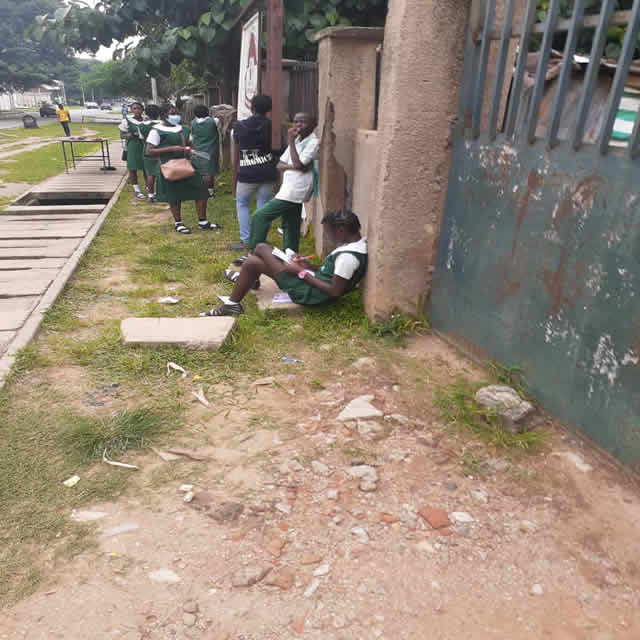
Students of Junior Secondary School, Wuse Zone 2 were seen sitting outside the school gate, some sitting on bricks reading from their notebook, some standing idly while others engaged in conversations they missed having in the last five months.
Students sit outside the school premises as school is unprepared for academic activities
The students told The ICIR they heard in the news that they are to resume school for academic activities in preparation for West African Examination Council (WAEC) examinations but realised their schools are not ready for them.
Collins Okafor and Awal Yunus, sat close to their classroom eagerly waiting for their teachers but they spent their early hours of resumption with the security guards on the premises of the school with no teacher in sight until 10:00 am.
Okafor told The ICIR how much he has missed coming to school, saying that he is glad school activities are resumed.
“I miss coming to school and I miss my friends too, they said it would be different but it’s okay because I have been at home for about five months, going to the shop with my mum,” Okafor said.
The school premises is covered with overgrown grasses.
School premises of Junior Secondary School, Wuse Zone 2
At the school gate of the school, students expected to be checked in after washing hands and having their temperature taken, but that was not so.
There was, in fact, no provision for hand sanitizers, no facemasks for the students, the water basin provided is empty and appears it has not been in use for a long time.
No handwash, no temperature checks at the school gate of Junior Secondary School, Wuse Zone 2
This level of unpreparedness was found not only in Junior Secondary School, Wuse Zone 2 but also at the Maitama Model School, Maitama when The ICIR reporter visited.
At the entrance to the Junior Secondary section of Maitama Model, there was no temperature check, no hand sanitizer or soap and water for washing of hands.
Students of the school were not checked for compliance with the wearing of facemasks at the school gate.
Students idly sitting in school premises as school authority is unprepared for the resumption
Like students in Junior Secondary School, Wuse Zone 2, Students of Maitama Model (junior) were also seen sitting idly at the school premises as they conversed with each other.
The government did not provide protective materials
Following observations by The ICIR reporter, the authorities of Maitama Model and Junior Secondary School Wuse Zone 2 were respectively asked to state reasons for the unpreparedness.
The Vice-Principal of Maitama Model (junior), Gambo A. Alako said the Federal Capital Territory Administration (FCTA) has failed to provide protective materials for the reopening of the school.
“We have not received anything from the FCTA for us to reopen, we were not even aware until yesterday.
“The Principal is not around, we just called the Parent Teachers Association (PTA) Chairman to come to school so that we would know how to get the things and tell the students to go home until we are ready,” Alako said.
At the absence of the Principal of Junior Secondary School, Wuse Zone 2, a teacher of the school who refused to give her name because she is not allowed to speak on behalf of the school said the preparations are just starting today.
She added that the students would be asked to go home pending the time the school would be ready to accommodate them for academic activities.
Adherence to PTF protocols in some schools
Unlike the schools earlier visited, facemasks, hand washing equipment, hand sanitizers, and temperature checks were made mandatory to all staff and students of the Government Secondary School, Wuse Zone 3.
Students making use of the hand wash at Government Secondary School, Wuse Zone 3
The ICIR reporter observed that students without facemasks were made to wait at the gate before eventually given a facemask.
The Principal of the school, Essien Enenwa Okon said the government has provided the school with all necessities to ensure a safe reopening
Essien Okon, Principal, Government Secondary School, Wuse Zone 3
.“All that we need, FCTA has given to us, you can see here, the hand wash, sanitizers, also in the hall, FCTA has been able to provide facemasks free of charge to all the children,” the principal said.
She added that except for the main hall, 15 students would occupy a classroom in the school in contrast to the norms.
An SS3 student of the school, who identified himself as Filimon told The ICIR reporter he is glad to be back to school after the long break.
According to him, he has missed school because E-learning has not been as effective as conventional learning for him.
“I’m so happy that I am back in school because I miss a lot because learning on the internet, you will not understand as classes, so I am so happy,” Filimon said.
Before The ICIR reporter left the school, students were lectured on the causes, danger and the spread of COVID-19.
At the Government Secondary School, Zone 4 an almost similar approach was taken; however, grasses were still being cut in the premises of the school which signified that the school has not been disinfected.
The ICIR reporter observed that students in the senior secondary section of the school commenced lectures while social distancing was strictly observed.
Refusal to speak
Out of the five schools visited by The ICIR reporter, two of the principals refused to speak to The ICIR journalist.
The Principal of Government Secondary School (senior), Wuse Zone 4 said he has been directed by the government not to speak to any journalist.
“You are allowed to go and see the students in the class but don’t take their pictures or ask any question,” the principal said.
He made a staff of the school, Marshall Nuru, accompany The ICIR reporter to ensure that students are not being asked questions.
The Principal of Maitama Model (Senior) and Government Secondary School, Area 10 also instructed the security not to allow journalists to come inside the school premises.
Government’s response
Abubakar Dan-Asabe, the Special Assistant to the FCTA Minister acknowledged that some schools have not been provided with the necessities yet.
“Distribution of the equipment is a gradual process and it is still on-going, as I speak to you, they (ministry) are still visiting the schools,” Dan-Asabe said.
Dan- Asabe added that some schools have already gotten their Personal Protective Equipment (PPE) and they have resumed activities.
Fears spread as Students resume
Nasir Idris, the National President of Nigerian Union of Teachers (NUT) on Monday told The Guardian that the Union is concerned as measures put in place by the government might be insufficient to curb the spread of the virus in schools.
He said primary and secondary school students are very vulnerable to the virus because they might fail to adhere to the guidelines when they meet with their friends.
“Primary and secondary school students are very young people; they will be more vulnerable.
Besides, by the time they see their classmates after these four months, some of them will forget about the issue of washing hands, using hand sanitisers and face masks.
They will continue to hug themselves and, at the end of the day, many will be infected,” Idris said.
Idris noted that the teachers might be forced to withdraw their services if the government fails to provide measures in compliance with the Nigeria Centre for Disease Control (NCDC) guidelines.
“If the government refuses to put COVID-19 protocols in place, we will have no other option but to meet with our members and withdraw our services because the pandemic is increasing day by day.
We will take stock state by state and ensure that in any place they have not provided the COVID-19 protocols, we will withdraw our service,” he added.
SMALLHOLDER women farmers’ contributions to food security in Nasarawa State are being threatened by inadequate information and access to critical farm inputs, despite the government ‘s promise to revamping the agricultural sector.
This development is coming amidst the COVID-19 pandemic period which already has caused untold hardship to many Nigerians, including farmers. Yet women farmers are worse hit.
In July 2003, African Union at its ordinary Assembly in Maputo declared that ten per cent budgetary allocation be allocated for agriculture development to ensure food security in the African continent. Fifteen years on, many women farmers are yet to benefit from the policy.
Though, government at all levels expend huge resources in procuring farm inputs and distribute the same to some farmers, but women farmers are hardly able to access the support.
President Buhari-led administration has initiated a number of women-oriented measures such as three-month repayment moratorium for all traderMoni, MarketMoni and FarmerMoni loans, as well as the conditional cash transfer, only a few women among the population have benefited.
In February 2020, Nasarawa State government also procured and distributed eight trucks of fertilizer to dry season farmers at the rate of N4000, while another 31 trucks were distributed in May this year across 13 local government and 16 development areas of the state at the rate of N5000 per bag.
However, about one thousand three hundred registered Smallholder Women Farmers Organisation of Nigeria, SWOFON Nasarawa State Chapter, since establishment in 2012 are yet to benefit from this largesse.
Except for the training put together by SWOFON, the farmers said they have not received other supports.
This reporter visited five local government areas of Nasarawa State namely, Awe, Akwanga, Kokona, Karu and Wamba to witness the efforts ad challenges of smallholder women farmers’ as they prepare farming season amidst the outbreak coronavirus pandemic.
The first port of call was Caroline Peter’s residence in Awe Local Government Area, a hard-working mother of three, struggling with pepper nurseries which she fenced to prevent them from premature death.
The net port of call was Sarah Albert’s residence, a pig farmer who has a unique way of inviting her pigs like herders. The human-animal relationship that exists between her and her animal is what many will refer to as “proof of ownership”.
“My challenge with this pig farming is the way people used to kill or injure them whenever they go outside my compound as I can’t afford to keep them in one place due to paucity of funds. Every year I do hire farm to cultivate either rice or other crops. But the price is too exorbitant, one hectare rice farm goes for N50, 000 while the same portion for farming other crops is given at N30,000,” Sarah said.
“We have never benefitted from any of these government farm inputs. If I can get herbicides, fertilizer, and fund, I am sure that will boost my capacity to farm better,” Caroline said.
Caroline in her pepper nursery farm in Awe LGA
To locate their hired farms, we took a four kilometre ride to their half-hectare maize, melon, groundnut, rice, soya beans, beneseed and yam farms, each situated at the same location with the expectation that they pay N50, 000 for half-hectare rice farm while another N50, 000 is dolled out for half a hectare to farm other crops, compounding women challenge of access to farmland.
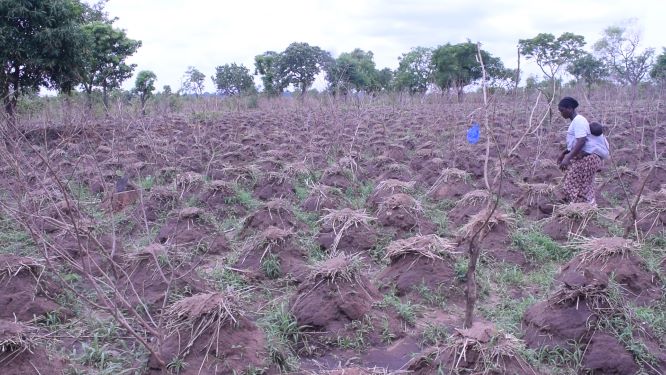
Sarah Shambuwa, another committed smallholder woman farmer in Wamba Local Government Area, is grasping for breath due to lack of access to farmland and inputs, with movement restrictions imposed by the government which effect is biting harder on the household, no thanks to Coronavirus pandemic.
Sarah and her husband Isaiah struggle to feed due to their inability to sell soap and cocoanut oil they produced owing to the locked-down, while their chances to farm this year is very slim.
“N300,000 will change my family story for good and with government support, I can expand my farmland to even three hectares,” Sarah said.
“Even when the government distributes fertilizer we don’t see it. For about three months now we didn’t sell our coconut oil and local soap as a result of the ravaging coronavirus pandemic,” Isaiah said.
In Akwanga Local Government Area, the searchlight was on Lama Elam, a passionate smallholder woman farmer and a mother of three whose cassava, rice, maize, groundnut and guinea corn farms are located along Wamba road, eight kilometres from Akwanga town, lamented the hike in hiring a private tractor for five hours at the rate of N50,000 and regretted the near absence of government-owned mechanised tools in the State.
Lama Elam and her husband Timothy advised families to venture into agriculture despite the challenges, especially now that government is relying on agriculture to grow the economy.
“Another challenge is access to land, we are renting the land we are using this year renewable after every year. So we need funds to buy land and fence it if we have support from the government to acquire land. We use to buy hybrid seeds from ADP at a subsidised rate, but we have no access to fertilizer. What we actually need right now is modern farm tools and funds to take care of labour.
“We lost our crops to herders last year, but plans are on to engage some people to help us watch over the farm to prevent a repeat. In short, we just need support from the government, no amount is too small.”
Juliet Sarki of Kokona Local Government Area is a devoted smallholder woman farmer whose life depends totally on maize, melon, beneseed and groundnut farming to carter for children’s school fees and other upkeeps, harped on her chances to farm this year because of fatal land, lack of access to improved seeds, other farm inputs and funds to support her farming activities at the centre of Coronavirus pandemic.
“If I have been receiving farm inputs, my production capacity would have been better improved. I do contribute to the economy through payment of tax in the market when I go to sell my produce and also pay transport fair. The source of our livelihood depends on this farming and should anything happens to it we are finished, that’s why we are appealing for help in this regard.”
The story in Karu Local Government Area, where Dorothy Katampe, a maize and beans farmer resides, is not impressive considering her inability to farm more than two crops for lack of funds, subsidised mechanized tools, and farm inputs among sundry issues.
Dorothy Katampe
However, Dorothy, her husband Akila Katampe and one of their daughters have resorted to rearing rabbits, chicken and palm oil production, all in a bid to cope with the effects of the locked down as well as post-COVID-19 impacts.
“Nobody allocates fertilizer for women. Herbicides and insecticides are very costly. When they are sharing fertilizer, they only give men, they don’t have women in consideration and women are the ones farming in every community.” Dorothy said.
“I appeal to the government to employ extension workers to help guide smallholder farmers in the application of modern technology for food sufficiency,” Akila said
State commissioner for agriculture and water resources, Professor Otaki Alanana said although farm inputs distribution has always been channeled through the Local Government Authorities for onward distribution to target farmers, the ministry will seek governor’s approval for direct allocation to women groups in future distribution exercise.
“We involve women in all our activities even the World Bank IFAD project, value chain development programme being implemented in collaboration with federal and state ministries of agriculture, and the focus is on women. Japanese embassy is partnering with Nasarawa State to empower women. Smallholder horticulture empowerment programme is mainly for women to grow spinach, okra, maize, ugu, carbage, carrot during the dry season,” Professor Alanana said.
In all the five local government areas visited, smallholder women farmers shared similar concerns of herders invading their farmlands and insects infestation among others.