Home Blog Page 2050

COVID-19: Insecurity, lack of government support may trigger famine in Niger

By Obinna UNAEZE


As the COVID-19 pandemic ravages Nigeria and the rest of the world, the effect on food security may have to be properly addressed by all the three tiers of government to reduce the hardship associated with food scarcity.

Recently, former President Olusegun Obasanjo and ex-Prime Minister of Ethiopia, Desalegn Boshe, warned that 80 million Africans risk extreme poverty if the COVID-19 response is not focused on food security, agribusiness and rural development.

The two statesmen warned that the continent could be the worst hit from the economic crisis unleashed by the pandemic as a result of the disruptions of the food ecosystem.

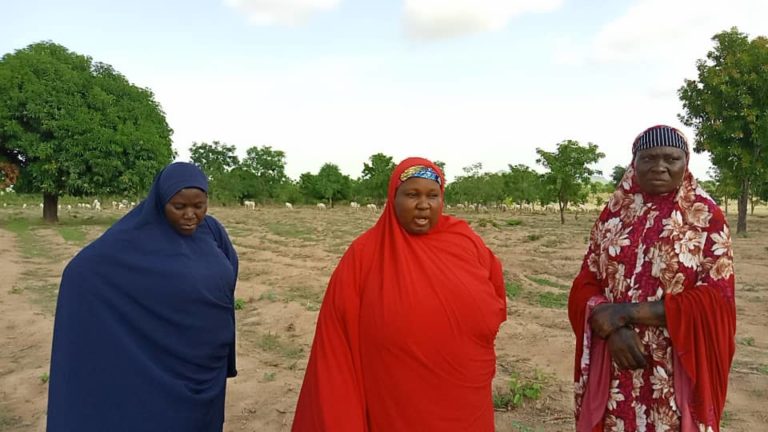
This scenario is playing out in the agriculture sector in Niger state where members of the Smallholders Women Farmers Organisation in Nigeria (SWOFON) are faced with peculiar challenges in their quest to feed their families and the country.

The women from Suleja, Kontagora, Rijau, Paiko and Lavun Local Government Areas of the state shared their experiences with the News Agency of Nigeria (NAN).

Mrs Mary Hamzaranda, the state Coordinator SWOFON, said that the novel Coronavirus pandemic lockdown was preventing the farmers from going to their farms as security agencies stop and turn them back.

“The COVID-19 has prevented us from going to the farm; you know that some crops have a season. If you don’t cultivate them at the right time, they will not produce any meaningful thing for the season, then the investment is wasted.

“Our children no longer go to school, so they are just at home eating. They even eat more than three square meals per day because they are idle, while our husbands cannot go to work to earn money to cater for the family,” she said.

Hamzaranda, who is also the Coordinator of Kainyuwa Women Cooperative Society in Suleja local government of the state, said that under the COVID-19 movement restrictions, transportation was a challenge as few seen on free days increased their fares.

“We spend more money now transporting labourers, inputs and implements to the farm,” she said adding that the challenges caused by the pandemic have made the daily labourers who cultivate the land for the group to increase their charges.

The State Coordinator said the farmers have not received any palliative as a group or individually from the government since COVID-19 started.

Hamzaranda said that the Federal and state governments’ assistance for members of the organisation would enhance their activities and increase food production not only in the state but the country at large.

“We are poor subsistence farmers that pulled resources together due to inadequate funds. If we get any support from the government, in the form of loans, inputs and equipment it will help us to increase food production for our families and other Nigerians,” she said.

According to Hamzaranda, the women have resorted to farming on plots of land in residential areas as suspected bandits kidnap farmers and demand for ransom.

“The bandits also rape women and sometimes kill their victims when the ransom is not paid,” she said and decried a situation where herdsmen bring their livestock to graze on crops, causing farmers to lose their investments.

“Instead of you to challenge Fulani herdsmen, you run for your dear life. If you question them, you may be attacked,” she said.

The 30-member Suleja group cultivates rice, maize, soybeans and beans.

NAN reports that SWOFON, with over 10, 228 registered members in Niger State, is a coalition of women farmer groups across Nigeria, representing over 500,000 grassroots women farmers.

In Niger, the organisation has representations across the 25 Local Government Areas of the state and it serves as a forum for articulating the challenges and engagements of the women farmers whose contributions have assisted in the drive towards food security and sustainability.

To address the challenges faced by small scale farmers like the women in Niger due to the COVID-19, the federal government promised to provide some palliatives and announced some stimulus packages.

One of the measures targeted at farmers is the three-month repayment moratorium for all TraderMoni, MarketMoni, and FarmerMoni loans. Farmers who receive loans under the Social Intervention Program, SIP, would have a three-month breather before repaying.

Being women and mostly the breadwinners for their families, smallholder women farmers were expected to be beneficiaries of both the food distributed to households and the Conditional Cash Transfer, particularly, the additional one million households ordered by the President to be included in the National Social Register.

However, from the responses of the women, they had not benefitted from any of the support promised by the government and are unable to have yields like in past years.

Hajiya Aishatu Ahmed, Coordinator, Alheri Women Farmers Cooperative, Kontagora local government area said that the 20-member group who engaged in wet season farming waited for the rains to come, but the pandemic and its challenges is now a big threat to this year’s farming activities.

Ahmed said that the COVID-19 lockdown affected the socio-economic lives of the members negatively as the cost of living has increased.

“People cannot move freely anymore to avoid contracting the disease. There may be hunger next year if the COVID-19 is not tackled because our families are at home eating what we produced last season. The free movement allowed by the government is not enough to provide our family needs and also attend to our farms properly,” she said.

According to her, some of their husbands who go out daily to work and support the family and the farming activities can no longer move freely for fear of being arrested by security agencies.

“Some of the men now have no money to take care of their families as a result of no daily job during the COVID-19. What they do in the morning is that they go out leaving the women and children at home.

“No woman will want to see her children crying because of hunger, she must do something. You can see that life has not been easy with women and children under the COVID-19,” she said.

Ahmed said that during the 2019 harvest, suspected bandits and herdsmen stole farm produce from the farms, making farmers to lose their investments.

She said that the women never got any intervention and palliative from both the federal government and the state before and during the COVID-19.

“We were told to apply for government intervention and we did until now we have not seen anything,” she said.

Ahmed said that inadequate funding was affecting their farming activities as family members also feed on their farm produce leaving small quantity for sell.

She said that the women cultivate beans on over two hectares of land and harvests 40 bags of the commodity measuring 75kg each from the farmland.

She said that out of the beans, 30 bags were sold at N8,000 per bag and the proceeds invested in this year’s farming activities, while the balance of 10 bags was shared among members for consumption.

Ahmed said that there was a need to assist women farmers as they produce food for consumption and commercial purpose.

“We want the government to support us so that we can produce enough food for our families and for commercial purpose. We are trying our best as women farmers but we need financial assistance to expand our farmland and increase food production,” she said.

Hajiya Zainab Yusuf, a subsistence farmer in Kontagora, who practices mixed farming, said that she cultivates in both wet and dry season.

Yusuf, a retired civil servant cultivates rice, maize, beans, okra and pepper on three hectares of land where she also established small poultry and livestock farms.

She said that her supportive husband has been bedridden for some time now, while her 25-year-old daughter, Miss Hussaina Yusuf who assists her with farm work was preparing for her final year programme in the university.

“If supported, I will use any help from government or development partners to improve my agri-business in order to sell farm products and make money to meet my family needs,” she said.

The daughter, Hussaina, a final year student of Physics with Electronics Engineering at Federal University Birnin Kebbi told NAN that her mother has been using the proceeds from her agri-business to fund her education.

Hussaina who said that she has been supporting the mother for the past 10 years noted inadequate funds as part of the challenges of the rural women farmers.

She said that the mother only received financial support from her sick father in the past, but none from the government.

Hussaina said that there was a need to help the women farmers with loans, inputs such as agro-chemicals, fertilisers, improved seedlings and gender-friendly equipment such as the power tillers, hand planters and others.

Hajiya Aishatu Usman, Coordinator, Himad Women Farmer Cooperative Society in Rijau local government area said that the 100 members of the group cultivate maize, rice, beans, groundnut and millet on four hectares of land.

Usman, who said that the farmers only practice wet season farming, disclosed that they produce 50 bags of rice and 50 bags of maize measuring 75kg each per annum.

A bag of the processed rice sells for N32,000, while maize goes for N17,500 per bag.

The Coordinator said that the COVID-19 lockdown was affecting them negatively because they have consumed almost all the foodstuffs as a result of pressure by family members.

“The food items we reserved for consumption have reduced drastically. We have exhausted the proceeds made from sales of our farm produce because the prices of foodstuffs and condiments increased during the lockdown. Right now we have no money to go back to the farm unless we borrow,” she said.

She urged the government to increase budgetary allocation to agriculture to provide inputs and implements to farmers at subsidized rates, adding that this would attract other women into agri-business.

“Inadequate funds have been our problem as rural people, then suddenly the COVID-19 challenges worsened it,” she said.

Usman said that the incessant attacks on farmers by suspected bandits has limited them to farm at residential areas instead of going to cultivate the arable land in the forest.

She said that in the past, the group never benefitted from the federal and state government intervention programmes such as Anchor Borrowers Programme, International Fund for Agricultural Development, Value Chain Development Programme and FADAMA programme implemented by some selected farmers in the state.

Hajiya Jumai Bala, Coordinator, Sati Women Cooperative Society, Paikoro local government area, said that 30 farmers make up the group practicing mixed cropping on individual farmlands.

Bala said that out of the 30 members, 10 are in charge of marketing their farm produce, while 20 are farmers, adding that in the wet season, the farmers cultivate crops such as rice, maize, melon and yam.

The Coordinator said that the group has off-takers from Owerri and Onitsha who come to purchase their farm produce before the COVID-19 pandemic.

However, with the COVID-19, they now transact business through the banks and the commodities they ordered would be way-billed to them.

Bala noted that before the pandemic, the farmers had unhindered access to their farms, attended to their crops as at when due, but now the COVID-19 has led to additional challenges.

“The whole family is just at home eating and the little work we do now does not correspond with what we eat and the money we spend because of the lockdown. COVID-19 has compounded other problems faced by the women farmers, many of us may not meet their targets of bumper harvest this year,” she said.

She said that agri-business was capital intensive as the group which depends on daily manual labour also hires tractors at a high rate.

Bala said that members of the group in Aduni have stayed away from their farms recently as suspected bandits occupy their farmlands, kidnapping farmers and demanding for ransom.

“After investing huge amount of money on a farm sometimes we lose the greater part of the investment to animals,” she said.

Also speaking on her experience, Hajiya Fatima Abdullahi, president, Fahab Women Farmers Association, Lavun local government area, said that the group numbering 121 farmers were into the rearing of livestock.

“When four cows out of the five we had died, we sold the remaining one and used the little money to cultivate maize,” she said.

Abdullahi said that the farmers are planning to add other crops such as groundnut and soya beans on over two hectares of land, but said the main challenge is inadequate funds, coupled with the current COVID-19.

“We have been to the state Ministry of Agriculture and Rural Development to link us with the various federal government intervention programmes without any good result,” she said.

She said that the maize planted by the farmers need constant weeding and checks to avoid pests and stop herdsmen from bringing their livestock to graze on the crops.

“Depending on the weather, we are supposed to check the crops frequently but we cannot due to the lockdown. The pandemic has made it impossible for our labourers to come over to help us, so I don’t think that we will achieve much this year,” she said.

The Group’s Leader lamented that the farming season has fully commenced and they were yet to access some farmlands owing to COVID-19 challenges and insecurity.

In order to tackle the challenges of all categories of farmers in Niger, the state government on June 4 inaugurated the 2020 farming season and also provided subsidies for essential farming inputs to all farmers in the state including the women small scale farmers.

According to the state governor, Alhaji Abubakar Bello, the government will now provide subsidies for fertilisers, assorted seeds and agro-chemicals to small scale farmers using the private sector.

“The focus of Niger state government this year is to mobilise women farmer groups to achieve their targets. Any women group into agriculture will be supported to get the available inputs and implements,” he said.

He said that for this year’s farming season, 15,000 metric tons of fertilisers made up of 10,000 metric tons of NPK and 5,000 metric tons of Urea would be delivered to designated government fertiliser stores in the 25 Local Government Areas of the state for sell to farmers.

*This report was made possible with support from the International Budget Partnership (IBP)

Buhari’s ally, Isa Funtua is dead

ISMAILA Isa Funtua, a former Nigerian Minister in the second republic and close associate  of President Muhammadu Buhari, is dead.

Funtua, a native of Kaduna state, was trained as an administrative officer at the Institute of Administration, Ahmadu Bello University (ABU) Zaria.

He served the Katsina Native Authority for seven years as Administrative Officer.

Funtua later served in various ministries in the defunct Northern Region before his secondment by the Northern Region government as the Personnel Manager of the 10,500 strong United Nigerian Textile Company, Kaduna.  He later became a successful entrepreneur.

He served as the Minister of Water Resources in the defunct Second Republic, a member of the 1994-1995 Constitutional Conference during the time of Shehu Shagari.

Funtua was the founder of Bulet International Nigeria Limited (one of the largest wholly-owned indigenous construction companies), which built some of the iconic public buildings in Abuja.

The deceased before his death was  was tipped to replace the late Chief of Staff, Abba Kyari, a position he said he was not interested in.

Bashir Ahmad, the Media Aide to President Buhari, confirmed the news of his death on his official Twitter handle.

“Inna lillahi wa inna ilaihi raji’un! Just heard about Mallam Ismaila Isa Funtua’s sudden death. This life! May Allah accept his soul, forgive his shortcomings and grant him Jannah al-Firdaus, Ahmad wrote.

Funtua will be buried according to Islamic rites on Tuesday.

Flashback: Four govt officials who have developed ‘health issues’ during alleged corruption probe

AT LEAST four Nigerian government officials have developed varying ‘health issues’ while undergoing probe for alleged funds misappropriation and corruption in their offices. 

These sudden ill-health conditions often occur when investigations are carried out on various unexplainable spendings and at other times, during court cases, which inadvertently delay process and frustrate justice.

The ICIR takes a look at peculiar cases where officials have taken ill or developed sudden ill-health conditions while under probe for alleged corrupt practices.

Kemebradikumo Pondei

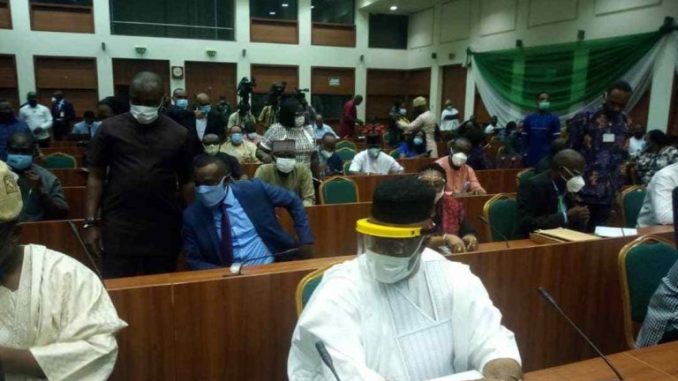
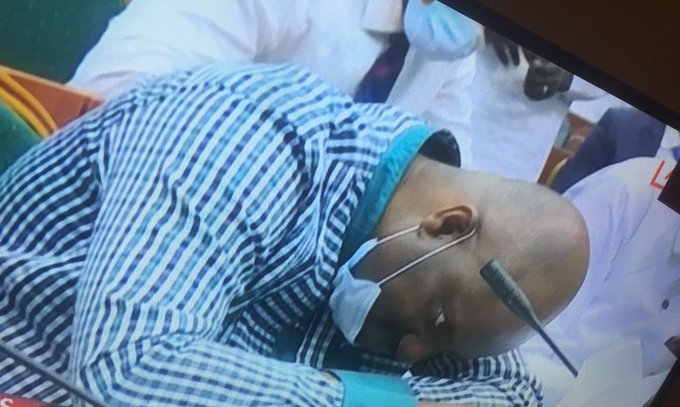
Upon interrogation, Kemebradikumo Pondei, the Acting Managing Director of the Niger Delta Development Commission (NDDC), who took over from Joi Nunieh in February, blacked out during the House of Representative investigative panel hearing held in Abuja on Monday.

KEMEBRADIKUMO Pondei
Interim NDDC MD, Pondei blacks out in National Assembly

The interim MD ‘fainted’ while he was being quizzed about N641 million naira paid to a certain Clear Point Communications company for the purpose of ‘locating NDDC projects across Nigeria’ and a N536 million to another company for a campaign tagged Save Lives in the Niger Delta.

Pondei also faced members of the panel in defence of financial malfeasance to the tune of the N81.5 billion, which is reported to have been expended by the commission between January to May.

However, the NDDC via its Twitter page on Sunday countered the notion, submitting that the said amount was spent between October 29, 2019 and May 31, 2020.

“It’s false to say #NDDC mismanaged N81.5 billion between Jan and July 2020. Truth is that sum was spent by two Interim Management Committees of the NDDC between October 29, 2019 and May 31, 2020, according to the #CentralBankofNigeria,” the tweet read in part.

The NDDC was established in 2000 for the sole mandate of developing the oil-rich Niger Delta region of Nigeria.

Olisa Metuh

In January 2016, Olisa Metuh, former spokesperson for the Peoples Democratic Party (PDP) was arraigned on seven counts of money laundering by the Economic and Financial Crimes Commission (EFCC), for allegedly receiving N400 million from the office of the National Security Adviser (NSA).

Metuh was indicted by Nigeria’s anti-graft agency for using his company, Destra Investment Limited, to launder funds.

Following his indictment, the former PDP spokesperson was tried and during the course of the case in court, the former PDP spokesperson had a series of undermining health episodes that led him to seek permission to get treatment abroad, all of which was denied.

On February 5, 2018, Metuh appeared in court in an ambulance, after his lawyer submitted that he had been absent from previous court proceedings on the grounds of ill health.

His counsel told the court that he had been admitted at the Nnamdi Azikiwe Hospital, Nnewi, Anambra state.

Again in March 2018, Metuh, while in court ‘fainted’ as he approached the dock, pushing his lawyer to request withdrawal from the case. Okon Abang, the judge on the case, insisted that the trial must continue.

Olisa Metuh faints in court during proceedings
CREDIT: The Cable

All the while, Metuh sought permission to travel abroad for medical attention but his requests were turned down by the court.

On February 25, Metuh was sentenced to 39 years imprisonment.

Abdulrasheed Maina

Abdulrasheed Maina, former chairman of the Pension Reform Task Team (PRTT) was on October 25, 2019, arraigned alongside a firm, Common Input Property and Investment Ltd, by the EFCC.

The former pension boss was being prosecuted by the anti-graft agency on 12 counts bordering on alleged N2 billion pension fund fraud, money laundering, and operating fictitious bank accounts among other fraudulent activities.

Maina is also accused of diverting N100 billion of pension funds.

While appearing for his trial at a Federal Capital Territory (FCT) high court in November, Maina, was wheeled in by two prison guards, buttressing reports of ill-health earlier submitted to the court.

Abdulrasheed Maina – Former pension boss appeared in court on a wheelchair.
CREDIT: Channels

As a result of his reported ill-health, the former PRTT chairman submitted a bail application which Okon Abang, the judge hearing the case granted a bail sum of N1 billion. Abang ruled that two sureties, who must be prepared for an N500 million bond each, must always be in court with the defendant at each adjourned date.

However, Maina, contested the bail condition which he described as stringent.

In June, Abang varied the bail conditions of the embattled pension boss, who has been remanded in a correctional facility since he was arrested alongside his son, Faisal in September.

Faisal was accused of operating an account he used to divert various sums of money, including N58 million.

Maina and his son are yet to meet new bail conditions and have remained in detention.

Winifred Oyo-Ita

In August 2019, Winifred Oyo-Ita, Nigeria’s former Head of Service was reported to have checked into a hospital after facing probe of an alleged contract scam to the tune of N3 billion.

Oyo-Ita was interrogated by the EFCC for alleged abuse of duty tour allowance, money laundering and stealing of government funds.

The unexplainable funds were said to be kickbacks on contracts, illegal estacodes and duty tour allowance received from the government.

She was subsequently sacked in September 2019 after about N600 million was allegedly found in the bank account of her aide.

The former head of service was appointed by President Muhammadu Buhari in 2015 in acting capacity. In January 2016, her portfolio was conferred with a permanent status.

NDDC panel: How lawmakers grilled Akpabio during panel hearing

HOUSE panel investigating financial infractions and other misconduct in the Niger Delta Development Commission on Monday grilled the Minister of the Niger Delta, Godswill Akpabio.

During the panel session in Abuja, Akpabio was questioned by the House Committee on NDDC led by the vice-chairman, Thomas Ereyitomi-Tobi after the chairman of the committee, Olubunmi Tunji-Ojo had stepped aside for a fair hearing.

Akpabio was asked to explain the N81.5 billion expenses incurred by the commission but he said so far he had been involved in only three contracts in the commission.

“I have only been involved in three contracts in the NDDC as the supervising minister, first is the forensic audit, second is the purchase of 90 vehicles and the COVID-19 contracts,” he said.

The former acting manager of the NDDC, Joy Nunieh had accused the minister of ‘stealing’ files belonging to the commission.

When asked to respond, Akpabio said the files are about 8,000 and have been returned to the commission.

He added that the files were taken against the decision of the management of the commission for ‘safety purpose’.

Akpabio accused the commission of contract splitting in order to escape approval of the Ministry of Niger Delta.

“They don’t go beyond N250 million naira, their contracts are divided into lots to avoid my approval,” Akpabio said.

A member of the committee asked the minister to comment on his fallout with the former acting MD of the NDDC, Nunieh because he had recommended her for appointment.

“Her removal followed a letter sent to me by the late former Chief of Staff to the Nigerian President, Abba Kyari about not meeting expected qualification,” Akpabio said.

He said Nunieh does not have a National Youth Service Corps (NYSC) certificate or a letter of exemption.

Benjamin Kalu, another member of the committee asked if the minister had at any point in time influenced or exercised the powers vested on the MD of the commission.

Akpabio replied that he did that only when decisions were not made in favour of the people of the Niger Delta.

Kalu further asked Akpabio to tell the House Committee if the Forensic audit has commenced as instructed by Buhari and if the funds for the audit have been paid.

“Yes, the forensic audit has started, Akpabio said but failed to answer if funds have been released to the effect.

Akpabio, during the hearing, alleged that most of the NDDC contracts were awarded to Nigerian Lawmakers.

When asked to confirm whether NDDC gave contract to the panel chair Tunji-Ojo as earlier claimed, Akpabio denied saying so.

CBN retains banks interest rate at 12.5 per cent, expects positive impact on economy

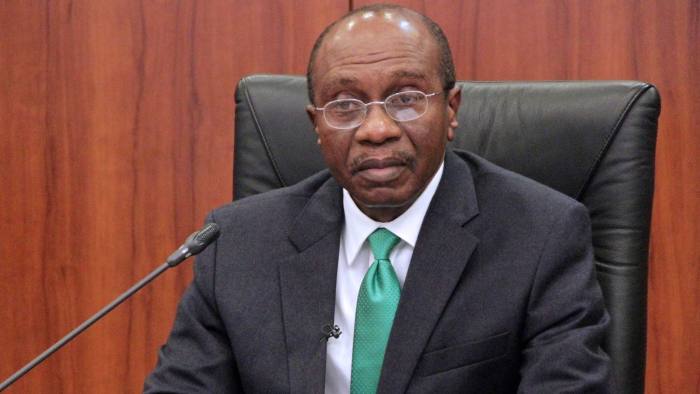
GODWIN Emefiele, Governor of the Central Bank of Nigeria, CBN, on Monday pegged the benchmark lending rate at 12.5 per cent, sustaining the Monetary Policy Rate, MPR, announced in May.

The Governor of the apex bank announced that the decision was arrived at after 8 of the 10 monetary policy committee members voted to retain the rate and two voted for a reduction in the lending rate.

Emefiele explained that the decision was likely to raise the cost of production leading to high prices of goods and services.

“Loosening monetary policy stance would provide the succour for stimulating output growth and rapid recovery but with implications for domestic private investment and capital mobilisation to support the huge domestic financing gap,” he said.

It is the largest cut on the lending rate since 2015, though the lending rate was slashed by 100 points from 13.5 per cent to 12.5 per cent in May.

He stated further that the MPR may not necessarily lead to a reduction in the market interest rate due to the current economic realities.

“Available data from the National Bureau of Statistics show that real Growth Domestic Product (GDP) grew marginally by 1.87 per cent in the first quarter of 2020 compared with the 2.25 per cent and 2.10 per cent in the proceeding and corresponding quarters of 2019,” he said.

The central bank has kept interest rates tight for the last two years to curb inflation, support the naira and attract foreign investors to its debt market.

Describing it as a “relatively cautious option” to hold rates in order to assess the effectiveness of policy actions already taken to counter the effects of the COVID-19 pandemic.

In April, the country’s annual inflation increased by 12.34 per cent which was at its peak in more than two years, as measures to curb the pandemic hindered economic activity.

“The Committee noted at the meeting that the economic fundamentals marginally improved by the end of June 2020, following the gradual pickup of economic activities as the positive impacts of the various interventions permeate within the economy.

“The earlier downward adjustment of the MPR by 100 basis points to 12.5 per cent to signal a loosening policy stance is yielding positive impacts as credit growth increased significantly in the economy,” he said.

Madagascar herb: No evidence it can cure COVID-19 — NIPRD Chief

PETER Adigwe, Director General of National Institute for Pharmaceutical Research and Development, NIPRD, responsible for the development of drugs and vaccines has disclosed that analysis carried out by the institute on the Madagascar’s herbal cure against the COVID-19 infection did not show evidence it can cure the disease.

Adigwe emphatically stated that COVID-organic touted as cure by the Madagascan government has shown no evidence to the claim that it could cure COVID-19, following analysis performed on the mixture.

He however added NIPRD can come up with a cure in six months, if provided with adequate funds.

”If things all come together and we get the needed funding, within the next six months, we should be able to have something categorical within.”

Earlier in the year during the peak of the pandemic, Madagascar had claimed the COVID Organics cured some people of the disease in the country, despite warnings by the World Health Organisation to allow the elixir undergo clinical trials.

However, responding to questions by newsmen on the result of their research on the herbal portion as reported by TODAYNG, Adigwe said: “The Minister gave us the mandate to find out if COVID Organics can cure COVID-19 and we did not get any evidence that it can.

“This is because our analysis shows there is no evidence that it can cure COVID-19. There is no evidence for that,” he insisted.

He also said that the Madagascan government must be hiding a lot of things as he stated that the nation does not have strong scientific backing to their clams on the herbal portion.

“Well, I cannot tell you what they have done. I can only tell you what we have done here.

“The analysis we gave in our report is more detailed than anything that had come from their country. They are hiding the analysis of their own product. If you go online, you cannot get the level of analysis that we gave.

“They are hiding a lot of things and I think it is possible that they know that they don’t have strong science backing up their claim.”

The NIPRD boss while speaking on efforts being put by his organisation to get cure for the COVID-19,  said, ”You know science takes time and it also needs a lot of money. That is what most people don’t understand.”

He reassured Nigerians his organisation is working on a  solution that looks promising and have undergone pre-clinical studies and is now being packaged  for the clinical trial which he described as a great deal of work.

According to him, “We are moving in a forward direction. We have hope that the product will give a succor.”

Elaborating on the funds  available to the agency, Adigwe  said there has been increased  progress.

”We have submitted letter, they have asked for concept note and we have done that and also submitted full proposal. There is some positive progress but there hasn’t been any release of funds so far.”

President Muhammadu Buhari had also received portions of the drug from Guinea but ordered that the mixture be put through clinical trials before being used.

The Nigeria’s Minister of Health, Osagie Ehanire, had also last month during the daily briefing of the presidential task force, disclosed that the herb was being grown in the country and was a known treatment for malaria.

Protesters clash in National Assembly over ongoing probe of NDDC

PROTESTERS in support and against of the ongoing probe of the Niger Delta Development Commission,NDDC  have been intercepted by security operatives in the National Assembly Complex on Monday.

The two groups clashed while the probe was still ongoing.

The security agents had to separate the two groups before the face-off degenerated further.

The probe was organised by the committee on NDDC  to investigate alleged fund misappropriation and mismanagement by the Interim Management Committee of the NDDC under the supervision of the Minister of Niger Delta Affairs, Godswill Akpabio.

The feuding groups are identified as Emerging Leaders Forum of Nigeria, supporting the National Assembly probe and the Niger Delta Development Initiative that supports Mr. Akpabio.

Also The ICIR reported earlier that Kemebradikumo Pondei, the Acting Managing Director of the Niger Delta Development Commission (NDDC) on Monday had fainted during the  panel hearing held before the apperance of the minister.

Pondei lost consciousness while answering questions by the House Committee on NDDC over alleged misappropriation of funds.

He fainted after a member of the panel raised questions about N641 million naira paid to a particular Clear Point Communications and N536 million to another company for a campaign tagged Save Lives in the Niger Delta.

President Muhammadu Buhari had earlier in the year ordered that a forensic audit be carried out on the activities of the Commission.


Fact-Check: Was a baby born holding the mother’s failed IUD?

0

A REPORT alluding that a newborn baby was born holding the mother’s intrauterine device, IUD, has gone viral on the social media.

Aside the social media, different variations of the report alluding that the child came out of the womb holding the device abound on blogs and some news websites.

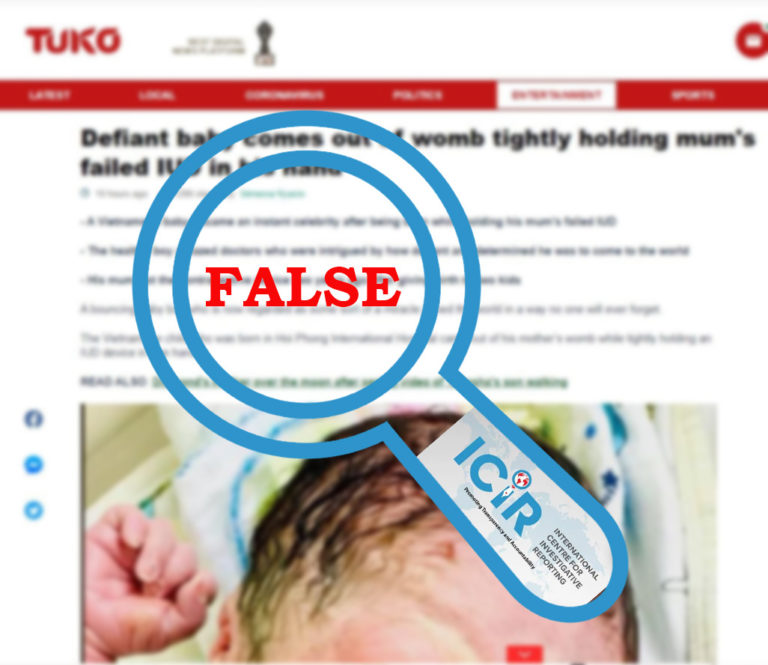
Tuko, a platform that describes itself as one of Kenya’s leading news site has a variation of the report with the headline  “Defiant baby comes out of womb tightly holding mum’s failed IUD in his hand”.

The report had garnered over 82,000 views on the website as at Monday noon (July 20).

THE CLAIM

The baby came out of its mother’s womb holding her failed IUD in his hand.

THE FINDINGS

The ICIR was able to trace the origin of the picture to the Facebook page of Hai Phong International General Hospital.

On June 30, 2020, the hospital, located in the city of Hai Phong in northern Vietnam, posted two photos of a newborn baby holding an IUD device and a third photo with the device by the side.

As at Monday noon when this report was filed, the photo has received over 3,600 likes, garnered over 3,900 comments and had been shared over 4,400 times on the page.

Dr Tran Viet Phuong, one of the heads of the hospital’s obstetrics department where the child was born told a Vietnamese Newspaper – VN Express International – that when the boy was born, the device came out with him and he grabbed it.

The IUD came out at the same time as the baby, but separately – it was only after being born that the infant grabbed the coil, the newspaper reported.

Phuong said “After delivery, I thought him holding the device was interesting, so I took a picture. I never thought it would receive so much attention.”

An IUD is a birth control device placed in the uterus, it prevents the sperm from fertilising an egg.

“But it does not have a 100 percent success rate,” said Phuong. “Upon its insertion, the device might have been moved from its original position and thus was no longer effective,” the doctor explained.

Dr. Malachy Emeka Ayogu, an obstetrician and gynecologist (OBGYN) at the University of Abuja Teaching Hospital, Gwagwalada in Nigeria, told The ICIR that “nothing is impossible in medicine but it is very rare for pregnancy to occur with IUD in situ.”

Dr. Ayogu warned that people should be “mindful of this era of photoshopping where images can be manipulated to mean anything.”

He stated that “Failure rate for IUD failure is actually less than 1%”

On the claim that the baby was born holding the birth control device, he said “It is difficult to explain how a baby could hold an IUD on the palm after all the processes involved in the mechanism of labour unless Caesarean delivery was the option. In fact, it can’t be explained scientifically.”

This isn’t the first time that similar post will go viral on social media alluding that a baby was born holding the mother’s birth control device.

In 2017, Snopes did a report about a photo that went viral with a misleading caption. The mother had posted a picture of her newborn holding a Mirena-brand birth control device along with the caption “Mirena Fail.”

The image was later re-shared to mean the baby was born holding the IUD.

Dr. Leena Nathan, an OBGYN and assistant clinical professor for the University of California at Los Angeles in the report said it would be impossible, however, for a newborn to be delivered holding such a device because there would be no way for the IUD to get inside the amniotic sac, a fluid-filled membrane that envelops a foetus while it grows inside the womb.

THE VERDICT

From the evidence presented above, the claim that the child came out from the mother’s womb holding the IUD, is therefore, FALSE.

UPDATE:

Tuko has corrected the report on its website reflecting that the baby was not born clutching on the IUD but it came out separately, he just grabbed it later (https://www.tuko.co.ke/367063-factchecked-viral-baby-born-holding-mums-iud-hand)

The news platform in a communication with The ICIR said “the error was not intentional.”

It stated that “We offer our apologies and assurance that the error was not intentional as we strive to feed our audience with facts-based stories at all times”.

This story is updated on Sunday July 26, 2020.


N81 billion fraud: NDDC boss blacks out during probe hearing

KEMEBRADIKUMO Pondei, the Acting Managing Director of the Niger Delta Development Commission (NDDC) on Monday fainted during House of Representative investigative panel hearing held in Abuja.

Pondei lost consciousness while answering questions by the House Committee on NDDC over alleged misappropriation of funds.

He fainted after a member of the panel raised questions about N641 million naira paid to a particular Clear Point Communications and N536 million to another company for a campaign tagged Save Lives in the Niger Delta.


Pondei failed to mention the specific amount the commission received since his assumption of office as acting managing director on 28, February.

“From the Federal Government, we got about N6.4billion monthly since February. We’ve not had anything since June, and we also got little from oil companies about N72.billion between February 28 to June 20.”

However, the committee insisted that he should give a specific figure of the amount spent, and the unspent

According to a member of the panel, Pondei had told the Senate that the commission spent N1.5 billion naira to “take care” of themselves.

Pondei responded that only  N1.3 billion and not N1.5 billion was spent for the purpose.

He was resuscitated after a few seconds when his aides poured water on him, and was finally led out of the Chamber.

The ICIR had reported how Pondei walked out on the investigative panel with claims that the Chair of the committee, Olubunmi Tunji-Ojo is an interested party in the NDDC.

Following his accusation, the committee chair stepped down, leaving the way for the vice-chairman of the panel, Thomas Ereyi-Tobi to preside over the hearing.

Pondei, a professor of Medicine from the Niger Delta University (NDU), Bayelsa State was announced as a replacement of the former NCDD Managing Director, Joi Nunieh.


[FACT-CHECK] COVID-19: Is it safe to be in an aircraft without physical distancing?

Nigeria’s Minister of Aviation, Hadi Sirika, on July 11 claimed that it is safe to be in an aircraft cabin without physical distancing amidst the COVID-19 pandemic.

He made the comment when he led a team of aviation industry stakeholders and the Presidential Task Force on COVID-19 from the Nnamdi Azikiwe International Airport, Abuja to the Mallam Aminu Kano International Airport (MAKIA) in Kano.

The trip was to assess the airport’s readiness for resumption of domestic flights following the coronavirus-induced lockdown of the nation’s aviation sector.

The claim was published in many national dailies including The Nation, ThisDay and Guardian.

It has also generated a lot of public debate and reactions from Nigerians.


THE CLAIM

Sirika in the news report said “However, let me explain the mechanics and the going ons in an airplane that makes it safe in COVID-19 period. Airplanes are designed in such a way that the ambient air at altitudes is clean. It is not contaminated.

“The air is dropped in the aircraft, pressurised and because of pressurisation, the temperature of the air goes up to 200 degrees which is twice boiling water and there is no bacteria or virus that can survive it and it is suddenly cooled to about 2 degrees centigrade and then it is passed to a filter.

“Passing through the filtration system ensures that every single organism is screened and then it is passed to the cabin and once it is passed through the cabin, it comes from the ceiling downwards.

“So, it is not coming from the cockpit to the rear, it is from the ceiling downwards and it drops on the floor and gets circulated.

“This circulation happens every two minutes. So, on a flight from Abuja to Lagos, the circulation will happen like 27 to 30 times. With this, it is ensured that it is more hygienic to be in an airplane than to be in an operating theatre in the hospital” .

FILE PHOTO: Lagos airport.

Sirika added that “With this mechanism in place, everything will be safe provided that we are decontaminating the airplane before we enter and decontaminating after we leave and also cleaning all the possible surfaces that one will touch.

“If this continues, then everyone is safe to remain in the cabin seated next to each other with the mask on. So with this, yes you can be without physical distancing but in the departure and arrival halls and everywhere including the buses, you must remain physically distanced like at least six feet or two metres.”

The minister made two claims:

  1. That it is safe to be in an aircraft without physical distancing amidst the COVID-19 pandemic.
  2. That it is more hygienic to be in an airplane than to be in an operating theatre in the hospital?


THE FINDINGS

Claim 1

Findings obtained by The ICIR from Embraer, one of the leading global aircraft manufacturers, show that keeping safe physical distance on an airplane may not be necessary for one major reason; because “cabin air circulation and ventilation inside an aircraft are carefully engineered to disperse and re-direct contaminants.”

It states further: “In fact, most aircraft exchange their entire volume of cabin air 20 to 30 times more frequently than the air in an office, and 5 to 6 times more than hospitals.

Air circulation in an aircraft. PHOTO CREDITS: Embraer.com

“The air in an Embraer E-Jet cabin is completely refreshed at least 20 times every hour. The air circulates through strategically placed vents and upper and lower air inlets around the overhead bins.

“We conducted a series of CFD (Computational Fluid Dynamics) tests and simulations of cabin air flow years ago during development of our E-Jets.

“Our objective was to ensure that airborne contaminants were effectively directed away from passengers. In other words, droplets, like those generated by talking, coughing, and sneezing, are dispersed vertically and channelled away from other passengers as much as possible.

“We found that the correct positioning of the PSU gaspers in relation to a person’s head, and the resulting airflow, creates a kind of air curtain, or air barrier. The cone-shaped flow pattern from the gasper directs particles to air return grills located near the cabin floor. This minimizes cross-contamination between rows although the seat banks themselves serve as natural blocks to exhaled droplets. Forward-facing seats also minimize direct face-to-face passenger interaction.”

Air quality in an aircraft. PHOTO CREDITS: Embraer.com

Embraer noted that the most common droplets that people expel are between 4 and 8 microns in size. “The heavier ones fall close by and collect on surfaces, like seats and clothing. The smaller ones, however, can remain suspended.”

“Aircraft-grade High Efficiency Particulate Air (HEPA) filters, like those on every E-Jet, are extremely efficient. In fact, they’re 99.97 per cent effective in trapping airborne particles and other bio-contaminants as small as 0.3 microns.”

Furthermore, a briefing paper on the ‘Cabin air quality – Risk of communicable diseases transmission’ for the  the  International Air Transport Association, IATA, states that “the risk on airplanes is probably lower than in many confined spaces because modern airplanes have cabin air filtration systems equipped with HEPA filters.”

Using the European air filter efficiency classification, The IATA  describes HEFA filter as any filter element rated between 85 per cent and 99.995 per cent removal efficiency.

In an interview with The ICIR, Professor Sunday Omilabu, a Professor of Virology at the College of Medicine, University of Lagos – Lagos University Teaching Hospital (LUTH), said the claim by the aviation minister that it is safe to be in an aircraft without physical distancing “may be hinged on the fact that the passengers are all using face masks.”

“So, I may agree with him on that” while adding that, all passengers wearing face masks ‘will limit the transmission of the virus particles.”

A graph showing air quality in an aircraft when compared to an hospital and other building. PHOTO CREDITS: Embraer.com

He pointed out that “if you want to really prevent transmission, maintaining a distance would help because when the virus is released, it cannot travel a long distance; that’s what informed the idea of within a two-meters distance among each other.

“But inside the aircraft, that will be difficult to observe; so I think that’s why we should all put on our face masks and then they restrict all on-boarding activities.”

Similarly, Dr Emmanuel Oluwadare Balogun, a lecturer at the Biochemistry Department of Ahmadu Bello University (ABU), Zaria also agreed with the minister’s claim.

“I think it’s safe as long as air passengers and crew maintain the minimum safety advice,” he told The ICIR but warned that “if it’s not absolutely important, we shouldn’t travel. But when we travel, we should just try to maintain the minimum safety regulations and advice.”

Further findings by The ICIR show that Nigerian airline operators who resumed flight operation across the country days ago ensured that air passengers wear their face masks within airport vicinity and onboard aircraft.

This, according to the Captain Ado Sanusi (retired), the Chief Executive Officer of Aero Contractors, was in line with the Nigerian Government’s directives and the World Health Organisation (WHO) travel advice as well as the COVID-19 advisory guidelines of the International Air Transport Association (IATA) and the International Civil Aviation Organization (ICAO).


Claim 2

A document obtained by The ICIR from IATA shows that the risk of catching any infection on an aircraft is typically lower than in any other place, including an hospital, a shopping centre or an office environment.

“We assess that the risk is lower. Compared with those locations, a modern aircraft has its cabin air changed many times more frequently than offices or shops.

“For most modern aircraft types, the air supplied to the passenger cabin is either 100% fresh or is a mixture of fresh and re-circulated air that is filtered through HEPA filters of the same efficacy (99.97% or better) in removing viruses as those used in surgical operating rooms.

“As in a shopping centre or an office, the biggest risk is if someone remains in the environment while unwell with a viral infection. Hence, maintain good personal hygiene is key,” it stated.

Is it, therefore, more hygienic to be in an airplane than to be in an hospital’s theatre room?

“That is not absolutely true,” Dr. Balogun said.

He added: “I guess what the minister is trying to say is that the inside of a cabin without passengers is clean, neat and not risky. The reason for that is because most aircrafts have in the air circulation system what we called the HEPA filters. These HEPA filters remove over 99.9 per cent of any particles suspended.

“But by the time you have the passengers in there, then it can no longer be as clean as he thinks it is. Even while seated in the aircraft, wear your mask and then at regular intervals, have your hand sanitizer with you and use it regularly.”

Also speaking, Professor Omilabu noted that “there is a limit to what the filter can take when you have too many people now releasing air into the cabin. So, the possibility of over tasking the filter can be there.”

He noted that the theatre too is supposed to be sterile. “But there are possibilities of jeopardizing that sterility depending on the procedure going on in the theatre. And you know that patient being operated needs to be protected because they’re exposing his body to pathogens. So, these are two different set up.”

But Embraer maintained that most aircraft exchange their entire volume of cabin air 20 to 30 times more frequently than the air in an office, “and 5 to 6 times more than hospitals,” thus making the cabin more hygienic than a hospital in general.

However, speaking specifically about some hospital areas like the operating theatre, the IATA put forward that the aircraft cabin uses a similar re circulation system as that of an operating theatre.

While speaking about HEPA in planes the IATA stated that “For their production of aircraft with cabin air re-circulation systems, manufacturers have chosen the higher efficiency filters, which are similar to what you would find in a hospital operating theatre”.


THE VERDICT

From all data obtained, The ICIR is able to confirm that:

  1. The claim that it is safe to be in an aircraft without physical distancing amidst the COVID-19 is TRUE.
  2. The claim that it is more hygienic to be in an airplane than to be in an operating theatre in the hospital is  MOSTLY TRUE  this is because modern aircraft cabin have HEPA filters which gives it a better air circulation than a hospital in general. However specific areas in a hospital like the operating theatre also uses similar higher efficiency filters.