SINCE the United States Federal Bureau of Investigation (FBI) announced through its verified Twitter handle: @FBI, on June 27, soliciting help to locate six Nigerians accused of an online scam worth over $6 million, the news has gone viral on the Internet and elicited diverse reactions from other Nigerians and the local media.
“Help the FBI find six Nigerian nationals wanted for their involvement in business email compromise (BEC) schemes resulting in over $6 million in losses,” the FBI tweeted.
As of the evening of June 27 when the Bureau made the public request, the FBI’s tweet has garnered over 9, 200 retweets, more than 8, 300 likes and about 3, 800 comments.
But, among several other reactions, a Twitter user @Mayoveli claimed that 39 Arabians, 16 Russians, 20 Chinese and Southeast Asians were part of those accused.
False claim on figure of cyber criminals on FBI list and using of Nigerian suspects as poster
He alleged that the FBI spotlighted the suspected Nigerians among other suspects of different nationalities, because of their race.
These claims have, however, generated more reactions than the original tweet of the FBI.
As of June 28, @Mayoveli’s response to the FBI’s tweet has gotten over 17, 300 retweets and more than 23, 300 likes and 533 comments on Twitter.
Tosin Olugbenga @TosinOlugbenga, another Twitter user also quoted the same figure stressing that the Bureau resolved to use the six Nigerians as the ‘poster boys’ for the crime.
He also had over 2, 600 retweets, 7, 600 likes and 187 comments as at 6:00am on June 28.
THE CLAIM
“I checked this list, there are 39 men of Arab origin, 16 Russians, 20 Chinese/Southeast Asian guys, and just 6 Nigerians.
“But guess who FBI chose as the poster boys for this crime? The 6 Nigerians.
“What “-ism” is this?”
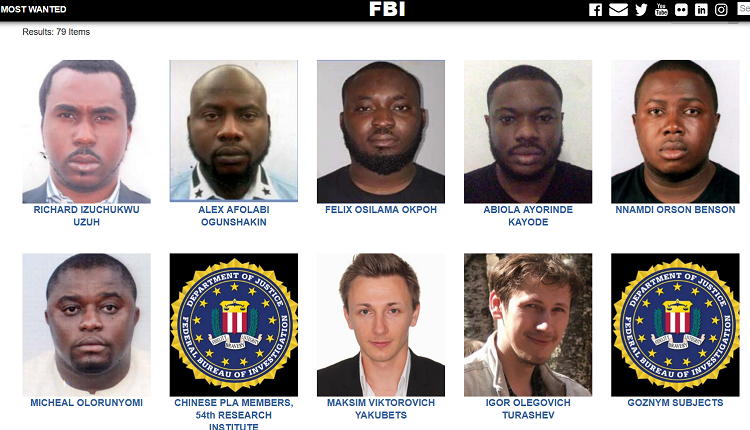
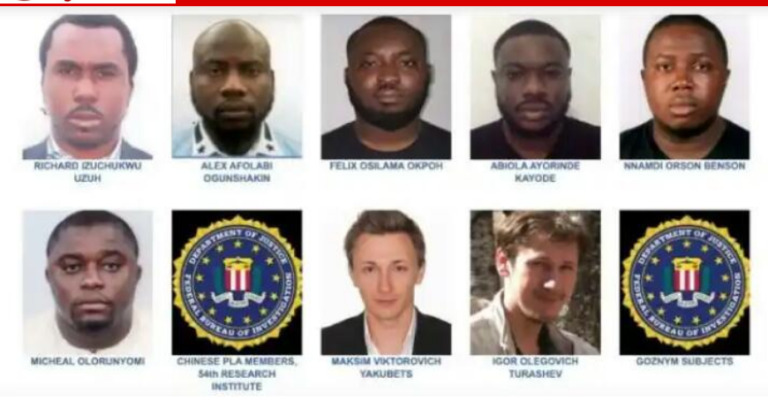
The contention was that despite having scores of other nationals indicted for similar crimes in the most wanted list, the FBI allegedly used as a poster and made reference to the six Nigerians identified as Richard Izuchukwu Uzuh, Alex Afolabi Ogunshakin, Felix Osilama Okpoh, Abiola Ayorinde Kayode, Nnamdi Orson Benson and Michael Olorunyomi.
Meanwhile, other nationals in the FBI list were Chinese, Russians, Iranians and some citizens of Arabian nations but to mention a few.
The claim has again stoked the fire of racism discourse in Twittersphere.
THE FINDINGS
The ICIR visited the FBI website and downloaded the controversial data. The citizenship or country of birth of each suspect as detailed on the website was verified to establish their nationals.
A study of the data, however, revealed that contrary to the above claims, the suspects were nationals of 12 different countries, and none was of Arab origin.
They include Iranians, Nigerians, Chinese, Russians, Latvian, Romanian, Pakistanis, Ukrainian, North Korean, Vietnamese, Indian and Swedish.
Moreover, countries such as Latvia, Romania, Ukraine are different sovereign countries from Russia contrary to the claim.
Again, some foreign citizens identified in the FBI list and categorised as Arabians were not. Pakistan for instance, does not identify itself as an Arabian or Middle-East nation but South-Asian.
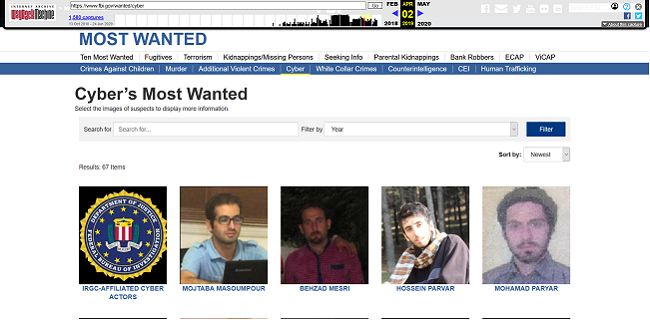
FBI Cyber Most Wanted List as of 2nd April, 2019 Photo Source: Olugbenga Adanikin, The ICIR
For the second claim that the FBI deliberately used the six Nigerians as ‘poster boys’ rather than picking from other accused nationals, who mostly populated the Bureau’s database, independent findings by The ICIR revealed that the FBI cybercrime most wanted list is always updated on a periodic basis.
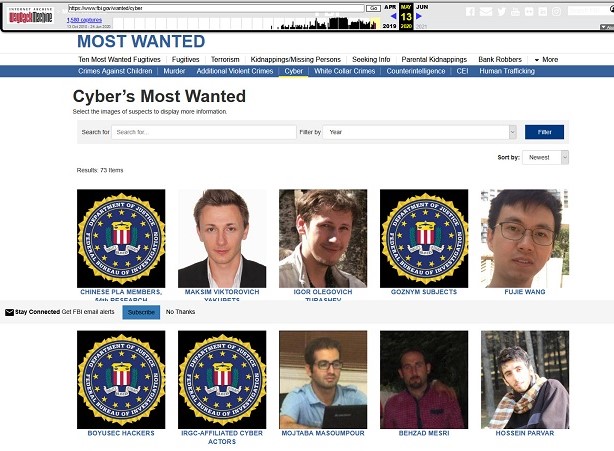
For instance, as of May 13, 2020 names and identities of the six Nigerians were missing from the most wanted list.
Those topping the list as of the date above were the Chinese PLA Members, Maksim Viktorovich Yakubets, Igor Olegovich Turashev, the Gozynym Subjects and Fujie Wang.
Moreover, on April 29, 2019 the name of Maksim Viktorovich Yakubets was published on the most wanted list on the same date Igor Olegovich Turashev, another Russian made the list.
FBI Cyber’s Most Wanted as of 13th May 2020 Photo Credit: Olugbenga Adanikin, The ICIR
Similarly, as of April 2, 2019, the above names were also missing on the FBI most wanted list.
The names that topped the list as of this date were four Iranians Mojtaba Masoumpour, Behzad Mesri, Hossein Parvar, Mohamad Paryar and IRGC-Affiliated actors. Thus, it means that the FBI’s most wanted list is usually updated at interval, as those of the six Nigerians currently top the list because they were the most recent names to be added to the Bureau’s website.
VERDICT
Based on available findings, the claim that 39 of the suspects were of Arab origin is FALSE.
Also, the claim that the accused Nigerians were made the “poster boys” based on their race is also MISLEADING, and thus FALSE.
HADI Sirika, Nigeria’s Minister of Aviation has disclosed that international air travelers taking off from the country’s airport terminals must arrive five hours before hour of departure in order to observe COVID-19 measures.
The minister made the submission at the Murtala Mohammed International Airport, Ikeja, Lagos, while sharing guidelines to be observed as airports are getting ready to reopen, having been closed since March, due to the COVID-19 pandemic.
Sirika further disclosed that equipment are being put in place to help passengers experience a smooth transition into the new normal, adding that for local flight travelers, it is advisable to arrive the airport three hours before departure time.
“We will announce all the protocols again before opening. But you need to be at the airport three hours ahead of your flight,” the Minister said.
“The experience is quite nice but it takes a bit of time which is why you will need to be at the airport three hours before your local flight. For an international flight, we may do five hours.”
Reiterating the preparedness of the airports to accommodate crowd, the minister disclosed that toilets at the airports have also been made COVID-19 compliant, stressing that everything has been done to minimise physical contact.
He also assured that new certifications were being given to pilots, engineers, traffic controllers and catering staff at the airports to offer guaranteed services.
On concerns of profitability of the aviation industry, Sirika assured that the new guidelines would be implemented in a way that flights would still be profitable.
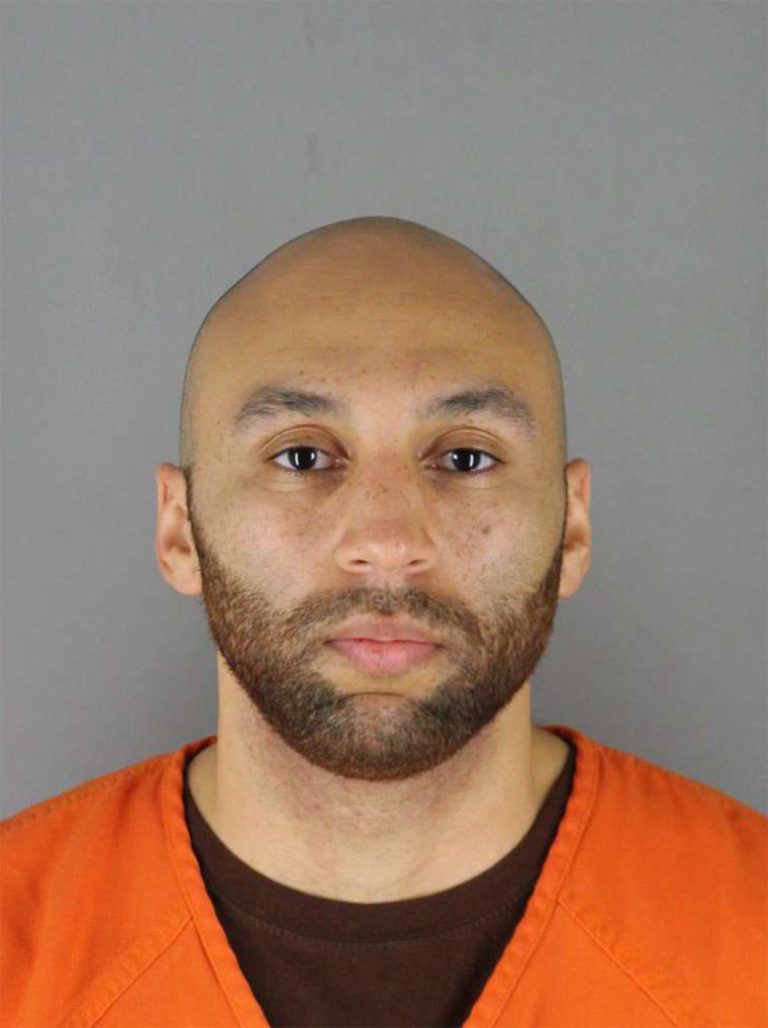
ALEX Kueng, an African-American former police officer charged with aiding the murder of George Floyd reportedly has a Nigerian father and a White Mother.
A report by The New York Times on Saturday revealed that Alex is an African – American who grew up among other black children in Minneapolis.
The ICIR is unable to confirm his Nigerian descent because his father’s native name was not included in the report.
George Floyd was murdered by Police officers in Minneapolis in May, 2020 resulting into several protests most especially in black communities in USA.
The report stated that Keung was the officer who held Floyd’s back to the ground while another officer had his knee on his neck.
Keung reportedly joined the police force to fix the issue of police brutality on black people because he had seen one of his siblings ‘poorly treated’ by a police sheriff.
Although his decision to join the force severed his ties with some family and friends who were not pleased with his decision, Keung had hoped that by joining the force he would be able to protect his loved ones from Police abuse.
However, his alleged complicity in Floyd’s murder came in contradiction to his pledge to fix Police abuse on black people.
Taylor and Radiance Keung, both siblings of Alex who joined protests against black abuse by police officers in a Facebook video called for the arrest of their brother and the other three police officers involved in the murder.
Joni Kueng, Alex’s mother never imagined that a member of her family could be involved in a racially motivated crime as Floyd’s.
She described the incident as a ‘gut punch’, because of the racial diversity in her family.
“It’s a gut punch, here you are, you’ve raised this child, you know who he is inside and out. We’re such a racially diverse family. To be wrapped up in a racially motivated incident like this is just unfathomable, ” Alex’s mother said.
THE Socio-Economic Rights and Accountability Project (SERAP) has filed a lawsuit against the Federal Government and the Central Bank of Nigeria (CBN) asking them to publicly identify and name Nigerians who have so far benefited from any cash payments, cash transfers, food distribution and other reliefs and palliatives during the lockdown in Abuja, Lagos and Ogun states because of COVID-19.
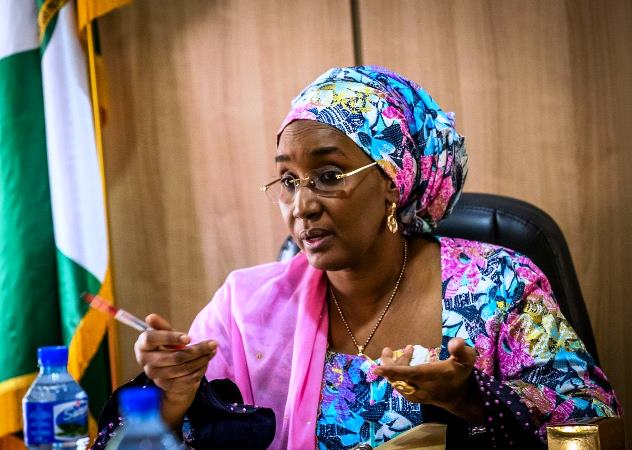
In the suit number FHC/ABJ/CS/657/2020 filed last week at a Federal High Court, Abuja SERAP is seeking for “an order for leave to apply for judicial review and an order of mandamus to compel Sadia Umar-Farouk, Minister of Humanitarian Affairs, Disasters Management and Social Development, and Godwin Emefiele, CBN governor, to publish spending details of public funds and private sector donations to provide socio-economic benefits to the country’s poorest and most vulnerable people.”
The social accountability group is also seeking “an order to direct and compel the Minister and the CBN Governor to publish up-to-date list of donations and names of those who have made payments as per their publicly announced donations; spending details of the N500 billion COVID-19 intervention fund, and the names of beneficiaries, and whether such beneficiaries include people living with disabilities (PWDs).”
The suit filed on behalf of SERAP by its counsel, Kolawole Oluwadare and Joke Fekumo is coming after SERAP had already requested through Freedom of Information (FoI) dated April 4, 2020, expressing concern over non even distribution of the palliatives to the poor in the country.
“Millions of the country’s poorest and most vulnerable people have not benefited from the announced palliatives, donations, reported cash payments, cash transfers and other reliefs,” SERAP said.
SERAP is also seeking a declaration that the failure of the Minister of Humanitarian Affairs, Disasters Management and Social Development, and the CBN governor to provide SERAP with the requested information on spending details of public money and private donations and to publish names of beneficiaries amount to a fundamental violation of the FoI Act and the African Charter on Human and Peoples’ Rights.
“Any perception that the reliefs, funds and donations are not reaching intended beneficiaries would undermine public trust and the integrity of the entire processes and modes of distribution of reliefs/benefits to these Nigerians,” a part of the suit reads.
SERAP added that the general public have a legitimate interest in ascertaining and scrutinizing the veracity of the claims of how the COVID-19 funds and donations have been spent, and to know that the intended beneficiaries actually received any benefits.
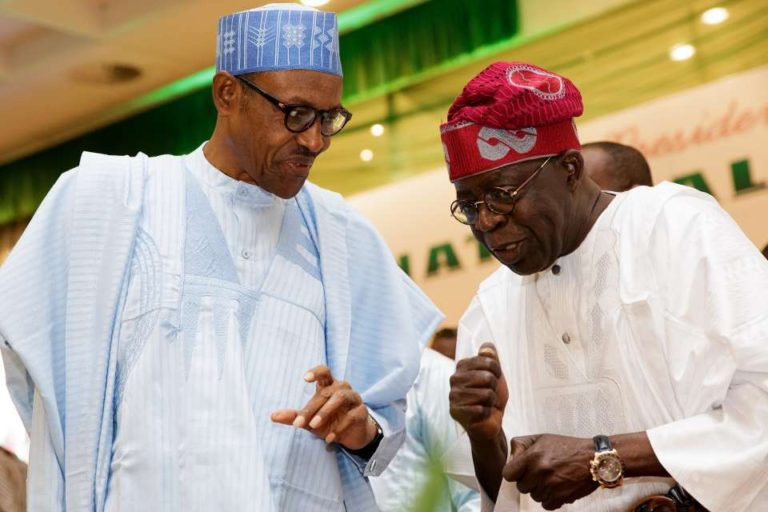
GARBA Shehu, Spokesperson to the Nigerian President, Muhammadu Buhari has insisted that the President and Bola Tinubu, the National Leader of All Progressive Congress (APC) are in harmonious relationship and have no misunderstanding.
“They are in touch with one another. Their relationship remains as strong as ever and between the two of them, only they know how they manage their enviable relationship,” said Shehu in a series of tweets on Saturday evening.
Shehu stated this while negating some narratives that there has been a fallout between Buhari and Tinubu following the dissolution of the National Working Committee (NWC) of the APC.
He stated that opposition parties and their supporters in the media have used their intellectuals to break their relationship between the president and the party leader but have failed to do so.
The presidential spokesperson explained that the essence of the emergency NEC meeting was to pull the party back to its feet following recent crisis.
“The very essence of the requests put to the Emergency NEC meeting of APC by President Buhari, which were unanimously approved aim to pull back the party, faced with an existential crisis from the brink of collapse, follow the constitution and take everyone along,” he said.
“While this action has been widely accepted with great relief by lovers of democracy and the rank and file of the membership, we are concerned that political vulturism masquerading as “smart analysis” is selling the commentary that this is a Buhari-Tinubu “showdown” nothing can be farther from the truth,” Shehu wrote.
He noted that both Buhari and Tinubu are reckoned as founding fathers of the APC, given the leadership of the party, which according to him, is not governed by partisan motivations.
Shehu reiterated that the exercise should lead to massive reform and overhaul of the leadership of the party, as Buhari said in his speech that it was ”to save the APC from the imminent self-destruction.
He said the party has to move ahead and everyone is rest assured that the APC is being governed in accordance with democratic norms and with consensus.
“The leaders of the party, who have received two successive massive mandates to govern the country and a majority of the states should be judged by how this exercise turns out in achieving these objectives, not cursed at the mere commencement of the process,” Shehu noted.
BOLA Tinubu, National Leader of the All Progressives Congress (APC) on Saturday broke his silence on the leadership crisis rocking the party, berating those suggesting that the latest development in the party has thwarted his 2023 presidential ambition.
“To those who have been actively bleating how the President’s actions and the NEC meeting have ended my purported 2023 ambitions, I seek your pity,” Tinubu said in a 1, 861 words of four-page article titled “Becoming The Party We Were Intended he personally signed.
“I am but a mere mortal who does not enjoy the length of foresight or political wisdom you profess to have. Already, you have assigned colourful epitaphs to the 2023 death of an alleged political ambition that is not yet even born.
“At this extenuating moment with COVID-19 and its economic fallout hounding us, I cannot see as far into the distance as you. I have made no decision regarding 2023 for the concerns of this hour are momentous enough.”
Tinubu said the decision of the National Executive Committee (NEC) of the party was an indication that APC was gradually becoming the party it was intended to be.
He admitted that the internal leadership crisis of the party had culminated and endangered the performance of the National Working Committee (NWC) of the party.
“Yet, we must acknowledge that something important has gone off track. For some months we have experienced growing disagreement within the leadership of the party. This unfortunate competition had grown so intense as to impair the performance of the NWC, thus undermining the internal cohesion and discipline vital to success,” he said.
“Yet, such intramural fighting has come to occupy the attention of many high ranking party officials and members.”
“The National Working Committee, itself, became riven by unnecessary conflict. Those who disagreed with one another stopped trying to find common ground. Attempts were made to use the power of executive authority to bury each other. I must be blunt here. This is the behaviour of a fight club not the culture of a progressive political party.”
On President Muhammadu Buhari’s intervention in the party’s leadership crisis, Tinubu described it as a needed effort at a moment where there were numerous lawsuits filed by party members to an extent where the president was compelled to intervene.
“With lawsuits so numerous, one needed a spreadsheet to keep track, President Buhari has reasonably decided that he has seen enough.”
“I do not lament his intervention or its outcome. I lament that the situation degenerated to the point where he felt compelled to intervene.”
Tinubu also disclosed that his current ambition has been devoted to thinking of policies that may help Nigeria find balance out of the global pandemic and the current economic downturn.
“During this period, I have not busied myself with politicking regarding 2023. I find that a bit distasteful and somewhat uncaring particularly when so many of our people have been unbalanced by the twin public health and economic crises we face,” he said.
“I have devoted these last few months to thinking of policies that may help the nation in the here and now. What I may or may not do 3 years hence seems too remote given present exigencies.”
COVID-19 effects threaten food security, increase vulnerability, women farmers raise alarm. A Survey by Ibukun Emiola, News Agency of Nigeria (NAN).
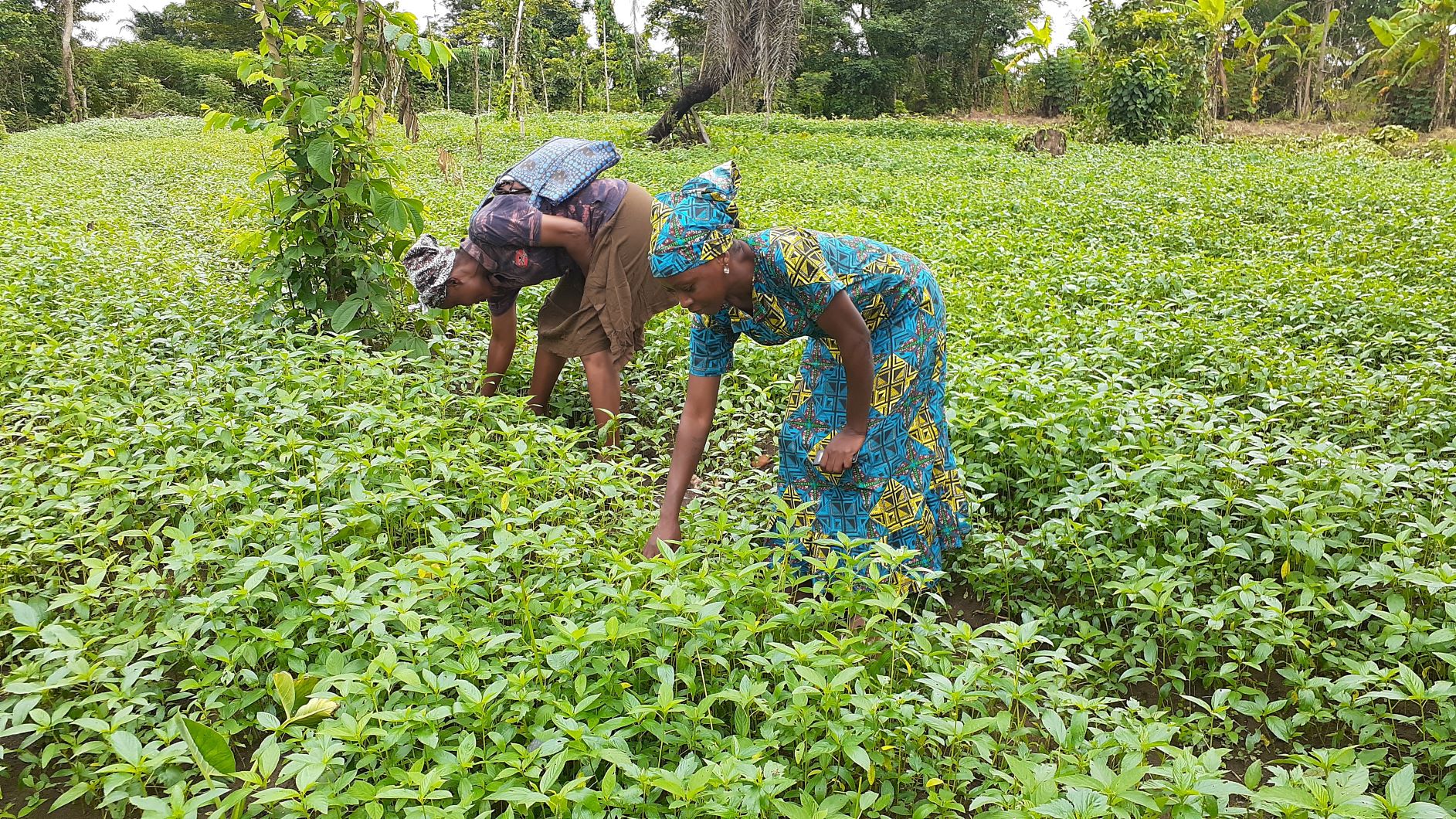
Mrs Motunrayo Ajagbe, 55, is a smallholder farmer in Ibadan. She has a farm at Oluyole Local Government Area. She and members of her family depend on the sale of the farm produce for survival.
During the initial five weeks of the lockdown occasioned by COVID-19 pandemic, she lost 70 per cent of her crops and vegetables because she could not go to the farm to tend to them.
She observed that more than 70 per cent of the crops and vegetables were lost due to lack of movement to take care of the farm.
She said: “We were caught unaware, so not going to farm had a serious impact on the family; and although I work with a private school, schools were also closed and no income came in for me. We became somewhat vulnerable.
“It affected my children because we only eat one meal a day and eat anything we find in between meals like a refreshment.
“Already, we have incurred more than 70 per cent revenue loss due to COVID-19 pandemic and the lockdown has hindered movement and we couldn’t sell the little harvest we got. The situation becomes frightening.
“Not only this, we are unable to move freely to go to where our farm is located because the farm is far from where we live — about a two-hour walk.
“Due to this, many of our plants were destroyed, many of the crops dried off even as climate change affected farming this year because the rain didn’t fall as expected.
“Besides this, we have our own method which is irrigation but were unable to apply water to the crops to make them grow because there was no movement.
“We were unable to prepare the vegetables in the nursery bed and then transfer them to the field as well as do other necessary things to keep the plant healthy and ensure growth. This has caused damage to the crops’’.
This is just the experience of one out of numerous women farmers across the country whose farming activities have been sustaining food security even at subsistence level.
Unarguably, before the outbreak of COVID-19 in late 2019, rising food prices, inadequate investment in subsistence farming, climate change and lack of capacity, especially for women to acquire land for farming, among other social factors, posed serious threat to farming.
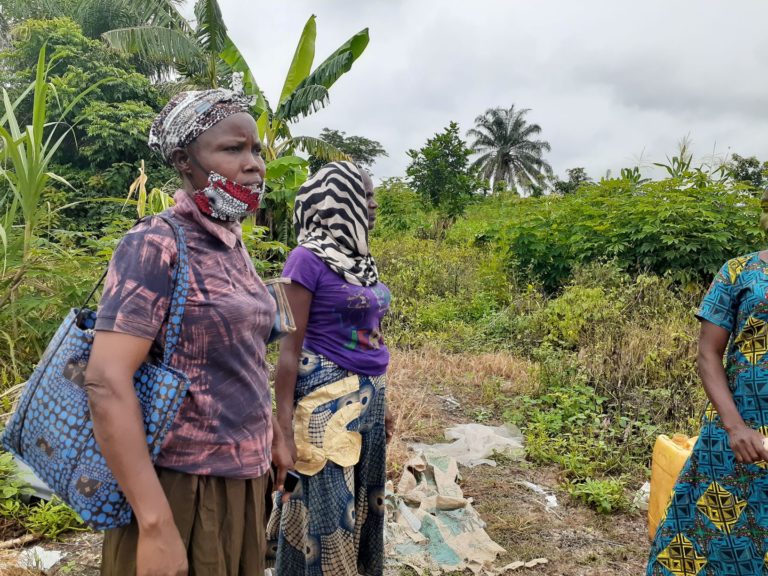
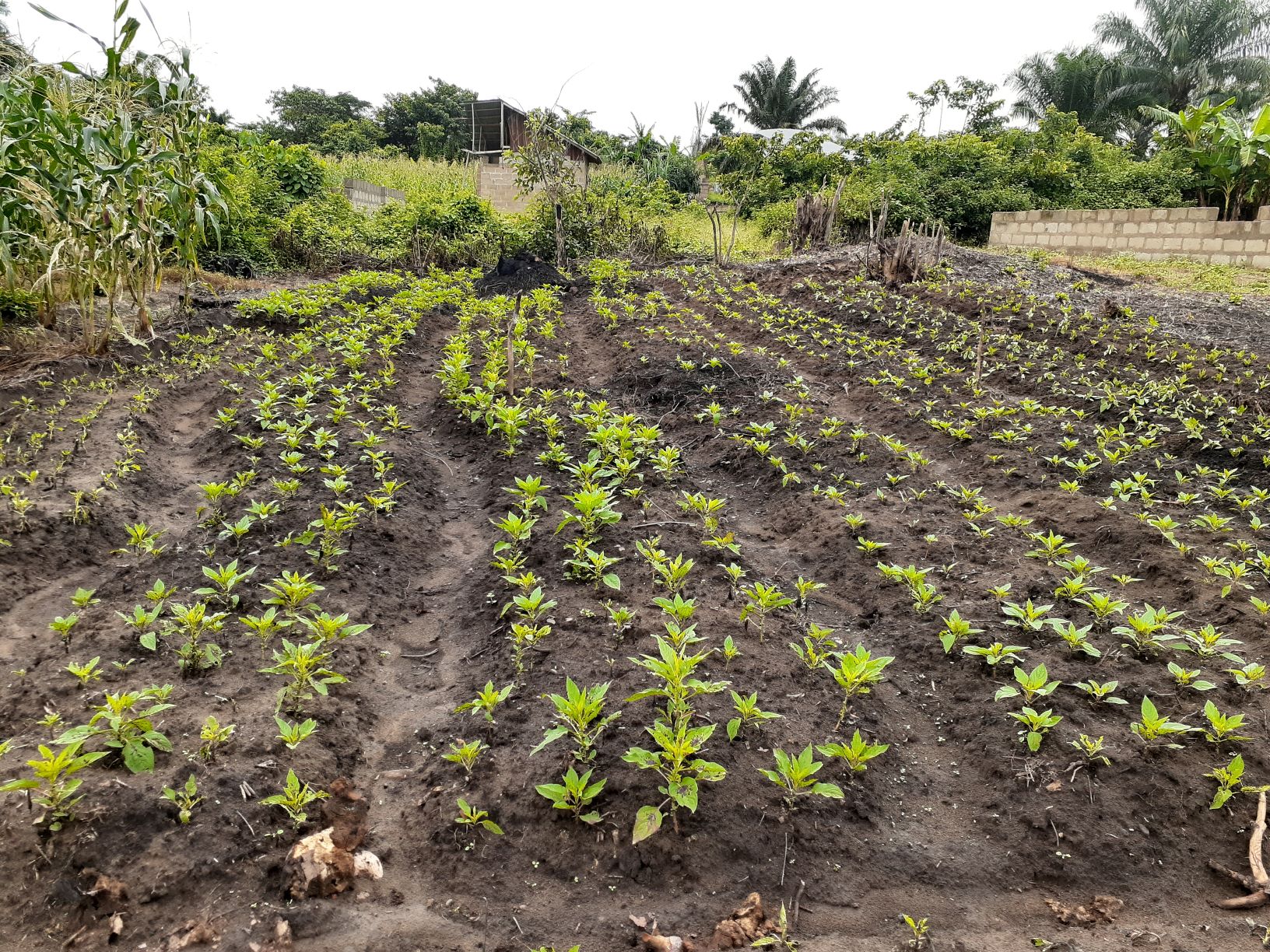
Smallholder women farmers at Ibadan South West LGA, Oyo State inspecting their plants.
Investigations reveal that farmers, especially women, have on many occasions, expressed concern about the impacts of COVID-19 on farming activities, observing that the situation can result in a food crisis and increased vulnerability if the authorities don’t do the needful.
For instance, smallholder women farmers in some parts of Oyo State express fear over food shortage due to the effect of lockdown occasioned by COVID-19, climate change and inability to get government palliatives, among other factors.
The women, on the platform of the Small Scale Women Farmers Organisation in Nigeria (SWOFON) in some local government areas of Oyo State, spoke in separate interviews with the News Agency of Nigeria (NAN).
According to them the initial lockdown for five weeks in the country and particularly restriction of movement to Lagos and Ogun State have cost them to lose revenue between ranging 50 per cent and 70 per cent.
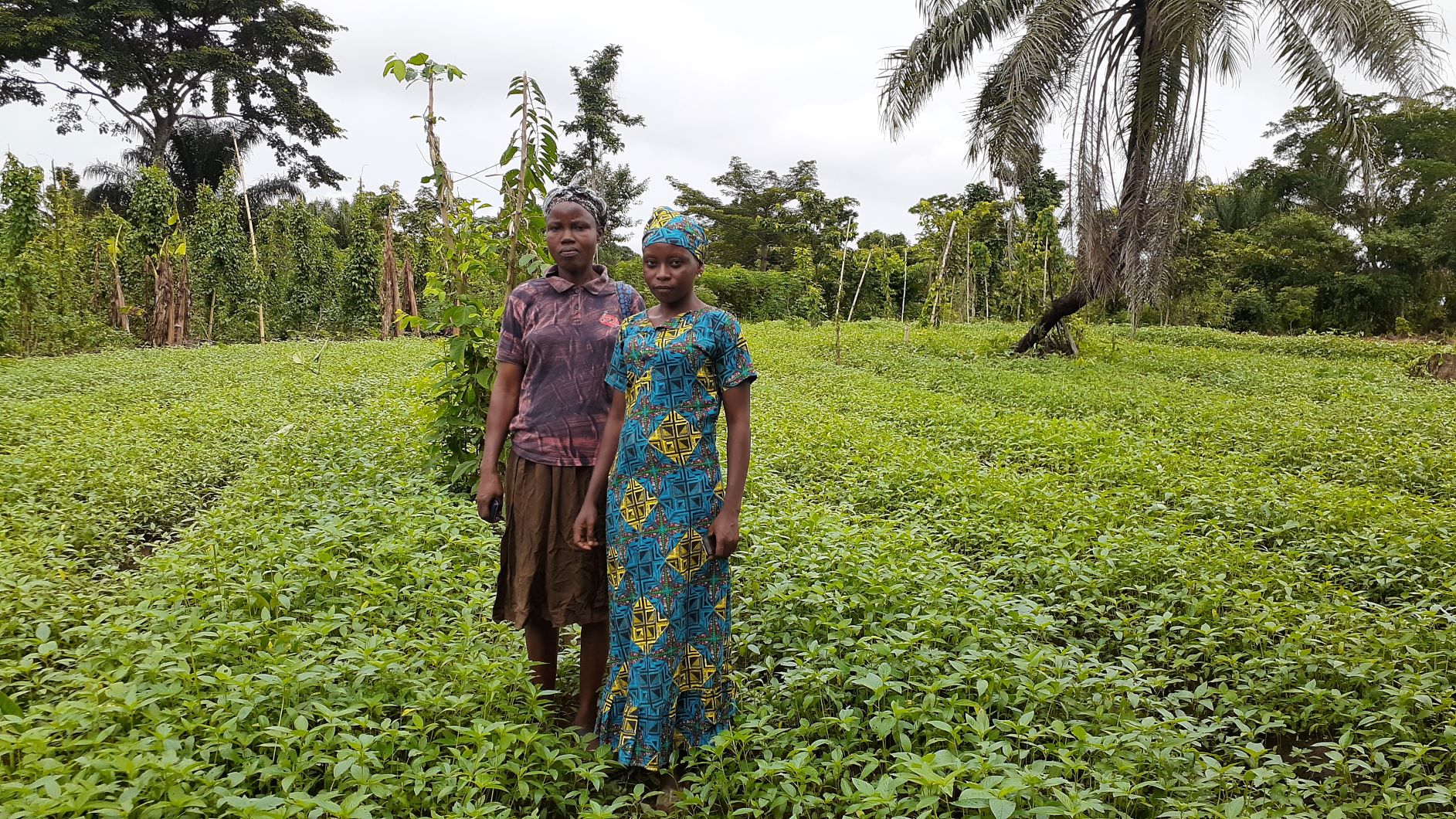
Smallholders women farmers
They note that inter-state travel ban has had adverse effects on their business which is their means of livelihood.
SWOFON is a coalition of Women Farmers Associations and Groups across Nigeria that, over the years, has championed advocacy and garner support for more than 500,000 grassroots women farmers in Nigeria.
The association has continued to witness myriad of challenges in its quest to provide for their households and ensure food security for the nation.
In many rural areas of Oyo State visited by a NAN correspondent, the harrowing experience of smallholder women farmers continue to echo as the challenges bedevilling these women remain unabated even with the outbreak of COVID-19 pandemic.
The common denominator for all smallholder women farmers in the state remains lack of funds and inability to access grants and loans from the government as well as lack of modern farming implements, access to chemicals to control pests and insects and fertiliser.
While this group falls into the most vulnerable in the society, their contributions to food production and security in Nigeria cannot be overemphasised in spite of the challenges.
With the diversification programme of the Nigerian economy to non-oil sector and in agriculture notwithstanding, smallholder women farmers are clinging to the hope of receiving deserved attention from the government.
Women farmers recall that the Federal Ministry of Agriculture and Rural Development had its first draft of gender policy in agriculture in 2014 to fill the gaps of gender integration and responsiveness identified in the Agricultural Transformation Agenda.
The document was revised in August 2016 to reflect the vision of the present administration entitled: “Agriculture Promotion Policy and Strategy, the Green Alternative’’.
But smallholder women farmers say they have yet to benefit from the initiative set up to underscore the vital role of agriculture in achieving Sustainable Development Goals (SDGs) one, two and five.
Smallholders women farmers, Ibadan
The goals are set to eradicate poverty, end hunger and achieve food security, as well as improved nutrition anchored on achieving sustainable agriculture, gender equality and empowerment of women and girls.
Women farmers note that the goals may not be achieved because of poverty and lack of mechanised resources that have made them to remain at the lower rung of the ladder in society.
A visit to their farms shows a level of struggle and neglect as these women, who are mostly the breadwinners in their families, have continued to farm to keep up their families and feed the nation in their own way.
The women, however, alleged that they have continued to use manual and archaic farming methods and practices while being at the mercy of loans and climate change for survival.
In Lagelu Local Government Area of Oyo State, Mrs Jolaoye Mujidat, 45, a smallholder woman farmer at Iyana Offa, says the impact of the lockdown occasioned by COVID-19 is enormous, affecting the welfare of her family.
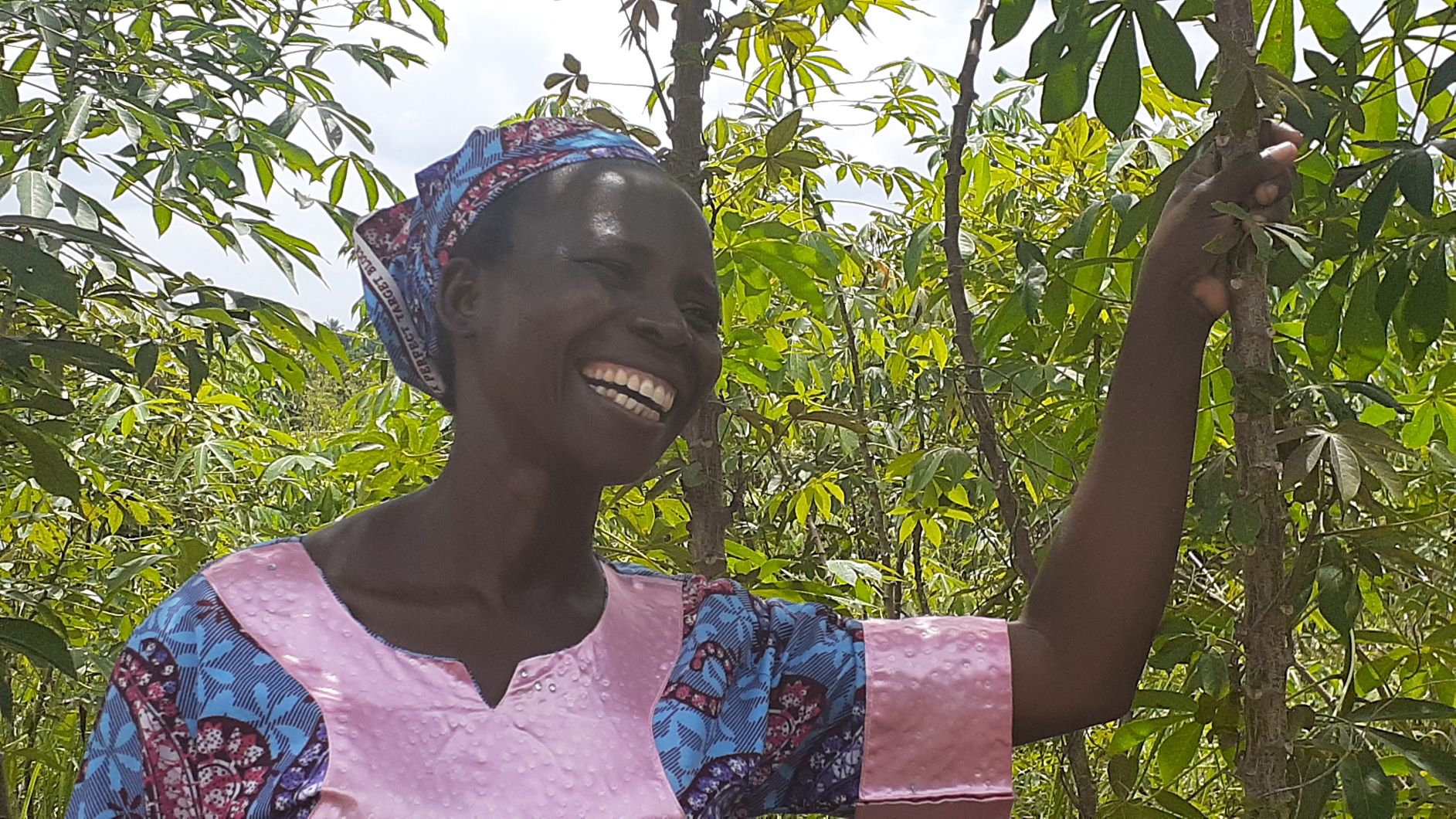
Mrs Mudijat Jolaoye excited for being able to contribute her quota to food production through subsistence farming.
“Exporting of farm produce has been halted due to an inter-state travel ban. Income has greatly reduced. We only sell to people around and that has reduced the cost of the produce by half and we sell below market prices.
“In the planting season due to the downturn in our income we are unable to expand our farm; although there is enough land to farm on, no money to farm on the existing land.
“We do the labour work instead of contracting it out due to paucity of funds. I am unable to do farming work as I want to due to lack of funds. I need the money to buy inputs and pay for labour on the farm.
“Everything is now very expensive, we get our maize seedlings from the north and some other crops. To plant maize is very difficult now because of the lack of seedlings.
“Cassava stems are so costly now, we can’t even get around this place if we want to. What we do is that we cut cassava stems from the ones we have planted before, that’s how we have been managing.
“Before the lockdown, maize produce was taken to Lagos and other states and people from other states came to buy from us as well but that had changed.
“Due to low income, we are unable to buy the needed chemicals to prevent our crops from being destroyed by insects.
“We have been trained on how to apply the chemicals to stop insects from destroying our farms only that we have no means to do this, so we are soliciting help on this.
“We want them to provide us with pesticides and power tillers such that they will be of great assistance to us in farming. It will even aid the expansion of our business’’, she said.
In Ibarapa Central Local Government Area, Igboora, Oyo State, Mrs Funmilayo Olaniran, 50, a smallholder farmer notes that farming ought to be very lucrative venture and women can be supported to boost food production.
“Six of us came together to farm as members of SWOFON due to old age and lack of support to expand this farming business.
“We plant maize, cassava and melon on five hectares of land but the effect of COVID-19 has had a negative impact on our business.
“The lockdown occasioned by the virus prevented inter-state travel, meaning our produce could not be transported to where it would be sold.
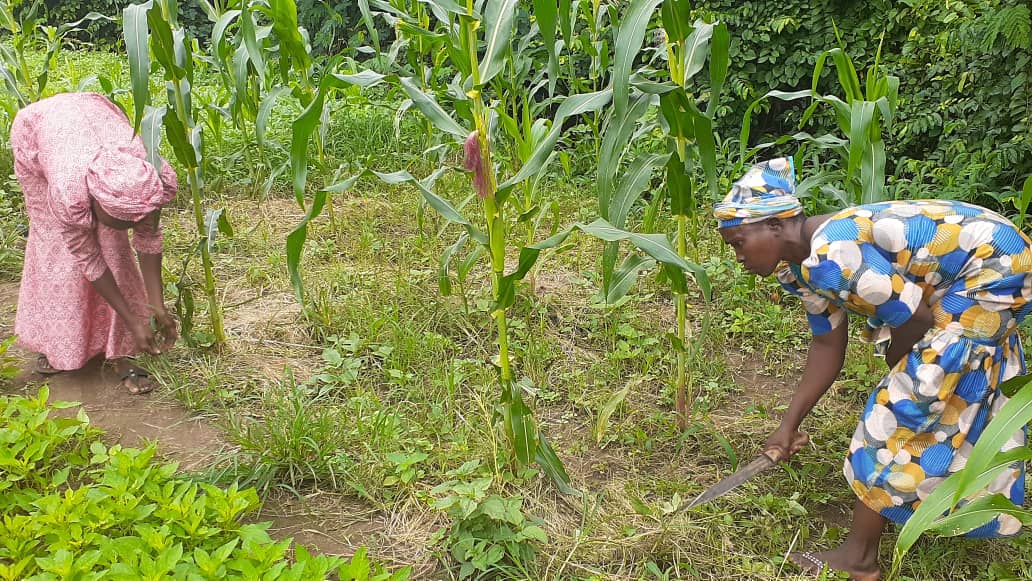
A smallholder woman farm in Ibadan, Oyo State.
“People who buy our produce could not do so because movement has been prohibited, so, our produce spoil in the store and this has really affected us.
“We want to expand our business and we want to do farming as it should be done and we want the government to come to our aid,’’ she explained.
Mrs Maria Adegoke, 35, in the same local government explains that she began farming when she was 20 years old but she has never experienced a lull in farming business as the COVID-19 has presented recently.
“Lack of transportation to move our goods which affect our sales. Business is not going smoothly. We have lost a lot of money with this coronavirus.
“We are expecting the government to help us so that we can improve our businesses;
because of our losses, we are unable to plant as much as we would during this farming period.
“The little amount we gathered was from microfinance bank. This loan will affect us because we are to repay it in time.
Similarly, Adijat Olayinka, 33, said: “We bought the chemicals used for controlling pests in the farm, we borrowed money to do this.
“Government should please provide us with modern farming implements to make our job easy and also reduce the cost of farming.
“Since the advent of COVID-19, the labourers, who come to work for us from all over including Togolese are unable to come.
“They are prevented from entering Nigeria to work on our farms. This has brought a set back to our business.
“We tried to reduce the cost of labour by slashing down on the amount we give to labourers but they refused to accept this reduction.
“Their reason for refusing to collect pay cuts is that prices of food items have increased with other things they need to take care of in their homes’’.
Stating the effects of the lockdown on farming, Mrs Olayiwola Bridget, a resident of Ibadan and a farmer, notes there are no sales since movement is restricted.
“We want the government to give us tractors, we need pesticides to spray on our crops as they are being ravaged by insects.
“We bought some of the seedlings we planted or we picked from the last harvest we had; we don’t have large storage facilities; we only build some huts to put our harvest.
“We want off-takers too as this will boost our business. We will appreciate it if the government can build storage facilities for us as well,’’ she pleaded.
But Minister of Agriculture and Rural Development Audu Ogbeh insists that the gender policy on agriculture is expected to drastically reduce the vulnerability of women’s biases in agriculture.
He observes that the policy will also boost women smallholder farmers’ contributions to farming activities.
Agronomists note further that the policy document will enhance the platform for building an agri-business ecosystem to meet both domestic and foreign demands for achieving food security and accelerated development.
However, concerned citizens have been asking why such initiative is not achieving the desired result to improve the conditions of smallholder women farmers in Nigeria; even with the Central Bank of Nigeria palliatives on agriculture to cushion the effect of COVID-19.
The palliatives include a N50-billion credit relief package which is to serve as a relief package to businesses along the agricultural value chain.
Another is the N1.1-trillion credit facility package targeted at supporting the manufacturing sector, out of which N1 trillion would be used to support the local manufacturing sector and boost import substitution.
Another loan is targeted at farmers with a three-month repayment moratorium for all TraderMoni, MarketMoni and FarmersMoni loans under the Social Intervention Programme (SIP).
Apart from these, there are loan facilities from Bank of Agriculture, Bank of Industry and Nigeria Export-Import Bank with the same moratorium to repay.
As inspiring as these initiatives are, smallholder women farmers in Oyo State insist they have yet to benefit from the palliatives.
The women plead to be supported by the government at all levels, especially now that COVID-19 pandemic has further devastated their means of livelihood.
In some of the local government areas visited in Oyo State, farmers and women farmers in particular, were not aware of the various government palliatives which are measures to cushion the effect of COVID-19 on agriculture.
Some of them say they have continued to rely on loans from microfinance banks and some of them say they are even indebted and are unable to service their loan due to the effect of lockdown occasioned by COVID-19.
Many of the smallholder women farmers note that they are surviving on the resources made available to them by family and religious organisations while some feed on their harvest.
Some of them, who plant cassava, maize and vegetables, note that although more than 70 per cent of their produce are lost to spoilage, they also have been feeding on the harvest to survive the pandemic.
All in all, experts note that although COVID-19 is a health crisis, it can result in a food security crisis if proper measures are not taken as the world is gradually facing food and nutrition security challenges.
They recommend a close monitoring of food prices and markets to ensure transparent dissemination of information that will strengthen government management of the situation, prevent people from panicking and guide farmers to make rational production decisions.
This report was made possible with support from the International Budget Partnership (IBP)
THE Federal Bureau of Investigation (FBI), on Saturday declared six Nigerians who are currently on the run wanted after they were indicted and charged for internet-related crimes.
The FBI, on its official website listed six Nigerians among its most-wanted cybercriminals in a crime resulting in over $6 million losses.
The six Nigerians include: Alex Afolabi Ogunshakin, Richard Izuchukwu Uzuh, Felix Osilama Okpoh, Abiola Ayorinde Kayode, Nnamdi Orson Benson and Michael Olorunyomi.
This declaration is coming few days after the Dubai Special Weapons And Tactics Unit (SWAT), Police revealed how they uncovered a fraud plan worth of Dh1.6 billion (N168billion), involving a Nigerian Instagram celebrity, Raymoni Igbalode, popularly known as Hushpuppi alongside 11 others.
According to a Twitter post, the US intelligence and security service requested for tips on how to capture the six Nigerians.
“Help the #FBI find six Nigerian nationals wanted for their involvement in business email compromise (BEC) schemes resulting in over $6 million in losses,” the FBI tweeted.
The FBI said Ogunshakin, Uzuh, Okpoh, Kayode and Benson are all wanted on charges of conspiracy to commit wire fraud.
“Alex Afolabi Ogunshakin is wanted for his alleged involvement in a Business Email Compromise (BEC) scheme that defrauded over 70 different businesses in the United States resulting in combined losses of over $6,000,000 USD,” it wrote on its official website.
“Ogunshakin allegedly provided bank accounts to Richard Izuchukwu Uzuh, and other co-conspirators Felix Osilama Okpoh, Abiola Ayorinde Kayode, and Nnamdi Orson Benson, that were used to receive fraudulent wire transfers.”
It added that the Nigerian allegedly also assisted in these schemes by sending spoofed emails to businesses used to solicit fraudulent wire transfers.
The FBI further revealed that “Ogunshakin allegedly later conducted his own BEC schemes, learning from Uzuh and others and on August 21, 2019, Ogunshakin was indicted in the United States District Court, District of Nebraska, Omaha, Nebraska, on charges of Conspiracy to Commit Wire Fraud.
A federal warrant was issued for his arrest on August 22.
Michael Olorunyomi is wanted by the FBI for defrauding older people using a romance scam.
“Micheal Olorunyomi is wanted for his alleged involvement in a Business Email Compromise (BEC) scheme that defrauded over 70 different businesses in the United States resulting in combined losses of over $6,000,000 USD,” the FBI said.
He allegedly conducted romance fraud schemes often targeting vulnerable elders or widows and allegedly defrauded several victims out of more than $1,000,000 USD.
“Additionally, the bank accounts of many of Olorunyomi’s alleged romance scam victims were provided to other co-conspirators to be used to receive fraudulent wire transfers from other fraud schemes.
“On November 13, 2019, Olorunyomi was indicted in the United States District Court, District of Nebraska, Omaha, Nebraska, on charges of conspiracy to commit wire fraud, Identity Theft, and Access Device Fraud. On November 14, 2019, a federal warrant was issued for his arrest,” US intelligence and security service said in the statement.
Meanwhile, Nigerians have taken to social media platform, Twitter to express their displeasure over the FBI’s post which according singled out just Nigerians among other persons wanted for cybercrime.
A Twitter user by the name@One_Dosh , said “A cyber crime is committed, there are 79 Persons: 16 Russians, 20 Chinese, 6 Nigerians and 37 men of arabic descent. Our dearest FBI choose to use 6 Nigerians for their headline,by the time we realize the hate it’ll be so far gone. Y’all can do better FBI,you can do better.”
Another user by the name Gimba Kakanda, wrote,”This sensationalizing bullshit is the reason I commended Dubai Police. They captured scammers of Nigerian descent and paraded them as “international cyber criminals.” FBI had to activate Nigerian nationality-baiting, with only 6 Nigerians out of 79 scammers of many nationalities.”
Kingsley Elijah , said “Racism at its peak… We have other nationals there from 39 Arabians, 16 Chinese.. Russia etc but 6 Nigerians they are hyping it….. Report this tweet.”
Seun Adedeji, said “16 Russians, 20 Chinese, 37 Arabs and 6 Nigerians. It is the six Nigerians that made the headline while the majority of white scammers are kept in the background. If this is not racism, I don’t know what else to call it.”
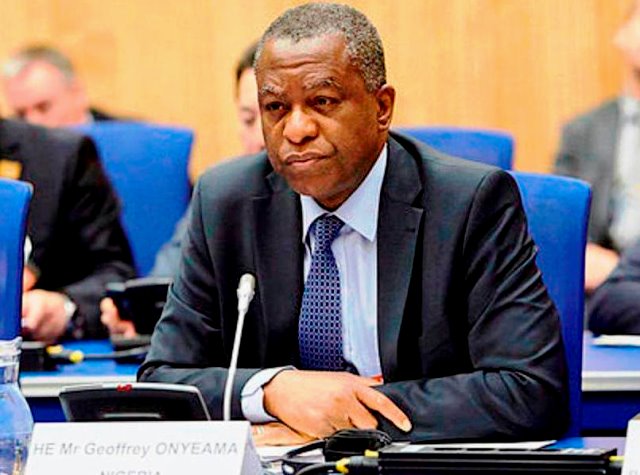
GEOFFREY Onyema, Nigeria’s Minister of Foreign Affairs has described some ‘Nigerian protesters’ in Indonesia who appeared in a viral video vandalising Nigerian Embassy in that country as hooligans, saying that the attack was a ‘disgraceful criminal behaviour.’
On Thursday, June 25 some Nigerians resident in Indonesia were captured in a video vandalizing the Nigerian embassy in the country, while protesting alleged discrimination and infringement of their rights by Indonesian immigration officials.
In the now-viral video clip, the protesters can be seen destroying properties on the premises of the embassy, while chanting: “Nigeria is not helping us in this country. We don’t have an Embassy. We no go ‘gree.”
It was gathered that their actions were triggered by the death of a 41-year-old yet-to-be identified Nigerian man, who fell from a nine-storey building while trying to escape from Indonesian immigration officers.
However, while reacting to the incident in a tweet, Onyeama said the protest by the aggrieved Nigerians as absolutely deplorable and disgraceful criminal behaviour,
“Absolutely deplorable and disgraceful criminal behaviour by Nigerian hooligans who without justification attacked the Nigerian Embassy in Jakarta, Indonesia today,” the tweet read in part.
The minister further disclosed that effort would be invested in finding the protesters so they can be punished.
“Every effort will be made to identify them and see they are severely punished. Totally unacceptable behaviour,” he said.
However, the minister did not comment on the alleged discrimination against Nigerians in the South East Asia country.
In November 2019, Hakeem Balogun, Nigerian Ambassador to Indonesia disclosed that about 5,000 Nigerians live in Indonesia, emphasizing that the figure might be incorrect because most Nigerians in Indonesia are undocumented and, therefore, remain in hiding.
“Less than three per cent of the total known number live legally and are engaged in legitimate businesses in the country,” Balogun said.
In the same period, it was reported that about 407 Nigerians were serving prison sentences in Indonesia for several crimes including drug abuse, cybercrimes and immigration-related offences.
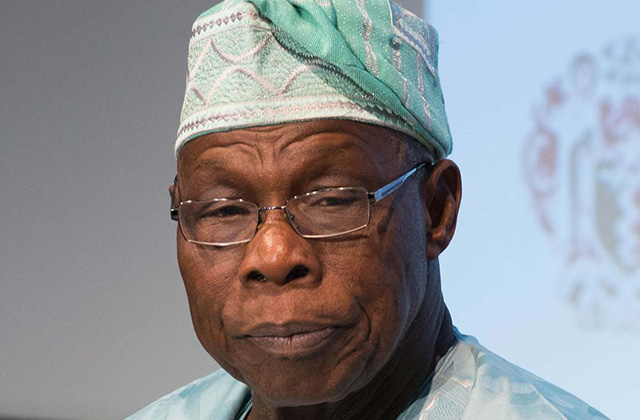
NIGERIA’S former President, Olusegun Obasanjo says the future of the country would be worse if the government and the people failed to act now.
Obasanjo said this on Friday while speaking at the 2020 edition of the Annual Sobo Sowemino Lecture.
“For us in Nigeria, we have no alternative but to get it right, otherwise, the future will be worse than the present that is uncertain and bleak with economic downturn and pervasive insecurity,” Obasanjo said during the virtual lecture.
“Failure to act now will lead to more frustration, greater despair and larger mentality and feeling that may lead to action of ‘break it all up.”
The lecture titled “COVID – 19 Pandemic and Nigeria Security Issues: the Way Forward”, was organized by the Abeokuta Club.
He added that the Federal Government is overwhelmed with increased insecurity hence the need for a national restructuring.
According to him, governments at all levels have been ineffective in handling the insecurity challenge, thereby charging Nigerians to launch and promote a crusade on the slogan “Security Matters To All; No Security, No Nigeria.”
“Let us take initiative and spearhead actions that will involve governments and the governed and will devolve security architecture, apparatus, arrangement and responsibility in subsidiarity,the former president canvassed.
He dissuaded Nigerians from calling for the break up of the country and also keeping silent on matters of the nation.
“Papering over the obvious cracks in Nigeria’s polity is not the answer, tearing up or seeking disintegration is also not the solution, remaining silent makes us accomplices and irresponsibly so,” he said.
“The solution lies in men and women imbued with courage, nationalism, patriotism, commitment, foresight and love in critical mass, to spearhead the crusade for new Nigeria,” he added.