Home Blog Page 2069

EFCC arrests CashNation Boss, ‘Kashy’ over alleged internet fraud

OPERATIVES of the Economic and Financial Crimes Commission (EFCC) Lagos Zonal Office, on Monday announced that they have arrested one Babatunde Oyerinde Abidoun, a.k.a. Kashy, for his alleged involvement in cyber crimes.

In a statement signed by Dele Oyewale, Head of Media and Publicity of the EFCC, Abiodun, who is the owner of CashNation Ent. Ltd., a music record label, was arrested recently at his residence in Lekki Conservative Estate, Lagos.

His arrest followed intelligence gathered overtime about his suspicious lifestyle.

According to the EFCC, Abiodun, who shuttles between Nigeria and the United Arab Emirates (UAE), allegedly used the proceeds of his fraudulent activities to fund his lavish lifestyle.

Investigations linked his fraudulent activities to his domestic staff, Thomas Aliu Akwu, who confessed to having different accounts domiciled in UBA, Ecobank, GTB, Zenith Bank and FCMB and also receiving money for his boss through the accounts.

Items recovered from the suspect at the point of arrest include a white 2013 Bentley Continental and Mercedes Benz GLK 350.

The suspect will soon be charged to court as soon as investigations are concluded, the statement said.

FG lifts ban on interstate travel, approves domestic flight operations

THE Federal Government (FG) on Monday lifted the ban placed on interstate travels, disclosing that citizens can travel from July 1, provided such journeys are made outside curfew hours.

Boss Mustapha, Chairman of the Presidential Task Force on COVID-19, disclosed these at the ongoing daily briefing of the task force in Abuja.

Mustapha, who is also the Secretary to the Government of the Federation (SGF), also said the government has approved the safe resumption of domestic flights in the country.


Read Also:

The Federal Government also approved “safe reopening” of schools nationwide, describing it as a point of action in the next phase of the gradual easing of lockdown ordered to curtail further spread of COVID-19.

It however highlighted that only graduating students will resume.

The SGF disclosed that the reopening of schools is meant to allow students in graduating classes resume in preparation for examinations.

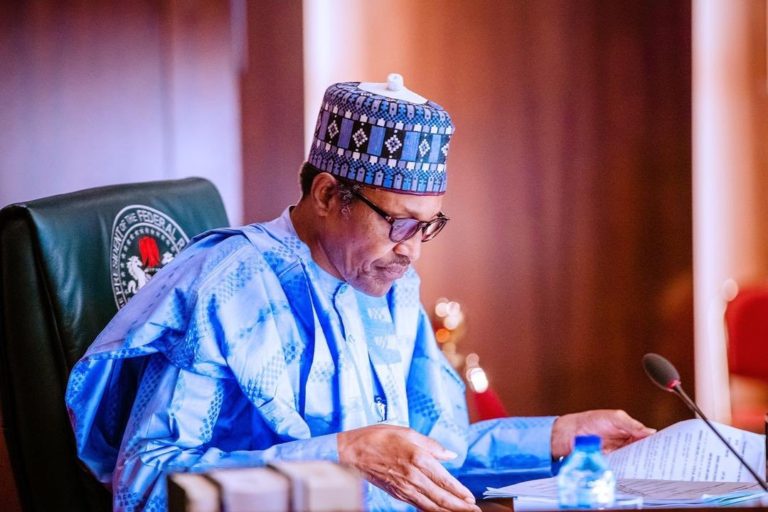
According to him, the new developments are relayed in the Task Force’s  5th Interim Report, adding that it was submitted to the President Muhammadu Buhari earlier on Monday.

“I am pleased to inform you that Mr President has carefully considered the 5th Interim Report of the PTF and has accordingly approved that, with the exception of some modifications to be expatiated upon later, the Phase Two of the eased lockdown be extended by another four weeks with effect from Tuesday, June 30, 2020 through Midnight of Monday, 27 July, 2020.

“Safe re-opening of schools to allow students in graduating classes resume in-person in preparation for examinations; safe reopening of domestic aviation services as soon as practicable,” Mustapha said.

It would be recalled that President Buhari had on March 30, ordered lockdown in three states including; Abuja, Lagos and Ogun, a move that was aimed at curbing the spread of COVID-19, which has since infected over 24,000 Nigerians and left over 565 dead, according to Nigeria Centre for Disease Control (NCDC).


Court dismisses certificate forgery case against Obaseki

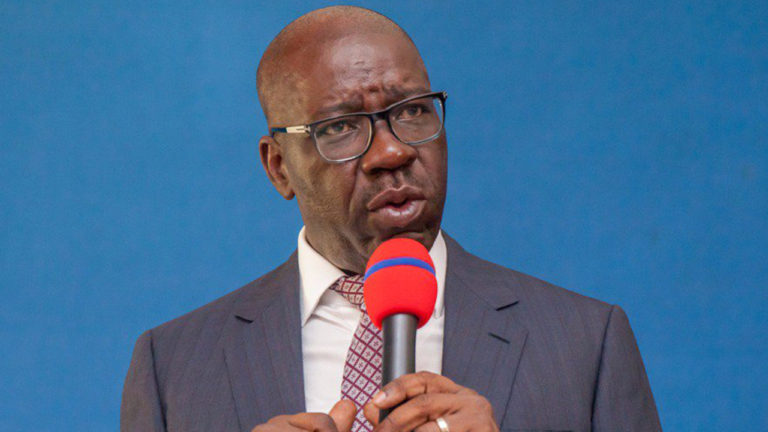
A Federal High Court in Abuja on Monday dismissed a suit filed against Godwin Obaseki, Governor of Edo State.

According to Vanguard report, the plaintiffs, Edobor Williams, Ugbesia Abudu Godwin and Amedu Dauda Anakhu in the suit number FHC/ABJ/CS/553/2020 had accused the defendant (Obaseki) of forging his Bachelor of Arts (B.A.) certificate in Classical Studies from the University of Ibadan.

The case was dismissed by the presiding judge, Justice Anwuli Chiekere, due to the absence of the plaintiffs and the defendant.

The ICIR had reported how a seven-man panel screening committee of All Progressive Congress led by Professor Jonathan Ayuba pronounced Obaseki ineligible after the committee sighted multiple inconsistencies in his certificate.

FG to announce next line of action as phase II of eased lockdown ends

BOSS Mustapha, Secretary to the Government of the Federation (SGF), and  Chairman, Presidential Task Force (PTF) on COVID-19, has said that the Federal Government will  on Tuesday announce the next line of action following the end of Phase 11 of the eased lockdown.

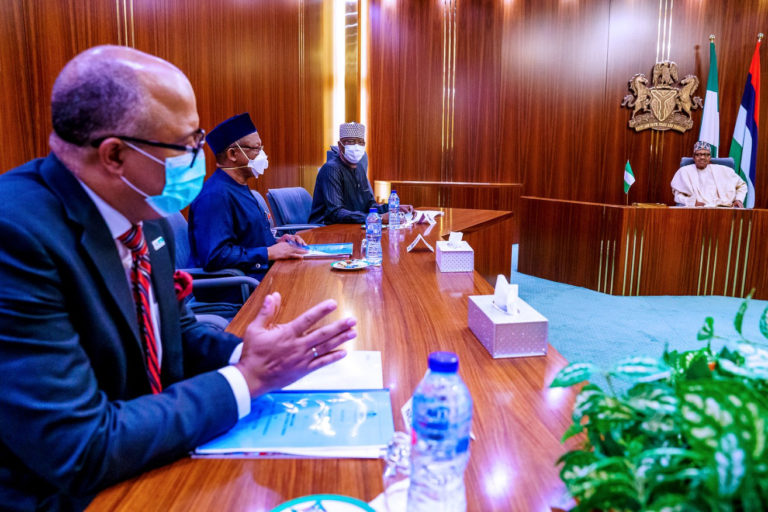
The SGF disclosed this after he led members of the Task Force to the Presidential Villa where they met with President Muhammadu Buhari to brief him and submit the PTF’s recommendations.

Earlier, Bashir Ahmad, presidential aide on New Media said on Twitter that Boss would announce the next lines of action tomorrow after the meeting with the president.

“Today is the last day of the Nigeria’s phase II of the eased lockdown, members of the Presidential Task Force on COVID-19 briefed and submitted their recommendations to the President for approval, the next lines of action will be announced tomorrow, SGF Boss Mustapha discloses,” Ahmad wrote on Twitter.

Nigeria, on Sunday, recorded 490 new cases of COVID-19 bringing the total number of confirmed cases to 24,567.

According to the Nigeria Centre for Disease Control (NCDC), with Sunday’s figure, the total tally of infected people in the country rose to 24,567, from 24,077 reported on Saturday evening.

The Centre in a tweet Sunday night said the new cases were reported in 20 states. These are Lagos, Delta, Ebonyi, FCT, Plateau, Edo, Katsina, Imo, Ondo, Adamawa, Osun, Ogun, Rivers, Kano, Enugu, Bauchi, Akwa Ibom, Kogi, Oyo and Bayelsa states.

Nigeria recorded its first index case of COVID-19 pandemic on 27 February  when an Italian citizen came from Milan to Lagos tested positive for the virus.

This was followed by a Nigerian citizen who had contact with the Italian citizen as the second case which was confirmed on 9 March, in Ewekoro, Ogun State.

On  March 30, President Buhari ordered a 14-day total lockdown in Lagos, Ogun states and Abuja to contain the spread of the virus.

The president at the expiration of the lockdown imposed another 14-day lockdown.

“With this in mind and having carefully considered the briefings and Report from the Presidential Task Force and the various options offered, it has become necessary to extend the current restriction of movement in Lagos and Ogun States as well as the FCT for another 14 days effective from 11:59 pm on Monday, 13th of April, 2020. I am therefore once again asking you all to work with Government in this fight,” the president said during his second lockdown speech.

On April 27, the president announced gradual easing of lockdown in Abuja, Lagos and Ogun states after 35 days of total lockdow.

Lagos State remains the epicentre of COVID-19 in Nigeria and also reported the highest daily figure of infections as of Sunday evening.

Babajide Sanwo-Olu, Governor of Lagos State in April, said the delayed closure of the country’s borders, seaport, and airports, including the failure of returnees to self-isolate, caused the spread of COVID-19.

According to the governor in an Instalive chat with CNN, Lagos was prepared to curb the spread of COVID-19 but had to wait for the Federal Government to shut airport, seaport and land borders.

As of March 29 when president shut the country’s airports, seaports, and borders, Nigeria had recorded 111 confirmed cases of COVID-19 and one death.

However, as of May 9, Lagos has recorded a total of 2550 cases with 36 deaths.

The NCDC said on May 17, that a total of 338 new confirmed cases and six deaths were recorded in Nigeria.

Till date,  24,567 cases have been confirmed, 9,007 cases have been discharged and 565 deaths have been recorded in 34 states and the Federal Capital Territory.

Citizens from Nigeria, Ghana, South Africa not permitted to enter EU when borders reopen on July 1

NIGERIANS and their African counterparts from Ghana, South Africa, Cameroon and others may not benefit from the reopening of the European Union external borders, which is expected to happen by the beginning of July, a report by schengenvisainfo news has shown.

The exclusion of these African countries is premised on their epidemiological situation and coronavirus response, their ability to apply containment measures during travel, and whether or not they have lifted travel restrictions towards the EU.

Nigeria currently has 24,567 confirmed cases of COVID-19 and has recorded 565 deaths, while Ghana has 17,351 confirmed cases of COVID-19 and 112 deaths.  South Africa has so far recorded 138,000 confirmed and 2,456 deaths, while Cameroon has recorded 12,592 confirmed cases and 313 deaths.

Schengenvisainfo news  published a draft list of citizens of 54 world countries that will benefit from the reopening of the European Union external borders,  to commence July 1.

Quoting Euronews sources, it said EU officials failed to agree on a common list of the countries that would definitely be banned from entering the block upon the border reopening but managed to create a list of the countries with a better epidemiological situation, the citizens of which will be able to enter Europe by the end of the month.

The website said the same sources have also confirmed that citizens of Brazil, Qatar, the US and Russia will only be able to enter Europe at a later date when the epidemiological situation in these countries improves.

In the list of the 54 countries, only 10 African countries- including Algeria, Egypt, Ethiopia, Mauritius, Morocco, Mozambique, Namibia, Rwanda, Uganda and Zambia were among those whose citizens would be allowed in the European Union countries.

“The European Union has an internal process to determine from which countries it would be safe to accept travellers,” EU Commission spokesman Eric Mamer said last Thursday, adding that its decisions are “based on health criteria.”

On June 11, the Commission presented its recommendation on the reopening of internal Schengen borders on June 15, so that Europeans can travel within the borderless area freely, just as they did pre-pandemic.

At the same time, the Commission recommended that the Member States should start allowing third-country nationals to enter the EU starting from July 1, gradually and partially, based on the epidemiological situation in each third-country.

The Commission recommended the following objective criteria for the Member States, when drafting the list of countries, the citizens of which may visit the EU after July 1: epidemiological situation and coronavirus response in that country, the ability to apply containment measures during travel, an
whether or not that country has lifted travel restrictions towards the EU.

Based on these conditions, the Commission recommended that the nationals of the six Western Balkan countries should be the first to benefit from the abolishment of travel restrictions, all of which are in the above list.

In a related development, Reuters reported that Spain’s Prime Minister Pedro Sanchez is to make his first international trip since the coronavirus crisis to West Africa on Tuesday for a summit on Sahel region issues with other heads of state including France’s President Emmanuel Macron.

The European leaders will be joined in Mauritania by heads of the so-called G5 Sahel states – also including Mali, Burkina Faso, Chad and Niger – and U.N. boss Antonio Guterres, Sanchez’s office said in a statement.

In another sign of travel slowly resuming after months of coronavirus lockdowns, Spain’s Foreign Minister Arancha Gonzalez Laya said the European Union would have a list of COVID-19-safe countries outside the bloc ready by Tuesday at the latest.

Officials are preparing a list of 15 non-EU countries considered safe for travel based on epidemiological criteria, she told local radio Cadena SER.

Sanchez’s office said he would deliver some COVID-19 aid to Mauritania when he arrives for the meeting. Migration issues were also on the agenda, the statement said.


How I declined 10 percent of the money I found, Nigerian honoured in Japan reveals

IKENNA Nweke, a Nigerian living and working in Tsukuba, Japan, who was recently celebrated for returning a lost wallet containing huge sums of money as well as a credit card to its owner through the police has revealed why he declined 10 percent of the money he found.

Nweke in an interview with the ICIR stated that he declined the 10 percent offered him by the Japanese police for returning the valuables because he is a devoted Christian raised by responsible parents.

“The police told me that according to Japanese law, that I was entitled to 10% of the money found inside the wallet but I declined, I told him that there was no need for that because I was raised by responsible parents, and that I am also a Christian,” he said.

Nweke who is a PhD student at the University of Tsukuba, Japan, and also a Teaching Assistant in the same university recounted how he saw the wallet while going home from the University

“I was going home from the University, I decided to get my wife her favorite kebab, as I was climbing the staircase around Tsukuba centre, I noticed something on the ground,”

“As I drew closer, I saw that it was a wallet. When I opened it, I saw a huge sum of money, a credit card, and other valuables,” Nweke narrated to The ICIR.

The lost wallet


Nweke who hails from Amauzari in Isiala Mbano Local Government Area, Imo State, said he was born and raised in Okpoko, Onitsha, Anambra State, but relocated to Japan in 2013 through a Japanese government sponsored scholarship program.

He noted that the owner of the wallet, after getting it back from the police has also called him to express his gratitude.

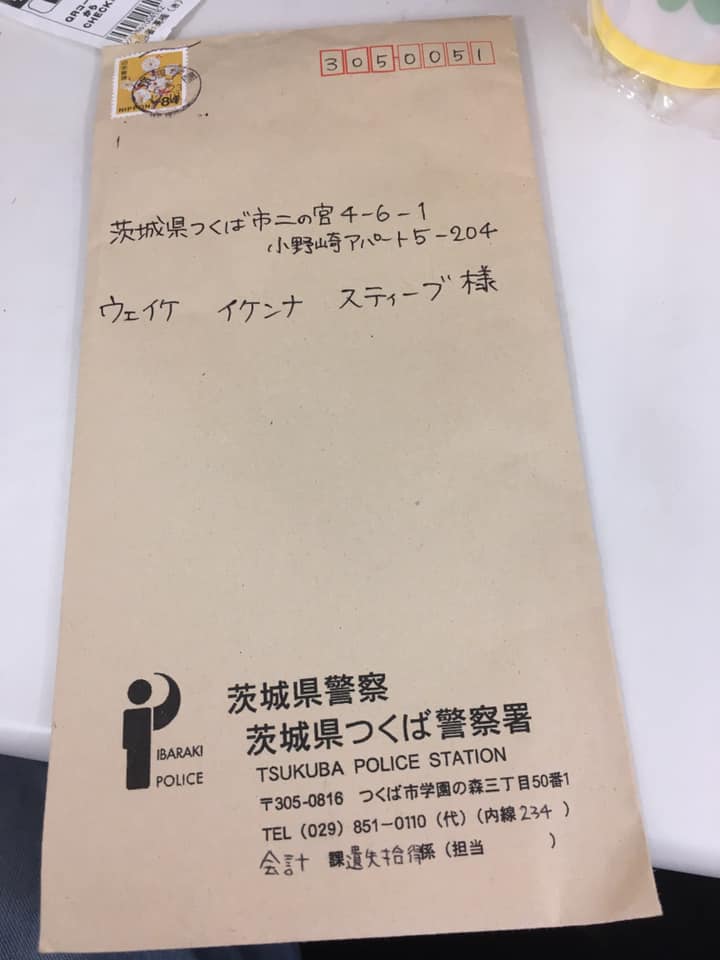
Nweke said he was amazed to receive a letter from the Ibaraki/Tsukuba police, expressing their gratitude towards his incredible and selfless behavior.

When asked why he decided to return the money instead of taking it away, Nweke told the ICIR that he is a devoted Christian, who is committed to change the narratives and unprintable names given to Nigerians in Japan and other countries abroad.

The commendation letter sent to Mr Nweke by the Japanese police

“Not every Nigerian is criminal-minded, there are a lot of Nigerians abroad working so hard to erase the bad name given to “us” by the criminal few,” he noted

Meanwhile, the Chairman /CEO, Nigerians in Diaspora Commission, NIDCOM, Hon Abike Dabiri-Erewa has commended Mr Ikenna Nweke for his honest and patriotic attitude.

Abike gave the commendation in a statement signed by Mr Gabriel Odu of the Media, Public Relations and Protocol Unit of NIDCOM on Sunday in Abuja.

She said, “it is indeed a great opportunity to celebrate you. This is what Nigeria is about. All the negative information you tend to hear about are far out stripped by the positive information that are hidden and not told and these are the likes of people like Mr lkenna.You have portrayed the image of Nigerians in the Diaspora as unique, honest and cultured set of immigrants.”

Police denies report on IG ordering Ondo CP to restore deputy governor’s security details

THE Nigeria Police has denied a report that Mohammed Adamu, the Inspector-General, has ordered Bolaji Salami, Ondo State Commissioner of Police  to restore the security details of the state’s deputy governor, Agboola Ajayi, with immediate effect. 

The report said the directive was contained in a letter issued to the Ondo Police Commissioner through the Deputy Inspector General of Police, Department of Operations, Force headquarters Abuja.

But Frank Mba, Police Public Relations Officer (PPRO) told The ICIR that the report was not true.

“You can’t order for a restoration of something that was never taken away,” Mba said in a telephone interview on Monday.

Also,  Tee Leo Ikoro, Ondo State Police Public Relations Officer, debunked the report in a phone interview with The ICIR, saying that it never happened.

Speaking on the allegation that Ondo State Commissioner of Police had withdrawn security details attached to the embattled deputy governor of the state, Ikoro said, “I don’t think that would be necessary because the deployment of force to the deputy governor is the directive of the IGP, it is only the IGP that can send securities or withdraw them to governors or deputy.”

He further said that the Force Headquarters had issued a press release to identify securities and also assigned each of them their duties respectively in the state.

“Here in Ondo State, it is clearly impossible for the CP to withdraw the deputy governor’s security details,” Ikoro, an Assistant Superintended of Police (ASP) said.

It will be recalled that Bolaji Salami, Ondo State Commissioner of Police was seeing in a viral video exchanging words with the deputy governor after some police officers prevented the latter from leaving the Government House following his defection to the Peoples Democratic Party.

But Salami said he was at the Government House Saturday night of June 21 to discharge his duty as a police chief and also to broker peace.

After their encounter, Ajayi raised alarm over an alleged withdrawal of his Police escort on the order of the CP, Bolaji Salami.

But Ikoro, denied the allegation via a phone call, describing the allegation as unfounded, adding: “I am not aware of the withdrawal of the Police escort of the State Deputy Governor. This is not true.”

Meanwhile, Frank Mba, the force PRO also said to The ICIR that the report is not true and that the command has been consistence because there was a breakdown by the Ondo Police in a statement where they  mentioned names and rank of policemen attached to the governor and the deputy.


95.7 million Nigerians to live below poverty line by 2022- World Bank

THE World Bank has indicated that about 95.7 million Nigerians will live below the poverty line by 2022 after it had accessed the impact of the COVID-19 pandemic.

The World Bank revealed this in a report it recently released, where it stated that 90 million Nigerians were already predicted to live in extreme poverty of less than a dollar a day without the COVID-19 outbreak, but with the dreaded disease, the number has risen by an additional six million people.

“With real per capita GDP growth forecast to be negative in all sectors in 2020, poverty will deepen for the current poor, while those households that were just above the poverty line prior to the COVID-19 crisis will fall into poverty,” the World Bank said.

“Were the crisis not to have hit (the counterfactual scenario), the poverty headcount rate would be forecast to remain virtually unchanged, with the number of poor people set to rise from 82.9 million today to 85.2 million in 2020and 90.0 million in 2022 due to natural population growth.”


READ ALSO:

Breaking down the effects of the crisis, the World Bank stated that the national poverty headcount rate forecast is expected  to jump from 40.1 percent  to 42.5 percent in 2020 and 42.9 percent in 2022, implying that the number of poor people will be 90.2 million in 2020 and 95.7 million in 2022.

It said the crisis alone is forecast to drive an additional 4.9 million people into poverty this year, with an additional 5.7 million people living in poverty by 2022.

In a report by TODAY NG ,the World Bank group report further explained that a disproportionate share of those pushed into poverty by the COVID-19 crisis would likely be those living in urban areas and earning income from services.

While stating that just 15.9 percent of the current poor are urban dwellers, the bank predicted that more than one-third of the additional people forecast to be pushed into poverty by the COVID-19 crisis are expected to be in urban areas.

“Only 13.1 percent of the additional poor people in 2022 are predicted to be in households where the head works primarily in agriculture, while, today, 56.0 percent of poor Nigerians live in agricultural households,” it said.

“Many Nigerians who are not poor today are vulnerable to falling below the poverty line during the COVID-19 crisis. People living only just above the poverty line are more susceptible to becoming poor when shocks occur. Those with consumption levels between the poverty line and 1.5 times the poverty line may be defined as ‘vulnerable.”

It added that 40.1 percent of Nigerians (82.9 million people) live below the poverty line, while another 25.4 percent (52.6 million people) are vulnerable.

It revealed that more than three-quarters of the population in rural areas, were either poor or vulnerable, yet even in urban areas— where the poverty headcount rate was far lower at 18.0 percent—around a quarter of the population would be vulnerable to shocks.

The report further noted that most Nigerian workers especially those in poor households were employed in agriculture or non-farm enterprises, which might be more susceptible to the COVID-19 crisis.

The global financial institution stated that just 16.8 percent of working Nigerians (12.9 million workers) were employed primarily in wage jobs, according to the 2018/19 Nigeria Living Standard Survey (NLSS) while around 42.7 percent work primarily in agriculture (32.7 million workers), and 40.6 percent work primarily in non-farm enterprises (31.1 million workers).

The report observed that social distancing measures posed a serious threat to non-farm enterprises that relied on face-to-face interactions with customers, as well as those agricultural workers that needed to buy inputs and sell produce.

In another report, the World Bank stated that with the uncertainty of the long-term economic impact of the global COVID-19 pandemic,  the speed, quality and sustainability of Nigeria’s economic recovery will be determined by the effectiveness of its government’s response.

The Nigeria Development Update, Nigeria in Times of COVID-19: Laying Foundations for a Strong Recovery says the global spread of the pandemic and the subsequent collapse of international oil prices are destabilizing Nigeria’s macroeconomic balances, the World Bank said.

“Before COVID-19, the number of Nigerians living in poverty was expected to increase by about two million, largely due to population growth.”

“Without bold reforms, strong fiscal and monetary policy actions, the report warns that the macroeconomic implications of COVID-19 in 2020 and 2021 will be severe—including the loss of life, and the possibility of five million more Nigerians being pushed into poverty—even if Nigeria manages to contain the spread of the virus.”

Over 1 million Nigerians apply for 400,000 N-Power jobs in less than 48hrs

ABOUT 48 hours after the Federal Ministry of Humanitarian Affairs, Disaster Management and Social Development opened the portal for N-Power Batch C registration, over 1 million unemployed Nigerians have applied for the empowerment scheme, the Ministry said in a post.

There are only 400,000 positions to be filled in the Federal Government’s social empowerment scheme known as N-Power. The portal for registration was opened on Friday June 26 and as of Sunday, June 28, over 1 million applications have been received according to the Ministry.

“Inline with the ongoing N-POWER Batch C online application which commenced Friday June 26, 2020, the Ministry of Humanitarian Affairs Disaster Management and Social Development, hereby announces that over 1,000,000 applications have been received from across the Federation in less than 48 hours after the Honourable Minister, Sadiya Umar Farouq, declared open the new N-Power Portal on the Ministry’s website,” the Ministry said.

The N-Power Programme was inaugurated by President Muhammadu Buhari in 2016 under the National Social Investment Programme (NSIP) with the mandate of lifting citizens out of poverty through capacity building, investment, and direct support.

According to an available fact sheet from the National Bureau of Statics (NBS), there are 20.9 million unemployed Nigerians as at third quarter of 2018.

Since its commencement in 2016, the N-Power scheme has enrolled a total of 500,000 Nigerians- 200, 000 in September as Batch A and 300, 000 in August 2018 as Batch B.

However, prior to the news of the disengagement of  500,000 Batch A and B beneficiaries on June 30 and July 31, respectively, The ICIR had reported how some beneficiaries of the batches cried out to the government over non-payment of their three-month stipends since March till June, 2020.

The beneficiaries had also written to Ahmed Lawan, the Senate President over the failure of the Minister in charge of the scheme to pay their monthly stipends in the last three months.

The commencement of the Batch C enrollment, according to a statement from the ministry through Rhoda Iliya, its Deputy Director of Press,  “is sequel to far-reaching consultations and a review of the submissions on the reform and realignment of the programme for greater efficiency.”

According to Rhoda, Batch C is also being enrolled to provide opportunities for more Nigerian youths to access the programme, in furtherance of the president’s vision of lifting 100 million Nigerians out of poverty by creating opportunities that will enhance the productivity of the Nigerian youths for entrepreneurship.

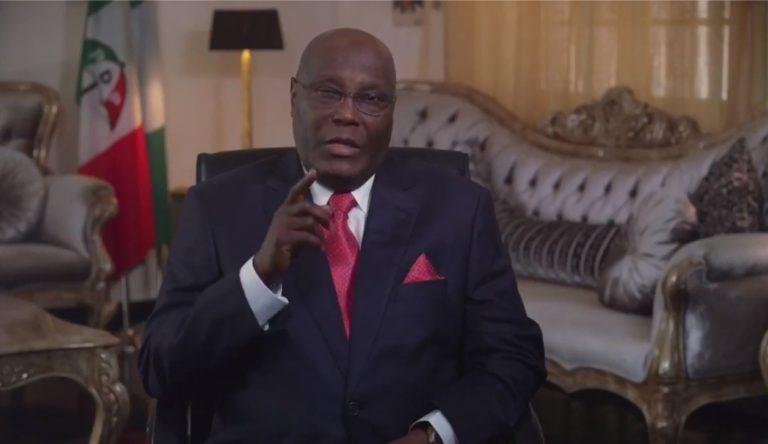
Insecurity is preventing rainy season farming, it will be problematic for us – Atiku laments

ATIKU Abubakar, former vice president and presidential candidate of the People’s Democratic Party (PDP) has raised the alarm that incessant bandits and terrorists’ attacks in Northern Nigeria are currently preventing farmers from embarking on rainy season farming.

This, the former vice president said would be problematic for the country if continued unaddressed by the Federal Government.

In a Twitter message on Monday, Abubakar, warned that the consequences of denying farmers freedom to farm during the wet season is a huge disservice to the nation, reiterating that such is the reality in the North at the moment due to rising insecurity.

“As someone engaged in agriculture myself and whose company is dependent on products from farmers, I know that denying the people the freedom to farm in a rainy season as we are experiencing now, is the greatest disservice to the region and by extension, the whole country,” his tweet read in part.

Proffering a solution, the former vice president urged the Federal Government in collaboration with state governments to take up the nation’s insecurity challenges more seriously, adding that failure to do so could spell doom for the country.

“Hence, I urge the Federal Government in collaboration with the governments of the states in the region to take the security challenges seriously, because, failure to overcome this will be problematic for the whole country. A hungry nation is a troubled nation,” Abubakar submitted.

He also advised citizens to stay vigilant and stay safe as the country idbattles insecurity.

The ICIR reported that President Muhammadu Buhari while delivering his Democracy Day broadcast said that the Nigerian military has ‘considerably downgraded’ insurgency and banditry in the country.

This was despite reports that Boko Haram  has killed more than 30,000 people since 2009 and has not stopped staging regular attacks and stealing livestock in the country’s Northeast throughout the COVID-19 pandemic.