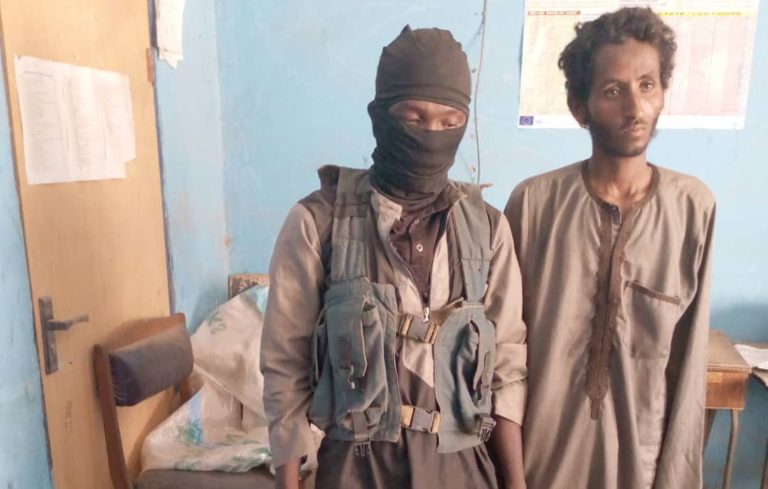
THE Nigerian Defence Headquarters on Tuesday say two foreigners who were among bandits terrorising Kasuwan Ango Community in Mariga Local Government Area of Niger State have been arrested.
A statement issued by the Defence Headquarters stated that strikes executed by the Air Component of Operation GAMA AIKI at Kasuwan Ango Community resulted in the disruption of the activities of a group of armed bandits operating in the area.
This exercise led to the arrest of the two foreigners, the statement said.
The Defence Headquarters disclosed that the successful air operations were conducted on the night of June 28 and early hours of June 29 following credible intelligence reports indicating that some armed bandits in black attire were seen on the move with a large number of rustled cattle in the area.
“Accordingly, the Air Component dispatched a helicopter gunship to engage the bandits in multiple waves of attack leading to the neutralization of some of the bandits, while a few escaped with gunshot wounds,” it said.
The statement revealed that two of the foreigners attempted to escape were later apprehended.
According to PR Nigeria, some bandits had launched an attack on villages in Kagara axis with the intent to rustle domestic animals and also maim innocent lives of residents which led to air strikes by Nigerian Airforce.
“The NAF attack aircraft deployed for combat operation hotly chased the bandits and succeeded in neutralizing some of the criminals, during an aggressive air onslaught,” the newspaper had reported.
“During the clearance operation, men of the Nigerian police were able to arrest the two foreign collaborators while they were fleeing with some of the injured bandits.
The corpses of some of the killed bandits during the air and ground operation currently litter the area of the attacks.”
It further stated that the arrested foreigners are currently been profiled by security operatives to identify their nationality.
Farmers have been affected by the Coronavirus pandemic and require assistance to prevent food shortage. EMMA ELEKWA reports that the palliatives promised by the government are yet to get to many of them.
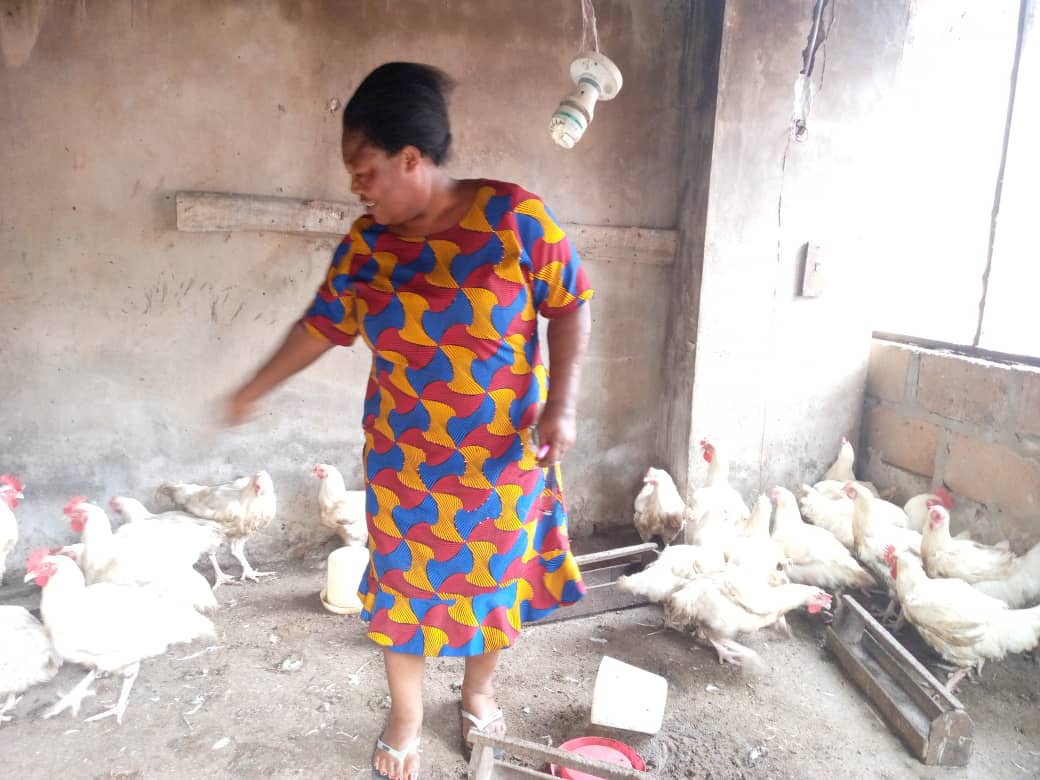
Uche Ileka, an indigene of Umezeagu Nnewi in Anambra State, was a banker; now a happy farmer. She has her hands in poultry, cocoyam, yam and vegetable farming, through which she cares for her family and pays her children’s school fees.
She is one of the members of the Small Scale Women Farmers Organisation in Nigeria (SWOFON), Anambra branch, a group, representing over 500,000 grassroots women farmers in the country.
Ileka said her farming business would have thrived better had the government fulfilled the promise to provide incentives to women farmers engaged in the production of various foods in the state.
“No hatchery machine, no vaccination for the birds. Some of the ones we’re using are adulterated. No power supply to secure vaccines. That’s the major reason why we’re losing so many birds in the country, the issue of mortality!
“If these things were to be on the ground, I bet you, we won’t lack food in this country,” she said, stressing the devastating impact of the COVID-19 lockdown on farmers.
She agonized about her unsold poultry during Easter, and the prices of food items that continue rising.
She blamed some of the challenges facing farmers on poor roads.
“The shortest route to access this place couldn’t have taken you up to five minutes, but look at the distance you’ve covered owing to bad road. If it rains now, sorry will be our second name.”
Though she has heard about palliatives for farmers, she said she has not received any.
Despite various economic relief packages announced by the federal and state government, many women farmers said they have not received the support.
President Muhammadu Buhari had directed the implementation of a three-month repayment moratorium for all TraderMoni, MarketMoni and FarmerMoni loans to mitigate the impact of the pandemic on the small and medium scale enterprises.
Mrs. Ileka Uche confirming the health status of her birds at her poultry farm in Nnewi, Anambra state
He also directed that the social register of the poor “be expanded from 2.6 million households to 3.6 million households in the next two weeks” and placed a moratorium on all government-funded loans issued by the Bank of Industry, Bank of Agriculture and the Nigeria Export-Import Bank.
Buhari also announced an initiative aimed at minimizing the impact of the pandemic on the agriculture sector, directing the Minister of Agriculture and Rural Development, the National Security Adviser, the Vice-Chairman, National Food Security Council and the Chairman, Presidential Fertilizer Initiative to work with the Presidential Task Force on COVID-19 to ensure the impact of this pandemic on 2020 farming season was minimized.
In view of the promise, the CBN announced a credit relief package of N50 billion (about $136.6M) to businesses affected by the pandemic which the CBN Governor, Godwin Emefiele said would be for households, small and medium-sized enterprises, SMEs, agriculture food chain businesses, SMEs, airline operators, service providers, hotels and healthcare merchants.
In Anambra State, the government announced the securing of 3,000 hectares of arable land in the agricultural belt of the state for large scale farming during the planting season. The governor, Willie Obiano, who said the initiative is expected to take over 2,000 youths off the labour market, added that his administration came up with a short term plan that would ensure that food supply was not adversely affected in the state after Covid-19.
“We’ve ordered the purchase of seven tractors to be deployed in the cultivation of the land. We’re empowering women and youths by providing them with cages for poultry and feedstock for birds,” he said.
Although the pandemic has largely affected their early commencement of farm clearing, farmers in the state expressed confidence of still meeting up with the bountiful harvest, especially if governments would make good their promises of providing them with the necessary palliatives.
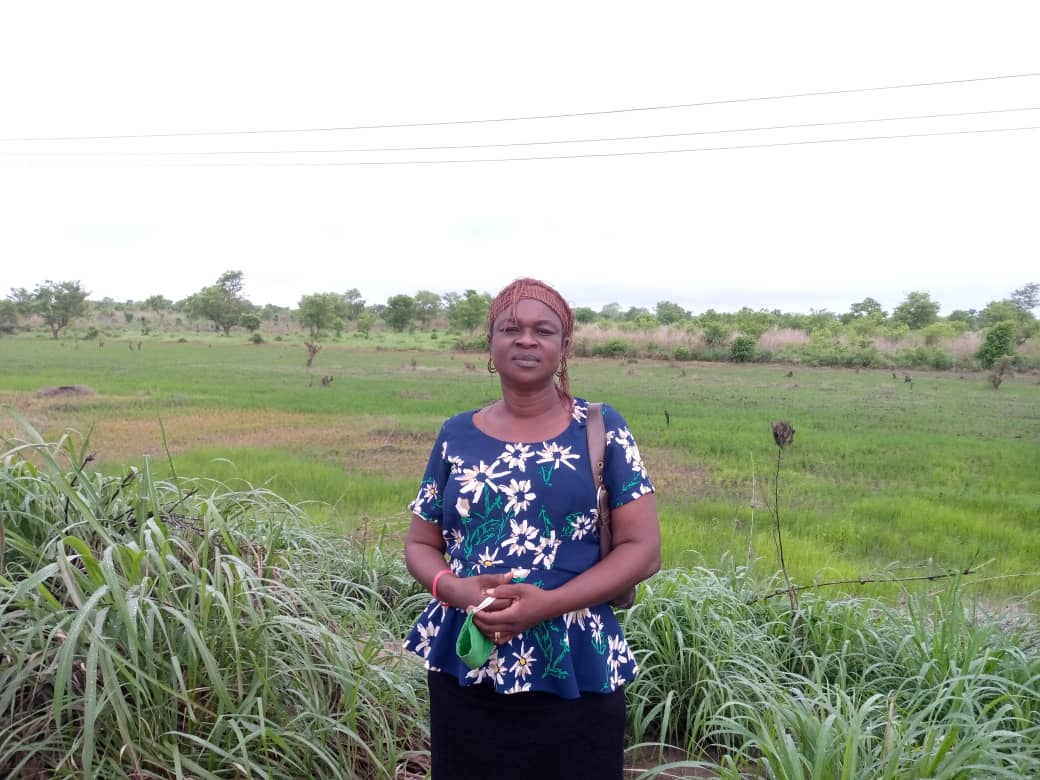
Another farmer, Mrs. Rosemary Onwuegbuka, the SWOFON Coordinator in Ayamelum Local Government Area, who said she has been farming for over 20 years ago, cultivates cassava, yam and rice.
Rose Onwuegbuka
“Again, I’m able to engage women with the help of my assistant, convincing them to see farming as a lucrative business. Women under me can boast of two, three farmlands, depending on their strength.
I encourage them, instead of staying idle at home, they should go into farming,” she said.
She expressed frustration about her inability to recruit more hands in the business owing to financial constraints.
“I’m yet to start employing people because of a lack of incentives. If the government will take us seriously by providing us with the necessary inputs, I would have done better. You can see the vast land we have that is still fallow. We need money to clear and cultivate it. Had it been they’re giving us tractor, seedlings, fertilisers, improved varieties of cassava stems at subsidised rates, that will enable us to have enough to employ people whom we can pay.
“I’m supposed to have a Camp Manager by now so the workload will reduce. If you seek a bank loan, they will demand the Certificate of Occupancy of your shop. How can a farmer have a shop in the main market? It’s very difficult to access the loan.
“We find it difficult to employ people, instead we do what we call cluster farming. We work in someone’s farm today, tomorrow we go to another. If they assist us, with time, we’ll be exporting our rice, yam and cassava, and still have enough to sell locally.”
She, however, stressed the need for the assistance to be provided at the right time, noting that “this our area, we normally do dry season farming. So bringing the seedlings in October is useless to us.”
“We have not received any assistance. All they ask us to do is to write down our names after which they gave nothing. We’re finding it difficult to farm because we farm in groups. We do rotate it.
“We went to our local government when we heard they were sharing fertilizer there, but they said our names were not there. They gave one bag each to four persons they claimed their names were captured in their list. They said our names are not in their lists even when we are the real farmers.”
She urged the government to avoid intermediaries while sharing palliatives or any form of incentives to farmers.
“Governments should stop going through middlemen, but come down to the grassroots. Let them come directly to us. We know the real farmers one by one. Anything they give us will definitely reach the farmers. We control over 1000 real farmers and we have their data,” she stated.
On the negative impact of the lockdown on their farming, Onwuka said the price of labour, has increased drastically.
“Our labourers who normally come from Ebonyi State no longer come because of the interstate movement restrictions. They can’t cross the border to come.
“Secondly, the cost of chemicals and maize seedlings skyrocketed because of the lockdown. Companies are not working. Besides, when we take our products to the market, we hardly sell due to a lack of patronage. We are forced to reduce the price so we can sell.”
Another woman farmer, Mrs. Amaka Anisigwe, who is the community women leader for Ihiala and Vice Principal, Abbo Girls Secondary School, said she has invested over N150,000 in her farm this year, for the clearing of the site, weeding, cultivating as well as putting the stems for cassava, melon, maize and pumpkin.
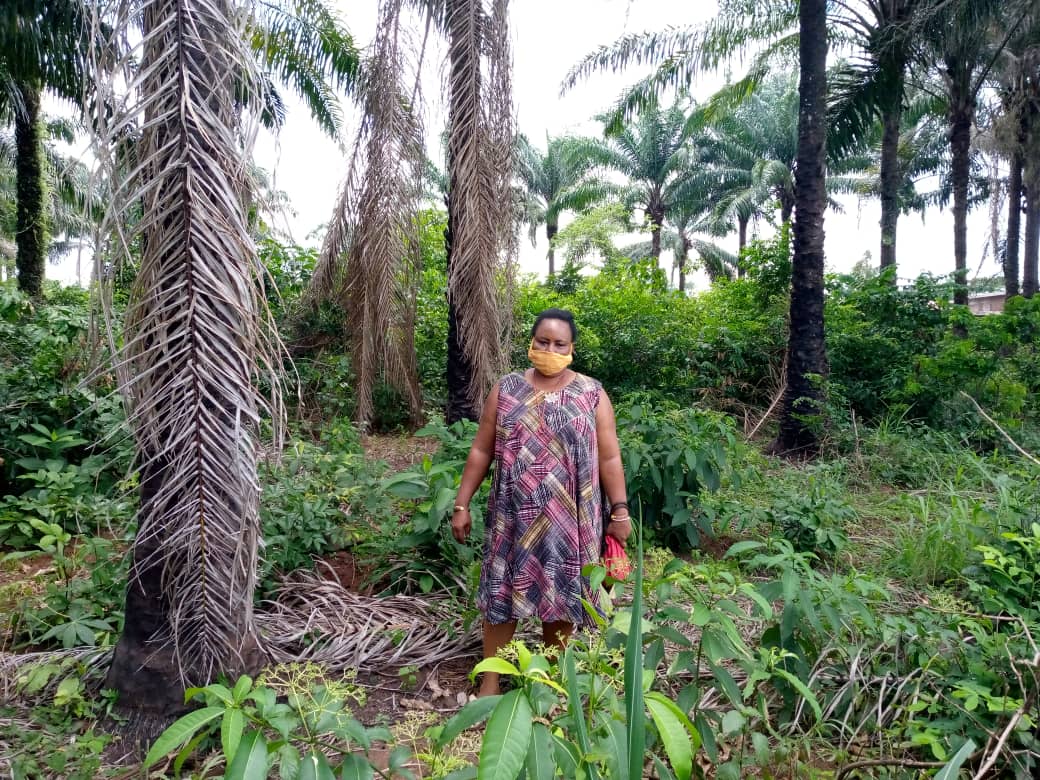
Mrs. Anisigwe Amaka weeding her farm in Ihiala, Anambra state
Anisigwe said she was among those who are yet to benefit from government palliatives.
“For now, I’ve not received anything, not even fertiliser, but I hope they will send it. But I wish it comes soon so that we can put them into use. That’s one way of encouraging us small scale women farmers. Even if they were diverted, let them re-divert them.
“Being a farmer is not an easy task, it has its merits and demerits, gains and losses. We really need seedlings, fertiliser to boost our farms. It’s only what we have we can push into the market.”
Unlike for others, the proud farmer however described the lockdown order as a blessing in disguise, saying the government should declare lockdown during every farming season so parents and their children could take advantage of the period to farm.
“With this lockdown, you can see there’s lots of hunger everywhere. It’s good everyone goes back to farming.
“One good thing about this Covid-19 lockdown is those who have not farmed for years now, are now in the farm with their family members. All the children have learned how to cultivate and I love it so much.
“Most of the land that has been lying fallow for more than 15 years, go there now, they’ve all been cultivated. I advocate the government to declare every farming season Covid-19 period so parents can go into farm work with their kids.
“My children are all engaged in every stage. Very soon, they will come for weeding. Bible says if you don’t work, don’t eat.
“Since over 12 years I started farming, I’ve achieved a lot from it. I know how much I normally make from cassava and maize during harvest season. Most women into roasting of corn normally come to buy from my farm.
“The proceeds have been helpful. I invest in my family, like paying school fees, rent, hospital bills and other necessary expenses. I can’t regret being a farmer in view of the great dividends.
“I have a bigger farm down the village, close to the river, three times bigger. We have rice, cassava. I’m a member of the Co-operative society where we process oil. I also have laborers I pay,” she said.
Anisigwe advised every household to be involved in agriculture. “Let them stop going to the market for everything when they can get them from their farms. For me, I don’t think of food scarcity. I even have enough to give to poor people. I’m praying the government to encourage us. We need money, I’m aging. I’m an old woman, don’t mind my size. “I’m sure they must have learnt some lessons from the Covid-19,” she said.
Mrs. Amaka Ibemesi, a farmer from Onitsha North Local Government Area said has lots of land, cassava, plantains and vegetables and also assists her brother who’s into poultry farming.
Ibemesi also complained about the effects of the Covid-19 on her farming. “If not for this Covid-19, I could have gone far. If you see my cassava plants in Delta, you’ll marvel. It’s far more than this. It’s only cassava, maize and fertiliser that they have given me, from Idemili Local Government,” she said.
On the palliatives from the government, Ibemesi said she got maize, cassava stems from the local government.
Mrs. Eziamaka Ibemesi in her farm at Onitsha
“They also collected our account number and promised to assist later,” she said but appealed for more government assistance, to motive the farmers to produce more food.
“If the government will do the needful, I’ll surprise them. I can employ more hands. Like in Delta, we sell our produce. I have five children who are assisting me.”
Mrs. Chika Okafor, co-ordinator, SWOFON in Idemili South, told the reporter that she has over ten plots of land where she plants cassava, yam and potatoes.
On whether she had received any assistance from the government, Okafor said, “They [government] have been making promises. Last two weeks, some seedlings from the state government were distributed, after collecting names.
“But it didn’t get to us, but rather ended with political farmers, not real farmers. In fact, I left the venue without getting anything. When they are bringing assistance, they should pass through the ministry of agriculture. They know the farmers. Instead of handing them over to politicians, they will end up hijacking them.”
On how they are coping, the widow said they used to purchase their inputs from the proceeds from the farm produce. They buy seedlings, organic and lime fertilisers themselves.
“The Covid-19 pandemic really affected us. Ordinarily, we’re supposed to have finished the stage we are now, but because of the lockdown, no market is open for us to buy the seedlings. It really drew us back. She listed some of the challenges she encountered in the business to include epileptic power supply and utility vehicles.
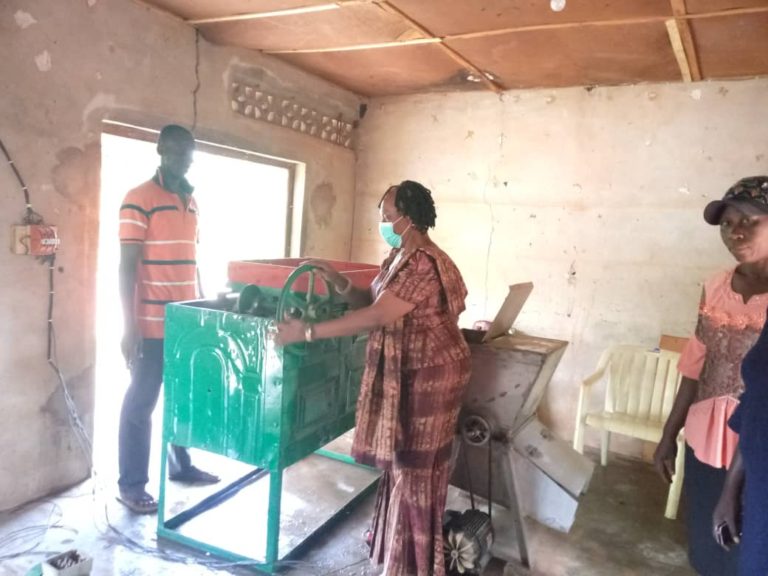
“Some of the machines we use, including the processing machine doesn’t work always due to lack of steady power supply.
“We’re now planning to procure a generating set as back up. Let the government help us with a steady power supply. If not for the lockdown and power challenge, we could have been in money now, especially from garri. I so much cherish the garri processing machine because we also get starch from there.
“The starch we derive from the garri processing machine is a hot cake for pharmacists, they keep coming to make demands. If we have enough, we make a lot of money from it.
“Presently, garri is expensive. So if you dry and grind cassava seedlings, many families will come for it because it is cheaper than garri. Even in my family, we no longer eat garri. It’s the dried cassava flour we eat. Most of the time we want to distribute our goods, we hire vehicles for that. If there’s any way the government can help us, we will appreciate it.”
Okafor further stressed the need for every household to engage in farming so as to mitigate the impending food scarcity.
“We will have food scarcity next year if everyone does not put hands on agriculture. This Covid-19 has taught us so many lessons… Every Nigerian is supposed to have a farm,” she stated.
This report was made possible with support from the International Budget Partnership (IBP).
THE Police in Abuja on Tuesday rescued eight Nigerians who have been locked inside an apartment for the past four months by their employers who are Chinese nationals.
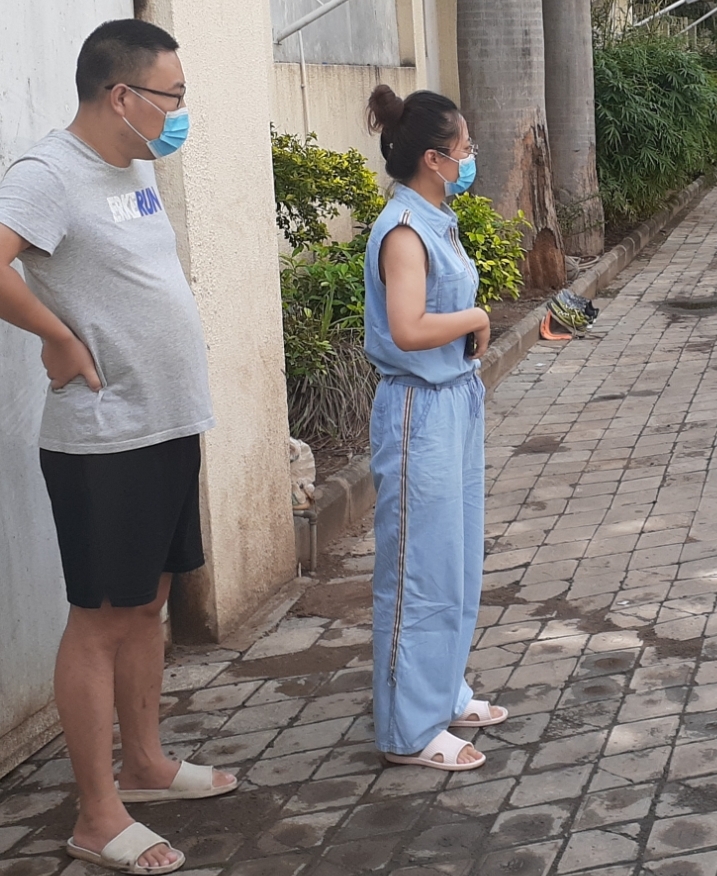
Acting on a tip-off, a team of six police officers from FCT Divisional Police Command in Utako raided House No. 117 at Jabi area of Abuja, the residence of the Chinese nationals whose neighbours said are couples.
A Chinese couple who locked in Nigerian employees
Some of the police wore bulletproof vests on mufti while others were in mafia suit with police insignia emblazoned on it.
The arm-bearing policemen arrived at the place around 9:30 am did not allow residents of the area to come close to the house.
The operation followed a call by a radio listener to Human Rights Radio on Tuesday morning, alerting the presenter of a prime time programme, “Berekete Family” of the Nigerians who have been locked in for four months by their employers.
It was not clear what kind of services the Nigerians were rendering to the Chinese, but they were said to be the domestic staff of the couples.
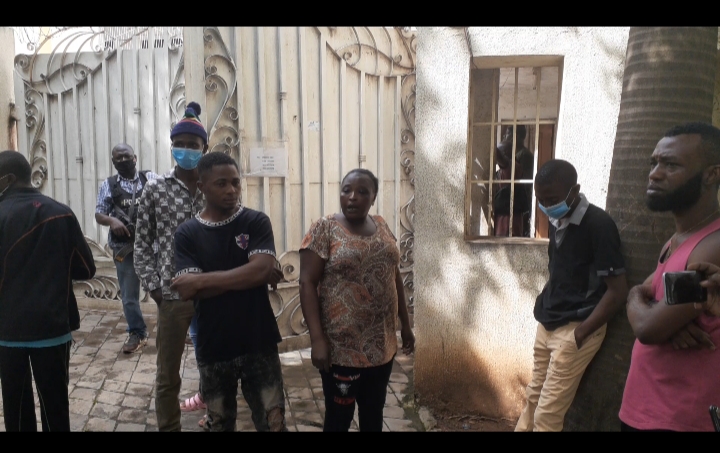
One of the rescued Nigerians who gave his name as Alex said he works as a driver for the Chinese couples, he and seven others are domestic workers and have been locked in since the outbreak of COVID-19 late February.
“They never allowed us to go out since February,” Alex told The ICIR.
“If anyone of us goes out and they know, a certain percentage of his salary will be deducted.”
“Even yesterday, when this man (pointing at one of the workers) sent someone to buy him water, N500 was deducted from his salary that is yet to be paid,” Alex added.
He said the Chinese did not care about their feeding since the house arrest.
Another worker who did not give his name disclosed that N3000 was deducted from his salary because he defied the house arrest order when he went out to fill his pension form.
One of the workers, a woman, who was livid with anger said they have been facing maltreatment in the hands of the Chinese since the house arrest.
“When I was seriously sick, I was asking these people (Chinese) to open the gate for me, they did not until I got very angry,” she said.
She said N1000 was deducted from the salary of one of them who was ill and needed to go out to get drugs.
“ I know my work would be at risk, I don’t mind, let us go to the police station,” the angry woman said.
During the rescue operation, the two Chinese were arrested by the police, though there were four of them sighted in the house.
While operatives of the police attempted to arrest them, the couples made frantic efforts to call a particular person as they refused to be taken into the waiting vehicle of the police.
But it appeared that the person they were calling instructed them to go with the police, as the wife was heard on phone saying “okay, I would go, I would go.”
As at the time of filing this report, the two Chinese and their victims are at the Utako Police Station for interrogation.
Officers at the police station declined comments but referred our reporter to Anjuguri Manza, Police Public Relations Officer (PPRO), FCT Command.
When called on his mobile phone, Manza did not answer calls and did not respond to SMS and Whatsapp messages sent to him.
During the COVID-19 lockdown, there have been other cases of mistreatment of Nigerians by foreign employers.
Six days ago, the Nigerian Police had rescued more than 100 workers who were locked in and forced to work at Popular Farms, an Indian-owned rice mill factory in Kano state.
Some of the men were reportedly forced to work during their incarceration with little food while no family visits were allowed.
One of the victims of the incarceration, 28-year-old Hamza Ibrahim told the BBC that they were only allowed to rest for a short time and no prayers were allowed.
On April 15, a video went viral on youths protesting alleged detention and forced labour by a Chinese company in Ogun State.
The workers in the video alleged that the company refused to let them go out for 14 days, but subjected them to hard labour without pay.
A worker alleged that after the 14 days of work and hungar, they were being released without any compensation by the company.
@renoomokri Nigerian youths protesting against a Chinese company (Goodwill ceramics) in Ogun Guangdong Free trade zone Igbesa. We were held inside the company for 14 days of the lockdown without proper feeding and they're now asking us to leave without giving us anything. pic.twitter.com/gI376R8ZPu
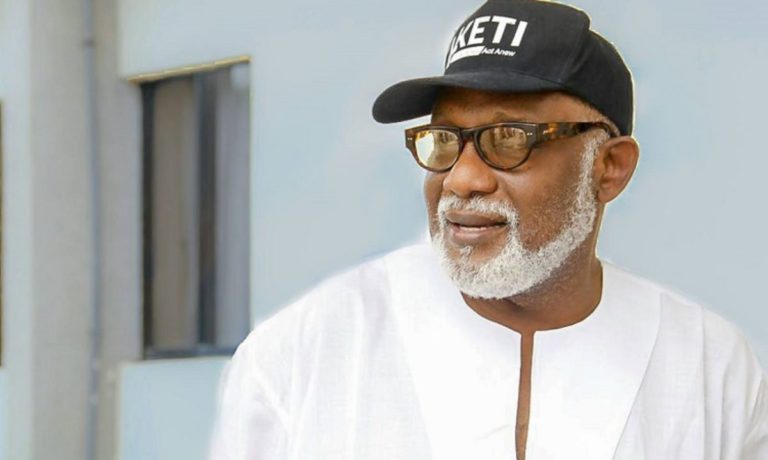
ROTIMI Akeredolu, Governor of Ondo State on Tuesday announced that he has tested positive for COVID-19.
Akeredolu confirmed his status in a video clip shared on his Twitter page in which the he disclosed that he is asymptomatic and is currently self isolating.
Today I tested positive for #COVID19. All is well. I'm asymptomatic and have been self isolating. Work continues. Your continued prayers over my well being are most appreciated. pic.twitter.com/P5UH0SmBiw
— Arakunrin Akeredolu (@RotimiAkeredolu) June 30, 2020
“Today I tested positive for #COVID19. All is well. I’m asymptomatic and have been self isolating. Work continues. Your continued prayers over my well being are most appreciated,” he said on Twitter.
According to the governor, he fell under the weather a few days back and was diagnosed with malaria, however, it was later discovered to be COVID-19.
Following his current status, Akeredolu is the fifth serving Nigerian governor to be infected with COVID-19.
Since Nigeria recorded its index case of COVID-19 on February 27, four state governors including Bala Mohammed, Governor of Bauchi State; Nasir El-Rufai, Governor of Kaduna State, Seyi Makinde, Governor of Oyo State and Okezie Ikpeazu, Governor of Abia State, have all contracted the deadly virus.
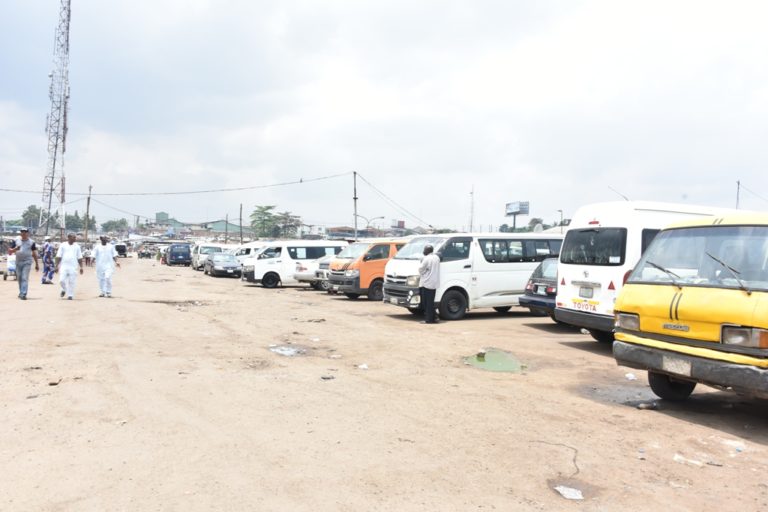
THE National Union of Road Transport Workers (NURTW) has appealed to the Federal Government to subsidize the cost of operations for the commercial transport operators as they would have to carry fewer passengers on each trip following the lifting of ban on interstate travels.
“So we want the government to help subsidize the cost of those passengers that we will not be carrying or we will have to increase our transport fares,” said Kabiru Yau, acting National Secretary of NURTW.
“So, what is the gain? What will you give to the owner of the vehicle? So, the government should please help us look into this matter.”
Yau commended the Federal Government for lifting the ban on interstate travels, noting that members of the union can now start working to fend for themselves and their families.
Guidelines issued by the Federal Government for commercial buses to operate include allowing only 50 percent capacity of passengers, who must all make use of their face masks.
However, reacting to the development, the union leader lamented the impact of operating at 50 percent capacity on the profitability of its members.
He stated that proceeds from trips embarked upon by transporters would barely cover the cost of purchasing fuel and the journey if they don’t enjoy subsidy from the Federal Government.
It will be recalled that the Federal Government on Monday announced the suspension of the interstate travels ban.
Yau however assured that the union will ensure members obey all the COVID-19 protocols in terms of the use of face masks, sanitizers, and other health and safety instructions.
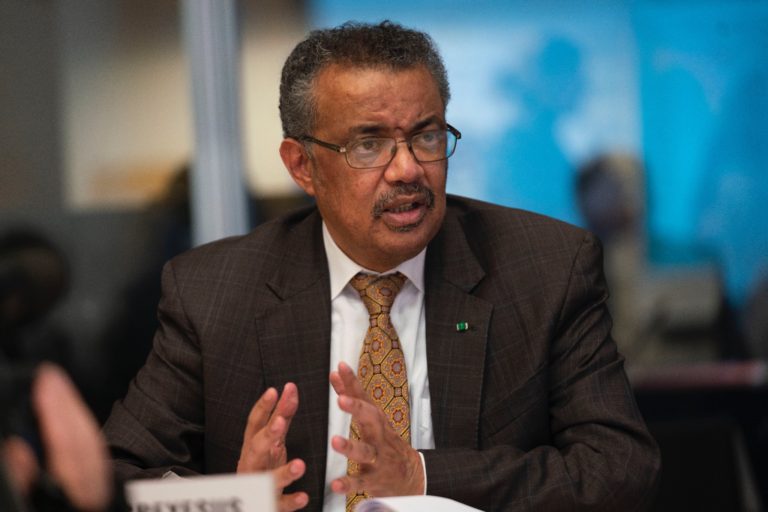
TEDROS Adhanom Ghebreyesus, Director General of the World Health Organisation, (WHO) has urged for caution about letting down guards against COVID-19 warning that the pandemic is far from being over.
The WHO chief disclosed this in a virtual meeting on Monday, where he emphasized the need for countries to double up on the fight against the novel virus, which has infected over 10.4 million people and caused the deaths of over 508,000 persons globally.
“We all want this to be over. We all want to get on with our lives. But the hard reality is, this is not even close to being over,” Ghebreyesus said.
Speaking on the fight against COVID-19, he said that the pandemic has brought out the good and bad side of collective humanity, commending acts of kindness and solidarity, but also condemning the rise in misinformation and the politicisation of the pandemic.
“In an atmosphere of global political division and fractures on a national level, “the worst is yet to come. I’m sorry to say that,” he said.
“With this kind of environment and condition, we fear the worst.”
Meanwhile, on Monday, Boss Mustapha, Secretary General of the Federation and Chairman of the COVID-19 presidential task force announced the suspension of interstate travel ban, stating that travelers can sojourn from July 1.
Mustapha also disclosed that as the country moves towards a new phase of easing lockdown, schools would be reopened for graduating class students and domestic flight operations would be resumed.
ON June 27, a Twitter user identified as @OMOIYAWAEC posted three pictures on the social media to depict incident of communal attacks in Anambra State.
The incident was earlier reported in May and published by different media organisations including Punch Newspaper.
The Twitter account has over 12, 200 followers and its tweet on the attack in Anambra has generated 319 retweets and 296 likes.
THE CLAIM
“There have been communal clashes in Anambra for months with over 50 people missing, more than 300 farmers injured, and over 6 people dead including a police officer. Why is no one reporting this?” @OMOIYAWAEC had tweeted.
THE FINDINGS
The ICIR subjected the photographs to verification and findings revealed that two of the pictures were as old as 2017, while the third was first published in 2018.
The first picture which shows burnt motorcycle, for instance, has been published 11 times on the Internet and was first shared on March 18, 2017 by news2.onlinenigeria.com.
Moreover, long before the claim was made, the very picture was also published in Vanguard Newspapers online and the Nairaland forum on February 2018.
In fact, Vanguard Newspaper used one of the photographs to illustrate different stories.
The second picture with a burnt vehicle was also published on the internet, first on April 2, 2017.
Since then, it has been re-used on other news publications on the internet, some of which include Vanguard (November 2018) and Tell Magazine (May 2020), among others.
The third picture was that of a fire incident that occurred at Mgbuka Obosi spare parts market in Idemili North Local Government of Anambra State. It was reported in January, 2020.
All the three pictures do not relate to the event to which they were attributed.
VERDICT
The images are misrepresentation of the event they were used to depict, and are therefore MISLEADING.
GILEAD Sciences Inc, drugmaker of Remdesivir, touted as Covid-19 drug, announced that the United States, US, and other developed countries will pay a stipulated $2,340 for a short course treatment for a regular patient.
Revealing its pricing plans, the drug company which is set to put the coronavirus fighting drugs on the shelves in July, stated its official government price is pegged at $390 per dose in the US and other developed nations.
Its shortest treatment course which is expected to last for five days would cost $2,340 per patient equivalent of N906,750 in Nigeria.
The drug manufacturer anticipates that a longer treatment course for 14 days would cost $4,290 which is about N1,662,375, expecting to have more than one million treatment courses available by the end of the year.
Daniel O’Day, Chief Executive Officer (CEO) of Gilead Inc said the intention of the drug company was to enable governments to negotiate prices directly.
“The logic is that we wanted a single government price around the developed world. This medicine is priced far below the value it brings to health-care systems and that’s true for private payers and government payers,” he said.
However, the company did not indicate its charge for governments in less advanced countries like Nigeria for the drug which has won acclaim from health officials but is yet to gain final approval for commercial sale.
Remdesivir, an antiviral drug dispensed intravenously and previously tested as a treatment for Ebola, is among the experimental treatments for COVID-19 and is being studied in multiple clinical trials around the world.
The drug was found to hasten recovery of COVID-19 by about four days in hospitalised patients during clinical trials as it is currently used on compassionate grounds in the US and other countries.
Gilead is expected to manufacture 1.5 million doses by the end of May, to make up for over 210,000 treatment courses, if most patients will be treated for five days, and more than one million treatment courses by the end of this year.
The company had pledged to donate 1.5 million doses to hospitals free of charge but declined to say how much it will charge for Remdesivir it began manufacture in June. Some of the donated supply will be distributed internationally.
Nigeria has carried out about 130,000 coronavirus tests with 24,567 confirmed cases which indicates a test positivity rate of 19 per cent across the rest of the country but Lagos State with a majority of cases has a test positivity rate of 27.1 per cent.
THE Federal Government has said all primary schools and daycare centres across the country remained closed.
Sani Aliyu, the National Coordinator of the Presidential Task Force on COVID-19, stated this in Abuja on Monday while announcing the lifting of bans on interstate travels and domestic flights.
“All daycares and primary schools to remain closed till further evaluation,” he said during the 47th daily press briefing of the PTF.
Aliyu announced that the Federal Government has also approved “safe reopening” of schools in the next phase of the gradual easing of lockdown , noting however, that only students in graduating classes will resume.
He added that secondary and tertiary schools (public and private) are also to remain closed, until further announcement by the authorities.
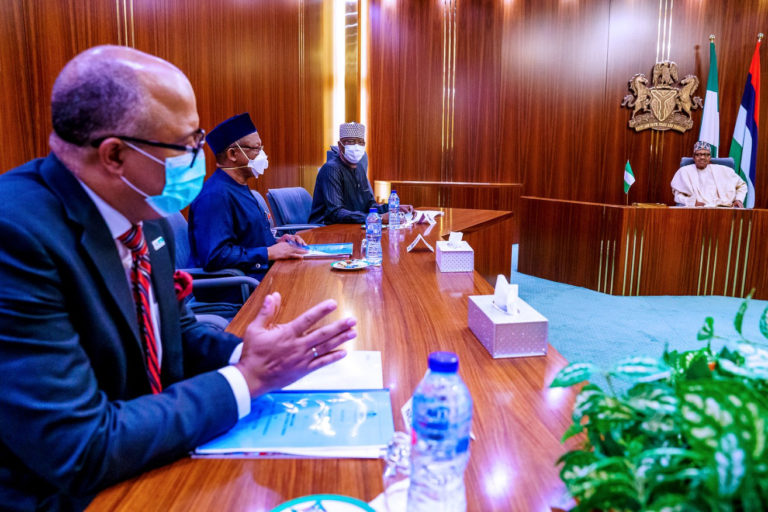
The PTF led by Boss Mustapha, who is its chairman and Secretary to Government of the Federation (SGF) had on Monday morning met with President Muhammadu Buhari to brief him and also submit report and recommendations of the task force.
The president following the meeting extended extended Phase 11 of eased lockdown by another four weeks with effect from Tuesday, June 30 through midnight of Monday, July 27, 2020.
Mustapha had also in his remarks during the press briefing talked about safe reopening of schools to allow students in graduating classes resume in-person in preparation for examinations.
He also talked about safe reopening of domestic aviation services as soon as practicable even as he said that there would be publication of revised guidelines around the three thematic areas of general movement, industry and labour; and community activities.
It would be recalled that President Buhari had on March 30, ordered lockdown in three states including; Abuja, Lagos and Ogun, a move that was aimed at curbing the spread of COVID-19, which has since infected over 24,000 Nigerians and left over 565 dead, according to Nigeria Centre for Disease Control (NCDC).
THE United States (US) Department of Justice, District of New Jersey, has charged eleven Nigerians for their alleged roles in a large-scale conspiracy to commit bank fraud in southern New Jersey and southeastern Pennsylvania over the course of four years.
According to Craig Carpenito, US Attorney, the documents filed in the case showed that the defendants carried out a bank fraud conspiracy in connection with a scheme that used hundreds of fraudulent accounts to defraud several major banks of $6 million which was then laundered and sent overseas to other conspirators.
In the statement released on Thursday, it was highlighted that the eleven Nigerian nationals were arraigned before Justice Joel Schneider of District court of New Jersey.
The accused are Sulaiman Dosunmu, 39; Tunde Adeowo, 40; Muritala Adeowo, 55; Ayanniyi Alayande, 47; Ahmed Ponle, 41; Margiettu Kamu, 34; Rafiat Sarumi, 36; Babatunde Oke, 40; Adekunle Owolabi, 49; Olayinka Olaseinde, 42; and Olugbenga Oyedele, 47.
According to Carpenito, the defendants are allegedly members of a Nigeria-based, multi-layered organization that engaged in a massive bank fraud conspiracy in several states, including New Jersey, Pennsylvania, Maryland and Rhode Island, between June 2016 and March 2020.
Painting a picture of the crime committed, the US Attorney said that members of the group stole numerous business checks from the United States mail, altered the payee and and deposited the checks in bank accounts that had been opened with forged foreign passport documents and fraudulent U.S. visas.
He added that the names on the forged travel documents matched the names on the stolen checks and the accused finished the operation by withdrawing the funds using ATMs or purchased money orders
Carpenito further stated that members of the organization have used over 400 fraudulent accounts with fake identity documents to defraud the banks, the statement pointed.
It was gathered that the bank fraud conspiracy count carries a maximum potential penalty of 30 years in prison and a maximum fine of $1 million.
This is coming shortly after recent sanctions of six Nigerians for alleged internet-related fraud.
The Federal Bureau of Investigation, FBI, on its official website on Saturday, listed six Nigerians among its most-wanted cybercriminals in a crime resulting in over $6 million losses, The ICIR earlier reported.