Home Blog Page 2071

Thanks to COVID -19, we can get our schools working again

By Yinka Adeosun


IN preparation for the re-opening of educational institutions across the country, the federal government through the Minister of State for Education, Hon. Chukwuemeka Nwajiuba, had listed some conditions that every school must meet before they can serve as sites for education following the COVID-19 imposed hiatus. Interestingly, prior to this ministerial pronouncement, the Oyo State governor, Engineer Seyi Makinde had already announced a date for the partial resumption of some special categories of students which was at cross purposes with state’s Nigerian Union of Teachers (NUT) directive. Confusion everywhere.

Thankfully, the government has opened up the economy via the phased easing of the lockdown and restrictions on various sections of our national life. When will it be the turn of our educational sector to get a breather, one must ask? While the government has responded to pressure from religious bodies to open the churches and mosques, truth be told, it cannot take such gamble on schools, especially those at the primary level if it truly cares about the life of the children who are dubbed tomorrow’s leaders. For, it is indeed premature to open them when all safety mechanisms, oversight processes and social education that needs to happen have not been put in place.

UNICEF estimates that around 1.6billion children and young people around the world are unable to attend school as a result of the COVID -19 pandemic. These numbers are unprecedented and they are with immense implications. There has never been a time in the world that such huge numbers of children would be out of school at the same time.  Not even the pandemic of 1918 had that record of out of school children.  The temporary closure of schools, as a measure to contain the spread of the coronavirus, has disrupted learning, leaving the academic calendar in shambles.

Whereas many countries have resorted to online learning, it remains a tall order for Nigeria whose educational structure was struggling to survive before COVID -19. No thanks to neglect by successive administrations. The impact of this health emergency is an indication of our lack of preparedness to combat unforeseen emergencies. As a people, we have never been prepared for any emergency. Hopefully, COVID -19 which is a health crisis has opened our eyes and provided us an opportunity to re-think emergency education planning for all levels of scholarship.

The sad reality is that many children are not learning and cannot learn due to no fault of theirs. While some private institutions may have resorted to remote learning via the internet, the huge majority have remained in abeyance. High internet data costs, last-mile challenges, low internet penetration in many rural communities account for this state where we have found ourselves.

Prior to the pandemic, in many of these schools, pupils are unable to imbibe learning and character. The challenges of dilapidated classrooms, unkempt surroundings, lack of modern infrastructures to aid learning, outdated curricula and unmotivated cum poorly trained teachers are well documented.  Now, consider that part of the condition for reopening schools which revolves around being able to have sanitation equipment when in reality, many of these schools are without toilet facilities and water. They rely on water from the stream and other polluted sources when in dire need of this critical resource. They have to “shot-put” when the need to obey the inevitable call of nature arises.  In a country that was already grappling with a decrepit educational system, the situation leaves much to be desired, especially among public schools.

The pandemic induced closure offers us the opportunity to revamp the education of our children. Now is the time to overhaul the facility readiness of the schools. We cannot overlook the dire need to put procedures and measures in place. The importance of school safety and student learning cannot be overemphasized. Is it the children who are receiving classes under the tree, or sitting on the bare floor without desks and chairs and whose source of water is the stream near the school that should resume to school?

The use of facemask for children is perhaps an exercise that is somewhat dead on arrival if we consider the behavioural tendencies of these young impressionistic minds. This is because wearing the face mask causes them to touch their faces more than when they do without it. Besides, the mask presents the unintended consequences of possible strangulation or choking among the children, especially the preteens. Experts have recommended that staying at home and physical distancing remain the best option to be protected from COVID -19, especially for children, who may not understand why they should keep away from others or touch things they shouldn’t. It is best to keep them at home where they are safe.

Moreso, many adults are still grappling with the routine of regularly washing their hands and maintaining social distancing. Is it now the children who barely understand the implications of such routine that would abide by the new normal? Besides, the capacity of these children to protect themselves is very much in doubt. Thus, we should not be in a hurry to re-open schools when the threat of COVID -19 is still very much glaring with the daily increase in the figures. Rather than hurriedly open the schools, COVID- 19 has presented an opportunity to overhaul our educational system, where there is an alarming rate of out-of-school children. Learning materials and a conducive atmosphere should be put in place. All the various health measures should be solidified and strengthened, it is only then that we can consider the re-opening the schools.

It is increasingly becoming inevitable that the new normal is coping with the coronavirus as part of our existence. We should however not sacrifice the leaders of tomorrow, who double as writers of tomorrow’s history on the altar of economic sustenance, collective survival and other mundane justifications.

Adeosun writes from Akure, Ondo state

Electronic banking fraud in Nigeria: how it’s done, and what can be done to stop it

By Oludayo Tade, University of Ibadan


Six years ago, a cashless policy became fully operational in Nigeria. The aim was to encourage electronic transactions with a view to reducing the amount of physical cash in the economy. The logic was that this would minimise the risk of cash-related crimes.

But a major downside of the policy has been pervasive electronic banking fraud (e-fraud). Although the cashless banking system was designed to foster transparency, curb corruption and drive financial inclusion, it’s threatened by the growing perpetration of fraud.

About N15.5 billion was lost to bank fraud in 2018. About 60% of the fraud was perpetrated online owing to available internet-based and tech-rated banking services.

Our research investigated dimensions of electronic fraud in Nigeria. We found three: internal fraud carried out by banking staff; external fraud carried out by ordinary Nigerians; and collaboration between fraudsters and banking staff.

We found that inefficient supervision, non-performance of oversight by regional heads of banks, and poor follow-up on customers’ addresses (Know Your Customer) accounted for the fraud that took place.

Our study provides the banking industry, banking public and investors with critical pointers on how to reduce fraud.

Different types

Our study involved collecting data as well as conducting interviews with 30 people. These included victims of bank fraud, bank customers who did not subscribe to the cashless policy and fraud detectives at the Economic and Financial Crimes Commission (EFCC).

These were the common patterns we uncovered.

Insider fraud: By insider, we mean those working with banks or those in a relationship with account holders. Here, the fraud was exclusively executed by members of staff in the banking system who exploited the strategic position they held in the system and their grasp of how it works. Banking institutions and customers were their victims.

An example we came across during our research was the case of a N90 million (US$452,261) fraud perpetrated by an account officer of a major eatery in Lagos State. The job of this account officer was to collect the eatery’s takings and deposit them at the bank. A fraud detective told us that:

As the account officer he would collect money on a daily basis and was expected to credit the company’s account. However, he would collect money on Monday and lodge it and collect on Tuesday and not lodge it. He was missing one day out. He did this continuously until he was able to rake in N90 million. At this time, when the eatery management raised the alarm on their account, he ran away and could not be found. We however used his sister to arrest him. We were only able to recover N8 million naira from him. He had used part of the money to organise his wedding, had a baby and almost completed a four-bedroom bungalow at another area in Lagos.

Bank fraud is often successful because many Nigerians don’t subscribe to transaction alerts. The eatery management trusted their account officer but did not know that he was dishonest.

Outsider fraud: These perpetrators were external to the banking system. They thrived on their internet skills and sometimes on their understanding of the victims’ routine and identity.

An example we came across was the fraudulent use of bank verification numbers (BVN). These were made compulsory by the Central Bank of Nigeria in 2014. All bank account holders had to undertake biometric registration. The intention was to ensure security and check fraud.

But fraudsters have found a way to cheat the system by sending bank customers false emails asking for their bank verification details. As one victim explained to us:

I needed to make some transactions and I headed for my bank. I had called my account officer ahead of time. On getting to the bank, I connected my computer and got a mail from a supposed same bank. I was asked to click on a link and supply my BVN details for update of my account or face service suspension on the account. I just clicked the link and supplied my details and behold, N1 million debit alert came on my phone within five minutes! I was shocked and devastated but before we could do anything they had withdrawn everything.

Collaborative fraud: This involved collaboration between bank staff and fraudsters outside the banking system. Banks and individual account holders were the victims. For example, bank staff could provide account details of customers to the collaborating fraudster.

Governance gaps

Despite this weak governance architecture, which is still not fraud proof, bank executives reported having in place mechanisms which had limited the incidence of fraud. One was sending out information to customers who subscribed to electronic alerts. Through this, banks contact and send anti-fraud messages to their customers.

Owing to reputational risk, banks try to refrain from public prosecution of erring staff. We found that banks adopted shaming as a mechanism for instilling discipline within their organisations while attempting to ease out “bad eggs” through flagging of their images on computers and across the banking industry.

There is a need to check fraud through customer awareness and financial literacy education.

While fraudsters continue to design new ways of working on customers’ vulnerabilities, Nigerian banks need to use the Cybercrime Act to prosecute offenders as a way to boost confidence in the banking sector and deter fraud in the future.The Conversation

Oludayo Tade, Researcher in criminology, victimology, electronic frauds and cybercrime, University of Ibadan

This article is republished from The Conversation under a Creative Commons license. Read the original article.


Federal Ministry of Health records first case of Coronavirus, more personnel may be infected 

By Joshua OLUFEMI


THE Federal Ministry of Health has recorded its first case of Coronavirus. An anonymous source who attended the National Council on Health meeting held during the week confirmed the information to DATAPHYTE.

 According to the source, the first case which has been confirmed by the test result from the Nigeria Centre for Disease Control is reported to be a staff of the Department of Planning, Research and Statistics.

But Dr. Meribole, the Director at the Department of Planning, Research and Statistics, said he cannot confirm the claim because he does not have any test results to that effect. However, the source confirmed he facilitated the NCDC’s response after several calls. He said what the Department is trying to do is related to prevention and ensuring random testing. He further said the request for a random test has been delayed by the strike which was recently called off.


READ ALSO:

While health workers in the frontline are generally prone to contracting coronavirus, there are reports that the Federal Ministry of Health is not enforcing the preventive measures for staff and visitors to the Ministry, therefore exposing staff members to the deadly virus. While the reporter sighted the hand wash basin at strategic locations within the complex, there was no officer ensuring that each entrant washes his or her hands. Within 45mins of the reporter’s observation, only one person out of over 20 persons who entered the Ministry of Health complex washed his hands. It took him over 5 mins to operate the handwashing device because there was no one to guide him. 

 Several calls and text messages to the Health Minister of State, Dr Olorunnibe Mamora were not returned

Similarly, interviews of staff around the Ministry revealed they were aware of reports of the index case since last week, but that the Ministry had not taken the necessary steps to protect the staff and visitors. A security man at the gate of the Ministry confirmed that the report got to them yesterday and they have been advised to increase temperature checks and compliance to the use of face masks

 Most sources who requested anonymity said the Ministry staff are not perceived by the authority as frontline health workers despite their efforts in combating the pandemic, and as such, are not being adequately protected.

 A visit to the department of the index case revealed that although the infected staff had been isolated in a treatment centre in Abuja, other affected contacts were however yet to be tested or taken into isolation by the NCDC.

 A staff who claimed to be one of the contacts of the index case informed Dataphyte that when confronted with the situation, she called the NCDC but that the lady at the call centre was so rude and unhelpful.

NCDC’s strike and existential problem of late response.

 When Dataphyte reached out to the infected person, he declined to comment on the matter. 

Further investigation, however, revealed that it took the influence of someone close to the NCDC to get him tested. Yet, the result of the test took about 5 days before he was eventually taken into isolation for treatment. The staff of the Centre also declined to comment on the matter for privacy reasons.

 When contacted, the NCDC referred Dataphyte to the FCT Emergency Operations Centre that revealed that the delay in testing and dissemination of results to the public, was due to the ongoing strike. They claimed to be aware of the index case from the Ministry but assured that plans were underway for a follow-up test as soon as the workers’ strike was called off.

 There is the palpable fear that many isolation centres in Nigeria have been abandoned, hence the increasing delay in the testing of those suspected Coronavirus infection.

 “One has to wonder that if there are delays to testing Federal Ministry of Health staff and if claims by FCT staff that VIP Isolation Centre in Asokoro are also experiencing similar delays, then what is happening in other isolation centres?” Said the Suraju Olarenwaju, the Chairman of HEDA Resource Centre.

 Resident doctors within the month, have gone on strike and are yet to call it off, complaining about salary payments. While there are varying opinions about the timing of the strike, there is strong support for the strike.  Speaking with Dr Kwalar, a public health practitioner, she said the bigger challenge with the strike is the fate of the common Nigerians who will be impacted by the incidence.

If people working at the frontline, the health workers who collect samples for tests have not been paid and then highly placed people are experiencing delayed testing, what then is the state of the common man?”

 A staff of an international NGO who lost her mother last week to COVID-19 recounted how her aged mother spent 2 days abandoned in the accident and emergency room of Federal Medical Centre Umuahia because she was a suspected case of COVID-19. While she died on the night of the second day, the result of the test was not received until over a week after her death.

 Commenting on how difficult it is to access NCDC for testing, she said the truth is that many people are dying, and they don’t even get the opportunity to be tested. After complaining or experiencing some symptoms, in 3-4 days you are dead. People don’t get the opportunity to get tested and that is the major challenge.”  

Staff travel across states, return without testing

Speaking with another staff member close to the Minister’s office, she commented that a lot needs to be done to contain the virus. When asked about the possibility that other people in the Ministry have been infected, the staff said, half of the staff of the Ministry, especially those working in close contact with the Minister’s office may be infected.

 “From what I can deduce, many of us leave far in Suleja, Mararaba and other far border towns and we take public transport to work and travel across State borders unchecked. That is this small office, not to talk of cleaners and staff of other departments that we don’t know where they live or how they get to work.”

 Probing this comment further, it was revealed that top officials of the ministry have been allowed to travel to various parts of the country on a weekly basis either for work or personal travels.

 One source stated that the index case may actually not be the first case since there are reports that another staff in the Malaria programme is also infected. The source who claims to be a staff of one of the Development Partners to the Ministry said “I do not feel safe coming here for meetings anymore as I am sure that we still have large numbers of people sitting at the Ministry that have  become ill and have not gone for any testing. It would make sense if all the staff of the Ministry are tested to rule out the further spread and the risk to the family of our staff.”

 Ministry of Health yet to spend 2.1 billion COVID-19 funds

 It will be recalled that the National Assembly in a recent probe of expenditure of the Federal Ministry of Health and the NCDC gathered that the Ministry was yet to make any expenditure from the money allocated to the Ministry by the Presidential Task Force on COVID-19 in the amount of N2.1 billion

 However, the Ministry have recently commenced the payment of hazard allowance for frontline health workers which brought to an end the strike action by resident doctors for non-payment of allowances.

 Experts call for increasing testing across Nigeria

 A public health practitioner while commenting on a need for a proactive approach to flattening the COVID-19 curve in Nigeria said Community level testing centres is an effective way to increase testing and curtailing the spread.

 Some States such as Ogun have already set up testing centres where members of the public can go at will and test. The NCDC should support other States to do the same. Teams can be deployed to different strategic locations to collect samples for testing which would then be sent to the laboratories. Such proactive measures can be replicated across the country”

 When asked if the cost of such centres would not overwhelm the NCDC , she responded saying,

 “I cannot put a figure to it, but money shouldn’t be a problem. I would assume that public buildings, offices, schools and even private buildings would be more than happy to provide space for testing boots at zero cost. All that would then be required would be for the NCDC and State EOCs to provide testing kits, and deploy one or two staff to designated booths. In other words, it would cost almost ‘nothing’ to effectively set up a booth.”

This report was originally published by DATAPHYTE

Kano to begin compulsory drug tests for political office holders, civil servants, students

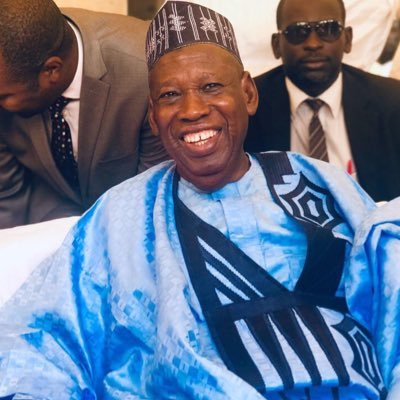
ABDULLAHI Ganduje, Governor of Kano State says there are plans by his administration to begin compulsory drug test for political office holders, civil servants, and students seeking admission into tertiary institutions in the state.

As the world marks the international day against drug abuse, Muhammed Garba the state Commissioner for Information, in a signed statement to mark the event said the compulsory drugs test would begin when the state Drug Administration Agency begins operation.

In a report by Vanguard Garba stated that the Ganduje-led administration has set up a task force as a passionate way of fighting illicit drug trafficking in the state.


READ ALSO:

“The governor instituted programmes aimed at curtailing drug abuse. This includes setting up and streamlining activities for the state’s Task Force Committee, which had intercepted and destroyed about a billion naira worth of drugs,” Garba said.

He urged for intense mainstreaming and social media campaigns to curb the menace of drugs which according to him has endangered many lives and economies of nations.

The United Nations General Assembly declared every June 26 to mark the International Day against drug abuse and illicit trafficking.

It is aimed at expressing its determination to achieve the goal of an International Society free of drug abuse.

The 2020 theme of the day” Better knowledge for better care” emphasized the need to improve understanding of the world drug problem.

Smallholder women farmers and challenges of attaining food security in Nigeria

Nigerian women farmers are known for their active involvement in agriculture, which has contributed a lot to ensuring food security in the country. However, these women, particularly the smallholder farmers, are now being confronted by numerous challenges militating against their farming business. NURUDEEN ALIMI visited smallholder women farmers in five Local Government areas of Oyo State to find out if they are getting any help from the federal government, especially during the COVID-19 pandemic.


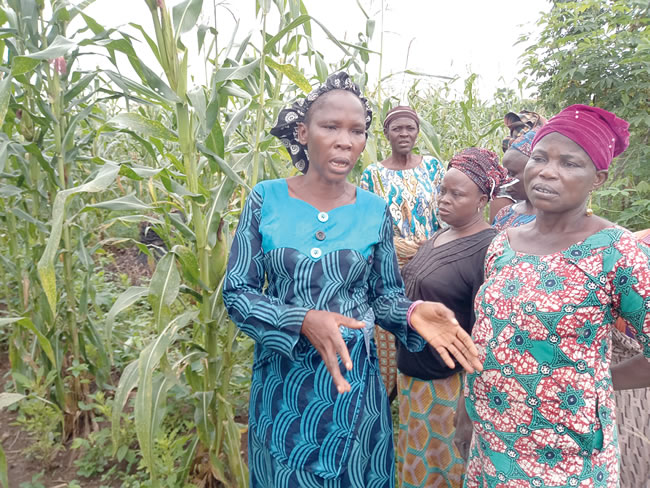
IT was lamentation galore as Yetunde Adetona, a smallholder farmer and mother of two and this reporter journeyed through the bumpy road from Ologuneru to Elenusonso village, in Ido local government area of Oyo State, where her farm is located.

“This is what I experience each time I go to the farm. As you can see the road is very bad and the only affordable means of transportation for me is okada,” she said, noting that “even when the rain starts during the journey, we just have to continue as there is no place to hide.

“Imagine going through all this hardship and you get to your farm one day only to find out that weeds and insects have eaten up virtually all the crops. Last year, weeds and insects took over my farm and consumed almost everything on the cassava, maize and watermelon farms. The damage could have been prevented if I was able to afford the needed apparatuses to put weeds and insect to check.

“I lost all the financial resources and human efforts invested on the farm with no help coming from any quarter. I have tried to access loans in the past to no avail. I manage to do what I am doing on my farm with financial help from my immediate family members and friends but you know there is a limit to what they can do,” she told our reporter.

If Adetona had enough funds, she said she would have bought chemicals to stop the insects from destroying all her investments. But she has run out of funds and is very distressed about the loss of her farm produce.

“Another problem is getting to pay the labourers we engage to clear the farm. This entails taking care of their feeding, accommodation near the farm as well as other allowances which will make them function effectively.

“Also, during the dry season, there is no adequate water for irrigation. What my colleagues and I normally do is to resort to fetching water from a well, which is located some kilometres away from the farm. So, these are just some of the challenges we are facing as smallholder women farmers. Though the list is endless.

“If these challenges continue, there will be no food which would translate to famine. Aside from selling these farm produce, we feed ourselves from it as well,” she said.

Adetona believes that it is only the government that can come to the aid of women farmers by giving them maximum support in order for them to be more productive as food production remains the top priority of the government.

According to the Food and Agriculture Organisation (FAO), women smallholder farmers are faced with multiple constraints beyond those of men farmers.

Women, FAO noted, tend to be invisible to policymakers because they are not seen as ‘productive’ farmers. They are often expected to provide unpaid farm work, and bear a disproportionate burden of care and reproductive roles within the family and community. They are deprived of access to markets, key assets, and inputs, and are frequently excluded from decision-making.

Women are even disproportionately impacted by poverty and hunger, including having less access to education and health care facilities.

Donors agencies and international institutions have taken a renewed interest in both agriculture and smallholders recently, especially in Africa, but women farmers continue to be systematically neglected by agricultural policies.

Recently, the African Development Bank (AfDB) announced a provision of $10 billion to implement a strategic roadmap of projects and programmes of immediate and longer-term measures to tackle nutrition and food insecurity in Africa.

It is part of measures to assist Nigeria and other African countries mitigate impacts of COVID-19 pandemic on the agriculture sector.

The AfDB Feed Africa Response to COVID-19 (FAREC) is part of the bank’s comprehensive intervention to build resilience, sustainability and regional self-sufficiency in Africa’s food systems and help farmers cope with COVID-19-related disruptions to the agricultural value chains.

Meanwhile, the Nigerian government, as part of efforts geared towards encouraging women farmers came up with a gender policy. A comprehensive review of available information and data shows that males absolutely dominate the sector in terms of access to land, inputs, outputs, benefits, earnings, and support services.

This is despite the fact that women numerically outnumber men who work in the agriculture sector. The implication is that the sector is not operating in its full capacity since about one half of the population functioning at various segments of agriculture value chains experience setbacks in various aspects of their operations.

In order to support food production in the country, the federal government of Nigeria, recently introduced what it called FarmerMoni.

FarmerMoni is a Government Enterprise and Empowerment Programme (GEEP) Initiative created to boost the Nigerian economy through leverage and access to finance for farmers.

FarmerMoni is designed to help petty traders expand their trade through the provision of collateral-free loans. The loans are repayable over a period of six months.

Under the scheme, beneficiaries can get access to a higher facility ranging from N300,000 to N2,000,000 when they repay within the stipulated period. The scheme is to provide 1.66 million micro-lending for businesses at the bottom of the financial pyramid-traders, women cooperatives and market women; enterprising youth, farmers and agricultural workers with no collateral or interest element.

The Bank of Industry, BoI, management software validates the loan application. The loan is paid within 48 hours to a mobile wallet account, which can then be cashed out.

Despite the introduction of the scheme, many smallholder women farmers that our reporter spoke to in Oyo State are yet to benefit from it in whatever form.

In a bid to make the voice of smallholder women farmers heard, the Small Scale Women Farmers Organisation in Nigeria (SWOFON), a coalition of smallholder women farmers’ associations and groups across Nigeria was founded in August 2012. It was started with the support of Action Aid Nigeria to advocate for and support women farmers, especially those in rural areas, to spur rural village economic development and increase food production.

It does this through deepening smallholder women farmers’ knowledge of and demand for their rights and the state’s duties, as well as serving as a vocal and visible pressure group on behalf of smallholder women farmers in Nigeria. SWOFON has state chapters across 36 states and the federal capital territory.

Cruxes of the challenges being encountered by smallholder women farmers include adequate water supply for irrigation during the dry season, transportation of harvested farm produce to point of sale, access to finance in form of loan to procure farm inputs, chemicals for weed control as well as paying for labourers who help the women with the clearing of the farm.

Responses from all the smallholder women farmers in the five local governments -Ido, Oyo East, Egbeda, Ona-Ara and Saki West- interviewed for this report on the stimulus package rolled out by the federal government to mitigate the effect of restriction of movement occasioned by the coronavirus pandemic revealed that none of them received any form of relief package as widely publicised.

They said, if such had been done, it would have helped them to cushion the effect of the restriction of movement, which had caused a lot of setback in their farming activities.

A recent statement from the Federal Ministry of Agriculture and Rural Development signed by the Director of Information, Theodore Ogaziechi, stated that the federal government had begun the distribution of inputs such as rice, maize, wheat, and palm seedlings in Kaduna State.

This, the ministry said, was part of measures to mitigate the impact of the coronavirus pandemic on farmers’ finances to afford seeds for 2020 farming season.

A visit to Mrs Kemi Odedina’s farm, another member of SWOFON in Oyo State, located in Ona-Ara Local Government, about 20 kilometres from the city centre, shows that problems being faced by smallholder farmers are enormous.

Taking the Nigerian Tribune correspondent round the maize, cassava, vegetable and banana farm, Odediran, drew attention to how weeds and insects have ravaged the maize, cassava and vegetable on the farm because she and her colleagues working on the farm could not afford the chemical and the equipment needed to fumigate the farm against weeds.

She told the Nigerian Tribune that to rent a sprayer costs N5,000 and the chemical costs between N3,500 and N4,000.

“And we can use up to five containers of chemical if we are going to properly treat the farm against weeds attack. After battling with weeds and other major obstacles attached to our farming business, we also have the issue of transportation to contend with.

“As you can see that this place is very far from the city centre, moving our harvested farm produce to where it would be transferred to potential buyers is also a very difficult task as the cost of transporting the goods is always on the high side.

“Even those who buy these farm produce from us buy at a very ridiculous price because we could not afford to take them to where we could sell and get reasonable profit. If we can get a vehicle which we can be maintaining as a group such that if any one of us has goods to move to the market the vehicle can be readily available to transport it without much stress.”

Speaking on the seven acres of land being used for farming, Odediran told the Nigerian Tribune that she and her colleagues pay not less than N40,000 per acre annually which she said is not really profitable for them considering the amount of money they realise as profit.

“It has not been easy sustaining the rent being paid on this land. If we compare the amount of money we pay on this land to what we make as profits, it is actually nothing to write home about. I think the government can help us in this regard by making funds available to smallholder women farmers so we can purchase our own land and practice agriculture without the yearly headache of paying landowners.”

Odediran, also noted that availability of farm inputs is another factor militating against the smooth operation of smallholder women farmers stating that: “There is one acre of land over there that we have just cleared but there are no farm inputs to plant due to non-availability of funds. The long and short of what I have been saying is that we need money to continue to function and very well.”

During the Nigerian Tribune tour of her farm situated at Areke, Oke-Omi in Egbeda Local Government Area of Oyo state, Mrs. Elizabeth Oyebisi Oladeji informed that due to lack of funds she could not afford fertiliser to apply to her farm.

Oladeji, alongside her co-women farmers, cultivates vegetables, cassava, maize, and also do pig rearing.

“I cannot cope with the stress of most of the work needed to be done on the farm. But if there is a tractor to work with, the money being spent on labourers will be used for another purpose as far as the farming process is concerned.”

While sharing her experience during the dry season when the farm needs constant irrigation, Oladeji said:” The experience has not been palatable. We walk many miles to get water for irrigation during the dry season. But I think if there is a source of water such as borehole. The irrigation process during the dry season would be seamless.

“As smallholder women farmers, we cannot afford the money to put this in place, but with support from the government, I believe it can be done. It is a known fact that we find it difficult to access loans but if the government can wade in, the story of women’s participation in agriculture will change for good.

“I want to posit that considering the importance of women’s role in the development of agriculture particularly targeted at ensuring food security, there is nothing too much to do by the government at all levels to encourage women in order to continue to contribute their quota to agriculture development in Nigeria.”

At Togunde Village, Oyo East local government, where the maize, cassava, cashew, tomato, red pepper, yam and melon farm belonging to SWOFON coordinator in Oyo state, Mrs. Atinuke Akinbade, Nigerian Tribune witnessed how insects and weeds had taken over the entire maize and cassava farms leaving them badly damaged, a development woman farmer described as devastating and discouraging.

Akinbade, whose devastation was obvious said: “There is no way a person will work to see that all he or she had laboured on for months got destroyed such as this and will be happy.

“Is it the financial investment you want to think of or the hard labour of which cannot in any way be quantified. What I can say was responsible for this is the fact that I could not apply the necessary treatment on the farm to guard against the invasion of insects and weeds on the farm.

“This I must say was not intentional but was due to the fact I cannot afford the money to procure the necessary apparatuses to carry out the fumigation of the farm. This is why we are clamouring for government support as we believe it is only the government that can support women who take time to engage in agriculture.

“I used to involve in palm oil production but I had to stop because of two major reasons: lack of adequate water supply and processing machine. It is a well-known fact that manually producing palm oil is an onerous task.

“To the best of my understanding, there is no way we can engage in successful farming without government support. For instance, to procure seeds to plant is highly expensive and I am of the opinion that if this integral part of food production is adequately taken care of by way of subsidy, it will make agriculture practice easy for smallholder women farmers,”

As the coordinator of SWOFON in Oyo State, Akinbade said she had on countless occasions led members of the group to the Ministry of Agriculture to seek government support but nothing has been received.

“We have been asked to submit our details on series of occasions but we speak, we have not received any form of correspondence from them.

“Another form of discouragement is the fact that seminars and workshops both foreign and local meant to train and guide women farmers are only being attended by who I would love to describe as ‘political farmers’ and wives of politicians and civil servants because of the financial gains involved.

“Until all these issues are addressed accordingly, smallholder women farmers would remain at the backstage of agriculture in Nigeria and this, no doubt portends danger for the future of agriculture in the country and food security in particular.”

Bolatito Abodunrin, a mother of three and a graduate of Primary Education Studies from Emmanuel Alayande College of Education, Oyo, told the Nigerian Tribune that she chose to venture into agriculture because of her passion to contribute to abundance food production in Nigeria.

Though she hails from Saki West local government, she opted to practice her farming in Alaga town, in Itesiwaju Local Government because she could not secure land in Saki.

She, however, emphatically stated that she had no regret not being in the classroom teaching pupils on the rudiments of Yoruba language, but takes pride in the cultivation of cassava, maize and melon as she had been doing for quite some time now.

While lamenting the loss recorded last year, Abodunrin said she recorded severe damage on her cassava farm because she too could not afford to buy chemicals needed to protect the farm against the invasion of insects attack.

“The major obstacle I’m experiencing is a lack of adequate funds. I have spent not less than N319,000 in the last one year on various needs on the farm. The government may say that I make a profit on what I do as a farmer but it should also be noted that I might have waited for a job opportunity but due to my passion for agriculture and the importance of food security in a country densely populated such as Nigeria, I chose to embrace agriculture.

“I still have plans to spread my tentacles to the poultry sector. Because the poultry value chain is already a major contributor to the Nigerian economy,” She said.

Asked about the large presence of Fulani herdsmen in the Oke-Ogun area of Oyo State where her farm in Alaga is located, Abodunrin, whose farm is within a Fulani settlement said: “The environment here is peaceful. The Fulani herdsmen we have here are friendly, they do not allow their cattle to graze on our farms despite the fact that their presence here is heavy. We have not in any way experienced any difficulty due to their presence.”

Reacting to the lamentations of the women farmers, The Director-General, Oyo State Agribusiness Development Agency, Dr Debo Akande said the state government had just recently announced its support in terms of inputs for 10,000 smallholder farmers in the state which was launched at an official ceremony in Saki.

Akande noted that: “a good number of these smallholder farmers will be women as far as the data I have seen is concerned. But beyond that, we are also opening uplands. One of the critical issues that women have in agriculture is access to land and finance because of the obvious reason of how we are constituted as a nation.

“And that is one of the reasons the governor has thought it wise to say “I can open uplands and then do a cluster farming where some of these women that do not have land can now come and work on our own land.”

“We have ensured that many of the total numbers of people that will be working on these lands are going to be women. So, there is a plan by the state government to continue to support smallholder women farmers.”

On claims by the women farmers that they have been to the Ministry of Agriculture on many occasions to seek support without any response from the government, Akande said: “I can rightly assure you that the government took women farmers very seriously and the Ministry of Agriculture does that as well.

“I have not even seen any of their letters if they said they have written any. But I believe that the Commissioner must have attended to it if it had gotten to his table. Even people that are not as highly important as women farmers have been properly attended to.

“If for any reason they think their letter of request has not been given adequate attention, they can also write another so I can draw the attention of the Commissioner to it. Again, whether they write a letter or not, there are plans by the state government to support them.”

This report was made possible with support from the International Budget Partnership (IBP)

Cross Rivers State not Coronavirus free yet, UniCal Teaching Hospital raises alarm

The University of Calabar Teaching Hospital says Cross Rivers State is not free of Coronavirus (COVID-19) pandemic as being widely claimed by the State Government.

The teaching hospital revealed this through a circular on Thursday signed by Ikpeme Ikpeme, its Chief Medical Director.

“With recent developments, it does appear that the state may not be free of COVID-19 as generally believed,” Ikpeme noted.

He said a recent test carried out on a patient came out positive.

According to him, the patient has been treated and discharged from the hospital.

He however, noted that henceforth, the hospital would be working directly with the Nigeria Centre for Disease Control (NCDC) rather than sending samples through the Cross Rivers State Government.

He noted that the NCDC has approved the hospital as an independent testing centre.

“The UCTH has been in direct contact with the Director General of NCDC and NCDC has approved the hospital as an independent test centre,” the Chief Medical Director stated.

He urged the staff of the hospital to adhere to preventive measures to ensure that the virus does not spread among staff of the hospital and the general public.

On Monday, Betta Edu, Cross Rivers Commissioner for Health had insisted that the state is free of COVID-19.

The NCDC is also yet to  set up a divisional centre in the state for the test of Coronavirus.

Nigerians are romancing with COVID-19, we may impose another lockdown- Boss Mustapha

THE Federal Government has hinted on the possibility of imposing a nationwide lockdown if cases of COVID-19 continue to rise.

Boss Mustapha, Secretary to the Government of the Federation and Chairman Presidential Task Force (PTF)on COVID-19  disclosed on Thursday during the PTF daily briefing that another lockdown may not be inevitable.

“This is the time to lock down if it were within my power. This is the time to lock down because I can see the attitude of people romancing with COVID-19,” Mustapha said.

“The daily increase in confirmed cases, the Federal Government feels a sense of frustration because we can see glaringly the danger ahead and you can see the level of recklessness on the part of people who should know better.”

Mustapha stated that ordering another lockdown won’t be out of place, considering the increasing number of COVID-19 cases across the country.

The SGF lamented that the way Nigerians were romancing the virus indicated that there was danger ahead.

As of Thursday, June 25, Nigeria has recorded 22,614 confirmed cases of COVID-19, with 7,822 recoveries and 549 deaths.

Lagos, Abuja and Kano are the states with highest number of cases so far: Lagos has recorded 9,323 confirmed cases, 1,458 recoveries and 126 deaths. Abuja has 1,622 confirmed cases, 497 recoveries and 30 deaths while Kano has recorded 1,191 cases, 774 recoveries and 51 deaths.

House of Reps to probe DSTV over increase in subscription rates


THE House of Representatives has commenced investigation into cable and satellite television service providers in Nigeria over high tariffs and acquired bouquets charged Nigerian subscribers according to a report.

The House had inaugurated an ad hoc committee on June 2 to probe the increase of subscription rates by Multichoice and other cable television service providers, with the mandate to invite agencies regulating the industry to intervene.

The committee was saddled with the responsibility to compel MultiChoice, owners of Digital Satellite Television (DSTV) to introduce pay-per-view in charging its Nigerian subscribers.

Unyime Idem, Chairman of the committee at an investigative hearing held in Abuja on Thursday, said the National Broadcasting Commission (NBC) was summoned to explain why DSTV and other service providers have refused to introduce pay-per-view.

“Nigerians have been crying on a daily basis that they are not satisfied with the services they are getting from the providers in terms of high charges, price hike and, most importantly, considering what is obtainable in other countries of the world, that is pay-per-view offer that other countries are giving to their subscribers,” he said.

The South African based television content provider, MultiChoice has frequently been in the spotlight for allegedly overcharging its Nigerian subscribers by restricting them to prepaid plans.

“Why is it not implemented in Nigeria? We want to know your position as the regulator of these service providers. What are the bottlenecks? What are the constraints? What are the implications? Why are we not enjoying ‘pay as you go’ as subscribers to these service providers? he queried.

DSTV had announced an increase in its subscription rates for DStv and GOtv packages from June 1, to reflect the changes in Value Added Tax, VAT, rates. The adjustments were to reflect the increase in the VAT rate by 2.5 per cent from an initial 5 per cent to 7.5 per cent by the Federal Government.

The DSTV premium subscription rates were to be raised from N15, 800 to N16,200 while GOtv Max price would increase from N3, 280 from N3,200.

However, the Committee assured Nigerians of justice and fairness, saying it would work towards making the providers adopt a ‘pay per view’ system.

A young executive’s prescription for COVID-19 depression

By Hamzat Lawal


IF there is anything like being immunized for the rainy day, that was exactly what happened to me last year when I went through a period of depression. In hindsight, I can now say that, perhaps, The Almighty, being aware of how the COVID-19 pandemic was going to hit the world below the belt, quickly took me through a crash ‘immunization’ programme on how to survive personal gloom. Today, I can look back with sunshine in my heart, at that time, it was not funny at all!

First of all, it is important to recognise that many people are suffering in silence in more ways than one, with most of these experiences pointing towards diagnosed or undiagnosed clinical depression. More importantly, now that we have a global pandemic on our hands, such mental health conditions have increased. That some people do not recognise this reality does not take away the truth that it exists. And, the scary fact is that, according to available research, it is more prevalent in young people.

For instance, according to recent data from the US Healthline and YouGov’s COVID-19 tracker, Americans are reporting significant and sustained increases in symptoms of depression and anxiety related to the COVID-19 pandemic. Women, minorities, people with preexisting health conditions, and adults under 34 all reported higher rates of fear and anxiety. The number of people reporting these symptoms are well above historical norms.

I am, especially, concerned because, given the current environment of stay-at-home orders and physical distancing, it is very challenging to spot symptoms of mental health issues, the experts have said. Ironically, it is the same “lockdown” condition that increases triggers of mental health issues. Whether it is because people have lost their jobs or the fear of losing one, the struggle to pay bills, or worry about their health and safety and that of everyone in their house, the continuous onslaught of worry and insecurity is leading to greater mental health issues than before.

Certainly, the situation must be similar everywhere in the world. Depression, anxiety and fear have become part of our current everyday living. It can, however, be argued as worse in the developing and underdeveloped countries where there is little presence of social security, and minimal government palliative intervention to the general citizenry–the more reason I am disturbed. I have experienced such dark feelings in the recent past when there was no COVID-19, and so could relate with young people like myself, who are today faced with the untold weight of anxiety and gloom. It happened to me at the beginning of 2019. Having nurtured Connected Development (CODE) and our flagship project, Follow The Money, to global status and universal visibility, I received a raw shock when our first partner and donor, the Indigo Trust, withdrew her grant support. Even till today, I cannot actually explain why the partnership withdrawal hurt so deeply. Possibly because of my youthfulness, natural exuberance and inner drive, which to a large extent were the factors for our fast-piling success stories. The greenhorn inside me was not used to such setbacks. So, without warning, I sank.

Nevertheless, it is instructive to note that none of my colleagues noticed my emerging mental state. Experts say that depression, like anxiety and fear, often has clear symptoms: a depressed mood; feeling sad, empty, or hopeless; having difficulty with day-to-day tasks; increased fatigue; and sleep difficulties. In my own case, however, these symptoms remained hidden below the surface.

I continued my life as if everything was okay with me. I carried on with all the paparazzi and razzmatazz that my status as the Chief Executive of CODE and Leader of Follow The Money demanded. I kept my appointments; I was always punctual at work, as usual; I clicked my mental focus on point, and nobody noticed the simmering larva underneath the “Hamzy-façade” during official assignments. To my colleagues and friends, on work and off work, it was the normal me.

I did all within my ability to consciously push back the raging mental tide: I told myself, “don’t let your inner crisis consume both your work and life!” Thankfully, it did not`.

Something else suffered. While Hamzy the CEO was intact; Hamzy, the person, was falling apart. At home, I was a nervous wreck. It was as if immediately I crossed the threshold into my home, the full weight of my mental state came crashing down on me. I would become fidgety and broody. I would sit and stare morosely into empty space for hours on end. And even when my dear wife helped me go through the motions of personal care and hygiene, I still felt like a zombie in my own home. I could no longer sleep, as my eyes remained wide open till the wee hours of the morning. Eventually, it was my wife’s sudden decision to “cry out for help” that gave me a rude shove back to reality, and I began the slow ride to Heal-Town.

It is from this journey that I gathered a few tips for young people like myself – and indeed everybody – on how to climb out of the present COVID-19 induced depression. In my own case, with what I went through last year, there is no crisis that can consume me again, literally speaking.

My first prescription is, talk to someone. I talked to my wife and then to my mother, and because my wife and my mother are close, it became easier for us to create a tripartite “therapeutic” roundtable. In these days of social distancing-inspired online presence, it would not only be fun but deeply healing for people with kindred spirits to come together and share their fears and anxieties, instead of sharing only bad news and gossip all the while hiding real issues and personal struggles. The human mind is wired to go into “fight or flight” mode when faced with fear; and it is actually better to fight together than alone.

Secondly, in spite of the fearful situation you find yourself in, try as much as possible to keep breathing. This means making a resolve to remain alive and well, and taking care of yourself. Experts say that the most concerning symptoms of depression are thoughts of death, suicidal ideation, and developing a plan for suicide. You have to consciously tell yourself that you need life more than life needs you. When you feel choked as a result of anxiety flights, close your eyes, take a deep breath, and keep on living.

Thirdly, be patient with yourself, and keep smiling. No one has experienced this before. There was no plan for COVID-19 anywhere. When I experienced that dark time, I never saw it coming. So, sometimes when I remembered the tragedy that befell me, I would just smile. Allow the emotions to flow through. Face the lockdowns. Reach into yourself and believe that there is dawn around the corner. More opportunities will still surface for you, for sure!

Finally, keep moving; and start thinking new things, designing new strategies, trying new directions, making further plans; set a new routine and reach out to people that you can work with, offline or online. Last year, because of the outcome of the Indigo Trust pull-out, CODE initiated some new ideas. For the first time in a long time, we had a face-to-face board meeting. We re-jigged and scaled up our governance infrastructure and set our eyes on higher goals and best practices. Tightening every loophole, I found out that the more activities I began to drive, the more opportunities kept popping up before us. This is why we are still firing from all cylinders.

Hamzat Lawal is is the Founder/CEO of Follow The Money and Connected Development [CODE]

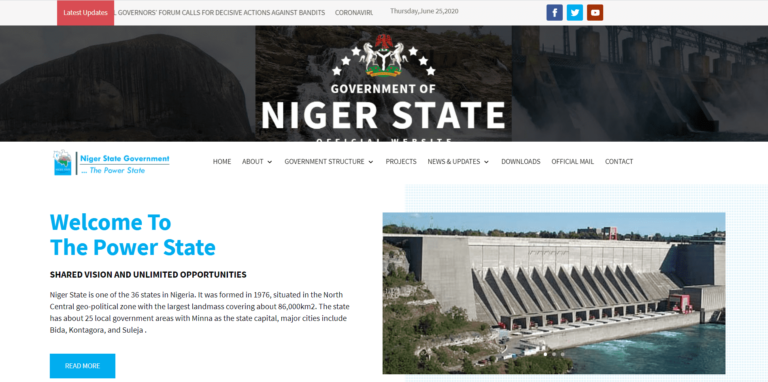
Niger State gov spends N41m to reactivate website and this is what it looks like

THE Niger State government on Thursday, disclosed that it has spent N41 million to reactivate its official web portal, stating that it will enable the government to carry out its business online.

Baba Aliyu, the state’s Commissioner for Tertiary Education, Science and Technology, shared this during a press briefing in Minna, the state capital.

According to Aliyu, the state government approved the money because the web portal was previously non functional.

“The Niger State Government approved the sum of N41 million to reactivate our web portal which had not been functional.

“We have reactivated the site and upgraded it to function fully,” he said.

Aliyu further disclosed that the site would serve as a link between the state, Nigeria and the world, adding that the government had trained some personnel of Ministries, Departments and Agencies (MDAs) in the state on how to access and use the portal.

Although the specifications of the ‘upgraded’ website were not disclosed, The ICIR visited the portal to confirm the claim.

Niger state upgraded website
CREDIT: Niger gov

Using Hosting Checker, The ICIR found that the web portal is hosted by Liquid web.

Niger state government website component
CREDIT: The ICIR

A further check showed that the pricing for website hosting varies, depending on the number of websites to be hosted on a single server as well as spaces and features required. The Niger State government website is just one website on a single server.

Liquid web advertises its cheapest package named Spark for a price of $190, an equivalent of N73,000, per annum. It includes; Hosting of a single site (as in the case of https://nigerstate.gov.ng/), 15 GB Storage, two TB Bandwidth, 30 Day Backups, Unlimited Email Accounts, Beaver Builder Lite, iThemes Security Pro and iThemes Sync.

For its most expensive plan, named Enterprise, it cost about $10,000, equivalent of N3.8 million, per annum. It includes; Hosting of up to 250 sites on a single server, 800 GB Storage, 10 TB Bandwidth, 30 Day Backups, Unlimited Email Accounts, Beaver Builder Lite, iThemes Security Pro and iThemes Sync.

For the  website design build,  it was found that the web portal of the Niger State Government uses the Content Management System (CMS) of WordPress, a free and open-source content management system written in PHP and paired with a MySQL or MariaDB database.

It was also found that the theme developer used to design the look of web portal is Elegant Themes. The charges for Elegant Themes vary from $89 per annum and $249 for a lifetime access.

The ICIR reached out to Baba Aliyu, Commissioner for Tertiary Education, Science and Technology on his mobile phone around 5.44 pm on the website features and the cost.

He confirmed that N41 million was approved for the upgrade of the website by the State Government. Aliyu however said that the money is also to be used for other things in support of the website upgrade.

When asked what the other things were, he declined comments.

“We have only used N7 million but I will not say what other things the money will be used for,” Aliyu said before cutting off the call.