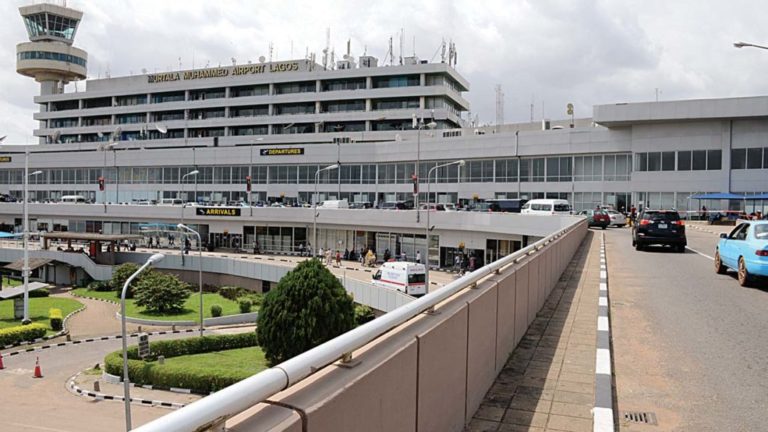
THE Federal Government on Wednesday announced that it is no longer feasible to re-open domestic airports which had earlier been slated to open on June 21.
Aviation Minister, Hadi Sirika, was reported to have announced the cancellation of the date of resumption of domestic flights on the ground that adequate measures were not fully in place.
According to a report by The Punch, the minister spoke through Musa Nuhu, Director-General of the Nigerian Civil Aviation Authority (NCAA) at the daily COVID-19 briefing in Abuja.
Nuhu said pressures coming from different quarters would not push the ministry into making hasty decisions.
“The civil aviation authority despite pressures coming from all quarters will not approve the start any day until we are sure and we confirm that we are ready to start in a safe, secure, organised and efficient manner,” Nuhu said.
He added that acting otherwise action would be disastrous for the aviation authority and Nigerians at large.
“If we open the industry when we are not ready, and we are guilty of spreading coronavirus, God forbid we have any incident, I believe the government will come hard on us and it is going to be counterproductive and disastrous for the industry,” Nuhu noted.
The Federal Government had closed down all airports in the country to both domestic and international flights as part of measures to contain the spread of COVID-19.
But the Nigerian Civil Aviation Authority (NCAA) on June 3 in a memo disclosed that five domesticairports will be reopened for business after three months of being barred from operating as a response to contain the spread of Coronavirus pandemic ( COVID-19).
The domestic airports to be reopened include Omagwa International Airport, Port Harcourt, Nnamdi Azikwe International Airport, Abuja, Murtala Muhammed International Airport, Lagos, Sam Mbakwe Airport, Owerri and Mallam Aminu Kano International Airport, Kano.
FREE Press Unlimited, a nonprofit organisation based in the Netherlands, is accepting nominations worldwide for the 2020 Free Press Awards.
The NGO is requesting for journalists who have a strong commitment to press freedom and independent information to compete for the award.
According to the organisation, the awards is aimed to honor journalists who risk everything to bring the news to the public, media pioneers who pave the way for equality and justice and those who persevere under the most difficult circumstances.
“We will honour journalists and media professionals who continue no matter what,” Free press said.
The Free Press Awards will recognise exceptional work in the categories Newcomer of the Year and Most Resilient Journalist.
Prizes include a media scholarship for the newcomer of the year and EUR15,000 (US$16,929) for the most resilient journalist. Both winners usually receive an all-expenses-paid trip to the Netherlands.
THE Academic Staff Union of Universities (ASUU) says the Federal Government can reopen tertiary institutions in the country if it can provide adequate facilities for social distancing across those institutions.
The Federal Government had shut down all schools including tertiary institutions in the country as part of efforts to curtail the spread of Coronavirus (COVID-19) pandemic in Nigeria.
Abiodun Ogunyemi, the ASUU National President stated this on Thursday in a telephone interview with The ICIR.
Ogunyemi said the union was not against reopening of tertiary institutions across the nation but was much concerned about the lives of students and staff of universities.
He explained that the Federal Government has given six guidelines for the reopening of schools in Nigeria but failed to assign responsibility even to itself.
Ogunyemi stated that part of the guidelines of the Federal Government is the use of hand washing facilities, disinfection of classes and offices, temperature check, ensure social and physical distancing in class sizes and meeting spaces among others.
“But they failed to assign responsibilities to these guidelines, who is going to provide for hand washing facilities,” he questioned.
“Is it the Federal Government or the institution that has low running cost already,” he lamented.
“If they want schools to resume, they should provide face masks for all universities across the nation,” Ogunyemi added.
He also stated that according to the Federal Government’s guideline, institutions should take classes in partitioned classes but questioned the viability of the partitioned classes.
“If they want us to reduce the number of students in a class, they should provide the facilities to do so.
“The classes that are over occupied before COVID-19, how can they maintain social distancing now if facilities are not provided,” Ogunyemi further stated.
He said the guidelines are only feasible if the government can provide the facilities.
“We had advised the Federal Government to declare a state of emergency on education during the total lockdown but they fail to do so.”
“The total lockdown was a window of opportunity for them to provide facilities that could have been used to ensure social distancing now,” he added.
The ASUU President noted that the academic union has played its part in ensuring that COVID-19 does not spread to schools, saying that it is now the turn of the Federal Government to play its part else it would be endangering the lives of students and staffs.
A VIRAL post on WhatsApp claimed that the Lagos University Teaching Hospital (LUTH) admits not less than 500 COVID-19 patients on a daily basis.
The report has been circulating on various WhatsApp group in Nigeria for days.
The claims
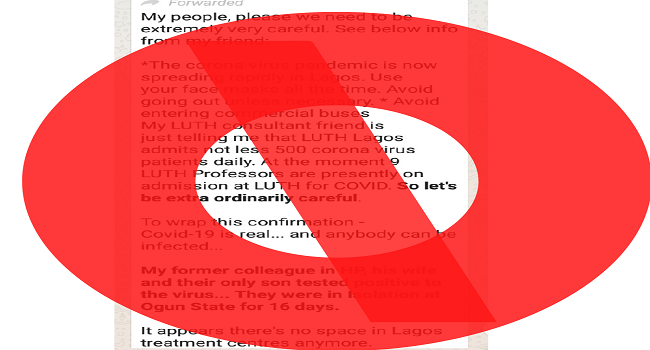
“The coronavirus pandemic is now spreading rapidly in Lagos. Use your face masks all the time. Avoid going out unless necessary. Avoid entering commercial buses
“My LUTH consultant friend is just telling me that LUTH Lagos admits not less 500 coronavirus patients daily. At the moment, 9 LUTH Professors are presently on admission at LUTH for COVID. So let’s be extraordinarily careful.”
“To wrap this confirmation – Covid-19 is real… and anybody can be infected…,” a part of the WhatsApp text reads.
Screenshot of the viral WhatsApp post
From the above, two claims were established:
· LUTH admits not less down 500 COVID-19 patients on a daily basis
· 9 Professors from the LUTH are on admission due to COVID-19
The findings
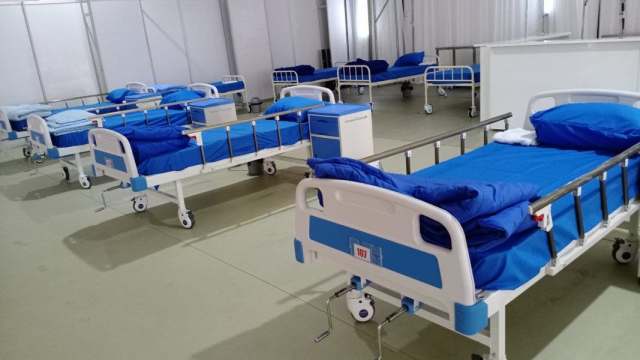
In a bid to curtail the Coronavirus pandemic, the Lagos State Government established at least 8 isolation centres in the state to manage COVID-19 patients.
“Gbagada General Hospital – 118; Lagos University Teaching Hospital, Idi- Araba – 60; Infectious Disease Hospital, Yaba – 115; Onikan Stadium Centre – 100; Landmark Centre – 70; Lekki Centre – 45; Agidingbi Centre – 34 and First Cardiology Hospital – 5 (Critical Care),” the Health commissioner stated.
But in a telephone conversation with TheICIR on Thursday, a Professor of Medical Virology, Prof Sunday Omilabu, who is also a Consultant Virologist and Director of Central Research Laboratory (CRL), College of Medicine, University of Lagos/Lagos University Teaching Hospital (CMUL/LUTH) disclosed that the capacity of the LUTH Isolation Centre is just 120.
“LUTH isolation centre is just 120 capacity, and we are even yet to exhaust the capacity. The claim that we admit 500 patients on a daily basis is fake,” he told The ICIR.
Commenting on the second claim that 9 professors from LUTH were on admission due to COVID-19, Professor Omilabu said: “This is totally fake news”.
Further findings by The ICIR from other unofficial sources also corroborated Prof. Omilabu’s comment, thus showing that the WhatsApp post was full of FALSEHOODS.
“It’s fake news; LUTH doesn’t admit 500 COVID-19 patients on a daily basis,” LUTH’s spokesman, Mr Kelechi Otuneme, told The ICIR.
He also refuted the claim that 9 professors from the hospital were currently COVID-19 patients.
“This is far from the truth,” Otuneme said.
The verdict
Based on all available information obtained by TheICIR, it is evident that the claims are FALSE.
THE Peoples Democratic Party (PDP), said it has postponed its Edo State governorship election which was scheduled to hold tomorrow till Tuesday, 23rd June 2020.
This is contained and announced in a statement signed by the National Publicity Secretary, Kola Ologbondiyan on Thursday. He said the postponement is “predicated on exigencies of party activities.”
“The National Working Committee (NWC) of the Peoples Democratic Party (PDP) has postponed the Edo state governorship primary election earlier scheduled for Friday, June 19, and Saturday, June 20, 2020 to a new date of Tuesday, June 23, 2020.
“All governorship aspirants, critical stakeholders, party faithful and our teeming supporters, particularly in Edo state, are to take note accordingly.
“Our party wishes to remind our members that all activities shall be in accordance with the Nigeria Center for Disease Control (NCDC)’s guidelines on COVID -19, as it concerns social/physical distancing at public gatherings,” he said.
There were speculations in the media on Wednesday that Goodwin Obaseki, the embattled governor of Edo State, who was seeking a second tenure in the All Progressives Congress but was disqualified by the party, wants to contest the election under the PDP.
The Punch reported that Obaseki, met with the chairman of the PDP, Prince Uche Secondus and Aminu Tambuwal, the chairman PDP Governors’ Forum, Aminu Tambuwal, in Abuja Wednesday.
DAN Foster, the late African-American, who died on Wednesday of suspected COVID-19 in Lagos was an established broadcaster in the U.S before he relocated to Nigeria in a move he described as “God’s doing.”
Not many knew that he mistook V.I. in a message sent to him by his new employers to mean Virgin Island in the US. But the V.I in the job offer was referring to Victoria Island Lagos.
Foster in an interview with The Punch Newspaper in 2009, said that he never knew he was coming to Nigeria until when he was contacted.
When he was offered a new job based on his tape that he had posted on the internet, Foster said he thought it was Virgin Island where he had worked before but he would later realise it was Victoria Island, Lagos.
“It was Chris Obosi, Chief Executive Officer (CEO) of Beat FM that contacted me from Cool FM for my tape that I had put out on the Internet,” Foster said in the interview.
“I had got hits all over when I put my stuff on the internet. So I came down in 2000 when I finally made up my mind that this is where I wanted to be. I actually thought it was Virgin Island where I had worked before then. But it was Victoria Island in Lagos. I got it mixed up.”
Despite having a blossoming career in the U.S, Foster said “Well, I like to think it was God because I’m following a dream. I came from Morning Radio in the U.S., and there was a job offer on the Internet with a radio station in Nigeria on a two years contract. I went for it and the Island also fascinated me.”
In the year 2000, Foster moved to Nigeria and joined Cool FM Nigeria, a Lagos-based English speaking radio station with frequencies across four of the six geo-political zones in the country.
Also known as “The Big Dawg”, Daniel ‘Dan’ Foster was credited with changing the face of radio as an On-Air Personality (OAP) at Cool Fm.
Heavily criticised for his constant use of the word “Ikebe” (Nigerian pidgin for derrière), he went on to win an award for Best Radio Presenter of the year.
He became an instant hit with everybody looking forward to the ‘Big Dawg’ every morning on the radio. Foster won several awards for his exploits and even had a cameo appearance in a Nigerian movie -Face of a Liar in 2001.
Foster re-created the Sunday Gospel radio show ‘Praise Jam’ and was a key organiser for the Cool FM Praise Jam concerts in 2004; with a total of over 22,000 people in attendance.
He then won 2003, 2004, and 2005 Nigeria Media Merit Awards for ‘Best Radio Personality’.
In September 2009, Foster left Cool FM for a new radio station Inspiration FM; which he played a lead role in birthing, but left in 2014 to join City FM.
His decision was made on a note that he wanted to grow in order to be able to set up a new radio station, a more inspirational radio station, which is something he has always wanted to do.
City People Awards known for honouring outstanding individuals had recognised him as one of the outstanding individuals who have touched the lives of citizens in the community.
He is married to Lovina Foster and they are blessed with three children; Joshua, Danielle and Somtochukwu.
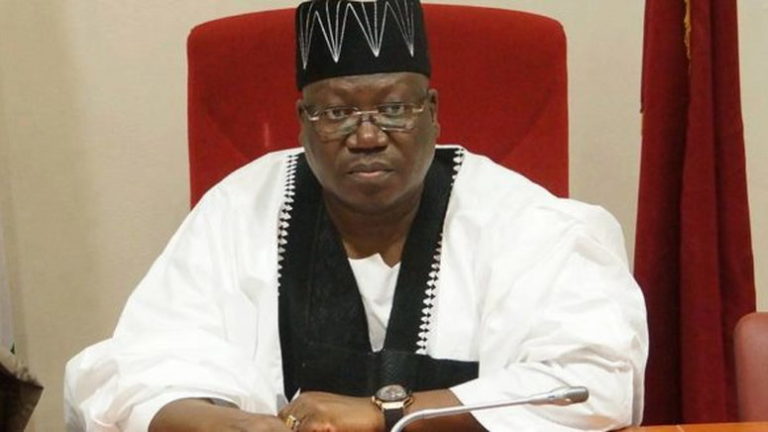
SOME beneficiaries of the National Social Investment Programme (N-power), have written to Ahmed Lawan, the Senate President over the failure of Sadiya Umar Farouq, Minister of Humanitarian Affairs, Disaster Management and Social Development to pay their monthly stipends in the last three months.
In a letter dated June 15 and addressed to the Senate President by Aremu Ridwan Olalekan, spokesperson of the unpaid beneficiaries of the scheme, they disclosed that they have not been paid for the months of March, April and May.
“I write to draw your attention to and lodge complaints about non-payment of N-power Beneficiaries’3-
month stipends (March, April and May 2020), by Honourable Minister of Humanitarian Affairs and
Disaster Management, Hajia Saddiya Farouq,” part of the letter read.
They are asking the Senate President to use his office to compel the Minister to pay their stipends, noting that they have exhausted all avenues to reach out to the minister.
“We will be extremely glad sir, if you compel the minister to pay our unpaid three months stipends,” they pleaded with Lawan.
“We, the affected beneficiaries haven’t been able to meet up with our daily needs due to nonpayment of the 3-months stipends,” he said.
“The COVID-19 pandemic and the lockdown have worsened our living standards. We are extremely hungry.”
On June 9,The ICIR reported how the beneficiaries had cried out over the non-payment of their allowances.
Prior to the report, the Minister had promised beneficiaries and the program monitors across the country that they would start receiving payments for the months of March and April within the next 72 hours.
When contacted, Halima Oyelade, Special Adviser on Media to the Minister of Humanitarian Affairs, Disaster Management and Social Development, asked our reporter to send his enquiry about the payment of N-Power beneficiaries’ stipends to her on Whastsapp because she could not speak immediately on phone.
She however, did not respond to further calls and did not reply the question sent to her on Whatsapp.
DOCTORS in eleven Federal medical facilities across the country have so far received their April and May hazard allowance paid by the Federal Government, The ICIR can report.
Chris Ngige, Minister for Labour and Employment, had on Wednesday said that the Federal Government has commenced the payment of hazard allowance to health workers after a meeting between the Federal Government and members of the National Association of Resident Doctors (NARD).
He disclosed that the meeting ended on a positive note as the government side had shown evidence to the Association of the payment of the hazard and inducement allowances.
Findings by The ICIR revealed that doctors in Ibadan, Oyo State capital confirmed that they have received the allowance which is 50 percent of their basic salary.
Dr. Aliyu Sokomba, President, National Association of Resident Doctors (NARD) confirmed this on Thursday in a message sent to The ICIR.
“I can confirm to you that health workers (doctors and others health workers) received two months of hazard allowance in 11 hospitals,” Sokomba said.
He, however noted that the association did not embark on strike because of the hazard allowance, even it was one of the reasons, adding that hazard allowance is for all health workers and not doctors alone.”
“It is however pertinent to note that we didn’t embark on industrial action because of hazard allowance (though one of the reason).
“Important reasons we embarked on strike are things that relate to our safety and security; PPE availability in our hospitals, insurance cover for doctors and other health workers, residency training Act implementation among others.”
The NARD president disclosed that the association would be convening a meeting to review its position on the strike soon.
A medical doctor based in Ibadan who gave his name as Dr. Gbenga because he is not authorised to talk to the press on the matter stated that payments trickled in on Thursday for him and some of his colleagues.
“Just 11 centres have been paid, so many others haven’t been paid nationwide,” Dr. Gbenga said
However, Dr. Gbenga said there are several Federal Government hospitals that have not gotten the COVID allowance that he and others got.
He also disclosed that the Federal Government has yet to respond to the demand of doctors for adequate supply of Personal protective Equipments (PPE) to protect health workers who are working in the frontlines from contracting coronavirus.
As of Wednesday June 17, NARD reported that 862 doctors in the country have been exposed to COVID-19, while 219 are confirmed cases of the deadly virus.
It would be recalled that the NARD had embarked on a strike on Monday, following the failure of the Federal Government to meet up with its 14-day ultimatum, to meets its demands.
Part of the demands was an increase in hazard allowance for health workers, which as disclosed by the NARD was a token of N5,000, provision of PPE for doctors and an immediate reversal of the dismissal of 26 resident doctors in Jos University Teaching Hospital (JUTH).
Speaking on the dismissal of his colleagues by Plateau State Government, Dr. Gbenga said one of the demands of the striking doctors is for the Federal Government to intervene in the matter.
“Injustice to one is an injustice to all. Twenty six resident doctors were illegitimately disengaged in the JUTH. One of our demand is for the FG to intervene in that matter and to ensure they they are reinstated,” he said.
The ICIR also gathered that some of the association’s other demands had been communicated before Nigeria got its index case of COVID-19 in February, but the Federal Government never responded.
Vanguard, quoted Sokomba, National President of NARD disclose as saying that their demands were all issues they have been on with the government in the last three years.
PRESIDENT Muhammadu Buhari on Thursday gave a stern warning to Service Chiefs that he would no longer take excuses from them over the problem of insecurity facing the country.
This was part of the outcome of a closed door meeting the president held with the Service Chiefs Thursday morning at the Presidential Villa, Abuja on the incessant killings in many parts of the country.
The president who called the meeting for the Security Chiefs to brief him on how they are handling the increasing security challenges across the country, warned also that he would no longer accept further rising cases of insecurity in the country.
Gabriel Olonisakin, Chief of Defence Staff, led the Service Chiefs to the meeting which had some presidential aides in attendance.
At the end of the meeting, Babagana Monguno, National Security Adviser (NSA) who conveyed the outcome of the meeting to State House Correspondents quoted President Buhari as charging the Service Chiefs to live up to expectations.
“The president is “extremely unhappy” and wants a reversal in the deteriorating security situation,” Monguno said.
“The President told the Security Chiefs that they were not imposed on him, saying that it was therefore up to them to prove themselves.”
The president, according to Monguno acknowledged the efforts of the Service Chiefs and various security agencies at arresting the insecurity challenges, he noted that their ‘best is not good enough.’
The NSA also said the president expressed displeasure over the lack of synergy among the security forces and charged the various aspects of the security architecture to work together to solve the nation’s security challenges.
He added that the president charged the office of the NSA to meet with governors of the North-West states and that of Niger State, for briefing and strategic organisation of a response to the banditry problem in their domains.
FOR 40-year-old Ajebe Gladys, coping with her monthly menstrual period since she lost one of her limbs about 17 years ago in an accident has been both tiring and burdensome.
The inability to walk on two legs and financial constraints to procure menstrual hygiene kits make menstruation more like punishment for the mother of two.
“I don’t look forward to my menstrual period,” Gladys says of the hardship she undergoes during the monthly routine.
The US Office on Women Health (OWH) describes menstruation as a woman’s monthly bleeding, often called period.”
Menstruation is a natural process, without which human existence would be threatened but it is a nightmare for many women across the world who lack access to basic hygiene and sanitation during their periods.
Although Gladys knows it is a natural process, she says it is also a constant reminder of the many troubles she needs to contend with whenever it comes.
There are basic rules and procedures to follow during menstruation which are difficult for women in Gladys’ condition.
The OWH recommends that menstruating women should try to change the pad before it becomes soaked.
But to use sanitary pads during that period is a luxury that Gladys cannot afford, therefore she uses a piece of rags as an alternative to sanitary pads.
“Due to financial constraints, I rarely use sanitary pads. I fold a piece of clothing sometimes with tissue paper to absorb my menstruation,” she said.
“During this period, I avoid going out to prevent being stained and making a mess of myself.”
Her daily earnings from a little shop she operates according to her are too meagre to cater for her needs and that of her two children.
Therefore, buying sanitary pad takes the lowest place on her scale of preference where feeding, clothing and shelter are paramount.
Before the accident that claimed her leg, she was a showroom attendant on a monthly salary of N7000. Back then, when she walked on her two legs, she says she could afford sanitary pads but has since been financially constrained since she lost her job after the incident.
With obviously outgrown prosthetics, she says accessing toilet facilities in her house or public is often difficult and inconveniencing.
Women, girls still haunted by period poverty
Amiru Najatu and other women who monthly need sanitary pads for their menstrual hygiene but are constrained by financial difficulty.
Like Gladys, Amiru Najatu, 20, goes through the same experience every month whenever she is menstruating. Her limbs were paralysed when she was a child due to polio infection. This she says compounds her access to basic menstrual hygiene and sanitary products.
For close to five years that she has been experiencing menstruation, Najatu who lives off almsgiving says she has never used a sanitary pad.
Her physical disability and means of livelihood underscore the level of period of poverty she faces.
“I use the money from begging to buy food and water to clean myself but I cannot buy sanitary pads from the money because what I realise daily is not enough,” Najatu says.
Period poverty, the inability of menstruators to afford proper menstrual hygiene products, has been a nagging issue in Nigeria.
Experts say this usually predisposes menstruating women and girls to unhygienic practices, like using rough newspaper, fabric, or cloth napkins in place of pads.
Period poverty is very serious in our time. Working with vulnerable women and children in several communities has opened my eyes to a lot, says Wanda Adu, Executive Director, Wanda Adu Foundation (WAF). The Foundation takes care of vulnerable women and girls.
Adu said women who are not sure of a meal in a day for their children cannot afford to buy sanitary towels. “There is extreme poverty in Nigeria and so the pad is seen as a luxury in communities.
“They are left with forgone alternatives. Should they buy food or pads? There and then they conclude that food is more important than a pad. Hence they improvise,” she said
With a staggering statistics of 82 million people living below the poverty line of N137,430 in a year, according to the National Bureau of Statistics (NBS), purchasing menstruation sanitation products becomes a tall order for most women and girls.
Undoubtedly, the impact of poverty is widespread affecting both men and women but its effect on women and girls is disproportionately high.
A report byUNICEF in 2017 said menstruating schoolgirls in Nigeria faced many challenges which affected their ability to manage their menstruation in a dignified and hygienic way.
Availability and adequacy of WASH facilities, adequacy and flow of information on menstrual hygiene management and access to materials for hygienic management of menstruation all impacted girls’ experience of menstruation, UNICEF said.
Danjuma Janet, 18 and a former student of Government Secondary School, Jabi in Abuja recalls when she started menstruating at the age of 16 and she was shocked. She was told by her mother to shrug the shock off, as it is an indication that she is now a woman.
Her mother provided her some sanitary pads but it didn’t last long because of the financial implication. Janet says her parents who run a shop of daily needs experience recession in their business and could not afford to provide her pads.
Janet went to visit a friend when she first experienced her menstruation and was given a rag to clean up.
“I went to visit my friend and I was told that my cloth was stained at the back. Initially I was scared but they offered me a rag to clean up. My mother later gave me a pad to use,” she says of her first experience of menstruation.
Janet resigned to fate ̶ making use of pieces of unused materials or rags each month she menstruates. But this has brought her shame and ridicule, as her friends mock her in school whenever she gets stained.
She said a sanitary pad costs N300 depending on the brand and size. This is difficult for her to get since she is not working and cannot afford it.
“It’s not easy to buy a pad everyday,” she says. “Sometimes I use rag when I cannot afford to buy a pad because it costs between N300 to N400.”
She recalled how she was embarrassed on a day she got stained in school at the age of 16.
“I left school early that day because I felt so embarrassed when my friends called my attention to my stained skirt,” Janet recalls.
Light at the end of the tunnel
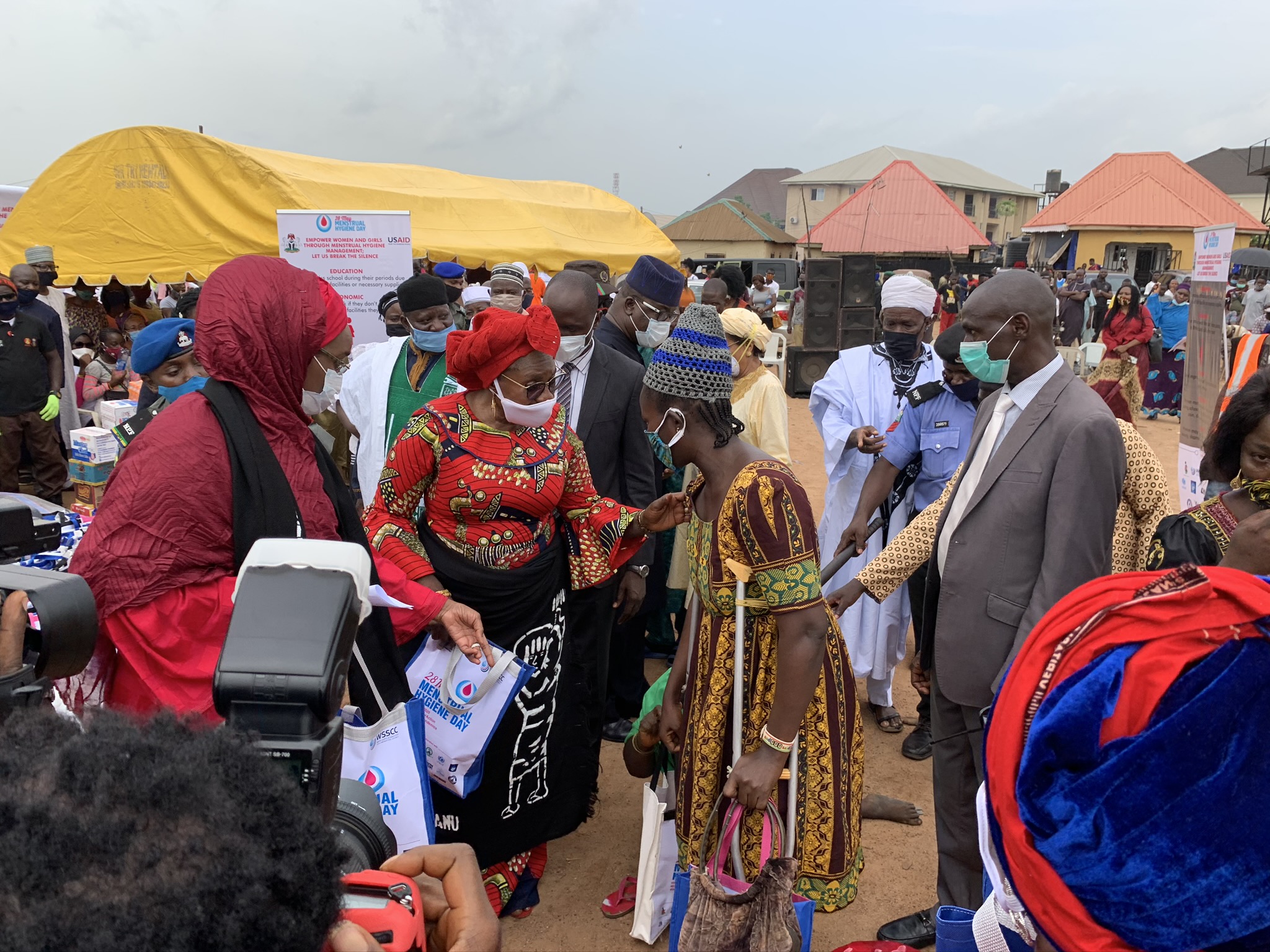
Paulen Tallen, Minister of Women Affairs, handing a pack of menstrual hygiene kit to Gladys at the 2020 World Menstrual Hygiene Management Day.
The UNICEF in the 2017 report recommended that there should be facilitation of accurate and sufficient information on menstruation hygiene management to disabuse minds of people on the myths and taboos and encourage safe, hygienic and dignified management of menstruation.
Other key recommended actions were the provision of appropriate and adequate water, sanitation and hygiene facilities in schools; support to access affordable reusable sanitary pads and mobilization of policy and decision-makers to promote open discussion of menstrual hygiene management to reduce stigma.
Recently, Nigeria’s Ministry of Women Affairs flagged off the distribution of one million sanitary pads to women and teenage girls across the country as part of the government’s efforts to address period poverty among women and girls.
“This project is hinged on the fact that girls’ and women’s choices of menstrual hygiene materials are often limited by costs, availability and social norms,” saidPaulen Tallen, Minister of Women Affairs at the 2020 Menstrual Hygiene Day observed in Kado village, Abuja on May 28.
“Therefore, providing access to feminine hygiene products will go a long way to solve the problem to a great extent.”
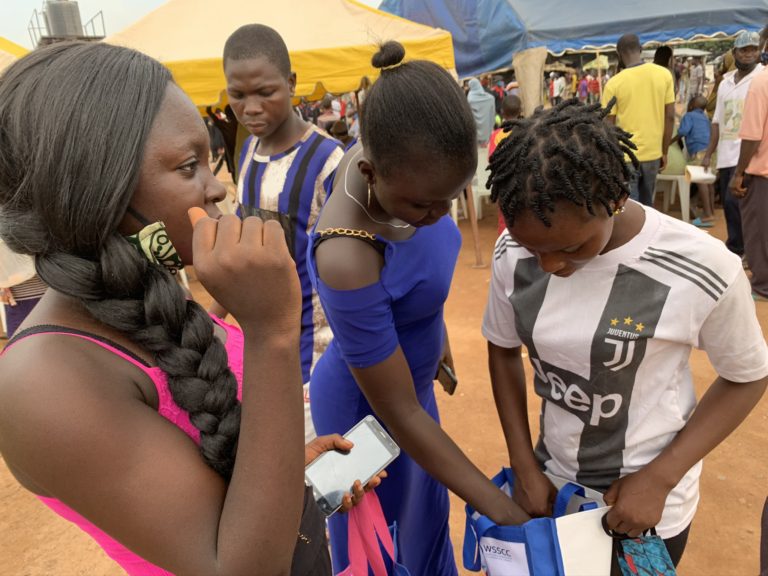
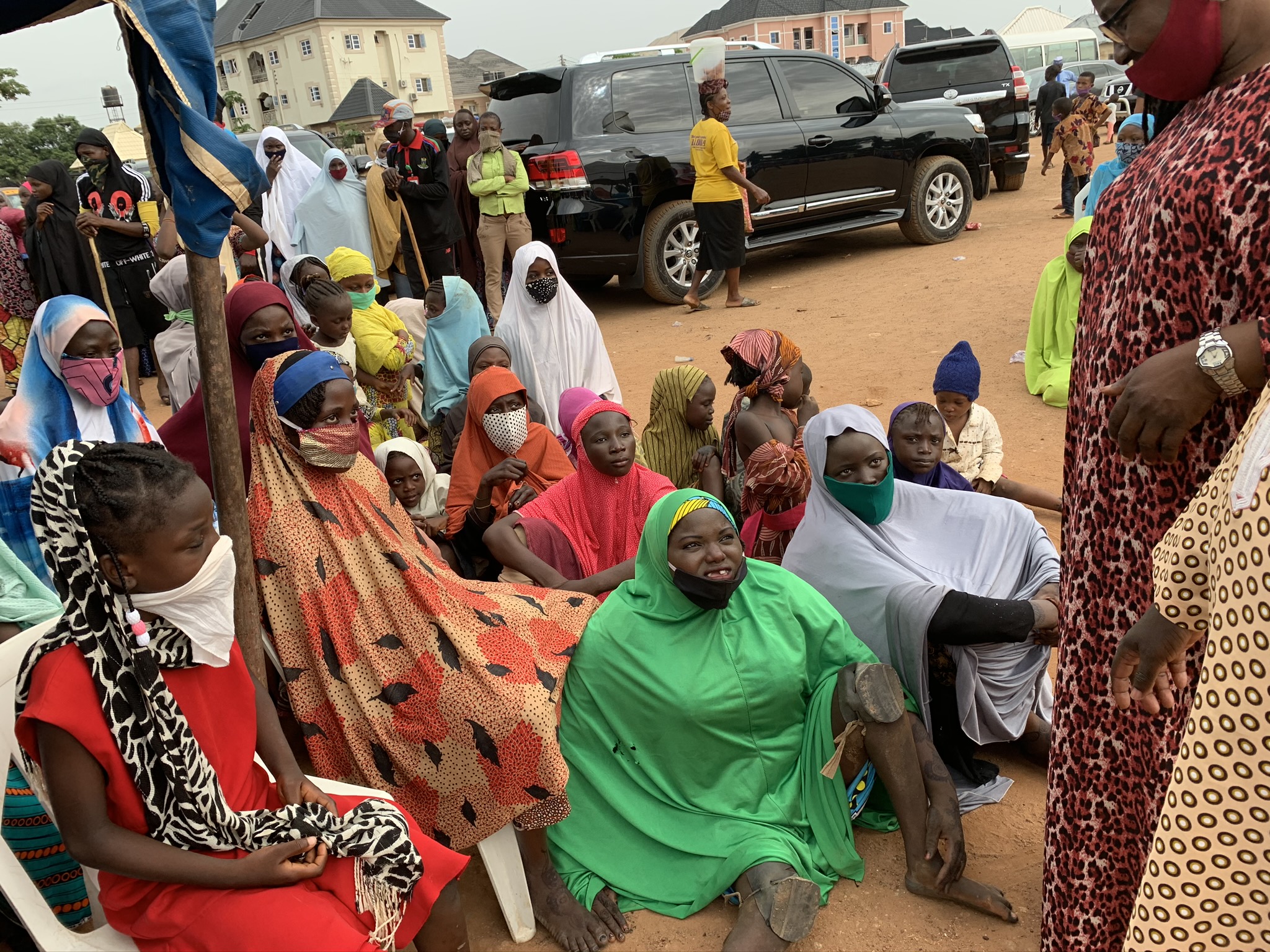
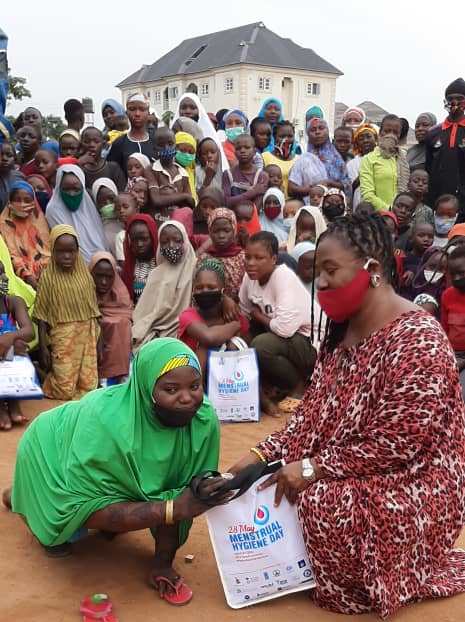
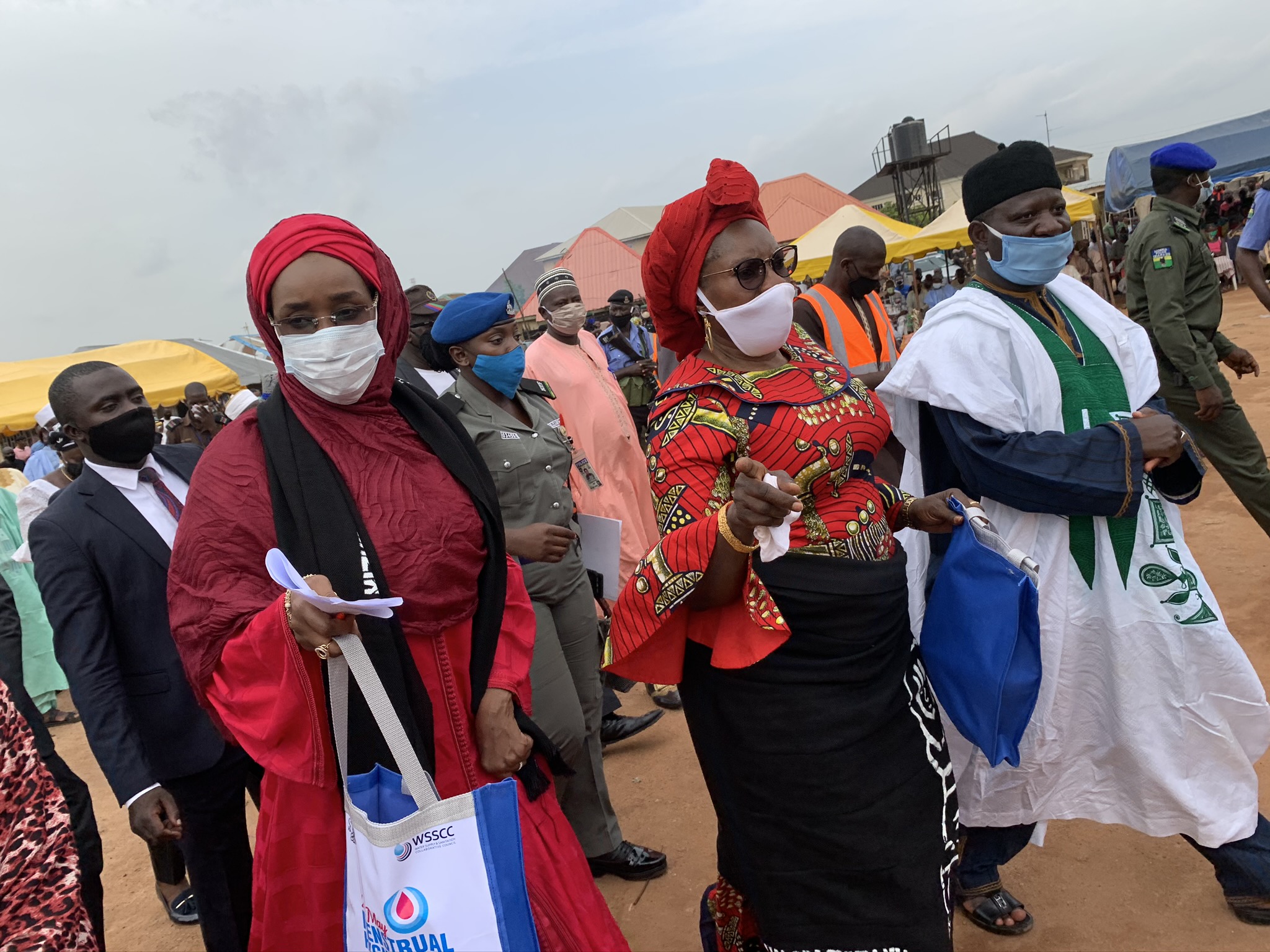
At the event which was organized by the ministry with support from Water Supply Sanitation and Collaborative Council (WSSCC) and other stakeholders, 4000 sanitary pads were distributed to women and girls at the village. Each beneficiary received at least four packs of sanitary towels.
Elizabeth Jeiyol, WSSCC National Coordinator for Nigeria believes poor knowledge and understanding of menstruation may lead to unsafe hygienic practices for women and girls.
Najatu, receiving a pack of menstrual hygiene kit from Elizabeth Jeiyol, Water Supply Sanitation and Collaborative Council (WSSCC)
Jeiyol says all stakeholders must team up to change the negative social norms surrounding menstruation.
“Poor knowledge and understanding of menstruation may lead to unsafe hygienic practices for women and girls,” she said.
“It is not a gender thing – but a basic human right issue – and together we can empower all women and girls to realize their full potentials everywhere in the world.”
She maintains that effective menstrual hygiene has direct and indirect effects on the overall well-being of women and girls – in the context of education, empowerment and health.
According to her, women and girls face continuous mental, physical and health traumas during their periods – as a result of discriminatory social norms, cultural taboos, supernatural beliefs, gender inequality, and limited access to basic services such as WASH facilities in private and public spaces which leads to ‘Period Poverty’ for women and girls across the world – especially in developing countries like Nigeria.
Chizoma Opara, acting Coordinator of the Clean Nigeria: Use the Toilet Campaign says it is important to institutionalise menstrual health and hygiene management at all levels in Nigeria.
This, Opara said can be achieved by putting an end to open defecation in Nigeria through the provision of hygiene facilities for the populace particularly women and girls during their menstrual period.
Wanda Adu says every woman and girl deserves a free sanitary pad every month, saying “teenage girls will not go to school for fear of stigmatization and shaming if they happen to be stained.”
On the occasion of 2019 international women’s day, she says her Foundation while giving out sanitary products to 150 women and girls in several communities in Abuja witnessed struggle by the women and girls to get the products.
What cash transfer can do for menstruating teenage girls and women
Sadiya Umar Farouq, Minister of Humanitarian Affairs, Disaster Management and Paulen Tallen, Minister of Women Affairs while sharing free sanitary kits to women and girls at Kado Village, Abuja
If the government acts by its words, there may be a relief for women and teenage girls regarding period poverty.
Poor and menstruating women and girls who cannot afford to purchase menstrual hygiene products when on their menstrual period can heave a sigh of relief, Sadiya Umar Farouq, Minister of Humanitarian Affairs, Disaster Management and Social Development said.
She recently said the Ministry would find a way to incorporate teenage girls and poor women in the country into its Conditional Cash Transfer (CCT) programme to support them in purchasing all the necessary hygiene materials for their monthly menstrual period.
Farouq said her Ministry was ready to collaborate with the Ministry of Women Affairs to support the vulnerable groups especially women and teenage girls, using the CCT scheme.
The CCT scheme is designed to benefit poor and vulnerable households with a monthly stipend of N5000; and beneficiaries are trained and provided financial and technical support to start small businesses.
“We have a programme in the ministry, it is called Conditional Cash Transfer. The programme is specifically for farmers that need this kind of support and it is being given to women heads of families. So that they can take care of themselves and other members of the family including teenage girls in the family,” she said during the 2020 World Menstrual Hygiene Management Day.
“We are going to find ways to tinker with this programme to see that the teenage girls are also incorporated by giving them monthly stipends to support them and so that they are able to earn something that they can use to buy all the necessary hygiene materials that they need during this period of their lives.”
Farouq says she understands that most teenage girls are subjected to all forms of hardships when they menstruate.
“Some of them are not able to go to school or participate fully in society, always at home because of the hardship that they go through on days that they observe their menstrual period,” the Minister said.
Farouq lauded efforts made by the Ministry of Women Affairs led by Dame Pauline Tallen in addressing period poverty.