Home Blog Page 2089

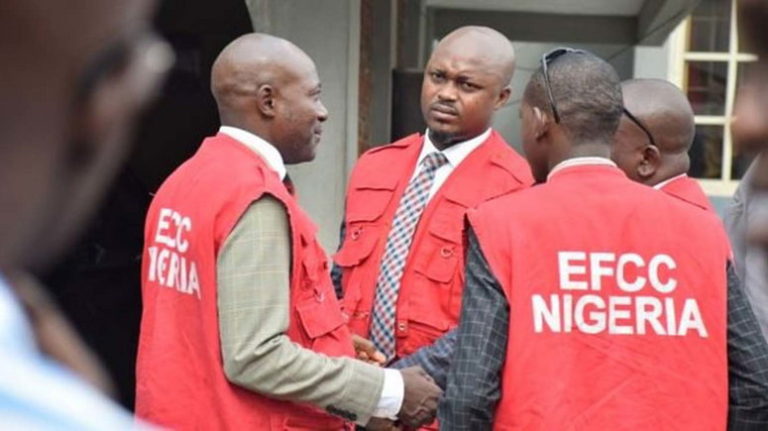
EFCC secures interim forfeiture of AVM Atawodi’s assets

JUSTICE Anwuli Chikere of a Federal High Court sitting in Abuja on Thursday ordered the interim forfeiture of assets including money belonging to Salu Atawodi, a retired Air Vice Marshal (AVM), in an application filed by the Economic and Financial Crimes Commission (EFCC).

The Court ordered the interim forfeiture of $228,428.16 and N120, 546,042.02 including a property located at Plot No. 3004 Cadastral Zone E05, Aviation Village, District Abuja recovered by the  EFCC, from  Salu Atawodi, Atawodi Winnie and Vector Integrated Services Ltd.
A statement issued by Dele Oyewale, Head, Media and Publicity of the EFCC said the property and monies were traced to AVM Salu Atawodi, Atawodi Winnie and Vector Integrated Services Ltd in an application brought by the Commission,  seeking an interim forfeiture order of the sum and the property it recovered and said to be proceeds of unlawful activities.
Justice Chikere gave the order following an ex-parte application filed by the EFCC, in pursuant to section 44 (2) of the constitution of the Federal Republic of Nigeria, 1999 (as amended) and Section 17 of the Advance Fee Fraud and other Fraud Related Offences Act No. 14, 2006, and under the inherent jurisdiction of the court.
Ekele Iheanacho, prosecution counsel, in the application,  asked the court to direct a publication of the  interim order, in the name of the persons in whose possession the property and funds sought to be forfeited, in any national newspaper,  and cause them to appear before the court to show cause within 14 days, why the final order of forfeiture of the property and monies mentioned should not be made in favour of the Federal Government of Nigeria.
Justice Chikere after granting all the prayers adjourned the case to June 30, 2020, for continuation of the case.


EFCC secured 2,240 convictions in five years, recovered N980b, private jets – Magu

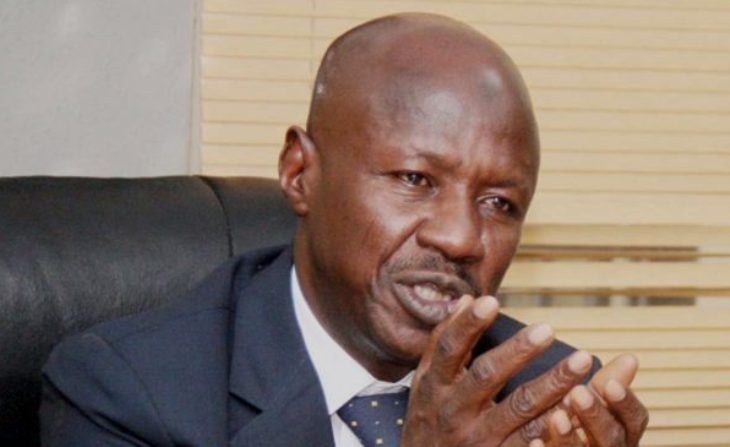
IBRAHIM Magu, the Acting Chairman of the Economic and Financial Crimes Commission (EFCC) on Thursday disclosed that the anti-graft body has secured 2,240 convictions in the past five years.

Magu revealed this during a briefing ahead of the Democracy and Anti-Corruption Day celebration in Abuja that holds on June 12.

He said the Commission also recovered assets worth N980 billion within the same period.

Other notable recoveries he listed included oil vessels, private jets, estates among others.

“Our scorecard in the area of conviction is 2,240 in the last five years,” Magu said.

“We have recovered assets in excess of N980 billion and quite a large array of non-monetary assets like properties, estates, private jets, oil vessels, filling stations, schools; hotels; trucks and other automobiles; pieces of jewellery; plazas, shopping malls, electronics, among others.”

Though, Magu admitted that the Commission still has pending corruption allegation cases it is probing, he boasted that the EFCC remains on course in its fight against fraud.

He, however, pledged to take the issues of enforcement and prevention strategies more seriously stressing that its enforcement is not about tough talks, but tough actions.

“It is not about rhetoric; it is about professionalism. It is not about seminars, it is about criminals and how to bring them to book,” Magu said.

According to him, the EFCC is making impressive progress in digitalized and non-digitalized investigations.

“All our cases are being pursued with vigour and alacrity. This is why we have results across all our zones,” he boasted.

The ICIR had earlier written on a number of former Governors and politicians who were accused of looting their state’s treasury but yet to be fully convicted.


COVID-19: Osinbajo’s Economic Sustainability Committee recommends massive job creation

THE Economic Sustainability Committee  chaired by Vice President Yemi Osinbajo has recommended that the Federal Government should embark on mass job creation in order to mitigate the impacts of COVID-19 against the Nigerian economy.

This recommendation was contained in the report of the Committee submitted on Thursday by Osinbajo to President Muhammadu Buhari at the Presidential Villa, Abuja.

President Buhari on March 30 set up the Economic Sustainability Committee as part of response to mitigate the impacts of COVID-19 pandemic on the Nigeria’s economy.

The President had asked the committee to develop a clear economic sustainability plan in response to challenges posed by the COVID-19 pandemic, to propose monetary policy measures in support of the plan and to provide a fiscal/monetary stimulus package, including support to private businesses and vulnerable segments of the population among others.

The Vice President said the Committee has also recommended that the Federal Government should put in place mass programmes that would create jobs and utilise local materials.

“We have therefore recommended that we must carry out mass programmes that create jobs and utilise local materials,” Osinbajo said.

He explained that such programmes would “include a mass agricultural programme, which is expected to bring between 20,000 and 100,000 hectares of new farmland under cultivation in every state of the federation and create millions of direct and indirect job opportunities.”

The Committee said the Federal Government must also focus on extensive works and construction of urban and rural roads with the use of local materials.

Part of the recommendations is that there must be a mass housing programme that would deliver up to 300,000 homes annually, engaging young professionals and artisans who form themselves into small and medium scale businesses within the construction industry, using indigenous labour and materials.

The ICIR had reported that 42 percent of Nigerians suffered job loss due to COVID-19.

A survey by the National Bureau of Statistics (NBS) said 42 percent Nigerians lost their jobs as a result of the outbreak of COVID-19.

Violence Against People Prohibition bill passes second reading at Bauchi Assembly

By Haruna Mohammed Salisu


THE Violence Against People Prohibition (VAPP) Bill has passed second reading at the Bauchi State House of Assembly.

The bill seeks to eliminate violence in private and public life; prohibit all forms of violence, including physical, sexual, psychological, domestic and harmful traditional practices for victims of such incidences.

The bill also seeks to provide maximum protection and effective remedies for victims and punishment of offenders.

It is being sponsored by Abubakar Suleiman, Speaker of the State House of Assembly.

The Speaker while leading the debate on the bill  lamented rise in the spate of violence across the state, citing Bauchi State where according to him, incidents of rape and domestic violence have been on the increase.

He said the state House of Assembly would find a lasting solution to the menace through effective legislation.

“My Honourable colleagues, these and many more other ugly cases are happening within and around the State. “Unfortunately, some or most of the culprits go unpunished,” Suleiman said.

“They raped and also killed their victims. How many more girls need to die this way? We cannot continue this way. We cannot continue to look away and ignore these murders. This is insane.”

He remarked that the time has come for the state’s lawmakers to provide adequate and serious protection for the vulnerable members of our societies against violence.

“It is against this background that I crave your indulgence to support me in the successful passage of this very important bill into law,” he said.

After brief debate on the bill which the members unanimously commended, it passed first and second reading.

The House also referred the bill to House Committee on Women Affairs for further legislative processes.

Rights groups blame Bauchi police for COVID-19 spread among Inmates

By Haruna MOHAMMED from Bauchi


A HUMAN rights group, Prison Inmate Development Initiative (PIDI-Nigeria) in partnership with Centre for Applied Human Rights (CAHR), has blamed the Nigerian Police for the current increase in positive cases of COVID-19 in Bauchi state.

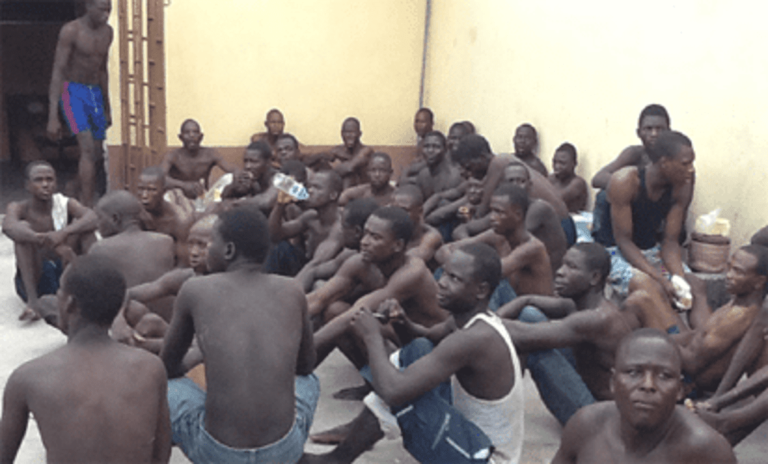
A press statement issued to journalists by the rights organizations on Thursday alleged that the ten reported cases among inmates in Bauchi were connected with “detaining suspects beyond the capacity of their cells.”

“The about ten persons with COVID-19 were brought to the correctional facility already infected in the police cell where they were locked up in an overcrowded cell for a very long time”, the right groups alleged.

The press statement further alleged that the police have been detaining suspects beyond prison capacity in their various cells across the country.

The press release signed and shared to journalists in Bauchi by the Executive Director of Prison Inmate Development Initiative (PIDI-Nigeria), Mbami Iliya Sabka said investigations done by the organisation revealed that the positive cases recorded among some inmates were brought by the police to the correctional centers and not those who were already serving jail terms in the facility.

The Organization said the Bauchi Correctional Centre has confirmed to its officials that the newly confirmed cases were new inmates from the police cells.

The human rights organisations noted that “the correctional center guideline stipulates that if a court sentenced a person to the correction center, he or she must be screened of COVID 19 before being allowed to join other inmates if found negative.”

Mbami further noted that the action of the police if not checked, will further derail the government’s effort in curtailing the spread of the virus.

“The worrisome and a gross violation of human rights was the situation where our team observed that no name of the suspects in their cell was written in the crime board as stipulated by the law of the land, an indication that the police may have detained over 50 suspects in their cell against the Covidd-19 protocol,” the organisation alleged.

When contacted for comments, the Police Public Relations Officer, Bauchi State Police Command, DSP Ahmed Mohammed Wakil said “I don’t respond to questions on phone, come to the office.”

According to the World Prison Brief 2018, no fewer than 71,522 inmates are held in Nigerian prisons.


Lagos gives directives on reopening of event centres, limits gathering to 500 persons

LAGOS State Government has on Thursday clarified its position on reopening of event centres, explaining that owners of such places must register their facilities pending issuance of further directives by the government in respect to how they would operate.

The Commissioner for Tourism, Arts and Culture, Uzamat AkinbiIe-Yusuf, who gave the directives following media reports that owners of event centres could now open for operations, maintained that all event centres and cinemas are to remain shut for now.

She said the event centres  would be allowed to open provided they have met all laid down procedures, including registering under the ‘Register-To-Open’ initiative of the State Government

The Commissioner noted that the initiative was designed to certify the safety preparedness of various business outfits, including event centres, before they are allowed to re-open for business activities

Akinbile-Yusuf said a maximum capacity of one-fifth the capacity of each event centre, subject to a limit of 500 persons regardless of the size of the centre, would be allowed when such businesses are finally allowed to reopen.

She said the operations must not contradict stipulated operational guidelines issued during the statewide lockdown period.

EFCC discovers 1,000 ghost workers in Kwara SUBEB

THE Economic Financial Crimes Commission (EFCC) on Thursday disclosed that it has uncovered a total of 1,000 ghost workers within the Kwara State Universal Basic Education Board.

Isyaku Sharu ,Head of EFCC Kwara Zonal Office, told journalists while highlighting the achievements of the zone during the Coronavirus (COVID-19) lockdown.

According to him, the global epidemic has not been an hindrance to fighting corruption for the Commission.

Sharu said the commission was able to make a cash recovery worth more than N138 million from alleged Kwara State treasury looters during the lockdown.

“You recall that the zone had earlier handed over N374 million to the state Governor, AbdulRahman AbdulRazak, on two occasions,” he said.

He stated that an additional diversion of N750 million was uncovered from the Light Up Kwara Project.

“The zone has also uncovered alleged diversion of about N750 million from the Light Up Kwara Project, funds for the project, worth about N72 million, was used in purchasing a property in Guzape area of Abuja,”Sharu said.

He further stated that within 16 months of its operations in Kwara State, the EFCC was able to achieve the interim forfeiture of eight different residential buildings within Ilorin, the state capital and two other residential buildings in Ikoyi, Lagos State.

Furthermore, he said the commission also secured 52 convictions with final forfeitures of some number of vehicles.

However, Sharu noted that the zone would live up to its responsibilities by discharging its duties with strict adherence to social restriction guidelines as spelt out by the Presidential Task Force (PTF), on COVID- 19.

COVID-19: 370 million school children missing out on school meals- UN

THE United Nations (UN) in its recent findings says  370 million school children globally are missing out on school meals which is a major source of nutrition for them due to closure of schools forced by the COVID-19 pandemic.

More than 820 million people in the globe are hungry, said Antonio Guterres, UN Secretary-General in a policy briefThe Impact of COVID-19 on Food Security and Nutrition launched on Tuesday.

Guterres said response to the pandemic must support children who no longer have access to school meals.

According to him, 144 million children under the age of 5 are stunted which means that more than one in five children worldwide have stunted growth as a result of malnutrition.

He said more than 820 million people in the world are hungry though there is more than enough food in the world to feed a population of 7.8 billion people.

”Our food systems are failing, and the COVID-19 pandemic is making things worse,” Guterres said.

Guterrres stated that unless immediate action is taken, that there is an impending global food emergency that could have long term impacts on hundreds of millions of children and adults.

According to him, about 49 million extra people may fall into extreme poverty due to the COVID-19 crisis noting that the number of people who are acutely food or nutrition insecure will rapidly expand.

He stated every percentage point drop in global Gross Domestic Product (GPD) means an additional 0.7 million stunted children, and ‘even in countries with abundant food, there are risks of disruptions in the food supply chain.’

Guterrres recommended that governments and individual around the wold must mobilize to save lives and livelihoods, focusing attention where the risk is most acute by designating food and nutrition services as essential.

He said there is need to implement appropriate protections for food workers and preserving critical humanitarian food, livelihood and nutrition assistance to vulnerable groups while also positioning food in food-crisis countries to reinforce and scale up social protection systems.

The UN Scribe e also advised that countries need to scale up support for food processing, transport and local food markets, adding that they must keep trade corridors open to ensure the continuous functioning of food systems.

“And must ensure that relief and stimulus packages reach the most vulnerable, including meeting the liquidity needs of small-scale food producers and rural businesses,” he said.

He also recommended that the governments must strengthen social protection systems for nutrition and invent ways to safeguard access to safe, nutritious foods, particularly for young children, pregnant and breastfeeding women, older people and other at-risk groups in countries around the world, which should include supporting children who no longer have access to school meals.

Finally, he advised that countries should and must invest in the future, as there are opportunities to build a more inclusive and sustainable world.

”Let us build food systems that better address the needs of food producers and workers.”

”Let us provide more inclusive access to healthy and nutritious food so we can eradicate hunger.”

”And let us re-balance the relationship between food systems and the natural environment by transforming them to work better with nature and for the climate,”  Guterres advised.

The UN boss stated that food systems contribute up to 29 per cent of all greenhouse gas emissions, including 44 per cent of methane, and are having a negative impact on biodiversity.

Guterres therefore advised that governments should adhere to to the recommendations as indicated by the brief launched by the organization as a measure to avoid some of the worst impacts of the COVID-19 pandemic on food security and nutrition which also supports the green transition in a way that the world needs.


Sokoto, Kaduna, Adamawa top list of states where more Nigerians were killed in month of May

At least 356 Nigerians were reported killed in 27 states of the country in the month of May 2020 alone, a new report said.

NigeriaMourns, a Non-governmental Organisation that released “Violence Incidents Report: May 2020” on Wednesday documented daily deaths and violence happening across the country amidst the COVID-19 pandemic.

According to the report, Sokoto, Kaduna and Adamawa were the states with the highest number of killings, totalling 181 deaths.

The report also indicated that 212 deaths were attributed to banditry attacks, while communal conflicts accounted for 80 deaths, 27 were attributed to Boko Haram/ISWAP, 10 to cult clash, herdsmen attack took 10, eight were due to extrajudicial killings while five were killings related to isolated attacks and four to mob action.

Violent Incidents Report: May 2020

NigeriaMourns described the continuous crisis in Southern Kaduna which led to a larged scale death of people and destructions as a source of concern.

In the report, four civilians’ deaths were also attributed to Nigerian soldiers while enforcing the lockdown orders in Karim Lamido, Taraba State.

“At Owode, Yewa South Local Government of Ogun state, 15-year-old Riliwan Bello died from an “accidental bullet discharge” fired by men of the Nigerian Customs Service (NCS), Ogun 1 Area Command. The incident occurred barely a month after unnamed agents of the NCS reportedly killed another 15-year-old girl, Sekinat Agbelade at Agosasa, Ipokia Local Government Area of Ogun State,” the report said.

“Rinji Peter Bala, a 20-year-old student of the University of Jos, was first arrested by vigilantes alongside six others for violating the lockdown order. Shortly after they were released, officers of the Nigerian Army “accidentally” shot and killed Rinji.

“An unidentified inmate was reported dead from a shot fired by a prison guard, at the Nigeria Correction Service, Aba. The incident occurred when some old inmates had tried, but failed to escape from the prison.

“16-year-old Tina Ezekwe was shot and killed by a policeman at a bus stop near her home in Lagos State. Provoked by this tragic incident and the endless extrajudicial killings in Nigeria, Nigerians led a protest with the hashtag #JusticeforTina,” the report read.

The report further revealed that 10 security agents were killed during violent attacks in the same month.

According to the report, Killing of security officers in Nigeria has continued at an alarming rate.

“A police officer attached to Bomadi Divisional Police Station was shot dead by an army officer attached to 222 battalions in Agbarha-Otor, Ughelli North L.G.A Delta State.

“Five Nigerian soldiers were also killed in an attack on a military outpost by ISWAP terrorists in Mainok, Borno State, in addition to the two earlier reported killed by Boko Haram at Gujba local government area of Yobe.”

Three major sectors to benefit from amended Local Content bill as it passes second reading

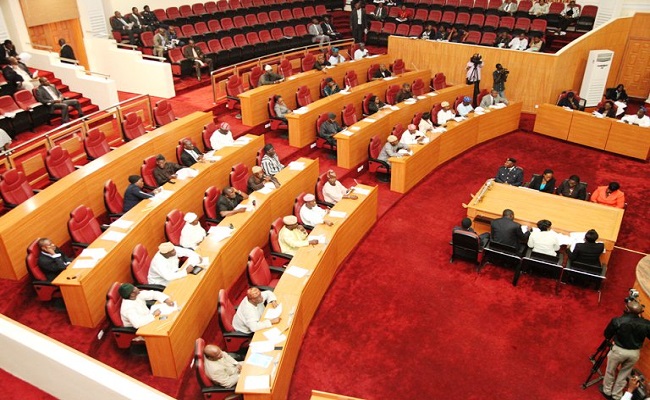
THE Senate on Wednesday has referred the bill for an Act to repeal the Nigerian Oil and Gas Industry Content Act, NOGIC, Act 2010, to the Senate’s Committee on Local content for review after it passed the second reading.

Aliyu Sabi, a senator from Niger State who is at the forefront seeking to repeal the NOGIC Act, 2010, in replacement for Nigerian Local Content Development and Enforcement Commission Act, NCDE said the bill would realise the legislative agenda of the ninth assembly.

The bill had 209 clauses which would address all the local content needs for the oil and gas industry and also extend to other sectors of the economy, he said.

The NCDE bill seeks to update and replace the outdated provisions of the Nigerian Oil and Gas Industry Content Act, NOGIC, Act 2010, to ensure that priority is given to Nigerian operators in the issuance of licences and permits in designated sectors especially oil and gas sector.

It also stipulates that companies or individuals undertaking a business activity in the Nigerian economy shall give consideration in terms of the award of contracts and employment to Nigerian indigenous businesses and individuals.

Kabiru Gaya, representing Kano South senatorial district said the bill was long overdue stating the current bill should be merged with any other existing one to align a wholistic standard local content.

After deliberations on the bill, Ahmad Lawan, President of the Senate asked that the committee on Local Content should report to the Senate in four weeks

These are three major sectors that the NCDE bill is set to benefit Nigerian workers and indigenous service companies in the country if it is passed.

Oil and Gas

The bill proposes that Nigerian independent operators should be given first consideration in the award of oil blocks, oil field licences, oil lifting licences as well as contracts for projects subject to the fulfilment of conditions as specified by the Minister of Petroleum Resources.

A major challenge in the oil and gas sector is its technology intensiveness but the bill makes provision for Nigerians working with foreign oil and gas firms to build core competencies and acquire skills by ensuring minimal deployment of foreign expertise in project execution.

While contracts involving a total budget exceeding $1 million held by a foreign firm shall have a labour clause mandating the use of a minimum percentage of Nigerian labour in specific cadres as may be stipulated by the Board.

It also compels foreign operators in the sector to submit to the Board a succession plan for positions not held by Nigerians to enable nationals understudy positions held by incumbent expatriates for a maximum period of five years after which such positions will be held by Nigerians.

Power Sector

One of the key targets of the Nigerian content policy under the NCDE bill in the power sector is to ensure Nigerian firms are given exclusive consideration in the issuance of licences, permits, leases and other instruments vesting right of operation if they have demonstrated sufficient capacity.

The bill states that baring uncertain circumstances where there are inadequate local materials or the inability for any contract to be engaged, the board may grant its permission for a waiver so a foreign company to step in but not more than 3 years from the date of the approval.

However, the bill imposes on every unit of power purchased by an electricity consumer a two per cent charge of the monetary value of the unit purchased which will be paid into a Fund that would be named “National Power Development Fund” which shall be administered by the board alongside the Nigerian Electricity Regulatory Commission (NERC) to promote Nigerian Content in the Power Sector.

Information and Communication Technology (ICT)

The bill also seeks to establish a National Office for Nigerian Content on Information And Communication Technology (“the National Office on ICT”) which shall be responsible for implementing the local content obligations of the ICT sector.

With exclusive consideration to be given to Nigerian indigenous companies that demonstrate the requisite capacity, with regards to the grant of a licence, leases, permits, and other right-vesting instruments in relation to the ICT sector.