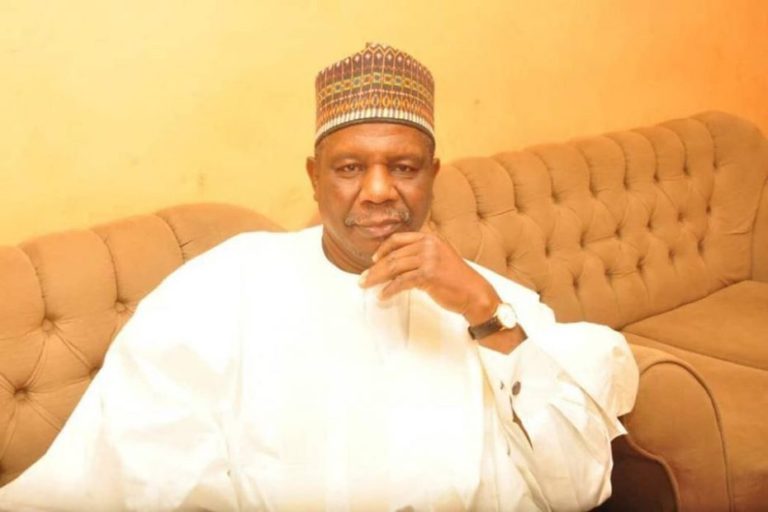
BABA Tela, Deputy Governor of Bauchi State Deputy Governor, has tested positive for Coroavirus.
Muktar Gidado, Senior Special Assistant on Media to Governor of the state disclosed this in a statement made available to journalists in Bauchi.
The statement said Baba Tela’s sample was collected for testing when he started exhibiting some symptoms of the virus.
The test however was confirmed positive by the Nigeria Center for Disease Control (NCDC), the statement said.
It added that the deputy governor contracted the virus while discharging his duty as the State Chairman, Task Force Response Committee on Covid-19 and Lassa fever.
However, he has since gone into isolation and being looked after by professional medical personnel.
According to the statement further said samples of his primary contacts have been taken for tests while they were advised to self isolate pending the outcome of the tests.
The statement quoted Bala Mohammed, Governor of the state as soliciting for prayers from the citizens of the state for his quick recovery.
Bala Mohammed also called on citizens of the state to adhere strictly to medical protocols against the virus in order to tame its spread.
The ICIR recalls that the governor was the first person to test positive for COVID-19 in Bauchi State.
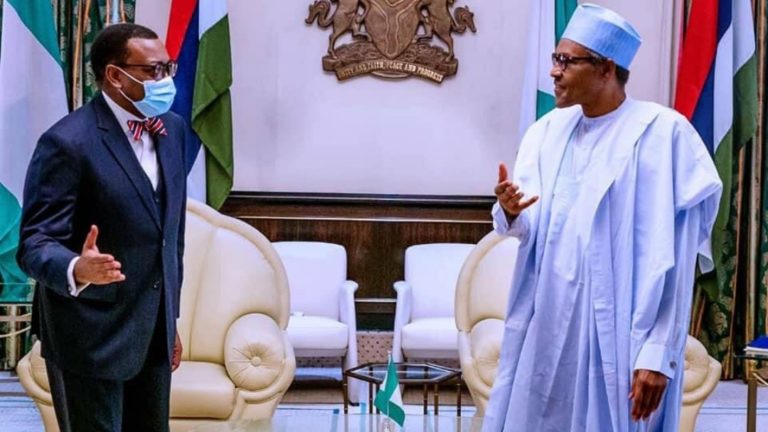
PRESIDENT Muhammadu Buhari on Tuesday assured Akinwumi Adesina, embattled President of the African Development Bank (AfDB) of Nigeria’s support in his bid to get re-elected as the president of the bank.
“Nigeria stands solidly behind Akinwunmi Adesina in his re-election bid as President of the African Development Bank (AfDB),” President Buhari said after receiving the AfDB president who was on a courtesy visit at the Presidential Villa, Abuja.
He further assured that “We will work with all leaders, and stakeholders in AfDB, to ensure that he is re-elected, on the strength of his achievements during this first term.”
Femi Adesina, Special Adviser to the President on Media and Publicity, who disclosed this in a statement on behalf of President Buhari noted that his support has no shades of political affiliations.
“In 2015, when you were to be elected for the first term, I wrote to all African leaders, recommending you for the position. I didn’t say because you were a People’s Democratic Party (PDP) Minister, and I belonged to the All Progressives Congress (APC), so I would withhold my support,” he quoted the president as said.
“I’ll remain consistent with you because no one has faulted the step I took on behalf of Nigeria.”
Adesina’s re-election bid is currently being threatened by the United States of America’s request for an independent probe into whistleblower allegations levelled against him.
He was accused by unnamed whistleblowers of using the bank’s resources for self-promotion and personal gain while also paying out huge undeserved severance packages to staff who resigned in unusual circumstances and favouring Nigerians.
The ethics committee of the bank’s board of governors has absolved Adesina of the charges but the US rejected the initial inquiry that cleared him and is seeking for an independent probe.
Adesina, a former Nigerian Minister for Agriculture, said the 20 allegations raised against him were trumped up, “and without facts, evidence, and documents, as required by the rules and regulations of the bank”.
“My defence ran into 250 pages, and not a single line was faulted or questioned. The law says that report of the Ethics Committee should be transmitted to the Chairman of Governors of the bank. It was done, and the governors upheld the recommendations.
“That was the end of the matter, according to the rules. It was only if I was culpable that a fresh investigation could be launched. I was exonerated, and any other investigation would amount to bending the rules of the bank, to arrive at a predetermined conclusion,” he said.
Aside from 54 African countries, the US is one of the 27 non-regional members of the AfDB and its second-largest shareholder with 6.5 per cent.
Nigeria is the largest shareholder of the AfDB with 9.1 per cent, followed by the US with 6.5 per cent, Egypt at 5.5 per cent, Japan has a stake of 5.4 per cent, and South Africa at 4.9 per cent makes the top five major shareholders of the bank.
Adesina emphasised that the motive of the independent probe was to slander his name and the bank to disqualify him from seeking re-election despite endorsements from the African Union, AU, as he thanked President Buhari.
“You helped me to get elected in the first place, and you have supported me robustly all along, and the African Union unanimously endorsed my re-election”, he disclosed.
After meeting with President Buhari, the AfDB president expressed gratitude to the Nigerian leader.
” Thank you very much Your Excellency President@MBuhari for your unflinching support. I am delighted, humbled and greatly encouraged that the nation, under your leadership, stands solidly with me. I am extremely grateful Sir,” Adesina wrote on his Twitter page.
BARELY 24 hours after the Presidential Task Force (PTF) on COVID-19 announced that President Muhammadu Buhari had approved the reopening of places of worship, the PTF backtracked by saying it never recommended that worshipers should return to worship centres.
The President had in the wake of the outbreak of the pandemic banned public gathering of more than 20 people including in religious places as part of measures to contain the spread of COVID-19.
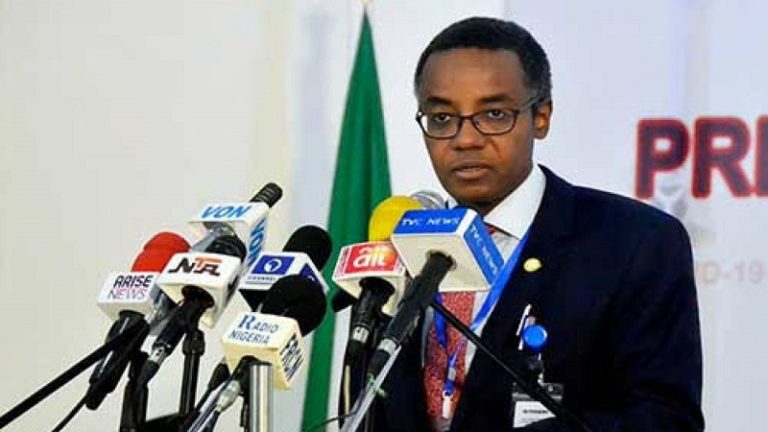
But Sani Aliyu, National Coordinator of the PTF disclosed in Abuja on Tuesday at the daily media briefing that the Task Force did not make recommendations for Nigerians to return to places of worship.
While noting that the number of confirmed cases in the country have been rising, he cautioned that worshipers should rather stay at home for their safety.
“There is no doubt that COVID-19 is still around. There is no doubt that it is safer to stay at home and there is no doubt that it safer for you to worship at home,” Aliyu said.
“The PTF is providing safety advisories in the event that you need to fulfil your spiritual need and you cannot do it at home but we are not making recommendations for people to go to places of worship.”
Aliyu, in addition, stressed that the Committee was only providing recommendations to enable worshipers to practice their religion safely, noting that it is better to worship at home.
“…COVID-19 has not gone away. You only need to look at the numbers. We are in the exponential phase of the illness.
“We have move as a country to third place in Africa and because of our population, we could also move to the second or the first. So, now is the time to continue to take precautionary measures. It is not time to relax,” he added.
Boss Mustapha, Chairman, PTF had on Monday announced the suspension of the ban on worship centres and the restriction placed on public gatherings.
He said public gatherings below 20 could converge but the safety guidelines provided by the Nigeria Centre for Disease Control (NCDC) should be strictly adhered to.
SOME female members of the ninth Senate have demanded stiffer penalty for abusers and rapists following the rape and murder Uwa Omozuwa, a 22-year-old undergraduate student of University of Benin, Edo State
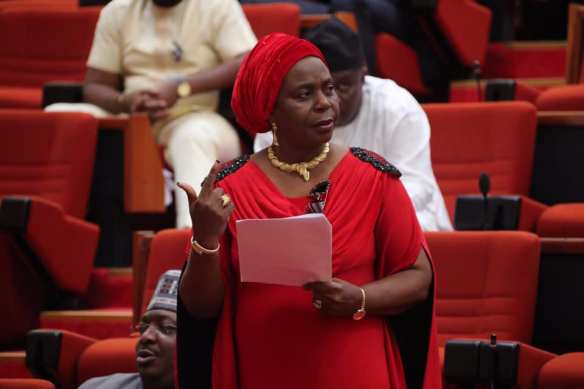
During plenary on Tuesday, Sandy Onor, senator representing Cross River Central Senatorial District asked that the Senate should condemn the spike in rape cases across the country, sighting the cases of a 16-year old Jennifer who was gang raped in Kaduna and Omozuwa.
Seconding the motion, Biodun Olujimi, senator representing Ekiti South Senatorial District, demanded that proactive measures be taken to protect the girl child. “Rape is real and we must not allow it to go on,” she said.
Olujimi’s submission was re-echoed by Akon Etim Eyakenyi, senator representing Akwa Ibom South Senatorial District, who asked that stricter punishment be imposed on abusers.
“It is not just arresting the culprits and taken to the police station, the court and then sentenced to a few years of jail time that is not enough. A severe penalty should be given to such culprits,” she said.
On her part, Betty Apiafi condemned sexual violations, noting that it has become a regular occurrence in the country which requires stronger advocacy and stricter measures for perpetrators.
Meanwhile, the Federal Government has ordered a diligent investigation into the most recent rape cases.
It directed the police to unravel the circumstances surrounding the gang-rape and murder of Omozuwa, in Benin City and the serial sexual abuse of a minor in Jigawa State by 14 men, with a view to bringing the perpetrators to justice.
In a statement issued in Abuja on Tuesday, Lai Mohammed, the Minister of Information and Culture, said that by bringing the perpetrators of the heinous crimes to justice, the Federal Government would be serving a strong notice of its total aversion to gender-based violence in whatever form.
The Minister described the gang-rape and murder of Omozuwa as a cruel and barbaric act that offends human sensibility, in addition to being antithetical to decency, saying no society will tolerate such depravity.
He also said the serial sexual abuse of a minor by 14 men in Jigawa State is not only repulsive but highly condemnable.
”It is said that the true measure of a society can be found in how it treats its most vulnerable members,” Mohammed noted, assuring that the Federal Government will do everything possible to stem the growing tide of gender-based violence in the country.
MUDASHIRU Taiwo and Kehinde, senior secondary school two (SS2) students of the Federal Government Boys College (FGBC), Apo in the Federal Capital Territory are worried about the government’s plan to divide the class into morning and afternoon sessions as a way of implementing social distancing protocol.
The twin brothers are perturbed they would miss having their friends in the same classroom if the government decides to segment classrooms ahead reopening of schools.
“Learning will not be fun any longer,” Kehinde said.
The minister of state for education, Emeka Nwajiuba, said the government is working on a model to ensure physical distancing and sanitation when students resume schools. And the Presidential Task Force, PTF has announced that it will soon release guidelines ahead of school re-opening to mitigate the risk of contracting COVID-19.
But it is unlikely both the minister and the PTF looked closely at the data about school infrastructure and teacher-to-student ratio before they made such pronouncement.
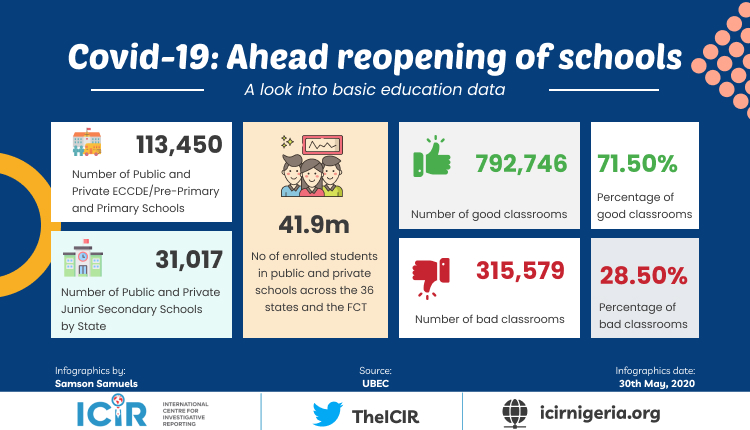
Maintaining social distancing protocol requires some essential school infrastructures to be in place. The Digest of2018 national personnel audit reportspublished by the Universal Basic Education Commission in December 2019 puts the number of public and Private ECCDE/pre-primary, primary, and junior secondary schools at 144,467.
This report gives a comprehensive detail about the basic education sub-sector of the Nigerian education sector. Basic education sub-sector consists of pre-primary, primary, and junior secondary school classes.
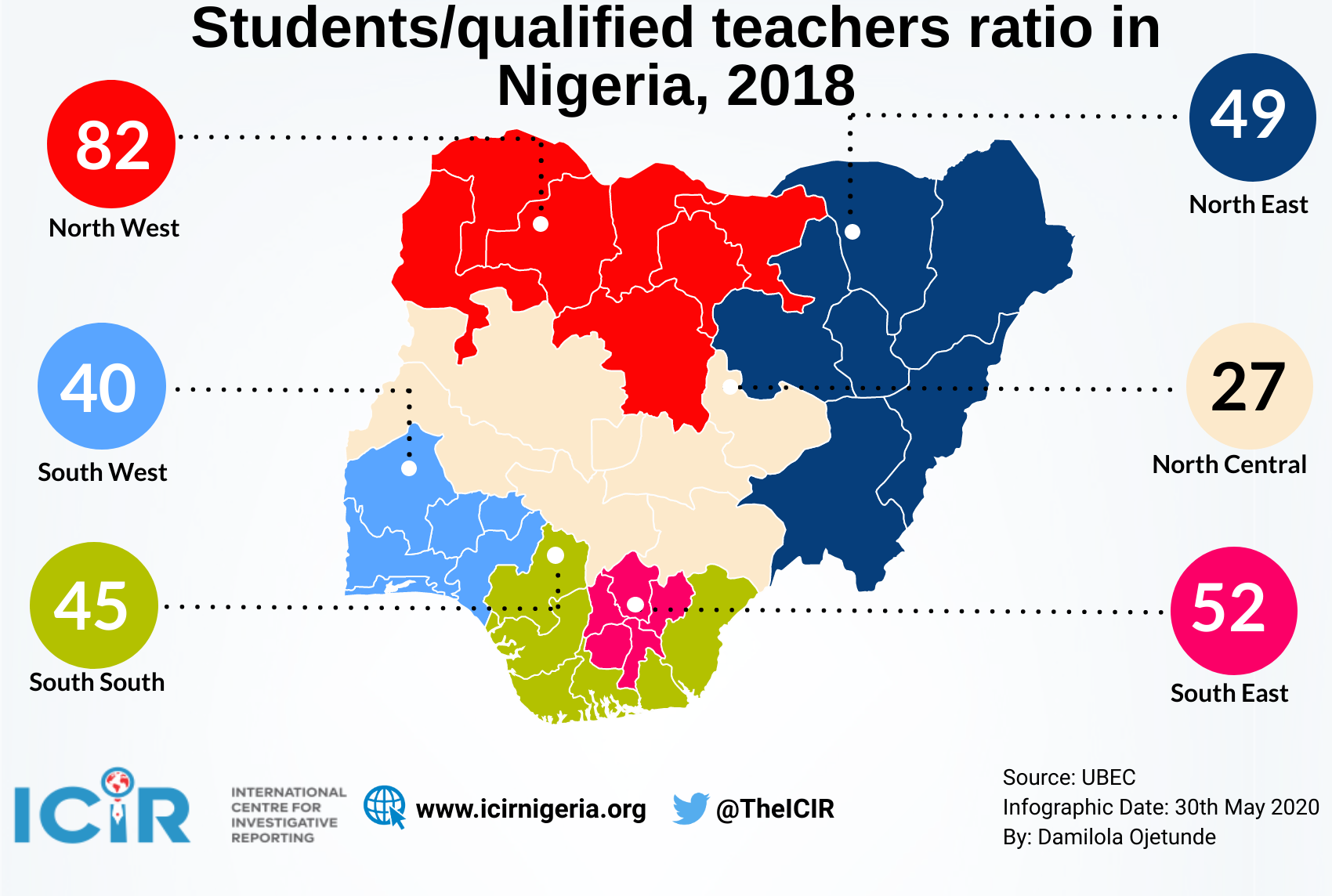
This figure varies across geo-political zones; South West- 40, South-South- 45, South East- 52, North West- 82, North East- 49, and the North Central- 27.
Ahmed, a public school teacher, said his class has up to 60 students, and even if they are divided into two, the social distancing of 2 meters can still not be achieved.
According to UBEC, for the over 40 million students that are currently enrolled in Nigerian public and private primary and junior secondary schools, there are only 1.1 million classrooms to accommodate them. Of the 1.1 million classes, 792,746 are in good condition for learning, representing 71 percent while 315,579, representing 28 percent are in bad condition and inhabitable for learning.
Teachers worry about stress the new guidelines will bring
Implementing guidelines such as observing morning/afternoon shifts needs additional teaching hours, and this may require teachers to work overtime, or the government to recruit more teachers.
“The effects of implementing this guideline is going to weigh primarily on teachers. As a teacher in a private school, this will definitely affect me because it is going to lead to stress considering that, I would be needed to work when I am supposed to be resting,” Emmanuel Adegboyega, a primary school teacher in an Abuja private school said.
Explaining how the new guideline will put more burden on primary school teachers, Adegboyega said he will have to teach pupils the entire subject twice a day, unlike the teachers in secondary school.
Janet, another teacher reiterated the point about the stress that the new guideline will foist on primary school teachers.
“As a teacher, the passion and energy I will put in for the morning classes can never be the same with the afternoon classes, because definitely I will be tired or stressed out so my efficiency might be reduced,” she said
Precious Clerkson, another school teacher suggested that the sessions can be divided by year of class.
“The only way I feel this can be done in schools without a change in salary and stress on the teachers is that the session should be divided by class. For instance, pupils in kindergarten to primary one can have their sessions in the morning, while primary two to six in the afternoon.
“For students in private secondary schools, junior classes can have their classes in the morning, while senior classes in the afternoon. By these all teachers will not be present in the morning and afternoon,” Clerkson said.
A private school coordinator who pleaded anonymity told The ICIR what her school will do will depend on the government’s final decision.
“If the government leaves it to us, looking at the peculiarities of our school, we can say those in primary one to three come in the morning and those in grades four to six in the afternoon. This will also reduce teachers having to teach two sets of classes in a day,” she said.
She added that the proposed guideline will affect the standard of teaching. While the teachers struggle to cover the scheme of work during the normal school hour, this new guideline would pose another difficulty for them to cover a substantial part of the scheme, she said.
Students in JSS3 and SS3 will resume first, says Ministry of Education
In a phone chat with Ben Gong, Director of Press at the federal ministry of Education, Gong told The ICIR that students in junior secondary school three and senior secondary school three will resume school first after which other classes can resume.
“You know JSS 3 and SS 3 students were about writing their exams before the lockdown. If the government finally considers segmenting classes into morning and afternoon sessions, they will be asked to resume first…you know two or three weeks of revision before they write their exams,” Gong explained.
He also said all the preventive measures and all health protocols as laid by the PTF would be enforced when schools re-open.
“Students will be asked to compulsorily come to school with their facemask, washing of hands will also be enforced…just the way it was during Ebola, you know.”
When asked about the un-accessed matching grants at the UBEC, Gong said they will always encourage state governments to access the UBEC intervention.
“UBEC intervention fund is for the states. The state governments are the ones that access the fund, but you know with the dwindling income for states due to the COVID-19 pandemic, that may be difficult now. We will always encourage them,” he told The ICIR.
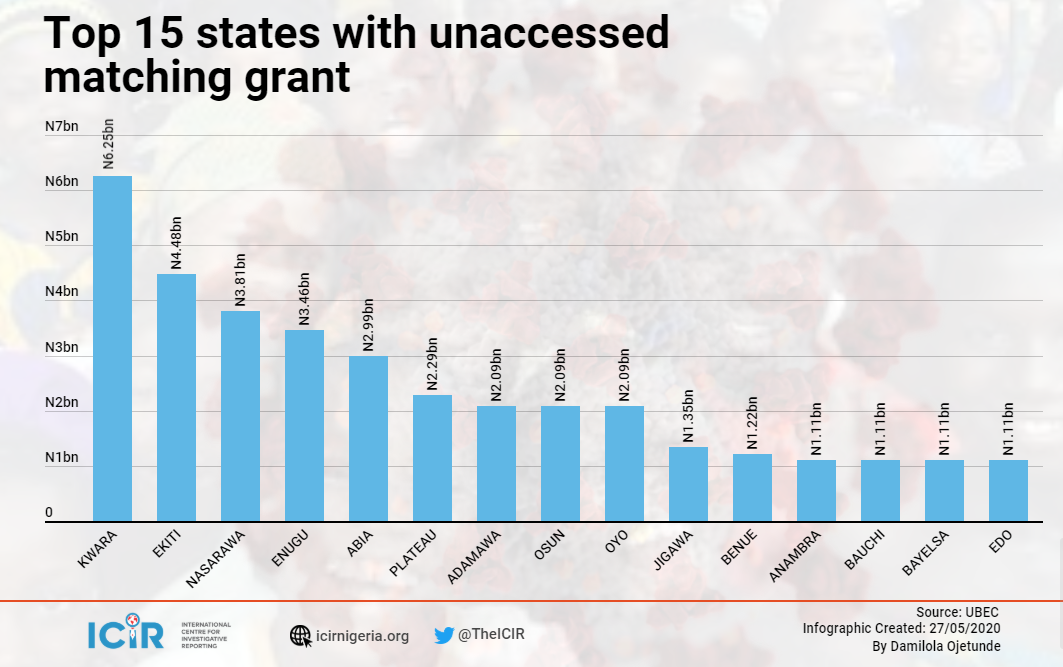
Top 15 states with un-accessed matching grant
Matching grants data from UBEC shows that as of July 2019, the 36 states and the FCT are yet to access about N51.6 billion matching grant from UBEC.
This grant constitutes 50 percent of the gross revenue realised by UBEC in a preceding year meant to be disbursed to states in accordance with a sharing formula approved by the Federal Executive Council. State governments are expected to provide an equal amount of money as counterpart funds to be able to access the funds.
Despite this, Nigeria is faced with pathetic learning facilities across all states. For instance, N18.14 billion was un-accessed by 18 states in 2018. These states include Abia, Adamawa, Akwa Ibom, Anambra, Bauchi, Bayelsa, Benue, and Edo.
Other states include Ekiti, Enugu, Jigawa, Kwara, Nasarawa, Niger, Ogun, Osun, Oyo, Plateau, and Zamfara.
In 2019, no state including the FCT accessed the grant of about N22.72 billion. Each state and the FCT were to access the sum of N614 million.
Considering the wide gaps between the numbers of classrooms and teachers needed to the number of school children, Taiwo wonders how the government intends to enforce the social distancing protocol in school.
“In our school hostel, we are very many. And students sometimes share sleeping spaces,” he said.
THE Christian Association of Nigeria (CAN) says it will await approved worship guidelines from the respective state governments in order to comply with the re-opening of places of worship approved by President Muhammadu Buhari on Monday.
“I believe position of the government is that the state should be able to handle it in collaboration with religious leaders,” Bayo Oladeji, spokesperson to Samson Ayokunle, CAN president told The ICIR in a telephone interview.
Oladeji stated since the Federal Government had given states the liberty to implement appropriate public gathering procedures in line with the existing Nigeria Centre for Disease Control (NCDC) guidelines, CAN would work with the authorities to comply with the 20 persons public gathering restriction.
“When each state government provides the guidelines for worship, we will examine them critically and then respond appropriately,” he said.
He emphasised that CAN has directed member churches to observe all preventive measures each time they converge.
Boss Mustapha, Chairman of the Presidential Task Force (PTF) on the Coronavirus Disease (COVID-19) had on Monday announced that the president had approved the lifting of ban on places worship.
“The PTF submitted its recommendations and the PRESIDENT has approved the following for implementation over the next four weeks spanning 2nd – 29th June, 2020, subject to review,” he said.
“Mobilisation of all resources at State and Local Government levels to create public awareness on COVID 19 and improve compliance with non-pharmaceutical interventions within communities; sustenance of key non-pharmaceutical interventions that would apply nationwide and include: ban of gatherings of more than 20 people outside of a workplace;
“Relaxation of restriction on places of Worship based on guidelines issued by the PTF and protocols agreed by state governments.”
Before the announcement, both Nigeria Supreme Council for Islamic Affairs (NSCIA) and CAN had made presentations to PTF on the re-opening of places of worship.
Yusuf Nwoha, NSCIA Director of Administration was contacted for comment on the approval given by the president to re-open places of worship. He only replied ‘ok’ to the message sent to him. Ibrahim Aselemi, the Council’s Media Officer was also contacted but his line was switched off as of the time of filing this report.
DESPITE a downward budget review that affected the allocations to education and health ministries, the Presidential Amnesty Program PAP, has retained its initial ₦65 billion budgetary appropriations for 2020. This is nearly the same amount allocated to the Niger Delta Development Commission(NDDC) and the North East Development Commission (NEDC) which received the allocation of ₦44.2 billion and ₦20.94 billion respectively.
Against the background that allocations to critical development items such as education and health have been reviewed downward, this provision has raised concern. A recent DATAPHYTE report revealed about 55 percent downward adjustment of the statutory transfer to Universal Basic Education. Also, Basic Health Care Fund was downsized by over 42 percent of the initial budgetary allocation.
In the same vein that the reduction of capital allocation to health and education is raising concerns among citizens and stakeholders, retained allocation to the Amnesty Programme has raised questions. As a reminder, the Presidential Amnesty Programme was initiated in 2009 to resolve the agitations and militancy in the Niger-Delta. The militancy reform program, which has operated for over ten years, had about 20,000 repentant militants as participants at its start.
Allocation to Amnesty Programme Almost the Combined Allocation to NDDC and NEDC
A DATAPHYTE analysis in March revealed that monthly stipends to ex-militants amounted to about ₦1.3 billion monthly. Over the span of years, not less than ₦150 billion must have been spent on monthly stipends for ex-militants alone. This is exclusive of other costs including administrative costs as well as the cost of vocational training. Between 2009 and 2011, a gross budgetary allocation of ₦127 billion was allocated to the amnesty initiative.
Despite the huge investment, opinions suggest that the scheme has not necessarily addressed the root causes of the crises in the Niger-Delta. Also, the Amnesty Programme has received numerous petitions and allegations of corruption and systemic gaps in the program structure have allowed for abuse of processes. Further, there are views that after ten years of presidential support, PAP have served its time and should be overhauled.
As at the time of this publication, even the website account of the organisation has been suspended.
Beyond the inefficiencies in PAP, the revised budget revealed that the gross budgetary provision for PAP is a tiny fraction less than combined provision for the infrastructure needs of both the Niger-Delta and the North East regions. While a budgetary provision of ₦65 billion has been earmarked to PAP, the Niger Development commission is to receive ₦44.2 billion. Also, only ₦20.94 billion has been allocated to the North East Development Commission. In total, only ₦65.15 billion has been allocated for the development needs of the 15 states under the purview of these two development agencies.
The fiscal rational to prioritize the rehabilitated militants over the infrastructure needs as well as the education and health needs of Nigerians is disturbing. From the revised budget, it appears that vulnerable and underserved Nigerians will continue to be robbed just to pay militants. With the realities, it may appear that violence and militancy are indeed highly profitable in Nigeria.
Above all, the retained ₦65 billion budgetary provision for the Presidential Amnesty Programme raises questions on the importance of the program. Perhaps it is time for the government to explain why the amnesty program rates above citizen’s need for education and health. Also important is the need for the government to explain why militant’s payment is more priority than the infrastructure needs of over 15 states. It should also explain why the Presidential Amnesty Program remains untouched in the budget revision. There is also the need for the government to provide clarification on the state of accountability in the Presidential Amnesty Program.
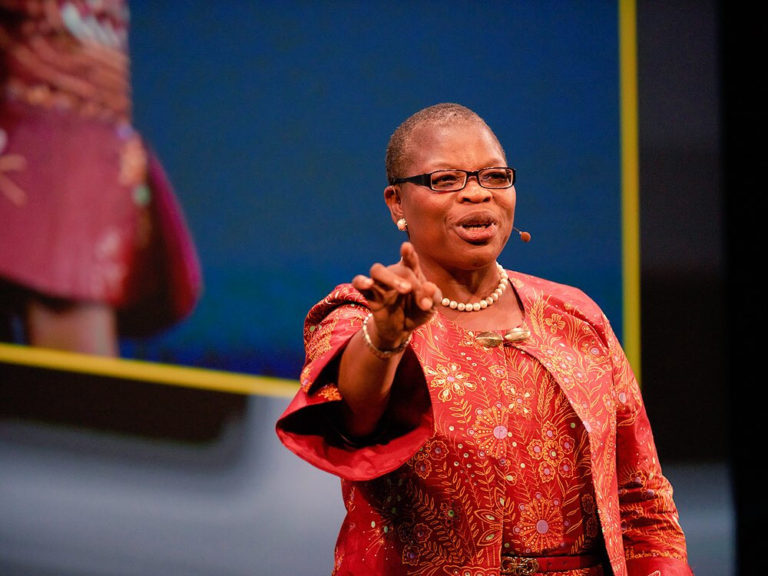
OBY Ezekwesili, a former Minister of Education, says the culture of impunity embedded in the affairs of Nigeria has aided and normalized sexual violence against women where perpetrators go unpunished.
Ezekwesili stated this on her Twitter page while reacting to the death of Uwaila Omozuwa, a 22-year-old Microbiology student of University of Benin who was raped and murdered in the building of a Redeemed Christian Church of God (RCCG) in Benin City, Edo State on May 27.
She said the police should optimize the cooperation of RCCG for a rapid investigation and conclusive prosecution of the savages that brutally violated and ended the life of an outstanding young woman.
“This case must not derail into the usual cold trail of many others, Mr. IG,” Ezekwesili’s tweet read.
In reaction to the rape and murder of Omozuwa, Ezekwesili, who reached out to the parents of the late student expressed sympathy and charged the police to carry out a rapid investigation and bring those responsible to book.
She added that it “should worry our Governments at all levels — State Governors especially— that our young daughters and women in general increasingly feel unsafe because of the culture of impunity that has normalized sexual violence.”
“Change this now. Lead for conclusive actions on all cases.”
Like Ezekwesili, many Nigerians have taken to various social media platforms to demand justice for Omozuwa.
In a Twitter post, Bukola Saraki, former Senate President, expressed shock over the incident that led to the death of Omozuwa.
Saraki urged the police to do the needful in ensuring that justice is served advising that such abuse of girls and women should not be condoned as it has no place in the Nigerian society.
“As a people, we have to work to create safe spaces for our girls and women – in our homes, at work and in our places of worship – free from any and all sorts of sexual violation. And I say this not just because I’m a #girldad but because it is the right thing to do,” he said.
Meanwhile, Muhammed Adamu, the Inspector-General of Police, has assured that the killers of Omozuwa, would be brought to book.
The ICIR earlier reported that Frank Mba, the Police Public Relations Officer, quoted the IGP as saying that the police would unravel the circumstances surrounding the brutal attack and unfortunate death of Omozuwa,
Meanwhile, a press statement released by RCCG and signed by Olaitan Olubiyi, a pastor in the church, disclosed that Omozuwa had secured the keys to the church building, where she used for her study time.
Olubiyi explained that the security guard of the church arrived at his duty post around 7pm, and found Omozuwa half naked on the floor, in a pool of her blood.
It was gathered that she was rushed to the University of Benin Teaching Hospital (UBTH), where she eventually died.
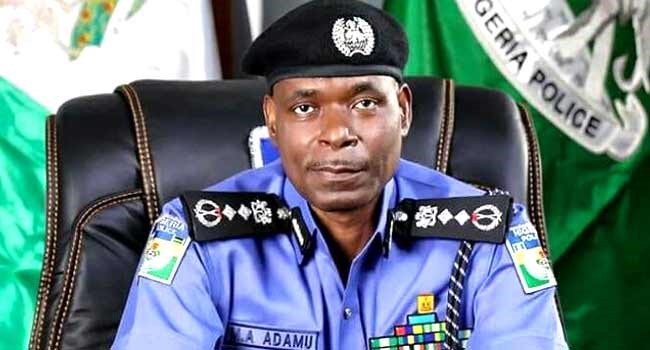
MUHAMMED Adamu, the Inspector-General of Police, says killers of Uwaila Omozuwa, a 100-level student of the University of Benin, who was raped and murdered over on Saturday May 27 will be brought to book.
Adamu said he has deployed forensic support to the Edo State Police Command to complement and quicken actions in the ongoing investigation into the crime.
In a statement on Monday by the Police Public Relations Officer, Frank Mba, shared through the police official Twitter handle, the IGP said the police would unravel the circumstances surrounding the brutal attack and unfortunate death of Omosuwa.
Omozuwa was raped and murdered by some unknown persons when she went to read at the Redeemed Christian Church of God (RCCG), Miracle Sanctuary Mega Parish, Edo Province 10, in Benin City on May 27.
The IGP, while condemning the attack, commiserated with the family, friends and colleagues of the deceased.
He called for calm and assures that the Force will surely bring the perpetrators of the callous act to book in the shortest possible time.
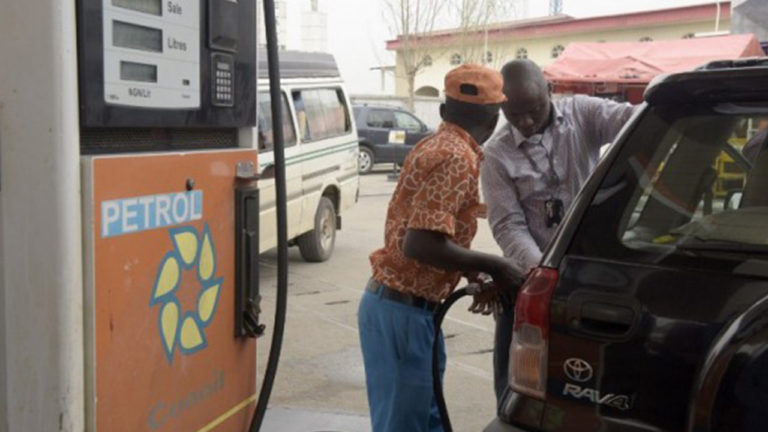
FOR the third time in three months, the Petroleum Products Pricing Regulatory Agency (PPPRA) on Monday announced a new pump price band of N121.50 to N123.50 per litre of Premium Motor Spirit, (PMS) also known as petrol.
The PPPRA disclosed this in a memo where petroleum marketers across the country were directed to comply with the new pump price band of N121.50 to N123.50 per litre.
In the wake of the outbreak of COVID-19 which affected prices of crude oil at the global markets, the agency announced a reduction in the pump price of PMS from N145 per litre to N125 and stated that the retail price of petrol would be adjusted monthly to reflect current realities in the global crude oil market.
“Please recall the recently approved pricing regime which became effective March 19, 2020, and the provision for the establishment of a monthly price band within which petroleum marketers are expected to sell PMS at the retail stations.
“After a review of prevailing market fundamentals in the month of May and considering marketers realistic operating costs as much as practicable, we wish to advise of a new PMS guiding pump price with a corresponding ex-depot price for the month of June 2020, as follows; price band N121.50 – N123.50 per litre,” the PPPRA said in the memo.
In March, the Federal Government announced its first review of the petrol pump price per litre for the year from N145 to N125 per litre.
On April 1, the PPPRA, through , Abdulkadir Saidu, its Executive Secretary had announced that all retail petrol outlets should start selling at the new pump price of N123.50k and N125 per litre of petrol.
Oil retailers were to choose between two price bands of N121.50k and N1253.50k at which they were supposed to sell to their customers.
The price review was orchestrated by a drop in crude oil prices due to the spread of coronavirus as the landing cost of petrol hit a record low in March, while the petrol subsidy was temporarily removed.
“Ex-Depot price N102.13 – N104.13 per litre. Ex-Depot for collection N109.78 – N111.78 per litre. All marketers are advised to operate within the indicative prices as advised by the PPPRA,” a section of the memo reads.
Though there has been a glut in the global crude supply, Nigeria heaved a sigh of relief last week when Indian oil firms took in about 6 million barrels of Nigerian crude oil stock after awarding a tender to Total for Akpo crude.
With 50 unsold cargoes of Nigerian crude seeking buyers for June and July consignment, its European demand is largely non-existent and the pump price of petrol is likely to be affected in the coming weeks according to a report.