Home Blog Page 2098

International Fact-Checking Network launches $1m grant program to support Fact-Checkers

THE Poynter Institute for Media Studies is receiving  applications for its newest grant program.

With the support of YouTube via the Google News Initiative, the The International Fact-Checking Network (IFCN), has $1 million in grant funding available for established fact-checking units that are pursuing projects around video production, tools development, audience building, and new formats testing.

The eligibility of the application is based on Fact-checking organizations that are verified signatories of the IFCN’s Code of Principles and/or organizations that have been regularly publishing nonpartisan fact checks over the last three months.

All applicants will be first evaluated by their eligibility and then judged by an independent selection committee.

In addition to grant funding, accepted applicants will get exposure at Global Fact 8 in June 2021.

Fact-checking units may submit only one application for up to $50,000.

Applications close June 17, 2020, and the IFCN will announce recipients August 4, 2020.

For more information and how to apply here, click here

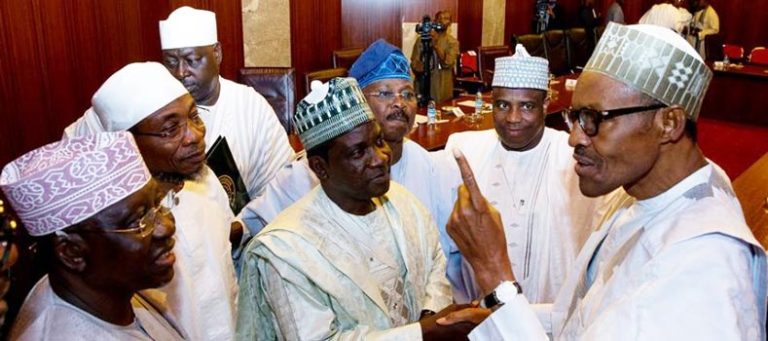
Democracy Day: Buhari fights corruption, though surrounds himself with dodgy politicians, says CDD

THE Centre for Democracy and Development (CDD) has scored President Muhammadu Buhari low in the fight against corruption, despite his campaign promise of change.

According to CDD, many Nigerians had high hopes that President Buhari would work tirelessly to disrupt the country’s kleptocratic status quo, but he has nevertheless fallen short of his promise to “demonstrate zero tolerance for corrupt practices.”

The report titled, “Assessment of President Buhari’s Corruption Fight in the last 5 Years”, was presented by the CDD executive director, Idayat Hassan at a press conference organized via Zoom on Friday, May 29 between 12 noon and 1 pm.

The report underscores both the shortcomings and achievements of the Buhari administration in the last five years. The president assumed office on May 29, 2015.

For the shortcoming, the pro-democracy think-tank criticised some of the Buhari appointments, which it described as “questionable”.

According to CDD, several members of the Buhari cabinet in the second term were former governors accused of corruption and officials with close ties to former head of state, late Sani Abacha.

The report also condemned the Buhari government for reinstating a top pension official even though he was facing prosecution by the EFCC on corruption charges.

The president also dithered in suspending the former Secretary to the Government of the Federation, David Babachir Lawal from office, despite indictment by the Senate over alleged breaches in the handling of contracts awarded by the Presidential Initiative for the North East.

The failure to timely suspend erring appointees pending investigations have been replicated in several instances, the report stated.

CDD also condemned the president of turning blind eye to political corruption, and frolicking with corrupt politicians especially during the 2019 campaign ahead of the general elections.

“The President has asked a few questions about how the APC funds itself, even though it is common knowledge that candidates depend on stolen public funds provided by political godfathers to fuel election campaigns.”

As minister of petroleum, President Buhari has failed to achieve reform in the sector despite his pledge, the CDD noted. Citing the example of the NNPC, the Centre blamed the president for sustaining a corrupt system at NNPC that has enriched briefcase companies than his predecessors.

Though Buhari has condemned the sleaze in the security sector under the former President Goodluck Jonathan, his own administration has also failed to rein in security votes—opaque slush funds that remain one of the most glaring examples of security sector corruption in Nigeria.

In fact, a report by Transparency International published in May 2018 shows that the amount earmarked for security votes in the federal budget has increased during Buhari’s tenure from N9.3 billion ($46.2 million in total) to N18.4 billion ($51 million in total) in 2018.

The Centre also criticised some of the economic policies of Buhari, especially the border policy which did a little to deter smugglers, yet trigger bribery and corruption at border posts.

Hassan during her presentation wondered why a government that promised so much transparency could become notorious for declining Fiscal Transparency.

Hear words: “Under President Buhari, the Central Bank of Nigeria has become less transparent and more vulnerable to political influence on fiscal and monetary policy. The bank’s oversight role has diminished and the relationship between it and the nation’s commercial banks has become too cozy. Since 2015, sales of discounted foreign exchange to privileged recipients have become more opaque than ever before. In December 2017, the government announced the withdrawal of $1 billion from the Excess Crude Account—nearly half of Nigeria’s now nearly-empty rainy day fund—for ad hoc security expenditures. The government has yet to reveal exactly how this money was spent, suggesting that it was likely used to energise ruling party political structures ahead of the 2019 general election.”

Notwithstanding, the Buhari administration also got some commendations from CDD, especially for its consistent anti-corruption messaging and for its effort to Improve financial centralisation.

Examples are the Treasury Single Account policy that allows for government transaction through a single account, and the Integrated Payroll and Personnel Information System (IPPIS) that helps prevent payment to ghost or absentee workers.

The CDD also praised the government of Buhari for strong anti-corruption appointments such as that of the EFCC Chairman, Ibrahim Magu, ICPC Chairman Bolaji Owasanoye and the Executive Secretary of Nigeria Extractive Industries Transparency Initiative (NEITI), Waziri Adio.

The Centre’s director, in fact, rated Buhari higher for recording more corruption conviction than any of his predecessors, though she noted that over half of these convictions were from cybercrime prosecutions.

In the area of asset recovery, Buhari also got a pass mark.

“The government has increasingly used innovative legal tools to seize suspected proceeds of corruption from former officials who would be difficult and time-consuming to convict,” Hassan said.

The presidency though is yet to respond to the CDD’s report, but Garba Shehu, the president’s spokesperson  has tweeted earlier that the last five years (of Buhari administration) have been full of historic achievements.

“Please go to the Presidential handles and read how the decades-long wishes of the Nigerian people are being met,” he posted.

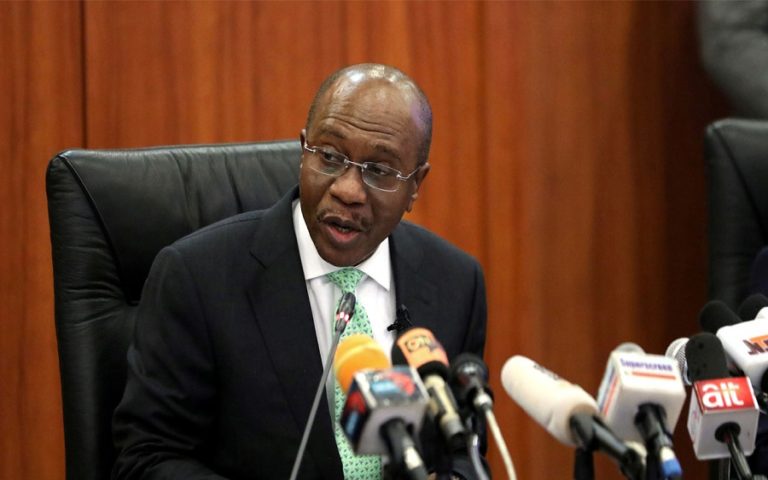
COVID-19: CBN introduces regulatory forbearance for financial institutions

THE Central Bank of Nigeria (CBN) says it has approved a regulatory forbearance for the restructuring of credit facilities in the Other Financial Institutions (OFI) in order to further mitigate the impact of the COVID-19 pandemic on households, businesses and regulated institutions.

According to a circular by the apex bank to all Other Financial Institutions,dated May 27 sighted by The ICIR, the CBN intervention facilities availed through participating OFIs are granted a further one-year moratorium on all principal repayment effective from March 1, 2020.

The circular was signed by Kevin Amugo, Director, Financial Policy and Regulation Department.

Also, interest rates on the CBN intervention facility through participating financial institutions is reduced from 9 per cent to 5 per cent per annum effective March 1, 2020.

The apex bank said other financial institutions are granted leave to consider temporary and time-limited restructuring of the tenure and loan terms of households and businesses affected by the pandemic.

According to the apex bank, developments would be monitored and implementation of appropriate measures to safeguard financial stability and support stakeholders impacted by  COVID-19 pandemic.

It would be recalled that the CBN in March announced six initial policy measures to contain the impacts of COVID-19 on the Nigerian economy.

Notorious Boko Haram fighter who was part of Metele attack surrenders to Nigerian troops


ADAMU Yahaya,  a prominent Boko Haram fighter, who has taken part in major attacks against troops of the Nigerian Army in the North East has surrendered himself to the troops, John Enenche, the Coordinator of Defence Media Operations at the Defence Headquarters said.

According to Enenche, a Major General, Yahaya who is also known as Saad Karami led the last attack on Nigerian Army troops in Baga town and also participated in attacks on Metele, Mairari, Bindiram, Kangarwa and Shetimari (Niger Republic).

The Coordinator of Defence Media Operations said the Boko Haram warlord voluntarily surrendered to troops of 242 Battalion in Monguno.

“This was as a result of the aggressive posture of the troops and artillery bombardments of terrorists’ suspected locations around the general area,” Enenche said.

It could be recalled that in November 2018, Boko Haram fighters killed over 70 Soldiers of 157 Task Force Battalion in a single attack in Metele, Guzamala Local Government Area, at about 6:00 p.m.

Large cache of arms, ammunition, and military equipment were carted away by the terrorists during the attack on 157 Task Force Battalion in Metele.

Meanwhile, troops of Army Super Camp 11 Gambouru under Sector 1 of Operation Lafiya Dole, May 24 at Mudu Town in Borno State neutralised 12 Boko Haram terrorists, Enenche said.

He added that troops also rescued 241 persons in captivity of the terrorists comprising 105 women and 136 children.

Items recovered, according to him were four Boko Haram terrorists’ flags, a motorcycle, two bicycles, an amplifier and two sewing machines.


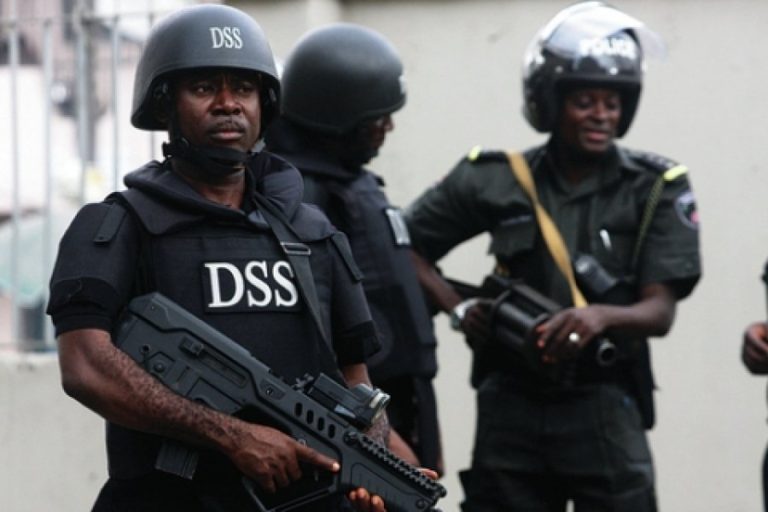
SSS illegally detains victim for 14 months without trial, allegedly defies AGF’s order

FOR nearly 14 months, the State Security Service allegedly detained citizen Austin Ighodaro, illegally without recourse for the due judicial process.

Ighodaro’s wife, Mrs Helen Ighodaro told The ICIR that her husband was wrongly accused of committing an offence contrary to the Anti-Money Laundering Act.

But all through last year, and almost end the first quarter of 2020, Ighodaro, according to his wife, was neither transferred to the Special Control Unit Against Money Laundry (SCUML) for further investigation and prosecution nor to the Economic and Financial Crimes Commission (EFCC) – the statutory governmental body responsible for investigating financial corruption in Nigeria.

Rather he was kept in detention and allegedly tortured without a chance for trial.

Torture of detainees by law enforcement agents is a clear violation of Section 36 of the Constitution which guarantees an individual’s right to a fair hearing, as spelt out by the Administration of Criminal Justice Act (ACJA) signed into law in 2015.

The 2017 Anti-torture Act also forbids security forces from obtaining information by force.

Not only that, the suspect was also denied the right to celebrate the birth of his daughter – Eloghosa Esther Ighodaro, who was delivered on 6th February 2019, the wife told The ICIR.

He was only privileged to see the baby three weeks after she was brought to him while in detention.

Lawyers, however, have argued that no section of the Nigerian constitution permits the State Security Service to arrest and detain suspects on issues that exclude internal national security matters, as detailed in the National Security Acts 1986.

How it began

Ighodaro wife who visited The ICIR‘s office in February narrated how her husband’s ordeal began.

Last year, on Wednesday 30th January, Ighodaro, the Executive Director of Universal Agricultural Empowerment and Development Initiative (UNAEDI) was reportedly arrested by the SSS operatives for a reason yet unknown as of the time of his arrest.

Though he has a pending case before the EFCC for allegedly defrauding investors to the tune of $328,974.37, the incident occurred between March and November 2015 but he was granted N10 million bail.

He had visited Liberia and just returned to the country, lodged at White House Hotel, Ikeja in Lagos when the SSS operatives stormed his hotel room.

In the usual brigandage approach of the secrete service, no warrant of arrest was presented or issued, before the accused was detained, according to court documents.

At a point, the accused mistook the operatives for kidnappers. “…they abducted him, handcuffed, leg-cuffed and blindfolded him…,” an amended affidavit in support of a court Suit N0: FHC/ABJ/CS/1153/2019 read.

Ighodaro was eventually taken to the SSS State Command at Benin City, Edo State.

But while in Benin, his wife explained to The ICIR that the accused was driven around parts of the city to identify his supposed properties, since he is an indigene of the state. While this was ongoing, he was reportedly handcuffed.

Mrs. Ighodaro said the SSS assumed her husband had spent the alleged looted money on fixed assets such as landed properties, but he was eventually returned back to detention after the operatives reportedly found nothing against him.

However, on Tuesday, 5th February, 2019 Ighodaro was transferred to Abuja where he was purportedly detained until his wife sought legal action against the continuous abuse of her husband’s basic human rights.

Incidentally, Ighodaro’s case in the hands of the SSS is not peculiar. Omoyele Sowore, Publisher of Sahara Reporters was abducted in the same manner among other persons that have reportedly suffered undue arrest in a Gestapo style and prosecuted, yet the operatives, the court document says refused to honour the judge’s verdict after repeated judgements.

Alleged N1.7 billion fraud – Is Ighodaro really guilty?

After several days of suspected torture, Ighodaro eventually got to know his offence. He was accused of being a member of a ‘cabal’ that allegedly ‘attacked’ Sterling Bank and carted away huge sum to the tune of about N1.7 billion.

Ighodaro said he was shocked when he heard about the allegation, according to court document prepared by his lawyer.

But before he could utter a word of defence, Ighodalo claimed he got kicked in the mouth and was beaten while in handcuffs.

Meanwhile, prior to his arrest, in December 2018, a man identified as Osa-Tare Imaziqueze had walked into his NGO’s office located at the NCWS Complex, Garki in Abuja. The man claimed to be a humanitarian from Germany and was much interested in UNAEDI’s activities, particularly as it supports the Internally Displaced Persons (IDPs) in Benue and North-Eastern part of the country.

As a result, Imaziqueze promised to make ‘huge donation’ in support of the NGO.

Shortly after, Ighodaro’s NGO received N60 million donations into its Stanbic IBTC Bank Account No: 0016798848. The payment came from a Sterling Bank account.

“Somebody walked into his office in area 11 that he likes the work they are doing and he will like to donate to them. So he responded that they run an NGO and they are open to donations,” Mrs Ighodaro said in an interview with The ICIR.

“A week later, N60 million was donated but after a while, the same person returned to the office, pleaded they should not be angry and asked if it was possible to give him back part of the money. So he responded that NGOs don’t do that.”

“The man responded there was no problem and he left,” she added.

According to her, the accused was allegedly unaware that the transferred sum was fraud proceed meant for her husband to withdraw and pay part in return to the false philanthropist.

Moreover, she said the bank fraud involved a woman, who was later arrested by the secret agents but exonerated her husband. According to her, the unidentified woman reportedly cloned a particular account, withdrew the money and deposited the sums in tranches into different accounts including that of the NGO.

“Like my husband, they paid N60 million, another person got N100 million and so on…,” she added. “Even the lady in their custody told them (SSS) that she has never met my husband before but she was the one who credited his (NGO’s) account.”

But, prior to the findings and arrests, the NGO had withdrawn N59,919,43.00, and reportedly spent it on humanitarian projects at the Kutara IDP Camp, Nasarawa State and an Talitha Cumi Orhanage Home, Nyanya, Abuja.

“…to enable UNAEDI to finance its intervention programmes that took its staff and other support services to Kutara IDP Camp in Nasarawa State on 31st December, 2018, where it donated relief materials and also undertook to pay 1-year salary arrears of teachers,” the court document revealed.

“On the 1st January, 2019, UNAEDI visited Talitha Cumi Orphanage home in Nyanya, Abuja and Treasure Orphanage Foundation in Karu, Nasarawa State and donated relief materials and sums of money.”

It is, however, uncertain if Ighodaro’s NGO was registered with SCUML but his wife claimed he has all necessary documents which formalises the NGO.

DSS refused to honour court order to pay N500m damages

In the course of filing this report, The ICIR gathered that the SSS prosecution officer handling the case had reportedly recommended to the DG SSS, severally the need for Ighodaro’s release on bail, based on legal provisions and the previous judgement.

The accused was earlier granted bail on 3rd May, 2019 in suit N0: MHC/ABJ/CS/279/2019 but still dishonoured.

“A declaration that the arrest, continuous detention and refusal of access to lawyers and family members of the applicant since Wednesday, January 30, 2019, without charging him to a court of competent jurisdiction or releasing him either unconditionally or on bail is unlawful, unconstitutional, and amounts to a violation of the applicant’s right to personal liberty, fair hearing and freedom of movement as enshrined in sections 35, 36, and 41 of the 1999 constitution (As amended.)” the judgement by Justice N.E Maha, the presiding judge read.

But recommendations from the SSS lawyer repeatedly failed. The court ruling that ordered the SSS to pay N500 million as damages to the victim for, ‘unlawful arrest, detention, humiliation and psychological trauma occasioned by the illegal acts of the respondent,’ was also said to be discarded.

“There was a time they even gave him an administrative bail, they called us to come but before we got to the entrance of the SSS Headquarters, they said no, we should go back,” Mrs Ighodaro noted.

However, a different suit was filed against the SSS for refusing to honour earlier judgement made by the lower court. But, when the SSS lawyer appeared in court, he reportedly lied that the accused was already released.

“At first they said he has been released. When we got to the court, the SSS lawyer came and said they have released him to EFCC. We were happy. So, that same day, they called that I should come and file a discontinuous of the court case against them. Immediately I got there, I was shocked to still see my husband in their custody.

“So it was a deception.”

DSS allegedly disobeyed Attorney General’s office

Again, the SSS raised a caveat insisting that the accused would only be released if Mrs Ighodaro retrieves the fresh suit against it from the court.

Meanwhile, the Office of the Attorney-General of the Federation, it was gathered had earlier written to the SSS instructing it to refer the case to the EFCC but as at 10th March, the directive has not been honoured.

The Investigative Police Office (IPO) in charge of the case and the Director of Operations also agreed based on intelligent information that the case was outside the jurisdiction of the secret agents.

Moreover, the Bureau de Change who was allegedly involved in the allegation was the first to be arrested by the DSS. But he was reportedly released three months after his arrest when the DSS reportedly realised the said Alhaji was diabetic and HIV positive.

“The man had so many sicknesses, so they had to release him,” the source added.

However, after the long illegal detention, on 11th March, the DSS finally handed Ighodaro over to the EFCC for prosecution. This is more than a year after he was being held unduly. He is currently under EFCC supervision.

“They took him to EFCC last week Wednesday, he was moved to Lagos Tuesday morning….so the investigation is ongoing in Lagos. I’m just leaving his place. They will charge him to court next week,” his wife later told The ICIR.

What the law says and experts opinion

Does the SSS have right to wade into affairs outside national security? Do they have the mandate to investigate civil matters? Does the constitution empower the SSS to detain accused persons? These among others are questions begging for answers on the case.

But, Abdul Mahmud, a lawyer in his reaction said beyond the ACJA, it is illegal and unconstitutional for the SSS to arrest the accused person or anyone alleged to have committed financial crime, so far it away from national security matters.

He said it is only the EFCC and Police that has the power to arrest offenders but this should also be done within provisions of the law such that no accused person should be detained beyond 48 hours, and at most 72 hours.

“Two schools of thoughts have emerged on the limit of power the SSS can exercise. I belong to that school that the power it has was gifted to it by the National Security Acts 1986 which specifically empowered it to prevent and detect, protect and preserve all military non-classified matters on the internal security of Nigeria, and other power assigned to it by the National Assembly and the President,”

“The law does not specifically mention arrest. The crime is not a national security issue but a financial offence.”

“For the situation on ground, it is only EFCC and the Police that can arrest, detain and even try this individual. There is even a more fundamental constitutional issue involved by section (3) (3) 34, 36 of the constitution.

“It talks about the length of time a citizen can be detained by a detaining agency. No more than 24 hours or at worse 72 hours. But this guy has been detained for over a year without bringing him up for trial. So what the DSS is doing is in flagrant violation of section 36 of the constitution. That’s why I said forget ACJA, the constitution is superior to ACJA.”

Also, according to ACJA which also promotes effective management of criminal justice institutions.

“A suspect arrested for an offence which a magistrate court has no jurisdiction to try shall, within a reasonable time of arrest, be brought before a magistrate court for remand,” Section 293 of the Act says.

A lawyer who spoke on the condition of anonymity simply described the accused person’s detention as illegal, citing section 36 of the Nigerian constitution.

“The answer to your question is that it is illegal and this can be found in the constitution,” she said citing Section 36. She added that ‘it is basically not legal’.   

Barrister Inihebe Effiong, human rights lawyer also shared a similar view as above. He described the action of the SSS as outrightly illegal, as the right to personal liberty is guaranteed under the constitution.

“By virtue of that, nobody in Nigeria irrespective of the reason for the arrest should be detained by any security agency or authority of persons beyond 24 hours. So, if the SSS is convinced that the person committed a criminal offence, the only option available under section 35 of the constitution is to arraign the person,” Effiong said.

“If they say the crime is so grievous and because of that they can not arraign the person to court, it means that from the beginning, they don’t have a case with the person, so what they have is illegal. And if there is a court order, and the order has not been honoured, that has gone beyond the issue of illegal detention. that has gone to clear lawlessness and impunity.”

The lawyer noted that action by the DSS could also be labelled as contempt of court for refusing court order.

“They don’t have any power outside the national security agency Act which is the enabling law that establishes the agency. They don’t have any power under any law in Nigeria to detain anyone beyond 24 hours.”

DSS silent over matter

Peter Afunanya, the DSS Spokesperson was contacted via phone but he terminated the call and then requested The ICIR to send a text message.

Hours after the text message was sent, it was not replied. As at the time of filing this report, no response has also been given.

Defence Headquarters releases scorecard of operations, says 600 terrorists, bandits killed in May 2020


THE Nigerian Defence Headquarters says its operations across the North East, North Central and South South between May 6 and May 28 resulted into the deaths of 600 terrorists and bandits while a total of 236 civilians including women and children were rescued.

John Enenche, a Major General and Coordinator of Defence Media Operations who gave an update on the operations of the Nigerian troops explained that the joint operations by the Nigerian Army, Nigerian Navy, Nigerian Air Force and other security agencies have considerably degraded the common enemies of Nigeria and reduced economic sabotage.

“In summary, the Armed Forces of Nigeria from 6 to 28 May 2020 neutralized 188 BHT/ISWAP criminals in the North East, killed 392 bandits in the North West and 20 bandits/armed militia in the North Central parts of the Country amongst other successes recorded. Suffice it to say that human and technical intelligence confirmed that between 6 to 28 May several Boko Haram Terrorists/ISWAP criminals as well as bandits/armed militia were killed due to our ground and air offensives,” Enenche said in a statement issued on Thursday.

He explained that while the Boko Haram fighters and those of ISWAP were killed, their logistics facilities, gun trucks and other structures were also destroyed as well as recovery of weapons.

This, Enenche was accomplished by the troops of Operation Lafiya Dole in the North East which according to him led to the death of the 188 terrorists, rescue of abducted women and children.

He added that those rescued have undergone medical checkups and treatments at the military health facilities.

Similarly, he disclosed that troops of Operation HADARIN DAJI in various clearance operations neutralized 392 armed bandits and destroyed some of their dwellings and logistics warehouses at Dunya, Abu Radde’s Camp and Ibrahim Mai Bai’s Camp in Jibia and Danmusa Local Government Areas of Katsina State as well as Maikomi and Kurmin Kurain Birnin Magaji and Zurmi Local Government Areas of Zamfara State.

In Benue and Taraba states, he explained that under Operation WHIRL PUNCH 19 armed bandits were killed.

“The gallant troops also carried out a raid operation on a criminal hideout off Zaki Biam and Katsina-Ala highway where a notorious armed robber Terugwa Igbagwa alias Orjondu was killed. Troops also recovered large cache of arms and ammunition within the period under review.”

The killing of Orjondu, according to him has brought a great relief to the  people of Benue State and some parts of Taraba State.

Enenche said the late bandit leader was the mastermind of various civilian deaths including kidnapping and assassinations, adding however, that notorious militia leader Gana narrowly escaped with injuries when his hideout was raided.

Speaking on Maritime operations, he stated that the Nigerian Navy Ship PATHFINDER Patrol Team, on  May 26 20, conducted Anti-Crude oil theft/anti-illegal bunkering operations around Briakiri off Onne and Abise community off Abonema Akukutoru Local Government Area of Rivers state.

During the operations,he said  the team located two illegal refining sites with four storage tanks laden with estimated 400,000 litres of products suspected to be illegally refined AGO.

“The products were impounded while two pumping machines were recovered to the base. No arrest was made as the perpetrators fled on sighting the patrol team,” he said.

In the same vein, he said the Nigerian Navy Ship DELTA, on May 25, intercepted a wooden boat and a speed boat around Ilaopashe, Bennett island and Lokpobri communities in Warri and Burutu South Local Government Areas of Delta State.

According to him, the team located four illegal refining sites with 14 dug-out pits, 32 surface metal storage tanks and 43 ovens laden with about 628.98 barrels of suspected stolen crude oil as well as 72,000.00 litres of product suspected to be illegally refined AGO.

He added that the team also located a 3-inch pipe and associated fittings close to NPDC pipeline around Bennett Island, suspected to have been laid by crude oil thieves. Subsequently, the team disconnected the pipes and fittings.

“The storage facilities were dismantled while the speed boat was recovered to the base.”

Enenche also stated that the Forward Operating Base IBAKA while on routine patrol on May 26 around Ewang Creek intercepted and arrested a medium size wooden boat laden with drums of products suspected to be stolen PMS with two suspects.

“Suspects and items recovered from the arrest include 49,000.00 litres of products suspected to be stolen PMS.”

The suspects, he added are currently undergoing investigation and will soon be handed over to the relevant prosecuting agency.

This was as the Nigerian Navy in furtherance of its quest to secure our Exclusive Economic Zone, and the Gulf of Guinea rescued a Chinese fishing trawler HAILUFENG 11, rescued 18 crewed and arrested 10 sea pirates.


Exclusive: Inside multi-billion naira ‘fraud’, contract racketeering in PTI

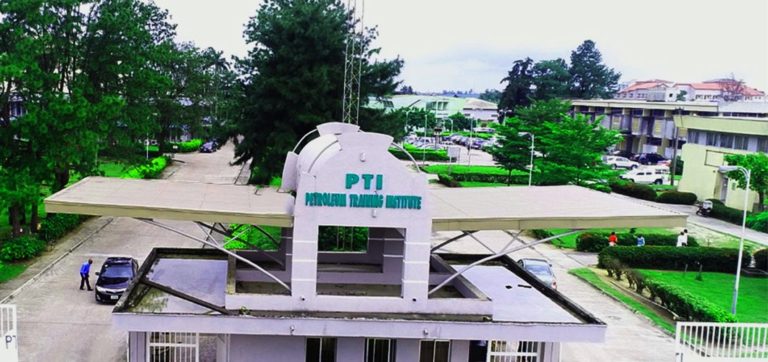
AUDU Oshiokhamele, Chairman of the Petroleum and Natural Gas Senior Staff Association Nigeria (PENGASSAN), Effurun branch, has accused Professor Sunny Iyuke, the Chief Executive of the Petroleum Training Institute (PTI) of a N5.8 billion fraud.

According to him, the sum was allegedly withdrawn from the institute’s coffer for three years without due process under Iyuke’s leadership.

This includes other allegations such as contract racketeering and salary payments into about 500 accounts of ghost workers in the organisation.

In a petition signed by Audu Oshiokhamele on 14th February, and acknowledged by the office of the Minister of Petroleum Resources, Timipre Sylva, in Abuja, the Union claimed that Iyuke arbitrarily moved the money as virement from the PTI’s personnel cost with supports of Aliyu Mafindi, PTI’s Director of Finance and Account.

“We wish to bring to the attention of the Honourable Minister of Petroleum Resources on the uncanny prevailing atmosphere at the Petroleum Training Institute arising from recent petitions from our Association and many other petitioners bothering on gross mismanagement and mal-administration by prof. Sunny Iyuke led management,” the document reads.

According to the 41 pages document obtained by this centre, Mafindi allegedly used his accounts to launder the funds from the institute’s accounts through transfer from the Government Integrated Financial Management Information System (GIFMIS) – to Remita which allowed the funds to be easily manipulated.

However, findings by The ICIR revealed that three hundred and thirty-seven million Naira (N337M) was discovered to have been removed from institute’s personnel cost from 2017 to 2019, using over 500 names of staff in a pay voucher number (PV no.) 78313 of which the fund was claimed to have been credited to dead, retired and existing staff.

The ICIR reached out to Mafindi to have his side on the allegation. Unfortunately, he declined on the provision that he is a public servant and can not talk to the press.

In fact, in a letter dated 12th March 2020 and in response to Oshiokhamele’s petition, the Human Resources Management Department of the Ministry of Petroleum Resources directed Iyuke to make formal representation at the office of the Permanent Secretary of the ministry within 72 hours of the receipt of the letter on the allegations bothering around financial fraud/ Contract racketeering.

Before Audu’s petition, one Oladapo Adeyemi had already forwarded a petition to Mamman-Ahmadu, the Director-General of Bureau of Public Procurement (BPP) and  Ahmad Rufai Shakur who is the acting Director of Petroleum Resources and Chairman governing council of PTI,  Calling for “Probe into Mal-administration, Mis-management and Contract racketeering by Professor Sunny Esayegbemu Iyuke”, dated October 14, 2019.

In the petition, the accuser alleged Sunny Iyuke’s led administration of several financial manipulations, recruitment racketeering, and crass violation of public procurement laws.

During the institution’s 2018 junior staff employment exercise, Olayemi alleged that Sunny unilaterally employed Idibie Andrew and Ayomanor Ogheneyerovwo into the services of the institutes without the prerequisite entry qualifications.

This alleged recruitment racketeering is faulted in provisions of the Public Service Rule ( PSR) sections 020205 and 1603011

Adeyemi’s petition also accused Sunny of unparalleled mismanagement of the volume of funds appropriated to the institute for capital projects from 2016 till 2019 October which he alleged that the procurement practices of goods and services have fallen short of criteria established by BPP.

The petition also poised a similar claim made by PENGASSAN in her petition over financial misappropriation. He explained that additional works of 81.8 million Naira was “approved anticipatorily for an anticipatorily approved contract of over 125million naira for the renovation of Guest chalet at the Conference Center Complex awarded to One Creations limited”.

The approved 81.8million naira is an excess and in violation of 10 per cent allowable as defined by BPP laws. By percentile increase, 81.8 million naira is 654.4per cent increment to 12.5million.

However, The ICIR‘s check through the Corporate Affairs Commission (CAC)’s portal revealed that One Creation Limited is not a registered company nor has any online presence. Further investigation then showed the company’s correct name as Due Creations Limited, against the misleading name written in the petition.

Adeyemi Also added that Additional works of 21million naira approved for a contract worth 41.6million naira for the renovation of the Administrative block extension awarded to Kajet limited. By percentile increase, 21 million Naira is over 500% increment to 4.106 million Naira if following the law of 10% allowable.

His allegations also contained the review of the initial contract sum from 50 Million Naira to 75 Million Naira for the maintenance of the PTI’s library awarded to Sunny Iyuke’s inlaw – Eucalyptus Nig. Ltd.

Section 64 of the procurement act states that the award of all contracts should be notified to the Bureau of Public Procurement and published in two national dailies.

Adeyemi disclosed that the violation has been a rife order in PTI under Sunny’s administration, adding that the institute does not have a procurement journal nor did it publish contract awards in the national dailies as provided by the law.

The ICIR contacted Etanabene Benedict, the procurement development director of the institute over the contract racketeering allegations. He refuted all the claims poised by the accusers over the contracts under his watch

“You see those PENGASSAN people, they lack knowledge, and they have been alleging the principal/ Chief executive before now. The 10 per cent allowable is for capital projects. These projects we spent over the 10 per cent are from our internally generated revenue (IGR)”, Benedict argued.

However, on December 13th, 2019, the Bureau of Public Procurement (BPP) acted upon the recipient of Adeyemi’s call for probe into Sunny’s financial misappropriation of the PTI’s treasury.

The bureau asked PTI to forward copies of advertisement that carries all publications, copies of the signed attendance register for both technical and financial bids, copies of the technical bids submitted by all bidders( both qualified and disqualified).

The bureau also asked Iyuke to submit financial and technical evaluation reports duly signed by the Evaluation Committee ( hard and soft copies), minutes of the meeting of the Tenders  Board approving the awards of the contracts (editable soft and hard copies) and the letters of contracts awarded by PTI from 2016 till 2019.

In her response to Adeyemi’s call for a probe, the Senate Committee on Ethics, Privileges and Petitions called for a full investigation into the activities of the institute, invited Sunny Iyuke and the key management staff of PTI to a closed-door meeting on 2nd of March 2020 to discuss the modalities of improving significantly the revenue of the Federal Government of Nigeria

However, further independent investigation by The ICIR unveiled the petitioner with the name ‘Oladapo Adeyemi’ does not exist in the institute’s staff list. It might be a pseudonym to draw public attention to the alleged financial misappropriation rocking the institute.

The ICIR also contacted the embattled principal, Sunny Iyuke on the 20th of May, 2020 to have his side of the story. He first told this reporter to call back that he was with a staff at a police checkpoint somewhere in Lagos.

Two hours later, this reporter tried to call Iyuke again, his line responded “busy”. For over 4 days with at least 5 trials a day, the response from line remains the same. On an alternative route, this reporter used another number to reach him, the number went through and he picked. 

Iyuke told this reporter to “Kindly reach out to my public affairs? Please reach out to Mr Brown. I don’t want to comment on this issue”

The ICIR reached out to Brown Ukanifimoni, the public relations officer of PTI. He also declined to comment on the ground that “the issue is still with EFCC and ICPC, why not let us cross our hands and wait for their response and know who is exactly corrupt?”

“They have been writing petitions against now. We have attended several meetings with EFCC and ICPC before now, let’s just wait for their response”

This reporter also reached put to Idibie Andrew and Ayomanor Ogheneyerovwo. While the former did not hear this reporter as claimed for 4 different phone call attempts and SMS, the latter did not pick up to even talk to the journalist.

All efforts also sought by The ICIR to get the comment of the Economic and Financial Crimes Commission (EFCC) and the Independent Corrupt Practices Commission (ICPC) proved abortive as phone calls, Whatsapp messages and SMS sent to Rasheedat Okoduwa, ICPC spokesperson, proved abortive.

COVID-19: Abiodun eases Ogun lockdown on weekdays, imposes curfew as cases hit 242

DAPO Abiodun, Governor of Ogun State has eased the internal lockdown imposed in the state to contain the spread of the pandemic Coronavirus (COVID-19) disease.

While speaking during his update on the pandemic, Abiodun stated that from Monday June 1, Ogun State residents would be free to go about their businesses from Mondays to Fridays.

He explained that residents are allowed to go out from 5 am to 8pm during those periods while all non essential movements are prohibited on Saturdays and Sundays.

According to him, the decision to ease the lockdown was in line with the directive of the Federal Government and advice by health experts in the state.

The governor noted that extant restrictions and advisories would remain in place on interstate travels, wearing of facemasks, public transport, markets, religious centres, restaurants and other relaxation spots.

He reiterated that all forms of gatherings either social or religious of more than 20 people remain banned in the state.

AS of Thursday, May 28, Ogun State has recorded a total of 242 cases of COVID-19.

It would recalled that President Muhammadu Buhari imposed a 14-day  lockdown on Lagos and Ogun states as well as the Federal Capital Territory (FCT), Abuja on March 29 as part of measures to contain the spread of the disease.

The president extended  the lockdown imposed on Lagos,  Ogun s Abuja by another 14 days from Monday April 13.


Anti-corruption lawyer petitions ICPC over former Works Ministry Director who owns 84 cars

OLUWATOSIN Ojaomo, a lawyer and anti-corruption campaigner has petitioned the Independent Corrupt Practices and Other Related Offences Commission (ICPC) demanding the prosecution of Ibrahim Tumsah, a former Director of Finance and Administration at the defunct Ministry of Power, Works and Housing and Tijani Tumsah, his brother over allegations of corruption.

In a copy of the petition sighted by The ICIR, Ojaomo who was a prosecutor with defunct Special Presidential Investigation Panel of Public Property (SPIP) called on ICPC to investigate the matter and charge the two brothers to court in order to build public confidence in the anti-corruption war of the Buhari administration.

He stated that Ibrahim Tumsah was one of the public officers that were investigated by the defunct SPIP chaired by Okoi Obono-Ola over his alleged failure to declare his ownership of about 86 exotic cars and other properties.

Ojaomo noted that  Tijanni Tumsah on his part was investigated for engaging in corrupt practices at the Presidential Initiative on North East.

He stressed that as an anti-graft campaigner, he had decided “to pursue this matter to a logical conclusion going by the anti-corruption mantra of the President Muhammadu Buhari led government.”

The activist said it would be a disservice not just to the nation, but to persons like himself who were lobbied severally to bury the matter at the panel, but refused all the entreaties due to his belief in the current administration’s war against corruption.

According to him, there were overwhelming evidence against the Tumsah brothers which can be used to prosecute them in the court of law.

“My decision to petition your office on this matter stems from the fact that the Court of Appeal didn’t discharge and acquit the Tumsah brothers for the allegations levelled against them by the Special Presidential Investigation Panel for Recovery of Public Property, but only said the agency which brought the matter to court does not possess the statutory powers to so do,” Ojaomo said.

He noted that it was also on record that some of the exhibits recovered from the Tumsah brothers were allegedly bought in the name of two companies, Integrated Service Insurance Ltd and Integrated Bureau De-Change Ltd which belong to the two of them.

The lawyer said that as an anti-corruption campaigner and Special Prosecutor with the defunct SPIP, he believed that allowing the matter to be swept under the carpet would not only affect the anti-corruption campaign of this government, but would continue to affect the image of the government going by the public commendation that followed the announcement of investigation of the Tumsah brothers in the media.

“It is shocking to hear that all the cars and properties recovered from the suspects have been returned to them under a very suspicious under hand deal where some persons were heavily compromised to achieve this sinister motive,” he said.

“I have been duly informed that due to the sack of Obono Obla and the subsequent dissolution of the panel, the Tumsahs have recovered all their properties and currently enjoying the proceeds of this crime.

“It is also on record that huge sum of money was siphoned by Tijani Tumsah through the Presidential Initiative on North East wherein a website was created to collect money from the public and international donors.”

However, Ibrahim Tumsah while reacting to the petition told The ICIR that the matter has been settled in court.

“I don’t have anything to say to the ICPC and about the petition because the case has been settled in court,” he said.

Tijani Tumsah did not respond to The ICIR’s text message concerning the petition at the time of filing this report.

Rashidat Okoduwa, Spokesperson for the ICPC was also contacted for comment on the petition but did not answer calls to her phone and did not reply text messages at the time of filing this report.

The Tumsah brothers were charged to court by SPIP in the case of alleged failure to declare assets without reasonable excuse.

Earlier in the case, the court ordered that 86 luxury vehicles allegedly owned by the brothers, together with four houses and a quarry plant in Kuje, Abuja, be temporarily forfeited to the Federal Government.

They were subsequently let off the hook when the Federal High Court in Abuja in February 2019 on dismissed the two counts of non-declaration of assets instituted against them.

Justice Inyang Ekwo dismissed the charges on the grounds that the Okoi Obono-Obla-led Special Presidential Investigation Panel on the Recovery of Public Property and its prosecutor Celsus Ukpong, who filed the case, lacked “the statutory power” to do so.

Ehanire, Ihekweazu, Osamaye, Abayomi, other Nigerians at the frontline of fight against COVID-19

SINCE  February 27 when Nigeria recorded its first index case of  Coronavirus disease (COVID-19), many Nigerians including governors, top government officials and health workers have been at the forefront battling to flatten the curve in Nigeria, like their counterparts in other parts of the world.

These outstanding Nigerians have been putting their lives on the line to contain the spread of the virus and ensure those that have contracted it are treated.

The ICIR has compiled a few of these frontline workers fighting the spread of Coronavirus in Nigeria.

Osagie Ehanire, Nigeria’s Minister of Health/CREDIT: Thisday


Osagie Ehanire, Minister of Health

This is perhaps the most trying period for Osagie Ehanire, Nigeria’s Minister of Health in his entire career. The outbreak of COVID-19 in Nigeria seems to be the beginning of his difficult time in office. Since the outbreak in Nigeria, the minister has been coordinating activities and programmes to ensure that the government through the Ministry of Health provides the necessary support for both health workers and patients.

Osagie, several times, has commended the frontline health workers who manage patients and has called those who cannot handle the pressure to quit. He has also called on Nigerians to disclose complete and accurate information to health workers about their travel history or contact with persons who have had COVID-19.

Born 4 November 1946, Osagie Emmanuel Ehanire is a Nigerian medical doctor and politician. He studied Medicine at the Ludwig Maximilian University of Munich in Germany, qualifying as a Surgeon. He went on to the Teaching Hospital of the University of Duisburg and Essen and to the BG Accident Hospital in Duisburg, Germany for his post-graduate education.

In 1976, he attended the Royal College of Surgeons in Ireland where he obtained a postgraduate Diploma in Anaesthetics. He got his Board Certification in both General Surgery and Orthopaedic Trauma Surgery at the Medical Board of North Rhine Westphalia in Dusseldorf, Germany. In 1984, he became a Fellow of the West African College of Surgeons. He was appointed as the Minister of Health by President Muhammadu Buhari administration in November 2019.

Chikwe Ihekweazu, Director-General Nigeria Center for Disease Control 

Chikwe Ihekweazu is the Director-General of the Nigeria Centre for Disease Control (NCDC) [ Photo credit: google
Chikwe Ihekweazu, Director-General, Nigeria Centre for Disease Control (NCDC) has led the fight against the pandemic alongside his team of experts across Nigeria.

Ihekweazu has continued to ensure that the battle against the pandemic in Nigeria remains a transparent one by updating Nigerians on the progress made through the NCDC’s various posts on social media and website.

In a recent interview with THE PUNCH, he stated that the Centre has started the review of protocols and guidance for home management of asymptomatic cases. This,  Ihekweazu said, would be implemented when needed.

“We have scaled up our sample collection and transportation as well as testing capacity to ensure that cases are tested within the shortest possible time,” he said.

Ihekweazu was born to Nigerian-German parents. His father is a Nigerian doctor and the mother, a German professor. Chikwe holds an MBBS from the University of Nigeria and a Masters in Public Health from Heinrich-Heine University, Germany.

He trained as an infectious disease epidemiologist and has over 20 years of experience working in senior public health and leadership positions in several national public health institutes.

Akin Abayomi, Lagos State Commissioner for Health

Akinola Abayomi,  a professor of Internal Medicine and Haematology is the Lagos State Commissioner for Health. He has been leading the struggle against COVID-19 in Nigeria’s biggest commercial city since the first index case was identified on February 27.

According to the Lagos State Governor Babajide Sanwo-Olu, Abayomi had since 2019 warned the state about COVID-19. And he has been up and doing to ensure that the state government scales up its testing capacity, and takes care of the welfare of the health workers in the state. Now,  test and treatment centres are available across the state, thanks to the active health commissioner.


Akinola Abayomi is the Lagos state commissioner for health

In a Twitter post in April, he urged residents to be ready to answer questions from health workers who are going house-to-house asking about Coronavirus symptoms. The health workers will “make inquiries about symptoms of cough, cold and fever”, Prof Akin Abayomi tweeted. Abayomi is an experienced medical doctor who has served as a lecturer and practitioner in Africa as well as the West Indies.

He is a specialist in Internal Medicine and Haematology, studied at the Royal Medical College of St Bartholomew’s Hospital at the University of London where he obtained his first graduate degree in Medicine. He later obtained fellowships from both the Royal College of Medicine in the United Kingdom and the College of Medicine of South Africa. He was Associate Professor Faculty of Health Sciences, University of Stellenbosch University, Cape Town, South Africa before he was invited to serve as Lagos state government.

Tochi Joy Okwor, Coordinator Infection Prevention Control

Tochi Joy Okwor is the Coordinator at the Infection Prevention Control (IPC) and Member Technical Working Group of the NCDC Manual Universal and Outbreak Infection Control (MAURICE). Okwor also gives daily updates: ‘Issues of the Moment’ with updates on COVID-19 Nigeria on Radio Nigeria.

Tochi Joy Okwor is the NCDC’s infection prevention control coordinator. [Photo credit: google
Tochi  is a Consultant Public and Occupational Health Physician at the Department of Community Health University of Nigeria Teaching Hospital, Itukku Ozalla Enugu State.

Her research efforts are focused on occupational respiratory diseases and infection prevention and control in healthcare.

Uzezi Emuophedaro, medical doctor

Emuophedaro works as a medical practitioner in one of the biggest hospitals in Nigeria.

Dr. Uzezi Emuophedaro, works as a medical practitioner in one of the biggest hospitals in Nigeria. [ Photo credit: UNICEF
She is resilient and remains undeterred, even when grappling with limited equipment and shortage of supplies at her place of work.
In a report by UNICEF, Emuophedaro said her greatest fear was the possibility of the number of cases getting into the thousands and reaching the situation that countries in Europe and North America are dealing with right now.
”I fear that we may not be able to handle such numbers here in Nigeria, due to our weak infrastructure,” she was quoted as saying.
“I joined the medical profession because I wanted to save lives and be just like my father.”
She said that the oath she took when being inducted into profession and her determination to help people in need has been her biggest motivation during this crisis.
Across the world, healthcare workers have been infected with the virus while working to save the lives of others, but Dr. Emuophedaro says she tries to stay calm and protect herself as much as possible.

Osamaye Faith, Youth Corps member

Faith Osamaye, a Youth Corps member is one of the young scientists working at the NCDC’s National Reference Laboratory.[ Photo credit Nigeria health watch
Faith Osamaye, a Youth Corps member is according to Nigeria Health Watch, one of the young scientists working at the NCDC’s National Reference Laboratory.

Nwando Mba, Director of Public Health Laboratory Services at NCDC

Nwando Mba, Director Public Health Laboratory Services Department [ Photo credit: Nigeria Health Watch

Nwano Mba, Director of Public Health Laboratory Services Department at NCDC works with other people at the Centre and gives the young people in her team the opportunity to take lead.

She said once they understood that COVID-19 was a respiratory infection, they quickly brought out Nigeria’s influenza pandemic preparedness plan.

This became our blueprint because influenza surveillance is the bedrock of our COVID-19 response,” Mba said.


Celestina Obiekea (centre) is the Network Coordinator of COVID-19 Laboratories in Nigeria. Photo Credit: Nigeria Health Watch

Celestina Obiekea, Coordinator Network Coordinator of COVID-19 Laboratories in Nigeria

Obiekea is the Network Coordinator of COVID-19 Laboratories in Nigeria. She was in Dakar when the index case was reported in Nigeria, and life has not been the same since then. She is still able to smile and maintain positive energy for her team, despite the grueling long days at the laboratory.

Obiekea says it can be challenging when everyone wants to be tested, as it takes a  toll on both human and material resources. She advises that people stick to the advisory from the NCDC and Federal Ministry of Health to stay at home, practice social distancing, self-isolate if they feel they have been exposed to someone who has COVID-19 and call the NCDC toll free numbers if they are having symptoms.

Christopher Chukwu, trained in molecular diagnostics. Photo credit Nigeria Health Watch

Christopher Chukwu and other team members got trained on COVID-19 diagnosis from the African Centres for Disease Control and Prevention in Dakar before the first case of COVID-19 was recorded in Nigeria. He had been trained on molecular diagnostics previously from numerous training, including training delivered by Public Health England in 2019.

Akinpelu Afolabi The laboratory manager, at the National Public Health Reference Laboratory. Photo Credit Nigeria Health Watch

Akinpelu Afolabi, Lab Manager National Public Health Reference Laboratory, Abuja

Akinpelu Afolabi is the Laboratory Manager at the National Public Health Reference Laboratory in Gaduwa, Abuja.

He said work at the laboratory has been intense since the outbreak o the pandemic. “Unlike before, we now work 24 hours. I came here around 11 pm yesterday and left by 6am today. By 12pm, I returned and as of now (5pm), I’m not sure when I’ll leave,” he said in an interview.

Amina Mohammed Baloni, Kaduna State Commissioner for Health

Amina Mohammed Baloni is Kaduna state’s commissioner for Health

Amina Mohammed-Baloni, Kaduna State Commissioner for Health has been at the forefront of the state’s war against COVID-19 in her state.

She has warned that anyone who conceals COVID-19 positive status would be prosecuted. She said the state has, however, traced up to 95 per cent of contacts and discovered 28 active cases.

Mohammed-Baloni is a medical practitioner and a fellow of the West African College of Physicians. She holds a Masters’ degree in Public Health and has had over 20 years of practice as a clinician and a public health professional. Her career has been devoted to improving the health and wellbeing of children and women. 

Salisu Kwaya Bura Aliyu

The Borno state Commissioner for Health has expressed confidence that Borno has put in place active surveillance for all disease conditions.

Borno State Commissioner for Health, Dr. Salisu Burah. Photo credit: VON

In March when the state had not recorded any case of COVID-19, the State Ministry of Health with the support of WHO and partners has activated the Emergency Operations Centre that developed a comprehensive preparedness plan in case of a COVID-19 outbreak. Other responses, according to him, include case management, infection prevention control, contact tracing, surveillance, and risk communication.

He has continued to enjoin the media to educate the public on basic hand-hygiene, coughing etiquette and temperature monitoring.

Salisu Kwaya Bura Aliyu is an Obstetrician and Gynaecologist with over 20 years experience, and was appointed into office in 2015.

Abba Umar Zakari is Jigawa State Commissioner for Health. He holds a Postgraduate Diploma in Tropical Medicine and Hygiene from the Royal College of Physicians of the United Kingdom and a Masters Degree in Infections and Health in the Tropics from the London School of Hygiene and Tropical Medicine, the United Kingdom in 1996 after his MBBS Degree in 1990 at Ahmadu Bello University, Zaria.

Abba Umar Zakari, Jigawa State commissioner for health. Photo credit: Jigawa state government website

Zakari, who is also the chairman Jigawa taskforce on COVID-19, has continued to ensure that the infection rate in the state is reduced. He also has also ensured that almajiris returnees are tested and isolated.

According to him, 607 samples of the returnee almajiris had been taken, and only 45 samples were ready, adding that the results of the remaining samples were expected any moment from now  while the remaining 29 that returned negative would be united with their families soon, and each would receive N10,000 and clothing.

He has disclosed that  the state had no intentions of returning almajiris to their respective states as this could risk a rise in the infection.

Patrick Okundia is the Edo State Commissioner for Health, and charged with the full implementation of the Edo State Healthcare Improvement Programme (Edo-HIP). 

Patrick Okundia said that he and his team are making steady progress in the management of Coronavirus, noting that all active cases of COVID-19 are being managed at different isolations centres across the state and are responding well to treatment.

The Edo State Commissioner for Health, Dr. Patrick Okundia during his swearing in ceremony. Photo credit: Thisday

Okundia reassured Edo people that the state government remains committed to containing the COVID-19 pandemic in all communities across the state.

Until his appointment, Okundia was the Chief Medical Director, Stella Obasanjo Hospital. He hails from Uhunmwonde Local Government Area of Edo State.

Bashir Bello

The Oyo State Commissioner for Health has continued to put steps in place to prevent the spread of coronavirus in the state. The creation of a rapid response and monitoring department and disease surveillance and notification officers in the 33 LGAs and 35 LCDAs was his idea.

Bashir Bello,Oyo state Commissioner for Health Photo credit: premium news

Bello through the Ministry of Health has also run enlightenment campaigns about Coronavirus in markets, schools and for people in the hospitality industry to maintain the handwashing culture and give a safe distance if anyone is sneezing or coughing around them.

Bashir Bello has expertise in evaluation and passion in improving the health and wellbeing of people. His open and contextual evaluation model based on responsive constructivists creates new pathways for improving healthcare has been reportedly effective. He has built this model after years of experience in research, evaluation, teaching, and administration both in hospitals and academic institutions.

Princewill Anthony Chike

The Rivers State Commissioner for Health said the state was in a hurry to be fully ready for any outbreak of the Coronavirus disease.

Chike said because of the seriousness of the pandemic, the state has been on an alert phase since the COVID-19 outbreak. “This is no time to blame anybody but to put all hands on deck,” he said.

He is a Nigerian physician and professor of medicine. He was chairman of the Rivers State Primary Health Care Management Board. On 31 August 2017, he was sworn in as a member of second Wike Executive Council. He became the Commissioner for Health in September 2017.

Rafiu Isamotu Olasunkanmi, the Osun State Commissioner for Health, championing the fight against the pandemic in the state has explained how the state has protected its people from the scourge, attributing it to massive surveillance, intensive enlightenment campaign and rapid response and testing initiatives, among others.

Rafiu Isamotu, Osun State commissioner for health.

Olasunkanmi is a graduate of the College of Medicine University of Lagos. He is a native of Iwo in Osun State. Though much is not known about him but he is the man at the forefron of the battle against Coronavirus in the State of the Living Spring.

Nimkong Ndam Lar

Lar is the Commissioner for Health in Plateau state.

Ndam Lar, Plateau state commissioner for health

Ndam is making sure that the fight against COVID-19 in the state is won by all means.

According to him, the Ministry of Health has activated preventive emergency measures in case of any eventuality, some of which include setting up isolation wards, provide medical supplies to keep the fight againt the virus strong.

He said the ministry is working closely with the Federal Ministry of Health and other relevant government agencies to remain vigilant to handl any health emergencies.

Lar said stakeholders made of a team of experts from the ministry and the World Health Organisation (WHO) are working tirelessly to ensure that proper measures are put in place in the state.

Daniel Iya

Iya is the Commissioner for Health in Nassarawa State.

Dr. Daniel IYA, Health Commissioner Nasarawa State

Dr. Daniel is a man trusted with various leadership roles. He is a longstanding fellow of the West African College of Surgeons, a fellow of the Royal College of Surgeons of Edinburgh, and was chairman of the Nigerian accreditation committee of the Nigerian Medical and Dental Council. After his first term as Commissioner, Dr. Daniel became chief medical director in the state’s teaching hospital from 1996-2004. That was also the time he did a postgrad public health course at Harvard. He has served as commissioner for health twice in Nassarawa State.