Home Blog Page 2099

COVID-19: CAN says security operatives will enforce church re-opening guidelines

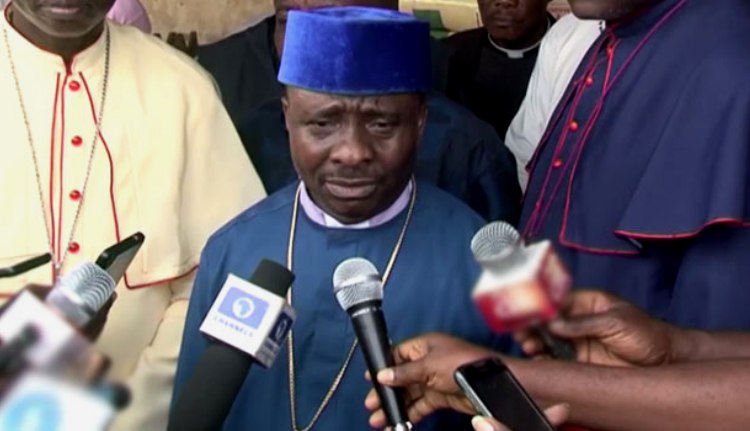
THE Christian Association of Nigeria (CAN) on Thursday says it will seek the support of security operatives to comply with the newly proposed guidelines for re-opening of places of worships as part of efforts to contain the spread of the Coronavirus Disease (COVID-19) pandemic.

Bayo Oladeji, CAN Media Assistant to the CAN president disclosed this in a telephone chat with The ICIR.

There have been reports that CAN and the Nigeria Supreme Council for Islamic Affairs (NSCIA) have submitted guidelines to the Presidential Task Force (PTF) 0n COVID-19 on the re-opening of worship places.

The security operatives according to Oladeji would include men of Nigeria Police and officers of the Nigeria Security and Civil Defence Corps (NSCDC).

He confirmed that CAN and NSCIA had submitted the guidelines, noting that the security officers would work under the supervision of CAN’s monitoring and enforcement committee.

“It is true my brother…each of the committees would be supported by the police or NSCDC. We would appeal to them to join us to strengthen the committee,” Oladeji said.

The CAN President spokesperson added  worshippers would seat one metre apart while churches that offer multiple services would have a 10-minute break after each service if the guidelines are approved.

Since the outbreak  of COVID-19 in Wuhan, China, over 5.8 million cases and more than 358, 984 deaths have been recorded globally.

In Nigeria, 8,733 cases have been recorded, with 254 deaths and 2,501persons recovered as of May 27.

There have been calls by some religious leaders to the government to lift the public gathering ban.

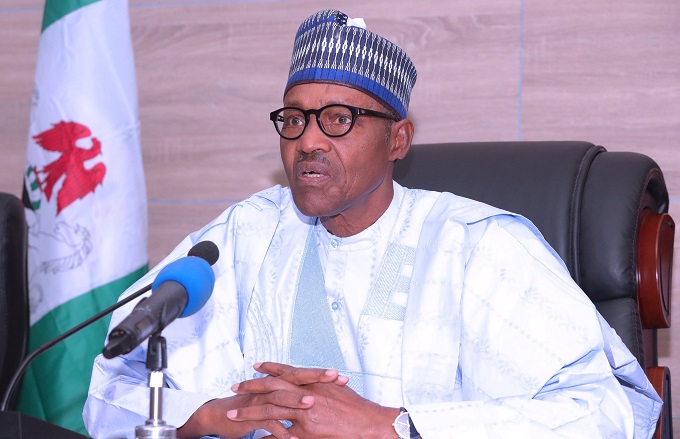
The Presidential Task Force (PTF) on Wednesday reportedly met with representatives of religious bodies in Abuja to discuss some of the submitted recommendations for further review by the Nigerian Centre for Disease Control (NCDC), and subsequent approval by President Muhammadu Buhari before worship centres are opened.

According to Oladeji, Olasupo Ayokunle, CAN President was represented by  at the meeting by Israel Akanji, Head of Baptist Church,  Abuja and  Samson Jonah, Chairman of CAN, FCT  chapter.

He disclosed further that part of the proposed guidelines, is for  churches to disinfect their premises before reopening for services.

Churches, according to the guidelines should provide alcoholic sanitizers, temperature readers, soap and water in their premises to be supervised by medical professionals.

While Oladeji expressed hope that Sunday May 31, may be the last one  that Christians would have to worship from home, he reiterated CAN’s commitment to ensure that smaller churches  comply with the proposed guidelines.

The association, he noted has representatives across the states up to the ward level, thus ensuring compliance.

The committee also recommended to the PTF that handshaking and hugging should be avoided before, during and after service while children should worship with their parents, he said.
Direct SSS to respect court orders, rights group tells Buhari

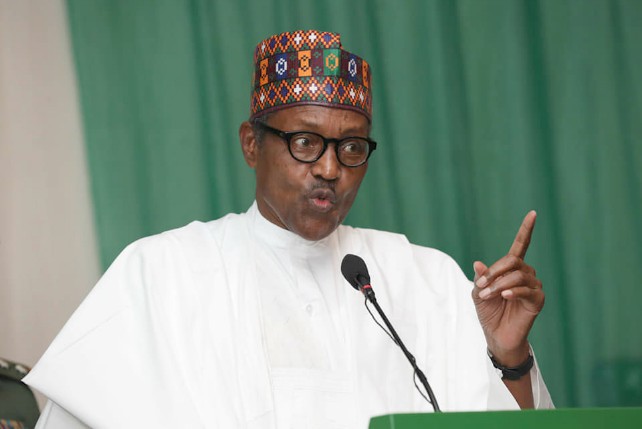
AN advocacy organisation, Rule of Law and Accountability Advocacy Centre (RULAAC) has called on President Muhammadu Buhari to direct the State Security Service (SSS) to obey court orders and operate within the rule of law.

Okechukwu Nwanguma, Executive Director of the Centre in a press release said the SSS has now established itself as a lawless organisation by engaging in politically motivated arrests.

Nwanguma lamented the refusal of the SSS to honour the ruling of a High Court in Abia State which has ordered the release of a detained lawyer, Emperor Gabriel Ogbonna.

According to him, the Centre also called for the release of Akwa Ibom based journalist, Kufre Carter who is also being held against court order for publicly criticising the state’s Commissioner for Health.

He said the President must, at this time, intervene and save the country’s democracy from being derailed by the SSS.

“It’s time for the President to curtail the excesses of the SSS and call its leaders to order,” the statement read.

RULAAC said that the National Security Agencies Act does not allow the SSS to aresst and detain any person.

“What the security agency is supposed to do is to pass information detected to relevant agencies, which have the legal mandate to arrest, detain, and prosecute,” the Centre wrote.

Nigeria has lost 7,904 persons to violent killings in two years – Group says

NIGERIA has lost not fewer than 7,904 persons to violent killings across the country between 2018 and 2020, a group of civil society organisations in Nigeria under the Joint Action Civil Society Coalition has reported.

In a press statement released to mark the commemoration of the 3rd National Day of Mourning set for Thursday, the group noted that there is a rise in mass atrocities and killings in the country, and the trend is barely acknowledged by the government or the citizens.

According to the group, several parts of the northeastern Nigeria remain susceptible to terrorists attacks and a larger portion of the North-West, including Kajuru and Birnin-Gwari in Kaduna and much of Zamfara and Katsina states, and TarabasState in the North-Central have been left ungoverned and taken over by rustlers, bandits and vigilantes.

It added that 34 out of 36 states in the country now record at least one episode of violent attacks within the first quarter of 2020 alone, an indication that extra judicial killings and human rights abuses have reached a new high.

The coalition also reported that security agents have resorted to several forms of abuses against citizens to enforce lockdown and movement restrictions imposed by government due to the COVID-19 pandemic.

The civil society group expressed worry that Nigerians appeared to have normalized the violent killings of citizens and accepted it as a norm, but it also blamed the government for failing to carry out its primary responsibility of protecting lives and properties. 

“While Nigerians are being killed our communities and livelihoods are laid to ruin, the government has shown itself unwilling or unable to confront these killings to put an end to them. By so doing, it has abdicated its constitutional duty to guarantee the safety, security, and wellbeing of all who live within Nigeria’s geographical boundaries,” the press statement read in part.

The coalition urged Nigerian leaders to take necessary steps to end impunity, ensure the provision of humanitarian aid to communities displaced by the crisis, wage war against light weapons flowing into the country as well as ensure an urgent accounting of the missing and dead.

Meanwhile, The ICIR earlier reported the findings published by SB Morgen which shows that  at least $18.34 million was paid to kidnappers as ransom in Nigeria between June 2011 and March 2020.

According to the report, kidnapping has increased in most states, making Nigeria an unsafe country for citizens.

610 personnel earn more than the President as DPR paid ₦8 billion salary upfront in January

By, Paul Adeyeye


DATA analysis by Dataphyte has shown the Department of Petroleum Resources (DPR) paid over 8 billion as salary upfront in January 2020. This is according to the daily payment data published on the open treasury portal.

The review of salary payments between January and April 2020 showed two descriptions. The first description is January 2020 DPR Staff Salary. This has only five beneficiaries and sums to ₦29.6 million. The second description, which is 2020 DPR Staff Upfront Payment, had 605 beneficiaries and summed to ₦8 billion.

29 top officials received between ₦50 million and ₦71.7 million as upfront salary payment. Another 30 received between ₦30 million and ₦49.9 million. 51 staff members received between ₦20 million and ₦29.9 million. 119 others received between ₦10 million and ₦19.9 million. The remaining 375 staff members received between ₦5 million and ₦9.9 million.

The treasury database also indicated that five DPR staff received double payment in the same period. The first payment was with the description January 2020 Salary while the second payment had the description – 2020 DPR Staff Upfront Payment. An example of a recipient of the double payment is Abubakar Attahiru Saleh who received a sum of ₦22,755,745.91 twice the same day. While he received ₦6,318,167.93 as January Salary, he also received a second payment of ₦16,437,577.98 as Salary Upfront.

610 DPR staff earn more than the President

In addition, the data revealed that over 610 DPR personnel may earn more than the Nigerian President. According to RMAFC, President Buhari receives a total salary package of ₦1.17 million monthly. This sum is inclusive of a basic monthly salary of ₦292,892, a hardship allowance of ₦146,446 monthly, and a consistency allowance of ₦732,230 per month. Similarly, Vice President Osinbajo receives a total of ₦1.01 million monthly take-home pay. From basic arithmetic, the take-home pay of the Nigerian President and the Vice President comes to ₦14 million and ₦12 million, respectively.

Further analysis of the open treasury data revealed that staff annual salary at the DPR ranged from ₦5,028,450.22 to ₦71,723,727.24. By implication, the least paid person in DPR received over ₦419,000 monthly. While the designation of the lower ranks in the salary structure is unknown, the Operations Controller received an excess of ₦70 million annually.  Also, the Director of Petroleum Resources; the Head, Safety, Health and Environment; and the Deputy Director, Basinal Assessment and Lease Administration received ₦69,378,164.01; ₦64,359,638.72; and ₦63,459,241.62, respectively.

Wage Justice and Revenue Management

This lopsided salary structure raises questions on justice and revenue management. As known, the implementation of a minimum worker’s payment of ₦30,000 monthly has been a subject of an unending debate in Nigeria. Thus, such an enormous financial commitment to a group of workers generates questions on fairness and equity. Indications that this lopsided salary payment structure is a common practice in many MDAs including the Petroleum Products Pricing Regulatory Agency (PPPRA) also stimulates concerns.

More specifically, the Treasury Data raises questions on the public service rule on upfront salary payment and the discrepancies in salary roster of DPR and other MDAs. Another question is as to whether these discrepancies violate the salary structure by the National Salary, Incomes and Wages Commission.

The need to harmonize worker’s earnings at this point remains pressing. In addition to the need for justice and equity in worker’s payment, Nigeria’s revenue shortage requires prudent economic management measures. The recent effort of the Federal Government to harmonize workers earning across MDAs is commendable. However, there is a more urgent need to level up the discrepant wage structure across MDAs.

This report was originally published by DATAPHYTE

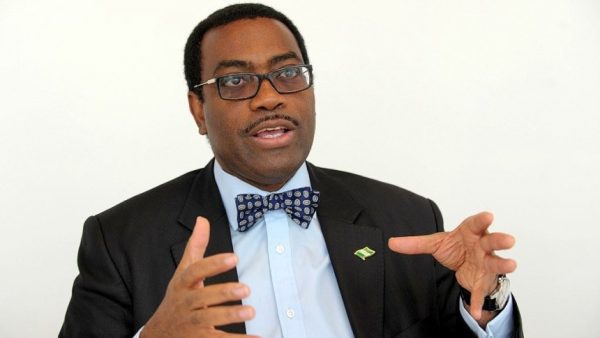
AFDB crisis: Adesina maintains innocence over allegations of nepotism

PRESIDENT of the African Development Bank (AFDB) Akinwunmi Adesina has maintained his innocence with regards to the various allegations against him.

In a statement personally signed by Adesina, he expressed confidence in the integrity of the bank, its governance systems as well as its rules and procedure.

Recall that Adesina was recently accused by a group of anonymous whistleblowers of handing contracts to acquaintances and appointing relatives to strategic positions at the bank.

The AFDB president said every allegation was to impugn his honour and integrity as well as the reputation of the bank.

Adesina added that he is confident and draws inspiration from Nelson Mandela and Kofi Annan whose “lives have shown that through pain we grow”.

He expressed confidence that fair, transparent and just process that respects the rules and governance system of the bank and the rule of law would prove that he has not violated the code of ethics of the bank.

Adesina said he would continue to work with the shareholders of the bank to ensure that AFDB maintains its hard-earned reputation.

“Our credible well functioning institutional and governance system is reinforced as we collectively press on to fulfil the mission of our founding fathers to accelerate and transform Africa’s development.”

Infants unlikely to contract Coronavirus from breast milk – WHO

THE World Health Organisation (WHO) on Wednesday says there is no current evidence to prove that infants can contract the Coronavirus Disease (COVID-19) from breast milk of infected mothers.

The UN agency disclosed this in a document announcing the release of a new report on the marketing of breast milk substitutes commonly known as baby formulas.

“While researchers continue to test breast milk from mothers with confirmed or suspected COVID-19, current evidence indicates that it is unlikely that COVID-19 would be transmitted through breastfeeding or by giving breast milk that has been expressed by a mother who is confirmed or suspected to have COVID-19,” it stated.


Read Also:

The report titled Marketing of Breast‑milk Substitutes: National Implementation of the International Code was jointly produced by the WHO, United Nations Children Fund (UNICEF) and the International Baby Food Action Network (IBFAN).

It highlights how some WHO member nations have failed to restrict what it described as ‘harmful marketing’ of Breast Milk Substitutes (BMS), as a replacement to normal breastfeeding exercise, particularly during the pandemic.

Though the status report recognises Nigeria among the 11 nations that have improved their legal frameworks to discourage the promotion of BMS, it emphasised that the effort would ensure health workers and health facilities promote effective breastfeeding among mothers.

For instance, it scored Nigeria high in the overall prohibition of BMS producers from using healthcare centre to promote baby formulas.

“Over the past two years, protections against inappropriate marketing of BMS have been strengthened in 44 countries around the world,” says the WHO Status report.

“Since the 2018 report, 11  countries – Bahrain, Chad, Egypt, Lao People’s Democratic Republic, Nigeria, Pakistan (Punjab), Republic of Moldova, Saudi Arabia, Turkey, United Arab Emirates and Uzbekistan – enacted new Code-related legislation or amended existing legal measures.”

On 12th May, the WHO had earlier released some recommendations for breastfeeding mother and health workers managing the disease.

Breast milk provides antibodies which fortify children against illnesses

However, on concerns of infants contracting the COVID-19 virus via breast milk, thus indirectly promoting baby formulas the UN body emphasised that breast milk still remains the best.

It maintained that till date, no active COVID-19 virus has been detected in the breast milk of any mother with confirmed or suspected COVID-19.

“Women with confirmed or suspected COVID-19 can, therefore, breastfeed if they wish to do so.”

According to the WHO, the milk from breastfeeding is imperative as it provides children with antibodies which fortify them against childhood illnesses.

The report revealed that despite efforts to stop the promotion of harmful breast-milk substitutes, countries are still falling short in protecting parents from misleading information.

BMS Status Report: Source WHO

“Only 79 countries prohibit the promotion of breast-milk substitutes in health facilities, and only 51 have provisions that prohibit the distribution of free or low-cost supplies within the health care system,” it said.

The report also noted how aggressive marketing of BMS is being promoted through trusted health professionals, which in turn has become a major barrier to improving new-born and child health globally.

“Health care systems must act to boost parents’ confidence in breastfeeding without industry influence so that children don’t miss out on its lifesaving benefits,” Dr Francesco Branca, Director of WHO’s Department of Nutrition and Food Safety stated.

In view of this, the WHO and UNICEF reiterated exclusive breastfeeding for babies in their first six months of life after which such should be continued with other nutritious and safe foods – until two years of age or beyond.

It explained that babies who are exclusively breastfed are 14 times less likely to die than babies who are not breastfed.

The health bodies further urged women to continue breastfeeding during the COVID-19 pandemic, even if they are confirmed positive for COVID-19.

“The numerous benefits of breastfeeding substantially outweigh the potential risks of illness associated with the virus. It is not safer to give infant formula milk,” it stated.

However, it noted that health care services aimed at supporting mothers to breastfeed, including counselling and skilled lactation support are strained as a result of the COVID-19 crisis.

According to the report, the COVID-19 infection prevention measures, such as physical distancing, has also made it difficult for community counselling and mother-to-mother support services to continue, leaving an opening for the breast-milk substitute industry to capitalize on the crisis, and diminish confidence in breastfeeding.

“As the COVID-19 pandemic progresses, health workers are being diverted to the response and health systems are overstretched. At such times, breastfeeding can protect the lives of millions of children, but new mothers cannot do it without the support of health providers,” says Dr. Victor Aguayo, UNICEF’s Chief of Nutrition.

To this end, the WHO and UNICEF called on governments to urgently strengthen legislation on the Code during the COVID-19 pandemic while also urging them not to seek or accept donations of companies producing breast-milk substitutes in emergency situations.

In 10 years, $18.34m was paid to kidnappers as ransom in Nigeria

BETWEEN June 2011 and March 2020, at least $18.34 million was paid to kidnappers as ransom in Nigeria, SB Morgen revealed in a new report.

In the report, Nigeria’s Kidnap Problem: The Economics of the Kidnap Industry in Nigeria,  SB Morgen revealed also that the larger proportion of that figure, about $11 million  was paid out between January 2016 and March 2020, indicating that kidnapping  is becoming more lucrative.

According to the report, Nigeria is becoming less safe each year as Kidnapping has increased in almost all states.

SB Morgen revealed that the sharpest rises have been in Kaduna, Rivers, Katsina, Zamfara and Taraba states while only Bayelsa in the entire country, saw a fall in the number of incidents between 2011 and 2015.

The report explained that one reason why kidnap for ransom has come to stay was the economics surrounding it.

“The data available to SBM indicates that in US dollar terms, between the $545,000 paid to secure the freedom of Ernest Ohunyon in Edo State in November 2011, and the $6868 paid to free Ojo Ekundayo and Benjamin Iluyomade in Ondo State at the end of March 2020, at least $18,343,067 changed hands between victims and kidnappers,” it said.

The report shows that four of the top 10 states with a high number of kidnap incidents over the last decade are in the South-South geopolitical zone, with three of them, Bayelsa, Delta and Rivers in the  Niger Delta region.

“These three are also the states with the strongest history of Niger Delta militancy,” the report indicated.

Kaduna – the state with the second-highest number of incidents – also has a significant history of violence, especially along its connecting road to Abuja.

Rivers State topped the list of 10 states with the highest cases of kidnapping in the last 10 years with a total case of 120, followed by Kaduna that has 117 cases.

Others are Delta, with 96 cases, Bayelsa 85 cases, Borno 82 cases, and Kogi with 59 cases. Edo has 55 cases, Ondo 54 cases, Katsina 52 cases and Taraba with the least, among the top 10 with 47 cases.

While it is not in the top 10, the report noted that Abuja has the 11th highest number of kidnap incidents over the last decade.

It added that there is anecdotal evidence that some of the perpetrators responsible for Kaduna’s high rate of kidnap attempts have extended their operations into the federal capital.

However, Borno, Kaduna and Katsina account for more fatalities during kidnap attempts. In 82 kidnap attempts in Borno, 489 fatalities were recorded, while 209 fatalities recorded in 117 kidnap attempts in Kaduna and 147 fatalities in 52 kidnap attempts in Katsina. Others on the list with most fatalities were Rivers, Adamawa, Niger, Delta, Zamfara, Taraba and Edo states.

“The states with the highest number of fatalities are in the North, and they all have existing ongoing violence from other sources in common,” SBM said in the report.

“It would appear that such existing violence has made the kidnaps much deadlier in these places. Our conclusion is that where existing violence and/or historic violent norms have devalued human lives, crimes such as kidnapping tend to result in more fatalities.”

According to the report, kidnappers see kidnapping as a business transaction, and not crime.

“This targeted approach makes their victims less expendable as they are usually fewer in number at a time.”

In the North, however, the modus operandi was more likely that a larger number of people were simply rounded up and then ransoms demanded collectively.

Because of this approach, the report stated that victims that were unable to pay up as quickly as expected were more likely to be killed by the kidnappers.

“Seven other states had no fatalities even though kidnap incidents were recorded in these states.”

The report further indicated that the high fatality rate of kidnap attempts in Borno and Adamawa states could be directly linked with the activities of the Boko Haram terrorist group, which it said was responsible for most of the attempts and a few others linked to Fulani herdsmen militia.

It emphasised that the sudden uptick in fatalities per attempt coincided with the increase in attacks by bandits on villages especially in Zamfara and Katsina states, a situation which has gradually extended to Kaduna and Niger states.

These bandits, it noted have also been involved in kidnapping besides attacking villagers and travellers, or doing both at the same time.

“As these kidnaps are less targeted at specific persons, the bandits are less deliberate in avoiding the deaths of their victims compared to earlier kidnap attempts which appeared to have specific targets in mind.”

This, it explained points to the democratisation of insecurity in the North, specifically with respect to kidnapping, which is a huge reversal from a decade and a half ago where kidnapping attempts were mostly in the Niger Delta, before slowly spreading to the South-East and the rest of the country.

The report shows Nigeria as having a problem of large swathes of ungoverned spaces, areas of the country that are without government or security presence.

“This puts residents at the mercy of whichever criminal elements are in the ascendancy,” it said.

SBM Intel is an Africa focused geopolitical research and strategic communications consulting firm that specialises in data gathering and analysis.


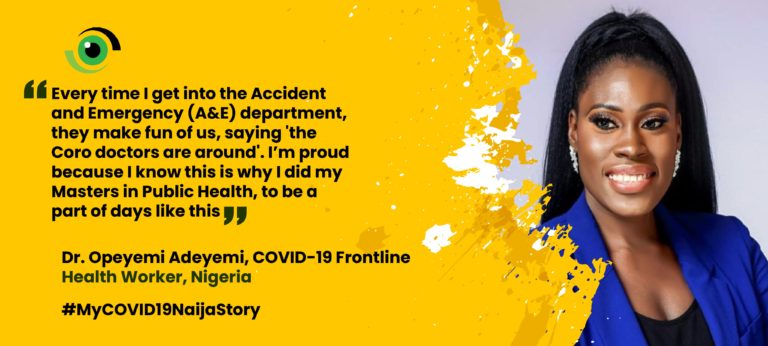
“My COVID-19 naija story”: Health workers in the frontline recount experiences

AS Nigerians continue to grapple with the reality of the COVID-19  pandemic around the country, some health workers have taken to social media to share their experiences using mycovid19naijastory hashtag.

The hashtag created by the NCDC to allow people share their stories have revealed stories of front liners.

The ICIR  here features stories of Nifemi, Godwin and Opeyemi as they recounted their various experiences.

Bella Nifemi is a medical doctor currently working at one of the isolation centres for COVID-19 in Lagos State, Nigeria.
Nifemi, who described her experience as  challenging and life changing, said sometimes the fear of known or unknown sets in.

Dr Bella Nifemi, a medical doctor in an isolation centre in Lagos State.

There has been moments I want to pull out and go back home, then I remember my warriors on admission who are always excited when I’m around for their sample collection,” Nifemi recounted.
She added that she misses home, her bed and her toilet where she does most of her writing.
Nifemi expressed her dissatisfaction about Nigerians saying COVID19 is a scam.

“We are risking our lives daily at the isolation center, deprived of so many things only for people to say it’s not real or it’s Malaria we are managing. Not fair to those who lost their lives to the virus, especially our colleagues,” Nifemi recounted.
She reaffirmed that COVID-19 is not a scam, and urged Nigerians to  stay safe and help health workers flatten the curve to reduce the workload on them. 

Okoro Godwin Omeri , a sample collector in one of FCT isolation centre who also shared his story said he saw the COVID-19 as an opportunity to learn and teach others.

Okoro Godwin Omeri, a sample collector in FCT isolation  in

Godwin lives with his elder brother who has two kids that run to him whenever he comes back from work shouting “uncle is back” as they hug him.

“I miss their hugs, I have been staying in a hotel provided for us and whenever I come home they no longer call my name, they just stare at me from afar,”  he said.

Godwin revealed how he almost quit during his first sample collection, after he met the first case, stating that was when reality dawned on him.

“I asked myself if I really wanted to put my life at risk. I was scared, I trembled, the patient had almost all the symptoms, I felt I was staring at COVID-19 right in the face, at this point I just wanted to quit and go back to my normal life,”  Omeri said.

He explained how he had to take samples of deceased persons, and how frightening it was for him.

“In next 10 years, when the world is talking about COVID-19 frontliners, I would be very be proud I played a role,” he added.

Omeri, like Nifemi, said it was quite painful hearing people say that COVID-19 is not real. H said Nigerians needed to take responsibility by protecting themselves.

“If you contract COVID-19, you can survive it but the person who may contract it from you, may not, ” Omeri    concluded.

Opeyemi Adeyemi  began her residency in Community Medicine at the Olabisi Onabanjo University Teaching Hospital in Sagamu, Ogun State. When the COVID-19 outbreak came to Nigeria, Ogun State was ground zero, and Adeyemi and colleagues found themselves quickly supporting the state’s response.

Dr Opeyemi Adeyemi is a public health doctor in Ogun state.

Opeyemi who said she was at work with her colleagues doing some sensitisation for Lassa fever when the state recorded it’s first case said to her self  that they were not ready “We are not ready! We are still dealing with Lassa fever”.

Opeyemi was quoted in NigeriaHealthWatch, saying: “Amongst my colleagues, the first thing we said was, “Now it’s time for us to work”, because for public health, doctors in other areas of specialisation would say that we                                                                                        were not doing anything much and we were just chilling.”

Opeyemi revealed she had to do everything for her first patient, including disposing her urine and cleaning her up because she was the only one wearing PPE.

She added that her colleagues did not have PPE, so they could not see the patient and get themselves exposed. Unfortunately, the patient passed away.

According to Opeyemi she stated she was frightened when she saw a picture of the way she was dressed in PPE, she had one strand of hair coming out.

“I wasn’t a 100 percent covered. I panicked for about 48 hours until the results came out and it was negative! For every patient you see or every suspected case, you’re practically at risk because you don’t know what the turn of events will be,”Opeyemi added.

“You  have to ensure that you are well covered. PPE is not comfortable at all. You are practically sweating your eyeballs out; it is itchy and uncomfortable, and you still have to do your work.

She explained that the PPE cannot be worn all day, so every time she comes out from the ward, she has to remove it. The next time she goes in again she has to re-gown. With that process, she revealed she can go in and out for up to four times, depending on how restless the patient is. 

When all this is over, Opeyemi said it would be a joyful moment after  the incubation period of the last case and tracing all possible contacts that the last case had and finding that none of them have symptoms of the disease, seeing the last case would be a sigh of relief, knowing that the battle is over.

“I’ll go home, take a shower, buy chocolates, drink a bottle of wine and go to my family in Abeokuta,” Opeyemi added.


Presidency denies reports on Buhari canceling appointments, approvals made by Abba Kyari

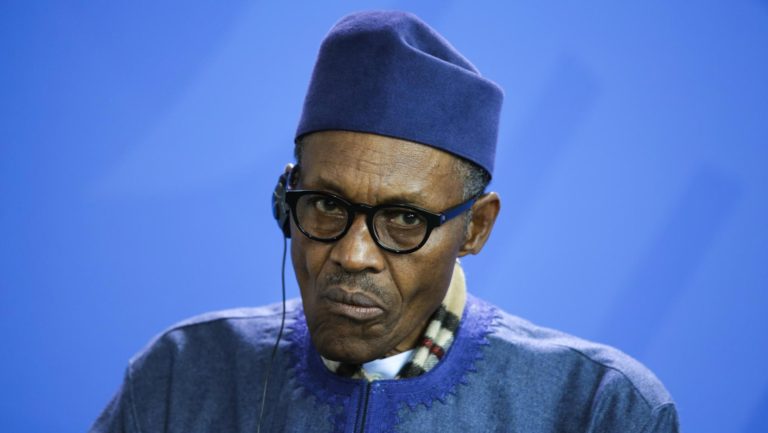
NIGERIAN Presidency on Tuesday night denied reports that President Muhammadu Buhari has cancelled appointments and memos approved by his former chief of staff late Abba Kyari

Reacting to the report the Senior Special Assistant on Media and Publicity to the president, Garba Shehu, described the reports as false.

Garba urged Nigerians to disregard the reports, adding that Buhari has not given anyone such power.

In a series of tweets on his official Twitter page, he stated that “The attention of the Presidency has been drawn to media reports alleging that President Muhammadu Buhari has cancelled a number of memos and appointments signed off by his former Chief of Staff. Not surprisingly, these reports have quoted unnamed sources.

Reports had over the weekend emerged that the President directed his new Chief of Staff, Professor Ibrahim Agboola Gambari, to cancel all appointments and approvals made by the late Chief of staff Abba Kyari.

The reports claimed that 150 memos were signed without Buhari’s permission.

Garba assured that there is not a grain of truth in these reports and pleaded Nigerians that should ignore the insinuations behind them.

He said President Buhari was duly re-elected by Nigerians in February 2019 and he has not and will never cede to anyone else, that power and trust given to him by the Nigerian people.

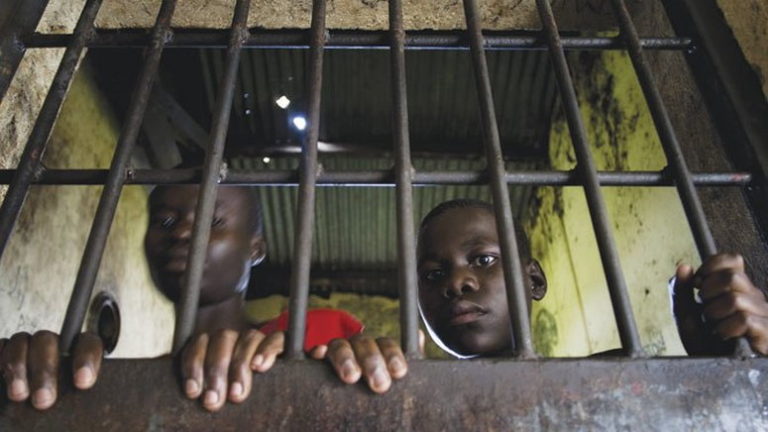
Amnesty International accuses Nigerian Army of continued illegal detention of children in Northeast

FOR children fleeing from Boko Haram attacks in northeast Nigeria, their struggle for survival suffers setbacks from arbitrary detention to gross violations at the hands of the military.

This revelation is contained in a new report published on Wednesday by the Amnesty International.

Titled “We dried our tears: Addressing the toll on children of Northeast Nigeria’s conflict,” the report chronicles the activities of the Nigerian Army as soldiers engaged in widespread detention and torture of children who had escaped after been recruited or abducted by Boko Haram insurgents.

Joanne Mariner, Acting Director of Crisis Response at AI said in a statement that the military’s continued brutality is exposing children in the region to psychological trauma, an act that contradicts their role as protectors of children.

“The past decade of bitter conflict between Nigeria’s military and Boko Haram has been an assault on childhood itself in Northeast Nigeria.

“The Nigerian authorities risk creating a lost generation unless they urgently address how the war has targeted and traumatised thousands of children,” she said.

According to her, the Nigerian military’s treatment of those who escape brutality of the Boko Haram insurgent has been appalling.

“From mass, unlawful detention in inhumane conditions, to meting out beatings and torture and allowing sexual abuse by adult inmates – it defies belief that children anywhere would be so grievously harmed by the very authorities charged with their protection,” she said.

She said the traumatised children would more likely heal, if soldiers refrain from brutality.

AI had interviewed more than 230 people affected by the conflict including 119 children that had suffered dehumanisation by Boko Haram, the Nigerian military, or both.

“Of this number 48 children were held in military detention for months or years, as well as 22 adults who had been detained with children,” the report noted.

The report accuses the Nigerian authorities of a flagrant breach of international law by causing irreversible harm to children.

A 17-year-old girl featured in the report said she was abducted by Boko Haram insurgents from Michika town, when she was 12, after being tortured and imprisoned by the fighters who separated her from her grandmother, despite having a psychosocial disability.

“There, they made us recite the Qur’an and would lash those who couldn’t because I stammer in my speech, it was difficult to cope, and they beat me every day—60 lashes,” she said.

Accounts of several survivors show that Nigerian military did as much damage to the victims of insurgency as Boko Haram.

The United Nations, UN, has documented more than 3,600 cases of children being detained between January 2013 and March 2019 for alleged involvement with Boko Haram, including 1,617 girls.

Another 18-year-old man identified in the report said he was recruited by Boko Haram at 13 and trained as a fighter but grew tired of the “disunity” between factions and the group’s violence against civilians which led to his escape from the group and surrender to the military.

He said he was taken to Giwa Barracks in Maiduguri, where, he experienced horrific torture at the hands of the soldiers.

“The conditions in Giwa are horrible. They could make you die. There’s no place to lie down… It’s hot, all your clothes were wet like they put you in a river. Up to now, nobody has told me why I was taken there, what I did, why I was in detention. I wonder, why did I run from [Boko Haram]?” he said.

Hundreds of interviews featured in the report revealed that men and children detained in Giwa barrack are sometimes kept together in a cell, where sexual abuse of the minors thrives.

Osai Ojigho, Director of AI Nigeria also blamed international donors for bankrolling a flawed military programme ” Safe Corridor” that claims to reintegrate former fighters but allows unlawful detention of children and adults.

“None of the major donors to ‘Safe Corridor’ would sanction such a system of prolonged and unlawful detention for its own citizens, so why do they do so in Nigeria?” she said.

Urging the Nigerian military to release children who were detained arbitrarily saying they had also experienced such inhumane conditions in the hands of Boko Haram insurgents.

“Nigeria’s armed forces must release all children being arbitrarily detained and halt other violations that appear aimed at punishing thousands of children, many of whom were also victims of Boko Haram’s atrocities,” she said.

Reacting to the accusation of the global rights body, Sagir Musa spokesperson of the Nigerian Army told The ICIR that the operations of the rehabilitation programme “Safe Corridor” should not be blamed on the Nigerian Army since it was a programme coordinated by the Defence headquarters.

“The army does not carry not run the operations “Safe Corridor” so it is not fair to say the army is involved in illegal detention of minors when that programme is entirely run by the Defence headquarters. I think you should direct that question to the Defence headquarters,” he said.