Home Blog Page 2105

REPORT: How Niger Delta women are realising gender equity, creating opportunities

HOW do you tell when women are beginning to make impacts in their communities? Is it when their standard of living improves? Is it when more women have education? Is it when they join politics or build community health care centres?

In the Niger Delta, women are at the forefront of changing narratives about gender mainstreaming, and are inspiring fellow women to stand up for their rights.

Juliana’s inspiring story

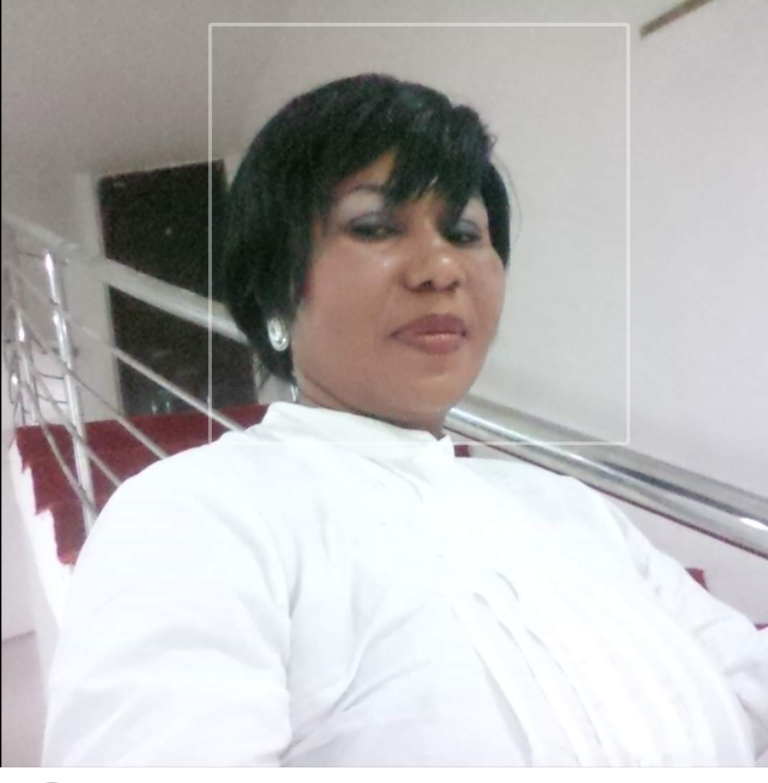
Korepuzhe Juliana, she rose from being an illiterate to becoming a school teacher and now an advocate of women’s rights. Photo Credit: YEKEEN Akinwale

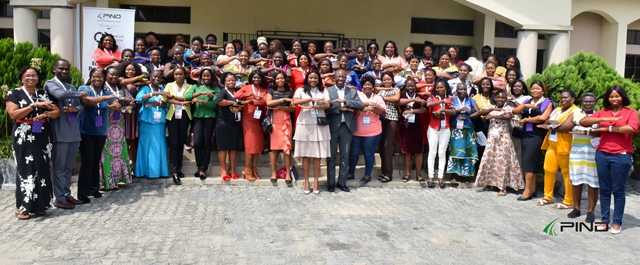
“I’m the testimony of myself,” said 49-year-old Korepuzhe Juliana in front of a cheery group of women and men who had gathered in Warri, Delta State to celebrate this year’s International Women Day organized by the Foundation for Partnership Initiative in the Niger Delta (PIND).

If her education was inspiring, the rest of her story is


The event, Realising Women’s Rights: Economic and Peace building Route was to allow stakeholders to take stock of achievements made since the declaration of Beijing Accord 25 years ago.

Juliana, who hails from Bilabiri 1 Community in Ekeremo Local Government, Bayelsa State has always been an independent woman, even after losing two daughters in a shipwreck and waited for another 18 years to become a mother again.

She narrated how they swam for long hours when their boat capsized on the way  to Nigeria from Gabon. “My two daughters died in the water.”

She grew up in Gabon following her parents’ relocation from Nigeria during her childhood. But the incident that claimed her two daughters while returning to Nigeria in 1994 was one that depressed her for years.

Since then, she has moved from being an illiterate village woman, to being a school teacher and spokesperson for the women.

She was into fishing in Gabon and had thought to continue the same line of business on her return to Nigeria. But for several reasons, fishing in Nigeria at her community was not as productive as expected.

“When I came back, the only occupation in my village was fishing,” she said. “We toiled throughout the night but what we caught is not usually enough compared with the time and energy. We are out on the sea till 2am.”

Juliana could only speak French, and pidgin English and because fishing was not as profitable as she would have loved, formal education was her last option.

“We catch a little fish, so I decided to read ABCD,” an elated Juliana said as she shared her testimony.

At about 26-year-old, she started to learn how to read and write under the guidance of her husband, a Reverend Minister who is now late. “He taught me how to read and write,” Juliana said, eulogising her late husband who died in 2009, as “a good mentor.”

Describing her brain as a computerized one, Juliana, is now employed by Ekeremo Local Government as a primary school teacher after attending teaching certificates at Teachers Training College, Ekeremo and NCE in Ekiti State.

Between when her late husband tutored her and now that she is a full time school teacher, she says there have been many changes for women in her village.

Demanding rights of women

Juliana has been the one standing up for the rights of fellow women in the five communities that make up RDC and two clans.

Men in the communities have given little opportunity to women to be represented at many forums and she fought for women’s inclusion.

“They wanted to have an open forum and they requested for 50 persons to represent our communities: 40 men and 10 women, but the leaders took just one woman to represent us,” she recalls.

“I challenged them that why are they denying women their rights, they said women are illiterate.”

She demanded Adult Education for women in the communities from the local government authorities which were granted.

Juliana, now coordinator of the Adult Education programme says 20 women have enrolled for primary school leaving certificate examination.

“The reason I asked for the women to be educated is that I want women to join in the fight for their rights,” she says. This, she explained, was facilitated by a training on peace building and gender mainstreaming by PIND.

She believes that women hold the key to development in their respective communities with the Adult Education and skills acquisition training they have undergone.


Prioritizing women and children’s health care—Mirian’s bold and courageous efforts
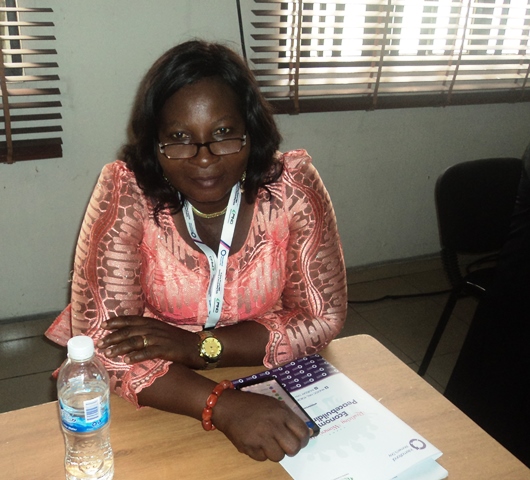
Anomuogharan Mirian, was concerned about women and children’s wellbeing in her community. She rehabilitated an abandoned health care centre. Photo Credit: YEKEEN Akinwale

In 2016, plights of women and children prompted Anomuogharan Mirian to mobilise women of like minds to rehabilitate the abandoned Benikuru Community Health Centre in Egbema, Gbaramatu, Warri, Delta State.

The health centre was in total ruins—overgrown by weeds and the equipment were left to rot away—yet women and children in the community were in dire need of adequate health care services.

“I was inspired by the theme of the 2017 International Women Day celebration that was around being bold and courageous to mobilise other women to clean up the abandoned Egoboata Health Centre,” Mirian says as she shares her success story.

With the help of fellow women like Iselekedimine Newman, Abase and Tokiye Okoromadu as well as a man, Festus Ojogun who shared her vision, the moribund health care facility was rehabilitated.

In October, Mirian said, based on the state government recommendation, the health care centre hosted a medical outreach where locals with defects such as cataract were treated.

Although the centre was serving the interest of the locals, Mirian who had mobilised resources to run it was asked to vacate it by the community. While she left, the community offered her another abandoned building to renovate to continue her work.

“Again, I started all over to renovate the abandoned building. I constructed a wooden bridge over water to link the clinic. I repaired the roof. Today, my new centre is the only one serving the community,” she recounts her experience.


Women for women, Alfreder’s political engagement

Alfreder Ato, broke the jinx for other women in her local government in Bayelsa State during the 2018 elections. Photo Credit: YEKEEN AKinwale

Alfreder Ato, advocate for girl child education in the creeks recalls her experience as the first woman to come out of Ekeremo Local Government in Bayelsa State to seek an elective post.

In the 2019 general elections, she contested the state House of Assembly seat and in 2020 was a deputy governorship candidate. At the time, she was one of the seven female deputy governorship candidates.

Her campaign slogan, “women for women” inspired women to come out massively to vote during the election though she didn’t win the seat.

“Women came out massively to vote for me because that was the first time a woman was coming out,” she says.

“I was able to tell them my vision, that they have tried men and they should have tried women too.”

Alfreder stirred hornet nests during electioneering when she blew the cover of state officials and electoral officials caught in vote buying and hoarding of voters’ cards.

“I ran into some electoral officials and some community leaders who were hoarding cards,” Alfreder relives her experience with fellow Niger Delta women.

This, she says led to the arrest of those involved by the security and removal of compromised electoral officials.

As a result of what happened, the election became a tug of war- her agents were kidnapped by militants; her bank account and phone line were hacked.

She says what she saw during the elections were eye openers that “we have a lot to do.”

But her involvement in politics earned her nomination by YIAGA as one of Nigeria’s most influential young politicians.

What must be done to improve gender mainstreaming?

A Panel Discussion comprising gender activists on the way forward for gender mainstreaming during a programme organised by PIND on March 19 in Warri to mark 2020 International Women Day.

In the Niger Delta, like many parts of Nigeria, women face barriers to realise their potentials, to representation in public life at the local level. Poor women are particularly vulnerable.

Tunji Idowu, PIND Deputy Executive Director explains that the Foundation places women and girls at the heart of its work, working closely with partners on ground to spread the benefits of its programme interventions to women, who are the most marginalised.

“For us, gender mainstreaming is not only about including women as intervention participants,” Idowu says. “It is about deliberately addressing issues limiting women’s economic and social wellbeing.”

The Foundation has over the years empowered and facilitated opportunities for thousands of women such as access to fit for purpose efficient technology and also championed women’s issues such as violence against women.

Bose Eitokpah, a gender specialist says there is a need to bridge the gap between the generation of those who started what culminated into the Beijing Declaration and the new generation to be able to continue with the struggle for gender equity.

Though, the figure of women involvement in Nigeria’s different sectors is still far behind that of their menfolk, Eitokpah who had worked with the Foundation on gender mainstreaming and capacity building says the current realities of women participation in various activities gives encouragement and builds hope of a brighter future.

Blessing Epharaim Sam, specialist in ceiling and floor finishing says barriers against women such as being tagged too weak to do certain work must be broken. She was part of the PIND’s Niger Delta Youth Empowerment Programme (NDYEP) where she acquired the skills in ceiling and roofing finishing.

“A woman is always considered too weak to do certain jobs, like a woman cannot go into construction,” says Sam whose work now speaks volume about what women can do.

In politics, Agatha Osieke Osagie, a lawyer and gender activist laments that Nigerian women are yet to get there. She wonders why women usually fail to support their fellow women seeking political offices.

“In Edo State, we started with three women in the state House of Assembly and today there is none,” she says. “It is a shame.”

Osagie, commends however, women in Edo, that are now playing roles in issues of peace and security unlike in the past when they were laid back.

She attributes this and other success to PIND, which gives a road map to women on how to be more active and engaging.

Benedicta Peter-Ughe’s aquaculture business in Akure, Ondo State which used to be an exclusive preserved business for the men inspires other women.

“I use what I’m doing to mobilise other women in Akure, especially in aquaculture,” she says.

“Women have been taken for granted and are not allowed to engage in some works based on traditions and customs. Eradication of poverty is one of the rights women are entitled to.”

Yet, it would be a mistake to be carried away by the success stories— many more women remain highly vulnerable to poverty and without the right support, will not find a way out.
DATA: Why another lockdown may be inevitable as cases doubled 12 days after easing of lockdown

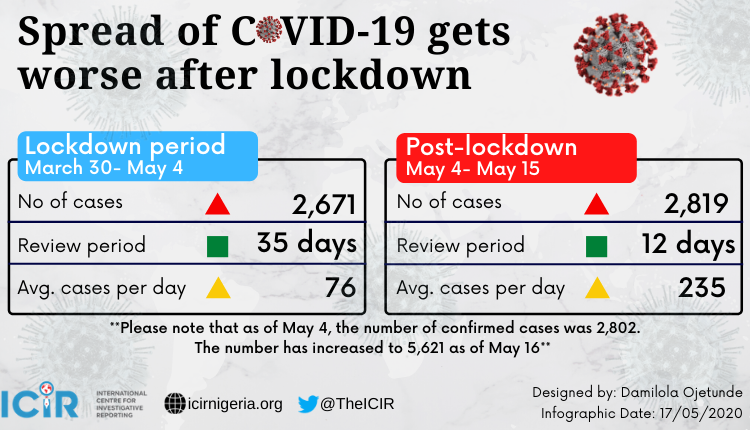
THE number of Coronavirus disease (COVID-19) cases in Nigeria has doubled between Monday, May 4, when the gradual ease of lockdown began in Lagos, Ogun, and the Federal Capital Territory (FCT) and Saturday, May 16.

As it stands, the number of confirmed cases according to the Nigeria Centre for Disease Control (NCDC) has increased from 2,802 on May 4 to 5,621 on May 16 representing about 101 percent increase in almost two weeks.

The number of deaths have also increased from 93 to 176; this is about 89 percent increase in the number of fatalities caused by COVID-19.

During the 35 days of full lockdown­­­ − March 30 and May 4, the number of confirmed cases rose from 131 to 2,802. In other words, an average 76 cases were reported on daily basis during that period, while an average of 235 cases per day has been reported within the 11-day period of the gradual ease of lockdown and more still to come.

While it is too early to link the ease of lockdown to the increasing number of cases,  figures from the NCDC shows a daily progression in the number of cases both pre and post lockdown periods.

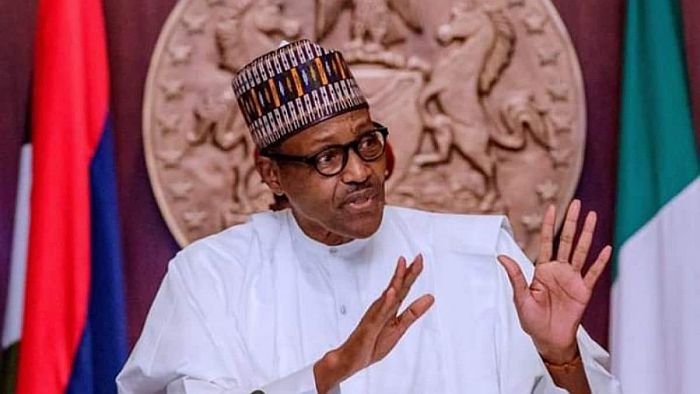
President Muhammadu Buhari explained while delivering his nationwide broadcast that the decision to ease the lockdown was premised on advice from the Presidential Task Force (PTF) on COVID-19.

Buhari concedes the lockdown has hurt the country’s economy, especially in non-essential sectors that depend on daily income for survival. But the decision to relax the lockdown came as Nigeria’s number of coronavirus cases has been increasing.

While Lagos, Ogun, and the FCT were on lockdown, other state governments tolled the path of locking down their states. However, some of the governors have relaxed the lockdown order in their states, taking a cue from the federal government.

In fact, Borno, Ebonyi, Gombe, Adamawa, and Anambra states have all relaxed the order.

Edo state government has set up a committee to advise it on relaxing some of the lockdown measures currently in place.

Following the relaxation of the lockdown order in Ebonyi state, religious gathering of not more than 500 people will now be allowed in the state.

Interestingly, Kano state, the second most infected of the virus in the country relaxed the lockdown order imposed on it by President Buhari.

Before the gradual ease of lockdown, the PTF issued new guidelines, including an overnight curfew, the mandatory use of face masks in public places and strict social distancing restrictions. However, thousands have flooded marketplaces and banks, without complying  to the physical distancing orders.

Arising from the continuous violation by people in public places, the PTF has considered reviewing the guideline in the light of continuous spread and rising cases of the virus in the country.

Many public health experts have criticised the decision to ease the lockdown terming it as ill-timed and premature.

There may be spike in COVID cases – NMA

Reacting to the gradual ease of lockdown in Lagos, Ogun and the FCT, President of the Nigerian Medical Association (NMA), Francis Faduyile, said the country would see a spike in positive cases of the coronavirus.

He said people have been trooping out en-mass and have not been complying with regulations in terms of social distancing as well as being guided in public places.

“This development is definitely working against all the regulations towards the containment of the disease and it shows that it is more likely we will have a spike in positive cases as the NMA envisaged.”

He, however, urged the Federal and State governments to enforce all the regulations put in place to prevent the spread of the COVID-19.

He said: “Since the government has relaxed the lockdown, they should be able to find ways to ensure that there is compliance with guidelines they have put in place.”

President Nana Akufo-Addo of Ghana on April 19, announced the end of its three-week lockdown in two major cities (Accra and Kumasi).

This saw Ghana’s case rise days after the lift in lockdown and making it the country with the highest number of confirmed cases in West Africa.

Ghana’s strategy in preparation for easing the lockdown was to ramp-up testing. Ghana has an aggressive testing strategy and even employed drones in transporting samples to labs to reduce the time it takes to identify cases and respond to the threats. As of May 16, Ghana had tested about 171,642 persons.

In comparison, Nigeria has tested 32,942 people – 160 tests per one million.

With this, it means Nigeria ranks second to the last in terms of test per one million out of the top 10 countries with the highest number of confirmed cases in Africa.

Ghana has 5,539 tests per one million and ranks second in this category, coming after South Africa with 7,423 tests per one million.

Lesotho, the last African country to be affected by the virus reported its index after the relaxation of its four-week lockdown.

Nigeria, with 17.06 percent infection rate is the third most infected country of the COVID-19 out of the 10 countries with the highest number of confirmed cases in Africa.

PDP says health minister’s denial of whereabouts of Chinese doctors creepy, betrayal of public trust

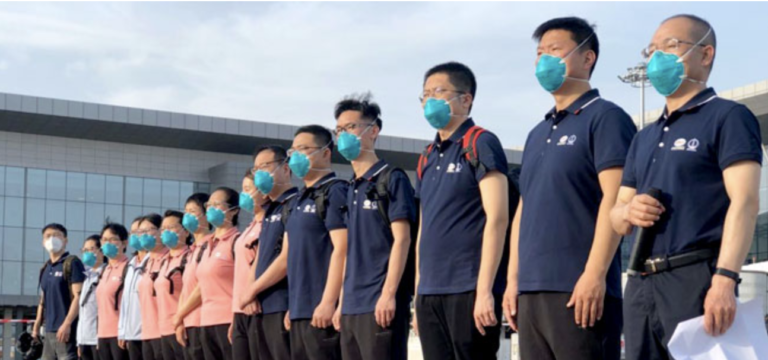
THE Peoples Democratic Party (PDP) on Saturday described as creepy, and a betrayal of public trust, the denial by Osagie Ehanire, Nigeria’s Minister of Health, about the whereabouts of the 15 Chinese Doctors who came into the country on 8th April.

The party said it is weird that Ehanire, who had repeatedly assured that the Chinese were brought to render medical support and training; could suddenly change his narrative about the Chinese citizens.

In a statement issued by the party via its social media handle, the PDP gave 48 hours for the Federal Government to locate the foreigners, stressing that Ehanire was part of government officials that received the personnel upon their arrival in Abuja.

According to the party, Ehanire’s statement about the foreigners had heightened apprehensions in the public space while the true identity of the Chinese team has reportedly been shrouded in secrecy.

“The PDP recalls how officials of the All Progressive Congress-led administration had vehemently defended the invitation of the Chinese team and offered them full state protocol upon arrival, only to now turn around to disclaim the supposed experts, deny involvement with them and even forbid Nigerians from inquiring about their whereabouts.

“Our party is worried that the APC-led Federal Government is being economical with the truth, with its officials playing politics with the lives of our citizens and health safety of our nation,” the statement read in part.

The Minister had recently told journalists who asked him about the doctors, during the regular briefing by the Presidential Task Force on COVID-19 not to bother him with such as they were not really federal government’s guests.

The Chinese had arrived at the Nnamdi Azikwe International Airport, Abuja early April on premise that they were coming to assist Nigeria in the fight against the Coronavirus Disease (COVID-19) until the question of their whereabouts became public discourse.

On 28th April, it was reported that the Chinese had tested negative for the virus but since then, not much was heard from the foreigners.

“They are not really our guests…I think not all of them are doctors.  Some of them are technicians…….the Ministry of health is not their host, so we cannot always explain what happens to them or where they are.” Ehanire told journalists at the PTF briefing.

However, the opposition party charged the Federal Government to identify the exact locations of the Chinese foreigners.

They expressed worry over the incident stressing that the current government should be held responsible should there be any sudden upsurge in COVID-19 cases and deaths in the country, with the arrival of the said Chinese medical team.

The party emphasised that based on government data, Nigeria had 254 confirmed cases with 44 treated cases and six deaths, but the data has risen to 5,450 cases and 171 deaths.

“Our party, therefore, insists that the PTF on COVID-19 should immediately come out with the truth and provide explanations on the whereabouts of the team in the next 48 hours so as to douse the tension in the country,” the party has said.

NAWOJ condemns suspension of journalist by Imo state govt

THE  South East zone of Nigeria Association of Women Journalists (NAWOJ) has condemned the suspension of Vivian Ottih, the Chairperson of Imo State NAWOJ, by the management of Imo Broadcasting Corporation over an appeal for the payment of her salary and colleagues’.

The group said the suspension was labour-related and  was based on Ottih’s innocuous Facebook post on the three- month outstanding salaries of workers in the station.

NAWOJ expressed disappointment that the journalist was suspended at the time shortly after she gave birth to a baby.

And that claims made by Ottih on outstanding wages has not been disputed by the management.

Ottih, a lawyer, had on May 4 in a Facebook post pleaded publicly to the state government to pay her colleagues and herself their over three months salaries.

Please my brother, help me inform our humble and performing governor that the entire staff of the only electronic media establishment owned by the state Imo Broadcasting Corporation, the famous Orient FM and Television have not received salaries for the month of February, March and April.”

For complaining of non-payment of her salaries and that of her colleagues in the public, Imo state government then queried the senior editor.

Suspension letter issued to Vivian Ottih

In a press statement signed by Lion Chibota Edozie Vice President, South East NAWOJ, she  described the action of Vivian’s indefinite suspension as hasty, high-handed and against all known labour laws.

“We are persuaded to think that this action does not have the blessings of His Excellency, Hope Uzodimma the Executive Governor of Imo State because he won’t sanction such high-handed action.”

Further describing the incident, the group added that it was against the backdrop of the fact that the action would be an embarrassment to the National Chairman of All Progressive Congress (APC), Comrade Adams Oshiomhole who, apart from being very close to Hope Uzodinma, fought all his labour years, for what  Ottih is being victimised.

It therefore called on the Director-General of Imo Broadcasting Corporation (IBC) to revoke the suspension of Ottih and effect the payment of outstanding wages of all workers in the establishment.

Presidency insists Covid Organics not requested, as FG takes delivery of Madagascan herbal solution

THE Nigerian government has finally taken delivery of  Covid Organics (CVO), Madagascan herbal solution promoted as cure for the Coronavirus Disease (COVID-19).

The consignment arrived barely 48 hours after Boss Mustapha, Secretary to the Government of the Federation (SGF) disclosed that Nigeria did not request for the drugs.

Garba Shehu, spokesperson to the President tweeted about the arrival of the drugs on Saturday when Buhari received President Umaro Sissoco Embalo of Guinea Bissau, at the State House in Abuja.

The President, in the statement,  restated his commitment to ensuring the mixture undergoes appropriate scientific verifications before it is adopted as a cure for the COVID-19 and administered on infected patients.

“President Muhammadu Buhari Saturday at the State House, Abuja, received the Madagascan native formulation against the #Covid-19 pandemic,” the statement read.

“We have our institutions, systems, and processes in the country. Any such formulations should be sent to them for verification. We will not put it to use without the endorsement of our institutions,” he stated.

Since the Madagascan authority adopted the herbal drug, which has since undergone massive production, about 55 COVID-19 patients have reportedly recovered from the pandemic.

Despite the success, the process of producing the herbal tonic has been a subject of controversy in Nigeria.

Medical practitioners and other health workers have criticised the government’s decision to bring the drugs into the country.

The Pharmaceutical Society of Nigeria (PSN), and Joint Health Sector Union (JOHESU), particularly described the idea of importing the herbal solution as thoroughly disgraceful, noting that there are 69 research institutes and federal, state universities in the country capable of developing local solutions.

Also, experts have cautioned over the usage of the drugs because of the short term of the product development, which did not meet the acceptable scientific standard.

Research and development, according to the experts for such product would mostly span between three and six years.

The pre-clinical trial would also take another year.

The in vivo (experiments on cells or molecules outside their usual environment) and in vitro studies (testing in animals, toxicology, efficacy and how quickly the drugs are absorbed and subsequently eliminated) are also checked before it is tried on a larger population and released for public use.

It is uncertain Covid Organic went through any of this process.

Earlier, The ICIR had reported that the Federal Government may be able to subject the herbal solution to proper clinical trial due to lack of adequate equipment.

On 14th May, the World Health Organisation (WHO) through its Regional Director, Matshidiso Moeti, disclosed an intention to study the herbal solution.

The director indeed had called for caution, stressing the need for a clinical trial.

“We would caution and advise countries against adopting a product that has not been through clinical tests for safety and efficacy,” Moeti had noted.

Notwithstanding, Shehu told The ICIR that the drug is a donation and not a request from the Nigerian authority.

“This is a Madagascan concoction, and they have said it over and again that they are making free donations to brother African nations,” he said, in response to a text message sent by The ICIR.

FAKE NEWS: FG denies statemtent on resumption of flights in Nigeria

THE Federal Airport Authority of Nigeria (FAAN) has urged the general public to disregard a statement that says guideline has been released for the resumption of flights in Nigeria.

The agency called on the public to disregard the “fake” guideline in a press statement issued by the FAAN General manager on Corporate Affairs, Henrietta Yakubu.

A statement on the guideline was signed by one Tayo Olu on May 16th that a post COVID-19 guideline has been released for air travellers through FAAN.

FAAN urged the general public most especially air travellers to disregard such information.

The agency said although the government is working on a guideline for the resumption of air travels, it is still a work in progress and the  statement  should be ignored.

“We want to state emphatically that although FAAN is carefully and seriously working on a guideline, the release did not emanate from us as it is still a work in progress,” the agency declared

The statement noted that when the guideline is ready, the FAAN would communicate to the public through official channels.


REPORT: With over 2,000 cases, Lagos, Ogun govts unable to stop inter-state movement despite lockdown order

THE Lagos and Ogun State governments have made multiple public claims to stop inter state movements as part of measures to curtail the spread of Coronavirus (COVID-19) pandemic in their respective states but checks by The ICIR revealed that such announcements are mere ‘audio announcements’ as essential and non essential workers still travel in and outside both states.

Despite the fact that Ogun and Lagos states have both recorded about 40 percent of COVID-19 cases in Nigeria, many residents of both states have continued to commute in and out of the states with little or no restrictions.

And the security agents act indifferent, in some case they even aid commuters to undermine the lockdown order.

There are varieties of options available to residents willing to go in or out of both Lagos and Ogun despite the inter state lockdown.

Unrestricted movements and Unchecked Boundaries

After the state governments’s announcement, security officials consisting of the Nigerian Police Force (NPF) and the Nigeria Security and Civil Defense Corps (NSCDC) were deployed to enforce the lockdown at the boundary between the states.

At the Toll Gate on the Lagos-Ibadan expressway, there were heavily armed security men.

On the side of the road that leads to Ogun state, only essential travelers or those with permits are alllowed passage.

Barricaded Lagos-Ogun boundary. Credit: Lukman Abolade/The ICIR

The cars are checked one after the other as the road has been narrowed with blockades by the security forces giving way for restricted access.

On the other side of the road which leads to Lagos, the security forces are also on the road ensuring that no vehicles are allowed passage, but passengers  can disembark and walk past the barricade to Lagos.

Therefore, commuters traveling from any part of Ogun to Lagos would alight at the Toll Gate, a few meters from the security checkpoint, walk casually  into Lagos state where they board another bus into the metropolis.

Commuters walking inside and outside Lagos and Ogun States. Credit: Lukman Abolade/The ICIR

Although, the commuters are checked for compliance with the face mask guideline by health authorities beyond that, they are never stopped from entering or exiting the states.

Just like the Toll Gate boundary, another Ogun – Lagos boundary at Mowe/Ibafo is no different.

On getting to the popular Berger bus stop, commuters would alight from cars or buses then walk their way into Lagos state and vice versa.

Lagos and Ogun states share many boundaries but as observed by The ICIR some of these boundaries are unpatrolled hereby jeopardising the purpose of the interstate lockdown as declared by the two state governments.

During a visit by The ICIR to Iju-Ishaga in Lagos state bordering Ajuwon, Ogun state, the boundary was left unmarked and one could hardly diffrentiate the entry point except through signposts of local businesses nearby that show diferent states.

Iju – Ishaga/Agbado boundary between Ogun and Lagos States. Credit: Lukman Abolade/The ICIR

Iju-Ishaga, Lagos state also shares another boundary with Agbado which falls under Ogun state but like the other boundary, this boundary is also unpatrolled, but unlike the other, there is a sign that indicates entrance and exit from Ogun state.

Why we must travel to and from Lagos – Ogun Residents speak

Baba Mathew, a 43 years old man who works in Apapa, Lagos stood at the Toll gate on Monday, 11th May waitng to board a bus to his work place.

After a while he got tired and stepped back to contune to waiting for another vehicle.

Baba Mathew during an interview with The ICIR on why he must get to Lagos State.

He told The ICIR that he must by all means get to his work place in Apapa.

He spends five working days in Lagos and returns home on weekends to his family in Ota, Ogun State.

“Where would I stay in Lagos after work on Fridays? No where! So I must come home to my family, he told The ICIR.

He added that he has never considered living in Lagos state due to the high cost of living and housing.

“The stress is much for me too, most especially during this lockdown but I dont have a choice because I can’t afford to feed my family in Lagos and do you know how much an apartment costs in Lagos state? It’s a no-go-area for me, so I just have to keep going and coming back,” Mathew said.

Similar to his situation is that of Joseph Akanbi who also works in Lagos State but lives in Dopemu, Ogun State.

Joseph Akanbi during an Interview with The ICIR

To him, it’s a matter of survival, if he doesn’t go to work in Lagos state, he would lose his job to someone that stays in Lagos hence he must travel despite the restriction orders.

He told The ICIR that it is essential for him to travel everyday because he has to earn something for the family.

“If I decide to stay at home no one would feed me and my family, so i must go, it’s better to struggle to get to Lagos and come back to Ogun than watch my children starve or turn into beggars,” Akanbi said.

According to him, he lives with his wife and four children who now eat more than usual because they stay at home all day.

Dorcas Akiigebe, a health worker in Lagos state has a house of her own in Ogun state which is why she has to commute between states everyday.

Dorcas Akiigbe being interviewed by The ICIR

“Everyone has their reason for travelling but as for me, I am an health worker for my community in Yaba LCDA and I have a house here in Ifo Ogun state, I usually come home to rest when I am off duty,” she said.

We don’t control the security personnel, says Lagos government 

The Lagos State government in an interview with The ICIR said they do not control the security  forces.

“We are not in control of the military or the police, we are preaching they (people) should take responsibility but people take the law in their hand, the governor has spoken against this act,” said the Lagos state Commissioner for Information, Gbenga Omotosho

He said the government only make laws and it is left to the security agents to enforce the laws.

Omotosho said although the government does not have evidence of people disembarking vehicles and walking into the state but they have heard people say that.

“I don’t have any evidence but people have been talking about it that people disembark the vehicle and walk into the state,” Omotosho told The ICIR.

The spokesperson for the Lagos State Police Command, Bala Elkana said the police has been doing all it can to ensure people comply to the guidelines but insisted that people are fond of devising means to defy the law.

He added that most of Lagos-Ogun boundaries are communities and it is impossible to achieve a hundred percent boundary closure unless one is to shut down the nearby community.

About the unpatrolled boundaries, Elkana said he is unaware that are unpatrolled  boundaries. He said with this information, he would look into it and take action.

The spokesperson to Ogun State Government, Remi Hassan,  has not answered calls and messages from The ICIR as at the time of filing this report.

On the other hand, the Ogun state Police Command blamed the people for devising means to beat the security network.

However, Abimbola Oyeyemi, the Ogun state police spokesperson said the command would continue to improve on measures to enforce the law.

“Some of our people are very recalcitrant and since we have reslised that we have been devising measures to put an end to that that is why you’ll hear that we have been intercepting some people traveling into the state and sending them back to where they came from some have been fined,” Oyeyemi said.

As at the time of this publication, commuters still travel in and out of Lagos and Ogun States with little or no restriction.

SERAP asks FG to publish details of suppliers, contractors of school feeding program

SOCIO-Economic Rights and Accountability Project (SERAP) has requested the Federal Government to urgently publish details of the suppliers and contractors,  as well as the procurement rules, including bidding processes, and the total budget for the implementation of the school feeding programme.

The request was made to the Federal Government through a Freedom of Information (FOI).

SERAP also seeks information on the number of states to be covered during the COVID-19 crisis, and the projected spending per state.

The request also listed details of the mechanisms and logistics that have been put in place to carry out the programme, as well as the role expected to be played by the World Food Programme.

Recall that the Minister of Humanitarian Affairs, Disasters Management and Social Development, Sadia Umar-Farouk on Wednesday announced that the government would start feeding school children in their homes during the COVID-19 crisis, starting from Ogun and Lagos states, and Abuja.

SERAP deputy director, Kolawole Oluwadare said publishing the details requested is in the public interest.

This would help to address public scepticism regarding the ability of the government to satisfactorily implement the programme, promote openness, and allow Nigerians to track its implementation and to hold suppliers and contractors to account, SERAP said.

“SERAP notes that the UN Convention against Corruption to which Nigeria is a state party requires the government to set the highest standards of transparency, accountability and probity in programmes that it oversees.”

According to SERAP, “publishing the details of suppliers and contractors and the procurement rules being implemented for executing the school feeding programme at home would also remove the risks of conflicts of interest and politicisation of the programme, as well as promote transparency and accountability.”

The civil society organisation urged the federal government to establish an online national database for all suppliers and contractors responsible for carrying out the programme to feed school children in their homes which is expected to cover over three million households in Lagos and Ogun states, and the Federal Capital Territory, Abuja.

Africa private creditors form group to assist African nations negotiate debt relief

AFRICA private creditors have formed a working group that will assist African countries and other debt providers to cushion the economic impact of the COVID-19 pandemic on the continent,  Bloomberg has reported.

This would be carried out by negotiating debt relief for African nations, the group said in a statement Friday.

Private creditors representing more than $9 trillion of assets warned on the risks of a blanket approach to the process.

The private creditors include private bondholders, private banks, other private financial institutions, and manufacturers, exporters, and other suppliers of goods that have a financial claim.

The group, coordinating the view of more than 25 of the world’s foremost asset managers and financial institutions, has established a number of core principles of engagement.

Chief among those is that a one-size-fits-all solution will be counter-productive for the continent, it said.

African countries are asking official and private creditors to temporarily suspend payments in order to channel resources to contain the pandemic.

The virus threatens to overwhelm the health system of a continent that is home to two-thirds of the world’s poor.

“Future generations of Africans will need to access private capital to invest in hospitals, roads, education, healthcare systems and other infrastructure critical for economic and societal development,” it said.
“A rushed, blanket approach developed during a time of crisis will put that crucial long-term access to capital at risk.”
The UN Economic Commission for Africa (UNECA) has also estimated that the continent may lose half of its Gross Domestic Product (GDP) growth from 3.2 per cent to 1.8 per cent, particularly due to supply chain disruptions, shrinking investment and lower remittances.
According to the African Union, it is projected that exports and imports of African countries will reduce by at least 35 per cent from the level reached in 2019, which is a loss estimated at around $270 billion.

Troops neutralise 27 armed bandits along Katsina-Zamfara border in air attack

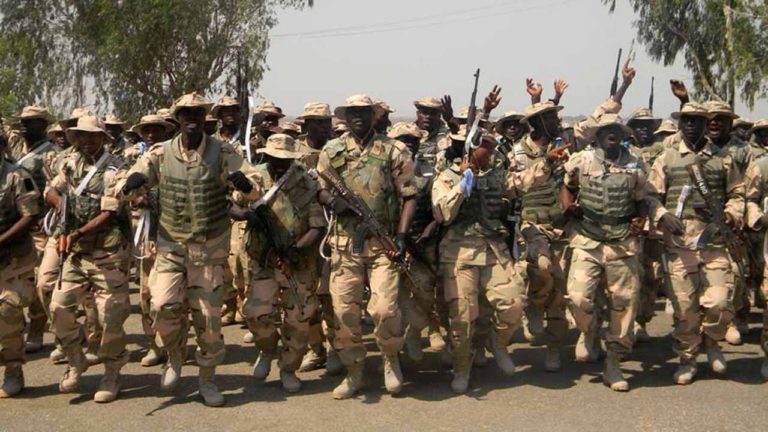
THE Air Component of Operation HADARIN DAJI said it has inflicted damages on armed bandits in a coordinated air attack  dwellings along the Nahuta-Doumborou corridor on the border between Katsina and Zamfara states.

The operation was executed yesterday, sequel to credible intelligence reports indicating that a notorious armed bandit leader and his followers were harboured in a cluster of huts near a high ground in the area.

According to a tweet by the defence headquarters, the Air Component dispatched a Nigerian Air Force attack helicopter as well as a ground attack aircraft to engage the location.

Several of the armed bandits were seen along with a large number of rustled cattle.

The attack aircraft took turns in engaging the area, neutralising some of the bandits while few escaped with injuries.

Human Intelligence (HUMINT) sources later confirmed that no fewer than 27 bandits were neutralised as a result of the attack.

The Armed Forces of Nigeria however, encouraged the general public to continue providing useful information that would facilitate its operations to restore peace and security to all affected parts of the country.