THE Federal Ministry of Health is set to unveil a herbal formulation for the treatment of cough associated with Coronavirus disease (COVID-19) and respiratory infections.
The Ministry said its Department of Traditional, Complementary and Alternative Medicine (TCAM) has conducted research that led to the formulation for the management of cough in COVID-19 and other cough related infections.
The disclosure was contained in a letter dated April 28, and addressed to Professor Mojisola Adeyeye, Director General of National Agency for Foods, Drugs, Administration and Control (NAFDAC), asking the DG for the listing of the medicine as Cov-herbal cough mixture.
According to the document signed by A.M. Abdullahi, Permanent Secretary of the ministry, and sighted by The ICIR, Cov-herbal cough mixture was developed from medicinal plants that are widely used as food materials and medicines.
They included Allium sativa (garlic), Allium cepa (onion), Zingiber Officinale (ginger), Piper Guineense (West Africa Black Pepper) and Andasonia digitate (baobab fruit).
Abdullahi explained that the plants have documented scientific evidence of long use for the management of cough and other respiratory infections, with medicinal properties of mucolytic, antitussive, expectorant, soothing, demulcent, anti-inflammatory and antiviral effects.
He stressed that the Ministry was prepared to “walk-the-talk in the promotion and integration of herbal medicine into the health care delivery system.
“In view of the foregoing and the desire of the ministry to showcase to the public, a product that is 100 percent sourced locally, you are requested to carry out the necessary procedure for listing,” the permanent secretary said.
He concluded saying the ministry would contract the packaging of the product to some identified pharmaceutical companies.
When contacted, the NAFDAC Director-General confirmed to The ICIR in a Whatsapp message that the letter announcing the development of the drug was authentic.
“NAFDAC follows global practices,” Professor Adeyeye told The ICIR.
If this drug is proven effective, Nigeria will follow the footsteps of Madagascar as the second African country to have found treatment for the deadly COVID-19 disease.
Madagascar is leading the race in Africa with its launch of Tambavy COVID-Organics (CVO) after researchers at the Research Institute in Antananarivo, Madagascar (IMRA) conducted the clinical study of the drug. The country as of May 5 reported a total of 149 cases of COVID-19 but no deaths.
The mixture is made from artemisia annua – a plant with proven efficacy in treating malaria – as well as other indigenous herbs is being touted as cure and prevention of the deadly virus which has killed over 256,000 persons globally
Already, African leaders under the umbrella of Africa Union (AU) are in talks with Madagascar to obtain technical data regarding the safety and efficiency of its herbal remedy announced for the reported prevention and treatment of COVID-19 disease.
IN late April, an emotionally-laden audio message went viral on social media. It was more of a Save Our Souls (SOS) call demanding urgent intervention.
Oblivious to many, Selma Ahmed, a 70-year-old grandmother was behind the emergency message. The call made to the Nigeria Centre for Disease Control (NCDC) was to report a suspected case in Kano and see how the Centre could intervene. But the efforts yielded no result until the old woman eventually lost her son-in-law to the Coronavirus Disease (COVID-19).
She said she was disappointed that the NCDC official to whom she spoke was deceptive in his response. The official promised to visit her son-in-law, a suspected case of Coronavirus but refused to show up after several calls to the Centre. And the young man died hours later.
She said her son-in-law was earlier treated for typhoid and high fever before his case became worse. Her daughter who was married to the deceased repeatedly called the NCDC, but the agency’s lines were unresponsive.
At some point, concerned individuals offered an alternative number they could use to reach out to the NCDC which they called repeatedly, but no one answered.
Unknown to the family the agency’s office in Kano state was already shut down due to the spread of the infection at the centre.
Ahmed said as a result of their failed attempts, she put an emergency call to the Abuja NCDC office. And the NCDC officials allegedly promised to respond to the situation.
“NCDC said they will go there. Every 30 minutes, I will call the NCDC because the one in Kano were (sic) not responding. He (the operator) was telling me they would soon go there, they would soon go there! When the thing was getting out of hand, I called this man, please tell me the truth, what is happening?
“Then he told me that the NCDC in Kano has been shut down. I said ‘you know they have shut down and you are telling me they will soon go there, why did you continue to play with my intelligence,'” she queried.
All she got in response was “sorry madam.” Frustrated, the old woman later called on the authorities to save her daughter and children who also might have been exposed to coronavirus.
But Ahmed family was not the only victim of NCDC’s negligence.
“NCDC promised to visit my father, we waited over 3 hours but no one showed”
On 30th April, a lady identified as Martha also disclosed on social media how NCDC failed to respond after many calls for help.
Her father, an airline employee was symptomatic of the COIVD-19 disease.
Like the grandmother who lost her son-in-law, Martha also relied on social media to get the NCDC’s attention.
“Please guys I need you to help me retweet this until NCDC sees this. We have been trying to get them [NCDC] to see my dad he is an airline staff and he is having coronavirus symptoms,” says Marteetarh
Martha later reported on Twitter that she finally got through to NCDC, but the officials did not show up.
Seeing the tweet which had garnered so much reaction on the social media, Kano State Ministry of Health @KNSMOH advised she call the state COVID-19 emergency number.
The state authority proceeded to share with her the hotline numbers; 0909-399-5333, 0909-399-5444 and 0800-COVIDKN.
“Please do call one of the above hotlines and explain your case they will surely respond…..we pray with you,” the officials tweeted.
But in her response, her family had earlier placed a call to the state health authorities yet no one showed up, three hours after they promised to visit.
“We called in the morning, they said they were coming 3 hours later but they didn’t show up.”
On 2nd April, she announced that the NCDC eventually reached out to her family. That was about two days after.
NCDC COVID 19 Data as of 05 May 2020 Source: NCDC
Crown of Wealth Photo Source: Twitter
I had similar unpleasant experience – I was told to visit the hospital
Also narrating his experience, a man identified as @a_Crownofwealth on social media said he arrived the country from the United States on 1st March, but nine days after, he started developing symptoms of COVID-19.
According to him, the ailment which started with a headache became worse such that he had pains at his lungs and could not take a deep breath.
“NCDC did the same thing to me. I came back from USA on March 1st. On March 10th. I started seeing symptoms, I could not sleep for seven days straight, with headache, pain in my neck, geld, and so on. I called Osogbo state line, I was told to go to the hospital.
“… I can’t even take a deep breath. Then I had palpitations in my heart. Felt stiffness in my back and neck.”
Luckily, he later tested negative after visiting the hospital. “I have never taken medications like this in my entire life. I have been treating every symptom that comes with it,” he noted.
They did exactly the same to me
In Lagos state, there are a number of reported cases which went viral. Among them is a man identified as @oluwastoner1 on social media. He said after observing the symptoms, he went on self-isolation for 14 days, stressing that he denied his roommates access to his room for the period and was conscious not to spread the disease.
“They did exactly the same thing to me,” Oluwastoner said.
Narrating his experience, he shared how he further developed a sore throat, high temperature, headache and mild difficulty in breathing.
“NCDC told me to treat myself for cold flu but the symptoms persisted. I called severally they refused to come….”
Amidst the increasing figure of confirmed cases of the disease nationwide, the experiences mentioned above are among cases of delayed response by NCDC. There are several under-reported suspected cases.
Findings by The ICIR revealed that once the NCDC becomes unresponsive, relatives of the suspected cases or the victims would resort to tagging personal handles of social media influentials such as @UtohPaul and Adetutu Balogun @Tutsy.
A check on their timelines, for instance, shows that Paul has over 10, 000 followers while Balogun has garnered more than 175, 000 followers.
Both persons have been consistent in dishing out COVID-19 preventive measures as well as vital summary information from the NCDC. According to Paul, the duo have been able to intervene in over 150 cases across the country.
“@Tutsy22 and I are not frontline workers but in the last five weeks, we have intervened in over 150 different cases nationwide. I personally sleep less than three hours at night and try to catch sleep during the day at any given opportunity. We do it for you but we also need your cooperation,” Paul stated on Tuesday.
Nigerians have continued to express worry over delayed response time from the (NCDC), each time a suspected case is reported.
They criticised the centre officials of being unresponsive which had needlessly caused many deaths, especially in Kano state.
Since the COVID-19 outbreak in Nigeria, however, NCDC has been at the forefront of the global pandemic, managing the confirmed cases and publishing vital national guidelines required to reduce the virus spread.
It has successfully formulated preventive measures, safety procedures and gradually expanded the figure of testing centres nationwide to 15.
The Centre has also consistently updated Nigerians on latest developments on the pandemic, via the daily briefing of the Presidential Task Force on COVID-19.
As of 5th May, 2950 confirmed cases of the virus has been recorded in the country, 98 deaths while 481 have been discharged.
Lagos has the highest number of cases with 1,226 cases, followed by Kano with 397, Federal Capital Territory (FCT) 307 and Borno State 106.
These constant updates by the NCDC have received commendations from various quarters, but people are concerned still about the agency’s delayed response time.
The calls are enormous but there are alternatives – NCDC
The ICIR tried to reach Emeka Oguanuo, the NCDC Spokesperson, but he did not respond to a text message sent to him.
However, Dr. Chinwe Ochu, Head of Prevention, Programmes and Knowledge Management said there are 15 areas where COVID-19 could be tested in the country. She said though the public has no right to visit the test centres, they could contact the NCDC if they developed symptoms of the virus.
She said the NCDC has also facilitated the establishment of emergency operation centres at the state, engaged contact tracers and those who work at the call centre.
In Lagos, Kano and the Federal Capital Territory (FCT), for instance, she disclosed during a television broadcast on the Nigerian Television Authority that active case search had commenced into communities, especially those settlements considered more exposed to the COVID-19 disease.
She explained that anyone who develops symptoms such as cough, fever, sore throat, running nose, difficulty in breathing, should promptly call any of the provided hotlines stressing that arrangements would be made by the state team to collect such samples for testing.
While reacting to the issue of untimely response to emergency calls from suspected cases, she said there are various phone lines the public could call to reach out to the centre but described the calls as ‘enormous’.
According to her, whenever calls are made to the centre and no one answers, the public should remain persistent until they get a response.
“…we receive calls from all the states in the federation. Keep calling, definitely, you will get through but most importantly, there are call centres at the state levels, that may be free which you could call, and get a quicker response than the national line.”
She, however, advised the public to call state lines, as it is easier to reach. Aside from the toll-free number 0800-9700-0010, the NCDC, she noted could be reached via Whatsapp +234-708-711-0839 and text messages at +234-809-955-5577 all available on the official website.
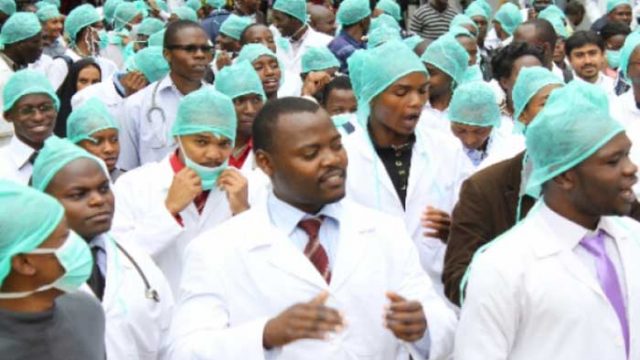
AS cases of the Coronavirus Disease (COVID-19) continue to increase in Nigeria, health workers on Thursday, called on President Muhammadu Buhari to urgently approve the payment of their outstanding salaries.
The medical officials, under the umbrella body of Joint Health Sector Unions (JOHESU), said since 2018, the federal government has refused to pay their outstanding salaries for the month of April and May when the union went on demonstration.
Dr. Murtala Umar, JOHESU Chairman in Kano State said the government need to effect the payment of their outstanding because many health workers and their families are currently at risk of contracting the virus.
In June 2018, Prof. Isaac Adewole, former Minister of Health came up with the ‘No Work No Pay’ rule in a reference letter DHS/166/T2/198 following the nationwide strike action by JOHESU.
Speaking during Sunrise, a ChannelsTV programme, Umar said the government has withheld the salaries of their members when they went on strike in 2018, whereas the ASUU had already got outstanding salaries for January and February.
“We just want the government to be fair to all workers,” he said
Though he applauded the President for recognising the health workers with disclosed plans to offer supports, he said the best time to assist the health workers should be now that they are confronted with the global pandemic.
Umar said many health workers had treated patients whom they did not know tested positive to coronavirus. Hence, many of them contracted the virus
“ A lot them (health workers) are still waiting for their results… We are praying they should be negative,” Umar added.
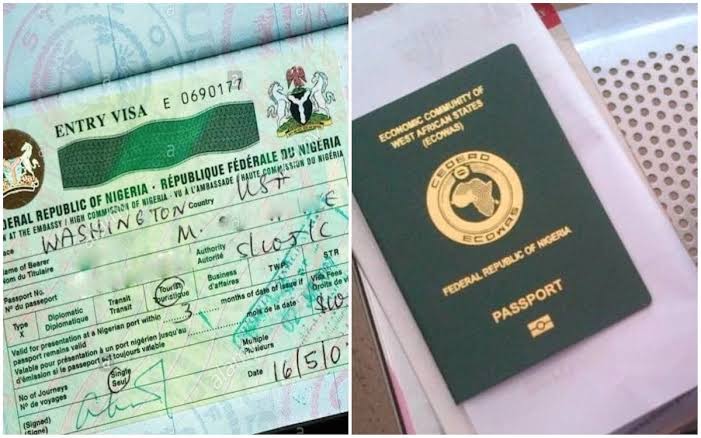
A FACEBOOK post has been circulating on social media stating that the United States, US, government had made an announcement to grant 5,000 Nigerian passport holders free work visas for two years.
The claim is however false as the Nigerian embassy in the US has dissociated itself from the post.
The Facebook account impersonating the Nigerian embassy with the name “Embassy of the Federal Republic of Nigeria, America,” and with 2,748 followers had on April 25, posted on its Facebook wall that the US was granting 5,000 American work visas to Nigerians for two years.
The phone number displayed on the Facebook page is +1 202-516-4277, as Nigerians who had been denied a visa in the past were urged to participate and abide by the guidelines by sending their passport biodata page for verification.
“You must not write any notes or attach any other credentials while sending your passport biodata page. No introduction is required. Therefore, only your passport must be submitted via our official email info@nigeriaembassyusa.org and not through any other medium,” a section of the message reads.
Checks by The ICIR showed that the Nigerian embassy on April 27, had released a signed statement debunking the claim and also clarifying that the embassy does not carry out engagements on Facebook.
“It has become imperative to set the record straight and inform the general public that the Embassy does not operate a Facebook account page. Thus, the Embassy could not have been mandated to collect any passports from Nigerian citizens on behalf of the US government. This is a fallacy,” the statement reads.
The Nigerian Embassy in Washington D.C also described the post as a “fabricated Facebook announcement” stating that there was no receipt of correspondence between the United States Presidential Task Force Briefing on COVID – 19 and Economic Reform and the Nigerian Embassy.
Also in another development, President Donald Trump of the US on April 22, in a Twitter post said he will sign an executive order to temporarily suspend all immigration to the US because of the coronavirus.
In March, the US suspended almost all visa processing, including for immigrants, because of the pandemic.
While emergency powers have been used to expel thousands of undocumented migrants from the US citing reasons associated with the pandemic. The public health measure allows officials to override immigration laws and expediting removal processes.
Therefore, the claim that America would issue e -visas to 5,000 Nigerians is false as the US government is not keen on receiving immigrants into the country anytime soon.
THE Federal Government has granted a two-month licence fee waiver for terrestrial broadcast stations in Nigeria to cushion the effects of the Coronavirus disease (COVID-19) pandemic in the industry.
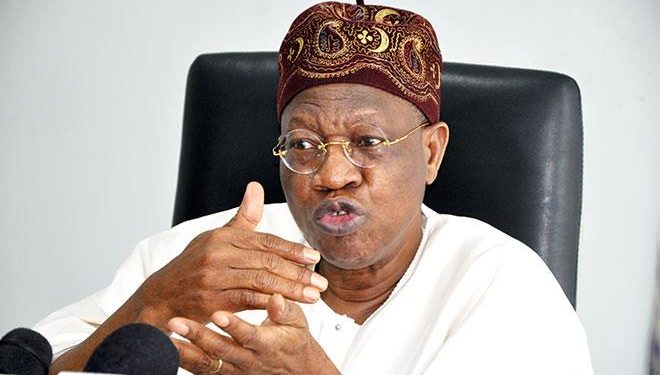
The Minister of Information and Culture, Alhaji Lai Mohammed, stated this at a meeting with the Broadcasting Organisations of Nigeria (BON) in Abuja on Wednesday.
He also announced the setting up of a committee of Creative Industry stakeholders to advise the Federal Government on the best way to mitigate the effect of the pandemic on the industry.
“Before I announce the terms of reference of the committee, let me say that in the interim, I want to announce that I have approved the request by the National Broadcasting Commission (NBC) to grant a two-month licence-fee waiver for terrestrial broadcast stations in Nigeria.
“I make bold to say that while BON members have been hit hard by the current pandemic, they are not alone. In fact, the entire Creative Industry, which also covers the Broadcast Industry, has been affected by the pandemic that has inflicted extensive damage on the economy of nations across the world,” he said.
Lai Mohammed stressed the need for a collective and government-supported approach in dealing with the immediate, short and long term palliatives and initiatives for the industry, in order to mitigate the effect of the pandemic on the Industry.
He said the committee has therefore decided that instead of addressing this problem piecemeal, should do so wholistically for a more positive outcome, noting that the creative industry is a very critical sector of the nation’s economy and a major plank of the economic diversification policy of this administration, in addition to creating the highest number of jobs after agriculture.
The Minister said the terms of reference of the committee include to assess the expected impact of the pandemic on the industry in general and advise the government on how to mitigate job and revenue losses in the sector as well as to create succour for the industry small businesses.
The committee is also expected to suggest the type of taxation and financing that is best for the industry at this time to encourage growth and also advise the government on any other measures that can be undertaken to support the industry.
Bala Mohammed, Bauchi State Governor said he has no apology recommending Chroloquine, Zithromax, Zinc and vitamin C to patients of Coronavirus disease.
The governor made this disclosure while responding to questions about his recommendation of the drugs as cure for COVID-19.
The governor who said the drugs in question was what he uses when he was in isolation said since there is no vaccine for the virus, people should follow the medical counsel of their physicians.
“Pertaining what I said about the use of Chloroquine, Zinc, Zithromax and vitamin C for the treatment of COVID 19 that I was misquoted.
“I was once a COVID 19 patient, how did I get cured, I only made a recommendation and it is not a recommendation of the committee for COVID 19 in the state.
“I have no apology for saying that I used Chloroquine, Zinc, Zithromax and vitamin C to get cured, but Allah cured me.
“To me, it is better you take something rather than sit down and die. We have not recorded any death in Bauchi state and I still maintain that. The person that died came after the test and you can see that we have 80 patients. By the grace of Allah, Allah will heal all our patients.”
“It is not Chloroquine or anything; many countries are using modern medicine to combat the pandemic. It is a common knowledge that COVID 19 has no vaccine and drugs, we are just grappling in the dark, but if you have symptoms of fever, you take Chloroquine and cure it.
“If you have symptoms of infection, you take Zithromax and cure it. If you have symptom of weakness, you can take Panadol to cure it. You don’t need a doctor. However doctors are prescribing. I did not take these drugs on my own, I took it based on the recommendation of my doctors,” he said.
Governor Bala during the covid-19 update in the state said, Bauchi State has recorded additional 3 cases of the novel coronavirus, tallying the number to 73 active patients while 6 discharged.
The governor said he had instructed the state’s taskforce on the coronavirus to intensify massive testing and contact tracing to enable the state have full control on the number of cases who might be positive for the virus.
This report was originally published by Wiki Times .
As federal government projected revenue from oil earnings continues to decline, Federation Account Allocation is now expected to fall by 80 per cent,
In real term, the allocation will drop to N1.1 trillion as against N5.5 trillion previously projected for the 2020 fiscal year.
This revelation was part of the discussion during a meeting between the Ministry of Finance, Budget and National Planning and the UK Department for Internal Development (DFID).
The meeting was a citizen’s dialogue session focused on Nigeria’s response to the fall in oil prices and the COVID-19 pandemic.
The government also expects that Nigeria’s Gross Domestic Products (GDP) will contract by 3.5 per cent year on year in 2020.
This will be despite a N649 billion reduction in allowable fiscal deductions by Nigerian National Petroleum Corporation (NNPC) for federally funded projects/expenditures.
Specifically, the projected Premium Motor Spirit (PMS ) under-recovery (petrol subsidy) has been reduced from N457 billion in the 2020 federal budget to zero.
The Nigerian government says it now expects oil prices in 2020 to average $20 per barrel against the budget benchmark of $57 per barrel.
The average production cost of Nigerian crude has been revised downward to $28 per barrel from $33 per barrel with implications for Petroleum Profit Tax (PPT).
According to the government, Customs revenue has come down to N1.2 trillion in 2020 against N1.5 trillion previously
The amount accruable to Value Added Tax (VAT) pool account now estimated at N2.0 trillion against N2.1 trillion previously in the year 2020.
Amount accruable to federation account now projected at N3.9 trillion against N8.6 trillion previously.
Projected federal government receipt from the federation account for 2020 is now put at N2.4 trillion against N4.8 trillion previously.
States and local governments are now likely to receive only N2.1 trillion and N1.5 trillion, respectively from FAAC compared to N3.3 trillion and N2.5 trillion, respectively, in previous estimates.
Projected N5.6 trillion budget deficit to be financed through privatisation proceeds will be N126 billion, but no details were provided.
Drawdowns from FGN special accounts of N260 billion, bilateral/multilateral drawdowns N387 billion, and new borrowings estimated at a whooping N4.6 trillion.
As part of measures to alleviate the impact of COVID-19, the government has set up an Economic Sustainability Committee to, among others, assess systemic vulnerabilities and develop programs that would make recession short-lived and ensure sustainable long-term growth
Government plans to invest in road and farmlands as well as offering credit facilities in order to improve agricultural products.
The federal government said it has plans to off-take agro-products, especially now that market conditions are unfavourable.
The government has also pledged to provide funding supports for the aviation sector, being the worst-hit at this period.
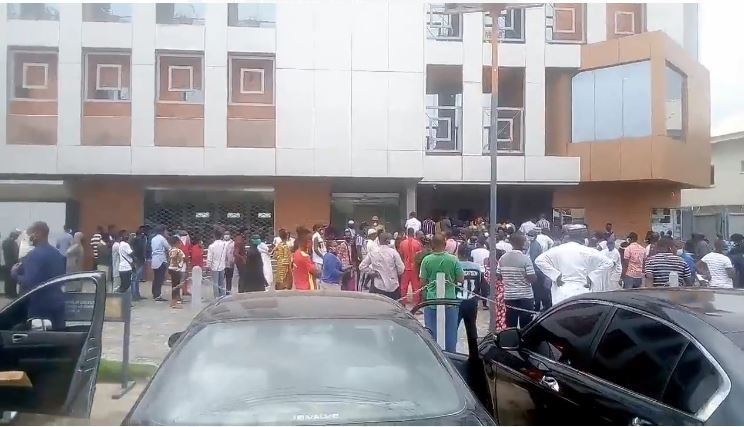
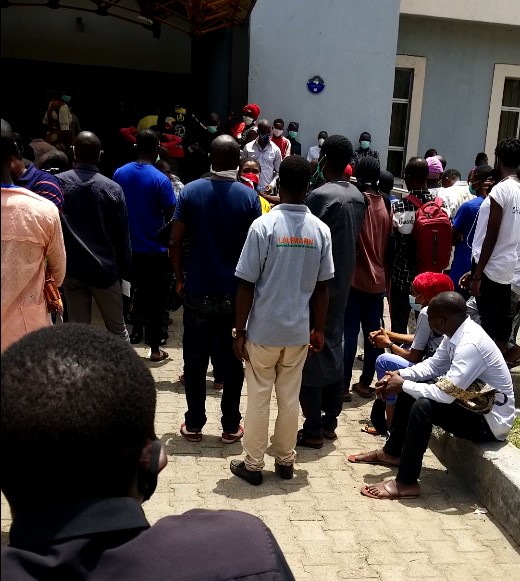
ONLINE images of people crowded in banks in various parts of the country may have shown that Nigerians are yet to completely embrace digital and online banking system in Nigeria.
After five weeks of lockdown in Lagos, Ogun and Federal Capital Territory (FCT), the federal government ordered the ease of lockdown on 4th May.
There are video footages of commercial banks in Abuja, Lagos and Ogun states that were packed full of customers, who appeared unmindful of social distance protocol.
Access Bank Ikotun, Lagos Photo Credit: Tope Bisade /Twitter
Even micro-finance and development banks with fewer cutomer base recorded high number of visitors relative to their size.
Digital banking is part of the response to the cashless policy of the federal government.
The shift from traditional to digital banking has been gradual and remains ongoing, and is constituted by differing degrees of banking service digitisation.
Currently, in Nigeria, there are over 22 commercial banks that serve customers nationwide and all of which have mobile application platforms that serve customers from their location.
Currently more than 50 per cent of commercial banks today offer online services, including opening accounts online.
But many customers still prefer face-to-face banking transaction, especially because of the increasing cases of cyber crimes.
The mass appearance of customers in various banks on Monday has shown that Nigerians are yet to embrace digitisation in the banking sector.
Guaranty Trust Bank Area 3, Abuja Uthman Samad /TheICIR
The world today is confronted by the emergence and necessity of digital banking in financial services.
In developed economies, fintech has posed a threat to established major retail banks as their speed to market and digitisation of banking services draw a large following due to their ability to make everyday banking more accessible.
In Nigeria, however, digital banking plays a much more significant role than fintech and retail banks.
Digital banking brings a world of opportunity to address pressing issues in access to finance, especially to a young and internet active population as well as growing middle class.
Both retail banks and fintech in Nigeria are using digital innovation in banking to solve problems in an exciting and modern way.
Peter Egun ATM officer for Zenith Bank Lagos who spoke to The ICIR said; ” Nigerians have always preferred to enter the bank for transactions. We daily educate them on the use of mobile applications but it is hard for them to just stop coming to the bank.”
Fashina Adeleye Assistant Manager Keystone Bank said: “We have concluded after different survey that people like being attended to physically, there are cybercriminals online these days and our customers are scared of putting their card details online.
“So as a bank what we are currently doing is tightening our cybersecurity system, our customers’ details are safe online at the highest level.”
Cashless Policy in Nigeria
The Central Bank of Nigeria (CBN) introduced a new policy on cash-based transactions which stipulates a cash handling charge on daily cash withdrawals that exceed N500,000 for Individuals and N3,000,000 for corporate bodies.
The policy on cash-based transactions (withdrawals) in banks, aims at reducing (NOT ELIMINATING) the amount of physical cash (coins and notes) circulating in the economy and encouraging more electronic-based transactions (payments for goods, services, transfers, etc.)
The CBN said the aim for the policy is to drive development and modernisation of our payment system in line with Nigeria’s vision 2020 goal of being amongst the top 20 economies by the year 2020.
An efficient and modern payment system is positively correlated with economic development and is a key enabler for economic growth, to reduce the cost of banking services (including the cost of credit)
And drive financial inclusion by providing more efficient transaction options and greater reach, to improve the effectiveness of monetary policy in managing inflation and driving economic growth
Financial Inclusion
According to Stears Business, a financial reporting firm showed that the importance of access to finance cannot be understated; a well-functioning and inclusive financial system has the benefit of poverty reduction through the provision of financial safety-nets.
Yet, financial inclusion is still an issue in Nigeria—only 30 per cent of adults have a formal bank account.
GTBank has had success on this front with its mobile money bank, Bank 737, where mobile phone customers can make payments without access to the internet by dialling 737 through USSD codes.
Similarly, in 2014, Diamond Bank partnered with mobile network MTN to provide mobile bank accounts. Diamond Bank gained 7 million new customers from this venture at a low cost by benefiting from several pre-existing MTN agent locations to act as money agents for Diamond’s Y’ello bank.
With the recent merger, Diamond’s success is now Access’s win.
WEMA Bank produced Nigeria’s first totally digital bank through the bank app ALAT, with no physical bank branches, customers submit all their details through the bank app and can create a bank account in minutes with a physical card delivered to them in a matter of days anywhere in Nigeria.
Digital innovation, like WEMA’s ALAT understands the growing appreciation for speed and a seamless banking experience amongst young adults in Nigeria.
Seventy nine per cent of ALAT’s customers are between the ages of 18 to 35 years, and only 6 per cent of their customers are above the age of 45.
Banks are continuing to provide alternatives to visiting branches.
United Bank of Africa’s artificial intelligence chatbot, Leo who checks balances and buys airtime is an example.
And a soon to be launched KudaBank is creating Nigeria’s second digital bank.
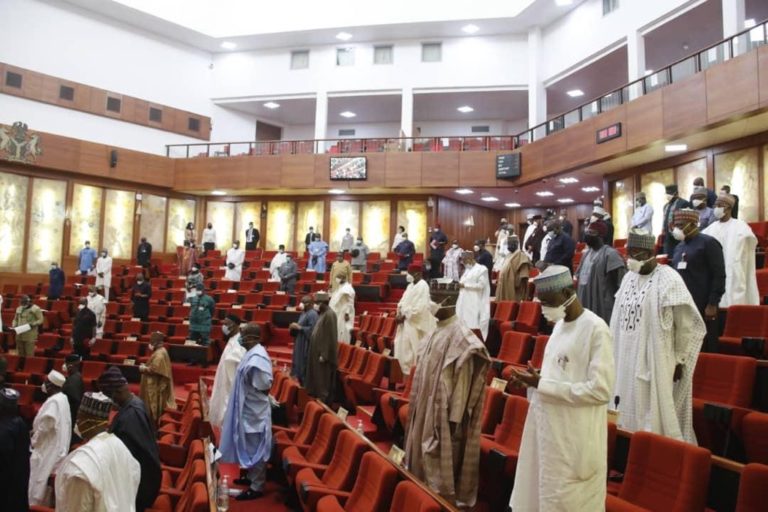
THE Senate has called for the de-centralisation of the Nigeria Police Force and the need for community policing as a way of addressing the country’s problem of insecurity.
According to a Twitter message by the Nigerian Senate , this was part of the recommendations of the Senate Ad-hoc Committee on Nigeria Security Challenges which was considered and approved during plenary on Tuesday.
Ajibola Basiru, Chairman Senate Committee on Media and Public Affairs and senator representing Osun Central Senatorial district who signed the statement released on Twitter said the Senate urged urged the Executive to direct the Ministry of Police Affairs and the Inspector General of Police to “decentralize the police command structure with operational and budgetary powers” vested in the zonal commands.
The Senate also urged the Federal Government to set up Zonal Security Advisory Committees at each Zonal Command to advise on the security challenges facing each zone, he said.
The red chamber, accordingly, urged the Federal Government to direct the Ministry of Police affairs and the Inspector General of Police to immediately implement the Community Policing Strategy involving local stakeholders at the grassroots, and traditional rulers with a view to addressing local security challenges.
The Senate spokesperson added that the upper chamber while urging the state assemblies to make necessary laws to legalise community policing to be established at the Local Government level, called on State Governors to fund community policing from grants appropriated to each Local Government.
It would be recalled that the upper chamber had set up an Ad-hoc Committee on Nigeria Security Challenges on January 29, 2020, under the Chairmanship of Yahaya A. Abdullahi, the Senate Leader and senator representing Kebbi North.
Basiru said the committee in its report made wide ranging recommendations which were also approved by the chamber.
The Senate he said also called for composition of the Zonal Advisory Council as proposed by the upper chamber which includes; Governors in the Zone; Zonal AIG of Police; State Commissioners of Police in the Zone; State Directors of the Department of State Security Service; Zonal Immigration Officers;
Zonal Customs Officers; and Representative of the Nigeria Security and Civil Defense Corps in the Zone.
Others are: Representative of the Nigeria Correctional Service in the Zone; Chairmen of State Traditional Rulers Council in the Zone; Faith-based Leaders in the Zone; Civil Society representatives in the Zone; representative of Senators from the Zone; Representative of Members of House of Representatives from the Zone; Representatives of Business Community and Labour in the Zone; and any person or persons deemed to be useful and relevant, taking into account the socio-cultural peculiarities of the zone.
Recommendations were also made for the expansion of the State Security Council and constitution of Area Command, Local Government and Ward Level Advisory Councils.
THE Office of the Accountant General of the Federation (OAGF) has announced that Ministries, Departments and Agencies (MDAs) that flout the guidelines for the management of COVID-19 funds will be sanctioned.
And top officials of such MDAs will be exposed and penalised accordingly, the OAGF warned.
The directive came up after setting up a framework where all COVID-19 funds are to be appropriated directly to participating MDAs and also spending units like the Ministry of Health, Ministry of Humanitarian Affairs, and others.
Also, the OAGF stated that the names of the MDA and its principal officers shall be made public as an additional measure of transparency.
“Participating MDAs are reminded that the COVID-19 fund is a public fund in the truest sense of it.
“The public is invested in ensuring that the funds are utilised in the most transparent and prudent manner.
“For this reason, any participating MDA that contravenes this guideline may be sanctioned from continued participation in the programme,” the OAGF warned.
The contributions to the Private Sector Coalition against COVID-19 stood at N25.8 billion as of 17th April 2020, according to OAGF.
The accountant general said President Muhammadu Buhari had endorsed the opening of COVID-19 donor accounts as part of the current Treasury Single Account (TSA) arrangement.
The framework covers all public funds allocated and dedicated to the campaign against COVID-19, including the fiscal stimulus package.